PART 2: HOA Karen Wired Hidden Cameras Across My Hunting Lodge—She Had No Idea I Spent 25 Years Hunting Signals for the U.S. Army
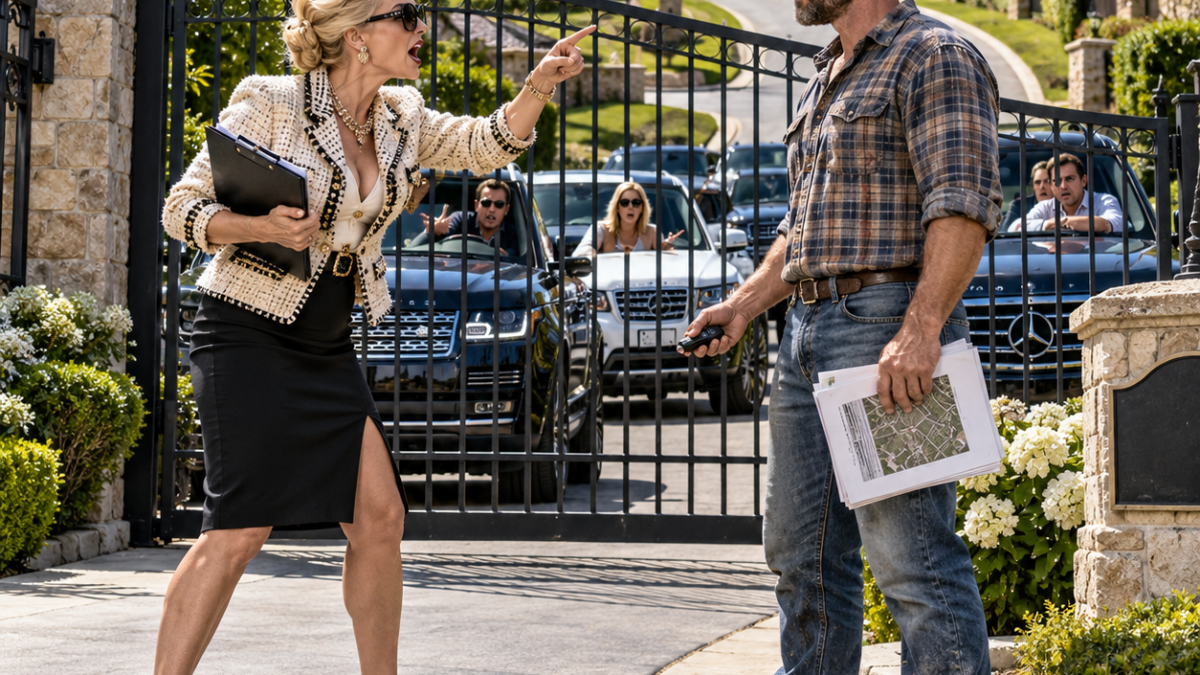
PART 2
The first camera came down carefully.
Not angrily.
Carefully.
There is a difference.
Anger makes you rip something from a wall.
Training makes you photograph it first.
Wide shot.
Location.
Mounting point.
Cable path.
Serial number.
Connection.
Then removal.
I put on nitrile gloves, disconnected the device without damaging it, and placed it on my workbench inside the lodge.
Twenty-five years in signals taught me one lesson more valuable than anything else:
Systems talk.
Not literally.
But equipment tells you how it was installed.
Paperwork tells you who paid.
People tell you what they are afraid of.
And networks reveal relationships whether the people who built them want those relationships revealed or not.
The camera itself was commercial-grade equipment.
Nothing exotic.
Professional enough that somebody had spent real money, though.
It had been mounted properly.
Weather sealed.
Cabling buried.
Whoever installed it had not wandered onto my property with a cordless drill and an impulse.
They had planned.
I walked the entire perimeter again before sunset.
The second camera sat approximately twenty feet up an oak tree and covered my driveway.
The third had been disguised behind holly near the lodge, aimed toward the deck and rear windows.
The fourth bothered me most.
It sat on a fence post near the west line.
Its field of view extended toward Bill and Mary Henderson’s house.
Their rear deck.
Their garden.
Part of their pool.
I left those three in place temporarily.
Not because I accepted them.
Because once an adversary realizes you have discovered a system, behavior changes.
Evidence disappears.
Stories get rewritten.
Logs vanish.
People suddenly remember conversations that never happened.
Karen believed I had found one camera.
I wanted to know what else she believed I didn’t know.
I went inside and made coffee.
The lodge was still barely a lodge.
Half the living room floor was covered in drop cloths.
Replacement windows leaned against one wall.
Boxes of electrical fittings crowded the hall.
But my workshop was finished.
That room mattered first.
Workbench.
Locking cabinets.
A large monitor.
My personal diagnostic equipment.
Nothing classified.
Nothing government-owned.
Just legitimate commercial tools and decades of habit.
I examined the removed camera.
Then I did something simpler.
I checked my deed again.
Sometimes the most important piece of technology in a case is still paper.
Parcel description.
Boundary survey.
Exceptions.
Easements.
Restrictions.
There it was.
The property had never been annexed into Whispering Pines Estates.
I scanned the page.
Highlighted the exact language.
Then I pulled the county subdivision plat.
Same answer.
Whispering Pines ended east of my boundary.
My acreage was older.
Separate.
Independent.
Karen had been fining a person who was not a member of her HOA.
That alone would have been laughable if she had stopped at letters.
She hadn’t.
She had sent people onto deeded private property.
They had buried cable.
Mounted equipment.
And recorded activity.
I drafted a formal records demand.
No insults.
No threats.
I requested:
Current covenants.
Bylaws.
Board policies.
Meeting minutes for two years.
Budgets.
Vendor expenditures.
Security-system approvals.
Contracts relating to surveillance equipment.
Any resolution purporting to annex my property.
Any legal opinion supporting HOA jurisdiction over my parcel.
Any consent form authorizing installation on my land.
I sent the request certified.
Copied every board member.
Then I waited.
That night, I sat on the lodge porch.
The woods were almost completely dark.
A barred owl called somewhere beyond the creek.
I had bought the property for exactly that sound.
After years of radios, engines, generators, aircraft and secure communications equipment, silence felt like medicine.
Karen had contaminated it.
I looked toward the tree where camera number two still watched my driveway.
A tiny status light glowed.
Someone had paid for that eye.
Someone was receiving what it saw.
The question was who.
I did not attempt to break into anybody’s network.
I didn’t need to.
That distinction mattered.
I could preserve the physical equipment, document the cabling, identify vendors through markings, and use lawful technical analysis together with public records.
The first useful clue was painfully ordinary.
Manufacturer.
Model.
Installer label.
A sticker on the underside of the removed housing carried the name:
PINE STATE LOW-VOLTAGE SERVICES
I searched the company.
Small regional contractor.
Security cameras.
Access control.
Commercial networking.
I called.
“Pine State.”
“My name is Jack Callahan. I recently purchased a property beside Whispering Pines Estates.”
Pause.
“Okay.”
“I found one of your cameras mounted on my property.”
Longer pause.
“Do you have a work-order number?”
“I have a serial number.”
I gave it.
Keyboard.
Then silence.
“Sir, I can’t discuss customer details.”
“I understand.”
“But you recognize the serial?”
“I didn’t say that.”
Fair.
“Who can receive a written evidence-preservation notice?”
That changed the conversation.
“What exactly is going on?”
“Equipment installed on private property without owner authorization.”
Another pause.
“Email legal@—”
I wrote it down.
“Thank you.”
I sent the notice the same afternoon.
Preserve contracts.
Work orders.
Installation maps.
Invoices.
Communications.
Payment records.
Nothing more.
If this went to court, I wanted records intact.
The next morning, Karen emailed me.
Subject:
DESTRUCTION OF HOA PROPERTY
That was fast.
Jack,
We have been informed that you intentionally damaged and removed HOA security equipment. Your conduct constitutes vandalism and interference with association operations. You will be responsible for replacement costs.
Additionally, your continued refusal to comply with architectural standards is unacceptable.
Regards,
Karen Miller
President
Whispering Pines Estates HOA
I stared at the screen.
They had been informed.
How?
The installers noticed?
Karen received an alert?
A neighbor saw?
It didn’t matter yet.
What mattered was the admission.
HOA security equipment.
Her words.
Not mine.
I saved the email.
Printed it.
Added it to my binder.
Then another fine arrived.
$250.
“Unauthorized removal of community security equipment.”
I laughed.
Actually laughed.
The property was not in the community.
The equipment was not authorized.
But Karen had now signed a written document claiming ownership of it.
Evidence has a sense of humor.
The thirty-day records deadline approached.
Day twenty-eight.
Nothing.
Day twenty-nine.
Nothing.
Day thirty, I received a letter from the HOA’s attorney.
Three pages of expensive wording saying very little.
The association denied my records request on the grounds that I was not a member “in good standing.”
That sentence nearly made me spill my coffee.
Karen’s position was now:
I was enough of a member to fine.
Enough of a member to surveil.
Enough of a member to regulate.
But not enough of a member to inspect records.
Beautiful.
The lawyer also demanded payment of accumulated fines exceeding $1,000.
I forwarded the letter to a local property attorney named David Foster.
He called me an hour later.
“Interesting.”
“That good or bad?”
“Depends whether you enjoy litigation.”
“I don’t.”
“Then bad.”
He had reviewed my deed.
“You’re right.”
“I know.”
“You hired me for reassurance?”
“I hired you because judges prefer lawyers to confident retired soldiers.”
“Good instinct.”
David continued.
“I see no recorded annexation. No covenant attaching the property to Whispering Pines. No agreement signed by you or predecessor.”
“So they have no jurisdiction.”
“Based on what I’m seeing, correct.”
“And the cameras?”
“Separate problem.”
“Trespass?”
“Possibly more. Depends on location, what they captured, notice, state privacy law, who had access and purpose.”
“What about the records request?”
“If they say you aren’t a member, they’ve weakened their own claim to regulate you.”
I smiled.
David heard it.
“Don’t enjoy this too much.”
“I’m trying.”
“You’re failing.”
“Probably.”
Then he became serious.
“Jack, don’t do anything cute technically.”
“What does that mean?”
“You know exactly what it means.”
“I haven’t.”
“Keep it that way. Collect what you can lawfully collect. Physical evidence. Your own property cameras. Public records. Witnesses. Vendor preservation. Let subpoenas get private data if this becomes litigation.”
That was good advice.
I followed it.
I installed my own security system.
Unlike Karen’s hidden cameras, mine were obvious.
Driveway.
Front door.
Rear deck.
Workshop.
Boundary access.
Each camera stayed on my land and primarily covered my property.
Signs at the entrance said:
PRIVATE PROPERTY — VIDEO SURVEILLANCE — NO TRESPASSING
I changed the gate lock.
Marked buried cable locations.
Photographed everything again.
Then I waited.
Six days later, at 10:43 p.m., my driveway camera alerted.
White HOA van.
It stopped just outside my property.
Two men exited.
Same men who had been standing behind Karen the day I confronted her.
One looked at my sign.
Then at the camera.
He called someone.
They remained outside the property line.
Good.
Then they walked east along the public right-of-way.
A second camera caught them approaching the location where one of Karen’s original surveillance lines crossed toward my property.
They opened a junction box.
Worked for several minutes.
Then left.
Not necessarily illegal.
The box sat inside an easement.
But it proved continued involvement.
I saved the footage.
The next morning, another HOA notice arrived.
Failure to maintain historically compatible facade.
I had replaced rotted window frames with identical dimensions.
$500.
Then:
Non-conforming driveway surface.
My gravel drive had existed longer than Whispering Pines.
$250.
Then:
Commercial activity.
A lumber delivery.
$200.
That one interested me.
The delivery driver had been on my property less than ten minutes.
No one from the subdivision had been near my driveway.
How had Karen known?
Coincidence?
Possible.
Neighbor?
Possible.
Camera?
Possible.
I added it to the timeline without conclusion.
A disciplined investigation separates facts from inference.
Fact:
Lumber delivered Tuesday 1:14 p.m.
Fact:
Violation email Tuesday 1:31 p.m.
Fact:
HOA camera covered driveway.
Inference:
Karen may be using surveillance to generate citations.
Not proof yet.
But the pattern grew.
Cement delivery.
Fine.
Dumpster pickup.
Fine.
Utility contractor.
Fine.
Every event visible to the driveway camera seemed to produce HOA attention rapidly.
I showed the pattern to David.
He leaned back.
“That is interesting.”
“You lawyers use interesting when you mean terrible.”
“We use interesting when we mean keep collecting.”
“So I keep collecting.”
“And start talking to residents.”
That was next.
I walked to the Hendersons.
Bill answered.
Late sixties.
Tall.
Silver hair.
The exhausted politeness of someone who had spent years deciding which battles were worth having.
“I’m Jack Callahan.”
“The lodge guy.”
“That’s me.”
His smile was cautious.
“Heard Karen likes you.”
“I inspire affection.”
Mary appeared behind him.
I got straight to it.
“There is a camera near my western property line aimed toward your backyard.”
Bill’s expression died.
He looked at Mary.
Then back at me.
“We know.”
I hadn’t expected that.
“You know?”
“We saw them install it.”
“When?”
“Months ago.”
“Did you consent?”
“No.”
“What did Karen say?”
“Buffer-zone security.”
“Your back deck isn’t a buffer zone.”
“I know.”
“Why didn’t you push?”
Bill looked embarrassed.
Mary answered for him.
“Because we did once.”
She opened a drawer.
Pulled out a stack of envelopes.
Fines.
Trim color.
Lawn ornament.
Trash container.
Roof washing.
A garden hose left visible.
Three months of near-weekly notices.
“We repainted our trim twice,” Bill said.
“Why?”
“Karen said Arctic White wasn’t approved.”
“What was approved?”
“Eggshell.”
I looked at their trim.
It was white.
Somewhere, Dad would have laughed.
Mary’s eyes filled.
“We spent almost two thousand dollars fixing a color no normal person could distinguish.”
“Why?”
Bill stared at the floor.
“Because we thought if we fought, it would get worse.”
There it was.
Fear.
Not dramatic fear.
Administrative fear.
The fear of certified letters.
Attorney fees.
Liens.
Meetings where everyone looks at you like you are the problem.
I said:
“What if it gets better?”
Bill looked at me.
“How?”
“I’m challenging her.”
He gave a tired laugh.
“Everybody challenges Karen once.”
“I’m not everybody.”
That sounded arrogant.
I didn’t mean it that way.
So I clarified.
“My deed isn’t under the HOA. The cameras are physically on my property. I have documentation. I have counsel. And I am not going away.”
Bill studied me.
“What did you do in the Army?”
“Signal operations.”
Recognition flickered.
“So you understand those cameras.”
“Yes.”
His posture changed.
Not much.
Enough.
I asked:
“If this comes to a public meeting, will you state that you never consented to surveillance of your backyard?”
Mary answered first.
“Yes.”
Bill nodded.
“Yes.”
First allies.
The next allies found me.
I started drinking morning coffee at a shop outside the subdivision.
Not spying.
Listening.
People talk about HOAs over coffee the way soldiers talk about commanders over bad food.
Eventually I heard two women discussing a $200 fine.
Basketball hoop.
One was Jessica.
The other Sarah.
I introduced myself.
“You’re the lodge man,” Jessica said.
Apparently I had become a local cryptid.
“That’s me.”
“Karen calls you a disruptive element.”
“Do I get a certificate?”
Sarah laughed.
Then her face tightened.
“She’s sending emails about you.”
“What does she say?”
“That you’re refusing to comply with basic community standards.”
“My land isn’t part of the HOA.”
Jessica stared.
“What?”
“Never has been.”
“Then why is she fining you?”
“Excellent question.”
I told them about the cameras.
Not technical details.
Only verified facts.
Equipment placed on my land.
Camera aimed at Hendersons’ yard.
Vendor identified.
No consent.
Karen admitting HOA ownership.
Their expressions changed.
Jessica whispered:
“There’s one at the playground.”
“I know.”
“I thought it was for safety.”
“It may have been installed under that description.”
“But?”
“I have concerns about access and use.”
Sarah leaned forward.
“My husband is an attorney.”
“What kind?”
“Corporate litigation.”
“Useful.”
“Want me to call him?”
“Yes.”
That evening, I met David Foster’s namesake counterpart, David Reynolds, Sarah’s husband.
Different David.
Same lawyer tendency to stare silently at documents until everyone else becomes nervous.
I showed him my deed.
Karen’s emails.
Fines.
Camera photographs.
Property map.
Installer label.
Attorney letter.
Henderson statement.
Timing analysis between deliveries and fines.
He looked up.
“This is ugly.”
“How ugly?”
“Potentially civil claims for trespass and privacy violations. HOA governance issues. Possible misuse of funds depending on who paid. Possibly criminal exposure if financial records show diversion or fraudulent billing.”
“You sound careful.”
“I get paid to be careful.”
“Good.”
He tapped my deed.
“This is the simplest part. They appear to have no authority over your parcel.”
“I agree.”
“And Karen knows you’re claiming exemption?”
“She has a copy.”
“So continued enforcement becomes harder to explain as innocent mistake.”
“Exactly.”
Jessica and Sarah helped organize homeowners quietly.
We needed ten percent of association membership to force a special meeting under the bylaws David had retrieved from county records.
That was another absurdity.
Karen’s lawyer had refused access.
The county already had them.
Public records beat gatekeepers surprisingly often.
We needed twenty signatures.
We got thirty-eight.
Then forty-one.
Some residents were terrified to sign.
One woman called Jessica crying.
“If Karen sees my name, she’ll fine us.”
Jessica answered:
“That is exactly why your signature matters.”
Eventually the petition went in.
Special meeting required within thirty days.
Karen reacted like someone had kicked a hornet nest.
Email blast one:
MISINFORMATION THREATENS COMMUNITY STABILITY
Email blast two:
OUTSIDE AGITATOR ATTEMPTS HOSTILE INTERFERENCE
Outside agitator.
I printed that one.
Framed it mentally.
Email blast three:
PROPERTY VALUES AT RISK
My fines increased.
Leaves blown onto the road.
$100.
Mud on truck fender.
$150.
Window replacement.
$500.
Driveway gravel.
$250.
Every envelope went into one binder.
I labeled it:
EXHIBIT A — APPARENTLY EVERYTHING I OWN OFFENDS KAREN
David made me relabel it professionally.
Lawyers hate joy.
Then retaliation spread to petition signers.
Hendersons:
Garden gnome violation.
Jessica:
Children’s bicycles visible.
Sarah:
Temporary school-board sign violation.
Another signer:
Trash enclosure.
Another:
Decorative flag.
The timing was impossible to ignore.
David prepared a second binder.
POST-PETITION ENFORCEMENT ACTIONS
That title satisfied him.
Something else happened during the thirty days.
Pine State Low-Voltage Services responded through counsel to our preservation notice.
They did not provide confidential records voluntarily.
But they confirmed they had performed surveillance-related installation work pursuant to a contract represented as authorized by Whispering Pines HOA.
And they preserved the file.
Excellent.
Now the association could not claim some unknown vandal installed cameras.
Karen already admitted HOA ownership anyway.
The question shifted.
Who authorized spending?
Who had access?
What purpose?
I requested an independent audit through the petitioners.
Karen refused.
That refusal became another agenda item.
We also submitted complaints to the county sheriff and the state agency responsible for relevant HOA and consumer matters.
No dramatic raid.
No handcuffs.
Not yet.
Just reports.
Case numbers.
Evidence preservation.
Professional channels.
That mattered.
Because I wanted justice, not theater.
The theater would arrive on its own.
The meeting night came.
Nearly one hundred residents filled the clubhouse.
Normally six or seven attended.
Fear had kept people home.
Curiosity brought them back.
Karen sat at the front with Vice President Gary Thompson and Treasurer Diane Wells.
Gary looked like a man wishing he had developed a stomach virus.
Diane looked confused before the meeting even began.
Karen looked magnificent.
Navy power suit.
Gold necklace.
Gavel.
A queen defending a small beige kingdom.
She struck the gavel.
“As everyone knows, tonight’s meeting was forced by a vocal minority led by an individual who is not even a member of this association.”
I smiled.
Thank you, Karen.
She had just admitted the central jurisdiction problem in front of everyone.
David Reynolds leaned toward me.
“Did she really just—”
“Yes.”
He almost laughed.
Karen continued.
“This individual has nevertheless interfered with association property, encouraged disruption, and spread misleading accusations.”
Twenty minutes later, David stood.
“Madam President.”
She glared.
“Yes?”
“Under Article Three, Section Six, petitioning homeowners are entitled to present the issue for which the special meeting was called.”
“I know the bylaws.”
“Excellent.”
A few people laughed.
Karen’s face tightened.
“The floor is granted for twenty minutes.”
I walked forward.
Set my binder down.
Connected the projector.
Looked at the room.
I had given briefings to generals.
Explained communications failures while rockets landed nearby.
Taught soldiers how to keep networks alive in places where everything wanted them dead.
This room made me more nervous.
Because these were ordinary people.
And ordinary people had been made afraid inside their own homes.
I started with the deed.
“My name is Jack Callahan.”
Slide one.
Parcel map.
“I bought the old hunting lodge and ten acres six months ago.”
Slide two.
Recorded deed.
“The property is not part of Whispering Pines Estates.”
Karen interrupted.
“Your proximity subjects you to exterior-impact standards.”
David stood.
“Please allow him his allotted time.”
She slammed the gavel.
I continued.
“This language has existed since before I bought the land.”
I highlighted the exemption.
“The HOA has no recorded covenant over my parcel.”
Slide three.
Fine notices.
One.
Two.
Three.
Ten.
Twenty.
People murmured.
“These were issued anyway.”
Karen folded her arms.
I advanced.
Photo of the workshop camera.
“This was installed on my property.”
Another.
Oak-tree camera.
“Also mine.”
Another.
Rear camera.
“Mine.”
Then:
Henderson camera.
“But this one is pointed toward Bill and Mary Henderson’s backyard.”
The room went silent.
Bill stood.
“That’s my house.”
Karen reached for the gavel.
Bill kept going.
“We never gave permission.”
“Mr. Henderson—”
“We asked you about it.”
“You were told it monitors the buffer.”
“It monitors our deck.”
Voices rose.
I lifted a hand.
“Please.”
They quieted.
“The issue is not simply cameras. The issue is consent, purpose, access, and funding.”
Next slide.
Map.
Installation points.
Property lines.
“You paid for surveillance infrastructure that extends beyond common areas.”
Karen shouted:
“For security!”
“Then show the policy governing its use.”
Silence.
“Show resident consent.”
Silence.
“Show the board vote authorizing cameras on my deeded property.”
Nothing.
Gary looked toward Karen.
Diane looked toward Karen too.
That was interesting.
Maybe they didn’t know.
I turned to the audience.
“I submitted a records request.”
Slide.
Certified receipt.
“The association refused.”
Next slide.
Attorney letter.
“The reason given was that I am not a member in good standing.”
People laughed.
I waited.
“Which creates an interesting contradiction.”
I looked at Karen.
“If I’m not a member, why are you fining me?”
The room erupted.
Karen grabbed the microphone.
“This is manipulative.”
“Then explain it.”
“You refuse to accept community responsibility.”
“My property is legally outside your community.”
“You benefit from the neighborhood.”
“So does the county road. Are you fining it?”
Laughter.
Karen’s face flushed.
David whispered:
“Careful.”
He was right.
Mockery feels good.
Facts work better.
I nodded.
“Let’s move on.”
Next slide.
Timeline of deliveries and violations.
“I began noticing that activities visible primarily from the areas covered by HOA cameras were followed quickly by enforcement notices.”
I pointed.
“Lumber delivery. Seventeen minutes later, violation.”
Another.
“Concrete delivery. Twenty-six minutes.”
Another.
“Truck parked muddy after rain. Fine.”
Karen said:
“Residents report violations.”
“Possibly.”
I looked at the crowd.
“So I asked for complaint records.”
Slide.
No records produced.
Karen looked toward Diane.
Diane looked alarmed.
I continued.
“Then I spoke with residents.”
Jessica stood.
“Our bicycles were fined after we signed the petition.”
Sarah stood.
“Our sign too.”
Bill:
“Our garden gnome.”
Someone laughed.
Bill didn’t.
“It had been there ten years.”
More homeowners stood.
A dozen voices.
Fines.
Notices.
Threats.
Karen banged the gavel.
“This is chaos!”
David stepped forward.
“No, Madam President.”
He looked across the room.
“This is testimony.”
That shut her down for approximately five seconds.
Then she said:
“You people have no idea what it takes to maintain standards.”
Jessica shouted:
“Does maintaining standards require watching our children?”
The room froze.
Every parent looked toward her.
I changed slides.
Photo of the playground camera.
I did not make the accusation broader than evidence supported.
“This camera monitors the pool and playground area.”
Karen said immediately:
“For child safety.”
I nodded.
“That could be a legitimate purpose.”
She looked surprised.
“But legitimate purpose requires legitimate controls.”
Next slide.
Questions.
Who can access feeds?
How long are recordings stored?
Who audits use?
Are feeds encrypted?
Are parents informed?
What policy governs zoom capabilities?
Who authorized equipment?
Karen stared.
I said:
“I have seen no policy answering those questions.”
Jessica turned toward the board.
“You can zoom that camera?”
Karen snapped:
“Security cameras zoom.”
“Who operates it?”
No answer.
“Who watches our children?”
“That is inflammatory.”
“No. It’s a question.”
The room changed.
Parents leaned forward.
One father stood.
“My daughter swims there.”
Another:
“My kids walk through there alone.”
Another:
“I want that camera shut off tonight.”
Gary finally spoke.
“Karen, who has access?”
She turned toward him.
“This is not the time.”
“It seems like exactly the time.”
Diane whispered something to him.
Karen’s control was breaking.
Then came the financial issue.
I had not illegally taken HOA accounting data.
Instead, David and several members had lawfully obtained selected financial information through member rights and public filings after the petition escalated.
That was enough.
Next slide.
COMMUNITY SECURITY SOLUTIONS LLC
Karen’s expression changed.
Not outrage.
Fear.
Tiny.
But unmistakable.
David took the microphone.
“I’ll handle this section.”
He displayed state business-registration records.
“Community Security Solutions LLC was incorporated six months ago.”
Next.
Registered agent:
Karen Miller.
The room exploded.
Karen stood.
“That is a consulting business.”
David continued.
“Whispering Pines financial records show payments to Community Security Solutions totaling more than forty thousand dollars over approximately two years, including security-related consulting, equipment coordination, and administrative services.”
Gary turned white.
Diane’s hand covered her mouth.
Karen said:
“The board approved security expenditures.”
Gary snapped:
“I never approved payments to your company.”
Karen glared.
David said:
“That issue is one reason an independent audit has been requested.”
Someone shouted:
“You paid yourself to spy on us?”
Another:
“Forty thousand?”
Another:
“Call the police.”
Karen pounded the gavel repeatedly.
“This meeting is adjourned!”
David raised his voice.
“No motion to adjourn has been made.”
“I am president.”
“Not a magic word.”
The crowd roared.
Karen stood.
“You want to destroy this community?”
Jessica answered:
“No. We want it back.”
That line ended the argument.
Not legally.
Emotionally.
Everything after that became procedure.
Gary moved to suspend Community Security Solutions pending independent audit.
Diane seconded.
Karen screamed:
“You cannot do this.”
Vote.
Two to one.
Passed.
Gary moved to disable non-essential surveillance pending legal review.
Second.
Passed.
Diane moved to freeze all contested fines issued after the petition.
Passed.
Karen stared at them.
“You’re betraying me.”
Gary’s face tightened.
“No.”
He looked around the room.
“We’re finally doing our jobs.”
The sheriff’s deputies entered only after the meeting, not to create drama but because complaints had already been filed and new information had been publicly presented.
Sergeant Riley approached Karen.
“Ms. Miller, we’d like to speak with you regarding the surveillance equipment and financial records.”
She pointed at me.
“He hacked us.”
Riley looked at me.
Then David.
David said:
“My client has been instructed to preserve evidence and has provided materials through counsel.”
Riley nodded.
“Good.”
Karen screamed:
“He is the criminal!”
I stayed silent.
That frustrated her more than any response could have.
“Jack!”
I looked at her.
“You think you won?”
I answered quietly.
“This isn’t about winning.”
“You ruined me.”
“No.”
I looked toward the residents.
“People asked where their money went.”
The deputies escorted her out for questioning.
Not convicted.
Not yet.
Not even necessarily arrested that second.
That matters.
Reality is slower than stories.
The room remained silent after she left.
Then Bill Henderson walked toward me.
He put one hand on my shoulder.
“We can breathe.”
His eyes were wet.
That hit harder than applause would have.
The board appointed an interim oversight committee.
Gary became acting president reluctantly.
Jessica joined the committee.
Sarah.
Bill.
Two others.
They asked me.
I declined.
“I’m not a member.”
That got a laugh.
I continued.
“And I intend to keep it that way.”
Bigger laugh.
“But I’ll help identify equipment located on or affecting my property.”
That weekend, a licensed low-voltage contractor supervised removal of disputed camera equipment.
No vigilante ripping wires.
No smashing cameras.
Everything documented.
Logged.
Preserved where needed.
The camera on my workshop came down.
Then the oak tree.
Then the rear deck.
Then the one aimed toward the Hendersons.
Bill watched that last one.
When the contractor lowered it, Mary started crying.
Bill hugged her.
It seemed excessive if you thought it was only a camera.
It wasn’t.
It was months of feeling watched.
Years of feeling small.
A machine becomes symbolic when someone uses it to remind you they can see you whenever they want.
The playground camera was disabled pending review.
The pool remained open.
Some residents worried removing cameras would make the community unsafe.
A professional security consultant was hired.
His conclusion was simple.
Cameras in legitimate common areas could remain if governed by written policies, restricted access, proper cybersecurity, retention limits, transparent notice and board oversight.
That was reasonable.
Surveillance itself wasn’t evil.
Secret uncontrolled surveillance was the problem.
That distinction mattered to me.
I had spent much of my career working with sensors.
Technology is rarely moral on its own.
Purpose.
Authority.
Control.
Oversight.
Those decide what it becomes.
The independent financial audit took nearly three months.
The findings were ugly.
Not cinematic.
Ugly in the way spreadsheets are ugly when they show trust being converted into personal money.
Community Security Solutions had received more than $40,000.
Invoices were vague.
“Security consulting.”
“System monitoring.”
“Risk mitigation.”
“Resident compliance analysis.”
Karen had personally controlled the company.
Some services may technically have been performed.
Others could not be substantiated.
Competitive procurement had been weak or absent.
Conflict disclosure inadequate.
The board had authorized broad security spending without clearly understanding Karen was paying an entity she owned.
That became the core of the criminal and civil investigations.
Investigators subpoenaed records.
Installer files.
Banking information.
Emails.
Board communications.
Access logs.
I stayed out.
That was difficult.
Every part of my professional identity wanted to analyze.
Instead, I handed evidence to the people whose job it was.
David reminded me:
“You’re the complainant.”
“I hate being the complainant.”
“I know.”
“I’m better at investigations.”
“I know.”
“Can I at least—”
“No.”
“I hadn’t finished.”
“No.”
Lawyers are exhausting.
The HOA sued Karen’s company civilly for recovery.
The county pursued criminal charges after further investigation.
Privacy-related issues were referred appropriately.
Some accusations residents made turned out to be exaggerated.
That happens when fear breaks.
Once people realize someone abused authority, every past annoyance begins to look sinister.
We had to separate valid concerns from rumor.
One resident claimed Karen had microphones inside mailboxes.
False.
Another claimed cameras were hidden inside homes.
No evidence.
Someone claimed she sold footage online.
Also unsupported.
Jessica wanted to post a neighborhood warning correcting misinformation.
I agreed.
Truth had taken Karen down.
We weren’t going to replace her lies with ours.
The official findings were already serious enough.
Karen ultimately entered a plea involving fraud-related misuse of association funds.
She received eighteen months of incarceration, followed by probation, and was ordered to pay restitution under the final judgment.
Other surveillance-related consequences were handled through civil orders, association reforms and applicable legal restrictions.
A judge barred her under the settlement terms and related orders from returning to positions of trust within the association structure.
Her house on Magnolia Lane went up for sale.
I drove past exactly once.
Not intentionally.
Her curtains were gone.
Moving boxes visible.
I felt nothing.
That surprised me.
For months, Karen had occupied too much space in my mind.
Every letter.
Every camera.
Every ridiculous fine.
I had imagined the day she left would feel like fireworks.
It felt like driving past any other house.
That was better.
Indifference is an underrated form of victory.
Whispering Pines changed.
Gary surprised everybody.
Without Karen sitting beside him, he became competent.
Not charismatic.
Not dramatic.
Competent.
The best kind of board president.
His first meeting lasted forty-two minutes.
People applauded.
Jessica eventually ran for president and won.
The new board hired independent management.
Financial controls tightened.
Vendor conflicts had to be disclosed.
Major contracts required multiple bids.
Surveillance policy became public.
No cameras aimed at private yards.
No hidden installations.
No individual board member controlling feeds from a home computer.
Any common-area cameras had documented purpose, limited access and review.
Petty rules were cut.
Mailbox color provisions disappeared.
Decorative lawn rules simplified.
Fines became last resort.
Warnings first.
Appeals reviewed by more than one person.
And something funny happened.
Property values did not collapse.
Grass did not grow six feet overnight.
Civilization survived mismatched patio furniture.
The pool became loud again.
Children splashed.
Parents talked.
Nobody stared at the camera pole wondering who might be watching from a private living room.
The Hendersons restored their garden gnome.
I had not realized how important that ridiculous ceramic object had become.
It stood near their deck holding a fishing pole.
Bill named him Freedom Fred.
Mary hated the name.
Everyone else loved it.
They threw a “Gnome Coming” barbecue.
I went.
Of course I went.
Twenty-five years in the Army had taken me to places where gatherings meant briefings, memorials, departures or returns.
Civilian neighborhood parties still felt strange.
Kids ran around.
Someone burned hamburgers.
Jessica argued with Gary about pool hours.
Bill stood beside Fred telling the surveillance story for the tenth time.
In his version, I had rappelled from a helicopter onto Karen’s roof.
“Bill.”
He smiled.
“Better story.”
“It’s completely false.”
“Details.”
Mary handed me a beer.
“You did good.”
“We all did.”
“No.”
She looked toward the camera-free tree line behind their house.
“You don’t understand.”
“What?”
“I stopped going outside.”
I stared at her.
“When?”
“After they installed that camera.”
“I didn’t know.”
“I didn’t tell Bill how bad it was.”
Bill’s expression changed.
Mary continued.
“I would come onto the deck and feel that lens.”
She touched her chest.
“I knew it was irrational. It was only a camera.”
“It wasn’t irrational.”
“I started keeping the curtains closed.”
My throat tightened.
“That’s what Karen took from me.”
Mary looked around her backyard.
“Not privacy exactly.”
“What?”
“Comfort.”
That word stayed with me.
Comfort.
People talk about privacy as secrecy.
It isn’t.
Privacy is the freedom to exist without feeling observed.
To drink coffee badly dressed on your own porch.
To laugh too loudly.
To argue with your spouse.
To let your grandson run through a sprinkler.
To sit quietly and do absolutely nothing.
Karen had stolen ordinary comfort.
The cameras coming down gave it back.
My lodge restoration resumed.
For months, every repair had felt like part of a battle.
Replace window.
Fine.
Stack lumber.
Fine.
Delivery.
Fine.
Afterward, work became work again.
Good work.
I rebuilt the deck with cedar.
Restored the fireplace.
Pulled up damaged flooring and discovered original oak beneath.
Sanded it.
Refinished it.
The place smelled like wood and stone instead of mold and old animal nests.
I installed large windows facing west.
At sunset, orange light poured across the living room.
The lodge stopped looking abandoned.
So did I.
Retirement had been harder than I expected.
People assume leaving the military means freedom.
It does.
It also means losing structure you spent decades pretending you hated.
No unit.
No mission.
No radio call.
No one asking for your judgment.
The lodge became my mission before I realized that was what I was doing.
Then Karen invaded it.
Maybe that was why I reacted so intensely.
She wasn’t only trespassing on land.
She was intruding into the one place where I was learning how to become someone other than Chief Callahan.
After the case ended, I stopped waking at 0430 automatically.
Eventually.
I still make my bed too precisely.
Some damage is permanent.
One afternoon, Jessica drove up carrying a folder.
“Official business.”
“I thought I made my position clear.”
“You’re not joining the HOA.”
“Correct.”
“Relax.”
She handed me the folder.
Notarized letter.
Whispering Pines Estates acknowledged that my parcel was not and had never been subject to HOA covenants.
All fines withdrawn.
Formal apology.
Confirmation that no future enforcement actions would be directed toward the property absent lawful basis.
I read it twice.
Jessica smiled.
“Frame it.”
“I’ll file it.”
“Of course you will.”
“I’m not a monster.”
“You have binders indexed by color.”
“That’s organization.”
“That’s pathology.”
I signed receipt.
She looked toward the lodge.
“Looks good.”
“Getting there.”
“People like you now.”
“That sounds threatening.”
She laughed.
“Seriously. They thought you were some dangerous hermit.”
“I am a harmless hermit.”
“You dismantled an HOA president.”
“She dismantled herself.”
“Sure.”
Jessica walked back to her car.
Then turned.
“One more thing.”
“No board seat.”
“Community emergency-preparedness committee?”
I stared.
“Goodbye, Jessica.”
She laughed all the way down the driveway.
A year passed.
David Reynolds came by one evening with final civil-settlement paperwork.
We sat on the completed deck.
Beer.
Sunset.
Trees.
No cameras.
He looked toward Whispering Pines lights appearing through the branches.
“I’ve handled some ugly cases.”
“I believe you.”
“But yours was unusually complete.”
“That a compliment?”
“You didn’t just prove one bad act. You exposed the structure supporting it.”
“Systems.”
“Exactly.”
I nodded.
“That’s what I was trained to see.”
David took a drink.
“You could have gone scorched-earth.”
“Thought about it.”
“You could have publicly dumped everything immediately.”
“Thought about that too.”
“You could have done technical things I’m glad you didn’t.”
I looked at him.
“You sound disappointed.”
“I like keeping clients out of jail.”
“Good business model.”
He laughed.
Then said:
“What was the hardest part?”
I expected to say patience.
Or trusting civilian investigators.
Instead, I said:
“Not becoming like her.”
David glanced over.
“What do you mean?”
“Karen believed being right about one thing gave her permission to cross every boundary.”
“And?”
“I was angry enough to believe the same thing.”
He waited.
“I knew more about networks than she did. I could have humiliated her technically. I could have invaded her privacy because she invaded mine.”
“But you didn’t.”
“No.”
“Why?”
I looked toward the dark trees.
“Because then the story changes.”
David nodded.
“She becomes victim.”
“And I become the man defending why my own violation was different.”
“That’s something most people miss.”
“Rules only matter if you accept them when they’re inconvenient.”
For a retired soldier, that sounded obvious.
For civilian conflict, apparently it was revolutionary.
My final act regarding Karen happened by accident.
I was walking the north boundary after a storm.
A branch had fallen.
Part of an old fence needed repair.
I noticed a small weatherproof junction box nailed behind ivy.
One of the old surveillance-system connections.
Dead.
No power.
No signal.
Forgotten during the professional removal.
I called Jessica.
“Found one.”
“Camera?”
“Junction box.”
“Still active?”
“No.”
“Want us to send someone?”
“I can remove dead hardware on my property.”
“Fine.”
I photographed it.
Because habits are habits.
Then removed it.
Inside were clipped cables leading nowhere.
I held the box.
Months earlier, something like that would have raised my blood pressure.
Now it was plastic.
Wire.
Junk.
I threw it away.
Then I kept walking.
A deer stood near the edge of the clearing.
Young buck.
He watched me.
I stopped.
He stopped.
For about five seconds we stared at each other.
Then he vanished into the trees.
I laughed.
“Fine.”
The only surveillance I had left.
Years later, people still tell the story.
Usually wrong.
They say I hacked Karen’s network.
I didn’t.
They say I hijacked her cameras.
I didn’t.
They say I broadcast her spying back onto every television in Whispering Pines.
Great movie scene.
Never happened.
The truth is less flashy.
And better.
I read my deed.
I photographed trespass.
I preserved equipment.
I identified the installer.
I sent preservation notices.
I requested records.
I hired counsel.
I talked to neighbors.
We used bylaws.
We forced a meeting.
We followed money through lawful records.
We reported evidence.
Then people with proper authority used subpoenas and warrants to obtain what private citizens could not.
That is how you win without turning yourself into the problem.
Karen’s biggest weakness was not technology.
It was arrogance.
She thought nobody would read.
Nobody would compare.
Nobody would organize.
Nobody would ask why the HOA president owned the company receiving HOA security money.
Nobody would force Gary to admit he had never understood the payments he was approving.
Nobody would tell the Hendersons they were allowed to say no.
Nobody would remind parents that cameras around children require trust and governance, not one woman’s private discretion.
Most abusive systems do not survive scrutiny.
They survive exhaustion.
People are busy.
Jobs.
Kids.
Medical appointments.
Mortgages.
Retirement.
Nobody wants to spend Thursday night reading bylaws.
People like Karen depend on that.
They don’t need everyone to approve of them.
They need everyone to believe resistance costs more than surrender.
That changed when the residents stood in one room together.
Bill thought he was alone.
Jessica thought her basketball-hoop fine was isolated.
Sarah thought the sign dispute was personal.
Others thought their fines were simply bad luck.
I thought the cameras were aimed only at me.
We were all wrong.
The system depended on separation.
The cure was comparison.
That may be the most important thing I learned after twenty-five years working with networks.
A network is simply connection.
Karen used connection to watch people.
We used connection to stop her.
One was surveillance.
The other was community.
Same basic principle.
Different purpose.
I never joined Whispering Pines.
Still haven’t.
That remains a joke.
At every barbecue, somebody asks.
“Jack, ready to run for president?”
“No.”
“Board member?”
“No.”
“Security committee?”
“No.”
“Garden-gnome standards officer?”
“Tempting.”
Freedom Fred now has a tiny wooden sign.
UNDER CONSTANT SUPERVISION BY ABSOLUTELY NOBODY.
Bill made it.
Mary pretends to hate it.
The lodge is finished now.
Mostly.
Old buildings are never finished.
The fireplace works.
Windows seal.
Deck doesn’t wobble.
Workshop has better lighting than some Army facilities I served in.
My F-150 is still muddy half the time.
Nobody fines it.
Once in a while, I wake before dawn and walk the property.
At first I did it because I expected trouble.
Now I do it because morning is beautiful.
Mist hangs among the pines.
Birds start before the sun.
The lodge sits behind me.
Whispering Pines beyond the trees.
No longer enemy territory.
Just neighbors.
That is another thing anger gets wrong.
It tells you victory means the other side disappears.
Real peace means you can see them and feel nothing dangerous.
Jessica’s kids ride bicycles near the entrance.
Bill waves from his garden.
Gary occasionally calls me to ask technology questions I refuse to answer until he offers coffee.
Life.
Normal.
Boring.
Beautiful.
The old military part of me sometimes misses missions.
Adrenaline.
Urgency.
Purpose.
Then I sit on the deck.
Listen to wind.
And remember why I bought the place.
One evening, Bill walked over.
He carried two beers.
This appears to be a neighborhood tradition.
He sat beside me.
For several minutes neither of us spoke.
Then he said:
“Mary opens the curtains now.”
I knew exactly what he meant.
“That’s good.”
“She sits outside every morning.”
“Better.”
Bill looked toward their property through the trees.
“I didn’t realize how much that camera had changed us.”
“Most surveillance works that way.”
“You get used to it?”
“No.”
“You looked used to cameras.”
“Professional surveillance has rules.”
Bill nodded slowly.
“Karen had no rules.”
“Karen had rules.”
He looked at me.
“She just thought they applied to everyone else.”
He laughed.
“That’s the whole problem, isn’t it?”
Pretty much.
We finished our beers.
The sun dropped.
Lights came on in the subdivision.
I thought about Karen once.
Just briefly.
Not where she was.
Not whether she regretted it.
Not whether prison changed her.
Something simpler.
I wondered what she saw when she looked back on Whispering Pines.
Maybe she still believed she was the victim.
Maybe she understood.
People rarely change just because consequences arrive.
Consequences are not education.
They are boundaries.
Sometimes boundaries are enough.
She could believe whatever she wanted.
She just could not control these people anymore.
That was justice.
The last remaining reminder of the fight is my evidence binder.
It lives on a shelf in the workshop.
Deed.
Maps.
Photographs.
Emails.
Fines.
Attorney letters.
Meeting materials.
Financial summaries.
Final acknowledgment.
I occasionally think about throwing it away.
Then I don’t.
Not because I expect another fight.
Because it reminds me of something I almost forgot after retiring.
Skills do not disappear when missions end.
They change purpose.
For years, I understood systems because soldiers depended on them.
This time, I used the same patience to protect a home.
A neighbor’s backyard.
Children’s privacy.
An elderly couple’s peace.
Nothing heroic.
Nothing classified.
Nothing worthy of medals.
Just boundaries.
And sometimes boundaries matter more than battles.
The title people give the story is usually dramatic.
Retired Army Signal Expert Destroys Spy HOA.
Fine.
Makes a good story.
But I would title it differently.
Maybe:
The Day We Finally Looked Back.
Because Karen had watched everyone for years.
That was her power.
She watched.
Recorded.
Measured.
Judged.
Fined.
She believed the camera always pointed one direction.
Then homeowners started looking at the contracts.
Looking at the boundaries.
Looking at the bylaws.
Looking at the money.
Looking at each other.
And once that happened, her entire system stopped working.
That is what authoritarian little systems fear most.
Not anger.
Not confrontation.
Attention.
Patient, organized, documented attention.
One afternoon not long ago, I was replacing a board on the west fence when a young couple stopped near my driveway.
They had just bought a house in Whispering Pines.
New neighbors.
The husband rolled down the window.
“Are you Jack?”
“Depends who’s asking.”
He laughed.
“We were told you know everything about the HOA.”
“Then you were lied to.”
His wife leaned across.
“We heard about Karen.”
“Ancient history.”
“We just wanted to ask if this is a good neighborhood.”
That question made me pause.
I looked toward Whispering Pines.
Children riding bikes.
Bill near his roses.
Gary walking a dog.
Jessica’s minivan turning into the pool lot.
Then back at them.
“Yeah.”
I meant it.
“It’s good.”
They smiled.
Drove away.
That may have been the biggest victory of all.
Not that Karen went down.
Not that the cameras came down.
Not even that my deed won.
The neighborhood survived her.
It became worth recommending.
My lodge survived too.
Some nights I sit beside the stone fireplace and think about the first day I found that black lens under the workshop eave.
I remember holding the cut cable.
Karen standing in pink.
Telling me:
We installed it for your protection and ours.
At the time, I thought the arrogance was unbelievable.
Now I almost appreciate the sentence.
It explained everything.
People who overreach often rename control as protection.
They say:
For your safety.
For property values.
For community harmony.
For standards.
Sometimes those things are real.
Sometimes rules are necessary.
Sometimes cameras protect people.
Sometimes HOAs genuinely help communities.
But the moment somebody says protection requires surrendering your right to ask who, why, where, under what authority and with what oversight—
ask more questions.
Karen’s system collapsed because we asked questions she had spent years preventing people from asking.
Who authorized this?
Where is the record?
Who owns that company?
Who receives the money?
Why is that camera pointed there?
Who watches the feed?
What gives you jurisdiction?
Show us.
Not tell us.
Show us.
She couldn’t.
That was the end.
I finished the west fence just before sunset.
Packed my tools.
Walked toward the lodge.
Halfway there, I stopped.
Something reflected light in the tree line.
For one split second, my old instincts fired.
Lens.
Camera.
Threat.
Then it moved.
A deer.
Same curious eyes.
I laughed at myself.
The deer stared.
I stared back.
“No HOA membership card?”
It flicked an ear.
“Good.”
Then it disappeared into the pines.
I kept walking.
No hidden cameras.
No buried cables.
No violation letters taped to my door.
Just my ten acres.
My lodge.
My workshop.
My neighbors beyond the trees.
And the silence I had spent twenty-five years waiting to earn.
Karen thought she could watch me into submission.
Instead, all she accomplished was teaching an entire neighborhood to start watching the people who claimed authority over them.
And once that happened, her reign was already over.
Everything afterward was paperwork.








