PART 2: HOA Karen Tried to Tow My Truck From My Own Cabin—Then the Sheriff Showed Up and Her Story Fell Apart
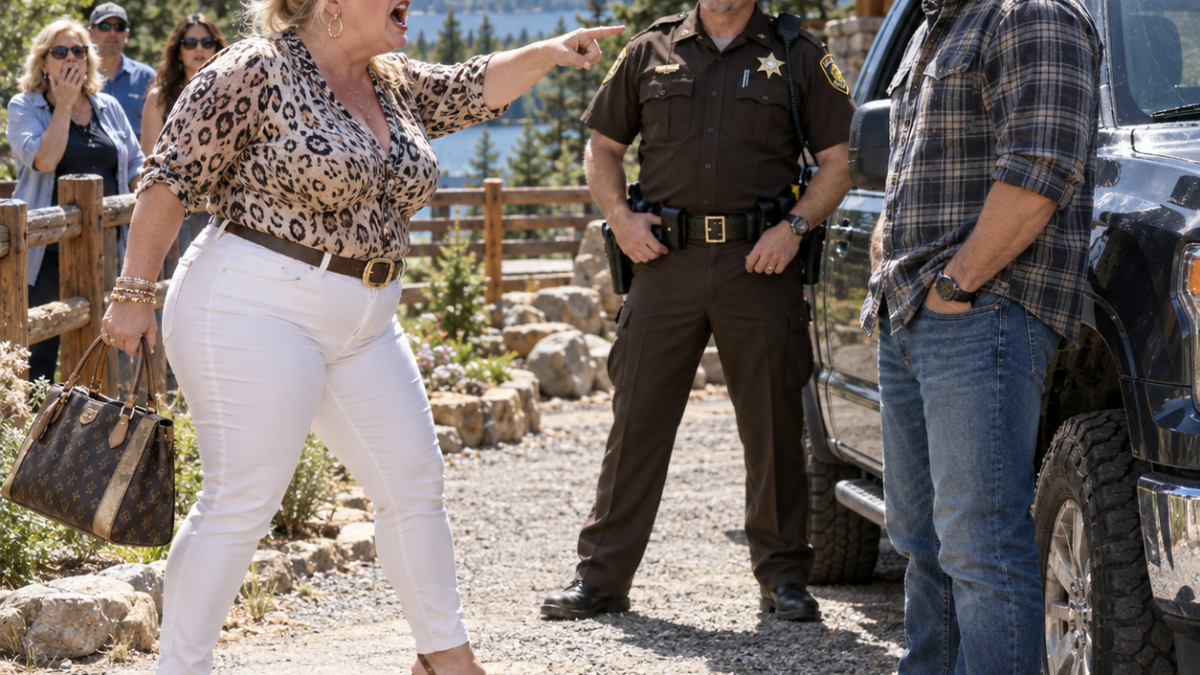
PART 2
“The association believes your driveway extends approximately ten feet beyond your legal boundary.”
I stared at him.
“Now my driveway is stealing land?”
“Encroaching.”
“On what?”
“HOA common property.”
I looked toward the gravel.
“I had the property surveyed before closing.”
“Yes. We’re aware.”
“That survey is filed with the county.”
“There may be discrepancies.”
“No.”
He held out a document.
“The board is prepared to resolve the matter amicably if you agree to relinquish the disputed strip.”
I didn’t take it.
“Relinquish ten feet?”
“Yes.”
“In exchange for?”
“The HOA would withdraw pending parking violations.”
I stared at him.
Then laughed.
Martin stopped smiling.
“You find that amusing?”
“You people are offering to stop enforcing fake violations if I give you actual land.”
“I wouldn’t characterize it that way.”
“I would.”
“Mr. Russo, these matters can become expensive.”
“I agree.”
His eyes narrowed.
“I suggest you think carefully.”
“I already shared the survey with Deputy McAllister.”
That stopped him.
“And my attorney.”
His jaw tightened.
“What Denise is doing looks a lot like attempted property fraud.”
“Let’s not use inflammatory language.”
“Then tell her to stop doing inflammatory things.”
He snapped the folder closed.
I stepped down from the deck.
“You’re standing on private property.”
“I’m aware.”
“Then we’ve both learned something today.”
“What?”
“I know where my property line is.”
I pointed toward his SUV.
“And you know where the road is.”
He left without another word.
That evening I drove into town for supplies.
Generator fuel.
Fasteners.
Fresh eggs from a roadside stand.
When I came back, the cabin looked normal.
But something felt wrong.
Anybody who has worked construction long enough knows that feeling.
A door hangs one degree different.
A latch sits wrong.
A smell isn’t where it belongs.
I walked around the side.
The crawl-space entrance was under the rear corner.
I crouched.
The padlock was gone.
In its place hung a shiny new lock.
Brand new.
Not mine.
I stood.
Called McAllister.
“Deputy?”
“Russo.”
“Somebody changed the lock on my crawl space.”
He was silent.
“Don’t open it.”
“I wasn’t planning to.”
“I’m twenty minutes out.”
Headlights cut through the trees eighteen minutes later.
McAllister crouched beside me.
“You give anyone access?”
“No.”
“Contractor?”
“No.”
“HOA?”
“No.”
He shined a flashlight around the frame.
“No pry marks.”
“They had a key or cut mine.”
“We open this, you understand we’re treating anything inside as evidence if it looks criminal?”
“Fine by me.”
I got a crowbar.
The new lock snapped.
McAllister crawled in first.
I followed with a flashlight.
Dust.
Pipes.
Insulation.
Water lines.
Then his beam stopped.
“Hold up.”
A small black object had been mounted beneath the floor joists.
Wireless camera.
Pointed upward.
Toward the living room.
Neither of us spoke for a second.
McAllister stood as much as the crawl space allowed.
“Well.”
“What?”
“That just turned into a felony investigation.”
We searched the rest.
Second camera near the water heater.
Third near the electrical panel.
All new.
All linked to a battery hub.
A SIM module sat inside.
Someone didn’t just want pictures.
Someone wanted remote access.
Real-time surveillance.
McAllister crawled back out and called the sheriff.
Before sunrise, a forensics team was under my house.
They bagged the cameras.
Photographed mounts.
Pulled serial numbers.
Collected the SIM.
I stood in the kitchen looking at the floorboards above where one lens had been.
Suddenly the cabin didn’t feel private.
I started thinking backward.
Every night I sat on that couch.
Every phone call.
Every document.
Every conversation.
Were they watching?
Recording?
Waiting?
McAllister walked in.
“You okay?”
“No.”
“Fair answer.”
“Can you trace them?”
“Likely.”
“Who bought them?”
“If they used a card, maybe.”
I looked at him.
“Only people who have been after me are Denise and her attorney.”
“Let us prove it.”
I nodded.
For three days, I stayed away.
Not because I was frightened.
At least, not entirely.
I wanted whoever installed those cameras to think I had backed off.
While the sheriff worked the surveillance case, I went to the county clerk.
I requested the original Whispering Pines charter.
Every boundary filing.
Every amendment.
Every plat.
Every recorded easement.
The clerk spent almost two hours pulling documents.
Then I found it.
1999.
Whispering Pines had attempted a boundary adjustment to absorb undeveloped forest on the northwestern edge into common land.
The application existed.
The map existed.
The HOA board had signed it.
But the approval page was blank.
County never accepted it.
Never recorded the transfer.
Never amended the plat.
The land remained private.
On older maps it appeared undeveloped.
Later maps showed adjacent ownership changes.
But HOA control?
Nothing.
Then I traced my driveway.
Straight across the exact area Denise claimed as common land.
Except legally it wasn’t.
I copied everything.
Sent it to McAllister.
Sent it to my attorney.
Then waited.
Friday afternoon, a marked cruiser pulled into the HOA office parking lot.
I wasn’t there.
The county clerk later told me Denise came outside waving her arms.
She yelled about harassment.
Political retaliation.
Abuse of authority.
The deputies served a warrant anyway.
Because the camera serial numbers had come back.
Purchased on the HOA corporate card.
Shipped to Denise Clayborn’s home address.
The local paper ran the headline two days later.
**HOA PRESIDENT UNDER INVESTIGATION FOR ILLEGAL SURVEILLANCE**
I read it once.
Then folded the paper.
That weekend, I went back to the cabin.
No one came by.
No threats.
No lawyers.
Just birds and wind in the pines.
I installed two new cameras.
Not hidden.
Large.
Visible.
Red indicator lights blinking.
One faced the driveway.
One faced the road.
My message was simple.
I see you now.
For the first time in weeks, I slept well.
Then Assistant District Attorney Valerie Grant called.
“Mr. Russo?”
“Yes.”
“Valerie Grant, Jefferson County DA’s office.”
I set down the conduit I had been unloading.
“What can I do for you?”
“We’ve opened a formal investigation into Whispering Pines HOA.”
I looked toward the road.
“Because of the cameras?”
“Partly.”
“What else?”
“Financial irregularities. Property complaints. Boundary disputes.”
My grip tightened on the phone.
“How many?”
“Enough that your case may be part of something larger.”
Two days later, I sat in her office.
Valerie was sharp.
Direct.
No small talk.
She opened a folder.
“Did you authorize any work by the HOA at your cabin?”
“No.”
“Any grading?”
“No.”
“Boundary work?”
“No.”
“Utility easement modification?”
“No.”
She slid an invoice across the desk.
$5,000.
Description:
**EASEMENT REGRADING AND BORDER COMPLIANCE**
Property address:
Mine.
Contractor:
Mountain Ridge Solutions LLC.
I stared at it.
“They never did this.”
“We know.”
“How?”
“The company was dissolved two years ago.”
I looked at her.
“So this is fake.”
“That’s our working conclusion.”
“Why use my address?”
“Could be cover for siphoning HOA funds.”
“Denise?”
“We’re tracing accounts.”
“Did she write herself five thousand dollars?”
“I didn’t say that.”
“You didn’t have to.”
Valerie closed the file.
“The important thing is this isn’t just a feud between you and an HOA president anymore.”
I nodded.
“I figured that when I found cameras under my floor.”
Her expression softened slightly.
“Fair.”
I left with a knot in my chest.
I had wanted to protect one driveway.
Now I was looking at fraud.
Potential embezzlement.
Fake contractors.
Surveillance.
Land claims.
And my address sat right in the middle.
The next morning, I drove to the overlook above Whispering Pines.
From there I could see the whole community.
Cabins between trees.
Gravel roads.
The small HOA office near the entrance.
Two county vehicles were parked outside.
Through binoculars I watched investigators carry boxes from the building.
Then Denise appeared.
She burst through the door holding papers.
Even from that distance, I could see her arguing.
Pointing.
Waving.
A deputy calmly guided her back inside.
I almost went down.
Didn’t.
I’d spent years on construction sites learning when to step into chaos and when to let professionals work.
This was their site now.
Back at my cabin, I poured concrete for a shed footing.
Working with my hands helped.
But the fake invoice bothered me.
Why my address?
There were dozens of homes.
Why create a fake job at mine?
Then I remembered Martin’s offer.
Give us ten feet.
Parking complaints disappear.
The camera.
The boundary adjustment.
The fake easement work.
All focused on the same strip.
That night I pulled out every development map from my closing binder.
Original county map.
Recorded survey.
Old Whispering Pines plan.
Then the altered map Martin had tried to show me.
At first, nothing.
Then I saw it.
A faint red corridor.
Future easement.
Running through six lots.
Mine included.
Label:
**PHASE II EXPANSION**
I stared at it.
There was no Phase II.
Whispering Pines was zoned for existing residential use.
The surrounding hillside couldn’t simply be converted.
Unless the HOA controlled the parcels.
Or could pretend it did.
I called a land-use attorney named Glenn, a retired councilman whose reputation around the county was simple:
Developers hated him.
We met the next afternoon.
He spread the maps across his desk.
Ten minutes.
Twenty.
Then he pointed.
“This.”
“I saw it.”
“Utility corridor.”
“Fake?”
“Unrecorded.”
“What does that mean?”
“It means somebody is planning around rights they don’t have.”
I showed him the 1999 rejected boundary adjustment.
He smiled without humor.
“There it is.”
“What?”
“They’re trying to resurrect a dead filing.”
“For what?”
He leaned back.
“Consolidation.”
“Explain.”
“If they pressure fringe owners into surrendering strips, easements, or entire parcels, they can create a continuous development footprint.”
“For more cabins?”
“Maybe.”
“Commercial?”
“Likely.”
“Can they?”
“If they legally acquire everything and rezone.”
“And if they don’t?”
“Then somebody starts inventing paperwork.”
I looked at him.
“They already did.”
“Yes.”
He tapped my lot.
“You’re probably the last clean break in the corridor.”
“Meaning?”
“Without your land, the proposed access doesn’t connect.”
Everything clicked.
Parking.
Tow threat.
Ten feet.
Surveillance.
Fake invoice.
Not personal.
Strategic.
“They wanted me out.”
“Or compliant.”
“What’s the difference?”
“Price.”
Over the next week, Glenn and I assembled everything.
Illegal camera evidence.
1999 rejected boundary filing.
Fake invoice.
Altered development map.
Martin’s proposed surrender.
Survey.
Tow footage.
Glenn filed a regulatory complaint.
Then a cease-and-desist covering any Whispering Pines land development dependent on the disputed easements.
The DA expanded its search warrant.
Denise’s home was searched.
Investigators found HOA files in her garage.
Memos.
Spreadsheets.
Draft property notices.
One phrase appeared more than once.
**CLEARING RESISTANCE**
Another:
**ABSORB FRINGE PARCELS QUIETLY**
She was arrested Monday morning.
I heard from McAllister before the news broke.
“They got her.”
“Charges?”
“Surveillance-related counts, fraud-related counts. More coming.”
I sat on my porch.
“How is she?”
“Loud.”
That didn’t surprise me.
By Wednesday, Whispering Pines called a special meeting.
Half the residents showed up.
I stood near the back.
Glenn spoke from the front.
“The evidence indicates the HOA president falsified financial records, approved unlawful surveillance, and attempted to manipulate property boundaries for potential private gain.”
People started whispering.
Glenn raised a hand.
“If you received notices concerning easements, property lines, access strips, or disputed common land, preserve them.”
An older man in flannel stood.
“You’re saying we were targeted?”
“Some of you may have been.”
Another woman called out, “Why?”
“Development.”
The room went still.
Glenn pointed toward a map.
“Several fringe parcels appear in a proposed expansion corridor.”
Someone cursed.
Another person said, “She told us Phase II was approved.”
“It wasn’t.”
Then Glenn looked toward me.
“Mr. Russo’s evidence was instrumental.”
Heads turned.
Someone clapped.
Then another.
People started standing.
I hated it.
Not because I wasn’t grateful.
Because it felt too simple.
I had not uncovered everything.
I got angry about a truck.
That was it.
The rest came because Denise couldn’t stop.
After the meeting, a woman with silver braids approached.
“Lorna.”
“Anthony.”
“I live two cabins down.”
“I’ve seen you.”
“I hated what Denise was doing.”
“Why didn’t you say something?”
She gave a tired smile.
“Because every time someone challenged her, they got three violation notices.”
That shut me up.
“I didn’t know how to fight.”
“You don’t have to fight alone.”
Her smile changed.
“Cleanup Saturday.”
“What cleanup?”
“We’re taking down the old intimidation signs.”
“I’ll bring paint thinner.”
Saturday morning, residents gathered near the entrance.
The old HOA board had covered the community in signs.
Restricted trail.
Authorized parking only.
Permit required.
Private access.
Violation subject to fine.
Half weren’t legally supported.
Some referred to rules nobody could even find.
We scraped.
Removed.
Repainted.
The main sign had been rusting for years.
When it was cleaned, someone handed me a brush.
“What do we write?”
I thought.
Then painted one word.
**WELCOME**
Nothing else.
No threat.
No regulation.
Just welcome.
That night, I slept with the bedroom window open.
Wind through pine.
No engines.
No footsteps.
No tow truck.
Exactly what I bought the cabin for.
Closure should have arrived there.
It didn’t.
Glenn called a week later.
“They unsealed the audit.”
“How bad?”
“Come down.”
The interim board had taken over the HOA office.
The building already felt different.
Blinds open.
Coffee on.
Residents walking in without being watched.
Glenn spread the audit across the table.
“Seventy thousand plus.”
“In what?”
“Misappropriated funds.”
He pointed.
“Fake landscaping.”
Another page.
“Equipment rental.”
Another.
“Phantom maintenance.”
Then my invoice.
Five thousand.
“Easement work.”
Lorna sat across from me.
Her face went pale.
“I’ve paid maintenance fees every quarter for five years.”
Glenn nodded.
“You and twelve others.”
“Where did it go?”
“Private account in Denver.”
Silence.
I looked at the pages.
Denise had stolen something more than money.
Trust.
People had handed over dues believing roads would be maintained.
Snow cleared.
Common areas repaired.
She treated it like a private cash drawer.
“What about the old board?”
I asked.
“Two resigned.”
“Treasurer?”
“Under investigation.”
“Secretary?”
“Says she didn’t know.”
Glenn tapped three invoices.
“Her signature is here.”
Lorna whispered, “So she did know.”
“Maybe some. Maybe not all.”
“What about getting money back?”
“Assets are being frozen.”
I looked at Glenn.
“Best case?”
“Restitution.”
“Worst?”
“Civil claims.”
Justice sounds clean in stories.
It isn’t.
Real justice is bank subpoenas.
Forensic accounting.
Asset holds.
Months.
People waiting.
Still, it was moving.
Then Doug came to my cabin.
Lot 39.
Nervous.
Work boots.
Denim shirt.
He thanked me.
I told him everybody had played a part.
Then he said something that made me laugh.
“You should run for the board.”
“Absolutely not.”
“Why?”
“I bought a cabin to avoid meetings.”
“Exactly.”
“That makes no sense.”
“People who want power usually shouldn’t have it.”
I stared at him.
“That’s almost intelligent.”
He grinned.
“Think about it.”
He started down the steps.
Then stopped.
“One more thing.”
“What?”
“North trail.”
“What about it?”
“County land.”
I frowned.
“The restricted trail?”
“Public the whole time.”
“Denise’s signs?”
“Fake.”
“Why?”
Doug laughed.
“Trail runs behind her cabin.”
I stared.
“She blocked public land because people walked behind her porch?”
“County surveyor pulled the signs yesterday.”
I put on boots.
Walked the trail.
It curved around the ridge.
Ponderosa pine.
Rock.
Wind.
Then opened onto a clearing.
Mountains.
Snow on distant peaks.
Hawks circling.
I sat on a fallen log.
For months, Denise had controlled people with paper.
Signs.
Notices.
Rules.
Most worked because nobody checked.
That bothered me.
Not because everyone was stupid.
Because everyone was busy.
People trust official-looking things.
Most don’t have time to drive to the county clerk every time a sign appears.
Denise knew that.
Used it.
The next week was her arraignment.
I didn’t go.
Local news covered it.
Her lawyer called her overwhelmed.
Misguided.
A dedicated volunteer who lost control.
The judge heard about destroyed evidence concerns and flight risk.
Bail denied.
She was led away.
Same day, Whispering Pines posted an open meeting notice.
Simple.
No threats.
No legal language.
**COMMUNITY DISCUSSION — ALL RESIDENTS WELCOME**
I attended.
People debated snowplows.
Trail maintenance.
Emergency road funds.
Nobody shouted.
Nobody waved a clipboard.
Then nominations opened for two vacant seats.
I don’t know why I raised my hand.
Maybe Doug.
Maybe Lorna.
Maybe cameras under my floor.
The vote was almost unanimous.
Suddenly I was on the board I had wanted nothing to do with.
The irony was painful.
I told myself one term.
Then out.
That night, I returned to the cabin late.
As I closed the gate, I saw a vehicle parked half behind the trees.
Lexus.
Denise’s.
Engine off.
I walked toward it.
Window lowered.
Harold Clayborn sat inside.
Her husband.
I had barely seen him before.
Quiet man.
Always behind Denise.
“She left a lot of damage,” he said.
“She stole from people.”
“I didn’t know.”
“You didn’t ask?”
His face tightened.
Fair hit.
He reached into the glove box.
Manila envelope.
“The last bank statements.”
I took it.
Rows of payments.
Accounts.
Vendors.
One name stood out.
**GLENROCK PARTNERS**
I knew it.
Developer.
Had tried buying mountain land the previous year.
I looked at Harold.
“What is this?”
“She was brokering something.”
“What?”
“I don’t know all of it.”
“You expect me to believe that?”
He looked straight ahead.
“She stopped telling me things a long time ago.”
I opened another page.
Deposit.
Withdrawal.
Payment.
Land study.
Consulting.
Access planning.
“She was trying to sell the neighborhood.”
Harold exhaled.
“Looks like.”
“You need to turn this in.”
“No one listens to me.”
I stepped back.
“Then make them.”
He said nothing.
Drove away.
I took the envelope to the DA the next morning.
Valerie called me that afternoon.
“Where did this come from?”
“Harold.”
“This is significant.”
“How significant?”
“Potential wider conspiracy.”
Glenrock had been paying consulting money into entities tied to Denise.
The proposed Phase II corridor connected residential lots to a commercial mountain-hospitality plan.
Lodge.
Townhomes.
Short-term rental units.
Retail.
Parking.
My driveway was one of the access points.
That was why the ten feet mattered.
Not aesthetics.
Not parking.
Access.
Denise wanted control over a strip connecting roads.
If I signed it away, she had leverage.
If I refused, harass me.
Tow me.
Claim boundary error.
Watch the cabin.
Manufacture easement work.
Pressure until I sold.
The DA filed additional charges.
Land speculation fraud.
Money laundering.
Conspiracy.
The last old board member resigned.
We passed a transparency resolution at our first real meeting.
Every financial decision posted online within seventy-two hours.
Receipts.
Vendor name.
Amount.
Purpose.
No unexplained checks.
No private surveillance equipment.
No hidden enforcement.
Then I proposed something that scared even some reform-minded residents.
“Remove aesthetic enforcement.”
Lorna raised an eyebrow.
“All?”
“Individual property aesthetics.”
“What about abandoned junk?”
“County code handles actual hazards.”
“Fences?”
“Owners.”
“Mailbox colors?”
“Owners.”
“Plant height?”
“Owners.”
A man asked, “What if somebody paints their cabin purple?”
I shrugged.
“Then we all learn to live with purple.”
The room laughed.
Motion passed.
Unanimous.
Afterward Lorna handed me cider.
“I thought I was going to have to sell.”
I looked at her.
“Because of Denise?”
“Because of the notices.”
“How many?”
“Twelve in eight months.”
“For what?”
“Woodpile location. Curtains. Porch chair color.”
I stared.
“Porch chair color?”
“Blue.”
“Criminal.”
She laughed.
Then her eyes filled.
“I didn’t think we’d win.”
“Neither did I.”
She lifted her cup.
“To the scream.”
“What scream?”
“The first one.”
I smiled.
Denise yelling that I couldn’t park at my own cabin.
I tapped my cup against hers.
“And the freeze afterward.”
We laughed.
But the story still wasn’t finished.
Glenrock Partners became the next problem.
The developer denied everything.
Claimed Denise acted without authority.
Claimed payments were ordinary consultation.
Then investigators found emails.
One from Glenrock executive Evan Merritt:
**Need fringe parcels cleared before acquisition announcement.**
Denise:
**Russo lot resistant. Working compliance angle.**
Merritt:
**Can counsel pressure boundary uncertainty?**
Denise:
**Already scheduled.**
That was Martin Lanning.
The lawyer.
The “misunderstanding.”
The ten feet.
Not legal confusion.
Strategy.
Martin was subpoenaed.
He claimed he was acting on information supplied by the board.
Maybe.
But billing records showed he had participated in discussions about land consolidation.
His professional conduct went under review.
The DA interviewed me again.
Valerie slid emails across the table.
“Recognize the language?”
I read.
**Relinquish disputed strip.**
Exact phrase Martin used.
“He knew.”
“Maybe.”
“You don’t believe it?”
“I believe we prove what we can prove.”
“What happens to him?”
“Depends on evidence.”
I hated that answer.
Not because it was wrong.
Because I wanted clean villains.
Clean consequences.
Life doesn’t work that way.
Some people know everything.
Some know half.
Some avoid knowing because ignorance is useful.
Martin may have lived in that third category.
He stopped representing Whispering Pines.
His firm withdrew.
The state bar opened an inquiry.
That was enough for me.
Glenrock pushed back.
They filed letters.
Threatened civil action.
Claimed Whispering Pines damaged a legitimate business opportunity.
We responded with documents.
They sent appraisers near the boundary.
We called the county.
They challenged public trail access.
Lost.
They challenged the cease-and-desist.
Lost.
Then a former employee came forward.
Her name was Sarah Mitchell.
She had worked accounting.
She brought a flash drive.
Invoices.
Emails.
Internal projections.
Glenrock had calculated exactly how much pressure might force six owners to sell.
Not guesses.
Scores.
Age.
Debt.
Occupancy.
Legal representation.
My line read:
**Russo — cash purchaser / high resistance / target access strip only**
I stared.
High resistance.
At least they got something right.
Lorna’s lot had another note.
**Likely sale if fines continue.**
That made me angrier than anything directed at me.
People reduced to resistance levels.
Vulnerability.
Price.
Denise wasn’t just power hungry.
She had become the local mechanism for a development strategy.
If Glenrock wanted land, she made living uncomfortable.
More notices.
More disputes.
More rules.
Then developers arrived with offers.
The pattern became obvious.
Three owners had already sold.
One elderly couple accepted below-market money after two years of fines.
Another family sold after being told a retaining wall violated association standards.
A third moved after access disputes.
The new board contacted all of them.
One former resident, Paul Benton, agreed to speak.
“They wore us down.”
He sat at my kitchen table.
“Every week something.”
“Why not fight?”
“My wife had cancer.”
I stopped.
“We were driving two hours to treatment.”
He looked toward the window.
“I didn’t have energy for a property war.”
That was Denise’s advantage.
She didn’t need everyone to be weak.
Just busy.
Sick.
Old.
Tired.
Alone.
I looked down.
“I’m sorry.”
Paul shrugged.
“We got out.”
“Would you want to come back?”
“My wife died last year.”
I had no answer.
He left me copies of the notices.
I sat alone for a long time after.
That was when revenge stopped feeling satisfying.
Denise had hurt people who never got an ending.
No applause.
No meeting.
No sheriff backing them up.
They just left.
I wanted the case to matter for them too.
The DA added coercion-related evidence to the financial scheme.
Glenrock executives were charged months later.
Not all.
Enough.
Evan Merritt faced fraud and conspiracy charges.
Company assets tied to the project were frozen.
Civil settlements followed.
Some former owners recovered money.
Paul received compensation.
When Valerie told me, I asked if he knew.
“He cried.”
I stared at the floor.
That was worth more than seeing Denise arrested.
Her trial came almost a year after the first parking fight.
By then the cabin felt like mine again.
I no longer checked the cameras every ten minutes.
But I kept them.
Evidence has a way of making you respect storage space.
Courtroom was packed.
Residents.
Reporters.
Former owners.
Harold sat in the back.
I nearly didn’t recognize him.
He looked older.
Smaller.
Denise entered in a dark suit.
No sunglasses.
No clipboard.
Her hair shorter.
She didn’t look at me.
Prosecutors built the case slowly.
Illegal surveillance.
Corporate-card purchase.
Fake invoices.
Private accounts.
Rejected 1999 filing.
Development corridor.
Glenrock payments.
Property targeting.
Bank records.
Harold testified.
That surprised me.
He looked terrified.
Valerie asked, “Did your wife keep HOA records at home?”
“Yes.”
“Did you know why?”
“She said office storage wasn’t secure.”
“Did you know about Glenrock?”
“Eventually.”
“When?”
“Late.”
“How late?”
“After her arrest.”
Valerie showed a check deposit.
“Your signature appears on this joint account.”
Harold swallowed.
“I signed household banking forms. I didn’t track every deposit.”
Denise finally looked at him.
Not anger.
Something colder.
Betrayal.
Harold’s voice shook.
“I should have asked.”
The room went quiet.
“I knew she was changing.”
Valerie waited.
“She got obsessed with control.”
He stared at his hands.
“I told myself it was HOA nonsense. Not my business.”
“And now?”
He looked toward the gallery.
“People lost money because I decided not knowing was easier.”
I respected him for saying it.
Lorna testified.
Paul testified.
McAllister testified about the tow attempt and cameras.
Forensics traced camera purchases to Denise.
The tow operator testified that Denise called.
He said she told him the truck belonged to an “uncooperative owner” and was abandoned on HOA property.
Valerie asked:
“Did she show you proof?”
“No.”
“Did you ask?”
“No.”
“Why?”
“She sounded official.”
There it was.
The whole scheme in four words.
She sounded official.
Martin testified under immunity on narrow issues.
He admitted Denise asked him to pressure me over the ten-foot strip.
Valerie:
“Did you verify the HOA owned it?”
Martin shifted.
“I relied on materials provided.”
“Did you review the recorded plat?”
“Not personally.”
“Why not?”
“I believed the planning consultant had.”
“Did Mr. Russo tell you he had a county survey?”
“Yes.”
“What did you do?”
“I reported that to Ms. Clayborn.”
“And?”
“She told me to proceed with settlement discussion.”
“You mean demand surrender of land?”
“Propose resolution.”
I almost laughed.
Lawyers.
Even under oath.
Denise’s own emails hurt her most.
**Need Russo strip before Phase II can close.**
**Tow pressure failed. Shift to boundary.**
**Surveillance may establish unapproved interior modifications.**
That one made the courtroom murmur.
She had placed cameras under my floor to search for violations.
Not safety.
Not security.
Leverage.
Another message:
**If we establish enough noncompliance, sale becomes easiest path.**
Valerie let the sentence sit on screen.
Denise stared straight ahead.
When she testified, her attorney framed her as a volunteer who became overwhelmed.
A community president trying to protect investments.
Whispering Pines had aging roads.
Rising maintenance costs.
Residents resisting dues.
Glenrock offered a solution.
Development revenue.
She said she believed expansion would stabilize the community.
Valerie asked:
“Did stabilizing the community require cameras under Mr. Russo’s home?”
Denise stiffened.
“I was told inspections were necessary.”
“Who told you?”
“Consultants.”
“Name one.”
Silence.
“Did stabilizing the community require a fake contractor invoice at his address?”
“No.”
“Did stabilizing the community require a tow truck at two in the morning?”
“That was enforcement.”
“Of a rule that didn’t apply?”
“I believed it did.”
Valerie held up the county plat.
“You had this?”
Denise looked.
“Yes.”
“When?”
“Later.”
An email appeared.
Dated before the tow attempt.
Attached:
County parcel map.
Valerie asked again.
“When?”
Denise’s attorney objected.
Overruled.
Denise swallowed.
“Before.”
“Before you ordered the tow?”
“Yes.”
That was the freeze.
Not the one outside my cabin.
The real one.
Her face finally went still because the lie had nowhere left to go.
The jury deliberated less than seven hours.
Guilty on multiple counts.
Surveillance.
Fraud.
Theft-related charges.
Conspiracy.
Financial misconduct.
Other defendants had separate outcomes.
Glenrock executives took deals or went to trial.
The old treasurer pleaded to reduced charges for cooperation.
The secretary avoided criminal conviction but admitted approving payments without review.
Martin faced professional discipline.
No single courtroom fixed everything.
But enough truth made it into the record.
At sentencing, several residents spoke.
Lorna.
Paul.
An elderly woman named Esther who had paid fake maintenance charges for six years.
I didn’t speak.
Valerie asked me twice.
I declined.
“Why?”
“Everybody knows what happened to me.”
“So?”
“They need to hear from the people no one listened to.”
She nodded.
Paul spoke about his wife.
Not dramatically.
That made it worse.
“We were dealing with chemo.”
His voice broke.
“Every week a new notice showed up.”
He looked toward Denise.
“I sold because I chose my wife over a house.”
Silence.
“I’d make the same choice again.”
He wiped his eyes.
“But you knew that.”
Denise looked down.
That was the most brutal line of the entire trial.
You knew that.
Because she did.
She knew who was vulnerable.
Used it.
The judge imposed prison time.
Restitution.
Asset forfeiture.
Ban from HOA or fiduciary positions after release.
The criminal case ended.
But Whispering Pines had to keep living.
That was harder than people think.
Removing a bad leader doesn’t automatically create a good community.
Old habits remained.
Some residents still wanted strict enforcement.
Others wanted no association at all.
Meetings got tense.
One man demanded we abolish dues entirely.
Lorna pointed out snowplows cost money.
Someone else wanted private roads turned over to the county.
County wasn’t interested.
We argued.
A lot.
But difference mattered.
No one was punished for arguing.
Minutes were published.
Budgets public.
Votes recorded.
I served one year.
Then another.
Doug teased me.
“You said one.”
“I lie under pressure.”
At the end of the second year, I stepped down.
I had done what I came to do.
Transparency rules were embedded.
Financial audits annual.
No private surveillance.
No aesthetic enforcement beyond basic safety covenants.
Public trails open.
Property lines verified.
Development proposals required actual owner consent.
I returned to being a man who wanted coffee and silence.
Lorna became board president.
First meeting under her leadership lasted forty-three minutes.
Record.
She sent me a text.
**See? Women with clipboards aren’t always dangerous.**
I replied:
**Still suspicious.**
The cabin changed too.
I rebuilt the deck.
Finished the shed.
Installed solar.
Regraded the gravel.
Not because an HOA told me.
Because I wanted to.
That difference felt enormous.
I replaced the crawl-space door entirely.
Steel hasp.
Inside, where the camera had been mounted, I left one small mark in the joist.
Didn’t sand it.
Didn’t hide it.
A reminder.
One summer evening, McAllister stopped by.
No uniform.
Fishing shirt.
He brought beer.
“Retired?”
“From what?”
“Saving mountain civilization.”
“Never started.”
He laughed.
We sat on the porch.
“You know the tow driver still tells that story.”
“What story?”
“Guy with unloaded shotgun.”
“How does he know it was unloaded?”
“I told him.”
“Why ruin it?”
“Public safety.”
We watched the road.
Then McAllister said:
“You got lucky.”
“I know.”
“No, really.”
“With what?”
“Cameras.”
I looked at him.
“If you hadn’t recorded that Lexus, first complaint might’ve looked petty.”
“HOA fight.”
“Exactly.”
“Then crawl-space cameras?”
“Could’ve been harder to trace without purchase records.”
I nodded.
“And if Denise paid cash?”
“Different case.”
We sat quietly.
“You ever think about people who don’t have cameras?”
“All the time.”
“So do I.”
That conversation pushed me toward something I didn’t expect.
I started helping neighbors review property documents.
Nothing formal.
No legal advice.
Just maps.
Surveys.
Recorded plats.
If someone got a strange HOA notice, I showed them where to verify it.
Lorna joked I had become the free department of “Are They Allowed To Do That?”
Most answers were boring.
Yes, the road fee was valid.
No, the HOA couldn’t enter a backyard without permission.
Yes, the snow-removal assessment was approved.
No, that trail wasn’t private.
Boring facts prevented dramatic problems.
Good.
The state regulatory board later used Whispering Pines as an example in updated HOA guidance.
No press conference.
No law named after anybody.
Fine by me.
Requirements strengthened around financial disclosure, contractor records, and property-boundary enforcement.
Glenn told me over lunch.
“Your driveway caused paperwork statewide.”
“My legacy.”
“Could be worse.”
Years passed.
Whispering Pines changed slowly.
Not perfect.
Never perfect.
A neighbor once painted his front door orange.
Half the community hated it.
Nobody fined him.
A family built a strange wooden sculpture near their driveway.
Children loved it.
Adults called it ugly.
Stayed.
Lorna grew vegetables.
Doug became treasurer.
Terrible decision.
He turned out to be painfully honest.
Posted receipts for everything including twelve-dollar printer ink.
Harold moved away.
Before leaving, he stopped at my cabin.
No Lexus.
Old pickup.
He stood on the porch holding another envelope.
I groaned.
“Please tell me that isn’t evidence.”
He smiled faintly.
“No.”
Inside was a photograph.
Denise years earlier.
Before Whispering Pines.
Young.
Standing beside him at a lake.
Happy.
Normal.
I looked at him.
“Why give me this?”
“I don’t know.”
He sat.
“She wasn’t always what she became.”
I said nothing.
“People talk about her like she was born evil.”
“She hurt a lot of people.”
“I know.”
He stared toward the pines.
“She started with rules because she liked order.”
“Then?”
“People praised her.”
“For what?”
“Fixing things. Organizing. Getting contractors. Solving disputes.”
He rubbed his hands.
“She started believing nobody else could do it right.”
I understood.
“Then Glenrock came.”
“Yes.”
“Money.”
“Money and attention.”
He nodded.
“They told her she was visionary.”
I laughed without humor.
“Developers love visionaries.”
“She wanted Whispering Pines to matter.”
“And ended up stealing from it.”
He looked down.
“Yes.”
I handed the photo back.
“You keep this.”
“Why?”
“Because you knew her before.”
He took it.
“I should’ve stopped her.”
“You couldn’t control her.”
“I could’ve spoken.”
That was true.
We both knew.
I didn’t absolve him.
Didn’t need to punish him either.
He left the next morning.
That was the last time I saw him.
Denise served her sentence.
Eventually released.
Moved away.
I never heard from her.
One day a letter arrived with no return address.
Handwriting I didn’t recognize.
Inside:
**Mr. Russo,**
**I spent a long time telling myself I was protecting Whispering Pines. By the time I understood I was protecting my own position, I had already hurt too many people to admit it. I am not asking for forgiveness.**
**Denise**
That was all.
I read it twice.
Then put it in the same file as the 1999 rejected boundary adjustment.
Not as forgiveness.
Evidence of something else.
People can realize too late.
It doesn’t undo anything.
But I preferred that to denial.
The cabin became what I originally wanted.
Weekends.
Coffee.
Silence.
I kept cameras, though.
Big ones.
Visible.
Once, a new resident named Tyler asked why.
“Bears?”
“HOA presidents.”
He laughed.
Thought I was joking.
Lorna told him the story later.
He came back.
“You were serious.”
“Unfortunately.”
He pointed at the driveway.
“She tried to tow you from here?”
“Two in the morning.”
“And the sheriff backed you?”
“Sheriff backed the deed.”
“Same thing.”
“No.”
I shook my head.
“Important difference.”
Authority doesn’t belong to whoever has a badge, clipboard, title, or board seat.
It belongs to law when the law is actually followed.
That was the lesson I kept.
Not “fight every HOA.”
Not “never trust neighbors.”
Not “cameras solve everything.”
Just verify.
Document.
Ask questions.
And don’t surrender property because someone sounds confident.
The cleanest ending came years later.
No courtroom.
No arrest.
No applause.
I was sitting on the porch one fall morning.
Coffee.
Cool air.
Pine needles.
A pickup slowed at the end of my drive.
For half a second, my body tightened.
Old reflex.
Then Doug leaned out.
“Board meeting tonight!”
“No!”
“Budget vote!”
“No!”
“Snowplow contract!”
“Absolutely not!”
He laughed and drove away.
I smiled.
Silence returned.
A hawk crossed above the trees.
Wind moved through the branches.
My truck sat exactly where it had sat the day Denise first screamed at me.
Same gravel pad.
Same private land.
No tow truck.
No violation notice.
No fake property claim.
Just my pickup and my cabin.
I went inside to refill my coffee.
On the wall by the door hung a framed copy of the original county survey.
Under it, for my own amusement, I had mounted the very first violation notice Denise ever gave me.
**UNAUTHORIZED PARKING**
Visitors always asked why.
I never gave them the whole story unless they had time.
Because the whole story was never really about parking.
It was about how small abuses become big ones when nobody checks them.
A fake parking rule became a tow attempt.
A boundary claim became a land grab.
A legal letter became pressure to surrender property.
A hidden camera became a felony case.
A fake invoice exposed theft.
A rejected plat exposed a development scheme.
One scream in a driveway eventually woke up an entire community.
That part still surprised me.
I came to Whispering Pines because I didn’t want neighbors.
Then I ended up helping them.
Lorna once reminded me of that.
“You know what’s funny?”
“What?”
“You bought the cabin to get away from people.”
“Still trying.”
“You joined the board.”
“Mistake.”
“You repainted the community sign.”
“Temporary insanity.”
“You opened the trail.”
“County did.”
“You helped reform everything.”
“Can I go home now?”
She laughed.
“You already are.”
That stopped me.
Home.
For a long time, the cabin had stopped feeling like one.
After the surveillance, I checked floorboards.
Windows.
Locks.
Every noise.
Denise hadn’t just challenged ownership.
She invaded the one place I bought to feel safe.
Getting that feeling back took longer than winning the case.
Years.
Ordinary mornings.
No incidents.
Repeated proof that the silence was real.
That was the true ending.
Not Denise in cuffs.
Not Glenrock exposed.
Not the money recovered.
Not the board vote.
The end was being able to hear tires on gravel and not automatically assume trouble.
It was leaving a window open at night.
It was putting tools on the porch and expecting them to still be there.
It was sleeping.
One winter morning, snow covered the driveway.
My truck sat under six inches of white.
I walked outside with coffee.
No footprints.
No clipboard.
I thought about the first day.
Denise shouting:
“You can’t park here.”
I looked at the truck.
Then at the cabin.
Then at the road.
I started laughing.
No audience.
No one to understand why.
Didn’t matter.
I took a broom and cleared the windshield.
Then went back inside.
Because after everything Denise tried to take—land, privacy, money, peace—the most satisfying thing I ever did was the simplest.
I kept parking my truck exactly where it belonged.
On my property.
In front of my cabin.
And nobody ever tried to tow it again.
The pipe in Juniper turned out to be exactly the kind of problem Drew would have loved.
Not because it was serious.
Because it looked serious, sounded expensive, and turned out to be one cracked fitting behind a bathroom wall that could be replaced for twelve dollars if you were willing to crawl under a sink and swear at copper tubing for half an hour.
Grace stood in the doorway while I worked.
“You could call maintenance.”
“I am maintenance.”
“You own the resort.”
“Same thing.”
“No, it isn’t.”
“It was for Drew.”
“You are not Drew.”
I stopped with the wrench halfway around the fitting.
She didn’t mean it cruelly.
That was the problem.
People had spent years telling me how much I reminded them of my uncle.
Same stubbornness.
Same habit of fixing something before reading instructions.
Same tendency to disappear into the mountains whenever life got too loud.
But Grace was right.
I wasn’t Drew.
For a long time I’d treated inheriting Pine Ridge as though it came with an obligation to become him.
Run the place the way he did.
Keep the same furniture.
Use the same office.
Serve the same stew on Saturday nights.
Preserve every board, nail, and tradition exactly where he left it.
It had taken me years to understand that preservation wasn’t the same thing as living.
I tightened the fitting.
“Hand me the flashlight.”
Grace gave it to me.
“You thinking?”
“Dangerous habit.”
“You got quiet.”
“Drew.”
She leaned against the doorframe.
“You still do that.”
“Do what?”
“Use him as the answer key.”
I looked up.
“For the resort?”
“For everything.”
“That isn’t fair.”
“Probably not.”
She folded her arms.
“But every time there’s a hard decision, you ask what Drew would’ve done.”
“He built the place.”
“And now you run it.”
I went back to the pipe.
“You’re getting very philosophical for somebody who called me about a leak.”
“The leak was easier.”
She left before I could argue.
The fitting held.
The wall did not.
When I removed the damp drywall, I found another problem.
Not plumbing.
A metal box.
Small.
Old.
Wedged between two studs.
For a few seconds I assumed it was an abandoned electrical junction.
Then I saw the hinge.
I pulled it free.
Locked.
No label.
Grace came back when she heard me banging around.
“What did you break?”
“Nothing.”
“That statement has never been reassuring.”
I held up the box.
She frowned.
“What’s that?”
“No idea.”
We carried it to Drew’s old office.
I had keys to half the mountain, but none fit.
Finally I used a thin pry bar and opened it carefully.
Inside were envelopes.
Old reservation slips.
Receipts.
Photographs.
And one notebook.
Drew’s handwriting.
The first page was dated almost sixteen years earlier.
At first, it looked ordinary.
Cabin maintenance.
Road repairs.
Equipment.
Then I noticed names.
Karen Whitmore.
Walter Dean.
Martin Pell.
The former zoning administrator.
Several appeared years before Karen supposedly “stepped in” after Drew died.
I sat down.
Grace read over my shoulder.
“Was Karen involved with the resort while Drew was alive?”
“I didn’t think so.”
The notebook suggested otherwise.
One entry:
Karen stopped by again about community partnership. Wants HOA to manage bookings during winter. Told her no. Says I am leaving money on table. Maybe. My table.
I smiled despite myself.
Another:
K.W. pushing joint marketing arrangement. Claims Pine Ridge HOA can generate year-round occupancy. Not interested. Too many committees.
Then:
Martin Pell says zoning office received inquiry about community custodianship if resort ownership changes. Odd question. Told him I am not dead yet.
My smile disappeared.
Grace noticed.
“What?”
I showed her.
She read twice.
“Someone was planning before he died.”
“Maybe.”
“Carson.”
“Maybe.”
“You hate that word.”
“It is useful when I don’t have proof.”
The final relevant entry was written roughly eleven months before Drew’s heart attack.
Karen says eventually this place needs a professional structure. Says my sentimental management is holding entire ridge back. Told her the ridge has survived my incompetence for forty years.
Underneath, Drew had drawn a tiny mountain giving Karen the middle finger.
Grace laughed.
I didn’t.
Because Drew had known.
Not the theft.
Not what came later.
But he knew Karen wanted Pine Ridge inside the HOA’s control long before his death.
I called Lee.
She arrived the next afternoon.
I handed her the notebook.
She read the entries, then looked at the maintenance records inside the metal box.
“Where did you find this?”
“Behind Juniper bathroom wall.”
“That is either incredibly convenient or deeply strange.”
“Old renovation.”
“Drew hide things often?”
“He hid cash in coffee cans.”
“That is not evidence storage.”
“No.”
She turned to photographs.
One showed Drew and Karen standing beside the lodge years earlier.
Both smiling.
Another showed a Pine Ridge community fundraiser.
Karen handing Drew an oversized ceremonial check.
“Five thousand dollars,” Lee said.
“For what?”
I flipped it over.
WINTER TRAIL PROJECT.
Date.
Fourteen years ago.
Grace said, “So the HOA gave Pine Ridge money?”
“Looks like it.”
Lee looked thoughtful.
“That matters.”
“How?”
“Karen’s lawyers argued the HOA’s involvement developed out of emergency stewardship after Drew died.”
“Which was false.”
“Maybe incomplete.”
She tapped the photograph.
“If there was a legitimate preexisting partnership, they could argue the later operations were a continuation.”
“Without permission?”
“Still a problem.”
“But better defense.”
“Yes.”
I leaned back.
“You sound worried.”
“I sound like a lawyer who dislikes surprises.”
We spent the next week reconstructing Drew’s relationship with Pine Ridge HOA.
It turned out the story was more complicated than anyone remembered.
Years earlier, Pine Ridge Resort and the HOA had shared some services.
Snowplowing.
Trail maintenance.
Waste hauling.
Emergency generators during storms.
The resort contributed money.
The HOA contributed volunteers.
There had even been joint events.
But every surviving document emphasized independence.
Pine Ridge Mountain Resort remained privately owned.
The HOA managed the residential subdivision downhill.
No authority crossed without written agreement.
Drew understood the boundary clearly.
Karen apparently found it inconvenient.
Lee located correspondence from twelve years earlier.
Karen:
A consolidated management structure would reduce duplication and improve visitor experience.
Drew:
A consolidated management structure would give me meetings about napkin colors.
Karen:
This is exactly why professional oversight is needed.
Drew:
My guests come for snow and trees. They do not care about napkins.
I read it twice.
“That sounds like him.”
Lee kept going.
Karen had been right about one thing.
Pine Ridge left money on the table.
Drew routinely refused to raise rates.
Let locals use trails free.
Gave rooms away.
Bought equipment without negotiating.
Kept employees during bad seasons even when he could have reduced hours.
He wasn’t incompetent.
But he didn’t maximize profit.
Karen saw inefficiency.
Drew saw community.
Those philosophies had collided long before his death.
Then something occurred to me.
“Why was the notebook in a wall?”
Grace shrugged.
“Maybe Drew hid it.”
“Why?”
Lee closed the folder.
“Maybe he didn’t.”
We traced the Juniper renovation.
Nine years earlier.
Contractor:
North Slope Interiors.
Owner:
Samuel Whitmore.
Karen’s older brother.
I stared at the invoice.
“You’re kidding.”
Lee shook her head.
“Drew hired Karen’s brother?”
“Looks like it.”
The company no longer existed.
Samuel Whitmore had moved to Arizona.
We found him through public records.
He agreed to speak after Lee explained we weren’t accusing him of anything.
Video call.
Sun-bronzed face.
White beard.
Desert behind him.
“Yeah, I remodeled Juniper.”
“Do you remember the wall box?” I asked.
“What wall box?”
I showed him.
He leaned toward the screen.
“That’s Drew’s.”
“You recognize it?”
“He used those lockboxes everywhere.”
“For money?”
“Paper.”
“Did you put this one in the wall?”
Samuel laughed.
“Why would I put a box inside a wall?”
“That is what I’m asking.”
He thought.
“Wait.”
“What?”
“Drew.”
“What about him?”
“During demolition he had me leave a cavity beside the plumbing access.”
“Why?”
“Said he wanted a hidden maintenance compartment.”
“What for?”
“Never told me.”
“Did Karen know?”
Samuel’s expression changed slightly.
“My sister knew about everything around Pine Ridge.”
“That’s not an answer.”
“No.”
He looked uncomfortable.
“Karen and Drew fought a lot.”
“About management?”
“Everything.”
“Did she ever ask you for access?”
“To the resort?”
“Yes.”
“No.”
He hesitated.
“Not directly.”
Lee leaned into frame.
“Indirectly?”
Samuel sighed.
“She asked questions.”
“What kind?”
“Where Drew kept records. Whether he had updated his will. Who would get the resort.”
My hand tightened around the desk.
“When?”
“A few years before he died.”
“Why would she ask you that?”
“Because she was Karen.”
“That does not explain anything.”
He looked away.
“She liked knowing things.”
“Did you answer?”
“Some.”
“What did you tell her?”
“That Drew kept important records in the office safe.”
That was the same fireproof file case Karen later removed.
Lee asked, “Did you know she eventually managed the resort?”
“I heard.”
“What did you think?”
“I thought maybe Drew arranged it.”
“He didn’t.”
Samuel’s face tightened.
“I didn’t know.”
“Did Karen ever tell you he did?”
“She said there was an understanding.”
“What kind?”
“Community stewardship.”
“That phrase again,” I said.
Samuel rubbed his beard.
“She used that phrase years before Drew died.”
That mattered.
Karen hadn’t invented the justification after his death.
She had been building it in her own mind for years.
Maybe even on paper.
We later found minutes from an HOA strategic retreat nine years earlier.
AGENDA:
Regional integration opportunities.
One bullet:
Pine Ridge Resort — long-term continuity / possible stewardship relationship.
No vote.
No agreement.
But the idea existed.
Lee looked at me across the conference table.
“This helps explain motive.”
“Control.”
“Partly.”
“Money.”
“Later.”
“What initially?”
She tapped the old documents.
“Karen may genuinely have believed Pine Ridge belonged inside a larger community structure.”
“That doesn’t excuse anything.”
“No.”
“But it makes her more dangerous.”
“How?”
“People who know they’re stealing often stop when risk increases.”
She leaned back.
“People who believe they’re entitled tend to reinterpret every warning as unfair resistance.”
That sounded exactly like Karen.
The recovered notebook didn’t overturn her conviction.
Didn’t erase the unauthorized rentals.
Didn’t transform false ownership filings into honest mistakes.
But it complicated the history.
And it complicated me.
For years I’d told myself Karen arrived after Drew died and seized a vacuum.
Now I understood she’d been circling Pine Ridge while he was alive.
Drew had resisted.
Then he died.
She stepped into the space he’d refused to give her.
One night I sat alone in his office with the notebook.
Page after page.
Tiny battles I’d never known about.
Drew complaining about proposed HOA signs.
Karen asking for unified snow contracts.
Arguments over trail liability.
Parking.
Guest access.
Trash pickup.
Some issues Karen raised were reasonable.
Drew could be stubborn for sport.
One entry made me laugh.
K.W. says resort dumpster attracts bears. She is correct. Hate writing that. Ordered locking lids.
Another:
Karen right again about drainage by lower road. Never tell her.
Then:
Karen wants authority over resort guest conduct because two drunk men drove golf cart through subdivision. Told her I’ll ban the men, not hand her my keys.
Drew didn’t hate Karen.
Not originally.
He respected her enough to listen when she was right.
Something had changed.
Maybe slowly.
Maybe power magnified traits that were already there.
That was the tragedy of it.
Nobody wakes up one morning and decides to become the villain in someone else’s life.
They take one shortcut.
Then defend it.
Then take another.
Eventually admitting the first mistake becomes more expensive than committing the next one.
I closed the notebook.
I understood Karen better.
I did not forgive what she’d done.
Those were separate things.
Pine Ridge had been open again for nearly four years when the avalanche came.
Not a catastrophic wall of snow swallowing cabins.
Nothing dramatic enough for national news.
A slab released above the north access road after three days of heavy snowfall and high winds.
It buried two hundred yards of pavement under snow, broken branches, and debris.
No vehicles were caught.
Nobody injured.
But for forty-eight hours, Pine Ridge’s only normal road connection to town was blocked.
The old forestry route on the east side remained technically passable.
Barely.
Single lane.
Steep.
Ungroomed.
It crossed federal forest land and required emergency coordination.
Grace called me at 5:12 in the morning.
“Road’s gone.”
I sat up.
“What?”
“North access. Slide.”
“Anyone hurt?”
“No.”
“Guests?”
“Forty-three.”
“Staff?”
“Eleven overnight.”
“Power?”
“On.”
“Heat?”
“On.”
“Food?”
“Three days comfortably. More if Earl stops eating breakfast.”
“I heard that,” Earl shouted somewhere behind her.
Of course he was there.
I pulled on clothes.
Sheriff Cruz called before I reached the truck.
“Don’t drive up north road.”
“I wasn’t planning to.”
“You were.”
“Maybe.”
“County avalanche team is assessing.”
“What do you need from me?”
“Guest list. Medical needs. Fuel levels.”
“Grace has them.”
“Good.”
I paused.
“Elena.”
“Yeah?”
“Thank you.”
“We haven’t done anything yet.”
“Still.”
The avalanche response became the first real test of the resort systems we’d rebuilt.
Not lawsuits.
Not audits.
Actual operations.
Grace accounted for every guest.
One diabetic man had sufficient insulin.
A woman in her third trimester was staying in Aspen House with her husband.
No complications.
Two children had asthma.
We had emergency oxygen and nebulizer access in the lodge.
The backup generator was full.
Kitchen staff switched menus to conserve supplies without alarming anyone.
Nobody panicked.
Mostly because Grace didn’t.
At breakfast she stood in front of the stone fireplace and explained.
“The road is temporarily closed due to avalanche debris. County crews are evaluating conditions. We have power, heat, food, medical supplies, and communication.”
A guest asked, “How long?”
“We don’t know yet.”
“What if there’s another slide?”
“Our occupied buildings are outside mapped avalanche runout zones.”
That answer came from updated hazard studies I’d paid for after reopening.
Drew had used intuition.
I used engineers.
Both had value.
Another man asked, “Can we leave?”
“Not safely right now.”
That caused murmurs.
Grace raised a hand.
“The worst thing we can do is put vehicles onto an unassessed mountain route. If anyone has an urgent medical need, tell us immediately.”
I stood in the back.
She didn’t need me.
That was a strange feeling.
Good.
But strange.
At noon, County Emergency Management requested permission to use the resort lodge as a staging area for crews.
“Obviously,” I said.
The coordinator replied, “We still ask.”
That sentence made me smile.
We still ask.
After everything Pine Ridge had survived, permission had become one of my favorite words.
By evening, snow started again.
Light.
Forecast said six inches.
Wind increasing.
The avalanche team believed the slide path had largely released, but another smaller path threatened a section of power line.
We switched to conservation mode.
Guests played cards.
Children built snow forts in the protected courtyard.
Earl organized an unofficial storytelling contest.
His stories improved with each cup of coffee and became less believable.
At nine, Grace found me outside Cabin Nine clearing a vent.
“You need sleep.”
“So do you.”
“I’m manager.”
“I’m owner.”
“That is not a job description.”
“Apparently it is during avalanches.”
She handed me a shovel.
“Then owner can clear Juniper steps.”
We worked in silence.
After a while she said, “This is what Drew would’ve done.”
I looked at her.
She grinned.
“You’re learning.”
“Cruel.”
By the next afternoon, crews opened one lane.
Guests were escorted out in groups.
Some chose to stay.
One family extended two nights.
“Kids say this is the best vacation ever,” the father told me.
“They were trapped by an avalanche.”
“They don’t understand property values.”
Neither did I as a kid.
Afterward, the county praised Pine Ridge’s emergency preparation.
I felt proud.
Then the insurance company called.
The north retaining system supporting part of the access road had sustained damage.
Estimated repairs:
$430,000.
Our policy covered some avalanche-related damage.
Not all infrastructure.
The county road division said portions were privately maintained.
The HOA said shared access agreements created joint responsibility.
For a brief, terrible moment, I thought:
Not another property fight.
Grace saw my face.
“What?”
“Road contracts.”
She laughed.
“That is what scares you now?”
“More than avalanches.”
We convened.
Not in court.
Conference room.
Pine Ridge.
HOA.
County engineer.
Insurance adjuster.
Lee.
Independent surveyor.
Current easement documents on the table.
Nobody raised voices.
Nobody invented authority.
Nobody threatened.
The cost was divided according to recorded maintenance obligations, insurance coverage, and documented benefit.
Resort paid a large share.
HOA paid part.
County contributed emergency mitigation funding to improve drainage and avalanche defenses on the public connection.
No lawsuit.
When we signed, Lee whispered:
“You look disappointed.”
“I expected blood.”
“Growth.”
“Boring.”
“Healthy.”
The rebuilt road included snow fencing farther upslope, improved culverts, remote weather sensors, and a closure gate controlled jointly under written protocol.
Grace stood beside me the day construction finished.
“Drew would’ve hated the sensors.”
“He would’ve called them expensive thermometers.”
“And then checked them every morning.”
“Yes.”
We laughed.
That was when I noticed I could talk about him without pain arriving first.
Memory had softened.
Not disappeared.
Changed.
The first serious challenge to the scholarship came from a person I didn’t expect.
My cousin Melissa.
We hadn’t spoken much since probate.
She was one of the relatives who had challenged parts of Drew’s estate.
Not because she believed the resort was hers exactly.
Because she believed Drew had been manipulated when he updated his will.
The court disagreed.
Our relationship never fully recovered.
She called one afternoon.
“Carson.”
“Melissa.”
“I need to talk.”
“That sounds ominous.”
“I’m coming up.”
I almost said no.
Then remembered years of telling other people not to hide from hard conversations.
“Tomorrow?”
“Tonight.”
She arrived just before dinner.
Same sharp features as our grandmother.
Dark coat.
No luggage.
Grace saw her and quietly disappeared.
Smart.
Melissa stood in the lodge.
“It looks good.”
“Thanks.”
“You changed a lot.”
“Some.”
She glanced at Drew’s restored sign.
“Not enough.”
“What do you want?”
She took a breath.
“My son applied for the Gallagher scholarship.”
I knew she had a son.
Evan.
Nineteen.
Hadn’t seen him since he was small.
“And?”
“He was rejected.”
“I don’t select recipients.”
“I know.”
“Then why are you here?”
“Because you fund it.”
“Along with others.”
“He is Drew’s great-nephew.”
“That shouldn’t matter.”
“It should matter a little.”
“No.”
Her face tightened.
“Of course you’d say that.”
“What does that mean?”
“You got everything.”
There it was.
Old wound.
I stayed calm.
“Drew’s will decided that.”
“You benefited.”
“Yes.”
“And now you get to play generous uncle with money from property the rest of the family lost.”
“I didn’t create the will.”
“You defended it.”
“Because it was valid.”
She laughed bitterly.
“You always have paperwork.”
That sentence sounded too familiar.
Karen had once resented paperwork too.
I didn’t say it.
Melissa continued.
“Evan wanted the forestry program.”
“Why was he rejected?”
“Committee said his application wasn’t strong enough.”
“Then he can apply again.”
“He shouldn’t have to compete with strangers for money from his own family.”
I felt anger.
Then something else.
Understanding.
Not agreement.
But I knew why she came.
Probate had left her feeling erased.
Drew’s resort became mine.
His name became my project.
His scholarship.
My stories.
Maybe every newspaper article about restoration felt like another public announcement that she hadn’t been chosen.
I lowered my voice.
“Did Drew love you?”
She looked at me.
“What?”
“Did he?”
“Yes.”
“Did he love Evan?”
“He barely knew Evan before he died.”
“But would he?”
Tears suddenly appeared in her eyes.
That disarmed me.
“Probably.”
I nodded.
“The scholarship isn’t inheritance.”
“I know.”
“Then don’t make Evan carry our argument.”
She looked away.
“What am I supposed to tell him?”
“The truth.”
“That his cousin rejected him?”
“I didn’t.”
“You could change it.”
“Yes.”
She looked back.
“I won’t.”
Her face hardened.
“Of course.”
“But I’ll help him.”
She stopped.
“How?”
“Have him come up. Let Grace or someone else review his application. Find where he’s weak. Get him work experience. Reapply next cycle.”
“You’d do that?”
“Yes.”
“Why?”
“Because I don’t want him thinking family name should open doors.”
She almost smiled.
“You sound like Drew.”
“I am trying very hard not to.”
That got an actual laugh.
Evan came that summer.
Quiet.
Tall.
Much more interested in trees than people.
He worked trail crew for eight weeks.
Never complained.
Learned chainsaw safety.
Forest health.
Guest communication.
Wildfire mitigation.
He reapplied.
Won the scholarship on merit.
Melissa cried during the award dinner.
So did I.
Later she found me outside.
“I was wrong.”
“About?”
“Some things.”
“Specificity improves apologies.”
“Still annoying.”
“Genetic.”
She hugged me.
First time in maybe fifteen years.
Family repair wasn’t dramatic.
No confession.
No grand reconciliation.
One scholarship.
One summer.
One door reopened.
Sometimes that is enough.
By the sixth year, Pine Ridge became profitable enough that investors started noticing.
Not giant corporations.
Regional hospitality groups.
Boutique outdoor brands.
Private-equity funds looking for “authentic mountain assets,” which was a phrase I learned to hate immediately.
First offer:
$7.8 million.
Declined.
Second:
$9.4 million.
Declined.
Third came from Summit Heritage Hospitality.
$12.1 million.
Grace put the letter on my desk.
“You should at least read.”
“I read the number.”
“Carson.”
“No.”
“You don’t know terms.”
“I know enough.”
She sat.
“That is not responsible.”
“What?”
“Refusing to evaluate because you are sentimental.”
I stared.
“Drew told me not to make condos.”
“They’re not proposing condos.”
“How do you know?”
“I read the package.”
Of course she did.
She pushed it toward me.
Summit proposed acquiring seventy percent.
I retain thirty.
Existing management stays.
Capital improvements.
Expanded conference facilities.
New spa.
Additional cabins.
Higher-end dining.
Projected value after five years:
$22 million.
I felt physically tired reading it.
“Spa.”
Grace rolled her eyes.
“Don’t focus on the spa.”
“Executive wellness.”
She laughed despite herself.
“That is unfortunate phrasing.”
“Absolutely not.”
“Why?”
“Because Pine Ridge becomes something else.”
“Maybe it needs to.”
I looked at her.
That surprised me.
“You want this?”
“I want you to think.”
“I am.”
“No.”
She tapped the proposal.
“You’re protecting Drew again.”
“He built—”
“I know.”
Her voice sharpened.
“Everyone knows.”
Silence.
Grace rarely raised her voice.
She stood.
“You keep saying you learned ownership means responsibility. Then be responsible enough to ask whether your version of Pine Ridge is the only possible good version.”
That hurt.
Because it was the same challenge she’d given me years earlier.
Stop using Drew as the answer key.
She left.
I read the entire proposal.
Twice.
Summit had a good reputation.
Employees retained.
No mass closures.
Their other resorts looked beautiful.
Too beautiful for me.
But not evil.
I met the managing partner.
Rebecca Sloan.
Mid-forties.
Former ski instructor.
MBA.
Direct.
She came to Pine Ridge alone.
No entourage.
We walked the property.
“You think I hate investors,” I said.
“I think you hate losing control.”
“That sounds familiar.”
“Most owners do.”
“You researched me.”
“Obviously.”
We reached the ridge overlook.
She said, “Your occupancy is ninety-one percent peak season.”
“Yes.”
“You turn away corporate retreats.”
“Yes.”
“You don’t advertise weddings aggressively.”
“No.”
“Spa treatment?”
“Please stop saying spa.”
She laughed.
“Why leave revenue?”
“Because full isn’t always better.”
“Agreed.”
That surprised me.
“Then why expansion?”
“Because infrastructure needs capital.”
“We’re healthy.”
“Today.”
She pointed toward lodge.
“Roof in eight years?”
“Maybe.”
“Wastewater expansion if regulations change?”
“Expensive.”
“Employee housing?”
“Need more.”
“Wildfire insurance?”
I didn’t answer.
Insurance premiums had tripled.
Rebecca continued.
“Independent mountain hospitality is getting harder.”
“I know.”
“You have sentimental value.”
“I have actual balance sheets too.”
“Yes.”
She smiled.
“I like that.”
We sat at overlook.
“Why Pine Ridge?”
“Because it feels real.”
“And you want to build a spa on it.”
“Carson.”
“Sorry.”
She looked at mountains.
“My company buys places like this because chains stripped personality out of hospitality.”
“So you buy personality.”
“We preserve it.”
“That sounds like marketing.”
“It is.”
At least honest.
I asked, “Would you rename?”
“No.”
“Public trails?”
“Preserve.”
“Scholarship?”
“Fund.”
“Community access?”
“Contractually protect.”
“Employee profit-sharing?”
“Could maintain.”
“Then what changes?”
“Scale.”
Exactly.
More cabins.
More guests.
More revenue.
More staff.
More systems.
Maybe better.
Maybe not.
For weeks I wrestled.
Grace supported considering partial investment.
Lee said structure protections.
Megan from HOA worried traffic.
Earl said:
“If they build a spa, I am committing a misdemeanor.”
“Why?”
“I don’t know yet.”
Melissa surprised me.
“Sell some.”
“You?”
“Yes.”
“You fought probate.”
“I know.”
“And now you’re telling me to sell?”
“You spent years proving the resort doesn’t belong to memory.”
That landed.
Evan, now studying forestry, asked a different question.
“How much land stays undeveloped?”
Summit proposal protected sixty percent.
I had protected seventy-eight.
That became my line.
I met Rebecca again.
“No.”
She nodded.
“Because?”
“Land.”
“We can adjust.”
“How much?”
“What do you need?”
“Ninety percent permanent conservation outside existing development envelope.”
She stared.
“That removes most expansion economics.”
“Yes.”
“Then why take investment?”
“Exactly.”
She smiled slowly.
“You don’t actually need us.”
“No.”
“You needed to test whether you’d sell.”
Maybe.
She stood.
“Call me when roof leaks.”
“It already does.”
“Then call me when you’re smarter.”
I liked her.
We didn’t sell.
But that negotiation changed something.
I placed a conservation easement over large portions of forest and ridge land.
Not entire property.
Enough.
Permanent.
Future owners—including family—could operate resort within defined footprint but couldn’t turn the mountain into sprawling development.
I expected relief.
Instead, signing felt frightening.
Permanent decisions should.
Lee asked three times.
“You understand this reduces resale value?”
“Yes.”
“Future flexibility?”
“Yes.”
“Potential development rights?”
“Yes.”
“Good.”
I signed.
Evan attended.
Afterward he said, “Drew would’ve liked this.”
I looked at him.
He grinned.
“Sorry.”
“Thank you.”
For once, I didn’t mind.
Then came the wildfire summer.
Smoke arrived before flames.
For weeks, western sky turned orange.
Fire burned thirty miles away.
Then twenty.
Then twelve.
Pine Ridge remained outside evacuation zones but close enough that we stopped new bookings voluntarily.
Guests received refunds.
Some complained.
One wrote a furious review accusing us of “overreacting to normal mountain smoke.”
Grace printed it and taped it above staff coffee machine.
NORMAL MOUNTAIN SMOKE became shorthand for any disaster.
Generator failure?
Normal mountain smoke.
Broken dishwasher?
Normal mountain smoke.
Bear in dumpster?
Normal mountain smoke.
Humor helped.
But the fire wasn’t funny.
County requested staging space again.
Fire crews slept in cabins.
We charged nothing.
That decision brought me back to Drew.
Old ledger.
Firefighters during wildfire, no charge.
Some traditions were worth preserving.
One night I found a young firefighter sitting alone behind lodge.
Maybe twenty-three.
Helmet beside him.
Face black with soot.
“Need anything?”
He shook his head.
“Food?”
“No.”
“Coffee?”
“No.”
I started to leave.
He said, “We lost a house.”
I sat.
He stared at ground.
“Family evacuated. No injuries.”
“Good.”
“Still.”
“I know.”
“I keep thinking if we’d gotten there ten minutes earlier.”
I didn’t tell him not to.
People hate being told what not to feel.
We sat.
After a while he asked, “You own this place?”
“Yes.”
“Nice.”
“Usually.”
He looked toward cabins full of exhausted firefighters.
“You don’t charge us?”
“No.”
“Why?”
“Previous owner didn’t.”
He smiled faintly.
“Good guy?”
“Yes.”
“Then keep that.”
I did.
The fire came within four miles before weather changed.
Rain.
Then cooler temperatures.
Crews held line.
Pine Ridge survived.
Forest around us survived.
But nearby community lost six homes.
We housed displaced families for weeks.
This time I almost made same mistake Drew did.
Giving away too much without planning.
Grace confronted me.
“We have payroll.”
“I know.”
“Insurance.”
“I know.”
“You just told another family they can stay free indefinitely.”
“They lost everything.”
“I know.”
Her eyes filled.
“That doesn’t create money.”
I got angry.
“What do you want me to do, bill them?”
“I want you to build a system.”
That shut me up.
She continued.
“Compassion without structure becomes another kind of instability.”
I thought of Karen.
She had used a similar argument to justify taking control.
But Grace wasn’t asking for control.
She was asking for sustainability.
We created disaster-stay fund.
Donors contributed.
Resort matched.
County nonprofits partnered.
Displaced families stayed without charge to them while costs were covered transparently.
Grace was right.
Good intentions need accounting too.
That lesson hurt because Karen had once used maintenance and community benefit to hide theft.
I didn’t want opposite error—using generosity to ignore financial reality.
Drew could afford inefficiency when operation was smaller.
I couldn’t romanticize it.
We built systems.
Not bureaucracy for its own sake.
Structure that kept compassion from becoming a crisis.
The next time I saw Karen was nine years after her sentencing.
I didn’t expect it.
I was at a hardware store in town buying deck screws.
Apparently all major emotional confrontations in my life happened near lumber.
I turned aisle.
There she was.
Older.
Hair gray at temples.
Thin.
Holding a box of furnace filters.
For a second we both stopped.
She looked like she might turn around.
Didn’t.
“Carson.”
“Karen.”
No anger surged.
That surprised me.
Mostly I felt tired memory.
She looked at screws.
“Still fixing Pine Ridge yourself?”
“Sometimes.”
“I saw the road work.”
“Most people did.”
“Looks good.”
“Thanks.”
She shifted.
“I got out last month.”
I knew.
Victim notification.
“Okay.”
“I moved in with my sister.”
“Samuel?”
“No. Diane.”
I nodded.
Silence.
Then she said, “I wasn’t supposed to contact you.”
“You aren’t under a no-contact order anymore.”
“I checked.”
Of course she did.
She looked toward shelves.
“I don’t expect forgiveness.”
“Good.”
That sounded harsher than I intended.
She accepted it.
“I wanted to tell you something.”
“What?”
“The notebook.”
My hand tightened around screw box.
“What notebook?”
“Drew’s.”
“You knew?”
“Yes.”
“How?”
“He told me.”
I stared.
“Why?”
“Years before he died.”
She looked embarrassed.
“We were friends once.”
That word felt wrong.
But old photographs proved something close to it.
“What did he tell you?”
“That if anything happened to him, important resort history was hidden where nobody doing ordinary office cleanup would find it.”
“Did he tell you where?”
“No.”
“Did you look?”
“Yes.”
Honest.
“Why?”
“At first because I thought there might be an agreement.”
“There wasn’t.”
“I know.”
“You knew then?”
“Eventually.”
“When?”
She closed eyes briefly.
“Before I signed first permit.”
That mattered.
Even after all these years.
“You knew there was no authorization.”
“Yes.”
“And you kept going.”
“Yes.”
“Why?”
She swallowed.
“Because by then we’d already spent money.”
“That isn’t why.”
“No.”
“Why?”
Her voice became quieter.
“Because admitting I had no authority meant admitting every decision after Drew’s death was mine.”
I waited.
“People praised me,” she said. “Cabins opened. Employees got paid. Pipes fixed. Winter bookings returned. The board called me the person who saved Pine Ridge.”
Her mouth twisted.
“I believed them.”
“And when estate told you to stop?”
“I told myself they didn’t understand the mountain.”
“When money started going into your account?”
She looked away.
“That part wasn’t stewardship.”
“No.”
“I know.”
“Why ninety-eight thousand?”
“I wish I had an answer that made sense.”
“You were paid?”
“Some legitimate stipend early.”
“And rest?”
“Trips. Debt. Things I told myself I’d replace.”
“Did you?”
“No.”
“You sold Riley’s information.”
She flinched.
“I didn’t know who he was.”
“You knew booking was confidential.”
“Yes.”
“You took money.”
“Yes.”
“Someone threatened him.”
“I learned later.”
I felt old anger stir.
Not wildfire.
Ember.
Enough.
Karen said, “That is the part I can’t explain to myself.”
“You don’t need to explain it to me.”
“I know.”
She looked at filters in her hand.
“I lost nine years.”
“Other people lost more.”
“Yes.”
“Evelyn—”
I stopped.
Wrong story.
Wrong person.
Years of disputes had blended in memory.
Karen looked confused.
I shook my head.
“Never mind.”
Then I said:
“Drew trusted you once.”
Her eyes filled.
“I know.”
“That bothers me more than money.”
“I know.”
We stood there under fluorescent lights.
No judge.
No lawyers.
No cameras.
Just two people older than the fight.
Finally Karen said:
“I’m sorry.”
I believed she meant it.
That didn’t create an obligation.
“Okay.”
Her face changed.
“That’s all?”
“What do you want?”
“I don’t know.”
“Neither do I.”
She nodded.
“Fair.”
She started to leave.
I stopped her.
“Karen.”
She turned.
“Did you ever think Pine Ridge was yours?”
She took time.
“Yes.”
“Legally?”
“No.”
“What then?”
“Emotionally.”
That answer was probably closest truth.
“I thought because I kept it running, I earned the right to decide what happened next.”
I nodded.
“That is what judge said.”
“I know.”
She walked away.
I didn’t forgive her that day.
Maybe never in clean way people like to describe forgiveness.
But I stopped rehearsing arguments with her afterward.
That was something.
A year later, Karen sent a check to scholarship fund.
Five hundred dollars.
Anonymous.
Except Grace recognized handwriting on envelope.
“What do we do?”
I stared at check.
“Deposit it.”
“You sure?”
“Money’s clean?”
“Cashier’s check.”
“Then yes.”
“Want her name recorded?”
“No.”
“Donor record requires.”
“Internally.”
“Public?”
“No.”
Grace watched me.
“You okay?”
“Yes.”
“Liar.”
“Mostly.”
We deposited it.
Next year another.
Then one thousand.
No notes.
I never contacted her.
She never asked credit.
Eventually I heard she worked part-time at library again shelving books.
No leadership role.
No money handling.
Just shelves.
There was something almost painfully appropriate about it.
Order without authority.
Service without control.
I didn’t romanticize it.
People can change.
That doesn’t erase consequences.
Both can be true.
Pine Ridge’s biggest operational mistake happened because of me.
Not Karen.
Not weather.
Me.
We decided to renovate the old lodge kitchen.
I approved accelerated schedule to finish before winter peak.
Grace warned contractor selection felt rushed.
I ignored her because low bidder was experienced and available.
Three weeks into work, building inspector found fire-suppression installation did not match approved plans.
Work stopped.
Contractor blamed subcontractor.
Subcontractor disappeared.
Deposits tied up.
Kitchen half gutted.
Thanksgiving bookings approaching.
Grace stood in office with inspection notice.
“Say it.”
“I don’t need to.”
“Say it.”
“You were right.”
“Again.”
“No.”
She smiled.
Then got serious.
“What now?”
“Cancel Thanksgiving?”
“Twenty-two reservations.”
“Temporary catering?”
“Possible.”
“Mobile kitchen?”
“Expensive.”
“We’re losing money either way.”
We rented commercial mobile kitchen.
Worked with fire marshal.
Rebooked some guests at partner lodge.
Refunded others.
Lost nearly $80,000.
I was furious.
Mostly at myself.
Lee reviewed contract.
“You waived some protective provisions.”
“I know.”
“Why?”
“Schedule.”
“You ignored your own standards.”
“I know.”
“Do you want sympathy?”
“No.”
“Good.”
We pursued contractor claims.
Recovered some.
Not all.
The lesson mattered.
For years I had defined myself as opposite of Karen.
Transparent.
Careful.
Lawful.
But arrogance doesn’t require corruption.
Sometimes it is simply believing your experience exempts you from process.
I had done that.
Different scale.
Different consequences.
Same seed.
I called all-staff meeting.
Told them.
“My decision created this mess.”
People looked surprised.
Owners don’t often say that.
“I pushed speed over review. Grace warned me.”
Grace looked uncomfortable.
“I am changing approval process.”
Maintenance supervisor asked, “You adding committee?”
“Not exactly.”
I created capital-project review team.
Manager.
Operations.
Finance.
Outside technical review above threshold.
Owner no longer unilateral on large construction contracts.
Earl heard.
“You created your own HOA.”
I nearly banned him from property.
He laughed for ten minutes.
But he had a point.
Rules aren’t bad.
Unchecked rules are.
Committees aren’t bad.
Unaccountable committees are.
Oversight isn’t bad.
Authority without boundaries is.
That was perhaps most difficult lesson Pine Ridge taught me.
I had spent years fighting institutions.
Then building them.
Difference wasn’t whether structure existed.
Difference was whether people could see how it worked, challenge it, and know where it ended.
Evan graduated forestry school.
Returned to region.
I assumed he’d take federal job.
Instead he asked to work at Pine Ridge.
“What?”
“Forest manager.”
“We don’t have forest manager.”
“You should.”
“That’s your pitch?”
“Yes.”
He presented a plan.
Fuel reduction.
Habitat monitoring.
Trail erosion.
Native restoration.
Selective thinning.
Wildfire buffers.
Partnership with university.
Budget:
More than I wanted.
Grace loved it.
Of course.
I asked Evan, “You expect family discount?”
“For salary?”
“Yes.”
“No. I expect market rate.”
“Good answer.”
We hired him after competitive process.
I recused from final selection.
Melissa called.
“You made my son interview for job on family property.”
“Yes.”
“Good.”
I waited.
“That is it?”
“I’m growing.”
Evan transformed land management.
Not dramatically.
Slowly.
Controlled burns with agencies.
Thinning deadfall.
Restoring riparian areas.
Closing unauthorized ATV tracks.
Guests complained sometimes.
One online review:
TREES CUT DOWN AT NATURE RESORT.
Evan printed it.
Wrote below:
FORESTRY IS COMPLICATED.
Pinned beside NORMAL MOUNTAIN SMOKE.
Staff wall became archive of misunderstood reality.
A university team found improved stream conditions after three years.
Wildlife cameras recorded elk calves.
Black bear.
Mountain lion.
One staff member swore they saw wolf.
Probably coyote.
Earl insisted Sasquatch.
Never serious conversation with Earl ended safely.
Evan proposed limiting future cabin expansion permanently.
Already mostly protected.
He wanted tighter.
I asked, “Why?”
“Because resort sells mountain.”
“Yes.”
“If mountain becomes resort, you lose product.”
“That’s depressingly commercial.”
“Also ecological.”
“Better.”
We adopted plan.
Pine Ridge capped at existing cabin footprint plus two replacement structures if necessary.
No expansion into conserved ridge.
Rebecca Sloan from Summit sent email:
TOLD YOU TO CALL WHEN SMARTER. APPARENTLY NEVER.
I replied:
SPA STILL NO.
She wrote:
COWARD.
We became friends.
Not investors.
Sometimes best deals are ones you don’t make.
Then Grace left.
That hit harder than expected.
She came into office one January morning.
“I got an offer.”
I looked up.
“What kind?”
“General manager.”
“You are general manager.”
“Bigger place.”
“Where?”
“Montana.”
Resort four times our size.
Luxury.
Conference center.
Ski access.
“Salary?”
She named number.
I whistled.
“Take it.”
Her face fell.
“What?”
“You should.”
“You’re not going to counter?”
“I can counter some.”
“Then?”
“But if you want challenge, money isn’t entire thing.”
She sat.
“I don’t know.”
“Why are you telling me before deciding?”
“Because this is home.”
There it was.
Pine Ridge had become that for her too.
“I don’t want you staying because I need you.”
“That is nice.”
“I hate it.”
She laughed.
We spent weeks talking.
Succession.
Career.
Life.
Grace had given nearly decade to rebuilding Pine Ridge.
She wanted to prove she could run something not tied to my story.
I understood.
Still hurt.
On her last night, staff held dinner.
Earl gave her plaque:
SURVIVED CARSON.
She cried.
So did I.
After everyone left, we sat in lodge.
“You’re going to mess things up without me.”
“Probably.”
“You’ll ignore budgets.”
“No.”
“You’ll hire cheapest contractor.”
“Never again.”
“You’ll give rooms away.”
“Disaster fund.”
“You learned.”
“Some.”
She looked at Drew’s photograph.
“You know I never met him.”
“I know.”
“I feel like I did.”
“Everybody talks too much.”
She smiled.
“You made this place good.”
“We did.”
“Take compliment.”
“No.”
She stood.
“That’s your problem.”
“What?”
“You think accepting credit steals it from other people.”
I stared at her.
“Doesn’t.”
She hugged me.
Then left.
For first six months without her, everything annoyed me.
New manager, Daniel Cho, was excellent.
That made it worse.
He changed breakfast supplier.
Grace had used same bakery for years.
I complained.
Daniel showed price and quality.
He was right.
He reorganized check-in.
Better.
Updated housekeeping software.
Better.
Changed staff meeting day.
Unforgivable.
Eventually I realized I wasn’t protecting operations.
I was resisting change because change felt like loss.
Again.
Drew.
Grace.
Same pattern.
I apologized to Daniel.
“For what?”
“Being difficult.”
“You’re owner.”
“That isn’t permission.”
He considered.
“Could be worse.”
“How?”
“You could attend every meeting.”
I started skipping more.
Healthy.
Ten years after I first inherited resort, we held scholarship ceremony.
Evan now forest manager.
Theo’s daughter working environmental consulting.
Mariah—surveying student from ranch? Wrong story. Again memories blending. I kept too many people.
Our first Pine Ridge scholarship recipient, Nora Marks, returned as wildfire ecologist.
She gave speech.
Talked about growing up believing mountain jobs meant seasonal labor only.
Scholarship showed her science career could start at home.
I listened.
Drew’s name on banner.
Not mine.
Perfect.
After ceremony, a teenage dishwasher named Lucas found me.
“Mr. Gallagher?”
“Carson.”
“Can I ask you something?”
“Sure.”
“You really caught HOA stealing three hundred grand?”
“That’s oversimplified.”
“How much?”
“Also complicated.”
“Did you go to jail?”
“No.”
He frowned.
“Why would you?”
“I don’t know. Story online is weird.”
Of course story online had mutated.
Apparently one version claimed I infiltrated HOA meeting disguised as ski instructor.
Another said Karen tried to have me arrested and sheriff discovered she stole resort.
One video claimed secret tunnels.
I said, “Read court records if you care.”
“That sounds boring.”
“It is.”
He looked disappointed.
“Real life usually is.”
Then he asked, “Did you ever want to sell?”
“Yes.”
“Really?”
“Yes.”
“What stopped you?”
I thought.
“Nothing.”
He looked confused.
“I chose not to.”
That distinction mattered.
Not trapped by legacy.
Not obligated.
Choice.
Ownership should include ability to leave.
I stayed because after all years, Pine Ridge remained place I wanted.
Not because Drew told me.
Not because Karen tried taking it.
Not because community needed me.
Because I chose it.
That realization felt like final inheritance.
The old ski lift finally failed.
Not during operation.
Inspection found fatigue crack in tower component.
Immediate shutdown.
Replacing line estimated $2.3 million.
We had reserves but not enough without debt.
Pine Ridge had small beginner lift, not major ski area.
Winter guests valued it.
Could remove entirely.
Grace called from Montana when she heard.
“Spa time.”
“Blocked.”
“Sell naming rights.”
“Worse.”
Daniel proposed partnership with local recreation district.
Evan opposed expanded footprint.
Community wanted lift.
We held public planning sessions.
Not because public had ownership right.
Because impact affected them.
Old Pine Ridge HOA lesson.
Listen without surrendering lawful decision.
Options:
- Replace lift privately with debt.
- Remove and focus on snowshoe/cross-country.
- Partner with nonprofit youth ski program and grants.
- Lease operation to regional ski company.
Drew would replace it somehow.
That thought arrived automatically.
I let it pass.
What did Pine Ridge need now?
We surveyed guests.
Staff.
Financial forecasts.
Environmental impacts.
Option 3 emerged.
Youth ski nonprofit raised funds.
County tourism grant.
Resort funded part.
Equipment manufacturer donated discount.
New lift smaller energy-efficient.
Public youth access certain days.
No luxury expansion.
When it opened, Melissa stood beside me.
“Drew would’ve—”
I pointed.
She stopped.
“Sorry.”
Then smiled.
“You would like this.”
Better.
I did.
First chair carried two local kids who had never skied before program.
One fell getting off.
Perfect.
Years softened old conflict but did not erase accountability.
Restitution payments from Karen continued slowly.
Sometimes twenty dollars.
Sometimes three hundred.
I received statements.
At first I tracked.
Later accountant did.
One day a final notice arrived.
Restitution obligation satisfied.
I sat with envelope.
Amount had taken years.
Interest.
Asset recovery.
Payments.
I expected feeling.
Nothing dramatic.
I called Lee.
“She paid it.”
“I saw.”
“That’s it.”
“That’s usually how ledgers work.”
“What am I supposed to do with that?”
“Deposit.”
“You have no soul.”
“I have billable hours.”
We laughed.
I deposited final payment.
Then transferred equivalent amount personally to scholarship fund.
Not as Karen donation.
Not symbolic revenge.
Just because I didn’t want final money sitting in operating account like trophy.
Grace texted from Montana:
HEARD.
I replied:
HOW?
LEE.
Traitor.
Grace:
GOOD MOVE.
I looked at scholarship balance.
A ledger closed.
Another opened.
That felt right.
The last major battle wasn’t against person.
It was water.
County’s mountain aquifer studies showed declining late-summer yield after series dry years.
Pine Ridge well remained healthy but vulnerable.
New regulations likely.
HOA residents worried.
Town worried.
Developers lobbying new deep wells.
For first time, Pine Ridge had something everyone wanted:
Reliable water rights.
I felt old story returning.
People asking what we “owed community.”
This time discussion was legitimate.
Water isn’t merely aesthetic control.
It can be shared public concern.
County proposed voluntary regional water plan.
Pine Ridge could contribute backup supply during emergencies in exchange infrastructure investment.
HOA wanted guaranteed allocation.
Developer offered cash for capacity.
I said no to developer.
But community proposal deserved thought.
Evan worried stream impact.
Daniel worried resort operations.
Megan, still HOA president, said:
“We’re not asking to take your well.”
“Good start.”
“We need contingency.”
“So do we.”
We hired hydrologist.
Transparent data.
Meetings.
No secret arrangements.
Plan limited emergency sharing above minimum reserve.
County financed monitoring.
HOA funded connection infrastructure.
Resort retained control subject to narrow emergency triggers.
Everyone signed.
Years ago Karen might have said:
Community needs it, therefore HOA controls it.
Now Megan said:
Community needs it. What agreement can we make?
That was progress measured in sentence structure.
One August, subdivision well pump failed during heat wave.
Emergency connection activated.
For thirty-six hours, Pine Ridge supplied essential household water.
No panic.
No lawsuit.
No one pretended ownership transferred.
After repair, Megan came lodge.
“Thank you.”
“You paid for agreement.”
“Still.”
She smiled.
“Karen would’ve called this jurisdiction.”
“I know.”
We laughed.
Memory had become safe enough for humor.
Then Earl died.
Eighty-nine.
At home.
Chair facing lake.
His daughter called.
“He went during nap.”
“That sounds like him.”
“He had fishing pole beside him.”
“Definitely.”
Funeral packed.
Veterans.
Neighbors.
People who barely knew him but knew stories.
His ground lease conversion remained unfinished because he kept postponing paperwork.
Of course.
His daughter inherited cabin rights.
I waived overdue five-dollar rent.
Harold—yes, still occasionally around from earlier property story, but not same world? Better not. Different story. Lee handled.
At memorial, someone displayed his NO HELICOPTERS sign.
I laughed and cried.
Afterward I sat on his dock alone.
Earl had been one of people who taught me community wasn’t policy.
It was irritating humans showing up repeatedly.
He complained.
Borrowed tools.
Never returned them.
Ate other people’s food.
Brought chairs.
Stood beside us when things broke.
The next council meeting felt wrong without him.
Calvin, from another story—No. Here HOA new board maybe Megan. Keep Megan.
Megan left his chair empty.
At end she asked, “What do we do with no-helicopters sign?”
“Community center.”
Unanimous.
Some policies deserve permanence.
Time accelerated.
Resort age twenty years in what felt like five.
I aged too.
Knees hurt.
Roof ladders became less appealing.
Daniel took more control.
Evan joined advisory board.
Scholarship fund became independent foundation.
I started thinking succession.
No children.
Melissa’s son Evan possible, but he loved forest work, not hospitality ownership.
Grace had own life.
Could create trust.
Employee ownership?
Sell with restrictions?
Foundation?
Lee and estate planners gave options.
I hated all.
One evening Melissa and I sat Drew’s office.
“Now you understand him.”
“What?”
“Why he struggled with will.”
“Yes.”
“What do you want?”
“Pine Ridge protected.”
“That isn’t answer.”
“I don’t know.”
She looked around.
“Do you want it to stay in family?”
I hesitated.
“Not if family doesn’t want it.”
“Good.”
“Do you?”
“No.”
Honesty.
“Evan?”
“Ask him.”
I did.
He said:
“I want forest program. I don’t want to own hotel.”
“Thank God.”
He laughed.
“You expected?”
“I feared duty answer.”
“Drew left you duty?”
“Maybe.”
“You don’t have to repeat.”
Exactly.
We designed structure.
Pine Ridge Hospitality Trust.
Mission-bound ownership.
Professional board.
Employees receive profit participation.
Conservation easements permanent.
Scholarship foundation beneficiary of defined percentage.
Community access agreements preserved.
No HOA management authority.
Sale restrictions require mission protections but allow adaptation.
I retained control while alive and capable.
Afterward, independent board.
Not perfect.
Nothing permanent is.
But better than hoping next heir wants same life.
Signing trust documents felt like letting go.
Lee said, “You can still change some provisions.”
“I know.”
“You look pale.”
“I hate future.”
“You will be dead for much of it.”
“Helpful.”
“Lawyers specialize in perspective.”
I signed.
Later sat porch.
Snow.
Drew hadn’t planned perfectly.
No one does.
His probate mess created opening Karen exploited.
I wanted better handoff.
Not control from grave.
Clarity.
There is difference.
Karen died before me.
Stroke.
Her sister sent note.
I almost didn’t attend funeral.
Then went.
Sat back.
No one recognized me at first.
Library staff spoke.
Neighbors.
Niece.
They told stories from before Pine Ridge scandal.
Karen organizing book drive.
Helping elderly patrons.
Finding lost child during festival.
Person I’d never known.
Or forgotten.
Her sister Diane approached.
“Carson?”
“Yes.”
“Thank you for coming.”
“I wasn’t sure I should.”
“She would’ve been glad.”
I didn’t know what to say.
Diane handed envelope.
“She left this.”
I waited until home.
Inside handwritten letter.
Carson,
If you’re reading this, I finally found a way to stop talking.
I laughed despite myself.
She continued.
I spent years thinking the worst thing I did was take money. It wasn’t. Money had numbers. It could be repaid. The worst thing was deciding other people’s choices were obstacles to better plan.
I told myself Drew was irresponsible because he didn’t want what I wanted for Pine Ridge. When he died, I treated silence as permission.
You were right to stop me.
I was wrong to make you carry fight that should never have existed.
Do not make me into lesson bigger than I deserve. I was not power itself. I was a person who stopped hearing no.
Karen
I read it twice.
Then put with Drew notebook.
Not because she belonged beside him.
Because history did.
Complicated.
Imperfect.
True.
At next scholarship dinner, I almost mentioned.
Didn’t.
Some truths are private.
Years later, when I finally stopped being active owner day to day, Daniel became CEO of trust operating company.
He was far more qualified than I ever was.
That annoyed me pleasantly.
I still lived in Drew’s cabin part year.
Had small place lower altitude for knees.
One autumn afternoon, a truck came gravel road.
Young woman stepped out.
“Nora Marks,” she said.
I smiled.
“Scholarship Nora.”
She rolled eyes.
“I have actual career.”
“What brings you?”
“Proposal.”
Of course.
She had become regional wildfire resilience specialist.
Wanted Pine Ridge host research station.
Small.
Sensors.
Weather mast.
Forest health plots.
Guest education.
I read.
“Permanent structure?”
“Modular.”
“Visual?”
“Minimal.”
“Cost?”
“Grant.”
“Data public?”
“Yes.”
Evan joined.
Supported.
Daniel supported.
Trust board approved.
I had no veto needed.
For first time major Pine Ridge decision happened without me.
I expected jealousy.
Instead relief.
The place continued.
That is goal of stewardship.
Not being needed forever.
Research station opened following summer.
Nora gave me tour.
Sensors everywhere.
I said, “Drew would’ve called these expensive thermometers.”
She asked, “Who?”
I stopped.
She knew name, of course, but not same personal reflex.
A generation had arrived for whom Drew was founder photo.
That hurt.
Then felt right.
Memory changes scale.
Places survive by creating new memories, not endlessly reenacting old ones.
Kids at lodge now knew Daniel.
Evan.
Nora.
Not Drew.
Not Karen.
Eventually not me.
Good.
One winter night, power failed during storm.
Generator started automatically.
I was eighty-one.
Sitting near fireplace.
Daniel called.
“Everything okay?”
“Generator louder than war.”
“Normal.”
“Juniper heat?”
“Good.”
“Cabin Nine?”
“Good.”
“Water?”
“Good.”
“Stop checking.”
“I own—”
“You founded trust. You don’t own operations anymore.”
I grumbled.
He laughed.
Then outage stretched.
Crews couldn’t reach.
Backup fuel forty-eight hours.
Guests thirty-one.
Same old situation.
I started boots.
Then stopped.
What was I going to do?
My knees hurt.
Staff trained.
Systems worked.
I sat back down.
Hardest form of trust is staying seated.
Morning power returned.
Nobody needed me.
I hated it.
I loved it.
Grace called from Montana.
Retired now too.
“Heard storm.”
“You have spies.”
“Daniel.”
“Traitor.”
“You stayed home?”
“Yes.”
“Growth.”
“Shut up.”
We talked hour.
She asked if I regretted not selling.
“No.”
“Regret trust?”
“No.”
“Regret me leaving?”
“Yes.”
“Good.”
Still Grace.
I found Drew’s mug cracked one morning.
Handle separated.
Nobody touched.
Age.
I stood kitchen holding two pieces.
Ridiculous grief.
A cup.
Could glue.
Shouldn’t use.
I almost did.
Then thought about all years preserving objects.
I placed mug in display cabinet in records room beside original Pine Ridge sign photo.
Not shrine.
Archive.
Bought new mug.
Plain.
Grace mailed one after hearing.
OWNER EMERITUS — PLEASE DO NOT OPERATE HEAVY EQUIPMENT.
I used it.
At eighty-three, I attended final scholarship dinner as board chair before stepping down completely.
Forty-two students had received awards over years.
Some returned.
Theo’s daughter.
Nora.
Others couldn’t.
Video messages.
One became park ranger.
One electrician.
One nurse.
One hotel manager.
One mechanic.
Drew’s name still on scholarship.
Mine not.
I had insisted.
During dinner, Evan stood.
He was gray now.
“Carson hates speeches.”
“Correct.”
“So this will be long.”
People laughed.
He talked about first summer trail crew.
Melissa bringing him because family argument over rejection.
She shouted from table:
“Do not tell that story.”
He did.
Then:
“Most of us know Pine Ridge because Carson saved it from financial scandal.”
I shifted.
He looked at me.
“He hates that wording too.”
Good.
“But what mattered more is what he did after.”
I stared at table.
“Anyone can fight for property when threatened. Harder part is deciding what property is for when threat is gone.”
Room quiet.
He continued.
“He could have turned Pine Ridge into fortress. Instead trails reopened. Scholarships started. Forest protected. Employees gained stake.”
I wanted him to stop.
“He also hired a bad kitchen contractor.”
Laughter.
“Thank you.”
Balance.
Then he gave me framed object.
Original rental ledger page.
Not actual evidence—copy.
The page with $312,000 total.
Beside it, current annual report.
Transparent.
Audited.
Scholarship allocation.
Conservation fund.
Employee share.
Underneath plaque:
FROM ACCOUNTING TO ACCOUNTABILITY.
“Too clever,” I said.
Evan hugged me.
I cried.
Annoying.
I spent last years less at resort, more walking when weather allowed.
Trails changed.
Trees grew.
Some fell.
Wildfire treatments opened views.
New kids ran past.
One afternoon I met little boy near old fire pit.
He pointed to founder sign.
“Are you Drew Gallagher?”
“No.”
“Are you Carson?”
“Yes.”
“My mom said you caught bad lady.”
I laughed.
“That is not exactly what happened.”
“She stole mountain.”
“Also not exactly.”
“Did you fight her?”
“With lawyers.”
He looked disappointed.
“Boring.”
“Yes.”
He ran away.
I smiled.
Real story had become myth again.
Fine.
Documents stayed in archive for anyone who wanted truth.
Myth belongs campfires.
Records belong shelves.
Both have place.
Final winter I spent full season at Pine Ridge.
Health not crisis.
Age.
I knew maybe last.
Snow came heavy.
I stayed in Drew’s old cabin.
Daniel visited daily though pretended business.
Grace came for week.
Melissa.
Evan.
Nora.
Lee, unbelievably still alive and still billing people, came with bottle.
“Final invoice,” she said.
“Don’t.”
“It says zero.”
I stared.
“Are you dying?”
“Retired.”
“Same.”
She sat.
We looked at mountain.
“You remember diner?”
“Yes.”
“You said classic HOA overreach.”
“I was younger and more dramatic.”
“You were right.”
“Usually.”
“Still no soul.”
“Still solvent.”
We laughed.
I asked, “Did we get it right?”
“What?”
“Pine Ridge.”
Lee thought.
“There isn’t right.”
“Helpful.”
“You made choices.”
“Good ones?”
“Mostly.”
“Kitchen.”
“Exception.”
“Karen?”
“You stopped her.”
“Could have come sooner.”
“Yes.”
“You could comfort me.”
“I could lie.”
That is why I kept her.
She said, “Carson, you inherited property. You turned it into responsibility. That is about as much as law can hope.”
We sat until dark.
One morning I woke before sunrise.
Snow had stopped.
Mountain blue in early light.
I walked slowly to lodge.
No one there yet except night clerk.
Fire low.
I entered Drew’s office.
Now mostly historical room.
Desk remained.
I opened drawer.
Two notebooks.
Drew’s.
Karen’s letter.
Old copied ledger page.
My first probate document.
I placed them together.
Then wrote one final note.
If you are reading this because something has gone wrong, start with records.
If records say one thing and confident person says another, trust records until evidence proves otherwise.
If you own this place, remember ownership is not permission to control everybody around it.
If you manage this place, remember work does not become ownership because you did it long enough.
If you love this place, allow it to change.
And fix Juniper plumbing before calling attorney.
—Carson Gallagher
I laughed at myself.
Closed drawer.
Outside, staff started arriving.
Coffee machines.
Boots.
Radios.
Normal life.
I walked to porch.
Snow on rail.
Same view from first day.
Parking lot already filling.
Tuesday afternoon eventually would be full again.
Guests.
Children.
Couples.
People checking cabins.
But now I knew who ran it.
They did.
Staff.
Board.
Trust.
Systems.
People with defined jobs and limits.
Not me alone.
Not HOA.
Not ghost of Drew.
That felt better than ownership.
I took out phone.
Message from Daniel:
DON’T TOUCH JUNIPER PIPE. MAINTENANCE ON WAY.
I laughed.
Too late.
I walked down to cabin anyway.
Not to fix anything.
Just because trail passed there.
At Juniper wall, behind repaired drywall, hidden box was gone.
Archive held it now.
Nothing secret.
Nothing waiting to be discovered after disaster.
That was maybe greatest success.
No hidden ledger.
No phantom fund.
No blank agreement.
No authority based on assumption.
Everything important visible.
I kept walking.
Riley Cabin.
Pine tree outside tall now.
Plaque weathered.
Lower trail open.
Fire mitigation line.
New lift moving slowly against sky.
Children shouting from hill.
At overlook, I stopped.
Mountain wind cold.
I remembered first day after inheritance.
Drew’s faded sign.
Cars.
Guests.
Karen telling me board space.
Ledger.
Three hundred twelve thousand dollars.
I had arrived thinking somebody owed me money.
They did.
Court eventually said so.
But if that had been whole story, it would have ended with check.
Instead it took decades.
Money returned.
Resort rebuilt.
Trust repaired.
Family repaired.
Forest protected.
People failed and some changed.
Others simply moved on.
I changed too.
That was hardest part to admit.
The man who arrived that October believed a deed proved ownership.
Legally, yes.
But stewardship took years.
Not mystical.
Practical.
Reading budgets.
Hiring carefully.
Admitting mistakes.
Planning emergencies.
Paying people.
Setting limits.
Letting others lead.
Knowing when to say no.
Knowing when to listen.
Knowing when to leave something alone.
I heard footsteps behind.
Evan.
Older.
Still walking faster.
“You okay?”
“Yes.”
“Daniel looking for you.”
“Why?”
“Juniper.”
I smiled.
“Pipe?”
“Guest says wall damp.”
“You’re kidding.”
“No.”
I started back.
Evan laughed.
“You don’t have to fix it.”
“I know.”
“Then why are you walking faster?”
“Curiosity.”
“Owner emeritus.”
“Exactly.”
At Juniper, maintenance technician already there.
Young woman named Kayla.
Scholarship recipient.
Now licensed plumber.
She opened wall access.
“Cracked fitting.”
I laughed.
She looked at me.
“What?”
“Nothing.”
“Want to help?”
Evan said, “No.”
I ignored him.
Kayla handed me flashlight.
I held it.
That was enough.
She replaced fitting.
Turned water.
No leak.
Grace would’ve approved.
Maybe.
We stepped outside.
Morning sun hit snow.
Kayla packed tools.
“Anything else?”
“No.”
She drove off.
Evan stood beside me.
“You realize story ends exactly where it started.”
“What story?”
“Yours.”
“Don’t be dramatic.”
“You found hidden box because leak.”
“True.”
“And now another leak.”
“Pipes don’t understand symbolism.”
“Thank God.”
We walked back toward lodge.
I looked once at mountain.
Not mine forever.
Never was.
My name on trust history.
Drew’s on sign.
Karen’s in records.
Future names coming.
That was fine.
At lodge door, a little boy rushed past carrying skis too big for him.
His father apologized.
“No problem.”
Inside, front desk bell rang.
Someone checking in.
Daniel waved from office.
“Carson, coffee?”
“Yes.”
“Sit. Do not repair anything.”
I sat.
He brought mug.
OWNER EMERITUS.
Steam.
Fireplace.
Noise.
Life.
Outside, Pine Ridge kept running without asking who had once fought over it.
Exactly as it should.
[END OF STORY]








