PART 2: HOA Karen Tore Down My Privacy Screen—Then the County Saw What She Destroyed and Hit Her With a $50,000 Fine
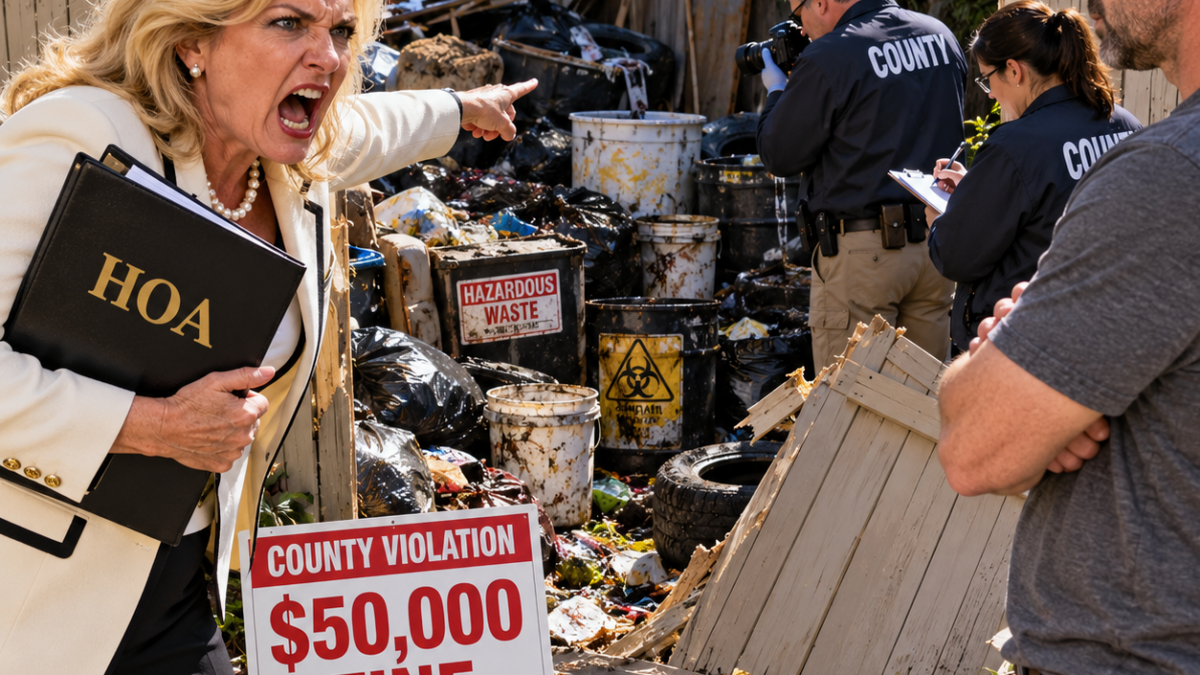
PART 2
I had learned long before Oakmont Estates that the most dangerous moment in any crisis is the moment emotion starts giving orders.
My first instinct was to walk straight to Karen’s house and demand she come look at what she had done.
I wanted her to see the seedlings curling in direct sunlight.
I wanted her to understand that this wasn’t another argument about garbage cans, driveway stains, or mailbox colors.
I wanted her to stand where I was standing and feel, even for one minute, what I felt when I saw months of work beginning to die because she had decided her interpretation of a neighborhood covenant mattered more than a county conservation permit.
But Dr. Thorne knew exactly what I needed to hear.
“Do not contact her.”
So I didn’t.
I stabilized the project instead.
Assessment first.
Then damage control.
The old instincts returned immediately.
I spent twelve years in the Army Corps of Engineers working on infrastructure and environmental stabilization. My knee eventually ended that career, but the training never left. When something fails, you don’t stare at the failure. You isolate the cause, protect what still functions, record what is damaged, and rebuild with better information.
Sarah came home early.
She had seen the video.
Her car barely stopped before she was through the gate.
“Oh my God.”
The screen looked worse from a distance.
Half of it leaned at an angle. Fabric hung from the splintered frame. Tarps I had rigged over the nursery fluttered beneath ropes tied to fence posts and patio anchors.
Sarah stared.
“She actually did it.”
“Yes.”
“After you showed her the permit.”
“Yes.”
“After you sent certified copies.”
“Yes.”
Sarah closed her eyes.
For months she had asked me to stay patient with Karen.
Not because she liked her.
Because Sarah understood what my nervous system looked like after the Army.
She had lived through the nights when a car door slamming outside brought me fully awake.
She knew why we bought a quiet house at the end of a cul-de-sac.
Why I liked knowing exactly where the exits were.
Why crowds still made my shoulders tighten.
Why the backyard mattered.
Oakmont was supposed to be where I learned that not every day required vigilance.
Then Karen turned the place into a different kind of patrol zone.
Violation notices.
Doorstep confrontations.
Golf-cart inspections.
Anonymous “neighbor concerns” that somehow always sounded exactly like her.
I tolerated them because peace was worth more than being right about every stupid issue.
The privacy screen was different.
Sarah crouched beside the nursery bed.
“How bad?”
“Don’t know yet.”
She touched one leaf gently.
It was already pale around the edge.
“Mark.”
“I know.”
“David?”
That hurt.
She knew the answer before asking.
“Yes.”
The project began with Corporal David Chen.
David was a biologist before the military.
Not a glamorous scientist in a laboratory.
Field biology.
Mud.
Insects.
Wet notebooks.
He could kneel beside a drainage ditch in Afghanistan and start talking about what plants might grow there if the soil chemistry were different.
I used to call him Professor.
He called me Bulldozer.
We spent too many nights talking about what we would do after deployment.
My answer changed constantly.
Construction.
Consulting.
Maybe nothing.
David had only one answer.
Conservation nursery.
Back home, our county had once supported large populations of the silver-spotted azure, a small butterfly whose iridescent wings flashed blue in sunlight. Development had fragmented its habitat until it survived only in pockets.
The larvae depended heavily on sky-leaf verbena.
The verbena depended on specific conditions.
Habitat restoration needed plants.
Plants needed propagation.
David had plans.
Nursery design sketches.
Seed collection strategies.
Community partnerships.
His final letter came before a mission in Helmand.
He wrote:
**You build things, Mark. Build this for me.**
He never came back.
For years, I couldn’t open the letter.
Then Sarah found Oakmont.
The backyard bordered county-owned undeveloped land.
Large lot.
Enough sunlight.
Enough room.
Enough separation.
I contacted the county.
Dr. Aris Thorne almost didn’t believe me when I offered.
“You want to use your own backyard?”
“Yes.”
“At your expense?”
“Mostly.”
“For a restoration nursery?”
“Yes.”
“Why?”
I told him.
He stopped asking questions.
We worked for months.
Permit.
Propagation beds.
Seed provenance.
Humidity controls.
Shade.
Wind protection.
Plant catalog numbers.
Disease precautions.
Monitoring.
The privacy screen wasn’t installed because I didn’t want neighbors looking into my yard.
It was a functional component in creating the proper microclimate.
We simply called it a privacy screen because that was the easiest description.
Karen heard “privacy screen” and saw an unauthorized eyesore.
David would have seen what it really was.
A shield.
Sarah helped me work until dark.
We salvaged twenty-nine seedlings immediately.
Five looked questionable.
Three were clearly failing.
By midnight I had temporary shade fabric over the entire bed.
Humidity improving.
Temperature dropping.
Dr. Thorne arrived at seven the next morning with two county staff members.
He walked straight past me.
Past Sarah.
Into the nursery.
He examined the plants quietly.
He was a small man nearing seventy with white hair, thin wrists, and the kind of patience that normally made everyone around him slow down.
Not that morning.
“Who touched anything after the damage?”
“Sarah and me.”
“What did you do?”
I explained.
He nodded.
“Correct response.”
His team photographed everything.
They compared catalog tags.
Logged the dead plants.
Measured light exposure.
Reviewed sensor data.
The sensor was the gift Karen never knew she had given us.
My environmental monitor recorded temperature, humidity, and light intensity every fifteen minutes.
It showed exactly when the screen came down.
Shade percentage dropped.
Temperature spiked.
Humidity fell.
Plant stress began immediately afterward.
Dr. Thorne stared at the graph.
“This is extraordinary.”
“In a good way?”
“For evidence.”
He turned toward me.
“Not for plants.”
By noon, six seedlings were dead.
Within two days, the count reached eleven.
By the end of the week:
Thirty-seven plants showed measurable damage.
Some recovered.
Some didn’t.
That number would eventually matter a great deal.
At the time, all I felt was guilt.
I know that sounds irrational.
I hadn’t destroyed the screen.
I hadn’t hired the contractor.
I had warned Karen.
Permits were filed.
The project was legal.
Still, I kept thinking:
I should have built it stronger.
I should have put up cameras sooner.
I should have physically stopped the contractor.
Sarah heard me say it once.
“No.”
“What?”
“You are not doing that.”
“Doing what?”
“Taking responsibility for what she chose.”
“I could have—”
“You told her to stop.”
“Yes.”
“You showed her permits.”
“Yes.”
“You recorded her.”
“Yes.”
“You saved what you could.”
“Yes.”
“Then stop trying to rewrite the moment so you become responsible for her decision.”
That shut me up.
Sarah was good at that.
The county response began officially three days later.
Karen received certified correspondence from the county counsel’s office.
I did not see her open it.
George did.
George Whitman lived three houses down.
Retired litigator.
Sharp mind.
Sharper tongue.
According to George, Karen walked to her mailbox at around ten in the morning, saw the county seal on the envelope, and stood in the street reading the first page.
Then she looked directly toward my house.
I was inside.
Probably fortunate.
The county requested everything.
Violation notices.
Internal HOA emails.
Meeting minutes.
Contractor authorization.
Invoices.
Photographs.
Any correspondence related to my project.
Any record showing the board had approved demolition.
Preservation notice.
Do not delete anything.
Do not alter records.
County environmental enforcement would determine whether the screen destruction violated the conservation ordinance and related protections.
Karen responded the only way Karen knew how.
With another HOA violation.
**UNAPPROVED PERMANENT STRUCTURE.**
The emergency replacement greenhouse.
I laughed when I saw it.
Sarah didn’t.
“Mark.”
“I’m sorry.”
“She cannot be serious.”
“She is remarkably committed.”
The new structure was not technically a greenhouse in the traditional sense.
It was an upgraded shade-house system.
Galvanized steel supports.
Commercial shade cloth.
Misting line.
Environmental sensors.
Ventilation.
More expensive.
More durable.
And unlike the first screen, the county formally incorporated the replacement into the existing project documents before construction was completed.
No creative backdating.
No legal games.
The county simply recognized what the original permit already contemplated: protective nursery infrastructure.
Karen’s notice accused me of escalating the violation.
I forwarded it to Dr. Thorne.
His reply:
**Thank you. Please continue preserving all correspondence.**
That was it.
No rant.
No threat.
Nothing frightens a petty bureaucrat like a bigger bureaucracy that does not need to shout.
Still, the county process would take time.
I needed to know whether Karen had done this kind of thing before.
That was how I met George properly.
I had waved at him for months.
Never talked much.
One evening I saw him struggling with a bag of mulch.
His back was losing the argument.
I walked over.
“Need help?”
“I need thirty-year-old knees.”
“I can offer one good knee and one government-issued defective one.”
He laughed.
We carried the mulch.
Then talked.
I told him about the nursery.
Showed him the video.
He watched without interrupting.
When Karen said on camera that HOA authority overrode the county permit, George paused the video.
“Play that again.”
I did.
He smiled.
Not kindly.
“What?”
“I spent thirty-eight years watching people create problems for themselves under oath.”
“She wasn’t under oath.”
“No, but confidence has the same effect on stupid people.”
He watched the rest.
Then said:
“She fined me over my mailbox.”
“Color?”
“Shade of black.”
I stared.
“How many shades of black does Oakmont permit?”
“According to Karen, fewer than exist in nature.”
He explained.
Karen claimed his mailbox paint did not match the association palette.
George checked the original declarations.
The palette rule had been adopted years later at a committee meeting where the required quorum had not been present.
Technically defective.
He challenged it.
Karen backed down quietly.
“No apology?”
George laughed.
“People like her don’t apologize. They relocate the battlefield.”
He looked at me.
“You have actual damages.”
“County does.”
“You do too.”
“I care more about the project.”
“Good. Makes you credible.”
I frowned.
“That sounds manipulative.”
“It’s litigation.”
“I’m not trying to sue everyone.”
“Even better.”
George became interested for one reason.
Pattern.
A single dispute can look personal.
Five disputes become culture.
Ten disputes become evidence.
He introduced me to Maria Santos.
Software developer.
Thirty-two.
Quiet.
Dangerous in the way only organized technical people can be.
Karen had fought Maria for six months over a raised vegetable bed visible through the side gate.
Maria paid one fine.
Then became angry enough to start preserving everything.
Emails.
Website changes.
Board minutes.
PDF copies.
Screenshots.
Archived versions.
Karen sometimes altered minutes after posting them.
Maria had originals.
“The internet forgets,” she told me, “unless somebody makes it remember.”
She pulled up a folder.
Oakmont.
Year.
Month.
Meeting.
I nearly cried from professional admiration.
We searched the month before Karen tore down the screen.
Agenda:
**Enforcement discussion regarding unauthorized structure at Lot 72.**
Minutes:
**Board authorizes president to take necessary enforcement action.**
Vague.
Very vague.
Maria found an audio note from a neighbor who attended.
George found two more attendees.
What they remembered was narrower.
The board authorized Karen to send another written notice and consult management.
Nobody recalled approving a contractor.
Nobody recalled demolition.
Nobody approved spending association money to enter my property and tear anything down.
Then the invoice appeared.
Not yet from records.
From the contractor himself.
I found him through the company name on the truck.
**DONNIE’S DEMOLITION & PROPERTY SERVICES.**
Address.
Residential.
Owner:
Donnie Kramer.
Karen Miller’s brother-in-law.
That changed the temperature.
George leaned back.
“Now we have conflict of interest.”
Maria asked:
“Fraud?”
“Slow down.”
George pointed at her.
“Never call something fraud until you have the elements and evidence. We have related-party contracting and a question of authorization.”
I liked him more every day.
Stan Gable joined next.
Retired accountant.
Eleanor Gable’s husband.
Stan had suspected Oakmont’s finances for years because annual reports were suspiciously simple.
He requested inspection.
Karen delayed.
Then delayed again.
“Records are being organized.”
Stan laughed when he showed me the email.
“Three years of checking accounts should not need six weeks of organizing.”
George drafted a formal statutory records demand.
Specific.
Financial statements.
Bank statements.
Receipts.
Contracts.
Legal invoices.
Vendor documents.
Meeting authorizations.
Inspection date.
Copy rights.
Karen hired a lawyer.
The lawyer’s response called our request burdensome and accused us of harassing a volunteer board.
He offered a two-hour inspection window on Tuesday morning.
No copies.
No photos.
George read it.
Then smiled.
“Adorable.”
He drafted the reply.
Professional.
Polite.
Lethal.
We accepted the two-hour window.
Maria would bring a scanner.
Stan would review.
George would attend.
I would observe.
The law permitted reasonable copying.
Karen could explain objections document by document if necessary.
The inspection became one of the strangest afternoons of my life.
Oakmont clubhouse.
Folding tables.
Banker boxes.
Karen in pink.
Her lawyer beside her.
Stan with reading glasses low on his nose.
Maria with a portable scanner.
George with yellow legal pad.
Me with nothing.
I wanted Karen to look at me.
She refused.
The scanner started.
Whir.
Page.
Whir.
Page.
Whir.
The sound became hypnotic.
Stan moved fast.
Check.
Invoice.
Receipt.
Vendor.
Authorization.
Meeting reference.
Karen’s lawyer checked his watch repeatedly.
Forty minutes in, Stan stopped.
“Interesting.”
Nobody spoke.
He held up the Donnie invoice.
$1,500.
**Unauthorized Structure Removal – Lot 72.**
Paid from HOA operating funds.
George asked:
“What meeting authorizes this expenditure?”
Karen’s attorney said:
“The president had general enforcement authority.”
George:
“That was not my question.”
Karen leaned forward.
“I was authorized to enforce.”
“Were you authorized to hire your brother-in-law?”
Her lawyer’s head turned sharply.
Karen stared.
Maria continued scanning.
Whir.
Whir.
Whir.
Stan found landscaping invoices.
Vendor name unfamiliar.
No business registration under exact name.
Then reimbursement forms.
Karen.
Office supplies.
Receipts attached.
Cat food.
Cosmetics.
Groceries.
Decorative pillows.
Someone had handwritten account codes beside each item.
Office.
Clubhouse.
Landscape.
Administration.
One receipt had three bags of premium cat food.
Maria whispered:
“Does the HOA own a cat?”
Stan almost smiled.
“No.”
Karen heard.
“Those were mistakenly combined with personal purchases and later reimbursed.”
Stan looked through the bank records.
“Show me reimbursement.”
“I don’t have to answer questions during inspection.”
George spoke gently.
“You actually do not. The records will answer them for you.”
Her lawyer looked miserable.
More invoices.
Specialty paint supplier.
Owner related to Karen.
Premium price.
The garish pink clubhouse trim nobody liked.
Weekend hotel.
“Board retreat.”
No board minutes.
No attendee list.
Restaurant charges.
Multiple.
Office-store reimbursements that included personal items.
None alone dramatic.
Together:
Pattern.
At the end of two hours, Maria had thousands of pages.
We packed.
Karen finally looked at me.
“I hope you found what you wanted.”
I almost responded.
George did.
“Oh, Karen.”
He put on his coat.
“There are several books involved here.”
“What is that supposed to mean?”
“You’ve spent years quoting the HOA rulebook.”
He smiled.
“You may want to familiarize yourself with corporate law and county ordinances as well.”
Outside, Maria held the hard drive against her chest.
“I feel like I’m carrying plutonium.”
Stan shook his head.
“Not yet.”
“You saw the receipts.”
“I saw questions.”
“You accountants are terrible at drama.”
“We live longer.”
The county investigation moved in parallel.
Dr. Thorne updated me periodically.
Environmental enforcement had documented damage to thirty-seven cataloged seedlings.
Eleven dead.
Others requiring rehabilitation.
Replacement propagation would delay release schedules.
The county calculated restoration labor.
Materials.
Loss of plant stock.
Specialized replacement.
Program delay.
Mitigation.
The privacy screen itself was almost irrelevant.
Karen thought she tore down $600 of wood and fabric.
The screen was protecting something worth far more in conservation investment.
I asked Dr. Thorne about the fine.
“Don’t focus on the number.”
“Why?”
“Because the point is restoration and compliance.”
“I’m not focused.”
“You’re asking.”
“Engineer.”
He sighed.
“The ordinance has escalating penalties. Counsel is reviewing individual responsibility because the HOA board apparently did not authorize demolition.”
“Could the HOA be fined?”
“Possibly.”
“That punishes everyone.”
“Exactly why counsel cares who acted.”
That mattered to me.
I didn’t want my neighbors paying Karen’s bill.
Most of them had never known what she planned.
The county subpoenaed or requested records showing authorization.
Karen had little.
An invoice.
Her signature.
A vague board minute.
No specific demolition vote.
The contractor gave a statement.
That became another gift.
Donnie was not loyal enough to risk himself for Karen.
He told investigators she said the structure was illegal, HOA-owned enforcement authority covered it, and he was authorized to remove it.
He admitted he had not seen the county permit.
Had not verified property boundaries.
Had not asked whether Karen had board approval.
He just got paid.
Karen’s lawyer began sending more careful letters.
No more threats.
No more dramatic language.
The annual HOA meeting approached.
Our small group met twice a week at George’s house.
George.
Maria.
Stan.
Me.
Later Susan Webb joined.
Susan was soft-spoken, mid-fifties, worked in hospital administration, and had once been fined because her wind chime was “tonally intrusive.”
I thought she was joking.
She showed me the notice.
She was not.
We built the case for homeowners.
Not rumors.
Not accusations.
Documents.
Maria created a website.
**OAKMONT HOMEOWNERS FOR TRANSPARENCY**
No anonymous insults.
No inflammatory adjectives.
Sections:
Governance.
Financial records.
Vendor relationships.
Altered minutes.
Selective enforcement.
County conservation dispute.
Every claim linked to a document.
George reviewed wording.
“Never say stole.”
“Even cat food?”
“Say association funds were used for purchases including cat food where no association purpose is documented.”
“That is painfully boring.”
“Painfully defensible.”
The night before the annual meeting, the link went out.
Not to Karen.
Not to board allies.
Residents only.
The email:
**Please review before tomorrow’s meeting. Source documents are provided so every homeowner can form their own conclusion.**
That was it.
Within an hour, site traffic exploded.
Neighbors texted.
Called.
Forwarded.
Karen must have learned quickly.
At 10:43 p.m., I received an email.
**CEASE ALL DEFAMATORY ACTIVITY IMMEDIATELY.**
I forwarded it to George.
He replied:
**Go to bed.**
I didn’t.
Neither did Sarah.
She found me sitting at the kitchen table at one in the morning.
“You’re replaying tomorrow.”
“Yes.”
“You know your lines.”
“I don’t have lines.”
“You have a four-inch binder.”
“Evidence.”
She sat.
“Mark.”
I looked up.
“David would be proud.”
That nearly broke me.
“I hope so.”
“He would.”
“What if the county project doesn’t recover?”
“It will.”
“What if the butterflies—”
“Mark.”
She took my hand.
“You kept the promise when you started. Everything after that is more promise.”
I looked through the back window.
The replacement shade house glowed faintly under monitoring lights.
Rows of verbena.
New growth.
Some recovered plants.
Some empty spaces where seedlings died.
“I hate that she touched it.”
“I know.”
“She made it ugly.”
Sarah shook her head.
“No. She revealed what mattered.”
I didn’t understand then.
I would later.
Annual meeting.
Seven p.m.
Standing room only.
Oakmont had never seen attendance like it.
Karen entered five minutes before start.
Her face changed when she saw the crowd.
She recovered quickly.
Pink tracksuit replaced by navy suit.
Binder.
Gavel.
Two board members beside her.
She banged once.
“Order.”
Nobody was disorderly.
But Karen liked starting with authority.
She rushed through approval of minutes.
Committee reports.
Maintenance.
Then treasurer summary.
One page.
Oakmont financially stable.
Reserves healthy.
Expenses normal.
Stan stood.
“Point of order.”
Karen’s jaw tightened.
“Mr. Gable.”
“The treasurer’s report is materially incomplete.”
“You are not recognized for commentary.”
“Bylaw Twelve, Section Three permits member questions on the financial report.”
George rose.
Karen’s attorney was present now.
He whispered.
She exhaled.
“You have two minutes.”
Stan smiled.
“I’ll need less.”
Maria connected laptop to projector.
Oakmont Homeowners for Transparency appeared on the wall.
Collective gasp.
Karen went white.
“What is this?”
Stan said:
“Source records.”
Karen stood.
“This presentation is unauthorized.”
George:
“The members are discussing the financial report.”
“Slander.”
I stood.
“No commentary needed.”
Maria projected the first receipt.
Cat food.
Karen looked at it.
Someone behind us said:
“Is that twenty-seven bags?”
Maria zoomed.
A woman shouted:
“Why are we buying her cats food?”
Karen grabbed microphone.
“Those were mixed purchases that were corrected.”
Stan asked:
“Show the reimbursement.”
Karen:
“This is not an audit.”
Stan:
“Exactly.”
Next.
Donnie’s Demolition.
$1,500.
George asked:
“Did the board specifically authorize hiring the president’s brother-in-law to enter Lot 72 and destroy property?”
One board member shook his head before catching himself.
People saw.
Murmurs.
Karen snapped:
“I had enforcement discretion.”
George:
“That is not authorization for related-party contracting.”
Next.
Paint vendor.
Cousin.
Next.
Restaurant.
Next.
Personal retail.
Next.
Minutes altered after publication.
Maria showed archived original beside revised version.
Karen pointed.
“Administrative correction.”
“Was the correction approved?” Maria asked.
Karen:
“I am not taking questions from a software programmer.”
Bad response.
Maria sat.
Smiling.
People began speaking.
“Where’s our money?”
“Who approved these?”
“How many vendors are relatives?”
“Why were minutes changed?”
Karen lost control.
Gavel.
“Order!”
Nobody listened.
Then she saw me.
All the pressure found a target.
“This is because of him!”
Silence.
Karen pointed at me.
“He came into this neighborhood with an illegal project, ignored notices, refused compliance, and now he has created a conspiracy against the board!”
I waited.
George had told me:
Let her finish.
She did.
Everything came out.
My ugly screen.
My trashy nursery.
My “so-called butterflies.”
County bureaucrats.
Disrespect.
Residents undermining property values.
Then she said the sentence that ended any sympathy left in the room.
“If people simply followed the rules, none of this would be necessary.”
A woman in the back answered:
“Whose rules?”
Karen froze.
Tom—another resident, not part of our committee—stood.
“Karen, you changed the minutes.”
Another:
“You paid family.”
Another:
“You tore down his project without a vote.”
Karen slammed the gavel.
“This meeting is adjourned!”
George stood.
“No.”
The word was quiet.
Powerful.
Karen stared.
George continued.
“Under the bylaws, members may move to address board misconduct raised during the annual meeting.”
Her attorney whispered urgently.
George said:
“I move for a vote of no confidence and immediate removal proceedings against Karen Miller based on gross misconduct, unauthorized expenditure, falsification or alteration of records, and actions exposing the association to substantial liability.”
“Second,” Susan said.
Then ten more voices.
“Second.”
“Second.”
Karen shouted:
“You cannot!”
George:
“We can.”
“I am the president.”
“You are a director elected by these members.”
That distinction mattered.
Before Karen could respond, the double doors opened.
Two people entered.
Uniformed sheriff’s deputy.
County conservation officer.
I recognized Officer Daniel Miller from Dr. Thorne’s office.
Different Miller again.
Karen saw uniforms.
Stopped.
The entire room quieted.
Officer Miller walked down the center aisle carrying a large envelope.
No theater.
No smile.
No wink toward me.
Professional.
He reached the front.
“Karen Miller?”
Karen swallowed.
“Yes.”
“I’m Officer Daniel Miller with County Parks and Conservation.”
Her attorney stood.
“My client is in the middle of a private association meeting.”
Officer Miller nodded.
“I’ll be brief.”
He placed the envelope on the table.
“This is formal service of the county’s final administrative notice of violation and civil penalty assessment regarding the May seventeenth incident at Lot 72.”
Nobody moved.
Karen stared.
Her lawyer opened his mouth.
Officer Miller continued.
“The county’s investigation determined that protected restoration materials connected to a sanctioned conservation partnership were knowingly damaged after the project’s permit and protected status had previously been communicated.”
Karen looked at me.
Then the envelope.
“The board authorized enforcement.”
One of her board members said:
“No, we didn’t.”
The room exploded.
Officer Miller raised a hand.
“We are not resolving internal board authority here. The county’s assessment identifies Ms. Miller as the responsible actor based on the evidence available, including the contractor statement, written HOA notices bearing her signature, payment authorization, video evidence, and absence of specific board authorization for demolition.”
Karen’s knees seemed to weaken.
“How much?”
Her voice barely carried.
Officer Miller opened the notice.
“The civil penalty assessment totals fifty thousand dollars.”
You could hear people inhale.
Nobody laughed.
Even I felt stunned hearing it publicly.
Fifty thousand dollars.
Karen sat.
“No.”
Officer Miller continued.
“The calculation is itemized. It includes unauthorized interference with a sanctioned restoration project, destruction of protective infrastructure, documented damage to thirty-seven cataloged plants, restoration labor, and statutory environmental penalties.”
“That’s impossible.”
“You have thirty days to file an administrative appeal.”
“My lawyer will destroy this.”
Officer Miller looked at her attorney.
The attorney did not look confident.
“The appeal instructions are included.”
Karen stared at me.
I saw hatred.
Fear.
Disbelief.
For months she had threatened me with fines.
Hundreds.
Then thousands.
Lien.
Collection.
Power through numbers.
Now the county had put a number in front of her that made every orange HOA notice she had ever printed look like pocket change.
I thought I would enjoy it more.
Instead, I thought about David.
Thirty-seven plants.
Eleven dead.
A butterfly species most residents had never seen.
A promise.
Officer Miller nodded to the room.
“Have a good evening.”
He left.
Sheriff’s deputy followed.
Karen remained seated.
The envelope in front of her.
George waited.
Then said:
“The motion is still pending.”
That was brutal.
Not cruel.
Procedural.
Karen looked up slowly.
“No.”
Susan said:
“All in favor of proceeding with removal?”
Hands.
Everywhere.
One board ally raised his.
Then the other.
Karen saw.
Her own people.
Hands raised.
She stood.
Picked up the $50,000 notice.
Walked out.
No speech.
No threat.
No gavel.
Just footsteps.
The woman who had spent years policing everyone else’s property left her last meeting carrying the largest violation notice of her life.
Susan became interim president.
Not me.
I didn’t want the position.
George didn’t either.
Stan threatened to move if nominated.
Susan accepted because, in her words:
“Someone has to sign the boring things.”
Best qualification for leadership I ever heard.
The new board’s first act:
Cooperate with county.
Second:
Independent forensic audit.
Third:
Suspend punitive enforcement until policies were reviewed.
Fourth:
Preserve all records.
The forensic audit confirmed what Stan suspected.
Roughly $22,000 over five years in unsupported, mischaracterized, or improperly related-party expenditures.
Not every dollar could be called embezzlement automatically.
The audit carefully separated categories.
Clearly personal.
Unsupported.
Improperly documented.
Related-party concerns.
But enough was serious.
The HOA filed civil claims seeking repayment.
County fine remained Karen’s separate battle.
My own damage claim covered the destroyed screen, emergency mitigation, lost plants not otherwise compensated through the county program, and the replacement infrastructure costs attributable to her actions.
Her lawyer tried to push liability back onto the HOA.
The board resisted because the demolition had not been specifically authorized.
Insurance lawyers entered.
Depositions.
Motions.
Negotiation.
Real legal consequences are slower than dramatic stories.
Months.
Karen appealed the $50,000 county penalty.
Lost administratively.
She challenged again.
The evidence hurt her.
Video.
Permit.
Certified correspondence.
Donnie’s statement.
Her own signed notices.
The appeal board reduced nothing.
The fifty thousand stood.
Her civil problems multiplied.
HOA sought reimbursement.
County sought penalty.
I sought restoration costs.
Legal fees grew.
Then came settlement talks.
One afternoon George called.
“She’s selling.”
I looked out the window.
“For Sale sign?”
“Went up this morning.”
I walked outside.
From the end of the cul-de-sac I could see it.
White post.
Red sign.
Karen’s lawn immaculate.
Of course.
Sarah stood beside me.
“You feel bad?”
“A little.”
She looked surprised.
“So do I.”
People imagine revenge like a movie.
The villain falls.
Music swells.
Hero smiles.
Life rarely feels that clean.
Karen had done real harm.
She deserved consequences.
But seeing a person dismantled by their own decisions still carries weight.
“You know what I don’t feel?” Sarah asked.
“What?”
“Afraid.”
That was enough.
Karen settled.
House sold.
County penalty paid through structured settlement and proceeds.
HOA recovered a significant portion of disputed expenditures.
My restoration costs were covered.
Her related-party vendor arrangements ended.
She moved out of state.
Rumor said she stayed with her sister.
I never verified it.
Didn’t matter.
What mattered happened in my backyard.
The nursery recovered.
Not immediately.
Some genetic lines had been lost.
Dr. Thorne helped obtain replacement seed stock from another conservation plot.
We expanded.
The replacement shade house worked better than the original screen.
Automated misting.
Redundant sensors.
Backup power.
Remote alerts.
I overengineered everything.
Sarah said David would approve.
I disagreed.
“He’d complain about cost.”
“He was a biologist.”
“Exactly.”
The silver-spotted azure project moved forward.
First successful propagation cycle.
Then another.
County staff brought larvae.
Careful.
Controlled.
I learned more about butterflies than I ever intended.
Their fragility bothered me initially.
So much work for something that could fit on two fingers.
Then I understood that fragility wasn’t the point.
Persistence was.
Species survive through tiny continuities.
One patch of habitat.
One plant.
One generation.
One person deciding extinction is not inevitable.
Communities work the same way.
Oakmont changed after Karen.
Not because rules disappeared.
Susan rejected that idea.
“We still need governance.”
She was right.
Common areas.
Drainage.
Insurance.
Budget.
Maintenance.
But rules were rewritten with objective standards.
Appeals became real.
Related-party vendors required disclosure.
Minutes could not be revised without notation.
Financial records posted quarterly.
Resident inspection procedures published.
No board member could unilaterally hire contractors to enter private property except genuine emergencies.
The mailbox palette?
Gone.
Vegetable gardens?
Allowed.
Play sets?
Reasonable standards.
Wind chimes?
Susan personally moved to delete that rule.
Unanimous.
George joked:
“Civilization ends tonight.”
Stan replied:
“Prepare the earplugs.”
Neighborhood barbecue.
First one.
People came.
Actual people.
Not identical homeowners.
Children.
Dogs.
Food.
Maria brought a projector and threatened to show Karen’s receipts as entertainment.
George stopped her.
“Let dead litigation die.”
She reluctantly agreed.
Stan grilled.
Poorly.
We ate anyway.
The replacement nursery stood at the edge of my yard.
People asked questions.
I gave tours.
For months, that backyard had been the place everyone whispered about.
Now children looked at plant trays and asked:
“Where are the butterflies?”
“Not yet.”
“How long?”
“Nature doesn’t care about your schedule.”
One boy frowned.
“I don’t like nature.”
“Nature will be devastated.”
A year after the screen came down, Dr. Thorne called.
“Ready?”
“For?”
“Release.”
I sat down.
“You’re serious?”
“First captive-reared cohort.”
My throat tightened.
“When?”
“Saturday.”
I looked toward the nursery.
David’s nursery.
Ours now.
“Can residents come?”
Dr. Thorne paused.
“All of them?”
“Yes.”
“You’ve become social.”
“Don’t spread it around.”
Sarah organized everything.
Of course.
Lemonade.
Tables.
Simple food.
No speeches originally.
Then Susan said there should be one.
I refused.
Sarah volunteered me.
Marriage.
Saturday was warm.
Bright.
Perfect.
The greenhouse was full of verbena in bloom.
Tiny blue flowers.
Rows of green.
Inside mesh enclosures, silver-spotted azures moved like bits of reflected sky.
I had seen photographs.
Nothing prepared me for the real thing.
Blue.
Iridescent.
Delicate without seeming weak.
Neighbors gathered.
George.
Maria.
Stan.
Susan.
Dr. Thorne’s team.
County staff.
Children.
Even Donnie came.
That surprised me.
He stood near the back.
Hands in pockets.
I almost asked him to leave.
Then he approached.
“Mr. Evans.”
“Donnie.”
He looked toward the greenhouse.
“I didn’t know.”
“I told Karen.”
“She didn’t tell me.”
“You still entered my property.”
“I know.”
“You still tore it down.”
“I know.”
He swallowed.
“I’m sorry.”
I studied him.
Did I forgive him?
Not completely.
But apology matters.
Especially when it costs pride.
“You cooperated afterward.”
“Yes.”
“That mattered.”
He nodded.
Then moved away.
Dr. Thorne spoke first.
Ecology.
Habitat loss.
Community partnerships.
The importance of private property owners helping create restoration corridors.
He thanked Oakmont.
That word hit me.
Oakmont.
The same association that had once tried to destroy the project was now listed as a supportive community partner.
That was transformation.
Then Susan handed me the microphone.
I glared at her.
She smiled.
I looked at the crowd.
Public speaking still made my mouth dry.
“A year ago,” I began, “this part of my yard was a problem.”
People laughed softly.
“An eyesore.”
More laughter.
“A violation.”
I looked at the greenhouse.
“But it was never really about the structure.”
The crowd quieted.
“It was about a promise.”
I told them about David.
Not every detail.
Enough.
Biologist.
Soldier.
Dream.
Letter.
**You build things. Build this for me.**
My voice caught.
I stopped.
Sarah looked at me.
Continue.
I did.
“David believed damaged places could recover if someone cared enough to do the slow work.”
I looked around at the neighborhood.
“I think he was talking about more than ecosystems without knowing it.”
George lowered his head.
Susan wiped one eye.
I continued.
“When the screen came down, I thought the project had been ruined.”
Pause.
“It wasn’t.”
I looked at the people who had helped.
“Turns out some things grow stronger after disturbance if you rebuild carefully.”
Applause.
I hated it.
Loved it.
Both.
Then Dr. Thorne opened the first enclosure.
Children gathered.
Nothing happened.
Butterflies stayed inside.
A little girl whispered:
“Are they scared?”
“Probably smarter than us,” George said.
Then one lifted.
Blue flash.
Another.
Then five.
Ten.
Dozens.
They rose into sunlight.
Not dramatic like birds.
Soft.
Uncertain.
Floating over the yard.
One landed on Susan’s sleeve.
She froze.
Children screamed with delight.
Another settled on lavender near the fence.
Several moved toward the county land beyond my property.
I watched until my eyes hurt.
David should have been there.
That thought came so strongly I had to look down.
Sarah took my hand.
“He is.”
I don’t know what I believe about things like that.
But I didn’t argue.
The last butterfly disappeared above the rooftops.
Not all would survive.
Nature is not sentimental.
But some would.
That was enough.
Late afternoon.
Party thinning.
George stood beside me near the nursery.
“You know,” he said, “you’re annoyingly difficult to represent.”
“You never represented me.”
“Emotionally.”
“That sounds expensive.”
He smiled.
Then became serious.
“Do you feel like you got revenge?”
I watched a butterfly land on a verbena flower.
“No.”
“Interesting.”
“Consequences happened.”
“Different?”
“Yes.”
“How?”
“Revenge would mean Karen’s suffering is the goal.”
“And it wasn’t?”
“For about forty-eight hours, maybe.”
George laughed.
I continued.
“The goal was this.”
I pointed.
Plants.
Butterfly.
Neighbors.
“My goal was for what she tried to destroy to survive.”
George nodded.
“That is a better answer than I expected from an engineer.”
“I contain multitudes.”
“No, you contain spreadsheets.”
True.
Karen disappeared from conversation gradually.
At first everyone talked about her.
Then less.
Then only when a ridiculous old rule surfaced.
“Karen rule.”
Shorthand.
Eventually even that faded.
New families moved in who had never met her.
That was healthy.
No community should build identity around hating one person.
The financial controls stayed.
Transparency became routine.
Maria joined the board eventually.
She created an online archive.
Nobody could silently alter minutes anymore.
Stan taught two younger residents how to read association financials.
George refused office.
“Retirement means knowing what not to volunteer for.”
Susan served two terms.
Then stepped down voluntarily.
That impressed me more than anything.
Healthy leaders leave.
The greenhouse became permanent.
County renewed partnership annually.
The silver-spotted azure population did not magically recover overnight.
Conservation doesn’t work that way.
But numbers improved in restored pockets.
Verbena spread.
Oakmont residents planted native flowers.
Not required.
Voluntary.
Eleanor replaced part of her lawn with a pollinator garden.
Karen would have had a stroke.
I helped install it.
One Saturday, a new resident walked past.
“What are those blue butterflies everyone talks about?”
I showed him a photo.
He said:
“Pretty.”
That was it.
He had no idea what it had taken to get there.
I liked that.
The best victories become boring to the next generation.
My knee got worse.
Eventually surgery.
During recovery I couldn’t manage the nursery alone.
Neighbors created a schedule.
Water checks.
Sensors.
Feed the misting system.
Inspect cloth.
Maria automated alerts to four phones.
Stan somehow volunteered despite claiming plants hated him.
The project continued without me.
That mattered.
David’s dream had stopped belonging only to David and me.
It belonged to the community.
One morning during recovery, I sat on the porch with my brace locked straight.
A butterfly crossed the yard.
Just one.
Blue.
It landed on the replacement screen.
I laughed.
Sarah came outside.
“What?”
“Nothing.”
She saw it.
“Oh.”
We sat quietly.
Years earlier, the screen had been the ugliest thing in Oakmont.
Now people photographed butterflies sitting on it.
Perspective changes when meaning changes.
I kept one piece of the original torn fabric.
Sarah thought I was insane.
I framed it beside David’s letter.
Underneath:
**MAY 17 — DAMAGE DOCUMENTED. PROJECT CONTINUED.**
Not Karen’s name.
She did not deserve permanent space in David’s story.
That was important.
For too long she had occupied the center.
The project existed before her.
It outlasted her.
Eventually the county asked if I would speak at a conservation partnership conference.
“No.”
Dr. Thorne:
“You’re doing it.”
“No.”
“You’re the case study.”
“I hate case studies.”
“You are an engineer.”
“That is why.”
Sarah sided with him.
I spoke.
Not about Karen mostly.
About private-public partnerships.
Risk.
Documentation.
Permit clarity.
Community outreach.
One slide showed the original screen.
Another showed the damage.
Another the upgraded structure.
Final slide:
Butterflies.
A county planner asked:
“What was the most important lesson?”
I could have said permits.
Jurisdiction.
Evidence.
Engineering redundancy.
Instead:
“Explain meaning before conflict if you can.”
People wrote that down.
I continued.
“And when explanation fails, document.”
They laughed.
I wasn’t joking.
Because I sometimes wonder what would have happened if I had invited the entire neighborhood to the nursery before Karen started the fight.
Would she still have attacked?
Possibly.
But maybe more residents would have understood earlier.
I had treated the project as private because David’s memory felt private.
Karen filled the information vacuum with her version.
Ugly screen.
Secret project.
Possible business.
Violation.
Afterward, I learned that privacy can protect healing, but secrecy can also let other people define what they cannot see.
That didn’t excuse her.
Nothing justified tearing down property after being shown a permit.
But conflict should teach both sides what can be improved.
I added a small information board outside the nursery fence.
**SILVER-SPOTTED AZURE RESTORATION PROJECT**
Photos.
Native plant information.
County partnership.
Children stopped calling it Mr. Evans’s weird greenhouse.
They called it the butterfly house.
Better.
One afternoon a little boy asked:
“Did the mean lady really break it?”
His mother looked mortified.
I knelt carefully.
“My old screen got broken.”
“By the mean lady?”
“Someone made a bad decision.”
“Was she evil?”
Kids ask clean questions adults spend decades complicating.
“No.”
He frowned.
“She did evil?”
“She did something wrong.”
“Why?”
“She cared more about being in charge than checking if she was right.”
He considered this.
Then:
“That’s dumb.”
“Yes.”
Excellent summary.
Years passed.
Dr. Thorne retired.
At his party, he handed me a small box.
Inside:
A framed photograph of the first azure release.
On the back:
**For David. For Mark. For everyone who kept building.**
I stared too long.
Thorne looked uncomfortable.
Scientists.
We shook hands.
He said:
“You know that first phone call?”
“After Karen tore it down?”
“Yes.”
“I wanted her prosecuted.”
“I know.”
“I was furious.”
“I noticed.”
“Good thing counsel handled it.”
“Good thing.”
He smiled.
“The $50,000 was more satisfying anyway.”
I laughed.
“So you did enjoy it.”
“Conservationists are human.”
Fair.
The county penalty became famous locally.
Not because $50,000 was the largest environmental fine anyone had seen.
It wasn’t.
Because of the absurd chain leading to it.
HOA president.
Privacy screen.
Butterflies.
Protected nursery.
Thirty-seven plants.
But the amount had real logic in the fictional world of our story.
Restoration cost.
Program interference.
Per-organism assessment.
Willful conduct after notice.
The thing Karen never understood about bureaucracies is that she wasn’t the only person who knew how to weaponize paper.
The difference was that the county’s paper came with jurisdiction she actually had to respect.
Still, I never framed the $50,000 notice.
George wanted a copy.
Maria had one.
Stan suggested auctioning a photocopy for the reserve fund.
Susan vetoed them all.
Good.
The notice belonged to Karen’s failure.
I preferred David’s letter.
The neighborhood changed physically too.
Color.
Gardens.
Play sets.
One house painted its door yellow.
Bright yellow.
Karen’s old rules would have forbidden it.
I walked by with Sarah.
She said:
“That is aggressive.”
“It is.”
“You hate it.”
“I do.”
“Should we call the HOA?”
“Immediately.”
She laughed.
The key was this:
I could hate the door without needing power over it.
That lesson seems obvious until you live around someone who never learned it.
Oakmont remained attractive.
Homes sold.
People maintained property.
Common areas looked good.
Without inspections for microscopic imperfections.
Turns out most homeowners like caring for where they live without being threatened.
The association focused on things individuals could not do alone.
Entrance landscaping.
Stormwater.
Insurance.
Streetlight coordination.
Reserve planning.
Actual shared problems.
Imagine that.
My own life became quieter.
Therapy helped.
Work helped.
Butterflies helped.
So did time.
David remained.
Not as a ghost exactly.
As reference.
Whenever I considered quitting something because it felt tedious, I remembered his handwriting.
**You build things. Build this for me.**
He had been right about me.
I build.
Structures.
Systems.
Plans.
Sometimes walls.
Sometimes communities accidentally.
The original screen had been a barrier.
Its destruction forced me to build something larger.
That irony stayed with me.
Karen tore it down because she hated what she couldn’t see.
Afterward the project became visible to everyone.
And because it became visible, people protected it.
One year, a storm damaged the shade cloth.
Before I could get outside, two neighbors were already at the fence.
Tools.
Ladders.
Maria texted:
**DO NOT MOVE. WE HAVE IT.**
I went anyway.
Of course.
We repaired it together.
That moment would have been impossible under Karen.
Neighbors had been trained not to touch anything for fear of violations.
Now they were helping preserve something shared.
George died eight years after the incident.
Heart attack.
Quick.
His wife asked me to speak at the memorial.
I told the mailbox story.
People laughed.
Then I told them what George taught me.
“Never make an accusation when a document will do more damage.”
That sounded exactly like him.
Maria cried.
Stan pretended not to.
Afterward, George’s wife gave me his old yellow legal pad.
The first page contained notes from our original meeting.
At the top:
**EVANS v. MILLER?**
Then crossed out.
Beneath it:
**Probably much bigger.**
He was right.
It had never been just me versus Karen.
It was a community deciding what kind of authority it would tolerate.
That distinction mattered.
A few months after George died, the board named a small reading garden near the clubhouse after him.
Not because he had been a lawyer.
Because he had helped residents learn their governing documents.
The plaque read:
**GEORGE WHITMAN GARDEN
ASK QUESTIONS. READ THE FINE PRINT.**
Perfect.
The butterfly project continued.
By then, the county had several nurseries.
Mine was no longer essential.
That made me proud.
Success in conservation means eventually not being the only thing keeping something alive.
Same with governance.
If Oakmont required me, Maria, Susan, or George forever, we had failed.
Instead new people learned.
New board.
New policies.
New habits.
The system survived us.
One evening, years after Karen left, a stranger knocked.
Woman.
Mid-forties.
“I’m sorry to bother you.”
“No problem.”
“Are you Mark Evans?”
“Yes.”
She looked toward the greenhouse.
“I bought Karen Miller’s old house.”
That surprised me.
“I’m sorry?”
She laughed.
“That’s what everyone says.”
I invited her onto the porch.
Her name was Rachel.
She had heard pieces of the story.
“Is it true she lost her house because of your privacy screen?”
“No.”
She looked disappointed.
“Not directly.”
“What happened?”
“She made a series of decisions. The screen was one.”
“And fifty thousand?”
“County environmental penalty.”
“For plants?”
“For interfering with a protected project and damaging cataloged restoration stock.”
Rachel nodded slowly.
“She left some things in the attic.”
I tensed.
“What things?”
“HOA files.”
Of course.
We contacted the board.
Records recovered.
Mostly duplicates.
One box held old violation notices.
Hundreds.
Some never sent.
Drafts.
Karen had maintained lists.
Potential violations.
Possible offenders.
Future inspection targets.
Reading them was sad.
So much energy spent hunting imperfection.
On one page:
**Evans – backyard visual obstruction. Monitor.**
That was me.
Before the first notice.
Before she knew what the screen was.
She had already decided it was a problem because it changed the view.
I showed Sarah.
She read it.
Then placed it down.
“You know what bothers me?”
“What?”
“If she had knocked on the door first, you would’ve shown her everything.”
“Yes.”
“You probably would’ve given her a tour.”
“Yes.”
“She could’ve supported it.”
“Yes.”
“Instead she needed it to be wrong.”
Exactly.
Some people encounter something unfamiliar and ask:
What is this?
Others ask:
How do I stop it?
Karen always started with the second question.
Rachel became one of our best neighbors.
She painted Karen’s old living room dark green.
I never saw inside.
She told me.
“Would Karen have hated it?”
“Deeply.”
“Excellent.”
Humor is a good disinfectant.
By the time I turned sixty, my knee was mostly metal, my hair mostly gray, and the nursery had become more sophisticated than the original county plan.
Remote sensors.
Automatic shading.
Rain capture.
Data logging.
Students from the local college occasionally visited.
One asked me why a retired Army engineer cared so much about butterflies.
I told her:
“I didn’t.”
She stared.
“Then?”
“I cared about my friend.”
That was the beginning.
Then I learned to care about what he cared about.
Love works that way.
Sometimes we inherit missions from people we lose.
Not because the mission was originally ours.
Because carrying it keeps part of them moving forward.
That was why Karen’s destruction hurt so much.
She wasn’t tearing fabric.
She was tearing at the physical form of grief I had finally turned into something useful.
She could not know that.
But she didn’t need to know it to behave responsibly.
People deserve respect before you know their deepest story.
That may be another lesson.
We often demand trauma as proof before granting compassion.
Why is your screen important?
Why do you need that ramp?
Why is your garden special?
Why can’t you comply?
Sometimes the correct answer is:
Because it is lawful and it belongs to them.
You do not need the dead-friend story to justify leaving someone’s property alone.
David gave the story emotional weight.
The permit gave it legal weight.
Both mattered.
Near the tenth release season, the county reported a meaningful increase in azure sightings across three restored corridors.
Not recovery complete.
Not saved forever.
But movement in the right direction.
Dr. Thorne came out of retirement for the release.
He was slower.
So was I.
Sarah brought chairs for both of us.
We refused them.
Then used them.
Butterflies emerged.
Children watched.
Some of those children belonged to kids who had been at the first release.
Time.
Dr. Thorne said:
“Think Karen knows?”
“About what?”
“The population increase.”
“I hope not.”
He laughed.
“You still bitter?”
“No.”
“Then why?”
“Because I don’t want her in this story anymore.”
He nodded.
That was true.
For years the story had been:
Karen tore down my privacy screen.
Then:
Karen got fined $50,000.
Then:
Karen lost power.
Those were catchy.
But they were incomplete.
The mature version was:
David dreamed of helping a species.
He died.
I built a nursery.
Someone damaged it.
People rebuilt it.
The species gained habitat.
The neighborhood learned to govern itself better.
That is a better story.
But I understand titles.
Karen still gets the headline.
Life is unfair.
Sarah teased me about that too.
“If you ever write this down, nobody is clicking on ‘Man Successfully Propagates Verbena.’”
“Why not?”
“Because people are terrible.”
“True.”
“What would they click?”
I looked toward the greenhouse.
“HOA Karen Tore Down My Privacy Screen.”
She laughed.
“And?”
I thought.
“What Was Behind It Cost Her Fifty Thousand Dollars.”
Sarah nodded.
“That’ll do.”
So yes.
That is how people tell it.
Karen tore down my privacy screen.
The county fined her $50,000.
Technically true.
Emotionally satisfying.
But when I stand in the yard at sunset now, I barely think about the money.
I see the difference between the first screen and the current structure.
The first was cheap pine and mesh.
I built it alone.
The current greenhouse-shade system is steel, glass, cloth, sensors, county signage, student notes, children’s drawings, and repairs made by neighbors.
It is physically stronger because Karen destroyed the old one.
More importantly, it is socially stronger because everyone knows what it protects.
That is the part she never anticipated.
Her attack transformed a private promise into a public one.
The county became more committed.
Residents became involved.
Financial corruption was exposed.
Rules were reformed.
Native gardens spread.
New conservation partnerships formed.
She tried to remove an eyesore.
She created an institution.
That is almost funny.
One autumn morning, I found an azure resting on the edge of the original torn screen fabric inside my workshop.
The framed piece hung near an open window.
I have no idea how the butterfly got inside.
Maybe through the door.
Maybe I imagined symbolism where there was only chance.
It rested there.
Blue wings closed.
Then opened.
I stood absolutely still.
Sarah entered.
I raised one finger.
She stopped.
Saw it.
We watched.
The butterfly lifted.
Circled once.
Flew back outside.
Sarah whispered:
“David.”
I shook my head automatically.
Then stopped.
“Maybe.”
She smiled.
We never mentioned it again.
Some moments become weaker when explained.
Karen once told me everything visible from Oakmont fell under her authority.
She was wrong.
No board controls everything it can see.
No person owns every outcome around them.
That was her deepest mistake.
She believed visibility created jurisdiction.
Discomfort created entitlement.
Power created correctness.
Reality corrected all three.
The county did not fine her because it hated HOAs.
The residents did not remove her because they hated rules.
I did not fight because I hated Karen.
The consequences came because she crossed boundaries repeatedly after being told where they were.
Property.
Authority.
Finance.
Truth.
When every boundary becomes negotiable in favor of one powerful person, eventually the whole structure fails.
Engineers understand that.
Loads need limits.
Materials need tolerances.
Systems need redundancy.
Authority does too.
Oakmont learned to build those redundancies.
Independent review.
Recorded votes.
Transparent finances.
Appeals.
Limits on unilateral action.
You could say we engineered the HOA.
That would make George groan.
I wish he were here to hear it.
The final time I saw Karen was years later.
Grocery store in another town.
I recognized her before she recognized me.
Older.
Thinner.
Hair gray at the roots.
No pink tracksuit.
No binder.
She saw me near produce.
Froze.
I considered walking away.
She spoke first.
“Mark.”
“Karen.”
Silence.
Then:
“I heard the butterfly thing worked.”
That surprised me.
“Yes.”
“How many?”
“Enough to keep going.”
She nodded.
Looked at apples.
Then:
“I didn’t know.”
I knew what she meant.
I could have said:
I told you.
I had the certified letter.
The permit.
The sign.
The videos.
You chose not to know.
Instead I said:
“No.”
She looked at me.
“I didn’t.”
Maybe apology was coming.
It didn’t.
“I lost everything over that.”
There it was.
Old Karen.
Not entirely gone.
I answered gently.
“You didn’t lose everything over a screen.”
Her eyes hardened.
“You started it.”
“No.”
“You went after me.”
“The county investigated your actions. Homeowners reviewed records.”
“You organized them.”
“I told people what happened.”
She looked away.
For a moment, I felt the old anger.
Then it passed.
I no longer needed her to understand.
That is freedom.
I picked up what Sarah needed.
“Take care, Karen.”
She didn’t answer.
I walked away.
No grand comeback.
No humiliation.
No final justice speech.
The woman who once occupied months of my life became someone I passed near vegetables.
That felt like the real ending.
When I got home, Sarah asked:
“Why are you late?”
“Saw Karen.”
She stared.
“What happened?”
“Nothing.”
“Nothing?”
“Pretty much.”
She waited.
Then smiled.
“Good.”
Yes.
Good.
That evening we walked to the nursery.
The sun was low.
Verbena flowers caught gold light.
A few azures moved among them.
The greenhouse sensors hummed.
County land beyond the fence had grown thicker with native vegetation.
Oakmont roofs rose behind us.
Different doors.
Different gardens.
Different people.
No sameness required.
Sarah leaned against me.
“You know what David wrote.”
“Yes.”
“Say it.”
I smiled.
“You build things. Build this for me.”
She looked around.
“You did.”
I thought about everything that sentence had produced.
Not just the nursery.
Evidence systems.
Alliances.
A better HOA.
Native gardens.
Friendships.
A community that learned to question power.
A habitat corridor.
Children who knew the name of a butterfly that had nearly disappeared.
I shook my head.
“We did.”
That is the truth.
I built the first screen.
Karen destroyed it.
After that, everyone built.
Dr. Thorne.
Sarah.
George.
Maria.
Stan.
Susan.
Neighbors.
County staff.
Students.
Children.
Even Donnie, in a strange way, helped by telling the truth later.
The most durable things are rarely built by one person.
David knew that.
Maybe that was what he meant.
The $50,000 fine was satisfying because it proved Karen’s authority had limits.
Her removal mattered because Oakmont needed reform.
The financial recovery mattered because residents deserved their money back.
But none of those became the image I carry.
The image is blue wings.
Dozens.
Lifting over the same backyard where torn green fabric once hung from broken wood.
That day, a year after Karen tried to erase the project, the sky above Oakmont filled with the thing she had accidentally helped everyone notice.
The endangered species.
The promise.
The purpose.
The possibility that damaged places can recover.
Karen believed destroying my privacy screen would end the problem.
Instead, she exposed exactly what was behind it.
Not an illegal project.
Not a commercial operation.
Not an eyesore.
A promise to a dead friend.
A county restoration program.
Thirty-seven vulnerable plants.
And eventually, an entire neighborhood ready to stop letting one person decide what everyone else was allowed to value.
She tore down the barrier.
The county saw the damage.
They calculated the cost.
Fifty thousand dollars.
But the number was never the best part.
The best part was that the plants grew back.
The butterflies returned.
The neighborhood healed.
And the last thing Karen ever managed to destroy in my backyard became the first thing Oakmont finally decided to protect together.








