PART 2: HOA KAREN SOLD OUR NEIGHBORHOOD’S LAND TO HER SON FOR $1—SHE HAD NO IDEA THE MAN WHO FOUND THE DEED WAS THE COUNTY SHERIFF
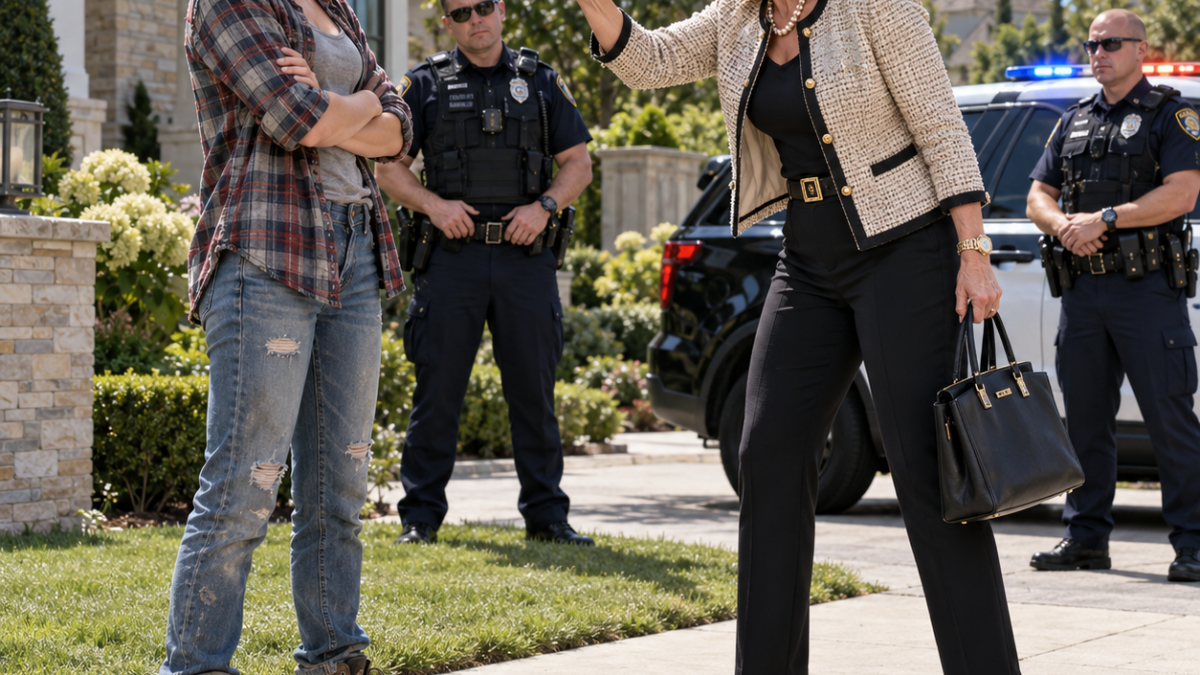
PART 2
The signature belonged to Teresa Brooks.
But she hadn’t signed as the owner of a private parcel. She had signed in her official capacity as president of the Willowbrook Estates Homeowners Association, claiming the authority to transfer land that, according to the original subdivision documents, belonged to the association itself.
I read the description once more, moving my finger beneath every line to make certain I wasn’t overlooking something. The parcel had been designated as common property when Willowbrook was developed in 1987. Its ownership had passed to the homeowners association, and the records showed no legitimate intervening transfer that would have made it Teresa’s personal property.
Yet there was her signature.
And there was her son’s name.
Tyler Brooks.
Consideration: $1.
I stared at that last figure until the numbers seemed to blur.
One dollar wouldn’t buy a decent cup of coffee anymore. It wouldn’t cover the cost of mailing a property-tax notice. But according to the document recorded three weeks earlier, it was the stated price attached to a piece of land that hundreds of families had spent decades maintaining.
I looked up at the clerk.
“Can you tell me whether this transfer was approved by the homeowners association?”
She shook her head. “We record documents submitted for recording, sir. We don’t determine whether a private association followed all its internal approval requirements.”
That was exactly the distinction I needed to remember.
A recorded document could create a serious claim against a property’s title, but recording it didn’t automatically establish that the person signing had lawful authority to give away the land.
I thanked her and requested certified copies of everything relevant.
She printed the deed, the original plat, and the chain of title. I paid the required fees, put the documents in a manila envelope, and walked toward the exit.
Halfway through the lobby, I remembered why I’d come to the building in the first place.
My refinancing paperwork.
I looked at the documents in my hand, then at the line still winding toward the counter.
The refinance could wait.
Whatever Teresa had done with that land could not.
***
I sat in my pickup truck for almost twenty minutes without starting the engine.
The county building stood behind me, its limestone walls reflecting the afternoon sun. Across the parking lot, people walked to their cars carrying ordinary paperwork: marriage records, deeds, vehicle registrations, documents that represented small pieces of their lives.
I had walked inside expecting an ordinary Tuesday.
Now I was holding a record that could affect 237 families.
I unfolded the subdivision map across my steering wheel and studied the southwest corner.
The land wasn’t enormous, but anyone who lived in Willowbrook understood its importance.
The parking area was where residents gathered when the clubhouse lot filled up. During our annual neighborhood garage sale, folding tables stretched across the pavement while children rode bicycles along the adjoining green space. On summer evenings, families spread blankets beneath the trees, and during community cleanup days, volunteers used the lot as a staging area for equipment and supplies.
Julie loved that part of Willowbrook.
Every autumn, she helped organize a small neighborhood gathering there. People brought homemade food, children played games, and the older residents sat beneath the shade trees telling stories about how the subdivision looked before half the houses were built.
It was ordinary land used for ordinary things.
That was precisely why it mattered.
For twelve years, Julie and I had paid $300 every month in homeowners association dues. Sometimes I grumbled about the expense, especially when we received another notice about landscaping standards or decorative restrictions, but I understood the basic arrangement.
We contributed money.
The association maintained shared property.
Everybody benefited.
At least, that was how it was supposed to work.
I looked at the deed again.
Teresa Brooks had been president for eight years. She chaired meetings, enforced community regulations, negotiated with contractors, and spoke constantly about protecting property values.
She had once sent a formal letter threatening to fine me because the paint on my mailbox post was supposedly one shade darker than the approved beige.
Yet somehow she had signed paperwork conveying association property to her own son for a dollar.
Maybe there was an explanation.
Maybe there had been a vote I missed.
Maybe the association had an unusual legal arrangement that didn’t appear in the recorded documents.
But if there was a legitimate explanation, I needed to find it.
And if there wasn’t, somebody had a great deal to answer for.
I folded the map, placed it carefully in the passenger seat, and drove home.
***
Julie was in the kitchen when I arrived.
She was cutting vegetables for dinner, wearing the faded blue apron her mother had given her years earlier. The radio played softly near the window, and the smell of onions filled the room.
She glanced up when I entered.
“You’re home early.”
“Finished sooner than expected.”
“Did you get the refinance paperwork handled?”
I set the envelope on the kitchen table.
“Not exactly.”
Julie looked at the envelope, then at my face.
She’d been married to me for seventeen years. She could tell when something was wrong before I opened my mouth.
“What happened?”
“I found something at the recorder’s office.”
“What kind of something?”
I pulled out the documents.
For the next fifteen minutes, I explained what I’d seen: Teresa’s signature, Tyler’s name, the recorded transfer, the one-dollar consideration, and the original plat identifying the property as a common area.
Julie listened without interrupting.
When I finished, she picked up the map.
“That’s our parking lot.”
“Part of it.”
“And the grass beside it?”
“That’s included.”
She stared at the document.
“Teresa sold it?”
“She signed a deed transferring it to Tyler.”
“For one dollar?”
“That’s what the document says.”
Julie sat down slowly.
For a moment, neither of us spoke.
Then she looked at me.
“Richard, how is that possible?”
“I don’t know yet.”
“Did the neighborhood vote?”
“Not that I remember.”
“Wouldn’t they have told us?”
“They should have.”
Julie looked toward the kitchen window.
Beyond our backyard fence, the neighborhood continued exactly as it always had. A dog barked in the distance. Someone’s lawn mower started. Children shouted from a nearby driveway.
Nothing outside suggested that anything was wrong.
That made the discovery feel even stranger.
Julie turned back to me.
“What are you going to do?”
I considered the question.
I had spent twenty years in law enforcement, and I’d recently taken office as county sheriff. My job involved enforcing the law, protecting the public, and making difficult decisions when facts and emotions pulled in different directions.
But this situation was different.
I was a homeowner.
A dues-paying member of the association.
And I had a history with the woman whose signature appeared on that document.
Even a petty history could create questions about my impartiality.
“I need to understand exactly what happened,” I answered.
Julie watched me carefully.
“And then?”
“Then I’ll make sure the right people see the evidence.”
She reached across the table and touched my hand.
“Just promise me one thing.”
“What?”
“Don’t let Teresa turn this into a fight about your badge.”
I looked at her.
She was right.
And she knew I knew it.
***
I had not always been sheriff.
For nearly two decades, I’d worked my way through law enforcement, beginning as a patrol deputy and later handling increasingly complicated investigations. I’d spent long nights responding to domestic disputes, searching for missing people, interviewing victims, and trying to make sense of situations where the truth rarely arrived neatly packaged.
When I ran for sheriff, I promised voters that no one would receive special treatment because of money, family connections, or influence.
I took that promise seriously.
Which meant I couldn’t give myself special treatment either.
If I used official resources to investigate someone who had irritated me personally, any resulting case could be challenged as retaliation. If I directed my own deputies to gather evidence about an HOA dispute involving my property, Teresa’s attorney could argue that I’d turned the sheriff’s department into my private enforcement agency.
Even if the accusations were untrue, the appearance of impropriety could damage the case.
And I refused to let that happen.
That night, I made a decision.
I would investigate the public records as Richard Ramos, homeowner.
Not Sheriff Ramos.
I would use only information available to any resident.
I wouldn’t direct deputies to look into Teresa.
I wouldn’t use restricted databases.
I wouldn’t ask government employees for favors.
And if I uncovered evidence of criminal misconduct, I would take it to the district attorney’s office and let independent investigators decide what happened next.
Julie listened while I explained my plan.
Then she nodded.
“That sounds like you.”
I smiled.
“Is that good?”
“It’s why I married you.”
She reached for the documents again.
“But you’d better be certain before you accuse her of anything.”
“I intend to be.”
***
After dinner, I opened my laptop and found the HOA’s governing documents.
They were available through the association’s website, although locating the actual files required navigating a maze of poorly labeled links.
The document I needed was fifty-three pages long.
Covenants, Conditions, and Restrictions.
The CC&Rs.
I’d signed papers acknowledging them when Julie and I bought our house twelve years earlier. I had skimmed the rules about fences, parking, and exterior modifications, but I’d never studied the provisions concerning ownership of common property.
That changed quickly.
I searched for the phrase “common areas.”
Several references appeared.
I read each one, then reached Article 7, Section 4.
The language was straightforward.
Common property was held by the association for the benefit of its members.
Any sale, lease, mortgage, or other transfer of association common property required prior written approval from at least seventy-five percent of the total voting membership.
I read the section again.
Seventy-five percent.
Willowbrook had 237 households.
That meant a transfer would require approval from at least 178 voting households if each household held one vote.
One hundred seventy-eight.
I leaned back.
I’d never received a ballot.
Julie had never received a ballot.
Neither of us remembered seeing a meeting announcement about selling the parking area or the adjoining green space.
I checked our email archives.
Nothing.
Then I opened the HOA’s published meeting minutes.
The archive covered five years.
I downloaded every file.
There were discussions about replacing pool filters, approving landscape contracts, repainting the entrance sign, raising maintenance fees, and enforcing rules about holiday decorations.
One meeting devoted nearly forty minutes to deciding whether homeowners could display inflatable decorations before Thanksgiving.
Another contained a lengthy argument about whether a particular fence stain qualified as cedar or walnut.
But I found nothing about transferring the southwest parcel.
No proposal.
No vote.
No mention of Tyler Brooks.
No announcement that any common property had been sold.
I opened the most recent annual meeting minutes.
Then the previous year’s.
Then the year before that.
Nothing.
Finally, I checked the county assessor’s website.
For years, the parcel’s ownership and tax records had been associated with the homeowners association.
After the new deed was recorded, the current tax information reflected Tyler Brooks.
I stared at the screen.
The transaction had moved beyond a document signed in private.
It had entered the public property records and begun affecting how the parcel was identified.
I printed everything.
The kitchen table slowly disappeared beneath paper.
Julie came downstairs around midnight.
She stopped in the doorway.
“Richard.”
I looked up.
“What?”
“It’s after twelve.”
“I know.”
“You said you were coming to bed an hour ago.”
“I found the bylaw.”
She walked over.
I showed her Article 7, Section 4.
Julie read it carefully.
Then she looked at the deed.
“Where are the 178 votes?”
I shook my head.
“That’s exactly what I intend to find out.”
***
The next morning, I began building a timeline.
I started in 1987, when Willowbrook Estates was developed.
The original plat identified the green spaces, parking areas, pool property, and other shared parcels.
The association had received ownership of designated common areas during development.
Over the following decades, homeowners paid dues to maintain them.
Teresa joined the board years later and eventually became president.
Then came the recent deed.
A transfer bearing her signature and naming her son as the recipient.
There were gaps in the records.
I marked each one.
I’d learned long ago that assumptions could destroy an investigation faster than missing evidence.
If I couldn’t prove something, I wrote a question mark.
If a document supported a conclusion, I recorded the source.
If there was a possible innocent explanation, I noted it.
By lunchtime, my timeline covered several pages.
I also drafted a formal records request to the HOA management company.
The request sought three years of financial statements, reserve-account summaries, the current operating budget, and all board resolutions or membership approvals relating to real-property transactions.
I cited the applicable record-inspection provisions and asked that the documents be provided through the normal homeowner process.
I didn’t mention my position.
I didn’t accuse Teresa.
I simply asked for the records every homeowner was entitled to request.
The management company replied later that morning.
It acknowledged my request and said the documents would be provided within ten business days.
I printed the response.
Dated it.
Filed it.
Then I returned to my regular responsibilities.
For the moment, that was all I could do.
***
Eight days later, the records arrived.
I opened the email after dinner.
Julie was sitting on the couch with a book.
“Anything interesting?” she asked.
“Financial statements.”
She looked over the top of her glasses.
“Should I make coffee?”
“Probably.”
The files included balance sheets, income statements, reserve summaries, and annual financial reports.
Most pages looked ordinary.
Maintenance expenses.
Insurance.
Utilities.
Landscaping.
Administrative costs.
I worked through them slowly, comparing figures and making notes.
Then I reached page fourteen of the most recent annual report.
One line stopped me.
**Land sale proceeds: $1.**
Below it was a notation indicating that the amount had been transferred to the association’s reserve fund.
I stared at the screen.
There it was.
The transaction hadn’t been completely concealed.
It had been recorded within the HOA’s own financial reporting as though selling a parcel for one dollar were an ordinary administrative event.
I printed the page.
Highlighted the entry.
Then called Julie into the room.
She read the line.
“One dollar.”
“Exactly.”
“That’s what they recorded?”
“Yes.”
She looked at me.
“Richard, how could anybody miss that?”
I glanced at the stack of reports.
“Because most people never read past the summary page.”
Julie sat beside me.
We studied the document together.
The entry didn’t prove criminal intent.
It didn’t prove how the transaction had been authorized.
But it confirmed that the association’s own records reflected the nominal-price disposal of land.
And nobody had explained it to the residents.
Julie leaned back.
“Teresa once made me submit photographs of our flower beds because she thought the edging was too close to the sidewalk.”
I remembered.
She’d measured the distance herself.
Julie continued.
“But she can transfer community property to her son and call it an administrative expense?”
“Apparently she thinks so.”
Julie looked at me sharply.
“Don’t say anything publicly until you know.”
I nodded.
“I won’t.”
She touched my shoulder.
“But when you do know, don’t let her frighten you into staying quiet.”
***
The quarterly HOA meeting was scheduled for the following Thursday.
I spent the days beforehand reviewing the documents.
I wanted to understand every figure I might mention.
I checked the parcel map.
Compared the deed descriptions.
Reviewed the CC&Rs.
Printed the annual report page showing the one-dollar transaction.
I also examined Teresa’s official authority under the association’s governing structure.
The president could sign certain documents on behalf of the association.
That was normal.
But signing authority was not the same as unrestricted authority to dispose of association property.
The CC&Rs imposed specific requirements.
The membership approval requirement appeared clear.
I found no record that it had been satisfied.
That distinction became the center of my preparation.
I wasn’t going to stand in a room and accuse Teresa of stealing.
I was going to ask her to explain the recorded transaction and identify the approval authorizing it.
Nothing more.
Nothing less.
On Thursday evening, I dressed in jeans and a plain button-down shirt.
I left my uniform at home.
I carried no official materials.
The documents in my folder were public records and records I’d received as a homeowner.
Julie watched me prepare.
“Are you nervous?”
“A little.”
She smiled.
“That’s a new one.”
“Not really.”
I closed the folder.
“I’ve faced plenty of difficult people. Most of them didn’t send letters about mailbox paint.”
Julie laughed.
Then her expression became serious.
“Richard, whatever happens tonight, remember that she’s going to try making this personal.”
“I know.”
“And if she starts attacking you?”
“I’ll stick to the documents.”
Julie walked over and straightened my collar.
“Good.”
Then she kissed my cheek.
“Come home safe.”
***
The community clubhouse smelled of carpet cleaner and stale coffee.
About thirty residents had arrived.
Teresa sat at the front table between Carol Flores, the board secretary, and Donald Pratt, who handled architectural review matters.
Teresa wore a burgundy blazer.
Her reading glasses rested near the end of her nose.
She moved through paperwork with the confidence of someone accustomed to running every meeting exactly as she pleased.
I took a seat in the third row.
Jim Brennan sat near the back.
I’d seen him around the neighborhood but never spoken to him at length.
He was a retired accountant, with white hair, wire-rimmed glasses, and a quiet manner that made him easy to overlook.
At the time, I had no idea how important he would become.
The meeting began normally.
Teresa reviewed the previous minutes.
Carol discussed routine expenses.
Donald gave an update on architectural requests.
Residents asked about landscaping, parking, and pool maintenance.
Teresa answered efficiently.
She smiled when people agreed with her.
She redirected questions when they became inconvenient.
She was skilled at managing a room.
Watching her, I understood why so many people trusted her.
If I’d never seen the deed, I might have trusted her too.
Eventually, Teresa announced the open-forum portion of the meeting.
A woman asked about parking near the pool.
A man wanted to know when the entrance sign would be repainted.
Teresa promised follow-up on both matters.
Then she looked around.
“Any other questions?”
I raised my hand.
Her eyes settled on me.
“Yes, Mr. Ramos?”
I stood.
“I have a question about a property transfer involving our southwest common area.”
The room became quieter.
Teresa kept smiling.
“Go ahead.”
I opened my folder.
“According to county records, a parcel covering part of our overflow parking area and adjoining green space was transferred to Tyler Brooks approximately a month ago. The recorded consideration was one dollar.”
Several people turned toward me.
Then toward Teresa.
I continued.
“Can you explain why association property was transferred for that amount?”
Teresa folded her hands.
“That was an administrative matter handled appropriately by the board.”
Her answer came quickly.
Too quickly.
I nodded.
“I understand that certain administrative matters can be handled by the board. But Article 7, Section 4 of the CC&Rs requires approval from seventy-five percent of the voting membership before common property can be transferred.”
Teresa’s smile tightened.
“The details are more complicated than you’re suggesting.”
“Then perhaps you can clarify them.”
She adjusted her glasses.
“Mr. Ramos, these are legal technicalities involving property administration. The board has authority to handle routine transactions.”
I looked down at the document.
“Was a membership vote conducted?”
She paused.
“That’s not an appropriate question for an open forum without prior notice.”
I looked up.
“It’s a question about property owned by the association.”
Her expression hardened.
“If you have concerns, submit them in writing.”
“I have requested records in writing. I’m asking where the required approval appears.”
Teresa glanced toward Carol Flores.
Carol looked down at the table.
Donald leaned back in his chair.
Neither volunteered an answer.
Teresa turned toward the room.
“I don’t believe we should spend valuable meeting time debating a properly handled administrative matter.”
I stayed standing.
“Then one document showing the authorization would resolve the question.”
For the first time, her composure slipped.
Only slightly.
Her fingers tightened around the papers in front of her.
Then a voice came from the back.
“I’d like to know the answer too.”
Everyone turned.
Jim Brennan rose slowly from his chair.
Teresa’s expression changed.
“Jim.”
He nodded.
“Teresa.”
Then he looked toward the residents.
“I served on this board twice. I know the governing documents, and Richard is correct about the voting requirement.”
Teresa opened her mouth.
Jim continued.
“The sale of common property is not a routine administrative action. If the association transferred land, the required approval should be documented.”
A woman near the front whispered, “We sold land?”
Another asked, “What land?”
Jim stepped into the aisle.
“So either a vote happened and wasn’t properly noticed, or a vote happened and the records weren’t maintained, or no vote happened at all.”
He looked directly at Teresa.
“Which is it?”
The room became completely silent.
Teresa stared at him.
For several seconds, she said nothing.
Then she gathered her papers.
“I believe we should table this matter until the board can provide a complete explanation.”
Jim frowned.
“That’s not an answer.”
“We will follow up.”
“When?”
“At the appropriate time.”
I spoke again.
“Can you commit to providing the authorization documents?”
Teresa looked at me.
Her expression was cold.
“Mr. Ramos, I will not conduct an impromptu legal hearing because one resident has decided to make allegations based on documents he doesn’t fully understand.”
I held her gaze.
“I haven’t made an allegation. I’ve asked a question.”
Her cheeks reddened.
She reached for the gavel.
“Meeting adjourned.”
The sharp sound echoed through the room.
Then she stood, gathered her leather portfolio, and walked toward the exit.
She didn’t look at me again.
***
For several moments, nobody moved.
Then conversations erupted.
“Did she really sell the parking lot?”
“Who’s Tyler Brooks?”
“Isn’t that her son?”
“Why didn’t we vote?”
I remained in my seat, gathering my papers.
Four residents approached me near the entrance.
One asked to see the deed.
Another wanted a copy of the governing provision.
I showed them the documents.
I explained that the records raised serious concerns but that I hadn’t established criminal wrongdoing.
A woman named Patricia Vaughn looked at the parcel map.
“My grandchildren play on that grass.”
“I know.”
“Does Tyler own it now?”
“A deed has been recorded in his favor. Whether the transfer was valid is exactly what needs to be determined.”
She stared at me.
“How could Teresa do something like that without telling us?”
“I don’t know.”
I meant it.
Then Jim Brennan approached.
He extended his hand.
“Richard Ramos.”
“Jim Brennan.”
We shook.
“I’ve seen you around,” he said.
“Likewise.”
Jim glanced toward the clubhouse.
“That was an interesting meeting.”
“That’s one way to describe it.”
He smiled faintly.
Then his expression became serious.
“I’ve been uneasy about the way Teresa handles the association for years. Nothing I could put my finger on. But what you brought up tonight isn’t a small matter.”
“No.”
“How much have you found?”
“Enough to ask questions.”
Jim nodded.
“I spent forty years as a CPA. If you’d like another set of eyes on those financial statements, I’d be happy to help.”
I looked at him.
“You’re offering?”
“Yes.”
“Why?”
Jim glanced toward the other homeowners.
“Because I live here too.”
He handed me his card.
“And because somebody should have been checking these things long before tonight.”
***
I returned home later than expected.
Julie was waiting in the kitchen.
She looked at my face as I entered.
“Well?”
“Teresa didn’t answer the question.”
Julie sighed.
“I figured.”
“But someone else asked it too.”
I told her about Jim.
About the room falling silent.
About Teresa ending the meeting without producing any documents.
Julie listened carefully.
Then she asked, “Did you lose your temper?”
“No.”
“Did she?”
“Not exactly.”
“Then how did it go?”
I considered the question.
“She lost control of the conversation.”
Julie raised her eyebrows.
“That must have surprised her.”
“It surprised me.”
I put the folder on the table.
Julie stepped closer.
“Are you glad you went?”
“Yes.”
Then I hesitated.
“But I think things are going to get ugly.”
She studied me.
“Why?”
“Because Teresa has spent eight years making sure people believe she knows what’s best for Willowbrook. Tonight, someone asked her to prove it.”
Julie looked toward the window.
“And she couldn’t.”
“Not tonight.”
Julie took my hand.
“Then be careful.”
***
On Saturday morning, I drove to Jim Brennan’s house.
He lived three streets away in a brick ranch with an American flag beside the front porch.
His garage door was open.
Inside, woodworking tools hung in precise rows along the wall. The place smelled of sawdust, motor oil, and fresh coffee.
Jim greeted me with a mug.
“Black?”
“Perfect.”
He led me into the kitchen.
A laptop sat on the table.
Beside it were a calculator, legal pad, and several neatly labeled folders.
I smiled.
“You always this organized?”
“My wife used to say I alphabetized my socks.”
I laughed.
“Did you?”
“Only the good ones.”
His smile faded as he opened the first file.
“Let’s see what Teresa was doing with that land.”
We began with the parcel I’d discovered.
Jim reviewed the original plat, the chain of title, and the recent quitclaim deed.
Then he opened the county recorder’s online database.
He examined adjoining parcel numbers.
Cross-referenced legal descriptions.
Compared filing dates.
For nearly an hour, we found nothing beyond what I already knew.
Then Jim stopped scrolling.
“Richard.”
I looked up.
“What?”
“Come look at this.”
He pointed toward a record involving a narrow strip along the southern boundary.
It wasn’t the parcel Teresa had transferred to Tyler three weeks earlier.
It was an adjoining piece of land.
The record dated back to 2021.
Jim opened it.
Another quitclaim deed.
Another transfer involving association property.
The recipient was a limited liability company.
**Brooks Property Holdings LLC.**
I stared at the screen.
“Brooks?”
Jim nodded.
“Could be a coincidence.”
He opened the Secretary of State’s business database.
A few moments later, the company’s registration appeared.
Registered agent: Tyler Brooks.
Business address: Teresa Brooks’s home.
The room became quiet.
Jim leaned back.
“Well.”
I looked from one screen to the other.
“Her son.”
“Looks that way.”
“And the company uses her address.”
“Yes.”
I felt my stomach tighten.
“How much was that parcel transferred for?”
Jim opened the deed.
His eyes moved down the page.
Then he looked at me.
“One dollar.”
***
I thought that was the worst of it.
I was wrong.
Jim continued searching.
The adjacent parcel had been transferred in 2021, but another document referenced a transaction from 2019.
He followed the parcel number to a small section of green space near Willowbrook’s eastern entrance.
That land had been designated as common property too.
Another quitclaim deed.
Another nominal consideration.
Another transfer involving the same family-controlled company.
Jim printed the document.
Placed it beside the others.
Then wrote three dates on his legal pad.
2019.
2021.
The most recent transfer.
Three transactions.
Three pieces of association property.
Three nominal prices.
One dollar each.
I stared at the papers.
“Three dollars.”
Jim looked at me.
“What?”
“That’s what the association recorded receiving for all three parcels.”
He nodded slowly.
“Three dollars.”
I looked toward the kitchen window.
Outside, sunlight fell across Jim’s neatly maintained yard.
A pair of birds moved along the fence.
Everything looked peaceful.
Inside, we were examining evidence suggesting that a woman entrusted with protecting neighborhood assets had spent years transferring pieces of them into her own family’s control.
I felt a surge of anger.
Jim seemed to notice.
“Easy,” he said.
I looked at him.
“Three parcels, Jim.”
“I see them.”
“All transferred to her son or his company.”
“I see that too.”
“For three dollars.”
He folded his hands.
“And we still need to understand the authority behind each transaction.”
I exhaled.
He was right.
I had to keep remembering that.
But the pattern was becoming difficult to ignore.
***
Jim began comparing assessed values and available market information.
The parcels weren’t large enough to support ordinary houses independently.
But they occupied useful locations within an established subdivision.
One bordered the overflow parking area.
Another followed the southern boundary.
The third covered a section of entrance green space.
Together, they represented a substantial amount of land.
Jim studied recent valuations and comparable properties.
He made calculations on a napkin.
Then he looked up.
“Conservatively, I’d estimate the combined value somewhere between $180,000 and $220,000.”
I stared at him.
“You’re serious?”
“Very.”
I looked back at the deeds.
“Transferred for three dollars.”
Jim nodded.
“The consideration listed on a deed doesn’t necessarily establish the full economic arrangement. But if no additional compensation was paid, and if the association lacked authority to make these transfers, the financial implications are enormous.”
He tapped the table.
“Two hundred thousand dollars’ worth of community property, give or take, moved into private hands without an approval record.”
I sat back.
The number was difficult to comprehend.
For twelve years, Julie and I had paid HOA dues without thinking much about where each dollar went.
Every homeowner had done the same.
Families with young children.
Retired couples.
Single parents.
People living on fixed incomes.
People working two jobs.
Every month, they contributed money to maintain the same shared spaces.
And now those spaces were entangled in transactions nobody remembered authorizing.
Jim looked down at the records.
“You know what this resembles?”
“What?”
“Salami slicing.”
I frowned.
He explained.
“You don’t take everything at once. You take small pieces over time. A narrow strip here. A little green space there. Nothing big enough to attract immediate attention.”
He spread the three deeds across the table.
“But when you put the pieces together, you see the whole picture.”
I thought about Teresa’s carefully controlled meetings.
The routine reports.
The endless arguments about paint colors and trash containers.
Maybe those distractions had simply made it easier for everyone to overlook more important matters.
I looked at Jim.
“How did nobody catch this?”
He was quiet for a moment.
Then he said something that stayed with me.
“Because we trusted somebody else was checking.”
***
Jim had served on the Willowbrook board twice over fifteen years.
He understood the association’s structure better than most residents.
He also understood its weaknesses.
As we worked, he admitted he’d stopped paying close attention after leaving the board.
His health had become a concern.
He’d wanted more time with his family.
He’d trusted that the remaining members would handle things properly.
“I should have kept asking questions,” he said.
I shook my head.
“You weren’t president.”
“No. But I was a member.”
He looked at the financial statements.
“I spent forty years telling clients that internal controls matter. Then I came home and assumed my own neighborhood had them.”
His voice carried quiet regret.
I understood.
For twelve years, I’d done almost the same thing.
I paid dues.
Attended occasional meetings.
Read the notices that directly affected my property.
And assumed someone else was checking the larger issues.
Jim rubbed his forehead.
“My wife used to tell me retirement was supposed to mean less paperwork.”
I smiled.
“She sounds wise.”
“She was.”
There was something in his voice.
I looked up.
Jim’s wife had passed away several years earlier.
I’d known that vaguely, but we had never discussed it.
He glanced toward a framed photograph on the kitchen counter.
A smiling woman stood beside him on a beach.
“She loved this neighborhood,” he said quietly. “We bought our house because it felt like a place where people looked after one another.”
He paused.
“She helped plant some of the trees near the eastern entrance.”
I looked down at the 2019 parcel transfer.
That was the entrance green space.
Jim followed my gaze.
His expression hardened.
“That’s not just a line on a map to me, Richard.”
I nodded.
“I know.”
He sat back.
“I don’t want revenge. I want to know whether somebody took something that belonged to all of us.”
I looked at the documents.
“So do I.”
***
By early afternoon, we had assembled a complete timeline of the three transfers.
For each transaction, we printed the recorded deed, relevant ownership history, parcel map, and available valuation information.
We checked the association’s published minutes for authorization.
None appeared.
We reviewed the financial statements.
Each nominal land sale had been reflected as a one-dollar transaction.
We identified the connection between Tyler Brooks and Brooks Property Holdings LLC.
We also prepared a list of facts requiring further investigation.
Had the board actually approved any of the transfers?
Had Teresa exceeded her authority?
Did Tyler know the land belonged to the association?
Was there compensation or an arrangement not reflected in the documents?
Had additional records been created outside the published minutes?
Did the transactions involve false representations to the county recorder?
We didn’t have answers to all those questions.
But now we had something far more substantial than suspicion.
A documented pattern.
Jim printed a final page.
He placed it on top of the folder.
Then looked at me.
“What now?”
I closed the file.
“Now it goes to the district attorney.”
***
I spent the next several days organizing the material into a referral package.
I wrote a factual summary explaining how I’d discovered the first deed while conducting personal business at the recorder’s office.
I described the original common-area designation and the approval requirement in the CC&Rs.
I included the three transfers, the recipients, the listed consideration, and the absence of corresponding votes in the available records.
I attached copies of the public documents and association reports.
I also disclosed my personal connection to the matter.
I was a homeowner in Willowbrook.
Teresa had previously issued an HOA violation notice concerning my mailbox.
And I served as county sheriff.
Those facts mattered.
I wasn’t going to hide them.
I wanted the district attorney to know immediately that there was a potential conflict of interest and that I had deliberately avoided using official investigative authority.
Before submitting the package, I called Julie into the study.
She looked at the stack of paperwork.
“That looks serious.”
“It is.”
“Have you decided?”
I nodded.
“I’m referring it.”
Julie pulled up a chair.
“Are you worried?”
“About the case?”
“About all of it.”
I considered the question.
“Yes.”
She waited.
“Teresa could make trouble for me professionally. She could tell people I’m using the sheriff’s office against her. She could convince some residents this is personal.”
Julie looked at me steadily.
“Are you using your office against her?”
“No.”
“Then make sure everything you do stays that way.”
I nodded.
She reached for my hand.
“And don’t forget, Richard. You live here too. You’re allowed to care about what happens to our home.”
I looked at her.
That was what made this situation difficult.
I wasn’t an outside investigator.
I was one of the people affected.
But being affected didn’t erase my right to report what I’d found.
It simply made transparency more important.
I submitted the referral.
Then I waited.
***
Teresa responded before the district attorney did.
On Monday morning, my phone buzzed while I was sitting at my desk.
An email had been sent to all 237 households in Willowbrook.
The subject line was impossible to miss.
**URGENT: PROTECTING OUR COMMUNITY FROM ABUSE OF POWER**
I opened it.
The message was long.
Carefully written.
And unmistakably aimed at me.
Teresa claimed she’d been subjected to a public interrogation by Sheriff Richard Ramos over routine administrative matters.
She said she’d consulted legal counsel.
She accused me of pursuing a personal vendetta against a volunteer board president.
She described my questions as harassment.
She suggested I was using my professional position to intimidate her family and undermine the association.
I read every word.
Then I read it again.
Nowhere did she explain the three transfers.
Nowhere did she identify the required membership approval.
Nowhere did she explain why association property had been transferred to her son and his company for a combined stated consideration of three dollars.
Instead, she’d turned the entire issue into a story about me.
The sheriff.
The bully.
The powerful official allegedly targeting an innocent neighborhood volunteer.
I leaned back in my chair.
There it was.
The fight Julie had warned me about.
***
My first instinct was to respond immediately.
I could have written an email explaining everything.
I could have attached the deeds and financial statements.
I could have pointed out that public property records were available to every homeowner, not just law enforcement officers.
I could have challenged Teresa to produce the missing votes.
And I was angry enough to want to do exactly that.
But then I imagined the resulting argument.
Dozens of emails.
Residents taking sides.
Teresa framing every response as another personal attack.
The facts disappearing beneath accusations and counteraccusations.
That was a battle she knew how to fight.
She’d spent eight years controlling the association’s conversations.
I wasn’t going to hand her another opportunity.
Instead, I forwarded the email to the district attorney’s office with a short note explaining that it might be relevant to the referral I’d submitted.
Then I closed my inbox.
And returned to work.
***
By lunchtime, the neighborhood email chain had exploded.
Some residents defended Teresa.
One called her a tireless volunteer who deserved more respect.
Another said she had done more for Willowbrook than most homeowners ever would.
A third accused me of trying to use my title to win a petty dispute.
I read those messages without responding.
Then Jim Brennan sent a reply.
It was brief and measured.
He explained that legitimate questions had been raised about recorded property transfers and that the appropriate response was to provide the authorizing documentation.
He didn’t mention my profession.
He didn’t attack Teresa personally.
He simply asked for transparency.
A few minutes later, Patricia Vaughn replied.
She asked why the board hadn’t produced the approval records if the transactions were legitimate.
Other homeowners began asking similar questions.
One wanted copies of the deeds.
Another asked whether the overflow parking lot could legally be sold.
A retired woman wrote that she’d lived in Willowbrook for twenty-seven years and had never been asked to vote on selling common land.
Teresa did not respond directly to those questions.
Instead, Carol Flores sent a statement on behalf of the board.
The association was reviewing the matter internally and would provide updates at an appropriate time.
I stared at the screen.
Another non-answer.
But something had changed.
The questions weren’t coming only from me anymore.
***
That evening, Julie found me sitting at the kitchen table.
I had my phone in front of me.
The email chain was still growing.
She glanced at the screen.
“You’re reading it again.”
I nodded.
“Probably shouldn’t.”
“No, probably not.”
She sat across from me.
For a while, we were quiet.
Then she asked, “Does it hurt?”
I looked up.
“What?”
“What they’re saying about you.”
I almost gave the answer I’d spent twenty years giving whenever work became difficult.
I’m fine.
It doesn’t bother me.
I’ve heard worse.
But Julie knew me too well.
“Yes,” I admitted.
She nodded.
“I thought so.”
I looked at the email.
“Some of these people have lived near us for twelve years.”
“I know.”
“They’ve waved at us, eaten dinner at our house, borrowed tools.”
Julie watched me.
“And now they think I’m using my badge to punish someone over a mailbox.”
I rubbed my forehead.
“I’ve spent my career trying to make sure power isn’t abused. And suddenly I’m being accused of exactly that.”
Julie reached across the table.
“Richard, people who know you will eventually have to decide whether they believe the man they’ve known for years or a story written by someone who’s refusing to answer a simple question.”
I looked at her.
“And if they choose the story?”
Her expression softened.
“Then at least you’ll know who they are.”
I didn’t have an answer.
Julie squeezed my hand.
“You don’t have to win an email argument. You just have to keep doing what’s right.”
I closed the inbox.
And for the first time that day, I felt able to breathe.
***
On Wednesday afternoon, I received a call from the district attorney’s office.
The caller introduced herself as Assistant District Attorney Margaret Chen.
Her voice was calm and professional.
“Mr. Ramos, we’ve reviewed the material you submitted concerning the Willowbrook Estates property transfers.”
I sat up straighter.
“Yes, ma’am.”
“We believe the records warrant a formal investigation.”
For a moment, I didn’t speak.
She continued.
“We’ll need you to provide a witness statement explaining how you obtained the documents and what steps you took before submitting them.”
“Of course.”
“I want to be clear that your role will be as a reporting citizen and witness, not as a law enforcement investigator in this matter.”
“That’s exactly what I want.”
She paused.
“We’ve also received a complaint from Mrs. Brooks alleging that you’ve used your professional position to harass her.”
I closed my eyes briefly.
“I expected that.”
“Both matters will be reviewed independently. We will examine the allegations concerning your conduct as carefully as we examine the property records.”
“I understand.”
Her voice softened slightly.
“I appreciate your cooperation.”
After the call ended, I sat very still.
The district attorney had opened an investigation.
The referral was no longer sitting in an inbox waiting for someone to decide whether it mattered.
But Teresa’s accusation against me was now part of the process too.
I knew it would be examined.
And I welcomed that.
If I had done anything improper, I wanted it identified.
If I hadn’t, I wanted the record to establish that as well.
The truth needed to apply to everyone.
Including me.
***
I gave my statement on Friday afternoon.
Margaret Chen met me in a conference room at the district attorney’s office.
An investigator named Torres sat beside her with a legal pad.
There was a recording device on the table.
I recognized the process immediately.
I’d participated in hundreds of similar interviews from the other side.
This time, I was the witness.
Chen began with my original visit to the county recorder.
Why was I there?
What documents was I handling?
How did I find Teresa’s name?
What search functions had I used?
Had I accessed any restricted database?
Had I asked county employees for preferential assistance?
I answered each question carefully.
Then she asked about my relationship with Teresa.
I told her about the mailbox violation.
The repainting.
Our ordinary HOA interactions.
I didn’t exaggerate.
I didn’t describe Teresa as evil.
I simply explained what had happened.
Torres occasionally asked for clarification.
“Did any deputy under your command assist with your record searches?”
“No.”
“Did you request investigative reports through the sheriff’s department?”
“No.”
“Did you use county law enforcement systems to examine Tyler Brooks or Brooks Property Holdings?”
“No.”
“How did you locate the company registration?”
“Through the public Secretary of State database.”
Chen made a note.
Then she asked, “Why did you refer the matter to this office rather than opening an investigation through your own department?”
I looked directly at her.
“Because I live in the neighborhood, and I have a personal interest in the property. I didn’t want an investigation compromised by the appearance that I was using my position against someone I’d previously disagreed with.”
Chen nodded.
“Thank you.”
The interview continued.
I described Jim’s assistance.
The three deeds.
The financial statements.
The missing authorization records.
I identified what I knew firsthand and what Jim had discovered independently.
When the interview ended, Chen closed her folder.
“You’ve been thorough, Mr. Ramos.”
“I tried.”
She looked at me seriously.
“Our office will determine what further investigative steps are appropriate. We may need additional testimony or records, but please don’t conduct independent witness interviews on our behalf.”
“I won’t.”
“And don’t attempt to confront Mrs. Brooks or her son.”
“I have no intention of doing that.”
She stood.
“We’ll contact you when there’s something we can share.”
I thanked her.
Then I left.
Outside, the afternoon air felt cool against my face.
For the first time since finding the deed, the burden no longer rested entirely on my shoulders.
Professionals with independent authority were examining the evidence.
All I had to do was tell the truth and let them work.
***
The following six weeks were among the longest of my life.
Not because something dramatic happened every day.
Because most days, nothing happened at all.
The investigation moved quietly.
I went to work.
Julie tended her garden.
We paid our bills.
We attended church.
We saw neighbors at the grocery store.
Life continued.
But everywhere I went in Willowbrook, I could feel the tension.
Some residents greeted me warmly.
Others barely acknowledged me.
A few asked whether Teresa would be arrested.
I told them I didn’t know.
Several people seemed disappointed by that answer.
They wanted certainty.
They wanted an ending.
They wanted someone to tell them whether the woman who had run their neighborhood for eight years was guilty.
I understood.
But I’d spent too much of my career watching people reach conclusions before all the evidence was examined.
I wasn’t going to make that mistake now.
***
One Saturday, I walked past the southwest parking area.
A few children were playing football on the adjoining grass.
An older couple sat on a bench beneath a tree.
The pavement had cracks near the edge.
The wooden border around one flower bed needed replacing.
It looked exactly as it had for years.
I stood near the fence and watched the children play.
A football sailed too high and landed near me.
One boy ran over.
“Sorry, mister.”
I picked it up.
“No problem.”
He grinned.
“Thanks.”
I tossed it back.
He ran toward his friends.
I looked at the land beneath their feet.
They had no idea what was happening.
To them, it was simply the place where they’d always played.
They didn’t know about quitclaim deeds.
They didn’t know about LLCs.
They didn’t know that the property records had become the subject of an investigation.
And they shouldn’t have needed to know.
That was the responsibility of the adults entrusted with managing the community.
We were supposed to protect places like this for the families who used them.
Not quietly pass them into private hands.
I stayed there for several minutes.
Then walked home.
***
A few days later, I encountered Patricia Vaughn near the mailboxes.
She was carrying a small grocery bag and looked troubled.
“Richard?”
I stopped.
“Hi, Patricia.”
“Can I ask you something?”
“Of course.”
She glanced around.
“Is it true they’re investigating Teresa?”
I considered my answer.
“The district attorney’s office is reviewing the property transfers.”
Patricia nodded.
“That’s what I heard.”
She looked down at the sidewalk.
“My husband thinks we should stay out of it.”
“That’s your decision.”
She looked up.
“But if the land belongs to all of us, shouldn’t we know what happened?”
“Yes.”
Patricia sighed.
“I voted for Teresa twice.”
“That doesn’t mean you did anything wrong.”
“I trusted her.”
I looked at her.
“So did a lot of people.”
Her eyes grew wet.
“My grandchildren love that green space. My youngest calls it the soccer field even though there aren’t any goals.”
I smiled faintly.
She continued.
“When I heard somebody had transferred it, I felt foolish for not paying attention.”
I shook my head.
“Patricia, you shouldn’t have to investigate every decision your elected HOA board makes. That’s why associations have rules and oversight.”
She nodded.
“But maybe we should have asked more questions.”
I didn’t disagree.
She looked toward the parking area.
“I hope we get it back.”
I followed her gaze.
“So do I.”
***
As the weeks passed, Teresa continued to insist publicly that she’d done nothing improper.
Her supporters repeated that the transactions were administrative.
Some said the parcels had little practical value.
Others claimed that the transfers were necessary to resolve property-management complications.
But no one produced the required membership approvals.
Jim reviewed the available records again.
He found nothing that changed our understanding.
Meanwhile, the district attorney’s investigators obtained information we couldn’t access as private citizens.
They examined original documents.
Reviewed relevant financial records.
Interviewed people involved in the association’s operations.
Requested information concerning Brooks Property Holdings.
And studied whether the transfers had been structured with fraudulent intent.
I knew only fragments of that work.
Which was appropriate.
The investigation wasn’t mine to control.
***
One evening, Julie found me standing on the back porch.
The sky was turning orange behind the houses.
She stepped beside me.
“Thinking about Teresa?”
“A little.”
She leaned against the railing.
“You know what worries me?”
“What?”
“That even if she gets caught, people will still blame you for what happened.”
I looked at her.
“I know.”
“They’ll say you caused the scandal.”
“Maybe.”
“They’ll say you ruined her reputation.”
I thought about that.
Then I shook my head.
“If she did nothing wrong, the records will show it.”
“And if she did?”
“Then the records will show that too.”
Julie studied me.
“You make it sound simple.”
“It isn’t.”
I looked toward the neighborhood.
“But I know one thing. I didn’t sign those deeds.”
She nodded.
“I know.”
“I didn’t transfer the land.”
“I know.”
“And I didn’t create the missing votes.”
Julie took my hand.
“Then stop carrying responsibility for choices you didn’t make.”
I looked at her.
She smiled sadly.
“You can care about the outcome without making yourself responsible for every consequence.”
That was easier said than done.
But I tried.
***
The charges came down on a Wednesday morning in early spring.
I learned about them the same way most Willowbrook residents did.
Through a local news report.
The district attorney’s office had issued a statement announcing criminal charges arising from the association property transfers.
Teresa Brooks faced five counts.
Three involved theft allegations relating to the three parcels.
One concerned filing fraudulent documents.
Another concerned her fiduciary responsibilities as an association officer.
Tyler Brooks faced charges involving receipt of the transferred property and conspiracy.
The district attorney estimated the combined property value at approximately $195,000.
I read the article twice.
Then a third time.
For months, the entire issue had revolved around three dollars.
Now the alleged value of the property involved was nearly two hundred thousand.
I sat back.
There were moments in law enforcement when a case suddenly became real in a different way.
A name moved from a report to a charging document.
An allegation became a formal accusation.
A person who had appeared untouchable suddenly faced the same legal system as everyone else.
I had seen it happen before.
But never with someone who lived three streets away.
Never with land Julie and I had helped maintain.
Never with the person who’d threatened to fine me over beige paint.
My phone rang.
It was Jim.
“Richard, did you see?”
“Yes.”
He exhaled.
“Well.”
For a moment, neither of us spoke.
Then he said, “I never thought I’d see the day.”
I looked at the article.
“Charges aren’t convictions, Jim.”
“I know.”
“But the evidence was enough for the DA to act.”
“Yes.”
His voice softened.
“And that matters.”
***
Jim later told me what he’d heard about Teresa receiving the charging papers.
He hadn’t witnessed every moment, so I treated his account as secondhand.
According to a neighbor, Teresa had been standing in her front yard talking when two deputies from another jurisdiction arrived.
They approached calmly.
Explained why they were there.
Handed her the paperwork.
She reportedly went pale.
The neighbor asked whether everything was all right.
Teresa said there had been a misunderstanding.
Then she went inside.
I didn’t repeat the story publicly.
I knew how quickly neighborhood gossip could distort events.
But I couldn’t help picturing her standing on the lawn.
The same woman who’d once inspected my mailbox with an expression of disapproval.
The same woman who’d spoken at HOA meetings as though her decisions were beyond question.
Now she was being asked to answer questions she couldn’t simply adjourn.
***
Two weeks later, I attended the arraignment.
Not in uniform.
Not representing the sheriff’s office.
I went as a citizen observer and homeowner.
Jim sat beside me in the gallery.
Several other Willowbrook residents occupied seats nearby.
The courtroom was smaller than most people imagine when they think about serious criminal cases.
Wood-paneled walls.
A judge’s bench.
An American flag.
Fluorescent lighting.
The quiet rustle of attorneys turning pages.
Teresa entered with her lawyer.
She wore a plain gray dress.
No burgundy blazer.
No expensive jewelry.
No carefully displayed symbols of status.
For a moment, I barely recognized her.
She looked older.
Tired.
Her mouth was set in a tight line.
Tyler entered separately with his attorney.
He kept his eyes lowered.
I studied him.
Twenty-six years old.
A young man who, according to the allegations, had received community property through a company connected to his mother.
I wondered how much he understood when the first deed was signed.
Whether he had asked questions.
Whether he’d simply trusted Teresa.
Or whether he had knowingly participated from the beginning.
The court would have to determine that.
Not me.
***
When the judge began reading the charges, the room grew very quiet.
Teresa stood beside her attorney.
Tyler stood at the other defense table.
Their lawyers entered not-guilty pleas.
Bail was set.
Fifty thousand dollars for Teresa.
Twenty-five thousand for Tyler.
Both would later post bail.
I watched Teresa throughout the proceeding.
She rarely looked toward the gallery.
When the hearing ended, she followed her attorney toward the exit.
For a moment, her eyes moved across the room.
They passed over Jim.
Then stopped on me.
I couldn’t read her expression.
Anger.
Fear.
Resentment.
Perhaps all three.
I didn’t smile.
I didn’t nod.
I simply looked back.
There was nothing left for us to say.
The court had taken over.
***
Outside, reporters waited on the courthouse steps.
Cameras faced the entrance.
A journalist called Teresa’s name.
Her attorney guided her past without answering.
Tyler emerged a few moments later.
He raised one hand to shield his face.
Then hurried toward a waiting vehicle.
The two left separately.
Jim and I stood near the courthouse steps.
He watched the cars disappear.
Then looked at me.
“How do you feel?”
I considered the question.
I could have said satisfied.
I could have said vindicated.
I could have said that Teresa deserved what was happening.
But those answers felt incomplete.
“Tired,” I said.
Jim nodded.
“Me too.”
I looked across the parking lot.
“For twelve years, we lived near that woman.”
“I know.”
“She complimented Julie’s garden. She organized community events. She knew everybody’s name.”
Jim sighed.
“People are complicated.”
I looked at him.
“That’s what bothers me.”
“What?”
“I keep wondering how someone can spend so much time telling other people to follow the rules while believing the rules don’t apply to them.”
Jim didn’t answer immediately.
Then he said, “Sometimes authority becomes part of a person’s identity. They stop seeing it as something they’re responsible for and start seeing it as something they own.”
I thought about Teresa’s eight years as president.
The meetings.
The control.
The unquestioned decisions.
Maybe that was part of it.
Maybe she had convinced herself that because she managed Willowbrook, she could do whatever she wanted with Willowbrook’s property.
But understanding how someone justified a choice didn’t excuse the choice.
I looked toward the courthouse.
“There’s still a long way to go.”
Jim nodded.
“Yes.”
Then he placed a hand on my shoulder.
“But at least nobody can say the question was never asked.”
***
The criminal proceedings continued for months.
Attorneys filed motions.
The defense challenged evidence.
There were hearings, scheduling disputes, document requests, and arguments over what the prosecution could introduce.
The slow machinery of justice moved forward.
For neighbors accustomed to television crime dramas, the pace was frustrating.
People expected a dramatic courtroom confrontation.
They wanted Teresa to take the stand.
They wanted Tyler to confess.
They wanted a judge to deliver a speech that made everything feel resolved.
Real cases rarely unfold that neatly.
Much of the work happened through paperwork.
Financial analysis.
Legal arguments.
Negotiations between attorneys.
I continued performing my duties as sheriff, careful to remain separate from the case.
Whenever someone asked whether I was investigating Teresa, I explained that the district attorney’s office was handling the matter independently.
I wasn’t directing it.
I wasn’t deciding charges.
And I wasn’t determining guilt.
That mattered more to me than the satisfaction of being involved.
***
The neighborhood remained divided.
Some residents believed Teresa had betrayed them.
Others insisted she’d been misunderstood.
A few blamed me for bringing public embarrassment to Willowbrook.
One afternoon, a man stopped me near the community entrance.
He’d lived in the subdivision for years.
“Ramos.”
I turned.
“Afternoon.”
He looked angry.
“Hope you’re proud of yourself.”
I studied him.
“About what?”
“Dragging Teresa through the courts.”
I took a breath.
“I didn’t file the charges.”
“You started the whole thing.”
“I found a recorded deed and asked whether the association had approved the transfer.”
He shook his head.
“You could’ve handled it privately.”
“I tried asking at a meeting. She refused to explain.”
“She’s done a lot for this neighborhood.”
“That doesn’t answer what happened to the land.”
He stepped closer.
“You’re supposed to be the sheriff. You ought to know better.”
I held his gaze.
“That’s exactly why I referred the documents to an independent office instead of investigating her through mine.”
He looked away.
I continued.
“If the transactions were lawful, the investigation could establish that. If they weren’t, the association deserved to know.”
He said nothing.
Then he walked away.
I watched him go.
Part of me wanted to call after him.
To explain more.
To make him understand.
But I knew the truth didn’t always change people’s minds immediately.
Some people had invested too much of their trust in Teresa to accept that she’d abused it.
They weren’t simply defending a former HOA president.
They were defending their own judgment.
And admitting they’d been deceived could be painful.
I understood that.
But I couldn’t let their discomfort determine whether the facts were examined.
***
Julie had her own struggles during those months.
She never complained about the investigation itself.
But I could see how the tension affected her.
Neighbors who once stopped to admire her flowers sometimes avoided conversation.
Invitations became less frequent.
At the grocery store, she overheard people discussing the case in lowered voices.
One evening, she came home unusually quiet.
I was making coffee.
“Everything okay?”
She set her purse on the counter.
“Yes.”
I looked at her.
“Julie.”
She sighed.
“Someone asked me if you were going to run Teresa out of the neighborhood.”
I stopped.
“Who?”
“It doesn’t matter.”
“What did you say?”
She looked tired.
“I told her you weren’t trying to run anybody anywhere.”
I set the coffee mug down.
“I’m sorry.”
Julie shook her head.
“Don’t apologize for finding the truth.”
“But you’re dealing with the fallout.”
She leaned against the counter.
“We both are.”
For a moment, we stood quietly.
Then she said, “Do you remember why we bought this house?”
I smiled faintly.
“Because you liked the kitchen.”
She laughed.
“That too.”
Then her expression softened.
“We wanted a place where we could grow old without constantly moving. A neighborhood where we knew people. Somewhere that felt steady.”
I nodded.
“Still want that.”
“So do I.”
She looked toward the window.
“But I don’t want peace if it means everybody has to pretend nothing is wrong.”
I stared at her.
She stepped closer.
“Richard, you didn’t break this neighborhood. You’re helping it face something it should’ve dealt with years ago.”
I pulled her into my arms.
For a long moment, we stood together in the kitchen.
I could hear the refrigerator humming.
The clock ticking.
Ordinary household sounds.
The kind of peace we’d wanted when we moved into Willowbrook.
I held her a little tighter.
***
Eight months after the arraignment, the case changed direction.
The trial date was approaching.
Jury selection was scheduled to begin in three weeks.
Then word came that Teresa had accepted a plea agreement.
Her attorneys had challenged the prosecution’s evidence for months.
They had questioned the interpretation of documents and the admissibility of certain records.
But the underlying transactions remained documented.
The association had owned the parcels.
The deeds had been recorded.
The companies receiving the property were connected to Teresa’s family.
The required approvals had not been established.
And investigators had developed evidence concerning how the transactions were structured.
Faced with the risks of trial, Teresa chose to plead guilty to reduced counts under an agreement.
One count of felony theft.
One count involving breach of fiduciary duty.
The remaining charges were dismissed as part of the negotiated resolution.
I learned the details through the official court record.
For several minutes, I stared at the notice.
A guilty plea.
After months of accusations, denials, legal threats, and public arguments, Teresa had formally admitted criminal responsibility.
I set the paper down.
Then I called Julie.
“It’s happening.”
She was quiet.
“What?”
“Teresa entered a guilty plea.”
For a moment, I heard nothing.
Then Julie exhaled.
“Oh, Richard.”
I closed my eyes.
She asked, “How do you feel?”
I looked at the document.
“Like I can finally see the end of this.”
***
The sentencing hearing took place two weeks later.
I attended with Jim.
The courtroom was quieter than it had been during the arraignment.
Several homeowners sat together near the back.
Teresa entered with her attorney.
She looked exhausted.
The judge reviewed the plea agreement and the circumstances of the offense.
The financial impact.
The value of the property involved.
The breach of trust.
The potential for restitution.
The judge also considered Teresa’s age, lack of prior criminal history, and the possibility of recovering the association’s property.
The sentence included five years of probation and $185,000 in restitution obligations to the homeowners association.
The agreement and court orders also barred her from future HOA board service under the applicable terms.
She received no jail time.
I heard a quiet gasp from somewhere behind me.
A few residents were disappointed.
They’d expected prison.
They wanted the woman who’d taken advantage of their trust to experience the harshest possible punishment.
I understood their anger.
But I also understood that sentencing involved more than the public’s desire for revenge.
The court had imposed enforceable consequences.
Teresa now had a criminal record.
Financial obligations.
Restrictions on her future involvement in association leadership.
And the property transfers were being unwound.
That last part mattered enormously.
Because the true measure of accountability wasn’t whether Teresa suffered as much as possible.
It was whether the community could recover what had been taken.
***
Tyler’s case resolved separately.
He agreed to cooperate with investigators and provide information about the structure of the transfers.
He pleaded guilty to a misdemeanor count of receiving stolen property.
His sentence included two years of probation and two hundred hours of community service.
Brooks Property Holdings LLC was dissolved.
The three parcels were formally conveyed back to the homeowners association through the recovery process.
Title issues were addressed.
Ownership records were corrected.
The southwest parking area returned to the association.
The southern boundary strip returned.
The eastern green space returned.
Every parcel that had been transferred through the scheme was restored to the community.
When Jim told me the final corrective documents had been recorded, I felt a relief that the criminal charges alone hadn’t provided.
The land was back.
Not symbolically.
Not merely through a promise.
The records reflected the restored ownership.
That was what I’d wanted from the beginning.
***
I went to the recorder’s office again after the restoration.
The same building.
The same public counters.
The same computers.
I approached the clerk and requested copies of the new documents.
This time, I didn’t stumble across anything by accident.
I knew exactly what I was looking for.
The clerk handed me the recorded instruments.
I examined the parcel numbers.
Compared the descriptions.
Checked the names.
Willowbrook Estates Homeowners Association.
The restored owner.
I smiled.
The clerk looked at me.
“Everything all right?”
I nodded.
“Yes, ma’am.”
I folded the documents carefully.
“Everything’s finally where it belongs.”
***
A month after sentencing, the association held a special meeting.
The clubhouse was packed.
Residents filled the chairs and lined the walls.
Teresa wasn’t there.
Carol Flores had resigned from the board after the charges were filed, citing health reasons.
Donald Pratt and the remaining board members sat at the front.
Jim Brennan stood beside them with a thick folder.
He had spent weeks drafting proposed changes to the association’s governing procedures.
The goal was simple.
Make it much harder for any future president to repeat what Teresa had done.
Jim began by explaining the problem.
“Our documents already required membership approval for transfers of common property,” he said. “The problem wasn’t that we had no rules. It was that we didn’t have enough oversight to make sure the rules were followed.”
The room was quiet.
He continued.
“Trust is important. But trust without verification leaves a community vulnerable.”
He outlined the proposed reforms.
Any proposed association property transaction would undergo independent review before approval.
Property transfers would require the specified seventy-five-percent membership approval.
Members would receive at least thirty days’ notice before such a vote.
Voting would be conducted through documented procedures designed to preserve accurate records.
Financial statements would be reviewed quarterly by a rotating committee of homeowners.
And residents who reported suspected misconduct in good faith would receive protection against retaliation by the board.
I watched people listen.
Some nodded.
Others took notes.
A few asked detailed questions.
Nobody was told that the issues were too complicated to understand.
Nobody was dismissed for asking.
Jim answered patiently.
When he didn’t know something, he said so.
Then he explained how the information would be obtained.
It was exactly how association governance should have worked all along.
***
The vote on the reforms was decisive.
Eighty-three percent approval.
The amendments passed.
For a moment, the room was quiet.
Then people began clapping.
Not wildly.
Not like a crowd at a sporting event.
It was a different sound.
Relief.
Agreement.
A sense that something damaged might finally be repaired.
I looked around.
These were the same homeowners who’d spent months arguing about Teresa.
The same people who’d taken sides.
The same neighbors who’d trusted her for years.
Now they were agreeing that no single person should ever have that kind of unchecked authority again.
Jim was elected interim president until the next annual meeting.
He looked mildly horrified.
Afterward, I approached him.
“Congratulations.”
He sighed.
“I’d rather be fishing.”
I laughed.
“Then why’d you accept?”
Jim looked across the room.
“Because somebody has to make sure these changes stick.”
I nodded.
“And because you know what went wrong.”
He smiled sadly.
“Unfortunately.”
Then he shook my hand.
“Thank you, Richard.”
“For what?”
“For paying attention.”
I looked at him.
“You did most of the accounting work.”
“After you found the first deed.”
I shrugged.
“I was just killing time at the recorder’s office.”
Jim smiled.
“Sometimes that’s all it takes.”
***
The months after the case ended were quieter.
The neighborhood didn’t heal instantly.
Trust rarely returns as quickly as it disappears.
Some residents still defended Teresa.
Others wanted every decision she’d made during her presidency investigated.
A few were embarrassed that they’d believed her accusations against me.
Most simply wanted to move forward.
They wanted to pay their dues, use the pool, attend occasional community events, and trust that the people managing their money would do so honestly.
I understood.
After everything, I wanted ordinary life too.
I wanted evenings with Julie.
Weekend projects.
Coffee on the porch.
The occasional argument about whether we really needed to repaint the kitchen.
I wanted to stop thinking about deeds and court dates every time I drove past the common area.
Gradually, that became possible.
***
One Saturday morning, Julie suggested walking to the southwest green space.
The weather was beautiful.
Warm sunlight filtered through the trees.
A family was setting up folding chairs near the parking lot.
Children rode bicycles along the paved path.
An elderly couple sat together on the bench.
We stopped near the edge of the grass.
Julie looked around.
“Looks exactly the same.”
I nodded.
“Yeah.”
She smiled.
“Except now we know it’s ours again.”
I watched a little boy chasing a football.
His father called after him.
The boy laughed and kept running.
I thought about the three dollars.
The deeds.
The court proceedings.
The months of uncertainty.
Then I looked at that child.
He didn’t care about any of it.
He just wanted to play.
And that was the point.
Shared property wasn’t valuable only because an appraiser assigned a price to it.
It mattered because people used it.
Because families gathered there.
Because older residents sat beneath the trees and watched children grow.
Because neighborhoods needed places that belonged to everyone.
I looked at Julie.
“That’s what Teresa never understood.”
She turned toward me.
“What?”
“She thought the land was something she could move around on paper.”
Julie looked across the grass.
“And it was more than that.”
I nodded.
“It was home.”
***
A few weeks later, Patricia Vaughn stopped me near the mailboxes.
She had a small stack of envelopes in one hand.
“Richard.”
“Morning, Patricia.”
She smiled.
“I wanted to thank you.”
I shook my head.
“You don’t have to.”
“I do.”
She looked toward the community entrance.
“My grandchildren were playing in that green space yesterday. My youngest asked me whether somebody could ever take it away again.”
I listened.
“I told him the neighborhood had changed the rules to make sure we protected it.”
She smiled faintly.
“He asked who changed them.”
“What did you say?”
“I told him a lot of people helped.”
I nodded.
“That’s true.”
Patricia looked at me.
“But I also told him one neighbor noticed something wrong and didn’t look away.”
I didn’t know what to say.
She reached out and touched my arm.
“Most people convince themselves that uncomfortable things aren’t their problem.”
Her eyes grew serious.
“You didn’t.”
I smiled.
“Jim helped. So did a lot of others.”
“I know.”
She nodded.
“But somebody had to start.”
Then she walked away.
I stood beside the mailboxes for a while, thinking about what she’d said.
I’d never wanted to become a neighborhood hero.
I’d wanted to refinance my house.
That was all.
But sometimes doing the right thing begins with something as ordinary as noticing a name where it doesn’t belong.
***
That evening, Julie was waiting on the porch when I got home.
She had two glasses of iced tea.
One rested on the railing.
The other was in her hand.
I sat beside her.
She passed me the second glass.
“Long day?”
“Not too bad.”
We watched the street.
A couple walked their dog past our house.
Someone waved from a pickup truck.
The neighborhood looked peaceful.
The same houses.
The same lawns.
The same maple trees.
But I knew it wasn’t quite the same place anymore.
We’d learned something about trust.
About responsibility.
About the danger of assuming somebody else was watching.
Julie leaned against my shoulder.
“How are you feeling now that it’s over?”
I took a sip of tea.
For months, I’d struggled with that question.
Outside the courthouse, I’d told Jim I felt tired.
That had been true.
But now the answer was different.
“I’m glad it’s finished,” I said.
Julie nodded.
Then I added, “I keep thinking about how close we came to never finding out.”
She looked at me.
“What do you mean?”
“If I hadn’t gone to the recorder’s office that Tuesday. If the line had been shorter. If I hadn’t opened the public terminal. If I’d seen Teresa’s name and ignored it.”
I looked down the street.
“She could have continued transferring pieces of the neighborhood for years.”
Julie was quiet.
“Maybe decades,” I continued. “A little land here. Another strip there. Until someone finally noticed how much had disappeared.”
She took my hand.
“But you did notice.”
I nodded.
“And you did something.”
I looked at her.
“Not alone.”
She smiled.
“No. Not alone.”
We sat quietly for a while.
Then Julie laughed.
“What?”
She pointed toward the mailbox.
“Remember when Teresa made you repaint that thing?”
I looked at the beige post beside the driveway.
The paint was still perfect.
I groaned.
“Don’t remind me.”
Julie laughed harder.
“All that trouble over one shade of beige.”
I shook my head.
“And somehow that wasn’t the strangest thing she’d done.”
Julie smiled.
“Not even close.”
We sat together until the sun dropped behind the houses.
***
Later that night, I went into my study.
The original folder still sat on a shelf.
I opened it.
Inside were the first deed, the 1987 plat, the financial report showing the one-dollar land sale, and the timeline Jim and I had assembled.
I remembered the afternoon I’d discovered the transfer.
The feeling in my stomach.
The questions.
The fear that I might be wrong.
The worry that doing something could damage my reputation or divide our neighborhood.
Then I looked at the final documents showing that the three parcels had been restored.
I placed them on top.
The first deed had raised the question.
The final deeds answered it.
I closed the folder.
For a moment, I thought about Teresa.
The woman who’d spent eight years controlling meetings, enforcing rules, and insisting she knew what was best for Willowbrook.
She had possessed a kind of authority that depended on people accepting her decisions without question.
And she’d apparently believed nobody would ever examine what she was doing closely enough to discover the truth.
But she was wrong.
She hadn’t been defeated by my badge.
I had never used it against her.
She hadn’t been defeated by an angry public confrontation.
I’d refused to turn the matter into a personal war.
She’d been defeated by something much simpler.
Public records.
Documented transactions.
An independent investigation.
And homeowners who finally demanded that their rules apply to the people enforcing them.
***
The following spring, Willowbrook held its annual community garage sale.
For the first time in years, the event felt especially important.
Tables covered the southwest parking area.
Children helped their parents arrange toys and books.
Someone set up a small refreshment stand.
A retired teacher displayed handmade quilts.
Jim arrived early carrying a folding chair and a box of old fishing equipment.
Julie helped Patricia arrange baked goods beneath a canopy.
I stood near the entrance watching everyone get ready.
A little boy approached me.
He couldn’t have been more than nine.
“Are you Sheriff Ramos?”
I smiled.
“That’s me.”
He looked toward the grass.
“My grandma said you helped save this place.”
I glanced at the green space.
“Your grandma’s being generous.”
He frowned.
“Did somebody try to steal it?”
I considered how to answer.
“Somebody tried to take land that belonged to the neighborhood without following the rules.”
His eyes widened.
“What happened?”
“The people responsible had to answer for it, and the land was returned.”
He thought about that.
Then asked, “So we can still play football here?”
I smiled.
“Yes.”
He grinned.
“Good.”
Then he ran toward his friends.
I watched him go.
For a moment, I felt something tighten in my chest.
After all the paperwork, court appearances, accusations, and sleepless nights, a child’s question had reduced the entire situation to what mattered most.
Could he still play football there?
Yes.
He could.
And so could the children who came after him.
***
Jim walked over carrying two cups of coffee.
He handed me one.
“Not a bad turnout.”
I looked around.
The parking area was nearly full.
Families moved between tables.
People laughed.
Neighbors who’d barely spoken during the dispute were standing together again.
“Looks good,” I said.
Jim nodded.
Then he looked at the grass.
“My wife would have loved this.”
I turned toward him.
He smiled sadly.
“She used to come to every garage sale. Never bought much. Mostly talked to people.”
I laughed.
“Julie does the same thing.”
Jim looked toward the eastern entrance.
“She helped plant those trees, you know.”
“I remember you telling me.”
He nodded.
“When we found that 2019 transfer, I kept thinking about her.”
I looked at him.
He continued.
“She believed this neighborhood was something worth taking care of. Not because the houses were expensive. Because people had invested parts of their lives here.”
I studied his face.
“She was right.”
Jim nodded.
“Yeah.”
For a while, we watched the families gathering.
Then he said, “You know, Richard, I didn’t want to be president.”
“I know.”
“I still don’t.”
I laughed.
Jim smiled.
“But if somebody had to do it, I figured it might as well be someone who understood what went wrong.”
I raised my coffee cup.
“To better oversight.”
Jim raised his.
“And fewer surprises at the recorder’s office.”
We laughed.
***
A few days later, I returned home from work and found a letter from the HOA in my mailbox.
For a moment, an old instinct returned.
I glanced at the envelope and wondered what rule I’d supposedly broken this time.
Then I laughed at myself.
Teresa was gone.
The board had changed.
The procedures were different.
I opened the letter at the kitchen counter.
It was an ordinary notice.
The association was scheduling routine maintenance near the common parking area.
There would be temporary restrictions during the work.
Residents were invited to submit questions through the management office.
The notice included a clear schedule, contractor information, and contact details.
No threats.
No vague accusations.
No unnecessary drama.
Just information.
I set it down.
Julie looked over.
“What’s that?”
“HOA notice.”
She raised an eyebrow.
“Should I worry?”
I smiled.
“No.”
“Really?”
“Really.”
She laughed.
“Well, that’s new.”
I placed the letter in our household folder.
For the first time in years, dealing with the homeowners association felt like an ordinary part of owning a home.
Not a contest of wills.
Not a personal feud.
Just people managing shared responsibilities.
Exactly as it should have been.
***
Sometimes people ask whether I would have done anything differently.
I think about that question.
Would I have confronted Teresa sooner?
Would I have warned more homeowners before the district attorney opened the investigation?
Would I have spent less time worrying about how people viewed me?
Perhaps.
But I don’t regret refusing to use my position as sheriff to settle the matter.
That decision protected more than my reputation.
It protected the integrity of the evidence.
Teresa tried to make the investigation about my authority.
She accused me of intimidation.
She suggested I had a personal vendetta.
But the records stood apart from me.
The deeds existed before I found them.
The CC&Rs existed before I read them.
The lack of documented membership approval existed before I raised the question.
And the transactions connecting the parcels to her family existed regardless of who happened to discover them.
My title didn’t create those facts.
It didn’t change them.
And it wasn’t necessary to prove them.
Any homeowner could have examined the same public records.
Any homeowner could have asked the same questions.
That was what made the outcome meaningful.
The law hadn’t worked because I was sheriff.
It had worked because the evidence was sufficient for independent authorities to act.
***
I also think about Tyler.
He was twenty-six when I first saw his name on the deed.
Old enough to understand the importance of signing property documents.
Young enough that I wondered how much influence his mother had over him.
The legal process eventually established his responsibility through his own plea.
But I never learned everything about their private conversations.
I didn’t know whether Teresa had promised him a business opportunity.
Whether she’d convinced him the transfers were harmless.
Whether he had questioned the transactions before accepting them.
Those answers belonged to the people involved.
What mattered publicly was that the court addressed his conduct and that the property was returned.
I hoped Tyler learned something from the consequences.
Because a family name doesn’t make wrongdoing acceptable.
And loyalty to a parent doesn’t erase personal responsibility.
***
As for Teresa, I never sought her out after sentencing.
Some residents wanted her publicly humiliated.
Others wanted her to apologize at a community meeting.
A few hoped she’d move away and never return.
I understood their emotions.
But I had no interest in arranging another confrontation.
The court had handled the criminal case.
The association had recovered its property.
The members had changed their governing procedures.
That was enough.
I didn’t need to stand in front of Teresa and tell her she’d lost.
The recorded deeds already showed where the land belonged.
The court records showed what she had admitted.
The new bylaws showed what Willowbrook had learned.
There was nothing I could say that would make those facts clearer.
***
One Saturday afternoon, I finally repainted the mailbox post.
Not because I’d received another violation.
Not because anybody had complained.
The paint had simply begun to fade after a few harsh winters.
Julie came outside while I was working.
She stood with her hands on her hips.
“Richard Ramos.”
I looked up.
“What?”
“Are you seriously painting that mailbox beige again?”
I glanced at the can.
“It’s the paint we already had.”
She laughed.
“You could choose another color now.”
I looked at the post.
For a moment, I considered it.
Dark blue.
Forest green.
Maybe white.
Then I smiled.
“You know what?”
“What?”
“I think beige looks fine.”
Julie shook her head.
“After all that trouble?”
I dipped the brush again.
“Teresa doesn’t get to make me hate a perfectly good color.”
Julie laughed so hard she had to lean against the porch railing.
I laughed with her.
And as ridiculous as it sounds, that small moment felt like another kind of victory.
For years, Teresa had made ordinary things feel like battles.
A mailbox.
A parking space.
A flower bed.
A question at a meeting.
Now I could paint my own mailbox without feeling as though I were making a statement.
It was just a mailbox.
And I liked it beige.
***
That evening, Julie and I took our usual walk.
We passed the community pool.
The clubhouse.
The eastern entrance where Jim’s wife had helped plant trees years earlier.
The southern boundary.
Then the southwest green space.
Children were playing there again.
Parents sat nearby.
A young couple walked a dog along the sidewalk.
Nobody seemed worried about deeds or property transfers.
The land was simply doing what shared land was supposed to do.
Serving the people who lived around it.
Julie slipped her hand into mine.
“Do you ever think about that Tuesday?”
“At the recorder’s office?”
She nodded.
“All the time.”
“What if you hadn’t opened that file?”
I looked across the grass.
“I don’t know.”
She squeezed my hand.
“Maybe somebody else would have noticed.”
“Maybe.”
“But maybe not.”
I nodded.
We walked a little farther.
Then I said, “You know what scares me most?”
“What?”
“Not that Teresa tried it.”
Julie looked at me.
“What, then?”
“How long it worked.”
She was quiet.
I continued.
“Three transfers. Over several years. Recorded documents. Financial statements. The information was there.”
“And nobody looked.”
“Not closely enough.”
Julie sighed.
“People trusted her.”
“Yeah.”
We stopped near the parking area.
I watched a family loading folding chairs into a vehicle.
Trust.
That was the heart of it.
Teresa hadn’t simply mishandled documents.
She had taken advantage of the trust that made the neighborhood function.
Every resident believed someone else was ensuring that association decisions followed the rules.
The board trusted the president.
The homeowners trusted the board.
And Teresa had apparently trusted that nobody would ever examine the details.
For years, she was right.
Until one Tuesday afternoon, when a sheriff waiting in line for refinancing paperwork decided to look at a public computer.
***
When I first discovered the deed, I thought the most shocking part was the price.
One dollar.
It was such an absurd figure that it seemed impossible to overlook.
Later, when Jim found the other transfers, the number became even more outrageous.
Three parcels.
Three dollars.
Nearly two hundred thousand dollars in property value tied up in those transactions.
But over time, I realized the money wasn’t the most disturbing part.
The most disturbing part was how ordinary the documents looked.
A filed deed.
A financial statement entry.
A company registration.
A familiar signature.
Nothing dramatic.
Nothing hidden in a secret vault.
No elaborate message announcing that someone had done something wrong.
Just paperwork.
The kind people glance at and file away.
The kind most homeowners never think to read.
And that’s why it mattered that someone did.
***
The experience changed the way I viewed Willowbrook.
I still loved our house.
I still loved the street where Julie and I had lived for twelve years.
I still enjoyed watching children ride bicycles past the driveway and seeing familiar faces at the grocery store.
But I no longer assumed that a title automatically meant trustworthiness.
President.
Treasurer.
Board member.
Sheriff.
Those titles came with responsibilities.
They didn’t make anyone immune from scrutiny.
If anything, the more authority a person held, the more important accountability became.
I’d spent my career expecting citizens to ask questions about law enforcement.
Now I’d watched homeowners learn to ask equally important questions about the people managing their shared property.
And that was a good thing.
Not because every leader was dishonest.
Most weren’t.
Not because every HOA was corrupt.
Most were simply groups of ordinary homeowners trying to manage difficult responsibilities.
But because honest leadership could withstand reasonable questions.
And good rules only mattered when people made sure they were followed.
***
One evening, Jim invited Julie and me over for dinner.
He had recently finished reviewing the association’s first quarterly financial report under the revised procedures.
He was proud of it.
He showed me the document after dessert.
Detailed income.
Expenses.
Reserve-account balances.
Vendor payments.
Supporting schedules.
Nothing mysterious.
Nothing hidden behind vague summaries.
Julie looked at the report.
“Is this what transparency looks like?”
Jim smiled.
“At least part of it.”
I laughed.
“Careful, Jim. You’re making accounting sound exciting.”
He shook his head.
“Richard, accounting is exciting.”
Julie laughed.
Jim pointed toward the report.
“You want to know what makes me happy?”
“What?”
“Not having to wonder whether the numbers are real.”
I nodded.
He continued.
“The new board has disagreements. We argue about budgets. We debate contracts. Sometimes people get frustrated.”
“Sounds familiar.”
“But now, when somebody asks where the money went, we can show them.”
Julie smiled.
“That shouldn’t be unusual.”
“No,” Jim said.
His expression grew serious.
“It shouldn’t.”
***
Later, as Julie and I walked home, she looked toward the stars.
“Jim seems happier.”
“He does.”
“He talks about his wife a lot.”
I nodded.
“I think working on the reforms gave him something meaningful to focus on.”
Julie smiled.
“Maybe this whole mess brought some good people together.”
I looked down the street.
It had.
Before the investigation, Jim and I had barely known each other.
Patricia was simply a familiar face at the mailboxes.
Several residents who later helped change the bylaws had never attended meetings regularly.
The crisis had forced us to work together.
And while I would never claim that the harm was worth it, I could appreciate the relationships that came from trying to repair it.
Jim had become a friend.
Patricia had become someone Julie and I regularly stopped to talk with.
The new board had encouraged residents to participate instead of making them feel unwelcome.
Willowbrook was still imperfect.
But it felt more like a community than it had in years.
***
One Sunday morning, I walked outside with a cup of coffee.
The mailbox post stood near the driveway, freshly painted beige.
The grass was green.
The street was quiet.
Across the road, a neighbor waved.
I waved back.
Then I looked toward the community entrance.
I thought about Teresa Brooks.
Not with hatred.
Not with satisfaction.
Just with the recognition that one person’s misuse of trust had almost cost hundreds of families something they hadn’t realized was vulnerable.
The land was back.
The financial obligations were enforceable.
The bylaws had changed.
And the people who lived here had learned that protecting a neighborhood required more than maintaining lawns and enforcing paint colors.
It required paying attention.
I finished my coffee.
Went back inside.
And found Julie at the kitchen table.
She was looking through a stack of old photographs.
One showed our house on the day we moved in.
The lawn was overgrown.
The shrubs needed trimming.
We looked younger.
Julie stood on the front porch holding a cardboard box.
I stood beside the truck, grinning like a fool.
She handed me the photograph.
“Remember this?”
I smiled.
“How could I forget?”
“We were so excited.”
“We were.”
She looked at the picture.
“We thought buying a house meant we’d finally have something stable.”
I sat beside her.
“And we do.”
Julie nodded slowly.
“Yes.”
Then she smiled.
“We really do.”
***
I placed the photograph back in the album.
For a moment, I thought about the difference between owning something and protecting it.
Julie and I owned our home because we had worked for it.
The neighborhood owned its common areas because generations of homeowners had built and maintained them together.
Neither kind of ownership should have depended on whether one powerful person approved.
Teresa had believed her position allowed her to decide what happened to the land.
She’d been wrong.
She had also believed that anyone questioning her could be silenced by accusations, intimidation, or appeals to loyalty.
She’d been wrong about that too.
The truth had not required my badge.
It had required patience.
Public records.
Careful documentation.
Honest witnesses.
An independent investigation.
And a community willing to face uncomfortable facts.
I looked at Julie.
“You know something?”
“What?”
“I’m glad we never moved.”
She smiled.
“Me too.”
I reached for her hand.
“Even after everything?”
She squeezed my fingers.
“Especially after everything.”
I understood what she meant.
We hadn’t simply survived a neighborhood scandal.
We’d watched people come together to repair the damage.
We’d seen a system fail when nobody paid attention, then begin working again when residents demanded accountability.
And we’d recovered something more important than a strip of grass or a parking lot.
We’d recovered the belief that our neighborhood belonged to all of us.
***
That afternoon, I drove past the county recorder’s office on my way home from an errand.
For a moment, I considered stopping.
I smiled at myself.
I didn’t need another property search.
Not that day.
Instead, I kept driving.
I passed the courthouse.
Turned onto the main road.
And eventually reached Willowbrook Estates.
The entrance sign stood beneath the trees.
The landscaped flower beds were neatly maintained.
Beyond them were the streets where I’d spent twelve years building a life with Julie.
I drove slowly past the community pool.
Past the clubhouse.
Past the eastern green space.
Then the southwest corner.
A little boy was chasing a football across the grass.
Two older men sat on the nearby bench.
A mother lifted a toddler from a stroller.
Everything looked ordinary.
Beautifully, wonderfully ordinary.
I pulled into my driveway.
Turned off the engine.
And sat for a moment.
I thought about how close we’d come to losing something nobody had thought to protect.
Then I stepped out, walked toward the house, and saw Julie waiting on the porch.
She smiled.
“Everything okay?”
I looked down the street one last time.
Then I smiled back.
“Yeah.”
I walked up the steps.
“Everything’s exactly where it belongs.”
And that was the victory I wanted.
Not watching Teresa Brooks suffer.
Not proving that my badge made me more powerful than her HOA title.
Not humiliating the woman who had once tried to dictate the color of my mailbox.
**The victory was knowing that three pieces of land worth nearly $200,000 had been returned to the 237 families they were supposed to benefit.**
**The victory was watching my neighbors learn that no president, no matter how powerful she seemed, could put herself above the rules.**
**And the sweetest part was that Teresa had spent eight years controlling everyone around her, only to be stopped by something she never thought worth worrying about: one homeowner reading a public document.**
She sold our community’s land to her son for one dollar.
She thought nobody would notice.
She thought nobody would challenge her.
And when I did, she tried to turn my position as sheriff into a weapon against me.
But she made one mistake she couldn’t undo.
**She signed her name to a deed that told the truth.**
I didn’t need to threaten her.
I didn’t need to raise my voice.
I didn’t even need to wear my badge.
I just needed to keep reading.
Because in the end, the law didn’t care who controlled the HOA meetings, who wore the expensive blazer, or who had spent eight years telling everybody else what to do.
It cared about evidence.
And the evidence was right there, in black and white, waiting for someone to notice.
**Three parcels. Three dollars. Eight years of unchecked authority.**
**And one ordinary Tuesday that changed Willowbrook Estates forever.**
**THE END.**








