PART 2: HOA KAREN HAD MY HOUSE BURNED AFTER I REFUSED TO JOIN—THEN LEARNED I HELPED WRITE THE CODES HER CREW VIOLATED
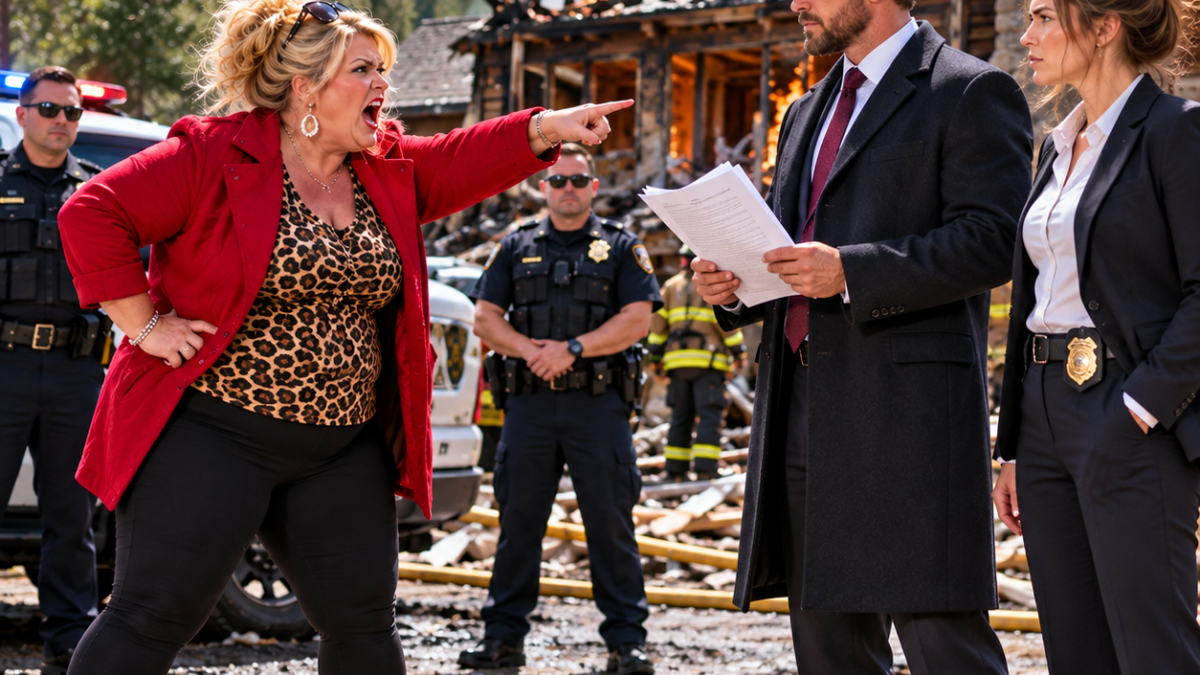
PART 2
Elena read the document twice.
Then a third time.
The kitchen clock clicked past three fifteen in the morning while the rest of Willowbrook slept.
On my laptop was a corporate filing for Willowbrook Development LLC, formed ninety-three days earlier.
Its stated business purpose was bland enough to make anyone stop reading.
Residential acquisition.
Property improvement.
Redevelopment.
But buried among attached planning documents were three parcel numbers.
I knew the first one without looking it up.
Ours.
The other two belonged to families whose properties, like ours, predated the HOA.
Elena sat down slowly.
“So Brenda formed a development company?”
“She’s connected to it.”
“How?”
I enlarged the filing.
Registered agent.
Investment partner.
Real-estate representation.
A network of companies, names, and addresses that all seemed to circle back toward Brenda or people she’d worked with in California and Arizona.
Elena wrapped her robe tighter.
“Why our property?”
“Two acres.”
“That’s not enough for a major development.”
“No.”
I pulled up the county parcel map.
“But look where we sit.”
Our lot bordered the subdivision’s internal road on one side and a commercially valuable corner tract on the other.
If somebody controlled our parcel and the two neighboring holdouts, Willowbrook’s current dead-end road could be connected to another development phase.
A developer could add homes.
Maybe dozens.
Maybe more depending on zoning.
The land wasn’t worth only what our house was worth.
It was worth what it unlocked.
Elena looked toward the dark kitchen window.
“All those complaints…”
“Pressure.”
“The rumors?”
“Pressure.”
“My school?”
“Pressure.”
“Your job?”
I nodded.
“Pressure.”
She was silent.
Then she whispered, “The chickens.”
I looked at her.
That was different.
Poisoning animals wasn’t paperwork.
It wasn’t social pressure.
It wasn’t manipulating zoning rules.
Somebody had deliberately crossed onto our property and poured poison where our children fed animals every morning.
Dakota had buried one bird herself.
Her favorite hen had been named Liberty.
River had named the rooster Justice.
They weren’t livestock to the kids.
They were part of home.
Elena pressed her fingers against her eyes.
“What kind of person does this?”
“The kind who thinks we’ll leave if staying becomes painful enough.”
She looked at me.
“Are we leaving?”
“No.”
The answer came too quickly.
Elena noticed.
“Marcus.”
“No.”
“That’s not what I asked.”
“It sounded exactly like what you asked.”
She leaned across the table.
“I’m asking whether you are making this decision because it’s right or because Brenda made you angry.”
That was why I married Elena.
She didn’t care whether an answer sounded brave.
She cared whether it was true.
I sat back.
For weeks, I had been running on anger.
Anger at the false complaints.
Anger at seeing our children isolated.
Anger at being reassigned after twenty-five clean years.
Anger at the dead chickens.
And underneath all of it was the humiliation of knowing a woman who had lived across from us for less than a year could make my own property feel hostile.
“I don’t know,” I admitted.
Elena nodded.
“Then figure that out before you turn this into a crusade.”
I looked at the development documents again.
“It already is one.”
“No.”
She shook her head.
“Right now, it’s a family trying to protect its home.”
That distinction mattered.
It became the rule for everything that followed.
We would defend ourselves.
We would expose whatever Brenda was doing.
But we would not let her turn us into people who needed revenge more than truth.
At least that was the plan.
The next few weeks tested it.
***
My first call went to Carmen Rodriguez.
Carmen had been friends with Elena since college and spent most of her career litigating property-rights and municipal-abuse cases.
She answered at six thirty that morning.
“Elena okay?”
“That’s your greeting?”
“If Elena were okay, you wouldn’t be calling me before breakfast.”
Fair.
I explained what we’d found.
The complaints.
The development company.
The property-acquisition language.
The pattern from Brenda’s previous neighborhoods.
The threat about house fires.
The poisoned chickens.
Carmen stopped me there.
“She actually mentioned fires before the poisoning?”
“In front of witnesses.”
“Who?”
Mrs. Henderson.
A Walmart employee.
Another shopper whose name I didn’t know but who had given police a statement.
Carmen exhaled.
“Do not confront Brenda.”
“I wasn’t planning to.”
“You absolutely were.”
“I was considering it.”
“Same difference with you.”
She told me to preserve everything.
Original files.
Screenshots.
Records.
Security footage.
Witness contact information.
Veterinary reports.
She also made another point.
“You’re a city employee.”
“I know.”
“That makes this more complicated. You cannot use privileged city access to run a private investigation.”
“I haven’t.”
“You mentioned databases.”
“Public municipal records.”
“Keep it that way.”
That warning protected me later.
I had spent twenty-five years inside municipal government.
I knew how easy it would be for Brenda’s attorney to claim I abused official resources if I got careless.
So I separated everything.
Public records requests.
Property searches available to any citizen.
Documents obtained through counsel.
Nothing from restricted systems.
Nothing unofficial.
No shortcuts.
Brenda’s whole operation appeared to depend on bending procedures until they served her.
I wasn’t going to defeat her by doing the same thing.
***
The second call went to Tom Morgan.
Tom was a forensic accountant whose parents I’d helped years earlier when their landlord ignored electrical and fire-code violations.
He remembered.
“Someone’s trying to take your house?”
“That’s what it looks like.”
“Send me the corporate records.”
“Public documents only.”
“Marcus, I know how evidence works.”
Within two days, Tom had a flowchart.
Brenda’s development company.
Two investment entities in California.
A property-management consultant in Arizona.
A limited-liability company tied to Councilwoman Patricia Webb.
Payments and transfers.
Not proof of criminal conspiracy by themselves.
But enough to ask better questions.
Then Tom found the old transactions.
Phoenix.
Tucson.
San Diego.
Properties outside HOAs.
Owners subjected to escalating complaints.
Emergency condemnation or forced-sale processes.
Properties sold cheaply.
Then transferred to redevelopment companies and resold at enormous gains.
Brenda had been the listing agent in several.
Different cities.
Same rhythm.
Tom came to our workshop carrying a laptop.
“Marcus.”
“What?”
“You weren’t paranoid enough.”
That was not what I wanted to hear.
He pulled up seven property histories.
Five years.
Three states.
Roughly $2.1 million in apparent gains spread among related entities after targeted owners sold.
Elena stood beside me.
“They’ve done this before.”
Tom nodded.
“It sure looks like a repeatable model.”
“What does that mean legally?”
“That is Carmen’s problem.”
“Financially?”
Tom turned the screen.
“It means your house isn’t the target.”
I frowned.
“You just said—”
“Your property is one target.”
He pointed at a map.
“The model is the target.”
That sentence changed the scale of everything.
If we were right, Brenda wasn’t an angry HOA president who decided she hated chickens.
She was using HOA authority as one part of a land-acquisition strategy.
Make a holdout property expensive to own.
Make the owner socially unpopular.
Trigger municipal inspections.
Create insurance problems.
Generate fines.
Damage reputation.
Offer an exit.
Then acquire.
Repeat.
It was ugly because every step by itself could look ordinary.
A complaint.
A fine.
A property sale.
A redevelopment deal.
Nothing screamed conspiracy until someone lined the years up beside each other.
Tom had done exactly that.
***
My third call went to Jake Morrison.
Not related to the other Jake in any other story anyone might have heard.
This Jake had been my college roommate and later became an investigative reporter.
He owed me a favor from a city-corruption story years earlier.
He arrived carrying two coffees and a camera bag.
“You look terrible.”
“Nice to see you too.”
“I mean professionally terrible. Good for television.”
“I’m not doing television.”
“You will.”
“No.”
Elena walked past us.
“You will.”
I looked at her.
“Et tu?”
Jake grinned.
We showed him the records.
He didn’t immediately get excited.
That was why I trusted him.
Real reporters don’t start with the headline.
They start with verification.
“Can I publish the California connection?”
“Not yet,” Carmen said through speakerphone.
“Can I contact prior owners?”
“Publicly available contact information, yes.”
“Can I name Brenda?”
“If you can support every statement.”
Jake spent four days calling people.
Then he returned.
His face had changed.
“Phoenix homeowner said her electrical service was repeatedly reported as unsafe after she rejected HOA annexation.”
I listened.
“Tucson family got water complaints and an emergency property action.”
I nodded.
“San Diego property had a fire.”
Elena looked at me.
Jake continued.
“The official cause was undetermined.”
“Who bought afterward?”
“You already know.”
Brenda had handled the listing.
A related entity purchased it.
Redevelopment followed.
No proof Brenda caused the fire.
But given her Walmart comments to me, it became impossible to treat the coincidence casually.
Carmen wanted law enforcement involved.
Not social media.
Not a public confrontation.
Actual investigators.
So we prepared.
***
Brenda helped us by escalating.
First came the internal-affairs complaint against me.
She accused me of using city resources to retaliate against her rental properties.
The timing looked bad.
I had submitted legitimate complaints after discovering safety violations.
But because I was a municipal officer, every action I took would be scrutinized more closely.
Internal affairs reassigned me while they reviewed my conduct.
For three weeks I sat in a basement office updating permit databases.
Twenty-five years inspecting properties and suddenly my job involved correcting addresses.
People whispered.
I could feel it.
Some coworkers believed me.
Others wondered whether Brenda’s accusation might contain truth.
That hurt more than I expected.
I had built my career on fairness.
I had cited friends.
I had cleared strangers I personally disliked.
Codes don’t work if enforcement becomes revenge.
Now Brenda was attacking the one thing I was proudest of professionally.
Elena found me one evening staring at my employee badge.
“You want to quit?”
“No.”
“You’ve looked at that thing for ten minutes.”
“I’m angry.”
“At Brenda?”
“At myself.”
“For what?”
“Filing the complaints against her rentals.”
“Were the violations real?”
“Yes.”
“Would you have cited another landlord for the same things?”
“Yes.”
“Then what’s the problem?”
“It looks retaliatory.”
Elena sat beside me.
“So let the investigation decide.”
I laughed without humor.
“That’s easy for a principal to say.”
“No, it isn’t.”
She looked at me.
“Every year, some parent tells the district I’m targeting their child because I enforced a rule.”
Fair again.
“You document. You cooperate. You keep doing your job.”
She touched my arm.
“If your work can’t survive scrutiny, it isn’t worth defending.”
I nodded.
My wife had a talent for making comforting speeches sound like disciplinary meetings.
It worked.
***
The internal review cleared me.
My complaints against Brenda’s rental properties were supported by independently verified conditions.
No misuse of restricted records.
No improper directives.
No selective penalty decisions by me.
My supervisor, Dave, handed me the written finding.
“Welcome back.”
I looked at him.
“You believed me?”
“I believed the evidence.”
Better answer.
He leaned against my desk.
“Marcus.”
“Yeah?”
“This isn’t neighborhood drama anymore.”
“I know.”
“Be careful.”
“I am.”
“No.”
He shook his head.
“You think careful means cameras and documents.”
“What does it mean?”
“It means remembering you have a wife and two kids.”
That one landed.
***
The twins had changed.
Dakota became quieter.
River became angry.
At sixteen, neither should have had to understand shell companies or property intimidation.
But they’d watched adults turn their home into gossip.
One evening River asked why we didn’t sell.
“Because it’s ours.”
“So?”
I stared at him.
He continued.
“People sell houses every day.”
“True.”
“If Brenda wants it that bad, make her overpay.”
Elena looked at me.
I waited.
River wasn’t being cowardly.
He was tired.
That mattered.
“What do you want?” I asked.
He shrugged.
“I want my friends back.”
My chest tightened.
Dakota spoke quietly.
“I don’t.”
We looked at her.
“Anyone who stopped talking to me because somebody’s mom posted lies online can stay gone.”
Elena nearly smiled.
Dakota wasn’t finished.
“But I want Mom to stop checking the window every time a car slows down.”
That killed the smile.
I looked at Elena.
She looked away.
Our fight had become the center of our home.
That wasn’t what we were defending.
If we weren’t careful, Brenda could fail to take the property and still destroy what made it worth protecting.
That night, Elena and I agreed on new rules.
No case talk during dinner unless urgent.
No evidence boxes in the kitchen.
No camera feeds on the living-room television.
One evening each week with phones off.
The twins could ask anything, but they weren’t responsible for helping investigate.
We moved the war room into my workshop.
Home needed to become home again.
Even while we fought to keep it.
***
Then the false 911 calls started.
Domestic disturbance.
Suspicious activity.
Possible weapons.
At nine forty-seven one Friday evening, police arrived while we were eating grilled chicken on the back porch.
The irony wasn’t lost on River.
“Are we being arrested for dinner?”
Officer Rodriguez had known me for years.
He looked embarrassed.
“Third anonymous emergency call involving this address.”
I stood.
“What did they say?”
“Shouting. Possible violence.”
Elena looked toward the quiet yard.
The twins sat at the table.
No shouting.
No violence.
Rodriguez verified everyone was safe.
Then he lowered his voice.
“Dispatch is flagging the pattern.”
“Can you identify the caller?”
“Not from what I have here.”
He glanced at our cameras.
“Keep everything.”
Everybody kept telling me that.
Because records outlast lies.
***
Sunday morning, the chickens were dead.
Nothing about the next part felt theatrical.
No clever dialogue.
No righteous speech.
Just Dakota screaming from the yard.
I ran outside.
She was kneeling beside the coop.
River stood frozen near the fence.
The water container smelled wrong.
Chemical.
I pulled both kids back.
“Don’t touch anything.”
Elena came running.
She saw the birds.
Covered her mouth.
Dakota turned toward me.
“Dad…”
I had no answer.
The veterinarian later confirmed poisoning.
We buried the birds under an oak at the back of the property.
Justice.
Liberty.
Hope.
Freedom.
Names the twins had chosen as a joke.
They didn’t sound funny anymore.
That afternoon I sat alone beside the workshop.
I wanted Brenda hurt.
There.
That’s the truth.
For weeks, I had talked about procedure.
Evidence.
Law.
But when someone poisons animals your children love, righteous restraint starts feeling like cowardice.
I imagined walking across the street.
I imagined every ugly version of that conversation.
Then Elena came outside.
She sat beside me.
“You’re thinking something stupid.”
“Yes.”
“Going to do it?”
“No.”
She leaned against me.
We stayed there until dark.
Sometimes character isn’t what you feel.
It’s what you refuse to do with what you feel.
***
The spray paint appeared the same night.
MOVE.
Red letters across the workshop door.
Security footage caught a teenager.
We identified him through a vehicle seen nearby.
Police handled the interview.
He broke quickly.
A woman had paid him.
Two hundred dollars.
Poison the chickens.
Paint the building.
Scare the family.
He didn’t know her name.
But he described a platinum-blonde woman who drove a white Lexus.
The investigation took over from there.
I did not confront him.
I did not publish his name.
He was a stupid teenager manipulated by an adult.
The real target remained Brenda.
His statement strengthened the case.
It also frightened me.
Because paying a teenager to poison animals meant Brenda had crossed from legal pressure into deliberate criminal conduct.
What came next could be worse.
***
The old HOA incorporation papers provided the next breakthrough.
Carmen found an “emergency property acquisition protocol.”
The language was buried in a packet most residents had probably never read.
On its face, it did not magically give the HOA eminent-domain power.
An HOA cannot simply invent government authority in a board document.
But the protocol contemplated cooperation with municipal processes to identify and acquire properties deemed hazards or community threats.
That was disturbing enough.
The original approval included Councilwoman Patricia Webb.
Webb chaired the zoning appeals board.
She had also been Brenda’s business partner years earlier.
The relationship was not disclosed in the relevant city records Carmen reviewed.
Now the scheme had a possible government connection.
Brenda could create a narrative that our property was dangerous.
Webb could influence official procedures.
A development entity stood ready to buy.
Tom traced financial interests suggesting Webb or people close to her could benefit from redevelopment.
That was when Carmen stopped calling the matter an HOA dispute entirely.
“This is potential public corruption.”
I looked around the workshop.
Maps covered walls.
Files filled shelves.
“Then who handles that?”
“People with badges you don’t have.”
Finally, good news.
Carmen made referrals through proper channels.
The state attorney general’s office.
Local prosecutors.
Federal investigators where interstate financial conduct might exist.
We gave them evidence.
Then we waited.
Waiting is one of the hardest parts of doing things legally.
You know something is wrong.
You believe danger is increasing.
But evidence has to be authenticated.
Jurisdiction has to be established.
Investigators have to build their own case.
People complain that justice moves slowly.
Sometimes slow is the price of making sure justice is actually justice.
***
Brenda didn’t wait.
She formed a “Neighborhood Safety Committee.”
Flyers appeared.
Social-media posts.
Photos of our workshop cropped to look industrial.
Our compost pile became a “biohazard.”
Our rain barrel became a disease risk.
Our chickens—before they died—became evidence of unregulated agriculture near children.
Elena took the worst of it at school.
Parents whispered.
One teacher asked whether the district needed to disclose that the principal lived on “commercial agricultural property.”
Elena came home furious.
“I have a master’s degree, twenty-two years in education, and somehow I’m being socially tried over tomatoes.”
I poured wine.
“Dangerous tomatoes.”
She glared.
“Not helping.”
“Sorry.”
Then she laughed.
We needed laughter.
Brenda was trying to turn our home into a symbol of disorder.
The truth was almost boring.
Two acres.
A garden.
A permitted workshop.
A family.
That’s what frightened me about propaganda.
It doesn’t need dramatic facts.
It only needs to make ordinary facts sound suspicious.
***
Then Brenda staged a burglary.
At least investigators eventually concluded evidence strongly suggested staging.
She reported that someone had entered her home overnight and stolen HOA records, computer drives, and membership files.
Jewelry remained.
Televisions remained.
Expensive electronics remained.
Only the material potentially relevant to financial and property investigations disappeared.
She blamed “radical anti-HOA activists.”
Local television showed her standing in front of the white Lexus describing herself as terrified.
I watched from our living room.
River said, “She’s lying.”
I looked at him.
“Maybe.”
“Dad.”
“We don’t state what we can’t prove.”
He rolled his eyes.
“You always say that.”
“Because it matters.”
The responding detective, Lisa Park, noticed discrepancies.
No forced entry.
Security system disabled.
Insurance claim listing items not initially reported missing.
Recent increases in coverage.
She asked where I had been.
Family dinner with Elena’s parents.
Restaurant cameras.
Receipts.
Phone location.
Plenty of witnesses.
Brenda’s attempt to create suspicion around me failed.
But it did something else.
It made investigators look harder.
***
The HOA called an emergency meeting.
Brenda delivered a polished presentation about “threats to community security.”
Carmen came with us.
I presented our timeline.
Not accusations.
Facts.
Seventeen false code complaints.
No violations found.
Professional complaint against me.
Cleared.
Repeated emergency calls.
Unsubstantiated.
Poisoned animals.
Ongoing investigation.
Teenage vandalism.
Statement regarding payment.
Development company.
Target parcels.
Cross-state property pattern.
Then Tom summarized financial relationships.
The room changed.
People who had spent months viewing us as troublesome holdouts started asking Brenda questions.
She answered badly.
Mostly because she treated questions as betrayal.
Afterward, she followed me into the parking lot.
Six residents were nearby.
Terry Wilson had his phone recording.
“You think you’re smart, Marcus?”
“I’m tired, Brenda.”
She stepped closer.
“You think your little investigation protects you?”
“I think the truth helps.”
She laughed.
“Old houses burn.”
Nobody moved.
I stared at her.
She continued.
“Electrical systems fail. Gas lines leak. Insurance companies write checks. Life moves on.”
Mrs. Henderson gasped.
Carmen stepped between us.
“Brenda, you should stop speaking.”
Brenda looked at her.
“Who are you?”
“The attorney wishing you would keep talking.”
That ended the conversation.
Brenda walked away.
Terry replayed the recording.
Perfect audio.
Carmen looked at me.
“No more direct interaction with her.”
I nodded.
She looked at me harder.
“Say it.”
“No direct interaction.”
“Good.”
Because after that threat, the possibility of fire stopped being theoretical.
***
Three days later, the city sent a certified notice.
Preliminary review for emergency property-acquisition proceedings.
Seventy-two hours to respond.
Signed under the authority of Councilwoman Webb’s committee.
I stared at the letter.
“They’re doing it.”
Carmen took the document.
“They’re trying.”
She filed for emergency relief.
She also filed an ethics complaint regarding Webb’s undisclosed relationship with Brenda.
Tom traced additional payments suggesting a possible financial benefit if our parcel transferred.
Jake Morrison prepared his first major investigative story but held publication until attorneys and investigators were ready.
Everything accelerated.
Then Tom found the insurance records.
Coverage increases.
References to fire spread from agricultural parcels.
Dates preceding several of Brenda’s complaints.
Not proof of a future fire.
But combined with her recorded threats, the poisoned chickens, and the prior fire connected to a targeted property in another state, nobody dismissed it.
We moved Elena and the twins temporarily.
No social-media announcements about fear.
We told casual acquaintances we were visiting family.
The house stayed under lawful surveillance.
Professional investigators handled what came next.
I was told very clearly not to play detective on my own property.
For once, I listened immediately.
Mostly.
***
Two nights later, surveillance captured suspicious activity near our property.
People entered after midnight.
They carried containers.
Moved around the workshop and exterior walls.
Tampered with areas investigators had identified as vulnerable.
I won’t describe the methods in detail.
I spent twenty-five years teaching people why fire codes exist.
There is no good reason to turn an arson scene into an instruction manual.
What matters is this:
The activity was deliberate.
Organized.
And designed to make the eventual fire look like an ordinary property failure.
Investigators responded.
Two suspects fled.
One was arrested within hours.
The second shortly afterward.
Then the nightmare we had feared became real anyway.
A delayed ignition point investigators had not immediately located activated after crews initially believed the scene was secure.
The fire moved faster than anyone expected.
By the time flames were visible inside the house, the old structure was already heavily involved.
Nobody was inside.
That saved our lives.
But saving our lives did not save our home.
I watched from behind a fire engine as flames climbed through the kitchen roof.
The same kitchen where Elena had brewed coffee while I read Brenda’s first complaint.
The same table where the twins did homework.
The same window that looked over the garden.
Glass shattered.
The porch roof collapsed.
River buried his face against Elena.
Dakota stood absolutely still.
I wanted to run toward the house.
Fire Marshal Rodriguez grabbed my shoulder.
“No.”
“My grandfather built part of that.”
“I know.”
“My family’s things—”
“I know.”
The roof gave way.
A sound like thunder.
Elena reached for my hand.
I couldn’t feel my fingers.
By sunrise, the house was a blackened shell.
The workshop was badly damaged.
Part of the garden survived.
The oak where we’d buried the chickens was scorched but standing.
I walked through the perimeter only after Rodriguez cleared investigators to enter controlled portions.
Wet ash covered everything.
The air smelled like burned timber, melted plastic, and loss.
That smell stayed in my clothes for days.
I found part of Elena’s grandmother’s rocking chair.
Charred.
A metal hinge from my grandfather’s cabinet.
River’s baseball trophy, warped.
Dakota’s school photo frame without the picture.
Evidence markers stood everywhere.
Rodriguez approached carrying a clipboard.
“Marcus.”
I looked at him.
“This fire violated almost every principle you and I have spent our careers trying to prevent.”
It wasn’t funny.
Still, a strange laugh escaped me.
“I helped write the updated municipal fire-separation and hazardous-material standards.”
“I know.”
I looked at the ruins.
“Brenda really picked the wrong house.”
Rodriguez’s expression hardened.
“Someone did.”
By then, investigators already had suspects.
And one suspect had started talking.
***
The two men were not from Willowbrook.
They had traveled from another state.
They were being paid.
Investigators recovered cash.
Burner phones.
Travel records.
Messages.
Financial links.
One communication path led toward accounts associated with Brenda’s investment network.
Another involved the development entity.
The case expanded overnight.
The same week, officers arrested Brenda near an interstate entrance.
She had luggage.
A laptop.
Financial records.
Property acquisition files.
Communications prosecutors later used to connect her to the broader scheme.
Councilwoman Webb resigned before lunch that day.
By evening, resignation no longer solved her problems.
Investigators executed warrants.
Federal agencies joined the public-corruption and interstate-fraud investigation.
Accounts were frozen.
Businesses searched.
Computers seized.
Jake’s article went live only after arrests made publication responsible.
His headline was simple:
PROPERTY PRESSURE CAMPAIGN ENDS IN ARSON ARRESTS
He didn’t call Brenda guilty.
Not yet.
He reported charges.
Evidence.
History.
The difference mattered.
By the next morning, national outlets were calling.
I declined almost all interviews.
My house was still smoking.
I didn’t want to become a symbol.
I wanted my kitchen back.
***
That part is hard to explain.
People love justice stories because justice gives pain structure.
Bad person acts.
Good person fights.
Evidence appears.
Bad person punished.
End.
Real life keeps going after the satisfying moment.
Dakota needed clothes because half of hers burned.
River couldn’t sleep.
Elena kept remembering family photographs stored in an upstairs closet.
I lost thirty years of notebooks.
My grandfather’s tools.
Furniture I’d restored.
Christmas ornaments that had no monetary value but held every childhood memory worth keeping.
Insurance adjusters asked reasonable questions while we were still grieving.
What was the value of the dining table?
How old was the sofa?
Do you have receipts for workshop tools?
I wanted to scream:
What receipt do you want for the smell of my mother’s kitchen towels?
How do I price the notch on the doorway where we measured the twins’ height?
What is the replacement cost of a porch board my grandfather nailed down?
But adjusters can’t insure memory.
They insure objects.
So we made lists.
One item at a time.
That’s how rebuilding began.
Not with revenge.
Inventory.
***
The neighborhood changed immediately.
Some people apologized.
Some avoided us because shame made eye contact difficult.
A few Brenda loyalists insisted everyone should wait for trial.
They were technically right.
But even they stopped defending the harassment campaign.
The HOA board held an emergency meeting without Brenda.
Three members resigned.
The remaining directors suspended all acquisition initiatives.
They rescinded disputed enforcement actions against our parcel.
They issued a public apology.
Then twenty-three families signed a statement supporting an independent audit.
Mrs. Henderson came to Elena’s sister’s house carrying a casserole.
“I believed her.”
Elena hugged her.
That was all.
A week later, another neighbor brought clothes for the twins.
Someone else replaced River’s baseball equipment.
Teachers collected gift cards for Dakota.
The same community Brenda had used to isolate us began rebuilding what she’d helped destroy.
Not everyone became friends.
They didn’t need to.
Community isn’t universal affection.
Sometimes it’s simply people deciding suffering will not be ignored.
***
My internal-affairs supervisor called.
“Marcus.”
“Yeah?”
“Your full file is closed.”
“Already knew I was cleared.”
“This is bigger.”
The department had reviewed Brenda’s coordinated communications.
The accusations.
The external pressure.
Attempts to influence enforcement.
My supervisor paused.
“We owe you an apology.”
“You did what policy required.”
“Still.”
He offered leave.
I took it.
For the first time in twenty-five years, I didn’t want to inspect anybody’s property.
I wanted to stand in the ruins of mine.
***
Carmen filed our civil action.
Not some fantasy half-billion-dollar revenge suit.
A serious claim.
Property loss.
Conspiracy allegations supported by evidence.
Emotional damages where legally appropriate.
Interference with property rights.
Related misconduct.
The insurance claim covered substantial rebuilding costs.
Other civil recoveries would depend on court decisions and settlements.
Tom kept tracing money.
Jake kept reporting.
Investigators kept building the criminal cases.
I tried learning how to sleep.
One afternoon, I stood beside the ruined porch with Elena.
“You want to rebuild?”
She stared at the foundation.
“I don’t know.”
That scared me.
“This was your grandfather’s land.”
“I know.”
“Your family’s home.”
“I know.”
“But?”
She looked at me.
“Every time I look at it, I see fire.”
I swallowed.
Dakota had said something similar.
River refused to walk through the ruins.
I had assumed rebuilding was obvious because leaving felt like letting Brenda win.
There it was again.
Revenge making decisions while pretending to be courage.
I asked Elena:
“What would you want if Brenda never existed?”
She looked at the trees.
“The house.”
“Then we rebuild.”
“And if the kids don’t want to?”
“Then we listen.”
That evening, we had dinner with the twins.
Not a family vote.
A conversation.
River surprised me.
“I want the porch back.”
Dakota nodded.
“And chickens.”
Elena laughed through tears.
“Really?”
Dakota looked at her.
“Not because of Brenda.”
She looked at me.
“Because it was ours before her.”
Decision made.
We rebuilt.
***
The criminal hearings began months later.
The courthouse steps filled with cameras.
I hated it.
The twins wanted to attend the first major hearing.
Carmen advised against exposing them unnecessarily.
They insisted.
Elena supported them.
So we went as a family.
Brenda looked nothing like the woman who used to cross the street in immaculate yoga clothes.
No perfect hair.
No Lexus.
No practiced HOA smile.
Just a defendant beside counsel.
Federal prosecutors presented allegations involving conspiracy, attempted arson, interstate fraud, financial transfers, and property-acquisition schemes.
Councilwoman Webb faced separate public-corruption charges.
Others were charged based on their individual roles.
I sat beside Elena.
My hands stayed still.
No victory rush.
No secret smile.
Brenda looked toward us once.
Our eyes met.
I expected hatred.
I saw fear.
It didn’t feel good.
That surprised me.
I had wanted her afraid for months.
Now that she was, it changed nothing about our burned house.
Justice and satisfaction are not synonyms.
***
Outside court, reporters surrounded us.
One asked:
“Mr. Thorne, how does it feel seeing the woman who targeted your family in handcuffs?”
I thought before answering.
“Sad.”
Several reporters looked disappointed.
I continued.
“My family never wanted this.”
Cameras leaned closer.
“We wanted to live on land my grandfather left us. We wanted chickens and a garden and a workshop.”
I looked toward the courthouse.
“This stopped being an HOA dispute when people began using community institutions as tools for personal profit and intimidation.”
Another reporter asked about my municipal-code background.
“Is it true you helped write some of the regulations investigators used?”
“I participated in code revisions during my career.”
“Did that help?”
“It helped me recognize what was wrong.”
“Any advice for HOA boards?”
That question almost made me laugh.
“Yes.”
I looked straight toward the cameras.
“Read the law before you threaten somebody with it.”
Then I added:
“And remember that rules exist to protect communities, not to give one person power over everyone else.”
That was the quote television used.
Fine.
At least it was true.
***
The prosecution took more than a year.
Federal cases are not television episodes.
There were hearings.
Document disputes.
Plea negotiations.
Witness interviews.
Financial experts.
Digital forensics.
Travel records.
Corporate filings.
Insurance evidence.
Property transfers.
Former homeowners from other states.
One by one, the pieces formed a picture.
Prosecutors argued that Brenda and associates had participated in a multi-state scheme that targeted vulnerable or strategically valuable properties.
Harassment created pressure.
Municipal and association procedures created leverage.
Related companies profited from acquisition and resale.
In our case, when legal and social pressure failed, the conspiracy escalated disastrously.
Not every previous property problem was proven criminal.
That distinction mattered.
But enough conduct was established to produce convictions and pleas across multiple defendants.
Brenda ultimately received eight years in federal prison after conviction and resolution of the major charges against her.
The court ordered substantial restitution obligations tied to proven losses within the broader scheme.
Councilwoman Webb received a separate prison sentence for her role in public corruption and abuse of office.
She was barred from holding public office under applicable consequences of her conviction.
Other participants received sentences according to their involvement.
The two men involved in the arson plot faced serious prison terms.
I attended sentencing.
Not because I needed to see Brenda punished.
Because victims deserve to hear the court say what happened mattered.
The judge looked directly at her.
“You used the language of community protection to justify conduct that endangered the very people community institutions are supposed to serve.”
I remember that sentence.
Then:
“Authority is not ownership.”
That one too.
Elena squeezed my hand.
***
After sentencing, Jake found me outside.
“You okay?”
“No idea.”
“Want to talk?”
“No.”
“Good quote.”
I laughed.
“You’re terrible.”
“Occupational hazard.”
He put away his recorder.
Then he said:
“For what it’s worth, this story changed some things.”
“Like what?”
“Other towns are auditing similar property-acquisition agreements.”
I nodded.
“Good.”
“Homeowners are asking questions.”
“Also good.”
“State legislators are discussing disclosure rules.”
I looked at him.
“Just make sure nobody writes laws based on one crazy case without understanding consequences.”
Jake smiled.
“You really are a code guy.”
“Yes.”
Because bad rules can grow from good outrage.
I had spent my career seeing that too.
Reform needed care.
Not headlines.
***
Willowbrook dissolved its mandatory HOA structure after legal review, member votes, and resolution of its obligations.
Not because every HOA should disappear.
Because too much of this one had been compromised by Brenda’s influence and the community wanted a different model.
In its place came a voluntary neighborhood association.
No lien authority.
No forced membership.
No architectural police.
People joined for block parties, shared landscaping projects, safety information, charity drives, and neighborhood events.
Elena became what everybody jokingly called the Neighborhood Friend.
She refused the word president.
“I run a high school,” she said. “I already have enough people blaming me for things I didn’t do.”
The association’s first big project was helping us rebuild.
Not money.
Labor.
Meals.
Storage.
Transportation.
Neighbors took turns helping clear debris after investigators released the site.
People who once photographed our chicken coop carried lumber.
One man who had supported Brenda repaired our garden fence.
He barely spoke while working.
At the end of the day he said:
“I was wrong.”
I handed him water.
“So was I about people plenty of times.”
He looked relieved.
Forgiveness isn’t forgetting.
Sometimes it is simply refusing to make someone perform humiliation forever.
***
The new house rose slowly.
I refused to build a mansion.
Insurance would cover a substantial portion of replacement value.
Civil recoveries helped with additional losses.
But I wanted home.
Not a monument.
We kept the wraparound porch.
Restored the general Craftsman shape.
Improved fire-resistant materials.
Better separation around vulnerable exterior areas.
Modern wiring.
Solar panels.
A sprinkler system.
Advanced alarms.
A workshop built to the standard I’d spent decades preaching to everybody else.
Elena teased me.
“This house has more inspections than the high school.”
“Good.”
“Do we need three smoke-detection layers?”
“Yes.”
“Four exterior cameras?”
“Yes.”
“Two backup systems?”
I paused.
“Yes.”
She took my hand.
“We’re safe.”
I hated how hard those words were to hear.
“I know.”
“No.”
She squeezed my fingers.
“You know intellectually.”
I looked toward the new framing.
“What do you want me to do?”
“Eventually believe it.”
That took longer than rebuilding.
***
The day the porch was finished, Dakota brought four chicks.
I stared at the cardboard box.
“No.”
“Yes.”
“No.”
She lifted one.
Tiny yellow bird.
“No.”
“This one is Justice.”
I closed my eyes.
River appeared with another.
“This is Liberty.”
“Absolutely not.”
Elena stood behind them smiling.
“You’re outvoted.”
“We don’t run this family like an HOA.”
Dakota grinned.
“Exactly. Voluntary association.”
Traitors.
We built a new coop.
Safer.
Stronger.
And farther from the property line because even grandfathered uses should be maintained responsibly.
Yes, I am that boring.
The first morning I heard a rooster again, I stood on the new porch with coffee.
The sound stopped me.
For months, silence had filled that part of the yard.
Now life was noisy again.
I cried.
I hope nobody saw.
Elena definitely saw.
She wisely said nothing.
***
The oak tree came next.
We planted it near the area where part of the old kitchen had stood.
Not directly over the foundation.
I may be sentimental, but I still understand root systems.
Neighbors brought soil from their gardens.
That wasn’t my idea.
I thought it sounded overly symbolic.
Then Mrs. Henderson arrived carrying a small bucket.
“This came from the roses my husband planted when we moved here.”
Another family brought soil from their vegetable bed.
Someone else from beneath a maple.
The twins poured it around the sapling.
Elena watered.
I stood there with more people than our yard had ever held.
The new oak was barely six feet tall.
Thin trunk.
Tiny canopy.
It looked fragile.
Maybe that was the point.
Everything strong starts fragile.
Families.
Trust.
Communities.
Trees.
Even law.
If people don’t protect them, they fail.
***
My department offered me a promotion.
Regional director of code-enforcement education.
Less fieldwork.
More training.
At first I refused.
I liked inspecting.
I liked real properties and real people.
Then my supervisor said:
“Marcus, how many young inspectors learned from somebody who taught them rules but never taught them restraint?”
That made me think.
Code enforcement has power.
You can scare people.
You can make expensive demands.
You can ruin someone’s month with a clipboard.
Sometimes that’s necessary.
Unsafe wiring kills people.
Blocked exits kill people.
Illegal structural work can collapse.
But the authority only remains legitimate if inspectors remember why it exists.
So I took the position.
My first training program was called Ethical Enforcement and Community Relations.
Terrible title.
Accurate.
I told new inspectors:
“Don’t fall in love with being right.”
They stared at me.
“You are not the code. You apply the code.”
Then:
“Your job is compliance, not humiliation.”
That became the line people remembered.
Good.
It was more useful than any headline about revenge.
***
Elena created a scholarship fund with part of our civil recovery and community donations.
Dakota and River complained when she included their names.
The Dakota & River Thorne Civic Courage Scholarship.
First recipients planned careers in journalism, law, and public administration.
At the ceremony, River whispered:
“Could we have picked a shorter name?”
“No.”
“Sounds like we died.”
Dakota elbowed him.
Elena heard.
“You’re both welcome to pay back the naming rights.”
They stopped complaining.
One recipient, a young man named Caleb, wanted to become a municipal planner.
He told me after the ceremony:
“I want to make sure planning law can’t be abused the way it was against you.”
I shook his hand.
“Then learn the boring parts.”
He laughed.
“I’m serious.”
“I know.”
“Everybody wants to fight corruption. Learn process first.”
Because the system hadn’t failed only because Brenda was clever.
It had failed because too many procedures allowed influence to hide inside complexity.
Fixing that required people willing to read the dull documents.
Justice has terrible marketing.
Most of it looks like paperwork.
***
Dakota eventually chose journalism.
Jake blamed himself proudly.
River became interested in environmental and property law.
His official explanation:
“Someone has to protect chickens.”
Fine.
They left for college.
The house got quiet again.
Different quiet.
Healthy quiet.
Elena and I sat on the porch their first night away.
“You miss them?”
“No.”
She looked at me.
I lasted three seconds.
“Terribly.”
“Me too.”
The chickens scratched near the garden.
The new oak moved in the evening wind.
Our rebuilt workshop smelled like fresh wood.
I looked around.
“Would you do it again?”
Elena considered.
“Fight Brenda?”
“Yes.”
“No.”
I looked at her.
She smiled.
“I would stop her again. I would protect the house again. But I would never choose to live through it again.”
That was the right answer.
Stories sometimes romanticize fighting.
There was nothing romantic about our children being afraid.
Nothing inspiring about dead animals.
Nothing noble about watching your house burn.
Courage is valuable.
So is never needing it.
***
Years later, a homeowner from Arizona called.
Her HOA wanted her vegetable garden removed.
She had found an article about our case.
“Mr. Thorne, can you help me?”
My first impulse was yes.
Jump in the truck.
Drive south.
Start reading ordinances.
Elena heard the call.
She looked at me.
I knew that look.
I told the woman:
“I can help you find the right resources.”
Better.
I wasn’t a traveling vigilante.
I wasn’t in the property-rights business.
I was a municipal-code professional who happened to survive an extreme case.
So I connected her with a local attorney and state homeowner resources.
A month later she emailed.
The garden stayed.
No national conspiracy.
No arson.
Just a paperwork mistake and an overaggressive management company.
That made me happy.
Not every conflict needs a villain.
Sometimes people are simply wrong.
It’s important to know the difference.
***
Brenda’s story followed us longer than I wanted.
Documentary producers called.
Book agents.
Podcasts.
Cable shows.
One production company offered a ridiculous amount of money to recreate the fire.
I refused.
Elena asked why.
“Because they’ll make the house burn beautifully.”
She understood.
Our house did not burn beautifully.
It was terrifying.
Dirty.
Loud.
The roof collapsed.
Smoke carried pieces of our life into trees.
Dakota shook for hours.
River had nightmares.
I wasn’t going to let somebody turn that into entertainment without the human cost.
Jake’s reporting was enough.
Documents.
Interviews.
Facts.
The story didn’t need explosions added.
Reality had already done enough damage.
***
One winter morning, I was cleaning the workshop when I found the old code binder.
Not the original—it had been damaged in the fire—but a replacement containing copies of the sections I had helped revise over the years.
Fire access.
Hazardous materials.
Agricultural grandfathering.
Property maintenance.
Appeal procedures.
I opened the binder.
Elena entered.
“You’re smiling at municipal code.”
“Don’t judge me.”
“I’m married to you. Judgment happened years ago.”
I showed her a provision.
“You remember this?”
“No.”
“Fire-separation revision.”
She stared.
“You’re nostalgic about setback language?”
“I helped draft part of this after that warehouse fire in 2009.”
“Romantic.”
I closed the binder.
“Brenda thought rules were weapons.”
Elena leaned against the workbench.
“And?”
“They’re supposed to be guardrails.”
She smiled.
“That one you should use in training.”
I did.
***
People sometimes introduce me now as “the man who wrote the laws that took down his HOA.”
That’s exaggerated.
I didn’t write criminal statutes.
I didn’t prosecute Brenda.
I didn’t single-handedly design municipal law.
I participated over decades in writing and revising local enforcement protocols and ordinances as part of teams.
The laws that convicted Brenda came from many places.
State criminal law.
Federal fraud statutes.
Conspiracy law.
Public-corruption rules.
Arson laws.
I knew codes.
That knowledge helped me recognize manipulation.
But the case succeeded because many people did their jobs.
Detectives.
Fire investigators.
Attorneys.
Accountants.
Reporters.
Witnesses.
Prosecutors.
Neighbors.
That’s less viral than saying one code officer destroyed an HOA president.
It’s also true.
And after everything Brenda did with misleading stories, truth mattered to me more than a headline.
***
The last time I saw her was years later in a federal facility visiting room.
I hadn’t planned to go.
She requested the meeting through counsel.
Elena thought I was insane.
Carmen thought I was more insane.
Jake thought it was great journalism.
I told Jake he wasn’t coming.
I went alone.
Brenda entered wearing institutional clothing.
No platinum hairstyle.
No makeup.
No jewelry.
She looked older.
So did I.
We sat across from each other.
For several seconds neither spoke.
Finally she said:
“I didn’t expect you to come.”
“I almost didn’t.”
She looked down.
“I heard you rebuilt.”
“Yes.”
“The chickens too?”
I stared at her.
“Yes.”
She nodded.
There was no sarcasm.
Then she said:
“I didn’t tell them to kill the animals.”
I felt my body go rigid.
The legal cases had established levels of responsibility and testimony among conspirators, but hearing her separate herself from one act after everything else felt almost obscene.
I said:
“You paid people to make our lives unbearable.”
She looked at the table.
“I lost control.”
“No.”
My voice stayed calm.
“You exercised control over and over. That’s the problem.”
She looked at me.
“I thought you were going to ruin everything.”
“We weren’t doing anything to you.”
“You filed complaints against my rentals.”
“After you filed false complaints against us.”
“Exactly.”
I shook my head.
“No, Brenda. That’s not exactly.”
She frowned.
“You still think this was about revenge.”
“Wasn’t it?”
“At times, yes.”
That surprised her.
“I wanted you punished.”
I continued.
“I wanted you afraid. I wanted you to know what it felt like.”
She stared.
“But wanting something isn’t the same as choosing it.”
She looked away.
For the first time, I saw what had always separated us.
Brenda treated emotion as permission.
Anger justified retaliation.
Fear justified control.
Greed justified manipulation.
If she felt entitled to an outcome, she constructed rules around that feeling.
I had felt some of the same ugly things.
I just didn’t act on all of them.
She whispered:
“I’m sorry about your house.”
I didn’t forgive her.
Not that day.
Maybe forgiveness isn’t always a statement.
Maybe sometimes it means the person no longer occupies space in your mind every morning.
I stood.
“Goodbye, Brenda.”
She nodded.
I walked out.
Never saw her again.
***
Driving home, I expected to feel closure.
I didn’t.
Closure is another thing stories exaggerate.
Life isn’t a door you lock once.
The past comes back.
Smells.
Sounds.
A siren at night.
Smoke from a neighbor’s fireplace.
A white Lexus in traffic.
Then the memory passes.
That’s healing.
Not forgetting.
Not forgiving on command.
Just remembering without being dragged backward.
***
Our oak tree is tall now.
Not enormous.
But taller than me.
Every year, the twins come home and take a photograph beside it.
Dakota claims it’s for continuity.
Journalist language.
River says she’s sentimental.
She denies it.
The chickens changed generations too.
Justice II.
Liberty II.
Hope.
Freedom.
I protested the Roman numerals.
Lost again.
The neighborhood association holds Good Neighbor Day every fall.
No compliance inspections.
No violation notices.
Food.
Music.
Gardens.
Kids.
Sometimes new residents hear the old story.
They point toward our house.
“That’s the one?”
I pretend not to hear.
Elena always hears.
She smiles.
Then returns to whatever she’s doing.
Because the house isn’t a crime scene anymore.
That’s another victory nobody talks about.
A place stops being the worst thing that happened there.
Eventually it becomes a place where breakfast happens.
Where Christmas lights go up.
Where kids return from college.
Where chickens escape.
Where Elena complains about my shoes near the door.
The ordinary takes the property back.
***
One evening, River stood beside the oak.
He was home from law school.
“Dad.”
“Yeah?”
“I read the old acquisition documents.”
“Sorry.”
“They were clever.”
I looked at him.
“That isn’t admiration.”
“No.”
He stared toward the subdivision.
“I mean legally clever. They used legitimate structures in illegitimate ways.”
“That’s usually more dangerous.”
He nodded.
“Because nothing looks wrong alone.”
“Exactly.”
He looked at me.
“How do you prevent that?”
I thought about it.
“You don’t prevent every bad person.”
“Great.”
“You build systems where questions are normal.”
He waited.
“Transparency. Appeals. Conflict disclosure. Independent review. People who can say no without losing their homes.”
River smiled.
“You sound like a textbook.”
“Tuition money well spent.”
He laughed.
Then looked toward the rebuilt house.
“You ever think we should’ve moved?”
“Yes.”
“Why didn’t we?”
I looked at the porch.
“Because staying became our choice again.”
That was the difference.
Brenda wanted us gone.
If we had sold because we truly wanted another life, fine.
But leaving under coercion would have stolen choice.
Once the criminal scheme ended, the property belonged emotionally to us again.
Then we could decide.
We stayed.
***
Dakota eventually wrote about the case.
Not while Brenda’s prosecution was active.
Years later.
Her article wasn’t about the federal investigation.
It was about what happened to children inside public neighborhood conflicts.
She wrote about eating lunch alone.
Teachers whispering.
Adults using Facebook groups to turn families into labels.
She didn’t make herself a hero.
She wrote about shame.
Anger.
How quickly teenagers repeat what adults say.
The article broke my heart.
Then it made me proud.
She interviewed me.
“Dad, what was your biggest mistake?”
“Thinking documentation solved everything.”
She looked surprised.
“Didn’t it?”
“It solved the case.”
“So?”
“It didn’t solve what happened to you.”
She put down her pen.
I continued.
“I was so focused on proving Brenda wrong that sometimes I forgot you and River needed me to be your dad more than I needed to be right.”
Dakota’s eyes filled.
“You were there.”
“Not always enough.”
She reached across the table.
“You were scared too.”
I nodded.
Her article ended with something I never forgot:
A home can survive a legal battle and still need rebuilding long after the court case ends.
She understood before I did.
***
Years after Brenda’s sentencing, Willowbrook looked almost ordinary.
That pleased me.
No giant monument.
No permanent anti-HOA banners.
No community identity built around hatred.
New families moved in.
Old arguments were replaced by new, boring ones.
Parking.
Pets.
Holiday decorations.
Someone wanted pickleball courts.
Half the neighborhood nearly declared war over that.
I attended one association meeting.
Elena chaired.
A man complained the proposed pickleball hours would destroy property values.
I leaned toward River.
“We’re back.”
He laughed.
Normal communities disagree.
Healthy communities have methods for disagreeing without turning every dispute into destruction.
That was the lesson.
Not that associations are bad.
Not that rules are bad.
Not that neighbors should never care what happens around them.
The lesson was that authority requires limits.
And limits mean nothing if nobody enforces them.
***
On the twenty-fifth anniversary of my city service, my department held a dinner.
They gave me a plaque.
Too large.
I hate plaques.
My supervisor asked me to speak.
I had prepared four pages.
Then ignored them.
I looked at the young inspectors in the room.
“When I started this job, I thought knowing the code made you powerful.”
People listened.
“It does.”
Pause.
“That’s the dangerous part.”
A few smiled.
“You can walk onto a property carrying government authority. Sometimes people are scared before you say a word.”
I thought about Brenda.
“Never enjoy that.”
The room got quiet.
“Use authority to make people safe. Use it consistently. Explain it. Document it. Allow people to challenge you.”
I looked around.
“If somebody questions you and your first instinct is to punish them for asking, go find another career.”
That line spread around the department.
Good.
I meant it.
***
After dinner, Elena and I drove home.
The rebuilt house glowed at the end of the street.
The oak tree was visible against the porch lights.
I parked.
She stayed in the car.
“What?”
“Nothing.”
“That’s not nothing.”
She looked toward the house.
“Do you remember the first one?”
“The old house?”
“Yes.”
“Every day.”
“Me too.”
We sat quietly.
Then she said:
“I love this one.”
I looked at her.
That mattered.
For a long time, rebuilding felt like imitation.
A replacement pretending to be home.
At some point, without announcing itself, it became home too.
Not the same.
Never the same.
But ours.
I took Elena’s hand.
“So do I.”
***
Inside, the twins had arrived early for Thanksgiving.
Dakota was arguing with River.
River was defending some absurd legal theory.
Chickens clucked outside.
The kitchen smelled like rosemary and garlic.
Elena’s herb garden had grown back larger than before.
A framed photograph of the old house hung near the pantry.
Not the burned version.
The living version.
Wraparound porch.
Children younger.
Chickens scattered in the yard.
My grandfather’s workshop visible behind us.
I liked that.
We didn’t frame the ashes.
We remembered what existed before them.
***
People occasionally ask whether the sweetest revenge was seeing Brenda sentenced to eight years.
No.
It wasn’t even close.
Prison is a consequence.
Not a victory.
The victory was Brenda’s entire logic failing.
She believed people could be isolated.
We became closer.
She believed institutions could be manipulated forever.
Eventually those institutions corrected themselves.
She believed fear would make us leave.
We rebuilt.
She believed destroying the structure would destroy our claim to home.
She misunderstood home.
Wood burns.
Furniture burns.
Photographs burn.
Walls collapse.
But home can exist in the people standing outside the fire holding each other.
Then those people can build walls again.
That was the lesson she never understood.
***
One spring morning, I sat on the porch with coffee.
The sun came over Willowbrook.
Justice II started crowing.
Far too early.
I checked the time.
Five forty-eight.
“Unbelievable.”
Elena opened the door.
“What?”
“Rooster.”
“You wanted chickens.”
“I wanted reasonable chickens.”
She laughed.
Across the street, a new neighbor walked his dog.
He waved.
I waved back.
No clipboard.
No camera.
No HOA application.
Just a neighbor.
The oak leaves moved in the wind.
The house was quiet behind me.
For a moment, I thought about the night of the fire.
Then the memory passed.
I drank my coffee.
That’s what healing looked like now.
***
Brenda Kensington thought burning down our home would solve a property problem.
She believed that if the building disappeared, we’d become exhausted enough to sell the land underneath it.
She believed the HOA, a friendly council connection, development companies, and enough intimidation could turn greed into a legal process.
She underestimated the family.
She underestimated the neighbors.
She underestimated investigators.
And yes, she underestimated how much a municipal code officer notices when somebody starts manipulating the very safety systems he’s spent twenty-five years enforcing.
But I don’t tell people I beat Brenda because I knew the laws.
Knowledge helped.
What saved us was using those laws properly when she didn’t.
We documented.
We reported.
We challenged conflicts.
We let independent investigators verify evidence.
We refused to answer illegal pressure with illegal retaliation.
And when the case finally reached court, Brenda wasn’t destroyed by my anger.
She was destroyed by her own paper trail.
***
The original code binder sits in my office beside a small piece of charred wood we recovered from the old porch.
I keep both for training.
One is law.
The other is consequence.
Every time a new inspector asks why I carry a burned piece of wood to seminars, I tell them:
“Because rules without ethics can be weaponized.”
Then I hold up the binder.
“And ethics without rules can be ignored.”
You need both.
Boundaries.
Evidence.
Restraint.
Accountability.
Not glamorous.
Effective.
***
The last thing my grandfather ever told me about the property was simple.
“Take care of the ground and it’ll give your kids somewhere to stand.”
At the time, I thought he meant farming.
Now I think he meant more.
Dakota stood there.
River stood there.
Elena stood there.
I stood there.
Even after the house disappeared.
The ground remained.
So did our right to choose what happened next.
We chose to rebuild.
We chose not to let Brenda define the neighborhood forever.
We chose to let former supporters apologize without making them crawl.
We chose to turn settlement money toward education.
We chose chickens again.
We chose home.
***
Sometimes people think revenge means making your enemy feel exactly what you felt.
If that were true, I would have wanted Brenda’s home burned.
Her family isolated.
Her career ruined through false accusations.
Her animals harmed.
Her children afraid.
I wanted none of those things.
I wanted her stopped.
There is a difference.
A big one.
Revenge says pain should spread until the scale feels balanced.
Justice says harm should stop, responsibility should be assigned, and victims should be made as whole as possible.
What happened to Brenda was justice.
What happened afterward was better.
The neighborhood healed.
***
On the fifth anniversary of the fire, nobody organized a ceremony.
I was grateful.
Elena and I sat beneath the oak tree.
It was tall enough to cast real shade now.
The twins were home.
Dakota had brought her fiancé.
River was studying for an exam and pretending not to listen to anyone.
The chickens wandered through grass.
Elena leaned toward me.
“Five years.”
“Yep.”
“You okay?”
I thought about the question.
Then looked at the house.
The porch.
The garden.
My family.
The neighbors walking past.
“I am.”
Not “I will be.”
Not “getting there.”
I am.
That surprised me.
She smiled.
“Good.”
We sat in silence.
A good silence.
***
Later, I walked toward the workshop.
The word MOVE was long gone.
The old door burned with the house.
The new building smelled like cedar and machine oil.
I ran my hand across a workbench River and I had built together.
Above it hung one framed document.
Not Brenda’s conviction.
Not the settlement.
Not the newspaper headline.
The city’s final internal-affairs letter clearing me of misconduct.
Why that one?
Because Brenda tried to take more than our house.
She tried to make me doubt who I had been for twenty-five years.
That letter reminded me I had survived scrutiny.
Not because I was perfect.
Because my work had records.
Fair process matters even when you know you’re right.
Especially then.
***
I turned off the workshop lights.
Walked toward the house.
Elena was waiting on the porch.
“Lock up?”
“Yep.”
“Chickens?”
“River’s job.”
“River!”
From inside:
“I KNOW!”
I laughed.
Five years earlier, that same yard had been black with ash.
Now my son was yelling about poultry responsibilities from a rebuilt kitchen.
Hard to imagine a better ending.
***
Brenda thought our refusal to join her HOA meant we were isolated.
She thought an old grandfathered property was a weakness because it didn’t fit her redevelopment plan.
She thought enough complaints could convert legality into guilt.
She thought enough rumors could make good neighbors afraid.
She thought enough pressure could make decent people surrender.
And when those things failed, she helped push a scheme that crossed the final line.
Fire.
She learned too late that fire doesn’t erase evidence as neatly as criminals imagine.
Fire investigators read burn patterns.
Accountants read transfers.
Lawyers read contracts.
Reporters read public records.
Neighbors remember threats.
Children remember fear.
And code officers read everything.
Especially the rules they helped write.
When she finally stood before a federal judge, Brenda no longer had a white Lexus outside.
No HOA board behind her.
No development company waiting to profit.
No audience she could intimidate with the words “community standards.”
Just evidence.
That was enough.
***
The house she tried to destroy now stands brighter than the one before it.
Not because new is better.
Because survival leaves its own kind of beauty.
The porch boards are different.
The windows are different.
The kitchen is larger.
But the morning coffee tastes the same.
The garden smells the same after rain.
The chickens are still ridiculous.
Elena still plants too much basil.
Dakota still talks too fast when she’s excited.
River still argues like he’s billing by the hour.
And when sunrise hits the oak tree we planted in the ashes, I sometimes think about everything Brenda wanted.
Control.
Money.
Land.
Victory.
She lost all of it.
We almost lost everything too.
But there is one thing she never managed to take.
The right to decide what our home would become after she tried to destroy it.
That decision stayed ours.
And in the end, that was worth more than any revenge I could have imagined.
**She burned a house.**
**We rebuilt a home.**
**She used rules as weapons.**
**We used the law as it was supposed to be used.**
And when the smoke finally cleared, the woman who thought she could force us off our land discovered the one municipal principle she should have understood from the beginning:
**You don’t get to create a danger and then call yourself the person protecting the neighborhood from it.**
I still keep the code binder.
I still keep the charred piece of porch.
But most mornings, I don’t look at either one.
I look through the kitchen window.
At Elena’s garden.
At the oak tree.
At the coop.
At the land my grandfather left us.
And I remember that the best ending wasn’t Brenda’s sentence.
It was waking up one ordinary morning and realizing I hadn’t thought about her at all.
**THE END.**








