PART 2: HOA Karen Called the Cops to Take My Son From the Home My Mother Left Me—She Had No Idea I Was a Retired Army Colonel
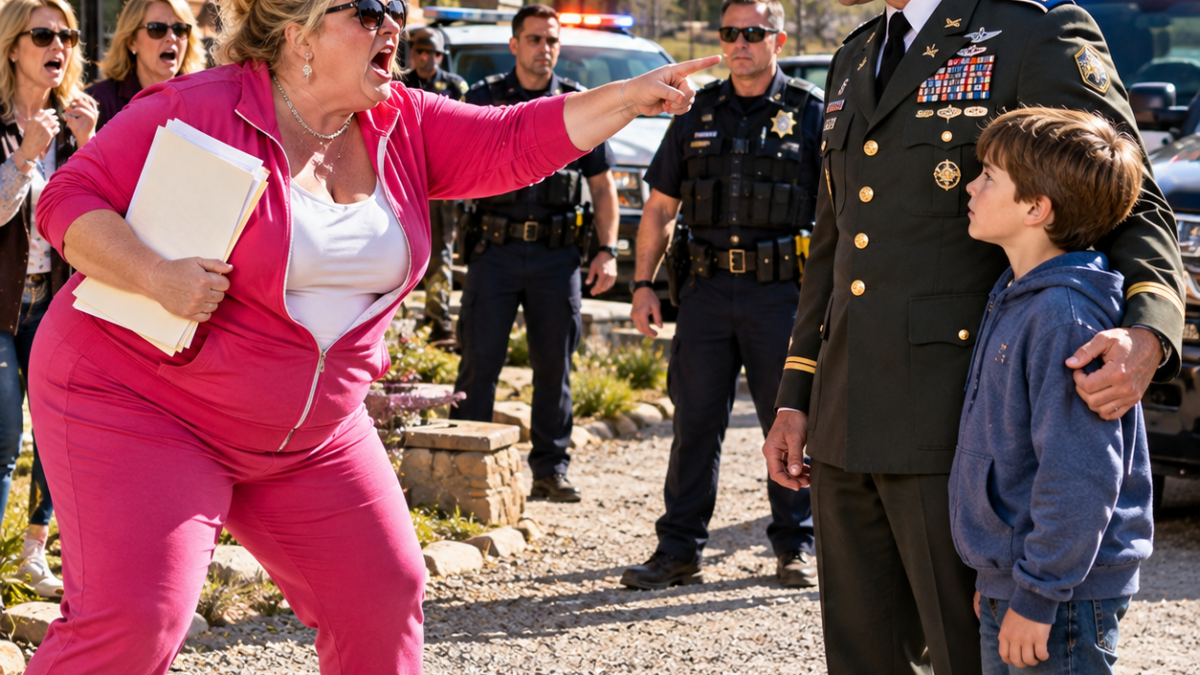
PART 2
I took the violation notice off the refrigerator and laid it flat on the kitchen table.
Donald stood across from me.
He wasn’t interested in property law, but he was interested in patterns, and he noticed inconsistencies the way some people notice colors.
His eyes moved over the paper.
“Dad.”
“What?”
“The font changed.”
I looked again.
He pointed.
“Here. The address and fine amount are in a different font than the rest of the document.”
He was right.
“And the spacing is wrong.”
“Where?”
“Between these lines.”
He tapped the notice.
“It looks like somebody copied a template and replaced parts of it.”
I smiled despite myself.
“That’s why I keep you around.”
“I thought you kept me around because I’m your son.”
“That too.”
He almost smiled.
The notice accused my mother of “failure to maintain exterior standards.”
No specific problem.
No photograph.
No citation to the governing documents.
Just five hundred dollars due in fourteen days.
I photographed every page and emailed it to Robert Finch, the Arizona real-estate attorney who had helped with my mother’s probate.
Arrived at Mom’s house. HOA already threatening occupancy. Attached notice is dated two weeks after her death. Need governing documents and statutory requirements for fines, hearings, and records access.
Then I looked through the kitchen window.
Beverly was still outside.
She stood at the end of my driveway talking to a neighbor.
Every few seconds she gestured toward the house.
The neighbor nodded but didn’t look comfortable.
Across the street, an elderly woman stood behind a screen door.
When she realized I had seen her, she disappeared.
I knew that posture.
I had seen it in countries where local power operated through fear rather than legitimacy.
Head down.
Eyes away.
Don’t become involved.
That bothered me more than Beverly’s threat.
One loud bully is manageable.
A whole neighborhood trained not to speak is a system.
I spent the afternoon unpacking.
Donald settled into his old room.
He placed his laptop beneath the plastic stars and began arranging his notebooks by subject.
Orbital mechanics.
Stellar evolution.
Mathematical physics.
Astrobiology.
His telescope remained wrapped in the truck because he insisted Grandma’s backyard had too much light pollution for serious observation, but he still planned to use it.
Near sunset, he appeared in the kitchen.
“Are we staying?”
“Yes.”
“Even if the lady says we can’t?”
“Yes.”
“Is she wrong?”
“Yes.”
He considered this.
“Legally wrong or morally wrong?”
I looked at him.
“Possibly both.”
“That seems inefficient.”
I laughed.
“It usually is.”
At 11:47 that night, Beverly emailed me.
I saw it at 5:30 the next morning because retirement had done absolutely nothing to cure the habit of waking before sunrise.
The subject line read:
CHEN PROPERTY VIOLATION REPORT
Chen.
My last name was Rodriguez.
My mother’s last name was Rodriguez.
The property had belonged to Eleanor Rodriguez for thirty-one years.
I stared at the screen.
Template.
Copy.
Paste.
Intimidate.
They hadn’t even bothered changing the previous homeowner’s name in the subject line.
Attached were seventeen pages.
I poured coffee and started reading.
Grass exceeds four inches.
Fine: $150.
Mailbox inconsistent with color guidelines.
Fine: $100.
Garage-door deterioration.
Fine: $200.
Trash receptacle removed from curb outside approved time window.
Fine: $75.
Unregistered vehicle parked overnight.
Fine: $50.
That one was my truck.
Parked in my driveway.
I kept going.
Landscape noncompliance.
Window treatment violation.
Decorative object not approved.
Unapproved occupancy.
Failure to respond to compliance notice.
Escalation fee.
Administrative review fee.
The total came to $2,350.
Due in seven days.
I opened the official Willowbrook covenants I had downloaded from county records.
Then I compared.
Not one page of Beverly’s report cited an actual covenant section.
No hearing date.
No cure period.
No board approval.
No evidence my mother had received most of the notices.
It wasn’t enforcement.
It was a bill designed to frighten somebody into writing a check.
I called Robert when his office opened.
He sighed when I said Willowbrook.
“You know them?”
“I know Beverly.”
That wasn’t reassuring.
“How?”
“I’ve represented two homeowners there.”
“What happened?”
“One settled and moved. One sold before trial.”
“Why?”
“Because Beverly makes litigation expensive emotionally.”
“Explain.”
“Every disagreement becomes five disagreements. You contest a fine, suddenly there’s another inspection. You challenge a lien, somebody complains about your dog. You demand records, your parking becomes an issue.”
“How long has she been president?”
“About eleven years.”
“How many houses?”
“Close to four hundred.”
“Elections?”
Robert paused.
“Interesting question.”
“That means no.”
“That means I’ve never seen a contested one.”
I wrote that down.
“What does Arizona law require before fines?”
“There are notice and due-process requirements. The association must identify the alleged violation and give an opportunity to respond. Specific timing depends on the action and governing documents.”
“These notices are garbage.”
“Probably.”
“Financial records?”
“Homeowners have statutory inspection rights.”
“Send a formal demand.”
“Joseph—”
“Today.”
He knew that tone.
“All right.”
“And request meeting minutes approving the fines.”
“That may get interesting.”
“That’s the point.”
I hung up.
Outside, the desert morning was already warming.
My mother’s mailbox actually did need paint.
Not because Beverly said so.
Because the sun had bleached the top edge.
I found the exact approved desert-tan color in the covenants and started repainting it.
That was when the elderly woman next door appeared.
She stopped exactly at the property line.
“You’re Eleanor’s son?”
“Yes, ma’am.”
“I’m Helen Patterson.”
I put down the brush.
“My mother mentioned you.”
Her face softened.
“She was kind.”
“She liked you.”
Helen looked toward Beverly’s house, although it wasn’t visible from where we stood.
“Be careful.”
“With the paint?”
“With Beverly.”
I waited.
People reveal more when silence makes room for them.
Helen twisted her fingers together.
“She doesn’t like people who question her.”
“What happens if they do?”
Helen’s eyes moved toward the street.
“The Thompsons questioned her.”
“Who are they?”
“Used to live three streets over.”
“What happened?”
“They had an adult son with a medical condition.”
My attention sharpened.
“What kind?”
“It doesn’t matter. He made sounds sometimes. Had episodes. Nothing dangerous.”
“And Beverly?”
“She said he disturbed the neighborhood.”
I stopped moving.
“She fined them. Noise violations. Property disturbances. Complaints.”
“How many?”
Helen swallowed.
“Almost every day for a while.”
“Did they fight?”
“Yes.”
“What happened?”
“They hired a lawyer.”
Helen’s voice dropped.
“Then somebody reported them to Adult Protective Services.”
I looked at her.
“For what?”
“Abuse. Neglect. I don’t know.”
“Was any of it true?”
“No.”
“How do you know?”
“I knew that family for six years.”
“What happened?”
“They spent months proving everything was false. Lawyers. Evaluations. Investigators.”
“And Beverly?”
“Nothing happened to her.”
Helen blinked rapidly.
“By the time the Thompsons cleared their names, they were exhausted. Their savings were gone. Their marriage was falling apart. They sold the house for less than it was worth and left.”
There it was.
Not random bullying.
Method.
Beverly didn’t need to win on the merits.
She needed to make resistance more expensive than surrender.
Fines.
Public pressure.
Government agencies.
Legal costs.
Isolation.
A person can be completely innocent and still be destroyed by having to prove it repeatedly.
“Were there others?”
Helen looked terrified.
“That’s enough.”
“Mrs. Patterson—”
“I’ve said too much.”
She turned toward her house.
“Helen.”
She stopped.
“My mother knew?”
Helen did not turn.
“She knew Beverly was dangerous.”
That hurt.
“How much did Mom deal with?”
“I don’t know.”
“Yes, you do.”
Helen’s shoulders lowered.
“Your mother never complained.”
That sounded exactly like Mom.
“She would say, ‘I’m too old to spend my last years arguing with that woman.’”
My jaw tightened.
“She paid?”
“Sometimes.”
“How much?”
“I don’t know.”
Helen looked at me then.
“But she kept every piece of paper.”
I nearly smiled.
Of course she did.
Helen hurried inside.
Her curtains closed within thirty seconds.
That night, Donald sat at the kitchen table working through equations.
I was reading HOA records.
Without looking up, he said:
“She was scared.”
“Who?”
“The neighbor.”
“How could you tell?”
“Her voice changed every time a car passed.”
His pencil tapped lightly against the table.
“She kept looking at the street instead of at you. She wasn’t nervous about talking. She was nervous about being seen talking.”
I leaned back.
“You’re right.”
He kept writing.
“Does Beverly scare everyone?”
“Maybe.”
“Will she scare us?”
There are moments when children—even adult children—ask questions that are bigger than they sound.
I could have said no automatically.
Instead, I thought about it.
“She might try.”
Donald finally looked at me.
“And?”
“She doesn’t get to decide what we do with fear.”
“What does that mean?”
“It means we recognize it. We prepare. Then we make decisions based on facts, not panic.”
He nodded.
“Like an emergency checklist.”
“Exactly.”
“Okay.”
That was enough for him.
It needed to be enough for me.
On the third morning, Robert texted:
CHECK COMMUNITY BOARD. NOW.
Willowbrook required residents to use a private online platform for announcements.
The newest post was from Beverly.
COMMUNITY SAFETY ALERT
I opened it.
My stomach tightened immediately.
She described an “unknown male” occupying the late Eleanor Rodriguez’s property without HOA authorization.
Me.
Then:
The individual claims military service but has refused to provide verification.
I had never been asked for verification.
Then she mentioned Donald.
Not by name.
But everyone knew.
An adult male accompanying him exhibits unusual and concerning behavior, including limited eye contact, repetitive movements, and apparent emotional instability. Parents are advised to exercise caution and report suspicious conduct.
I read it once.
Then again.
One hundred twenty-seven reactions.
Forty-three comments.
Why is the board allowing them to stay?
I saw the younger one walking yesterday. Something seemed off.
Keep children away until we know more.
Thank you, Beverly, for protecting us.
My hands were completely still.
That was never a good sign.
Anger in combat had always felt hot.
The dangerous kind was cold.
I started taking screenshots.
Post.
Comments.
Timestamp.
Usernames.
Then I heard Donald behind me.
He held his phone.
His face had gone blank.
“Dad.”
I closed my eyes for half a second.
“She wrote about me.”
“Yes.”
He read aloud.
“Mentally unstable.”
His right hand began tapping against his thigh.
He tried to stop it.
Couldn’t.
“Is that what people see?”
That question hit harder than anything Beverly had said to me.
My son had spent twenty-two years learning a world that often seemed determined not to learn him.
He understood gravity better than social small talk.
He could explain the life cycle of a star for forty minutes but sometimes struggled to ask a cashier where the bathroom was.
He hated unexpected physical contact.
He rehearsed phone calls before making them.
He could become overwhelmed when too many things changed at once.
None of that made him dangerous.
None of it made him broken.
And now a woman who had never spoken to him had turned those differences into a public warning label.
“Sit with me.”
He sat.
I waited until he looked up.
“Do you remember what Dr. Reeves told you years ago?”
“That my brain processes things differently.”
“And?”
“Different doesn’t mean wrong.”
“That’s right.”
He looked back at the post.
“But people believe her.”
“Some do.”
“Why?”
“Because she wrote first.”
“That’s stupid.”
“It is.”
“If a scientific paper made claims without evidence, nobody would take it seriously.”
“People aren’t always as disciplined as scientists.”
He frowned.
“That seems like a design flaw.”
I laughed despite the anger in my chest.
“Probably.”
Donald was quiet.
Then he said:
“Spock.”
“What?”
“Star Trek.”
“I know who Spock is.”
“He was different.”
“Yes.”
“People sometimes thought he was cold because he didn’t express emotion the same way.”
“Yes.”
“But he was valuable because he thought differently.”
I knew where he was going.
“He didn’t need to pretend to be Kirk.”
“No.”
Donald looked directly at me.
Rare when he was emotional.
“You’re not going to make me leave because she doesn’t like how I act?”
“No.”
The word came out harder than I intended.
He flinched slightly.
I softened my voice.
“No, son. This is your home too.”
“What are we going to do?”
“Exactly what Spock would do.”
“Logic?”
“Evidence.”
That earned the faintest smile.
“Logical.”
I forwarded the screenshots to Robert.
His response:
Do not answer publicly. Preserve everything. This is serious.
I wanted to answer.
God, I wanted to.
I wanted to write one message explaining exactly who I was.
Colonel Joseph Rodriguez.
United States Army.
Twenty-eight years.
Multiple commands.
More evaluations, investigations, and security clearances than Beverly Martinez could imagine.
I wanted to explain Donald.
His grades.
His university program.
His intelligence.
His kindness.
But defending him publicly would accept Beverly’s premise that he owed these strangers proof he deserved dignity.
He didn’t.
So I stayed silent.
That afternoon, Donald and I walked through Willowbrook.
A father was tossing a football with two children.
When he saw us, his expression changed.
He gathered the children.
“Inside.”
The younger child protested.
“Now.”
They disappeared.
Door closed.
Blinds moved.
Donald watched.
“He knows us from the post.”
“Yes.”
“He doesn’t know anything else.”
“No.”
We continued walking.
At the end of the block, Donald stopped.
“This happened to the Thompsons.”
I turned.
“Helen told me some of it.”
“She posted about them too, right?”
“Probably.”
“And people believed her.”
“Yes.”
“Then they had to leave.”
“Yes.”
Donald’s jaw tightened.
“If we leave, she’ll do it again.”
I studied him.
“That’s possible.”
“Then we can’t only stop her for us.”
“No.”
“We have to stop the system.”
My son used that word.
System.
That was how he saw the world.
Patterns.
Inputs.
Outputs.
Feedback loops.
And he was right.
Beverly was not dangerous because she was rude.
She was dangerous because she had built a repeatable process for destroying opposition.
I put my hand on Donald’s shoulder.
“Then we do it right.”
“What does right mean?”
“Slow.”
He hated slow.
His face showed it.
“Careful.”
Still not thrilled.
“Documented.”
That he liked.
“And when she finally makes a mistake she can’t explain away, we move.”
“How do you know she will?”
“Because people who never face consequences eventually stop believing consequences exist.”
He considered this.
“That is statistically plausible.”
“High praise.”
The next two days were paperwork.
I read every page of Willowbrook’s recorded covenants.
Forty-seven pages.
By noon, I had identified more problems.
Fines required documented board action.
Where were the minutes?
Annual financial statements were supposed to be provided.
My mother’s files contained none.
The president was supposed to be elected regularly.
Beverly had held office eleven years.
Helen couldn’t remember a real election.
Neither could three other homeowners Robert contacted.
Every year, residents apparently received notices saying the existing board would continue because no opposing nominations had been received.
Convenient.
Robert’s formal request for financial records received an answer on day five.
Thirty days.
Arizona law and the association’s own documents required much faster access.
Beverly wasn’t simply dismissing rules.
She was rewriting them in real time.
Still, I didn’t file anything yet.
Procedure alone wouldn’t break her.
I needed something the neighborhood could understand instantly.
The first major breakthrough came from Gary Morrison.
Seventy-four.
Retired accountant.
Former Willowbrook board member.
We met at a coffee shop fifteen miles away.
Gary chose the location.
“Too many people report things back to Beverly.”
“What things?”
“Who talks to whom.”
He stirred his coffee but never drank it.
“I served three years.”
“What happened?”
“I asked about money.”
“That’s generally what board members are supposed to do.”
Gary gave a humorless smile.
“Not in Willowbrook.”
“What did you find?”
“Reserve numbers didn’t make sense. Maintenance expenses increased even when work wasn’t being done.”
“And Beverly?”
“Said I was undermining confidence.”
“How did you leave the board?”
Gary looked embarrassed.
“She scheduled an emergency meeting while I was visiting my daughter in California.”
“That’s enough to remove someone?”
“It wasn’t.”
“What happened?”
“They amended the internal rules to require full attendance for officers.”
I stared.
“At a meeting you couldn’t attend.”
“Yes.”
“And then removed you for not attending.”
“Yes.”
“That’s almost impressive.”
“It would be funny if it hadn’t worked.”
He reached into his jacket and placed a USB drive on the table.
“Copies.”
“Of?”
“Everything I had.”
“Why keep them?”
“Because accountants are like elephants.”
“That’s not a saying.”
“It is now.”
I took the drive.
“Why give it to me?”
His expression changed.
“Because I watched Beverly destroy the Thompsons.”
I said nothing.
“And another family before them.”
“Who?”
“Gaines.”
“What happened?”
“Lien threats. School complaints. Police calls. They sold.”
Gary looked toward the window.
“I told myself somebody else would stop her.”
“Why didn’t you?”
“Fear.”
He looked back.
“I’m seventy-four now. My wife is gone. My kids live in other states. What exactly am I protecting by staying afraid?”
That night, I opened the USB.
Gary’s files were organized perfectly.
Budgets.
Bank statements.
Vendor invoices.
Meeting minutes.
Emails.
Eight years earlier, Willowbrook’s reserve fund held roughly $412,000.
Recent filings showed approximately $285,000.
A difference of $127,000.
That alone didn’t prove theft.
Reserves get spent.
So I traced the expenses.
Pool renovation.
I visited the pool.
No renovation.
Road resurfacing.
I inspected the streets.
No recent paving.
Equipment upgrades.
No matching asset records.
Landscaping contracts increased dramatically despite no corresponding change in service.
The money had gone somewhere.
But the work it supposedly paid for either didn’t exist or could not be verified.
I called Robert.
“I think we found the reason she doesn’t want records released.”
“How much?”
“Potentially one hundred twenty-seven thousand.”
Silence.
“Joseph.”
“I know.”
“This is different.”
“I know.”
“You need to consider reporting it.”
“Not yet.”
“Why?”
“Because discrepancies can be explained.”
“That’s a lot of discrepancy.”
“Still explainable.”
“Accounting error.”
“Exactly.”
“Bad vendor recordkeeping.”
“Exactly.”
Robert sighed.
“You want something undeniable.”
“I want her on record.”
“That’s risky.”
“So is attacking her with half a case.”
I ended the call.
Two days later, Beverly gave me what I needed.
Certified mail.
Maricopa County Superior Court listed as the sender.
Inside:
TEMPORARY RESTRAINING ORDER
My name.
Beverly’s name.
A supposed judicial signature.
The document stated I had threatened and stalked her.
It prohibited me from coming within five hundred feet.
It barred me from HOA meetings.
It warned of immediate arrest.
For about ninety seconds, I thought she had managed to get a temporary order without me knowing.
Then training took over.
Check.
Verify.
Never trust appearance when systems exist.
I looked at the case number.
Wrong format.
The court seal looked blurry.
The judge’s signature looked copied.
I opened the Arizona court portal.
Entered the case number.
Nothing.
My name.
Nothing.
Beverly Martinez.
Nothing.
I checked again.
Then called Robert.
He checked independently.
“No case.”
“So this is fake.”
“Joseph, do not confront her.”
“I wasn’t planning to.”
“This document may itself create serious criminal exposure.”
“I know.”
“Report it.”
“Not yet.”
“You’re making me nervous.”
“She sent it privately.”
“That’s still bad.”
“But she can claim someone else prepared it. Administrative mistake. Draft. Miscommunication.”
“What are you waiting for?”
“For her to use it.”
Robert went silent.
“You think she will?”
“I know she will.”
“How?”
“Because sending it wasn’t the point.”
“What was?”
“Making police believe it exists.”
The next call was to an old Army colleague who now worked white-collar cases.
I didn’t ask for favors.
I did not ask anyone to open an investigation.
I told him exactly what I had.
A suspected forged court document in a growing pattern of attempts to weaponize agencies against residents.
His advice was simple.
“Preserve the original. Don’t alter it. Let local authorities handle the immediate criminal piece. If evidence later supports anything broader, they’ll refer appropriately.”
Good.
The third thing I did was assemble copies of everything.
Beverly’s posts.
Gary’s financial files.
Fake notices.
The suspected restraining order.
Robert kept a complete set.
Another set went into secure storage.
Donald saw me scanning the order.
“What is that?”
“A fake restraining order.”
He came closer.
“How do you know it’s fake?”
“No case exists.”
“Why would she make one?”
“To scare me.”
“That seems illegal.”
“It is.”
“Then why are you smiling?”
I hadn’t realized I was.
“Because she crossed a line she can’t uncross.”
Donald looked at the page.
“What happens now?”
“We wait.”
He groaned.
“I hate waiting.”
“I know.”
“This is a trap.”
“Yes.”
“You’re letting her think it worked.”
“Yes.”
He studied me.
“That’s sneaky.”
“That’s strategy.”
“Same thing with better vocabulary.”
I laughed.
“Go study.”
The next day, a sheriff’s cruiser stopped outside.
I saw it from the side yard while repairing a weathered fence panel.
A deputy stepped out.
Mid-thirties.
Professional posture.
Jake Williams.
He approached with both hands visible.
“Mr. Rodriguez?”
“Yes.”
“I’m Deputy Williams. Can we speak privately?”
The phrasing mattered.
Not detained.
Not complaint.
Speak privately.
I invited him inside.
Donald sat at the kitchen table watching an astrophysics lecture.
He removed one earbud.
“It’s okay,” I told him.
Williams noticed.
We sat.
He lowered his voice.
“I’ve received several calls from Beverly Martinez.”
“I assumed.”
“Threats. Suspicious behavior. Your son.”
I said nothing.
He continued.
“I’ve also received similar calls about other Willowbrook residents over the last three years.”
That got my attention.
“How many?”
“Enough that I recognize the pattern.”
“Why are you telling me?”
He looked toward the front window.
“Because every time I investigate, I find nothing.”
“Nothing?”
“No crime. No corroborating witnesses. No emergency.”
“And the families?”
“Most moved.”
There it was again.
“Deputy, are you here officially?”
“No.”
That surprised me.
“I’m here because if she escalates, I want you to understand something.”
“What?”
“I’m not interested in being used as somebody’s private enforcement arm.”
I watched him carefully.
“That could become uncomfortable for you.”
“It already is.”
He leaned forward.
“If she files something formal, we respond. That’s our job. But I’ll document everything. Body camera. Dispatch records. Statements.”
“You think she’s planning something?”
“I think she’s used government systems before.”
He stood.
At the door, he paused.
“Fear isn’t loyalty, Colonel.”
I had not told him my rank.
I raised an eyebrow.
He smiled.
“I verified the military-service claim she said was suspicious.”
That almost made me laugh.
“Twenty-eight years?”
“Twenty-eight.”
“Colonel?”
“Retired.”
He nodded.
“Thought so.”
After he left, messages started arriving.
Linda Torres.
Dave Kowalski.
Another family.
Then another.
Eleven households in two hours.
Beverly did this to us.
We still have the letters.
She threatened us with liens.
She called my employer.
She reported my daughter.
We paid fines that never appeared on financial statements.
One anonymous message said:
We call her the HOA Hydra. Cut off one head and two more grow back. Maybe you can finally find the heart.
I answered everyone with the same instructions.
Document.
Do not confront.
Send original evidence.
Preserve dates.
No public attacks.
Within forty-eight hours, Robert had files from nine families.
Threatening emails.
Violation notices.
Payment records.
One audio recording.
Beverly’s voice:
“If you make this difficult for me, I promise you’ll discover how difficult this community can become.”
Robert called.
“Joseph, this is no longer one homeowner’s case.”
“I know.”
“We may have a pattern of extortionate conduct, financial misconduct, defamation, abuse of process.”
“Keep going.”
“You still don’t want to move?”
“Not yet.”
“What the hell are you waiting for?”
“Her.”
On day twelve, she arrived.
Not alone.
At 9:47 a.m., the doorbell rang.
I checked the camera.
Two sheriff’s cruisers.
One white government sedan.
Adult Protective Services.
My chest tightened.
Not fear.
Focus.
I heard Donald in his room.
The doorbell rang again.
I opened the door.
Deputy Williams stood there.
His expression told me he knew exactly what was happening.
Beside him was an older deputy named Harmon.
Behind them stood a woman holding a clipboard.
“Mr. Rodriguez?”
“Yes.”
“I’m Charlotte Price with Adult Protective Services.”
“Good morning.”
“We received an emergency report regarding a vulnerable adult residing here.”
Behind me, the house went silent.
Donald was listening.
Charlotte continued.
“The report alleges an adult male with serious mental-health concerns may be being held against his will and denied appropriate treatment.”
Each word had been selected for maximum alarm.
“Does the report identify immediate physical danger?”
“It expresses concern.”
“Do you have a warrant?”
Deputy Harmon shifted.
“Sir, nobody wants trouble.”
“Neither do I.”
“Then let us inside.”
“I’ll cooperate with lawful questions. I do not consent to a search of my home.”
Harmon’s hand rested near his belt.
“Don’t turn this into something it isn’t.”
“I’m not.”
I looked at Charlotte.
“You are absolutely entitled to investigate credible allegations. But absent consent, a warrant, or exigent circumstances, I’m not allowing a government search of my home.”
Harmon frowned.
“What, are you a lawyer?”
“No.”
“Then—”
“I’m a retired Army colonel.”
That changed his expression slightly.
“Twenty-eight years. I’ve worked alongside JAG, civilian law enforcement, military investigators, and federal agencies. I understand the difference between cooperation and surrendering rights because somebody made an anonymous accusation.”
Deputy Williams looked down for half a second.
Maybe to hide a smile.
Then Donald appeared.
Jeans.
T-shirt with the Andromeda Galaxy printed across the front.
Hair sticking up slightly.
He looked from me to Charlotte.
“Dad?”
“It’s okay.”
Charlotte turned.
“Are you Donald Rodriguez?”
“Yes.”
“I’m Charlotte. I work with Adult Protective Services.”
“Why?”
“We received a report that you might need assistance.”
Donald frowned.
“With astrophysics?”
Charlotte blinked.
“No.”
“Oh.”
“What are you studying?”
“My thesis proposal.”
“About?”
“Gravitational interactions and orbital stability in multi-planet systems.”
Harmon looked confused.
Donald continued because once he started explaining space, stopping him could be difficult.
“Although I’ve also been reading about Europa. Jupiter causes tidal heating because the moon’s orbit is slightly eccentric, so the gravitational force changes and flexes the interior. That creates heat, which may keep an ocean liquid beneath the ice.”
Charlotte lowered her clipboard.
“There could potentially be microbial life.”
She smiled.
Donald’s eyes widened.
“You know about Europa?”
“A little.”
That was it.
Five minutes earlier she was investigating a report describing a dangerous, untreated adult supposedly being held prisoner.
Now she and Donald were discussing Jupiter’s moons.
The absurdity was almost beautiful.
Charlotte looked at me.
“Mr. Rodriguez, Donald does not appear to be in immediate danger.”
Donald raised a finger.
“I am an adult, by the way.”
“Yes.”
“And I live here voluntarily.”
“Understood.”
“My grandmother left this house to my dad.”
“I understand.”
“And Mrs. Martinez doesn’t like us.”
Charlotte’s eyes shifted.
“Who is Mrs. Martinez?”
Donald pointed past us.
“The lady walking up the driveway.”
Every head turned.
Beverly.
She had been waiting near the end of the street.
Now she marched toward us, furious.
“Why isn’t he being removed?”
Charlotte stiffened.
Beverly pointed at Donald.
“I filed that report. He is unstable. Everyone knows it.”
Donald stepped slightly behind me.
That movement made something inside me go completely still.
Beverly pointed at me next.
“And he is violating a restraining order.”
Deputy Williams looked directly at her.
“What restraining order, ma’am?”
“The court order.”
“What case number?”
Beverly hesitated.
“The one my attorney obtained.”
Williams’ voice remained professional.
“We checked the county system before arriving.”
Her face changed.
“There is no active restraining order involving Mr. Rodriguez and you.”
“That’s impossible.”
“No case.”
“I have the document.”
“So does he.”
Williams looked at me.
I had already placed a copy in a folder by the door.
I handed it over.
Beverly stared.
Williams looked at the page.
“We ran this number.”
Beverly’s face lost color.
I spoke carefully.
“Mrs. Martinez, you just told two sheriff’s deputies and an APS investigator that I’m violating a court order.”
“I was told—”
“By whom?”
“My attorney.”
“Name?”
She opened her mouth.
Nothing.
“Which attorney?”
“This isn’t the place.”
“It became the place when you used that document to bring law enforcement to my home.”
“I didn’t create it.”
“Then who did?”
“I said my lawyer.”
“Name the lawyer.”
Her hands began shaking.
Deputy Harmon finally seemed interested.
“Ma’am, we’re going to need clarification.”
Beverly turned toward him.
“He threatened me!”
“When?”
“The first day he arrived.”
Deputy Williams spoke.
“You previously said he refused HOA instructions.”
“He was aggressive.”
“Did he threaten physical harm?”
“He made me afraid.”
“That wasn’t my question.”
Beverly’s breathing changed.
For eleven years, she had controlled confrontations by controlling the narrative before anyone else entered the room.
This time, the room had cameras.
Two deputies.
An APS worker.
Donald.
Me.
And Beverly herself.
She tried a different approach.
“This community has rules.”
I nodded.
“Yes.”
“You refused to follow them.”
“Which rule permits forging court orders?”
Her face hardened.
“How dare you.”
“Which rule permits falsely describing my son as dangerous?”
“You know he has issues.”
Donald flinched.
I stepped forward.
Not threatening.
Just enough that Beverly had to look at me instead of him.
“My son’s medical history is none of your business.”
“He affects community safety.”
“How?”
“He behaves strangely.”
Charlotte Price’s expression turned cold.
“That is not a basis for an emergency protective-services referral.”
Beverly looked at her as though betrayed.
“You don’t understand what he’s like.”
Charlotte glanced toward Donald.
He had returned to standing beside me.
“Actually, Mrs. Martinez, I’ve spoken to him.”
“This is ridiculous.”
“No,” I said quietly. “This is documented.”
Beverly froze.
I continued.
“Deputies are wearing body cameras.”
Williams nodded once.
“Dispatch has the call history.”
No answer.
“APS has your report.”
Still nothing.
“You publicly posted false statements about Donald.”
Her face tightened.
“You mailed me what appears to be a fraudulent court document.”
“I didn’t—”
“And then you just invoked that document in front of law enforcement.”
She looked toward the street.
Neighbors were watching.
Helen stood on her porch.
Gary was at the corner.
Three other residents had stepped outside.
Beverly saw them.
That was the moment she understood.
Her real fear wasn’t police.
It wasn’t APS.
It wasn’t me.
It was witnesses.
“Mrs. Martinez,” Deputy Williams said, “we need you to remain here while we sort this out.”
“I have nothing more to say.”
She turned.
Harmon stepped sideways.
“Ma’am.”
Her head snapped around.
“Am I under arrest?”
“Not at this time.”
“Then move.”
Williams kept his voice calm.
“We need identifying information and a statement regarding the document you referenced.”
She looked at me with hatred so pure it almost felt childish.
“You did this.”
“No.”
I shook my head.
“You did.”
Forty-eight hours later, Robert and I turned over the full file.
Not only the fake order.
Everything.
Nine household files.
Gary’s accounting.
Beverly’s defamatory post about Donald.
The violation notices.
The records obstruction.
Audio recordings.
Payment evidence.
Deputy Williams’ report.
Body-camera footage.
APS documentation.
Robert sent the materials to the relevant state and county authorities.
The financial investigation widened quickly.
Willowbrook’s official accounts did not match the records Gary had preserved.
Invoices existed for projects residents swore had never occurred.
Vendors shared mailing addresses.
One landscaping company traced back to a business associate of Beverly’s late husband.
Payments classified as repairs had no work orders.
The missing reserve money wasn’t one mistake.
It was a pattern.
Beverly retained an attorney.
A real one this time.
Suddenly, the woman who had spent eleven years telling everyone else to comply with her interpretations wanted every procedural protection the law offered.
I supported that.
Seriously.
Justice means rules apply even to people you hate.
That surprised some neighbors.
Dave Kowalski cornered me outside one afternoon.
“You’re not angry she gets lawyers?”
“No.”
“She never gave us fairness.”
“That’s why we don’t copy her.”
Dave looked disappointed.
“I kind of wanted to see you crush her.”
“So did part of me.”
“What changed?”
I looked toward my house.
Donald and Tyler were on the porch arguing about whether humans would reach Mars before commercially practical fusion power.
“My son.”
Dave glanced toward them.
“What about him?”
“I want Donald to see that strength isn’t becoming cruel just because cruelty would feel satisfying.”
Dave thought about that.
“You really are a colonel.”
“Retired.”
“Still annoying.”
“I’ve been told.”
The HOA board fractured.
Two members resigned within a week.
One claimed she had signed documents Beverly presented without reading them.
Another admitted meetings often occurred informally and minutes were prepared later.
Residents demanded an emergency assembly.
Beverly initially refused.
Then Robert sent a letter reminding the association that its own governing documents allowed members to petition for one.
Signatures appeared fast.
Not because everyone suddenly loved me.
They didn’t.
Many were embarrassed.
Some still believed I had provoked Beverly.
But the fake court order changed things.
People could understand that.
You either have a real court order or you don’t.
There is no HOA interpretation of a nonexistent case number.
The community meeting happened seventeen days after the police and APS visit.
The clubhouse was full.
Almost three hundred residents.
I sat beside Donald in the third row.
He wore headphones around his neck in case the noise became too much.
Tyler sat on his other side.
That mattered to me more than the entire meeting.
Helen sat in the first row.
Gary had a folder thick enough to stop a bullet.
Beverly arrived with her lawyer.
She looked smaller.
Not physically.
Institutionally.
No white HOA polo.
No gold embroidery.
No walking around as if every sidewalk belonged to her.
Dark suit.
Attorney beside her.
The meeting started with the vice president reading a statement.
Then residents were allowed to speak.
A woman named Linda went first.
“Mrs. Martinez fined us four thousand dollars over eighteen months.”
Beverly’s lawyer took notes.
Linda continued.
“When we challenged it, someone called my employer and said I was involved in fraudulent financial activity.”
A man named Dave spoke next.
“My family received lien threats over a fence that had been approved before we bought the house.”
Another resident described anonymous complaints to the school district.
Another described police wellness checks.
Then Helen stood.
The room quieted.
She was small.
Soft-spoken.
For eleven years, she had avoided confrontation.
She looked directly at Beverly.
“My friend Eleanor Rodriguez lived here thirty-one years.”
My throat tightened.
“She was afraid of you.”
Beverly shifted.
Helen continued.
“She never said it that way. Eleanor had too much pride.”
A few people smiled sadly.
“But she was.”
Helen turned toward me briefly.
“She paid fines she didn’t believe were valid because she said she didn’t have enough years left to waste fighting.”
I had not known that.
I looked down.
Donald touched my sleeve.
Helen’s voice trembled.
“That is not community leadership.”
Then she said something that changed the room.
“We mistook surviving you for living together.”
Silence.
Even Beverly’s attorney stopped writing.
Gary presented the financial discrepancies.
Charts.
Bank balances.
Invoices.
Missing projects.
Unexplained vendor payments.
He did not accuse Beverly of theft.
He didn’t have to.
The numbers accused her.
Finally, the vice president asked if I wanted to speak.
I stood.
Beverly watched me.
I carried no dramatic folder.
No military medals.
No photographs from deployment.
I didn’t need them.
“My name is Joseph Rodriguez.”
Everyone already knew.
“My mother lived here for thirty-one years.”
I looked at Helen.
“Apparently she spent some of those years paying money because arguing felt harder.”
Then toward Beverly.
“When I arrived, Mrs. Martinez told me I could not enter the home I legally inherited.”
Murmurs.
“Then she issued more than two thousand dollars in alleged fines.”
I held up the report.
“Then she publicly described my son in terms designed to make neighbors fear him.”
Donald sat perfectly still.
“My son is twenty-two years old. He studies astrophysics. He loves space, bad science fiction, routines, and blueberry pancakes.”
Someone laughed softly.
“He sometimes avoids eye contact.”
More silence.
“He sometimes taps his fingers when overwhelmed.”
I felt my voice tighten.
“He sometimes explains Jupiter’s moons when nobody asked.”
That got a few smiles.
“None of those things makes him dangerous.”
I looked around.
“But hundreds of people read one paragraph online and treated him as though it did.”
Several residents lowered their eyes.
“That part is not only Beverly’s responsibility.”
The room changed.
People hadn’t expected that.
“If one person can turn neighbors against a young man they have never met simply by labeling him strange, then the problem is bigger than the person writing the post.”
I looked toward the front.
“We all have a responsibility to ask for evidence before we participate in someone else’s humiliation.”
Then I placed the copy of the false order on the podium.
“This document crossed the line from bullying into something authorities can evaluate.”
Beverly’s lawyer leaned toward her.
She whispered something.
I continued.
“I am not here to demand a public conviction.”
A man shouted:
“Why not?”
I looked toward him.
“Because this isn’t a mob.”
That quieted him.
“I spent twenty-eight years in uniform.”
Now the room became very still.
“I reached colonel.”
Beverly looked at me.
“You learn something at that rank.”
I paused.
“Authority does not make you right.”
I let that sit.
“Rank is responsibility.”
Another pause.
“If the people under your authority are afraid to tell you the truth, you are failing.”
Gary nodded.
“If you punish questions, you are failing.”
Helen’s eyes filled.
“If you use your position to protect yourself rather than the people you serve, then the title means nothing.”
No applause.
Good.
I didn’t want applause.
Then Donald stood.
I turned.
We hadn’t planned this.
“You don’t have to.”
“I know.”
He walked beside me.
His hands were shaking.
He hated speaking to groups.
Three hundred people looked at him.
I whispered:
“Take your time.”
He stared at the podium.
Then at the floor.
Then finally toward the crowd.
“My name is Donald.”
His voice was quiet.
The microphone picked it up.
“I know some of you were scared of me.”
Nobody moved.
“I was scared of you too.”
That hurt.
He continued.
“When people avoid me, I usually assume I did something wrong.”
His fingers tapped against his leg.
“I replay conversations in my head and try to identify the mistake.”
I saw Tyler watching him.
“After Mrs. Martinez wrote the post, I thought maybe the mistake was existing where people could see me.”
My chest tightened so hard I could barely breathe.
Donald kept going.
“Then Tyler talked to me.”
Tyler gave a tiny wave from his chair.
“He didn’t treat me like a warning.”
A few people laughed sadly.
“So I realized the post wasn’t describing me. It was describing what Mrs. Martinez wanted people to think about me.”
He looked toward Beverly.
Not angry.
Curious.
“That seems dishonest.”
A woman in the back wiped her face.
Donald continued.
“I don’t understand why someone would use another person’s differences to make people afraid.”
Beverly looked down.
“But I think Willowbrook could be better if people asked questions before deciding someone is dangerous.”
Then he stepped away.
No dramatic conclusion.
No accusation.
Just Donald.
The room stood.
I wish they hadn’t.
But they did.
Not all at once.
Helen first.
Then Gary.
Then Tyler.
Then rows of people.
Donald froze.
I leaned close.
“They’re supporting you.”
“I know.”
“You okay?”
“It’s loud.”
I put my arm around him.
“Want to leave?”
He thought.
“No.”
The vote came next.
Recall of Beverly Martinez as president.
The ballots were counted publicly.
For the first time in years, according to several residents.
The result was overwhelming.
Beverly was removed.
Eleven years ended in less than fifteen minutes.
She did not give a speech.
Her lawyer guided her out through a side door.
As she passed me, Beverly stopped.
Her attorney touched her arm.
She ignored him.
“You ruined my life.”
I looked at her.
“No.”
She waited.
“You finally reached the part where your decisions became your life.”
Her face hardened.
Then she left.
The legal investigation continued for months.
The final outcome wasn’t the cinematic destruction some neighbors imagined.
No squad of federal agents kicked down Beverly’s door.
No helicopter landed on the golf course.
Real investigations rarely look like television.
They look like subpoenas.
Interviews.
Bank records.
Accountants.
Continuances.
Lawyers carrying boxes.
Eventually, prosecutors presented charges connected to the falsified court document and false reporting.
The financial investigation established that approximately $127,000 had been diverted or improperly accounted for through transactions investigators could not reconcile with legitimate HOA work.
Beverly’s attorney negotiated.
The final disposition required full restitution.
Supervised probation.
Restrictions related to future HOA leadership.
Financial penalties.
And cooperation in reconstructing Willowbrook’s records.
She sold her house months later.
Nobody forced her.
At least not legally.
But the community she had ruled no longer belonged to her socially.
People stopped coming to her door.
Stopped inviting her to gatherings.
Stopped asking what she thought.
The strange thing about power based on fear is how quickly it disappears when people discover they can survive saying no.
Her house went on the market on a Monday.
By Friday, the gold-lettered entrance sign was gone.
A BEVERLY MARTINEZ COMMUNITY
Workers removed it.
Willowbrook Estates remained.
That was enough.
The community held its first genuinely competitive board election in more than a decade.
Eighty-nine residents participated in the first major vote.
Then more joined as confidence grew.
Helen Patterson was nominated for president.
She tried to refuse.
“I’m seventy-two.”
Gary said:
“Excellent. You don’t have enough time left to build a dictatorship.”
People laughed.
Helen glared.
Then accepted.
Term limits were adopted.
Mandatory financial audits.
Public minutes.
Independent review of fines.
No enforcement action without citation to the actual covenant.
No anonymous board posts targeting residents.
And one rule Donald particularly liked:
No public disclosure or speculation about a resident’s medical status.
Several people asked me to join the board.
I declined.
Dave cornered me afterward.
“You’d win.”
“That’s why I shouldn’t.”
“That makes no sense.”
“It makes perfect sense.”
“You’re the guy who stopped Beverly.”
“No.”
I pointed toward Helen.
“She spoke.”
Then Gary.
“He kept records.”
Then the residents.
“They voted.”
Then Donald.
“And my son reminded everyone what the fight was actually about.”
Dave frowned.
“What did you do?”
“I got angry professionally.”
He laughed.
“I’m serious, Colonel.”
“So am I.”
I looked around the clubhouse.
“A community does not need another strong personality replacing Beverly.”
“What does it need?”
“Rules strong enough that personalities don’t matter.”
Dave considered that.
“You should put that on a sign.”
“No more signs with people’s names.”
He laughed again.
When Donald and I walked home that evening, something felt different.
Neighbors waved.
Not all.
Some were embarrassed.
Some still didn’t know what to say.
But doors stayed open.
Children kept playing when we passed.
At the Kowalski house, smoke rose from a grill.
Dave shouted:
“Colonel! Donald! Burgers!”
Donald stopped.
“Are they safe?”
I looked at him.
“The burgers?”
“The people.”
I smiled.
“I think so.”
He considered this.
“Can Tyler come?”
“He’s already there.”
That settled it.
We went.
For the first time since arriving, I sat in a Willowbrook backyard without thinking about evidence.
No screenshots.
No case numbers.
No violation letters.
Donald and Tyler argued about a video game.
Helen complained that everyone expected her to understand HOA accounting just because she was now president.
Gary told her that was why he was treasurer.
Someone brought potato salad.
A dog stole a hamburger bun.
Ordinary.
I had forgotten how good ordinary could feel.
Later that night, Donald and I sat in my mother’s backyard.
His telescope stood on the patio.
Jupiter hung low above the horizon.
He adjusted the focus.
“Dad.”
“Yeah?”
“Do you think Beverly was always bad?”
I thought about it.
“No.”
“How do you know?”
“I don’t.”
“That’s not logical.”
“People rarely start by deciding they want to become the villain.”
He leaned toward the eyepiece.
“I think she believed she was protecting the community.”
“Probably.”
“Then she started thinking anyone who disagreed with her was dangerous.”
“Yes.”
“And then she became dangerous.”
I looked at him.
“That’s a pretty good summary.”
Donald adjusted the telescope again.
“That’s sad.”
“After what she did to you, you feel sorry for her?”
“I didn’t say I forgive her.”
“Fair.”
“But she could have been respected.”
He paused.
“She chose being feared.”
My son—the young man Beverly had publicly called mentally unstable—was showing more nuance about the woman who attacked him than she had ever shown about anyone else.
“That’s the difference between you and her,” I said.
“What?”
“You can understand someone without excusing them.”
Donald nodded slowly.
Then moved aside from the telescope.
“Look.”
I bent down.
Jupiter came into focus.
Bright disk.
Four tiny points nearby.
Moons.
“You see Europa?”
“Which one?”
He pointed.
“That.”
“You’re sure?”
“Yes.”
“How?”
He sighed like I had disappointed him.
“Orbital position.”
“Of course.”
We stayed outside almost two hours.
At one point I looked toward the kitchen window.
For a second, I imagined Mom standing there.
She would have loved this.
Donald at his telescope.
Neighbors laughing several yards away.
No yellow notice on the refrigerator.
No Beverly controlling who belonged.
I wondered how many times Mom had stood in that kitchen after receiving a violation letter and decided not to call me.
How many checks she had written just to keep peace.
How many times Beverly had knocked on her door.
It made me angry all over again.
Then I remembered something Mom used to say when I was younger.
“Peace is expensive if you buy it from bullies.”
I had thought she meant countries.
Maybe she meant everything.
The next morning, Helen knocked on my door.
She carried a cardboard box.
“What’s this?”
“Your mother’s.”
I stared.
“It was in HOA storage.”
“Why?”
“Records.”
Inside were thirty-one years of Willowbrook notices.
Mom had apparently given copies to the association during disputes.
Helen had found them while cleaning Beverly’s office.
I sat at the kitchen table and opened the box.
Violation after violation.
Some legitimate.
Most trivial.
Several marked paid.
Then I found one from six years earlier.
UNAPPROVED FAMILY OCCUPANT
Donald.
He had stayed with Grandma for three weeks one summer.
Beverly had fined Mom because Donald had remained in the home longer than the guest period Beverly claimed was allowed.
My hands tightened.
Helen sat across from me.
“Joseph.”
I read the handwritten note Mom had attached.
Donald is my grandson. He is welcome in my home for as long as I choose.
I smiled through sudden tears.
“That sounds like her.”
“There’s more.”
Underneath was Beverly’s response.
Continued defiance may result in escalating enforcement.
Mom had written beneath it:
Then escalate. I’m seventy-five. Let’s see who gets tired first.
I laughed so hard I had to cover my face.
Helen started laughing too.
Then both of us cried.
“My mother fought her.”
“In her way.”
“She never told me.”
“She didn’t want to worry you.”
“I was commanding a brigade overseas.”
“That’s probably why.”
I ran one thumb across Mom’s handwriting.
“What happened?”
“Beverly dropped the fine.”
“Why?”
Helen smiled.
“Your mother attended the next meeting and read the guest provision aloud.”
Of course she did.
“She embarrassed Beverly?”
“Completely.”
I looked toward Donald’s room.
So Mom had already defended him here.
Years before I arrived.
Suddenly, the house felt different.
Not like something I inherited.
Like something I had been entrusted with.
A month later, Donald received an email from the university.
His thesis proposal had been approved.
He came into the kitchen holding his laptop.
“Dad.”
The tone made me nervous.
“What?”
“They accepted it.”
I read the message.
Then hugged him.
Donald tolerated hugs better when he initiated them.
This time he did.
When he pulled away, he said:
“I want to stay here.”
“In Arizona?”
“In Grandma’s house.”
I looked at him.
“I thought you missed North Carolina.”
“I do.”
“And Denver.”
“Yes.”
“But?”
“Tyler is here.”
That mattered.
“The backyard is good for Jupiter.”
That also mattered.
“And I think Grandma wanted us here.”
My throat tightened.
“You think so?”
He nodded.
“She kept my stars.”
That settled it.
We stayed.
I converted one of Mom’s spare rooms into an office.
Donald took classes online and occasionally traveled to campus.
Tyler helped him find a local astronomy club.
At the first meeting, Donald nearly backed out because there were too many unfamiliar people.
Tyler waited beside him in the parking lot.
No pressure.
No lectures.
After twenty minutes, Donald went inside.
Three months later, he gave a thirty-minute presentation on exoplanet detection methods.
Helen attended.
She understood none of it.
She applauded anyway.
Willowbrook changed slowly.
Not magically.
There were still arguments.
People fought about parking.
Tree trimming.
Pool hours.
Somebody wanted bright-purple shutters and insisted it was an issue of constitutional freedom.
Gary nearly resigned as treasurer twice.
Helen threatened to resign as president about once a week.
Perfect.
Healthy communities argue.
The difference was that nobody was afraid of being destroyed for disagreeing.
Board meetings became boring.
That was the greatest victory.
Boring minutes.
Boring audits.
Boring elections.
Boring rules.
Boring transparency.
No midnight threats.
No anonymous reports.
No government agencies used as weapons.
The Thompson family heard what happened.
Robert tracked them down.
They had moved to New Mexico.
I spoke with Mr. Thompson by phone.
He was quiet when I explained Beverly had been removed.
Finally he said:
“We thought nobody believed us.”
“I believe you.”
“My son still asks why we had to leave.”
I didn’t know what to say.
“We have records of what happened to you.”
Silence.
“Would you like them?”
“Why?”
“In case you ever want the truth documented.”
His voice broke.
“Yes.”
Weeks later, the new HOA issued a formal apology to the Thompsons.
Not because a court required it.
Because Helen insisted.
The letter acknowledged that Willowbrook leadership had mishandled complaints, used enforcement disproportionately, and failed to protect the family from harassment.
It could not return their home.
Could not return eight months.
Could not restore savings.
But truth, even late, has value.
Mr. Thompson sent me one message afterward.
My son read the apology twice. He said, “So we weren’t crazy.” Thank you.
I sat alone for several minutes after reading that.
That sentence explained the entire system Beverly had built.
Make people doubt themselves.
Make them wonder whether they were unreasonable.
Make them think everyone else believed the authority figure.
Isolation first.
Submission second.
Donald came into the room.
“You okay?”
I handed him the phone.
He read the message.
Then sat beside me.
“She did to them what she tried to do to us.”
“Yes.”
“But they didn’t have a colonel.”
I looked at him.
“That wasn’t the difference.”
“What was?”
“We had witnesses.”
He thought.
“And documents.”
“Yes.”
“And Deputy Williams.”
“Yes.”
“And Gary.”
“Yes.”
“And Helen.”
“Yes.”
“And Robert.”
“Yes.”
“And Tyler.”
I smiled.
“Especially Tyler.”
Donald nodded.
“So the difference wasn’t you.”
I laughed.
“Thanks.”
“I mean strategically.”
“I know.”
“It was network strength.”
There he was.
Systems again.
“Exactly.”
Donald looked pleased.
“Then Willowbrook needed redundancy.”
I stared.
“What?”
“In engineering, if one component fails, redundant systems prevent total collapse.”
“I know what redundancy is.”
“Beverly became a single point of failure.”
I pointed at him.
“You’re putting that in Helen’s next board presentation.”
He actually did.
Helen loved it.
She began telling residents:
“No more single points of failure.”
Independent treasurer.
Rotating compliance committee.
Two signatures required for large payments.
Annual external audit.
Recorded votes.
Residents laughed about the phrase.
But it stuck.
One year after we arrived, Willowbrook held a block party.
Not an HOA gala.
No president giving a speech.
No gold lettering.
Just folding tables, food, music, and neighbors.
Helen came over holding lemonade.
“You realize this is your fault.”
“What?”
“I’m president.”
“I voted for someone else.”
She slapped my arm.
“No, you didn’t.”
“I considered it.”
Gary joined us.
“I’m quitting next year.”
“You say that every month.”
“This time I mean it.”
“Good.”
Helen looked offended.
“You want him to quit?”
“Yes.”
“Why?”
“Because people should leave office while others still want them to stay.”
Gary pointed at me.
“See? Colonel.”
“Retired.”
Across the yard, Donald and Tyler were showing children how to use a telescope.
A little girl stood on a stool and looked through the eyepiece.
“I see it!”
Donald crouched beside her.
“That bright point is Jupiter.”
“It looks tiny.”
“That’s because it’s more than three hundred million miles away.”
“Are there aliens?”
Donald became very serious.
“Unknown.”
Tyler laughed.
“Never ask him a question unless you want the full answer.”
The girl did.
She listened for ten minutes.
Her mother didn’t pull her away.
Nobody looked nervous.
Nobody whispered.
Nobody warned their children.
That was the moment I understood we had truly won.
Not when Beverly was removed.
Not when authorities filed charges.
Not when the money was returned.
Not when the gold sign disappeared.
This.
My son standing in the middle of the neighborhood that once treated him like a threat, explaining planets to children who saw only an interesting man with a telescope.
I walked back to Mom’s house after dark.
The porch light was on.
The same house Beverly had told me I could not enter.
The same driveway where police and APS had come believing something terrible might be happening.
The same kitchen where Donald had asked:
“Is that what people see when they look at me?”
I wish I could erase that question from his memory.
I can’t.
Parents don’t get to erase every wound.
Sometimes all we can do is make sure the wound doesn’t become the definition.
On the anniversary of Mom’s death, Donald and I visited her grave.
I brought flowers.
Donald brought a photograph.
“What’s that?”
He handed it to me.
It showed the Willowbrook backyard at night.
His telescope in the foreground.
Jupiter visible as a bright point.
On the back he had written:
Grandma, the stars are still here. So are we.
I had to turn away.
Donald waited.
He had gotten good at recognizing when I needed time.
Finally I put the photo beside Mom’s flowers.
“She’d like that.”
“I know.”
“She’d probably complain about your handwriting.”
“I know.”
We stood there in silence.
Then Donald said:
“Dad.”
“Yeah?”
“Were you scared when the police came?”
I thought about lying.
“No.”
He looked at me.
“You pause when you’re deciding whether to tell the whole truth.”
Damn smart kid.
“Yes.”
“How scared?”
“Very.”
“You didn’t look scared.”
“That was the job.”
“Being a colonel?”
“Being your father.”
He looked down.
“I was scared too.”
“I know.”
“I thought they might take me somewhere.”
My throat tightened.
“I know.”
“I thought maybe because I’m different, adults would believe Mrs. Martinez instead of me.”
I turned toward him.
“That was never going to happen.”
“You couldn’t know that.”
There are moments when your child becomes more honest than you.
He was right.
“I couldn’t.”
“What would you have done?”
“Everything legal.”
He smiled slightly.
“That sounds like you.”
“I would have called Robert. Challenged every action. Requested every record. Filed every appeal.”
“What if that failed?”
“Then I would have kept going.”
“Why?”
I looked at Mom’s headstone.
“Because you don’t stop being my son because someone with a title says something ugly about you.”
Donald nodded.
Then asked:
“Would you have used your rank?”
“No.”
He seemed surprised.
“Why not?”
“Because my military rank didn’t give me civilian authority.”
“But telling them you were a colonel changed how they looked at you.”
“Probably.”
“Isn’t that using it?”
“That’s different.”
“How?”
“It told them something about my background. It did not put me above the law.”
He processed that.
“So the title mattered because it showed experience, not because it gave power.”
“Exactly.”
Donald smiled.
“Beverly didn’t understand that.”
I looked at him.
“No.”
“She thought president meant power.”
“Yes.”
“You thought colonel meant responsibility.”
I felt something tighten in my chest.
“That’s what it was supposed to mean.”
He nodded.
“I like your version better.”
We left the cemetery just before sunset.
On the drive back, Donald fell asleep.
Same way he had on the first drive into Willowbrook.
Headphones around his neck.
Face turned toward the window.
But everything else was different.
When we reached the community entrance, I slowed.
The old sign was gone.
A simple new one stood there.
WELCOME TO WILLOWBROOK ESTATES
Nothing underneath.
No president’s name.
No claim of ownership over the people who lived there.
Just the community.
I parked in Mom’s driveway.
Donald woke.
“We’re home?”
The word caught me.
Home.
Not Grandma’s house.
Not the inherited property.
Home.
“Yeah.”
He looked toward the porch.
Tyler was waiting with two pizza boxes.
Donald got out immediately.
I remained in the truck.
For a minute, I watched them walk inside.
Then I thought about Beverly Martinez.
People sometimes asked whether seeing her fall had been satisfying.
Yes.
I won’t pretend otherwise.
There was satisfaction in watching a woman who had hurt families finally face consequences.
There was satisfaction in seeing false authority collapse under real documentation.
But revenge wasn’t the best part.
Revenge burns hot and short.
What stayed was restoration.
Money returned to reserves.
Families apologized to.
Elections restored.
Records opened.
My mother’s house quiet again.
Donald making a friend.
Helen finding courage.
Gary turning guilt into evidence.
Deputy Williams refusing to let a badge become someone else’s weapon.
A neighborhood learning that fear and respect are not synonyms.
Those things mattered longer.
One afternoon, several months later, I received a letter.
No return name.
Arizona postmark.
Inside was a single handwritten page.
Joseph,
You destroyed everything I built.
No signature.
It didn’t need one.
Beverly.
I read the sentence twice.
Then turned the page over.
Nothing.
Donald entered.
“What is that?”
I handed it to him.
He read.
Then frowned.
“She still doesn’t understand.”
“What?”
“You didn’t destroy Willowbrook.”
“No.”
“It still exists.”
“Yes.”
“The pool exists.”
“Yes.”
“The houses exist.”
“Yes.”
“The board exists.”
“Unfortunately.”
He ignored that.
“The only thing that disappeared was her control.”
I smiled.
“Exactly.”
Donald handed the letter back.
“So what she means is, ‘You destroyed everything I built around myself.’”
Sometimes I wondered why anyone ever underestimated him.
I tore the letter in half.
Donald looked offended.
“Evidence.”
“We don’t need this one.”
“You always say preserve everything.”
“Fair.”
I taped it back together.
He looked satisfied.
Three years later, the roses Mom planted still bloom every spring.
Helen served one term as president.
Then she stepped down voluntarily.
Gary retired from the board and spent his time complaining about golf.
Willowbrook survived both departures.
Exactly as it should.
Donald completed his degree.
His graduation ceremony was overwhelming.
Thousands of people.
Bright lights.
Noise.
He almost skipped it.
Tyler convinced him to attend by promising they would leave immediately afterward.
When Donald walked across the stage, I stood.
So did Helen.
Gary.
Tyler.
Deputy Williams, who had somehow found out about the ceremony and attended in civilian clothes.
Donald received his diploma.
Then looked toward us.
For one second, the crowded auditorium disappeared.
I saw the twenty-two-year-old sitting at my mother’s kitchen table asking whether people saw him as unstable.
Then I saw the man onstage.
Educated.
Capable.
Still tapping his fingers slightly because the noise was too much.
Still Donald.
Exactly Donald.
And proud of it.
Afterward, Beverly was mentioned only once.
Gary said:
“Imagine what she’d think.”
Donald replied:
“I don’t care.”
That was the final victory.
Not hate.
Indifference.
Beverly no longer occupied space in his understanding of himself.
She had tried to define him publicly.
She failed.
She had tried to remove us from Mom’s house.
Failed.
Tried to turn neighbors against us.
Failed.
Tried to use fake legal authority.
Failed.
Tried to use police and protective services.
Failed.
And every failure exposed another part of the structure she had spent eleven years building.
The strangest thing is that if Beverly had simply allowed us to move in peacefully, she might have remained president for years.
Gary’s files might have stayed hidden.
The reserve discrepancies might never have been examined.
Helen might never have spoken.
The fake elections might have continued.
The Thompsons might never have received an apology.
Beverly destroyed herself because she could not tolerate one thing.
A person who did not immediately obey.
That is the weakness of authoritarian personalities.
Compliance never satisfies them permanently.
It only convinces them to demand more.
The first day, she wanted me out of the driveway.
When I refused, she wanted fines.
When I questioned the fines, she wanted social isolation.
When that failed, she targeted my son.
When I still refused to leave, she manufactured legal authority.
Then she brought government agencies to my door.
Every escalation felt necessary to her because every boundary I maintained felt like rebellion.
But boundaries are not rebellion.
Questions are not rebellion.
Documentation is not rebellion.
Saying no to someone who has no right to command you is not rebellion.
Sometimes it is citizenship.
Sometimes it is parenting.
Sometimes it is simply self-respect.
Years after everything ended, I found Mom’s old notebook while repairing a cabinet.
Most pages were grocery lists.
Doctor appointments.
Church reminders.
A few recipes.
Near the back, one page contained a sentence.
I recognized the handwriting instantly.
Joseph always thinks being strong means carrying everything himself. Someday I hope he learns that strength is knowing when to let people stand beside him.
I sat on the kitchen floor holding that notebook.
Mom had been right.
Again.
I had entered Willowbrook believing my Army experience would protect us.
Discipline.
Patience.
Strategy.
Documentation.
Those things helped.
But I did not beat Beverly alone.
Donald stood beside me.
Helen spoke.
Gary preserved records.
Robert understood the law.
Deputy Williams documented the truth.
Residents came forward.
Tyler treated my son like a human being when everyone else had been told to treat him like a warning.
Mom had spent her final years preserving little pieces of resistance I didn’t even know existed.
That was the real strength.
Not one colonel defeating one HOA president.
A frightened community remembering it was a community.
I closed Mom’s notebook.
That evening Donald came outside carrying the telescope.
He was twenty-five now.
Older.
More confident.
Still obsessed with the sky.
“Jupiter?”
I asked.
“Saturn.”
“Can I see?”
“If you don’t touch the focus.”
“I know.”
“You always touch the focus.”
“I’m your father.”
“That does not make you qualified.”
Fair.
I waited.
He adjusted the telescope.
Then stepped aside.
“There.”
Saturn floated in the eyepiece.
Tiny.
Perfect.
Rings clear enough to make the whole universe feel suddenly close.
I stared.
Donald stood beside me.
“Worth it?”
He meant the telescope alignment.
But I thought about everything.
The fourteen-hour drive.
Beverly in the driveway.
The yellow notice.
The post.
The terrified neighbors.
The fake restraining order.
Police.
APS.
That packed meeting.
Mom’s hidden records.
The election.
Donald’s graduation.
Home.
“Yes,” I said.
“Definitely worth it.”
He nodded.
“I agree.”
Above us, the Arizona sky stretched farther than anything Beverly Martinez had ever imagined controlling.
Behind us stood the house my mother left me.
Lights warm in the windows.
Mailbox painted desert tan.
No violation notices.
No fear.
Just home.
And that, after everything, was the ending she never expected.
Beverly had called the cops believing authority would remove my son from the house.
Instead, her own abuse of authority exposed everything she had spent eleven years hiding.
She believed being HOA president made her powerful.
I had spent twenty-eight years learning something she never understood.
Real authority is not measured by how many people you can frighten.
It is measured by what you protect when you finally have the power to choose.
I chose my son.
I chose my mother’s home.
And once the frightened people of Willowbrook realized they could choose too, Beverly Martinez never stood a chance.








