PART 2: HOA Karen Called 911 When Her Son Found Me at My Own Cabin—Then the Cop Snapped to Attention: “Yes, Major General!”
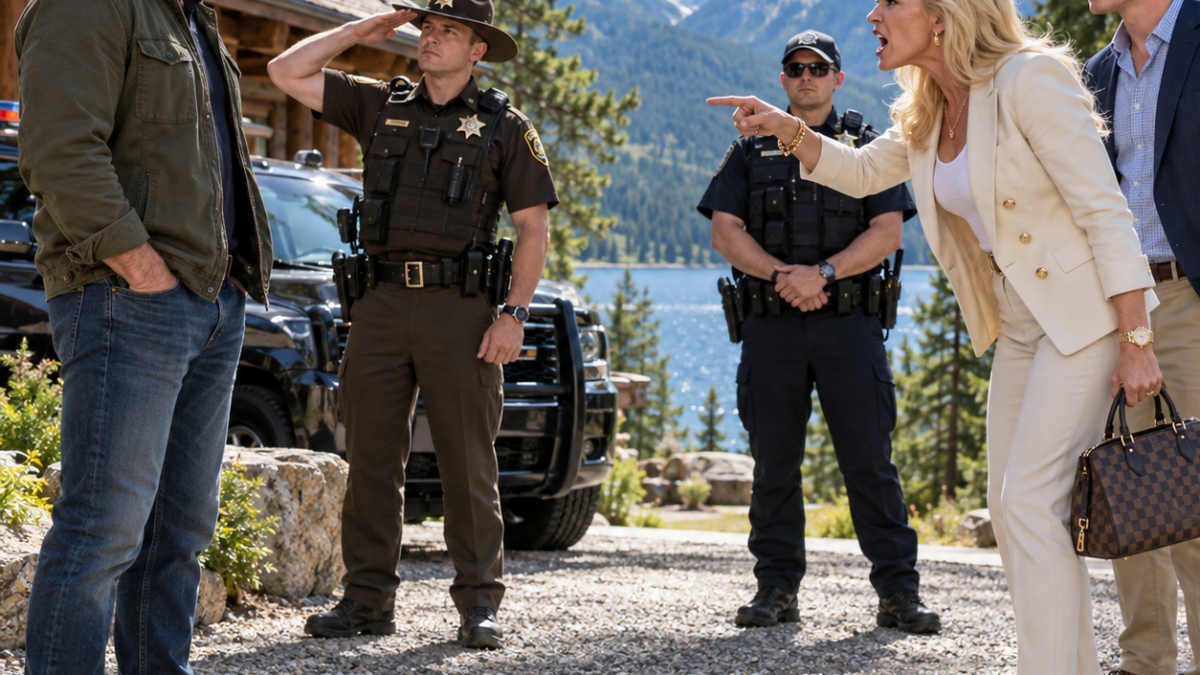
The woman standing on my dock looked at me like I had broken into somebody else’s life, even though the cabin behind me had carried my family’s name since 1944.
Her teenage son kept whispering, “Mom, maybe we should go,” but she ignored him, pulled out her phone, and told 911 there was a dangerous stranger refusing to leave private property.
Twenty minutes later, a patrol car came flying up the gravel road, and the young officer who stepped out took one look at me before something in his expression suddenly changed.
My name is Darius Mitchell.
I was fifty-six years old when I moved back to Clearwater Lake after thirty years in the United States Army, four combat deployments, more funerals than I care to count, and the death of my wife Sarah from cancer two years earlier.
The cabin had belonged to my grandfather Joe.
He bought the two-acre lakefront parcel in 1944 after coming home from the war, back when Clearwater was more pine trees than vacation homes and nobody cared whether a dock matched an architectural color palette.
By the time I returned, the old cabin was surrounded by Riverside Estates, forty upscale lake houses occupied mostly by doctors, attorneys, executives, and wealthy weekenders who liked calling the area “rustic” while paying people to split their firewood.
I didn’t mind.
I hadn’t come there to fight with anyone.
I came because Sarah was gone.
Retirement had taken away the Army routine that kept me moving after her death, and I needed somewhere quiet enough to remember who I was when nobody called me General.
For the first week, Clearwater gave me exactly that.
I replaced rotten boards on Grandpa Joe’s dock.
Painted the cedar siding the same forest green he’d always used.
Sat outside every morning with black coffee while mist lifted off the water.
Then Brenda Whitmore arrived.
She came to my porch wearing expensive lake clothes and an HOA smile that never reached her eyes.
Behind her stood her sixteen-year-old son, Kyle, looking embarrassed before she’d even introduced herself.
“I’m Brenda Whitmore, president of Riverside Estates.”
She handed me a violation notice.
Five hundred dollars per day.
Unauthorized dock repairs.
Unauthorized exterior painting.
Failure to submit modifications for HOA approval.
I read the page once.
Then looked at her.
“This property isn’t part of your original subdivision.”
“Oh, honey,” she said. “Those old grandfathering arguments don’t really work anymore.”
Kyle visibly winced.
I kept my voice calm.
“The cabin has been in my family since 1944.”
“We’ve modernized community standards.”
“I replaced three rotten boards.”
“You changed the appearance of a structure visible from community water.”
Then she smiled.
“If Riverside doesn’t suit you, I happen to represent buyers looking for larger lakefront parcels.”
That was the moment I understood the fines weren’t really about paint.
“I’ll be keeping the cabin.”
Her smile thinned.
“We’ll see.”
Over the next several weeks, the notices multiplied.
My flag was supposedly oversized.
My dock repairs became a safety complaint.
Three hammer strikes at noon became a noise violation.
A county inspector appeared because Brenda reported unpermitted construction.
A sheriff’s deputy responded to another complaint and found me sitting alone beside a silent lake.
I started documenting everything.
Then my neighbor Martha Kowalski told me Brenda had used similar tactics against other families.
The Hendersons had been buried in fines until they sold below market value.
An elderly couple had been threatened over bird feeders.
Several original lake families had disappeared one by one.
And every time somebody left, a company called Lakeshore Development seemed to appear nearby.
The pattern bothered me enough that I requested the HOA’s financial records.
Brenda refused.
So I filed a formal complaint with state regulators and installed cameras around my property.
That was when Kyle began quietly warning me that his mother was under financial pressure and obsessed with a development deal involving several grandfathered lakefront parcels.
One Saturday morning, I was sitting on my dock fishing when Brenda’s speedboat came across the lake.
Kyle was with her.
She pulled beside my dock, stared at my Army fatigues, and demanded I leave immediately.
“This is private community property.”
“This is my cabin.”
“I know who owns these lots.”
“So do I.”
Kyle touched her arm.
“Mom, seriously—”
She jerked away and called 911.
When Officer Johnson arrived, he walked toward me with one hand near his duty belt.
“Sir, step away from the—”
Then he stopped.
His eyes had landed on the brass plate attached to my old military tackle box.
The one engraved with my name, rank, and service branch.
His face went pale.
Behind him, Brenda smiled like she thought she had finally won.
Officer Johnson slowly straightened his back.
And then he raised his hand.
PART 2
The salute was crisp enough to take me back thirty years.
“Major General Mitchell, sir.”
I stood automatically.
Old habits survive retirement better than knees do.
I returned the salute.
“At ease, Officer.”
Brenda’s smile disappeared.
Completely.
Her mouth opened slightly.
Kyle looked from Johnson to me, then back toward his mother.
For once, Brenda Whitmore had nothing to say.
Officer Johnson lowered his hand.
“Sir, I heard you speak at the Veterans Day ceremony at the high school two years ago.”
I nodded.
“I remember.”
“My little brother was there.”
His expression softened.
“He enlisted after hearing your speech.”
I wasn’t sure what to say to that.
So I said the only thing that felt honest.
“I hope he’s doing well.”
“Fort Campbell. Loves it.”
Then Johnson remembered why he had come.
He turned toward Brenda.
“Ma’am, dispatch received a trespassing complaint.”
Brenda recovered enough to point at me.
“Exactly. He’s refusing to leave private Riverside property.”
Johnson looked toward the cabin.
Then toward me.
“General, do you own this property?”
“My grandfather purchased it in 1944. I inherited it.”
I pulled the deed folder from the waterproof box beside my chair.
I’d started carrying copies because of Brenda.
That alone should tell you something about how peaceful retirement was going.
Johnson examined the deed.
County parcel number.
Recorded transfer.
Survey.
Everything.
Then he handed it back.
“This appears to be Mr. Mitchell’s property.”
Brenda folded her arms.
“The HOA has recreational control over lake access.”
“Do you have documentation establishing that?”
She immediately produced several photocopied pages from a folder.
I’d seen versions of them before.
The supposed historic community-use provisions.
Johnson looked at them.
Then at my deed.
“This isn’t something I’m going to determine on a dock.”
“But he’s violating community access rights.”
I shook my head.
“There are no community access rights across my parcel.”
Brenda’s voice sharpened.
“He can’t just block people from using a lake that’s been enjoyed by residents for generations.”
“My family has owned this shoreline since before Riverside Estates existed.”
Kyle muttered, “Mom.”
She ignored him.
Johnson raised one hand.
“Ma’am, this is a civil property dispute unless there’s evidence of a crime.”
“There is a crime. He’s threatening us.”
I stared at her.
“What threat?”
“You’ve been aggressive repeatedly.”
Johnson looked at me.
I pointed toward the camera mounted beneath the cabin eave.
“Everything here is recorded.”
That changed the atmosphere immediately.
Brenda’s eyes moved toward the camera.
Kyle closed his eyes.
I almost felt sorry for him.
Almost.
Johnson pulled out his notebook.
“Mrs. Whitmore, did Mr. Mitchell threaten you today?”
She hesitated.
“He intimidated me.”
“With words?”
“His behavior.”
“What behavior?”
“He refused to leave.”
“His own property?”
Brenda stared at him.
Johnson’s expression became painfully neutral.
The kind law enforcement officers develop when they are trying very hard not to say what they’re thinking.
Finally, he said, “Ma’am, I’m not finding a criminal trespass here.”
Brenda stepped toward him.
“Do you understand who I am?”
Johnson blinked.
“Yes, ma’am. You told dispatch you’re the HOA president.”
“I’ve spent six years protecting this community.”
“That’s fine.”
She pointed toward me.
“And you’re going to take his side because he’s some general?”
“No.”
Johnson’s voice changed.
“I’m looking at recorded ownership documents.”
Then he added, very carefully:
“And I would advise everyone here to stop making emergency calls over civil disputes unless there is an actual emergency.”
Kyle looked like he wanted the dock to swallow him.
Brenda turned toward me.
“This isn’t finished.”
I picked up my fishing rod.
“It should be.”
She marched toward the boat.
Kyle lingered.
“I’m sorry, Mr. Mitchell.”
Brenda spun around.
“Kyle.”
He lowered his head and followed her.
Their engine roared away.
Johnson stayed.
I poured him coffee.
He accepted after a moment.
Then he said something that became more important than the salute.
“Sir, her name comes up a lot.”
I looked at him.
“How often?”
“More than it should.”
“What kind of calls?”
“Noise. Suspicious persons. Property disputes. Alleged threats.”
“Same residents?”
“Different names.”
He hesitated.
“I shouldn’t characterize reports I haven’t personally investigated.”
“Understood.”
“But document everything.”
I smiled.
“That’s been my plan.”
He looked toward the disappearing speedboat.
“Make it a better plan.”
***
Two days later, I submitted public-record requests for police reports involving Brenda Whitmore over the previous eighteen months.
I’d spent enough time at the Pentagon to know that bureaucracies tell stories people don’t realize they’re telling.
You just have to ask for the right paper.
While I waited, Martha came over carrying apple pie.
She was eighty, maybe eighty-one, and had lived beside my family long enough to remember me falling off Grandpa Joe’s dock at age nine.
She placed the pie on my table.
“That woman called the police on you?”
“You already heard?”
“Dear, Clearwater Lake has forty houses. News travels faster than disease.”
I poured coffee.
She sat.
“I told you Brenda was trouble.”
“You did.”
Martha looked through the window toward Brenda’s house.
“Her son is a decent boy.”
“I know.”
“His father left two years ago.”
“Kyle mentioned that.”
“Brenda got worse afterward.”
I nodded.
“How many families did she pressure out?”
Martha’s expression changed.
“At least six that I know.”
“Names.”
She gave them to me.
Henderson.
Kowalski.
Rodriguez.
Mitchell—not related to me.
Carson.
Nguyen.
Different families.
Different ages.
Different backgrounds.
One thing in common.
Older or grandfathered lakefront property.
I wrote them down.
“What happened to the houses?”
Martha sighed.
“Most ended up sold to companies.”
“Which companies?”
“I don’t know.”
“I do.”
She looked at me.
“Lakeshore Development.”
Martha’s eyes narrowed.
“That’s the company Brenda keeps talking about.”
I sat back.
“She represents them?”
“Wouldn’t surprise me.”
Then Martha said something I hadn’t known.
“She tried buying Joe’s place before you inherited it.”
I looked at her.
“When?”
“After Sarah died.”
The room became very quiet.
“Grandpa Joe had already passed.”
“Brenda contacted the estate lawyer.”
“For how much?”
“I don’t know.”
I stared toward the lake.
Sarah’s death had hollowed me out so completely that I hadn’t paid attention to anything beyond military duties and probate paperwork.
Maybe Brenda had.
Maybe she saw grief as opportunity.
That thought stayed with me.
***
The police records arrived two days later.
Forty-three calls connected to Brenda over eighteen months.
Forty-three.
Some legitimate.
Most not obviously criminal.
But the pattern was extraordinary.
Suspicious vehicle reports involving neighbors she was fighting with.
Noise complaints.
Threat allegations.
Trespass claims.
Repeated calls involving properties that later sold.
Several reports ended the same way:
**No violation observed.**
**Civil matter.**
**Complainant advised.**
**No evidence supporting allegation.**
I spread them across Grandpa Joe’s dining table.
Forty-three pieces of paper.
Forty-three moments where police resources had been dragged into neighborhood disputes.
Then I noticed dates.
Three families received escalating police complaints in the months before they sold.
I pulled property records.
Henderson property.
Sold below market.
Buyer: Clearwater Holdings LLC.
Kowalski parcel.
Buyer: Lakeshore Residential Partners.
Rodriguez property.
Buyer: Clearwater Holdings.
Different names.
Same registered-agent address.
Lakeshore Development.
I called an old Army friend.
Colonel Sarah Martinez.
She’d retired from JAG and now worked with military legal assistance networks.
“Darius.”
“Sarah.”
“You sound serious.”
“I have an HOA.”
She laughed.
“That’s worse than Afghanistan.”
“Some days.”
I explained what I’d found.
When I finished, she was silent.
“Darius, do not call this a criminal conspiracy yet.”
“I know.”
“But preserve everything.”
“I am.”
“If this company is systematically targeting particular families for below-market acquisitions, there may be housing, fraud, consumer-protection, or state licensing issues.”
“That’s what I’m thinking.”
“Get local counsel too.”
“I will.”
“And Darius?”
“Yeah?”
“Don’t let your rank become the story.”
I looked toward the tackle box.
The salute had already spread through the neighborhood.
“I don’t want it to.”
“Good. You aren’t right because you were a general.”
“I know.”
“You’re right if the evidence is right.”
That was why Sarah had always been my favorite lawyer.
***
Kyle came to my dock the next morning.
He’d been jogging.
He stopped at the property line first.
“Can I come down?”
That told me everything I needed to know about the difference between him and his mother.
“Of course.”
He walked onto the dock.
I handed him a bottle of water.
He sat.
For several minutes, neither of us said anything.
Then he asked, “Were you really a major general?”
“Still am in the retired sense.”
“Two stars?”
“Yes.”
He nodded slowly.
“My mom said you were exaggerating.”
I laughed.
“I have paperwork for that too.”
He smiled faintly.
Then his face changed.
“She’s angry about the cop saluting you.”
“I noticed.”
“She thinks you embarrassed her.”
“I didn’t ask him to salute.”
“I know.”
He looked toward his house.
“She says you’ve made her look weak.”
That sentence mattered.
People like Brenda often mistake disagreement for humiliation.
If somebody says no, they don’t hear no.
They hear challenge.
Kyle continued.
“She’s been talking about this development deal constantly.”
“What deal?”
“Three lakefront parcels. Maybe four.”
“Which ones?”
He looked toward mine.
My stomach tightened.
“Mine?”
“I think so.”
“What exactly has she said?”
“That once the obstacles are cleared, Lakeshore can build luxury cabins.”
There it was again.
Obstacles.
Not homeowners.
Obstacles.
“Does your mother work for them?”
Kyle nodded.
“Commission.”
“How much?”
“I don’t know.”
Then he looked ashamed.
“She invested my college money.”
I turned toward him.
“What?”
“She said it was temporary. That when the development closes, I’ll have twice as much.”
“How old are you?”
“Sixteen.”
“You planning college?”
“I want West Point.”
That surprised me.
“Why?”
He shrugged.
“Always have.”
Then he looked at me.
“Before I knew who you were.”
I smiled.
“Good.”
His face remained troubled.
“What if the money’s gone?”
I didn’t lie.
“Then money can be rebuilt.”
He looked down.
“College can’t.”
“West Point doesn’t work the way private tuition works.”
He looked up.
I continued.
“If you earn an appointment, funding isn’t going to depend on your mother’s investment scheme.”
His face changed.
Hope.
Small.
But visible.
“Really?”
“Really.”
I leaned forward.
“But don’t choose military service because Officer Johnson saluted me.”
He smiled.
“Why not?”
“Because the salute lasts two seconds. The responsibility lasts decades.”
He absorbed that quietly.
Then he said, “I think Mom’s doing something illegal.”
I didn’t answer.
Not immediately.
Finally:
“If you ever believe someone is in danger, or evidence is being destroyed, talk to a trusted adult. A counselor. Attorney. Law enforcement. Don’t put yourself in the middle.”
He nodded.
“But what if I have information?”
“Protect yourself first.”
He stood.
“Thanks, Mr. Mitchell.”
“Darius is fine.”
He smiled.
“I don’t think I can call a major general Darius.”
“Then Mr. Mitchell works.”
He jogged away.
I watched him go.
Good kid.
Wrong battlefield.
***
Brenda’s answer to my financial-records request arrived that afternoon.
Denied.
She accused me of harassing volunteer board members.
My attorney, Rebecca Shaw, reviewed the denial.
Rebecca was a property lawyer in town whose personality could best be described as quiet until somebody made a procedural mistake.
Then she became terrifying.
She read Brenda’s letter twice.
“She’s withholding records she may be required to produce.”
“That’s what I thought.”
“Let’s send a formal demand.”
“What if she refuses?”
“Then we use whatever remedies the governing documents and state law provide.”
I nodded.
She looked at the pile of police reports.
“You’ve been busy.”
“Forty-three.”
Rebecca’s eyebrows rose.
“All Brenda?”
“Yes.”
“Interesting.”
Then I showed her the property sales.
She leaned forward.
“Now that’s more interesting.”
“Lakeshore Development.”
“Same buyer network?”
“Looks that way.”
“Do you know whether Brenda received commissions?”
“Not yet.”
Rebecca tapped one fingernail against the table.
“We find out.”
***
Three nights later, Brenda called an emergency HOA meeting.
I almost didn’t attend.
Then Martha showed up at my door wearing a red sweater and said, “You are coming because I refuse to fight that woman without backup.”
So I went.
The Riverside clubhouse smelled like burnt coffee and floor cleaner.
Twenty-six residents sat in folding chairs.
Brenda stood behind a podium.
PowerPoint behind her.
“Recent incidents have highlighted serious weaknesses in our community standards.”
Her eyes found me.
“Especially involving grandfathered properties.”
Martha whispered, “Here we go.”
Brenda proposed new rules requiring HOA approval for all visible modifications regardless of property age or previous exemptions.
Then a retroactive $5,000 penalty for unapproved changes.
Half the room immediately became nervous.
Riverside Estates was full of old cabins.
Sheds.
Docks.
Porches.
Boat houses.
Structures older than the HOA.
Martha raised her hand.
Brenda ignored her.
Martha stood anyway.
“My shed was built in 1962.”
Brenda smiled tightly.
“Then it should be reviewed.”
“My husband built it.”
“That’s irrelevant.”
“My husband is dead.”
Brenda paused.
Martha continued.
“If you want five thousand dollars, you can ask him.”
People laughed.
Brenda did not.
Then I stood.
“Point of procedure.”
Her eyes hardened.
“What?”
“These amendments weren’t properly noticed.”
“They’re emergency safety measures.”
“What emergency?”
She looked at me.
“Recent aggressive behavior.”
“By whom?”
Silence.
I pulled out my phone.
“I’m recording the meeting.”
Several residents shifted.
Then Tom Bradley, a Vietnam veteran who lived two streets over, raised his hand.
“Good.”
Brenda looked toward him.
Tom folded his arms.
“Keep everybody honest.”
Her board started getting nervous.
One member asked whether counsel had reviewed the amendments.
Another asked why long-standing property rights were suddenly being changed.
Then the board secretary said:
“I think we should postpone.”
Brenda turned.
“Excuse me?”
“We need proper notice.”
Three board members agreed.
The motion failed.
Not dramatically.
No shouting.
Just procedure.
And Brenda hated it.
As residents left, she passed me.
“You think rank scares me?”
I looked at her.
“This has nothing to do with rank.”
“You embarrassed me in front of the police.”
“No.”
I leaned closer.
“You embarrassed yourself.”
Her face changed.
I walked away.
***
That night, Kyle came to my cabin.
He knocked after dark.
I opened the door.
“Everything okay?”
He looked pale.
“No.”
I let him inside.
He held his phone.
“My mom had a call.”
“With who?”
“Some guy named Joseph.”
“Development?”
“I think so.”
He swallowed.
“I recorded it.”
I didn’t touch the phone.
“Kyle, before you play anything, have you talked to a counselor or another trusted adult?”
“No.”
“Your father?”
“He barely talks to Mom. Lives in Arizona.”
“Then tomorrow, we’re contacting your school counselor and my attorney.”
“But listen first.”
He pressed play.
Brenda’s voice filled the room.
“The military guy is stubborn, but I can handle him.”
My jaw tightened.
A male voice answered.
“We need those three lakefront parcels cleared by spring.”
“Same playbook as before.”
I felt something cold settle in my chest.
“Violation fines, complaints, pressure. Eventually he’ll sell.”
The man asked about my asking price.
Brenda laughed.
“He doesn’t understand what the property is worth to us.”
Then the sentence that changed everything.
“I’ve moved six families before. One retired soldier isn’t going to be harder.”
Kyle stopped the recording.
His hands were shaking.
“I’m sorry.”
I looked at him.
“For what?”
“She’s my mom.”
“You’re not responsible for her decisions.”
He looked like he wanted to believe that.
“There are spreadsheets.”
“What kind?”
“People.”
He opened a photo.
A document on Brenda’s laptop.
Names.
Addresses.
Estimated incomes.
Medical issues.
Military status.
Marital status.
Terms like:
**elderly**
**single parent**
**deployment spouse**
**financially vulnerable**
**immigrant family**
I stared.
“How did you get this?”
“I saw it when she left the laptop open.”
“Kyle, don’t steal anything.”
“I didn’t.”
“Don’t access accounts that aren’t yours.”
He nodded.
“I just took pictures.”
I called Rebecca.
Then Colonel Martinez.
Then Kyle’s school counselor.
Not because I wanted a teenager acting as an undercover operative against his mother.
Because this had become bigger than an HOA dispute.
And Kyle needed adults around him whose priority was his safety rather than my case.
***
The next morning, I learned just how large Brenda’s operation might be.
Rebecca traced multiple forced or distressed sales.
Colonel Martinez connected us with civil-rights attorneys who specialized in housing discrimination.
Several former residents agreed to speak.
Eleanor Henderson arrived first.
She and her husband had been the young couple Martha mentioned.
They now lived in a trailer park outside town.
Eleanor carried three boxes.
“We kept everything.”
Violation notices.
Certified mail.
Threatening letters.
Emails.
A purchase offer.
Their house had been worth roughly $460,000.
They sold for $285,000 after legal bills, fines, and threats overwhelmed them.
Buyer?
Lakeshore-affiliated entity.
Eleanor sat at Grandpa Joe’s table and cried.
“We were expecting our first baby.”
Her hands shook.
“Brenda kept telling us that if we didn’t sell, we’d lose everything anyway.”
“What violations?”
“Mailbox height.”
I stared.
“Mailbox?”
“Grass.”
She laughed bitterly.
“Our car was six inches over the driveway line one night.”
Her husband Jim joined by phone.
“We fought until the attorney fees were worse than the fines.”
I looked around Grandpa Joe’s cabin.
I finally understood Brenda’s method.
She didn’t need legitimate violations.
She needed friction.
Daily.
Expensive.
Exhausting.
Until selling felt like relief.
***
More families came.
The Rodriguez family.
Their children had changed schools after the move.
An elderly couple named Kowalski—not related to Martha—had moved into assisted living after fines and legal threats made maintaining their house impossible.
A military spouse described receiving repeated complaints while her husband was deployed.
Another family said their cultural celebrations had suddenly become noise violations.
Same sequence.
Complaint.
Fine.
Escalation.
Low offer.
Sale.
Development company.
Rebecca stood beside my fireplace reviewing everything.
“This is not an HOA problem anymore.”
“What is it?”
“Potentially a coordinated property-acquisition scheme using selective enforcement.”
She looked toward Colonel Martinez on the laptop screen.
Sarah nodded.
“If protected classes were targeted, federal housing issues become very serious.”
Tom Bradley, who had joined us representing the local American Legion, leaned forward.
“Military families?”
Sarah nodded.
“Military status alone isn’t always treated exactly like race or disability under every federal provision, but facts can implicate multiple laws depending on the targeting method and jurisdiction. We don’t need to overstate anything.”
I appreciated that.
Evidence first.
Labels later.
***
Brenda responded by hiring a private investigator.
Pete Garrison knocked on my door at seven-thirty one morning.
He was about sixty.
Former Marine.
I could tell before he mentioned it.
Something about the posture.
“Mr. Mitchell?”
“Yes.”
“Pete Garrison.”
He showed identification.
“I’ve been retained in anticipation of civil litigation.”
“By Brenda?”
“Client confidentiality.”
He glanced toward her house across the lake.
Not subtle.
“I need basic background information.”
“You can start with public military records.”
He nodded.
“Branch?”
“Army.”
“Rank at retirement?”
“Major General.”
Pete stopped writing.
“Sorry?”
“Major General.”
He looked at me.
“Combat?”
“Afghanistan. Iraq.”
“Decorations?”
I hesitated.
“Bronze Star. Purple Heart among others.”
Pete slowly closed his notebook.
“You wounded?”
“IED outside Kandahar.”
He stared toward the lake.
Then asked, “You got coffee?”
I smiled.
“Inside.”
Five minutes later, we sat at the kitchen table.
Pete told me he’d served Marines from 1995 to 1999.
I told him nothing confidential about our case.
Then he said:
“I’m returning the retainer.”
“That’s your business.”
“Yes.”
He looked around the cabin.
“My client described you differently.”
“I’m sure.”
Pete stood.
At the door, he paused.
“General.”
“Retired.”
“Still.”
He nodded toward my cameras.
“Keep them running.”
Then he left.
Four minutes after his car pulled into Brenda’s driveway, I could hear her yelling from across the water.
***
She escalated.
False verbal-threat complaint.
Officer Johnson came again.
I showed him footage.
Brenda said I’d threatened to “make her pay.”
The camera showed me saying:
“Good afternoon.”
Then:
“I hope your mail is getting forwarded correctly after the management-company change.”
That was it.
Johnson watched twice.
Then rubbed his face.
“Sir.”
“Yeah?”
“This is becoming a pattern.”
“I know.”
He looked tired.
“Please keep doing exactly what you’re doing.”
“Recording?”
“Yes.”
I nodded.
Then I asked, “How many calls has she made about me now?”
He hesitated.
“Seven in two weeks.”
I stared.
“Seven.”
“Yes, sir.”
“Any substantiated?”
“No.”
He wrote something.
“I’m submitting the pattern for review.”
That mattered.
Not because I wanted Brenda arrested.
Because repeated misuse of police resources can become dangerous.
One wrong description.
One nervous officer.
One misunderstood movement.
A neighborhood feud becomes a tragedy.
Brenda didn’t seem to understand that.
Or worse, she understood and didn’t care.
***
Then Kyle’s life began collapsing.
His college fund had been invested in the development deal.
Most of it.
Maybe all.
Brenda had borrowed against the house.
Hidden debts.
Legal fees.
When Kyle confronted her, she accused me of turning him against her.
Then she filed papers alleging he was endangered by contact with an unstable retired military officer.
When Kyle showed me the filing, his hands were shaking.
“She says you have PTSD and manipulate me.”
I read it.
“I have never been diagnosed with PTSD.”
“I know.”
“More importantly, she shouldn’t be using your fear of her legal problems as leverage.”
He sat heavily.
“She wants me to stop talking.”
Rebecca took over from there.
Kyle’s school counselor got involved.
His father was contacted.
Family-law counsel was arranged.
I deliberately stayed out of it as much as possible.
That was hard.
I cared about the kid.
But Brenda wanted to frame our relationship as manipulation.
The best response was boundaries.
So I kept them.
***
County Inspector Rodriguez called next.
“General Mitchell?”
“Darius is fine.”
“I need to tell you something.”
His voice was tight.
“Mrs. Whitmore offered me money.”
I sat down.
“For what?”
“To cite your septic system.”
“Is something wrong with it?”
“No.”
“Building code?”
“No.”
“What exactly did she say?”
“She needed violations serious enough to force immediate correction or temporary evacuation.”
I closed my eyes.
“Did you document it?”
“Yes.”
“Good.”
“I’ve already contacted my supervisor and law enforcement.”
Even better.
Brenda had moved from petty enforcement to something professionals could no longer excuse as misunderstanding.
***
That same week, my security cameras captured someone cutting the dock lines during a storm.
Lightning illuminated the figure.
Designer raincoat.
Bolt cutters.
Brenda.
I watched the footage three times because part of me couldn’t believe she’d actually done it herself.
Martha noticed the drifting dock before it reached the spillway.
Tom Bradley brought a boat.
Four of us hauled it back.
The damage was expensive.
But evidence was excellent.
Clear face.
Timestamp.
Entry onto property.
Tool in hand.
Cut line.
Departure.
Rebecca watched the recording.
“She’s unraveling.”
I nodded.
“That makes her more dangerous.”
“Yes.”
We increased security.
No confrontation.
No retaliation.
Just evidence.
***
Meanwhile, investigators and attorneys began coordinating the larger case.
The more records surfaced, the worse it became.
Several families across multiple lake communities described nearly identical tactics.
The same development network appeared.
Different HOA officers.
Different shell entities.
Similar pressure.
Selective fines.
Complaint campaigns.
Distressed sales.
Rebecca refused to call it racketeering until prosecutors did.
Colonel Martinez agreed.
But everyone understood the direction.
Then Kyle produced the financial emails that became the turning point.
His mother had communicated with a county assessor’s deputy about property valuations.
Not proof of crime by itself.
But the timing aligned suspiciously with targeted families.
Tax increases.
HOA pressure.
Purchase offers.
Investigators obtained records through formal channels.
No teenager hacking accounts.
No vigilante evidence.
Lawful subpoenas and public records.
The pattern sharpened.
***
Brenda’s development client pulled out.
Kyle told us before the public announcement.
“Mr. Joseph’s lawyer called.”
“How do you know?”
“I heard Mom screaming afterward.”
“What did they say?”
“They’re terminating everything.”
His voice carried no satisfaction.
Only fear.
“She’s blaming me.”
I felt my chest tighten.
“Where are you?”
“At school.”
“Stay there.”
“I have to go home eventually.”
“No.”
I called his counselor.
His father arranged for him to stay with relatives pending court decisions.
Martha offered her spare room.
Tom offered his guest house.
Half the community suddenly wanted to protect the kid.
That was important.
Because Brenda had spent years convincing people that community meant obedience.
Kyle was learning another definition.
Community meant people who showed up when your own house stopped feeling safe.
***
Then Brenda called 911 again.
6:47 in the morning.
She claimed I was outside her house pounding on the door and threatening Kyle.
Officer Johnson arrived at my cabin.
I was on the dock.
Coffee in hand.
Security camera running.
Morning mist thick over the lake.
“Sir.”
“Morning.”
“We have another complaint.”
“I guessed.”
“Mrs. Whitmore says you’re at her house.”
I looked around theatrically.
Johnson fought a smile.
“I’ve been here since five.”
“I know.”
I pointed toward the cameras.
“Timestamped.”
He nodded.
“She also said you’re threatening her son.”
“Kyle isn’t even staying with her right now.”
Johnson’s expression hardened.
That detail mattered.
“Sir, this is the seventh false or unsubstantiated report involving you.”
“Eighth, depending how you’re counting the dock.”
He sighed.
“I’m recommending formal review.”
Then he looked at me.
“This has gone too far.”
I stared across the lake.
“Yes.”
It had.
***
That afternoon, Kyle called with something worse.
“Mr. Mitchell, Mom hired two guys.”
“For what?”
“I heard her talking.”
“Where are you?”
“With my aunt.”
“Good.”
“What guys?”
“She wants them to put stolen stuff on your property.”
Silence.
“Repeat that.”
“A laptop. Jewelry.”
My stomach went cold.
“Do not contact her.”
“I won’t.”
“Tell your aunt and counselor what you heard.”
“I did.”
“Good.”
Then I called Johnson.
Law enforcement handled the rest.
At 11:31 p.m., cameras captured two men entering my tool shed.
They placed a laptop and jewelry behind paint cans.
Deputies were waiting nearby.
Both men were detained.
Under questioning, according to later charging documents, they identified the person who hired them.
Brenda.
That was the point where the story stopped being an HOA dispute even for the people who had defended her.
***
Friday morning, Riverside Estates woke to federal investigators, state regulators, reporters, and a community removal petition.
Brenda tried one last maneuver.
She scheduled a press conference on her lawn.
I almost admired the instinct.
If reality is collapsing, create another reality first.
Local reporter Janet Walsh arrived expecting Brenda to accuse me of veteran intimidation.
Instead, investigators arrived with legal papers.
The state real-estate commission had opened proceedings related to her conduct.
Federal civil-rights investigators were examining the property-acquisition scheme.
Local prosecutors were investigating alleged false reporting, attempted bribery, sabotage, and the planted-evidence incident.
Brenda stood in front of cameras wearing a cream-colored suit.
“This is political persecution.”
Janet asked, “Mrs. Whitmore, did you direct individuals to place allegedly stolen property at Mr. Mitchell’s cabin?”
“No.”
“Two suspects say otherwise.”
“They’re lying.”
“Did you offer money to a county inspector?”
“No.”
“There is a recording.”
Her face changed.
Then another reporter shouted:
“Did your real-estate business receive commissions connected to forced property sales?”
“This is ridiculous.”
Behind her, investigators approached.
She turned.
For one brief second, her eyes found mine across the lake.
I was standing on my dock with Kyle and Martha.
I didn’t smile.
Didn’t wave.
Didn’t celebrate.
Because Kyle was beside me watching his mother lose everything.
Whatever Brenda had done, that moment belonged to him too.
And nothing about a child watching a parent face criminal consequences is funny.
Then Brenda was taken away for processing on state charges while federal matters continued.
Kyle whispered:
“Is it wrong that I feel relieved?”
I looked at him.
“No.”
His eyes filled.
“She’s still my mom.”
“I know.”
“I hate what she did.”
“I know.”
“Can both be true?”
“Yes.”
I put one hand on his shoulder.
“Most hard things are.”
***
The HOA removal vote took place that evening.
More than two hundred people came.
Former residents returned.
Veterans organizations attended.
Media cameras filled the back wall.
I did not wear dress uniform at first.
Martha insisted.
“Absolutely not.”
I looked at her.
“You want me in uniform?”
“I want people to understand what Brenda tried to reduce to ‘dangerous veteran.'”
“That feels theatrical.”
She pointed at me.
“Three-star—”
“Two.”
“Whatever. Put on the uniform.”
Tom Bradley laughed.
“Do what the woman says.”
So I did.
When I entered the community center, veterans stood.
Then civilians.
A standing ovation rolled through the room.
I hated being the center of it.
But I understood what they were applauding.
Not rank.
Not me.
The refusal to be bullied.
I walked to the front.
Kyle sat beside Martha.
He looked proud and devastated at the same time.
Federal prosecutor Amanda Joseph addressed the community.
She carefully explained that charges were allegations until resolved through court proceedings.
Then she described the scope of the investigation.
Housing discrimination.
Fraud.
Coordinated pressure campaigns.
Potential wire and mail offenses.
State prosecutors described separate allegations involving false reports, attempted bribery, forgery, and property sabotage.
No exaggeration.
No cheering for sentences that hadn’t happened.
Just facts.
Then former residents spoke.
***
Eleanor Henderson went first.
“My husband and I had a nursery painted.”
She stopped.
Tears came.
“Our baby was due in three months.”
The room was silent.
“Then the fines started.”
Mailbox.
Grass.
Parking.
Noise.
They spent savings on lawyers.
Eventually sold.
“We told ourselves it was just a house.”
She looked toward me.
“But houses become places where children remember being safe.”
Her voice broke.
“Brenda took that from us.”
Jim stood beside her.
“We don’t want revenge.”
He paused.
“We want our children to know losing doesn’t mean staying silent forever.”
Then the elderly Kowalskis spoke.
Then the Rodriguez family.
Then three military spouses.
Every testimony removed another layer of Brenda’s invented narrative.
This had never been about one stubborn retired general.
It had been about vulnerable people being isolated.
***
Tom Bradley spoke for the veterans.
“Mrs. Whitmore assumed service members would be easy targets because some of us carry injuries you can’t see.”
His voice hardened.
“She mistook wounds for weakness.”
He looked toward Kyle.
“That mistake ends tonight.”
Martha came next.
Five feet tall.
Eighty pounds.
No fear.
“This woman turned neighbors against each other.”
She pointed around the room.
“That was her greatest weapon.”
Then she smiled.
“So stop giving it to her.”
Applause thundered.
Then Kyle stood.
I didn’t know he planned to speak.
He walked to the microphone.
His hands shook.
“My mother taught me to tell the truth.”
He swallowed.
“She taught me lying was wrong.”
The room became utterly silent.
“I still love her.”
His voice cracked.
“But loving someone doesn’t mean pretending they didn’t hurt people.”
Martha wiped her eyes.
Kyle continued.
“I used to think loyalty meant defending your family no matter what.”
He looked toward me.
“Now I think loyalty also means trying to stop somebody you love from becoming worse.”
He took a breath.
“I’m sorry to every family she hurt.”
Eleanor Henderson stood.
“Kyle.”
He looked at her.
“This isn’t your apology to make.”
The kid broke.
Actually broke.
He covered his face.
Martha reached him first.
Then Eleanor.
The woman Brenda forced out wrapped her arms around Brenda’s son.
That moment changed the room more than any prosecution announcement ever could.
***
Officer Johnson spoke later.
He walked to the microphone.
“General Mitchell.”
I stood.
“Sir, our department responded repeatedly to complaints that were ultimately found to be unfounded or unsupported.”
He looked toward the displaced families.
“We should have recognized the pattern sooner.”
That took courage to say publicly.
Then he turned toward me.
“I apologize.”
I nodded.
“Accepted.”
But then I added:
“Officer, you responded professionally when you had information.”
He looked surprised.
“The problem wasn’t one officer.”
I turned toward the room.
“The problem was a system being manipulated repeatedly because nobody compared the incidents.”
Johnson nodded.
“That’s why we’re changing the way repeated civil-dispute calls are reviewed.”
Good.
That mattered more than an apology.
***
The board vote came last.
Brenda was removed by an overwhelming majority.
New elections followed.
Martha became president.
She protested so loudly that everyone voted for her out of pure amusement.
Tom Bradley became vice president.
Eleanor Henderson agreed to serve as treasurer after restitution proceedings helped her family return to the area.
The first new rule was simple.
No enforcement action without documented authority, notice, and an appeal process.
Second:
No board officer could have undisclosed financial interests in vendors or developments affected by HOA decisions.
Third:
Residents could request mediation before fines escalated.
Fourth:
Police would never again be used as a substitute for HOA enforcement.
That should have been obvious.
Apparently it needed writing down.
***
The criminal cases took months.
Brenda eventually entered a guilty plea resolving several federal and state charges.
The final sentence was eight years in federal custody, followed by supervised release and substantial restitution obligations.
Not twenty-five.
Not life.
Not the fantasy sentences people on social media demanded.
Eight years.
Enough to matter.
The development network faced separate prosecutions and civil actions.
Some defendants fought.
Some settled.
Some cooperated.
The county assessor employee implicated in improper valuation conduct resigned and later faced criminal proceedings.
Several former homeowners obtained civil settlements or restitution.
Eleanor and Jim bought another cabin on Clearwater.
Not the exact house they’d lost.
Something better.
Closer to Martha.
Their children finally had a dock again.
The elderly Kowalskis received funds that helped cover assisted-living costs.
The Rodriguez family returned to the school district.
No court could restore the years.
But acknowledgment mattered.
So did money when money had been taken.
***
Tucker—Brenda’s development contact?
No.
That was another family in another story.
Here, Kyle was the son caught in the middle.
And Kyle’s future became the part of the story I cared about most.
The development investment had consumed his college fund.
But community members refused to let his mother’s decisions define what came next.
The American Legion created a scholarship.
Tom organized the paperwork.
Martha organized everybody else.
I helped Kyle prepare for West Point.
Not by promising admission.
Nobody should.
We worked on interviews.
Fitness.
Leadership.
Academic preparation.
More importantly, we talked about why he wanted to serve.
One morning on the dock, I asked:
“Why West Point?”
He had a fly rod in his hands.
“Because I want to be like you.”
“Wrong answer.”
He looked offended.
“What?”
“Never become somebody else.”
He frowned.
“Then what answer do you want?”
“The true one.”
He stared at the water.
Finally:
“I want to learn how to lead without becoming like my mom.”
That answer stopped me.
“Explain.”
“She thought leadership meant getting people to do what she wanted.”
He cast.
The line settled beautifully.
“I want to know how to be responsible for people without controlling them.”
I smiled.
“That’s a better answer.”
***
Six months after Brenda’s conviction, Kyle received his appointment.
He ran from Martha’s house to my cabin carrying the envelope.
“Mr. Mitchell!”
I was on the dock.
He nearly slipped on the last step.
“Slow down, cadet.”
“I’m not a cadet yet.”
“You will be if you survive that dock.”
He shoved the letter at me.
I read.
United States Military Academy.
Appointment offered.
I looked at him.
His face was trembling.
“Congratulations.”
He hugged me.
Unexpected.
Hard.
I held him.
Then Martha arrived shouting from the yard.
“I knew before both of you because he opened the email at my house!”
Tom drove over.
Eleanor brought cake.
By sunset, half the neighborhood was on my dock.
I thought about Brenda.
Somewhere in federal custody, she had a son headed toward a future she almost destroyed.
Kyle asked whether he should tell her.
“Yes.”
He looked surprised.
“Why?”
“Because she’s your mother.”
“But—”
“You don’t owe her approval.”
I looked at him.
“But don’t turn punishment into your identity.”
He understood.
Eventually.
***
Clearwater changed.
Not overnight.
But deeply.
Martha’s board eliminated dozens of petty restrictions.
They kept rules that mattered.
Septic safety.
Shared-road maintenance.
Noise after midnight.
Fire regulations.
Things connected to actual community impact.
Nobody measured flags.
Nobody fined eighty-year-olds over bird feeders.
Nobody treated old cabins like defects waiting to be replaced by luxury development.
The new HOA created a mediation committee.
Three disputes in the first month.
Fence location.
Boat parking.
Dog barking.
All resolved without police.
Imagine that.
Neighbors talking.
Revolutionary.
***
My cabin changed too.
I restored Grandpa Joe’s dock.
Every plank.
Kyle helped.
On the underside of one board, he carved:
**KYLE — 2026**
I saw it.
Pretended not to.
Some marks belong on family places even when the person isn’t technically family.
Martha’s apple pie became a weekly problem for my waistline.
Tom started veterans breakfasts at the clubhouse.
Eleanor managed finances with the intensity of a federal auditor.
The HOA account became so transparent residents complained the monthly reports contained too much information.
Eleanor called that success.
***
Then came the Clearwater Veterans Scholarship Fund.
The seed money came partly from restitution and community donations.
The purpose was simple.
Help children from military families pursue education.
Kyle became the first recipient.
He objected.
“I’m already going to West Point.”
Martha said:
“Then we’ll use it for books, travel, equipment, whatever regulations permit.”
Kyle looked at me for help.
I shook my head.
“You fight Martha.”
He surrendered.
Good instincts.
The annual fundraiser used Grandpa Joe’s fish-fry recipe.
That first year we raised eighty-five thousand dollars.
Veterans came from four counties.
Then six states.
The story had gone viral by then.
The clip everyone shared was still Officer Johnson saluting me beside the lake while Brenda stood frozen.
I hated that clip.
Not because it was inaccurate.
Because it reduced everything to rank.
People wrote:
**Karen picked the wrong general.**
That wasn’t the lesson.
She picked the wrong community.
Eventually.
At the beginning, she succeeded because the community was divided.
She failed when people compared stories.
That’s what mattered.
***
A national veteran organization invited me to speak about housing harassment.
I almost declined.
Sarah would have told me not to.
My wife had possessed the rare talent of knowing when my humility was actually avoidance.
So I went.
The speech wasn’t about Brenda.
Not really.
I talked about documentation.
Support networks.
Legal assistance.
Mental-health stigma.
The danger of weaponizing police calls.
The vulnerability of elderly homeowners.
The importance of distinguishing annoying HOA conduct from genuine discrimination or fraud.
I told veterans:
“Your service doesn’t make you above neighborhood rules.”
The room got quiet.
“But it also doesn’t make you a convenient target.”
Then:
“Don’t respond to paperwork with rage. Respond with better paperwork.”
That line traveled.
Grandpa Joe would’ve loved it.
***
The Justice Department later used aspects of the broader Clearwater investigation in training discussions about coordinated housing discrimination.
That didn’t turn me into a federal crusader.
I was retired.
I liked fishing.
But I agreed to consult occasionally when military families needed help understanding where to find qualified legal resources.
Kyle called it:
“Batman for HOA problems.”
I told him West Point would cure him of that sense of humor.
He said doubtful.
***
Before Kyle left for the academy, we spent one last full weekend at the lake.
Saturday morning.
Five-thirty.
Fog over the water.
He sat beside me with Grandpa Joe’s old fishing rod.
“Think my mom will ever forgive me?”
The question came without warning.
I set down my coffee.
“Forgive you for what?”
“Helping them investigate her.”
I considered my words.
“You told the truth about what you saw.”
“Still.”
“She may be angry.”
“For eight years?”
“Maybe longer.”
He looked down.
“That’s not fair.”
“No.”
“Do you hate her?”
I thought about it.
“No.”
He looked surprised.
“How?”
“I hated what she did.”
“That’s different?”
“Very.”
I looked across the lake toward her former house.
It had sold months earlier.
A family with two young children lived there now.
The boy fished from the dock.
The little girl fed ducks despite repeated warnings not to.
“Hatred keeps somebody in your life after they’re gone.”
Kyle was quiet.
“I don’t want that.”
“Then don’t build your future around fighting your mother.”
“What do I build it around?”
I looked at him.
“Who you want to become.”
He nodded slowly.
Then cast.
***
That afternoon, we visited Sarah’s grave.
Kyle stood back while I talked to her.
Yes.
I talked to my dead wife.
Thirty years commanding soldiers doesn’t cure you of needing someone who knew you before the stars on your shoulders.
I placed flowers beside the stone.
“Mission got complicated.”
Wind moved through the trees.
“The kid’s headed to West Point.”
I smiled.
“You would’ve liked him.”
Kyle stared at the ground behind me, pretending not to hear.
“The lake’s peaceful.”
I swallowed.
“And I finally figured out retirement.”
That part was debatable.
Then I whispered:
“I miss you.”
Nothing heroic.
Nothing viral.
Just true.
***
On the drive home, Kyle asked:
“What was Mrs. Mitchell like?”
“Smarter than me.”
He laughed.
“Everybody says that about their wife.”
“Because it’s usually true.”
“Did she ever care about your rank?”
“No.”
“Really?”
“Sarah once made me take out the trash in full dress uniform because I forgot before leaving for a ceremony.”
Kyle laughed so hard I had to slow the truck.
“Major General taking out trash?”
“Two-star generals still live with consequences.”
He shook his head.
“She sounds awesome.”
“She was.”
The grief still hurt.
But it no longer hollowed every sentence.
Clearwater had helped.
So had Kyle.
So had Martha.
Turns out peace doesn’t always mean being alone.
Sometimes it means finally being surrounded by people who don’t need anything from you except your presence.
***
The day Kyle left for West Point, half of Riverside Estates gathered near the clubhouse.
Martha cried before he got out of the car.
Tom pretended he had dust in his eye.
Eleanor handed him financial advice he absolutely did not want.
I gave him Grandpa Joe’s old brass compass.
He stared at it.
“I can’t take this.”
“Yes, you can.”
“It belonged to your grandfather.”
“Exactly.”
He turned it over.
Joe Mitchell’s initials were scratched into the back.
“Why me?”
“Because compasses are useful when everybody around you thinks they’re right.”
Kyle smiled.
Then his eyes filled.
“Thank you.”
I held out my hand.
He ignored it and hugged me.
Again.
Kids.
No respect for protocol.
Then he stepped back.
“Sir.”
He snapped to attention.
Raised his hand.
A salute.
I returned it.
For one second, I remembered Officer Johnson on my dock.
The salute that froze Brenda.
The moment everybody online thought was the victory.
It wasn’t.
This was.
A sixteen-year-old who had been terrified of becoming his mother had grown into a young man willing to build his own life around integrity.
That mattered more than seeing Brenda arrested.
More than any restitution check.
More than every headline.
I lowered my hand.
“Go earn it.”
Kyle smiled.
“Yes, sir.”
***
Years earlier, Brenda Whitmore had looked at me sitting on my own dock and decided I didn’t belong.
She didn’t ask who I was.
She didn’t check the deed.
She didn’t care about Grandpa Joe.
She saw an obstacle to a profitable plan.
That was her first mistake.
Her second was assuming the uniform represented my power.
It didn’t.
My rank didn’t save Clearwater.
Neither did a salute.
Evidence did.
Neighbors did.
A frightened teenager telling the truth did.
A grandmother with apple pie and a stubborn conscience did.
Former homeowners keeping paperwork they thought nobody would ever read did.
An inspector refusing a bribe did.
An officer admitting a pattern had been missed did.
Attorneys using law instead of intimidation did.
People finally comparing experiences did.
That’s how Brenda lost.
Not because she called 911 on a major general.
Because she spent years counting on everyone else staying isolated.
***
Clearwater Lake is quiet most mornings now.
I still wake before sunrise.
Thirty years of Army clocks don’t disappear because retirement paperwork says they should.
Coffee first.
Dock second.
Fishing if the weather cooperates.
Some mornings Officer Johnson stops by when he’s off duty.
He never salutes anymore.
I prefer that.
He’s just Aaron now.
His brother made sergeant.
Martha still runs the HOA despite threatening to resign every month.
Tom says she’ll die holding a meeting agenda.
She says she’ll haunt him if he puts that in her obituary.
Eleanor and Jim have grandchildren now.
Their new cabin is louder than the old one ever was.
Nobody fines them.
The Rodriguez family visits for summer barbecues.
Veterans breakfast happens every Saturday.
And once a month, somebody new hears the old story.
They usually ask:
“Is it true the cop saluted you when Karen called 911?”
I sigh.
“Yes.”
“Man, I wish I’d seen her face.”
I usually smile.
“It was something.”
Then they ask what happened next.
That’s when I tell them the part worth remembering.
A salute can embarrass a bully.
Truth can stop one.
***
One October evening, I sat at the end of Grandpa Joe’s dock while loons called across the lake.
Sunset turned the water purple and gold.
The new family in Brenda’s old house was grilling.
Kids were laughing.
Somebody across the lake played guitar.
Probably too loudly.
Martha hadn’t fined them.
Progress.
My phone buzzed.
Message from Kyle.
A photograph.
Cadet uniform.
Straight posture.
Grandpa Joe’s compass in his hand.
Below it:
**Still points north, sir.**
I stared at the picture for a long time.
Then replied:
**So should you.**
He answered:
**Roger that.**
I laughed.
Sarah would’ve called both of us hopeless.
I put the phone away.
***
I sometimes think about the first morning Brenda found me fishing.
How confident she sounded.
How absolutely certain she was that she had authority over me.
“Get away from there.”
“This is private property.”
“I’m calling 911.”
I had spent thirty years watching people confuse volume with authority.
Uniforms can do it.
Titles can do it.
Money can do it.
HOA positions can apparently do it too.
Real authority is different.
It comes with limits.
Duty.
Accountability.
That’s the lesson Brenda never learned until consequences taught it for her.
And that’s the lesson I hoped Kyle would carry longer than any military rank.
***
The cabin still has Grandpa Joe’s pipe smell when summer humidity rises.
I never removed it.
Sarah’s photograph sits above the fireplace.
Kyle’s first West Point letter is tucked into the desk.
The brass nameplate that started the famous salute still hangs on my tackle box.
**MAJOR GENERAL D. MITCHELL
UNITED STATES ARMY**
But I added another small plate beneath it.
Martha had it made.
It reads:
**CLEARWATER LAKE
GRANDSON OF JOE MITCHELL
FISHERMAN FIRST**
That one means more.
***
The strangest thing about surviving war, grief, and retirement is learning that the battles people remember aren’t always the ones you thought mattered.
I commanded thousands of soldiers.
Managed operations across continents.
Sat in rooms where decisions carried consequences I still think about at night.
Yet the story strangers know is the day an HOA president called the police because I was fishing at my own cabin.
Maybe that’s okay.
Because that small story contained something big.
A woman believed authority meant she could decide who belonged.
A teenager learned integrity sometimes means opposing someone you love.
A neighborhood learned silence helps bullies more than rules do.
And an old soldier learned he wasn’t finished serving just because he took off the uniform.
***
I don’t know whether Brenda will ever understand what she destroyed.
Maybe prison will change her.
Maybe it won’t.
That’s no longer mine to control.
Kyle writes to her.
Not constantly.
But enough.
He told me once:
“I don’t forgive everything.”
I said:
“You don’t have to.”
“But I don’t want her to think nobody cares whether she becomes better.”
That answer told me more about his character than any academy transcript.
I looked at him.
“That sounds like leadership.”
He smiled.
“Don’t tell them at West Point. They’ll give me extra homework.”
***
Last spring, Clearwater held the annual veterans scholarship fish fry.
More than four hundred people attended.
Kyle returned in uniform.
Martha nearly exploded with pride.
Officer Johnson brought his brother.
Eleanor’s grandchildren ran around the dock.
Tom burned half the fish despite claiming forty years of experience.
At sunset, they asked me to speak.
I kept it short.
Really.
Five minutes.
I looked across the crowd.
“Grandpa Joe bought this place in 1944 because he wanted somewhere permanent after a world that hadn’t felt permanent for years.”
I paused.
“Sarah taught me that home isn’t the building.”
I looked toward the lake.
“It’s the people who protect one another when protecting somebody is inconvenient.”
Kyle stood near the back.
Martha beside him.
I continued.
“Years ago, this neighborhood nearly became a place where paperwork mattered more than people.”
Silence.
“Then people started talking to each other.”
I smiled.
“Turns out that was more powerful than any HOA fine.”
Laughter.
Then I finished:
“Rules should protect a community. They should never become weapons for deciding who belongs.”
The applause came slowly.
Then stronger.
I didn’t need five minutes of standing ovation.
I didn’t need another salute.
The lake was enough.
***
After everyone left, Kyle and I cleaned the dock.
He found the old tackle box.
“Still using this?”
“Still works.”
He touched the brass plate.
“This is what Officer Johnson saw?”
“Yep.”
“He really went white?”
“Very.”
Kyle grinned.
“I wish I’d filmed Mom’s face.”
I looked at him.
“Some things don’t need to live forever online.”
His smile faded.
“Yeah.”
We sat on the dock.
He asked:
“Did that moment feel good?”
“The salute?”
“Watching her freeze.”
I considered lying.
“No.”
He looked surprised.
“Really?”
“It felt satisfying for maybe two seconds.”
“What happened after?”
“I realized nothing had changed.”
I pointed toward the water.
“She still wanted the property. Other families were still gone. You were still trapped in the middle.”
Kyle nodded.
“So when did it feel like we won?”
I looked at him.
“The night Eleanor hugged you.”
His eyes lowered.
“That?”
“Yes.”
“Why?”
“Because your mother spent years teaching people to see each other as threats.”
I put one hand on his shoulder.
“And that night, somebody she hurt looked at you and saw a kid instead of an enemy.”
Kyle stared across the lake.
“That’s kind of corny, sir.”
“I’m retired. I’m allowed.”
He laughed.
***
We watched the sun disappear.
The water went dark.
Loons called somewhere near the northern shore.
The exact same sound Grandpa Joe heard when he built the cabin.
The same sound Sarah loved.
The same sound Brenda couldn’t regulate.
I thought about everything the lake had witnessed.
War veterans coming home.
Families growing.
Deaths.
Divorces.
New houses.
Old cabins.
Bad leadership.
Better leadership.
Kids becoming adults.
People leaving.
People coming back.
Clearwater didn’t care who was president.
Water has patience like that.
Maybe land does too.
***
The last time anyone asked me whether I regretted fighting Brenda, I answered differently than I would have at the beginning.
I didn’t say no.
I said:
“I regret that nobody stopped it earlier.”
Because six families had already suffered before she reached me.
The Hendersons.
The Kowalskis.
The Rodriguez family.
Military households.
Elderly owners.
People with fewer resources.
Less time.
Less paperwork.
Less confidence.
Brenda didn’t become dangerous when she called 911 on me.
She had been dangerous for years.
I was simply the person who finally had enough evidence, support, and stubbornness to force everyone to look.
That’s why the scholarship fund matters.
That’s why the mediation program matters.
That’s why Officer Johnson’s department changed review procedures.
That’s why the HOA publishes records now.
Victory isn’t removing one bad president.
It’s making the system harder for the next one to abuse.
***
This morning I sat on the dock again.
Coffee.
Fishing rod.
Mist rising.
My uniform is stored upstairs.
Medals in a drawer.
The tackle box beside me.
The brass plate catching sunlight.
A boat passed slowly.
The little girl from Brenda’s former house waved.
I waved back.
Her father called:
“Morning, General!”
I shouted:
“Darius works!”
He laughed.
I smiled.
Then I cast my line.
Nothing dramatic happened.
No police.
No angry HOA president.
No cameras.
No confrontation.
Just water.
Pine trees.
A quiet cabin.
Home.
That’s what I’d wanted from the beginning.
***
Brenda thought calling the police would prove I didn’t belong at Clearwater Lake.
Officer Johnson’s salute embarrassed her, but it wasn’t what defeated her.
She defeated herself every time she chose intimidation over truth, profit over neighbors, and control over responsibility.
And I learned something retirement had been trying to teach me from the day I arrived:
You don’t have to destroy a bully to defeat one.
You expose the pattern.
You protect the vulnerable.
You document everything.
You let lawful consequences do their work.
Then you rebuild what fear divided.
I looked across the lake toward Martha’s porch.
She was yelling at Tom about something.
Probably his grill.
Kyle would visit next month.
Eleanor had promised pie.
Officer Johnson’s brother was home on leave.
Life had moved forward.
Not perfectly.
But honestly.
I picked up my coffee.
Beside me, Grandpa Joe’s old tackle box caught the morning light.
Two brass plates.
One reminding people what rank I’d once held.
The other reminding me who I had always been.
**FISHERMAN FIRST.**
I smiled.
Because after thirty years of military service, four deployments, two stars, and one HOA president who learned the hardest possible lesson about making assumptions, the title I wanted most was the simplest one.
Neighbor.
Friend.
Mentor.
Grandson.
A man sitting peacefully on his own dock.
And if anybody ever called 911 on me for that again?
Well.
At least Officer Johnson already knew the address.
**THE END.**








