PART 2: HOA KAREN CALLED 911 TO HAVE ME REMOVED FROM MY OWN NEIGHBORHOOD—THEN FROZE WHEN MY DETECTIVE SON WALKED IN
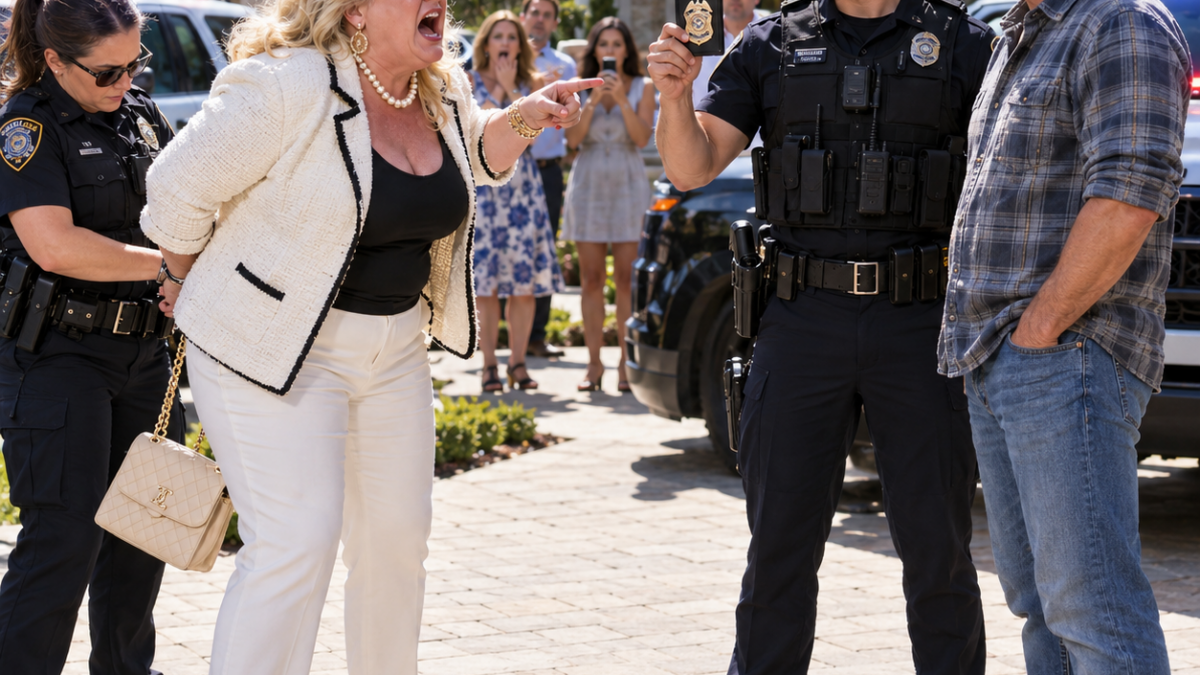
The HOA president called 911 because she thought enough police cars in my driveway would finally scare a grieving widower into surrendering his own home. She had spent six months inventing violations, threatening fines, filing complaints, and turning ordinary things like my cedar fence and Christmas lights into evidence that I was somehow dangerous to the neighborhood. What she didn’t realize was that one of the officers walking toward her already knew exactly who I was—and had been calling me Dad for twenty-nine years.
My name is Marcus Torres.
I’m sixty-one, a retired union electrician, father of three, and until last year, husband to the best woman I ever knew.
Sarah and I bought our ranch house in Willowbrook Estates eight years ago.
She loved the place from the first afternoon we saw it.
Tree-lined streets.
A small playground.
A clubhouse nobody seemed to use.
Enough backyard for our golden retriever, Buddy.
Sarah called it our “quiet chapter.”
Cancer took her last spring.
Fast.
Too fast.
After she died, the house became both the hardest place in the world to live and the only place I couldn’t imagine leaving.
Her lavender soap was still in the bathroom cabinet.
Her coffee mug remained beside mine.
Buddy still lifted his head every evening when headlights passed outside, waiting for the woman who wasn’t coming home.
My children wanted me closer.
Alexis, my twenty-six-year-old daughter and nurse, offered her spare room until I figured things out.
Tyler, twenty-two and finishing engineering school, suggested I sell and buy something smaller.
And Cameron—my oldest—was the most persistent.
“Dad, you don’t have to prove anything by staying there.”
Cameron was twenty-nine and worked for the county sheriff’s department.
He had my stubbornness and Sarah’s ability to stay calm when everyone else lost their mind.
But I wasn’t staying to prove something.
I just wasn’t ready to leave the place where Sarah had expected to grow old.
For years, the HOA barely mattered.
Twelve hundred dollars annually.
Keep the lawn reasonable.
Don’t park a boat permanently in the driveway.
Don’t paint your house fluorescent orange.
Basic stuff.
Then Karen Whitfield turned community management into a personal religion.
She had been HOA president for six years, drove a spotless white BMW, carried a clipboard like it granted diplomatic immunity, and somehow found enough free time to measure grass with a ruler.
My first real problem with her began when I installed a four-foot cedar privacy fence so Buddy could use the backyard safely.
I read the rules first.
Pulled permits.
Used a licensed contractor.
Passed city inspection.
Section 4.2 clearly allowed fences of that height.
Karen arrived the next morning.
“This violates our aesthetic harmony standards.”
I handed her the bylaws.
“Four feet. Section 4.2.”
She barely looked down.
“Rules are subject to board interpretation.”
“You mean your interpretation?”
Her expression hardened.
“Seventy-two hours to correct it or five hundred dollars per day.”
That should have warned me.
Instead, I assumed she was just another bored neighborhood tyrant.
Then came the Christmas lights.
A violation for an “energy conservation standard” that didn’t exist.
Then Buddy supposedly violated a leash policy Karen had invented while her own cat wandered freely through everyone’s yards.
Then she demanded I use expensive landscaping contractors connected to people around her management network.
Every time I asked one simple question—
“Show me the rule.”
—Karen got angrier.
So I started documenting.
Security cameras.
Certified letters.
Inspection reports.
Meeting notices.
Emails.
And eventually financial records.
That was when the argument stopped being about my fence.
Three years of HOA statements showed tens of thousands of dollars paid to contractors connected to Karen’s husband’s family.
A $47,000 landscaping project nobody could find.
A $23,000 clubhouse renovation that looked like paint and light fixtures.
Violation fees flowing constantly into an association running dangerously low on money.
And insurance premiums that apparently hadn’t even been paid.
I called a backyard meeting.
Fourteen neighbors came.
Then more.
We compared letters.
Karen had been doing versions of the same thing to all of us.
That Saturday, I realized I wasn’t her problem.
We were.
And once Karen realized the neighborhood had started comparing paperwork, she made the worst decision of her entire six-year reign.
She picked up her phone.
Dialed 911.
And told police there was a violent disturbance caused by one dangerous resident.
Me.
PART 2
The emergency HOA meeting had begun at six o’clock on a Saturday evening.
By six twenty, Karen had already accused me of destabilizing Willowbrook, threatening property values, organizing residents against legitimate authority, and creating what she dramatically called “an atmosphere of escalating hostility.”
We were sitting in folding chairs.
Dorothy Malone had a calculator.
Linda Martinez had three legal pads.
Jerry Martinez had brought a thermos of coffee.
The most dangerous object anywhere near me was a stale oatmeal cookie sitting beside my elbow.
But Karen stood behind the folding table at the front of the clubhouse as if she were addressing Congress during a national emergency.
Then Dorothy finished presenting her audit.
And that was when Karen called 911.
“Police,” she said loudly into her phone. “I need officers at the Willowbrook Estates clubhouse immediately.”
Every head turned.
Linda quietly started recording.
Karen kept going.
“We have a riot situation developing.”
I looked around the room.
Forty-seven people.
Sitting down.
Nobody shouting.
Nobody threatening anyone.
Dorothy whispered, “Did she just say riot?”
“Yes.”
“She knows what a riot is, right?”
“Apparently not.”
Karen turned away from us, lowering her voice for several seconds before raising it again.
“One resident in particular has been organizing aggressive resistance and intimidating board members.”
She looked directly at me.
I laughed once.
Couldn’t help it.
That made her angrier.
“He’s laughing now. Yes. That’s him.”
Linda raised one finger toward me.
Don’t speak.
Good advice.
Karen finished the call.
Then folded her arms.
“The police will deal with this.”
Dorothy adjusted her glasses.
“With what?”
“Your coordinated disruption.”
“You called this meeting.”
“You people hijacked it.”
“You invited questions about community safety,” Dorothy said. “I explained where the community’s money went.”
“That audit is unauthorized.”
“It uses records residents are legally entitled to inspect.”
Karen slapped her palm against the table.
“This is exactly what I’m talking about!”
No one answered.
Her husband, Preston, sat beside her looking more uncomfortable by the second.
Preston was a commercial real-estate attorney.
For months, his law firm’s letterhead had appeared on violation notices Karen used to intimidate residents.
But now that real legal scrutiny had entered the room, he seemed to understand something his wife didn’t.
She had gone too far.
Again.
Then we heard sirens.
Karen smiled.
Not nervous.
Victorious.
That smile stayed on her face right up until three uniformed officers walked through the clubhouse door.
The lead officer was Sergeant Mike Alvarez, gray at the temples, twenty years in law enforcement, the kind of cop who looked exhausted before anybody spoke.
“We received a report of a disturbance involving threats of violence.”
He scanned the room.
People sat quietly.
Paperwork covered tables.
One elderly resident was knitting.
Alvarez frowned.
“Who called?”
Karen stepped forward.
“I did.”
She pointed at me immediately.
“That man has been organizing illegal resistance against the HOA.”
Alvarez looked at me.
Then at Karen.
“What does ‘illegal resistance’ mean?”
“He’s encouraging residents to reject valid community rules, refuse fines, harass board members, and challenge our legal authority.”
“Has anyone threatened you physically?”
Karen hesitated.
“He creates an intimidating atmosphere.”
“That’s not what I asked.”
Her face tightened.
Then the second officer turned from the doorway.
For one strange second, my brain still saw the boy who used to leave baseball gloves in my truck.
Then I saw the uniform.
The badge.
The confident posture.
Cameron.
My son.
He looked at me.
A tiny smile touched one corner of his mouth.
“Hi, Dad.”
The room went completely silent.
I swear even Karen stopped breathing.
Then Cameron added:
“What seems to be the problem here?”
Karen’s face lost color so quickly I almost felt sorry for her.
Almost.
She looked at Cameron.
Then at me.
Then back at Cameron.
“Dad?”
“Yes, ma’am.”
“You’re related to him?”
“He’s my father.”
Preston closed his eyes.
That told me everything.
Karen began stammering.
“This—this is inappropriate.”
Cameron’s expression became completely professional.
“You called law enforcement.”
“I didn’t know his son would respond.”
“Neither did I until dispatch gave the address.”
She turned toward Sergeant Alvarez.
“This is obviously a conflict of interest.”
Alvarez nodded.
“Which is why Detective Torres won’t make decisions involving allegations against his father.”
That mattered.
Cameron did not suddenly turn into some movie hero who could arrest anyone who annoyed me.
He stepped slightly back.
Alvarez stayed in charge.
Karen, however, couldn’t stop talking.
“Fine. Then you arrest him.”
“For what?”
“Threatening me.”
“What threat?”
She gestured toward the meeting.
“This!”
Alvarez stared.
“A financial presentation?”
“They’re trying to overthrow the board!”
Dorothy muttered, “We have elections, Karen.”
“Quiet!”
Karen snapped at her.
That was when Linda stood.
“Sergeant, my name is Linda Martinez. I’m a paralegal and Willowbrook resident. I have been recording this meeting since before Mrs. Whitfield called 911.”
Karen pointed at her.
“That recording is illegal.”
Linda smiled.
“No.”
She held up her phone.
“Would you like to hear the ten minutes immediately before the emergency call?”
Alvarez nodded.
Karen’s breathing changed.
Linda played it.
Dorothy calmly discussing financial records.
Residents asking questions.
Preston objecting.
Karen shouting.
No threats.
No violence.
No riot.
Just paperwork.
When the recording ended, Alvarez looked at Karen.
“You reported an active violent disturbance.”
“There was going to be one.”
“How did you know?”
“Because these people are angry.”
“Being angry isn’t a crime.”
“They hate me!”
A voice from the back said:
“We don’t hate you. We want the money explained.”
That was Ed Henderson.
Retired machinist.
Seventy-four.
One of the quietest men in Willowbrook.
Karen turned.
“You see? Threats!”
Ed looked genuinely confused.
“What threat?”
Alvarez rubbed his forehead.
Then Linda handed him a folder.
“This is also relevant.”
Inside were copies of false or unsubstantiated complaints Karen had filed with city departments, animal control, police, and other agencies over the previous months.
Seventeen city complaints against my property in one month alone.
False allegations of dangerous electrical work.
Noise violations.
Environmental contamination.
Aggressive dog behavior.
Physical threats.
Most had been investigated.
None had been substantiated.
Sergeant Alvarez flipped through the pages.
Then he looked at Cameron.
“Detective Torres.”
“Yes, Sergeant.”
“You familiar with any ongoing pattern here?”
Cameron chose his words carefully.
“I’m aware my father told me harassment had escalated. I have not participated in the HOA dispute.”
“Any prior police reports?”
“Yes, sir. At least one complaint alleging my father threatened Mrs. Whitfield was reviewed. Security footage contradicted the allegation.”
Karen interrupted.
“That footage is manipulated!”
Cameron looked at Alvarez.
Alvarez raised his hand.
“Mrs. Whitfield, please stop interrupting.”
Her eyes widened.
Nobody in Willowbrook spoke to Karen like that.
Not anymore.
I wish I could tell you this entire story started that evening.
It didn’t.
That clubhouse scene was the explosion.
The fuse had been burning for almost a year.
And to understand why Karen was terrified when Cameron walked through that door, you need to understand what she had done before she ever dialed 911.
It began with Sarah.
Or more accurately, with Sarah being gone.
My wife could soften any room she entered.
I was the electrician.
The practical one.
If a breaker tripped, I wanted voltage readings.
If the roof leaked, I wanted flashing inspected.
Sarah wanted to know whether everybody had eaten.
For thirty-four years, that combination worked.
Then one afternoon in February, she complained about abdominal pain.
By March, doctors were using words we didn’t want to understand.
By May, we were discussing treatment plans.
By the following spring, I was sitting beside a hospice bed holding the hand of the woman who had shared nearly my entire adult life.
The last thing she said clearly was:
“Don’t disappear after me.”
I knew what she meant.
She knew me.
She knew grief could turn me into a man who went to work, came home, locked doors, and spoke to nobody.
I promised.
Then I almost did exactly that.
For months, I moved through Willowbrook like a ghost.
Coffee.
Buddy.
Occasional work around the house.
Children visiting.
Sleep when sleep came.
I kept Sarah’s sweater over the back of the bedroom chair because moving it felt like betrayal.
Karen noticed my vulnerability before I did.
Maybe that’s unfair.
Maybe she simply noticed I wasn’t fighting back.
Either way, her campaign started five months after the funeral.
The fence.
I built it for Buddy.
The old dog was twelve.
His hips weren’t what they had been.
I wanted him to wander safely through the backyard without me following every step.
Before ordering a single board, I did what twenty-eight years as a union electrician taught me.
Read the specification.
HOA section 4.2.
Fences under four feet.
Cedar acceptable.
Rear-yard placement.
Proper setbacks.
No prior approval specifically required under the version distributed to residents.
City permit.
Contractor licensed.
Inspection passed.
Simple.
Until Karen arrived.
She measured the fence.
Forty-seven and three-quarter inches.
Then measured again.
Same result.
She looked disappointed.
“This fence is inconsistent with neighborhood character.”
“It’s cedar.”
“Exactly.”
I looked at the houses beside mine.
Two had cedar fences.
“Karen, section 4.2 says this is allowed.”
She tapped her clipboard.
“The board retains interpretive authority.”
“Where?”
“Excuse me?”
“Where does it say that?”
Her eyes narrowed.
“You don’t need to be combative.”
“I asked for a page number.”
“Seventy-two hours.”
“For what?”
“Correction.”
“What correction?”
“Removal or modification.”
“Of a compliant fence.”
“Five hundred dollars per day after the deadline.”
I laughed.
Wrong response.
Karen hated laughter more than disagreement.
She left.
Next morning, violation letter.
Then another.
Then a legal-looking notice with Preston’s law-firm logo.
That was my first clue there might be money behind the obsession.
But at the time, I was too tired to care.
I put the notices in a drawer.
The fence stayed.
Christmas changed that.
Sarah loved Christmas.
Our first year without her, Alexis insisted I decorate.
“Mom would haunt you if you leave the house dark.”
“Your mother didn’t believe in ghosts.”
“She’ll make an exception.”
So Tyler came over.
We outlined the roof with warm LEDs.
Wreath.
Garland.
Nothing spectacular.
I climbed down the ladder.
Karen arrived.
“Those lights are excessive.”
I looked at the Henderson house.
Inflatable Santa.
Reindeer.
Lights everywhere.
Then Karen’s.
A synchronized display that could probably guide aircraft.
“My lights?”
“Yes.”
“What rule?”
“Energy conservation standards.”
“Show me.”
She flipped pages.
Couldn’t.
“They’re being drafted.”
I stared.
“So you’re fining me under a rule that doesn’t exist yet?”
“Responsible residents cooperate with evolving standards.”
“Then start with your house.”
She followed my eyes across the street.
Her expression turned cold.
“You have until December twentieth.”
That night, something in me woke up.
Maybe Sarah whispering not to disappear.
Maybe simple exhaustion.
I created a group message.
WILLOWBROOK RESISTANCE.
Twelve neighbors.
Tuesday.
Six p.m.
Turn on every legal Christmas light you own.
At six sharp, twelve houses lit up.
Kids cheered.
Someone made cocoa.
Buddy wore a red scarf Alexis tied around his neck.
For the first time since Sarah died, I laughed with neighbors.
Not politely.
Actually laughed.
Then Karen’s BMW rounded the corner.
Slowly.
Her face glowed red, green, and gold beneath the lights.
She couldn’t cite twelve houses without citing herself.
That night, I understood something.
Bullies need isolation.
Community is inconvenient.
Karen retaliated through the city.
She reported my Christmas lights as a fire hazard.
Inspector Rick Gonzalez arrived.
I’d worked with Rick on commercial jobs years earlier.
He checked the wiring.
GFCI protection.
Exterior-rated cables.
Load.
Connections.
Then he laughed.
“Marcus, yours may be the safest Christmas display in the county.”
“Tell Karen.”
He looked toward her house.
“She called?”
“Who else?”
Rick lowered his voice.
“You’re the fourth complaint I’ve responded to from this neighborhood.”
“Against me?”
“No. Different houses.”
“Same complainant?”
He didn’t answer directly.
Didn’t need to.
That was when I started saving everything.
January brought Buddy.
Karen created a so-called Leash Law Enforcement Committee.
Membership:
Karen.
Martha Pembroke.
That was apparently enough to regulate every dog in Willowbrook.
Buddy’s violation said:
AGGRESSIVE OFF-LEASH BEHAVIOR.
His crime:
Walking from the porch to the newspaper while I stood ten feet away.
Karen demanded a three-hundred-dollar fine plus a four-hundred-dollar behavioral assessment.
I asked:
“Where is this rule?”
“Safety addendum.”
“Give me a copy.”
“It’s available through management.”
“I asked them.”
“They’re updating it.”
“Meaning it doesn’t exist?”
“Marcus, your hostility is becoming concerning.”
I pulled out my phone.
Started recording.
“Please continue.”
Her face turned red.
That weekend, I installed cameras.
I wasn’t going to argue from memory anymore.
Monday morning, Karen walked onto my property.
Camera one captured her measuring Buddy’s chain.
Camera two captured her photographing his bowl.
Camera three captured her stepping six feet beyond the sidewalk boundary to inspect the yard.
Meanwhile her Persian cat, Snowball, wandered across three other properties completely unrestricted.
The absurdity almost made me grateful.
Then Preston sent a cease-and-desist demanding removal of my cameras.
My union attorney read it.
Then laughed.
“Do your cameras look into private bedrooms?”
“No.”
“Bathrooms?”
“No.”
“Neighbors’ fenced yards?”
“No.”
“They cover your property?”
“Yes.”
“Keep them.”
Then he found something interesting.
Preston’s firm represented the HOA management company.
The management company received a percentage of violation collections.
Now the harassment had a revenue stream.
February brought animal control.
Karen reported Buddy as dangerous.
Officer came.
Buddy rolled over for a belly rub.
Investigation closed.
Other dog owners started talking.
Johnson family.
Malone family.
Three others.
Same fabricated policies.
Same fines.
Same threats.
We met in the park.
Dogs running in snow.
People comparing paperwork.
That was the first time I realized Karen had separate versions of fear for different people.
Dog owners believed they were the only targets.
Holiday decorators believed the same.
Work-truck owners.
Gardeners.
Retirees.
Everyone felt individually defective.
Karen’s greatest skill wasn’t enforcement.
It was keeping people from comparing notes.
Once we did, her system began cracking.
March brought landscaping.
“Spring Beautification Standards.”
Capital letters.
Approved flowers.
Approved mulch.
Approved irrigation.
Approved vendors.
Minimum estimated cost around $2,300.
I read the vendor list.
Three companies.
Premium pricing.
One name familiar from Preston’s professional network.
I visited Jerry Martinez at the local nursery.
He looked at the list.
“Half of these plants don’t belong in Michigan.”
“That’s what I thought.”
“These irrigation requirements are ridiculous.”
“The city offers rebates for low-water native landscaping.”
Jerry laughed.
“So Karen is demanding residents spend more money to violate the spirit of city water policy.”
“Looks that way.”
We designed my yard around native wildflowers, prairie grasses, and local shrubs.
After rebate:
$380.
Eight families joined.
Bulk order.
Lower price.
Saturday became community planting day.
Kids dug holes.
Adults spread mulch.
Buddy supervised.
Sarah would’ve loved it.
Then Karen appeared with Preston and a management-company representative.
She rejected the plan.
“Native plants create an inconsistent aesthetic.”
I looked at the blooming flats.
“These are literally plants from here.”
“Residents must use approved vendors.”
“Why?”
“To ensure professional standards.”
Jerry stepped forward.
“I’ve run the local nursery twenty-three years.”
Karen ignored him.
That made Jerry smile.
Never insult a small-business owner in front of customers.
By the next week, the city water office had received copies of Karen’s standards.
They contacted the association regarding municipal restrictions.
They also discovered violations involving Karen’s own sprinkler schedule.
The woman manufacturing fake rules got a real municipal notice.
She did not find the irony educational.
April was when Alexis changed everything.
Sunday dinner.
Spaghetti.
Alexis complaining about hospital privacy rules.
“If healthcare has this much record access,” she said, “doesn’t your HOA have to show where the money goes?”
I stopped chewing.
“What?”
She shrugged.
“It’s an association. Members pay money.”
Tyler looked up from his plate.
“That sounds obvious.”
It was.
Sometimes the obvious thing doesn’t occur to you until your daughter says it over pasta.
Next morning, I submitted a formal request for financial records.
Three years.
Vendor contracts.
Board minutes.
Major expenses.
Insurance documentation.
Karen called within four hours.
“The board has determined these records are protected.”
“By what?”
“Executive privilege.”
I waited.
“What?”
“Executive privilege.”
“You’re an HOA president, Karen.”
“Board members have fiduciary responsibilities.”
“Which is exactly why members can inspect financial records.”
“You are abusing procedural rights to harass volunteers.”
“Send the documents.”
“No.”
My attorney sent a formal demand.
The records arrived Friday.
A thick envelope.
I opened it at the kitchen table.
By midnight, I knew Karen had a much bigger problem than my fence.
The HOA was burning through money.
Fast.
A $47,000 landscaping contract.
Prestige Grounds Management.
Related to Preston’s brother-in-law.
I walked the common areas.
No work matching the invoice.
Clubhouse renovation:
$23,000.
What had changed?
Paint.
Some fixtures.
Maybe several thousand dollars if someone overcharged aggressively.
Not twenty-three.
Another vendor.
Another relative.
Then came management commissions tied to fines.
Every violation Karen generated created money for the management company.
That helped explain the enthusiasm.
But the most frightening discovery was the insurance.
The association’s liability policy had lapsed after unpaid premiums.
For months.
A neighborhood with playgrounds, sidewalks, a clubhouse, and common areas had been exposed while Karen spent energy creating fake fence emergencies.
I called Dorothy Malone.
Retired accountant.
She arrived the next morning.
Read silently.
Then asked:
“Do you have more?”
“All of it.”
She put on glasses.
“Make coffee.”
Four hours later, she sat back.
“Marcus.”
“Yeah?”
“Someone needs to audit this properly.”
“Bad?”
“Very.”
“Illegal?”
“Maybe. I don’t use that word until I’ve traced transactions.”
“Will you?”
“Yes.”
“Why?”
She looked at me.
“Because last year Karen fined my husband for leaving our garbage can visible for four hours.”
I laughed.
“That’s the reason?”
“No.”
She tapped the statements.
“This is.”
Fourteen neighbors met in my backyard.
That became the beginning of the end.
Dorothy.
Linda, a paralegal.
Jerry.
The Hendersons.
The Malones.
Several dog owners.
Families I’d barely spoken to before.
I spread the records over the patio table.
“This isn’t about hating Karen.”
A few people laughed.
“I’m serious.”
I looked around.
“We don’t know yet whether every suspicious payment is criminal. We know we deserve answers.”
Dorothy explained the numbers.
Linda explained the meeting requirements.
Jerry explained vendor pricing.
Then everyone started producing violations.
Christmas lights.
Dogs.
Landscaping.
Parking.
Noise.
Garbage cans.
Sprinklers.
Fence stains.
Mailboxes.
One couple had paid $2,400 in six months.
An elderly woman had paid nearly $5,000.
People were furious.
I understood.
Then one neighbor said:
“Stop paying everything.”
Linda raised her hand.
“Careful.”
The room quieted.
“Do not stop paying legitimate regular assessments without legal advice. Challenge disputed fines properly.”
That distinction saved us from making Karen’s lawyers’ job easier.
So we did it correctly.
Escrow where appropriate through counsel.
Formal disputes.
Record requests.
Petition for elections.
Insurance demand.
Attorney-general complaint.
No vigilante nonsense.
Paper.
Lots of paper.
Karen hated paper when someone else controlled it.
Dorothy’s audit identified significant unexplained expenditures.
Related-party contracts.
Inflated invoices.
Violation-fee dependence.
Potential self-dealing.
The state opened a review.
Our attorney advised patience.
Karen advised war.
She went online.
Called us extremists.
Said native gardens attracted vermin.
Called our meetings conspiracy sessions.
Then she filed a police report saying I’d threatened her physically.
That one scared me.
Not because I’d done anything.
Because false accusations can travel faster than corrections.
Cameron called.
“Dad.”
“Hey, kid.”
“Where were you Wednesday around four?”
“Home.”
“All afternoon?”
“Except groceries.”
“Got cameras?”
“Yes.”
He exhaled.
“Good.”
“Why?”
“Someone says you threatened them near the mailboxes.”
I went cold.
“Karen.”
“I can’t discuss details.”
“Cameron.”
“Dad.”
That voice.
Professional.
Sarah’s voice when she needed me to listen.
“Do not contact her.”
“I wasn’t going to.”
“You were.”
“Considering.”
“Don’t.”
The cameras showed I hadn’t been near the mailboxes.
Report weakened.
Then city complaints accelerated.
Seventeen in one month.
Rick Gonzalez finally called.
“She’s abusing departments now.”
“Can the city stop accepting them?”
“Complaints still have to be assessed.”
“So she can waste everybody’s time forever?”
“No.”
His tone changed.
“Patterns matter.”
Good.
We had patterns.
Then Karen hired a private investigator.
The investigator’s name was Jake Mitchell.
Former police officer.
Fifteen years.
Karen apparently hired him to find dirt on me.
Financial trouble.
Criminal history.
Divorce secrets.
Anything.
Instead, Jake noticed Cameron’s name connected to prior reports.
He called my son.
“Detective Torres, somebody hired me to investigate your father.”
Cameron immediately documented the contact.
Jake had researched Karen herself before accepting deeper work.
Smart PI.
What he found bothered him.
Similar disputes.
Previous communities.
Neighbors targeted with escalating complaints.
Private investigators used after resistance.
Nothing alone proved a grand conspiracy.
But Jake declined to participate and offered lawful records he had located.
Karen’s pattern stretched farther than Willowbrook.
When Cameron told me, I felt strange.
Vindicated.
And tired.
“How many people has she done this to?”
“Don’t know.”
“Can you investigate?”
“Not because she’s bothering you.”
“I know.”
“If there are crimes, proper units handle it.”
“I know.”
He paused.
“Dad?”
“Yeah?”
“Mom would tell you to sleep.”
I looked at the stack of papers on the kitchen table.
“Your mother was bossy.”
“Correct.”
I went to bed.
June brought Karen’s most absurd plan yet.
She wanted the HOA to vote me out of the neighborhood.
Not remove me from the board.
I wasn’t on it.
Not fine me.
Not sue me.
Force me to leave Willowbrook.
The meeting notice called it an:
EMERGENCY COMMUNITY SAFETY SESSION.
I read it three times.
Then called Linda.
“Can they do this?”
“No.”
“You didn’t even look.”
“HOAs do not get to vote an owner out of a deeded house because the president dislikes him.”
“What if I’m apparently an extremist?”
“Then perhaps the Constitution explodes.”
I laughed.
Linda continued.
“We attend.”
“Why?”
“Because Dorothy’s audit is finished.”
I stopped laughing.
“How bad?”
“Bring coffee.”
The clubhouse filled.
Forty-seven residents.
Largest meeting Willowbrook had ever seen.
Karen had posters.
Photos of my fence.
Christmas lights.
Native garden.
Buddy.
Apparently my golden retriever deserved his own slide.
The title:
PATTERN OF COMMUNITY DEFIANCE.
Karen spoke for twenty minutes.
I stayed quiet.
She called me disruptive.
Hostile.
Dangerous.
Manipulative.
She accused me of organizing illegal resistance.
Then Linda stood.
“Before any vote, residents need information about the association’s finances.”
Karen snapped:
“Not on the agenda.”
Dorothy stood next.
“Then put it on the agenda.”
“No.”
Dorothy lifted the audit.
“Forty-seven thousand dollars paid for landscaping that doesn’t appear to have been performed.”
Murmurs.
“Twenty-three thousand for clubhouse renovation costs inconsistent with visible work.”
More murmurs.
“Vendor relationships involving relatives of the president’s household.”
Preston stood.
“Careful.”
Dorothy looked at him.
“I’m reading invoices.”
He sat.
Then:
“Insurance premium unpaid.”
The room exploded.
Karen shouted:
“Enough!”
Dorothy continued.
“Violation fee revenue increased dramatically at the same time association finances deteriorated.”
Karen grabbed her phone.
I thought she was calling Preston’s office.
Instead:
Now we were back where this part began.
Sergeant Alvarez holding the folder.
Cameron standing several feet behind him.
Karen unraveling.
Alvarez asked:
“Mrs. Whitfield, did anyone threaten physical violence tonight?”
“Yes.”
“Who?”
She pointed at me.
“What did he say?”
“He’s been organizing people against me.”
“Tonight.”
Silence.
“What did Mr. Torres say tonight that you interpreted as a threat?”
Karen looked around.
I’d barely spoken.
“His presence is intimidating.”
Alvarez nodded slowly.
“Presence isn’t a threat.”
“This is unbelievable.”
She pointed toward Cameron.
“His son is influencing you!”
Alvarez looked at Cameron.
“Detective Torres has said almost nothing.”
“He shouldn’t even be here!”
“That may be correct for investigative decisions involving his father. We’ll handle the conflict.”
Karen looked triumphant for one second.
Then Alvarez continued.
“But that doesn’t change what you told dispatch.”
Her triumph disappeared.
He asked Linda for the recording.
Listened.
Asked several witnesses separately.
Same answer.
No threats.
No riot.
No fight.
Then he contacted dispatch.
I couldn’t hear everything.
But I watched his face.
Karen had apparently described immediate danger.
Possibly violent residents.
Need for multiple units.
Details not supported by the room.
Alvarez returned.
“Mrs. Whitfield, I need you to step over here.”
She folded her arms.
“No.”
“Ma’am.”
“I know my rights.”
“Then please exercise them while following lawful instructions.”
Preston stood.
“My wife will not answer further questions without counsel.”
Alvarez nodded.
“That’s her right.”
Then another officer spoke quietly with him.
Linda handed over documentation of prior reports.
A city official had already flagged repeated false or baseless complaints.
A prior police report involving me had contradicted available video.
Karen’s own call that night had been recorded by 911.
Forty-seven witnesses heard her describe a violent situation that wasn’t occurring.
Alvarez made the decision.
Not Cameron.
That distinction mattered to me.
“Mrs. Whitfield, you’re being detained regarding suspected false reporting and misuse of emergency services.”
Karen stared.
“You can’t.”
Alvarez stepped closer.
“I can.”
Then the handcuffs came out.
Karen’s face twisted toward Cameron.
“This is because of you!”
My son remained still.
“No, ma’am.”
Then he said the sentence I will remember forever.
“You called us.”
No smile.
No victory lap.
Just fact.
Karen turned toward me.
I wish I could say I had the perfect line ready.
I didn’t.
I looked at her and felt something unexpected.
Sadness.
Months of rage had brought her here.
But nobody had forced her to call.
Nobody made her invent rules.
Nobody made her file false complaints.
Nobody made her misuse association money if the audit proved she had.
She had constructed the road herself.
Tonight she had simply reached the end of it.
Alvarez read her rights.
Preston followed outside.
The clubhouse doors closed.
And Willowbrook became quieter than I’d heard it in years.
Then Buddy barked outside.
Somebody laughed.
The spell broke.
Cameron remained only long enough to ensure supervisors knew the relationship and that he would not be involved in processing Karen’s case.
Before leaving, he came over.
“You okay?”
I nodded.
“You?”
“Dad, I respond to worse every week.”
“Your mother would still ask.”
His face softened.
“Yes.”
I hugged him.
Uniform and all.
When he was eight, Cameron used to run through this same neighborhood carrying a plastic police badge Sarah bought him at a toy store.
He’d arrest Tyler for stealing cookies.
Now he was a real detective.
I pulled back.
“Proud of you.”
He nodded.
Then:
“Go home.”
“You sound like your mother.”
“Thank God.”
He left.
That line stayed with me all night.
Karen’s arrest did not instantly solve the financial case.
In some ways, it made the real investigation begin.
Police dealt with false-report allegations.
State regulators examined HOA governance.
The attorney general reviewed financial complaints.
Auditors traced payments.
The management company retained counsel.
Preston’s law firm faced questions regarding its financial relationship to violation collections.
Everything became slower.
More serious.
Less theatrical.
That’s how real accountability works.
Dorothy’s preliminary review became a professional forensic audit.
Some suspicious payments had legitimate explanations.
Many didn’t.
The $47,000 landscaping contract was grossly inflated relative to documented work.
The $23,000 clubhouse project involved questionable billing.
Family-connected vendors had received contracts without transparent competitive review.
Violation collection revenue had become an important source of cash while ordinary finances deteriorated.
The management company’s percentage-based arrangement created ugly incentives.
Insurance had indeed lapsed.
That alone enraged residents.
We had been lectured about safety by people who failed to pay the policy protecting shared areas.
Then auditors found direct expenditures benefiting Karen’s household.
Not every accusation people whispered at barbecue tables was true.
Enough were.
The investigation expanded.
Preston suddenly stopped sending letters.
For months, I’d see his law-firm logo and feel my blood pressure rise.
Now:
Nothing.
His attorney contacted residents instead.
The state bar reviewed complaints involving conflicts and professional conduct.
His firm distanced itself from HOA work.
The management company terminated its Willowbrook contract.
Then it blamed Karen.
Karen blamed management.
Management blamed Preston.
Preston blamed accounting.
Accounting blamed bad records.
Everybody discovered the magic of selective memory.
Fortunately, banks remember.
So do emails.
So do invoices.
The emergency election happened sixty days later.
Karen was out.
Several board members resigned voluntarily.
Not all were corrupt.
Some had simply been passive.
That mattered.
We were angry enough to paint everyone with the same brush.
Linda stopped us.
“Failure to challenge bad leadership is not automatically criminal participation.”
Hard sentence.
Necessary.
Dorothy Malone was elected president.
She looked horrified.
“I don’t want this job.”
Everyone applauded.
I told her:
“That means you’re qualified.”
She glared at me.
“You were nominated too.”
“I withdrew.”
“Coward.”
“Correct.”
Linda became treasurer.
Independent management company.
Licensed.
Bonded.
No percentage of violation revenue.
No financial incentive to create fines.
Online budgets.
Published contracts.
Competitive bids.
Regular elections.
Actual meeting minutes.
All revolutionary concepts if you’d lived under Karen.
My disputed fines disappeared.
Fence fine.
Christmas lights.
Buddy.
Landscaping.
Returned where appropriate.
Some payments residents had made were refunded from recovered funds and insurance sources as investigations and settlements progressed.
My personal amount wasn’t enormous.
That wasn’t the point.
Mrs. Henderson received money back.
The Malones.
Ed.
Several retirees.
Then the former management company’s insurer ultimately funded a larger settlement after broader misconduct was established.
Willowbrook received $125,000 through one of those resolutions.
That money changed things.
But not in the way Karen would’ve expected.
Nobody installed a marble fountain.
Nobody built decorative gates.
We restored insurance reserves.
Repaired the playground.
Created an emergency fund.
And established the Sarah Torres Memorial Scholarship.
That one almost broke me.
Dorothy called me into the clubhouse.
Same clubhouse where Karen had been arrested.
A year earlier, I hated entering it.
Now there were kids’ drawings on the walls.
“What?”
Dorothy handed me a folder.
Board resolution.
SARAH TORRES MEMORIAL SCHOLARSHIP.
“For students pursuing trades, nursing, engineering, public service, or community-oriented careers.”
I read it twice.
“You didn’t ask me.”
“If we’d asked, you’d say no.”
True.
“Why Sarah?”
Dorothy softened.
“Because every time you talked about what community should be, you talked about her.”
I couldn’t answer.
“She dreamed of this neighborhood being safe for families.”
I looked down.
“You barely knew her.”
“No.”
Dorothy smiled.
“But I know you.”
My eyes burned.
I hated that.
“I don’t want her name connected to Karen.”
“It isn’t.”
Dorothy pointed toward the resolution.
“It’s connected to what we built afterward.”
That changed everything.
I signed the approval as a family representative.
First year:
Three scholarships.
One nursing student.
One electrical apprentice.
One public-administration major.
Alexis attended the ceremony.
Tyler came home from college.
Cameron wore civilian clothes.
We sat together.
For the first time since Sarah died, hearing her name spoken publicly didn’t feel like losing her again.
It felt like introducing her.
Three weeks after the new board took office, Dorothy organized a backyard gathering at my house.
She called it:
THE UNITY BBQ.
I called it terrible branding.
Thirty-eight families came anyway.
Burgers.
Potato salad.
Kids everywhere.
Buddy wandered without anyone measuring the distance between his collar and the sidewalk.
Jerry brought native plants.
The Hendersons brought lemonade.
Someone hung Christmas lights in June as a joke.
I laughed.
Then, for one second, I smelled something that reminded me of Sarah’s shampoo.
Probably somebody’s perfume.
Still stopped me cold.
Dorothy noticed.
“You okay?”
“Yeah.”
She didn’t ask more.
That was another thing I liked about Dorothy.
She knew silence could be kindness.
We started talking after that.
Not dating.
Not then.
Coffee.
Walks.
Neighborhood meetings.
She had lost her husband six years earlier.
I had lost Sarah barely more than a year before.
Grief recognizes grief.
There was no pressure.
One evening she came over while I was repairing a porch outlet.
Buddy slept beside us.
Fireflies moved across the yard.
She said:
“Sarah would be proud.”
I froze.
People say things like that because they mean well.
Sometimes it hurts anyway.
Dorothy saw it.
“Sorry.”
“No.”
I sat down.
“I hope you’re right.”
“She’d be proud you fought.”
“Maybe.”
“She’d be more proud you didn’t become Karen.”
I laughed softly.
“That bar is low.”
Dorothy smiled.
“Still cleared it.”
Months passed.
Then one evening she reached for my hand.
I let her.
No dramatic music.
No feeling that Sarah had been replaced.
Nobody replaces thirty-four years.
Love after grief doesn’t erase love before grief.
It makes room beside it.
That took me a long time to understand.
Karen’s criminal case moved slowly.
She eventually pleaded guilty to multiple offenses connected to false reports, fraud-related conduct, and harassment.
Her final sentence included six months in county jail, probation, community-service obligations, restitution, and a lengthy prohibition against serving in community-association leadership.
Some neighbors thought six months was too little.
Others thought losing everything around her mattered more.
I didn’t spend much time debating it.
The sentence belonged to the court.
What mattered to me was simple:
She couldn’t run Willowbrook.
She couldn’t send me five-hundred-dollar-a-day threats.
She couldn’t weaponize 911 against neighbors without consequence.
She couldn’t hide behind the title president anymore.
Preston faced professional discipline.
His law license was suspended for a period.
Financial penalties followed.
He lost association-management clients.
The house went up for sale eight months later.
I noticed the sign while walking Buddy.
FOR SALE.
That felt strange.
For months, Karen had tried to convince me I was the resident who needed to leave.
Now movers were carrying boxes out of her house.
I expected satisfaction.
Instead, I looked away.
A young couple bought it.
Twins.
Two bicycles appeared on the driveway.
Then chalk drawings.
Then a basketball hoop.
The mother introduced herself.
“People keep telling us the old owner was… difficult.”
I laughed.
“Welcome to Willowbrook.”
That’s all she needed.
New people shouldn’t inherit old grudges.
Three previous communities eventually contacted investigators and reporters after our case became public.
Similar complaints.
Aggressive enforcement.
Selective targeting.
Questionable fees.
Not every allegation became a criminal case.
But the pattern showed Karen and Preston had brought versions of their tactics elsewhere.
That was one of the darkest realizations.
We had stopped something that other people hadn’t known how to stop.
I thought about how close I’d come to simply paying.
Fence?
Maybe five hundred.
Christmas lights?
Two hundred.
Buddy?
Seven hundred.
Landscaping?
A couple thousand.
Each individual demand was cheaper than war.
That’s how systems like Karen’s survive.
Every target calculates:
Is fighting worth it?
Usually, alone, the answer feels like no.
Together, the math changes.
The management-company settlement became part of a broader investigation into practices across multiple associations.
Our records helped.
Others supplied theirs.
Hundreds of families eventually benefited from recoveries and reforms tied to multiple matters.
People called me a hero.
I hated that.
Dorothy didn’t.
She thought it was funny.
“You organized everyone.”
“We organized ourselves.”
“You started the group.”
“Christmas lights.”
“You requested records.”
“Alexis suggested it.”
“You built cameras.”
“Buddy deserved justice.”
Dorothy laughed.
Then she said:
“Maybe heroes are just people who keep doing ordinary things after everybody else gets tired.”
I looked at her.
“That sounds like principal nonsense.”
“I’m an accountant.”
“Even worse.”
I began volunteering at the high school trade program.
Electrical safety.
Basic residential circuits.
Tools.
Apprenticeships.
The first day, sixteen teenagers stared at me as if I were about to lecture them on ancient history.
I held up a burned outlet.
“This can kill you.”
Attention achieved.
We talked grounding.
Breakers.
GFCIs.
Load calculations.
Lockout procedures.
One kid asked:
“Were you really the guy whose son arrested the HOA lady?”
Teenagers.
I sighed.
“My son did not personally decide to arrest her.”
“But he was there?”
“Yes.”
“Did she freak out?”
“Yes.”
The room exploded in laughter.
I waited.
Then said:
“Now can we discuss why electricity is more dangerous than an HOA president?”
One kid raised his hand.
“Depends on the HOA.”
Fair.
Community Safety Day began the next spring.
Fire department.
Sheriff’s office.
CPR demonstrations.
Electrical safety.
Home security.
Animal control.
Cameron participated every year.
At his first event, a resident asked:
“What should we do if somebody keeps calling police with false reports?”
He answered professionally.
“Document facts. Preserve video if you have it. Don’t retaliate. Let investigators establish patterns.”
I stood in the back.
Proud.
Then he added:
“And if the complainant happens to be your father’s HOA president, request a supervisor.”
Everyone laughed.
He finally allowed himself that joke.
The new board rewrote nothing secretly.
Every proposed rule went to residents.
Comment period.
Vote where required.
Publication.
Plain-language summary.
Sometimes painfully slow.
One proposed parking policy took four meetings.
Karen would have resolved it in fifteen minutes.
That’s exactly why four meetings were better.
Freedom is inefficient.
So is democracy.
Efficiency becomes dangerous when only one person decides where everyone else is going.
Buddy lived another two years.
He slowed.
Slept more.
One October morning, he couldn’t stand.
I knew.
So did he.
Alexis came.
Tyler drove from campus.
Cameron arrived in plain clothes.
Dorothy stayed beside me.
We said goodbye in our backyard.
Inside the fence Karen had hated.
Buddy rested his head on my leg.
Same way he’d done after Sarah died.
When he was gone, the yard felt impossibly large.
I buried his collar beneath the maple tree.
Cameron stood beside me.
“Mom liked that dog more than us.”
“Definitely.”
Alexis slapped his arm.
We laughed while crying.
That is grief too.
I considered removing the fence after Buddy died.
Didn’t need it anymore.
One Saturday I stood outside measuring a damaged cedar board.
Dorothy came over.
“Replacing it?”
“Thinking.”
“About removing it?”
“Yes.”
She looked at the yard.
“What do you want?”
Not:
What would Sarah want?
Not:
What would Karen hate?
What do you want?
That question took me a minute.
“Keep it.”
“So keep it.”
I replaced the board.
The fence remained.
Not as defiance.
Just because I liked it.
That’s how I knew Karen had finally stopped controlling my decisions.
When I no longer made choices either to obey her or spite her.
I made them because they were mine.
The Sarah Torres Memorial Scholarship grew.
Local contractors donated.
Hospital staff contributed because of Alexis.
Sheriff’s deputies held a fundraiser because of Cameron.
Engineering companies joined after Tyler graduated.
Within three years, we supported nine students annually in various amounts.
One recipient became an electrician apprentice.
His name was Mateo.
He came to my house before starting his first job.
“Mr. Torres?”
“Marcus.”
“My dad didn’t work trades.”
“Okay.”
“I don’t know what to expect.”
I handed him my old insulated screwdriver set.
“Show up early.”
He nodded.
“Listen more than you talk.”
Another nod.
“Never work hot unless absolutely necessary and properly authorized.”
He laughed.
“Got it.”
“And never trust anyone who says, ‘That’s how we’ve always done it.’”
He smiled.
“HOA advice?”
“Electrical advice.”
“Same principle.”
Smart kid.
Tyler became an engineer.
Alexis moved into hospital leadership.
Cameron made lieutenant several years later.
At the ceremony, he pinned his new insignia while I watched.
Afterward, he hugged me.
“You remember that Willowbrook call?”
“How could I forget?”
“I hated being there.”
I looked surprised.
“Why?”
“Because I knew everyone was watching to see whether I’d protect you.”
“You did protect me.”
“No.”
He shook his head.
“I protected the process.”
That was Sarah talking through him.
He continued.
“If I’d tried to throw my badge around because you were my dad, Karen would’ve been right about one thing.”
“What?”
“That authority can be abused.”
I stood there speechless.
Then hugged him again.
“You got your mother’s brain.”
“And your hairline.”
“Watch yourself, Lieutenant.”
Years passed.
Willowbrook changed.
The clubhouse got repaired properly.
Real bids.
Real invoices.
The playground was resurfaced.
Native plants replaced thirsty ornamental beds.
The city gave us a conservation award.
Karen would’ve spontaneously combusted.
Dorothy made sure her own house followed every rule the board enforced.
That became her principle.
“If I won’t accept it at my house, I shouldn’t vote to impose it on yours.”
Simple.
Effective.
She served two terms.
Then stepped down voluntarily.
At the final meeting, residents applauded.
She hated it.
I loved it.
We went to dinner afterward.
She looked at me.
“You know what I want?”
“What?”
“Never attend another HOA meeting.”
I raised my glass.
“Finally, something we agree on.”
Eventually, Dorothy and I married.
Small ceremony.
Backyard.
No elaborate decorations.
Alexis stood beside her.
Cameron beside me.
Tyler handled music badly.
Before the ceremony, I went into the bedroom.
Sarah’s photograph still sat on the dresser.
It always would.
I touched the frame.
“Hope this is okay.”
I knew how irrational that sounded.
But grief isn’t a courtroom.
You don’t need evidence for every conversation.
Then I walked outside.
Dorothy was waiting beneath the maple tree.
We weren’t replacing anything.
We were continuing.
That’s what Sarah meant when she told me not to disappear.
It took me years to understand.
At the reception, Cameron made a toast.
“My dad has always had a complicated relationship with authority.”
People laughed.
“He spent twenty-eight years as a union electrician arguing with supervisors, inspectors, contractors, project managers…”
“Accurately,” I interrupted.
More laughter.
Cameron continued.
“Then he retired and somehow found the one HOA president in Michigan who could provide him full-time employment.”
Dorothy nearly spilled her champagne.
“But what I learned watching him is that he didn’t win because he was louder than Karen.”
Cameron’s voice softened.
“He won because he kept records, found people who were being treated the same way, and refused to become what he was fighting.”
I looked toward Sarah’s three children.
My throat tightened.
Cameron raised his glass.
“To Dad.”
Everyone drank.
Then he added:
“And to Mom, who would’ve told him to stop arguing months earlier.”
That broke me.
Perfect.
People still tell the story wrong.
They say:
“Karen called police on Marcus, but didn’t know his son was a detective, and his son arrested her.”
Good headline.
Not exactly the truth.
Cameron’s presence shattered Karen’s confidence.
Absolutely.
Watching her realize the officer she expected to intimidate me was my son?
Unforgettable.
But Cameron didn’t arrest Karen because he was my son.
A supervising officer handled the decision.
The evidence mattered.
The false report mattered.
The witnesses mattered.
The recorded 911 call mattered.
The documented pattern mattered.
That truth makes the story better, not worse.
Because if justice depended on having a son with a badge, most people would be helpless.
It doesn’t.
It depends on process.
Evidence.
People willing to speak.
Officials willing to listen.
Cameron being there gave me one proud father’s moment.
But Willowbrook saved itself.
I think about Sarah most mornings.
Not with the sharp pain I felt after she died.
Grief changes shape.
Her mug still exists.
Dorothy doesn’t mind.
Some of Sarah’s Christmas ornaments still go up.
Dorothy adds hers.
That’s life now.
Layers.
Not replacements.
Every December, Willowbrook does the synchronized light night.
The tradition started as rebellion.
Now it’s celebration.
Nobody measures wattage.
Nobody invents energy rules.
Families donate canned food.
Kids drink cocoa.
The first year after Karen left, I almost didn’t participate.
Then Cameron showed up with lights.
“Mom would haunt you.”
“That line belongs to Alexis.”
“Family property.”
We decorated.
At six p.m., dozens of houses lit together.
For a moment, I saw Sarah beside me.
Not literally.
Just memory.
Warm.
Alive.
Home.
The fence still stands.
Forty-seven and three-quarter inches.
I know because one summer Tyler measured it as a joke.
“Dad.”
“What?”
“It’s under four feet.”
“I know.”
“Thought you’d want reassurance.”
I threw a work glove at him.
The cedar has weathered gray now.
Looks better.
Karen wanted me to tear it down because it represented defiance.
I kept it because Buddy used it.
Because Sarah leaned against it while gardening.
Because my grandchildren will probably play behind it one day.
That is the problem with bullies who reduce everything to compliance.
They miss meaning.
A fence isn’t always a fence.
A Christmas light isn’t always electricity.
A garden isn’t always landscaping.
A house isn’t just square footage.
Rules matter.
But people matter first.
Good rules understand that.
Bad leaders forget.
The final paperwork from Karen’s case arrived years after the clubhouse arrest.
Restitution complete.
Probation completed.
Board prohibition still part of the formal consequences for its term.
I read the notice.
Then shredded my personal copy.
Not the official record.
Just the paper in my house.
Dorothy watched.
“Symbolic?”
“Decluttering.”
“Liar.”
“Little symbolic.”
She smiled.
I walked outside.
The neighborhood sounded normal.
Lawn mower.
Kids.
Dog barking.
Someone hammering.
No heels clicking down the sidewalk with a clipboard.
That sound had once made my stomach tighten.
Now I barely remembered it.
Healing is strange.
Sometimes you don’t notice fear has left until you try to find it.
One evening, Cameron and I sat on the porch.
He was off duty.
No uniform.
Two coffees.
I asked:
“What did you think when you walked into that clubhouse?”
He laughed.
“You really want to know?”
“Yes.”
“I thought: Dad is absolutely going to make this worse by saying something sarcastic.”
I stared.
“That’s your memory?”
“Primary concern.”
“Not Karen?”
“Oh, Karen was obviously melting down.”
“Thanks.”
“But you had that look.”
“What look?”
“The one Mom used to stop with one eyebrow.”
I laughed.
“Fair.”
Then he grew serious.
“I was proud of you.”
“Why?”
“Because you didn’t make it about me.”
“What do you mean?”
“You could’ve said, ‘That’s my son, you’re finished.’”
“I considered it.”
“I know.”
“Family trait.”
Cameron smiled.
“But you let Alvarez handle it.”
“I trust him.”
“You trusted the system after somebody spent months abusing it.”
That gave me pause.
“I trusted people inside the system.”
He nodded.
“That’s probably the difference.”
Yes.
Systems are tools.
People decide whether to use them properly.
Karen used the HOA like a weapon.
She used city complaints like weapons.
She used 911 like a weapon.
The answer wasn’t destroying every institution.
It was returning them to their purpose.
Community association:
Manage shared responsibilities.
Code enforcement:
Protect safety.
Police:
Respond to actual danger.
Boards:
Serve members.
Lawyers:
Apply law ethically.
Simple on paper.
Hard in life.
Sometimes neighbors ask whether I’d ever join another HOA if I moved.
I tell them:
“Depends.”
That surprises them.
Not all associations are Karen.
Not all rules are tyranny.
Shared roads cost money.
Stormwater systems require maintenance.
Pools need insurance.
Common property needs governance.
The problem isn’t neighbors agreeing on responsibilities.
The problem is when temporary authority becomes personal power.
When questions become disloyalty.
When fines become revenue strategy.
When enforcement becomes retaliation.
When leaders stop seeing residents and start seeing subjects.
That’s when ordinary people need to start comparing notes.
The most important moment in our story wasn’t Cameron showing his badge.
It wasn’t Karen’s arrest.
It wasn’t Dorothy’s audit.
It happened earlier.
In my backyard.
Fourteen folding chairs.
Coffee.
Neighbors holding violation letters.
One by one, saying:
“She did this to me too.”
That sentence destroyed Karen’s real power.
She did this to me too.
Isolation ended.
Shame ended.
Secrecy ended.
Once we knew the pattern, none of us could be convinced we were uniquely unreasonable anymore.
The money followed.
The lies followed.
The police reports followed.
Everything became understandable after that.
Sarah wanted Willowbrook because she dreamed of neighbors looking after one another.
For years, I thought her dream had failed.
Turns out we had confused neat lawns with community.
Karen cared deeply about neat lawns.
Perfect holiday timing.
Approved flowers.
Proper garbage-can placement.
She could measure every blade of grass.
But when Ed was scared about losing money, she exploited him.
When dog owners needed fair rules, she targeted them.
When residents asked about finances, she hid records.
That’s not community.
Community was Jerry bringing plants.
Dorothy auditing for free.
Linda spending nights reviewing bylaws.
Rick refusing to rubber-stamp false code complaints.
Neighbors showing up.
Cameron stepping back because he understood conflict of interest.
People choosing fairness even when anger would’ve felt better.
Sarah would’ve recognized that community.
I wish she’d seen it.
Maybe, in some way, she did through our children.
That’s enough for me.
One summer evening, I walked to the clubhouse.
There was a new plaque near the entrance.
WILLOWBROOK COMMUNITY CENTER.
Nothing else.
No president’s name.
No board names.
No donor names.
Good.
Inside, kids were learning CPR during Community Safety Day.
Cameron stood beside a training dummy.
Alexis demonstrated first-aid basics.
Tyler had designed a simple emergency-power upgrade for the building.
Dorothy managed registration.
I handled electrical safety.
All three kids.
The life Sarah and I built.
Still showing up.
I stood in the doorway longer than necessary.
Dorothy came over.
“You okay?”
“Yeah.”
“You have that look.”
“What look?”
“The sentimental old man look.”
“Rude.”
She took my hand.
“Come inside.”
I did.
Sarah had told me not to disappear.
I finally hadn’t.
That is how Karen Whitfield actually lost.
Not when police cuffed her.
Not when Preston faced discipline.
Not when money came back.
She lost when the neighborhood no longer needed fear to organize itself.
She lost when people read the bylaws.
When residents requested records.
When homeowners stopped whispering separately.
When the board became transparent.
When children played outside without adults worrying whether somebody would photograph them for violations.
She lost when Willowbrook became the thing she always claimed she was protecting.
A real community.
The morning after Karen was arrested, I walked outside with coffee.
My cedar fence caught the sunrise.
Warm gold.
Buddy came slowly beside me.
His muzzle was gray.
I opened the gate.
He stepped onto the lawn.
Sniffed around.
Retrieved the newspaper.
Came back.
No Karen.
No clipboard.
No violation.
Just an old dog.
An old man.
A quiet street.
I sat on the porch.
Buddy rested his head against my leg.
For the first time in months, I didn’t check the cameras.
I didn’t open the group chat.
I didn’t read financial records.
I drank coffee.
That’s it.
People underestimate peace because nothing happens during peace.
That’s exactly why it’s precious.
Karen called police because she believed authority was a weapon she could borrow whenever her own power wasn’t enough.
She had used HOA letters.
Law-firm stationery.
Management-company notices.
City complaints.
Animal-control complaints.
Private investigators.
Social media.
Finally, 911.
Every system became another lever.
But systems leave records.
And records accumulate.
Karen’s biggest mistake wasn’t calling police on the wrong father.
It was believing nobody would ever place all those records beside each other.
When that finally happened, her story couldn’t survive.
Not because my son carried a badge.
Because forty-seven neighbors carried receipts.
Emails.
Photographs.
Videos.
Audit records.
Witness statements.
Inspection results.
And memories.
Cameron’s badge was the moment Karen understood things had changed.
The evidence was why they changed.
If Sarah had been alive, she probably would’ve stopped half this drama earlier.
She had a way of looking at me whenever my pride got ahead of my judgment.
One eyebrow.
That was enough.
During the worst months, I imagined that eyebrow constantly.
When I wanted to confront Karen.
When I wanted to tear up notices in her face.
When I wanted to post everything online before lawyers reviewed it.
When I wanted revenge more than resolution.
That invisible eyebrow probably saved me several times.
Years later, Dorothy asked why I never posted angry rants about Karen during the investigation.
I said:
“My wife trained me.”
She laughed.
Then she kissed me.
Life moves forward in strange, tender ways.
Today, my grandchildren know Sarah through stories.
Cameron’s daughter once asked:
“Grandpa, is Grandma Sarah the one the scholarship is named after?”
“Yes.”
“Was she famous?”
I smiled.
“No.”
“Then why is there a scholarship?”
“Because she cared about people.”
The little girl thought about that.
Then:
“So that’s enough?”
I looked at her.
“Yes.”
That’s enough.
Maybe that’s the final lesson.
You don’t need a title to matter.
Karen had president.
Preston had attorney.
Cameron had detective.
I had electrician.
Dorothy had accountant.
Sarah had wife, mother, friend.
The title wasn’t the character.
What people did with responsibility was.
Every December, I still hang warm white lights.
Nothing excessive.
Well.
Maybe more than before.
The first night they come on, neighbors gather outside.
Kids drink cocoa.
Someone inevitably asks whether we’re violating the old energy conservation rule.
Dorothy answers:
“Only if Marcus invents one.”
I tell her:
“I’m retired.”
She says:
“Exactly when people become dangerous.”
Then we laugh.
No one checks a clipboard.
No one times our lights.
No one measures the fence.
The glow reflects across the cedar boards.
For a moment, Sarah’s house feels exactly the way she wanted.
Warm.
Safe.
Alive.
If someone had told me the year after my wife died that a fight with an HOA president would eventually pull me back into my community, help expose financial misconduct, reconnect neighbors, create a scholarship in Sarah’s name, bring me closer to my children, and eventually lead me to love again, I would’ve told them to get off my porch.
Yet that’s what happened.
Not because Karen did us a favor.
She didn’t.
Harm doesn’t become good just because people survive it.
We built something good afterward.
That’s different.
That distinction matters.
Karen wanted me removed.
Instead, her own choices removed her from power.
She wanted my fence gone.
It’s still standing.
She wanted my Christmas lights dark.
They became a neighborhood tradition.
She called Buddy dangerous.
He became everybody’s favorite dog.
She tried to ban native plants.
They now fill community gardens.
She hid financial records.
Willowbrook now publishes budgets online.
She called police to silence a meeting.
That call became one more piece of the case against her.
And when she finally looked toward the officer she thought would rescue her authority and heard him say—
“Hi, Dad”—
I watched the certainty leave her face.
But I don’t remember that moment because my son embarrassed her.
I remember it because for months Karen had acted like badges, titles, letterhead, and authority automatically belonged to whoever shouted first.
That evening, she learned something much simpler.
Authority without truth eventually runs out of places to hide.
I stayed in Willowbrook.
I kept Sarah’s house.
I kept the fence.
I kept the lights.
Eventually, I let go of the anger.
And on quiet evenings, when Dorothy and I sit on the porch and children ride bicycles past the yard Sarah once chose for our family, I understand what winning actually looked like.
It wasn’t Karen in handcuffs.
It wasn’t money.
It wasn’t proving I was right.
It was the neighborhood becoming safe enough that nobody needed to be afraid of the person holding the clipboard anymore.
THE END.








