PART 2: HOA KAREN CALLED 911 ON MY WIFE FOR LOCKING OUR OWN CABIN GATE—THEN FROZE WHEN SHE LEARNED WHAT DIANA USED TO DO FOR A LIVING
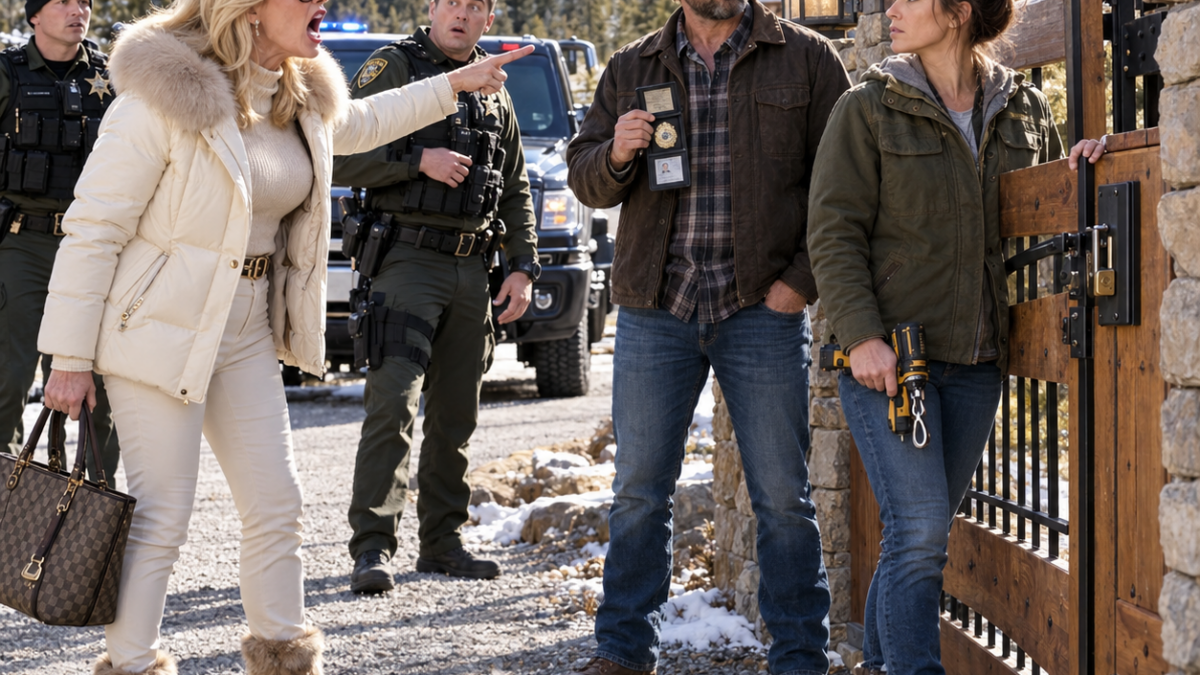
PART 2
I wish I could tell you I stayed as calm as Diana.
I didn’t.
The moment Deputy Craig asked my wife to prove she belonged on land we’d purchased with fifteen years of savings, something inside me went hot.
Diana had spent months finding that cabin.
She had negotiated the offer.
She had checked the taxes, insurance, title report, shoreline restrictions, septic inspection, electrical records, and every other scrap of paper connected to the place.
And now Lorraine Kesler stood in our driveway acting as if Diana were some criminal who had wandered onto private property and started installing locks for entertainment.
I stepped forward.
“Lorraine, you know damn well—”
Diana caught my arm.
“Marcus.”
Her voice was low.
I looked at her.
She didn’t squeeze hard, but there was a message in her hand.
Don’t react.
Document.
That was one of the differences between us.
I fixed electrical problems for a living.
If a breaker was bad, I replaced it.
If a wire shorted, I traced it until I found the fault.
Diana could sit across from someone lying through their teeth, smile politely, and wait three hours for the lie to contradict the paperwork.
It was probably why she had survived fifteen years in corporate fraud investigations without throwing anybody through a window.
I wasn’t sure I would have lasted fifteen minutes.
She opened the folder.
“Deputy, here’s the recorded warranty deed.”
Craig took it.
“Property survey.”
Another page.
“Title insurance commitment.”
Another.
“County tax record.”
Another.
“And this is the closing package. There is no mandatory homeowners association disclosed anywhere.”
Deputy Craig looked increasingly uncomfortable.
Lorraine opened her own leather case.
“Officer, this is the community master deed.”
She shoved a stack of papers toward him.
“And the emergency-access covenant. These properties have always been subject to association oversight.”
Diana held out her hand.
“May I see the recording information?”
Lorraine stared at her.
“The what?”
“The county recording number.”
“It’s on the document.”
“Where?”
Lorraine flipped pages.
Then another.
Then another.
No recording stamp.
No instrument number.
No clerk certification.
No book and page.
Nothing connecting that supposed master deed to our parcel.
Diana looked at Craig.
“A document claiming an interest in real property should be traceable to the public record.”
Lorraine’s face tightened.
“This woman is deliberately being difficult.”
Diana smiled.
“I’m deliberately asking whether the paper is real.”
I almost laughed.
Craig studied our deed again.
Then he looked toward the gate.
“Mrs. Patterson, did you install that lock?”
“Yes.”
“On the gate shown inside your surveyed boundary?”
“Correct.”
He looked at Lorraine.
“Mrs. Kesler, based on what I’ve been shown, the Pattersons have clear title to this property.”
Lorraine’s mouth fell open.
Craig continued.
“I don’t have a basis to order them to remove a lock from their own gate.”
“But she is obstructing emergency access!”
“Do you have a recorded easement?”
“I just showed you!”
“No, ma’am. You showed me a paper describing an easement. I’m asking whether it’s legally recorded against this parcel.”
Lorraine went silent.
Diana said, “It isn’t.”
Lorraine spun toward her.
“You don’t know what you’re talking about!”
My wife lifted her phone.
“I’m recording this interaction, Lorraine.”
That changed the woman’s face.
Only slightly.
But enough.
Her eyes flicked toward the phone.
Then back to Craig.
“This community has standards.”
Craig looked tired now.
“This isn’t a standards issue. It’s a property-rights issue.”
Lorraine stuffed her documents into the case.
“You people clearly don’t understand civilized lake living.”
She turned and stormed toward her SUV.
Tyler followed her, still holding the stupid badge that seemed to mean absolutely nothing.
As they drove away, Deputy Craig handed Diana our documents.
“You folks might want to talk to an attorney if this continues.”
“We intend to,” she said.
He nodded.
Then looked toward the security camera above the garage.
“You have the whole thing recorded?”
“Yes.”
“Keep it.”
That was exactly what we did.
After Craig left, I walked to the gate.
There were fresh scratches on the metal where Lorraine had put the bolt cutters against the lock.
Diana photographed them.
Close-up.
Wide shot.
Time stamp.
Then she took a ruler from the garage and photographed the marks again with scale.
“You really think that’s necessary?” I asked.
She looked at me.
“Yes.”
“You’re terrifying.”
“I know.”
We went inside.
Diana opened her evidence notebook.
Date.
Time.
911 response.
Attempted cutting of lock.
False claim of emergency easement.
Deputy confirmation of ownership.
Video file number.
Photograph numbers.
I poured coffee.
“You planning to prosecute the Nuremberg trials from our kitchen?”
She didn’t look up.
“Bad documentation loses good cases.”
I kissed the top of her head.
“Still terrifying.”
She smiled.
Then her laptop chimed.
An email from the sheriff’s department.
Our incident number.
Diana saved it.
That’s when she noticed Deputy Craig’s full name.
Craig Kesler.
She stopped typing.
“Marcus.”
“Yeah?”
“Look.”
I leaned over.
“Kesler.”
She nodded.
“Could be coincidence.”
“Small town.”
Diana searched public records.
A few minutes later, she found a social media photograph from a Christmas gathering.
Lorraine stood in front of a decorated tree.
One arm around a younger man.
Deputy Craig.
Caption:
PROUD AUNT.
I stared at the screen.
“Her nephew?”
“Looks like it.”
“He didn’t act like he was helping her.”
“No.”
“Actually, he shut her down.”
“Which may matter later.”
Diana saved the photograph.
Not because Craig had done anything wrong.
Because transparency mattered.
The more Lorraine turned official systems into personal weapons, the more carefully we needed to document who was connected to whom.
That evening, Mrs. Kowalski came over.
She was in her seventies, thin, with silver hair pulled behind her ears and hands that shook slightly when she held her coffee.
She lived two cabins down.
I’d seen her tending bird feeders.
She kept glancing toward the road.
“You folks should be careful.”
Diana sat across from her.
“Why?”
Mrs. Kowalski lowered her voice.
“Lorraine doesn’t stop.”
“Has she done this before?”
The older woman gave a humorless laugh.
“Three years.”
She looked at me.
“The Henderson family fought her when they first moved here. She sent them notices every week. Dock violations. Tree violations. Parking violations. Then utilities started showing up.”
“What do you mean?”
“Complaints.”
Her hands tightened around the mug.
“Water. Power. Septic. Everything.”
Diana leaned forward.
“What happened?”
“They paid.”
“How much?”
“Nearly two thousand dollars before she left them alone.”
I felt my stomach tighten.
Mrs. Kowalski continued.
“The Johnsons sold their place.”
“The retired couple?”
She nodded.
“They lost about thirty thousand dollars because they wanted out quickly.”
“Because of Lorraine?”
“They couldn’t take it anymore.”
Diana was silent.
Mrs. Kowalski looked toward our gate.
“You challenged her in front of police.”
“So?”
“So nobody does that.”
Her voice dropped.
“She’s going to come after you.”
I looked at my wife.
Diana closed the evidence notebook.
“Then we’d better be ready.”
Monday morning, our power went out.
Perfect weather.
No storm.
No wind.
Nothing else on the property lost service because nothing else existed on our service line.
I checked the panel.
No internal fault.
The meter had been disconnected remotely.
I called the utility.
A representative told me service had been suspended pending investigation of an alleged unauthorized connection to a shared community electrical system.
I stared at the phone.
“We don’t have a shared community electrical system.”
“That’s what the complaint says, sir.”
“Who filed it?”
“I can’t disclose that.”
I gave them our account number.
Permit information.
Meter number.
Inspection certificate.
Thirty years as an electrician suddenly became very useful.
Within three hours, a field technician arrived.
He examined the service entrance.
Looked at the county permit.
Checked the transformer.
Then frowned.
“This is a standard utility-owned service.”
“Exactly.”
“No HOA infrastructure involved.”
“Exactly.”
He restored power.
Before leaving, he gave me a service report stating that the complaint was unsupported.
Diana put it in the folder.
Tuesday morning, the water district arrived.
Anonymous report of improper well use.
Our well was legal.
The records were current.
Another inspection.
Another written report.
Wednesday morning, the health department showed up.
Anonymous septic complaint.
Our system had been inspected before closing less than two months earlier.
Still, the officer had to do his job.
He checked the tank.
Drain field.
Setbacks.
Everything.
No problem.
Three government visits in three days.
Diana stood at the kitchen window watching the health inspector leave.
“She’s weaponizing process.”
I knew exactly who she meant.
“Can we prove it?”
“Not yet.”
Across the lake, Lorraine stood on her deck with binoculars.
I saw them flash in the sun.
Diana saw them too.
“Subtle,” I said.
My wife opened the notebook.
“Time?”
I checked my watch.
“Eleven forty-two.”
She wrote it down.
Then she started looking backward.
County complaint records.
Utility records available through account disclosures.
Statements from previous residents.
Old property listings.
Anything she could lawfully obtain.
Patterns emerged.
The Hendersons had received multiple utility inspections within months of challenging Lorraine.
The Petrov family had their electrical service disrupted during a summer heat wave after Lorraine questioned their late-night medical equipment usage.
The Johnsons had endured septic complaints, dock complaints, property-code visits, and repeated fake “HOA hearings” before selling.
Every family shared one feature.
They had refused to pay Lorraine immediately.
Diana built a spreadsheet.
Column A: resident.
Column B: date of dispute.
Column C: Lorraine demand.
Column D: subsequent outside complaint.
Column E: fine.
Column F: payment.
Column G: result.
By midnight, the pattern filled the screen.
“This isn’t random,” I said.
“No.”
“What is it?”
Diana leaned back.
“A pressure system.”
She pointed at the spreadsheet.
“Start with something small. Tell somebody their gate is wrong. Their dock is wrong. Their mailbox is wrong.”
“Then charge them.”
“If they pay, great.”
“And if they don’t?”
“Increase the cost of resistance.”
She pointed at the inspection dates.
“Make them miss work. Frighten them. Convince them government agencies are watching them. Isolate them.”
I thought about the Johnsons selling at a loss.
“And eventually they surrender.”
Diana nodded.
“Or leave.”
I looked toward the dark lake.
“Why has nobody stopped her?”
My wife answered quietly.
“Because each family thought it was happening only to them.”
Thursday, I stopped at Henderson’s Hardware.
I needed PVC fittings.
The store smelled like lumber, machine oil, and coffee that had probably been sitting on the warmer since sunrise.
Pete Martinez owned the place.
Good man.
Early sixties.
Mustache.
Knew where every screw in the building lived.
I was comparing fittings when a man stepped beside me.
Jim.
Lorraine’s live-in boyfriend.
I’d seen him driving her SUV.
He picked up a paint can.
Studied it without looking at me.
“Marcus, right?”
“That’s right.”
“How are you liking lake life?”
“Depends on the day.”
He smiled.
“Your wife’s making things uncomfortable for people.”
I set down the fitting.
“Which people?”
“Everybody.”
“Everybody or Lorraine?”
Jim’s smile thinned.
“Look, nobody wants problems. Lorraine has been keeping this community together for years.”
“There’s no legal HOA.”
He finally looked at me.
“You city folks always think paperwork is everything.”
“I’m an electrician. Paperwork keeps buildings from burning down.”
His eyes hardened.
“Lake communities have their own way of doing things.”
“Apparently.”
“You should tell your wife to stop digging.”
I heard Pete moving closer behind the counter.
“What happens if she doesn’t?”
Jim leaned slightly toward me.
“Accidents happen around lakes.”
I didn’t move.
“Docks rot.”
He smiled.
“Boats develop leaks.”
Pete stopped pretending to organize bolts.
Jim continued.
“Septic systems back up. Electrical systems fail. Would be unfortunate if your dream place started costing more than you planned.”
There it was.
Not subtle.
Not ambiguous.
A threat.
I looked past Jim toward Pete.
He met my eyes.
Witness.
I turned back.
“You finished?”
Jim smiled.
“Friendly advice.”
“Sounded more like a warning.”
He picked up the paint can and walked away.
Pete waited until the door closed.
Then came around the counter.
“You want me to write down what I heard?”
I looked at him.
“Yes.”
He grabbed a receipt pad.
“Every word I can remember?”
“Every word.”
Diana was going to love Pete Martinez.
That evening, we spread documents across the kitchen.
Diana had found something new.
Lorraine’s septic records.
For eighteen months, county citations had documented problems at Lorraine’s own property.
Failed system components.
Unresolved maintenance.
Evidence of possible seepage risk.
I stared at the paperwork.
“The woman sending health inspectors after us has a failing septic system?”
“Yes.”
“The same woman claiming she’s protecting the lake?”
“Yes.”
“That’s almost too perfect.”
Diana highlighted a date.
“Her violations predate some of the complaints she filed against neighbors.”
“So she accuses everybody else of the exact thing she’s doing.”
My wife smiled.
“Projection is cheaper than repairs.”
She closed the folder.
“Labor Day weekend.”
“What about it?”
“We’re inviting people over.”
“For what?”
“Dinner.”
I narrowed my eyes.
“That isn’t your dinner face.”
“We need people talking to each other.”
There it was.
The beginning of a coalition.
We invited the Hendersons.
Mrs. Kowalski.
Mr. Petrov.
Pete Martinez.
A few other lake residents who had quietly mentioned trouble.
I pulled proper county fire permits because if Lorraine was going to accuse us of something, I wanted the paper waiting before she opened her mouth.
We grilled burgers.
Built a legal fire.
Watched the sunset turn the lake orange.
For the first hour, conversation stayed safe.
Fishing.
Weather.
Cabin repairs.
Then Diana asked one question.
“How much has Lorraine collected from everybody?”
Silence.
Mr. Henderson looked at his beer.
“From us?”
“Yes.”
He rubbed his jaw.
“About twenty-seven hundred dollars.”
His wife corrected him.
“Twenty-nine hundred.”
Mrs. Kowalski spoke next.
“Fifty a month.”
“For how long?” Diana asked.
“Almost two years.”
I stared at her.
“Why?”
The older woman looked toward the lake.
“My husband built the workshop before he died.”
Her voice softened.
“Lorraine said if I stopped paying, she’d report it as unsafe and force me to tear it down.”
Nobody spoke.
Mr. Petrov stared at the fire.
“I gave her four hundred.”
“Why?”
“She said the county could condemn my place over structural issues.”
“Did you have structural issues?”
“No.”
He rubbed one hand against his chest.
“I had a heart episode that night.”
My stomach turned.
He was a retired schoolteacher.
Quiet man.
The kind who apologized when other people bumped into him.
Lorraine had frightened him badly enough to send him to the hospital.
Diana opened her notebook.
“Would all of you be willing to give written statements?”
Henderson looked around.
“What happens if Lorraine finds out?”
Diana answered calmly.
“Then she finds out none of us are alone anymore.”
That changed the room.
You could feel it.
Fear is powerful when people experience it separately.
Put frightened people around the same table and fear begins turning into anger.
Around nine, headlights came up the road.
I already knew.
Lorraine.
Tyler beside her.
And Lorraine’s sister, Brenda.
Lorraine marched into our yard.
“This gathering violates community noise regulations.”
I almost admired the commitment.
Diana stood.
“We have the county fire permit and we’re within the local noise limits.”
She held up the paperwork.
Lorraine’s face tightened.
“The fire is unsafe.”
“The fire department approved the permit.”
“This is an HOA common area adjacent activity.”
“No, Lorraine. This is our private yard.”
Lorraine looked around the table.
Her expression changed when she saw the Hendersons.
Then Mrs. Kowalski.
Then Mr. Petrov.
She understood.
The people she’d kept separated were talking.
That frightened her more than our gate ever had.
“This meeting is clearly being organized to harass community leadership.”
Henderson stood.
“No, Lorraine.”
Everyone looked at him.
His voice shook.
“We’re talking about what you’ve been doing to us.”
Lorraine stared at him.
“You should think carefully before making defamatory statements.”
He almost sat down.
Then Mrs. Kowalski stood beside him.
“So should you.”
That was the first moment I saw Lorraine lose control of the neighborhood.
Only for a second.
But it happened.
She retreated.
“Expect formal enforcement.”
Then she left.
Nobody at the table moved until her taillights disappeared.
Diana looked around.
“Everybody save everything she sends.”
At two in the morning, Diana shook me awake.
“Marcus.”
I opened my eyes.
“What?”
“I smell smoke.”
That woke me instantly.
Thirty years of electrical work trained my body to react to those words before my brain fully caught up.
I jumped out of bed.
Orange light flickered beyond the bedroom window.
“Fire.”
I ran downstairs.
Outside, brush was burning between our property and the lake.
Not a campfire.
Not embers from our permitted fire.
The flames were thirty yards away from where we’d been sitting.
Moving fast through dry vegetation.
Diana called 911.
I grabbed the garden hose.
The smell hit me.
Gasoline.
I knew electrical fires.
Wood fires.
Insulation fires.
This wasn’t subtle.
Somebody had used accelerant.
The volunteer fire department arrived in eight minutes.
Those eight minutes felt like an hour.
We soaked grass.
Moved propane cylinders.
Dragged hoses.
The flames crawled toward the dock.
Firefighters finally knocked the main line down.
By three fifteen, only hot spots remained.
Fire Marshal Rodriguez walked the burned area with a flashlight.
He crouched near the origin.
Touched the soil.
Then stood.
“Don’t disturb anything.”
I looked at him.
“Why?”
“Possible accelerant.”
Diana folded her arms.
“I smelled gasoline.”
“So did I.”
He called another investigator.
Our security footage showed a dark figure moving near the shoreline around 1:47 a.m.
Not enough for identification.
But enough to establish someone had been there.
Then Pete Martinez called the next morning.
“I heard about the fire.”
“We’re okay.”
He paused.
“You need to know something.”
“What?”
“Tyler bought a five-gallon gas can yesterday.”
I stopped breathing for a second.
“Are you sure?”
“I sold it to him.”
“Did he say why?”
“Generator.”
Pete’s voice became quieter.
“He seemed nervous.”
I looked toward Diana.
She could tell from my face something had changed.
“Pete, would you tell investigators exactly what you just told me?”
“Absolutely.”
The lake war had stopped being absurd.
Somebody had tried to burn part of our property.
Possibly while we slept.
Lorraine had pushed too far.
And she had no idea what that fire was about to do to her.
By noon, three more families came forward.
The fire frightened them.
But it also destroyed the illusion that staying silent kept people safe.
Mrs. Kowalski told investigators Lorraine once threatened her shed.
Henderson produced bank statements showing payments.
Another couple showed fake compliance letters.
Mr. Petrov brought hospital paperwork showing cardiac treatment after one of Lorraine’s threats.
Diana created a private neighborhood group.
Eight families joined the first day.
Ten by the end of the week.
Everyone uploaded documents.
Receipts.
Photos.
Notices.
Emails.
Voice messages.
The evidence multiplied.
Then Diana did what Diana always did.
She followed the money.
She sent a certified demand for financial records from the so-called Whispering Pines Lake Homeowners Association.
Lorraine responded with a thick envelope.
That surprised me.
“Why would she send anything?”
“Because fraudsters often think complexity looks legitimate.”
The statements were beautifully formatted.
Income reports.
Reserve funds.
Maintenance expenses.
Professional services.
Landscaping receipts.
A claimed reserve balance of $32,000.
I would have believed it.
Diana didn’t.
She sat at the kitchen table with a calculator.
Ten minutes passed.
Then twenty.
She highlighted a line.
“Wrong.”
“What?”
“Income.”
She pointed.
“She reports eight hundred dollars a month in dues during this period.”
“So?”
“The resident list she provided shows six paying households.”
“Okay.”
“At the dues rate she claims, six households can’t generate eight hundred dollars.”
She flipped pages.
“Now look at this month.”
Different amount.
Same number of supposed members.
“And this.”
Another mismatch.
I watched her work.
She traced account references.
Compared fake reserve figures with the actual banking records we later obtained lawfully through discovery and investigators.
The difference was devastating.
The paperwork claimed roughly $32,000 in reserves.
The actual account had almost nothing close to that figure.
One balance sat near $847.
Meanwhile, money collected from residents had been used for personal expenditures.
Car payments.
Credit cards.
Retail purchases.
Everyday expenses.
Diana leaned back.
“She’s been treating the dues account like a personal wallet.”
I stared at the bank pages.
“How much?”
“We need complete records.”
“But enough?”
“Enough to establish the question.”
Then she found something worse.
Lorraine Kesler had a prior fraud conviction involving a remarkably similar property-management scheme.
Different county.
Same style.
Fake authority.
Vulnerable residents.
Fabricated property rules.
Payments collected through intimidation.
I read the court summary.
“She has done this before?”
“Yes.”
“Then why is she doing it again?”
Diana looked at me.
“Because it worked for years.”
Our insurance company became another source of evidence.
Lorraine had claimed our property required special HOA-related insurance provisions.
Our agent had relied on representations in community documents.
When Diana challenged those claims, the carrier investigated.
No mandatory HOA.
No recorded covenants matching Lorraine’s documents.
No legitimate community authority requiring several of the additional conditions she’d cited.
The insurance company began correcting the policy and reviewing premiums.
Diana added the correspondence to the file.
“Every system she touched accepted the assumption that she was legitimate.”
I looked at the growing stacks.
“Because she used official-looking paper.”
“Exactly.”
“That’s all?”
“Marcus, most fraud doesn’t survive because the documents are brilliant.”
She tapped the stack.
“It survives because people are busy.”
That sentence stayed with me.
The Hendersons were busy trying to keep their jobs.
Mrs. Kowalski was grieving her husband.
Mr. Petrov was managing his health.
The Johnsons were trying to enjoy retirement.
Lorraine didn’t need documents that could fool a courtroom.
She only needed documents intimidating enough to fool exhausted people.
Until Diana.
My wife turned our basement into an investigation room.
I called it the bunker.
She hated that.
Charts covered one wall.
Timeline on another.
Residents were assigned file numbers.
Every incident had supporting documents.
I joked about red string.
The next day she actually used red string.
“You’re enjoying this.”
“No.”
“You’re absolutely enjoying this.”
“I’m enjoying organization.”
“That’s worse.”
We hired Sarah Chen, a real estate and consumer-fraud attorney.
Her criminal-law partner, Jake Martin, joined the first consultation.
Sarah spent nearly three hours reviewing Diana’s binders.
At the end, she closed the final one.
“Mrs. Patterson.”
“Diana.”
Sarah smiled.
“Diana. Do you understand how unusual it is for clients to arrive this organized?”
“My husband says I’m terrifying.”
Sarah looked at me.
“Your husband is correct.”
Finally, somebody understood me.
Then Sarah grew serious.
“This appears to involve multiple potential offenses and civil claims. Fraud. Extortion-type conduct. False documents. Possibly mail-related offenses because the notices crossed postal channels. The fire introduces a separate criminal investigation.”
Jake added, “And if multiple people coordinated repeated criminal acts for financial benefit, prosecutors may examine enterprise theories.”
I knew what he meant.
The word RICO had already come up in Diana’s research.
But Sarah warned us not to get attached to labels.
“Don’t try the case yourselves. Don’t announce crimes you can’t prove. Give investigators facts.”
Diana nodded.
“That’s the plan.”
Three fronts developed.
Criminal referrals.
Civil claims.
Regulatory complaints.
For the first time, Lorraine wasn’t dealing with frightened homeowners individually.
She was dealing with organized evidence.
Deputy Craig agreed to provide a statement about the gate incident.
That impressed me.
His connection to Lorraine could have made him defensive.
Instead, he acknowledged it immediately.
“She’s my aunt.”
We were sitting with Sarah.
“I should have disclosed that when I arrived.”
Sarah asked, “Did she request you specifically?”
Craig shook his head.
“Dispatch assigned me because I was closest.”
“Did you treat the Pattersons differently because of your relationship?”
“I don’t believe so.”
I spoke.
“You told her she was wrong.”
He nodded.
“And now she’s furious at me too.”
There was something almost sad in his voice.
“Has she asked you to intervene before?”
Craig hesitated.
“She has called repeatedly over neighborhood disputes.”
“Any false reports?”
“That’s for investigators to determine.”
Sarah smiled slightly.
Good answer.
Then Craig said something important.
“She always told me there was a legitimate HOA.”
Diana looked at him.
“You believed her?”
“She’s my aunt.”
He looked down.
“Why wouldn’t I?”
There it was again.
Trust.
Lorraine built her entire operation on people accepting her claimed authority because challenging it took effort.
Even family members.
The neighborhood coalition grew.
Mrs. Kowalski handed over two years of notices.
The Hendersons provided checks and transfers.
Mr. Petrov’s records documented the emotional toll.
Pete provided a signed statement about Jim’s threats.
Fire investigators documented suspected arson.
Tyler became a person of interest based on the gas-can purchase and other evidence, though nobody wanted to overstate what the investigation had established.
Then Lorraine began visiting witnesses.
Mrs. Kowalski called Diana crying.
“Lorraine says I could be charged with filing a false police report.”
“For giving a witness statement?”
“She says your lawsuit is fraudulent.”
Diana spoke calmly.
“Do not argue with her. Write down exactly what she said.”
Another family withdrew from the group after a vehicle repeatedly parked outside their cabin.
Then the Garcias stopped answering messages.
Fear was working again.
But not completely.
The core group remained.
And Lorraine’s desperation made her careless.
One Tuesday evening, Diana went grocery shopping.
I was fixing a porch light when Lorraine came up the driveway.
No Tyler.
No clipboard.
She carried a manila envelope.
“Marcus.”
“Lorraine.”
“We need to talk.”
I remembered Sarah’s instructions.
My phone already had a recording shortcut configured.
I activated it.
“What about?”
“This has gotten out of hand.”
“Which part?”
She smiled.
“All of it.”
She set the envelope on our porch table.
“I think reasonable adults can resolve problems without lawyers.”
I almost laughed.
“You called police because my wife changed our gate lock.”
“And there were legitimate concerns.”
“About what?”
She ignored that.
“I’m prepared to make all your compliance issues disappear.”
She opened the envelope.
Cash.
Stacks of bills.
I stared.
“How much?”
“Five thousand.”
I looked at her.
“For what?”
“Consider it a settlement.”
“What am I settling?”
Lorraine’s voice dropped.
“You stop this ridiculous legal campaign. You convince the others to stop cooperating. The gate issue disappears. The dock problem disappears. The fees disappear.”
I let silence work.
Then asked, “You mean the violations Diana says were fabricated?”
Lorraine rolled her eyes.
“Between us, enforcement has to be flexible.”
“What does that mean?”
“It means standards are a tool.”
There it was.
Not a full confession to every allegation.
But enough to make Sarah very interested.
Lorraine continued.
“The community structure we’ve built is more important than technical paperwork.”
“So you’re paying me five thousand dollars to stop questioning whether the HOA exists?”
Her face tightened.
“I’m offering you a peaceful solution.”
I looked at the money.
Then at her.
“No.”
Her smile vanished.
“Marcus.”
“No.”
“You should think carefully.”
“I have.”
Her eyes hardened.
“You and Diana are making enemies.”
I stepped toward the door.
“Take your money.”
She shoved the cash back into the envelope.
“This is your last opportunity.”
“No, Lorraine.”
I looked at her.
“This is yours.”
She stared at me.
Then left.
The second her vehicle disappeared, I called Diana.
She answered from the grocery aisle.
“Everything okay?”
“Lorraine just tried to pay me five grand.”
Silence.
Then:
“Did you record it?”
I smiled.
“Who do you think I’m married to?”
Sarah loved the recording.
Not emotionally.
Lawyers apparently aren’t allowed to love things emotionally.
But her eyes lit up.
“This is useful.”
Jake listened twice.
“Very useful.”
Investigators received a copy.
Original file preserved.
Metadata saved.
Backup created.
Diana added the envelope incident to the timeline.
The next week, Lorraine launched a smear campaign.
Fake profiles appeared accusing Diana of being unstable.
Other posts claimed I had a violent criminal past.
Anonymous letters alleged I’d threatened neighbors.
One particularly creative post suggested I was using the cabin for illegal electrical work.
I almost admired that one.
At least they remembered my profession.
Then Lorraine called Diana’s bookkeeping employer.
She alleged financial misconduct.
Bad choice.
Diana’s boss had known her for twelve years.
He listened politely.
Then called Diana.
“Some woman says you’re embezzling.”
Diana sighed.
“What did you say?”
“I asked whether she was prepared to make the allegation in writing.”
“And?”
“She hung up.”
Another entry in the file.
Then Tyler escalated.
Mrs. Kowalski found two slashed tires.
The Hendersons woke to the word SNITCH spray-painted across their mailbox.
The Garcias’ dog disappeared.
Twenty-four hours later, the animal was found locked inside an abandoned shed.
A note nearby warned families to mind their own business.
That incident broke something in the neighborhood.
People who had tried to remain neutral stopped pretending neutrality made them safe.
The Garcias rejoined our group.
Another couple came forward.
Then another.
Cameras went up everywhere.
Whispering Pines, which Lorraine claimed needed her fake authority to stay safe, began protecting itself through actual cooperation.
Diana established encrypted backups of all evidence.
Not because we were spies.
Because we no longer assumed evidence kept in one cabin would remain safe.
Lorraine attempted to obtain a restraining order against me.
She claimed I threatened to burn her property.
Said I’d promised to “teach her a permanent lesson.”
I had never said either thing.
At the hearing, our attorney presented the relevant recordings and messages.
The petition collapsed.
The judge dismissed it.
Lorraine left furious.
But the filing created another permanent record showing how far she was willing to go.
Sarah looked at me outside court.
“How are you doing?”
“Getting tired.”
“Good.”
I frowned.
“Good?”
“Tired clients are safer than furious clients.”
I laughed.
“You lawyers are strange.”
“That’s why you pay us.”
Lorraine’s biggest mistake came when she contacted County Commissioner Patricia Walsh.
Whispering Pines Lake sat in an area where several fake property-association complaints had already surfaced.
Walsh had heard enough.
Lorraine called the commissioner claiming she represented a lawful association being attacked by dangerous newcomers.
Then, according to Walsh, Lorraine suggested the commissioner would regret allowing us to speak publicly.
Threatening an elected official was not the masterful political strategy Lorraine apparently believed it was.
Walsh contacted Sarah.
Sarah provided our evidence package.
The county scheduled a public presentation.
At that point, our private dispute became part of a formal government review.
Lorraine responded by melting down.
Tyler was arrested after investigators connected him to additional acts of vandalism.
Evidence included surveillance footage, witness statements, and physical evidence related to tools and materials.
Faced with the growing case, he began cooperating.
What he described was devastating.
According to his statement, Lorraine had directed years of pressure against residents she considered vulnerable or disobedient.
New buyers.
Elderly homeowners.
Widows.
People unlikely to hire attorneys.
The pattern wasn’t random.
Start with fake rules.
Demand money.
If they resisted, increase harassment.
Use Tyler to photograph properties.
Use Jim to intimidate.
File outside complaints.
Spread rumors.
Threaten expensive consequences.
Make peace more expensive than paying.
Diana read the summary.
Then closed it.
“Protection racket.”
I nodded.
“At a lake.”
“Same psychology.”
“Less glamorous wardrobe.”
She almost smiled.
Then we both thought about the fire.
Nothing about it felt funny.
Channel 7 picked up the story.
Reporter Jessica Martinez—Pete’s daughter—had been working on consumer fraud stories.
She interviewed several families.
Not us at first.
Sarah wanted the investigation further along.
Lorraine, on the other hand, accepted an interview.
Of course she did.
We watched it from the cabin.
Jessica asked whether Whispering Pines Lake Homeowners Association was legally incorporated.
Lorraine answered with a speech about community history.
Jessica asked whether covenants were recorded against resident properties.
Lorraine talked about traditional understandings.
Jessica asked about dues.
Lorraine said residents voluntarily supported community standards.
That was interesting.
Voluntarily.
Then Jessica asked about the fake documents.
Lorraine frowned.
“Sometimes leadership requires making difficult administrative decisions outsiders don’t understand.”
I looked at Diana.
“Did she just admit it?”
“Not legally.”
“Emotionally?”
“Absolutely.”
The interview spread across local social media.
Past victims from neighboring counties recognized Lorraine’s name.
More calls came in.
Her previous conviction resurfaced publicly.
The woman who had built power by isolating victims was now being connected to them.
Then she tried to empty the bank account.
Investigators had already alerted the institution to the dispute.
When Lorraine attempted to move remaining money through accounts connected to herself and associates, the transaction was flagged.
Additional financial records became available through the investigation.
The evidence trail expanded.
Personal spending.
Transfers.
Inconsistent accounting.
Fake reserve numbers.
Diana spent one evening at our table reviewing updated reports.
I put a plate of food beside her.
“You haven’t eaten.”
“I will.”
“You said that two hours ago.”
She looked up.
“Marcus.”
“Diana.”
We stared at each other.
Finally, she took a bite.
I sat across from her.
“You okay?”
She nodded.
“No.”
I waited.
She closed the laptop.
“For fifteen years, my job was numbers.”
“I know.”
“Corporate fraud. Pension theft. Fake vendors.”
Her eyes filled.
“I always hated the numbers because behind every number was somebody who got hurt.”
She tapped the screen.
“Four hundred dollars from Mr. Petrov doesn’t look like much on a spreadsheet.”
“No.”
“But that might have been his grocery money.”
I reached across the table.
She took my hand.
“Fifty dollars a month from Mrs. Kowalski.”
“For her husband’s workshop.”
“Exactly.”
She wiped her eyes.
“People like Lorraine count on everyone saying the amount isn’t worth fighting over.”
I squeezed her hand.
“You proved her wrong.”
Diana looked at me.
“We did.”
Brenda, Lorraine’s sister, eventually cooperated with investigators.
She provided information about Lorraine’s earlier scheme and her methods at Whispering Pines.
Jim tried distancing himself.
He claimed he’d believed the HOA was legitimate.
Pete’s testimony about the hardware-store threat made that explanation harder to accept.
Investigators also discovered Lorraine had used official-looking identification to bolster her authority with residents and utility personnel.
By the time the county meeting arrived, the criminal investigation had expanded far beyond our gate.
The lock had simply been the loose thread Diana pulled.
Everything else unraveled behind it.
The county meeting room was packed.
Every seat filled.
Residents stood along the walls.
Television cameras faced the front.
Diana sat beside me with three evidence binders stacked in front of her.
I looked at my wife.
Same woman Lorraine had dismissed as some ignorant “city folk” homeowner.
Same woman she’d tried to have treated as a trespasser.
Diana wore a navy jacket.
Hair pulled back.
No dramatic expression.
Just calm.
That scared dishonest people more than anger ever could.
“You nervous?” I whispered.
“Yes.”
“Good.”
She looked at me.
“What?”
“Sarah says nervous people are safer than furious people.”
Diana smiled.
“You’ve been spending too much time with lawyers.”
Commissioner Walsh called the meeting to order.
The room quieted.
“We are here regarding complaints of fraudulent homeowners-association activity affecting residents of Whispering Pines Lake.”
Then she said:
“Mrs. Diana Patterson will present the residents’ findings.”
My wife stood.
Lorraine finally learned who she’d been bullying.
Diana connected her laptop.
First slide.
OUR PROPERTY.
County deed.
Survey.
Closing documents.
No mandatory HOA disclosure.
Second slide.
LORRAINE’S DOCUMENTS.
The fake covenant.
Fake master deed.
Missing recording information.
Inconsistent signatures.
Third slide.
REGISTRATION.
No properly established association matching Lorraine’s claimed powers.
Fourth slide.
MONEY.
Dues collected.
Claimed reserve balances.
Actual account discrepancies.
Personal expenditures.
You could hear reporters typing.
Lorraine sat three rows behind us.
I didn’t turn around often.
I didn’t need to.
Every time Diana advanced a slide, the room reacted.
Then came the victims.
Mrs. Kowalski.
Henderson.
Petrov.
The Johnson sale records.
Utility complaints.
Inspection dates.
Payments.
A timeline three years long.
Patterns highlighted.
People gasped.
Some residents began crying.
Then Diana showed Lorraine’s prior fraud case.
Lorraine stood halfway out of her chair.
“This is irrelevant!”
Walsh struck the gavel.
“You’ll have an opportunity to respond.”
Lorraine sat.
Barely.
Diana moved to the gate incident.
Video played.
Lorraine approaching with bolt cutters.
Her claim of emergency access.
Diana requesting the easement.
Deputy Craig examining the documents.
His statement that our title was clear.
Craig sat near the side wall.
His face looked pained.
Then came Jim’s threat.
Pete’s written statement.
The arson investigation.
Tyler’s gas-can purchase.
The shadowed figure.
Witness cooperation.
Diana didn’t overstate anything.
Where investigators had not reached a final conclusion, she said so.
That credibility mattered.
Then she reached the bribery recording.
My stomach tightened.
Even though I’d heard it repeatedly.
Diana looked at Walsh.
“Commissioner, the final audio concerns an offer made to my husband after we began challenging the association’s claimed authority.”
She pressed play.
Lorraine’s voice filled the room.
Five thousand dollars.
Make the violations disappear.
Convince the neighbors to stop.
Return to peaceful lake living.
Then my voice:
“What violations?”
Lorraine:
“The gate color, the dock placement, all those community standards violations your wife claims are fake.”
Then the line:
“I’ve been flexible with enforcement.”
The recording ended.
Silence.
Absolute silence.
Diana looked toward the commissioners.
“That is the system residents lived under.”
Then she sat beside me.
Her hands were shaking beneath the table.
I covered one with mine.
“You did it.”
She whispered.
“Not yet.”
Lorraine exploded.
“THIS IS ALL LIES!”
She stood.
Her face was crimson.
“These people came here and disrupted everything!”
Security moved closer.
Lorraine pointed at Diana.
“She has manipulated records!”
My wife remained seated.
Lorraine turned toward me.
“And he threatened people!”
I didn’t move.
Commissioner Walsh struck the gavel.
“Mrs. Kesler, sit down.”
Lorraine ignored her.
“I have spent years maintaining this community!”
Walsh repeated herself.
“You need to sit down.”
“You don’t understand what these people are!”
Lorraine’s voice cracked.
“They’re outsiders. They don’t respect standards. They don’t respect order!”
Henderson shouted from the back.
“You stole our money!”
The room erupted.
Walsh banged the gavel.
Security surrounded Lorraine.
She shoved one officer’s hand away.
“Don’t touch me!”
Then she pointed around the room.
“You’re all against me!”
Her eyes landed on Deputy Craig.
“Even my own family!”
Craig looked down.
Lorraine’s voice became almost desperate.
“I built this community!”
Mrs. Kowalski stood.
“No.”
Her voice wasn’t loud.
But the room quieted.
“You frightened it.”
Lorraine stared at her.
The older woman’s hands were trembling.
Still, she stayed standing.
“You made me afraid to open my mailbox.”
Lorraine said nothing.
“You made me pay you so I could keep my dead husband’s workshop.”
Mrs. Kowalski’s eyes filled.
“That’s not a community.”
Lorraine looked around.
For the first time, I think she saw what everyone else saw.
Not a president.
Not a community leader.
A woman standing alone in a room full of people who were no longer afraid of her.
Security escorted her toward the exit.
She kept talking.
Community standards.
Property values.
Outsiders.
Respect.
None of it mattered anymore.
The door closed behind her.
Commissioner Walsh called the room back to order.
She announced that the evidence would be formally referred to appropriate county and state authorities and that the county attorney was already coordinating with investigators regarding fraud, false documents, extortion allegations, and related conduct.
She also announced a reporting hotline for similar association scams.
The room began applauding.
Not cheering for suffering.
Relief.
Mrs. Kowalski cried.
Henderson hugged his wife.
Mr. Petrov raised one trembling fist.
Diana sat beside me, staring at the table.
I leaned closer.
“You okay?”
She nodded.
Then shook her head.
Then laughed quietly.
“I don’t know.”
I put my arm around her.
Across the room, Deputy Craig approached.
“Diana.”
She stood.
He held out his hand.
“I’m sorry.”
She looked at him.
“For what?”
“For that first day.”
“You reviewed the documents and did your job.”
“I should’ve recognized my aunt’s behavior sooner.”
Diana shook his hand.
“You recognized the evidence when it was in front of you.”
Craig nodded.
“Still.”
He looked toward the door Lorraine had gone through.
“I wish I’d asked more questions.”
So did a lot of people.
That was how Lorraine survived.
Not because everybody supported her.
Because too many people assumed somebody else had verified her authority.
Outside, Channel 7 interviewed us.
Jessica Martinez looked at Diana.
“What would you tell another homeowner who receives an official-looking demand from an association they don’t recognize?”
My wife paused.
Then said:
“Check the record before you accept the authority. Keep every document. Save every email. And if something feels wrong, don’t let embarrassment keep you isolated.”
Jessica nodded.
“What about retaliation?”
Diana glanced toward me.
“Don’t retaliate recklessly.”
I smiled.
She continued.
“Document it. Report it. Build facts strong enough that the truth doesn’t depend on who can shout louder.”
Jessica looked at me.
“Marcus, what did you learn?”
I looked toward Diana.
“The smartest thing I did was listen when my wife told me not to punch anybody.”
People laughed.
Diana covered her face.
But I meant it.
That moment in our driveway could have changed everything.
If I had lost control, Lorraine would’ve had exactly the story she wanted.
Instead, we gave her time.
And rope.
She handled the rest herself.
The criminal case took months.
Reality moved slower than television.
Documents had to be authenticated.
Accounts traced.
Witnesses interviewed.
Fire evidence reviewed.
Each defendant’s responsibility separated.
Not every allegation resulted in the same charge.
Not everybody received the same outcome.
Lorraine eventually entered guilty pleas resolving numerous felony allegations tied to her fraudulent operation, extortionate conduct, false documents, and related acts.
She received a prison sentence followed by supervised conditions and restitution obligations.
The final sentence was measured in years.
To some neighbors, it wasn’t enough.
To others, it felt enormous.
I stopped thinking about the number.
Lorraine lost the thing she’d valued most.
Control.
She could no longer knock on a widow’s door with a fake document and expect obedience.
She couldn’t call a utility and assume her claimed title would intimidate people.
She couldn’t invent community law from her kitchen table.
Her fake HOA was finished.
That mattered more to me than watching a judge punish her.
Tyler received a lesser sentence after cooperating.
Probation.
Community service.
Restitution-related obligations.
Some neighbors hated that.
I understood.
The fire still haunted us.
The vandalism terrified families.
But I had learned something during the case.
Accountability didn’t have to look identical for everyone.
Tyler had been Lorraine’s helper.
He had also been under her influence for years.
Cooperation didn’t erase what he’d done.
But it mattered.
The irony of his community service wasn’t lost on anyone.
Part of it involved maintaining properties and public spaces.
Mrs. Kowalski laughed when she heard.
“Maybe he’ll finally learn how fences are supposed to work.”
Jim disappeared from the area.
He left behind unpaid bills and very few people interested in finding him socially.
Law enforcement and attorneys handled whatever remained of his involvement.
I didn’t chase him.
By then, I was tired of building my life around people who had tried to make it miserable.
The money came back slowly.
Some victims received restitution.
Civil claims produced additional compensation.
Insurance corrections refunded improper charges.
Our own carrier reimbursed several expenses after confirming that no legitimate mandatory HOA governed our property as Lorraine had represented.
Repairs were paid.
Legal fees were partly recovered.
None of it made us rich.
That wasn’t the point.
For Mrs. Kowalski, getting her money back meant more than the amount.
She came to our cabin carrying the restitution notice.
“I know it’s silly,” she said.
“It’s not.”
“It’s only part of what I paid.”
“It’s still yours.”
She stared at the paper.
“For two years, every time I gave that woman fifty dollars, I felt like I was betraying my husband.”
Diana reached across the table.
“You were surviving.”
Mrs. Kowalski cried.
“I wish he’d been here.”
I looked toward the window.
“From everything you’ve told us about him, I think he’d be proud you stayed.”
She smiled.
“So do I.”
Mr. Petrov’s recovery mattered differently.
The man had lived with real fear.
Every official envelope had triggered anxiety.
Every unknown vehicle near his property made him wonder whether another inspector had arrived.
After Lorraine was gone, his cardiologist said his stress levels improved.
He joined our neighborhood dinners.
At first, he spoke little.
Then he began telling stories from his years teaching high school history.
Turns out quiet Mr. Petrov was hilarious.
He had forty years of stories about teenagers doing stupid things.
Our lake dinners became impossible without him.
That’s what Lorraine had stolen from people.
Not just money.
Connection.
She had kept everybody suspicious, isolated, and afraid.
When that disappeared, something better replaced it.
We never created another HOA.
That surprised people.
Some residents suggested forming a legitimate one.
Proper covenants.
Elected board.
Transparent finances.
Diana looked at me.
I looked at her.
“No.”
We laughed.
Instead, we formed a voluntary neighborhood association.
No liens.
No mandatory dues.
No authority over anybody’s gate.
People contributed to common projects if they wanted.
Dock repair days.
Road cleanup.
Lake testing.
Emergency contact lists.
Mrs. Kowalski started weekly coffee mornings.
Henderson organized fishing weekends.
Pete donated tools.
Mr. Petrov ran a summer history night for neighborhood kids.
We finally had the thing Lorraine always claimed to be protecting.
Community.
Without coercion.
Diana discovered a new purpose.
Consumer-protection groups began calling.
Other communities had similar problems.
Not identical.
But familiar.
Fake associations.
Unrecorded restrictions.
Fraudulent management companies.
Predatory fines.
Diana started speaking at workshops.
She taught homeowners how to verify whether covenants actually burdened their parcels.
How to search business records.
How to preserve documents.
How to distinguish a frightening letter from a legally enforceable one.
I watched her stand in front of rooms full of people and explain financial records with the same calm voice she’d used when Lorraine first appeared with bolt cutters.
One evening after a seminar, we were driving home.
“You miss forensic accounting?”
Diana considered it.
“Sometimes.”
“You were good at it.”
“I was exhausted by it.”
“You’re doing it again.”
She smiled.
“This feels different.”
“Why?”
“Because now people know they can fight before they lose everything.”
I reached for her hand.
Lorraine had tried to make Diana feel powerless on her own driveway.
Instead, she reminded my wife how powerful her skills could be.
Life has strange ways of recycling cruelty into purpose.
I found my own project too.
After thirty years as an electrician, I had enough stories about unsafe wiring to terrify a generation.
Tyler—our son Tyler, not Lorraine’s accomplice—helped me start recording home-repair videos.
Lake Life DIY.
Electrical safety.
Dock maintenance.
Winterizing cabins.
How to identify when somebody claiming to be an inspector actually has authority.
That last video became one of the most popular.
Diana watched me edit it.
“You enjoy this.”
“I do.”
“You mocked me for turning the basement into an evidence bunker.”
“It was a bunker.”
“It had labels.”
“Exactly.”
She threw a dish towel at me.
Our marriage changed through the fight.
Not because suffering automatically improves people.
Sometimes it destroys marriages.
We got lucky.
Or maybe we worked at it.
There were nights when I wanted revenge and Diana wanted evidence.
Days when Diana became so focused on documents that I had to remind her to eat.
Times when I wanted to sell the cabin just to make the stress stop.
Times when she wondered whether our dream had already been ruined.
But every time one of us started collapsing, the other stayed standing.
That became our real victory.
A year after Lorraine’s arrest, we hosted a lakeside dinner.
Not a strategy meeting.
No evidence binders.
No attorneys.
No secret recordings.
Just food.
Music.
Families.
About thirty people came.
Mrs. Kowalski brought potato salad.
Henderson grilled.
Mr. Petrov told a story about a student who once tried to submit his brother’s homework without changing the name.
Children ran between cabins.
Someone brought a guitar.
The lake reflected the sunset.
I stood beside Diana.
“Remember our first barbecue?”
She groaned.
“Don’t.”
“Lorraine arrived with paperwork.”
“I remember.”
“Then somebody tried to burn us down.”
“Marcus.”
“I’m just saying this one is going better.”
She laughed.
Then rested her head against my shoulder.
“This is what we wanted.”
I looked around.
People talking.
Helping one another.
No clipboard.
No fake fines.
No fear.
“Yeah.”
She squeezed my hand.
“This.”
The old gate remained.
We never changed its color.
That became a point of pride.
Eventually the electronic lock needed servicing.
I stood beside Diana while she entered the code.
“You realize this whole nightmare started because you replaced a gate lock.”
She looked at me.
“No.”
“What?”
“It started because Lorraine thought we would obey without checking.”
I considered that.
“Fair.”
She opened the gate.
On the inside post, I had mounted a small metal plaque.
PRIVATE PROPERTY.
PLEASE CLOSE THE GATE.
Nothing dramatic.
Diana saw it.
“You made that?”
“Yep.”
“No mention of Lorraine?”
“Nope.”
“No joke about fake HOAs?”
“Nope.”
She smiled.
“You’re maturing.”
“Let’s not get carried away.”
The county later adopted additional verification procedures for complaints submitted in the name of property associations.
State lawmakers discussed stronger penalties for deliberately impersonating community-governance bodies.
Our evidence became part of training materials used by consumer advocates.
Sarah Chen’s sister, a law professor, eventually asked permission to use anonymized elements of the case in a consumer-protection class.
Diana agreed.
I told her students should receive bonus points if they could explain why my instinct to yell at Lorraine had been legally stupid.
Diana said that wasn’t how law-school grading worked.
I said maybe that was the first thing law schools needed to fix.
The old fake HOA office eventually disappeared.
Lorraine had used a small room inside an outbuilding near her property to store papers and collect payments.
After the legal cases, the structure sat unused.
The new owner eventually demolished it.
The voluntary neighborhood group asked whether we wanted to help create a community garden on the cleared space.
Mrs. Kowalski planted tomatoes.
Mr. Petrov planted peppers.
Henderson planted far too many zucchini.
By August, nobody knew what to do with all the zucchini.
Diana stood in the garden holding one the size of a baseball bat.
“This is Lorraine’s final revenge.”
I laughed.
The produce went to local families and a food pantry.
I liked that.
A place once associated with fake fines now produced something freely given away.
Better symbolism than I could have invented.
Some reminders remained.
The burn scar near our shoreline took time to recover.
For a while, every smell of gasoline took me back to that night.
Diana would wake if headlights passed the bedroom.
Mrs. Kowalski still checked the road before talking about Lorraine.
Mr. Petrov saved every official envelope.
Fear doesn’t disappear because a judge signs an order.
Healing is quieter.
Slower.
One normal day followed by another.
A power-company truck comes down the road and nobody panics.
Someone knocks and it’s just Pete returning a drill.
You receive a county letter and it really is a tax notice.
You hear footsteps near the gate and it’s a neighbor bringing pie.
Peace returns through boring moments.
I learned to value boring.
Two summers later, Diana and I sat on the dock before sunrise.
Mist covered the lake.
Loons called somewhere beyond the trees.
No traffic.
No sirens.
No clipboard-wielding dictator marching toward us.
Diana held coffee in both hands.
I looked at her.
“What?”
She smiled.
“Nothing.”
“You were staring.”
“I was thinking.”
“Dangerous.”
She nudged me.
“I was thinking about the day we first saw this place.”
“You said, ‘This is it.'”
“I remember.”
“Then we bought it and accidentally uncovered a criminal enterprise.”
“Also true.”
I looked across the water.
“Do you ever wish we’d bought somewhere else?”
She didn’t answer immediately.
Then she shook her head.
“No.”
“Really?”
“Really.”
“Even after everything?”
She looked toward the cabin.
“The property wasn’t the problem.”
I knew what she meant.
People had tried to poison our dream.
For a while, I nearly let them.
But eventually the cabin became ours again.
Not legally—it had always been legally ours.
Emotionally.
That took longer.
There was one question people asked more than any other after hearing our story.
Why didn’t we just pay?
Lorraine’s first demand wasn’t enormous.
Three hundred fifty dollars.
Seventy-five per month.
We could afford it.
The Hendersons could too.
Mrs. Kowalski technically could, though every dollar mattered.
If we’d paid, maybe Lorraine would have left us alone.
For a while.
That’s the trap.
Fraud doesn’t become harmless because paying is cheaper than fighting.
Sometimes people need to pay because survival comes first.
I would never judge the families who did.
They were protecting themselves the best way they could.
But Diana saw something I didn’t understand immediately.
Paying Lorraine would have required accepting the authority behind the demand.
And once she had that, there would always be another violation.
Another payment.
Another rule.
Another reason she controlled our property more than we did.
We didn’t fight over gate paint.
We fought over the answer to one question.
Who gets to decide what happens on our land?
The real owner?
Or whoever creates the most intimidating paperwork?
Years earlier, when Diana investigated corporate fraud, one of her mentors told her something she repeated throughout our case.
“Fraud hates daylight.”
I used to think that meant exposure.
News stories.
Courtrooms.
Big public revelations.
Now I understand it differently.
Daylight can be one neighbor talking to another.
One person checking the county record.
One employee asking for a supervisor.
One widow keeping every letter instead of throwing them away.
One hardware-store owner saying, “Yes, I heard the threat.”
One deputy willing to admit the person who called him was family.
One wife saying:
“Show me the recorded easement.”
Lorraine survived for three years because everybody experienced darkness separately.
The second we compared notes, she started losing.
We eventually established the Whispering Pines Justice Fund.
The name sounded more dramatic than the organization really was.
Mostly, it paid for first consultations.
Title searches.
Records requests.
Fraud-prevention education.
Sometimes a few hundred dollars is the difference between someone understanding their rights and paying a scammer because they’re terrified.
Our annual lake festival funded it.
Music.
Food.
Fishing competition.
DIY workshops.
Consumer-protection seminars.
Diana always drew the largest crowd.
I told people it was because she was brilliant.
She said it was because my electrical-safety presentation frightened everyone away.
Both were probably true.
At the third festival, a woman approached us.
She lived two counties away.
A property-management group had been demanding fees from rural homeowners under questionable authority.
She had watched one of Diana’s seminars online.
Instead of paying immediately, she checked.
The covenants didn’t apply to her parcel.
The demand stopped after an attorney intervened.
The woman hugged Diana.
“You saved me thousands.”
My wife shook her head.
“You checked.”
As we walked away, Diana was crying.
I didn’t tease her.
Not that time.
Lorraine’s house eventually sold.
For months, the FOR SALE sign stood at the road.
Weather faded the red lettering.
Nobody in our group discussed the sale much.
When new owners finally arrived, Diana and I walked over with a pie.
The couple looked nervous.
They knew some of the history.
“I’m Marcus.”
“Diana.”
The woman smiled.
“We’ve heard of you.”
I groaned.
Diana laughed.
“Don’t worry. There isn’t an HOA.”
The husband’s eyes widened.
“Seriously?”
“Seriously.”
“No mandatory dues?”
“No.”
“No gate standards?”
I pointed toward our place.
“Mine’s still the same color Lorraine hated.”
He laughed.
They became good neighbors.
That’s when I knew the story had truly ended.
Not when Lorraine was sentenced.
Not when restitution arrived.
When somebody new moved into her old space and nothing terrible happened.
The land didn’t remember her authority.
Because she never had any.
On our tenth wedding anniversary, Diana and I renewed our vows beside the lake.
Nothing formal.
Emma, our niece, read a poem.
Our son stood beside me.
Mrs. Kowalski brought flowers.
Mr. Petrov cried before anybody else.
I looked at Diana.
Years earlier, I’d watched a deputy question her beside our own gate while Lorraine treated her like a criminal.
Now my wife stood in the same place surrounded by people who respected her because she had helped give them their voices back.
I took her hands.
They were steady.
Mine weren’t.
“You okay?” she whispered.
“No.”
She smiled.
“Good no or bad no?”
“Good.”
I looked toward the gate.
“You remember that first police call?”
“Unfortunately.”
“I almost ruined everything.”
She laughed softly.
“You were going to yell.”
“I was going to do more than yell.”
“I know.”
“You stopped me.”
“You’re welcome.”
Everyone laughed.
Then I became serious.
“You’ve spent our whole marriage keeping me from touching live wires I couldn’t see.”
Diana’s eyes filled.
“Marcus.”
“I’m just saying.”
“You are incapable of romance.”
“I’ve been telling you that for years.”
She squeezed my hands.
Then I said the thing I meant.
“When Lorraine tried to make us feel like strangers on our own land, you never let me forget who we were.”
Diana cried.
So did I.
Our guests politely pretended not to notice.
Who were we?
That was the secret Lorraine never bothered learning.
I wasn’t some wealthy developer.
I was an electrician with thirty years of experience knowing that when something doesn’t add up, you test the circuit instead of trusting the label.
Diana wasn’t a frightened cabin owner she could bury beneath fake violation notices.
She was a former forensic accountant who had spent years tracing fabricated numbers through corporate books until somebody ended up explaining them to lawyers.
We weren’t powerful because of titles.
We were dangerous to Lorraine because we asked for proof.
That was all.
Proof.
Where is the HOA registered?
Where are the covenants?
Where is the recorded easement?
Where did the dues go?
Who authorized the fines?
Why are these numbers different?
Who filed these complaints?
Why does the money lead back to you?
Fraud looks impressive until someone starts asking boring questions.
Diana was very, very good at boring questions.
One morning, several years after the case, I walked to the gate.
The electronic lock beeped.
I opened it.
A delivery truck came through carrying lumber for a dock repair.
The driver waved.
No drama.
No 911 call.
No Lorraine.
After he left, I stood beside the gate.
There were still faint marks in the metal where her bolt cutters had scratched it.
I could have replaced the section.
I never did.
Not because I wanted a monument to conflict.
Because those scratches reminded me of a moment when things could have gone differently.
Lorraine expected Diana to panic.
She didn’t.
I nearly reacted emotionally.
Diana stopped me.
Deputy Craig could have automatically trusted his aunt.
He checked the documents.
Every important turn in our story came down to somebody deciding whether to react or verify.
The people who verified became part of the solution.
The people who reacted blindly became tools Lorraine could use.
I ran one finger across the scratch.
Then closed the gate.
That afternoon, Mrs. Kowalski walked over carrying tomatoes.
Far too many tomatoes.
“The garden is out of control again.”
“That’s Henderson’s fault.”
“Always.”
She handed me the bag.
“Where’s Diana?”
“Inside working.”
“Another case?”
“Yep.”
Mrs. Kowalski smiled.
“Poor scammer.”
I laughed.
She started walking home.
Then stopped.
“Marcus?”
“Yeah?”
“Thank you.”
“For what?”
She looked toward her cabin.
“My husband’s workshop is still standing.”
I nodded.
“You kept it standing.”
“No.”
She smiled.
“Eventually, we all did.”
That was true.
At sunset, Diana joined me on the dock.
She brought two glasses of iced tea.
We sat with our feet above the water.
“You know what Lorraine got wrong?” I asked.
Diana sighed.
“Which part?”
“The whole idea of community standards.”
My wife looked amused.
“Go on.”
“She thought standards meant everybody’s gate looked the same.”
“Naturally.”
“Same mailbox.”
“Of course.”
“Same firewood stack.”
“God forbid logs develop individuality.”
I smiled.
“Turns out the only community standards I care about are simpler.”
“Such as?”
“Don’t steal from widows.”
“Good.”
“Don’t terrorize old teachers.”
“Excellent.”
“Don’t burn your neighbors’ property.”
“Strong policy.”
“And don’t call 911 because somebody puts a lock on their own gate.”
Diana raised her glass.
“I’d vote for those bylaws.”
We clinked glasses.
The sun sank lower.
Loons called across the water.
Exactly the sound we’d fallen in love with during our first visit.
I once believed buying the cabin would give us peace.
I was wrong.
A property can’t give you peace by itself.
You can own the prettiest shoreline in Minnesota and still be miserable if somebody teaches you to fear every knock at the door.
Peace isn’t the absence of conflict.
Sometimes peace comes after conflict because you’ve finally removed the thing that was making everyone afraid.
Lorraine believed she owned Whispering Pines because she’d convinced people to behave like she did.
But authority borrowed from fear disappears the moment people stop lending it.
Mrs. Kowalski stopped.
The Hendersons stopped.
Mr. Petrov stopped.
Pete spoke.
Craig spoke.
Brenda eventually spoke.
Tyler spoke.
We spoke.
The whole structure fell apart.
People love the moment in this story when Lorraine realized Diana’s old career involved forensic accounting.
It’s satisfying.
The fake numbers meeting the person trained to expose fake numbers.
But that wasn’t Lorraine’s real mistake.
Her real mistake happened earlier.
It happened the moment she looked at us and decided we were easy.
She saw my worn work clothes.
She saw an old cabin.
She heard we’d come from outside the lake neighborhood.
She assumed we wanted peace badly enough to purchase it from her.
Then she looked at Diana.
Forty-eight.
Quiet.
Polite.
Small notebook.
She mistook calm for weakness.
A lot of bullies do.
They understand shouting.
They understand intimidation.
They don’t understand someone who doesn’t need to win the argument today because she’s already building the evidence for tomorrow.
The last official document connected to Lorraine arrived years ago.
Final restitution notice.
Case satisfied.
I carried it to Diana.
She read it.
Then placed it on the kitchen table.
“That’s it.”
“That’s it?”
“Financially.”
I expected her to smile.
She didn’t.
“What?”
Diana looked through the window.
“I was thinking about the Johnsons.”
The retired couple who sold at a thirty-thousand-dollar loss.
“They never got their cabin back.”
“No.”
“And the years Mrs. Kowalski spent scared.”
“I know.”
“Petrov’s heart.”
I reached for her hand.
“We can’t undo everything.”
She nodded.
“I know.”
That was the hard part of justice.
People talk about satisfying endings as if justice puts everybody back where they started.
It doesn’t.
Scars remain.
Money doesn’t return lost years.
A guilty plea doesn’t erase fear.
But a good ending can do something else.
It can stop the harm from continuing.
It can make what happened useful.
It can help the next person recognize the trap sooner.
That’s what Diana chose.
Our cabin still needs work.
The roof has been replaced.
The wiring is considerably better, courtesy of knowing a reasonably competent electrician.
The deck no longer leans.
Diana repainted the kitchen.
Twice.
She claims the first color looked wrong in lake light.
Our dock has been repaired through volunteer workdays.
The gate is still there.
So are the private-property signs, though we eventually removed most of them because we no longer needed to mark every fifty feet like we were defending a military installation.
The evidence bunker became a guest room.
Mostly.
One cabinet still contains copies of the case records.
Diana refuses to throw them away.
I don’t argue.
Some habits keep people safe.
Every Labor Day, we host the same barbecue.
The first one ended with Lorraine threatening everyone.
Now it ends with music.
Children roasting marshmallows.
Neighbors swapping stories.
One year Deputy Craig came.
He stood awkwardly near the food until Mrs. Kowalski handed him a plate.
“You did the right thing eventually,” she told him.
He nodded.
“I should’ve done it sooner.”
She shrugged.
“We all should’ve.”
Then she added extra potato salad.
Forgiveness, apparently, sometimes looks like carbohydrates.
Late that evening, after everybody left, Diana and I walked toward the gate.
The fire had burned down safely inside the permitted pit.
I checked it twice.
Thirty years in electrical work makes you paranoid about anything that can burn a building.
Diana leaned against me.
“Tired?”
“Yeah.”
“Happy?”
I looked around.
Empty chairs.
Quiet lake.
Our cabin glowing through the trees.
“Very.”
We reached the gate.
She entered the code.
The lock clicked.
I smiled.
“What?”
“Nothing.”
“Marcus.”
“I was thinking about the first time you installed this thing.”
She laughed.
“Lorraine nearly lost her mind.”
“Then she called 911.”
“Correct.”
“And she thought police were going to make you take it off.”
“Also correct.”
I looked at my wife.
“Then she found out you used to investigate financial fraud.”
Diana smiled.
“That was an unfortunate career detail for her.”
I laughed.
“Very.”
Then her expression softened.
“It wasn’t my career that beat her.”
“No?”
“No.”
She looked back toward the lake.
“People telling the truth beat her.”
I nodded.
She was right.
Again.
I hated how often that happened.
Lorraine Kesler tried to convince the police my wife was trespassing on her own property because Diana changed the lock on our cabin gate.
She came carrying fake bylaws and fake authority.
She believed official-looking paper would matter more than our recorded deed.
When that failed, she attacked our utilities.
She frightened our neighbors.
She threatened people.
Money disappeared into accounts that didn’t match her books.
A fire nearly reached our dock.
Residents were vandalized.
Witnesses were intimidated.
And every time Lorraine tried to make the problem bigger, she gave us another piece of evidence.
By the end, the woman who once stood in our driveway smiling while a deputy questioned Diana had to answer questions from investigators, lawyers, victims, reporters, and a judge.
But the ending I treasure isn’t Lorraine in court.
It isn’t restitution.
It isn’t seeing her fake HOA collapse.
It’s Mrs. Kowalski drinking coffee without looking over her shoulder.
It’s Mr. Petrov laughing at our dinner table.
It’s the Hendersons keeping their cabin.
It’s new buyers learning they don’t owe a stranger seventy-five dollars a month for imaginary authority.
It’s Diana walking through our gate without anyone telling her she doesn’t belong.
The night after our anniversary celebration, I woke before sunrise.
I walked down to the dock alone.
Mist floated across the water.
The lake was still.
The cabins across the shore were dark.
For a long time, I sat there listening.
Then I heard the loons.
That same distant call from the morning Diana and I first saw the property.
I thought about the fifteen years we saved.
All those weekends we didn’t travel.
Cars we kept longer than we wanted.
Meals at home.
Extra shifts.
Every sacrifice had been for this.
Not a building.
Not acreage.
A feeling.
Freedom.
Lorraine almost took that feeling without ever owning an inch of our property.
That was the cruelest thing she did.
And recovering it became our greatest victory.
I finished my coffee.
Walked back toward the cabin.
The morning sun reached the trees.
Diana was standing at the gate.
She had just opened it.
“Where were you?”
“Dock.”
“You could’ve brought me coffee.”
“I’ll make another.”
“You’d better.”
I walked toward her.
She smiled.
Behind us stood the cabin we’d worked fifteen years to own.
Ahead of us was the gate Lorraine once tried to cut open.
I put my arm around my wife.
And realized I hadn’t thought about Lorraine when that gate clicked open.
Not until that moment.
That’s how I knew we’d really won.
Because eventually, even the people who terrorize your life become smaller than the life you rebuild afterward.
Lorraine thought calling 911 would prove she controlled our property.
Instead, that police report became the first official record in the case that destroyed her fake authority.
She thought my wife was just another homeowner she could frighten with forged paperwork.
She had no idea Diana had spent years following money trails that dishonest people believed were impossible to find.
But even that wasn’t the biggest thing Lorraine misunderstood.
She believed a community was something one powerful person controlled.
We learned a community is what happens when frightened people finally stand beside one another.
Our gate stayed locked.
Our cabin stayed ours.
Our neighbors got their voices back.
And every peaceful sunrise across Whispering Pines reminds me of the lesson Lorraine accidentally taught us:
Never confuse someone’s calm with surrender.
Sometimes they’re not backing down.
Sometimes they’re documenting everything.
THE END.








