PART 2: HOA Karen Barged Into My Dinner Party Over Six Parked Cars—Then She Realized the Senator at My Table Was Reviewing Her HOA’s Abuses
PART 2
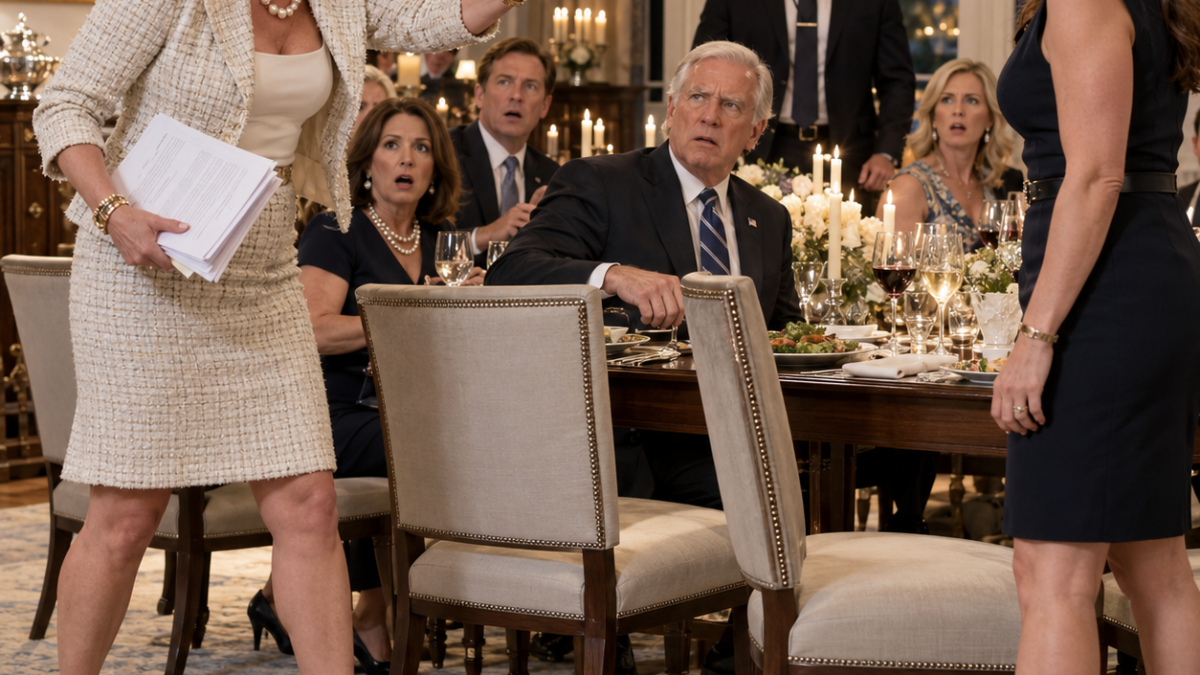
Then Haverson turned toward Kaylee.
“Bring me everything.”
The lamb sat cooling on the dining table while the evening stopped being dinner and became something else.
Kaylee opened her laptop.
I pulled a binder from my office.
Haverson sat down.
The other guests stayed because most of them had been involved somehow.
Miguel Ortega, my next-door neighbor, had been fighting bogus landscaping fines.
Grace Miller, seventy-three, owed six thousand dollars for alleged tree damage she said never happened.
Tom Branson had received three separate notices after questioning an emergency assessment.
And Kaylee had been helping all of us build a civil complaint.
Haverson opened the first binder.
“What am I looking at?”
“Selective enforcement,” Kaylee said.
She pulled out two violation notices.
“Same alleged offense. Trash bins visible from street after six p.m.”
He looked at the first.
“Three-hundred-dollar fine.”
Then the second.
“Warning only.”
“Different homeowners,” she said.
“Why?”
“The first homeowner challenged the board at a meeting.”
Haverson looked at me.
“And the second?”
“Mark Reddick’s golf partner.”
He turned another page.
Kaylee placed a second file in front of him.
“This is surveillance.”
His head came up.
“Explain.”
“Several residents noticed the same vehicles parked outside their homes for long periods.”
Miguel leaned forward.
“One stayed across from mine for six hours.”
“Who owned it?”
“Private investigator.”
Haverson looked at Kaylee.
“HOA hired him?”
“We believe Karen and Reddick authorized it.”
“Believe?”
“We have an admission from the investigator.”
Kaylee played audio.
A man’s voice.
Nervous.
He admitted the HOA retained him to document “compliance issues.”
Photograph fences.
Vehicle placement.
Outdoor gatherings.
Delivery patterns.
Guests.
Some cameras had been pointed toward houses for hours.
Haverson put his wine glass down.
“What were they looking for?”
“Anything,” I said.
“Anything they could turn into leverage.”
Kaylee nodded.
“The investigator told one homeowner he was given specific addresses marked as ‘problem residents.’”
Haverson’s expression hardened.
“How many?”
“At least twelve.”
“Did they disclose this in the budget?”
“No.”
“Board minutes?”
“No.”
“Contract?”
“We found one payment listed as consulting.”
Haverson exhaled slowly.
“That’s not normal HOA enforcement.”
“No.”
A knock hit the door.
Everybody looked up.
I stared toward the foyer.
“You expecting someone?” Kaylee asked.
“No.”
This time I checked the side window before opening.
Miguel was standing outside.
I frowned.
He had left earlier.
I opened the door.
“Everything okay?”
He held up a flash drive.
“I think you need this.”
“What is it?”
“My camera.”
“You already gave Kaylee your fence footage.”
“Not this.”
He came in.
Haverson recognized him from dinner.
Miguel nodded politely.
“Senator.”
“Mr. Ortega.”
Miguel handed me the drive.
“Karen pulled up outside your house before she came in.”
“I know.”
“My camera caught audio.”
I looked at him.
“From the street?”
“Driveway mic catches more than I realized.”
Kaylee took the flash drive.
“May I?”
“Please.”
She plugged it into her laptop.
Video opened.
Karen’s SUV parked at the curb.
She sat inside with the window down.
Phone to her ear.
At first, only fragments.
Then clearly:
“He won’t be so smug once we hit him with the special assessment.”
Nobody spoke.
The recording continued.
Karen:
“If he keeps pushing the audit issue, we make his property expensive.”
Haverson looked at me.
“Special assessment?”
I rubbed my face.
“Another trick.”
Kaylee closed the laptop halfway.
“They can’t increase regular dues without certain voting requirements.”
“So?”
“They label things emergencies.”
“Examples?”
“Drainage stabilization.”
I pulled one notice.
“Sinkhole remediation.”
Another.
“Emergency roadway assessment.”
Haverson read it.
“Was there a sinkhole?”
“No.”
“Any repairs?”
“No.”
“Permit?”
“No.”
“Then what did the money pay for?”
“That’s one of the questions.”
He looked at Kaylee.
“You have bank records?”
“Partial.”
“How?”
“A former treasurer gave us copies.”
“Where did the money go?”
“Some into HOA operating accounts.”
“And the rest?”
“We don’t know.”
Haverson sat back.
Then he looked around the table.
“How many homeowners have been assessed?”
“More than thirty,” I said.
“How many have challenged?”
“Not many.”
Grace spoke quietly.
“People are scared.”
The senator turned toward her.
She folded her hands.
“They send letters saying unpaid fines can lead to liens.”
“Have they filed liens?”
“Yes.”
“Against you?”
Her mouth tightened.
“Threatened.”
“For six thousand dollars.”
“What was the violation?”
She swallowed.
“Tree damage.”
“What tree?”
“My oak.”
“What did you do?”
“Nothing.”
She looked embarrassed, as if she were the one who had done something wrong.
“They said roots damaged a common irrigation line.”
“Did they show you proof?”
“No.”
“Repair invoice?”
“No.”
“Photographs?”
“No.”
“I asked. They said the evidence was internal.”
Haverson leaned forward.
“And you paid?”
“Half.”
I could see how much she hated admitting it.
“I thought if I didn’t, they could take my house.”
Haverson’s face changed.
Not dramatic.
Just still.
“That,” he said quietly, “is why this matters.”
Kaylee opened another file.
“We think the fines are being used strategically.”
“For revenue?”
“Partly.”
“And?”
“To pressure certain homeowners to sell.”
Haverson stared at her.
“Why?”
“Reddick’s cousin owns a real estate investment group.”
The senator sat straighter.
I continued.
“Several homeowners who received repeated fines eventually sold.”
“To the cousin’s firm?”
“Or buyers represented by them.”
“How many?”
“We found seven.”
Kaylee slid a chart across the table.
“Same pattern. Violations. Assessments. threats. Sale within eighteen months.”
Haverson studied it.
Then asked the question that changed the room.
“Who profits?”
Kaylee pointed to the company name.
“Reddick’s cousin.”
The senator looked up.
“Now we’re no longer talking about an overbearing HOA.”
“No,” I said.
“We’re not.”
He tapped the table once.
“Tomorrow evening. Formal meeting.”
“With who?”
“Every homeowner willing to speak.”
He looked at Kaylee.
“My staff will attend. I’ll ask someone from state housing oversight to be there.”
Kaylee was already writing.
Haverson looked at me.
“And secure everything tonight.”
“We already have backups.”
“Make more.”
He pointed toward the flash drive.
“People who commit fraud rarely become calmer when they realize documents exist.”
That night, my house turned into an evidence center.
Dinner plates sat abandoned.
The lamb went into the refrigerator.
Kaylee copied videos.
I scanned notices.
Miguel returned with external drives.
One encrypted set went into my fireproof safe.
Another went to Kaylee’s office.
A third went with Senator Haverson’s aide.
Before midnight, we had duplicates in three separate locations.
I barely slept.
At 8:42 the next morning, my camera alert went off.
White pickup.
No logo.
A man in reflective safety clothing stepped out.
Walked directly to my mailbox.
Tape measure.
Clipboard.
He measured height.
Distance to curb.
Post setback.
Then drove away.
Two minutes later, Kaylee called.
“Guess who’s under mailbox inspection?”
“You?”
“Yep.”
I laughed once.
No humor.
“They’re testing us.”
“They’re panicking.”
“What did yours do?”
“Photographed my porch railings.”
“Subtle.”
“Very.”
Within an hour, we were downtown.
State housing oversight had cleared a conference room.
Senator Haverson’s staff had moved faster than I thought possible.
Two compliance auditors.
A retired judge on the ethics board.
A clerk from the attorney general’s office.
Kaylee.
Miguel.
Grace.
Four additional homeowners.
Folders everywhere.
The lead auditor, Francis DeWitt, had the kind of voice that made everyone stop talking when she started.
She spent almost an hour reading before asking anything.
Then she folded her hands.
“What you have shown us suggests systemic misuse of association authority.”
Nobody moved.
“Selective fines.”
Page turn.
“Unapproved assessments.”
Another.
“Undisclosed surveillance.”
Another.
“Possible conflicts of interest involving property sales.”
She looked at Kaylee.
“And potentially altered corporate documents.”
The retired judge leaned forward.
“Explain the altered documents.”
Kaylee placed two versions of the HOA bylaws side by side.
“This is the version filed with the county clerk eleven years ago.”
She pointed.
“This is the version currently distributed to residents.”
Different language.
Emergency assessments.
Inspection authority.
Enhanced lien procedures.
None of those sections appeared in the filed copy.
Francis frowned.
“Amendment vote?”
“No record.”
“Meeting minutes?”
“There are minutes.”
Kaylee pulled them out.
“But the PDF metadata shows these files were created weeks after the meetings they supposedly document.”
The attorney general’s clerk sat forward.
“Were any submitted to the state?”
“Yes.”
Silence.
The judge said, “That’s potential document fraud.”
Miguel shook his head.
“They kept telling us we didn’t understand the rules.”
Francis looked at him.
“That’s how systems like this survive.”
Not because everyone is stupid.
Because people assume documents are real.
Because they assume elected or appointed leaders know the rules.
Because they are busy raising children, working jobs, caring for parents, paying mortgages.
Most people do not compare PDF metadata on HOA meeting minutes.
Karen and Reddick counted on that.
Francis closed the binder.
“I’m recommending an immediate forensic audit.”
The clerk said, “I’m contacting the district attorney.”
That same evening, Detective Aaron Lanier from the financial crimes unit came to my house.
He took copies of Miguel’s recording.
The violation histories.
Special assessments.
List of affected residents.
Before leaving, he said, “The district attorney has approved subpoenas for financial records.”
“How fast?”
“Fast.”
“Freeze accounts?”
“Being considered.”
“What should we do?”
“Do not confront the board.”
“Karen already confronted me.”
“I mean now.”
He paused.
“Once money starts talking, people behave unpredictably.”
At dawn, the clubhouse had police tape across the entrance.
I stood at the edge of my driveway holding coffee.
Two unmarked sedans.
One patrol car.
A woman in a gray blazer speaking into a radio.
Then Mark Reddick stormed out of the clubhouse holding a stack of papers.
“This is harassment!”
The woman showed him a badge.
“We have a court order.”
“This is private property.”
“So is the evidence.”
He stepped forward.
An officer stepped between them.
“Mr. Reddick. Back up.”
Karen appeared seconds later.
Hair wet.
Phone pressed to her ear.
She spotted me immediately.
Crossed the street.
“You think you won?”
I looked past her.
An investigator carried a desktop computer from the clubhouse.
“I didn’t realize we were playing.”
“You dragged this whole neighborhood into a legal mess because of your vendetta.”
“I didn’t fabricate your bank records.”
“You don’t know what you’re talking about.”
“I know you walked into my house last night.”
Her face reddened.
“You provoked me.”
“I opened my own front door.”
“You’ve been poisoning people against us for months.”
“By asking where the money went?”
She stepped closer.
“You have no idea what kind of power this board has.”
I looked at the police tape.
Then at her.
“And yet here you are.”
Her expression tightened.
“Powerless.”
A black government sedan stopped behind us.
Karen turned.
Senator Haverson stepped out.
Two aides followed.
He crossed toward me.
“Morning.”
“Senator.”
“You ready?”
“For what?”
He handed me a sheet of paper.
“Public forum.”
I looked at it.
State Housing Oversight Committee.
Temporary neighborhood oversight panel.
My name was listed.
I stared.
“You’re serious.”
“Very.”
Karen pushed between us.
“What is this?”
Haverson looked at her.
“An investigation.”
“I know that. I mean him.”
“Homeowner representative.”
“He has a conflict.”
Haverson raised an eyebrow.
“With what?”
“He’s openly hostile to the board.”
“He was fined and targeted by the board.”
“Because he violated community standards.”
“I was there last night.”
Karen went silent.
Haverson continued.
“And if the forensic audit confirms what investigators suspect, your parking rules will be the least interesting part of this case.”
Her lips parted.
Nothing came out.
For once.
We drove to the community center.
The room was packed.
Not reporters at first.
Homeowners.
People I recognized.
People I didn’t.
Some carrying folders.
Some holding old notices.
Some looking embarrassed.
Some furious.
Kaylee took the podium.
She didn’t shout.
She didn’t need to.
“These positions are stewardship,” she said. “They are not kingdoms.”
Then she walked through the evidence.
Selective fines.
Altered bylaws.
Unapproved assessments.
Hidden surveillance.
Real estate conflicts.
Every slide removed another layer of legitimacy from what Reddick and Karen had been doing.
Then Haverson spoke.
He announced draft reforms his office had already been working on.
Annual independent audits for certain associations.
Stricter disclosure requirements.
Restrictions on emergency assessments without meaningful homeowner approval.
Conflict-of-interest reporting.
Clearer limits on surveillance.
Mandatory document retention.
The room erupted.
I understood why.
For years, people had thought they were individually failing.
One homeowner couldn’t fight.
One elderly widow couldn’t hire lawyers.
One family couldn’t challenge every notice.
But once they were in the same room, the pattern was visible.
When it was my turn, I stepped up.
My hands were shaking.
I hated public speaking.
“I didn’t want this fight.”
The room quieted.
“I wanted dinner.”
A few people laughed.
“None of us wanted to spend our nights reading bylaws or saving camera footage.”
I looked toward Grace.
“But if somebody tells you they can take your home, fine you into submission, watch you, or pressure you because they have a title on a board, you start believing you’re powerless.”
I paused.
“We were never powerless.”
Grace approached me afterward.
Her eyes were wet.
“I thought I was going to lose my house.”
“You’re not.”
“They said the lien could force a sale.”
“Kaylee’s reviewing it.”
“I paid three thousand already.”
“We’ll trace it.”
She hugged me.
That broke something inside me.
Until then, the case had felt strategic.
Evidence.
Law.
Procedure.
But Grace wasn’t a spreadsheet.
She was seventy-three.
She had lived in Willow Creek for twenty-four years.
Her husband had died there.
Her grandchildren knew the kitchen better than their own.
Karen and Reddick had made her believe six thousand dollars of imaginary tree damage could erase all of that.
That was the real crime even before prosecutors named it.
Fear.
The interim oversight panel held its first meeting the following Thursday.
The clubhouse no longer looked impressive.
Investigators had removed computers.
The framed bylaw displays were gone.
The leather chairs Karen and Reddick had purchased were replaced with folding chairs.
Kaylee sat beside me with the first forensic summary.
She looked at the first page.
Then stopped.
“What?”
She turned it toward me.
Shell company.
Tallahassee P.O. box.
Consulting payments.
Owner:
James Reddick.
Mark’s brother.
Miguel leaned over.
“They didn’t even change the last name?”
Kaylee shook her head.
“They didn’t expect anyone to check.”
Before we could finish, Detective Lanier walked in.
He carried a small hard case.
Set it on the table.
Opened it.
Several flash drives.
Audio recorder.
“We searched Reddick’s office.”
He picked up the recorder.
“This was inside a false drawer.”
“His?” I asked.
“No.”
“Then whose?”
“His assistant’s.”
Lanier pressed play.
Static.
Then Reddick’s voice.
“…slide the assessments through before quarterly review.”
Another voice.
Karen.
“What about Miller?”
Grace sat two chairs away.
Her whole body went still.
Reddick:
“Keep pressure on her. Tree claim, exterior inspection, whatever sticks.”
Karen laughed.
“She’ll sell.”
Grace covered her mouth.
The recording continued.
Reddick again.
“If we get the buyout done before January, the firm cuts us twenty percent each.”
Kaylee leaned forward.
“What firm?”
Lanier pressed pause.
“Real estate investment group tied to his cousin.”
He continued playback.
Reddick:
“Maple Cluster alone is close to half a million in acquisition spread.”
Karen:
“Darren is becoming a problem.”
Reddick:
“Then keep him distracted.”
The room went cold.
Grace whispered, “They were trying to make us sell.”
Lanier looked at her.
“Yes.”
“How many?”
“At least five confirmed elderly homeowners in the first review.”
Kaylee’s face changed.
“Elder abuse enhancements?”
“DA is looking at them.”
Lanier turned to me.
“And as of this morning, Reddick and Whitmore have both been charged.”
“Charges?”
“Wire fraud. Falsification of corporate records. Conspiracy to commit real estate fraud.”
“And Karen?”
“Under house arrest pending arraignment.”
“She tried to leave?”
“Twenty miles outside the county.”
Miguel let out a whistle.
I didn’t feel triumphant.
I looked at Grace.
She was staring at the table.
Everything became personal again.
We spent that night rebuilding the rules.
Not adding more.
Removing weapons.
Emergency assessments would require seventy-five percent resident approval except narrowly defined physical emergencies.
Quarterly independent financial reviews.
Public budgets.
All vendor names disclosed.
No board member or immediate family member could hold financial interests in association vendors.
No paid private surveillance without documented legal necessity and homeowner notice where required.
No bylaw amendment without recorded vote.
No secret ballot collection by board members.
No retroactive meeting minutes.
Grace raised her hand.
“Can we add something?”
“Of course.”
“No liens based solely on disputed fines until an independent review.”
Kaylee nodded.
“Yes.”
Grace looked at me.
“I never want anybody else to get that letter.”
Neither did I.
We worked past ten.
Ten-point reform plan.
Open election scheduled.
External election provider.
Independent ballot count.
Everything Karen and Reddick hated.
Transparency.
The neighborhood changed faster than I expected.
Someone painted over the old entrance sign.
**WELCOME TO WILLOW CREEK**
Underneath, smaller:
**OWNED BY ITS PEOPLE**
Technically not legally accurate.
Emotionally perfect.
Local news began covering the criminal charges.
Other HOA communities called.
Residents wanted copies of our reform rules.
Attorneys contacted Kaylee.
State housing groups asked for testimony.
Senator Haverson called one morning.
“They want to call the reform bill the Willow Creek Act.”
I nearly spit out my coffee.
“No.”
He laughed.
“You don’t get naming rights.”
“I absolutely should.”
“You’re the reason half the language exists.”
“I invited you to dinner.”
“Exactly.”
“I didn’t start a movement.”
“Most people don’t mean to.”
He grew serious.
“Counties across the state are asking for the draft.”
“That fast?”
“People have been waiting.”
That mattered.
Willow Creek wasn’t unique.
Maybe extreme.
Not unique.
When power operates behind complicated private rules, abuse can hide because everyone assumes someone else understands the system.
Homeowners assume lawyers reviewed the bylaws.
Board members assume accountants reviewed the money.
Management companies assume directors acted properly.
County officials assume private associations govern themselves.
Eventually nobody is watching the whole picture.
Except sometimes the people being hurt.
The special election happened the following month.
No board members carrying ballots.
No sealed envelopes disappearing into offices.
No volunteers with conflicts.
A third-party election service handled everything.
Candidates held an open forum.
Grace ran.
Miguel refused.
Kaylee refused harder.
I refused hardest.
“You’re already acting like a board member,” Miguel told me.
“That’s temporary.”
“You enjoy it.”
“I would rather eat drywall.”
“You work in construction. Bad comparison.”
Election day felt oddly festive.
Families came to the community center.
Kids played outside.
People who had skipped HOA meetings for years showed up.
Results came in that evening.
Not one former board member or close ally won a seat.
The new board included Grace.
A young couple with two children.
A retired accountant.
A local teacher.
A small business owner.
People who had no interest in ruling neighbors.
That was probably why they were qualified.
At the first formal meeting, Kaylee introduced a motion to rename the old clubhouse.
“Haverson Hall for Civic Integrity.”
I looked at her.
“That sounds like a courthouse annex.”
“He likes it.”
Haverson was sitting in the back.
He said, “I do not.”
The room laughed.
Motion passed anyway.
At the dedication, there was no press.
No television.
Just neighbors.
A simple plaque.
Miguel installed a wooden bench outside.
Small metal sign:
**FOR ANYONE WHO NEEDS A MOMENT**
Grace helped plant tomatoes in the new community garden.
Children ran across the grass where Karen once screamed at homeowners for walking dogs near landscaping beds.
Kaylee stood beside me on the clubhouse steps.
“Think they’ll ever come back?”
“Karen and Reddick?”
“People like them.”
“Yes.”
She looked at me.
“That optimistic?”
“Power attracts people who want power.”
“So what’s the answer?”
“Make power boring.”
She smiled.
“Meaning?”
“Budgets online. Meetings recorded. Votes public. Audits routine. Terms limited.”
“No kingdoms.”
“No kingdoms.”
She nodded toward the building.
“We should write a guide.”
“Already started.”
“Of course.”
“Working title: How to Defang a Paper Tyrant.”
She shook her head.
“That will never survive legal review.”
“It’s memorable.”
“It’s embarrassing.”
“So was our old HOA.”
The criminal investigation continued.
Much longer than neighborhood reform.
Financial crimes are slow.
Bank subpoenas.
Real estate records.
Interviews.
Forensic accounting.
One revelation led to another.
The investment company tied to Reddick’s cousin had purchased seven homes from distressed owners.
Five had experienced aggressive violation campaigns.
Three owners were over seventy.
One was a widow undergoing chemotherapy.
Grace wasn’t the only target.
Reddick and Karen had built a system.
Fines increased stress.
Assessments created debt.
Lien threats created fear.
Then a “friendly” real estate contact appeared.
Offer below market.
Quick closing.
Problem solved.
For the homeowner, it felt like escape.
For Reddick’s network, profit.
Detective Lanier called it coordinated displacement.
Kaylee called it predatory fraud.
I called it what it was.
Taking advantage of people who were tired.
One former resident named Harold Benson returned to testify.
Seventy-six.
He had sold his Willow Creek home eighteen months earlier.
We met him at Kaylee’s office.
He carried a folder almost as thick as mine.
“I didn’t know anyone would care.”
Kaylee said, “We care.”
He pulled out thirty-two violation notices.
Thirty-two.
Lawn height.
Fence color.
Guest parking.
Holiday lights.
Trash can.
Mailbox rust.
Window screen.
Tree pruning.
He laughed without humor.
“I started fixing things before the letters arrived.”
“How much did you pay?” I asked.
“Fines?”
“Yes.”
“Maybe eight thousand.”
My stomach tightened.
“Then the special assessment.”
“How much?”
“Twelve.”
“Twelve hundred?”
He looked at me.
“Twelve thousand.”
Kaylee stopped writing.
“For what?”
“Drainage.”
“Work completed?”
“No.”
“Did you pay?”
“Half.”
“And then?”
“Lien notice.”
He looked down.
“My wife had dementia.”
Everything slowed.
“I couldn’t fight both things.”
No one spoke.
“So I sold.”
“To who?”
He gave us the buyer.
Reddick’s cousin’s company.
Below market by nearly ninety thousand dollars.
Harold stared at his hands.
“I thought I failed.”
“You didn’t,” Grace said.
She had come to meet him.
“You survived.”
He looked at her.
“I left the home where my wife raised our kids.”
Grace reached across the table.
“That’s on them.”
The case stopped being abstract forever after that.
When prosecutors offered victim impact opportunities, Harold spoke.
Grace spoke.
Others did too.
I almost declined.
Then Senator Haverson called.
“You should say something.”
“Why?”
“You saw both sides.”
“What does that mean?”
“You were targeted, but you also had resources.”
A lawyer.
Documentation skills.
Connections.
Cameras.
Time.
Harold had a wife with dementia.
Grace had limited money.
Others had health problems.
Jobs.
Children.
Fear.
Haverson said, “Tell the judge why not everyone fights.”
That stayed with me.
At sentencing, I stood.
Karen sat at the defense table.
Reddick beside his attorney.
I looked at them.
Then at the judge.
“When this started, Karen came into my home over parked cars.”
A few people in the gallery shifted.
“That sounds ridiculous because it was.”
I continued.
“But ridiculous enforcement works when it teaches people that resistance creates more trouble.”
I looked toward Grace.
“Some of us can afford lawyers.”
Toward Harold.
“Some can’t.”
I looked back at the judge.
“The system they built depended on everyone making the same calculation: paying is easier than fighting.”
Silence.
“They weren’t strongest when they threatened people.”
I paused.
“They were strongest when people thought they were alone.”
That was all I needed to say.
The court ordered restitution.
Asset seizures.
Professional prohibitions.
Criminal penalties.
Reddick received a prison sentence under the fraud convictions.
Karen’s sentence included incarceration followed by supervised release and permanent restrictions preventing her from serving in HOA governance or fiduciary community positions.
Their cousin’s real estate company faced civil penalties and separate financial enforcement.
The details mattered legally.
Emotionally, something else mattered more.
Grace’s lien disappeared.
Harold received restitution.
Several improperly acquired homes became part of settlements.
Some former residents recovered money.
Nobody got every year back.
Nobody got every memory.
Justice is terrible at restoring time.
But it stopped the scheme.
Willow Creek continued changing.
The new board lasted two years before several members voluntarily stepped down.
Term limits worked.
People complained about them.
Good.
Anything that irritates the people currently holding power probably deserves a second look before repeal.
Grace served one term.
At her final meeting, someone thanked her.
She shrugged.
“I just read the invoices.”
That line became something of a neighborhood motto.
Miguel printed it on a coffee mug for her.
**I JUST READ THE INVOICES**
She hated the mug.
Used it every day.
Senator Haverson’s reform bill moved more slowly than our neighborhood changes.
Legislation always does.
Lobbying.
Amendments.
Committees.
Opposition from property-management associations.
Arguments about private-contract rights.
Arguments about overregulation.
Arguments about costs.
Some concerns were legitimate.
Some were self-protective.
Haverson refused to oversell it.
“This won’t stop every abusive board,” he told me.
“What will?”
“Nothing.”
“Great campaign slogan.”
He smiled.
“Law reduces opportunities. It doesn’t eliminate character.”
Eventually, the state passed a narrower reform package.
Audit requirements strengthened.
Conflict disclosures expanded.
Emergency assessment procedures tightened.
Document access improved.
Enforcement transparency increased.
It wasn’t everything.
It was real.
Other states discussed similar language.
The national version Haverson once imagined never became law in the sweeping form people predicted.
That was fine.
Stories like clean endings.
Government prefers partial progress.
I learned to appreciate partial progress.
Years passed.
Haverson eventually left the Senate.
Kaylee became the attorney everyone called when an HOA board did something suspicious.
She pretended to hate that reputation.
She didn’t.
Miguel expanded his workshop.
Grace kept gardening.
Harold moved closer to his daughter.
He visited Willow Creek once.
We walked past his old house.
New family.
Children’s bicycles in the driveway.
He stood across the street for a long time.
“You okay?” I asked.
“Yes.”
“Want to knock?”
“No.”
“Why?”
He smiled.
“It’s theirs now.”
That was one of the healthiest things I ever heard.
My house remained the place where the whole thing cracked open.
For years, people joked about the dinner party.
Every Thanksgiving, someone asked whether Karen had approved the guest list.
Kaylee once gave me a framed parking notice as a joke.
I hung it in the garage.
Senator Haverson came back to dinner three years after the original incident.
Same dining room.
Same table.
Different mood.
I served lamb again.
He noticed.
“Brave.”
“Door is locked.”
Kaylee raised her glass.
“To legal parking.”
Miguel added, “And criminal trespass.”
Grace said, “And reading invoices.”
We laughed.
No crisis.
No files on the table.
No secret recordings.
Just dinner.
That meant more than the reforms.
The first time Karen entered my house, she transformed a private evening into evidence.
Three years later, the same room had become private again.
That mattered.
I eventually removed most of the exterior cameras I had added during the investigation.
Kept the normal ones.
Doorbell.
Driveway.
Back gate.
No more street monitoring.
No need.
The strange cars stopped.
The fake inspectors stopped.
Nobody measured my mailbox again.
One day, a county employee actually did measure it for a road improvement project.
I came outside laughing.
He looked worried.
“Something funny?”
“Long story.”
He measured.
“Mailbox is fine.”
“I know.”
He left.
For a second, I considered telling him everything.
Didn’t.
I liked that it had become a long story I didn’t always need to tell.
That was healing.
Willow Creek eventually stopped being known publicly as the neighborhood with the corrupt HOA.
New families moved in.
Some had no idea.
Kids who were six during the scandal became teenagers.
The old clubhouse became a genuine community center.
No enforcement office.
No executive board suite.
Meeting room.
Library shelves.
Garden tools.
Coffee machine.
Haverson Hall sounded less ridiculous over time.
Though Haverson still complained.
Maria—one of the newer board members—eventually suggested removing his name after he retired.
He immediately supported the idea.
Residents voted to keep it.
He lost.
Democracy.
The citizen guide Kaylee and I joked about actually happened.
Not **How to Defang a Paper Tyrant**.
She refused.
The final title was:
**Homeowner Rights and HOA Accountability: A Practical Guide**
Boring.
Useful.
Exactly the point.
We included sections on:
Reading governing documents.
Requesting financial records.
Understanding liens.
Documenting selective enforcement.
Conflict-of-interest rules.
Election procedures.
When to call an attorney.
When to call law enforcement.
And, at my insistence:
**Never assume a clipboard is authority.**
Kaylee tried to remove it.
I won.
The guide spread farther than we expected.
Neighborhood groups downloaded it.
County libraries stocked copies.
Haverson’s office linked to it.
One retired teacher emailed me:
**Your section on document comparison helped us discover our board had circulated an outdated bylaw version for six years.**
Not criminal.
Just incompetent.
Still useful.
Another homeowner wrote:
**We challenged an improper fine and won without going to court.**
That felt better than headlines.
Most abuse doesn’t end with arrests.
Most disputes shouldn’t.
If people can solve problems before they become criminal cases, good.
The entire Willow Creek story was an example of what happens when small accountability failures compound.
One fake fine.
One secret assessment.
One altered document.
One undisclosed relationship.
One frightened homeowner.
Then another.
Then another.
Eventually a system develops.
Years after Karen’s conviction, I unexpectedly saw her.
Not in Willow Creek.
A grocery store two counties away.
I almost didn’t recognize her.
Hair shorter.
No pearls.
No clipboard.
She was standing near the pharmacy counter.
Our eyes met.
She froze.
So did I.
For a moment, every old feeling returned.
Anger.
Disbelief.
The sound of her heels on my hardwood.
“You think you’ve won?”
The police tape.
Grace crying.
Harold’s folder.
Then the feeling passed.
Karen looked away first.
I could have approached her.
I didn’t.
I didn’t need an apology.
Didn’t need a final line.
Didn’t need to ask why.
The court records already answered enough.
I bought coffee and left.
Outside, I sat in my car for several minutes.
Not shaken.
Reflective.
For years, Karen had been a symbol.
Then suddenly she was just a person standing beside cold medicine.
That was strangely freeing.
People who abuse authority often look enormous while they hold it.
Remove the title.
The boardroom.
The letters.
The threat of liens.
What remains is often much smaller.
Power had amplified Karen.
Accountability reduced her to herself.
I drove home.
Willow Creek entrance looked different now.
The old imposing HOA monument had been replaced with a low brick sign.
No rules posted.
No surveillance warning.
Just:
**WELCOME TO WILLOW CREEK**
Flowers underneath.
Grace helped plant them.
I pulled into my driveway.
Two cars were parked along the street.
Guests at Miguel’s house.
Legally.
Nobody cared.
I stood there longer than necessary.
The entire story had started over six cars.
Six.
Cars on a public street.
Karen had believed she could enter my house over them.
Not because parking mattered.
Because she had spent years being obeyed.
That kind of authority changes people if nothing checks it.
Everyone begins with a reason.
Order.
Property values.
Safety.
Community standards.
Then exceptions.
Then shortcuts.
Then private interests.
Then fear of exposure.
By the time Karen entered my foyer, she had stopped asking whether she had authority.
She expected reality to adjust to her position.
That was why Senator Haverson stunned her.
Not because he was famous.
Because she met someone whose understanding of authority was larger than hers.
A person she couldn’t intimidate with subsection twelve.
But I eventually understood something important.
The senator didn’t save us.
He helped.
A lot.
He opened doors.
Brought scrutiny.
Accelerated oversight.
Helped turn our local evidence into reform.
But the evidence came from homeowners.
Miguel’s camera.
Grace’s notices.
Harold’s records.
Kaylee’s document comparisons.
The investigator’s admission.
The assistant’s recordings.
Resident statements.
People comparing experiences.
Haverson gave those facts access to power.
He didn’t create them.
That distinction matters.
If our only lesson were “invite a senator to dinner,” the story would be useless.
The real lesson was simpler.
Keep records.
Compare stories.
Ask who benefits.
Don’t let complicated language silence you.
And when one person says, “This happened to me,” listen before assuming it’s isolated.
One evening, years later, Grace came over carrying tomatoes.
“You want these?”
“Always.”
She placed a bag on my counter.
Then noticed the framed parking notice in the garage through the open door.
“You still have that?”
“Comedy.”
She smiled.
“I kept my tree fine.”
“Why?”
“Same reason.”
We stood quietly.
Then she said, “You know I almost sold.”
“I know.”
“No, I mean paperwork was signed.”
I looked at her.
“What?”
She nodded.
“Reddick’s cousin’s company made an offer.”
“How close?”
“Two days.”
I stared.
“What stopped you?”
“You.”
I shook my head.
“No.”
“You told me to wait until Kaylee looked at the lien.”
“That was it?”
“That was enough.”
She smiled.
“Two days later, Karen walked into your dinner.”
I leaned against the counter.
Sometimes timing creates the illusion of destiny.
It wasn’t destiny.
It was proximity.
Grace happened to be near the edge.
One more week and she might have sold.
Reddick’s company would have bought another home cheaply.
The pattern would have continued.
Karen’s impatience accelerated her own downfall.
She barged into the wrong house on the wrong night.
But more importantly, she barged in after months of evidence had already accumulated.
Her tantrum didn’t create the case.
It made the case impossible to ignore.
Grace squeezed my arm.
“Thank you anyway.”
I nodded.
“Keep bringing tomatoes and we’re even.”
She laughed.
That night, I sat in the backyard.
No files.
No phone calls.
Sprinklers came on.
Exactly the same sound as the morning after the dinner party when the fake mailbox inspector arrived.
Back then, I heard sprinklers and expected trouble.
Now I heard water.
Nothing more.
That was the ending I never expected to value.
Normal sensation returning to normal meaning.
A doorbell becoming a doorbell.
A parked car becoming a parked car.
An HOA meeting becoming boring.
A neighbor complaint becoming a conversation.
A letter becoming mail instead of threat.
Willow Creek didn’t become perfect.
Never did.
One board later made a stupid proposal to regulate basketball hoops.
Residents rejected it.
Another tried raising landscaping fees too quickly.
People demanded bids.
One treasurer forgot to upload receipts for two months.
Grace called him every day until he did.
Accountability did not eliminate mistakes.
It prevented mistakes from becoming kingdoms.
That was enough.
Senator Haverson once asked me whether I regretted hosting the dinner.
We were at a community anniversary event.
“Regret feeding you?”
“The evening.”
“No.”
“Even after everything?”
I thought.
“Ask me during the first year and maybe.”
“And now?”
“No.”
He nodded.
“Why?”
“Because Karen showed us exactly what she thought she was allowed to do.”
Haverson looked toward the community center.
“And everyone believed her until then?”
“Enough people did.”
He smiled faintly.
“Sometimes abuse has to become visible.”
I looked at him.
“That sounds dangerously philosophical for a politician.”
“I’m retired.”
“Explains it.”
He laughed.
A few minutes later, Grace called him over to judge a pie contest.
That was Willow Creek now.
A former senator judging pie beneath a sign once associated with forged assessments.
History becomes ridiculous if you wait long enough.
I liked that.
Years after everything ended, I replaced my dining table.
The old one had scratches.
Wine stains.
A burn mark near one corner.
Kaylee told me to keep it because “history happened there.”
I said history could happen at the landfill.
Miguel took the table for his workshop.
Before carrying it out, he pointed at one scratch.
“Karen did that?”
“Probably chair leg.”
“Evidence.”
“Take the table.”
The new one was smaller.
Simpler.
First dinner I hosted, cars lined the street.
Nine this time.
I stood at the window counting.
Kaylee noticed.
“What?”
“Nine cars.”
She understood instantly.
“Call Karen.”
“Too soon.”
“It’s been years.”
“Still too soon.”
We laughed.
No doorbell.
No violation.
No confrontation.
Dinner stayed dinner.
That may sound insignificant after fraud charges, elder abuse enhancements, asset seizures, legislation, and years of reform.
It wasn’t.
The ability to host people in your own home without wondering whether some private authority will manufacture a reason to intrude is not insignificant.
Home should feel like home.
Grace’s house should feel like hers.
Miguel’s workshop should feel like his.
The community center should belong to the people using it, not to whichever board member thinks the leather chair at the front makes them important.
That was what we reclaimed.
Not simply money.
Not rules.
Not elections.
Ownership of ordinary life.
One fall evening, I walked past the community center.
Kids were playing on the lawn.
Miguel’s bench sat beneath a maple tree.
**FOR ANYONE WHO NEEDS A MOMENT**
I sat.
Grace was tending the last tomatoes.
Kaylee walked out carrying a binder.
“You still working?”
“Budget review.”
I groaned.
“Thought we defeated bureaucracy.”
“We made it transparent.”
“Worse.”
She sat beside me.
“Remember the dinner?”
“Unfortunately.”
“You realize Karen never got to issue the parking fine.”
“I’ve survived.”
Kaylee smiled.
“She thought she was walking in to intimidate one homeowner.”
“And instead?”
“She interrupted a meeting that helped dismantle her entire operation.”
I looked toward the street.
Cars parked legally along the curb.
Some things really do come full circle.
“But she didn’t lose because Haverson was there,” I said.
Kaylee nodded.
“No.”
“She lost because everything underneath her power was rotten.”
“Yes.”
“And eventually someone looked.”
She closed the binder.
“That’s usually how it happens.”
The sun dropped behind the houses.
Long shadows stretched over the grass.
Once, those shadows would have made me think of surveillance cars.
Investigators.
People watching.
Now they were just shadows.
I sat there until the streetlights came on.
A few homeowners waved.
Nobody asked whether my bench use was approved.
I went home.
Opened the front door.
Same foyer.
Different years.
I could still picture Karen standing there.
Clipboard against her chest.
“This is HOA business.”
Senator Haverson behind me.
“Did he invite you inside?”
That moment had seemed almost funny at first.
Then frightening.
Then consequential.
Eventually, it became something else.
A boundary.
The exact moment one person’s confidence collided with evidence.
Karen thought authority meant never being questioned.
We learned authority is legitimate only when it can survive questions.
That principle outlasted every court case.
Every reform document.
Every headline.
And every person involved.
The next time my doorbell rang during dinner, I opened it without hesitation.
It was Grace.
She held up a pie.
“Forgot dessert.”
I stepped aside.
“Come in.”
She smiled.
“Permission?”
“Permission.”
We walked toward the dining room.
Outside, nine cars lined the street.
Nobody measured them.
Nobody photographed them.
Nobody issued a violation.
And nobody ever barged into my home pretending a clipboard gave them the right again.








