PART 2: HOA Guards Dragged My 68-Year-Old Mother Into a Van—Five Minutes Later, My U.S. Marshal Convoy Sealed the Only Road Out
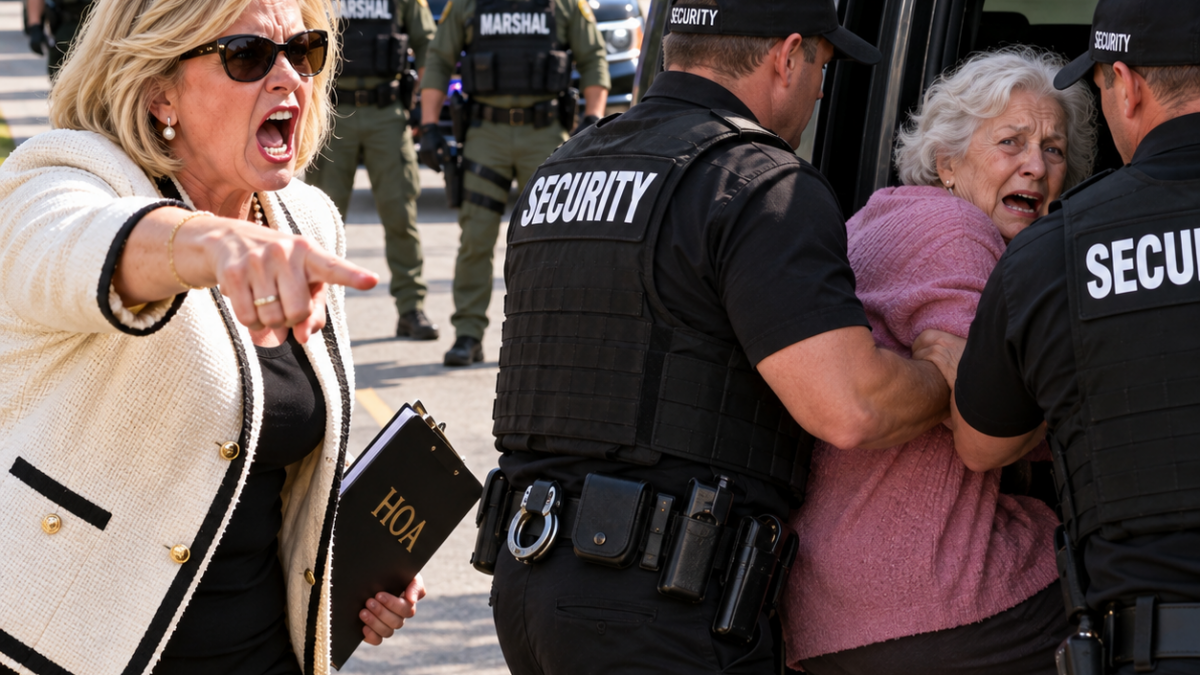
At 2:17 on a Wednesday afternoon, my sixty-eight-year-old mother called me without saying a word, and through the open line I heard two men dragging her across her own front lawn while she kept repeating, “Please let me go—I don’t belong anywhere with you.”
One of them told her they were acting under a court order, another ordered her into a white transport van, and then I heard my mother deliberately slip her phone into the pocket of her cardigan so I could keep listening while the doors slammed around her.
I had spent eighteen years hunting fugitives as a Deputy U.S. Marshal, but when her location marker started racing toward the only road out of Willow Ridge, I realized somebody had made a mistake far bigger than taking the wrong woman.
My name is Nathan Pierce.
When the call came in, I was parked beside a gas station off Interstate 41 after a fugitive-task-force operation, drinking coffee that had been bad even before it went cold.
“Mom?”
No answer.
Then shoes scraping pavement.
A man’s voice.
“Easy, ma’am.”
My mother’s breathing came fast through the phone.
“Take your hands off me.”
“Mrs. Pierce, this is for your own good.”
“I am not sick.”
My hand tightened around the phone.
“Mom?”
She didn’t answer me.
I understood why.
She wanted the call open.
My mother, Ruth Pierce, had spent thirty-seven years as a school librarian. She was five foot three, wore reading glasses on a chain, corrected my grammar when I was carrying a gun for a living, and knew exactly how to stay calm when someone else wanted her frightened.
But I could hear fear beneath her voice.
Then a van door rolled open.
“No,” she said.
A man grunted.
“Get inside.”
“Show me the order.”
“You’ve already been informed.”
“I want to read it.”
“Ma’am, you’re not qualified to evaluate legal paperwork.”
My chair scraped backward as I got out of the SUV.
“Mom!”
The line stayed open.
Then her voice, quieter.
“My son will find me.”
Someone laughed.
The door slammed.
I opened the location app we had set up years earlier after Mom got stranded with a flat tire during a snowstorm.
A red dot moved away from her house.
Fast.
I called Carol Benton, Mom’s neighbor.
She answered breathlessly.
“Nathan?”
“What happened?”
“They took her.”
“Who?”
“Two security men. White van. HOA logos on their jackets.”
My stomach dropped.
“You saw it?”
“My doorbell camera got everything.”
“Send it to me. Don’t delete the original.”
“Nathan, she was screaming.”
“I know.”
“They dragged her.”
“I know.”
“Where are they taking her?”
“I’m finding out.”
Three months earlier, Constance Aldrich had become president of the Willow Ridge HOA.
My father built my parents’ house thirty-one years ago, before Willow Ridge had an association, before the later phases existed, before anybody had decided every hydrangea needed a committee.
The original deed included twelve wooded acres behind the house.
Those twelve acres had become valuable because a developer named Garrett Lowell wanted to connect Willow Ridge to a new subdivision planned beyond Mom’s property.
Without her land, there was no convenient access corridor.
Constance offered money.
Mom refused.
Garrett offered more.
Mom refused again.
Then the fines started.
Mailbox.
Porch light.
Hydrangeas.
Garden edging.
After that came something uglier.
People began whispering that Ruth Pierce was “confused.”
That she shouldn’t live alone.
That the board was “concerned for her safety.”
I had warned Constance once.
Politely.
Leave my mother alone.
Apparently she had heard something else.
I called my partner, Tony Branson.
He answered immediately.
“What’s wrong?”
“My mother’s been taken.”
His voice changed.
“By who?”
“HOA security. White transport van.”
“Location?”
I sent it.
Tony was less than three minutes away with four other task-force vehicles returning from the same operation.
He didn’t ask me whether I wanted help.
He said, “We’re moving.”
Then I called Sheriff Walt Dempsey’s dispatch and gave them everything I had.
The van’s location marker continued south on County Road 9.
Willow Ridge had one narrow exit before the road split toward the state line.
The red dot was approaching it.
I got back behind the wheel.
My radio cracked.
Tony’s voice.
“Pierce, visual on your vehicle. Four behind me.”
In my mirror, black Suburbans appeared one by one.
Then, through Mom’s still-open phone, I heard one of the men say:
“Two minutes to the gate.”
I looked ahead.
The road narrowed.
And the first white van came into view.
PART 2
For eighteen years, I’d been trained to slow down mentally when everybody else sped up.
Fugitives did stupid things when panic took over.
Officers got hurt when anger replaced procedure.
Evidence got ruined when somebody decided being right meant they didn’t have to be careful.
I knew all of that.
I had taught younger deputies all of that.
It didn’t stop my hands from shaking on the steering wheel.
Tony came over the radio.
“Confirm that’s the vehicle.”
I looked at the license plate Carol had texted from her doorbell footage.
“Confirmed.”
“Local units?”
“Sheriff’s deputies are en route.”
“Any weapons information?”
“Unknown.”
“Then we treat it unknown.”
I forced myself to breathe.
“Copy.”
We were not five men playing vigilante because somebody had touched my mother.
We were law enforcement officers responding to a reported abduction with an open emergency call, real-time location information, video evidence already arriving on my phone, and local authorities being notified.
That distinction mattered.
Especially because one of the people inside that van was my mother.
Tony knew it too.
“Nathan.”
“Yeah?”
“You are not primary on contact.”
Every instinct in me resisted.
Then training won.
“Understood.”
“I mean it.”
“I said understood.”
The road narrowed before the Willow Ridge gate.
Tony accelerated.
His Suburban moved ahead of me.
Two vehicles passed on the left and continued another hundred yards before angling across the roadway beyond the van.
The remaining vehicles stacked behind us.
It wasn’t cinematic from inside.
It was radio chatter.
Brake lights.
Doors.
Commands.
Angles.
A thousand decisions compressed into seconds.
The white van slowed.
Then stopped.
My mother’s phone was still connected.
Inside, I heard a man say:
“What the hell?”
Another voice answered:
“Don’t open anything.”
Tony’s voice came over the external speaker.
“Driver, put the vehicle in park and show me both hands.”
The driver didn’t move.
“Hands.”
His hands appeared against the windshield.
Tony and two task-force deputies approached from the front corners while another covered the passenger side.
I stayed beside my vehicle.
That may sound small.
It was one of the hardest things I’ve ever done.
My mother was twenty yards away.
I could see the white cargo doors.
I knew she was behind them.
And I had to wait.
The driver rolled down his window three inches.
A broad-faced man in a dark security uniform leaned toward the gap.
“We’re private medical transport.”
Tony said, “Keep your hands visible.”
“This patient is under a court order.”
“Hands visible.”
“I need you to understand—”
“Name.”
“Brock Haskell.”
“Who issued the order?”
“Willow Ridge community authority.”
Tony’s expression didn’t change.
“That isn’t a court.”
Brock swallowed.
“We have paperwork.”
“Where?”
“Dashboard.”
“Do not reach for it.”
The passenger raised both hands.
I recognized him from Carol’s video.
Kyle Mercer.
Smaller.
Younger.
Scared already.
Tony signaled.
One deputy opened the passenger door and removed Kyle.
Another brought Brock out.
Both were patted down and secured while their authority to hold my mother was investigated.
Only then did Tony turn toward me.
“Nathan.”
I was already moving.
He opened the side door.
My mother sat on the bench between two gray restraint straps that weren’t buckled.
Her glasses were crooked.
One shoe was missing.
Her silver hair had come loose from the clip she always wore.
But she was sitting straight.
That was Mom.
Even terrified, she sat like she was waiting for somebody to explain why they’d disturbed library hours.
Her eyes found mine.
“Nathan.”
That one word nearly broke me.
I climbed in.
“Mom.”
“I knew you’d hear.”
I put my arms around her.
She was shaking.
So was I.
“You okay?”
“They grabbed me.”
“I know.”
“I told them no.”
“I know.”
“They said I didn’t get to decide.”
She pulled back.
That was when I saw her wrists.
Red finger marks curved around the skin below her left hand.
The right was already darkening purple.
My vision narrowed.
I turned toward the open door.
Tony caught my eye.
One look.
That was all it took.
He knew exactly what was happening inside my head.
“Stay with her.”
I looked back at Mom.
Training again.
Procedure again.
I sat beside her.
“Did they hurt you anywhere else?”
“My shoulder.”
“Hit your head?”
“No.”
“Any trouble breathing?”
“No.”
“Chest pain?”
“No.”
“Dizzy?”
“I’m angry.”
“That isn’t medically reassuring.”
She actually smiled.
Tiny.
But there.
A sheriff’s cruiser arrived hard from the north.
Then another.
Sheriff Walt Dempsey stepped out of the first one.
Walt had been a deputy when my father was still alive.
He’d eaten Thanksgiving dinner at our house twice during snowstorms because Dad refused to let him spend the holiday in a patrol car.
He came straight to the van.
Then saw Mom’s wrists.
His jaw tightened.
“Ruth.”
“Hello, Walter.”
“You all right?”
“I’ve had better afternoons.”
Walt looked at me.
“Paramedics coming.”
“Good.”
Brock shouted from beside Tony’s vehicle.
“Sheriff, this is a misunderstanding. We’re authorized agents.”
Walt didn’t even turn.
“Authorized by who?”
“The HOA.”
My mother closed her eyes.
Walt did turn then.
“The homeowners association authorized you to physically remove a woman from her house?”
“We were transporting a vulnerable adult under emergency order.”
“Show me.”
Tony had already retrieved the paper from the dashboard after photographing its position.
He handed it to Walt.
I stayed with Mom.
Walt read the first page.
Then the second.
His eyebrows pulled together.
He turned toward Tony.
“Where’d this come from?”
“Dashboard.”
Walt pointed at the header.
“Our probate court doesn’t use this form.”
I stepped down from the van.
Mom caught my sleeve.
“Nathan.”
I looked at her.
“I’m right here.”
“Don’t get yourself in trouble because of me.”
Even then.
Even bruised.
My mother.
“I won’t.”
Walt studied the document.
“Case number’s wrong.”
Tony nodded.
“And this seal?”
“Printed.”
“Judge?”
Walt looked at the signature.
Then at me.
“Judge Elaine Porter.”
I knew the name.
Everybody in the county did.
Walt continued.
“Elaine doesn’t sit emergency guardianship matters anymore. Hasn’t in two years.”
Tony pointed to the date.
“Sunday.”
Walt gave him a humorless smile.
“Our courthouse was closed Sunday.”
Brock spoke louder.
“We were told it was valid.”
Nobody answered him.
A paramedic arrived and began examining Mom.
While he checked her blood pressure, Kyle sat on the curb.
His breathing was fast.
Tony walked over.
Walt followed.
I stayed close enough to hear but far enough not to control the interview.
Kyle looked at me once.
Then away.
Tony crouched.
“Kyle, I’m going to ask you something very simple. Did Mrs. Pierce agree to come with you?”
Kyle shook his head.
“Use words.”
“No.”
“Did she tell you to let go?”
“Yes.”
“Did you physically move her anyway?”
He swallowed.
“Brock did mostly.”
Brock yelled:
“Shut your mouth.”
Walt turned.
“Mr. Haskell, speak again and you’re going in my cruiser until we sort this out.”
Brock stopped.
Tony looked back at Kyle.
“Who hired you?”
“Mrs. Aldrich.”
“Constance Aldrich?”
“Yes.”
“How much?”
“Five hundred each.”
“For what?”
“To transport Mrs. Pierce to Silver Birch.”
“What’s Silver Birch?”
“A residential care facility.”
“Where?”
Kyle named a town across the state line.
Tony looked at me.
My stomach hardened.
If they had continued another thirty-five minutes, they would have crossed into another state with my mother against her will.
Federal jurisdiction would not create the crime.
The taking itself already mattered.
But crossing state lines would have made an already catastrophic situation even worse.
Tony continued.
“Who gave you the papers?”
“Mrs. Aldrich.”
“Did you speak to a judge?”
“No.”
“Lawyer?”
“No.”
“Doctor?”
Kyle hesitated.
“Dr. Strand was mentioned.”
“Mentioned how?”
“She said he’d certified Mrs. Pierce.”
My mother heard that.
She looked up sharply from the ambulance step.
“Alan Strand?”
I turned.
“You know him?”
“I know who he is.”
“Your doctor?”
“No.”
“Ever been his patient?”
“Never.”
Tony heard.
“Mrs. Pierce, have you ever been examined by Dr. Alan Strand?”
“No.”
“Spoken to him?”
“Not that I remember.”
Kyle’s face dropped.
Tony asked:
“What were you told?”
“That she had dementia.”
Mom stood up so fast the paramedic caught her elbow.
“I do not have dementia.”
I put a hand on her shoulder.
“I know.”
Kyle flinched.
“I didn’t know.”
Mom looked at him.
“You were in my kitchen.”
He couldn’t meet her eyes.
“You watched me call for help.”
“I thought—”
“No.”
Her voice was quiet.
“You decided you didn’t need to know.”
That landed harder than shouting.
Then Brock’s phone began ringing.
Everyone heard it.
Tony looked at Walt.
Walt looked at the screen without touching the device beyond what evidence handling permitted.
Caller identification was visible.
**CONSTANCE ALDRICH**
The phone stopped.
Then rang again.
Same name.
Brock closed his eyes.
Walt said:
“That seems timely.”
The phone would later be seized under lawful process, and investigators recovered the call logs and messages.
At that moment, though, nobody needed the contents to understand one thing.
The HOA president was trying very hard to reach the men who had just been caught transporting my mother against her will.
Walt stepped away to make calls.
State investigators.
County prosecutor.
Adult protective services.
And because the intended destination was across state lines and the facts suggested a coordinated abduction scheme, federal agents attached to our task force notified the FBI field office.
Dana Whitlow arrived about thirty minutes later.
Dana and I had worked fugitive matters together before.
She took one look at me and said:
“You are family in this investigation.”
“I know.”
“That means you’re a witness, not case agent.”
“I know.”
“You’re going to hate it.”
“I already do.”
“Good.”
She turned toward Mom.
“Mrs. Pierce?”
“Ruth.”
“Ruth, I’m Dana Whitlow.”
Mom looked at the badge.
“FBI?”
“Yes.”
“Well, this afternoon is becoming excessive.”
Dana almost smiled.
Then she sat beside Mom and started asking questions.
Mom answered everything.
Where she had been.
Who knocked.
What they said.
Whether they showed identification.
What paper they presented.
Whether she agreed.
Whether she was threatened.
Whether she was restrained.
Whether medication was offered.
That last question made me stiffen.
Mom noticed.
“No one drugged me.”
I breathed again.
“They tried to get me to take something in the van. I refused.”
Dana’s eyes sharpened.
“What?”
“A pill. Brock said it would help me relax.”
“What happened to it?”
“I knocked it out of his hand.”
Brock swore from beside the patrol car.
Walt looked at him.
“That was your last free warning.”
Dana wrote something down.
Mom continued.
“I kept asking where they were taking me. They wouldn’t tell me until the smaller one said Silver Birch.”
Kyle looked at the ground.
Dana asked:
“Why do you think Constance Aldrich wanted you placed there?”
My mother went quiet.
Then she looked at me.
“The land.”
Dana waited.
Mom explained.
Twelve acres.
New development.
Access corridor.
Garrett Lowell.
Repeated offers.
Her refusals.
HOA fines.
Whispers about her mental health.
By the time she finished, Dana wasn’t writing as fast anymore.
She was listening.
Then Carol’s doorbell video arrived in full resolution.
I had already seen the first seconds.
I couldn’t make myself watch all of it.
Dana did.
Walt did.
Tony did.
The video showed the white van pull up at 2:12.
Brock and Kyle walked to the door.
Mom answered.
Conversation.
Mom tried to close the door.
Brock put a foot against it.
That changed everything.
They entered.
Three minutes later, they emerged with my mother between them.
She wasn’t walking willingly.
Brock had her left arm.
Kyle had her right.
Mom dug her shoes into the walkway.
One came off.
She shouted:
“Carol!”
Carol’s door opened.
Her camera captured her voice.
“What are you doing?”
Brock shouted back:
“Medical transfer. Stay inside.”
Carol didn’t.
She stepped onto the porch and recorded with her phone.
Mom yelled:
“Call Nathan!”
Carol already had.
That was why my phone rang seconds later.
Dana paused the video.
Nobody spoke.
Then she looked at Kyle.
“You want to rethink anything you’ve told us?”
He started crying.
Not loudly.
Just tears.
“I thought it was legal.”
Dana said:
“Then help us understand who told you that.”
And Kyle started talking.
Constance.
Garrett.
Dr. Strand.
Silver Birch.
A man named Evan Aldrich.
Constance’s nephew.
Kyle said he had heard Evan’s name during a meeting at the HOA office the previous evening.
“What meeting?” Dana asked.
“We went to get instructions.”
“Who was there?”
“Mrs. Aldrich. Mr. Lowell. Brock. Me.”
“Evan?”
“Not in person.”
“Doctor?”
“No.”
“Did anyone discuss Mrs. Pierce’s property?”
Kyle hesitated.
Brock shouted:
“Don’t answer that!”
This time Walt walked over, opened the cruiser door, and placed Brock in the back seat.
The door shut.
Silence returned.
Dana turned back to Kyle.
“Property?”
Kyle nodded.
“Mrs. Aldrich said once the guardianship was active, they’d finally be able to solve the access problem.”
My mother looked at me.
The fear in her face had changed.
Not physical fear anymore.
Something deeper.
“They meant to take my land.”
I knelt beside her.
“They didn’t.”
“But they almost did.”
“No.”
“Nathan.”
I held her hands carefully.
“They tried.”
That distinction mattered.
“They did not succeed.”
Dana stood.
“We need to move quickly.”
“What happens now?” I asked.
“You stay with your mother.”
I hated that answer.
“Dana.”
“You asked.”
“Constance is at the clubhouse.”
“How do you know?”
“Carol texted. Cars are there. Board members too.”
Dana looked at Walt.
Walt nodded.
“We can secure the location while we seek warrants if probable cause supports it.”
I said:
“She may destroy documents.”
Dana looked at me.
“That possibility goes in the affidavit. You do not go searching her office yourself.”
“I know.”
She stared long enough to make sure.
“I mean it.”
“So does everybody today.”
Tony walked over.
“We’ll handle it.”
I looked at Mom.
She surprised me.
“I’m going.”
“No.”
“Yes.”
“Mom.”
“She did this because she thought she could turn me into a confused old woman nobody would listen to.”
“You were just abducted.”
“And I would like to go home.”
“You need to be checked.”
“I have been.”
“More thoroughly.”
“I’ll go to the hospital after.”
“Mom—”
She gave me the librarian look.
The one that had stopped generations of seventh graders from writing in library books.
“I am going home.”
Dana stepped in.
“Ruth, can we compromise?”
Mom looked at her.
“You ride with EMS to your house. Paramedic remains available. You stay outside any investigative perimeter.”
Mom considered.
“Fine.”
I stared at Dana.
“You negotiated with her?”
“I’m FBI.”
Mom said:
“She is sensible.”
That was apparently settled.
We returned to Willow Ridge with local units leading.
No sirens this time.
No dramatic charge.
By then news had spread.
People stood on lawns.
Carol waited on her porch.
When the ambulance carrying Mom turned onto our street, Carol ran down her steps.
Mom got out.
The two women embraced.
Carol cried.
Mom didn’t.
Not then.
Across the neighborhood, more people gathered.
Some looked ashamed.
Some confused.
A few still didn’t understand what had happened.
The HOA clubhouse sat near the entrance.
Constance stood on the steps.
Red blazer.
Pearls.
Binder under one arm.
Garrett Lowell stood beside her in a charcoal suit.
Three board members hovered behind them.
When Constance saw Mom, her face tightened.
Then she saw me.
Then the sheriff.
Then Dana.
Then the task-force vehicles.
Whatever she had expected from the afternoon, this wasn’t it.
She raised one hand.
“This is unnecessary.”
Nobody answered.
Walt approached first.
“Constance Aldrich?”
“You know who I am.”
“Yes.”
“What is this circus?”
“Two men acting on your instructions removed Ruth Pierce from her home.”
“Under lawful medical authority.”
“Show me.”
She opened the binder.
“I have documentation.”
Dana stepped forward.
“Please don’t remove anything from that binder.”
Constance looked at her badge.
“Who are you?”
“Dana Whitlow, FBI.”
The confidence shifted.
Only a fraction.
But I saw it.
“This is an HOA matter.”
Dana said:
“No.”
Constance looked at me.
“You did this.”
I stayed beside Mom.
“Show the order.”
She held up a page.
Dana didn’t take it.
“Set it on the table.”
Constance laughed.
“I’m not taking legal instructions from some—”
Walt cut her off.
“Set it down.”
She did.
Dana photographed it.
Same format as the van copy.
Same printed seal.
Same judge.
Same Sunday signature.
Constance folded her arms.
“The court order is valid.”
Walt asked:
“What court clerk processed it?”
Silence.
“What case number?”
She glanced at the page.
Walt said:
“Don’t read it. Tell me.”
“I don’t memorize case numbers.”
“Which lawyer filed it?”
“Counsel handled the matter.”
“Name.”
Silence again.
Dana asked:
“Who is Mrs. Pierce’s attorney of record in the guardianship proceeding?”
Constance’s mouth opened.
Closed.
Mom stepped forward one pace.
“There is no guardianship proceeding.”
Constance pointed at her.
“This is exactly the problem.”
My body tensed.
Dana glanced at me once.
Stay still.
Constance continued.
“Ruth has become increasingly confused and hostile.”
Carol shouted from the lawn:
“She’s not confused!”
Another neighbor:
“She remembers everybody’s birthdays!”
Someone else:
“She ran the library fundraiser last month!”
Constance raised her voice.
“Competency is a medical issue, not a popularity contest.”
Mom said:
“Which doctor examined me?”
Constance froze.
Mom repeated:
“Which doctor?”
“Dr. Alan Strand reviewed your condition.”
“You’ve never met him,” I said.
Constance looked at me.
“You don’t know every doctor your mother has consulted.”
Mom answered herself.
“Yes, he does.”
Constance’s face hardened.
“The board acted because there were immediate safety concerns.”
Walt said:
“Show me the board vote.”
She opened the binder.
Flipped pages.
“Emergency executive action doesn’t require—”
“Minutes.”
“The board was informed.”
One board member behind her said:
“No.”
Everything stopped.
His name was Martin Keene.
Retired engineer.
Quiet guy.
I’d seen him helping Mom carry mulch one spring.
Constance turned.
“Martin.”
He stepped away from the group.
“You told us adult protective services was evaluating Ruth.”
“They were.”
Dana said:
“Were they?”
Martin looked at her.
“That’s what Constance told us.”
Another board member, Sheila Grant, spoke.
“You said there was already a county case.”
Constance’s voice sharpened.
“This is not the time.”
Sheila looked at Mom’s wrists.
“Yes, it is.”
That was the moment her board started leaving her.
Not physically.
Emotionally.
Authority disappears in strange ways.
Sometimes a title stays.
The people simply stop believing it.
Carol raised her phone.
“I have the video.”
Constance said:
“Carol, do not distribute footage of a medical event.”
Carol’s hand shook.
But her voice didn’t.
“This wasn’t medical.”
She played it.
Not for investigators—they already had it.
For neighbors.
Brock blocking Mom’s door.
Mom resisting.
Kyle grabbing her.
One shoe coming off.
“Let go of me.”
“Call Nathan!”
By the end of the clip, people weren’t murmuring anymore.
They were furious.
Constance tried to talk over them.
“This video lacks context.”
A man shouted:
“What context makes dragging Ruth into a van okay?”
Another:
“You told us she was going voluntarily!”
Sheila turned.
“You told us that?”
Constance said:
“I said she was receiving assistance.”
“You said family approved it.”
My voice cut through before I could stop myself.
“I did not.”
Every face turned toward me.
Constance stared.
“You live hours away. You are never here.”
That one hit.
Because it was partly true.
I had spent years telling myself Mom liked independence.
She did.
But there had also been warrants.
Assignments.
Night operations.
Weeks when I called instead of visiting.
Constance saw the change in my face and pushed harder.
“You don’t know what happens here day to day.”
Mom stepped between us.
“No.”
She looked at Constance.
“You don’t get to use my son’s job against him.”
Constance scoffed.
“I am explaining why intervention became necessary.”
Mom’s voice stayed quiet.
“I prune my own roses.”
“Hydrangeas,” Carol corrected automatically.
A laugh broke through the crowd.
Mom looked at her.
“Thank you.”
Then back to Constance.
“I drive.”
“Yes, but—”
“I pay my bills.”
“Ruth—”
“I volunteer twice a week.”
“None of that—”
“I read legal documents better than the men you sent to take me.”
People laughed again.
Constance flushed.
Mom continued.
“You did not think I was confused.”
That silenced everybody.
“You thought if you said it often enough, eventually someone important would write it down.”
Constance’s face went still.
Dana looked at Mom with something close to admiration.
Then movement near the clubhouse side door caught Tony’s attention.
Garrett Lowell.
He was walking away.
Not running.
Men like Garrett didn’t run until they knew someone was chasing.
He simply moved toward the parking lot with one hand inside his jacket.
Tony stepped into his path.
“Mr. Lowell?”
Garrett stopped.
“Yes?”
“Please keep your hands visible.”
“This doesn’t involve me.”
“We’ll determine that.”
“I have a meeting.”
“No, sir.”
Garrett looked toward Constance.
That was mistake number one.
Then toward his car.
Mistake number two.
Tony saw both.
“What is in your jacket?”
“Personal papers.”
“Keep your hands out.”
Garrett did.
Dana joined them.
She identified herself.
Garrett immediately asked for an attorney.
Smartest thing anybody on Constance’s side had done all day.
Dana respected it.
Questioning stopped.
But investigators could still preserve the scene while warrants were sought.
Then Constance grabbed her binder.
Dana said:
“Leave that where it is.”
“This belongs to the HOA.”
“Ma’am—”
“You don’t have a warrant.”
She was right about one thing.
Not yet.
Dana didn’t bluff.
“You’re correct. So do not destroy or conceal anything while law enforcement seeks appropriate process.”
Constance hugged the binder against her chest.
“You cannot seize board records.”
Walt said:
“You were just told not to destroy them.”
“I heard her.”
Then Carol whispered:
“What’s that?”
Constance had pulled one sheet loose.
She folded it.
Dana stepped closer.
“Put the document down.”
Constance turned toward the clubhouse door.
Walt blocked her.
“Don’t.”
“I am going inside.”
“No.”
“You have no right to detain me.”
Walt looked toward Dana.
Dana looked toward the prosecutor on her phone.
What happened next later became a major evidentiary issue, so every detail mattered.
Constance tore the page.
Once.
Then again.
She shoved pieces into her blazer pocket.
Dana’s voice sharpened.
“Stop.”
Constance said:
“You wanted me to put it down.”
Walt closed his eyes briefly.
“Constance.”
“What?”
“You were specifically told not to destroy potential evidence.”
“It was a personal note.”
Dana answered:
“Then you’ll have an opportunity to explain that.”
Those torn pieces were preserved once lawful grounds existed to seize them.
Later, investigators reconstructed enough of the page to identify a payment schedule linked to Garrett’s development company.
That was the first financial crack.
The larger break came from the warrant.
A county judge approved searches of the HOA office, specific electronic accounts, the transport-company records, and later Garrett’s business records based on the evidence gathered that afternoon.
I wasn’t present for the search.
Dana made sure of that.
“Go home with your mother.”
“I want to know what’s in that binder.”
“So do I.”
“Dana.”
“You are not touching evidence in your mother’s case.”
She was right.
I hated her for about twelve seconds.
Then Mom tugged my sleeve.
“Tea.”
“What?”
“I want tea.”
“You were abducted three hours ago.”
“Yes.”
“And you want tea.”
“Yes.”
“We need to go to the hospital.”
“After tea.”
The paramedic overheard.
“No.”
Mom glared at him.
He smiled.
“Hospital first.”
She looked at me.
“Everyone has become authoritarian.”
I laughed for the first time that day.
Then immediately felt guilty for laughing.
Mom noticed.
“Nathan.”
“What?”
“I’m alive.”
I looked at her wrists.
“I know.”
“Then you may laugh.”
That broke something inside me.
I turned away because I didn’t want the neighborhood to watch me cry.
Mom put her hand against my back.
For eighteen years, I had knocked on doors belonging to people who did not want to see me.
I had walked into houses after violent arrests.
I had transported prisoners.
I had notified families.
I had thought I understood what fear looked like.
Nothing prepared me for seeing bruises on my mother’s wrists.
At the hospital, doctors documented everything.
Soft-tissue injuries.
Shoulder strain.
No fracture.
No sedative exposure based on available testing.
Blood pressure high but stabilizing.
Mentally alert.
Oriented to person, place, time, and situation.
Mom answered cognitive screening questions with increasing irritation.
The nurse asked:
“What year is it?”
Mom answered.
“Who is the president?”
Mom answered.
“What city are we in?”
Mom answered.
Then:
“Can you repeat these three words? Apple, table, penny.”
Mom sighed.
“Apple, table, penny.”
Five minutes later, the nurse asked again.
Mom said:
“Apple, table, penny, and if you ask me a fourth time, I’m charging tuition.”
The nurse laughed.
I didn’t.
I was staring at the chart.
No confusion.
No dementia diagnosis.
No basis for emergency removal.
Nothing.
Mom noticed.
“Nathan.”
I looked up.
“You believed me before the test.”
“Of course.”
“Then stop looking relieved.”
I sat beside her.
“I’m not relieved you passed.”
“Yes, you are.”
“I’m relieved there’s documentation.”
“That is the marshal talking.”
“Probably.”
She reached for my hand.
“The son can stay too.”
So I did.
We returned home after dark.
Carol had recovered Mom’s missing shoe from the lawn.
She placed it neatly beside the porch steps.
That almost made Mom cry when nothing else had.
She picked it up.
“Your father bought me these.”
I looked at the shoe.
“They’re old.”
“So am I.”
“They’re ugly.”
She stared at me.
“Go home.”
“This is my childhood home.”
“Then go to your room.”
For a few minutes, it almost felt normal.
Then we walked inside.
One dining chair was knocked over.
A stack of mail lay across the floor.
The teacup Mom had been using when Brock and Kyle came inside was broken beside the kitchen table.
She stared at it.
I started cleaning.
“Leave it.”
“There’s glass.”
“I know.”
“Mom.”
“Leave it.”
Her voice shook.
I stopped.
She walked to the sink.
Gripped the edge.
For the first time since the van stopped, her composure gave way.
“They came into my kitchen.”
I said nothing.
“They touched your father’s chair.”
I looked toward Dad’s old oak chair at the head of the table.
Brock’s body-camera-less version of events would later suggest Mom became “combative.”
Carol’s recording told another story.
But none of the evidence captured what the intrusion felt like.
The kitchen had been Mom’s safest room.
Dad drank coffee there every morning for thirty years.
Mom sorted library donation forms there.
I did homework there.
Birthdays.
Thanksgivings.
Arguments.
Dad’s cancer diagnosis.
Everything important in our family had passed through that room.
Now Mom looked at it like strangers had changed its meaning.
I went to her.
She leaned against me.
“I was afraid they were going to make me disappear.”
The words were barely audible.
I closed my eyes.
“I would have found you.”
“I know.”
“You know that?”
“That is why I left the phone on.”
My throat tightened.
She pulled away.
“I didn’t call you because you’re a marshal.”
“Could’ve fooled me.”
“I called you because you’re my son.”
That sentence hurt more than the bruises.
Because Constance had been partly right about one thing.
I hadn’t been there enough.
Not because I didn’t love Mom.
Because I had allowed competence to disguise loneliness.
Mom was capable.
So I assumed she needed less.
Dad died six years earlier.
At first I visited constantly.
Then work expanded again.
Mom adapted.
I called every Sunday.
Sent groceries sometimes.
Fixed things when she asked.
It was easy to confuse not being needed with not being missed.
“I should have come sooner.”
Mom looked at me.
“Don’t.”
“After the fines started.”
“Nathan.”
“I knew she was bothering you.”
“You called.”
“I should’ve been here.”
She took my face between her hands the way she had when I was a boy.
“Constance does not get to steal your memories and replace them with guilt.”
I stared at her.
“I made my decisions.”
“You shouldn’t have had to deal with it alone.”
“I wasn’t alone.”
“Mom—”
“I had Carol.”
From next door, through the wall of evening quiet, we heard Carol sneeze on her porch.
Mom smiled.
“And apparently federal backup.”
I laughed.
This time I didn’t feel guilty.
The first search results came the next morning.
Dana called at 7:04.
I was asleep in Dad’s recliner with my service weapon locked away and a blanket over my legs.
Mom was already in the kitchen.
Of course she was.
I answered.
“What did you find?”
“No good morning?”
“Dana.”
“Fine.”
Her voice became serious.
“The purported guardianship papers are fraudulent.”
“I know.”
“Now we can prove it.”
I sat upright.
“Tell me.”
“No court file exists.”
“Expected.”
“Judge Porter’s signature was copied from a publicly available order filed two years ago.”
I closed my eyes.
“Who created the document?”
“Metadata points to a computer in the HOA office.”
“Constance?”
“We’re still attributing.”
“What else?”
“We found drafts.”
“Drafts of what?”
“Guardianship petition.”
I stood.
Mom looked over.
Dana continued.
“Proposed guardian is Evan Aldrich.”
“Her nephew.”
“Yes.”
“Basis?”
“Cognitive decline, unsafe living conditions, inability to manage finances.”
I looked around Mom’s spotless kitchen.
“She manages her own brokerage account.”
“I know.”
“She does her taxes before I do.”
“Nathan.”
“Sorry.”
“There’s more.”
I waited.
“We found a purchase agreement involving twelve acres behind Ruth’s residence.”
My body went still.
“Buyer?”
“A Lowell-controlled development entity.”
“Price?”
“Two point six million for the land and access rights, contingent on transferable authority.”
Mom heard enough.
She walked closer.
I put the phone on speaker.
Dana said:
“There are also references to a four-hundred-ten-thousand-dollar consulting payment.”
Mom sat down.
“To Constance?” I asked.
“Not directly. To Ridge Civic Strategies LLC.”
“Who owns it?”
“We’re tracing.”
Mom said:
“It will be her.”
Dana paused.
“Why do you say that?”
“Because she once told me people should be rewarded for solving difficult community problems.”
I looked at her.
“When?”
“After I refused the second offer.”
“You didn’t tell me that.”
“You were working.”
That guilt again.
Mom saw it.
Shook her head.
Dana continued.
“Ridge Civic’s mailing contact links to a box associated with an entity managed by Evan Aldrich.”
“So nephew as guardian, nephew-linked company gets money.”
“Potentially. Don’t jump ahead.”
“Hard not to.”
“That’s why I’m the investigator.”
“What about Garrett?”
“His company drafted the purchase agreement.”
“Doctor?”
“We found a letter signed by Dr. Alan Strand stating Ruth exhibits progressive cognitive impairment and requires supervised placement.”
Mom leaned toward the phone.
“I have never met that man.”
Dana said:
“We know.”
“How can a doctor sign that?”
“That is a question investigators are asking.”
Mom sat back.
“What a coward.”
I almost smiled.
Dana continued.
“Silver Birch had a reservation under your mother’s name.”
My stomach tightened again.
“For how long?”
“Thirty-day initial placement.”
“Who paid?”
“A card tied to the HOA discretionary account.”
Mom closed her eyes.
Dana said gently:
“Ruth?”
“Yes.”
“Do you need a break?”
“No.”
“There is a note in the intake paperwork indicating family consent.”
My hand curled around the phone.
“Whose?”
“It lists Nathan Pierce.”
I stopped breathing for a second.
“They forged my consent?”
“Appears so.”
Mom looked at me.
I couldn’t speak.
Dana continued.
“We’ll verify signature and document creation. But no, you did not sign anything in our records.”
“Obviously.”
“Nathan.”
“Sorry.”
“You need to hear this next part.”
“What?”
“There was a timeline.”
I looked at Mom.
Dana read from the recovered document.
Day one: emergency transport.
Day two: medical reassessment.
Day three: temporary guardian authority.
Day four: property management review.
Day five: access agreement execution.
Mom whispered:
“Five days.”
Dana didn’t answer.
Mom stared through the kitchen window at Dad’s land.
“They planned to take it in five days.”
I sat beside her.
Dana said:
“We’re still determining whether every step was feasible. Fraudulent paperwork does not magically transfer property. Courts, clerks, title companies, and lawyers create friction.”
“But they were going to try.”
“Yes.”
That was enough.
Later that morning, Naomi Sharp arrived.
Naomi was a probate and elder-law attorney Dana recommended because Mom needed independent representation separate from me, the HOA, and the criminal investigation.
She was in her fifties.
Short black hair.
Calm voice.
The kind of attorney who could make a person feel foolish without raising her volume.
Mom liked her immediately.
Naomi spread documents across the table.
“First thing.”
“What?” Mom asked.
“You still own everything.”
Mom exhaled.
“No transfer.”
“No lien.”
“No valid guardianship.”
“No medical incapacity order.”
“No authority held by Evan Aldrich.”
Mom nodded.
Naomi continued.
“We’re filing a protective declaratory action anyway.”
“Why if nothing changed?”
“To make the record painfully clear.”
Mom smiled.
“I like you.”
Naomi smiled back.
“I get that sometimes.”
I asked:
“What about the HOA?”
“Separate counsel will handle governance issues. I’m focused on Ruth.”
“Can Constance claim the HOA had authority?”
“No.”
“Can the board declare somebody incompetent?”
“No.”
“Can they order private guards to take a resident?”
“No.”
Mom looked at me.
“I knew that one.”
Naomi continued.
“We also need to preserve Ruth’s estate documents.”
Mom stiffened.
“I have a will.”
“Good.”
“Trust.”
“Better.”
“Power of attorney naming Nathan.”
Naomi looked at me.
“Existing?”
“Five years.”
Mom said:
“After his father died.”
Naomi nodded.
“That matters.”
Because even if genuine incapacity had occurred, there were already lawful mechanisms.
Constance hadn’t stumbled into a gap.
She had tried to manufacture one.
By noon, Dr. Alan Strand had lawyers.
By afternoon, the state medical board confirmed an emergency investigation.
He wasn’t immediately walked out of his clinic in theatrical handcuffs the way neighborhood rumors later claimed.
Real cases are slower.
More paperwork.
More interviews.
But investigators did establish quickly that he had never examined Mom.
His office records showed no appointment.
No telehealth session.
No diagnostic workup.
No consent.
Later, prosecutors alleged he signed the letter after Garrett introduced him to Constance through a development charity board.
Why?
Money.
Not millions.
Something more pathetic.
A consulting payment.
Future work with Silver Birch.
And the kind of arrogance that grows when someone believes a letterhead can turn an opinion into fact.
The state suspended his license on an emergency basis once the evidence met the required threshold.
His practice emptied almost overnight.
I didn’t celebrate that either.
I thought about every patient who had trusted his signature.
The HOA board held an emergency meeting two days after Mom came home.
For the first time, Constance was not chairing it.
Martin Keene did.
The clubhouse overflowed.
Mom insisted on attending.
Naomi advised against it.
Mom said:
“Then you may sit beside me and advise.”
Naomi looked at me.
“Is she always like this?”
“Yes.”
“Good.”
We arrived together.
People stood when Mom entered.
She hated that.
“Sit down,” she said.
They did.
Carol saved her a seat.
Hydrangeas from half the neighborhood filled our porch by then.
Apparently people believed apologizing to my mother required plants.
Constance wasn’t there.
Her attorney was.
Garrett wasn’t there either.
Neither was Evan.
Martin opened the meeting.
His hands shook.
“I want to begin by saying the board did not vote to remove Ruth Pierce from her home.”
A resident shouted:
“Then why did she say you did?”
Martin looked tired.
“I don’t know.”
Sheila spoke next.
“Constance told us county adult services had concerns.”
“Did they?”
“No.”
Another resident:
“Did anybody check?”
Sheila looked down.
“No.”
That admission mattered.
The board had not ordered Mom’s abduction.
But they had allowed a culture where Constance could invoke unnamed authorities and nobody demanded paper.
Mom listened quietly.
Then a man stood.
His name was Dennis Hale.
Not related to Constance.
He looked at her.
“Mrs. Pierce, I owe you an apology.”
Mom nodded.
He continued.
“My wife told me the rumors about you being confused. I believed them.”
The room grew still.
Mom said:
“Why?”
Dennis looked ashamed.
“Because I heard it from three people.”
“Did any of them know me?”
“No.”
“Then remember that.”
He nodded.
Another woman stood.
“I believed it too.”
Another.
“I complained about your garden because Constance said you couldn’t maintain it.”
Mom almost laughed.
“My garden?”
The woman nodded.
“Your hydrangeas were over the approved height.”
Someone muttered:
“God help us.”
Mom said:
“They are plants.”
The room laughed.
It was needed.
Then Phil—different Phil, our HOA treasurer named Philip Anders—stood from the board table.
He held a packet.
“I reviewed association payments authorized by Constance during the last six months.”
People quieted.
“There are expenditures to Haskell Protective Services.”
Brock’s company.
“Total?”
A resident asked.
“Seven thousand eight hundred dollars.”
“For what?”
“Security consultation, wellness transport planning, access-control support.”
I stared.
Wellness transport planning.
Language can do terrible things when you let it.
Philip continued.
“Silver Birch received an eight-thousand-dollar deposit.”
More noise.
“Legal?”
“Not through our regular counsel.”
“Then who?”
“A consulting attorney associated with Garrett Lowell’s development team.”
Martin rubbed his forehead.
The residents started understanding.
Their dues had helped fund pieces of the plan.
Not because they voted for kidnapping.
Because vague invoice labels had gone unchallenged.
Then Naomi stood.
She did not dramatize.
She simply explained what had happened legally.
No HOA authority.
No valid guardianship.
No lawful medical order.
No resident vote granting power to remove Mom.
No legitimate deed transfer.
No family consent.
A resident asked:
“Could they really have taken her land?”
Naomi answered carefully.
“Not simply by putting papers in a binder. Property transfer requires multiple steps, and fraudulent documents can be challenged. But attempted fraud can still cause enormous damage before being stopped.”
Mom leaned toward me.
“Translation: they planned badly.”
I whispered:
“Quiet.”
Naomi heard.
“So far, yes.”
People laughed.
Then Martin introduced the motion.
Suspend all current officers pending independent audit.
Remove Constance from office.
Appoint interim board members.
Freeze discretionary accounts.
Retain independent counsel.
Every motion passed.
The vote to remove Constance wasn’t unanimous.
That surprised people.
Seven homeowners voted against.
One stood afterward and explained.
“She kept our property values high.”
The room turned toward him.
Mom said:
“Then vote for her next landscaping committee.”
A few people laughed.
She continued:
“But don’t give anyone control over a neighbor’s body because you like the entrance flowers.”
That ended the discussion.
The criminal investigation widened over the next month.
I stayed out of it professionally.
That was harder than any fugitive hunt I’d worked.
I received updates only as Mom’s son, witness, or through her attorney when appropriate.
Dana did not bend rules for me.
Thank God.
If the case ever reached trial, the last thing I wanted was a defense lawyer arguing that a federal marshal son had turned law enforcement into personal revenge.
The evidence was strong without me contaminating it.
Kyle cooperated first.
He testified that Constance hired them directly.
He provided text messages.
**Transport must happen before 2:30.**
**Do not discuss destination with subject.**
**Family consent already handled.**
**If she resists, remind her this is court ordered.**
Brock’s messages were worse.
He had asked:
**What if she refuses entry?**
Constance replied:
**Emergency order overrides consent.**
There was no emergency order.
Garrett’s recovered emails documented urgency around land closing.
A financing commitment for the new development expired within weeks.
Without Mom’s access corridor, the project’s preferred road plan failed.
Alternative access would require environmental review, additional land purchases, and millions more.
Suddenly Mom’s refusal wasn’t just inconvenient.
It threatened Garrett’s project economics.
The $410,000 “consulting” payment became central.
Ridge Civic Strategies was linked through ownership records to Evan Aldrich and a trust arrangement investigators alleged benefited Constance.
Garrett’s attorneys called it a legitimate community-relations fee.
Prosecutors disagreed.
A draft email from Garrett to Constance was eventually introduced in court filings:
**Once guardianship gives us a clean signature, title can close without further delay.**
Another from Constance:
**Ruth’s son is federal law enforcement. Timing must avoid his usual weekend visits.**
That one destroyed me.
Not because she feared me.
Because she had watched my visits.
Tracked my absence.
Used my job against Mom.
I read it at Naomi’s office.
Then walked outside.
Mom followed.
“Nathan.”
I stared at the parking lot.
“She knew when I came.”
“Yes.”
“She planned around me.”
“Yes.”
“I should’ve—”
Mom grabbed my arm.
“Don’t you dare.”
I looked at her.
“I wasn’t here.”
“And I told you already.”
“She counted on that.”
“She counted on me being helpless.”
Mom’s eyes hardened.
“I wasn’t.”
I looked at her bruises, mostly yellow now.
“She put you in a van.”
“And I left the phone on.”
That stopped me.
Mom stepped closer.
“I need you to stop turning my courage into evidence of your failure.”
I couldn’t answer.
She continued.
“I was afraid.”
Her voice broke slightly.
“But I was thinking.”
“I know.”
“I called you.”
“I know.”
“I called Carol.”
“Yes.”
“I demanded papers.”
“Yes.”
“I remembered the road.”
I nodded.
“I fought for myself.”
She touched my chest.
“You came when I needed you. That is enough.”
I cried then.
Not dramatically.
Just stood beside a row of parked cars while my sixty-eight-year-old mother held me.
Sometimes sons grow up and begin imagining their mothers as fragile because age changes the outside.
Mom was not fragile.
She had been outnumbered.
There’s a difference.
Constance was arrested weeks later after prosecutors presented charges to the appropriate court.
Not on the clubhouse steps.
Not instantly.
The investigation had to mature.
But when the warrant issued, Walt Dempsey served it.
He told me later only what was public.
She opened the door wearing sweatpants.
No red blazer.
No pearls.
She asked whether this was really necessary.
Walt said:
“Ruth asked you the same thing.”
Brock faced kidnapping-related state charges, assault-related counts, and conspiracy allegations.
Kyle’s cooperation substantially reduced his exposure.
Garrett was charged in the conspiracy and fraud scheme.
Evan faced forgery and attempted property-fraud allegations.
Dr. Strand faced criminal and professional consequences tied to false medical certification.
The exact charges shifted as plea negotiations developed.
That’s normal.
The outcome was still devastating.
The forged paperwork connected them.
The messages connected them.
The money connected them.
The transport connected them.
Mom’s open phone call connected the timeline.
Carol’s video removed almost every argument about consent.
The strongest cases often aren’t built on one dramatic piece of evidence.
They’re built when every lie requires another lie, until the lies start contradicting each other.
Constance claimed Mom needed emergency care.
Silver Birch intake records listed a planned arrival booked two days earlier.
She claimed the board authorized intervention.
No minutes existed.
She claimed family consent.
My signature was forged.
She claimed a judge acted.
No case existed.
She claimed Dr. Strand evaluated Mom.
He hadn’t.
She claimed the land deal was unrelated.
Garrett’s emails discussed guardianship and closing together.
Every defense opened another document.
The civil case moved separately.
Naomi obtained a declaratory judgment confirming Mom’s ownership and invalidating every purported guardianship and property instrument connected to the scheme.
The development agreement died.
Garrett’s company eventually pursued a different route.
More expensive.
Farther south.
Not across Mom’s property.
The twelve acres stayed exactly where Dad left them.
The first morning after the court entered the ownership order, Mom walked the back boundary.
I went with her.
We passed Dad’s old tool shed.
The creek.
The walnut trees.
The section Garrett wanted for the road.
Mom stopped beside an oak.
“Your father planted this.”
“I remember.”
“No, you don’t.”
“I was six.”
“You tried to eat dirt.”
“I don’t remember that.”
“Exactly.”
She placed her hand on the trunk.
“He said someday this would shade grandchildren.”
I looked up.
The branches spread wide over us.
Dad never met any grandchildren.
I never married.
Mom noticed where my thoughts went.
“Don’t start.”
“What?”
“That sad face.”
“I don’t have a sad face.”
“You absolutely do.”
She looked across the acreage.
“I didn’t refuse because every tree was sacred.”
“I know.”
“If they’d made a fair offer for something I wanted to sell, maybe.”
That surprised me.
“You would’ve considered it?”
“Of course.”
“Dad’s land?”
“Nathan, your father was sentimental, not stupid.”
I laughed.
She continued.
“I said no because I didn’t want a road through my backyard.”
“That’s enough.”
“Yes.”
She looked at me.
“That’s what Constance never understood.”
“What?”
“I didn’t need a better reason.”
That might have been the cleanest truth in the entire case.
No.
A complete sentence.
No diagnosis required.
No committee override.
No bigger community purpose.
No developer urgency.
No amount of money.
No.
The criminal cases resolved over the following year.
Constance eventually pleaded guilty to serious conspiracy, forgery-related, and unlawful-restraint or kidnapping-related charges under the negotiated agreement.
She received a prison sentence.
Not life.
Not some theatrical hundred-year number.
Real years.
Enough that the woman who once ran Willow Ridge meetings like a monarchy lost the freedom she had treated so casually in someone else.
Garrett also received incarceration after resolving the fraud and conspiracy case.
His development company collapsed under litigation and financing losses.
Brock pleaded and served prison time.
Dr. Strand entered a plea on charges arising from his false certification, lost his medical license, and served a custodial sentence followed by supervision.
Evan Aldrich received his own conviction.
Kyle testified.
His cooperation, lesser role, and early admission mattered.
He avoided the prison sentence the others received, but he did not walk away untouched.
Probation.
Community service.
A criminal record.
Loss of his security license.
Restitution.
I saw him once at sentencing.
He wouldn’t look at Mom.
Then she spoke.
“Kyle.”
He looked up.
She said:
“I hope the next time someone tells you another person’s no doesn’t matter, you remember me.”
He started crying.
Mom sat down.
That was all.
I asked afterward:
“Why did you say anything to him?”
“Because he listened eventually.”
“He still helped put you in the van.”
“Yes.”
“You forgive him?”
Mom considered.
“No.”
That surprised me.
“I thought—”
“Forgiveness isn’t a gift basket.”
I laughed.
She continued.
“I don’t hate him.”
“Different.”
“Yes.”
“You’re annoyingly complicated.”
“I was a librarian. We dislike simplified endings.”
Constance’s sentencing drew reporters.
Mom hated them.
She especially hated microphones pushed toward her outside the courthouse.
One reporter asked:
“Mrs. Pierce, do you feel justice has been served?”
Mom adjusted her glasses.
“I think consequences were imposed.”
The reporter seemed disappointed by the lack of drama.
Another asked:
“How do you feel closing this chapter?”
Mom’s face softened.
“Like a librarian who finally gets to close a very long book.”
That quote followed her everywhere.
She complained about it for months.
“You gave them the line.”
“I did not know they would print it.”
“You were standing outside a courthouse surrounded by cameras.”
“Still excessive.”
Willow Ridge held new elections.
Carol Benton did not want to run.
Naturally, the neighborhood elected her anyway.
She became president by a landslide.
I called.
“Congratulations.”
“Go to hell.”
“You sound presidential.”
“I hate meetings.”
“That’s why you’re qualified.”
Her first board meeting lasted fifty-three minutes.
Mom attended.
She sat in the second row knitting.
Carol rewrote governance rules with actual lawyers involved.
The HOA could report genuine safety concerns to proper authorities.
It could not detain, transport, confine, or direct private security to exercise medical or custodial power over residents.
That should never have needed writing.
They wrote it anyway.
All wellness concerns involving vulnerable adults had to be referred to lawful county services.
No HOA officer could represent that a court order existed without independent verification.
No property transaction involving an officer, relative, developer, or board member could proceed without conflict disclosures.
Private security contracts required board approval.
Discretionary spending limits dropped sharply.
Meeting minutes went online.
Residents could inspect invoices.
Carol called me.
“We have fourteen pages of rules telling us not to kidnap people.”
“Progress.”
“Your mother wants hydrangeas at the gate.”
“Of course she does.”
“The landscaping committee says the variety gets too tall.”
I waited.
Carol started laughing.
“I’m kidding.”
“Not funny.”
“Very funny.”
They planted hydrangeas.
Pink and blue.
Right beneath the Willow Ridge sign.
Someone placed a small plaque near them.
**RUTH’S GARDEN — MAY EVERY HOME HERE REMAIN A HOME BY CHOICE**
Mom hated the plaque.
Loved the flowers.
That was Mom.
The house took longer to recover than the neighborhood.
For weeks, she flinched when vans slowed near the driveway.
She stopped answering the door immediately.
Kept curtains open so Carol could see across.
Asked me to install cameras.
Then complained the cameras made the place look paranoid.
“You asked for them.”
“I asked for discreet cameras.”
“They’re black.”
“They’re obvious.”
“They’re three inches tall.”
“Nathan.”
We compromised.
I moved one.
I started visiting every weekend.
At first Mom pretended not to notice.
Then one Friday she opened the door and said:
“You know you don’t have to keep proving something.”
“I like your cooking.”
“You’ve criticized my meatloaf for thirty years.”
“I’ve matured.”
“No.”
I came anyway.
Sometimes Tony came.
Mom fed him.
Dana visited once after everything closed.
Mom made tea.
Dana looked at the porch swing.
“This is where you were when they came?”
“Kitchen.”
“Do you still think about it?”
Mom considered.
“Less.”
“Nightmares?”
“Sometimes.”
Dana nodded.
Mom asked:
“You?”
Dana looked surprised.
“Me?”
“You see terrible things.”
Dana smiled faintly.
“Sometimes.”
Mom poured more tea.
Apparently that was the full extent of Ruth Pierce’s trauma counseling for federal agents.
Mom did see a real counselor herself.
That took more convincing.
Not because she thought counseling was shameful.
Because she thought she’d already “processed it.”
Naomi called me.
“She hasn’t.”
“How do you know?”
“She spent twenty minutes explaining she has.”
Fair.
Eventually Mom went.
She never told me everything they discussed.
She didn’t owe me that.
I noticed changes.
She slept better.
Stopped checking locks three times.
Stopped asking whether I had my phone on.
Started driving alone again.
The first solo trip was to the library.
Of course.
Carol called me.
“Your mother left.”
“I know.”
“Alone.”
“I know.”
“You’re allowing this?”
I laughed.
“Carol, you are not her new HOA president in that sense.”
“She was abducted.”
“Months ago.”
“What if—”
“She’s sixty-eight, not six.”
Silence.
Then Carol said:
“You hate this too.”
“Yes.”
“Good.”
Mom drove home safely.
When I arrived Friday, she handed me a library book.
“What’s this?”
“A novel.”
“I can see that.”
“You need hobbies.”
“I have hobbies.”
“Guns are work.”
“Running.”
“You hate running.”
“True.”
She pointed at the book.
“Read.”
I did.
Mostly because resisting a retired librarian is harder than resisting federal court orders.
The twelve acres changed too.
Not physically.
Emotionally.
For months, Mom didn’t want anyone back there.
Then spring came.
Dad’s daffodils appeared along the old fence.
One Saturday, Mom called.
“Bring work gloves.”
“Why?”
“Because you have hands.”
“Helpful.”
We spent the day clearing fallen limbs.
Carol came.
Tony came later with a chainsaw.
Three Willow Ridge teenagers volunteered because they needed community-service hours for school.
Mom supervised all of us like a foreman.
At lunch, we sat beneath the big oak.
One teenager named Lucas asked:
“Is this where the road was supposed to go?”
Mom pointed.
“Through there.”
He looked.
“Would’ve ruined the creek.”
“Yes.”
“Why did they need your land?”
“Cheapest route.”
He shook his head.
“That’s messed up.”
Mom handed him a sandwich.
“Most complicated things become simple when a teenager summarizes them.”
That summer, the HOA offered to buy a small legitimate easement for a walking trail on the front edge of Mom’s acreage.
Carol asked carefully.
“No pressure.”
Mom looked at the map.
“Who drafted this?”
“Independent attorney.”
“Insurance?”
“Yes.”
“Maintenance?”
“HOA.”
“Revocable?”
“Under specified conditions.”
“Payment?”
“Market rate.”
Mom looked at me.
I said nothing.
Her decision.
She signed.
That surprised neighbors.
One asked why she would ever cooperate with the HOA again.
Mom answered:
“Because the HOA is not Constance.”
That mattered.
After what happened, it would have been easy to divide the world permanently.
Good people.
Bad people.
My mother refused.
Constance committed crimes.
Garrett participated.
Brock chose money over consent.
Dr. Strand sold credibility.
Kyle followed instructions he should have questioned.
But Carol had filmed.
Martin spoke up.
Sheila admitted she’d been lied to.
Walt came.
Tony came.
Dana built the case correctly.
Naomi protected the land.
Neighbors apologized.
A community failed Mom.
Then people inside that community helped repair what they could.
Both things were true.
Dad’s old garden became Mom’s center again.
The hydrangeas bloomed so heavily one summer that they bent over the path.
Carol stopped by.
“Technically excessive.”
Mom looked at her.
“Technically you can leave.”
Carol laughed.
They sat on the porch drinking lemonade.
I took a photograph.
It ended up being one of my favorites.
Not because it was beautiful.
Because Mom’s hands were relaxed.
No bruises.
No phone hidden in a cardigan.
Just sunlight.
Two women.
Flowers.
Home.
I stayed with the Marshals Service.
People asked if the case changed how I worked.
Yes.
Not the way they expected.
I didn’t become harsher.
I became more attentive to words like **consent**, **authority**, and **order**.
A badge has power.
A warrant has power.
A court order has power.
But only when they’re real.
Only within limits.
Only when the person holding them respects the difference between lawful authority and personal certainty.
I had spent years asking fugitives to show their hands.
After Mom’s case, I became obsessed with making young deputies explain why.
Why can you enter?
Why can you detain?
Why can you search?
Why can you transport?
What document?
What jurisdiction?
What exception?
If the answer was “because somebody told me,” we weren’t done.
One young deputy complained.
“You always make everything slower.”
I looked at him.
“Good.”
He thought I was joking.
I wasn’t.
Brock Haskell had been told.
Kyle had been told.
The HOA board had been told.
Dr. Strand had been told enough money and paperwork would make everything acceptable.
Constance had told herself that community benefit justified overriding one old woman’s no.
Speed had been their friend.
Questions stopped them.
Years passed.
Mom turned seventy.
Then seventy-one.
The property value climbed.
Garrett’s replacement development opened eventually with a road two miles south.
Every once in a while, somebody joked that Mom could have made millions selling the land.
She always answered:
“I already had what I wanted.”
At seventy-two, she finally let me repaint Dad’s shed.
At seventy-three, she accused me of using the wrong shade.
“You sound like an HOA.”
She nearly threw the paintbrush at me.
At seventy-four, we planted another oak near the property edge.
“Grandchildren?” I asked.
She looked at me.
“You’re running out of time.”
“Mom.”
“I am simply noting horticultural timelines.”
“Please stop.”
She laughed.
A month later, I started dating someone seriously.
Mom took full credit.
She had nothing to do with it.
Naturally.
When I eventually brought Claire to the house, Mom liked her immediately.
That made me nervous.
After dinner, Claire asked about the framed photograph on the mantel.
Mom and me on the courthouse steps.
I started explaining.
Mom stopped me.
“He tells it too dramatically.”
“You were kidnapped.”
“See?”
Claire laughed.
Mom gave her the short version.
“The HOA president wanted my land. She tried to make me look incompetent. Bad choices followed.”
“Bad choices?”
I stared.
Mom shrugged.
“She went to prison.”
Claire looked at me.
“You were understating?”
“Usually the opposite.”
Years later, Claire became my wife.
Mom stood in the front row.
We married under the oak on the back twelve acres.
The same land Garrett wanted for a road.
The same land Constance tried to control by removing the owner.
During the reception, Tony stood beside me looking toward the trees.
“This beats asphalt.”
“Yeah.”
Mom danced with me once.
Slowly.
She leaned close.
“You visit more now.”
“I got married.”
“I take credit.”
“You shouldn’t.”
“I do.”
Then she said:
“You know I never wanted you to stop living because of what happened.”
“I know.”
“Do you?”
“Yes.”
She studied my face.
Apparently satisfied.
“Good.”
Carol remained HOA president for two years.
Then quit.
She said the job was turning her into a person who used phrases like “landscaping compliance matrix,” which she considered a medical emergency.
Martin took over.
Meetings remained boring.
That was their greatest achievement.
Mom kept attending occasionally.
Not because she cared about mailboxes.
Because she wanted residents to remember boards needed witnesses.
The hydrangeas at the entrance became enormous.
Nobody fined them.
One evening, almost six years after the abduction, Mom and I sat on the porch swing.
Two cups of tea.
Same porch.
Same view.
Dad’s land glowing orange under sunset.
She was seventy-four.
I had more gray hair.
She enjoyed mentioning that.
A white van drove slowly past.
For a split second, my body reacted before my mind did.
Shoulders tight.
Eyes tracking.
Mom noticed.
“You still do that.”
“What?”
“Watch vans.”
“I watch everything.”
“Nathan.”
I exhaled.
“Sometimes.”
She rocked the swing gently.
“I don’t anymore.”
That surprised me.
“Really?”
“Mostly.”
“How?”
She thought.
“Time.”
“That simple?”
“No.”
She looked toward the hydrangeas near the porch.
“Time plus proof.”
“Proof of what?”
“That the next day came.”
I waited.
“And the next.”
She continued.
“And people knocked on my door and left casseroles instead of court papers.”
I smiled.
“Carol still watches.”
“Carol watches everybody.”
“True.”
“The garden grew.”
“Yes.”
“You kept visiting.”
“Yes.”
“The land stayed.”
“Yes.”
“The fear eventually got bored.”
I laughed softly.
“That’s not how trauma specialists describe it.”
“They use too many words.”
We sat quietly.
Then Mom said:
“Do you know what scared me most in the van?”
I had wondered for six years.
I had never asked.
“What?”
“That they would make you believe I was confused.”
I turned toward her.
“Never.”
“I knew that logically.”
“But?”
“They had papers.”
She looked down at her hands.
“Official-looking paper does something to people.”
I thought of Brock waving the fake order.
The HOA binder.
The doctor’s letter.
Forged signature.
Fake seal.
“All my life,” Mom said, “I taught children that books contain knowledge.”
She smiled faintly.
“That day I learned paper can carry lies just as easily.”
I didn’t know what to say.
She continued.
“But then other paper fixed it.”
“The deed?”
“Yes.”
“The video?”
“Not paper.”
“Fair.”
“The court record.”
“Yes.”
“The real medical chart.”
“Yes.”
“Your power of attorney.”
“Yes.”
“The bank records.”
“Yes.”
She looked at me.
“So perhaps the lesson is not to worship documents.”
“What is it?”
“Read them.”
That sounded exactly like her.
A librarian’s revenge.
Read the footnotes.
Check the author.
Verify the source.
Ask whether the judge exists.
Mom died twelve years after Constance tried to take her.
Not because of that day.
Not because of fear.
Not dramatically.
She died at home after a brief illness, with Claire and me beside her.
She was eighty.
The twelve acres were still hers until the moment they became mine under the trust Dad and Mom had created years before.
After the funeral, I walked the back property alone.
The oak we planted after the case had grown tall.
Not as tall as Dad’s.
Getting there.
Near the boundary, I found one of Mom’s old gardening gloves caught beneath a bench.
I picked it up.
For a second, I was back at 2:17 on a Wednesday afternoon.
Open phone.
Muffled shouting.
“Let go of me.”
Then I heard her other voice.
Years later.
On the porch.
**The fear eventually got bored.**
I took the glove inside.
Not as evidence.
Not as a reminder of Constance.
Just Mom’s glove.
The Willow Ridge board asked if they could name the walking trail after her.
I said no.
Then Carol called.
“You don’t get to decide alone.”
“It’s my land now.”
“The trail easement agreement allows naming with owner consent.”
“Exactly.”
“So consent.”
“No.”
“Why?”
“Mom would’ve hated it.”
Carol was silent.
Then laughed.
“True.”
We compromised.
No Ruth Pierce Memorial Trail.
Instead, the board planted more hydrangeas near the entrance.
No plaque this time.
Just flowers.
That felt right.
Constance served her sentence and eventually left prison.
I never contacted her.
She never contacted me.
I didn’t need an apology.
The case had already said everything.
Her own messages.
Her own payments.
Her own plan.
Her own forged paperwork.
For years, people told me the satisfying part of the story must have been seeing her arrested.
It wasn’t.
It wasn’t Brock in handcuffs.
It wasn’t Garrett losing his project.
It wasn’t Dr. Strand losing his license.
It wasn’t the board collapsing.
It wasn’t the convictions.
Those things mattered.
Consequences matter.
But the moment I remember most happened five minutes after they took Mom.
Tony opened that van.
She was sitting there scared, bruised, furious, glasses crooked.
And she said:
“I knew you’d hear me.”
She had left one phone line open.
That’s all.
No dramatic weapon.
No secret federal code.
No impossible trick.
She used the thing she had.
Her voice.
Her location.
Her neighbor.
Her son.
Then other people did what they were supposed to do.
Years later, after Mom died, I kept her old phone in a drawer for a while.
The battery no longer held a charge.
Screen scratched.
Cardigan lint still trapped around the case.
Claire eventually found me holding it at the kitchen table.
“You okay?”
“Yeah.”
“You don’t look okay.”
I turned the phone over.
“This is the one.”
She understood.
“Do you want to keep it?”
“I don’t know.”
She sat beside me.
“You don’t have to decide.”
So I didn’t.
Months passed.
One afternoon I finally plugged it in.
The screen came on.
Old photographs.
Mom’s contacts.
Calendar reminders.
Library events.
Grocery lists.
A note reminding herself:
**Nathan Sunday 7 PM — don’t let him say he’s too busy.**
I laughed until I cried.
Then I found the call log.
That Wednesday.
2:17 p.m.
My number.
Duration: eighteen minutes, forty-three seconds.
Eighteen minutes.
The worst eighteen minutes of my life.
I stared at the entry for a long time.
Then I locked the screen.
I did keep the phone.
But not because it recorded an abduction.
Because it contained years of everything else.
Dad’s picture.
Garden photos.
Recipes.
Books Mom wanted to read.
Messages complaining about my haircut.
The danger had taken eighteen minutes.
Her life had taken eighty years.
I refused to let eighteen minutes become the whole story.
Years after that, I rebuilt Dad’s old porch swing.
The original wood had started splitting.
I saved one slat.
On the underside, Dad had carved two initials decades earlier.
**R + J**
Ruth and James.
I’d never noticed.
I installed the new swing in the same spot.
One evening Claire brought tea outside.
We sat watching sunset over the twelve acres.
The hydrangeas were blooming.
A few neighborhood kids walked the legal trail along the edge of the property.
Someone waved.
I waved back.
No guards.
No binders.
No developer.
No one asking for land.
Just an ordinary evening.
Claire asked:
“Do you ever think about selling?”
I looked across the acreage.
Mom had told me once to sell if I wanted.
Keep it if I loved it.
Never let fear decide.
“No,” I said.
“Because of your parents?”
“Partly.”
“Because of what happened?”
I thought.
Then shook my head.
“No.”
That answer surprised me.
Not anymore.
I kept the land because I liked it.
Because Claire liked it.
Because the oak trees were good.
Because Dad’s creek still flooded every spring.
Because Mom’s hydrangeas came back no matter how badly I pruned them.
Because someday maybe another child would try to eat dirt under the big oak and an older woman wouldn’t be there to embarrass him with the story.
That was enough.
At the edge of the road, the Willow Ridge sign stood where it always had.
Beneath it, hydrangeas bloomed in blue and pink.
No memorial plaque.
No warning.
No long explanation.
Most new residents didn’t know why they were there.
That was fine.
I knew.
Carol knew.
The older neighbors knew.
And if someone ever asked, I told them the short version.
“My mother liked hydrangeas.”
That was more true than saying they represented a kidnapping.
One evening, I walked down to the gate after a rainstorm.
The flowers were heavy with water.
I reached out and lifted one branch that had fallen across the path.
For a second, I could hear Mom again.
Not in the van.
Not frightened.
On the porch.
Correcting me.
Laughing.
Telling me I visited too much.
Telling me I didn’t visit enough.
Telling me the wrong shade of paint could, under certain circumstances, be considered a moral failure.
I smiled.
Then my phone rang.
Claire.
“Where are you?”
“At the gate.”
“Dinner.”
“Coming.”
I looked once more at the land Constance had tried to take by turning my mother into a problem on paper.
The deed remained clean.
The house remained home.
The trail was used because the owner had agreed to it.
The neighborhood had rules, but the rules stopped at the point where another person’s freedom began.
Then I turned toward the house.
For most of my career, sirens meant somebody was running.
That Wednesday, they meant we had reached my mother in time.
But the thing that saved her first wasn’t the convoy.
It wasn’t my badge.
It wasn’t the FBI.
It wasn’t the sheriff.
It was Ruth Pierce refusing to disappear quietly.
She left the line open.
And I heard her.
[END OF STORY]








