PART 2: HOA Demolished the Barn I Built After My Wife Died—So I Turned One Forgotten Valve and Their $5M Resort Lake Vanished
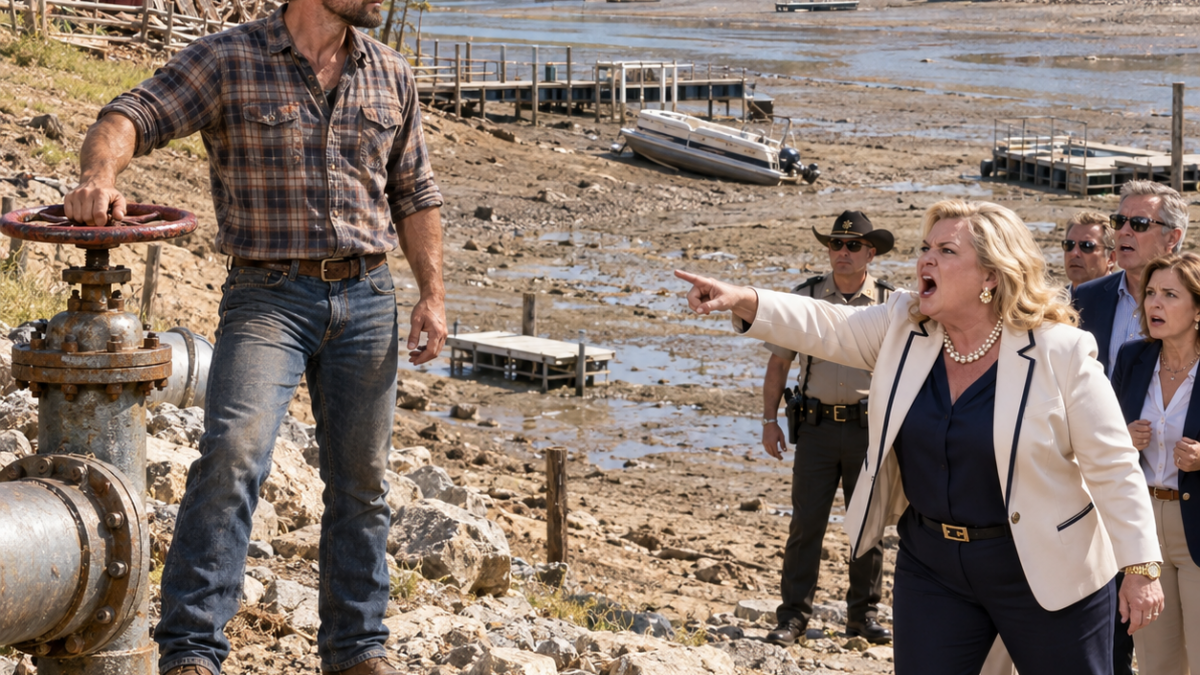
Four hours before I was supposed to bury my father, three contractors walked onto my land with sledgehammers and destroyed the little cedar barn that had kept me alive after my wife died.
The HOA president stood beside her Range Rover taking pictures while my terrified chickens scattered through my wife’s memorial garden, then posted the demolition online as a warning to people who refused to obey her.
What nobody in Willowbrook Estates knew was that six feet beneath the wreckage sat a sixty-year-old valve connected to the one thing their entire luxury community couldn’t afford to lose.
My name is Jasper Crawford, though everyone who knows me calls me Jazz.
I’m a third-generation electrician, recently widowed, and until that morning I thought grief had already taken everything from me that mattered.
My wife Sarah died from cancer.
My father followed less than a year later after months of dementia slowly stealing his memories before his body finally gave up.
Some days he remembered I was his son.
Other days he called me Tommy, the name of his brother who died in Vietnam.
You learn not to correct a man when his mind is already leaving him.
You just hold his hand.
Tell him he’s safe.
And wait for the next moment when your name returns.
I inherited two acres in Willowbrook Estates from my grandmother in 2019.
My little ranch house looked almost ridiculous among the $800,000 homes surrounding Willowbrook Resort Lake.
People there spent more on landscaping than I spent on groceries.
Mailboxes had approved colors.
Trash cans had approved locations.
Grass height was treated like federal law.
The crown jewel was the lake.
Wedding venue.
Fishing tournaments.
Paddleboard classes.
Lakefront mansions.
The kind of place real-estate brochures photographed at sunset so buyers would forget how enormous their mortgages were.
My property was different.
It sat at the natural low point of the entire development, where stormwater from hundreds of homes eventually passed before reaching the lake.
But none of that mattered to me when Sarah died.
What mattered was finding some reason to get out of bed.
So I built a chicken barn.
Nothing fancy.
Cedar framing.
A proper roof.
A secure run.
The same footprint where my grandmother kept chickens beginning in 1959.
I spent three months building it mostly by hand.
Hammering nails was easier than drinking myself numb.
Measuring boards gave my brain something to do when the house became too quiet.
Sarah had picked the cedar before she died.
She’d laughed from a lawn chair while I carried boards across the yard.
“If you build it crooked,” she told me, “I’m haunting you.”
After she was gone, finishing that barn became the only promise I still knew how to keep.
Then Delilah Thornfield entered my life.
Forty-eight years old.
HOA president.
Blonde.
Perfect clothes.
White Range Rover.
Married to Preston Thornfield, whose development company was preparing a major expansion around Willowbrook Resort.
The first violation notice arrived on a Tuesday.
**Unauthorized agricultural structure.**
Five-hundred-dollar fine.
Another hundred dollars every day until I removed it.
I called Delilah.
I explained that the barn stood on the footprint of my grandmother’s original hen house.
I explained that my father was in hospice.
I even told her what building the thing had meant after losing Sarah.
Her answer was cold.
“Mr. Crawford, grief doesn’t exempt you from community standards.”
I requested a hearing.
Denied.
Mediation.
Denied.
Thirty extra days.
Denied.
So I started researching.
The original 1959 survey showed continuous agricultural use.
The county records supported the old hen-house location.
And several HOA restrictions Delilah relied on had never been properly recorded the way she claimed.
Then my cameras caught her husband, Preston, on my land at 2:47 in the morning carrying professional surveying equipment.
That sent me to the county planning office.
There I found Preston’s preliminary development plans for **Willowbrook Resort Phase Two**.
The expansion required access across my two acres.
Suddenly Delilah’s obsession with my chickens made sense.
She didn’t care about a barn.
She needed my land.
And if fines could drive a grieving widower into foreclosure cheaply enough, her husband’s company would get exactly what it wanted.
I thought that was the worst thing I would discover.
Then, while going through Grandma’s old basement records, I found a faded drainage map from 1962.
A handwritten note beside one symbol read:
**MANUAL FLOOD CONTROL — MAIN VALVE.**
The symbol sat directly beneath the ground where my chicken barn now stood.
And before I could understand why that mattered, Delilah scheduled the demolition for the morning of my father’s funeral.
PART 2
At 5:52 Friday morning, I was standing in my bedroom wearing black dress pants and no shirt when the first truck pulled into my driveway.
My father’s funeral suit hung from the closet door.
The tie Sarah had given me for our tenth anniversary lay across the bed.
I remember looking at that tie when I heard diesel engines outside.
At first, I thought one of my cousins had arrived early.
Then came the first crack.
Wood splitting.
Another crack.
Then chickens screaming.
I ran to the window.
Three contractor trucks were parked beside the barn.
Men in work boots and hard hats were swinging sledgehammers into the cedar walls.
For one second, I couldn’t process what I was seeing.
Then I noticed the white Range Rover.
Delilah stood beside it holding her phone.
Recording.
“Jesus Christ.”
I ran downstairs.
By the time I reached the yard, one side wall was already leaning.
“STOP!”
The nearest contractor froze.
Another kept swinging.
“STOP RIGHT NOW!”
The crew foreman lowered his hammer.
“You Jasper Crawford?”
“This is private property.”
“We’ve got an HOA hazard-removal authorization.”
“You don’t have my permission to be here.”
He pointed toward Delilah.
“Ma’am said association counsel approved it.”
I looked at her.
She smiled.
Not a broad smile.
Something smaller.
Satisfied.
My chickens were running through the yard.
Henrietta slammed into the wire garden fence, wings beating.
Fresh cedar splinters covered Sarah’s marigolds.
One contractor kicked aside the small wooden sign she’d painted before the cancer got bad.
**JAZZ & SARAH’S GARDEN.**
It landed face down in the dirt.
Something inside me went absolutely still.
“Delilah.”
She lowered her phone.
“Good morning, Mr. Crawford.”
“My father’s funeral is in four hours.”
Her expression barely changed.
“I’m sorry for your loss.”
“Then stop this.”
“You received notice.”
“You know this structure is under legal dispute.”
“The board determined it constitutes an immediate health and safety concern.”
“Based on what?”
“Rodents. Waste. Disease potential.”
I looked around.
The barn was cleaned every morning.
The feed was sealed.
There wasn’t garbage anywhere.
“This isn’t about chickens.”
She crossed her arms.
“You’re emotional.”
That word.
Emotional.
As if my wife hadn’t died.
As if my father wasn’t lying in a funeral home.
As if three strangers weren’t destroying the one thing I’d built to survive both.
I stepped toward the foreman.
“You need to leave.”
Delilah spoke behind him.
“Continue.”
The man hesitated.
I pulled out my phone.
“I’m calling the sheriff.”
“Feel free.”
She smiled.
“Our attorney has already discussed the situation with local authorities.”
I called anyway.
Then I did the one thing Delilah probably hadn’t expected.
I stopped arguing.
I began recording.
Every contractor.
Every vehicle.
Every license plate.
Every hammer strike.
Every footstep across my property.
Every piece of cedar falling.
Years of electrical work had taught me that when people were determined to do something stupid, the best thing you could do was make sure they left evidence.
Within twelve minutes, the barn was gone.
Three months of work.
Three months of therapy.
Three months of trying not to disappear into grief.
Reduced to broken boards.
Delilah walked toward her Range Rover.
Then she stopped.
“Perhaps now you’ll understand that community standards apply to everyone.”
I looked at the wreckage.
“No.”
She raised an eyebrow.
“I think you’re about to understand something instead.”
For the first time, uncertainty crossed her face.
Then she drove away.
I didn’t chase her.
I didn’t scream.
I didn’t threaten anyone.
I stood among cedar splinters while Henrietta pecked nervously at the dirt.
My phone buzzed.
A hospice nurse who had cared for Dad was asking whether I needed help before the funeral.
I stared at the message.
Then at the wreckage.
I still had to bury my father.
So I changed clothes.
Washed sawdust from my hands.
Put on Sarah’s tie.
And left.
***
The funeral was held at a small church twenty minutes away.
Dad had attended there for forty-three years.
Half the pews were filled with electricians.
Men he’d trained.
Men he’d fired.
Men he’d rehired after pretending not to remember firing them.
The pastor talked about work.
Family.
Patience.
Then my cousin Tommy stood and told a story about Dad teaching us to wire an old barn when we were teenagers.
Everybody laughed.
I couldn’t.
Because every time someone said the word barn, I saw cedar collapsing.
Then the pastor invited me to speak.
I walked toward the lectern.
My notes shook in my hand.
I looked at Dad’s coffin.
For months, dementia had forced me to grieve him while he was still alive.
Some mornings he’d wake up and say, “Morning, Jazz.”
Those were gifts.
Other mornings he’d stare at me like I was an electrician he’d never hired.
I told the room about the last clear conversation we’d had.
He’d been sitting near the kitchen window.
I was complaining about the HOA.
He listened quietly.
Then he said, “Your grandmother never trusted those lake people.”
I laughed at the time.
Dad didn’t.
“That land controls more than they know.”
I assumed dementia had scrambled another memory.
Now I wasn’t so sure.
At the lectern, I looked toward the coffin.
“You spent your life teaching me not to walk away from work just because it got hard.”
My voice broke.
“So I’m not walking away.”
The church stayed silent.
“I love you, Dad.”
Then I stepped down.
***
After the burial, I returned home alone.
Friends offered to come.
Family offered to stay.
I told everyone I needed an hour.
The sun was low when I walked across the yard.
The broken barn looked even worse in evening light.
I picked up Sarah’s garden sign.
The corner had snapped.
I wiped dirt from her painted letters.
That was when grief stopped feeling soft.
It became focused.
I carried the sign into the basement.
Then I began pulling boxes from Grandma’s old storage shelves.
Seed catalogs.
Tax receipts.
Irrigation paperwork.
County correspondence.
Electrical diagrams.
Anything mentioning drainage.
At 9:14 p.m., I found the file.
**CRAWFORD PROPERTY — FLOOD CONTROL AGREEMENT — 1962.**
My hands shook.
Inside was a county engineering map.
A blue line traced drainage channels beneath what had once been farmland.
Another line marked retention areas.
Near my property was a circle.
**MANUAL CONTROL VALVE A-1.**
There were letters between Grandma Crawford and the county.
The county had obtained a perpetual easement for flood-control infrastructure crossing her land.
She retained access and maintenance rights.
For years, they paid her a small annual amount to inspect the valve.
Payments ended in 1987 when engineers considered the manual system largely obsolete.
But nowhere did I see the rights terminated.
I read until midnight.
Then I called the county engineering office and left a message.
***
At 8:03 the next morning, my phone rang.
“Mr. Crawford?”
“Yes.”
“This is Rosa Martinez with county water systems. You left a message about an old manual flood-control valve?”
“Yes, ma’am.”
“Where did you get the agreement number you gave us?”
“My grandmother’s files.”
A pause.
“Can you email me a scan?”
I did.
Ten minutes later, she called again.
Her tone had changed.
“Mr. Crawford, this is real.”
I sat down.
“What exactly does it control?”
“I’m pulling historical maps.”
I heard papers moving.
“Your property used to be a primary drainage control point before Willowbrook was developed.”
“Used to be?”
“Technically it still is.”
I looked toward the basement floor.
“The valve exists.”
Another pause.
“You found it?”
“Not yet.”
“Do not operate anything until we inspect it.”
“I wasn’t planning to.”
That was only partly true.
Rosa continued.
“If the original configuration is intact, this manual system regulates a major portion of stormwater entering the retention network feeding Willowbrook Resort Lake.”
“How major?”
More typing.
“Potentially around seventy percent.”
I stopped breathing for a second.
“Seventy?”
“Approximately. I need to verify.”
I looked through the basement window toward the distant lake.
“You’re telling me the lake depends on drainage passing through my property.”
“I’m telling you we need an engineering inspection before anybody draws conclusions.”
That was the responsible answer.
It wasn’t the satisfying one.
But I respected her for giving it.
She arrived that afternoon.
***
Rosa Martinez was in her early forties, practical, direct, and apparently immune to HOA intimidation.
She wore county work boots and carried rolled maps under one arm.
I showed her the demolished barn first.
She stopped.
“They did this yesterday?”
“Six in the morning.”
“With an active property dispute?”
“Apparently chickens were an emergency.”
She looked at me.
“Wasn’t your father buried yesterday?”
I nodded.
Rosa’s jaw tightened.
“I’ve dealt with Delilah Thornfield.”
“I gathered.”
“She’s made our department’s life miserable for years.”
We went into the basement.
Using the 1962 diagram, we located a section of old concrete beneath packed soil.
Tank Morrison, a contractor neighbor who later became one of my closest allies, brought excavation equipment.
We dug carefully.
Six feet down, the shovel hit metal.
Rosa climbed into the pit.
There it was.
A heavy cast-iron valve assembly wrapped in deteriorated protective material.
Old.
Rusty.
Massive.
She cleaned the identification plate.
“A-1.”
I stared at it.
“That’s it.”
Rosa nodded.
“That’s it.”
We didn’t touch the control until she inspected the system.
She called two county engineers.
They checked downstream flow maps.
Historical connections.
Storm drains.
Retention ponds.
By sunset, Rosa looked almost stunned.
“This shouldn’t still be functioning.”
“Meaning?”
“Meaning whoever built the later development connected modern drainage into old infrastructure instead of fully replacing it.”
“Can it still regulate the lake?”
She looked toward me.
“Yes.”
“How much?”
“Enough that somebody should have documented this decades ago.”
That wasn’t an answer.
“Rosa.”
She sighed.
“Our current estimate is roughly seventy-three percent of inflow reaching the resort system passes through channels controlled or influenced by this valve network during normal conditions.”
I laughed once.
Not because it was funny.
Because my brain had nowhere else to go.
“Seventy-three percent.”
“Approximately.”
“The HOA demolished a barn sitting over the control point for seventy-three percent of their lake water.”
Rosa looked at the wreckage outside.
“I wouldn’t phrase it that way in an engineering report.”
“I would.”
That almost made her smile.
***
Then she showed me something even more important.
My grandmother’s agreement had never been formally extinguished.
The county’s flood-control easement remained recorded.
The maintenance provisions still existed.
My property retained rights and obligations involving access to the infrastructure.
That didn’t mean I had unrestricted permission to destroy the lake.
Rosa made that painfully clear.
“You cannot use infrastructure maliciously.”
“Understood.”
“You cannot create a flooding hazard downstream.”
“Understood.”
“You can’t manipulate water purely to punish neighbors.”
“Understood.”
“But?”
She sighed.
“But you have legitimate authority to operate and maintain the manual controls within the engineering limits of the original system.”
I leaned against the basement wall.
“So if maintenance required temporarily adjusting flow—”
“We would document it.”
“Legally.”
“Within appropriate conditions, yes.”
I looked toward the broken barn.
Rosa followed my eyes.
“Jazz.”
“Yeah?”
“Don’t do anything stupid.”
“Everybody keeps telling me that.”
“Maybe there’s a reason.”
I laughed.
For the first time since Dad’s funeral, the sound felt almost human.
***
That weekend my kitchen became headquarters.
Marcus Webb arrived first.
He was a retired environmental attorney who had recently moved into Willowbrook expecting a quiet retirement.
Apparently God had other plans.
He was sixty-one, silver-haired, calm, and had the unsettling habit of going silent whenever somebody said something legally dangerous.
After two hours reading Grandma’s agreement, he removed his glasses.
“Well.”
I waited.
“Well what?”
“Your grandmother was extremely careful.”
“Meaning?”
“The HOA’s covenants don’t extinguish these recorded rights.”
“Can Delilah stop me from operating the valve?”
“Not simply because she dislikes the consequences.”
“What about the county?”
“County engineers will determine what is safe.”
Rosa nodded.
“Correct.”
Tank Morrison sat across from her eating a powdered donut.
Tank was built like someone had assembled a refrigerator with shoulders.
He’d been fined two thousand dollars by Delilah for leaving his work truck visible during community event weekends.
He had opinions.
Mostly loud ones.
“So Jazz owns the faucet.”
Rosa sighed.
“No.”
“The big faucet.”
“No.”
Marcus looked at Tank.
“Please never testify.”
Tank ate another donut.
***
Then Eleanor Pratt arrived.
Seventy-two.
Retired county clerk.
Sharp enough to shave with.
She carried three bankers boxes.
“I heard we’re overthrowing a dictatorship.”
Marcus looked alarmed.
“Legally.”
Eleanor waved him off.
“I worked county government thirty-eight years. Everything is legal once somebody finds the correct form.”
She began spreading documents across the table.
Corporate filings.
Development records.
Property ownership.
Board disclosures.
Contracts.
Within an hour, the picture became uglier.
Delilah’s husband Preston owned the development company pursuing Willowbrook Resort Phase Two.
Delilah’s law firm represented interests connected to the development.
Other HOA board members had financial relationships touching the expansion.
Her enforcement campaign against me had occurred while Preston needed access across my property.
Conflict of interest didn’t begin to describe it.
Then Margaret Chen arrived with title research.
Her disabled son used a wheelchair van.
Delilah had fined her three thousand dollars for parking it in the driveway too many consecutive days.
Margaret had spent years afraid of the board.
No longer.
She placed a document beside Preston’s development application.
“Look.”
Pre-sale commissions.
Delilah’s firm stood to earn significant money if Phase Two moved forward.
Marcus leaned back.
“There it is.”
“Motive?” I asked.
“At minimum, a serious undisclosed financial interest requiring investigation.”
Rosa pointed toward my parcel on the development map.
“And they need Jazz’s land.”
Nobody spoke for several seconds.
Then Eleanor said what everyone was thinking.
“The chickens were never the problem.”
***
We decided to give Delilah one chance.
Marcus drafted a demand.
Cease the enforcement campaign.
Preserve records.
Compensate me for the destroyed barn.
Withdraw the fines.
Stop trespassing.
Disclose conflicts connected to Phase Two.
The letter also notified the board that protected flood-control infrastructure existed beneath my property and that county engineers were evaluating necessary maintenance.
No threats.
No mention of draining the lake.
Just facts.
We gave them seventy-two hours.
Delilah responded in fourteen.
Not hours.
Minutes.
She emailed:
**YOUR ATTEMPT TO THREATEN COMMUNITY INFRASTRUCTURE HAS BEEN FORWARDED TO COUNSEL.**
Then another message:
**YOUR EMOTIONAL INSTABILITY IS BECOMING A SAFETY CONCERN.**
Marcus read both.
“She’s building a narrative.”
“What narrative?”
“That you’re unstable.”
I thought about my wife.
My father.
The chickens.
The funeral.
“She’s using grief.”
“Yes.”
Something in me hardened.
***
By Monday, anonymous flyers appeared.
My driver’s-license photograph.
Warnings about a “recently bereaved resident exhibiting erratic behavior.”
Suggestions that parents keep children away from my property.
I stood at my mailbox reading one.
Margaret approached.
“I’m sorry.”
I folded the paper.
“Don’t be.”
“Jazz—”
“I spent months watching cancer take my wife. Then dementia take my father. I never threatened anyone.”
“I know.”
“But now grief makes me dangerous?”
She touched my arm.
“That’s what she wants people to believe.”
The campaign moved online.
One-star reviews appeared for my electrical business.
Customers I’d never served.
Cities I’d never worked in.
One review claimed I’d abandoned a job during the exact week of Sarah’s funeral.
Then clients called.
Three commercial customers paused work.
One canceled outright.
Financially, that hurt.
Emotionally, something else hurt more.
I had spent thirty years building a reputation around reliability.
Show up.
Do the job correctly.
Charge honestly.
Stand behind the work.
Delilah was attacking the one thing my father had taught me mattered more than money.
My name.
***
That Thursday, Marcus gathered us again.
“She’s trying to isolate you.”
“I know.”
“No. I mean systematically.”
He pointed to the flyers.
“Neighbors.”
Then the reviews.
“Business.”
Then the HOA communications.
“Community standing.”
He leaned forward.
“She wants you angry enough to react.”
Tank muttered, “I could react for him.”
Marcus pointed at him.
“You especially need to stop talking.”
Rosa spread updated engineering maps across the table.
“I have something.”
The original drainage configuration had been confirmed.
The valve could safely divert water away from the lake into designated downstream channels used by the old flood-control plan.
Within defined flow conditions, the adjustment was lawful maintenance.
“How quickly would the lake drop?” I asked.
Rosa looked at me.
“Jazz.”
“Engineering question.”
She knew exactly why I was asking.
“Depending on rainfall and current inflow, a substantial adjustment could produce visible reduction within twenty-four hours.”
“How visible?”
“Several feet.”
Tank whispered, “Big faucet.”
Rosa glared at him.
Then Marcus said, “Nobody touches anything without county documentation.”
I nodded.
But inside, a thought had already formed.
Delilah had spent months treating my property like dead land.
A place she could regulate.
Enter.
Photograph.
Destroy.
Acquire.
Maybe the entire community needed to see exactly how valuable those two acres actually were.
***
Then Tank delivered the news that made the decision for me.
“She’s filing for a restraining order.”
I stared at him.
“Against me?”
“Tomorrow morning.”
“On what basis?”
“Says you’ve threatened to contaminate the lake.”
“I haven’t.”
“I know.”
“Destroy property values.”
“I haven’t.”
“Claims board members heard you make threats.”
“I haven’t spoken privately to any of them.”
Marcus’s face went cold.
“Fabricated witness statements.”
Eleanor opened another file.
“I know why she’s panicking.”
Preston’s Phase Two agreement had a December 31 acquisition deadline.
If his company couldn’t secure required parcels, including rights involving my property, the deal could lose a $500,000 deposit and millions in future development value.
I sat down.
“So that’s the deadline.”
Eleanor nodded.
“She doesn’t need you gone eventually.”
“She needs me gone now.”
Exactly.
I looked around the table.
At Grandma’s drainage map.
Sarah’s photograph.
Dad’s old electrical tester hanging near the pantry.
Then I said, “I want the county to perform a full valve test.”
Rosa studied me.
“A maintenance test?”
“Official.”
“Documented?”
“Every second.”
Marcus leaned back.
“How far?”
I looked at him.
“Far enough that everyone understands the system works.”
Nobody spoke.
Then Rosa said, “I’ll authorize only what engineering considers safe.”
“That’s all I want.”
Tank smiled.
“Now we’re talking.”
Marcus pointed at him again.
“No, we’re not.”
***
Friday morning, county personnel arrived.
Rosa supervised.
Flow meters were installed.
Downstream channels inspected.
Wildlife considerations checked.
Retention capacity confirmed.
Everything documented.
No improvising.
No revenge fantasy.
Just engineering.
At 10:17 a.m., Rosa nodded.
“Proceed one full rotation.”
I stood over the valve.
My work gloves wrapped around cold metal.
For a second, I imagined Grandma standing behind me.
She had maintained this system before Willowbrook had a resort.
Before Delilah.
Before McMansions.
Before anyone believed an artificial lake was permanent.
I turned.
Metal groaned.
Then moved.
Water changed course underground.
At first, nothing dramatic happened.
That’s the thing about water.
It doesn’t need drama.
Gravity does the work.
By sunset, the lake had dropped almost eighteen inches.
By midnight, more.
Saturday at 6:04 a.m., Janet Henderson called.
“Jazz.”
I was already awake.
“What?”
“Have you looked outside?”
I walked onto the porch.
Even from my property, I could see the shoreline had moved.
“How much?”
“Four feet.”
Her voice sounded half terrified, half delighted.
“The docks are sitting over mud.”
I closed my eyes.
So it worked.
***
By seven, Willowbrook was in chaos.
The resort beach had expanded into a wide strip of exposed lakebed.
Docks stood above mud.
Boat ramps ended before reaching water.
The decorative fountain near the clubhouse sat crooked in a shrinking pool.
Wedding staff were calling managers.
Homeowners were calling each other.
Social media exploded.
Then Delilah appeared.
My camera captured her jogging toward the lake.
She stopped.
Removed her sunglasses.
Stared.
Even from a distance, I could see panic move through her body.
Her house overlooked the water.
So did Preston’s planned development.
So did hundreds of properties marketed around “premium resort-lake access.”
The lake wasn’t gone.
Not yet.
But it was visibly disappearing.
And everybody suddenly understood one thing.
The water was not guaranteed.
My phone rang.
Delilah.
I let it ring.
Again.
Again.
Finally, Marcus called.
“Do not answer her.”
“I wasn’t going to.”
“Good.”
“How bad?”
“Resort counsel has contacted me.”
“What’d you tell them?”
“That county-supervised flood-control maintenance is underway pursuant to recorded infrastructure rights.”
I smiled.
“How’d they take it?”
“Poorly.”
“Good.”
Marcus sighed.
“Jazz.”
“Sorry.”
“Remember the goal.”
I looked toward the exposed shore.
“Stop the harassment.”
“Exactly.”
Not destroy the neighborhood.
Not punish innocent homeowners.
Stop the abuse.
I knew that.
But I would be lying if I said seeing Delilah stare at that shrinking lake didn’t feel satisfying.
***
She called an emergency board meeting by noon.
Her announcement used the words:
**environmental sabotage**
**terrorism**
**dangerous resident**
I read the message twice.
Then sent it to Marcus.
He called immediately.
“She actually wrote terrorism?”
“Yep.”
“Wonderful.”
“Wonderful?”
“For discovery.”
I laughed.
Then Channel 7 called.
Rebecca Martinez had covered our earlier dispute after my Facebook group started gaining attention.
Now she wanted to know why Willowbrook’s lake was vanishing.
I told her the truth.
County-supervised flood-control maintenance.
Recorded rights dating to 1962.
No environmental emergency.
No poisoning.
No illegal sabotage.
Just infrastructure everyone forgot existed.
She asked whether the timing had anything to do with my HOA dispute.
I paused.
“My property was treated as worthless until people discovered how much the development depended on it.”
“Is that a yes?”
“It’s a statement of fact.”
She laughed.
“You’re learning media.”
“Unfortunately.”
***
The lake kept dropping under controlled conditions.
By Saturday evening, close to four feet.
Enough to expose exactly how fragile Willowbrook’s crown jewel was.
Not enough to create permanent environmental damage.
Rosa monitored everything.
Then we held flow stable.
My goal had never been to destroy the lake.
It was to reveal dependency.
Delilah apparently couldn’t understand the difference.
By Monday morning, she filed an environmental complaint alleging I had illegally damaged protected wetlands.
Rosa nearly threw her coffee across my kitchen.
“She knows county engineering supervised the adjustment!”
Marcus smiled.
“Let her file.”
Rosa stared at him.
“Why are lawyers like this?”
“Because false statements in formal complaints are useful.”
Eleanor nodded approvingly.
“Paperwork beats stupid.”
Tank raised his donut.
“To paperwork.”
Nobody joined him.
***
Tuesday night’s emergency meeting packed 237 people into a clubhouse designed for half that.
Homeowners stood against walls.
Resort managers sat near the back.
Channel 7 cameras filled one corner.
Deputy Williams represented the sheriff’s office.
Rosa sat in the front row.
Marcus stood behind me carrying a briefcase.
Eleanor had three boxes.
Tank had somehow convinced fifty tradespeople and residents to attend wearing work boots and expressions that said they were done being polite.
Delilah entered at exactly seven.
She wore a navy suit.
Her face looked exhausted.
Preston sat beside her.
The meeting began.
“Ladies and gentlemen, our community has suffered an unprecedented attack.”
Murmurs.
She clicked the projector.
A photograph of the lowered lake appeared.
“One resident has intentionally manipulated essential water infrastructure in retaliation against this board.”
Another slide.
My house.
“His recent personal tragedies appear to have contributed to increasingly unstable behavior.”
I heard someone hiss.
My hands tightened.
Marcus leaned close.
“Stay seated.”
I did.
Delilah continued.
“This individual has threatened property values, wildlife habitat, resort operations, and the safety of every family in Willowbrook.”
Then she used the word again.
“Environmental terrorism.”
Deputy Williams looked uncomfortable.
Rebecca’s camera zoomed in.
Delilah clicked to another slide showing photographs of my barn.
“His unapproved agricultural operation became the beginning of an escalating campaign against this community.”
That was enough.
I stood.
“May I respond?”
Delilah pointed.
“This is exactly the behavior—”
Deputy Williams stepped forward.
“Ma’am, Mr. Crawford should be permitted to address allegations made against him.”
Applause began.
Delilah’s face tightened.
I walked toward the front.
***
“My name is Jasper Crawford.”
I paused.
“Most of you know that.”
The room quieted.
“I’ve lived on two acres at Willowbrook’s low point since inheriting my grandmother’s property.”
I held up the 1962 agreement.
“This document predates this HOA.”
Then the county correspondence.
“It establishes flood-control infrastructure rights involving my property.”
I pointed toward Rosa.
“County water systems verified those rights.”
Rosa stood.
“My name is Rosa Martinez. I’m a county water-systems engineer.”
She looked toward Delilah.
“The valve operation was inspected, documented, and conducted within authorized flood-management parameters.”
Murmurs swept the room.
Delilah interrupted.
“The lake was destroyed!”
Rosa shook her head.
“No.”
“The shoreline dropped four feet!”
“Temporarily.”
“Weddings were canceled!”
“That is not an engineering definition of environmental damage.”
A few people laughed.
Delilah flushed.
Rosa continued.
“No contamination occurred. No protected wetland was destroyed. No uncontrolled downstream flooding occurred.”
I looked toward the homeowners.
“The water didn’t disappear because I poisoned anything.”
I paused.
“It changed because Willowbrook’s developers built their resort around a drainage system they did not own.”
Silence.
Then I displayed the original map.
Blue drainage lines.
Retention ponds.
The lake.
My property.
“Approximately seventy-three percent of ordinary inflow reaches the resort system through channels affected by infrastructure on my land.”
Gasps.
I pointed toward the screen.
“The two acres Mrs. Thornfield has spent months trying to fine me out of owning are not an eyesore.”
I looked at Preston.
“They are infrastructure.”
***
Preston stood.
“This is absurd.”
Marcus Webb spoke for the first time.
“Mr. Thornfield, would you like to discuss Phase Two?”
The room changed instantly.
Preston froze.
Marcus opened his briefcase.
“Preliminary development applications filed by your company require access involving Mr. Crawford’s parcel.”
Delilah stepped forward.
“That is unrelated.”
Margaret Chen stood.
“No, it’s not.”
She carried copies of title and business records.
“Mrs. Thornfield’s firm is financially connected to Phase Two transactions.”
The room erupted.
Questions.
Shouting.
“What?”
“She never disclosed that!”
“Is this why she targeted Jazz?”
Delilah hit the table.
“Order!”
Nobody listened.
Then Eleanor Pratt stood.
At seventy-two, she didn’t raise her voice.
She didn’t need to.
“I spent thirty-eight years in the county clerk’s office.”
The room quieted because Eleanor had perfected the voice of a woman who could deny a marriage license until somebody stopped arguing.
“I’ve reviewed public records concerning this board.”
She opened the first box.
“Conflicts of interest.”
Second.
“Improperly documented enforcement actions.”
Third.
“Financial relationships between board members and businesses connected to proposed resort expansion.”
Delilah stared at her.
“This is confidential association business.”
Eleanor smiled.
“No, honey.”
She held up a document.
“This one’s public record.”
The room exploded.
***
Then Janet Ree, the board secretary, stood.
“I resign.”
Delilah turned.
“What?”
“Effective immediately.”
“You can’t do this now.”
“I can.”
Janet’s hands trembled.
“I’ve watched this board target residents for years.”
She looked toward me.
“After what happened to Jazz during his father’s funeral, I can’t pretend this is governance anymore.”
Another board member stood.
Then another.
Someone called for a no-confidence vote.
Resort management representatives began whispering with attorneys.
Preston looked like a man watching millions evaporate.
Delilah shouted over everyone.
“This entire meeting is being manipulated by a mentally unstable widower!”
The room became still.
That word again.
Widower.
As if Sarah’s death were evidence against me.
I walked toward the table.
“Delilah.”
She glared.
“You destroyed something I built because grief was killing me.”
Her eyes flickered.
“You ordered that demolition four hours before I buried my father.”
No answer.
“You turned hospice nurses into violations.”
Someone gasped.
“You called my crying a disturbance.”
Her face changed.
The audience had not known that one.
I continued.
“You attacked my business.”
“That’s not proven.”
“Investigators can determine that.”
I looked around the room.
“But none of that gives me the right to destroy this community.”
Then I turned toward Rosa.
“Restore normal flow.”
Delilah blinked.
“What?”
Rosa picked up her radio.
I looked toward the large clubhouse windows.
“The valve demonstration is over.”
Rosa gave instructions to a county technician positioned at my property.
The live feed appeared on the projector.
A gloved hand grasped the wheel.
Turned.
Slowly.
Water began returning through the designated channel.
People moved toward the windows.
The retention system started rising.
I looked at Delilah.
“You’ve spent months telling everyone I’m trying to destroy Willowbrook.”
My voice remained calm.
“I’m not.”
I pointed toward the lake.
“I wanted everyone to understand one thing.”
“What?”
“You cannot treat the person who owns critical infrastructure like disposable trash and expect nothing to happen.”
Nobody spoke.
Then Deputy Williams addressed Delilah.
“I’ve reviewed the county documentation. At this time, I’m aware of no criminal violation arising from the authorized valve operation.”
Delilah’s shoulders dropped.
The accusation she’d built the entire meeting around disappeared in one sentence.
***
What followed was chaos.
Residents demanded Delilah resign.
Others demanded financial records.
People wanted refunds.
Margaret presented evidence involving the wheelchair-van fines.
Bill Rodriguez described being cited for growing vegetables.
The Henderson family discussed the wheelchair ramp dispute.
Every isolated story appeared in the same room.
The pattern became undeniable.
Delilah had built her authority around one assumption.
People wouldn’t compare notes.
Now they were.
The meeting lasted until almost midnight.
By the end, the board suspended enforcement actions involving my property.
An independent financial audit was authorized.
Phase Two conflicts were referred for outside review.
Delilah resigned as president rather than face an immediate removal vote.
Preston left without speaking.
I walked outside after the crowd dispersed.
The lake was already beginning to recover.
Water reflected the moon.
Not full.
Not yet.
But returning.
Rosa joined me.
“Feel better?”
I thought about it.
“No.”
She nodded.
“Good.”
I looked at her.
“Good?”
“If draining the lake made you happy, I’d be worried.”
I smiled.
“You really know how to ruin revenge.”
“Occupational hazard.”
We stood quietly.
Then she said, “Sarah would’ve liked the chickens.”
My throat tightened.
“You never met her.”
“No.”
I looked toward the dark outline of my property.
“She would’ve liked you.”
Rosa smiled.
“I’ll take that.”
***
The investigation that followed was slower than the drama.
Real accountability usually is.
Auditors reviewed association finances.
Attorneys examined development conflicts.
Regulators reviewed Delilah’s professional conduct.
Law enforcement investigated trespass, property destruction, financial irregularities, and false statements.
The demolition crew cooperated.
Their work order traced back through the HOA.
Invoices showed authorization.
Emails showed Delilah had pushed for the demolition before my father’s funeral despite being informed of the date.
That detail hurt more than almost anything.
She knew.
She had known exactly when Dad would be buried.
She chose that morning because she believed I’d be too distracted to stop her.
The cruelty wasn’t accidental.
It was strategic.
***
Preston’s Phase Two project collapsed.
Without uncontested access to my property and with scrutiny surrounding the permitting process, investors backed away.
The company lost its development deposit.
Financing evaporated.
Several partners sued.
Within months, Preston’s business was effectively finished.
Delilah’s problems were worse.
The financial audit uncovered association funds spent in ways residents had not properly approved.
Some expenditures benefited projects tied to individuals with development interests.
Investigators also examined the harassment pattern against selected homeowners.
Eventually, prosecutors filed charges.
I didn’t celebrate when I heard.
Marcus called.
“Jazz.”
“Yeah?”
“They indicted Delilah.”
I sat down.
“On what?”
“Fraud-related counts, misuse of association funds, and conspiracy-related allegations arising from the enforcement scheme.”
I stared at Sarah’s photograph.
“Preston?”
“Separate civil exposure. Criminal review ongoing.”
I closed my eyes.
Marcus waited.
“Aren’t you going to say something?”
“I thought I’d feel better.”
“You will eventually.”
“No.”
I looked toward the yard.
“I think I wanted her to understand what she did.”
“Consequences don’t guarantee understanding.”
He was right.
***
Months later, Delilah entered a negotiated plea.
The court imposed an eighteen-month custodial sentence along with restitution obligations and restrictions tied to her conduct.
People around Willowbrook treated the sentencing like the end of a war.
It wasn’t.
Communities don’t heal because one person goes to prison.
We still had angry neighbors.
Embarrassed board members.
People who had paid fines they never should have paid.
Families who had felt isolated for years.
The new board had work to do.
Their first decision was unanimous.
All enforcement actions against my barn were voided.
The HOA reimbursed my legal expenses.
They compensated me for the demolished structure.
Then the new president, Margaret Chen, came to my house carrying an envelope.
I opened it.
A formal apology.
I read the first paragraph.
Then stopped.
“I don’t need this.”
Margaret shook her head.
“Yes, you do.”
“Why?”
“Because Sarah can’t hear it.”
My throat tightened.
“And your father can’t hear it.”
She touched the envelope.
“But you can.”
I finished reading.
Then framed it.
Not because an apology repaired anything.
Because communities should remember when they get something terribly wrong.
***
We rebuilt the barn.
Except we stopped calling it a barn.
The Willowbrook Heritage Garden grew around it.
Tank organized volunteers.
Forty people arrived the first Saturday.
Electricians.
Teachers.
Retirees.
Teenagers.
Even homeowners who had avoided me during Delilah’s smear campaign.
We used cedar again.
Same dimensions.
Same roofline.
Same footprint as Grandma’s original hen house.
I found Sarah’s broken garden sign.
Tank repaired it.
When we raised the first wall, I screwed that sign beneath the beam.
Nobody made a speech.
Nobody needed to.
Rosa stood beside me.
“You okay?”
I nodded.
“Yeah.”
Then I wasn’t.
I sat on a stack of lumber and cried.
Right there.
In front of everybody.
Not discreet tears.
Real grief.
For Sarah.
Dad.
The first barn.
The months I’d spent fighting when what I really wanted was to stop hurting.
Nobody looked away.
Tank handed me a shop towel.
“That’s all I got.”
I laughed while crying.
“Perfect.”
Then Frank Henderson, who had been fined over his wheelchair ramp, picked up a hammer.
“Come on, Jazz.”
I stood.
We kept building.
***
The restored barn became an educational chicken coop.
School groups visited.
Children learned where food came from.
Rosa helped create watershed lessons.
Students could stand beside the old drainage maps and see how farmland became suburbia.
We built clear demonstration models showing runoff.
Retention.
Lake levels.
Flood control.
The actual valve remained secured underground, maintained jointly under county supervision.
Nobody touched it casually again.
Not me.
Not the HOA.
Not developers.
We formalized procedures so future arguments couldn’t become another crisis.
That mattered.
Because power without rules was exactly what I’d spent months fighting.
I wasn’t going to become Delilah with a wrench.
***
The resort lake returned completely within days of restoring normal flow.
The shoreline recovered.
Weddings returned.
Boats returned.
Property values stabilized.
Then something funny happened.
They eventually increased.
Not because of Delilah’s perfect aesthetic.
Because Willowbrook earned a reputation for transparent governance and environmental education.
The Heritage Garden became a community attraction.
The county recognized our watershed program.
University students visited.
Local schools scheduled field trips.
Every Memorial Day, we held Heritage Festival.
Barbecue.
Music.
Historical photographs.
Gardening classes.
Water-system demonstrations.
Children gathered eggs.
Henrietta became locally famous.
Technically Henrietta III by then, because chickens do not care about narrative continuity.
***
We created the Crawford Easement Education Fund.
The idea came from Rosa.
“People lose property because they don’t understand what they own,” she told me.
She was right.
Deeds contained old rights.
Water agreements.
Access easements.
Agricultural protections.
Restrictions.
People inherited land and assumed the paperwork was boring.
Developers knew better.
Lawyers knew better.
Aggressive associations knew better.
Ordinary owners often didn’t.
So we raised money to help rural families obtain title research and legal consultations before signing away rights they didn’t understand.
Our first case involved an elderly couple whose HOA claimed their vegetable garden violated landscaping restrictions.
Their deed contained agricultural-use language predating the subdivision.
They kept the garden.
The second involved Margaret’s disabled son’s wheelchair van.
The association’s earlier parking rules couldn’t override accessibility requirements the way Delilah had claimed.
The van stayed.
Then came veterans with flagpole disputes.
Farm families.
Lake access.
Road easements.
Drainage rights.
We didn’t win everything.
Law isn’t magic.
But people stopped walking into fights blind.
That was enough.
***
Rosa became more than my engineering contact.
It happened slowly.
Coffee after inspections.
Then dinner.
Then Sundays at the garden.
She knew Sarah’s name from the beginning and never treated my grief as competition.
That mattered.
One evening, we sat beside the rebuilt coop while the sun dropped behind the lake.
She asked, “Do you ever feel guilty laughing?”
I looked at her.
“All the time.”
“Why?”
“Because Sarah isn’t here.”
Rosa nodded.
“My husband died twelve years ago.”
I hadn’t known.
“I’m sorry.”
“So am I.”
She looked toward the water.
“For years, I thought being happy again meant admitting I didn’t miss him.”
I listened.
“It doesn’t.”
I looked toward Sarah’s memorial garden.
“No.”
Rosa smiled.
“No.”
We sat quietly.
Henrietta scratched through cedar shavings.
Children laughed across the lake.
Nothing dramatic happened.
That was what made it beautiful.
***
One year after the demolition, I woke at 5:30 a.m.
Old habit.
Coffee.
Work boots.
Morning air.
I walked toward the barn.
The cedar had darkened slightly.
Dew covered Sarah’s marigolds.
Henrietta III waited impatiently for breakfast.
I opened the run.
The chickens spilled into the yard.
For a second, I could almost see Sarah sitting in that lawn chair.
“You built it crooked.”
I laughed.
“It is not crooked.”
In my memory, she raised an eyebrow.
I sat beside the garden.
Dad’s old screwdriver rested in my pocket.
I kept it there sometimes.
Not because I needed it.
Because it felt like carrying him with me.
The lake shimmered through the trees.
Full.
Calm.
Worth millions again.
But I didn’t look at it and think about revenge anymore.
I thought about responsibility.
For a brief time, I had possessed enormous leverage over hundreds of neighbors.
People who had never hurt me would have suffered if I’d permanently drained that lake.
Retirees.
Young families.
Children.
People whose homes represented their entire savings.
Delilah wanted me angry enough to forget that.
For one night, I almost did.
That was the part nobody told in the headlines.
**WIDOWER DRAINS HOA’S $5 MILLION RESORT LAKE.**
Great title.
Simple villain.
Simple hero.
But real life wasn’t simple.
Turning the valve had been easy.
Knowing when to turn it back was the important part.
***
Later that morning, a fourth-grade class arrived.
Twenty-eight kids.
Three teachers.
Enough noise to terrify every chicken on the property.
Mrs. Patterson introduced me.
“This is Mr. Crawford.”
A boy raised his hand.
“Are you the man who drained the lake?”
Every adult froze.
I laughed.
“Apparently that’s my legacy.”
The boy pointed toward the water.
“Why’d you do it?”
I thought about giving the easy answer.
Because the HOA destroyed my barn.
Because Delilah was corrupt.
Because I could.
Instead, I said, “Because sometimes people don’t understand how much they depend on something until it stops working.”
He frowned.
“What does that mean?”
I pointed toward the ground.
“Water from all these houses has to go somewhere.”
Then I pointed toward the lake.
“And that lake needs water coming in.”
I crouched beside him.
“My family took care of part of that system for decades. People forgot.”
“So you reminded them?”
I smiled.
“Exactly.”
Another girl raised her hand.
“Did you get revenge?”
I looked toward Sarah’s garden.
Then toward the children.
“No.”
She seemed disappointed.
“I got something better.”
“What?”
“A community that listens now.”
She considered that.
Then shrugged.
“Revenge sounds cooler.”
The teachers burst out laughing.
I did too.
Kids keep you humble.
***
At noon, Rosa arrived carrying engineering maps.
“Your fan club here?”
“Apparently.”
She smiled.
“Big celebrity.”
“I drained a lake.”
“You adjusted a flood-control valve under county supervision.”
“See why nobody lets engineers write headlines?”
She laughed.
We walked toward the demonstration area.
One student asked whether Rosa was my wife.
She nearly dropped the maps.
I almost choked.
“No,” we answered simultaneously.
The children giggled.
Rosa whispered, “Fourth graders are vicious.”
“Wait until middle school.”
She nudged me.
I realized I was smiling.
Not forcing it.
Not feeling guilty.
Just smiling.
Sarah would have wanted that.
Dad would have pretended not to notice.
Grandma would’ve asked Rosa whether she could cook.
I looked toward the lake.
Life hadn’t become easy.
It had simply started moving again.
Like water.
***
Two years after Delilah’s fall, Willowbrook’s annual Heritage Festival drew nearly a thousand people.
The event raised $47,000 for the education fund.
Sixteen families received legal-assistance grants that year.
A local television crew returned.
Rebecca Martinez stood beside the restored coop.
“Last time I interviewed you here, this place was a wreck.”
I smiled.
“Last time you interviewed me, I was a wreck.”
She laughed.
“Fair.”
The camera moved toward the lake.
“Do people still ask about the valve?”
“Every week.”
“Do you still control it?”
“The infrastructure is managed under a formal county maintenance protocol now.”
“So no more surprise lake draining?”
“Sorry.”
She smiled.
“Less exciting.”
“Much safer.”
Then she asked the question I knew was coming.
“If you could go back to the morning Delilah demolished your barn, would you do anything differently?”
I looked toward the cedar structure.
Children were collecting eggs.
Margaret was explaining adaptive-access rules to a homeowner.
Tank was burning hot dogs because apparently construction skills don’t transfer to grilling.
Rosa stood near the watershed display.
I thought about Dad’s funeral tie.
Sarah’s garden sign.
The first hammer strike.
Then I answered.
“I would’ve documented sooner.”
Rebecca raised an eyebrow.
“That’s it?”
“I would’ve asked for help sooner.”
I paused.
“And I would’ve spent less time thinking I had to fight alone.”
That was the truth.
***
After the interview, I walked down to the water.
The resort had changed too.
Management no longer treated my property as an embarrassment.
They funded shoreline restoration.
They sponsored environmental programs.
They installed plaques explaining Willowbrook’s agricultural history.
One plaque mentioned the Crawford family.
Grandma.
Dad.
Me.
Sarah too.
I hadn’t requested that.
Margaret had.
The inscription read:
**IN MEMORY OF SARAH CRAWFORD, WHO BELIEVED HEALING COULD GROW FROM THE GROUND UP.**
I stood there reading it.
Rosa came beside me.
“You okay?”
“Yeah.”
“You’re crying.”
“Allergies.”
She looked toward the lake.
“In November?”
“Very aggressive pollen.”
She laughed.
Then took my hand.
I let her.
***
That evening, after the festival ended, I sat alone beside the barn.
The same place where Delilah’s contractors had stood two years earlier.
There were no broken boards now.
No frightened chickens.
No Range Rover.
Only warm light from the coop windows.
The smell of cedar.
Lake water.
Barbecue smoke lingering from the festival.
I took Sarah’s tie from the small wooden box where I kept it.
The same tie I’d worn to Dad’s funeral.
I ran the fabric through my fingers.
“So.”
I looked toward the sky.
“Things got weird.”
A breeze moved through the garden.
I smiled.
“You would’ve loved Rosa.”
The words surprised me.
Then I laughed quietly.
“Actually, you would’ve interrogated her for three hours first.”
I could almost hear Sarah.
*Somebody has to make sure she’s good enough for you.*
My eyes filled.
I let them.
Grief wasn’t a violation anymore.
It wasn’t weakness.
It wasn’t dangerous.
It was love with nowhere obvious to go.
So I let it sit beside me.
***
Eventually I walked to the basement.
The valve access had been rebuilt properly.
Locked.
Labeled.
Monitored.
I opened the maintenance enclosure and looked at the iron wheel.
That one object had become famous.
People imagined it as some giant red lever marked **DESTROY HOA**.
Reality was less dramatic.
Rust.
Bolts.
Pipe.
A heavy wheel.
But I remembered placing my hands on it the first time.
Angry.
Grieving.
Feeling powerless.
Then discovering I wasn’t.
Power is dangerous when it arrives during pain.
That’s another thing nobody told me.
When you’ve been humiliated, the temptation isn’t simply to protect yourself.
It’s to make the other person hurt.
To make them understand.
To force fairness through suffering.
Delilah had lived that way.
She felt financial pressure, so she transferred pain to everyone around her.
Homeowners.
Disabled families.
Gardeners.
Workers.
Me.
When I turned the valve, I stood one decision away from doing something similar.
I could have closed it completely.
I could have left it that way.
Maybe ruined hundreds of property values.
Maybe destroyed innocent families financially.
Then blamed Delilah.
But revenge that requires hurting people who never hurt you isn’t justice.
It’s contagion.
So I demonstrated the power.
Then restored the water.
That choice mattered more than the first turn.
I placed one hand on the valve.
Cold iron.
Then whispered, “You taught me something, Grandma.”
The basement didn’t answer.
Grandma rarely did when she was alive either.
She believed if she’d explained something once, repeating it encouraged stupidity.
I laughed.
Then locked the enclosure.
***
Every morning now, water moves through Willowbrook exactly as it should.
Storm drains carry runoff.
Retention ponds rise and fall.
The lake stays healthy.
The resort operates.
Children swim.
Weddings happen.
Homes remain valuable.
My chickens cluck.
My electrical business recovered.
Dad is buried beside Mom.
Sarah’s garden blooms every spring.
And nobody from the HOA has ever again told me grief violates community standards.
Sometimes new residents hear the story and come to my door.
“Are you really the guy who drained the lake?”
I usually say, “Depends who’s asking.”
Then they laugh.
Eventually they ask what happened to Delilah.
I tell them the truth.
She faced consequences.
Her husband lost the development project.
The board changed.
She lost the authority she’d abused.
But I don’t enjoy retelling that part anymore.
The important part came afterward.
The garden.
The schoolchildren.
The neighbors.
The families who learned their rights.
The rebuilt barn.
The water flowing again.
That’s the ending Sarah would’ve wanted.
Not one where everybody lost.
One where the thing meant to destroy me became useful to somebody else.
***
Last fall, a little girl visiting with her school group handed me a drawing.
It showed chickens.
A blue lake.
A house.
A giant valve underground.
And a stick-figure man standing beside it.
Above him she’d written:
**MR. JAZZ SAVED THE LAKE.**
I laughed.
“Sweetheart, I drained the lake.”
She shook her head.
“No.”
Her teacher smiled behind her.
The girl pointed at the picture.
“You put it back.”
I stopped.
Children have a way of reducing complicated truths to sentences adults spend years avoiding.
I looked at the blue crayon lake.
Then at the enormous red valve she’d drawn beneath it.
“You know what?”
“What?”
“You’re right.”
She grinned.
Then ran back toward her classmates.
I stood there holding the drawing.
For months, I thought my story was about revenge.
An HOA destroyed my barn.
I drained their lake.
Simple.
Satisfying.
Viral.
But the child understood the real ending better than I did.
The important thing wasn’t that I could drain Willowbrook.
It was that, when the moment came, I chose to let the water return.
***
That drawing now hangs beside the HOA’s apology in my kitchen.
Sarah’s cornbread recipe is framed beneath both.
Three pieces of paper.
One representing harm.
One representing innocence.
One representing home.
Some mornings I stand there with coffee and think about how close I came to losing myself.
Not the property.
Myself.
Delilah wanted to convince me that I was unstable because I grieved.
Dangerous because I was angry.
Unreasonable because I refused to surrender land she wanted.
For a while, I fought so hard against that picture that I nearly became obsessed with proving I could hurt her back.
Then the people around me reminded me who I actually was.
Dad taught me to finish work.
Grandma taught me to keep records.
Sarah taught me to build instead of disappear.
Rosa taught me that power needed boundaries.
Marcus taught me that legal rights were strongest when exercised carefully.
Tank taught me that donuts apparently solved every tactical problem.
Eleanor taught me that old county clerks should never be underestimated.
And Willowbrook taught me that communities can survive terrible leadership if ordinary people finally stop being afraid of each other.
***
This morning, sunrise turned the resort lake gold.
Henrietta IV pecked at my boot.
Yes, we’re on Henrietta IV.
Don’t ask.
The Heritage Garden opened at eight.
A school bus was due at nine.
Rosa had left her coffee mug on my porch again.
Tank texted that one of the chicken-run doors needed adjustment.
Margaret sent the new HOA financial report to every resident without anyone begging for it.
Normal things.
Beautiful things.
I stood beside Sarah’s marigolds and looked across the water.
Two years earlier, that view had been mud.
Docks standing over nothing.
Homeowners panicking.
Delilah learning that the working-class widower she considered disposable controlled something her entire development depended on.
I could still remember the feeling when I first turned the wheel.
The metal moving beneath my hands.
Water changing course.
Power.
But when I think about that day now, I remember something else more clearly.
The second turn.
The one that brought the lake back.
Because Delilah Thornfield destroyed my barn believing destruction was power.
For a short time, she convinced me of the same thing.
She was wrong.
**Real power was having the ability to ruin what she valued—and choosing instead to expose the truth, protect my land, rebuild what she broke, and make sure nobody in Willowbrook could ever abuse that kind of authority again.**
The barn stands again.
Sarah’s flowers grow beside it.
Dad’s tools hang in my workshop.
The chickens are safe.
The lake is full.
The neighborhood is stronger.
And six feet beneath my boots, that old iron valve still waits.
I know exactly what it can do.
So does everyone else.
Nobody is afraid of it anymore.
Because the most powerful thing about that valve was never that I could drain a five-million-dollar resort lake.
**It was that after everything they did to me, I still knew when to turn the water back on.**
**THE END.**








