PART 2: HOA Claimed My Creek With a 1987 Easement—Then My Attorney Found the Clause They Never Read
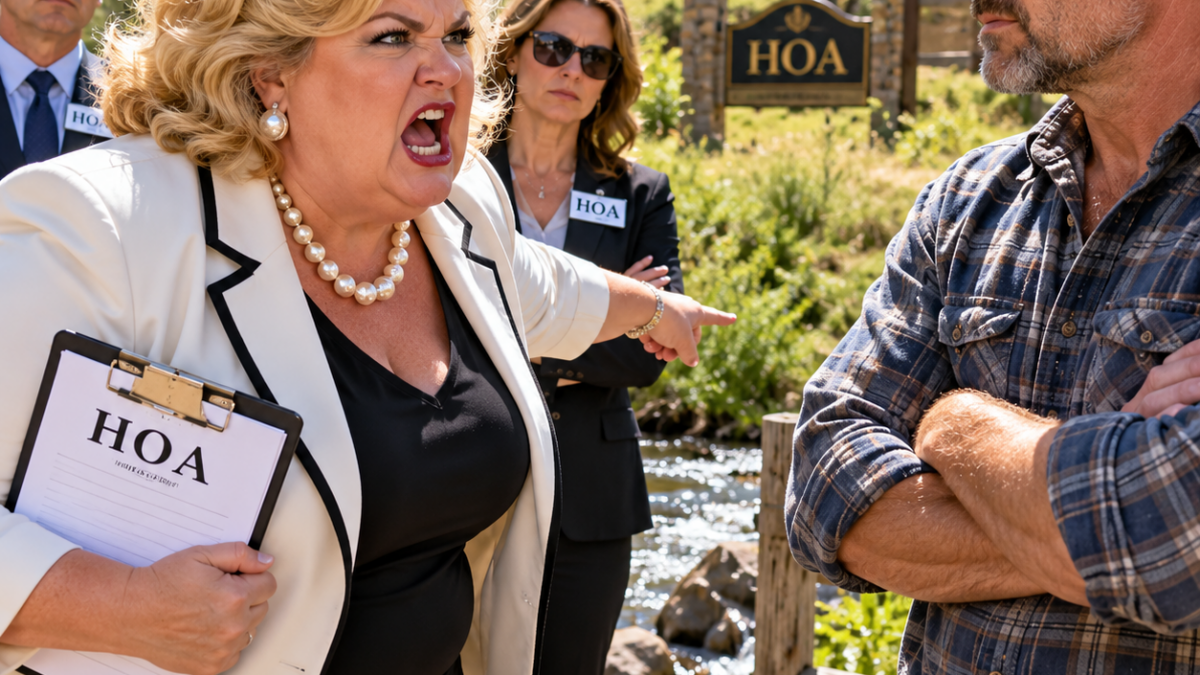
PART 2
The sentence was plain enough that I didn’t need a lawyer to understand what it said.
I still called one.
The easement had been recorded on June 15, 1987.
Paragraph four stated that unless the developer or its lawful successor formally renewed the easement within thirty years, the easement would “expire and thereafter be of no further force or effect.”
Thirty years.
June 15, 2017.
I looked at the county clerk.
“Can you search for renewals?”
“Already doing it.”
Her fingers moved across the keyboard.
I forced myself not to get ahead of the evidence.
Maybe the developer had renewed it.
Maybe the HOA had succeeded to the right and filed something I had never seen.
Maybe there was a supplemental instrument.
The clerk searched under the subdivision name.
Developer name.
HOA name.
My parcel.
Previous parcel numbers.
She checked images from the digitized index and an older grantor-grantee database.
Finally she leaned back.
“I’m not finding a renewal.”
“Nothing?”
“Nothing indexed under the names you gave me.”
“That means it expired?”
She smiled carefully.
“It means I can tell you what is in the county record. I can’t give you a legal opinion.”
Fair answer.
“Can I get certified copies?”
“Of the easement and the plat?”
“And anything showing the chain of filings around it.”
She nodded.
While she printed the packet, I photographed my own notes.
The confidence I had felt when I first saw the clause was already cooling into something more useful.
Possibility.
Not victory.
A phrase I had drilled into younger officers for years came back to me.
**Verify before you brief.**
On the drive home, I called Sarah.
“You sitting down?”
“I’m cleaning the kitchen.”
“Sit.”
“Jack.”
“Please.”
I heard a chair move.
“What did you find?”
“The easement was real.”
Silence.
Then quietly:
“Oh.”
“Keep listening.”
“Okay.”
“It had a thirty-year sunset clause.”
“How old?”
“Filed June 1987.”
Another silence.
I could hear the refrigerator humming through the phone.
Sarah said:
“So 2017.”
“Exactly.”
“Was it renewed?”
“County clerk can’t find anything.”
Her voice changed.
Hope was dangerous when you had spent a day imagining concrete trucks beside your backyard.
“Are you sure?”
“No.”
That answer disappointed her.
It disappointed me too.
“I have certified copies. We need a lawyer to verify it.”
“Then find one.”
“I will.”
“And Jack?”
“Yes?”
“Don’t tell Karen yet.”
I smiled.
“I married well.”
“You married someone who knows you enjoy being right too much.”
“That sounds less romantic.”
“Come home.”
When I pulled into the driveway, Sarah was waiting on the back deck.
We walked to the creek together.
The water was low and clear enough to see minnows holding behind rocks.
Dragonflies skimmed the surface.
Our bridge crossed a narrow section between two sycamores.
Sarah rested both hands on the cedar railing.
“When we bought this place, you were different.”
“Different good or different bad?”
“Tired.”
“I’m still tired.”
“No.”
She shook her head.
“You were tired in a way sleep didn’t fix.”
I knew what she meant.
Retirement had not been dramatic for me.
No breakdown.
No crisis.
Just an odd emptiness.
For decades I had known what came next.
Morning briefing.
Inspection.
Budget meeting.
Project review.
Deployment schedule.
Personnel issue.
Emergency repair.
Then suddenly I was home.
Nothing broken required me.
Sarah had found the listing for this house six months before I retired.
The photograph that sold her was not the house.
It was the creek.
“You need somewhere quiet,” she had told me.
I had teased her.
“You diagnosing me now?”
“I’ve been married to you for twenty-three years. That gives me honorary credentials.”
The first night after we moved in, we sat beside the creek until darkness hid the banks.
Neither of us talked much.
I remembered thinking the water didn’t need anything from me.
It simply moved.
That had felt like freedom.
Now somebody planned to replace it with concrete because a board had decided a natural stream looked too much like a drainage problem.
Sarah squeezed my hand.
“Find someone who knows this law.”
“I will.”
“Not someone who agrees with you.”
I looked at her.
“What?”
“You heard me.”
“You think I’m wrong?”
“I think you found what you wanted to find.”
She nodded toward the folder.
“Make sure someone who gets paid to disagree with people thinks you’re right.”
That irritated me for roughly five seconds.
Then I kissed her forehead.
“That is annoyingly sensible.”
“I practice.”
I spent that evening researching attorneys who handled easements, riparian rights, HOA disputes, and land-use litigation.
Most firm websites looked interchangeable.
Smiling partners.
Glass conference rooms.
Words like *solutions* and *client-centered excellence.*
Then I found Arthur Thompson.
His website looked as though someone had designed it in 2003 and threatened anyone who suggested updating it.
Mostly text.
Published cases.
Property disputes.
Water rights.
Easements.
Boundary litigation.
Landowners versus local governments.
Landowners versus developers.
Developers versus landowners.
He seemed willing to sue anyone as long as the deed was interesting.
One article discussed termination of old drainage rights after expiration conditions.
I called the next morning.
A receptionist answered.
I gave her the short version.
“Recorded drainage easement from 1987. Thirty-year expiration clause. HOA claims it still controls a natural creek on my lot and has a contractor coming to line it with concrete.”
“Hold please.”
Less than a minute later, a rough voice came on.
“This is Thompson.”
“Mr. Thompson, my name is Jack Davis.”
“I heard.”
I blinked.
“Your receptionist—”
“She knows what I like.”
I almost laughed.
“You actually have contractors coming?”
“HOA president says Monday.”
“Do they have permits?”
“I don’t know.”
“Engineering?”
“She wouldn’t provide it.”
“Did you receive a written notice?”
“Fine and access demand.”
“Are you in the HOA?”
“Yes. Five-acre lot at the edge of the subdivision.”
“Creek entirely within your parcel where they plan the work?”
“Yes.”
“Bring deed, plat, title report, declaration, easement, every HOA notice, every board communication, and anything showing proposed work.”
“When?”
“Tomorrow. Nine.”
“Do you need my name again?”
“No.”
He hung up.
Sarah looked across the breakfast table.
“I like him already.”
His office occupied the second floor of an old brick building downtown.
No marble lobby.
No receptionist behind glass.
Books.
File boxes.
Maps.
Arthur Thompson looked nearly eighty.
White hair.
Tweed jacket.
Bolo tie.
Reading glasses hanging from a cord.
He pointed at a chair.
“Binder.”
I set it on his desk.
He opened to the first tab.
For almost forty minutes, he said nothing beyond:
“Next.”
“Where did you get this?”
“Certified?”
“Original copy?”
“Who wrote this note?”
When he reached the easement, he put on his glasses.
Read paragraph four.
Went back to paragraph one.
Read the signature page.
Then the recording stamp.
He pulled the subdivision plat closer.
He read the HOA declaration.
Then my title report.
Finally he leaned back.
“Who found the sunset clause?”
“I did.”
“You a lawyer?”
“No. Retired Air Force civil engineering.”
“That explains the tabs.”
“Are the tabs a problem?”
“No. Most clients bring me grocery bags.”
He tapped paragraph four.
“On its face, this is very good for you.”
“Expired?”
“Likely.”
“That sounds less satisfying.”
“Law is often less satisfying than television.”
He rotated the easement toward me.
“This instrument expressly limits its own duration. If no timely renewal occurred and no separate legal basis preserves the right, then the HOA has a serious problem.”
“County found no renewal.”
“We verify independently.”
“Of course.”
“We also determine whether there were amendments, assignments, plats, court orders, or later deeds that affect the right.”
“Okay.”
“Then we look at what exactly the HOA wants to do. An easement for drainage is not necessarily a blank check to convert a natural creek into a concrete channel even while valid.”
That caught my attention.
“So even if it hadn’t expired—”
“Don’t jump ahead.”
I sat back.
He smiled slightly.
“You military engineers hate lawyers because we won’t let you skip steps.”
“We hate lawyers for many reasons.”
“Healthy.”
Arthur spent the next hour explaining the problem in layers.
First question: Did an easement ever exist?
Yes.
Second: What rights did it originally grant?
Maintenance of a thirty-foot drainage corridor and access reasonably necessary to keep water flowing.
Third: Did it still exist?
Probably not, based on the sunset clause, if there was no renewal.
Fourth: Even if it survived, would concrete lining the creek necessarily fall within its scope?
Not automatically.
Fifth: Could the HOA enforce unrelated covenants against my bridge?
Possibly, depending on actual architectural rules, but that was separate from easement rights.
Sixth: Did environmental or county permits apply before channelizing the creek?
Almost certainly something needed review.
I stared at him.
“So Karen has about five different problems.”
“She may have more.”
Arthur flipped to the violation notice.
“What I don’t want you doing is turning a strong case into a personal crusade.”
“She threatened our home.”
“No. She threatened your creek and gave you a fine.”
“She mentioned liens.”
“That’s not losing your home.”
I didn’t like him suddenly.
He noticed.
“Good.”
“What?”
“You’re angry at me.”
“You’re minimizing it.”
“No. I’m calibrating it.”
He closed the binder.
“If she records an improper lien, we deal with it. If contractors trespass, we deal with that. If the board spends improperly, homeowners deal with that. But we don’t inflate facts because we’re angry.”
Sarah would love him.
“That your standard speech?”
“No. Usually clients haven’t built a four-inch binder before meeting me.”
“So what do we do?”
“First, I confirm the easement history.”
“Then?”
“Then we make them prove the project.”
I expected a cease-and-desist letter immediately.
Arthur surprised me.
“Request records.”
“What records?”
“Engineering report. Hydrology. Contractor bids. Board minutes. Legal opinion if they claim one exists. Permit applications. Procurement records. Conflict disclosures.”
“Why wait?”
“Because right now Karen thinks this is about whether you cooperate.”
He folded his hands.
“I want to know whether the rest of the board understands what it approved.”
That distinction became important later.
He drafted a letter for me to send as a homeowner.
Not from his office yet.
It was polite.
Boring.
Dangerously specific.
I requested the full engineering basis for the proposed flood-mitigation project.
Hydrologic studies.
Flood history.
Design drawings.
Environmental review.
County permits.
Three competitive bids required under the HOA’s purchasing policy for a project over $10,000.
Meeting minutes authorizing the project.
Vote records.
Conflict-of-interest disclosures.
The legal basis for asserting continuing easement rights.
I sent copies to every board member.
Certified.
Karen.
Bob Jones, compliance chair.
Margaret Finch, secretary.
Daniel Lee, treasurer.
Susan Williams, director at large.
Then I waited.
While I waited, Karen sent a community email.
Subject:
**URGENT FLOOD MITIGATION AND CREEK BEAUTIFICATION PROJECT**
I printed it before reading it fully.
Old habit.
Then I read.
She described the creek as an “unmanaged stormwater corridor.”
She warned of erosion.
Possible flooding.
Hazards to children.
Infrastructure risk.
She announced a special assessment of $2,000 per household.
Whispering Pines had about 150 homes.
Three hundred thousand dollars.
Sarah read the email beside me.
“They’re charging everybody?”
“Yes.”
“For concrete through our property?”
“Apparently.”
She kept reading.
Then stopped.
“Oh, she is good.”
I knew exactly which paragraph.
**The board is aware that one homeowner directly affected by the easement has demonstrated initial resistance to this essential project. Appropriate enforcement action has begun, and the board is confident that no individual will be permitted to endanger the safety and property values of the broader community.**
Sarah looked at me.
“She didn’t use your name.”
“She didn’t need to.”
The community forum proved it.
Some residents supported the project immediately.
*Thank you for finally fixing this.*
*Safety should come first.*
*People who buy in an HOA agree to follow rules.*
Bob posted:
**I have personally reviewed the easement. It is valid.**
I highlighted that one.
Other residents asked questions.
A woman using the name GardenerGal wrote:
**Are we talking about the natural creek behind the western lots? Why would we line that with concrete?**
Someone named FiscalFrank wrote:
**Can the board provide the engineering report and three bids before collecting $300,000?**
Karen answered:
**All appropriate professional review has occurred. The board’s decision is final.**
I printed that too.
Sarah watched pages accumulate on the table.
“You know you’re smiling.”
“No.”
“You are.”
“This is documentation.”
“You enjoy documentation when somebody is being stupid in writing.”
“That is different.”
She closed the printer tray.
“Go outside.”
“I have work.”
“You retired.”
“Exactly.”
“Jack.”
I looked at her.
She pointed toward the creek.
“The thing you’re trying to save is outside. Go look at it.”
I hated when she won arguments without raising her voice.
I took a pair of pruning shears and walked down.
The creek looked exactly as it had the week before.
That was the strange part.
My mind had converted it into evidence.
Flow rate.
Easement corridor.
Bank profile.
Potential construction zone.
Sarah was reminding me it was also the place where she drank coffee barefoot in summer.
Where deer crossed.
Where we had found a box turtle under the bridge.
I sat on a rock.
No binder.
No camera.
Just water.
Ten minutes later, a woman’s voice called from the public walking path beyond our rear boundary.
“Mr. Davis?”
I stood.
She was maybe seventy.
Work gloves.
Wide straw hat.
Small hand trowel in one hand.
“Mrs. Gable?”
“Eleanor.”
I recognized the yard before I knew her name.
Native flowers everywhere.
While most Whispering Pines lawns looked like green carpeting, hers looked alive.
“I wrote the comment.”
“GardenerGal.”
“You sound disappointed.”
“Relieved, actually.”
She pointed toward the creek.
“I was here when they built the subdivision.”
“That makes you dangerous.”
“Karen certainly thinks so.”
Eleanor walked to the boundary fence but didn’t cross.
“The developer used to bring prospective buyers down this trail. They’d point at your creek and call it a natural amenity.”
I thought about Karen’s safety email.
“Did it ever flood?”
“Oh, everything flooded once in ’96. Hurricane remnants. The detention pond overflowed. Half the county was wet.”
“Normal storms?”
“No.”
“Do you remember the easement?”
She frowned.
“Vaguely. Old Mr. Hemlock put one on the original map because the county wanted drainage access during development.”
“Did anyone use it?”
“Workers cleaned debris after construction once or twice. By the time the HOA took over, I don’t remember anybody touching your side.”
“You ever heard of it being renewed?”
“No.”
I didn’t tell her what Arthur and I suspected.
Not yet.
Instead I asked:
“How long has Karen been president?”
“Ten years.”
“That long?”
“Nine and change.”
“People keep electing her?”
“At first she was useful.”
Eleanor leaned on the fence.
“That matters, Mr. Davis.”
“What do you mean?”
“People tell stories about Karen now like she emerged from the earth holding a violation notice.”
I smiled.
“She didn’t?”
“She organized things. Fixed the pool contract. Made the landscaper replace dying trees. Got delinquent dues collected.”
“So what happened?”
“She stopped hearing the difference between being responsible for something and owning it.”
That sentence stayed with me.
Eleanor lowered her voice.
“The assessment has people upset.”
“Two thousand dollars should.”
“You’re not the only one asking questions.”
“FiscalFrank?”
She smiled.
“David Chen. Accountant. Very boring man. Exactly who you want angry about money.”
“I’d like to meet him.”
“I thought you might.”
My record request deadline passed.
No response.
Arthur told me to wait two more business days.
Still nothing.
Then Bob delivered another violation.
$1,000.
Continued obstruction of drainage access.
The total alleged balance hit $4,500.
I did not argue with him.
I photographed the notice.
“Anything to say?” Bob asked.
“Yes.”
He waited.
“Drive carefully.”
He looked disappointed.
Arthur loved it.
“Never wrestle in a parking lot when you’re already headed to court.”
“I wasn’t going to wrestle him.”
“Metaphor.”
“I know.”
“Engineers.”
Then Karen finally responded to the record request.
One page.
No documents.
She called my requests “excessive, duplicative, burdensome, and unrelated to legitimate homeowner interests.”
She claimed engineering reports and legal advice were confidential.
She said contractor information was proprietary.
She refused the bids.
Refused detailed minutes beyond already published summaries.
Then wrote:
**The project will proceed Monday. Please ensure contractor access to the drainage corridor.**
Arthur read the letter twice.
“Proprietary.”
“Yes.”
He smiled.
“I do love that word.”
“Why?”
“Because people use it when they don’t know what privilege means.”
He became serious.
“Now we identify ourselves.”
The next letter came from Arthur Thompson & Associates.
This one revealed the easement problem.
He did not call it a “dead easement” or a “fraud.”
He cited the instrument number.
Recording date.
Paragraph four.
The absence of any renewal his title search could locate.
He stated that the claimed drainage easement had expired under its express terms in June 2017 and that the HOA presently lacked any recorded easement right authorizing entry onto our parcel.
He demanded written confirmation that contractors would not cross our boundary.
He also warned that continued expenditure of association funds after notice could raise fiduciary questions for directors.
Twenty-four hours to confirm.
The letter went to all directors.
Management company.
HOA counsel.
Contractor.
Karen.
No one answered.
Monday arrived.
At 7:18 a.m., diesel engines entered the cul-de-sac behind us.
Sarah and I stood on our deck.
A flatbed truck carried a yellow excavator.
Another carried steel plates.
A smaller truck towed equipment.
Karen arrived in her golf cart.
Bob behind her.
The workers remained on HOA common property beyond my boundary.
Arthur had been clear.
“If they stay over there, let them.”
“I don’t like that.”
“You aren’t required to like it.”
“They’re tearing up woods.”
“HOA woods.”
“So we’re watching them waste money?”
“We warned the board.”
Sarah looked at me.
“You’re really going to stand here?”
“Yes.”
“All day?”
“Possibly.”
“Then put sunscreen on.”
War is less cinematic when your wife hands you SPF 50.
The crew cut a twenty-foot access lane through a strip of HOA-owned trees.
Not old-growth forest.
Mostly younger pines and brush.
Still ugly.
They laid steel mats for equipment.
They built a temporary staging area.
I recorded from my property.
No shouting.
No confrontation.
On Tuesday, they continued.
At noon, I saw a survey stake appear within ten feet of our line.
Wednesday morning, a worker walked toward the boundary carrying marking paint.
I approached.
“Morning.”
He stopped.
“You Mr. Davis?”
“Yes.”
He looked relieved.
“Our foreman said don’t cross yet.”
“Good advice.”
“HOA says they’ll have authorization tomorrow.”
“They won’t.”
He shrugged.
“Above my pay grade.”
“Who’s the contractor?”
“All Pro Concrete Solutions.”
That was the company listed in the assessment.
“Owner here?”
“Bernie comes by afternoons.”
“Bernie Schmidt?”
He looked surprised.
“Yeah.”
Interesting.
That afternoon, I met David Chen at a coffee shop.
“FiscalFrank?”
He winced.
“My daughter created the account.”
“Convenient.”
“I’m an accountant. She thought it was funny.”
“It is.”
“It isn’t.”
Eleanor had introduced us.
David brought a folder.
“I looked up All Pro.”
He slid over corporate-registration documents.
Formed six months earlier.
Small capitalization.
Mailing address was a rented box.
Registered agent:
Bernard Schmidt.
David pushed another page toward me.
“I searched social media.”
A photograph from a family birthday.
Karen standing beside a man tagged **Bernard Schmidt.**
Caption:
**Best brother-in-law a girl could ask for.**
I leaned back.
“That’s not proof of wrongdoing.”
“No.”
David seemed pleased I said it.
“It is proof of a related-party relationship that should have been disclosed.”
“Any disclosure?”
“Not in published minutes.”
“Competitive bids?”
“Board won’t provide them.”
“Contract value?”
“Still trying.”
He stirred his coffee.
“I voted for Karen.”
That surprised me.
“Why?”
“She used to be good.”
Eleanor had said the same thing.
David looked embarrassed.
“I was treasurer years ago. Before her.”
“What changed?”
“She hated slow decisions.”
“That can be useful.”
“It was.”
He nodded.
“If something cost five thousand dollars, I’d ask for bids. She would say we were wasting three meetings to save two hundred dollars.”
“And people liked faster decisions.”
“Yes.”
“Until they cost three hundred thousand.”
David looked at me.
“Exactly.”
He had also noticed something in the HOA’s annual budget.
Professional services expenses had climbed sharply over three years.
Landscaping too.
No explanation beyond broad categories.
“You think there’s more?”
“I think we need records.”
That evening, Eleanor hosted what she called a book club.
Nobody brought a book.
David attended.
So did Susan Meyers, a retired newspaper reporter.
Maria Santos, a young mother with two children.
And Mike Rawlins, a contractor who had lived in Whispering Pines fifteen years.
Sarah came with me.
I brought selected documents.
Not everything.
Arthur had instructed me to separate attorney work product from material residents were entitled to see.
I showed them the easement.
Mike read paragraph four.
“That’s it?”
“Attorney agrees.”
“So this whole project is built on something that expired six years ago?”
“Yes.”
David showed the contractor relationship.
Susan read Karen’s community email.
“She’s going to hate seeing this on a projector.”
I looked at her.
“I’m not planning a public spectacle.”
Everyone stared at me.
Sarah laughed.
“What?”
Susan smiled.
“You brought a four-inch binder to book club.”
“Documentation is not theater.”
“No. But you’re absolutely going to use a projector.”
She was right.
We divided work carefully.
David would explain finances.
Mike would analyze the proposed concrete channel from a contractor perspective but avoid pretending to be a hydrologist.
I would present my own engineering observations while making clear I was the affected homeowner and not an independent consultant.
Susan would organize documents into a timeline residents could understand.
Maria would help circulate verified information before the next general meeting.
Eleanor would contact older residents who remembered the development history.
Sarah listened.
Then asked:
“What is the goal?”
Everyone looked at her.
“Stop the project,” I said.
“That’s immediate.”
“Cancel the assessment,” David said.
“Also immediate.”
“Get records,” Susan added.
Sarah shook her head.
“What happens after Karen loses?”
Nobody answered.
That question changed our approach.
It was easy to build a coalition against someone.
Harder to build one for anything.
So we wrote down five goals.
Stop unauthorized work on my creek.
Cancel or suspend the special assessment unless properly approved and justified.
Obtain independent review of the project’s engineering and finances.
Require disclosure of conflicts and competitive bids.
Create procedures preventing one president from controlling information again.
Mike looked at the page.
“That sounds less fun than revenge.”
Sarah smiled.
“That’s why it might work.”
The next morning, Arthur filed for temporary injunctive relief.
Not to freeze every HOA account.
That would have harmed innocent vendors and residents.
He asked the court to prohibit entry onto my parcel and suspend further spending specifically tied to the disputed creek project pending a hearing.
He attached the easement.
Title search.
Karen’s letters.
Board notices.
Photographs of mobilization.
My affidavit.
The contractor information.
The judge granted a short temporary order preserving the status quo until a hearing could be held.
Arthur called.
“Do not celebrate.”
“I wasn’t.”
“Liar.”
“What does it cover?”
“No entry on your property. No alteration of the creek. No destruction of your bridge. Project-related expenditures limited to securing the site and demobilization unless otherwise agreed.”
“Assessment?”
“Collection remains a separate issue. We address it through association process and at hearing if necessary.”
“So the creek is safe.”
“For now.”
I walked outside before telling Sarah.
Water slipped under the bridge.
I put one hand on the railing.
Then I called her at work.
“We got the order.”
She was silent.
“Sarah?”
“I’m here.”
“You okay?”
“Yes.”
Her voice cracked.
“I just didn’t realize how scared I was until you said that.”
Neither had I.
That night, for the first time in weeks, I slept six straight hours.
The HOA meeting was scheduled three days later.
Karen apparently decided to proceed as though nothing had happened.
Her agenda still listed:
**Creek Beautification Project Update.**
The community center held maybe seventy people comfortably.
More than a hundred showed.
Residents stood against walls.
Filled the hallway.
Someone opened the side doors.
Karen sat at the front table.
Purple blouse.
Gavel.
Bob beside her.
The other directors looked far less comfortable.
Daniel Lee, the treasurer, kept whispering to Margaret.
Susan Williams avoided looking at the audience.
Karen opened with the pledge.
Minutes.
Maintenance.
Pool hours.
People grew restless.
A man in back shouted:
“What about the two thousand dollars?”
Karen struck the gavel.
“We will maintain order.”
Another voice:
“Where are the bids?”
“Questions will be taken at the appropriate time.”
David whispered:
“She still thinks she has the room.”
Eleanor murmured:
“Give her ten minutes.”
Eventually Karen reached the project.
She repeated the same claims.
Flood risk.
Safety.
Long-term property values.
Essential infrastructure.
Then she made what may have been the most useful mistake of the evening.
“The board has confirmed the continuing validity of the drainage easement.”
I raised my hand.
She ignored me.
I kept it up.
Others noticed.
“Let him speak.”
“Answer the question.”
Karen hit the gavel.
“Mr. Davis has already had ample opportunity to obstruct this process.”
I remained seated.
“I’m requesting five minutes.”
“No.”
Maria stood.
Not our Maria Santos.
A different resident.
“Why?”
Karen stared.
“Excuse me?”
“If he’s the property owner, why can’t he explain what his lawyer found?”
The room murmured.
Karen realized refusing me would look worse.
“Five minutes.”
I stood.
“I’ll need ten.”
“Five.”
“Then I’ll use five.”
Susan had already arranged a laptop.
I connected it to the projector.
First slide.
My property survey.
Creek.
Boundary.
Bridge.
No argument.
Second slide.
Rainfall data.
I explained that I had spent twenty years as an Air Force civil-engineering officer.
Not to claim infallibility.
To explain why I had measured the channel rather than guess.
I had recorded normal flow.
Bank heights.
Cross sections.
Storm response.
The creek rose during rain.
Then receded.
No evidence in the board materials—because the board had produced none—showed the emergency Karen described.
I made one thing explicit.
“This does not mean a proper independent engineer could never recommend improvements.”
Karen interrupted.
“Exactly.”
I looked at her.
“It means you haven’t shown us one.”
Applause.
She struck the gavel.
I continued.
Then David stood.
“The assessment is three hundred thousand dollars.”
Karen said:
“You are out of order.”
A dozen residents answered at once.
David held up one page.
“I have one question.”
The crowd quieted.
“Did you disclose that the registered agent of All Pro Concrete Solutions is your brother-in-law?”
Karen’s face changed.
It was small.
But everybody saw it.
Bob leaned toward her.
Daniel Lee turned completely in his chair.
Karen said:
“Bernard’s relationship to me has no relevance. His company was selected because it provided the best value.”
David asked:
“Compared with which other bids?”
“The board reviewed appropriate proposals.”
“Names.”
“Confidential.”
“Amounts.”
“Confidential.”
“Why?”
“Contract negotiations.”
Mike Rawlins stood.
“The contract is already signed.”
Karen snapped:
“Sit down.”
Mike didn’t.
“If the contract is signed, losing bids are not active negotiations.”
The room got louder.
Karen’s gavel became useless.
I returned to the projector.
“There is one more document.”
I put the certified easement on screen.
The room quieted on its own.
“This is the instrument the board says gives it access to my property.”
I highlighted the recording date.
June 15, 1987.
Karen stared at the screen.
Then paragraph four.
I enlarged the clause.
“This easement shall expire and be of no further force or effect thirty years from the date of recording unless formally renewed.”
I stopped.
No flourish.
No dramatic pause needed.
David did the arithmetic aloud.
“2017.”
I nodded.
“Our attorney and title search found no recorded renewal.”
Karen stood.
“That is a deliberate misreading.”
I looked at her.
“Then show the renewal.”
“The HOA succeeded to the developer’s rights.”
“The clause expressly required renewal.”
“You are not an attorney.”
“No.”
I looked toward the side door.
“But he is.”
Arthur Thompson entered carrying a leather case.
I had not planned the timing for drama.
He had been delayed at another hearing.
It simply happened to look perfect.
He walked to the front.
Karen watched him approach.
Arthur introduced himself.
“I represent Jack and Sarah Davis.”
He set down the case.
“I also represent them in the pending action concerning this purported easement.”
Karen glanced at the board attorney.
That man looked tired.
Arthur continued.
“This afternoon the court entered a temporary order barring entry onto the Davis property and preserving the creek pending hearing.”
He handed copies to counsel and each director.
Daniel read the first page.
His face drained.
Karen said:
“This is temporary.”
“Correct.”
Arthur nodded.
“Temporary orders preserve disputed rights until facts and law can be heard.”
That calm answer seemed to frustrate her more than boasting would have.
She pointed toward the easement image.
“Our attorney advised us that we have authority.”
The board attorney immediately leaned toward his microphone.
“I need to clarify that statement.”
The room became silent.
Karen turned.
He continued carefully.
“Our firm advised the board several weeks ago that the easement required title review before reliance.”
Karen stared at him.
“That is not what you said.”
“We did not issue a written opinion confirming enforceability.”
Bob whispered something.
Arthur asked:
“Was counsel provided the original instrument containing the expiration clause before the project contract was executed?”
The attorney hesitated.
“No.”
Every eye in the room moved to Karen.
She gripped the edge of the table.
“I relied on the plat.”
Arthur nodded.
“That appears to be the problem.”
David stood again.
“Did you sign a three-hundred-thousand-dollar project without giving the attorney the actual easement?”
Karen’s voice sharpened.
“The board had information available.”
Daniel Lee spoke.
“I never saw this document.”
She turned on him.
“You approved the project.”
“You told us counsel confirmed the easement.”
“I said it was recorded.”
“You said valid.”
“Daniel—”
“I asked you.”
The alliance at the board table cracked in front of us.
Margaret Finch whispered:
“I didn’t see it either.”
Bob snapped:
“Everyone calm down.”
Eleanor laughed from the second row.
“You first.”
Karen stood.
“This meeting is being hijacked by a small faction.”
Maria Santos called from behind me:
“A faction of a hundred people?”
Someone laughed.
Then Susan Meyers raised her hand.
“Madam President, did you disclose your relationship with the contractor before the vote?”
“I did not participate in contract scoring.”
David asked:
“Where are the scoring records?”
Karen’s eyes flashed.
“This is not an audit.”
Arthur’s voice came quietly.
“No.”
He looked around.
“But there probably should be one.”
That sentence landed harder than anything else that night.
Daniel Lee closed his binder.
“I move to suspend the creek project pending independent legal, engineering, and financial review.”
Karen stared at him.
“You cannot.”
“I’m the treasurer and a director.”
“The agenda—”
Margaret said:
“I second.”
Karen’s face went pale.
The board attorney leaned toward her and whispered.
She shook her head.
He whispered again.
Finally she sat.
The motion went to the board.
Daniel: yes.
Margaret: yes.
Susan Williams: yes.
Bob: no.
Karen: no.
Three to two.
Project suspended by the board that had approved it.
The room erupted.
Sarah took my hand.
I expected to feel triumph.
Instead I looked at Karen.
She sat completely still while people cheered.
For the first time, she seemed less like an enemy and more like someone discovering that power was conditional.
Arthur leaned down.
“Enjoy five seconds.”
“What?”
“Then remember this isn’t over.”
He was right.
The next week became uglier.
Karen emailed residents accusing “outside legal interests” of manipulating the board.
She said the easement issue was a technicality.
She argued that even if the old instrument had expired, the HOA retained implied drainage rights.
Arthur responded through counsel, not the community forum.
The association retained separate outside counsel for independent review.
That review concluded the expired instrument could not safely support the planned entry and construction.
It also found the approval process for All Pro Concrete Solutions did not comply with the HOA’s own procurement policy.
No three competitive bids were in the file.
The conflict involving Karen’s brother-in-law had not been disclosed in minutes.
That did not automatically prove the contract price was fraudulent.
It did prove the board had failed basic governance procedures.
Then the county became involved.
The concrete project had been described internally as maintenance, but the proposed channel modification would have required stormwater and environmental review before construction.
No final county approval had been issued.
Karen had assembled an expensive project around three assumptions.
That the easement survived.
That concrete lining counted as routine maintenance.
That board authority eliminated the need for disclosure and outside review.
All three assumptions were now collapsing.
The contractor demobilized.
Steel plates disappeared.
Excavator gone.
The scar through the HOA common woods remained.
Mud.
Stumps.
Compacted soil.
Sarah and I stood at our rear boundary looking at it.
“Ugly,” she said.
“Yes.”
“You happy?”
“No.”
She studied me.
“Really?”
“I’m relieved.”
“Different?”
“Very.”
She leaned against the fence.
“I was worried.”
“About the creek?”
“About you.”
I looked at her.
“You haven’t talked about anything else in a month.”
“That seems reasonable.”
“You were calling the binder your weapons system.”
I winced.
“I said that once.”
“Three times.”
“Maybe.”
“You retired from war, Jack.”
“This wasn’t war.”
“You kept calling it one.”
The creek moved quietly behind us.
Sarah continued.
“I needed you to fight for this.”
She gestured toward the water.
“I did not need you to become twenty years younger and angry enough to enjoy having an enemy.”
That stung because it was accurate.
“I wasn’t enjoying it.”
She said nothing.
I sighed.
“Some of it.”
“I know.”
“I liked being useful again.”
There.
I had not intended to say it.
Sarah turned toward me.
“What?”
I looked at the muddy access road.
“When I retired, nobody needed me to solve anything complicated.”
“I needed you.”
“That’s not what I mean.”
“I know.”
She waited.
I searched for better words.
“Karen gave me a mission.”
Sarah’s expression softened.
“And that scares me more than the HOA.”
I looked at her.
“Why?”
“Because someday there won’t be a Karen.”
She took my hand.
“And I still want you here.”
That conversation mattered more than the court hearing.
I started sleeping again.
Not perfectly.
Better.
Arthur handled more.
I stopped checking the community portal every hour.
I went fishing in my own creek without photographing anything.
Life returned in pieces.
Then David called.
“Jack, we got records.”
“What records?”
“The interim board opened the books.”
Once Karen lost the board majority, Daniel and Margaret voted to retain an independent CPA to examine the creek project and several prior large contracts.
David volunteered to help homeowners interpret the resulting reports but stayed out of the formal audit to preserve independence.
The findings were not the cinematic theft scheme people later described online.
They were, in some ways, more believable.
And worse.
Over several years, multiple contracts had gone to companies connected socially or by family to Karen and Bob.
Some work was legitimate.
Some pricing was within market range.
Other jobs lacked competitive bids.
Several had change orders approved after work began with thin documentation.
Board minutes often failed to disclose relationships.
Travel and meal reimbursements had been approved under broad “community development” categories.
Nothing initially proved Karen was stuffing cash into her purse.
What the records proved was a culture where Karen believed disclosure was optional because she trusted her own judgment.
The creek contract was the clearest example.
Bernard Schmidt’s company had been formed six months earlier.
It had little track record.
No independent engineer had selected it.
The bid was based partly on a rough concept drawing rather than final plans.
The board had authorized hundreds of thousands in potential spending without obtaining the records Karen told homeowners existed.
Arthur read the audit summary.
“Bad governance.”
“Not corruption?”
“I didn’t say that.”
“David thinks it’s self-dealing.”
“It is a related-party transaction lacking proper disclosure. That’s serious.”
“But?”
“But words matter.”
I sighed.
“You enjoy doing that.”
“Keeping you accurate?”
“Yes.”
“Immensely.”
The residents circulated a recall petition.
Not only against Karen.
Against Bob too.
Eleanor insisted the petition cite specific governance failures rather than insults.
Failure to disclose a contractor relationship.
Failure to obtain required bids.
Failure to provide records.
Authorization of project spending based on an unverified easement.
Misrepresentation of counsel’s position.
Retaliatory enforcement concerns.
Within forty-eight hours, more than half the homeowners had signed.
Within a week, over eighty percent.
Karen challenged the process.
The independent HOA attorney verified it.
A special membership meeting was scheduled.
Before that happened, our court hearing took place.
The courtroom was smaller than I expected.
No audience packed into balconies.
No news cameras inside.
Just lawyers.
Parties.
Judge.
Files.
Arthur presented the easement first.
The HOA’s new independent counsel did something Karen hated.
He agreed with him.
The association no longer claimed the 1987 drainage easement remained valid.
The board had voted to abandon that position.
That eliminated much of the fight.
Karen’s personal counsel argued the case should be dismissed as moot.
Arthur disagreed because fines remained on my account and the title issue needed formal closure.
The judge asked questions.
Calm ones.
Dates.
Recording references.
Renewal evidence.
Board action.
The judge did not call anybody corrupt.
He did not deliver a speech about tyranny.
He looked at the easement.
Looked at counsel.
Then said the same basic thing I had read in paragraph four.
The instrument had an express expiration mechanism.
No renewal had been presented.
The HOA was enjoined from asserting rights under that expired instrument against our parcel.
My fines tied to obstruction of that easement were void.
I felt Sarah’s hand close around mine.
That was it.
A sentence.
A legal conclusion.
No thunder.
No applause.
The creek was safe.
Outside, reporters waited because Susan’s former newsroom had picked up the story.
Arthur gave a short statement.
He did not use Karen’s name more than necessary.
“The court confirmed that recorded documents must be read in full, not selectively. The Davis property remains private, and the expired easement does not authorize the proposed work.”
A reporter asked:
“Mr. Davis, do you feel vindicated?”
I looked toward Sarah.
“Yes.”
Then I corrected myself.
“Relieved.”
“What happens to the HOA president?”
“That is up to the homeowners.”
Another reporter asked:
“Do you plan to sue her personally?”
Arthur gave me a warning look.
“We have unresolved claims,” I said. “My attorney handles those.”
Then we left.
The recall meeting took place four nights later.
Karen attended.
That surprised me.
Bob did too.
The community center was even more crowded than before.
Eleanor sat with us.
David carried financial summaries.
Mike had photographs of the damaged common area.
Susan had copies of the procurement policy.
Maria had collected letters from homeowners who couldn’t attend.
Karen requested the opportunity to defend herself.
She deserved that.
For nearly twenty minutes, she spoke.
Not ranting.
Not initially.
She reminded residents of the things she had accomplished.
Pool repairs.
Entrance landscaping.
Dues collection.
Road negotiations.
Holiday events.
Vendor disputes.
Storm cleanup.
Some people nodded.
Because she wasn’t lying.
Karen had done useful work.
Then she talked about the creek.
“I believed the easement was valid.”
Daniel called from the board table:
“You told us counsel confirmed it.”
Karen looked at him.
“I misunderstood counsel.”
The attorney remained silent.
She continued.
“I believed the concrete project would protect this community.”
David asked:
“Why your brother-in-law’s company?”
“He submitted a competitive price.”
“Where are the other bids?”
She hesitated.
“One contractor declined to provide a formal proposal.”
“So there weren’t three.”
“We sought alternatives.”
“That isn’t what the policy requires.”
Karen’s frustration rose.
“You all sit here after the fact and judge decisions you were happy to let me make.”
That quieted people.
Because there was truth in it.
She pointed toward the audience.
“For years, none of you wanted to serve.”
A few residents looked down.
“You complained about roads, landscaping, trash collection, pool closures, dues, dogs, parking, everything.”
Her voice shook.
“You wanted someone to fix it.”
Nobody interrupted.
“So I fixed it.”
Eleanor stood.
“You did.”
Karen looked at her.
Eleanor continued.
“And then you forgot we could tell you no.”
Karen’s mouth opened.
Nothing came out.
Eleanor sat.
The recall vote was by written ballot.
No shouting.
No mob.
One hundred thirty-eight eligible households participated directly or by valid proxy.
The required threshold was exceeded.
Karen was removed.
Bob was removed.
Daniel remained temporarily to assist transition but announced he would not run again.
Margaret did the same.
Susan Williams agreed to serve until elections.
Eleanor Gable was nominated for interim president.
She tried to refuse.
The room laughed.
“You started this,” someone said.
“No, Karen started this.”
More laughter.
Eleanor looked at me.
“Do not say a word.”
I raised both hands.
She accepted.
David became interim treasurer.
Susan Meyers declined a board seat but agreed to chair a transparency committee.
Mike accepted a facilities role.
Maria joined communications.
Suddenly our book club conspiracy had become administration.
I found that hilarious.
Sarah found it dangerous.
“You are not joining that board.”
“I didn’t say anything.”
“You looked interested.”
“I was breathing.”
“You breathe differently around committees.”
“I do not.”
“You absolutely do.”
I stayed off the board.
Arthur approved.
“Best legal decision you’ve made.”
The new board’s first major problem was the scar Karen’s contractor had cut through common land.
The company wanted payment for mobilization and clearing.
The HOA disputed portions of the invoice because work had proceeded without final access authority and without completed permits.
The contractor argued it had acted under a signed agreement and board direction.
That dispute went to negotiation.
No one walked away completely happy.
The HOA paid a reduced amount for legitimate mobilization and work performed.
The contractor waived additional claims.
Separately, the association pursued recovery from former directors and any applicable insurance for costs tied to governance failures.
Karen’s personal liability became part of those negotiations.
Arthur also pursued my claims for expenses resulting from the invalid enforcement.
Survey review.
Title work.
Legal fees.
Lost work time for Sarah.
Damage from attempted access preparation where it affected our boundary.
Not fantasy punitive millions.
Documented loss.
We settled.
The terms involving Karen remained confidential.
I can say she contributed financially.
I can say the fines disappeared permanently.
I can say our legal costs were substantially resolved.
I can say the HOA acknowledged in writing that it had no easement right over our creek.
That written acknowledgment mattered more to me than money.
Karen put her home up for sale shortly afterward.
People told me.
I did not go look.
A week before she moved, I found an envelope in my mailbox.
No stamp.
My name handwritten.
Sarah saw it.
“Karen?”
“Looks like her writing.”
“You going to open it?”
I almost threw it away.
Then I opened it.
One page.
Not an apology.
Not exactly.
She wrote that she still believed the original purpose of the creek project had been sound.
She believed Whispering Pines needed stronger stormwater planning.
She believed I had turned a technical dispute into a campaign against her.
Then, near the end, one sentence changed tone.
**I should have read the easement myself, and I should have disclosed Bernard’s relationship before the contract vote.**
I read that line twice.
Sarah asked:
“Anything good?”
I handed her the letter.
She read it.
“Well.”
“What?”
“That’s about as close as you’re getting.”
“I know.”
“Enough?”
I looked toward the creek.
“Yes.”
She raised an eyebrow.
I reconsidered.
“Probably.”
“Better.”
Karen moved out on a Thursday.
No crowd gathered to celebrate.
Not officially.
People happened to be outside.
Bill—not part of this story, I was mixing memories—Mike was trimming hedges.
Eleanor watered flowers.
Maria’s children rode bicycles.
David checked his mailbox three times in an hour.
We are not subtle creatures.
Karen stood beside the moving truck directing workers.
At one point, she looked down the street.
Saw me.
I had come to return a folder to Eleanor.
For several seconds, Karen and I looked at each other.
I considered walking away.
Instead I crossed the street but stopped at the end of her driveway.
“Karen.”
“Jack.”
No President Peterson.
No Mr. Davis.
Just names.
She looked tired.
“You got what you wanted.”
“The creek is intact.”
“Yes.”
“That was what I wanted.”
“Don’t pretend you didn’t enjoy the rest.”
Sarah’s voice echoed in my memory.
She deserved an honest answer.
“At times I did.”
Karen seemed surprised.
“I enjoyed proving you wrong.”
“At least you admit it.”
“I didn’t enjoy what it did to the neighborhood.”
She laughed once.
“You’re the hero now.”
“No.”
“You think Eleanor wanted that job?”
“Definitely not.”
That almost made Karen smile.
Almost.
She looked toward the subdivision entrance.
“You’ll see.”
“What?”
“They’ll complain to her too.”
“Probably.”
“They’ll blame her for things she can’t control.”
“Definitely.”
“They’ll demand instant answers.”
“Yes.”
Karen looked at me.
“And eventually she’ll start making decisions for them.”
“Maybe.”
“You think you’re different?”
“No.”
That stopped her.
“I think that’s why rules matter.”
She stared.
Then looked away.
“I was good at this once.”
“I know.”
Her eyes came back.
That was the first time anyone had said it to her in weeks.
Maybe months.
“I fixed things.”
“Yes.”
“So when did I become the villain?”
I thought about it.
“I don’t think there was one day.”
She waited.
“I think every time someone questioned you, you started treating the question as disloyalty.”
Her jaw tightened.
“You don’t know what it was like.”
“No.”
I nodded toward her house.
“But you stopped needing people to agree to lead them. You only needed them to comply.”
She said nothing.
A mover called her name.
Karen turned.
Then looked back at me.
“Take care of that creek.”
“I will.”
That was the last conversation we ever had.
No screaming.
No threat.
No revenge speech.
She got into her car that afternoon and left Whispering Pines.
The association still had problems.
Of course it did.
The pool pump failed six weeks later.
Everyone complained.
Eleanor called me.
“I’m resigning.”
“No, you’re not.”
“These people are insane.”
“Karen said the same thing.”
There was a long silence.
“That was cruel.”
“Accurate.”
“I hate you.”
“Call a pool contractor.”
She did.
The new board adopted procurement rules.
Three documented quotes for large projects when reasonably available.
Mandatory conflict disclosures.
Meeting packets circulated before votes.
Major contracts posted for homeowner review.
Records-request deadlines.
Independent legal review for land rights.
No board member could declare a document confidential merely because questions were inconvenient.
David made monthly financial reports so detailed that half the neighborhood begged him to simplify them.
He refused.
“Transparency.”
Eleanor said:
“Punishment.”
Mike supervised restoration of the common area damaged during mobilization.
New trees.
Native shrubs.
Erosion-control matting.
The steel-plate access path disappeared.
Within a year, grass covered most of the scar.
The special assessment was canceled before collection.
Residents who had already paid received credits or refunds depending on timing.
Maria’s daughter stayed in dance class.
She told me that one afternoon at a barbecue.
“You remember that?”
“What?”
“I told everyone I was going to have to pull Sofia out to pay the assessment.”
“I remember.”
“She has a recital Saturday.”
Sarah smiled.
“Are we invited?”
Maria laughed.
“You are now.”
I went.
I understood nothing about dance.
But watching a nine-year-old spin across a stage because her family had not been forced to spend two thousand dollars on a concrete ditch improved my opinion of ballet considerably.
The court ordered no massive forensic takeover of the entire HOA.
Instead, the new board voluntarily commissioned an independent financial review, while the litigation settlement required certain records to remain preserved and accessible.
That review found governance failures.
Weak controls.
Conflicts not disclosed.
Poor procurement.
Questionable reimbursements.
Some payments were repaid.
Some were deemed authorized but poorly documented.
A few matters went to the association’s insurer and counsel.
Nothing turned into the dramatic criminal prosecution neighborhood rumors predicted.
I was glad.
Not because Karen deserved protection.
Because truth mattered more than spectacle.
Arthur agreed.
“People always want handcuffs.”
“Did she break laws?”
“Some conduct created civil exposure. Fraud requires elements and proof. Prosecutors make criminal decisions, not neighborhood gossip.”
“That isn’t satisfying.”
“Reality rarely is.”
“Why did I hire you?”
“Because I’m expensive enough to disappoint you professionally.”
He was.
Even after settlement.
I paid him happily.
Sarah and I rebuilt the footbridge.
Technically, it had never been removed.
But the weeks of equipment moving near the boundary had shown me weaknesses in my first design.
One support had settled.
A railing joint had loosened.
I wanted a wider span with less bank disturbance.
Sarah watched me draw plans.
“This is becoming an Air Force procurement project.”
“Safety.”
“It is six feet long.”
“Seven foot four.”
“That makes it worse.”
I used cedar again.
Stainless hardware.
No concrete in the creek bed.
Stone abutments set back from the active channel.
Mike helped carry beams.
Eleanor brought lemonade.
David showed up in loafers and was immediately assigned to fetch screws.
“I’m treasurer.”
“Today you’re labor.”
Maria’s children painted a small sign.
**WHISPERING CREEK BRIDGE**
I objected.
“The creek doesn’t have a name.”
“It does now,” her son said.
“You can’t just name waterways.”
“Why?”
I looked at Eleanor for support.
She shrugged.
“Democracy.”
Sarah laughed.
The sign stayed.
That autumn, Arthur came to dinner.
He walked down to the bridge before coming inside.
“Looks compliant.”
“With what?”
“My personal standards.”
“I thought you hated vague discretionary standards.”
“I’m not an HOA.”
“Good.”
We sat on the deck.
He sipped bourbon.
I had iced tea.
“You know what bothered me most?” I asked.
“Karen’s wardrobe?”
“No.”
“Shame.”
“The date.”
He knew immediately.
“1987.”
“Yes.”
“The easement existed.”
“Yes.”
“That scared you.”
“It did.”
I looked toward the creek.
“I thought because she had one real thing, maybe everything else she said was real.”
Arthur nodded.
“That is how bad authority works.”
“What?”
“It finds one document. One rule. One title. One true fact.”
He raised one finger.
“Then it asks you to stop reading.”
The creek moved below us.
I thought about the plat.
Thirty-foot drainage easement.
Technically true.
Once.
The clause was only a few paragraphs deeper.
“What if I hadn’t gone to the county?”
“You would have called me eventually.”
“What if nobody had?”
Arthur shrugged.
“Then someone might have poured concrete until another agency stopped them.”
“That simple?”
“No.”
He looked at me.
“That dangerous.”
The idea stayed with me.
Karen had not forged the easement.
She had not invented the old dotted line.
She had done something subtler.
She stopped reading when the document gave her what she wanted.
Then she built certainty on top of incomplete information.
That can happen to anybody.
Including me.
Months earlier, once I found the expiration clause, I had wanted to let her spend enough money to humiliate herself.
Arthur had stopped me from going too far.
Sarah had stopped me from turning the fight into identity.
David had stopped us from calling every irregularity theft.
Eleanor had stopped the recall from becoming revenge.
Checks mattered.
Not just for Karens.
For Jacks too.
A year after the project fight, a severe thunderstorm hit Whispering Pines.
Three inches of rain in several hours.
Wind.
Branches down.
Street drains overwhelmed.
At 2:00 a.m., I was outside with a flashlight.
Sarah opened the back door.
“Jack.”
“I’m checking the creek.”
“In lightning?”
“It’s far away.”
Thunder cracked.
She stared.
“Fine.”
I put on a raincoat.
The creek had risen nearly two feet.
Fast brown water.
Still inside its banks.
No overtopping.
No erosion emergency.
I took two photographs out of habit.
Then stopped.
The old Jack would have taken measurements every ten feet.
The new Jack went back inside.
In the morning, Eleanor called.
“Any flooding?”
“No.”
“Damage?”
“One branch.”
“Karen would hate that.”
I smiled.
“Don’t.”
“I said nothing.”
“You implied plenty.”
After the storm, the board hired an independent hydrologist to study drainage throughout Whispering Pines.
That was the right thing to do.
Not because Karen had been right about concrete.
Because drainage still deserved professional planning.
The report identified real problems elsewhere.
A culvert near the east entrance was undersized.
One detention basin needed sediment removal.
A swale behind six homes had been partially blocked by landscaping.
My creek?
Healthy.
Stable.
The engineer recommended preserving the vegetated banks and avoiding channel hardening absent a specific demonstrated need.
Eleanor mailed me a copy.
Across the recommendation she wrote:
**TRY NOT TO FRAME THIS.**
I framed it.
Sarah objected.
Briefly.
The HOA followed the engineer’s recommendations.
Actual drainage work occurred.
Permitted.
Bid.
Reviewed.
No family contractors without disclosure.
No secret documents.
No $300,000 surprise assessment.
Residents still complained.
One woman hated the temporary construction fencing.
Another complained that the excavator started at 7:03 a.m.
Humanity survived.
David served two years as treasurer.
Then resigned because, in his words, “I have looked at enough receipts for one lifetime.”
Maria joined the board.
Mike refused.
Susan wrote a long article for the local paper about governance reform, but she left our names out of the headline.
Eleanor stayed president for three years.
She was good.
Not because she was nicer than Karen.
Though she was.
She was good because she routinely said:
“I don’t know. Let’s check.”
That sentence would have prevented almost the entire creek disaster.
One spring afternoon, a group of children was catching crawdads near the shallow bend downstream from our bridge.
Their parents were there.
Sarah brought lemonade.
I sat on a rock watching.
One boy pointed at the concrete headwall of a distant subdivision culvert.
“Mr. Davis?”
“Yes?”
“Why didn’t they put concrete here?”
His mother looked embarrassed.
“Tyler—”
“No, it’s fine.”
I considered giving him the long version.
Easements.
Governance.
Procurement.
Hydrology.
Lawsuits.
Then remembered he was eight.
“Because this part works better as a creek.”
He looked at the water.
“Oh.”
Then returned to his crawdad.
Sarah sat beside me.
“Your shortest explanation ever.”
“I’m growing.”
“Slowly.”
The bridge weathered to gray.
Wildflowers returned where equipment had almost crossed.
The scar on the HOA common area disappeared under grass and young trees.
Kingfishers nested nearby.
Deer still drank from the bank.
Every now and then, someone new moved into Whispering Pines and heard a distorted version of the story.
In one version, Karen tried to steal my entire backyard.
In another, Arthur arrived with federal marshals.
Someone claimed Bob drove the excavator himself and I blocked it with a pickup.
None of that happened.
My favorite rumor said the easement expired in 1987.
I corrected that one every time.
“No.”
“What?”
“It was created in 1987.”
“Oh.”
“Expired in 2017.”
“Does that matter?”
“Yes.”
“How?”
“Thirty years.”
People would shrug.
But it mattered to me.
Precision was the whole story.
A date.
A paragraph.
A missing renewal.
A conflict disclosure.
A bid policy.
A property line.
Tiny details separating authority from assumption.
Sarah and I eventually became grandparents.
Our daughter, Emily, brought her little boy Noah to visit when he was four.
The first place he wanted to go was the creek.
Sarah had apparently told him about “Grandpa’s bridge.”
That phrase made me feel approximately ninety.
He wore yellow rain boots even though it had not rained.
I held his hand walking down the path.
At the bridge, he pulled free and ran across.
Sarah yelled:
“Slow down!”
He stopped halfway and leaned over the rail.
“Fish!”
“Minnows,” I said.
“Can I catch one?”
“Maybe when you’re older.”
“How old?”
“Five.”
Sarah looked at me.
“Very scientific.”
Noah picked up a stone.
I showed him how to hold it sideways.
“Flat.”
“Like this?”
“Lower.”
He threw.
The stone hit once and sank.
His eyes widened.
“It skipped!”
“One.”
“That counts.”
“It does.”
He tried again.
Sarah stood on the bank taking pictures.
For a moment, I remembered the first week in the house.
Her telling me this was where we’d teach grandchildren to skip stones someday.
At the time we had laughed because we didn’t even have grandchildren.
Now Noah was throwing rocks into the water Karen once planned to bury under concrete.
That hit me harder than winning the court hearing had.
I looked at Sarah.
She knew.
She always did.
Later, after Emily took Noah inside for dinner, Sarah and I stayed beside the creek.
“You remember?” she asked.
“The first day?”
“When we looked at the listing.”
“You said we needed real moving water.”
“I was right.”
“Once.”
She elbowed me.
We stood on the bridge.
The same place where Karen had once pointed and called it an obstruction.
The cedar rails were smooth under my hands.
“What happened to the binder?” Sarah asked.
“Office shelf.”
“You ever look at it?”
“Not much.”
“Good.”
I smiled.
“What?”
“There was a time I thought you’d ask to be buried with it.”
“Could be useful.”
“No.”
“Estate documentation.”
“Jack.”
“Kidding.”
Mostly.
Arthur retired fully a few years later.
His office sent a letter announcing the transition of his remaining clients.
I called him.
His number still worked.
“Thompson.”
“You retired.”
“So?”
“You’re answering the office phone.”
“Habit.”
“Jack Davis.”
“Creek man.”
“That is offensive.”
“How’s the creek?”
“Still there.”
“Then my work was excellent.”
We talked for ten minutes.
Before hanging up, I asked him something I had wondered for years.
“When I first came in, did you know immediately we’d win?”
“No.”
“Really?”
“No lawyer who says that after an hour deserves your money.”
“When did you know?”
He thought.
“After title search confirmed no renewal and I read the project documents.”
“Not the easement clause?”
“That gave us leverage.”
“What gave you confidence?”
“Karen’s letter refusing records.”
“Why?”
“Because reasonable people with strong evidence usually show it.”
He paused.
“People hiding weak decisions hide the process.”
I wrote that down.
Of course I did.
He laughed when I told him.
“Still keeping notes?”
“Still practicing.”
“Good.”
Arthur died two years later.
His daughter sent former clients a brief notice.
I stood beside the creek after reading it.
He had been abrasive.
Expensive.
Occasionally unbearable.
Exactly the lawyer we needed.
I placed a small smooth stone on the corner of his old business card in my desk drawer.
Not a memorial anyone else would understand.
Enough for me.
Whispering Pines eventually replaced the original subdivision entrance sign.
The old one had rotted.
The board invited design proposals.
Someone suggested:
**WHISPERING PINES
A COVENANT COMMUNITY SINCE 1987**
Eleanor objected from retirement.
“Too much 1987 around here.”
They chose:
**WHISPERING PINES
HOME AMONG THE TREES**
Simple.
No claim of authority.
I approved.
Not that anyone asked me.
One evening, nearly ten years after Karen first stood in my driveway, I walked down to the creek alone.
No phone.
No clipboard.
No flow meter.
No camera.
Just me.
The sun was low enough to turn the water copper between the shadows.
A kingfisher moved from one branch to another.
The young trees planted in the old equipment scar were taller than I was.
I crossed the bridge.
Stopped in the center.
Listened.
The water sounded the same as it had before any of this began.
That may have been the most satisfying part.
Karen wanted to “improve” it because she saw an unmanaged thing.
A line on an old plat.
A drainage corridor.
A problem waiting for concrete.
I had almost made the opposite mistake.
Turning it into a symbol.
A battlefield.
Proof that I had won.
But the creek did not care about any of that.
It moved around stones.
Carried leaves.
Fed roots.
Rose when it rained.
Fell when the storm passed.
No board vote required.
I leaned on the rail.
Up at the house, Sarah switched on the deck lights.
Through the trees I could hear Noah laughing during another visit.
He was older now.
Better at skipping stones than I was.
I looked downstream.
No concrete channel.
No excavator.
No yellow stakes.
Just water disappearing around the bend.
The old easement was still in the county archive, of course.
Paper doesn’t vanish simply because its legal life ends.
The 1987 plat still showed the dotted line.
Someone searching old records decades from now might find it and think the HOA once owned the right to control this creek forever.
Then, if they were careful, they would pull the underlying document.
They would turn a few pages.
They would reach paragraph four.
And they would find the line everybody in power had once overlooked.
That was the difference between what Karen claimed and what the law actually gave her.
Not some dramatic loophole.
Not a trick.
Just the rest of the document.
I touched the cedar railing Sarah and I had built together.
Then I crossed back toward home while the creek kept moving beneath me, clear and untouched, exactly where it had always belonged.
[END OF STORY]








