PART 2: HOA Called My Covered Ferrari “Junk” and Towed It—Then I Revealed It Was Worth $2.1 Million and I Owned the Land Beneath Their Homes
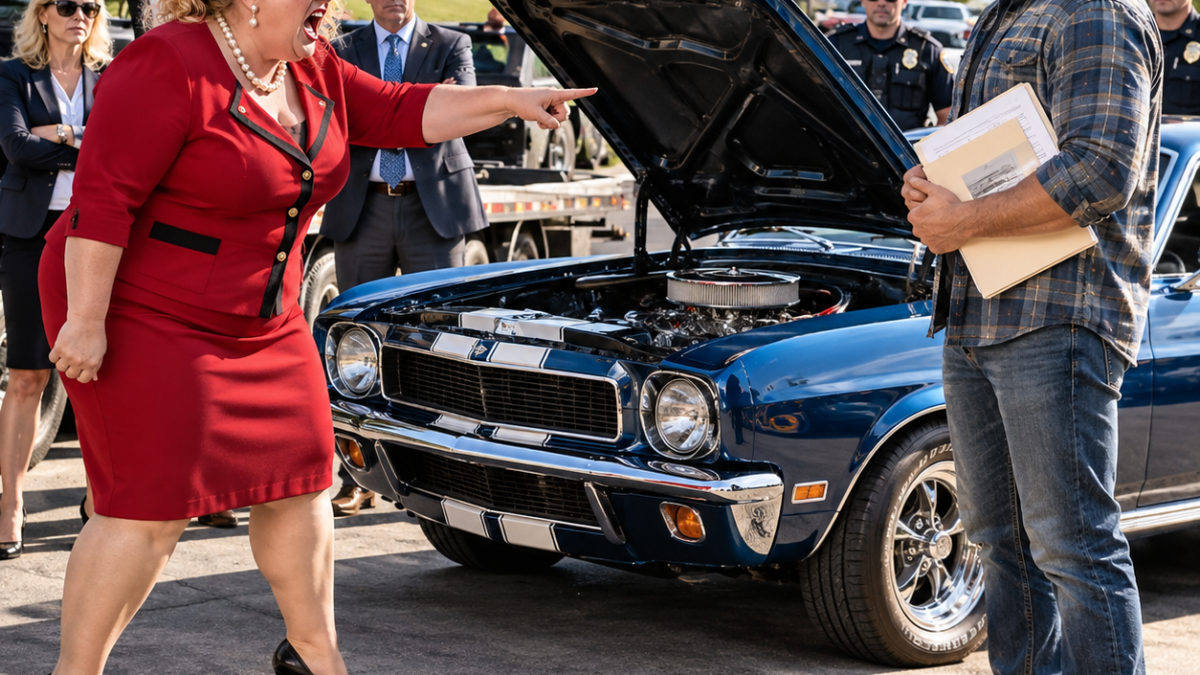
At 5:47 on a Tuesday morning, I woke to the growl of a diesel tow truck backing into my driveway while my HOA president stood beside it smiling like she’d finally found a legal way to get rid of me.
She called the covered car in my garage entrance an “eyesore” and “junk,” then ordered the driver to haul it away while half the neighborhood watched from bedroom windows.
What Diane Blackwell didn’t know was that the car beneath that dusty gray cover wasn’t the most valuable thing my late uncle had left me—and by the end of that morning, the ground beneath her own $1.6 million house would matter far more than anything parked in my driveway.
My name is Marcus Reynolds. I’m forty-eight, and six months before this happened I was rebuilding my life after the ugliest year I’d ever lived through.
My twenty-year marriage had ended.
My ex-wife kept our large suburban house, and although we shared responsibility for our two teenagers, the divorce had made every conversation with them feel like I was walking into a room where I had already disappointed somebody.
I didn’t need another mansion.
I needed somewhere smaller.
Quiet.
Something that belonged to me without carrying twenty years of arguments in every room.
That’s how I found a corner townhouse in Willowbrook Estates, an upscale Virginia community with eight hundred forty-seven homes, manicured lawns, imported cars, stone entrances, and landscaping so perfect it looked computer-generated.
What sold me wasn’t the pool or clubhouse.
It was the three-car garage.
Because I had inherited something from my uncle Raymond.
A 1967 Ferrari 275 GTB.
Most people would’ve stared at those words and imagined polished red paint and auction lights.
Mine didn’t look like that.
Raymond had preserved the mechanicals obsessively but had never cared about impressing anyone. The paint was tired, the interior showed its age, and I kept the car beneath an ordinary gray cover while I researched specialists who could restore it without destroying its originality.
My uncle used to tell me, “Marcus, real value hides in plain sight. People usually see what they expect to see.”
Three days after I moved in, Diane Blackwell knocked on my door.
She was fifty-two, a real-estate agent, three-term HOA president, and the kind of woman who could turn a polite smile into an accusation without changing her expression.
She pointed toward the covered Ferrari.
“We need to discuss the vehicle situation.”
“It’s temporary.”
“We have standards.”
She handed me a violation notice.
I read the HOA documents that night.
All of them.
Buried in the vehicle section was the rule Diane apparently hoped I wouldn’t find: covered vehicles were allowed temporarily, provided they were registered and weren’t stored beyond the specified period without approval.
My Ferrari qualified.
So I challenged the notice.
That’s when the neighborhood turned cold.
People stopped talking when I approached.
Someone left dog waste on my lawn.
An anonymous note called me trash.
Then Diane called an “emergency” board meeting at her house and arranged one chair for me in front of four board members like I was appearing before a suburban tribunal.
She claimed my vehicle threatened property values.
I opened my own folder.
“Show me the exact violation.”
Silence.
I showed them the covenant.
One board member immediately suggested they postpone enforcement.
Diane looked furious.
The next week she brought her brother-in-law Brandon, who claimed to be acting as legal counsel, and threatened me with removal proceedings.
I called the HOA’s actual attorney.
Brandon had never been authorized to represent the association.
That was when I realized Diane wasn’t simply enforcing rules badly.
She needed people intimidated.
And I wanted to know why.
So I started going through Uncle Raymond’s papers.
At the bottom of an old leather briefcase, beneath Ferrari service records, I found a folder labeled:
**WILLOWBROOK DEVELOPMENT — 1987**
Inside was a corporate file for Meridian Holdings LLC.
Property maps.
Ground-lease agreements.
Development contracts.
And one ownership document carrying Uncle Raymond’s signature.
I read it twice.
Then a third time.
Raymond hadn’t merely known the developer who built Willowbrook.
He had owned most of the land before the first house was ever constructed.
And according to the documents in my hands, that ownership had never disappeared.
The next morning, before I could finish confirming what it meant, Diane sent a tow truck to take my “junk car.”
So I walked into the driveway in my bathrobe, coffee in hand, while neighbors gathered to watch.
Then I reached for the corner of the gray cover.
PART 2
“Before you hook anything to that car,” I said, “you might want to know what you’re touching.”
The tow operator stopped.
His name, according to the patch on his shirt, was Dennis.
He looked to be in his fifties, built like somebody who had spent thirty years moving machinery heavier than common sense, and he had the cautious expression of a man who had already realized the job order in his hand might become somebody else’s lawsuit.
Diane stood beside her BMW with a clipboard pressed against her chest.
“Don’t let him delay you,” she said. “The board authorized removal.”
I looked at Dennis.
“May I see the authorization?”
He handed me the work order.
Generic towing form.
Property listed correctly.
Vehicle described as:
**ABANDONED / INOPERABLE UNKNOWN AUTOMOBILE UNDER TARP.**
Requested by Diane Blackwell on behalf of Willowbrook Estates HOA.
I looked at her.
“Abandoned?”
“You’ve been warned.”
“I drive it?”
“Nobody has seen it move.”
“That’s not what abandoned means.”
She smiled.
“Marcus, we gave you opportunities.”
Neighbors were coming outside now.
Garage doors opening.
Phones appearing.
Diane loved public humiliation when she controlled the script.
I decided to change the script.
I walked toward the car.
A little girl from across the street called:
“What’s under there?”
Her mother immediately tried to quiet her.
I smiled.
“Good question.”
Then I pulled the cover.
Morning sunlight hit Rosso Corsa paint.
Not perfect.
Not yet.
But enough.
The shape underneath didn’t need explanation.
Long hood.
Low roofline.
Chrome.
Wire wheels.
One of the most elegant grand touring cars ever built.
The neighborhood went silent.
Dennis whispered:
“Oh, hell.”
Somebody behind me said:
“Is that a Ferrari?”
I folded the cover across one arm.
“1967 275 GTB.”
Dennis stepped backward from the tow equipment.
“I am not hooking that.”
Diane’s face changed.
First confusion.
Then irritation.
Then the defensive confidence of someone who had already committed too publicly to retreat.
“What it’s worth is irrelevant.”
“I agree.”
That surprised her.
I opened the folder I’d brought outside.
“But since you repeatedly called it junk, we may as well clear that up.”
I handed Dennis a copy of the preliminary appraisal from Tommy Reeves, an ASA-certified classic-car specialist.
His eyebrows rose.
“Two point one?”
A man across the driveway almost choked.
“What?”
Dennis handed the page back.
“Estimated auction value just over two million.”
Phones lifted higher.
Diane’s husband Craig had come outside and was now staring at the Ferrari like he had just discovered a spaceship in my driveway.
Diane folded her arms.
“Expensive cars can still violate HOA rules.”
“Correct.”
“So move it.”
“Show me the valid rule.”
Her jaw tightened.
“We already amended the vehicle standard.”
“That amendment passed with invalid proxies.”
Her eyes flashed.
“That is your opinion.”
“No.”
I reached into the second folder.
“It’s documented.”
That was when Janet Holloway, one of the board members, approached from across the street.
She looked uncomfortable.
“Diane.”
“What?”
“We haven’t resolved the proxy issue.”
Diane snapped:
“The board voted.”
Janet lowered her voice.
“Some of those people weren’t eligible.”
The crowd heard her anyway.
I almost smiled.
Diane ignored Janet and pointed toward the Ferrari.
“Covered or uncovered, this community has aesthetic requirements.”
I looked at her.
“You’re right.”
Then I pulled out the corporate documents I’d spent the previous four days verifying with Maria Gonzalez, my uncle’s estate attorney.
“There’s actually something bigger we need to discuss.”
Craig frowned.
“What now?”
I handed him the first page.
He read.
Then stopped.
Diane snatched it from him.
“What is this?”
“Meridian Holdings LLC.”
“I can read.”
“Good.”
I turned toward the neighbors.
“My uncle Raymond held a sixty-seven-percent ownership interest in the company that retained the underlying land when Willowbrook was developed.”
Nobody reacted immediately.
It was too strange.
I continued.
“Most homes here were sold as improvements subject to long-term ground leases.”
A man near the sidewalk said:
“That’s impossible.”
Maria’s voice came from my phone.
I’d already called her.
Speaker on.
“It’s not impossible,” she said. “It’s recorded.”
Diane stared at the phone.
“Who is this?”
“Maria Gonzalez, counsel for Meridian Holdings and executor’s counsel for the Raymond Chen Reynolds estate.”
The crowd quieted.
Maria continued.
“Mr. Reynolds inherited Mr. Chen’s controlling interest.”
Diane’s face lost color.
I looked directly at her.
“The HOA dues include ground-lease remittances that ultimately flow to Meridian.”
Craig’s lips parted.
“Wait.”
Diane shook her head.
“No.”
“Yes.”
“You’re saying—”
“I own the controlling interest in the company that owns most of the ground under Willowbrook.”
Someone behind me whispered:
“Holy—”
I continued.
“Your house too, Diane.”
That was the moment she froze.
Not when she saw the Ferrari.
Not when Dennis refused the tow.
When she realized the man she had spent six weeks calling trash had inherited the controlling interest in the land beneath the house where she had held her little tribunal.
Diane looked at Maria’s documents.
Then at me.
“This is fake.”
Maria answered through the phone.
“Certified copies are available at the county recorder.”
Diane’s hands shook.
I noticed because she’d always held paperwork like a weapon.
Now it looked heavy.
I continued calmly.
“And while we’re talking about Meridian, there’s another problem.”
“What?”
“Association funds.”
Her eyes changed.
Very slightly.
There.
Fear.
Not over the Ferrari.
Not even the land.
Money.
I filed that away.
Dennis quietly climbed into his tow truck.
“I’m leaving.”
Diane spun toward him.
“You can’t.”
“I can absolutely decline a tow with disputed authority involving a two-million-dollar collector car.”
He pointed toward his cab.
“Good luck.”
The diesel engine started.
The truck backed away.
Nobody stopped him.
***
Diane didn’t apologize.
Of course she didn’t.
She called an emergency board meeting for that evening.
Twenty-four hours’ notice wasn’t even remotely consistent with our bylaws.
But panic makes people forget rules they spent years using against others.
The posted agenda read:
**FRAUDULENT RESIDENCY CLAIMS**
**THREATS TO WILLOWBROOK PROPERTY VALUES**
**ACTION AGAINST DISRUPTIVE OWNER**
I read it twice.
Then Maria laughed.
“You’ve broken her brain.”
“I didn’t do anything.”
“You revealed two facts.”
“Three.”
“What was the third?”
“The car really is worth two million.”
Maria sighed.
“Marcus.”
“What?”
“Focus.”
She was right.
Because the land documents created leverage.
But the financial records created danger.
During the days I’d spent verifying Raymond’s Meridian ownership, I’d also started examining the flow of HOA funds into companies that supposedly provided management, landscaping, security, and consulting.
One name kept appearing.
Hartwell Property Solutions.
Registered owner:
Diane Blackwell.
Different surname because she’d used a family business entity created before her marriage.
Payments were disclosed vaguely.
“Administrative services.”
“Community consulting.”
“Vendor coordination.”
At first, I assumed it might be legitimate.
Then Sarah Chen looked.
Sarah had worked with me years earlier when I was still in technology operations.
Now she was a forensic accountant.
She had the disconcerting habit of smiling when spreadsheets looked criminal.
“Marcus.”
“What?”
“She’s paying herself.”
“HOA presidents can be compensated.”
“Not like this.”
She turned the laptop toward me.
The approved budget showed one amount.
Actual disbursements showed another.
Management costs inflated.
Vendor invoices duplicated.
Payments routed through Hartwell Property Solutions.
The more she traced, the worse it became.
Sarah tapped one payment.
“Emergency tree removal.”
“Was there a storm?”
“No documented storm damage.”
Another.
“Landscape consulting.”
“What did they do?”
“No report.”
Another.
“Security review.”
“To whom?”
“Company linked to Diane’s cousin.”
I leaned back.
“How much?”
“I’m still calculating.”
An hour later:
“At least ninety-four thousand over two years that needs explanation.”
I stared.
“Needs explanation?”
Sarah looked at me.
“That is accountant language for don’t accuse someone of theft until prosecutors do.”
“Maria says the same thing.”
“Because Maria is smart.”
“She says that too.”
***
The emergency meeting happened Wednesday night.
The community center was packed.
Diane stood at the front.
Craig beside her.
Brandon, her unauthorized legal mouthpiece, sat in a suit that seemed to have surrendered around the shoulders.
Two remaining board loyalists completed the table.
Channel 7 investigative reporter Angela Torres happened to be in the parking lot.
That was Diego Ramirez’s contribution.
Diego was a former city councilman and one of the first neighbors to apologize after realizing how Diane had manipulated the community.
He knew reporters.
He knew city staff.
And unlike Diane, he understood that public attention cuts both directions.
I sat in the back beside Maria.
The room smelled like stale coffee and industrial carpet.
Diane started.
“Willowbrook has been infiltrated by an individual who deliberately concealed his financial interests.”
I almost laughed.
Apparently inheriting something privately was infiltration now.
She clicked a slide.
My Ferrari.
“Mr. Marcus Reynolds has misrepresented himself as an ordinary resident.”
That line got murmurs.
I looked at Maria.
She whispered:
“Ordinary resident?”
“Apparently wealth is contagious.”
Diane continued.
“He has produced questionable corporate papers claiming extraordinary control over community assets.”
Another slide.
Cropped images of Meridian records.
“And he may have manipulated real-estate documents in an effort to intimidate this board.”
Brandon stood.
“We believe potential fraud and identity issues require immediate suspension of Mr. Reynolds’ residency rights.”
I raised my hand.
Diane ignored me.
So Janet did something I didn’t expect.
She stood.
“I want Marcus to respond.”
Diane glared.
“You’re out of order.”
Janet looked around.
“Then make me in order.”
Half the room clapped.
Diane’s control was slipping.
I stood.
“Before anyone votes to remove me from land owned by my company, I’d like to present complete records instead of screenshots.”
Someone laughed.
Diane snapped:
“This isn’t a comedy.”
“No.”
I walked forward.
“It isn’t.”
Maria opened her briefcase.
Certified corporate filings.
Recorded ground leases.
Development agreements.
Probate transfer documents.
Independent title confirmation.
She introduced herself.
“Maria Gonzalez. Attorney for Meridian Holdings LLC.”
Brandon interrupted.
“You don’t represent the HOA.”
Maria looked at him.
“Correct.”
“Then—”
“I represent the entity whose land the HOA occupies under recorded ground leases.”
He stopped.
Maria distributed copies.
People read their own addresses.
Their own lease references.
Their own payment structures.
The murmuring changed.
It wasn’t fear.
It was astonishment.
Then Maria said:
“Mr. Reynolds inherited the controlling interest from Raymond Chen Reynolds. There is no credible legal basis for the claim that he fabricated these documents.”
Diane stood.
“That’s irrelevant to his behavior.”
I looked at her.
“You’re right.”
She blinked.
“Land ownership doesn’t make me above HOA rules that legitimately apply to my residence.”
Maria glanced at me approvingly.
I continued.
“But it does make your campaign to misrepresent my rights especially reckless.”
Then Sarah’s spreadsheet appeared on the projector.
Diane stopped breathing.
I saw it.
***
“This,” I said, “is where your association money went.”
The first chart compared approved management budgets with actual payments.
Second:
Hartwell Property Solutions.
Third:
Vendor contracts connected to Diane.
Fourth:
Expenses lacking supporting work records.
Then the number.
**$94,000 IN QUESTIONED PAYMENTS — 24 MONTHS**
The room erupted.
Diane stood.
“This is defamatory!”
Sarah rose from the second row.
“I’m Sarah Chen, CPA and forensic accountant.”
She held up a binder.
“I performed the preliminary analysis.”
Diane pointed at her.
“You’re his friend.”
“Yes.”
Sarah smiled.
“That’s why I had another CPA independently verify the calculation before tonight.”
A second accountant stood near the side wall.
The crowd reacted.
Sarah continued.
“The conclusion is not that ninety-four thousand dollars was necessarily stolen.”
Diane’s face momentarily recovered.
Then Sarah finished.
“The conclusion is that these payments require independent audit because they appear inconsistent with approved budgets, documentation, and related-party disclosure requirements.”
Diane looked worse again.
Martha Patterson—an elderly resident who had spent years politely tolerating Diane—stood.
“Where’s our money?”
Diane hit the table.
“You don’t understand complex management.”
Martha stared at her.
“I ran payroll for a manufacturing company for thirty-four years.”
Laughter erupted.
Diane’s face burned.
Then Janet made the motion.
“No confidence.”
Three voices seconded.
The vote began.
Diane was removed as HOA president before the meeting ended.
Fifty-one votes supported immediate removal under the association’s procedures.
Only a handful defended her.
Craig abstained.
By the time the result was announced, he had already walked outside.
***
I thought that would end it.
It didn’t.
Cornered people rarely become rational just because arithmetic turns against them.
Diane began telling neighbors I’d stolen Willowbrook.
She claimed Meridian’s ownership structure was an illegal tax scheme.
She said the Ferrari was probably stolen.
Then came rumors that I was laundering money.
Tax evasion.
Organized crime.
One anonymous neighborhood account even called me “the Ferrari fraudster.”
My teenagers saw it.
That hurt more than I expected.
My son Ethan called.
“Dad, what is happening?”
“Nothing you need to worry about.”
“Mom says there are news trucks at your neighborhood.”
That sentence told me my ex-wife already knew.
Of course she did.
My daughter Ava came onto the line.
“Is the Ferrari really worth two million?”
I smiled.
“That’s your concern?”
“Dad.”
“Yes.”
“Seriously?”
“Approximately.”
Silence.
Then:
“You kept that under a gray tarp?”
“Security through ugliness.”
She laughed.
It was the first easy laugh I’d heard from her in months.
After the divorce, every conversation had become cautious.
That car gave us something neutral.
Then Ethan asked:
“And you own the neighborhood?”
“No.”
“But TikTok says—”
“Never begin a legal conclusion with TikTok says.”
He laughed too.
I explained.
Meridian owned much of the underlying land.
Residents owned their homes subject to ground leases.
I held the controlling company interest.
That didn’t mean I owned people’s furniture.
Didn’t mean I could evict eight hundred families because somebody annoyed me.
Property law was more complicated than a viral headline.
“Does Diane rent from you?”
“In a technical sense, her property is subject to a ground lease held through Meridian.”
Ava said:
“So yes.”
“Please don’t become a lawyer.”
For fifteen minutes, we talked.
Not about divorce.
Not custody.
Not why I’d moved.
Cars.
Uncle Raymond.
The strange neighborhood.
When we hung up, I sat alone for a long time.
Maybe Raymond’s Ferrari had given me more than a fight with Diane.
Maybe it had opened a door back toward my kids.
***
Then Maria found Raymond’s note.
It had been tucked behind the original Meridian ownership agreement.
His handwriting.
Sharp.
Small.
I recognized it instantly.
**Marcus—**
**If you’re reading this, somebody has probably forced you to ask questions you should’ve asked sooner. That’s usually how life works.**
I laughed.
He knew me.
The letter continued.
**The land gives you power. The car gives you perspective. Both are dangerous if you confuse ownership with worth.**
I stopped.
Read again.
Then:
**Some people respect power. Others only understand justice. Learn the difference before you use either.**
I sat at my kitchen table with the paper in my hands.
For several days I’d entertained the idea of terminating Diane’s ground lease.
Maria had confirmed that documented harassment, interference with landowner rights, and financial misconduct could trigger enforcement provisions.
Imagine the satisfaction.
The woman who tried to tow my car loses control of the land beneath her house.
Perfect Facebook ending.
Perfect revenge.
But Raymond knew me better than I’d realized.
He didn’t leave me the land so I could become a richer version of Diane.
Power doesn’t become moral merely because it changes hands.
So instead of terminating leases, I ordered a full legal review.
Every resident’s ground lease.
Every payment.
Every easement.
Every protection.
And most importantly, every way Meridian could make those arrangements safer and clearer for the people living there.
Maria stared at me when I told her.
“You don’t want to use termination against Diane?”
“Not unless a court and the contract make it necessary to protect the community.”
“She threatened your home.”
“I know.”
“She tried towing a two-million-dollar car.”
“I know.”
“She may have misused funds owed partly through structures affecting Meridian.”
“I know.”
Maria smiled.
“Raymond would approve.”
I looked at his letter.
“That’s becoming irritating.”
***
The audit widened.
Ninety-four thousand became more.
Some transactions were legitimate but badly documented.
Others weren’t.
Invoices charged twice.
Consulting expenses routed through related companies.
Maintenance contracts inflated.
Personal items mixed into HOA expenditures.
Then Sarah found credit-card records.
Country club.
Luxury vehicle-related expenses.
Travel.
Hawaii.
Diane had classified the Hawaii trip as a property-management conference.
There had been a conference.
She attended one session.
Then stayed another six days.
Martha said:
“I’ve attended church bookkeeping seminars with more professional development.”
No one laughed much.
The questioned amount climbed past three hundred thousand dollars.
Then four.
After the full forensic review and additional records, investigators focused on roughly $480,000 in potentially improper or misappropriated HOA expenditures over six years.
That number changed everything.
Residents stopped seeing Diane as an overbearing president.
They began seeing themselves as possible victims.
***
Then the city planning records arrived.
Diego had requested the original Willowbrook development agreement.
The project had included an affordable-housing commitment.
Fifteen percent of units designated for moderate-income buyers or a negotiated alternative contribution.
The promise had been modified over time.
Developers claimed market conditions made the designated units difficult.
The city agreed to fees in lieu of construction.
Hundreds of thousands.
And some remained unpaid or disputed.
Diane’s real-estate business had been involved in marketing later phases.
Now her fixation on keeping prices high made more sense.
She wasn’t just protecting aesthetics.
Her finances were tied to the image of Willowbrook as an exclusive luxury enclave.
Uniformity had become part of her sales strategy.
Anybody who looked different became bad inventory.
My covered Ferrari?
Bad optics.
My smaller townhouse after divorce?
Bad optics.
The outsider who asked questions?
Very bad optics.
***
Diane’s own finances surfaced during civil discovery and public foreclosure records.
She was behind on her mortgage.
Her real-estate income had fallen.
Her lifestyle hadn’t.
Craig’s income covered part of the gap.
Not enough.
The HOA presidency gave her influence.
Her related companies gave her cash flow.
Her sales activity depended on Willowbrook’s image.
Suddenly the desperation made sense.
It didn’t excuse anything.
But motive makes behavior easier to predict.
She wasn’t defending community standards.
She was defending the structure keeping her financially afloat.
And now the structure was collapsing.
***
Three weeks after her removal, the community elected new leadership.
Sarah Martinez became president.
Not the accountant Sarah Chen.
Different Sarah.
This Sarah was a kindergarten teacher who had lived in Willowbrook twelve years and somehow maintained the patience to deal with adults after spending her days with five-year-olds.
Probably the ideal qualification.
Jake Morrison, retired Fairfax County detective, became security liaison.
Janet remained on the board.
Martha took a financial-oversight seat even though she protested that she was too old.
Everyone ignored her.
The first resolution passed unanimously.
Full monthly financial reporting.
Second:
Independent annual audits.
Third:
All related-party contracts disclosed.
Fourth:
No emergency amendments without required notice and verified voting eligibility.
Fifth:
No towing without clearly documented authority and an opportunity for owner review except genuine safety emergencies.
I supported all five.
Then Sarah asked me to speak.
The Ferrari was outside.
Uncovered now.
It had become neighborhood celebrity property.
Kids pressed faces against the windows to see it.
I walked to the podium.
“Six months ago,” I said, “I moved here because my marriage had ended and I wanted to disappear quietly.”
The room became still.
“I didn’t want influence.”
I looked toward Maria.
“Apparently my uncle disagreed.”
A few laughs.
I continued.
“Raymond left me land, company interests, and a car worth more than I understood.”
Then I paused.
“But the most valuable thing he left was a warning.”
I read the line from his letter.
**Some people respect power. Others respect justice. Use wisely.**
Silence.
Then I made the announcement.
The ground-lease account had accumulated more than two million dollars after estate transfers and distributions I had barely monitored during the divorce.
I could’ve taken it.
Legally.
Much of it was mine through Meridian.
Instead, I committed $2.3 million into a controlled community-benefit structure.
Not because residents were entitled to all of my inheritance.
They weren’t.
Because Raymond believed Willowbrook should create opportunity instead of just appreciating property values.
The Raymond Chen Reynolds Memorial Fund would provide scholarships for local students pursuing engineering, business, public service, and skilled trades.
Fifty thousand dollars annually to start.
Independent committee.
Published accounts.
No president controlling it.
No owner—including me—could secretly redirect funds.
The room stayed quiet.
Then Jake Morrison stood.
His granddaughter had been accepted into mechanical engineering at Virginia Tech.
She became one of the first recipients.
His eyes filled.
I hadn’t expected that.
He shook my hand.
“Your uncle would’ve liked this.”
I looked toward the Ferrari outside.
“Yeah.”
I swallowed.
“I think that’s why he made me find everything the hard way.”
***
The second fund supported community improvements.
Playground repairs.
Native landscaping.
A food-bank garden.
Sidewalk upgrades.
Accessibility improvements.
And, because I’m not entirely mature, an annual classic-car show.
That event became huge.
The Ferrari led the first one.
Children lined up to sit behind the wheel.
No one touched the pedals.
I watched like a nervous parent.
A little boy asked:
“Is this the junk car?”
His father turned red.
I laughed.
“That’s the one.”
“Why did that lady think it was junk?”
“Because it was covered.”
The boy thought for a moment.
“That’s dumb.”
“Sometimes adults make decisions with incomplete information.”
He looked disappointed.
“That’s less funny.”
“Life usually is.”
***
Diane faced consequences separately from the community reforms.
Her real-estate license came under investigation.
The HOA pursued recovery for unauthorized or improper transactions.
Civil claims followed.
Financial investigators reviewed the evidence.
Not every bad decision became a felony.
That’s important.
Some were governance violations.
Some civil.
Some unethical.
But several transactions supported criminal investigation.
Diane ultimately entered a negotiated resolution involving fraud-related conduct and misuse of association funds, along with restitution obligations and professional penalties.
The consequences were serious.
Her house entered foreclosure proceedings during the larger financial collapse.
She eventually sold and left Willowbrook.
I did not terminate the ground lease to force her out.
That mattered to me.
If she lost her house, it would happen because of her actual debts and lawful consequences.
Not because I wanted a dramatic ending.
Justice works better when revenge doesn’t hold the pen.
***
Before she left, Diane came to my house.
The Ferrari was parked inside the garage.
Door open.
I was polishing one wheel.
She stood at the driveway.
No BMW.
Craig had taken it.
Or the bank had.
I never asked.
“Marcus.”
I looked up.
“Diane.”
“I wanted to talk.”
I set down the cloth.
“Okay.”
She looked older.
Not destroyed.
Just exhausted.
For the first time, her clothes looked chosen for comfort instead of effect.
She glanced toward the Ferrari.
“I really thought it was junk.”
I smiled faintly.
“I know.”
“That sounds ridiculous now.”
“It sounded ridiculous then.”
She accepted that.
Then:
“I thought you were hiding something.”
“I was.”
She looked at me.
“My uncle’s car.”
A tiny smile.
Then it disappeared.
“I was wrong about you.”
“That’s not the biggest problem.”
“I know.”
She looked toward the street.
“I was wrong about a lot of people.”
Martha.
Residents she fined.
Families she pushed.
Board members she bullied.
“I kept thinking if I loosened control, property values would fall.”
I leaned against the garage.
“Did they?”
She looked at me.
She knew.
Willowbrook’s values were rising.
Not because everyone looked identical.
Because scandal had been replaced by transparent governance.
“No.”
She swallowed.
“I think I stopped understanding the difference between protecting something and controlling it.”
That was probably the most truthful sentence I’d ever heard from her.
Then she asked:
“Why didn’t you terminate my lease?”
I looked at her.
“Because I could.”
She frowned.
I continued.
“That’s exactly why.”
She understood slowly.
“You wanted me to leave on my own?”
“No.”
“I wanted the consequences to belong to your choices.”
Her eyes filled.
“Raymond wrote something about power.”
“How do you know?”
“Maria told me.”
Of course Maria did.
Diane looked toward the Ferrari again.
“I would’ve used it.”
“What?”
“The land.”
“If I had that power over someone who humiliated me, I would’ve used it.”
“I know.”
That was the difference.
And hearing her admit it made me more grateful I’d chosen otherwise.
***
She left Willowbrook two weeks later.
No crowd.
No humiliation.
A moving truck.
Craig helping.
A few neighbors watching.
Martha brought them sandwiches.
That surprised me.
“Why?”
Martha shrugged.
“They still have to eat.”
That woman understood community better than any governing document ever could.
Diane stopped before getting into the car.
She looked across the street at me.
Then nodded.
I nodded back.
No forgiveness ceremony.
No friendship.
Just closure.
Enough.
***
Six months later, Virginia Living ran a feature about Willowbrook’s governance reforms.
They photographed the community garden.
Scholarship recipients.
Board meetings.
And, naturally, the Ferrari.
The headline focused on transformation rather than scandal.
I liked that.
Willowbrook had spent years operating like Diane’s kingdom.
Now meetings were boring.
Boring was wonderful.
Budget presented.
Questions.
Votes.
Minutes.
Adjournment.
No surprise fines.
No fake proxies.
No midnight rule changes.
Nobody’s covered car triggering a constitutional crisis.
***
My teenagers started visiting more.
At first for the Ferrari.
I knew that.
Didn’t care.
Ethan became obsessed with mechanical history.
Ava preferred photography.
One Saturday she photographed the Ferrari at sunset.
Then turned the camera toward me.
“No.”
“Dad.”
“No.”
“You look good.”
“That’s manipulation.”
“Genetic.”
Fair.
She took the photo anyway.
Later that night, the three of us sat in the garage eating pizza beside a car worth more than my townhouse.
Ethan asked:
“Why didn’t Uncle Raymond sell it?”
“He didn’t need to.”
“Why leave it rough?”
“He liked people underestimating things.”
Ava looked at me.
“Like you?”
I laughed.
“What does that mean?”
She shrugged.
“Mom thought after the divorce you’d disappear.”
The garage became quiet.
Ethan looked down.
Ava immediately regretted saying it.
I swallowed.
“Maybe I thought that too.”
She looked at me.
“But you didn’t.”
“No.”
I looked around.
“No, I guess I didn’t.”
That conversation mattered more than the appraisal.
My children were seeing me again.
Not as the parent who left.
Not as the man who lost the house.
As their father rebuilding something.
That was worth more than two million dollars.
***
The Ferrari restoration took another year.
Tommy Reeves supervised.
We preserved originality rather than turning it into a glossy replica of itself.
Original engine.
Matching numbers.
Documentation.
Correct leather.
Period finishes.
Every decision careful.
Final valuation:
Approximately $2.4 million depending on market.
People expected me to sell.
I didn’t.
Uncle Raymond hadn’t preserved it for fifty years so I could turn it into another investment statement.
Instead, I drove it.
Carefully.
Charity shows.
Scholarship events.
Occasional Sunday mornings.
The first time Ethan drove it—under my supervision, empty parking lot, no heroics—his hands shook.
“Dad.”
“What?”
“This is terrifying.”
“Good.”
He laughed.
“You’re terrible.”
“You respect it now.”
Ava filmed the whole thing.
Threatened to post his terrified face.
Sibling love.
Normal.
Beautiful.
***
The annual Willowbrook Classic Car Show became one of our biggest fundraisers.
The Ferrari sat beside muscle cars, old pickups, Corvettes, Japanese imports, British roadsters, and one barely running Volkswagen bus everybody loved more than my Ferrari.
Kids voted the bus People’s Choice.
I demanded a recount.
Martha refused.
“Democracy.”
“I own the land.”
She stared at me.
I raised my hands.
“Joke.”
“Good.”
Power wisely.
Raymond’s lesson never stopped following me.
***
Maria eventually helped restructure Meridian’s ground leases.
That was the most important part of the inheritance.
Some older terms were confusing.
Residents didn’t fully understand renewal mechanics.
Nobody should discover decades later that the land beneath their home operates differently than they thought.
So we created clearer disclosures.
Longer renewal protections.
Predictable formulas.
Independent dispute resolution.
No surprise terminations.
No ability for me—or whoever controlled Meridian after me—to weaponize obscure language casually.
Maria looked at the final documents.
“You’re giving up leverage.”
“Yes.”
“Significant leverage.”
“Yes.”
“Why?”
I looked toward the neighborhood.
“Because someday I’m going to be dead.”
She waited.
“And I don’t know who controls Meridian after that.”
She smiled.
“Raymond would really approve.”
“There you go again.”
***
That became my answer whenever people asked whether I truly “owned their block.”
Technically?
Meridian held underlying land interests across much of Willowbrook.
I controlled Meridian.
That was real.
But ownership isn’t the same as absolute power.
Residents had leases.
Contractual rights.
Property interests.
Legal protections.
The viral version said:
**MAN DISCOVERS HE OWNS HOA PRESIDENT’S HOUSE.**
Catchy.
Wrong.
I didn’t own Diane’s couch.
Her family photographs.
Her walls.
Her memories.
I owned an interest in the ground subject to agreements.
Law is less cinematic than Facebook.
But the truth was dramatic enough.
The woman threatening to remove me had spent years paying ground rent into the company I inherited.
That irony needed no exaggeration.
***
The strangest change happened in my relationship with my ex-wife.
Karen—not an HOA Karen, thankfully—came to pick up Ava one afternoon.
She looked at the Ferrari.
“So the kids weren’t exaggerating.”
“No.”
“You really inherited that?”
“Yeah.”
“And the land company?”
“Yeah.”
She folded her arms.
“You didn’t know?”
“Nope.”
She laughed.
Actually laughed.
“For twenty years you complained Raymond never told anyone anything.”
“He remained committed to the bit.”
She smiled.
Then became serious.
“The kids talk about you differently.”
I didn’t know what to say.
“Differently how?”
“Like you’re present again.”
That hurt.
Because it meant there had been a time I wasn’t.
Maybe physically.
Maybe emotionally.
After the divorce, I’d spent months defining myself by what I’d lost.
House.
Marriage.
Daily access to my children.
Identity.
Willowbrook forced me to stop cataloging losses.
There was too much work.
Karen continued.
“They need that.”
“I know.”
She nodded.
Then:
“I think you need it too.”
Also true.
We never got back together.
Didn’t need to.
We became better co-parents.
Sometimes healing means not restoring the old structure.
It means building a healthier one.
***
Raymond’s memorial scholarship awarded five grants its first year.
The ceremony took place at the community center.
Jake Morrison’s granddaughter, Emily, received one for mechanical engineering.
A firefighter’s son received another.
A single mother’s daughter studying accounting.
Two local students entering skilled technical programs.
I stood at the podium with Raymond’s letter in my pocket.
Emily spoke afterward.
She said:
“Mr. Reynolds’ uncle never knew me.”
I looked down.
“But something he built before I was born is helping me build something after he’s gone.”
That broke me.
Not visibly, I hope.
Martha later informed me everyone saw.
So much for dignity.
***
After the ceremony, I sat alone in the Ferrari.
Garage quiet.
Raymond’s steering wheel beneath my hands.
I thought about the original invoice.
Eleven thousand four hundred dollars in 1967.
A fortune then.
A museum piece now.
But Raymond was right.
Value hides.
The Ferrari had obvious monetary value once the cover came off.
The land had financial value once I opened the file.
But the biggest things I’d inherited weren’t recorded on appraisal sheets.
Patience.
Suspicion of easy assumptions.
The responsibility to use power carefully.
A reminder that humiliation makes terrible strategy.
I had almost become obsessed with humiliating Diane back.
That would’ve been easy.
Terminate lease.
Threaten access.
Use wealth.
Use ownership.
Make her small.
Exactly what she had tried doing to me.
Raymond’s note stopped that.
Sometimes inheritance isn’t money.
It’s somebody dead still correcting your behavior.
***
Two years after Diane left, a new resident moved into Willowbrook.
Young guy.
Software engineer.
Drove an old Volvo wagon with peeling clear coat.
Somebody anonymously complained.
Sarah Martinez brought it to the board.
“Anyone want to fine him?”
Silence.
Martha looked at me.
I looked at her.
Sarah smiled.
“Didn’t think so.”
They checked the actual rules.
Vehicle registered.
Operable.
No safety problem.
No violation.
Meeting moved on.
Thirty seconds.
That was progress.
***
Later, I met the owner.
His name was Noah.
He stood beside the Volvo.
“Sorry if this thing looks rough.”
“Don’t apologize.”
“Apparently somebody complained.”
“Somebody always complains.”
He laughed.
“You the Ferrari guy?”
“Unfortunately.”
He looked toward my garage.
“Can I see it?”
“Sure.”
When I removed the cover, he stared.
Then laughed.
“Okay, that’s unfair.”
“What?”
“My junk car is actually junk.”
“Does it run?”
“Perfectly.”
“Then enjoy it.”
He smiled.
That small conversation would’ve been impossible under Diane.
Not because of one rule.
Because she had built a culture where appearance determined belonging.
That’s what changed most.
***
The community garden flourished.
Native plants.
Vegetables for the food bank.
Children learning to grow tomatoes.
Martha became territorial about zucchini.
We produced far too many.
Nobody needs that much zucchini.
At the summer festival, I parked the Ferrari beside the garden.
A photograph from that day later hung in the community center.
Two symbols.
One represented hidden financial value.
The other represented shared value.
I liked the garden more.
Don’t tell the car.
***
People kept inviting me to speak about HOAs.
I declined most.
I’m not anti-HOA.
That’s another simplification people love.
Associations can manage common property well.
They can coordinate maintenance.
Resolve disputes.
Protect shared infrastructure.
Our new board proved that.
The problem was never “HOA.”
It was concentrated authority without transparency.
Selective enforcement.
Conflicts of interest.
Residents too intimidated or disengaged to question leadership.
One person deciding aesthetic preference was moral law.
That’s dangerous anywhere.
Corporations.
Governments.
Neighborhood boards.
Families.
Even inheritance companies.
So when I did speak, I talked less about Ferraris and more about process.
Read governing documents.
Verify votes.
Check conflicts.
Ask for financial reports.
Know underlying title structures.
Don’t assume a confident person is a correct person.
And never mistake expensive clothes for legitimate authority.
That last one usually got laughs.
***
Diane resurfaced once.
Not physically.
An anonymous donation arrived for the Raymond Scholarship Fund.
Five thousand dollars.
No name.
But Maria called.
“You know who?”
“I have a guess.”
“You want me to confirm?”
“No.”
“Why?”
“Doesn’t matter.”
Maybe Diane.
Maybe Craig.
Maybe somebody else.
If it was her, I didn’t need public redemption.
Private change was enough.
If it wasn’t, the money still helped a student.
Either way, good outcome.
***
Raymond’s old file now lives in a fireproof cabinet.
The Ferrari invoice.
Meridian documents.
Ground leases.
His note.
I framed one copy of that note for my office.
**REAL VALUE HIDES IN PLAIN SIGHT.**
Visitors assume it’s about the Ferrari.
They’re wrong.
He meant people too.
Diane saw divorced.
New resident.
Covered car.
Smaller townhouse.
She translated those things into lower status.
Neighbors saw the same cues and followed her.
My children had looked at my post-divorce life and perhaps saw failure too.
I did.
Raymond’s inheritance forced me to reconsider all of it.
A covered car could be a masterpiece.
A downsized home could be freedom.
A broken marriage could lead to better fatherhood if I stopped treating grief like an identity.
A neighborhood scandal could produce better governance.
A fight could end in reform instead of revenge.
Hidden value everywhere.
***
On the third anniversary of my move, Ethan and Ava came over for dinner.
Ethan brought his girlfriend.
Ava brought three camera lenses.
The Ferrari sat outside because we were preparing for the charity show.
Ethan’s girlfriend walked around it.
“Your dad owns this?”
Ava said:
“He’s very annoying about it.”
“I am not.”
“You make people remove belts before getting close.”
“Buckles scratch.”
Ethan laughed.
Then his girlfriend asked:
“Is it true he owns the whole neighborhood?”
Both kids groaned.
I pointed toward Ethan.
“You explain.”
He said:
“He owns a company that owns land underneath part of the neighborhood, but the homeowners have ground leases and property rights, so no, he cannot wake up and decide everybody’s house is his.”
I stared.
“That was excellent.”
Ava smiled.
“He’s heard the speech sixty times.”
Maybe I was becoming my uncle.
Not the worst fate.
***
After dinner, we sat outside.
Ava showed me a photograph she’d taken.
The Ferrari in the foreground.
My townhouse behind it.
Sunset reflected along the hood.
She titled it:
**WHAT THEY THOUGHT WAS JUNK.**
I laughed.
“Subtle.”
“I’m considering journalism.”
“Please don’t tell Angela Torres.”
“She already offered me an internship.”
I stared.
“When?”
“Last week.”
“What did you say?”
“Yes.”
I looked toward Ethan.
“Anything you’d like to confess?”
“I’m thinking mechanical engineering.”
I sat back.
“Because of the Ferrari?”
“Partly.”
He looked at me.
“Mostly because you seem happier fixing things.”
That one stayed with me.
Children watch what restores their parents.
More closely than we realize.
***
The divorce had made me believe my children would remember me as the father who lost the family home.
Maybe instead they’d remember the garage.
Pizza beside the Ferrari.
Scholarship meetings.
Arguments about ground leases.
Native gardens.
Community festivals.
A father learning to rebuild.
That felt better.
***
The next Willowbrook election drew record turnout.
No drama.
No fraud.
Every proxy verified.
Every candidate disclosed conflicts.
Financial statements distributed before voting.
Sarah won another term.
Nobody ran unopposed because residents had learned that participation mattered.
The meeting lasted ninety minutes.
Half of it was boring.
I loved every boring minute.
Outside, someone had parked beside the Ferrari in an old pickup with rust along the fenders.
Nobody complained.
Raymond would’ve smiled.
***
Sometimes late at night, I think about that Tuesday morning.
Diesel engine.
Hydraulic lift.
Diane with crossed arms.
Neighbors watching.
Me in a bathrobe holding coffee.
If Dennis had hooked the Ferrari without asking questions, the potential damage could have been enormous.
If I had exploded in anger, Diane would’ve had the story she wanted.
If I hadn’t read the covenants, I might’ve paid.
If I hadn’t opened Raymond’s folder, I might never have learned about Meridian.
Everything turned on small decisions.
Read.
Verify.
Ask.
Wait.
Then act.
Not glamorous.
Effective.
***
The car is worth around $2.4 million now.
Some years more.
Markets change.
I still refuse to sell.
People think that’s sentimental.
They’re right.
But the car also reminds me of something practical.
Price and value aren’t the same thing.
Two million dollars is a price.
Raymond’s handwriting in the glove compartment has value.
Ethan learning to double-clutch badly has value.
Ava photographing the car beside the community garden has value.
Kids sitting in the driver’s seat at charity shows have value.
Those things don’t appear in an auction estimate.
***
And Meridian?
I eventually established a succession structure.
Professional trustee oversight.
Resident consultation requirements.
Clear renewal protections.
No single heir can use land control to terrorize Willowbrook.
That was perhaps the most important legal document I ever signed.
Maria asked:
“You realize Raymond gave you more discretion than you’re giving whoever comes next?”
“I know.”
“You trust your children?”
“Yes.”
“Then why restrict them?”
“Because good systems don’t depend on good people.”
She smiled.
“You have finally become interesting.”
“I’m forty-eight.”
“Late bloomer.”
***
Diane’s old house sold to a family with three children.
The father is a firefighter.
The mother teaches high-school chemistry.
They had no idea about the history when they bought.
At their first block party, the father asked:
“Was the previous owner really that HOA woman?”
“Yes.”
He looked embarrassed.
“Everybody gets weird when we mention it.”
“Not your problem.”
He nodded toward the ground.
“And you technically own this?”
I smiled.
“Meridian does.”
“Should I be nervous?”
“No.”
“Why?”
“Because contracts matter more than personality.”
He considered that.
“Good.”
Then his daughter ran across the yard carrying a water gun.
Shot me directly in the shirt.
Her father looked horrified.
I stared at the wet spot.
“Ground-lease violation.”
His face went pale.
Then I laughed.
He did too.
Apparently I am capable of abusing power responsibly for comedy.
***
At the next classic-car show, that little girl won the children’s raffle.
Prize?
A ride in the Ferrari around the private community loop.
Her father sat beside her.
I drove.
Slowly.
Everybody waved.
When we passed Diane’s old house, the girl shouted:
“Go faster!”
“No.”
“Why?”
“Because rules.”
She groaned.
Raymond would’ve loved her.
***
The most satisfying ending isn’t the one people expect.
Diane didn’t end up homeless because I pulled some secret landlord lever.
I didn’t shut off roads.
Didn’t terminate utilities.
Didn’t order anybody out.
The Ferrari didn’t become proof I was superior to my neighbors.
Money didn’t make me right.
Ownership didn’t make me right.
The documents did.
The audit did.
The votes did.
And eventually, the community did.
Diane’s punishment came from her own decisions.
Mine was deciding what kind of owner I wanted to become once I finally understood the power Raymond had put in my hands.
That was harder.
***
One evening, Maria brought me Raymond’s final estate archive.
A box we’d somehow missed.
Inside were photographs of Willowbrook before development.
Farmland.
Old barns.
Dirt tracks.
Raymond standing beside a much younger version of the Ferrari.
Then a photograph of him with the original developers.
On the back:
**LAND CHANGES. CHARACTER SHOULDN’T.**
I stared.
Maria asked:
“You okay?”
“Yeah.”
“You’re doing the thing where you say yes while looking like someone punched you.”
I smiled.
“He planned everything.”
“No.”
She shook her head.
“He prepared for possibilities.”
“Difference?”
“A big one.”
She looked around the neighborhood.
“People who think they control everything become Diane.”
I laughed.
“Fair.”
***
That photo now hangs beside the Ferrari.
Below Raymond’s note.
Visitors see the beautiful car first.
Then they notice the farmland.
Then the sentence.
I think that’s appropriate.
Appearance first.
Truth second.
That’s how this entire story began.
***
This morning, I pulled the Ferrari out before sunrise.
No cover.
No tow truck.
No HOA president waiting with a clipboard.
The V12 caught after a few turns and settled into that mechanical rhythm old Ferraris have—part engine, part orchestra, part financial anxiety.
Martha came outside wearing a robe.
“You’re waking the neighborhood.”
“It’s six thirty.”
“Exactly.”
“Want me to file a violation?”
She pointed at me.
“Don’t get clever.”
I laughed.
Then Ethan pulled into the driveway.
We were taking the car to a charity event.
He climbed in.
“Ready?”
“No.”
“Perfect.”
I eased onto the road.
Neighbors waved.
Nobody cared whether the car matched a color palette.
Kids recognized it.
Adults smiled.
The neighborhood looked completely ordinary.
That’s what made it beautiful.
***
At the entrance, we passed the stone Willowbrook sign.
Three years earlier it had felt like a gate into somebody else’s kingdom.
Now it felt like what it was.
A sign.
Nothing more.
HOA boards aren’t kingdoms.
Presidents aren’t monarchs.
Owners aren’t gods.
Landlords aren’t rulers.
Money isn’t character.
And a tarp doesn’t tell you what’s underneath.
Ethan looked toward me.
“You thinking about Uncle Raymond?”
“Yeah.”
“What would he say?”
I thought about it.
Then smiled.
“Probably that I’m driving too slowly.”
Ethan laughed.
I pressed the throttle a little.
The Ferrari surged forward.
Not recklessly.
Just enough.
***
People still tell the story like this:
An HOA president mocked a man’s junk car.
Then he uncovered a two-million-dollar Ferrari and revealed that he owned the land beneath her house.
Great headline.
But the part I remember is different.
I remember sitting at my kitchen table after the divorce, believing everything valuable in my life was behind me.
Then I discovered Raymond’s car.
His land.
His note.
My children’s willingness to come back into my life.
A community willing to admit it had judged too quickly.
Diane’s greatest mistake wasn’t insulting a Ferrari.
It was believing visible status told her who deserved respect.
I had made a version of the same mistake about myself.
Divorced.
Downsized.
Alone.
Starting over at forty-eight.
I thought those things meant I’d lost.
Raymond knew better.
Sometimes what looks like the end of one life is just the cover over the next one.
***
The Ferrari now sits in the center bay of my garage.
Sometimes covered.
Yes, covered.
No one fines me.
Beside it hangs Ava’s photograph:
**WHAT THEY THOUGHT WAS JUNK.**
Under that hangs Raymond’s note.
And beneath both is one small plaque I had made after the first scholarship ceremony.
It reads:
**REAL VALUE DOESN’T NEED PERMISSION TO EXIST.**
I see it every morning.
It reminds me of Diane.
But mostly it reminds me of myself.
Because once the noise ended, once the investigations closed, once the meetings became boring and the Ferrari stopped being neighborhood gossip, I understood what Uncle Raymond had actually left me.
Not a weapon.
Not a kingdom.
Not even a two-million-dollar car.
A responsibility.
To look deeper.
To judge slower.
To use power carefully.
To leave things better than I found them.
Diane looked at a gray cover and saw junk.
She looked at a divorced newcomer and saw someone easy to push around.
She looked at the HOA presidency and saw ownership.
She was wrong three times.
The car was worth millions.
The newcomer owned the controlling interest in the ground beneath much of Willowbrook.
And the neighborhood never belonged to her at all.
It belonged to the people who lived there, argued there, raised children there, paid dues there, and finally decided that fear wasn’t the same thing as community.
That was the real reveal.
And once everyone saw it, there was no covering it up again.
**THE END.**








