PART 2: HOA Bulldozed My “Ugly” Flood-Control Dam—Then the Ground Under Their Luxury Homes Started Moving
\
PART 2
Francine stood at the edge of her porch for almost a full minute before she moved.
The woman who normally crossed the neighborhood like she was inspecting troops was suddenly testing every step before putting her weight down.
Her yard had turned soft enough that the decorative lantern beside her patio leaned fifteen degrees toward the lawn.
Water moved around its base in a thin brown ribbon.
She looked at me.
“Reagan.”
I lifted my coffee.
“Morning.”
“Can you come over here?”
“No.”
Her jaw tightened automatically.
Then she remembered that half her yard had become pudding.
“Please.”
That word was new.
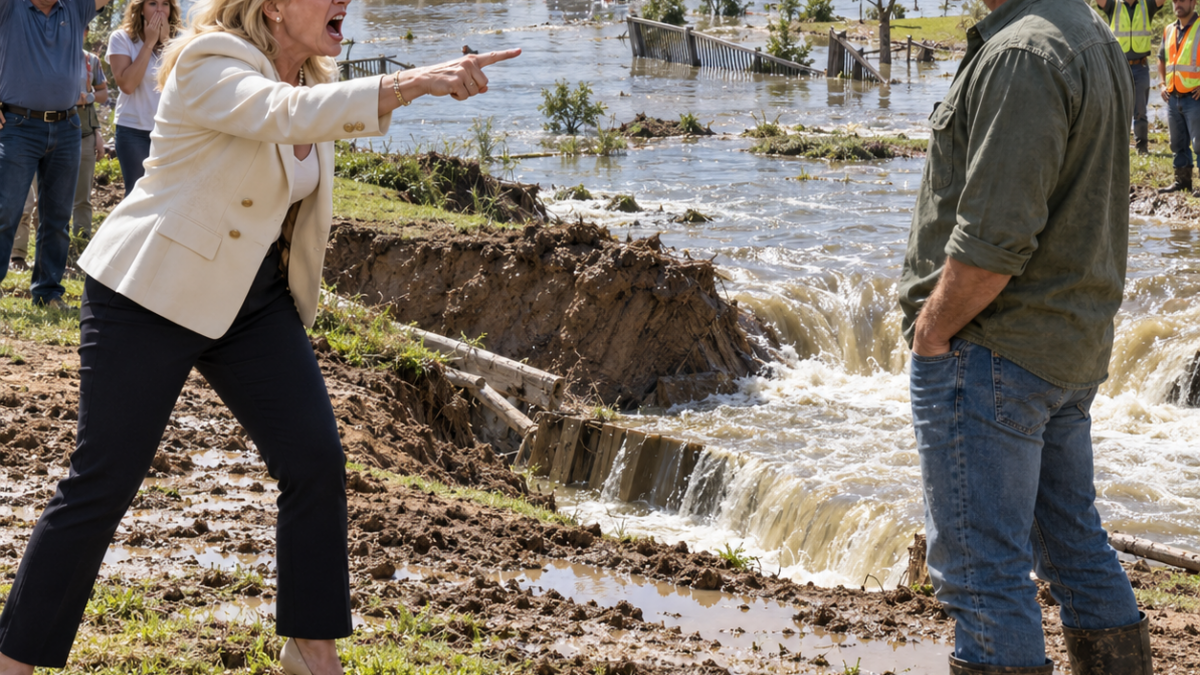
I pulled on rubber boots and crossed the road.
I stopped at the edge of her driveway where the soil was still stable.
Francine stood on her porch wearing a bathrobe and plastic garden shoes.
“What is happening?”
“The drainage pattern you voted to change.”
“Don’t do that.”
“Do what?”
“Be smug.”
“I’m not smug.”
I pointed at her patio.
“I’m concerned.”
She looked toward the cracked stones.
“What do we do?”
“We?”
“The neighborhood.”
“You call a geotechnical engineer and a stormwater contractor.”
“You are a civil engineer.”
“I am also the person whose engineered structure you bulldozed yesterday.”
“This isn’t the time.”
“Actually, it’s exactly the time.”
She folded her arms.
“We need temporary mitigation.”
“Sandbags around vulnerable entries. Pumps where discharge can be routed safely. Nobody excavates anything until the city assesses the slope.”
“Can you rebuild the dam?”
“Not this morning.”
“Why not?”
“Because you destroyed the compacted foundation layer along with the structure.”
Her face went pale.
I continued.
“I need the soil assessed. I need the upstream runoff checked. I need to know whether your contractor disturbed the municipal greenbelt while bringing equipment in.”
“We used the rear access.”
“I know.”
She hesitated.
Something in that pause bothered me.
“What?”
“Nothing.”
“Francine.”
“The contractor said access was authorized.”
“By whom?”
“The HOA.”
“Who authorized the HOA?”
She looked toward the water.
That told me enough.
I took out my phone.
“What are you doing?”
“Calling city code enforcement.”
Her head snapped toward me.
“That isn’t necessary.”
“Interesting.”
“What?”
“You didn’t mind inspectors when you thought they were coming for my dam.”
“This is a community emergency.”
“Exactly.”
I called.
The city engineer who’d originally reviewed my structure no longer worked there, but code enforcement had my permit file.
The woman on the phone put me on hold for several minutes.
When she came back, her voice had changed.
“Mr. Voss?”
“Yes.”
“We show no demolition authorization.”
“I know.”
“We also show the structure as part of an approved private stormwater-control plan.”
“I know that too.”
“Who removed it?”
“HOA contractor.”
Silence.
“Please do not perform any further grading.”
“I wasn’t planning to.”
“We’re sending an inspector.”
Francine heard enough to understand.
“This doesn’t need to become adversarial.”
I stared at her.
“You sent bulldozers onto my land.”
She opened her mouth.
Closed it.
Her air-conditioning condenser made a sick buzzing sound beside the house.
Water had risen almost to the pad.
Then it shut off.
Francine looked toward it.
I said, “Cut power to that circuit before it gets worse.”
“You’re enjoying this.”
That finally angered me.
“No.”
I stepped closer.
“I am watching water move toward forty houses because you thought an engineering drawing was less important than a board vote.”
She flinched.
“If somebody gets hurt, this stops being funny for everyone.”
I turned and walked back home.
By ten that morning, nobody was laughing.
Three basements had water.
Two crawl spaces were saturated.
A retaining wall near the lower cul-de-sac had begun to bow.
Francine’s patio had settled another inch.
The house itself hadn’t “sunk” in the cartoon sense, but a structural engineer later measured differential movement at one corner of the foundation.
Enough to crack drywall inside.
Enough to jam a back door.
Enough to make the insurance company very interested in the previous day’s demolition.
I spent the morning documenting.
Photographs.
Water elevations.
Flow directions.
Time stamps.
I didn’t touch the damaged dam site.
That was evidence now.
At noon, Officer Miguel Diaz from the county sheriff’s office pulled into my driveway.
He wasn’t there to arrest anybody.
He was there because I’d filed a destruction-of-property and trespass report the previous afternoon.
He looked over the muddy remains.
“You built this?”
“What used to be here.”
“Value?”
“Materials originally? Maybe twenty-five thousand. Replacement now could be far more depending on soil damage.”
“HOA says they had authority under covenants.”
“My deed and permits say otherwise.”
“Do you have them?”
I handed him copies.
He read slowly.
“Private parcel?”
“Yes.”
“No recorded easement granting the HOA access?”
“None.”
“Did you tell them not to enter?”
“In writing and verbally.”
“Good.”
He photographed the boundary pins.
Then looked toward the greenbelt.
“How did equipment get back here?”
“That’s the question.”
“Your driveway?”
“No.”
“Then city land?”
“Yes.”
He wrote that down.
Francine appeared on the road.
She didn’t approach.
Diaz noticed.
“That’s her?”
“Yes.”
“You want me to speak with her?”
“I want you to do your job.”
He gave me a sideways look.
“Best answer you’ve given all morning.”
He walked toward her.
I stayed where I was.
That mattered.
I didn’t need to hover over every conversation.
I didn’t need to turn my engineering dispute into a public performance.
The water would provide enough drama on its own.
By midafternoon, neighbors started showing up.
First David Lang, who lived three houses uphill.
He wore rain boots over pajama pants.
“My basement smells like a pond.”
“I heard.”
“What do I do?”
“Call your insurer. Photograph everything before removing damaged materials. Run dehumidifiers when it’s electrically safe.”
He scratched his beard.
“Can you fix the drainage?”
“Eventually.”
“Why eventually?”
“Because rebuilding too quickly could make it worse.”
He stared toward Francine’s house.
“I voted to remove it.”
“I know.”
His face reddened.
“I thought it was landscaping.”
“I brought the hydrology plan to the meeting.”
“I didn’t understand it.”
“You could’ve asked.”
He looked down.
That was all I needed to say.
Then Tessa Morgan came.
Her finished basement had two inches of water.
Then Joel Harris.
Crawl space.
Then a couple from the corner lot.
Their backyard fence was leaning because two posts had lost support.
Every one of them had voted for Francine’s proposal.
Not because they understood what the dam did.
Because Francine called it ugly.
That realization made me angrier than the bulldozers.
I had explained.
But I had explained like an engineer.
Charts.
Peak-flow numbers.
Soil saturation.
Hydraulic head.
I had assumed evidence automatically became understanding.
It doesn’t.
People don’t vote on what they understand.
They vote on what they think matters.
Francine made appearance feel important.
I failed to make water feel dangerous.
That didn’t excuse what she did.
But it gave me something to think about later.
At five, the city inspector arrived.
Maribel Cortez.
Late forties.
Dusty government SUV.
Tablet.
No patience for theater.
She introduced herself, then walked the site without speaking for nearly twenty minutes.
Measured.
Photographed.
Checked boundary coordinates.
Looked at my permits.
Looked at the destroyed berm.
Finally she asked:
“Where did equipment enter?”
I pointed.
She followed the track marks toward the east slope.
Then stopped.
“That’s municipal greenbelt.”
“Yes.”
“There’s no vehicle access permit here.”
“I suspected.”
She zoomed into a GIS layer on her tablet.
“Protected drainage corridor too.”
Francine had walked over by then.
Maribel turned.
“Ms. Lott?”
“Yes.”
“You’re HOA president?”
“Yes.”
“Who authorized heavy-equipment access across city land?”
Francine replied quickly.
“Our contractor handled access.”
“Name?”
“GreenVista Restoration.”
Maribel typed.
“Local?”
“I believe so.”
“You hired them.”
“The board did.”
“Did you receive proof of license and insurance?”
“They provided documents.”
“Do you have copies?”
“At the clubhouse.”
Maribel nodded.
“I’ll need them.”
Francine folded her arms.
“This is all becoming very disproportionate.”
Maribel looked at the destroyed dam.
Then at the flooded yard.
“Compared to what?”
Francine didn’t answer.
Maribel issued an immediate stop-work order covering all further grading in the affected drainage corridor.
Not against me personally.
Against everyone.
Including emergency rebuilding until a stabilization plan was approved.
That frustrated the neighbors.
One woman shouted:
“So we’re just supposed to flood?”
Maribel remained calm.
“You are supposed to use temporary pumping and protection measures while engineers determine whether additional excavation will destabilize the slope.”
She pointed at the saturated ground.
“Moving dirt because you’re angry at water is how you make water problems worse.”
I liked her immediately.
The HOA called an emergency town hall that evening.
The clubhouse smelled of wet drywall before anyone entered.
A roof leak had stained one corner.
Folding chairs filled quickly.
Francine sat at the front with treasurer Alan Mercer and secretary Brenda Shaw.
Vice president Gary Webb didn’t show.
That was interesting.
Harold Dwyer, a retired electrician who always wore a faded fishing vest, stood near the aisle.
He’d never spoken much at meetings.
That night he spoke first.
“My living room smells like pond water.”
A few people laughed nervously.
Harold didn’t.
“Are we going to discuss that, or are we going to hear another speech about community harmony?”
Francine adjusted the microphone.
“We are evaluating remediation.”
A woman near the front raised her hand.
“My insurer says the flooding may be linked to HOA negligence.”
Murmurs.
Francine said, “We acted under duly adopted community rules.”
I stood at the back with my folder.
She saw me.
Her expression hardened.
“Let’s remember,” she continued, “Mr. Voss constructed the dam without HOA architectural approval.”
I walked forward.
“That is true.”
People turned.
Francine blinked, surprised.
I continued.
“I did not seek HOA architectural approval because the HOA does not have jurisdiction over permitted drainage infrastructure on that portion of my parcel under the recorded documents.”
I put my city permit on the table.
“City engineer approval.”
Next page.
“County runoff analysis.”
Next.
“Soil report.”
Next.
“Final inspection.”
Then my attorney’s letter.
“Notice provided to the board before demolition advising that entry would constitute trespass and that removal could alter downstream and lateral drainage.”
Alan Mercer leaned toward Francine.
“You never showed us that.”
The room changed.
Francine turned.
“It was legal posturing.”
I looked at Alan.
“Did you receive it?”
“No.”
Brenda Shaw whispered, “I saw an email.”
Francine snapped, “Brenda.”
There it was.
First crack inside the board.
Harold stood.
“Did you know the city approved the dam?”
Francine replied, “We knew there was a permit.”
“You told us it was unauthorized.”
“Unauthorized by the HOA.”
“But you knew the city approved it.”
Francine gripped the table.
“Yes.”
Harold looked around.
“So why did we vote as if this was some illegal dirt pile?”
Nobody answered.
I opened another document.
“There’s more.”
Francine looked at me.
“Reagan, perhaps this isn’t the time.”
“It is.”
I handed copies down the front row.
“My attorney contacted the HOA insurer after the demolition.”
A woman asked, “What did they say?”
“They issued a reservation-of-rights letter and are investigating whether the board acted outside covered authority.”
Francine shot to her feet.
“That does not mean coverage is suspended.”
“Correct.”
I looked at the room.
“It means nobody should assume insurance will automatically pay every claim.”
That was more accurate.
And more frightening.
People started talking over one another.
“What about our basements?”
“My foundation?”
“Who pays?”
“Why weren’t we told?”
Francine banged the gavel.
Nobody listened.
Harold raised his voice.
“Enough.”
The room quieted faster for him than it had for her.
He looked at Francine.
“I move to call a special membership vote to remove the current board pursuant to Section Nine.”
Francine stared.
“You cannot do that tonight.”
“Why?”
“Notice requirements.”
He nodded.
“Then issue the notice.”
Someone shouted, “Second.”
Then another.
Hands went up.
Francine looked around the room.
For the first time, she saw what I’d seen from my porch that morning.
The ground under her authority had softened too.
She stood.
“If you remove this board, you inherit every problem.”
Harold replied, “At least we’ll stop making new ones.”
The room went quiet.
Three days later, after emergency notice procedures and counsel review, members voted.
Francine was removed.
Alan resigned before the vote.
Brenda resigned after.
Gary Webb, the absent vice president, claimed he hadn’t supported demolition and produced emails showing he had warned against proceeding without legal advice.
For once, documentary evidence helped somebody.
Harold became interim president.
His first phone call was to me.
“You still willing to help?”
“With drainage?”
“Yes.”
“I’ll design a restoration plan.”
“Free?”
“No.”
He laughed.
“Fair.”
Then I said, “I’ll waive my labor if the HOA pays materials and independent review.”
Silence.
“Why?”
“Because most of these people are already paying for basement repairs.”
“You’re nicer than I thought.”
“Don’t spread it around.”
Temporary measures held for three days.
Pumps.
Sandbags.
Portable drainage.
Then rain appeared in the forecast.
Two inches.
Maybe three.
Harold called.
“Tell me that’s not as bad as it sounds.”
“It’s worse.”
“Wonderful.”
We accelerated design review.
Maribel coordinated expedited permits.
Not shortcuts.
Expedited legitimate review.
Geotechnical engineer confirmed the original dam foundation had been partially disturbed but could be reconstructed with additional key trenching.
I redesigned.
Wider base.
Armored spillway.
Emergency overflow.
Native biofiltration strip.
Monitoring wells.
If I had to rebuild, I would make Francine’s demolition the last time anyone could call the system “a pile of dirt.”
The forecast moved rain forward twelve hours.
Contractor mobilized.
This time licensed.
Insured.
Proper access route.
Permit posted.
Kids gathered behind safety fencing.
Adults watched too.
Harold stood beside me.
“You nervous?”
“Yes.”
“You built the first one.”
“Exactly.”
He frowned.
“That doesn’t make sense.”
“Engineers are more afraid the second time because we know all the ways the first could’ve failed.”
We worked six days.
The rain arrived on day five.
Not full storm.
Enough to test us.
Water hit the upstream basin.
Rose.
Spread.
Then found the new spillway.
For several minutes, everyone watched.
The flow stabilized.
No overtopping.
No lateral breakout.
Downstream channel carried exactly where model predicted.
Harold slapped my shoulder.
“You did it.”
“We aren’t done.”
“You engineers are exhausting.”
By midnight, rain intensified.
I stayed outside in waterproof gear checking gauges.
At 1:18 a.m., Tessa brought coffee.
“At least yours works.”
“Thank you.”
She stood beside me.
“I owe you an apology.”
“You already said sorry.”
“No. I said I didn’t understand.”
“Same neighborhood.”
“No.”
She looked at the water.
“I called your dam ugly.”
“So did I.”
“I voted for something because Francine made it sound simple.”
I didn’t answer.
“She said property values would go up.”
“People care about their homes.”
“She made caring look like controlling.”
That was a good sentence.
I remembered it.
At dawn, the storm ended.
Not a single additional basement flooded.
The existing water slowly receded.
The neighborhood didn’t cheer.
People were too tired.
They just stood near the restored berm watching water move through reeds.
Harold finally said:
“I’ve never been happier to look at mud.”
Neither had I.
The criminal and financial investigation began after the immediate crisis ended.
Maribel returned with satellite maps.
Equipment tracks.
Municipal parcel boundaries.
“GreenVista entered through protected city land.”
“I know.”
“We found their access authorization.”
“From whom?”
“That is the issue.”
She turned the tablet toward me.
A work order.
CITY PUBLIC WORKS ACCESS APPROVAL.
Signature:
Marcus Hale.
I knew the name.
Assistant public works supervisor.
Maribel said, “Marcus didn’t sign this.”
“Forgery?”
“His preliminary statement says no.”
“Who submitted it?”
“GreenVista.”
“Who gave it to them?”
“We’re tracing.”
She zoomed in.
“There’s another issue.”
“What?”
“GreenVista Restoration isn’t licensed in this state.”
I stared.
“Francine said the board verified.”
“They may have been given false paperwork.”
“Owner?”
“Registered address is Nevada mail service. Manager listed as Douglas Kent.”
“Know him?”
“No.”
Maribel did.
“Francine’s cousin.”
That changed the investigation.
Not automatically to guilt.
Family businesses aren’t crimes.
But procurement plus forged access plus unlicensed work plus private-property demolition deserved attention.
The new board opened records voluntarily.
Harold called me from clubhouse.
“You need to see this.”
I arrived to find banker boxes covering a table.
Former treasurer Alan had left financial files.
One invoice:
GREENVISTA RESTORATION
AESTHETIC LANDSCAPE CORRECTION
$21,850
Harold stared.
“They were going to reimburse it.”
“From HOA funds.”
“Yes.”
“Paid yet?”
“Partial deposit. Final reimbursement hadn’t cleared when board changed.”
“Who approved?”
Francine.
Alan.
Brenda.
Two other board members.
Harold rubbed his face.
“We almost paid twenty-two grand to destroy the thing we now paid thirty-eight grand to rebuild.”
“Efficient.”
“Don’t.”
Another invoice appeared.
Architectural Harmony Initiative.
$15,000.
Vendor:
Lott Community Consulting.
Harold looked at me.
“Lott?”
“Could be unrelated.”
It wasn’t.
Registered to Francine’s brother-in-law.
Then:
Neighborhood Beautification Review.
$11,500.
Vendor address:
UPS Store.
Then duplicate landscaping bills.
Snow removal in August.
Aquatic vegetation treatment before the neighborhood had any managed wetland area.
Harold sat down.
“This isn’t about the dam.”
“No.”
“It never was?”
“The dam was probably real obsession.”
“But money?”
I looked at the invoices.
“Looks like separate problem.”
That distinction mattered.
We didn’t want to build a conspiracy larger than evidence.
Maybe Francine genuinely hated the dam and separately abused HOA purchasing.
Investigators would determine links.
Todd Jensen provided the next piece.
He lived on the far west side overlooking the drainage corridor.
Quiet guy.
Green baseball cap.
He came to my house after dark.
“You Reagan?”
“Yes.”
“I’ve got photos.”
He showed me demolition morning.
Timestamped.
Excavators.
Francine.
Alan.
Brenda.
All three on site.
One photograph showed Alan pointing toward the city greenbelt.
Another showed Brenda holding what appeared to be the work authorization.
“Where were you?”
“Attic window.”
“Why taking pictures?”
“I thought it was weird.”
“Why didn’t you stop them?”
He looked embarrassed.
“I didn’t want trouble.”
Honest.
“Did you hear anything?”
“Night before.”
“What?”
“Francine and Alan near clubhouse.”
He pulled up audio.
Not clear enough for every word.
But enough.
Alan:
If Reagan files injunction before Tuesday, we’re stuck.
Francine:
Then Tuesday morning.
Brenda:
What about city access?
Francine:
Douglas has paperwork.
Alan:
You sure?
Francine:
Stop worrying.
I sent copies to Maribel and Officer Diaz.
Not social media.
Not neighborhood group.
Authorities.
The DA eventually obtained warrants for records and electronic devices.
No cinematic parade of board members in handcuffs the next morning.
Real investigations are slower.
Phones extracted.
Emails reviewed.
Bank subpoenas.
Vendor registrations.
Insurance correspondence.
The financial scheme unfolded piece by piece.
GreenVista had been created four months before demolition.
It had received three HOA payments for unrelated “landscape consulting” despite performing little documented work.
Francine’s cousin Douglas controlled it.
Lott Community Consulting belonged to her brother-in-law.
Several invoices were inflated.
Some work happened.
Some didn’t.
Money flowed back through transfers investigators alleged benefited Francine indirectly.
Alan had approved payments.
Brenda had signed meeting minutes reflecting votes that several homeowners said never occurred.
Then came the email that tied the dam to money.
Francine to Douglas:
Need visual correction completed before fall appraisal cycle. Use GreenVista. Board will cover under harmony initiative. Reagan will fight if he gets time, so schedule before response window closes.
Douglas:
City access?
Francine:
Use paperwork from prior maintenance template. Nobody checks greenbelt work orders unless there’s a complaint.
There it was.
Not a misunderstanding.
Not emergency maintenance.
They expected me to fight.
They moved faster to prevent it.
My attorney, Rachel Kim, read the email twice.
“This is very useful.”
“For criminal case?”
“For your civil claim.”
“What about criminal?”
“Prosecutors decide.”
“Always ruining fun.”
“Law is not revenge theater, Reagan.”
“I know.”
“Do you?”
“Yes.”
She raised an eyebrow.
I had wanted revenge.
I’d be lying if I said otherwise.
The first week of flooding, every time I saw Francine’s patio sinking, some ugly part of me felt satisfaction.
She’d destroyed a legal structure.
Then her own yard paid first.
But by the time I saw Tessa hauling wet insulation from her basement and David throwing ruined family photographs into plastic bins, satisfaction disappeared.
Water doesn’t understand guilt.
It flooded people who voted yes.
People who abstained.
People who didn’t attend.
Francine’s bad decision spread beyond Francine.
Real revenge would have meant letting them suffer.
I couldn’t do that.
What I wanted instead became simpler.
Make her pay for what she actually did.
Not more.
Not less.
The civil mediation happened six months later.
Francine attended with her lawyer.
First time I’d seen her since she moved temporarily to her sister’s house.
Her million-dollar home was uninhabitable during remediation.
Mold.
Foundation stabilization.
Electrical replacement.
Her insurer covered portions unrelated to intentional conduct but reserved claims.
The HOA insurer contested coverage for certain board actions.
Nothing was simple.
Francine looked smaller.
Not physically.
Socially.
No clipboard.
No audience.
Her attorney began.
“Ms. Lott acknowledges mistakes were made.”
Rachel said, “That is not an offer.”
“We’re discussing resolution.”
“Then discuss numbers.”
I stayed quiet.
Francine looked at me.
“You enjoying this?”
Rachel touched my arm.
I answered anyway.
“No.”
“Liar.”
“You think I wanted forty families ripping out drywall?”
“You wanted me embarrassed.”
“At the beginning? Yes.”
That surprised her.
I continued.
“When your patio cracked, part of me thought you deserved it.”
Her mouth tightened.
“Then I saw everybody else’s houses.”
She looked away.
“Now I want my restoration costs, engineering costs, property damage, and legal fees addressed through the case.”
“And my house?”
“What about it?”
“You know what happened.”
“Yes.”
“You designed the system.”
“Yes.”
“You knew removing it could flood me.”
“I told you.”
She leaned forward.
“You could have stopped us.”
Rachel interrupted.
“My client objected in writing.”
Francine ignored her.
“You could’ve stood in front of the machines.”
I stared.
“You’re blaming me because I didn’t physically stop your contractor?”
“You always knew more than everyone else.”
“That’s why I brought the permit file to the meeting.”
“You made people feel stupid.”
That stopped me.
Not because it excused her.
Because there might be truth inside it.
Francine continued.
“You showed equations. You rolled your eyes. You made jokes about people caring about appearance.”
I remembered.
Pinterest board qualifies as civil planning.
Funny.
Also dismissive.
She said, “People stopped listening.”
I leaned back.
“So you bulldozed it.”
“No.”
“That’s the next sentence, Francine.”
She looked down.
“I thought you were exaggerating.”
“Why?”
“Because you always sounded like the smartest person in the room.”
Rachel glanced at me.
Don’t take bait.
I didn’t.
Francine whispered:
“And I hated that.”
There.
Not landscaping.
Not property value.
Pride.
She had turned disagreement into a contest.
So had I, at times.
Difference was she had sent machines.
That mattered legally and morally.
I said, “You could have hired an independent engineer.”
“I know.”
“You could have waited for court.”
“I know.”
“You could have shown the board my attorney’s letter.”
Her eyes filled.
“I know.”
That was the first moment she stopped fighting.
Mediation didn’t settle criminal matters.
It couldn’t.
But civil claims eventually resolved through a combination of HOA funds, available insurance coverage, Francine’s personal contribution, and contractor-related recoveries.
I recovered rebuilding and damage costs.
Affected homeowners pursued their own claims.
Nobody became rich.
Several families still lost money.
That is another truth revenge stories skip.
You can win and still have a deductible.
The grand-jury investigation proceeded separately.
I testified.
Assistant District Attorney Eliza Grant was precise.
No speeches.
She placed my original design on a screen.
“Mr. Voss, was this structure permitted?”
“Yes.”
“Did HOA approval form part of the city permit requirement?”
“No.”
“Did you notify the HOA before construction?”
“Yes.”
“Did they object at the time?”
“No formal objection until years later.”
“Did removal change drainage?”
“Yes.”
“How do you know?”
“Pre-demolition modeling, post-demolition measurements, observed flow, and independent engineering review.”
She showed photographs.
“What is this?”
“Original spillway.”
Next.
“Destroyed embankment.”
Next.
“Flooded lower lots.”
Then vendor records.
I didn’t speculate about motive.
Didn’t call Francine corrupt.
Didn’t say fraud unless asked about documents already established.
The paper trail did enough.
The indictments came two months later.
Francine.
Alan Mercer.
Douglas Kent.
Francine’s brother-in-law Peter Lott.
Brenda faced narrower charges related to false minutes and later entered a cooperation agreement.
Charges included fraud-related offenses, misuse of association funds, forgery-related counts tied to access documentation, conspiracy allegations, and unlawful property damage.
The city filed civil environmental claims over greenbelt access.
Not every former board member was charged.
Gary wasn’t.
Two board members who had voted for demolition but relied on Francine’s representations were treated as witnesses.
That angered some homeowners.
Harold asked me:
“You think they should walk?”
“They made a bad vote.”
“Cost us hundreds of thousands.”
“Bad voting isn’t automatically criminal.”
“They didn’t read.”
“Then don’t elect them again.”
He hated that.
Later admitted I was right.
The neighborhood spent the next year repairing more than houses.
Trust had collapsed.
Every invoice became suspicious.
Every board proposal triggered arguments.
Harold nearly quit.
“I wanted to fish.”
“You chose president.”
“I chose removing Francine.”
“Same ballot.”
“Worst decision of my life.”
We sat beside the rebuilt dam.
Reeds had begun filling in.
Frogs returned.
Harold cast into a deeper retention pocket despite my repeated explanation that it wasn’t a fishing pond.
“You know what our biggest problem is?”
“What?”
“Nobody trusts anyone.”
“That might take time.”
“They want receipts for coffee.”
“Good.”
“They want three bids for toilet paper.”
“Excessive.”
“They want every meeting livestreamed.”
“Not terrible.”
He reeled in nothing.
“I understand transparency. I don’t want governance to become punishment.”
That was smart.
We wrote new bylaws carefully.
With actual HOA counsel.
Not Rachel.
Independent attorney hired by members.
Restrictions tied to legitimate shared interests.
Safety.
Drainage.
Common infrastructure.
Clear architectural standards where recorded authority existed.
We removed vague language about “aesthetic harmony” that Francine had stretched into whatever she wanted.
Property-entry provisions were narrowed.
Notice required except emergency.
Fine caps.
Appeal process.
Conflict-of-interest disclosure.
Competitive bids above thresholds.
Independent financial review.
Regular audits.
Vendor ownership disclosures.
No contractor related to a board member without disclosure and member review.
Harold wanted me on architectural committee.
“No.”
“Why?”
“Because I don’t care about porch colors.”
“Exactly.”
“I am an engineer.”
“Exactly.”
I eventually agreed on one condition.
Rename it.
“Architectural and Infrastructure Review Committee.”
Harold sighed.
“That is the least catchy thing I’ve ever heard.”
“Perfect.”
We limited our role.
Drainage.
Retaining walls.
Major structural additions.
Shared utility impact.
No garden gnomes.
No wind chimes.
No flagstone shade politics.
At the first meeting, a resident submitted a request for bright purple front door.
Harold slid it toward me.
“Engineer?”
“Does purple affect load path?”
“No.”
“Approved by reality.”
The committee voted no action required.
Word spread.
People started joking that the HOA had become boring.
Best compliment possible.
Francine’s house didn’t recover.
Not economically.
Foundation stabilization estimate exceeded what made sense given interior mold and market damage.
Her lender eventually took possession through foreclosure after prolonged proceedings.
The bank tried auction.
No meaningful bids.
The city later acquired the parcel through a negotiated hazard-remediation arrangement, demolished the damaged structure, and restored drainage-compatible open space.
Harold proposed turning it into parking.
I nearly attacked him with rolled drawings.
We built a small community garden instead.
Raised beds.
Native plants.
Bench overlooking the rebuilt wetland edge.
Someone suggested naming it Francine Park.
“No.”
“Why not?”
“Cruel.”
Harold said, “Accurate.”
“No.”
We named it Creekside Garden.
Better.
A volunteer made a small sign beside the dam:
HYDROLOGY HAPPENS. PLAN ACCORDINGLY.
I laughed so hard I let it stay.
The criminal cases took nearly two years.
Not fast.
Motions.
Forensic accounting.
Plea negotiations.
Some charges narrowed.
Brenda testified about board practices.
Alan claimed he relied on Francine and contractor paperwork.
Emails contradicted parts of that defense.
Douglas claimed access document came from unknown source.
Metadata tied draft to his laptop.
Peter Lott’s consulting company had received payments for work investigators said was either inflated or unsupported.
Francine’s lawyer argued she acted under genuine belief the dam violated HOA rules and relied on contractor expertise.
That may have been true regarding aesthetics.
Harder to explain forged city access.
Harder to explain related-party vendors.
Harder to explain hidden attorney warnings.
Eventually, Francine accepted a plea agreement.
Eighteen months incarceration.
Restitution.
Financial penalties.
Restrictions from serving in fiduciary community-management roles for a defined period after release.
Alan received a shorter sentence and probation components after cooperation.
Douglas faced separate contractor fraud penalties.
Peter repaid money and received his own sentence based on role.
Online commenters complained sentences were too light.
Others thought too harsh.
I stopped reading.
The legal system wasn’t a satisfaction machine.
It was a process for proving specific conduct and assigning specific consequences.
I had learned to appreciate the difference.
On sentencing day, I gave a victim-impact statement.
Short.
I could have talked about my dam.
Instead I talked about Tessa’s family photographs.
David’s basement.
The elderly couple who spent weeks in a hotel because mold made their house unsafe.
The neighborhood reserve fund drained by repairs.
Then I said:
“The worst damage wasn’t that Ms. Lott disliked an engineering structure. People disagree about what looks good all the time. The damage came when she decided disagreement gave her permission to bypass documents, property lines, professional review, and the people she represented.”
Francine listened.
I didn’t look at her again.
Afterward, Eliza Grant found me in hallway.
“You did well.”
“I read four paragraphs.”
“Exactly.”
She smiled.
“Most people try to retry case during impact statements.”
“I’ve had enough meetings.”
She laughed.
“You know this case will be used in trainings.”
“That is depressing.”
“Why?”
“Because somebody will create slide titled Dam HOA Fraud.”
“Almost certainly.”
“Please don’t send it.”
I meant it.
The state’s investigation into HOA finances expanded beyond the dam contracts.
Five years of records.
Inflated bids.
Duplicate payments.
Phantom landscaping.
One invoice for $5,000 in aquatic vegetation treatment dated eighteen months before any pond or wetland-management area existed.
Harold loved that one.
“We paid somebody to treat imaginary algae.”
“Apparently.”
“Can I sue algae?”
“No.”
“Law fails again.”
A forensic accountant recovered portions from vendors and related parties.
HOA reserves stabilized slowly.
Insurance settlements covered some homeowner losses.
City grant helped with stormwater restoration because the illegal greenbelt access had affected municipal drainage.
No one source fixed everything.
Recovery came like rebuilding the dam.
Layer.
Compact.
Check.
Another layer.
That physical process became metaphor people used too often.
I banned it at meetings.
Harold would say:
“We’re rebuilding trust one layer at—”
“No.”
“Come on.”
“No engineering metaphors.”
“You’re no fun.”
“Correct.”
The following spring brought the storm I had been waiting for.
Not because I wanted danger.
Because every design eventually meets reality.
Forecast:
Four inches in twenty-four hours.
Saturated ground from prior rain.
Creek already high.
I checked gauges at dawn.
Rebuilt dam ready.
Emergency spillway clear.
Bio-wall vegetation established.
City stormwater team monitored upstream.
Residents texted me every hour anyway.
Is it okay?
Water high?
Should I move car?
My favorite:
DAM STILL THERE?
I replied:
YES, HAROLD.
At 2 p.m., rain turned violent.
Sheets.
Street gutters filled.
Runoff hit lower basin harder than any event since reconstruction.
I stood in waterproof gear with Evan Pierce, a younger engineer I’d hired to review performance independently.
He watched the gauge.
“You nervous?”
“Yes.”
“Good.”
“Why?”
“Nervous engineers check things.”
Smart kid.
Water rose.
Main outlet neared design capacity.
Spillway engaged.
Exactly as planned.
Flow spread across reinforced apron.
Native reeds bent nearly flat.
No erosion.
Downstream channel stayed within bank.
At 5:30, Harold arrived with umbrella that lasted approximately thirty seconds before turning inside out.
“Are we winning?”
“Go inside.”
“Answer.”
“We aren’t at peak.”
He looked at water.
“Looks like a lot.”
“That is professional assessment.”
Lightning flashed.
I shoved him toward house.
At 7:12 p.m., peak arrived.
The basin came within eight inches of maximum operating level.
Emergency overflow stayed dry.
No overtopping.
No lateral saturation spike.
Neighborhood sump pumps ran, but normal storm response.
No basement flooding tied to drainage failure.
I stood in rain watching levels flatten.
Then fall.
For the first time since demolition, I let myself breathe.
Evan looked at me.
“Good design.”
“Good construction.”
“Take compliment.”
“I am.”
He laughed.
Next morning, children rode bikes to the dam.
Parents came with coffee.
Nobody organized it.
They just wanted to see.
The structure was muddy.
Reeds bent.
Stone wet.
Absolutely beautiful.
A little girl named Sophie stopped beside me.
“My teacher said you saved the neighborhood.”
“No.”
She frowned.
“Who did?”
“Lots of people.”
“You built that.”
“Yes.”
“Then you saved it.”
I crouched.
“You know what happened before?”
“The mean lady broke it.”
Children simplify history brutally.
“Yes.”
“And houses got swampy.”
“Also yes.”
“Then you fixed it.”
“People helped.”
She looked toward reeds.
“It’s prettier now.”
That made me laugh.
The original accusation.
Ugly.
Eight years of conflict over appearance.
Now a child looked at the rebuilt system and saw something alive.
Monarch butterflies arrived later that summer.
Dragonflies.
Frogs.
Birds nested in reeds.
I hadn’t designed it as a nature preserve originally.
Function came first.
But the native planting improved water quality and habitat.
One evening I sat on the bench by Creekside Garden.
Harold beside me.
Fishing rod.
Still ridiculous.
“You ever think Francine was right?”
He looked at me like I’d confessed murder.
“About what?”
“Old dam was ugly.”
“It was ugly.”
I laughed.
“You voted to remove it?”
“No.”
“You thought about it.”
“Absolutely.”
“Traitor.”
He cast line.
“New one is nicer.”
“Because I had larger budget.”
“Pain improves architecture.”
“No engineering metaphors.”
“That one was mine.”
“Still banned.”
Years passed.
Neighborhood matured.
Some residents moved.
New families arrived who only knew demolition story secondhand.
That was healthy.
Communities shouldn’t remain emotionally frozen around old scandal.
The rebuilt HOA became ordinary.
Road repairs.
Tree trimming.
Pool maintenance.
Budget arguments.
One year, greatest controversy was whether clubhouse coffee contract was overpriced.
I attended that meeting.
Thirty-five minutes arguing over beans.
I whispered to Harold:
“We’ve healed.”
He whispered:
“This is worse than fraud.”
I almost laughed aloud.
Harold eventually stepped down.
Fishing needed more attention.
New president was Tessa Morgan.
The same woman whose basement flooded.
She ran meetings tightly.
Published agendas.
Refused off-record votes.
When people asked why documentation mattered, she didn’t tell them about Francine dramatically.
She said:
“Because memories disagree.”
Good governance in four words.
I stepped off infrastructure committee after six years.
Replacement:
Evan.
Younger.
Smarter.
Less sarcastic.
Residents liked him better.
I pretended not to notice.
At my final committee meeting, Harold appeared with cake.
Written on top:
THANK YOU FOR NOT REGULATING GNOMES.
Perfect.
I took down old cameras from dam site.
Not all monitoring.
Engineering sensors stayed.
Security cameras had been installed during investigation.
I no longer needed to watch for bulldozers.
Removing them felt important.
Fear can outlive threats.
You have to notice when protection becomes habit.
I stored one camera in workshop.
Never used again.
Francine wrote once after release.
Three pages.
I left unopened for a week.
Then read.
Reagan,
I spent a long time being angry that everyone blamed me for a flood when I thought I was fixing a neighborhood problem.
That sentence almost made me stop.
Then:
Eventually I had to admit I knew enough to stop. I knew there was a permit. I knew your attorney had objected. I knew Douglas’s access paperwork had not been independently verified. I told myself the board vote made those concerns technicalities.
You were arrogant.
I laughed.
At least she remained Francine.
She continued:
You were also right about the water.
I don’t expect forgiveness. I wanted you to know I understand now that believing I was protecting property values did not give me authority to destroy your property.
I folded the letter.
There was more.
Personal apologies.
Money.
Her house.
Family.
But that paragraph mattered.
I did not reply immediately.
Months later, I sent one sentence.
I hope you build a quieter life.
Nothing about forgiveness.
No friendship.
No reopening old debate.
Enough.
I later heard she moved to a condo in another county.
The source version joke would have said no HOA.
Reality had better irony.
The condo had one.
She never ran for board.
That made me smile.
My own house changed.
I renovated basement.
Not because of flooding.
Age.
New office.
I framed original city permit.
Not as trophy.
As reminder.
Beside it, one photograph of old dam.
Rough.
Brown.
Ugly.
Underneath, photo of rebuilt wetland spillway with reeds and butterflies.
Visitors assumed it was before-and-after beautification.
Technically true.
They rarely knew legal war behind it.
Fine.
One afternoon, a young couple considering buying a home in neighborhood asked me:
“Is the HOA bad?”
I looked across street.
“No.”
They seemed surprised.
“We heard story.”
“It was bad under one board.”
“So safe now?”
“Read documents.”
They laughed, thinking joke.
“I mean it.”
I handed them bylaws.
“Don’t move into any HOA without reading what you’re agreeing to.”
The man flipped pages.
“This is long.”
“So are lawsuits.”
They bought house.
Years later he became treasurer.
Read every invoice.
Sometimes fear produces useful accountants.
The wetland area became part of city environmental education route.
Schools visited.
Students learned stormwater.
Permeability.
Runoff.
Native filtration.
I gave demonstrations occasionally.
I never mentioned Francine by name.
One teacher asked:
“Why was original dam removed?”
I said:
“Governance failure.”
A student raised hand.
“What does that mean?”
“People with authority made a decision without understanding technical consequences and without following proper legal process.”
Another asked:
“So adults?”
“Yes.”
They laughed.
Children are ruthless.
I showed them watershed model.
Pour water at top.
Watch runoff.
Add retention.
Compare.
Simple.
Maybe if I’d shown that to neighbors instead of thirty-page hydrology report, demolition never would’ve happened.
That thought stayed.
Communication is part of engineering.
Being technically correct is not same as being understood.
I started teaching that in guest lectures at local university.
First slide:
IF NOBODY UNDERSTANDS YOUR DESIGN, YOU ARE NOT DONE EXPLAINING.
Students hated.
Then appreciated.
One asked:
“Did you learn that from project failure?”
“Sort of.”
“What failed?”
“People.”
They laughed.
I didn’t.
Not completely.
My own failure had been assuming data spoke for itself.
Francine’s failure was bigger—she treated not understanding as permission to override expertise.
But both mattered.
Engineering isn’t only equations.
It’s persuading people not to bulldoze equations into mud.
Maribel Cortez eventually retired from code enforcement.
At her retirement lunch, I brought her a tiny toy bulldozer.
She stared.
“Seriously?”
“Symbolic.”
“I almost cited you twice during rebuild.”
“You enjoyed it.”
“Deeply.”
She kept bulldozer on desk at home, according to her daughter.
Officer Diaz became lieutenant.
Eliza Grant moved into private practice.
Harold got better at fishing.
Slightly.
Tessa’s basement was remodeled and became game room.
David replaced family photographs lost to flood by asking relatives for copies.
That one stuck with me.
Money replaced drywall.
Not photographs.
When I gave victim-impact statement, that’s why I talked about them.
Physical infrastructure failures create emotional debris no estimate captures.
Insurance line item:
Contents loss.
Human translation:
Grandmother’s handwriting gone.
Child’s first drawing ruined.
Wedding album stuck together.
Engineering decisions reach farther than calculations.
That understanding made me gentler.
Not dramatically.
Harold would deny.
But some.
A decade after demolition, HOA held anniversary picnic at Creekside Garden.
I protested name “anniversary.”
“Sounds like we’re celebrating disaster.”
Tessa said, “We’re celebrating rebuild.”
Fair.
Kids played near pollinator strip.
No one allowed near water unsupervised.
Safety fencing integrated into landscaping.
Harold grilled burgers.
Someone hung banner:
TEN YEARS DRY.
I groaned.
Residents loved it.
They gave me plaque.
I refused.
They installed it on bench anyway.
REAGAN VOSS
DESIGNED THE WATER TO GO WHERE IT BELONGS
Better than hero nonsense.
I sat on bench after everyone left.
Frogs loud.
Same frogs that had gone silent demolition day.
Or descendants.
Probably descendants.
Water moved softly through spillway.
I’d spent years thinking most satisfying part of story was watching Francine’s patio crack.
It wasn’t.
That image was dramatic.
But satisfaction faded fast when neighbors flooded.
Real satisfaction sounded like frogs.
Normal.
Unimpressive.
Alive.
A storm came that night.
Moderate.
I didn’t check gauges.
First time in years.
Sensors would alert Evan.
System tested repeatedly.
I trusted it.
Rain tapped windows.
I slept.
That might have been clearest sign I was done.
The next morning, dam stood.
Of course.
I made coffee.
Walked outside.
Across street, new family lived where Francine’s house used to be? No—parcel had become garden in source. Keep garden.
Creekside Garden glowed after rain.
Sunflowers.
Milkweed.
Bench.
No million-dollar colonial.
The land where control had once centered now had tomatoes and children.
That wasn’t revenge I planned.
Maybe better because I didn’t.
I walked down path.
Sophie—the little girl from storm years, now teenager—sat on bench sketching.
“What are you drawing?”
“Dam.”
“Why?”
“Art assignment.”
“I’m sorry.”
She rolled eyes.
“It looks cool.”
“It’s drainage infrastructure.”
“That’s why.”
She showed me page.
Not technical.
Reeds.
Water.
Stone.
Butterflies.
She’d drawn spillway like creek.
“What do you call it?”
She shrugged.
“Swamp.”
I laughed.
“For ten years I fought that word.”
“What’s wrong with swamp?”
“Nothing.”
Exactly.
Nothing.
We had spent fortunes trying to make neighborhood look controlled.
Trimmed hedges.
Stone patios.
Perfect lawns.
Then water reminded us landscape isn’t decoration.
The new wetland was partly engineered, partly wild.
It worked because we stopped treating water as something that could be ordered away.
Sophie asked:
“Was old HOA lady really that bad?”
I thought.
“She made bad decisions.”
“People say she was evil.”
“People like simple stories.”
“Was she?”
“No.”
That surprised her.
“She committed crimes?”
“Yes.”
“How can she not be evil?”
“People can do serious harm without being monsters from birth.”
She frowned.
“That sounds complicated.”
“It is.”
She went back to drawing.
Good.
Complicated is better than myth.
Years later, when I finally retired from civil engineering, university asked me to give one last lecture.
I titled it:
THE UGLY DAM.
Harold said:
“Finally admitting.”
“Marketing.”
Lecture wasn’t about Francine.
Not mostly.
I showed original flood.
Design.
Permits.
HOA conflict.
Demolition.
Post-removal hydrographs.
Foundation movement.
Rebuild.
Governance reforms.
Then I showed two photographs.
Old dam.
New wetland.
I asked students:
“Which is successful?”
Everyone chose new.
“Why?”
Prettier.
Biodiversity.
Better spillway.
Community acceptance.
I nodded.
Then:
“The old one kept homes dry for eight years.”
Silence.
“It was successful too.”
Lesson:
Don’t confuse beauty with function.
Don’t confuse function with communication.
Don’t confuse authority with expertise.
Don’t confuse expertise with wisdom.
And never assume a structure nobody understands will be protected simply because it works.
After lecture, young woman approached.
“My parents live in HOA.”
“Condolences.”
She laughed.
“They’re fighting over drainage ditch.”
“Of course.”
“Can I send them slides?”
“Yes.”
“Will it help?”
“No idea.”
Honest.
She did.
Months later emailed:
They hired engineer before voting.
That may have been greatest professional achievement of my life.
No floods.
No prosecutions.
Just people hiring engineer before moving dirt.
I printed email.
Framed beside permit.
Harold visited workshop.
Read it.
“That is very boring.”
“I know.”
“You’re proud?”
“Extremely.”
He shook head.
“Engineers.”
“Fishermen.”
He still couldn’t catch anything in retention basin.
Good.
At seventy, I sold my house.
That surprised everyone.
Tessa asked:
“You’re leaving?”
“Moving closer to daughter.”
“You have daughter?”
People in HOA meetings know very little about actual lives.
“Yes.”
“What about dam?”
“Evan manages engineering.”
“Who will yell at us?”
“You’ll survive.”
Harold looked betrayed.
“You can’t leave.”
“Watch me.”
Buyer was young hydrologist.
Perfect coincidence? I nearly rejected because too perfect. But true enough in fiction.
Her name Maya Chen.
She reviewed every document before closing.
Every easement.
Bylaw.
Stormwater maintenance agreement.
I liked her immediately.
At closing she asked:
“Anything I should know?”
“Never let HOA bulldoze dam.”
She laughed.
I didn’t.
Then laughed too.
I transferred house.
Not dam ownership fully—stormwater easement and maintenance structure now governed through recorded agreement among parcel owner, HOA, city inspection obligations.
I had learned not to leave critical infrastructure dependent on personality.
Maya became local caretaker.
I moved.
First heavy storm after move, I checked radar compulsively.
Almost called Evan.
Didn’t.
He texted:
STOP LOOKING AT RADAR.
I replied:
HOW DO YOU KNOW?
ENGINEER.
Dam held.
Of course.
Final time I visited neighborhood was several years later.
Harold had passed.
Tessa moved.
Maya still there.
Creekside Garden larger.
Bench plaque faded.
Sophie grown, now landscape architect, had redesigned pollinator area as volunteer project.
She showed me.
“You made swamp prettier.”
“You said swamp was already beautiful.”
“It needed path.”
Fair.
We walked to dam.
Reeds taller.
Spillway stone dark with moss.
Water clear enough to see small fish.
Frogs everywhere.
Maya handed me monitoring report.
“Stable.”
“I didn’t ask.”
“You were going to.”
True.
She pointed toward old elevation marker I installed night before demolition.
Still there.
Metal stake.
Faded numbers.
The water table that night had risen four inches.
Now marker stood beside managed wetland as piece history.
I touched top.
Memory returned sharp.
Bulldozers.
Francine’s sun hat.
Mud.
Silence.
Then patio crack.
Town hall.
Court.
Rain.
Years.
I asked Maya:
“Anyone complain it’s ugly?”
She smiled.
“Someone asked if reeds could be trimmed.”
“What did you say?”
“No.”
“Good.”
“Then explained why.”
“Better.”
There.
Progress.
Not winning.
Teaching.
Explaining.
Setting boundaries.
Listening.
I sat on bench.
Sophie and Maya walked ahead discussing planting.
Children biked trail.
No one knew me.
One boy stopped to read plaque.
“Who is Reagan Voss?”
His friend shrugged.
“No idea.”
Perfect.
They rode away.
I looked across water.
Francine once believed neighborhood needed visual harmony.
I believed correct engineering should be enough.
Both of us had been too certain in different ways.
She paid far greater price because she crossed legal and ethical lines.
But certainty had shaped us both.
Water doesn’t care who is president.
Doesn’t care who has degrees.
It follows grade.
Pressure.
Soil.
Gravity.
People are harder.
They follow fear.
Pride.
Trust.
Habit.
Sometimes a confident voice.
Sometimes evidence.
The best systems—dams, boards, communities—make room for failure without letting one person’s failure destroy everything.
That was final lesson.
I stood.
Frogs went quiet for a second as my shadow crossed reeds.
Then started again.
I smiled.
Years earlier, their silence had warned me something was wrong.
Now their noise told me enough.
The water was where it belonged.
The homes were dry.
The board had limits.
The records were open.
And the thing Francine once called the ugliest structure in the neighborhood had become the one place everyone stopped to admire.
[END OF STORY]








