PART 2: HOA Bulldozed My Horse Pens as Wildfire Smoke Closed In—Hours Later, Her Own Family Was Standing at My Gate
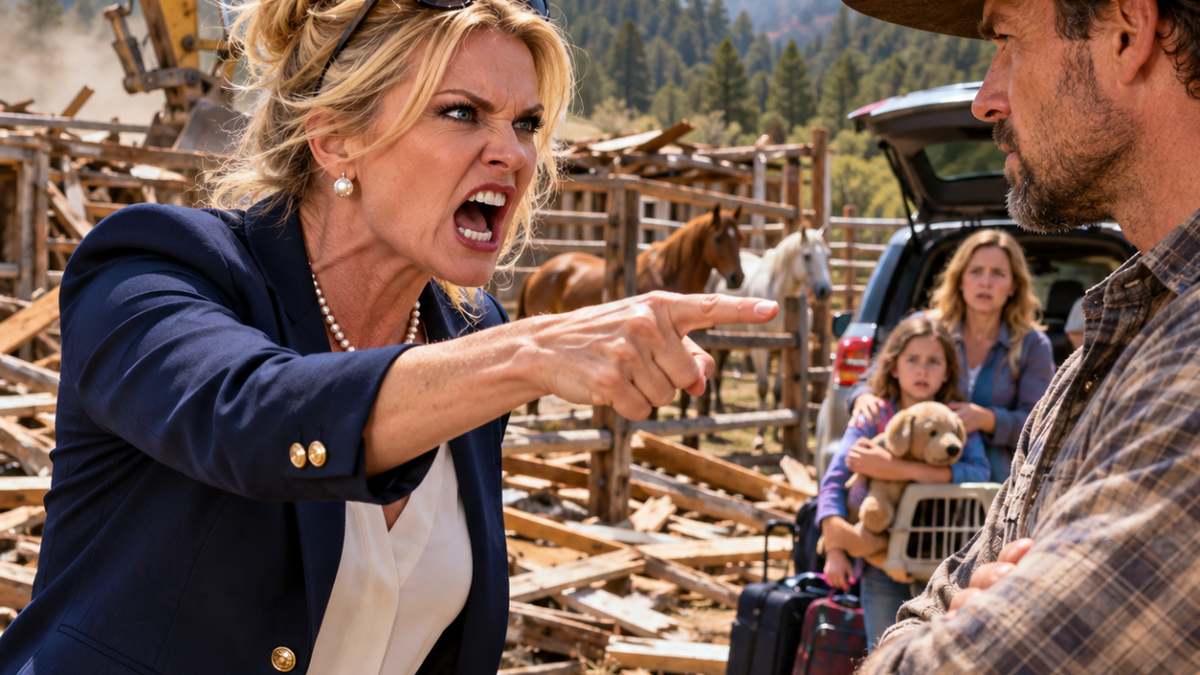
PART 2
The truth was, none of this had started with an excavator.
It had started six days earlier with a fence.
On Sunday morning, Mara had come to my workshop carrying a rolled-up site plan and wearing the same confident smile she wore whenever she wanted somebody else to make her problem disappear.
I was fifty-eight years old, and I made my living repairing horse trailers. Axles, floors, ramps, wiring, broken doors, rusted frames—I had spent most of my adult life looking at damaged things and figuring out what had failed.
People were harder.
Especially people like Mara.
She stood outside my workshop and pointed toward the east boundary of my six-acre property.
Pine Hollow’s recreation field sat on the other side.
The HOA wanted to add sports courts, benches, landscaping, and a sitting area.
“Just some fence work,” she said.
“What kind?”
“Repair and cleanup along the shared boundary. Some sections lean toward the field.”
“That’s fine. Mark the sections. I’ll look at them.”
Her smile widened.
“We’d also like the whole area to look a little cleaner.”
I knew what she meant before she said it.
My holding pens sat west of the fence.
Not fancy.
Not decorative.
Steel panels, timber posts, practical gates.
I used them for customers’ horses when trailers needed repairs, for neighbors during emergency moves, and for animals that needed a safe place while transportation was arranged.
Mara saw old fencing.
I saw thirty years of problems solved before they became disasters.
She tapped the plan.
“The seating area will face this direction.”
“And?”
“The pens are visually distracting.”
I almost laughed.
Instead, I asked, “To horses?”
“To homeowners.”
“The horses don’t care.”
“Owen.”
There it was.
The tone.
My name turned into a warning.
I wiped my hands on a shop rag.
“You asked about fixing the boundary fence. I’ll discuss the boundary fence.”
“I’m trying to improve property values.”
“And I’m trying to keep horses from walking through broken fencing.”
She exhaled.
“We’re saying the same thing.”
“No. We’re not.”
That evening, Lucy sent the HOA office an email.
Lucy was nineteen then, and she had become the unofficial keeper of every record in my business.
She remembered dates.
She labeled photographs.
She saved receipts I would have lost in the cup holder of my truck.
She also trusted paper more than promises.
After hearing my conversation with Mara, she sat at the workshop computer and typed three simple instructions.
No demolition.
No grading.
Keep the loading approach clear.
The HOA manager acknowledged the email.
I thought that settled it.
I should have known better.
Thursday afternoon, Mara came back with another agreement.
This one was much broader.
Construction access.
Temporary storage.
Future community-event access.
Use of part of my loading yard.
I read it twice.
Then I pushed it back across the desk.
“No.”
“We need flexibility.”
“You need my yard.”
“Only occasionally.”
“No.”
“This would benefit the whole neighborhood.”
“It would benefit your project.”
Her smile disappeared.
“You’re a member of the association.”
“I pay dues. That doesn’t make my loading yard community property.”
“You’re being unnecessarily combative.”
“And you’re asking for something I’m not giving you.”
I refused in writing.
Again, Lucy saved it.
Friday morning, she and I drove into town to pick up replacement hardware for a trailer ramp.
We had been gone less than forty minutes when my phone buzzed.
Driveway camera.
Lucy was driving.
I opened the alert.
An excavator was turning into my property.
For two seconds, I could not make sense of what I was seeing.
Then another truck followed it.
“Lucy.”
She heard my voice and immediately glanced over.
“What?”
“Turn around.”
“What happened?”
“Turn around now.”
She saw the screen when we stopped at the next intersection.
Her face changed.
Neither of us spoke on the drive back.
We didn’t need to.
By the time we reached our gate, the machine had already gone farther than I could have imagined.
That was when we met Danny Ruiz.
Danny was the site foreman.
He did not act defensive when I demanded to see his authorization.
He looked confused.
That mattered.
He pulled up the work order on his tablet.
Mara had signed it.
Below her signature was a checked box.
OWNER CONSENT CONFIRMED BY ASSOCIATION REPRESENTATIVE.
I pointed at it.
“Where is mine?”
Danny frowned.
“We were told the association had authority for the work area.”
“The fence line.”
He brought up the drawing.
I felt my stomach drop.
A shaded maintenance strip that had originally run along the property boundary had been expanded.
It now covered the pens.
And the south loading approach.
“This isn’t the plan I saw.”
Danny looked toward Mara.
She had arrived behind us.
“The scope evolved,” she said.
I turned on her.
“Without me?”
“We can resolve the paperwork afterward.”
Danny lowered the tablet.
“No.”
Mara looked at him.
“What?”
“I’m stopping.”
“The equipment is already mobilized.”
“I said I’m stopping until my office sorts out authorization.”
She stepped toward him.
“Do you understand what delay costs?”
Danny looked past her at the broken pens.
Then he looked at me.
“I understand what working outside authorization costs too.”
He told the operator to shut down.
Then he took a wide photograph for his company’s incident file.
I noticed it only because Lucy noticed everything.
“Dad,” she whispered.
“What?”
“He photographed the whole yard.”
At the time, I had no idea how important that picture would become.
Mara followed Danny toward his truck.
“The donors are coming tomorrow,” she said. “You cannot leave the site like this.”
I stared at her.
“You don’t have a recreation site here.”
She stopped.
“You have my animal loading yard.”
“The committee already presented this layout.”
And there it was.
Not safety.
Not maintenance.
Not misunderstanding.
She had promised people a project.
She had put her name on it.
She needed my land to make her promise real.
And somewhere between Sunday and Friday, my refusal had stopped being an answer she was willing to accept.
Then Earl arrived with Nell.
And the wildfire turned every argument into a clock.
“Dad.”
Lucy was holding Nell’s lead rope now.
Earl’s trailer floor had been damaged for weeks, and the replacement panels he ordered had not arrived. He had planned to bring Nell to us if the fire moved closer because he trusted our yard.
He had no safe way to transport her himself.
“I can go find somebody,” he said.
His voice cracked.
I shook my head.
“No. You go with your neighbor.”
“Owen—”
“You take your medicine?”
He nodded.
“Go. Stay with them. We’ll move Nell.”
His hand tightened around the rope.
“Don’t lose her.”
I looked at him.
He seemed embarrassed for saying it.
“She’s all I’ve got left from that place.”
I knew what place he meant.
His old farm.
The one he had sold after his wife died.
Nell was the last horse they had owned together.
Lucy stepped forward and took the lead rope from his trembling hand.
“We won’t lose her.”
Earl looked at her.
Then he made the soft two-note whistle he always used when feeding Nell.
The mare’s head turned.
Her breathing slowed.
For just a moment, Earl rested his forehead against hers.
Then he walked away.
Lucy watched him go.
When she looked back at me, her eyes were wet.
“Dad, where are we putting everybody?”
That question mattered more than anything Mara had said.
We had eight permanent holding pens.
Six were damaged or unusable.
The loading approach was cut open.
The evacuation warning was spreading.
And my phone was already filling with messages.
I went into the workshop.
“Callers don’t get promises,” I told Lucy. “We confirm space before we tell anybody yes.”
She nodded and opened the intake notebook.
I called Ruth Vega at the county fairgrounds.
Ruth had managed livestock receiving during more emergencies than either of us liked remembering.
She answered on the second ring.
“Tell me what you have.”
“Damaged holding yard. One elderly mare who needs a low-entry trailer. More animals coming.”
“How many?”
Lucy started reading names from messages.
I gave Ruth the provisional list.
She went quiet.
Then she said, “I can take that group.”
“All of them?”
“That group. I cannot promise more.”
“Understood.”
“I’ll send transport contacts.”
“We need drivers to call before turning into the property.”
“Why?”
“My loading approach is gone.”
There was a pause.
“Gone?”
“Long story.”
“Then don’t tell it now.”
That was Ruth.
I almost smiled.
“Move what you can,” she said. “Your zone may change.”
I hung up and looked through the workshop window.
Broken pens.
Smoke.
People arguing beside an excavator.
For thirty years I had believed preparation meant having equipment in the right place.
That day I learned preparation also meant knowing what to do when somebody had destroyed the right place.
Lucy had pulled our property file from the cabinet.
“We have the old approval.”
“For what?”
“Barn. Repair business. Holding yard.”
“Good.”
“You think the HOA can say we weren’t allowed to use it?”
“I think they can say anything they want.”
I took photos of the work order and my refusal email and sent them to Nina Ortiz.
Nina was the attorney who had helped when I expanded the workshop.
Her reply came fast.
PRESERVE RECORDS.
PHOTOGRAPH WHAT MUST BE MOVED.
GET EVERYONE OUT SAFELY.
WE DEAL WITH AUTHORIZATION AFTERWARD.
Lucy read the message over my shoulder.
Then she looked outside.
“If we move those panels, Mara can say we changed the site.”
I knew exactly what she meant.
If we left everything where the excavator had put it, the scene stayed frozen.
Evidence.
But we needed the panels.
Animals were coming.
“We can’t preserve evidence by leaving horses without pens.”
Lucy took a breath.
“Then let me record everything first.”
She grabbed her phone.
Wide photographs.
Close photographs.
Numbered panels.
Bent posts.
Broken stall doors.
The trench.
Tire tracks.
The excavator.
The loading approach.
The remaining pens.
Then she marked each reusable panel so its original position could be identified.
I watched her work for maybe thirty seconds.
Then I stopped watching.
There was no time.
I began clearing space beside the workshop.
Danny was still on the phone with his office when Mara came toward me.
“You’re moving project materials.”
I stared at her.
“These are my panels.”
“They’re within the construction site.”
“There is no construction site.”
“You are interfering with an approved project.”
I lifted one end of a steel panel.
“Then call somebody.”
Her eyes narrowed.
“I intend to.”
“Good.”
I carried the panel away.
That was when Jeff Hollis arrived.
He and his wife came through the gate leading two horses.
An empty trailer followed behind another neighbor’s pickup.
Both animals had refused to load through its steep entrance.
I recognized Jeff before I recognized the horses.
He had stood at the project meeting two months earlier and called my holding yard an eyesore.
He had asked why “one owner’s old fencing” should spoil everybody else’s investment.
Now he stopped in front of the wreckage.
His face went pale.
“I didn’t know she was doing this.”
Lucy looked at me.
We were almost out of temporary space.
Jeff knew it too.
His wife’s chestnut gelding danced sideways, nostrils wide from the smoke.
For half a second, I wanted to say it.
Go make other arrangements.
Exactly the words Mara had used.
I wanted Jeff to hear them.
I wanted him to remember his vote.
I wanted him to look at the broken pens he had called ugly and realize those ugly pens were the only reason I had ever been able to help people like him.
Lucy came close.
“He wanted them gone.”
“I remember.”
“We’re almost full.”
“I know.”
Jeff stood waiting.
Not demanding.
Not defending himself.
Just waiting with two frightened animals.
I looked at the horses.
Then at Jeff.
“Owner information goes to Lucy.”
He blinked.
“What?”
“Give her the records. Then help me move panels.”
His shoulders dropped.
“Okay.”
He handed the leads to his wife and followed me.
Lucy caught my arm when we passed the workshop.
“I thought you were going to tell him no.”
“I wanted to.”
“Why didn’t you?”
I looked toward the horses.
“They didn’t vote.”
Lucy stared at me for a moment.
Then she nodded.
“Right.”
That decision cost me something.
I would like to pretend it didn’t.
People love stories where the good person chooses the good thing and feels peaceful afterward.
I did not feel peaceful.
I was furious.
I was lifting panels beside a man who had publicly supported getting rid of them.
Every time my back tightened under the weight, I remembered his words.
Eyesore.
Old fencing.
Property values.
But anger did not change what the horses needed.
Danny’s company finally authorized him to remain long enough to secure the equipment and document the stoppage.
He offered to use the excavator to refill the trench.
I shook my head.
“No machinery through the temporary holding area.”
“We can do it fast.”
“No.”
He nodded.
“Your call.”
The trench needed a proper assessment anyway.
The animals needed quiet.
And if that excavator moved again before Nina saw the site records, I knew exactly how the story would be rewritten.
Danny and two of his workers began helping us carry intact panels by hand.
His office asked him for another status photo.
He took one.
In it, Jeff and I were carrying a salvaged steel panel.
Behind us were the broken stalls and the trench.
The whole scene.
Again, I barely noticed.
Again, Lucy did.
That photograph would become another weapon later.
At that moment, it was just documentation.
The yard became controlled chaos.
Every person got a job.
Every arriving vehicle had to call before entering.
Lucy redirected owners to Ruth whenever we could not guarantee space.
I wrote trailer assignments by hand.
Danny kept people away from unstable ground.
Jeff moved vehicles.
His wife helped calm horses.
Nobody stood still except Mara.
She kept making phone calls.
At one point I heard her say, “The clearance is nearly finished.”
I turned around.
The excavator was shut down behind her.
Six destroyed pens were visible from where she stood.
And she was telling somebody the clearance was nearly finished.
I almost walked over.
Then a transport truck entered from the south approach.
The driver followed the directions that had worked for years.
He stopped at the trench.
Hard.
He could not turn safely.
Behind him, another owner leaned on a horn.
A dog started barking.
A horse spun inside one of our temporary pens.
The whole system tightened at once.
Mara pointed at the congestion.
“This is exactly why this operation doesn’t belong here.”
I stared at her.
For a second, I genuinely could not believe what I was hearing.
I walked to the trench.
Pulled out my original intake directions.
Then held them beside Danny’s revised work drawing.
“The operation had a loading area this morning.”
Mara opened her mouth.
I folded both papers.
“Not now.”
That surprised her more than yelling would have.
Because she wanted the argument.
She wanted me emotional.
She wanted me wasting time.
I turned to Jeff.
“Move every owner vehicle to the west shoulder. Nose them outward. Nobody parks across the transport path.”
He ran.
I told Danny to block foot traffic while the driver backed out.
Lucy called the next trailer.
“Wait at the turnout. Do not enter until we call you.”
It took more than twenty minutes to undo a traffic problem that our old loading yard would have prevented automatically.
Twenty minutes during a wildfire evacuation feels different from twenty minutes anywhere else.
You hear every engine.
Every notification.
Every animal kicking a trailer wall.
Every person asking, “How much time do we have?”
Then Ruth called.
“The low-entry stock trailer got diverted.”
I closed my eyes.
“For how long?”
“Another pickup was closer to its route.”
“Nell can’t use a steep ramp.”
“I know.”
I looked toward the mare.
She was shifting her weight from one front leg to the other.
Old joints.
Stress.
Smoke.
Jeff heard enough of the call to understand.
“My trailer’s here,” he said. “If we get enough people behind her—”
“No.”
“We could push her up.”
“No.”
“Owen, if the fire—”
“We are not turning her pain into a race.”
He stepped back.
I probably said it harder than necessary.
I didn’t care.
I had seen panicked owners force frightened horses into trailers because humans were scared of the clock.
Sometimes it worked.
Sometimes everybody regretted it.
Another transport driver walked into the yard carrying paperwork.
He stopped when he saw me.
“Barrett?”
I recognized him from an evacuation years earlier.
“Ruth didn’t tell me this was your yard.”
“She had other things to do.”
He looked around.
“What happened?”
“Later.”
He handed me his route sheet.
“Where do you want me?”
That simple question helped more than he knew.
Not What should I do?
Not Who is in charge?
Not Why is this a mess?
Where do you want me?
I laid his sheet beside Lucy’s intake notebook and rebuilt the transport sequence.
First trailer loaded.
Second held outside.
One turning space kept clear for Nell.
Then I found a paperwork problem.
Two chestnut horses.
One name repeated.
“Jeff.”
He came over.
“Which one is Maple?”
He pointed.
“That one.”
“And the other?”
“Buck.”
The driver looked at the sheet.
“I can correct it at the fairgrounds.”
“No.”
“We’re losing time.”
“We correct it here.”
“Owen—”
“We correct it while the owner and both horses are standing in front of us.”
The yard seemed to hold its breath.
I knew what everybody was thinking.
Smoke.
Evacuation.
Time.
And I was worried about a name on a piece of paper.
Eleven years earlier, during another emergency transport, a gelding had been sent to the wrong receiving location under my supervision.
The horse had been safe.
We found him.
Nothing terrible happened.
But his owner spent an entire night believing he was gone.
I still remembered what she said to me.
Did anybody actually check the paperwork?
That question had stayed with me longer than any thank-you ever had.
Lucy opened her notebook.
“Maple. White star. Left rear sock.”
Jeff confirmed.
“Buck. Small scar near right shoulder.”
We corrected the duplicate.
Called Ruth.
Confirmed both destinations.
Only then did I release the trailer.
Lucy touched my hand.
I realized I had been gripping the pen so hard my fingers hurt.
“They match now, Dad.”
I loosened my hand.
“Good.”
Behind us, Mara was arguing with a board member on speakerphone.
“Nobody told me these structures served an essential purpose.”
Jeff turned around.
The expression on his face changed.
“You showed us pictures from the last evacuation.”
Mara froze.
He continued.
“At the presentation. You showed the yard being used.”
“That was contextual.”
“You said a landscaped area would look better.”
“That isn’t what I—”
“Yes, it is.”
I looked at Jeff.
He looked embarrassed.
Maybe ashamed.
Maybe both.
He had helped sell her argument.
Now the argument was standing around him in horse manure and wildfire ash.
Then a young woman came through the gate holding the hand of a little girl.
The child carried a bright pink leash.
Mara’s entire posture changed.
“Brooke?”
Brooke Keane was Mara’s daughter.
The little girl was her granddaughter.
Brooke hurried toward her.
“Where’s Arthur?” Mara asked.
“Mrs. Ellis brought him over while I picked her up from school.”
Lucy looked toward the blue pet carrier beside the intake table.
Arthur.
Small terrier.
Already checked in.
Already assigned to the pet transport van.
Mara followed Lucy’s eyes.
Then she looked at me.
I said nothing.
Brooke crouched beside the carrier.
“I didn’t know about the yard,” she told Lucy.
Lucy handed her the destination record.
“He’s going with the other dogs. Keep this with you so the receiving team can match him quickly.”
The little girl wanted to put the pink leash on Arthur.
Lucy knelt beside her.
“He needs to stay inside his carrier for the ride, okay?”
The child’s lip trembled.
“Can I touch him?”
“You can touch the door.”
She put her small hand against the carrier.
Arthur pressed his nose toward the opening.
Mara stood two steps away.
The woman who had told Earl and everyone else to “make other arrangements” had just discovered that her own daughter had already made one.
With me.
At the yard she had ordered torn apart.
She looked at Arthur.
Then at Brooke.
Then at me.
“Thank you,” she said.
Barely loud enough to hear.
I was listening to Ruth on the phone.
I didn’t answer.
Not because I wanted to punish her.
Because there was nothing useful I could say.
The low-entry trailer was finally coming.
“West route,” Ruth said. “Ten minutes.”
“Compartments?”
“Enough for Nell and the four goats.”
“Good.”
I cleared the turning lane.
That was when every phone in the yard screamed again.
Mandatory evacuation.
Our zone.
Now.
Conversation stopped.
Even Mara went silent.
I raised my voice.
“Intake closed!”
Several heads turned.
“No more pickups. Nobody goes back for equipment. Nobody goes back for belongings. If the animal is already here, it leaves on the assignment we have. If it isn’t here, you call the county line.”
One man started to object.
“My second dog—”
“Where is it?”
“At home.”
“Then call the county coordinator. You do not drive back through an evacuation route.”
“But—”
“No.”
He looked furious.
Then scared.
Then he nodded.
The low-entry stock trailer came through the west gate.
I nearly felt relief.
Nearly.
Nell reached the entrance and stopped.
Four legs braced.
Head high.
Eyes fixed inside the trailer.
Lucy stood beside her.
“Come on, girl.”
Nell backed one step.
The driver lowered his voice.
“No pushing.”
“I know.”
The old mare was hurting.
The yard was loud.
Smoke had thickened.
The familiar loading approach was gone.
Horses do not understand emergency plans.
They understand pressure.
Noise.
Fear.
Pain.
And whether the person holding the rope feels steady.
I stepped away.
Trying harder was not the same thing as helping.
Lucy looked at me.
Then she reached into her pocket.
When she opened her hand, I saw the bent brass nameplate.
NELL.
She had found it beneath the broken stall door.
One corner was twisted.
The surface was scratched.
She had never shown Earl.
She whispered, “His whistle.”
I understood.
I called Earl.
He answered immediately.
“Is she all right?”
“She’s safe. She doesn’t want the trailer.”
Silence.
Then, “Put me by her.”
Lucy held the phone near Nell’s head.
Earl spoke first.
Softly.
Then he made the whistle.
Two notes.
The same sound he had made at my gate.
Nell’s ears moved.
Again.
Earl whistled.
“Come on, old girl.”
The mare shifted.
One step.
Stopped.
The driver waited.
Nobody pulled.
Nobody shoved.
Another step.
Her front hooves touched the ramp.
Lucy’s hand was shaking.
I put mine over hers for half a second.
“Let her choose the next one.”
Earl kept talking through the phone.
Nell stepped forward.
Then again.
And entered the trailer.
Nobody cheered.
I was grateful for that.
Loud voices could have sent her backward.
Lucy only closed her eyes.
Then she confirmed the entry in the notebook.
Seven horses.
Six dogs.
Two cats.
Four goats.
Nineteen animals.
Nineteen records.
Nineteen destinations.
Nineteen chances for something to go wrong.
We checked every one.
Danny confirmed his crew was evacuating.
Jeff and his wife climbed into their vehicle.
Brooke took her daughter.
Mara left with them.
One by one, we released the vehicles through the west gate in the sequence we had written.
Lucy climbed into my truck.
I looked back one final time.
The broken stall door lay in the dirt.
The brass plate was gone from it.
The excavator sat silent beside the trench.
The temporary panels leaned beside my workshop.
We had saved what the yard was for.
We had not saved the yard.
At the fairgrounds, Ruth’s team worked under floodlights and portable canopies.
Animals came from every direction.
Trailers lined up.
Owners shouted names.
Volunteers checked tags.
Radios crackled.
The smoke overhead turned the evening orange.
I did not let myself relax until the last record matched.
Earl was waiting at Nell’s assigned pen.
When she came down the low trailer ramp, he covered his mouth with one hand.
Lucy stood beside me.
Nell saw him.
He whistled.
The mare walked straight toward him.
Earl wrapped both arms around her neck.
For a second, I had to look away.
Brooke and her daughter found Arthur with the small-animal team.
The little girl still had the pink leash.
She pressed her face near his carrier.
Arthur wagged hard enough to move his entire body.
Ruth eventually came toward us holding her clipboard.
“Nineteen.”
I looked at her.
“All?”
“All nineteen accounted for.”
Lucy sat down on the edge of a folding platform.
Her knees seemed to give out all at once.
“I thought we were going to leave somebody behind.”
I sat beside her.
Only then did I realize my hands were shaking.
“So did I.”
She looked at them.
“You didn’t look scared.”
“I had work to do.”
She leaned her head against my shoulder.
For a minute, neither of us spoke.
The notebook rested on her lap.
Ash had settled into the creases of its cover.
I put my hand over it.
That should have been the end of the worst day.
It wasn’t.
My phone buzzed.
HOA email.
Lucy straightened.
“What now?”
I opened it.
The association manager had forwarded Mara’s incident summary.
I read the first paragraph.
Then the second.
Then I went back and read the first again because I thought I had misunderstood.
Mara accused me of using the wildfire emergency to dismantle structures.
She said I had moved project materials.
She described my animal operation as unauthorized.
She suggested my actions had contributed significantly to the damage.
Then I reached the photograph.
Me.
Jeff.
Steel panel between us.
Carrying it across the yard.
The frame ended just before the broken stalls.
The trench was not visible.
The excavator damage was not visible.
Nothing in the picture explained why we were moving the panel.
Lucy leaned closer.
“No.”
“What?”
“That’s Danny’s picture.”
“You’re sure?”
“I watched him take it.”
She scrolled back to her own photos.
“That was after the machine stopped.”
My chest felt hot.
Not wildfire hot.
Different.
I had spent the day helping neighbors evacuate animals.
I had helped the man who had voted against my pens.
I had helped Mara’s own daughter and granddaughter get their dog safely transported.
And while we were still sitting at the fairgrounds making sure everybody had arrived, she was building a story that blamed me for the damage she had ordered.
Lucy looked toward Nell’s temporary pen.
“We helped her family.”
I kept staring at Mara’s report.
“Yes.”
“And she’s still doing this.”
I looked at Arthur’s carrier across the receiving area.
“Helping Arthur didn’t give her permission to lie about us.”
I called Danny.
He answered from the road.
I sent him the photograph.
He recognized it instantly.
“That’s from my project update.”
“Is this the whole frame?”
“No.”
“What’s outside it?”
“The damage.”
Lucy closed her eyes.
“Do you have the original?”
“Yes, but I can’t release the incident packet personally. Company policy.”
“That’s fine.”
I called Nina.
She did not sound surprised.
Lawyers rarely do.
“Do not argue with Mara by email,” she said.
“Why?”
“Because angry people write useful things for the other side.”
“I’m not angry.”
Lucy looked at me.
I corrected myself.
“I’m extremely angry.”
“Exactly.”
Nina sent a formal preservation request.
Original photographs.
Job packets.
Work orders.
Drawing revisions.
Email instructions.
Authorization records.
Everything.
The HOA board informed us that restoration funding would remain undecided until it reviewed the “conflicting accounts.”
Conflicting accounts.
I hated that phrase.
There was a trench in my yard.
Six damaged pens.
A work order signed by Mara.
A refusal email from me.
And somehow, because Mara had written a report afterward, reality had become a conflict of accounts.
Lucy read the board message beside Nell’s temporary pen.
“So what happens?”
“We document.”
“That’s it?”
“For now.”
She looked furious.
“You don’t want to scream?”
“Yes.”
“You don’t want to go to Mara’s house?”
“No.”
She raised an eyebrow.
“Fine. Yes.”
That got the smallest smile from her.
I continued.
“But if she wants to turn this into paperwork, then paperwork is where she’s going to lose.”
The fire remained above Pine Hollow for several days.
Some properties higher on the ridge were damaged.
We were lucky.
Our house and workshop survived.
When the evacuation order was finally lifted, I drove home alone.
Lucy wanted to come.
I told her no.
I wanted to see the yard first.
I did not know why.
Maybe fathers sometimes believe they can absorb a painful sight before their children have to see it.
Even when the child is nineteen.
The west gate creaked when I opened it.
Everything was quiet.
Too quiet.
No engines.
No horses.
No radios.
Just wind.
I walked past the workshop.
The two surviving permanent pens were empty.
Temporary panels were stacked where we had left them.
Tire tracks ended at the trench.
The broken stall door was still behind the barn.
Without the evacuation happening around it, the damage looked worse.
During the emergency, every broken thing had been a problem to solve.
Now it was just loss.
I picked up one splintered board.
Turned it in my hands.
Put it back.
Nina had already arranged for an independent inspection.
“No permanent repair before documentation,” she reminded me.
The inspector reviewed the old approvals.
Barn.
Repair business.
Holding yard.
Those uses existed before the new recreation field.
The inspector did not find anything supporting Mara’s claim that I had suddenly created an unauthorized animal operation during the wildfire.
But Nina warned me not to celebrate too early.
“The yard’s historic use is one issue.”
“What’s the other?”
“Who authorized demolition.”
“And the changed drawing.”
“And who represented that you consented.”
The restoration estimate came in at $28,640.
Pens.
Posts.
Gates.
Grading.
Loading approach.
That number did not include everything.
I had to postpone workshop appointments because trailers could not be positioned normally.
Some customers went elsewhere.
There were extra transport costs.
Administrative costs.
Time.
Every day the yard remained damaged cost me money.
Mara, meanwhile, began changing her explanation.
That was the first sign she understood what was coming.
Daniel Leighton, the HOA board secretary, called me.
“Owen, Mara says the contractor exceeded her instructions.”
I leaned against my workbench.
“What does the contractor say?”
“That they followed a revised drawing.”
“Then put both accounts in the same room.”
“That’s what I’m calling about.”
“When?”
“Next board review.”
“Danny needs to attend.”
“I’ll ask.”
“Nina will be there.”
“I assumed.”
Eight days after the demolition, we walked into the meeting room.
Lucy carried the same notebook from the evacuation.
There was still dust trapped around the edge of the cover.
Nina sat beside us.
Mara sat at the head of the table with a printed summary.
She looked prepared.
That was fine.
So were we.
Daniel opened with the approved project scope from the HOA minutes.
Sports courts.
Benches.
Recreation improvements on association land.
Boundary fence repairs subject to my agreement.
He looked up.
“I see nothing here authorizing demolition of Mr. Barrett’s holding pens.”
Mara folded her hands.
“That portion was discussed afterward.”
Nina spoke calmly.
“With whom?”
“Owen.”
“What did he agree to?”
“Expanded access.”
I looked at her.
That was the first direct lie of the meeting.
Mara continued.
“The written agreement was intended to formalize an understanding we had already reached verbally.”
Nina turned to me.
“What did you agree to?”
“Fence repairs.”
“Anything else?”
“No.”
Lucy connected her laptop to the screen.
Sunday email.
NO DEMOLITION.
NO GRADING.
KEEP THE LOADING APPROACH CLEAR.
The HOA manager’s acknowledgment appeared below it.
Mara barely looked.
“That reflected the initial conversation.”
Lucy opened the next document.
Thursday proposal.
Expanded construction access.
Storage.
Community-event use.
Then beneath it, my response.
DECLINED.
Mara shifted in her chair.
“We continued discussing the project.”
Nina nodded.
“Yes. The records show a request.”
She paused.
“And a refusal.”
Nobody spoke.
Mara picked up her summary.
“Then the contractor misunderstood the restrictions.”
There it was.
Explanation number two.
She had moved from Owen agreed to The contractor misunderstood.
Daniel turned toward the large screen.
Danny joined remotely from his company office.
He had the original job packet in front of him.
Daniel asked, “Mr. Ruiz, what drawing did you initially receive?”
Danny displayed it.
Monday version.
Fence maintenance area only.
“Was that the drawing used Friday?”
“No.”
He opened another.
The revised version.
The shaded work area extended through my holding pens and across my loading approach.
Daniel leaned forward.
“Who sent the revision?”
Danny answered without hesitation.
“Ms. Keane.”
Mara’s face tightened.
“Through the association project communications,” Danny added.
“With what instruction?”
“Use revised plan for site clearance.”
Mara immediately interrupted.
“The office may have attached the wrong plan.”
Danny looked down at his packet.
“I also have the accompanying message.”
He read it.
Existing pens described as structures to be removed within the revised work area.
Not repaired.
Not temporarily relocated.
Removed.
The room went silent.
I looked at Mara.
Her eyes stayed on Danny’s video feed.
Daniel asked, “And the owner-consent confirmation?”
“Provided by the association project representative.”
Mara turned toward the HOA manager.
“I didn’t have Owen’s final refusal when that was organized.”
Explanation number three.
The manager looked uncomfortable.
Then she opened the correspondence archive.
“Owen’s refusal arrived Thursday.”
“What time?” Daniel asked.
She read it.
Then she opened the forwarding record.
The refusal had been sent to Mara the same morning.
Then came Mara’s reply.
Received.
Keep the presentation schedule.
I’ll handle Owen.
Nobody moved.
Daniel read it again.
Slowly.
“Received. Keep the presentation schedule. I’ll handle Owen.”
He looked at Mara.
“When were the revised clearance instructions sent?”
“Friday morning,” the manager said.
“And this reply acknowledging Mr. Barrett’s refusal?”
“Thursday before noon.”
Daniel leaned back.
That was the moment the room changed.
Until then, Mara had still had places to hide.
Maybe Owen consented.
Maybe the contractor misunderstood.
Maybe the wrong attachment was sent.
But timestamps are cruel to bad stories.
I had refused.
She knew I had refused.
Then she told the office to keep the schedule.
Then revised demolition instructions went out.
No shouting could have made the sequence clearer.
Mara reached for her water glass.
Her fingers touched it.
Then she left it on the table.
Finally she pointed toward the incident photograph.
“He still dismantled the site himself.”
I almost laughed.
She held up the cropped picture.
Me.
Jeff.
Panel.
“The photograph shows Mr. Barrett removing materials.”
Nina looked toward Danny.
“Mr. Ruiz?”
Danny opened his company record.
The full image appeared on the screen.
Same photograph.
Same moment.
Same steel panel.
Except now everybody could see the rest.
Broken stalls behind us.
Excavated approach.
Debris.
Damage.
I heard somebody at the far side of the room inhale sharply.
Danny switched to the photograph taken before we began salvaging anything.
The stalls were already damaged.
The trench already existed.
The panels had already been displaced.
Then Lucy displayed her numbered photographs.
Different device.
Different photographer.
Same sequence.
“The machine did this first,” she said. “We moved the panels afterward because animals were arriving.”
Mara stared at the screen.
Lucy’s voice did not shake.
“We didn’t make the damage disappear.”
I looked at my daughter.
That sentence hit harder than anything I could have said.
Jeff was standing near the back wall.
He raised his hand.
Daniel recognized him.
“I helped carry those panels.”
Mara looked toward him.
Jeff continued.
“I supported the recreation project.”
He swallowed.
“I called the pens ugly at the meeting.”
Nobody laughed.
“I was wrong about what they meant.”
He looked at me.
“More importantly, supporting the project didn’t give anybody permission to tear down Owen’s property.”
Mara’s daughter Brooke sat near the door.
I had not expected her to attend.
Mara turned slightly toward her.
Brooke spoke from her seat.
“Arthur was at Owen’s yard during the evacuation.”
Mara looked down.
Brooke continued.
“My daughter and I went there because Mrs. Ellis had taken him over. Lucy processed his transport.”
Lucy opened the completed receiving record.
She did not hold it up like a weapon.
She simply placed it with the rest of the documentation.
Seven horses.
Six dogs.
Two cats.
Four goats.
All nineteen accounted for.
All nineteen received safely.
Including Arthur.
Including Nell.
Daniel looked at Mara.
“Do you stand by the incident summary you circulated?”
She took several seconds to answer.
“I would like to revise it.”
Daniel’s voice remained calm.
“A revision does not tell recipients which statements in the original report were incorrect.”
For the first time, Mara looked small.
Not weak.
Not helpless.
Just exposed.
There is a difference.
I had imagined this meeting more than once during the previous week.
In some versions, I yelled.
In others, I demanded her resignation.
In one particularly satisfying version, I dropped the broken stall door on the conference table.
But sitting there, watching her explanations collapse one timestamp at a time, I realized I did not need theatrics.
The records were doing more damage than anger ever could.
Nina nodded toward me.
I unfolded a sheet of paper.
My hands were steady.
“I’m asking for restoration of the yard.”
Daniel listened.
“Review and reimbursement of documented related expenses.”
I continued.
“A correction sent to every person who received the allegation that I caused the damage.”
Mara looked at me.
“And written authorization requirements for any future contractor work that goes beyond the established maintenance scope.”
She opened her mouth.
I did not let her interrupt.
“I don’t need the board to thank me for Nell.”
I glanced toward Brooke.
“Or Arthur.”
Brooke lowered her eyes.
“I didn’t help those animals so anybody would owe me something.”
Then I looked directly at Mara.
“But helping your family does not mean you get to lie about mine.”
Nobody moved.
I continued.
“You tried to turn my property into space you could promise to other people.”
My voice stayed quiet.
“You got my refusal.”
“You acknowledged it.”
“And then you acted like my answer did not count.”
Mara looked away.
“That stops now.”
The board suspended the recreation project pending an authorization review.
Mara was removed from contractor supervision immediately.
Another board member took control of the damage claim.
The following morning, the correction went out.
Same recipients.
Same distribution list.
It stated that I had not approved demolition of the horse pens.
It acknowledged the contractor had received an expanded scope through the association.
It clarified that the panels Lucy and I moved had been salvaged after the damage—not removed by us beforehand.
Lucy read the correction at the workshop desk.
Then she closed her laptop.
I noticed something unusual.
She did not check the driveway camera afterward.
For more than a week, she had checked it constantly.
Every notification.
Every engine sound.
Every truck slowing near our gate.
Now she simply shut the computer.
“You okay?” I asked.
She nodded.
“Yeah.”
Then she looked toward the ruined yard.
“No.”
She smiled faintly.
“But closer.”
The claim took several more weeks.
Nina reviewed every term.
The association agreed to fund the documented restoration and a negotiated portion of the related expenses.
It was not some fantasy jackpot.
No million-dollar revenge check.
No dramatic criminal arrest in the clubhouse parking lot.
Just something far more satisfying to me.
They had to fix what they broke.
They had to pay documented costs.
They had to correct the lie.
They had to change the process that allowed it to happen.
And Mara Keane resigned as HOA president before the next regular meeting.
I heard about it from Daniel.
Not from Mara.
I never received a grand apology.
I did not expect one.
People sometimes imagine justice feels like fireworks.
Mine felt like a signed reconstruction scope lying on my workbench.
Every boundary marked.
Every work area identified.
Every limitation written down.
My signature at the bottom.
Nobody touched the site before I signed it.
Danny’s company handled the reconstruction.
The first morning they returned, Danny walked into the workshop instead of unloading equipment.
He placed the final plan on my desk.
“You want to walk it with me?”
I looked at him.
“Yes.”
We walked every line.
Fence.
Pens.
Loading approach.
Drainage.
Access.
Temporary equipment area.
When we finished, he asked, “Anything unclear?”
“No.”
“Anything you want changed?”
I pointed toward the south approach.
“Keep this width.”
He made a note.
“Done.”
Only after that did the machines come through the gate.
That mattered to me more than I expected.
This time the sound of an excavator did not mean somebody had decided my answer was irrelevant.
It meant work I had approved was beginning.
Jeff showed up on the second Saturday.
He wore work gloves.
“Need help?”
I looked at him.
“With what?”
“Panels.”
I nearly told him I had it handled.
Then I looked at the stack.
“You still think they’re ugly?”
He laughed once.
“No.”
“You sure?”
“I think they’re the most beautiful ugly panels in Pine Hollow.”
That got me.
I laughed too.
He helped set the replacements.
At one point, we were carrying a long section together almost exactly the way we had been carrying the salvaged panel in Mara’s cropped photograph.
Jeff noticed.
“If somebody takes a picture, make sure they get the whole frame.”
I stopped walking.
Then I laughed harder than I had in weeks.
Lucy came out of the workshop.
“What?”
“Nothing.”
Jeff shook his head.
“Your dad has terrible taste in humor.”
“No,” Lucy said. “He has terrible humor. There’s a difference.”
Some things slowly became normal again.
Customers returned.
Trailers could turn through the south approach.
The new holding pens went up.
Lucy updated the emergency intake book.
She added a backup receiving contact so callers would immediately have another location if our yard was ever unavailable.
“Redundancy,” she said.
“You sound like Ruth.”
“Good.”
The wildfire eventually became another scar on the ridge.
Black trunks stood above green returning grass.
Damaged homes were repaired.
People stopped checking the smoke map every hour.
But some things in Pine Hollow never returned to exactly what they had been.
Neighbors who had once looked at my holding yard and seen clutter now knew what it looked like with six pens gone during an evacuation.
Jeff never complained about them again.
Neither did anybody else.
A month after the reconstruction finished, a familiar pickup came through the gate.
Earl.
Nell’s gray head appeared through the trailer opening.
Lucy heard his whistle before I saw him.
She came running from the workshop.
“You brought her.”
Earl smiled.
“Thought she ought to inspect the new accommodations.”
Nell unloaded slowly.
No emergency.
No smoke.
No phones screaming.
Just afternoon sun.
Earl led her toward the replacement stall.
Lucy stopped him.
“Wait.”
She reached into her jacket pocket.
The brass nameplate.
She had spent hours straightening it.
The bent corner was nearly flat.
Nearly.
The scratches remained.
Deep silver lines cut through the old surface.
Earl ran his thumb over them.
“You could’ve replaced it.”
Lucy shook her head.
“I didn’t want to.”
“Why not?”
She looked at Nell.
“Because this one came back.”
Earl’s eyes filled.
He turned away and pretended to inspect the new gate latch.
I pretended not to notice.
Lucy screwed the plate onto the replacement stall door.
NELL.
Crooked by maybe half a degree.
I considered pointing it out.
Then decided I enjoyed living.
Earl led Nell inside.
The mare dropped her head into the hay like she had never left.
Earl stood beside her with one hand resting on her neck.
Lucy backed toward me.
For a while, we just watched.
The pens were back.
The broad loading approach was back.
The gate opened the way it was supposed to.
Trailer tracks crossed ground that had once been a trench.
The yard looked almost exactly like it had before Mara’s excavator came through.
Almost.
The nameplate still carried scratches.
So did we.
I used to think fixing something meant making it look like the damage had never happened.
Thirty years repairing trailers should have taught me better.
Sometimes a weld remains visible.
Sometimes new steel meets old steel.
Sometimes a straightened piece of brass still carries the mark of the moment it was bent.
That does not mean the repair failed.
It means the thing survived.
Mara had wanted those pens gone because she thought they ruined the view.
She had looked at my loading yard and seen old fencing, dirt, gates, trailers, and wasted space beside a prettier project.
Then the wildfire came.
And suddenly the ugly yard she wanted erased became the place people ran to when the pretty plans stopped mattering.
Jeff came even though he had supported removing it.
I took his horses.
Brooke came because Arthur needed somewhere safe.
Lucy took him.
Mara’s granddaughter stood beside that blue carrier with a pink leash in her hand while the woman who had ordered my pens demolished watched my daughter explain how her dog would be evacuated.
I could have used that moment to hurt Mara.
I could have looked at her granddaughter and repeated her own words.
Make other arrangements.
For one ugly second, a part of me wanted to.
That is the truth.
But a terrified dog does not know who signed a work order.
A horse does not know who voted against its pen.
A child does not know which adult lied about a property agreement.
I refused to make innocent animals or frightened people pay the price for Mara’s arrogance.
And that turned out to be the one thing she could never explain away.
She could crop a photograph.
She could rewrite a report.
She could pretend the contractor misunderstood.
She could claim she had not seen my refusal.
But she could not change the timestamps.
She could not change the original frame.
She could not change the work order.
She could not change the nineteen receiving records.
And she could not change the fact that, after she helped destroy the place, her own family had trusted that same place with something they loved.
That was my revenge.
Not screaming at her.
Not refusing Arthur.
Not sending Jeff’s horses back into the smoke.
My revenge was keeping every record.
Saving every email.
Correcting every lie.
Making the full photograph appear on the screen after she showed the board the cropped one.
Watching the time stamps line up in a sequence so clear that even the people who had defended her stopped speaking.
And then making the association rebuild every part of the yard she had treated as disposable.
The first time a trailer used the restored south approach, I stood beside the gate and watched it make the wide turn.
No reversing.
No blocked traffic.
No trench.
The driver never knew why I was smiling.
Lucy did.
She stood beside me with the intake notebook under her arm.
“You going to cry?”
“No.”
“You look like you’re going to cry.”
“Smoke.”
“There’s no smoke.”
“Dust.”
“There’s no dust.”
I looked at her.
“Go inventory something.”
She grinned.
“Yes, sir.”
She started toward the workshop.
Then she stopped.
“Dad?”
“What?”
“I’m glad you took Jeff’s horses.”
I nodded.
“So am I.”
“And Arthur.”
“Yeah.”
She looked toward Nell’s stall.
“Even after what Mara did.”
I thought about that.
Then I said, “Especially after what Mara did.”
Lucy frowned.
“What do you mean?”
“If we had become like her just because we were angry at her, then she would’ve destroyed more than the pens.”
Lucy stood there for a moment.
Then she nodded.
That evening, Earl loaded Nell to take her back to his pasture.
Before he closed the trailer, he turned toward me.
“You know what my wife used to say?”
“What?”
“Never judge a gate by how pretty it is.”
I smiled.
“That sounds made up.”
“It is.”
I laughed.
“So what did she actually say?”
He looked at the new pens.
“She said the people worth knowing are the ones who still open the gate when they’ve got a good reason to keep it shut.”
Then he climbed into his truck.
I stood there until his taillights disappeared.
The sun was low over Pine Hollow.
The ridge in the distance was still scarred from the wildfire.
Behind me, Nell’s repaired nameplate caught the light.
You could see the scratches from several feet away.
I never polished them out.
I never wanted to.
Because every time I looked at that little piece of brass, I remembered the machine lifting that stall door into the air.
I remembered Lucy running toward it.
I remembered Earl asking me not to lose the last thing he had from the life he shared with his wife.
I remembered Jeff standing at my ruined gate with horses he had nowhere else to take.
I remembered a little girl touching Arthur’s carrier with a pink leash hanging from her hand.
I remembered nineteen animals moving through a yard somebody had decided was useless.
And I remembered Mara sitting at that board table while the full photograph appeared behind her.
The same photograph she thought would prove I caused the damage.
Except this time nobody cropped out the truth.
The yard is still there today.
So are the pens.
So is the loading approach.
And above one replacement stall door is an old brass plate that does not sit perfectly flat anymore.
NELL.
Four letters.
A few scratches.
A bent corner we could never completely straighten.
Proof that something can be damaged without becoming worthless.
Proof that people can be angry without becoming cruel.
And proof that sometimes the most satisfying revenge is not destroying the person who tried to destroy what mattered to you.
Sometimes it is rebuilding it in exactly the same place, opening the gate again, and making sure everyone knows who told the truth.








