PART 2: HOA Built 33 Rental Cabins on My Forest Land—I Let Them Finish, Then Took Control of Every Dollar They Earned
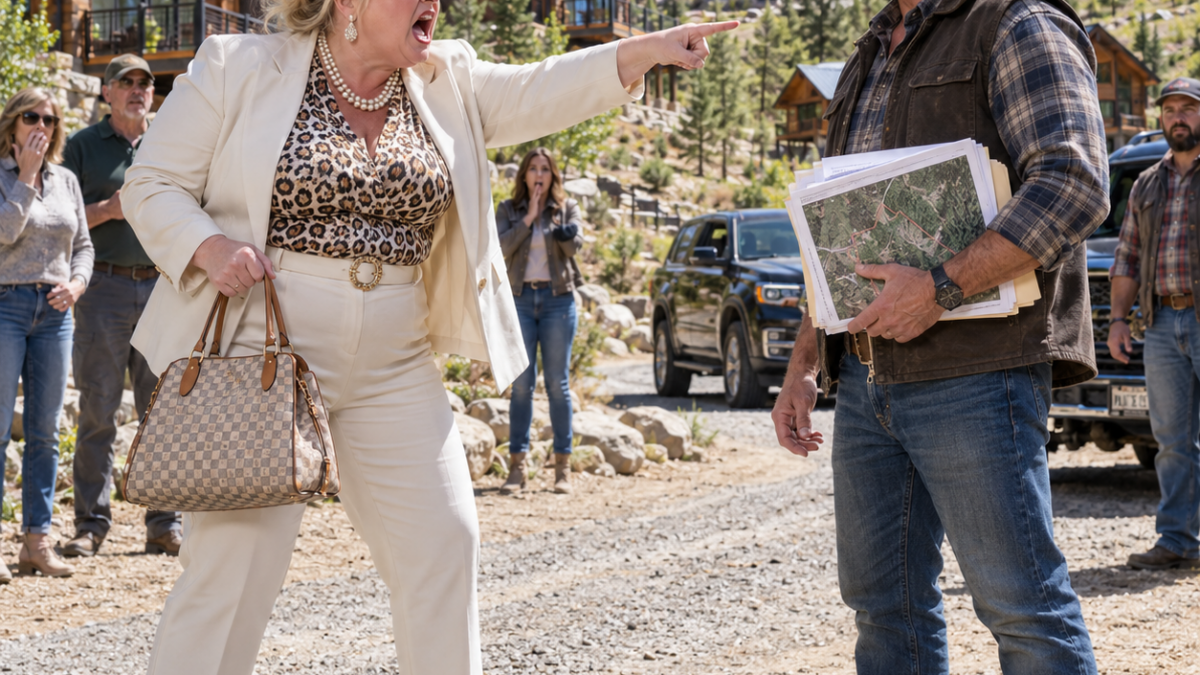
PART 2
I was still sitting in my truck when Marla said it.
Every one they’re stupid enough to build.
I looked at the certified deed lying across the passenger seat.
“You’re serious.”
“Very.”
“They’re trespassing.”
“Yes.”
“They’re building commercial structures.”
“Yes.”
“On my land.”
“Correct.”
“And you’re telling me not to stop them.”
“For the moment.”
I leaned back and stared through the windshield.
Marla had handled a boundary case for me years earlier involving a logging access road. She was the kind of lawyer who smiled when somebody produced bad paperwork because she could already see the lawsuit hiding inside it.
“What’s the angle?” I asked.
“Right now, you have trespass and unauthorized construction.”
“Seems pretty good.”
“It is.”
“But?”
“If they finish those cabins and start operating rentals, we add commercial use and unjust enrichment.”
I said nothing.
She continued.
“If they knowingly profit from improvements placed on your property without permission, every payment becomes evidence.”
“Can I legally own the cabins?”
“That depends on facts, permits, fixtures, how they’re attached, who financed them, and what relief the court awards.”
“But I could.”
“You could end up with title to the structures, damages, rental proceeds, or some combination.”
I rubbed my jaw.
“What should I do?”
“Document.”
“Everything?”
“Everything.”
So I did.
That evening I installed four new trail cameras along the perimeter.
Not pointed into homes.
Not pointed at private HOA yards.
My property.
My tree line.
My access roads.
Date stamped.
Motion triggered.
Within three days I had more than a hundred images.
Contractors.
Trucks.
Deliveries.
A concrete company.
An electrician.
Two Timberwood board members.
Florence.
Florence again.
And again.
The woman seemed to spend more time on my land than I did.
By the end of the first week, there were twelve structures.
Prefab wall sections arrived on flatbeds.
Pine siding followed.
Water trenches cut through the ground.
Electrical conduit appeared.
I walked the old northern trail with Jasper one evening and could see floodlights burning between the trees.
Hammering echoed until nearly ten.
I should have been furious.
Instead, I felt something colder.
Patience.
Every board they nailed into place increased the value of what they were putting at risk.
Still, patience didn’t mean passivity.
Marla had me gather the deed, prior surveys, tax maps, aerial photographs, timber plans, and nineteen years of property-tax records.
Then she checked county permits.
That was when her tone changed.
“Preston.”
“What?”
“There aren’t any.”
“Any what?”
“Cabin permits tied to your parcel.”
I sat straighter.
“None?”
“Not legal ones.”
“What about Timberwood?”
“There are applications under their master development file, but the coordinates don’t match their owned property.”
“So somebody moved lines.”
“Possibly.”
“Forgery?”
“Don’t jump yet.”
“That sounds like jumping territory.”
“It sounds like audit territory.”
She quietly notified the county development office that parcel 18-C was under a land-use dispute and requested a preservation hold on all related approvals.
No public fight.
No angry letter delivered to Florence.
No stop-work notice from us.
Just a quiet flag inside the county system.
I asked Marla if that was enough.
“For now.”
“And if they keep building?”
She smiled.
“That’s their decision.”
By mid-October, twenty-seven cabins stood among the pines.
Then thirty-one.
Then thirty-three.
All nearly identical.
Cedar-colored siding.
Small porches.
Black roofs.
Stone chimneys.
Each positioned to look secluded even though they were spaced only a few hundred feet apart.
The HOA cut a narrow loop road through the trees.
They installed decorative lanterns.
Fire pits.
Picnic tables.
Signs warning guests about bears.
One Saturday morning I found a huge wooden sign near the access road.
**TIMBERWOOD FOREST RETREAT**
Underneath:
**LUXURY WEEKEND CABINS — NATURE WITHOUT SACRIFICING COMFORT**
I laughed hard enough that Jasper looked worried.
Then the website went live.
Marla called me.
“You see it?”
“I’m looking at it.”
“What are they charging?”
I clicked one cabin.
“Two hundred ninety-eight a night.”
“Weekends?”
“Three forty-nine.”
“Cleaning?”
“Eighty-five.”
“Fees?”
I scrolled.
“Resort fee. Firewood package. Pet fee.”
Marla whistled.
“They are ambitious.”
“They’re renting my forest by the night.”
“Not yet.”
“What do you mean?”
“They’re taking reservations.”
I looked at the calendar.
First available weekend was less than two weeks away.
“So?”
“So we need a completed transaction.”
I knew where she was going before she said it.
“No.”
“Yes.”
“I’m not staying in one of their cabins.”
“You need proof of commerce.”
“I have their website.”
“You need proof tied to actual occupancy if we want the cleanest record.”
I stared at Jasper.
He wagged his tail.
Traitor.
A few days later I created a throwaway email under the name Roger Dillard.
Booked Cabin 14.
One night.
Pet friendly.
$487.63 after fees.
I nearly choked.
“They charged me a wilderness experience fee.”
Marla laughed.
“What is that?”
“Apparently existing near trees now costs thirty-two dollars.”
I printed the receipt.
The confirmation listed **Alpine Stay Management** as operator and Timberwood Hills as “community host.”
That mattered.
Because now a third company was involved.
I parked my truck at a friend’s farm the day of the reservation, put a duffel bag over my shoulder, and walked in from a rear trail with Jasper.
I used the keypad code.
Door opened.
Perfect.
Inside, the cabin smelled like fresh pine, new carpet, and money.
The kitchen counter held a welcome basket.
Coffee.
Trail mix.
Two miniature bottles of bourbon.
A laminated card read:
**THANK YOU FOR SUPPORTING TIMBERWOOD HILLS COMMUNITY DEVELOPMENT.**
I photographed it.
The guest binder was even better.
Rules.
Quiet hours.
Fire pit regulations.
Parking.
Trash instructions.
Emergency numbers.
At the bottom:
**All cabins remain property of Timberwood Hills Property Owners Association.**
I photographed that too.
Then the QR codes.
Firewood delivery.
Late checkout.
Equipment rental.
Guided hiking.
Every paid service ran through either Timberwood or Alpine Stay.
I spent the night.
Barely slept.
Not because the cabin was uncomfortable.
Because I kept thinking about how insane the situation was.
I was lying in a bed inside a house somebody else had built on my land and rented back to me.
At sunrise, Jasper and I walked behind the cabin.
Fresh frost covered the ground.
A deer stood between the pines twenty yards away.
For a few seconds, I remembered why I bought the property.
Quiet.
Trees.
No politics.
Then I looked at the deck.
The stamped lumber.
The outdoor hot tub.
The commercial fire pit.
And the quiet disappeared.
I checked out through the app.
Receipt arrived instantly.
Transaction complete.
The next morning, Marla filed.
Superior Court.
Named defendants:
Timberwood Hills Property Owners Association.
Florence Kessler.
Alpine Stay Management.
The complaint alleged unauthorized entry, unlawful construction, commercial trespass, unjust enrichment, and operation of a business on private property without consent.
We requested an injunction.
An accounting.
Preservation of booking records.
Escrow of all future rental income.
And eventual relief regarding ownership of the structures.
Florence learned about the lawsuit during a public HOA board meeting.
Marla wanted it served there because she knew half the board would be present.
I went with her.
Not to speak.
Just to watch.
Timberwood’s clubhouse looked exactly like every expensive community clubhouse I had ever seen.
Stone veneer.
Huge fireplace.
Oversized chandeliers pretending to be rustic.
Florence sat at the front behind a long table.
Ted Harrison, board treasurer, sat beside her.
Four other board members occupied the remaining chairs.
About thirty residents were in the audience.
Marla waited until public comment ended.
Then approached.
“Florence Kessler?”
Florence looked up.
“Yes?”
Marla handed her the envelope.
“You’ve been served.”
The room changed instantly.
Florence stared at her.
“Excuse me?”
“I think you’ll want to read it.”
Florence tore open the envelope.
Her eyes moved down the page.
Then slowed.
Her face lost color.
“This is ridiculous.”
Ted leaned toward her.
“What is it?”
She covered part of the page with her hand.
Marla said calmly, “A civil action concerning thirty-three structures built on Mr. McAllister’s property.”
Whispers spread.
Florence looked around.
“This is a boundary misunderstanding.”
“No,” I said from the back.
Every head turned.
Florence saw me.
Her mouth tightened.
“You.”
“Me.”
She stood.
“You had no right to enter this meeting.”
“It’s open to residents and invited public.”
“You’re not a resident.”
Marla answered.
“He’s a litigant.”
That shut her down for half a second.
Then Florence lifted the lawsuit.
“We had surveys.”
“Show them,” Marla said.
Silence.
Florence looked toward Ted.
Ted looked toward another board member.
Nobody moved.
Marla folded her arms.
“We’ll wait.”
Finally Ted reached into his briefcase and removed a manila folder.
He carried it to us.
Hands shaking slightly.
Inside were two maps.
I stared.
Then looked at Marla.
She looked back at me.
Neither of us spoke.
The maps were screenshots.
Printed parcel-viewer images.
No surveyor stamp.
No legal description.
No certification.
No county seal.
One had a handwritten red line extending Timberwood’s recreational zone across part of my parcel.
Marla held it up.
“You built a multimillion-dollar commercial project based on this?”
Ted swallowed.
“Those are reference maps.”
“Where is the survey?”
Florence interrupted.
“Our planning consultant handled it.”
“Name?”
“Clayton Renshaw.”
“Licensed surveyor?”
“I don’t know his licensing status.”
Marla gave a short laugh.
“You don’t know?”
Florence’s voice sharpened.
“We operated in good faith.”
I stepped closer.
“My deed predates your HOA by almost ten years.”
“We were told the land had been absorbed into the recreational planning zone.”
“By who?”
“Our consultant.”
“Did anyone check the deed?”
“No one believed there was an issue.”
“I told you there was an issue when there were six cabins.”
That landed.
Several residents turned toward Florence.
A man in the second row said, “Wait. He warned you before all thirty-three were finished?”
Florence shot him a look.
“We had reason to believe his claim was incorrect.”
“What reason?” another resident asked.
Florence didn’t answer.
Marla did.
“These.”
She held up the printed maps.
Ted stared at the table.
Florence tried one more time.
“You intentionally allowed us to continue construction.”
“Yes,” I said.
The room quieted.
Her expression changed.
Not guilt.
Outrage.
“You knew.”
“I knew it was my land.”
“You could have stopped the project.”
“I tried once.”
“You walked away!”
“After you told me construction was approved and that I’d make things complicated if I interfered.”
“That does not justify—”
“It justifies letting you explain your decisions to a judge.”
One of the board members whispered, “Are we personally liable?”
Another said, “Florence, what did you sign?”
She snapped, “Nobody is discussing liability in open session.”
Too late.
Panic had arrived.
Three days later, the court issued a temporary injunction.
All rental activity frozen.
Existing guests allowed to complete current stays.
No new reservations.
All booking records preserved.
And every dollar already received after the disputed period had to be placed into an escrow structure pending review.
Alpine Stay sent notices to guests.
Florence issued a community email calling the injunction “an unfortunate interruption caused by a private boundary dispute.”
Marla forwarded it to me.
“Private boundary dispute.”
“She likes euphemisms.”
“Judges don’t.”
The court later appointed a receiver to oversee the commercial income.
That was the first real reversal.
Timberwood had built thirty-three cabins to generate money.
Now Timberwood couldn’t touch the money.
Reservation revenue.
Deposits.
Fees.
Firewood charges.
Everything ran into controlled accounts.
Florence had to watch the project operate without being able to spend the proceeds.
Then county inspectors arrived.
Once the lawsuit exposed the parcel discrepancy, they started pulling permits.
The electrical permits were wrong.
Some inspections had never occurred.
A trench crossing a municipal utility easement had damaged a water line.
One contractor had used a permit number tied to another job.
The planning records were worse.
Dates didn’t match.
Coordinates changed between versions.
Signatures appeared where they shouldn’t.
Marla called me one afternoon.
“County opened a criminal referral.”
“For what?”
“Possible falsification of permits.”
“Florence?”
“Unknown.”
“Renshaw?”
“Probably involved.”
“What now?”
“We stay in our lane.”
“I’m getting tired of lanes.”
“Court likes lanes.”
Two Timberwood board members resigned within a week.
One of them, Maria Lopez, later called me.
“I need to tell you something.”
We met at a diner outside town.
She arrived with a folder.
“I voted against the cabins.”
“You did?”
“The first proposal.”
“What happened?”
“Florence said the project was already cleared.”
“Did you ask for documents?”
“Yes.”
“And?”
“She told us Clayton had verified everything.”
She slid board minutes toward me.
One line was highlighted.
**Land-use confirmation delegated to executive committee due to confidentiality of negotiations.**
“What confidentiality?”
“I never knew.”
“Who was executive committee?”
“Florence, Ted, and her nephew Ryan.”
That name I knew.
Ryan Kessler had supervised some utility work.
“What did they tell residents?”
“That Timberwood had rights to expand recreational amenities into adjoining common acreage.”
“Common to who?”
Maria shook her head.
“That’s what I should have asked.”
“Why didn’t you?”
Her eyes dropped.
“Because Florence made questions feel like betrayal.”
That phrase stayed with me.
Questions feel like betrayal.
Good systems survive questions.
Bad systems punish them.
The criminal investigation widened.
Florence’s nephew was arrested first.
Permit fraud.
False contractor documents.
I saw his mugshot on local news.
Twenty-eight years old.
Looked terrified.
Nothing like the confident guy I had seen directing trench crews.
Ted resigned the next morning.
Florence stayed.
Of course she did.
She sent a letter to every Timberwood homeowner accusing “outside interests” of attacking the community.
Residents started revolting.
One copied the letter to Marla.
Another forwarded board emails.
Soon we had dozens.
Florence had promised cabin revenues would reduce future dues.
She had projected hundreds of thousands annually.
She had borrowed from reserves to complete construction.
That was important.
Because Timberwood didn’t have enough money to dismantle the cabins even if ordered to.
Marla amended our complaint.
She requested title to the structures.
When she told me, I sat across from her desk.
“I don’t want thirty-three cabins.”
“I know.”
“Then why ask?”
“Because they can’t pay full damages.”
“So we take the assets.”
“Possibly.”
“I wanted trees.”
Marla leaned back.
“Then after title clears, you can remove them.”
I thought about all that lumber.
All that labor.
All that money.
Demolishing everything would feel good for about ten minutes.
Then it would feel wasteful.
Still, I didn’t know what else I wanted.
The court process dragged through winter.
Expert surveys confirmed the obvious.
All thirty-three cabins were on my parcel.
Not partly.
Not ambiguously.
Entirely.
The HOA line ended hundreds of feet away.
The supposed recreational extension had no legal basis.
Then came the financial accounting.
The cabins had already generated substantial deposits and rental income before the injunction.
Every payment was documented.
Every transaction sat in escrow.
Florence’s lawyer tried to argue Timberwood deserved offset for construction costs.
Marla’s response was simple.
“They knowingly continued after being warned.”
That became critical.
My first confrontation at six cabins.
Florence’s dismissal.
Her threat about complications.
Board records confirming she informed the executive committee of my claim.
A later email from Florence to Clayton:
**Owner is objecting. Need stronger boundary backup before launch.**
Another:
**Proceed. We are too committed to stop now.**
There it was.
Knowledge.
Not confusion.
Knowledge.
They had known.
They built anyway.
The judge eventually ruled that the cabins, being permanently affixed improvements constructed without authorization and tied to the unlawful commercial trespass, could be transferred as part of equitable relief and damages.
On a rainy Tuesday morning, I stood outside Cabin 7 with a county official, a locksmith, Marla, and Jasper.
The official handed me a document.
“Sign here.”
I signed.
He handed me keys.
“Mr. McAllister, title to the thirty-three structures is now vested in you pursuant to the court order.”
Jasper barked once.
Marla smiled.
“Apparently he approves.”
I looked down the road.
Thirty-three cabins.
Empty.
Wet roofs.
Fog in the trees.
Florence had spent months insisting they belonged to Timberwood.
Now none of them did.
I changed the locks.
Not personally.
The locksmith crew did that.
But I watched every one.
By sundown, the keys were mine.
Marla asked, “What now?”
I stared at Cabin 14.
The one I had paid to stay in.
“I have an idea.”
Two days later, I called a nonprofit called North Georgia Veterans Housing Alliance.
I had worked with one of their board members years earlier after a wildfire relief project.
Her name was Susan Bell.
“What are you offering?” she asked.
“Thirty-three furnished cabins.”
Silence.
“Say that again.”
“Thirty-three.”
“For temporary housing?”
“Permanent transitional housing if we can make zoning work.”
“What rent?”
“None from residents.”
Another silence.
“Preston, what happened?”
“Long story.”
“How long?”
“Thirty-three cabins long.”
Susan visited that weekend.
We walked the loop road.
She checked each structure.
“They need some accessibility upgrades.”
“Do them.”
“Septic capacity?”
“We’ll inspect.”
“Utilities?”
“Being reviewed.”
“Community services?”
“There’s an equipment shed.”
She looked at me.
“You’re serious.”
“Yes.”
“Why?”
I looked at the cabins.
“Because tearing down good buildings to prove a point feels stupid.”
She smiled.
“And making them useful?”
“Feels less stupid.”
The nonprofit began planning.
Then Timberwood filed an appeal.
Of course.
Florence also pushed a zoning petition trying to classify the cabins as “emergency community housing” under Timberwood oversight.
That was the first time I saw her after title transfer.
County zoning hearing.
She arrived late with a lawyer in a navy blazer.
I sat in the back.
Her attorney gave a polished presentation.
“Timberwood Hills has invested substantially in a visionary lodging project now threatened by administrative disagreements.”
Administrative disagreements.
Marla leaned toward me.
“Add that to the euphemism list.”
The attorney continued.
“Rather than allow these structures to become stranded assets, the association proposes temporary emergency-housing classification serving county needs.”
I almost admired the audacity.
They had lost the cabins.
Now they wanted credit for humanitarian use before I could donate them.
When public comment opened, I walked to the microphone.
“My name is Preston McAllister.”
Florence stared straight ahead.
“These cabins are not Timberwood assets.”
I placed the court judgment on the table.
“They built thirty-three structures on my land without permission.”
A commissioner asked, “Did they know the property was yours?”
“They were told when only six cabins existed.”
I placed another document down.
“This email shows the HOA president knew I objected and chose to proceed.”
Florence stood.
“That is being taken out of context.”
The chair said, “Ms. Kessler, sit down.”
She didn’t.
“This man intentionally allowed the project to continue so he could seize it.”
I turned toward her.
“You told me not to interfere.”
“You manipulated the situation.”
“No.”
I kept my voice level.
“You gambled that I wouldn’t win.”
The room went silent.
Then I looked back at the commissioners.
“They aren’t asking for emergency housing because they care about emergency housing. They’re trying to rewrite the history of an illegal project after losing it.”
Marla submitted the full ruling.
The board denied Timberwood’s petition unanimously.
Outside, Florence’s lawyer caught up.
“Mr. McAllister.”
I stopped.
“There’s still a business solution.”
“What?”
“Sell the cabins back.”
“No.”
“Market value.”
“No.”
“Timberwood will drop the appeal.”
“No.”
He exhaled.
“You’re being emotional.”
“I’m being clear.”
“You may never recover full value through litigation.”
“Not my concern.”
“It should be.”
“I’m not in the business of laundering other people’s mistakes.”
His expression hardened.
“You think you won.”
“I know who owns the cabins.”
Then I walked away.
Two weeks later, a deputy knocked on my door at dawn.
“Mr. McAllister?”
“Yes.”
“Detective Rivas would like to speak with you.”
“About?”
“Timberwood.”
At the station, Detective Elena Rivas sat across from me with a thick file.
She slid a permit application across the table.
“Signature yours?”
I looked once.
“No.”
“Sure?”
“I’ve signed thousands of reports. That’s not my signature.”
The document authorized utility trenching across parcel 18-C.
My name appeared beneath it.
Preston McAllister.
But the signature was wrong.
Too clean.
Too deliberate.
Rivas nodded.
“Forensic document examiner agrees.”
“How’d they do it?”
“Traced from a public filing.”
“Who?”
“Clayton Renshaw.”
The planning consultant.
I leaned back.
“Florence’s expert.”
“We subpoenaed emails.”
Rivas opened another folder.
One message from Florence:
**Get the papers through. We cannot lose the launch window.**
Clayton:
**Owner signature is still unresolved.**
Florence:
**Then resolve it. Temporary leverage only. Once the cabins are operating, no one will unwind thirty-three structures.**
I read that sentence twice.
No one will unwind thirty-three structures.
That was the strategy.
Build enough.
Spend enough.
Make the violation so expensive to reverse that everyone would surrender.
“They knew,” I said.
Rivas nodded.
“They knew.”
“What happens?”
“Forgery. Falsifying public records. Conspiracy. More may come.”
“Florence?”
“We’re preparing warrants.”
She was arrested Thursday.
The county paper ran a photo of her being led from the HOA office.
The same pink confidence was gone.
No clipboard.
No polished speeches.
Just handcuffs.
Residents held an emergency meeting.
The remaining board collapsed.
Timberwood Hills Property Owners Association effectively stopped functioning.
But the criminal case uncovered another layer.
Florence wasn’t financing everything with dues.
Someone else had been sending money.
A developer named Everett Cole.
At first, his name meant nothing to me.
Then Rivas called.
“Everett Cole.”
“Who?”
“Developer.”
“So?”
“You might remember Lake Allatoona resort proposal.”
I did.
Years earlier, while still working in forestry review, I had recommended denial of part of a hotel development because the plans ignored slope-stability concerns and protected runoff zones.
“Cole owned that project?”
“Yes.”
I leaned against my kitchen counter.
“You’re telling me this is personal?”
“Partly.”
“After all these years?”
“He lost millions.”
“That wasn’t my decision alone.”
“People with grudges aren’t always interested in committees.”
Financial records showed Cole funding a Delaware shell company.
That shell paid “consulting fees” to entities connected to Timberwood.
Money moved into construction.
Vendor invoices.
Planning.
Promotion.
Florence received monthly payments.
The cabin retreat wasn’t just her idea.
It was part of Cole’s attempt to turn Timberwood into a resort investment.
And my forest was the land he needed.
I looked at Rivas.
“So Florence wasn’t just arrogant.”
“No.”
“She was a proxy.”
“More complicated than that. She benefited too.”
“Of course.”
“Cole believed the cabins would increase the community’s value and create a foothold for a larger resort.”
“On my land.”
“Yes.”
“That theme keeps returning.”
Rivas smiled despite herself.
Cole moved quickly once his name surfaced.
A company called Bellridge Property Consultants sent me a letter challenging the legal use of what was becoming Pine Haven Commons.
Marla read it.
“Asset recovery.”
“What does that mean?”
“They look for defects.”
“In my title?”
“In zoning. Transfers. Permits. Anything.”
“Why?”
“Somebody wants leverage.”
Then complaints began.
Noise.
Suspicious activity.
Possible squatters.
Late-night disturbances.
Each anonymous.
Each investigated.
Each false.
The sheriff’s office got tired of coming.
One deputy told me, “Your veterans are quieter than most vacationers we used to get.”
That didn’t stop the reports.
Then I saw the drone.
Commercial-grade.
Hovering above the tree line.
Survey pattern.
Not recreational.
I photographed it.
Marla filed a notice.
Rivas added it to the investigation.
Cole eventually appeared in person at a county zoning commission hearing.
Tailored charcoal suit.
Red tie.
Three lawyers.
He looked like the kind of man who believed calmness was the same thing as innocence.
His attorney challenged Pine Haven’s reclassification.
Improper notice.
Rushed review.
Nonconforming use.
Technical arguments.
Not entirely frivolous.
Marla took notes.
When Cole spoke, his voice was measured.
“I have nothing against Mr. McAllister.”
I almost laughed.
“We simply believe land-use rules should be transparent and consistently applied.”
When my turn came, I stood.
“I agree.”
Cole looked surprised.
“I want a full review.”
His attorney stopped writing.
“But if we’re discussing transparency, let’s include the shell companies funding Timberwood, the forged permits, and the payments to its former president.”
One commissioner looked up.
“Evidence?”
Marla stood.
“We have an affidavit from Detective Rivas and financial disclosures already produced in the criminal investigation.”
She submitted them.
Cole’s jaw tightened.
The board recessed.
Twenty minutes later, they denied his motion.
He left without speaking to me.
That night, someone slashed two tires on my truck.
I stood under the porch light looking at the ruined rubber.
Part of me wanted to laugh.
Million-dollar lawyers by day.
Cheap intimidation by night.
I reported it despite being tempted not to.
Rivas insisted.
“Every incident.”
“Even tires?”
“Especially tires.”
Trail cameras went up facing the road.
Motion lights too.
Then federal agencies entered.
Cole’s business accounts were frozen pending tax and fraud review.
Contractors started cooperating.
A former Timberwood board member returned from out of state with emails.
Bookkeepers produced wire records.
A construction manager admitted invoices had been inflated to move money.
The scale widened.
Three counties.
Similar HOA redevelopment projects.
Shell companies.
Fake nonprofit entities.
Resort conversions.
Cole’s model was simple.
Find financially weak associations.
Inject private money.
Control leadership.
Acquire or exploit adjoining property.
Increase value through development.
Flip the assets.
My land was supposed to be one more piece.
Except I noticed the foundations.
Federal charges followed.
Wire fraud.
Tax offenses.
Conspiracy.
Racketeering-related counts.
Cole was arrested at a private airfield before boarding a charter plane.
That image made the evening news.
He wore sunglasses.
Still looked calm.
Until agents took his phone.
Florence cooperated.
Her plea required testimony.
She admitted she knew my land wasn’t Timberwood property before construction was complete.
She admitted Clayton forged my name.
She admitted Cole pressured her to keep building.
Her defense was that she believed once enough money was invested, I would accept a settlement.
That part made me angrier than everything else.
Not the cabins.
Not the permits.
Not even the forgery.
The assumption.
Build over the owner.
Then buy his silence.
When sentencing came, Florence received incarceration, restitution obligations, and a lifetime ban from administrative fiduciary roles.
Cole’s case took longer.
Much longer.
By then, Pine Haven Commons had changed.
Susan’s nonprofit brought volunteers.
Cabins were retrofitted.
Ramps added.
Bathrooms modified.
Fire safety upgraded.
Solar panels donated.
A central storage building became a small community center.
Garden beds appeared.
Then residents.
First was Daniel Mercer.
Former paramedic.
House burned during a winter electrical fire.
Insurance fight lasted more than a year.
He had been sleeping in his truck some nights.
Cabin 3 became his.
He stood on the porch the first day holding one duffel bag.
“That’s it?”
Susan asked.
“That’s everything.”
He looked inside.
Then came back out.
“You sure there’s no rent?”
“Not from you.”
He stared at me.
“Why?”
I shrugged.
“Because somebody already paid too much for these cabins.”
He didn’t understand.
Susan later explained.
Second resident was Marcus Reid.
Marine veteran.
Couch surfing nearly two years.
He picked Cabin 8.
Third was Elaine Porter.
Coast Guard.
Living out of her car.
She cried when she saw the small kitchen.
Not dramatically.
She just put one hand on the counter and went quiet.
That hit me harder than Florence’s arrest.
Luxury vacation cabins had been built as symbols of greed.
Now someone was grateful for a refrigerator.
By March, most cabins were occupied.
By April, all thirty-three had residents or program placements.
Some residents stayed transitional periods.
Others moved into longer-term arrangements.
The nonprofit handled support.
Employment counseling.
Veterans benefits.
Medical referrals.
Transportation.
I stayed out of operations.
I had one request.
“No one turns this place into another HOA.”
Susan laughed.
“Trust me.”
Pine Haven Commons.
That was the name residents chose.
Not mine.
I liked it.
Flowers appeared by porches.
Wind chimes.
Raised garden beds.
One resident built birdhouses.
Another repaired bicycles.
A little girl visiting her grandfather chalked stars across the community center sidewalk.
The local news came.
I avoided interviews.
A reporter found me anyway.
“Mr. McAllister, do you consider this revenge?”
“No.”
“What do you call it?”
“Recycling.”
She laughed.
I wasn’t entirely joking.
The civil case ended in my favor.
Damages awarded.
Escrowed rental proceeds allocated under the judgment.
But Timberwood’s accounts were drained by attorneys, penalties, and repairs.
I could have chased remaining assets.
I didn’t.
Marla asked twice.
“You’re leaving money.”
“I know.”
“You sure?”
“I have the land.”
“And thirty-three cabins.”
“Those aren’t mine anymore in the way you mean.”
She understood.
Timberwood’s certification as an HOA was revoked after state review.
Without authority to enforce bylaws or collect dues, the association ceased functioning.
Residents reorganized voluntary maintenance.
Some celebrated.
Others were angry.
Not everyone had hated Timberwood.
That mattered.
It would have been easy to tell myself everyone saw me as a hero.
They didn’t.
Some residents blamed me for collapsing property values temporarily.
Some lost money tied to assessments.
Some liked the old system.
A man named Paul confronted me at a public meeting.
“You destroyed our association.”
“I exposed what it did.”
“My house value dropped.”
“I’m sorry.”
“That doesn’t pay my mortgage.”
“No.”
He stared at me.
“You got cabins.”
“I got structures built on my land.”
“You could’ve settled.”
“Yes.”
“And saved Timberwood.”
“Maybe.”
“Why didn’t you?”
Because they knew.
Because they forged.
Because they threatened.
Because Florence looked at my deed and kept building.
I could have said all that.
Instead I said, “Because saving the association would’ve required pretending the fraud didn’t matter.”
Paul shook his head.
“That’s easy for you.”
He walked away.
He was right about one thing.
Consequences spread beyond guilty people.
That stayed with me.
Justice can be necessary and still cost innocent people something.
I tried to remember that whenever people praised me.
Then Cole’s trial began.
Federal courthouse.
Larger than Florence’s case.
Financial records stacked across screens.
Witnesses.
Contractors.
Tax specialists.
Former employees.
Florence testified in exchange for her deal.
I sat in the back on the day she took the stand.
She looked older.
Without the windbreaker and clipboard, she seemed smaller.
The prosecutor asked, “When did you first learn Mr. McAllister disputed Timberwood’s ownership?”
She swallowed.
“Early construction.”
“How many cabins existed?”
“Six.”
“And how many were eventually built?”
“Thirty-three.”
“Why did you continue?”
Her attorney objected.
Overruled.
Florence looked toward Cole.
Then back.
“Everett said Preston would settle.”
“Did you believe him?”
“Yes.”
“Why?”
“Because he said nobody walks away from that much construction.”
“Meaning?”
“Once enough money was invested, tearing it out would make no sense.”
“So you believed the property owner would accept your project after the fact?”
“Yes.”
The prosecutor showed my original map.
“Did Mr. McAllister show you this?”
“Yes.”
“Did you verify his claim?”
“I asked Clayton.”
“The consultant who later forged his signature?”
“Yes.”
“And when did you learn Clayton had no valid authority to change title?”
“I don’t remember.”
The prosecutor displayed an email.
**Owner’s deed appears valid. Everett says proceed.**
Florence closed her eyes.
“Does that refresh your memory?”
“Yes.”
That was the moment.
Not her arrest.
Not the injunction.
Not title transfer.
That email.
Proof that Florence knew my deed was valid and continued anyway.
Cole’s lawyers argued he was only an investor.
Emails contradicted them.
He wrote:
**Once construction is complete, landowner options narrow dramatically.**
Another:
**Physical facts create negotiating leverage.**
Physical facts.
That was what he called cabins built on somebody else’s forest.
The jury found him guilty on multiple federal counts.
Sentencing followed months later.
Prison.
Forfeitures.
Tax liabilities.
Restitution.
His network of companies collapsed.
Bellridge disappeared.
The anonymous complaints stopped.
The drone never came back.
That spring, I walked Pine Haven with Jasper.
Daniel had planted tomatoes outside Cabin 3.
Marcus was helping repair a wheelchair ramp.
Elaine sat under a porch awning reading.
Children visiting relatives rode bikes on the loop road.
The place felt nothing like Timberwood Forest Retreat.
No resort fees.
No check-in codes.
No branded welcome baskets.
Just people living.
Susan found me near the community center.
“County approved permanent status.”
“What status?”
“Protected housing community.”
I looked at her.
“Permanent?”
“Zoning locked in. Tax structure finalized. Resident advisory board.”
“Good.”
“They want you on it.”
“No.”
“I knew you’d say that.”
“Then why ask?”
“Politeness.”
I looked toward the cabins.
“They don’t need me.”
“Maybe as advisor.”
“They need residents.”
She smiled.
“That’s exactly what we wrote.”
The board would be elected from people living there.
I agreed to a nonvoting advisory role only for land and forestry issues for the first year.
Then stepped away.
I had spent enough time around boards.
The first Pine Haven meeting took place inside the converted equipment shed.
I attended only because Susan threatened to send Daniel to drag me there.
Twenty residents sat in folding chairs.
Agenda:
Drainage.
Garden water use.
Parking.
Quiet hours.
I felt nervous when “quiet hours” came up.
Then Elaine raised her hand.
“Can we make it simple? Don’t be a jerk after ten?”
Everyone laughed.
Motion passed.
No fines.
No surveillance committees.
No violation letters.
Just neighbors agreeing.
I liked that.
Months later, Pine Haven got its mural.
Local artist.
Side wall of the community center.
Golden sky.
Mountains.
Trees.
Thirty-three cabins.
People standing between them.
When I first saw it, I felt embarrassed.
“Too dramatic.”
Daniel shook his head.
“You’re impossible.”
Jasper sat beside me.
Age had slowed him.
White fur around his muzzle.
We watched a little girl running with a paper kite shaped like a hawk.
Her mother waved from Cabin 19.
Wind chimes moved.
I thought back to the first morning.
Concrete foundations.
Black HOA security SUV.
Florence in pink.
Six cabins.
I could have called the sheriff immediately.
Could have blocked equipment.
Could have sought an emergency injunction before another wall went up.
Maybe that would have been simpler.
Maybe smarter.
Sometimes I still wondered whether letting them finish had been too calculated.
Marla once asked me the same thing.
We were sitting on my porch after the federal trial.
“You regret it?”
“Which part?”
“Letting them build.”
I looked toward Pine Haven.
“Some days.”
“Why?”
“Workers wasted time. Residents paid assessments. Trees came down.”
“All true.”
“I could’ve stopped it sooner.”
“Possibly.”
“Then why are you smiling?”
“Because you warned them.”
“I did.”
“They chose to proceed.”
“Yes.”
“You didn’t cause the fraud.”
“No.”
“But?”
“I used it.”
Marla nodded.
“That bothers you.”
“Sometimes.”
She took a drink.
“Good.”
“Good?”
“Means you’re not Florence.”
I understood.
Florence never questioned whether her power was justified.
I did.
That difference mattered.
The forest never went back to what it was.
Thirty-three cabins remain.
Road remains.
Utility lines remain.
Some trees are gone forever.
The land changed.
I had to accept that.
But it didn’t become a luxury retreat.
It became homes.
Years later, Pine Haven developed traditions.
Spring planting day.
Veterans breakfast.
Fall cookout.
Holiday light competition.
I hated the competition.
Cabin 11 once used enough lights to guide aircraft.
Daniel claimed it was tasteful.
He was wrong.
Jasper got older.
His walks shortened.
Eventually I carried water for him.
One evening we sat beside the mural.
He lay at my feet.
A girl named Sophie brought him a biscuit.
“Can he have this?”
“Probably.”
She crouched.
Jasper took it gently.
“How old is he?”
“Fifteen.”
“That’s like a hundred.”
“He acts like it.”
She rubbed his ears.
“Did he find this place?”
I thought about it.
“In a way.”
“How?”
“He was with me the day I found the first cabins.”
Her eyes widened.
“So he saved everybody?”
“No.”
Jasper thumped his tail.
Sophie looked at me like I was obviously wrong.
After she ran off, I looked down at him.
“Don’t let that go to your head.”
He slept.
That winter, Jasper died.
Quietly.
At home.
On a blanket near the fireplace.
I buried him beneath a white oak above the creek.
Pine Haven residents came without being asked.
Daniel brought a small wooden marker.
Elaine brought flowers.
Sophie cried harder than I did.
The marker said:
**JASPER**
**HE FOUND THE CABINS FIRST**
That made me laugh and cry at the same time.
I left it.
After Jasper was gone, the woods felt different.
Too quiet.
I walked alone more.
Those walks changed how I thought about the story.
People remembered the courtroom.
The rent.
The HOA collapse.
The arrests.
But I remembered sound.
Hammering through trees.
Jasper’s tags jingling.
Florence saying, “You should be thanking us.”
The click of the keyless cabin door.
The courtroom clerk.
Children laughing between porches.
A place becomes memory through sounds.
A few years later, a Timberwood resident named Paul—the man who once accused me of destroying his neighborhood—showed up at my house.
I hadn’t seen him in a long time.
“Got a minute?”
“Sure.”
We sat on the porch.
He looked older.
“So.”
“So.”
“I was angry.”
“I noticed.”
“I blamed you.”
“I noticed that too.”
He smiled faintly.
“I was wrong.”
I didn’t answer.
“My house value recovered.”
“Good.”
“New neighborhood association is voluntary.”
“Also good.”
“They published financials last month.”
“You came here to tell me accounting news?”
He laughed.
“No.”
Then became serious.
“My daughter volunteers at Pine Haven.”
I looked at him.
“She tutors two kids there.”
“Small world.”
“She loves it.”
He stared toward the trees.
“I used to drive past those cabins thinking they were evidence you beat us.”
“And now?”
“Now I think maybe we needed to lose something.”
“What?”
“The idea that the board knew best.”
That was enough.
We shook hands.
Not dramatic.
No apology speech.
Just two men older than when the mess began.
Florence eventually wrote to me from prison.
One letter.
I almost didn’t open it.
Marla told me I didn’t owe anyone access to my attention.
True.
I opened it anyway.
Florence wrote that she had convinced herself Timberwood needed the resort to survive.
Dues were rising.
Infrastructure aging.
Residents complained about costs.
Cole offered money.
Tourism revenue looked like salvation.
Then I appeared.
She wrote:
**I saw you as one person standing in the way of hundreds.**
That sentence felt honest.
She continued:
**Once we had spent so much, admitting the land problem felt impossible. Every week it became harder to stop without admitting what I had done.**
That too felt believable.
Then:
**I told myself you would be paid later. I told myself you were being unreasonable. Eventually I believed my own version.**
I folded the letter.
No apology could restore trees.
No explanation erased fraud.
But I understood the mechanism.
Not evil appearing fully formed.
One compromise.
Then another.
Then sunk cost.
Then fear.
Then lies required to protect prior lies.
Florence became dangerous because admitting the first mistake threatened the identity she had built around being in control.
I never answered.
Not from cruelty.
There was nothing I needed to say.
Cole appealed.
Lost.
Later tried again.
Lost again.
Federal restitution took years.
Some recovered funds eventually went to Timberwood homeowners harmed by mismanagement.
That mattered to me.
The innocent residents deserved something back.
Pine Haven expanded services without expanding buildings.
No new cabins.
The forest around them remained protected.
I placed a conservation restriction over the remaining undeveloped acreage.
No resort.
No subdivision.
No future HOA expansion.
Selective forestry only.
Wildlife corridor protected.
Marla drafted it.
“Permanent enough for you?”
“Make it stronger.”
She added another page.
Years after all of it, a young county planner asked me to speak at a land-use workshop.
I said no.
He called again.
Still no.
Third time he came to Pine Haven personally.
“Why do you want me?”
“Because planning students study your case.”
“That’s depressing.”
“They call it the Timberwood unlawful-improvement case.”
“Worse.”
He laughed.
“We want practical lessons.”
“I can give you one.”
“What?”
“Read the deed.”
He waited.
“That’s it?”
“Most disasters start because somebody doesn’t.”
Eventually I agreed to speak.
Twenty-five planners.
Surveyors.
Attorneys.
I told them no inspirational story.
No revenge fantasy.
Just facts.
Verify title.
Verify authority.
Don’t confuse GIS with legal record.
Don’t let investment size become legal justification.
Don’t assume physical construction creates rights.
Preserve documentation.
And if somebody says, “We’re too committed to stop now,” that is exactly when someone independent needs to stop them.
Afterward a student asked, “Would you let them finish again?”
I thought for a long moment.
“No.”
She looked surprised.
“Why not?”
“Because I got lucky.”
“In what way?”
“No one got hurt.”
Workers could have been injured on unpermitted utilities.
A fire could have happened before inspections.
Environmental damage could have been worse.
The lawsuit could have gone differently.
I looked toward the group.
“I won. That doesn’t make every decision I made perfect.”
That was important.
Stories simplify people after the fact.
Winner becomes genius.
Loser becomes fool.
Reality is messier.
I was angry.
Proud.
Strategic.
Sometimes reckless.
Florence was arrogant.
Greedy.
Afraid.
Manipulated by Cole but also willing.
Ted was passive.
Maria questioned but not enough.
Contractors wanted paychecks.
Residents wanted lower dues.
Everyone had reasons.
Reasons don’t erase responsibility.
But understanding them makes the story useful.
The rent money people always ask about eventually became one of the least important parts.
Yes, the court-controlled revenue was captured.
Yes, Timberwood lost access to every dollar generated by the unlawful operation during the relevant period.
Yes, that money became part of the financial resolution.
But I never sat at my kitchen table counting rental checks with a grin.
Most funds went through legal processes.
Escrow.
Claims.
Costs.
Restitution.
Repairs.
Compliance.
The satisfying part wasn’t collecting money.
It was watching Florence discover that every reservation she celebrated became evidence.
Every guest receipt.
Every cleaning fee.
Every firewood order.
Every branded welcome packet.
Every QR code.
Profit had created the paper trail that defeated them.
That was the real irony.
They built cabins because they wanted income.
The income proved the commercial trespass.
They advertised ownership.
The advertising proved intent.
They used my name on permits.
The permits proved forgery.
They sent contractors.
Trail cameras proved entry.
They finished all thirty-three after my warning.
Board emails proved knowledge.
They documented themselves into ruin.
Sometimes people ask why criminals keep records.
Because at the time, they don’t think they’re criminals.
They think they’re managers.
Executives.
Board members.
Problem solvers.
People making decisions.
That’s why the files exist.
One late-summer evening, I walked Pine Haven alone.
Years had softened the place.
Siding weathered.
Trees filled back in.
Porches carried rocking chairs.
Tomatoes climbed cages.
A playground stood near the community center.
A boy raced past on a bicycle.
“Watch the curve,” I called.
“I know!”
He nearly crashed.
Children have consistent governance problems.
Elaine sat on her porch.
“Preston.”
“Elaine.”
“You eating?”
“Eventually.”
She held up a plate.
“You’re eating now.”
I obeyed.
Her biscuits were better than legal strategy.
We sat.
She looked at the cabins.
“You know what I used to think when I slept in my car?”
“What?”
“That walls were walls.”
I waited.
“Didn’t care about ownership. Didn’t care about square footage. Just wanted a door I could lock.”
She touched the porch rail.
“Now I complain about the neighbor’s wind chimes.”
“Progress.”
She laughed.
Then grew quiet.
“Thank you.”
I shook my head.
“North Georgia Veterans Housing did the work.”
“You gave them the cabins.”
“The HOA gave me the cabins.”
“No.”
She looked directly at me.
“They gave you a problem.”
“You decided what it became.”
That stayed with me.
Maybe land ownership is mostly decisions about what a place becomes.
Forest.
Resort.
Investment.
Housing.
Memory.
The dirt doesn’t choose.
People do.
The following year Pine Haven’s resident board voted to plant thirty-three fruit trees.
One for each cabin.
Apple.
Peach.
Pear.
Plum.
They asked if I wanted one named after me.
“No.”
Jasper?
I said yes.
A white flowering dogwood went beside the community center instead.
Not fruit.
They said rules could bend for dogs.
Fair.
Every spring it blooms.
Bright white against the green hills.
I visit then.
Not because I need to check anything.
No trail cams.
No lawsuits.
No permits.
Just because Jasper would have liked the shade.
Marla retired eventually.
At her retirement dinner, she introduced me to another attorney as “the man who once paid to rent his own cabin.”
I told her that confidentiality apparently ended with retirement.
She laughed.
“Best receipt I ever saw.”
She kept a framed copy of the Cabin 14 invoice in her office.
Under it she had written:
**EXHIBIT A: ARROGANCE WITH A CLEANING FEE**
I couldn’t argue.
Before retiring, she helped me put the final protections on the land.
A trust structure.
Conservation controls.
Long-term housing use for Pine Haven.
No single future owner could casually sell the cabins into resort redevelopment.
Residents had protections.
The nonprofit had obligations.
Transparency requirements.
No hidden board power.
No secret annexation.
No Florence 2.0.
That mattered more than revenge.
Because winning once is not the same as building something that remains safe after you’re gone.
Years after the first lawsuit, a reporter contacted me for a retrospective.
She asked one question I hadn’t heard before.
“What did the forest lose?”
I almost dismissed it.
Then looked around.
Thirty-three cabin sites.
Loop road.
Utility trenches.
Cleared trees.
Habitat fragmented.
Even a good ending had a cost.
“Too much,” I said.
She waited.
“I protected ownership, but I didn’t protect every tree.”
“Do you regret Pine Haven?”
“No.”
“Then how do you hold both?”
I looked toward the ridge.
“You can be grateful for what something became and still mourn what had to disappear.”
That ended up being the quote she used.
I didn’t love seeing it printed.
But it was true.
So Pine Haven planted more native trees.
Restored stream buffers.
Reduced exterior lighting.
Created wildlife corridors between cabins.
Residents volunteered.
Kids installed bird boxes.
The property never returned to untouched forest.
But we stopped pretending human use and stewardship had to be enemies.
That, too, became part of the story.
Florence was released eventually.
I found out from a court notice.
No media circus.
No confrontation.
She moved out of state.
Someone asked whether I feared she would come back.
“No.”
“Why not?”
“Nothing here belongs to her anymore.”
Not the cabins.
Not the HOA.
Not the story.
That last one surprised me when I said it.
For years, Florence had been central to the story.
Then she became smaller.
Cole too.
Eventually the people living in Pine Haven mattered more.
That is how you know something healed.
The villain stops being the most important person.
The final legal file closed more than a decade after I first found the slabs.
Marla sent me the notice even though she was retired.
**Case concluded.**
Two words.
I printed it.
Then walked to the old white oak where Jasper was buried.
His marker was weathered.
I sat beside it.
“You missed the ending.”
Wind moved through leaves.
I could hear children at Pine Haven.
A hammer somewhere.
Someone fixing a porch.
I smiled.
“Actually, you probably would’ve hated the meetings.”
Nothing.
Good listener.
I stayed until sunset.
Then walked home through the same back trail where we first saw the concrete.
The forest had changed.
So had I.
Back then I saw cabins and thought only:
Mine.
My land.
My rights.
I was correct.
But incomplete.
Ownership gave me power.
What mattered was what I did after the court handed that power back.
I could have bulldozed thirty-three cabins.
Could have reopened them as expensive rentals.
Could have sold the entire property to another developer.
Could have chased every last dollar.
Instead, I chose something I hadn’t planned.
People.
That choice didn’t make me noble.
It just turned out to be the only ending I could live with.
At Pine Haven, Cabin 14 still exists.
The one I rented under the name Roger Dillard.
Daniel eventually moved into permanent housing elsewhere.
A younger veteran and his wife live there now.
They have a toddler.
Every time I pass that porch, I remember the laminated Timberwood rule sheet.
No outside food after 10 p.m.
No unauthorized firewood.
No personal decorations.
Now the porch has children’s shoes.
A tricycle.
Wind chime.
Tomato plant in a five-gallon bucket.
Much better.
The Timberwood Forest Retreat sign disappeared years ago.
Residents replaced it.
Simple cedar board.
**PINE HAVEN COMMONS**
Underneath:
**HOME**
No resort branding.
No HOA logo.
No wilderness experience fee.
Just home.
I stood there one evening while a little girl ran past chasing a paper hawk.
For a second, I could see the entire story layered in the same place.
The concrete.
The black SUV.
Florence’s pink jacket.
Construction crews.
Luxury ads.
Court papers.
Locked cabins.
Volunteers.
Ramps.
Gardens.
Children.
One piece of land.
Many intentions.
Greed put the buildings there.
Law transferred them.
Choice decided what they became.
That is the part I remember when people tell the story as revenge.
They say:
The HOA built thirty-three cabins on his land.
He let them finish.
Then he took every dollar.
It sounds good.
Sharp.
Satisfying.
And some of it is true.
They did build them.
I did wait.
The court did freeze the money.
Their rent did become part of the judgment.
They lost the cabins.
But if revenge had been the ending, the story would have stopped at the courthouse.
Mine didn’t.
It ended years later with lights glowing from thirty-three porches and people inside who had once wondered where they were going to sleep.
It ended with Timberwood homeowners no longer afraid of a board that treated questions like betrayal.
It ended with a corrupt developer in prison and a forest protected from becoming his resort.
It ended with a dogwood blooming beside a community center because an old dog happened to be walking with me the morning I found the first slab.
And maybe most importantly, it ended with me finally understanding something I should have known long before I retired from forestry.
Land remembers what people do to it.
A cut leaves a scar.
A road changes water.
A building changes habitat.
A lie changes people.
But care leaves evidence too.
Trees grow.
Gardens spread.
Homes settle.
Children make paths where survey crews once walked.
One evening, I took the long route home.
Past Cabin 1.
Past Cabin 14.
Past Cabin 33.
The sun dropped behind the ridge.
Porch lights clicked on.
Someone played guitar badly.
Someone shouted for a dog.
A screen door slammed.
Normal sounds.
I stopped at the edge of the original tree line.
Nineteen years earlier, I had bought that forest because I wanted nobody telling me what to do with it.
Then an HOA tried.
They built thirty-three cabins without permission.
They ignored my deed.
They forged documents.
They collected money.
They assumed the size of their mistake would force me to surrender.
They were wrong.
But the thing I’m proudest of isn’t that I beat them.
It isn’t that I froze their rent.
It isn’t that Florence went to prison.
It isn’t even that Cole’s entire network collapsed.
It’s that when the court finally put every cabin in my hands, I didn’t become another man obsessed with squeezing money out of the land.
I looked at thirty-three mistakes.
And decided they could become thirty-three homes.
I reached down and touched Jasper’s old collar hanging from my belt loop.
I still carried it on walks sometimes.
Habit.
Then I turned toward home.
Behind me, Pine Haven stayed lit beneath the trees.
Exactly thirty-three cabins.
All built by people who thought they could take what wasn’t theirs.
All now serving people they never intended to help.
That was enough.
More than enough.
[END OF STORY]








