PART 2: He Made Money Racing This Dog—Then Left Him to Starve When He Got Old
PART 2
The first night Ramoncito slept in my house, I barely slept at all.
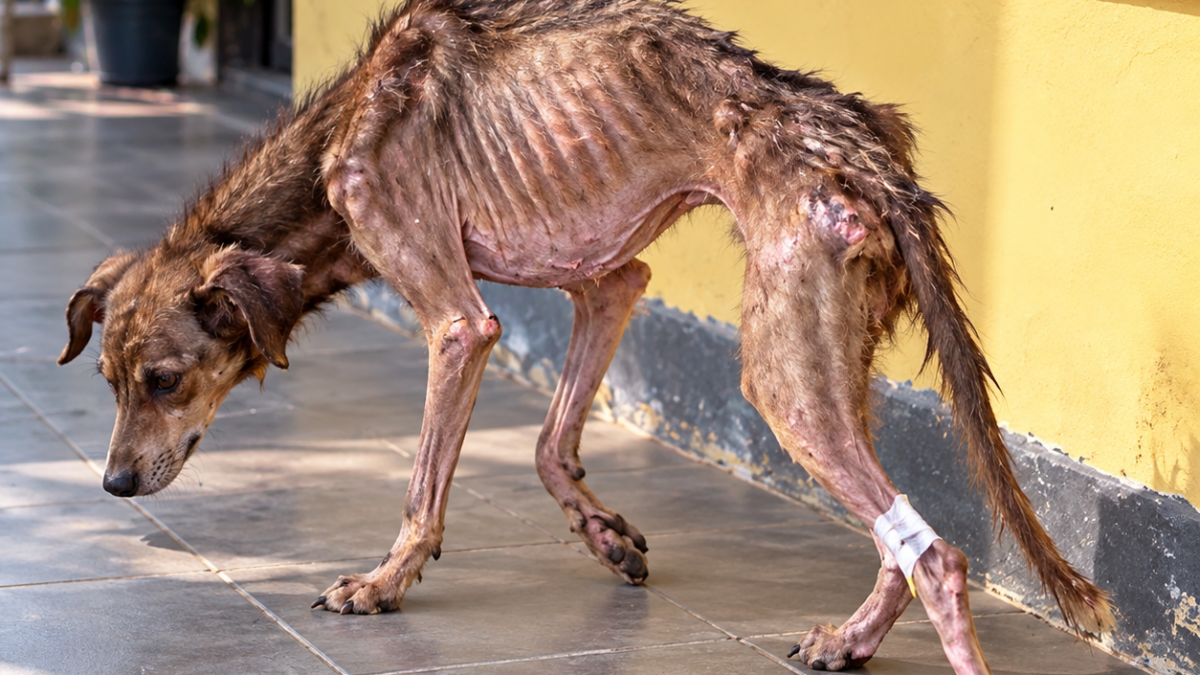
I had made him a bed in the quietest corner of my living room, away from the door, away from the television, away from anything that might frighten or exhaust him. I folded two thick blankets beneath him because his body had almost no padding left. Every bone seemed to press directly against his skin.
When I first laid him down, he looked so fragile that I was afraid even the blanket might be too heavy.
I sat beside him on the floor.
His breathing was shallow.
His eyes stayed half closed.
Every few minutes, I leaned closer just to make sure his chest was still moving.
The veterinarian’s words kept repeating in my head.
“He may not make it through tomorrow.”
I hated that sentence.
Not because the veterinarian had done anything wrong. He had been honest with me because he had to be.
But once someone tells you an animal has one day left, every minute becomes a countdown.
At 11:40 that night, Ramoncito lifted his head.
Barely.
I immediately moved toward him.
“Hey, old man.”
His eyes found mine.
“You need something?”
Of course he couldn’t answer.
I offered him water.
He took two weak laps and stopped.
“That’s enough.”
I held the bowl away.
The vet had warned me not to let him eat or drink too much at once. Ramoncito’s body had been deprived for so long that even feeding him had to be done carefully.
That seemed cruel in its own strange way.
There was food in my kitchen.
There was clean water beside him.
And still I couldn’t simply give him everything he wanted.
His body had forgotten what abundance felt like.
I rubbed one finger gently between his eyes.
“You made it this far.”
His eyelids lowered.
“You can make it one more night.”
I don’t know whether dogs understand promises.
But I know humans sometimes need to make them.
“I’ll be here when you wake up.”
I stayed beside him until sometime after two in the morning.
Then I must have fallen asleep sitting against the couch.
When I opened my eyes, sunlight was coming through the curtains.
For one terrible second I didn’t remember where I was.
Then I looked down.
Ramoncito was watching me.
Alive.
I smiled so suddenly that my face hurt.
“Well.”
His tail didn’t move.
He didn’t have the strength.
But his eyes remained on me.
“You just made a veterinarian wrong.”
That morning, I called the clinic.
“He’s still here,” I said.
The receptionist immediately understood what I meant.
“Is he responsive?”
“Yes.”
“Eating?”
“A little.”
“Drinking?”
“A little.”
“Bring him back this afternoon if you can.”
“I’ll be there.”
Hanging up the phone felt like winning something.
Not much.
Maybe another twelve hours.
But when you’ve been told a dog is dying, twelve hours is enormous.
The next several days became a routine built entirely around Ramoncito.
Medication.
Small meals.
Water.
Rest.
Clean bedding.
Helping him change positions so pressure sores wouldn’t develop.
Watching his breathing.
Watching his gums.
Watching everything.
At first, I tried helping him stand several times each day.
He wanted to.
That was the hardest part.
His mind seemed to remember a body he no longer had.
Ramoncito would plant his front feet, try to push himself upward, and then his back legs would tremble violently beneath him.
I would support his chest and stomach with my hands.
“Easy.”
Sometimes he managed two or three seconds.
Then his body collapsed.
The first time it happened, he looked almost embarrassed.
I know that sounds ridiculous.
But that was what I saw.
He turned his face away from me.
I sat down beside him.
“No.”
His eyes shifted toward me.
“Don’t do that.”
I put my hand against his chest.
“You have nothing to be ashamed of.”
He had once been a racing dog.
I had learned that much from people who recognized him.
Years earlier, Ramoncito had been known for speed.
People remembered his long stride.
His explosive starts.
The way his body stretched when he ran.
He had earned money for the man who owned him.
When he was useful, he had been valuable.
When age slowed him down, his value apparently disappeared.
That was the part I could not stop thinking about.
Dogs don’t understand profit.
They don’t know that winning makes one human richer.
Ramoncito had run because he was trained to run.
Because someone asked him to.
Because that was his life.
And when his legs could no longer produce money, the person who had benefited from all those years decided the dog himself was disposable.
I would sometimes look at Ramoncito sleeping and feel anger so sharp I had to stand up and walk away.
But I never wanted him to see anger when he opened his eyes.
He had already lived around enough of that.
So when I came back, I would sit beside him and talk as if everything in the world was ordinary.
“You know what your problem is?”
One ear would sometimes move.
“You are extremely expensive.”
Another tiny movement.
“I bought chicken for you today. Good chicken. I don’t even buy myself chicken that nice.”
Nothing.
“You’re not impressed?”
Sometimes his eyes would open.
“Ungrateful.”
I smiled.
And slowly, almost imperceptibly, Ramoncito began responding.
Not physically at first.
Emotionally.
He stopped flinching every time I touched his neck.
He started watching me when I crossed the room.
When I left to get something from the kitchen, his eyes followed.
When I returned, he relaxed.
Trust arrived before strength did.
By the end of the first week, the veterinarian examined him again.
Ramoncito had not gained much weight.
But he had not lost any either.
His temperature was stable.
His hydration had improved slightly.
The doctor ran his hands gently over Ramoncito’s body.
“I’m surprised.”
“That makes two of us.”
“I honestly did not expect to see him today.”
I looked at Ramoncito.
“Maybe don’t tell him that. He’s becoming arrogant.”
The veterinarian smiled.
Then his expression became serious.
“He still has a long way to go.”
“I know.”
“And recovery at his age—after this degree of starvation—can be unpredictable.”
“I know.”
“He may never regain the mobility he had before.”
I nodded.
“I don’t need him to race.”
The veterinarian looked at me.
“I just need him comfortable.”
That was true.
At least it was what I thought I wanted then.
I wasn’t dreaming about Ramoncito running.
I wasn’t dreaming about parks.
I wasn’t dreaming about years.
I was dreaming about tomorrow.
The next morning.
Another meal.
One more night with steady breathing.
Survival shrinks your ambitions.
And sometimes that is exactly what saves you.
During the second week, Ramoncito began eating with more interest.
At first I thought I was imagining it.
I placed his meal in front of him, expecting to encourage him the way I always did.
Instead, he lifted his head before I spoke.
“You hungry?”
His nose moved.
I set the bowl down.
He ate slowly.
But he finished everything.
I stared at the empty bowl.
Ramoncito stared at me.
“Was that good?”
He licked his mouth.
I laughed.
“You want more.”
His eyes stayed fixed on the bowl.
“No.”
He gave me what I can only describe as betrayal.
“The doctor says small meals.”
He continued staring.
“I’m following medical advice.”
Still staring.
“This isn’t a democracy.”
That day was the first time his tail moved.
Just once.
A small scrape against the blanket.
I froze.
“Do that again.”
Nothing.
“Ramoncito.”
He closed his eyes.
I laughed like a fool.
“Fine. Pretend it didn’t happen.”
But it had.
I texted the veterinarian.
Tail moved.
His response came several minutes later.
Good sign. Keep expectations realistic.
I replied:
Too late.
The third week brought our first setback.
Ramoncito woke one morning refusing food.
I offered chicken.
Nothing.
Broth.
Nothing.
Water.
A few laps.
Then he turned his head away.
Fear hit me immediately.
I took him to the clinic.
For several hours, I sat outside while the veterinary team examined him, ran tests, and gave him fluids.
Every terrible possibility came back.
Maybe his organs were failing.
Maybe we had only delayed the inevitable.
Maybe all the improvement I thought I had seen was temporary.
When the veterinarian finally came out, he looked tired but not devastated.
“He’s had a difficult day.”
“What does that mean?”
“His body is still adjusting. We’re treating him. I don’t think this automatically means we’re losing him.”
Automatically.
I hated that word too.
“Can I see him?”
“Yes.”
Ramoncito was lying beneath a thin blanket.
I sat down beside him.
“Hey.”
He opened his eyes.
“You scared me.”
I put my hand near his paw.
He moved it.
Just enough that his toes touched my fingers.
I stayed for two hours.
That night, he ate a little.
The next morning, more.
Within three days, he was back on track.
That setback taught me something important.
Recovery does not move in a straight line.
People love transformation stories because they look simple from far away.
Before.
After.
A dying dog.
A healthy dog.
Two photographs.
Two moments.
What disappears between them are the nights when you think everything is falling apart.
The medicine he spits out.
The meal he refuses.
The bill you didn’t expect.
The fear every time he sleeps too deeply.
The small infection.
The weak legs.
The phone call to the vet because something looks different and you don’t know whether you’re imagining it.
Love, I learned, is often repetitive.
It is not one heroic moment.
It is doing the same necessary thing tomorrow.
And tomorrow.
And tomorrow.
Ramoncito gained his first noticeable amount of weight during the fourth week.
It wasn’t much.
But when I ran my hand along his side, his ribs didn’t feel quite as sharp.
“Look at you.”
He stood with my help for almost fifteen seconds.
Then twenty.
I started keeping count.
“Twenty-one.”
His back legs shook.
“Twenty-two.”
He looked at me.
“Twenty-three.”
Then he sank down.
“Twenty-three seconds.”
I sat beside him.
“That’s almost an entire television commercial.”
He panted.
“You’re basically an athlete again.”
That word stopped me.
Athlete.
For years, humans had cared about Ramoncito because he was an athlete.
Now I was cheering because he stood for twenty-three seconds.
That difference mattered.
He didn’t need to earn anything anymore.
He didn’t need to win.
He didn’t need to be fast.
He didn’t need to make money.
He just needed to exist.
One afternoon, a man recognized Ramoncito while I was carrying him from the car after a veterinary appointment.
He stopped outside my gate.
“That dog raced.”
I looked at him.
“You know him?”
He stepped closer.
“That’s Ramoncito.”
The dog lifted his head at the sound of his name.
The man’s expression changed.
“My God.”
“You’ve seen him before?”
“Years ago.”
He looked Ramoncito over.
“He was good.”
I didn’t answer.
“Very good.”
The man shook his head.
“I remember a race where he came from behind and won by almost two lengths.”
I adjusted Ramoncito in my arms.
“Do you remember who owned him?”
The man hesitated.
“Yes.”
My heartbeat changed.
Until then, the former owner had existed only as a shadow in the story.
Someone.
A man.
An owner.
Suddenly there was a name.
“What was his name?”
The man told me.
I will call him Eduardo.
I asked more questions.
The stranger knew some of the old racing community.
He knew where Ramoncito had competed.
He remembered Eduardo boasting about the dog.
“He loved that dog when he was winning,” the man said.
That sentence made my jaw tighten.
“When he was winning.”
The man seemed to realize what he had said.
“I didn’t mean—”
“No.”
I looked down at Ramoncito.
“I think you meant exactly what you said.”
That evening, I searched through what records and old photographs I could find from local racing circles.
And there he was.
Ramoncito.
Younger.
Muscular.
Alert.
Standing beside Eduardo.
For several minutes, I could not reconcile the image on the screen with the dog sleeping on the blanket near my feet.
Same face.
Same markings.
Different life.
In one photograph, Ramoncito wore a racing jacket.
Eduardo had one hand around his neck and a wide smile.
I stared at that smile.
It angered me more than I expected.
Because it wasn’t the expression of someone who had always hated the dog.
That would have been easier to understand.
This man had once been proud of Ramoncito.
He had touched him.
Trained him.
Transported him.
Fed him enough to perform.
Maybe he had even praised him after victories.
Then, when age came—as age comes for every living thing—he had apparently decided none of that history mattered.
I printed the photograph.
Then immediately regretted it.
I did not want Eduardo inside my house, even on paper.
I folded it and put it away.
For several days, I told myself to forget about him.
Ramoncito needed me focused on recovery, not revenge.
But anger has a way of looking for somewhere to go.
One afternoon, while Ramoncito slept, I called an animal welfare organization.
I explained what I knew.
I explained how he had been found.
I explained his condition.
I explained that I had identified the previous owner.
“Do you have veterinary documentation?” the woman asked.
“Yes.”
“Photographs from when he was found?”
“Yes.”
“Anything linking the dog to the previous owner?”
“Old racing photographs. People who remember him.”
She was quiet for a moment.
“Keep everything.”
“Can something be done?”
“Possibly. It depends on what can be established.”
I wanted a bigger answer.
Arrest him.
Punish him.
Make him pay.
Instead I got:
“Possibly.”
Real justice, unlike stories, often begins with paperwork.
So I kept everything.
Every veterinary bill.
Every report.
Every dated photograph.
Every note about Ramoncito’s condition.
The clinic provided records describing severe malnutrition and the physical consequences of prolonged neglect.
I contacted two people who remembered Eduardo and Ramoncito.
One of them told me something that made my anger colder.
Eduardo had not simply lost track of the dog.
People had seen Ramoncito around his property after the dog stopped racing.
For a while, he had been kept in a small enclosure.
Then he disappeared.
“Did anyone ask what happened?” I said.
The man looked uncomfortable.
“Not really.”
“Why?”
He shrugged.
“It wasn’t our dog.”
That sentence bothered me almost as much as anything Eduardo had done.
It wasn’t our dog.
How many terrible things survive because of those four words?
I did not argue.
I wrote down what he remembered.
Meanwhile, Ramoncito kept improving.
At five weeks, he took four steps without me holding him.
I was beside him when it happened.
He had been standing near his bed.
I let go for just a second to adjust my grip.
Instead of falling, he shifted his weight.
One step.
I stopped breathing.
Second step.
“Ramoncito.”
Third.
His back legs trembled.
Fourth.
Then he sat down abruptly.
I dropped to my knees.
“You walked.”
He looked at me.
“You walked.”
His tail wagged.
This time there was no denying it.
I put both hands around his face.
“You walked.”
Ramoncito licked my nose.
I laughed so loudly he startled.
“Sorry.”
He licked me again.
“Okay. You’re forgiven.”
After that, walking became our project.
Four steps became seven.
Seven became ten.
Ten became the distance from his bed to the kitchen.
He loved the kitchen.
Of course he did.
I would stand several feet away holding a tiny piece of chicken.
“This is bribery.”
Ramoncito stared at the chicken.
“You understand that?”
He stepped toward me.
“Apparently you do.”
Each day his legs became a little steadier.
His muscles were rebuilding.
His back no longer curved with exhaustion every time he stood.
He started exploring.
First one room.
Then another.
One afternoon I found him standing in my bedroom.
“How did you get in here?”
He looked at me.
“You’re supposed to be resting.”
Tail wag.
“You have become extremely disobedient.”
Another wag.
“That’s probably a good sign.”
The first time Ramoncito barked, I almost dropped a cup.
Someone knocked at the door.
Ramoncito lifted his head.
Then:
“Woof.”
It was weak.
Hoarse.
Almost confused.
I stared at him.
He stared back.
“Did you just bark?”
The visitor knocked again.
“Woof.”
I laughed.
“You found your voice.”
He barked one more time.
That night, he slept deeply.
Not the frightening, exhausted sleep from the first week.
This was different.
His body was loose.
His legs twitched occasionally, the way dogs move when they dream.
I watched him for several minutes.
“What are you chasing?”
His paws moved.
I wondered whether somewhere inside his dreams, Ramoncito still remembered running.
The answer came sooner than I expected.
About two months after I found him, the veterinarian finally approved short outdoor walks.
Very short.
Flat ground.
No forcing him.
No excitement.
No long distances.
I bought him a comfortable harness.
The first time I clipped it on, Ramoncito stood beside the front door and stared outside.
“You remember outdoors?”
His ears moved.
The world had not always been kind to him.
I wondered whether he wanted to go.
Then his tail wagged.
I opened the door.
Ramoncito stepped into the sunlight.
For five seconds he stood completely still.
His nose lifted.
He smelled everything.
Grass.
Dust.
Food from someone’s kitchen.
A dog barking two houses away.
Wind.
Life.
Then he took a step.
And another.
We walked to the corner.
It took almost fifteen minutes.
I didn’t care.
People passed us.
A child asked if she could pet him.
I said yes, but gently.
Ramoncito stood still while she touched his head.
“He’s old,” she said.
“Yes.”
“He’s skinny.”
“He was.”
She looked at him.
“He’s nice.”
“Yes.”
That simple observation nearly made me cry.
He’s nice.
Ramoncito didn’t know he had spent years making money.
He didn’t know a veterinarian had predicted his death.
He didn’t know people were collecting evidence about what had happened to him.
He was just an old dog standing in sunlight while a little girl scratched behind his ear.
And perhaps that was exactly what he deserved most.
Ordinary happiness.
A week later, we made it around the block.
Two weeks later, we drove to a small park.
I chose the quietest time of day.
Ramoncito stepped out of the car and stared at the open grass.
I kept the leash loose.
“Take your time.”
He sniffed.
Walked.
Stopped.
Walked again.
A breeze moved through the trees.
Then something changed.
Ramoncito lifted his head.
A younger dog ran across the field in the distance.
Not toward us.
Just running.
Ramoncito watched.
His body became still.
For a moment, I saw the racing dog.
Not physically.
He was old.
Still recovering.
But something inside him recognized speed.
The younger dog raced across the grass.
Ramoncito leaned forward.
“Easy.”
He took several faster steps.
I laughed.
“No.”
He tried again.
“Doctor said walking.”
He looked at me.
“Don’t give me that face.”
Then, for perhaps three seconds, Ramoncito trotted.
Not fast.
Not graceful.
But unmistakably a trot.
My throat closed.
“Ramoncito.”
He stopped, panting.
I crouched beside him.
“Okay.”
I rubbed his neck.
“That’s enough.”
He looked back toward the field.
I knew what he wanted.
Someday.
Maybe.
But not yet.
The case against Eduardo began moving at almost the same time.
The animal welfare organization contacted me.
They had reviewed the veterinary evidence.
They wanted formal statements.
They wanted more documentation connecting Ramoncito to his former owner.
Then came the question I had been waiting for.
“Would you be willing to speak if this becomes a legal matter?”
I looked at Ramoncito lying beside my chair.
“Yes.”
No hesitation.
“Yes.”
They explained that outcomes were never guaranteed.
That records mattered.
That witnesses sometimes changed their stories.
That old ownership arrangements could be messy.
I understood.
But I also understood something else.
Eduardo had counted on Ramoncito disappearing.
An old dog.
A starving dog.
An unwanted dog.
Animals cannot file complaints.
They cannot tell a judge who stopped feeding them.
They cannot explain how long they waited beside an empty bowl.
They depend on humans to speak after the suffering has already happened.
So I spoke.
I gave statements.
The veterinarian documented Ramoncito’s condition when he arrived.
Other witnesses confirmed the dog’s identity and history.
One person remembered Eduardo talking openly about getting rid of him because he was “finished.”
That word spread through my head like poison.
Finished.
As though Ramoncito were machinery.
A worn-out tool.
A failed investment.
I looked at the dog sleeping in my home.
He was not finished.
Not even close.
Several weeks later, Eduardo came to my house.
I had never met him face-to-face.
I knew who he was the moment I saw him at the gate.
He was older than the racing photograph, heavier, grayer.
But the face was the same.
Ramoncito was inside.
I stepped outside and closed the door behind me.
“What do you want?”
He looked past me toward the house.
“You have my dog.”
My dog.
Those two words made something inside me go cold.
“No.”
His expression tightened.
“What do you mean, no?”
“I have Ramoncito.”
“He belongs to me.”
I stared at him.
“Now you remember that?”
He glanced around.
“I heard people were saying things.”
“People are saying things because of what happened.”
“You don’t know what happened.”
I almost laughed.
“Funny. Everybody keeps telling me that.”
“I didn’t abandon him.”
“Then explain how he ended up starving.”
“He ran away.”
There it was.
The explanation I had expected.
“He ran away.”
“Yes.”
“When?”
Eduardo hesitated.
“I don’t remember exactly.”
“You owned a dog for years and don’t remember when he disappeared?”
“It was a while ago.”
“How long did you search?”
His eyes narrowed.
“That’s none of your business.”
“It became my business when I carried him into a veterinary clinic half-dead.”
He looked toward the house again.
“Let me see him.”
“No.”
“He knows me.”
“That doesn’t mean he wants to see you.”
“You can’t keep my dog.”
I stepped closer.
“You left him in a condition where a veterinarian believed he would die within twenty-four hours.”
“I told you, he ran away.”
“And somehow starvation began only after he left?”
Eduardo’s jaw tightened.
“You think you’re some hero because you fed him?”
“No.”
I kept my voice controlled.
“I think feeding a dog is the minimum requirement for owning one.”
He looked angry now.
“You don’t know how much money I spent on that animal.”
That sentence told me everything.
Not how much I loved him.
Not how many years he lived with me.
Not what he was like when he was young.
Money.
“I do know how much money he made you.”
Eduardo stopped.
I continued.
“I found the race records.”
His face changed.
“I found people who remember you boasting about him.”
“That has nothing to do with this.”
“It has everything to do with this.”
I pointed toward my house.
“When his legs made you money, you fed him.”
Eduardo stared at me.
“When his legs got old, he became inconvenient.”
“You’re twisting things.”
“No.”
I shook my head.
“I’m making them simple.”
From inside the house came a bark.
Ramoncito.
Eduardo looked toward the door.
“Ramoncito!”
The bark stopped.
Then nothing.
Eduardo called again.
“Ramoncito!”
I watched the window.
No movement.
No scratching at the door.
No excited whining.
Nothing.
Eduardo’s expression hardened.
“He’s probably too weak to hear.”
I almost smiled.
“He walks in the park now.”
That landed.
“What?”
“He gained weight.”
Silence.
“He walks.”
Eduardo looked genuinely surprised.
“He runs a little too.”
For a second, something almost resembling pride appeared on his face.
That made me angrier than anything else.
“You don’t get to be proud.”
His eyes snapped back to me.
“What?”
“You don’t get to enjoy his recovery.”
“I trained that dog.”
“And somebody else had to teach him he wasn’t going to starve.”
He stepped closer.
“You better be careful.”
I held his gaze.
“No.”
Behind me, Ramoncito barked again.
Stronger this time.
I did not turn around.
“I think you’re the one who should have been more careful.”
Eduardo understood.
“You reported me.”
“Yes.”
His face went red.
“You son of a—”
“Finish that sentence from the road.”
He looked like he wanted to push past me.
He didn’t.
Maybe he realized that would only create another witness statement.
Maybe he simply knew he had already lost control of the situation.
Before he left, he pointed toward my house.
“That dog belongs to me.”
I answered quietly.
“No.”
Then I said the words I had wanted to say since I first learned his name.
“Ramoncito stopped belonging to you the moment you decided his life was worth less than the money he could make.”
Eduardo left.
My hands started shaking only after he was gone.
I stood outside for nearly a minute before going back in.
Ramoncito was standing in the living room.
He looked at me.
“Everything’s okay.”
His tail wagged.
I crouched.
“He says you belong to him.”
Ramoncito walked toward me.
He rested his head against my chest.
I wrapped both arms around him.
“Yeah.”
I closed my eyes.
“That’s what I thought.”
The legal process took months.
Longer than I wanted.
Real consequences often move slowly.
But while papers were filed and statements collected, Ramoncito lived.
That became my revenge.
Every breakfast he ate was revenge.
Every nap on a soft bed was revenge.
Every walk was revenge.
Every pound he gained was revenge.
Not because Ramoncito understood vengeance.
But because Eduardo had treated age as the end of his value.
And every good day afterward proved him wrong.
By the third month, Ramoncito looked almost unrecognizable compared with the dog I had found.
His ribs were covered.
His shoulders had shape again.
His coat looked healthier.
His eyes were bright.
The veterinarian weighed him and smiled.
“This is good.”
“How good?”
“Very.”
I looked at Ramoncito.
“Did you hear that?”
Tail wag.
“He says you’re fat.”
The veterinarian laughed.
“I did not say that.”
Ramoncito looked offended.
“He heard you.”
We adjusted his diet.
We increased his walks gradually.
He began climbing a few stairs.
The first time he jumped onto my couch without help, I shouted.
“Hey!”
Ramoncito froze.
We stared at each other.
“You couldn’t stand three months ago.”
He wagged.
“And now you’re stealing my couch.”
He turned around twice.
Lay down.
Put his head on the cushion.
I pointed at him.
“This house is collapsing into lawlessness.”
He closed his eyes.
I left him there.
Of course I did.
One Sunday morning, I took him back to the park.
The air was cool.
Very few people were around.
Ramoncito had been walking particularly well that week.
I let the long leash loosen.
He sniffed the grass.
Then a bird dropped down several yards away.
Ramoncito saw it.
His ears lifted.
“Don’t.”
The bird hopped.
Ramoncito leaned forward.
“Ramoncito.”
The bird flew.
Ramoncito ran.
Not far.
Not fast compared with the racing dog he had once been.
Maybe fifteen yards.
Maybe less.
But he ran.
His front legs stretched.
His back legs followed.
For those few seconds, the years disappeared.
I stood completely still.
Ramoncito slowed.
Turned around.
Looked at me.
I had tears running down my face.
He trotted back.
“You ran.”
He panted happily.
“You actually ran.”
He pushed his nose against my hand.
I sat down in the grass.
Ramoncito leaned against me.
Somewhere years earlier, people had probably cheered when he crossed a finish line.
Money changed hands.
People celebrated a result.
That morning there was no crowd.
No stopwatch.
No prize.
No betting.
Just an old dog running because he wanted to.
I think that may have been the first race Ramoncito ever truly won.
The animal welfare case eventually reached a formal hearing.
I attended.
Eduardo did too.
I had imagined that moment many times.
In some versions, I yelled.
In others, I showed him photographs and demanded he look at what he had done.
When the day actually arrived, I felt strangely calm.
The veterinarian spoke about Ramoncito’s condition.
Severe malnutrition.
Muscle wasting.
Weakness.
Dehydration.
The likelihood that the condition had developed over a prolonged period rather than suddenly.
Photographs were shown.
I had seen them dozens of times.
Still, they hurt.
Ramoncito lying on the examination table.
Ramoncito’s ribs.
Ramoncito’s hollow face.
Then photographs from later.
Ramoncito standing.
Walking.
Healthy.
The contrast was almost unbearable.
Eduardo’s explanation remained the same.
The dog had run away.
He had looked for him.
He had no idea how Ramoncito became so thin.
But witnesses complicated that story.
One person remembered seeing Ramoncito confined at Eduardo’s property after he retired.
Another remembered Eduardo complaining that the dog was useless.
A third had heard him talk about getting rid of the old racing animals he no longer wanted.
No single statement was dramatic.
Together, they formed a picture.
The decision did not erase what happened.
Nothing could.
But Eduardo faced penalties for neglect and abandonment.
He lost any claim to Ramoncito.
More importantly to me, restrictions were placed on his ability to keep animals in the future.
When I heard that, I felt something unclench inside my chest.
Not because suffering had been returned to him.
Because suffering might be prevented for another dog.
Afterward, Eduardo saw me outside.
For several seconds he said nothing.
Then:
“You’re happy now?”
I looked at him.
“No.”
That seemed to surprise him.
“You wanted this.”
“I wanted Ramoncito to survive.”
“He did.”
“Yes.”
“Then why wasn’t that enough?”
I studied him.
Maybe he truly didn’t understand.
“Because there could have been another Ramoncito.”
His eyes shifted away.
“I never meant for him to die.”
I almost answered angrily.
Instead I asked:
“What did you think starvation was going to do?”
He had no answer.
I continued.
“You don’t have to beat an animal to destroy it.”
Silence.
“You can destroy it by withholding food.”
He looked at the ground.
“You can destroy it by deciding an old animal is no longer worth the cost.”
Nothing.
“You can destroy it by walking away.”
Eduardo looked tired.
For the first time, he also looked older.
“I had problems.”
“Everyone has problems.”
“You don’t know mine.”
“No.”
I nodded.
“And Ramoncito didn’t create them.”
He looked at me.
That was the closest I ever came to understanding whether he felt remorse.
Maybe he did.
Maybe he only regretted getting caught.
I stopped caring.
His remorse was no longer necessary for Ramoncito’s happiness.
That realization freed me.
For months, I had imagined Eduardo as the final chapter.
He wasn’t.
He was part of Ramoncito’s past.
Not his ending.
Ramoncito’s ending was waiting at home.
When I opened the front door that afternoon, he came toward me faster than I had ever seen.
His whole body moved with his tail.
“Hey.”
He shoved his head into my legs.
“I was gone four hours.”
He wagged harder.
“You survived.”
I knelt.
He licked my face.
“Stop.”
More licking.
“You’re embarrassing yourself.”
I held him anyway.
That evening, we went to the park.
No special reason.
I simply wanted to.
Ramoncito walked beside me.
A little stiff at first.
Then easier.
We reached the open grass where he had run after the bird.
I sat on a bench.
Ramoncito stood in front of me.
“You know something?”
His ears shifted.
“You’re officially mine.”
Tail wag.
“I mean legally.”
Another wag.
“You clearly don’t care.”
He leaned against my knee.
“You’ve been mine since the first night, haven’t you?”
I scratched beneath his chin.
“No.”
I corrected myself.
“You’ve been your own.”
That was more accurate.
That had always been the problem.
People had spoken about Ramoncito as property.
A racing dog.
An investment.
A source of income.
A useless old animal.
My dog.
His dog.
But Ramoncito’s life had value separate from everyone who claimed him.
I was simply lucky enough to share it.
A few weeks later, something unexpected happened.
A former racing trainer contacted me.
He had heard Ramoncito’s story.
At first, I was suspicious.
I had no interest in putting Ramoncito around anyone who saw him as an athlete first and an animal second.
But the man explained why he was calling.
He had worked around racing dogs for years.
He had seen what happened to many after retirement.
Some went to good homes.
Some stayed with responsible owners.
Others simply disappeared.
“I used to tell myself it wasn’t my business,” he said.
That phrase again.
Not my business.
He continued.
“I don’t want to say that anymore.”
He wanted to create a small network to help retired racing dogs find homes before they reached crisis.
He wanted Ramoncito’s case—not his suffering as spectacle, but his survival—to help people understand what responsible retirement should look like.
I thought about it for several days.
Then I agreed on one condition.
“Don’t turn him into advertising.”
“I won’t.”
“He’s not a tragedy people get to use to make themselves look good.”
“I understand.”
“If we do this, the focus is the dogs who still need somewhere to go.”
“Yes.”
That was how Ramoncito accidentally became part of something larger.
We began identifying older dogs whose racing years were ending.
Volunteers helped with transport.
Families offered foster homes.
Veterinarians offered discounted examinations when they could.
Nothing became perfect.
There were still too few homes.
Too many dogs.
Too much cost.
But some dogs who might otherwise have disappeared went directly from racing kennels into houses.
Soft beds.
Backyards.
Families.
Ordinary lives.
One of the first dogs we helped was named Cielo.
She was nine.
Her racing days were over.
Her owner was not cruel, but he did not want to keep her.
Under the old system, I don’t know what would have happened.
Instead, Cielo came to my house for three days while we arranged her foster placement.
Ramoncito was not impressed.
She walked directly to his bed.
He stared at her.
Cielo lay down.
Ramoncito looked at me.
I shrugged.
“She’s a guest.”
He looked back at her.
She stretched out farther.
Ramoncito sighed.
“You finally understand what it feels like to have your property seized.”
He lay down beside the bed.
Later that evening, I found them both asleep with their heads touching.
I took a photograph.
When Cielo went to her permanent home, Ramoncito searched the house for her.
“Don’t pretend you didn’t like her.”
He checked behind the couch.
“You ignored her for three days.”
He looked at me.
“Fine.”
I scratched his ears.
“We’ll visit.”
We did.
Ramoncito became surprisingly good around frightened dogs.
Maybe because he knew fear.
Maybe because older dogs are simply better at certain things than humans.
He never crowded them.
Never forced interaction.
He would lie several feet away and wait.
Eventually, they often approached him.
Watching that made me think again about the first night.
A dying dog.
A blanket.
A veterinarian who believed there might be only hours left.
None of us could have imagined this.
Ramoncito wasn’t merely alive.
He was helping other dogs learn safety.
Months became a year.
Ramoncito got older.
Of course he did.
Rescue does not stop time.
His face became grayer.
His joints became stiffer on cold mornings.
He needed supplements.
Sometimes medication.
He slept more.
But aging in my house was different from aging before.
Age no longer meant losing value.
It meant shorter walks.
Warmer blankets.
More patience.
Sometimes carrying him up the steps.
Sometimes changing our plans because he was tired.
It meant understanding that love adapts.
One rainy morning, Ramoncito stood at the door, looked outside, and immediately turned around.
“Oh no.”
He went back toward his bed.
“You need to go outside.”
He ignored me.
“Ramoncito.”
He lay down.
“You used to be a racing dog.”
No reaction.
“People probably made you run in terrible weather.”
He closed his eyes.
“And now rain is unacceptable?”
Nothing.
I put on my jacket.
He watched me.
“Come on.”
No movement.
I picked up the umbrella.
Ramoncito sighed and stood.
We walked exactly ten feet from the house.
He did what he needed to do.
Then turned around and nearly dragged me back.
I laughed the entire way.
That was the life I wanted for him.
Not dramatic every day.
Not inspirational every minute.
A dog refusing to walk in rain.
A dog stealing half my couch.
A dog learning that every meal arrived on time.
A dog growing old without fear of what old age would cost him.
The former owner’s name gradually stopped appearing in conversations.
People cared less about Eduardo.
They cared more about Ramoncito.
Then less about Ramoncito specifically and more about the dogs coming after him.
That felt right.
The best justice becomes bigger than punishment.
It changes a system.
Even a small one.
Within eighteen months, our informal network had placed twenty-three retired or abandoned dogs.
Twenty-three.
I kept a list.
Cielo.
Mateo.
Sol.
Bruno.
Estrella.
Nina.
Lucas.
And more.
Some needed significant medical treatment.
Some were healthy.
Some were terrified of houses.
One had never climbed stairs.
Another was afraid of ceiling fans.
One stole bread constantly.
Another refused to sleep anywhere except inside a cardboard box for the first month.
Each carried a different history.
Each slowly became somebody’s ordinary dog.
Ramoncito met many of them.
People joked that he was the old professor.
When nervous dogs arrived, we let them spend time near him.
He would look at them with calm eyes as if saying:
Humans can be ridiculous, but sometimes they’re useful.
One afternoon, a family came to pick up a retired dog named Luna.
Their little boy sat on my floor beside Ramoncito.
“How old is he?”
“Pretty old.”
“Was he fast?”
“Very.”
“Is he still fast?”
I looked at Ramoncito.
He was asleep.
“No.”
The boy considered this.
“Then what does he do?”
I smiled.
“He sleeps.”
The boy laughed.
“That’s his job?”
“Now it is.”
He touched Ramoncito gently.
“That’s a good job.”
“Yes.”
I looked at the old dog.
“It is.”
That sentence stayed with me.
For years, Ramoncito’s worth had been measured by performance.
Now his job was sleeping.
Eating.
Walking.
Being loved.
Perfect work.
On the second anniversary of the day I found him, I took Ramoncito to the same veterinarian who had first examined him.
The doctor came into the room, stopped, and laughed.
“I still can’t believe you.”
Ramoncito wagged.
“He thinks you’re talking about me.”
“I’m definitely talking about him.”
The veterinarian crouched.
Ramoncito walked over willingly.
Two years earlier, he had barely had strength to lift his head.
Now he pushed his nose into the doctor’s pocket because he had learned treats were sometimes kept there.
“Thief,” the doctor said.
I smiled.
“He’s developed expensive habits.”
The veterinarian examined him.
Heart.
Lungs.
Joints.
Weight.
Everything expected for an older dog.
Nothing miraculous.
That mattered too.
At the end, the doctor looked at me.
“He’s doing well.”
“How well?”
“For his age? Very.”
I looked at Ramoncito.
“Did you hear that?”
Tail wag.
The veterinarian smiled.
“I remember telling you he might not survive a day.”
“I remember.”
“You kept asking me for medicine.”
“I remember that too.”
“You wouldn’t stop.”
“No.”
He laughed softly.
“I’m glad you didn’t.”
I looked down at Ramoncito.
“So am I.”
Outside the clinic, Ramoncito paused at the top of the steps.
His legs were stiff.
I offered support.
He ignored me and went down himself.
Slowly.
Stubbornly.
At the bottom, he looked back.
“All right.”
I shook my head.
“You win.”
He wagged.
Winning.
For once, the word meant something different.
That afternoon, we went to the park.
Ramoncito could no longer run fifteen yards the way he had during his early recovery.
Age had continued moving.
But he walked.
Slowly.
Proudly.
We reached our usual bench.
I sat.
Ramoncito lowered himself beside my feet.
For a while, we watched younger dogs race across the grass.
One gray dog sprinted after a ball.
Ramoncito lifted his head.
I smiled.
“You miss it?”
His ears moved.
Maybe he did.
Maybe not.
There is a temptation to make every rescue story about restoring an animal to what it was before.
But Ramoncito taught me something different.
Healing isn’t always going backward.
He never became the young racing dog again.
He didn’t need to.
Healing was becoming safe in the body he had now.
Old.
Slower.
Scarred.
Loved.
As the sun dropped lower, I remembered the first photograph I had seen of him racing.
Strong muscles.
Bright eyes.
Eduardo smiling beside him.
For a long time, that photograph had made me angry.
Eventually, it didn’t.
Because it was no longer the most important picture of Ramoncito.
The most important picture was one I took later.
He was asleep on my couch.
One paw hanging over the edge.
His mouth slightly open.
Completely defenseless.
Completely safe.
That was the photograph that told his story.
Not speed.
Trust.
Several more months passed before Ramoncito had his next health scare.
He woke one morning unable to put much weight on one back leg.
I felt the old fear return instantly.
The same fear from the first night.
I rushed him to the clinic.
The veterinarian examined him.
Arthritis.
Age.
Nothing catastrophic.
Medication would help.
Rest would help.
I exhaled so deeply the doctor laughed.
“You expected worse?”
“I always expect worse with him.”
“That’s understandable.”
We went home.
I made his bed even softer.
Added another rug so he wouldn’t slip.
Moved his food closer.
Ramoncito watched me reorganize half the living room.
“You realize you run this house now.”
He wagged.
“I know.”
That evening, he struggled to stand.
I helped him.
He leaned against my leg.
It reminded me of those first weeks.
Only this time I wasn’t terrified.
Because weakness no longer meant abandonment.
That was the difference.
Age could take his speed.
It could take some strength.
Eventually it would take more.
But it would never again take his home.
The next morning, Ramoncito ate breakfast enthusiastically.
Then barked at a delivery driver.
Then slept for four hours.
Normal life resumed.
One day a journalist asked if I regretted spending so much money saving an old dog.
The question wasn’t cruel.
She was genuinely curious.
The cost had been significant.
Veterinary care.
Medication.
Food.
Follow-up treatment.
Transportation.
Later, supplements.
More tests.
I thought about the answer.
“No.”
“Not even when the veterinarian told you he might die?”
“Especially then.”
She looked surprised.
“Why?”
“Because whether he survived wasn’t the only thing that mattered.”
“What else mattered?”
“That he didn’t die believing nobody cared.”
The room went quiet.
That was the truth I had understood only much later.
If Ramoncito had died that first night, I would have been devastated.
But I still would not have regretted taking him home.
Because for those final hours, he would have had food.
Warmth.
A blanket.
A hand beside him.
A name spoken gently.
Sometimes rescue is not measured by how many years come after.
Sometimes rescue means changing the meaning of the final day.
Ramoncito gave me years instead.
That was a gift.
As he grew older, people sometimes asked how long I thought he had left.
I hated the question.
Not because it was unreasonable.
Because I had spent our entire relationship being told to measure his life against death.
One day.
One week.
A few months.
A year.
I stopped counting.
Instead, I counted other things.
Meals.
Walks.
Naps.
Tail wags.
Trips to the park.
Dogs helped through the retirement network.
Socks stolen.
Rainy mornings avoided.
Chicken pieces successfully begged.
Those numbers mattered more.
The twenty-third dog we placed became the twenty-fourth.
Then the thirtieth.
Then the fortieth.
Eventually, Ramoncito’s story helped inspire a small formal rescue group specifically focused on older working and racing dogs.
We called the program Second Run.
I liked the name immediately.
A racing dog gets one run because somebody wants a result.
A rescued dog gets another because life itself is the prize.
Ramoncito attended our first small adoption event.
He wore a simple blue bandana.
No racing number.
No advertisements.
No slogan.
He walked between families, received far too many treats, and slept under a table for most of the afternoon.
By sunset, four older dogs had found homes.
I knelt beside Ramoncito.
“You did nothing today.”
His eyes opened.
“You slept.”
Tail wag.
“You ate other people’s food.”
Another wag.
“And somehow everyone thinks you’re inspirational.”
He put his head back down.
I laughed.
“Unbelievable.”
At that event, an elderly man approached me.
He had once owned racing dogs.
I didn’t recognize him.
He stood several feet from Ramoncito.
“I knew Eduardo.”
I stiffened.
The man noticed.
“I’m not defending him.”
I said nothing.
“He used to talk about Ramoncito all the time.”
I looked down at the sleeping dog.
“What did he say?”
“That he was the best dog he ever had.”
Something in my chest hurt.
“Apparently that wasn’t enough.”
The man nodded.
“No.”
He looked ashamed.
“A lot of us thought differently back then.”
“Differently?”
“We thought if a dog couldn’t work, somebody else would deal with it.”
I waited.
“I don’t think that anymore.”
He pointed toward the adoption area.
“My daughter is taking home that old brindle dog.”
I followed his hand.
A ten-year-old male named Tito was sitting beside a woman.
“He’s never lived in a house,” I said.
“So she told me.”
“He might be difficult at first.”
“I know.”
“He might have accidents.”
“I know.”
I looked back at the man.
“Why him?”
He smiled sadly.
“Because twenty years ago, I probably would have walked past him.”
That answer was enough.
Tito went home that evening.
Six months later, I received a photograph of him sleeping in the old man’s bed.
Ramoncito’s revenge kept spreading.
Not punishment.
Change.
I eventually stopped using the word revenge at all.
Because vengeance imagines the person who caused harm remaining at the center of the story.
Eduardo no longer deserved that place.
Ramoncito did.
The dogs who came after him did.
The people who changed did.
The families who adopted old animals did.
That was the story.
Several years after Ramoncito came home, I took him to the park on a cool autumn morning.
He moved slowly now.
Very slowly.
His face was almost completely gray.
I brought water.
Medication.
A blanket for the bench.
We walked perhaps fifty yards before he stopped.
I looked down.
“Tired?”
He looked toward the grass.
I sat.
Ramoncito lowered himself beside me.
We watched the park.
A young dog chased a ball.
Children ran past.
Leaves moved in the wind.
Ramoncito’s head rested on my shoe.
I remembered the first night again.
I always returned to that night.
The starved body.
The shallow breath.
The veterinarian saying tomorrow might never come.
I looked at the old dog beside me.
Thousands of tomorrows had come.
Maybe not literally thousands.
I had stopped counting.
Enough.
More than anyone expected.
More than we had been promised.
I rubbed his head.
“You really made a liar out of that doctor.”
Ramoncito’s tail tapped the ground once.
I smiled.
“Good boy.”
We stayed until he wanted to leave.
At home, he ate half his dinner.
Then the other half when I added chicken.
Manipulative old man.
He slept beside my chair that evening.
His breathing was slow.
Peaceful.
There was a time I watched every breath because I was terrified one would be his last.
Now I watched them with gratitude.
Not fear.
Rescue changes the rescuer too.
Before Ramoncito, I believed saving an animal meant pulling it out of immediate danger.
After Ramoncito, I understood that rescue continues long after the dramatic moment.
It is medical bills.
It is cleaning accidents at three in the morning.
It is rearranging furniture for arthritic legs.
It is canceling plans because your dog is having a bad day.
It is learning which medicine hides best inside cheese.
It is accepting that progress can reverse.
It is loving an animal knowing that one day the ending will hurt.
Especially then.
One winter evening, Ramoncito struggled to get onto the couch.
I lifted him.
He settled beside me.
Years earlier, the idea of carrying him had filled me with panic because he had weighed almost nothing.
Now I carried him because age made jumping difficult.
There was something beautiful about the difference.
He had grown old twice.
Once without protection.
Once with it.
The second time, aging was allowed to be what it should have been all along.
Natural.
Dignified.
Safe.
As I sat beside him, I thought about the man who once looked at an aging dog and saw a financial burden.
I looked at the same aging dog and saw history.
Every scar.
Every gray hair.
Every stiff morning.
They meant Ramoncito had stayed.
That he had survived long enough to become old in peace.
Eventually, Ramoncito’s final chapter came.
Not dramatically.
Not suddenly.
His body simply began telling us that it was tired.
He ate less.
Slept more.
Some mornings, even short walks were too much.
The veterinarian adjusted his medication.
We managed his comfort carefully.
I knew what was coming.
I refused to pretend otherwise.
But I also refused to let the approaching end erase the days we still had.
So I made them simple.
Sunlight.
Chicken.
Soft blankets.
Short rides.
Park visits when he felt strong enough.
One afternoon, I carried him to our usual bench.
He sat beside me.
A younger dog ran across the field.
Ramoncito watched.
His ears lifted slightly.
I put my hand on his shoulder.
“You remember.”
He leaned into me.
For several minutes, I pictured him young.
Not racing for money.
Not running because somebody ordered him.
Running simply because his body could.
Then I looked at him as he was.
Old.
Gray.
Slow.
Perfect.
“You don’t have to run anymore.”
Ramoncito turned toward me.
His eyes were cloudy with age but peaceful.
“You already won.”
He rested his head against my leg.
And I meant it.
He had won the only race that mattered.
The race away from the life that had discarded him.
The race toward safety.
Toward food.
Toward home.
Toward being loved when he had nothing left to offer except himself.
That evening, I laid his blanket beside my bed.
Ramoncito had stopped sleeping in the living room weeks earlier.
He wanted to be close.
I helped him settle.
His head rested across my foot.
I thought again of Eduardo saying:
That dog belongs to me.
No.
Ramoncito had never been a trophy.
Never an investment.
Never a machine.
Never something whose worth expired when speed did.
He was a life.
A stubborn, expensive, chicken-loving, rain-hating life.
And I was grateful for every day I had been allowed to know him.
When his final day eventually came, he was not alone.
That mattered to me more than anything.
I sat beside him.
My hand rested where it had rested on the first night, between his eyes.
The veterinarian spoke softly.
I barely heard.
Ramoncito looked at me.
There was no panic.
No roadside fear.
No hunger.
No desperate struggle to stand.
Only exhaustion.
And trust.
“You did good.”
My voice broke.
“So good.”
His eyes stayed on mine.
“I told you I’d be here.”
I had made that promise the first night.
I kept it.
“Remember?”
His breathing slowed.
“I said I’d be here when you woke up.”
My hand trembled.
“And I’m here now too.”
Ramoncito exhaled.
His body relaxed.
The room became very quiet.
I stayed beside him long after.
There are some silences that feel empty.
That one did not.
It was filled with every day between the first and the last.
The twenty-three-second stand.
The first tail wag.
The first walk.
The park.
The bird.
The first run.
The couch.
The rain.
The other dogs.
The adoption events.
The ridiculous quantities of chicken.
Years.
All hidden inside a silence.
People sometimes ask whether losing him made saving him harder to justify.
I never understand the question.
Love does not become a mistake because it ends painfully.
Ramoncito’s death did not erase his recovery.
It did not erase the years he lived.
It did not erase the dogs helped because of him.
It did not erase the people who changed.
It did not erase the fact that an abandoned old racing dog who was supposed to die within a day got to grow older in a home where every meal arrived.
The rescue group continued.
Second Run kept operating.
More dogs came.
More dogs left for homes.
At our next adoption event, Ramoncito’s blue bandana hung near the registration table.
Nothing dramatic.
Just a small reminder.
A woman approached carrying an elderly dog.
“What was his name?” she asked.
“Ramoncito.”
“Was this his?”
“Yes.”
She touched the bandana.
“I heard about him.”
I smiled.
“A lot of people did.”
The woman looked at the old dog beside her.
“He’s why I chose this one.”
I stared at her.
“What do you mean?”
“I was going to adopt a puppy.”
She scratched the gray dog’s head.
“Then I read about Ramoncito.”
The dog leaned into her.
“I thought maybe somebody should choose him before he runs out of time.”
My throat tightened.
“What’s his name?”
“Samson.”
I crouched.
Samson sniffed my hand.
“Good choice.”
She smiled.
“He snores.”
“The old ones usually come with personality.”
She laughed.
They left together.
I watched until the door closed.
That was when I finally understood Ramoncito’s complete transformation.
It wasn’t only physical.
The dog who had once been abandoned because he was old had become the reason someone chose another old dog.
That was the ending.
Not Eduardo’s penalty.
Not the confrontation at my gate.
Not even the moment Ramoncito ran again.
This.
Another old dog leaving through a door with someone who wanted him.
Ramoncito had once made money by crossing finish lines.
In the end, his greatest legacy was helping other dogs reach one more starting line.
Months later, I returned alone to the park.
Our bench was empty.
For a while, I couldn’t sit there.
Then I did.
A dog ran across the field.
For one second, out of habit, I turned toward the space where Ramoncito would have been.
Nothing.
I smiled anyway.
“I saw it.”
Wind moved through the grass.
“You would have chased him once.”
I rested my hand on the bench.
“Probably not at the end.”
I laughed quietly.
“You got lazy.”
People passed.
Children shouted.
Life continued in the ordinary, unfair, beautiful way it always does.
I thought about the first person who found Ramoncito starving.
About the veterinarian.
About the prediction.
One day.
He won’t survive another day.
If I could have spoken to myself that first night, I would not have told myself how the story ended.
I would not have told myself how many years we had.
I would have said only this:
Stay beside him.
Tomorrow is going to surprise you.
Because that was what Ramoncito did.
Again.
And again.
He surprised the veterinarian.
He surprised me.
He surprised the people who remembered the powerful racing dog and assumed age had destroyed everything he had been.
And perhaps most of all, he proved something I wish more people understood before an animal grows old.
Loyalty is not a contract that expires when usefulness does.
You do not love a dog only while he can run.
Only while he can guard.
Only while he can breed.
Only while he can perform.
Only while veterinary bills stay low.
Only while his body remains convenient.
If an animal gives you youth, trust, work, affection, and years, then old age is not a betrayal.
It is the part where you repay the promise.
Eduardo had failed that promise.
I had spent years angry about it.
But by the end, I realized Ramoncito had already delivered the strongest possible answer.
He lived.
He ate.
He walked.
He ran again.
He slept safely.
He became family.
He helped other dogs.
He grew old surrounded by people who knew his worth had nothing to do with speed.
And when his body finally stopped, nobody threw him away.
Nobody abandoned him.
Nobody decided caring had become too expensive.
I was there.
The promise held.
Sometimes, when a new old dog arrives at Second Run, I sit beside them the way I once sat beside Ramoncito.
They often look confused.
Some have lived outside.
Some have been passed between owners.
Some have stopped expecting anything good from people.
I put down food.
I wait.
I don’t force them closer.
And when their frightened eyes meet mine, I think of him.
Then I say what I once said on a living-room floor to a dog who had supposedly reached his final day.
“You made it this far.”
Sometimes an ear moves.
Sometimes nothing happens.
I smile anyway.
“You can make it one more night.”
And when I leave the room, I almost always glance back.
Because for a moment I can see Ramoncito there.
Not starving.
Not collapsing.
Not abandoned.
Running.
Not toward a finish line.
Toward home.
And that is how I choose to remember him.








