PART 2: For Seven Years, Everyone Passed the Same Elderly Street Cat—Then One Person Finally Stopped
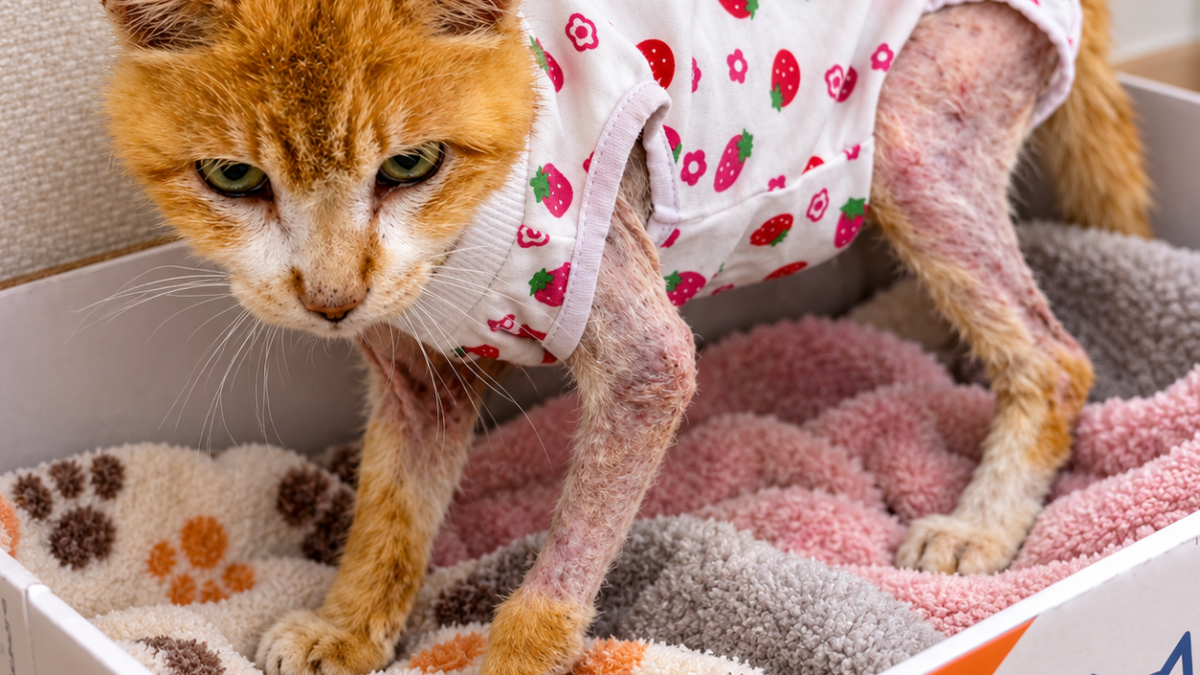
For more than seven years, Slgeum lived outdoors in the same few blocks, growing older in plain sight while hundreds of people learned to recognize the thin gray cat beneath stairwells, beside restaurant walls, or under parked cars without ever asking whether surviving another day was the same thing as being okay. By the time I finally crouched beside her, every movement looked expensive—her back legs trembled when she tried to rise, her coat had lost its shine, and she seemed so accustomed to discomfort that she didn’t cry, run, or fight when I reached toward her. I thought I was taking an elderly stray to the clinic for fluids, food, and a safe place to rest, but within the first hour the veterinarian found something that forced me to reconsider nearly everything I thought I knew about the cat we had all been walking past for years.
I had seen Slgeum before.
That was the part I hated admitting.
Not once.
Many times.
She belonged to the neighborhood scenery.
A small gray-brown shape beneath a bench.
Two eyes in the shadows beside a dumpster.
A cat curled beneath an awning when it rained.
People sometimes left food.
Someone had put an old cardboard box against a wall one winter.
A shopkeeper recognized her immediately when I asked.
“She’s been here forever.”
“How long is forever?”
He thought.
“Seven years. Maybe longer.”
“And she lives outside?”
“As far as I know.”
That afternoon, I found her behind a small restaurant where two buildings formed a narrow corner protected from the wind.
She was curled tightly against the concrete.
No blood.
No obvious injury.
No dramatic emergency.
That was what made her so easy to overlook.
I crouched several feet away.
“Hey, sweetheart.”
One ear moved.
Her eyes opened.
She looked at me for maybe two seconds.
Then closed them again.
I placed food nearby.
Usually an outdoor cat either retreats or approaches once hunger wins.
Slgeum did neither.
After several minutes, she raised her head.
Sniffed.
Tried to stand.
Her hind legs shook.
She sat down again.
A woman from the restaurant stepped outside.
“She’s old.”
“I can see that.”
“She’s been like that for a while.”
“How long?”
The woman shrugged.
“She still eats.”
“Every day?”
“When someone gives her something.”
“And when nobody does?”
No answer.
I pushed the food closer.
Slgeum licked once.
Then turned away.
That was when I called Dr. Hannah Lee.
“I’m bringing you an elderly cat.”
“Emergency?”
“I honestly don’t know.”
Sometimes those are the cases that frighten me most.
The obvious emergencies announce themselves.
Quiet suffering waits for somebody to notice.
I expected Slgeum to fight the carrier.
Instead, when I placed it nearby and lined the bottom with a towel, she barely resisted.
I supported her chest.
Her body tensed.
Then she simply allowed me to lift her.
The woman from the restaurant stared.
“She never lets people hold her.”
That didn’t feel like trust.
It felt like exhaustion.
At the clinic, Hannah opened the carrier.
Slgeum stayed curled against the towel.
Temperature.
Weight.
Heart.
Mouth.
Ears.
Skin.
Abdomen.
Blood draw.
With every check, Hannah’s expression became more serious.
Dental disease.
Dehydration.
Muscle wasting.
Arthritic joints.
Parasites.
Possible anemia.
Kidney values that would need testing.
Then Hannah pressed gently along Slgeum’s abdomen and stopped.
“What?”
She palpated the same area again.
“I want imaging.”
“Why?”
“I felt something I don’t like.”
Slgeum sat on the table without trying to escape.
She didn’t hiss.
Didn’t swat.
Didn’t cry.
She simply watched while we discovered one problem after another.
And suddenly the seven years everyone had pointed to as proof that she could “take care of herself” no longer looked like independence at all.
PART 2
The imaging room was quiet except for the soft mechanical hum from the equipment.
I stood behind the protective barrier while Hannah and a technician positioned Slgeum carefully.
Even that simple process showed how weak she was.
Her body had almost no padding over the hips.
Her back legs trembled when she tried to brace herself.
The technician supported her without forcing her flat.
Slgeum didn’t struggle.
That worried me more than a fight would have.
When the first images appeared, Hannah leaned closer to the monitor.
I watched her face.
“What do you see?”
“Give me a second.”
I hated that sentence.
Veterinarians say it when they are being careful.
Rescuers hear it as a warning.
Hannah moved through the images.
Then exhaled.
“No obvious large abdominal mass.”
I hadn’t realized how tightly I was holding my shoulders until they dropped.
“So what did you feel?”
“Probably an irregular kidney and intestinal thickening. I want ultrasound if the bloodwork supports it.”
“But no tumor?”
“Nothing large enough to explain everything we’re seeing.”
That should have been reassuring.
Instead, I realized the problem was more complicated.
There was no single thing.
No dramatic injury.
No one obstacle we could remove and declare Slgeum repaired.
Her body looked like a body that had spent years surviving without consistent care.
Her kidneys showed chronic changes.
Her joints were arthritic.
Her spine showed age-related degeneration.
Her mouth was painful.
Her muscles had wasted.
Her skin carried evidence of parasites and poor grooming.
Her bloodwork later confirmed anemia, dehydration, elevated kidney values, and inflammatory changes that Hannah wanted to investigate further.
She sat with me in the consultation room.
“She’s not crashing right now.”
“That’s good.”
“It is.”
“But?”
“She’s old, underweight, uncomfortable, and medically neglected.”
“Can we help?”
“Yes.”
That one word mattered more than everything else she said.
Not cure.
Help.
I had spent enough time around older animals to understand the difference.
Slgeum didn’t need us to make her young.
She needed us to make being old less difficult.
We started with fluids.
Parasite treatment.
Pain relief selected carefully because of the kidney concerns.
Anti-nausea medication.
Nutritional support.
Blood-pressure monitoring.
Treatment for irritated skin.
And food.
Food became the first argument Slgeum won.
We offered a prescription renal diet.
She sniffed it.
Looked at me.
Walked away.
“Very dramatic.”
No response.
The technician, Nora, offered another texture.
Slgeum licked twice.
Stopped.
Hannah warmed a small portion to increase the smell.
Three bites.
That was it.
“She needs calories.”
“Yes.”
“So what do we do?”
“Don’t turn every meal into a fight.”
I hated how often veterinary medicine required patience.
Rescue work attracts people who want to act.
Pick up the animal.
Drive faster.
Buy the medicine.
Feed.
Fix.
Sometimes the correct intervention is waiting fifteen minutes.
Slgeum taught me that almost immediately.
Her first night, she stayed in a quiet feline ward away from barking dogs.
We gave her a covered hide, a low-sided litter box, water, several food options, and a heated pad beneath one side of the bedding so she could choose whether to use it.
Before I left, I crouched near the enclosure.
“You know we’re trying very hard for you.”
Slgeum watched me.
“One sign of appreciation would be nice.”
Her eyes slowly closed.
“Fine.”
At six the next morning, Nora texted me a photograph.
One food dish was almost empty.
Someone had dinner after everyone left.
I smiled at my phone.
When I reached the clinic, Slgeum was back inside the covered bed.
“You ate.”
She blinked.
“I have photographic evidence.”
Nothing.
That became our relationship.
I narrated.
Slgeum judged silently.
Within three days, we learned she preferred eating when nobody watched.
If a person sat beside her, she tracked them instead of eating.
If we left, the bowl emptied.
So we stopped insisting that human presence must be comforting.
That was my first mistake with her.
I assumed rescue meant giving more contact.
Slgeum sometimes wanted less.
She had lived by controlling distance.
We had to let that remain one of the few things she could control.
With privacy, her intake improved.
Hydration helped the nausea.
The kidney values improved slightly but remained abnormal enough to confirm chronic disease.
Not catastrophic yet.
Not reversible either.
Hannah explained it carefully.
“Think management, not cure.”
“How long?”
“I can’t tell you.”
“Months?”
“Possible.”
“Years?”
“Also possible.”
“That’s not useful.”
“It’s accurate.”
I looked through the exam-room window.
Slgeum was washing one front paw.
Slowly.
“You think she has good time left?”
“I do.”
That was enough.
The next issue was her mouth.
Slgeum had severe dental disease.
Several teeth were loose.
Others were surrounded by inflamed gums.
One molar looked broken.
Hannah touched near it during examination.
For the first time, Slgeum reacted sharply.
Her head jerked away.
“There.”
Hannah stopped.
“That hurts.”
I felt something hot rise into my chest.
The shopkeeper’s words came back.
She eats.
As if that proved everything.
Animals eat through pain because hunger still exists.
They walk on sore joints because water is somewhere else.
They sleep in dangerous places because exhaustion eventually wins.
Survival behavior can hide suffering from anyone who doesn’t look closely.
“How long has her mouth been like this?”
“No way to know.”
“Years?”
“Possibly.”
I hated that answer.
We stabilized her first.
More fluids.
Improved nutrition.
Blood-pressure control.
Repeated kidney values.
Then Hannah recommended a dental procedure.
The anesthesia risk was real.
Slgeum was elderly.
Underweight.
Kidney-compromised.
I spent an entire evening going back and forth.
What if she died under anesthesia because we tried to make her more comfortable?
What if we did nothing and left her with chronic mouth pain because we were afraid?
The next morning, I asked Hannah the question people always ask when they want someone else to carry part of the decision.
“If she were yours?”
Hannah didn’t answer immediately.
“I would do the dental.”
“Why?”
“Because leaving painful infected teeth in place is not neutral. That is also a medical decision.”
That settled it.
The procedure was scheduled after further stabilization.
Several diseased teeth were extracted.
The broken tooth came out.
Her mouth was cleaned.
Fluids ran throughout anesthesia.
Her blood pressure was monitored continuously.
I stayed at the clinic pretending to work.
I answered three emails.
Read none of them correctly.
When Hannah finally walked out, I stood.
“She’s awake.”
“Good awake?”
“Groggy and offended.”
“That sounds promising.”
Slgeum spent the afternoon looking like she had personally lost faith in all of us.
I sat beside the recovery enclosure.
“You’re allowed to hate me today.”
She turned her back.
“That feels fair.”
The surprise came the next morning.
Nora placed soft food in front of her.
Slgeum sniffed.
Then ate.
Not three reluctant licks.
She ate continuously.
Half the portion.
Stopped.
Rested.
Returned.
Finished most of it.
Nora called me over.
“Look.”
I watched.
My throat tightened.
“She was that hungry?”
“She may have been hungry before too.”
“But it hurt.”
“Probably.”
That thought stayed with me for weeks.
How many meals had she forced herself to eat outdoors with diseased teeth because she had no alternative?
How many people had seen her chewing and concluded she was fine?
The dental procedure became the first major turning point.
Not because it made her suddenly energetic.
Because removing pain exposed behaviors we hadn’t seen.
Slgeum started asking for food.
Quietly, of course.
She never yelled.
She would simply sit near the dish before meal time.
If Nora took too long, Slgeum looked at her with an expression so severe it became a clinic joke.
“We’re being audited.”
Slgeum gained several ounces.
Then more.
The sharp line of her spine softened slightly.
Her coat remained rough, though.
Arthritis made grooming difficult.
She could wash her chest and front legs.
Reaching her lower back and hips required twisting that seemed uncomfortable.
We did not give her a full bath unless medically necessary.
Instead, we used warm damp cloths and gentle brushing.
That was how Mira entered the story.
Mira volunteered three mornings a week.
She had almost no interest in dramatic rescue work.
She preferred laundry, senior cats, and animals that wanted nothing from her.
Which made her perfect for Slgeum.
The first grooming session lasted less than a minute.
Mira sat beside her.
Held out the brush.
Slgeum sniffed it.
Three strokes along the shoulder.
Fourth stroke.
Slgeum stood and moved away.
Mira stopped.
“That’s it?”
“That’s it.”
“You’re not going after her?”
“No.”
“She needs grooming.”
“She also needs to learn that moving away works.”
I looked at her.
“Fine.”
The next day:
Four strokes.
Then six.
Then ten.
Mira talked very little.
That may have been why Slgeum tolerated her.
People often fill silence around nervous animals because silence makes us uncomfortable.
Mira let silence stay empty.
One morning, she finished brushing Slgeum’s shoulder and rested her hand on the blanket beside her.
No reaching.
No scratching.
Slgeum looked at the hand.
Then shifted.
Half an inch.
Her cheek touched Mira’s fingers.
Mira froze.
I was in the doorway.
Neither of us spoke.
Slgeum pressed slightly harder.
Then withdrew.
That was it.
No lap.
No dramatic cuddle.
Half an inch.
Mira looked at me.
Her eyes were wet.
“Don’t.”
“I didn’t say anything.”
“You were about to.”
“I was going to say she likes you.”
“Don’t ruin it.”
Slgeum glanced toward us as if both of us were exhausting.
From then on, touch developed slowly.
Cheek rub.
Chin scratch.
One hand along the shoulder.
Stop.
If Slgeum moved away, contact ended.
Eventually she began staying after the touch stopped.
That felt bigger.
She didn’t only tolerate affection.
She stopped needing immediate distance afterward.
A week later, I sat on the floor answering messages.
Slgeum was several feet away.
I forgot about her.
Ten minutes later, something brushed my shoe.
I looked down.
She had moved beside me.
Not asking for petting.
Just sitting.
“Hello.”
One slow blink.
I went back to my phone.
She stayed.
Five minutes.
Then ten.
Presence.
That became Slgeum’s version of intimacy.
She didn’t climb into laps.
She occupied the same room.
She chose a nearby surface.
She slept where she could hear us.
For a cat who had spent years depending primarily on herself, proximity without vigilance was enormous.
Once her condition stabilized, we moved her from the hospital into foster care.
Mira volunteered.
Naturally.
“You planned that.”
“I did not.”
“You’ve been measuring furniture for three days.”
“I have an old cat.”
“You have an old cat and you’re preparing for another.”
“Temporary.”
I smiled.
“Of course.”
Mira’s resident cat, Jasper, was twelve.
Large.
Orange.
Deeply unimpressed by change.
We set up a separate foster room.
Low furniture.
Several beds.
A heated pad.
Food and water separated.
A low-sided litter box for arthritic joints.
A hide box.
A ramp to a wide windowsill.
The room looked better than my first apartment.
Slgeum hated it.
Or appeared to.
The moment the carrier opened, she walked out slowly, inspected the room, and disappeared beneath a desk.
Mira sat on the floor.
“Welcome home.”
Nothing.
“Temporary home.”
Nothing.
“You’re very rude.”
That first night, Slgeum ate.
Used the litter box.
Moved to the heated pad after Mira turned off the lights.
The camera caught everything.
At 2:17 a.m., she climbed onto the windowsill using the ramp.
Sat there nearly twenty minutes.
Then returned to the floor.
Morning came.
Mira opened the door.
Slgeum was back under the desk.
“She’s living a secret life.”
“Most cats are.”
The third day produced a crisis.
Mira called.
“She’s gone.”
My stomach dropped.
“What?”
“Not in the room.”
“Door?”
“Closed.”
“Window?”
“Locked.”
“Did someone enter?”
“No.”
I drove over.
We searched.
Behind the desk.
Inside the hide.
Under the chair.
Closet.
Nothing.
Then Mira looked at an old filing cabinet.
There was a tiny gap beneath it.
“No.”
We moved the cabinet carefully.
Two furious eyes appeared.
Slgeum had flattened herself into the dust underneath.
Mira stared.
“I bought you three beds.”
Slgeum blinked.
“A heated mat.”
Nothing.
“A cave.”
Nothing.
“You chose filth.”
I laughed.
We blocked the unsafe gap once Slgeum emerged.
She retaliated by sleeping in a cardboard shipping box.
Cats remain cats even when you spend money.
That became one of the reasons we stopped treating her like a tragedy.
Slgeum was difficult.
Selective.
Opinionated.
Sometimes ridiculous.
Those traits made her more real.
A rescue animal should not have to remain solemn forever to justify being saved.
We introduced the rest of the house gradually.
First the hallway.
Slgeum stepped through the doorway.
Sniffed.
Returned.
Next day, farther.
Then the living room.
Jasper watched from behind a baby gate.
His face suggested a board meeting had been scheduled without consulting him.
Slgeum sat.
Jasper stared.
No hiss.
Excellent.
First direct meeting:
Jasper approached.
Sniffed.
Slgeum remained still.
Jasper walked away.
Mira whispered:
“Marriage.”
“They ignored each other.”
“Exactly.”
Their relationship never became photogenic.
No cuddling.
No grooming each other.
No dramatic bond.
They shared territory.
That was enough.
Parallel breakfast.
Opposite ends of the sofa.
Occasional nose touch.
One swat when Jasper violated zoning.
Peace.
The sofa became Slgeum’s first real luxury.
At first, she tried jumping onto it.
Her hind legs didn’t provide enough push.
She slipped.
Mira gasped.
Slgeum looked offended.
We added a small step.
Slgeum ignored it.
Tried jumping again.
Failed again.
Then noticed the step.
Used it.
The next morning, she was asleep on the sofa as if the entire arrangement had been her idea.
Sun reached one corner in the afternoon.
Slgeum claimed that corner permanently.
Jasper used the other end.
Between them remained exactly one cushion of diplomatic space.
The first purr took almost two months.
Mira scratched gently beneath Slgeum’s chin.
A faint vibration started.
“Do you hear that?”
I leaned closer.
It stopped.
Mira glared.
“You scared it away.”
“I wanted proof.”
“Leave.”
The next day, it returned.
Soft.
Barely audible.
But with Slgeum’s body loose and eyes half closed, we recognized comfort.
I thought about all the temporary shelters she had used outside.
Car engines after they cooled.
Cardboard boxes.
Doorways.
A warm pipe.
Whatever she could find.
Warmth had once depended on weather and luck.
Now she could sleep in sun or on a heated pad because she preferred one over the other.
Choice.
That word kept appearing.
People often imagine rescue as giving animals things.
Food.
Beds.
Medicine.
But many rescued animals have spent their lives losing control.
Sometimes the biggest gift is choice.
Slgeum chose the sofa.
Chose the box instead of the expensive bed.
Chose when brushing ended.
Chose which hand she leaned into.
Chose whether to sit near us.
As she recovered, she made more decisions.
That looked like personality returning.
Her kidney disease remained stable through the first year.
We rechecked regularly.
Bloodwork.
Urine.
Blood pressure.
Weight.
Pain assessment.
The values never became normal.
We stopped expecting normal.
Stable became success.
One afternoon, Hannah reviewed the latest results.
“Not much change.”
“That’s good?”
“In this context, yes.”
“How long can she stay like this?”
“She’ll answer that better than I can.”
I hated uncertainty.
Slgeum appeared uninterested in my feelings about it.
She ate dinner.
The question of adoption became unavoidable.
Slgeum was medically stable enough to remain in foster or move to a permanent home.
Finding adopters for a senior cat with kidney disease is difficult.
Not impossible.
Difficult.
People want kittens.
Or healthy adults.
They worry about cost.
Time.
Loss.
All understandable.
We posted Slgeum’s profile.
Older female cat.
Quiet.
Gentle.
Chronic kidney disease requiring monitoring.
Arthritis.
Needs calm indoor home.
No dramatic language.
No “rescued after seven heartbreaking years” marketing.
She was not an emotional product.
Applications were limited.
Mira pretended to be surprised.
“This may take months.”
“Maybe.”
“She hates change.”
“She does.”
“She knows Jasper.”
“Yes.”
“Her vet is nearby.”
“Yes.”
“She likes this sofa.”
I looked at her.
“Mira.”
“What?”
“You want to adopt her.”
“No.”
“You’re building a legal brief.”
“She’s old.”
“That is not an argument against adopting her.”
“She has kidney disease.”
“Also not.”
“Who else is going to manage fluids if she needs them?”
“Someone could learn.”
“She barely tolerates other people brushing her.”
“She likes me.”
“Exactly.”
I waited.
Mira sighed.
“I hate you.”
“Fill out the application.”
“I foster for you.”
“Application.”
“You know my house.”
“Application.”
“This is bureaucratic abuse.”
“Application.”
She filled it out while complaining.
Home environment.
Veterinarian.
Financial capacity for chronic disease.
Travel plans.
Backup caregiver.
Current pet.
End-of-life planning.
That last section stopped her.
She stared.
“How long?”
“No idea.”
“That’s not fair.”
“No.”
“If I adopt a twelve-year-old cat, I could lose her in a year.”
“Yes.”
“Or six months.”
“Yes.”
“Or three years.”
“Possible.”
Mira looked toward the sofa.
Slgeum was washing one paw.
“She just got here.”
“I know.”
“What if this hurts more than it’s worth?”
I thought carefully.
“That’s the bargain.”
“Terrible bargain.”
“Yes.”
She signed.
The adoption ceremony lasted approximately four minutes.
No carrier.
No new environment.
Mira signed at her kitchen table.
I signed for the rescue.
Slgeum slept through the entire thing.
Jasper also slept.
“Very moving,” I said.
Mira looked toward them.
“They’re overwhelmed.”
Nothing changed that day.
That was perfect.
Slgeum was already home.
Winter made the difference visible.
Snow arrived overnight.
Mira sent a photograph early in the morning.
Outside the window:
White pavement.
Cars covered in snow.
Wind pushing powder along the street.
Inside:
Slgeum stretched across her heated pad beneath a blanket.
No caption.
I stared for a long time.
Seven winters.
Maybe more.
I imagined them despite knowing imagination can become dishonest.
I didn’t know whether those winters had all been terrible.
Perhaps some neighbors fed her regularly.
Perhaps she found warm shelters.
Perhaps certain shop owners looked out for her more than we knew.
I refused to turn uncertainty into maximum tragedy.
What I knew was enough.
Outdoor survival had required constant decisions.
Where to sleep.
Where to eat.
Who to avoid.
Which vehicle was safe to crawl beneath.
Whether another cat occupied the dry spot.
Inside, snow became something Slgeum watched.
Nothing more.
That difference mattered.
Her medical routine grew slowly.
Kidney diet.
Supplements as prescribed.
Pain management.
Monitoring.
Later, subcutaneous fluids.
The first time Hannah suggested home fluids, Mira looked terrified.
“You want me to put a needle in her?”
“Yes.”
“She barely trusts me.”
“She trusts you more than anyone.”
“That makes it worse.”
“You’ll be trained.”
“I’m going to hurt her.”
“Brief discomfort.”
Mira practiced with the veterinary technician.
Then at home.
Slgeum sat on a towel.
Mira’s hands shook.
I was there because she insisted.
“Stop looking at me.”
“You invited me.”
“I regret it.”
Slgeum sniffed the treat.
Mira tented the skin.
Inserted the needle.
Fluids started.
Slgeum ate.
Mira stared.
“She doesn’t care.”
“She cares about tuna.”
“I’ve been panicking for three days.”
“Productive.”
Within weeks, fluids became routine.
Not effortless.
Some days Slgeum walked away when the towel appeared.
Mira waited.
Tried again later.
Some days she tolerated only part of the prescribed amount before becoming restless, and Mira worked with the veterinary team on technique rather than turning every session into restraint.
Cooperative care was never perfect.
It was simply better than force whenever choice was medically possible.
Slgeum’s kidney disease did not become the center of the household.
That was intentional.
Mira refused to discuss her as a patient all day.
“Morning medication, then she’s a cat.”
Good rule.
And Slgeum had strong opinions unrelated to disease.
She hated one expensive prescription food so completely that she attempted to bury it with imaginary dirt.
She loved another formulation.
She preferred wide ceramic bowls.
Ignored fountains.
Drank from Jasper’s bowl anyway.
She disliked a new vacuum cleaner and vanished whenever it appeared.
Loved the sound of the tuna tin.
Rejected catnip.
Adored an old fleece blanket that Mira almost threw away.
One night, Mira texted:
I bought a $90 bed. She is sleeping in the box.
I answered:
This is the expected outcome.
The bed eventually went to Jasper.
He used it immediately.
Mira called him a traitor.
Slgeum’s relationship with Jasper changed almost invisibly.
One morning, Mira found them asleep on the same sofa cushion.
Not touching.
But closer than usual.
Photographic evidence was sent immediately.
The next day they returned to opposite ends.
Progress denied.
They aged beside each other.
Jasper developed hyperthyroidism.
Medication twice daily.
Suddenly both cats had schedules.
Mira created a chart on the refrigerator.
Morning:
Slgeum kidney medication.
Jasper thyroid medication.
Food.
Water.
Evening:
Repeat.
Occasional fluids.
Weight.
She joked that her kitchen had become an assisted-living facility.
Yet those years were among the happiest in the house.
Not exciting.
Happy.
Slgeum gained enough strength to explore every room.
She found Mira’s bed.
At first, she slept beneath it.
Then on a chair.
One winter morning, Mira woke to find Slgeum sitting on the mattress near her feet.
Mira remained perfectly still for twenty minutes.
When she told me, I laughed.
“You know she sleeps all day.”
“Not on my bed.”
“She does now.”
“Don’t sound casual.”
That night, Slgeum did not return.
Mira took it personally.
Third night, she came back.
That became her pattern.
Sometimes.
Never on command.
Slgeum retained mystery as a personality trait.
Years passed.
That sentence once seemed impossible.
When we found her, everyone talked as though we were giving an old cat a few comfortable months.
Then one year passed.
Then another.
Her muzzle lightened.
Eyes remained bright.
Her hearing slowly declined.
We noticed because opening a food pouch no longer summoned her from another room.
Approach became more deliberate.
Move where she could see you.
If asleep, tap the floor gently before touching.
Never startle.
Arthritis worsened too.
The sofa step became two shorter steps.
We added rugs where the floor was slippery.
Changed the litter box again.
Mira built a shallow ramp to the windowsill.
Slgeum used it immediately.
Unlike the first sofa step.
“Finally appreciates engineering.”
She spent more time at the window as she aged.
Morning sun.
Birds.
People.
Cars.
Sometimes she watched outdoor cats cross the yard.
Mira wondered whether she wanted to return outside.
We didn’t know.
One afternoon she accidentally slipped through the back door while groceries were being carried in.
Mira panicked.
“Slgeum!”
The cat stepped onto the patio.
Stopped.
Sniffed the air.
Mira remained still, afraid chasing would send her farther.
Slgeum walked three feet.
Sat.
Looked around.
Then turned and walked back inside.
Mira closed the door and cried.
When she told me, I understood why.
Freedom is different after safety becomes a choice.
Slgeum had spent most of her life outside because outside was all she had.
Now she could step out and return.
Nobody forced the meaning onto her.
We simply noticed.
Jasper died during Slgeum’s third year indoors.
His decline was gradual.
Weight loss.
Kidney changes alongside thyroid disease.
Eventually appetite disappeared.
Mira chose euthanasia at home.
Slgeum stayed in another room during the procedure.
Afterward, she searched.
His bed.
Sofa.
Hallway.
Food area.
For several days, she slept where Jasper usually slept.
Mira called.
“She misses him.”
“Maybe.”
“You always say maybe.”
“Because we can’t ask her.”
“I want you to say yes.”
“I know.”
Behavior changed.
That was the fact.
Less eating for one day.
More searching.
Different sleep location.
Then adjustment.
Within two weeks, Slgeum returned to her own side of the sofa.
Loss did not make her retreat from Mira.
If anything, she began sitting closer.
That mattered.
Her old life had taught her that things disappear.
Food.
Shelter.
Other animals.
People.
Her new life taught her something else.
One loss did not mean all safety vanished.
Mira remained.
The house remained.
Meals remained.
Home was bigger than one relationship.
Several months after Jasper died, Mira considered adopting another cat.
Then stopped.
“I don’t want to stress Slgeum.”
“That’s reasonable.”
“Is it unfair to wait?”
“To whom?”
“Other cats.”
“You cannot adopt every cat.”
“I know.”
“Slgeum’s needs come first in her home.”
So they stayed a one-cat household.
Slgeum seemed satisfied.
More sofa.
Less zoning conflict.
Mira joked that this had been Slgeum’s long-term plan.
Her health remained stable until one fall when routine bloodwork showed progression in kidney disease.
Not crisis.
Change.
Hannah adjusted treatment.
More frequent fluids.
Blood-pressure medication.
Diet review.
Repeat labs.
Mira’s face tightened.
“We knew this was coming.”
“Knowing does not make it pleasant.”
“I thought we had more time.”
“You may.”
“How much?”
Hannah gave her the same answer I had heard years earlier.
“I don’t know.”
Mira hated it just as much.
Slgeum improved after the adjustments.
Several good months followed.
Then she developed constipation, common in older dehydrated cats.
More management.
Litter box monitoring.
Hydration.
Medication.
Diet modifications.
Mira started celebrating bowel movements.
She called me once.
“She pooped.”
“Congratulations.”
“A normal one.”
“I’m very happy for your household.”
“You don’t sound sincere.”
“I am deeply moved.”
Rescue changes standards for exciting conversation.
Then Slgeum had a urinary tract infection.
Treated.
Resolved.
Later, an ear infection.
Treated.
Resolved.
These ordinary illnesses made me strangely happy.
Not because I wanted her sick.
Because her life had become long enough to contain normal problems unrelated to seven years outdoors.
She was no longer constantly living in the shadow of rescue.
She was just an old cat who sometimes needed antibiotics.
That was progress.
One summer, I visited after not seeing her for several months.
She was asleep near the window.
I sat on the floor.
Her ears no longer picked up every sound.
I moved into her line of sight.
Slgeum opened her eyes.
For a moment, she stared.
Then stood.
Slowly.
Walked toward me.
Stopped beside my knee.
I held out my hand.
She pressed her cheek against it.
No hesitation.
I scratched beneath her chin.
The purr began.
Mira watched from the kitchen.
“She remembers you.”
“Or I smell like fish.”
“Romantic.”
“All love is partly logistics.”
Slgeum shifted to my other hand.
That afternoon, I thought about the cat from the restaurant corner.
Same body, years older.
Yet stronger in another way.
Not physically.
Secure.
Seven years outdoors had never proved she preferred distance.
It had only proved she knew how to survive it.
Once connection became safe, she chose it.
That distinction changed how I looked at many community cats.
Some truly prefer limited human interaction.
Some are feral and should not be forced into indoor social lives they cannot tolerate.
Others are strays or abandoned animals who adapt to distance because they have no alternative.
You cannot determine which from a photograph.
You observe.
Assess.
Respect behavior.
Slgeum had been somewhere in between.
Cautious but social.
Independent because independence had been required.
Her story did not mean every outdoor cat should be captured and turned into a house pet.
It meant we should stop using survival alone as proof that no help is needed.
That lesson became practical.
Our rescue began supporting a local senior-stray assessment program.
Not dramatic.
Food stations.
Microchip scans.
Veterinary checks for older community cats.
TNR for appropriate feral cats.
Indoor placement when temperament and health supported it.
Monitoring for weight loss, wounds, dental problems, mobility changes.
Slgeum’s story changed how we asked questions.
Not:
“How long has this cat survived?”
But:
“What does this individual cat need now?”
One winter, an older tomcat appeared behind the same restaurant where we found Slgeum.
Thin.
Dirty.
People said:
“He’s been there for years.”
That phrase made me stop.
We trapped him humanely.
Veterinary exam.
Severe dental disease.
Hyperthyroidism.
Treatable.
He was social.
He entered foster care.
Not every case became Slgeum.
That was not the point.
The point was looking.
Years later, the restaurant owner remembered.
“You took that gray cat.”
“Slgeum.”
“She still alive?”
“Yes.”
His eyebrows rose.
“Really?”
The surprise irritated me.
Then I realized why.
He had thought she was dying when we took her.
Maybe I had too.
“She lives indoors now.”
“With someone?”
“Yes.”
He nodded.
“That’s good.”
Then he pointed toward the alley.
“We put food back there for the cats.”
I looked.
Clean bowls.
Water.
Simple shelter.
Not perfect.
Better.
Sometimes change is disappointingly ordinary.
That’s fine.
Mira sent updates constantly during Slgeum’s later years.
She stole chicken.
She refused fluids and then demanded tuna.
She used the stairs instead of the ramp despite spending three months pretending stairs were impossible.
She slept in my laundry.
She hates the new blanket.
She loves the old blanket that smells terrible.
Then the updates shifted.
She seems slower today.
Ate half breakfast.
More fluids this week.
I recognized the direction before Mira wanted to.
Aging can happen gradually for years and then accelerate.
Slgeum’s coat became thinner.
Muscles reduced despite adequate calories.
She slept longer.
Her walks through the house became shorter.
Window.
Water.
Bed.
Sofa.
Then sometimes only window and bed.
We modified the environment again.
Everything closer.
Food near the favorite resting area.
Water in several places.
Another litter box.
Lower steps.
Comfort before aesthetics.
Mira’s house began resembling a carefully designed senior-cat maze.
“I haven’t had a normal living room in years.”
“You never had a normal living room.”
“Fair.”
The hardest balance became pain medication versus kidney health.
Hannah adjusted carefully.
Senior medicine often becomes negotiation between organs.
Help the joints without worsening kidneys.
Support appetite without causing other problems.
Keep hydration up.
Avoid excessive stress.
Nothing existed alone.
We stopped chasing perfect numbers.
We chased comfortable behavior.
Eating.
Grooming.
Rest.
Interest.
Connection.
Mobility sufficient to reach preferred places.
Those became more meaningful than laboratory values by themselves.
Mira created a calendar.
Green.
Good day.
Yellow.
Mixed.
Red.
Bad.
At first, mostly green.
Then green and yellow.
Occasional red.
Months passed.
More yellow.
Fewer green.
The calendar protected against emotional distortion.
Humans are terrible at remembering chronic decline accurately.
One beautiful afternoon convinces us everything is fine.
One bad night convinces us there have been no good days.
Data helps.
But the calendar did not make the decision easy.
One evening, Mira called.
“She hasn’t eaten since morning.”
“What have you tried?”
“Everything she’s allowed.”
“Water?”
“Some.”
“Vomiting?”
“No.”
“Where is she?”
“Beside me.”
“Comfortable?”
“I think so.”
“Hannah tomorrow?”
“Eight-thirty.”
I drove over anyway.
Slgeum lay on her favorite fleece blanket on the floor beside the sofa.
She no longer climbed the steps regularly.
Mira sat near her.
I sat on the opposite side.
Slgeum raised her head.
Looked at me.
Then lowered it again.
She wasn’t frightened.
Not hiding.
Just tired.
That difference mattered.
We did not spend the evening pushing food into her face every ten minutes.
No desperate parade of twenty options.
Mira offered a favorite once.
Slgeum declined.
Then we left her alone.
At one point, Mira rested her hand on the blanket.
Slgeum shifted.
Cheek against fingers.
That same quiet gesture.
Years earlier, half an inch had made us cry.
Now it did again.
The next morning, Hannah examined her.
Weight down.
More dehydrated.
Anemia worse.
Kidney values significantly advanced.
Blood pressure unstable despite treatment.
Hannah explained possible hospitalization.
IV fluids.
Anti-nausea medication.
Appetite support.
Maybe temporary improvement.
Mira asked:
“How temporary?”
“No way to guarantee.”
“Days?”
“Possible.”
“Weeks?”
“Possible.”
“Months?”
“Less likely.”
Mira stared at Slgeum in the carrier.
“What would she have to go through?”
Hannah described the catheter.
Hospital monitoring.
Repeated blood tests.
Medication adjustments.
Slgeum might tolerate it.
She had tolerated care before.
That wasn’t the only question.
“If it works, where do we get her back to?” Mira asked.
Hannah understood.
“Possibly eating better and feeling stronger for some time.”
“Back to the sofa?”
“Maybe.”
“Walking to the window?”
“Maybe.”
“Or?”
“Or she responds poorly and we’re having this discussion again very soon.”
Mira cried.
“So there’s no right answer.”
“There’s a medically reasonable range.”
That was one of the most honest sentences I’d ever heard from a veterinarian.
End-of-life decisions rarely offer perfect certainty.
There is a window.
Too early on one side.
Too late on the other.
We try to choose compassion inside it.
Mira looked at me.
I refused to decide for her.
“What do you think?” she asked.
“I think you know her.”
“That’s not helping.”
“I know.”
“She still leaned into my hand last night.”
“Yes.”
“That means she wants to live.”
“Maybe it means she wanted your hand.”
Mira closed her eyes.
That hurt to say.
But affection is not a legal argument against dying.
Animals can love us and still have bodies that are finished.
Hannah gave Mira time.
Eventually, she asked:
“What does Slgeum still enjoy most?”
“Food.”
“She isn’t eating.”
“Sun.”
“Can she reach it?”
“With help.”
“Grooming.”
“She barely grooms now.”
“Being near me.”
“That’s still there.”
Mira nodded.
“One thing.”
“One important thing.”
“But everything else is shrinking.”
Silence.
Finally, Mira said:
“I don’t want her last memory to be days in a hospital because I’m trying to get one more week.”
That was the decision.
We took Slgeum home.
Not because medicine had nothing left to offer.
Because what medicine could offer no longer seemed clearly worth what it would ask from her.
Home euthanasia was scheduled for the next morning unless she unexpectedly improved overnight.
That final day was ordinary.
I am grateful for that.
No forced celebration.
No bucket list.
No posing.
Mira opened the curtains.
Sunlight came through.
Slgeum slept on her blanket.
She drank a little.
Later, she ate two bites of fish.
Mira laughed.
“You couldn’t have done that yesterday?”
Slgeum looked at her.
“Don’t make me question everything now.”
I understood the fear.
One bite can undo human certainty.
But two bites were not recovery.
We had to see the whole pattern.
The calendar.
The bloodwork.
The weight.
The function.
The body.
Not just the moment we wanted.
Mira brushed her.
Three strokes.
Pause.
Slgeum leaned into the fourth.
I visited in the afternoon.
She was sleeping.
I sat several feet away.
Nobody tried to manufacture goodbye.
At sunset, Slgeum stood.
Slowly.
Mira moved toward her, but stopped before touching.
Slgeum walked toward the window.
One step.
Pause.
Another.
She reached the low cushion.
Climbed with effort.
Sat.
Outside, traffic moved.
People passed.
A bicycle.
A delivery van.
Two children walking with backpacks.
The same kind of world that had moved around her for years while she sat unnoticed.
Now she watched from behind glass.
Warm.
Fed.
Known.
Mira sat beside the window.
“Do you think she remembers outside?”
“I don’t know.”
“Do you think she misses it?”
“Maybe certain things.”
“Like what?”
“Smells.”
Mira smiled through tears.
“Not rain?”
“Probably not rain.”
Slgeum watched until her head lowered.
Mira carried her back to the blanket.
This time Slgeum didn’t resist being lifted.
She rested against Mira’s chest.
Years earlier, when I carried her into the first carrier, she had gone still because she had no energy.
Now stillness looked different.
Trust.
Or simply exhaustion.
Maybe both.
The veterinarian came the next morning.
The house looked exactly as usual.
That mattered to Mira.
No clinic lights.
No metal table.
No carrier.
Slgeum lay on the fleece blanket near the window.
The veterinarian sat on the floor before touching her.
Let Slgeum smell her hand.
Slgeum looked.
No movement away.
The first injection was a sedative.
Mira placed her hand beside Slgeum.
Not on her.
An invitation.
For several seconds, nothing happened.
Then Slgeum moved her head.
Pressed her cheek into Mira’s fingers.
Mira’s face crumpled.
That gesture.
Always that gesture.
Quiet trust.
The sedation deepened.
Her body relaxed.
Mira stroked the cheek.
Slgeum did not move away.
The veterinarian waited until she was fully asleep.
Then gave the final medication.
Her breathing slowed.
Paused.
Stopped.
No panic.
No struggle.
An old cat in an old body.
Inside.
Warm.
One hand against her face.
The room stayed quiet.
Mira didn’t move for a long time.
Eventually she said:
“Seven years.”
I knew what she meant.
“I wish we had found her sooner.”
“So do I.”
“It’s half her life. Maybe more.”
“I know.”
“That’s awful.”
“Yes.”
I refused to turn late rescue into a perfect story.
Seven years outdoors were gone.
No amount of warmth afterward refunded them.
But guilt could also distort the years Slgeum did have.
I looked around.
Heated pad.
Low steps.
Ceramic bowl.
Brush.
Sunlit window.
Fleece blanket.
The house had been rebuilt around one old cat’s needs.
“You gave her years where she did not have to survive,” I said.
Mira wiped her face.
“It never feels like enough.”
“No.”
Maybe love and enough rarely feel like the same amount.
Weeks later, Mira packed Slgeum’s supplies.
Unopened food went to another kidney patient.
Extra litter donated.
The low-sided box went to a senior foster.
The expensive bed Slgeum had barely used went to an arthritic cat.
The cardboard boxes went into recycling.
Mira kept the brush.
“She liked this.”
Reason enough.
For months, the sofa looked wrong.
The sunny end was empty.
Mira sometimes caught herself avoiding that cushion.
Then one afternoon, she sat there.
Nothing happened.
That was grief too.
Space returning to being space.
Almost a year later, another senior cat came through rescue.
Lewis.
Black coat.
Twelve years old.
Owner had died.
Early kidney disease.
Completely different personality.
He climbed into laps within minutes.
Loved brushing.
Hated windows.
Preferred the kitchen.
Mira called me.
“You did this.”
“I did nothing.”
“You sent his profile.”
“That is information.”
“You knew.”
“Do you want to meet him?”
Long silence.
“Yes.”
Lewis moved in.
He did not become Slgeum.
That was the point.
He occupied different parts of the house.
Slept on Mira.
Stole food.
Yelled at 4:30 every morning.
Mira complained constantly.
She adored him.
New love did not erase old love.
It also did not betray it.
Years later, I still drive past the neighborhood where Slgeum lived.
The restaurant changed owners.
The cardboard shelter is gone.
There are now several feeding stations managed by volunteers.
Outdoor cats get monitored.
Some are TNR cats who prefer their territory.
Some social cats are taken for foster placement.
Older cats receive veterinary exams when weight or mobility changes.
Not because Slgeum needed her suffering to teach us something.
I reject that idea.
No animal should have to hurt for humans to become wiser.
But once we had failed to notice her for so long, learning became the minimum responsibility.
The phrase I hear differently now is:
“She’s been out there for years.”
People often say it as reassurance.
I hear a question.
Years doing what?
Eating enough?
Hiding disease?
Limping?
Managing pain?
Surviving?
Living?
Those are not interchangeable.
Slgeum survived outdoors for more than seven years.
Then she lived indoors for years more.
The difference was not simply walls.
It was attention.
A half-pound weight loss noticed.
A painful tooth treated.
A low litter box when arthritis worsened.
A hand that stopped when she moved away.
A bowl refilled before hunger became desperation.
A warm place that did not disappear when a business closed for the night.
A person who knew where she was.
That last part may have mattered most.
Slgeum had once been part of the background.
People recognized her without knowing her.
Later, Mira knew the exact sound of her walking across the hallway.
Knew which food she hated.
Which blanket she chose.
How much water she usually drank.
Where she slept when her joints hurt.
Which cheek she offered first.
Knowing is a form of care.
At the rescue, we eventually stopped using Slgeum’s first photograph as the main image in senior-cat education.
Instead, we used the window photograph.
Older Slgeum.
Sitting behind glass.
Sunlight across her coat.
Then we showed the first picture.
Someone would always ask:
“Same cat?”
“Yes.”
The difference looked less dramatic than many rescue transformations.
She didn’t go from skeleton to show cat.
No missing limb regrew.
No enormous wound closed.
The transformation was posture.
Coat.
Weight.
Eyes.
Context.
Before:
A corner outside.
After:
A window inside.
That was enough.
One volunteer once said:
“But she still looks old.”
I smiled.
“She was old.”
“I mean in the after.”
“Good.”
The goal was never to erase age.
Old age is not a rescue failure.
Getting old safely can be the success.
Slgeum had already spent years proving she could endure.
She didn’t need to look young afterward to justify the work.
She needed comfort.
She got it.
When I think of her now, the memory that returns most often is not her death.
Not the clinic.
Not even the restaurant corner.
It is a winter afternoon.
I walked into Mira’s living room.
Snow outside.
Jasper asleep at one end of the sofa.
Slgeum at the other.
Mira reading in a chair.
No one reacted dramatically to my arrival.
Slgeum opened one eye.
Closed it again.
The room was warm.
That’s it.
Nothing happened.
And that is exactly why I remember it.
For more than seven years, Slgeum’s life had been shaped by whatever happened next.
Would someone feed her?
Would rain start?
Would another animal chase her?
Would the warm hiding place remain available?
Would winter become harsher?
Inside that living room, nothing needed to happen.
Food would come.
The temperature would stay comfortable.
The door would remain closed.
Mira would still be there tomorrow.
Slgeum could sleep without solving the next problem first.
People passed her for years because she never created a scene.
She did not demand rescue loudly.
She simply became older in front of everyone.
Then one day somebody looked long enough to realize the quietness was not proof she needed nothing.
It was just the way Slgeum moved through the world.
Even after she became safe, she stayed quiet.
She never turned into a lap cat.
Never became demanding.
Never learned to announce affection.
She continued asking for connection the way she always had.
A nearby seat.
A slow blink.
A cheek leaning into waiting fingers.
Half an inch.
That was Slgeum.
And after spending more than seven years as a cat people recognized but did not truly know, she finally reached a place where half an inch was enough for someone to understand exactly what she was asking for.
[FACEBOOK OPENING — 700–800 WORDS]
For more than seven years, Slgeum lived outdoors in the same few blocks, growing older in plain sight while hundreds of people learned to recognize the thin gray cat beneath stairwells, beside restaurant walls, or under parked cars without ever asking whether surviving another day was the same thing as being okay. By the time I finally crouched beside her, every movement looked expensive—her back legs trembled when she tried to rise, her coat had lost its shine, and she seemed so accustomed to discomfort that she didn’t cry, run, or fight when I reached toward her. I thought I was taking an elderly stray to the clinic for fluids, food, and a safe place to rest, but within the first hour the veterinarian found something that forced me to reconsider nearly everything I thought I knew about the cat we had all been walking past for years.
I had seen Slgeum before.
That was the part I hated admitting.
Not once.
Many times.
She belonged to the neighborhood scenery.
A small gray-brown shape beneath a bench.
Two eyes in the shadows beside a dumpster.
A cat curled beneath an awning when it rained.
People sometimes left food.
Someone had put an old cardboard box against a wall one winter.
A shopkeeper recognized her immediately when I asked.
“She’s been here forever.”
“How long is forever?”
He thought.
“Seven years. Maybe longer.”
“And she lives outside?”
“As far as I know.”
That afternoon, I found her behind a small restaurant where two buildings formed a narrow corner protected from the wind.
She was curled tightly against the concrete.
No blood.
No obvious injury.
No dramatic emergency.
That was what made her so easy to overlook.
I crouched several feet away.
“Hey, sweetheart.”
One ear moved.
Her eyes opened.
She looked at me for maybe two seconds.
Then closed them again.
I placed food nearby.
Usually an outdoor cat either retreats or approaches once hunger wins.
Slgeum did neither.
After several minutes, she raised her head.
Sniffed.
Tried to stand.
Her hind legs shook.
She sat down again.
A woman from the restaurant stepped outside.
“She’s old.”
“I can see that.”
“She’s been like that for a while.”
“How long?”
The woman shrugged.
“She still eats.”
“Every day?”
“When someone gives her something.”
“And when nobody does?”
No answer.
I pushed the food closer.
Slgeum licked once.
Then turned away.
That was when I called Dr. Hannah Lee.
“I’m bringing you an elderly cat.”
“Emergency?”
“I honestly don’t know.”
Sometimes those are the cases that frighten me most.
The obvious emergencies announce themselves.
Quiet suffering waits for somebody to notice.
I expected Slgeum to fight the carrier.
Instead, when I placed it nearby and lined the bottom with a towel, she barely resisted.
I supported her chest.
Her body tensed.
Then she simply allowed me to lift her.
The woman from the restaurant stared.
“She never lets people hold her.”
That didn’t feel like trust.
It felt like exhaustion.
At the clinic, Hannah opened the carrier.
Slgeum stayed curled against the towel.
Temperature.
Weight.
Heart.
Mouth.
Ears.
Skin.
Abdomen.
Blood draw.
With every check, Hannah’s expression became more serious.
Dental disease.
Dehydration.
Muscle wasting.
Arthritic joints.
Parasites.
Possible anemia.
Kidney values that would need testing.
Then Hannah pressed gently along Slgeum’s abdomen and stopped.
“What?”
She palpated the same area again.
“I want imaging.”
“Why?”
“I felt something I don’t like.”
Slgeum sat on the table without trying to escape.
She didn’t hiss.
Didn’t swat.
Didn’t cry.
She simply watched while we discovered one problem after another.
And suddenly the seven years everyone had pointed to as proof that she could “take care of herself” no longer looked like independence at all.
[END OF FACEBOOK OPENING]
[FULL STORY CONTINUATION]
The imaging room was quiet except for the hum of the equipment.
I stood behind the protective barrier while Hannah and a technician positioned Slgeum carefully.
Even that simple process showed how weak she was.
Her body had almost no padding over the hips.
Her hind legs trembled when she tried to brace herself.
The technician supported her without forcing her flat.
Slgeum didn’t struggle.
That worried me more than a fight would have.
When the first images appeared, Hannah leaned toward the monitor.
“What do you see?”
“Give me a second.”
I hated that sentence.
Veterinarians say it when they’re being careful.
Rescuers hear it as a warning.
Hannah moved through the images.
Then exhaled.
“No obvious large abdominal mass.”
I hadn’t realized how tightly I was holding my shoulders until they dropped.
“So what did you feel?”
“Probably irregular kidney contour and intestinal thickening. I’d like an ultrasound if the bloodwork supports it.”
“But no tumor?”
“Nothing large enough to explain everything we’re seeing.”
That should have been reassuring.
Instead, I understood that the problem was more complicated.
There was no single thing.
No dramatic wound.
No one obstacle we could remove and declare Slgeum repaired.
Her body looked like a body that had spent years surviving without consistent care.
Her kidneys showed chronic changes.
Her joints were arthritic.
Her spine showed age-related degeneration.
Her mouth was painful.
Her muscles had wasted.
Her skin carried evidence of parasites and poor grooming.
Her bloodwork later confirmed anemia, dehydration, elevated kidney values, and inflammatory changes that Hannah wanted to investigate further.
She sat across from me in the consultation room.
“She’s not crashing right now.”
“That’s good.”
“It is.”
“But?”
“She’s old, underweight, uncomfortable, and medically neglected.”
“Can we help?”
“Yes.”
That single word mattered.
Not cure.
Help.
Slgeum didn’t need us to make her young.
She needed us to make being old less difficult.
We started with fluids.
Parasite treatment.
Pain relief selected carefully because of her kidneys.
Anti-nausea medication.
Nutritional support.
Blood-pressure monitoring.
Treatment for irritated skin.
And food.
Food became the first argument Slgeum won.
We offered a prescription renal diet.
She sniffed it.
Looked at me.
Walked away.
“Very dramatic.”
No response.
Nora, one of the technicians, offered another texture.
Slgeum licked twice.
Stopped.
Hannah warmed a small portion to increase the smell.
Three bites.
That was it.
“She needs calories.”
“Yes.”
“So what do we do?”
“Don’t turn every meal into a fight.”
I hated how often veterinary medicine required patience.
Rescue work attracts people who want to act.
Pick up the animal.
Drive faster.
Buy the medicine.
Feed.
Fix.
Sometimes the correct intervention is waiting.
Slgeum taught me that almost immediately.
Her first night, she stayed in a quiet feline ward away from barking dogs.
We gave her a covered hide, a low-sided litter box, water, several food options, and a heated pad beneath one side of the bedding so she could choose whether to use it.
Before leaving, I crouched near the enclosure.
“You know we’re trying very hard for you.”
Slgeum watched me.
“One sign of appreciation would be nice.”
Her eyes slowly closed.
“Fine.”
At six the next morning, Nora texted me a photograph.
One food dish was almost empty.
Someone had dinner after everyone left.
I smiled at my phone.
When I reached the clinic, Slgeum was back inside the covered bed.
“You ate.”
She blinked.
“I have photographic evidence.”
Nothing.
That became our relationship.
I narrated.
Slgeum judged silently.
Within three days, we learned she preferred eating when nobody watched.
If a person sat beside her, she tracked them instead of eating.
If we left, the bowl emptied.
So we stopped insisting that human presence must be comforting.
That was my first mistake with her.
I assumed rescue meant giving more contact.
Slgeum sometimes wanted less.
She had lived by controlling distance.
We had to let that remain one of the things she controlled.
With privacy, her intake improved.
Hydration helped the nausea.
The kidney values improved slightly but remained abnormal enough to confirm chronic disease.
Not catastrophic yet.
Not reversible either.
Hannah explained it carefully.
“Think management, not cure.”
“How long?”
“I can’t tell you.”
“Months?”
“Possible.”
“Years?”
“Also possible.”
“That’s not useful.”
“It’s accurate.”
I looked through the examination-room window.
Slgeum was washing one front paw.
“You think she has good time left?”
“I do.”
That was enough.
The next issue was her mouth.
Several teeth were loose.
Others sat inside badly inflamed gums.
One molar was broken.
Hannah touched near it during the examination.
For the first time, Slgeum reacted sharply.
Her head jerked away.
“There.”
Hannah stopped.
“That hurts.”
The shopkeeper’s words came back.
She eats.
As if that proved everything.
Animals eat through pain because hunger still exists.
They walk on sore joints because water is somewhere else.
They sleep in unsafe places because exhaustion wins.
Survival behavior can hide suffering from anyone who doesn’t look closely.
“How long has her mouth been like this?”
“No way to know.”
“Years?”
“Possibly.”
We stabilized her before considering anesthesia.
More fluids.
Improved nutrition.
Repeat kidney values.
Blood-pressure checks.
Then Hannah recommended dental treatment.
The anesthesia risk was real.
Slgeum was elderly.
Underweight.
Kidney-compromised.
I spent an entire evening arguing with myself.
What if she died under anesthesia because we tried to make her comfortable?
What if we did nothing and left her in chronic pain because we were afraid?
The next morning, I asked Hannah the question people ask when they want someone else to carry part of the decision.
“If she were yours?”
Hannah waited.
“I would do the dental.”
“Why?”
“Because leaving infected painful teeth in place is not a neutral decision either.”
That settled it.
Several diseased teeth were removed.
The broken molar came out.
Her mouth was cleaned.
Fluids ran throughout anesthesia.
Blood pressure was monitored closely.
I stayed in the building pretending to work.
When Hannah finally emerged, I stood.
“She’s awake.”
“Good awake?”
“Groggy and offended.”
“That sounds promising.”
Slgeum spent the afternoon looking like she had personally lost faith in every human being involved.
I sat near recovery.
“You’re allowed to hate us today.”
She turned her back.
“Fair.”
The surprise came the following morning.
Nora placed soft food in front of her.
Slgeum sniffed.
Then ate.
Not three reluctant licks.
She ate steadily.
Half the portion.
Stopped.
Rested.
Returned.
Finished almost everything.
Nora called me over.
“Look.”
I watched.
My throat tightened.
“She was that hungry?”
“She may have been hungry before too.”
“But eating hurt.”
“Probably.”
For years, people had seen her feeding outdoors and concluded she was managing.
No one knew every bite might have hurt.
Once the dental pain improved, appetite became one of our clearest progress markers.
Slgeum developed preferences.
Strong ones.
Chicken was acceptable.
Some fish was excellent.
One prescription formula earned a look of deep betrayal.
Nora placed it down.
Slgeum sniffed.
Looked at Nora.
Walked away.
“I think she insulted you.”
“She can eat this or the alternative.”
The alternative vanished overnight.
Slgeum had voted.
We listened.
Her coat remained rough.
Arthritis made grooming difficult.
She could clean her chest and front legs, but twisting toward the hips appeared painful.
We didn’t force a full bath.
Warm cloths.
Gentle brushing.
Short sessions.
That was how Mira entered her life.
Mira volunteered three mornings a week.
She preferred laundry, senior cats, and animals that wanted nothing from her.
She could sit in silence longer than anyone I knew.
Perfect for Slgeum.
The first brushing session lasted less than a minute.
Mira sat beside her.
Held out the brush.
Slgeum sniffed.
Three strokes.
Fourth.
Slgeum stood and moved away.
Mira stopped.
“That’s it?”
“That’s it.”
“She needs grooming.”
“She also needs to learn that moving away works.”
The next day:
Four strokes.
Then six.
Then ten.
Mira spoke almost none of the nonsense most of us automatically say around animals.
No baby talk.
No promises.
No calling her brave.
She simply sat.
One morning, Mira finished brushing one shoulder and rested her hand on the blanket beside Slgeum.
No reaching.
Slgeum looked at the hand.
Then shifted.
Half an inch.
Her cheek touched Mira’s fingers.
Mira froze.
I was in the doorway.
Neither of us spoke.
Slgeum pressed slightly harder.
Then withdrew.
That was it.
No lap.
No cuddle.
Half an inch.
Mira’s eyes were wet.
“Don’t,” she whispered.
“I didn’t say anything.”
“You were about to.”
“I was going to say she likes you.”
“Don’t ruin it.”
That became Slgeum’s version of trust.
Small enough to miss.
From then on, affection came in pieces.
Cheek rub.
Stop.
Chin scratch.
Stop.
Hand along the shoulder.
Enough.
If Slgeum moved away, contact ended.
Eventually she started remaining after the touch stopped.
That was bigger.
One afternoon I sat on the floor answering messages.
Slgeum was several feet away.
Ten minutes later something brushed my shoe.
She had moved beside me.
Not asking for touch.
Just sitting.
“Hello.”
One slow blink.
I returned to my phone.
She stayed.
Five minutes.
Ten.
Presence.
For a cat who had spent most of her adult life depending primarily on herself, proximity without vigilance felt enormous.
Once medically stable, Slgeum moved into foster care.
Mira volunteered immediately.
“You planned this.”
“I did not.”
“You’ve been measuring your spare room.”
“That proves nothing.”
The room contained low furniture, a heated pad, food, water, a low-sided litter box, a covered hide, several beds, and a short ramp to a wide windowsill.
It looked better than my first apartment.
Slgeum hated it.
Or pretended to.
The carrier opened.
She inspected the room.
Then disappeared under the desk.
Mira sat on the floor.
“Welcome home.”
Nothing.
“Temporary home.”
Nothing.
“You’re rude.”
That night, after Mira left, the camera showed Slgeum eating, drinking, using the litter box, then climbing the window ramp at 2:17 a.m.
She sat there nearly twenty minutes.
Morning came.
She was back under the desk.
“She has a secret nightlife.”
“Most cats do.”
The third day, Mira called.
“She’s missing.”
My stomach dropped.
“What?”
“She’s not in the room.”
“Door?”
“Closed.”
“Window?”
“Locked.”
We searched.
Then Mira stared at an old filing cabinet.
A narrow gap beneath it.
“No.”
We shifted the cabinet carefully.
Two furious eyes stared back.
Slgeum had flattened herself beneath it.
Mira crossed her arms.
“I bought you three beds.”
Slgeum blinked.
“A heated mat.”
Nothing.
“A cave bed.”
Nothing.
“You chose dust.”
We blocked the gap after she emerged.
Slgeum retaliated by sleeping in a cardboard shipping box.
Cats remain cats even after rescue.
That helped us stop treating her like a tragedy.
Slgeum became selective.
Opinionated.
Sometimes ridiculous.
A rescue animal should not have to remain solemn to justify being saved.
We gradually introduced the hallway.
Then the living room.
Mira’s resident cat, Jasper, watched through a barrier.
He was twelve, orange, overweight, and deeply offended by administrative changes.
Their first direct meeting lasted two minutes.
Jasper approached.
Sniffed.
Slgeum sat.
Jasper walked away.
Mira whispered:
“Marriage.”
“They ignored each other.”
“Exactly.”
They never became cuddling companions.
No cute photos of intertwined cats.
Instead:
Parallel breakfast.
Opposite ends of the sofa.
Occasional nose touch.
One warning swat when zoning laws were violated.
Peace.
Slgeum discovered the sofa next.
Getting onto it was hard.
Her hind legs lacked power.
She tried jumping.
Slipped.
Looked personally insulted.
We placed a low step.
She ignored it.
Tried again.
Failed again.
Then noticed the step.
Used it.
The next morning, she was asleep on the sofa as if the entire solution had been her idea.
Afternoon sun reached one end.
Slgeum claimed it.
Jasper took the other.
Between them remained one cushion of diplomatic territory.
The first purr arrived almost two months after rescue.
Mira scratched gently beneath her chin.
A faint vibration started.
“Do you hear that?”
I leaned closer.
It stopped.
Mira glared.
“You scared it away.”
“I wanted confirmation.”
“Leave.”
The next day, the purr returned.
Quiet.
Nothing about Slgeum was loud.
But with her body relaxed and her eyes half closed, it meant enough.
Warmth had once depended on weather.
Food had depended on strangers remembering.
Shelter had depended on nobody else occupying the same dry place.
Now Slgeum slept in sun because she wanted sun.
Or on the heated pad because she wanted warmth.
Or in a cardboard box because she was still a cat and apparently had no respect for money.
Choice returned in ordinary forms.
That became the heart of her recovery.
The kidney disease remained stable through the first year.
Repeat tests.
Blood pressure.
Urine.
Weight.
The numbers never became normal.
We stopped demanding normal.
Stable became success.
One afternoon Hannah reviewed the latest labs.
“Not much change.”
“That’s good?”
“In this case, yes.”
“How long can she stay like this?”
“She’ll answer that better than I can.”
I still hated uncertainty.
Slgeum did not.
She ate dinner.
The adoption question became unavoidable.
Finding a permanent home for an elderly cat with kidney disease is difficult.
People worry about cost.
Grief.
Time.
All reasonable concerns.
We posted Slgeum’s profile anyway.
Quiet senior.
Gentle.
Chronic kidney disease requiring follow-up.
Arthritis.
Indoor home only.
No dramatic marketing.
No claims that she needed someone to “show her love before it was too late.”
She was a cat.
Not an emotional project.
Applications were limited.
Mira pretended to be concerned.
“This could take months.”
“Maybe.”
“She hates change.”
“Yes.”
“She knows this house.”
“Yes.”
“She likes the sofa.”
“Mira.”
“What?”
“You want to adopt her.”
“No.”
“You’re building a legal case.”
“She’s old.”
“So?”
“Kidney disease.”
“So?”
“Who’s going to manage fluids if she needs them?”
“Someone can learn.”
“She barely tolerates other people grooming her.”
“She likes me.”
I waited.
Mira sighed.
“I hate you.”
“Fill out the application.”
“You know my house.”
“Application.”
“This is bureaucratic abuse.”
“Application.”
She completed every line while complaining.
Home environment.
Veterinary plan.
Travel.
Backup care.
Financial ability for chronic disease.
End-of-life planning.
That last section stopped her.
“How long?”
“No idea.”
“That’s not fair.”
“No.”
“Six months?”
“Possible.”
“A year?”
“Possible.”
“Three?”
“Possible.”
Mira looked toward Slgeum.
She was washing one front paw.
“She just got here.”
“I know.”
“What if I lose her almost immediately?”
“You might.”
“That’s a terrible bargain.”
“Yes.”
Senior adoption is often exactly that.
You don’t get the earlier years.
You don’t get a guaranteed decade.
You get now.
Mira signed.
The adoption ceremony lasted four minutes.
Slgeum slept through it.
Jasper did too.
“Very moving.”
“They’re overwhelmed.”
Nothing changed that day.
That was perfect.
She was already home.
Winter made the difference visible.
Snow covered the street outside.
Mira sent a photograph.
Slgeum asleep on the heated pad beneath a fleece blanket.
Cars covered in white beyond the window.
No caption.
I thought about seven winters.
Maybe more.
I refused to invent suffering we couldn’t prove.
Maybe certain neighbors fed her regularly.
Maybe she found sheltered places.
Maybe some winters were easier.
We knew enough.
Outside required constant problem solving.
Inside, weather became something happening behind glass.
Her medical routine slowly expanded.
Kidney diet.
Pain control.
Supplements.
Monitoring.
Eventually, subcutaneous fluids.
When Hannah first suggested home fluids, Mira stared.
“You want me to put a needle in her?”
“Yes.”
“She finally trusts me.”
“You’re not betraying that by treating her disease.”
Mira trained with the technicians.
The first home attempt, her hands shook.
Slgeum sat on the towel.
I was there because Mira demanded emotional support and then told me to stop watching.
The needle went in.
Fluids ran.
Slgeum ate a treat.
Mira stared.
“She doesn’t care.”
“She cares about the tuna.”
“I’ve been panicking for three days.”
“Excellent use of time.”
Within weeks, fluids became routine.
Not effortless.
Some days Slgeum walked away when the towel appeared.
Mira waited.
Tried later.
Choice remained whenever medically possible.
Morning treatment.
Then cat life.
That was Mira’s rule.
“We’re not discussing kidneys all day.”
Good.
Slgeum had opinions unrelated to disease.
She hated one expensive food.
Loved another.
Preferred wide ceramic bowls.
Ignored water fountains.
Drank from Jasper’s bowl anyway.
Rejected catnip.
Loved old fleece.
One night Mira sent:
I spent $90 on a bed. She is sleeping in the box.
I answered:
The cat contract is functioning normally.
Jasper took the expensive bed.
Mira called him a traitor.
Their relationship softened.
One morning, Mira found them on the same sofa cushion.
Not touching.
But closer than usual.
Photograph immediately sent.
Next day, opposite ends again.
Progress revoked.
Jasper later developed hyperthyroidism.
Now both senior cats had medication schedules.
Mira created a chart on the refrigerator.
Morning:
Slgeum kidney medication.
Jasper thyroid medication.
Food.
Water.
Evening:
Repeat.
Occasional fluids.
Weight checks.
She called the house assisted living for cats.
And those quiet years may have been the happiest Slgeum ever had.
She explored every room.
Eventually she discovered Mira’s bedroom.
First beneath the bed.
Then on a chair.
Then one winter morning, Mira woke and found Slgeum sitting at the corner of the mattress.
Mira stayed completely still for twenty minutes.
When she told me, I laughed.
“You know she sleeps twelve hours a day.”
“Not on my bed.”
“She does now.”
The next night, Slgeum did not return.
Mira was offended.
Third night, she came back.
That became the arrangement.
Sometimes.
Never on demand.
Slgeum retained unpredictability as a core personality trait.
Years passed.
Her muzzle lightened.
Hearing declined.
Opening a food pouch no longer summoned her from another room.
Approach became more deliberate.
Move within sight.
Tap the floor gently if she slept.
Then touch.
Arthritis worsened.
The sofa step became two shorter ones.
We added rugs.
Changed the litter box again.
Built a lower ramp to the window.
Slgeum used it immediately.
“Finally appreciates engineering.”
She spent increasing time at the window.
Birds.
Cars.
People.
Outdoor cats crossing the yard.
Mira wondered whether Slgeum missed the streets.
We didn’t know.
Then one afternoon, groceries were being carried inside and Slgeum slipped through the back door.
Mira froze.
“Slgeum.”
The cat stepped onto the patio.
Sniffed.
Walked three feet.
Sat.
Mira didn’t chase.
Slgeum looked around.
Then turned.
Walked back inside.
Mira closed the door and cried.
I understood.
For most of Slgeum’s life, outside was not an adventure.
It was the only available condition.
Now she could step outside and return.
Safety was somewhere she could choose.
Jasper died during Slgeum’s third year indoors.
His decline came slowly.
Weight loss.
Kidney changes.
Thyroid complications.
Eventually appetite disappeared.
Mira chose euthanasia at home.
Afterward, Slgeum searched.
His bed.
Sofa.
Hallway.
Food area.
For several days she slept where Jasper had usually slept.
Mira called.
“She misses him.”
“Maybe.”
“You always say maybe.”
“Because we can’t ask her.”
“I want you to say yes.”
“I know.”
Behavior changed.
That was the fact.
Then it changed back.
Within two weeks, Slgeum returned to her side of the sofa.
Loss did not destroy her security.
That mattered.
In her old outdoor life, disappearance might have meant everything changed.
Now one relationship could end while the larger structure remained.
Mira stayed.
The house stayed.
Food stayed.
Home had become bigger than any one event.
For months after Jasper’s death, Mira considered adopting another cat.
Then decided against it.
“I don’t want to stress Slgeum.”
“Reasonable.”
“I feel guilty.”
“For what?”
“Other cats need homes.”
“You cannot adopt every cat.”
“I know.”
“Slgeum gets priority in Slgeum’s home.”
That ended it.
She became an only cat.
I suspect she approved.
More sofa.
No zoning disputes.
Then something changed that none of us had expected.
Slgeum started vocalizing.
Not loudly.
A small rough chirp.
The first time, Mira thought something was wrong.
She called me.
“She made a noise.”
“That sounds like a cat.”
“No. She never talks.”
“What happened?”
“I was opening fish.”
“There’s your answer.”
The next day, she did it again.
Then occasionally before breakfast.
A short croak.
A request.
Mira laughed every time.
“You waited years to complain?”
Slgeum stared.
The street cat who had survived by taking whatever appeared had begun asking.
That felt enormous.
She had learned expectation.
Breakfast arrives.
Fish may be negotiable.
A human can be summoned.
The first time she walked into the kitchen and vocalized directly at Mira, I happened to be there.
Mira froze.
“Did you hear that?”
“Yes.”
“She asked me.”
“For food.”
“I know.”
She looked ridiculously happy.
I understood.
Need expressed safely means something.
Outside, asking may not have worked.
Inside, she had learned someone listened.
Slgeum’s health remained stable until one fall.
Routine bloodwork showed kidney progression.
Not crisis.
Change.
Hannah adjusted treatment.
More frequent fluids.
Blood-pressure medication.
Diet review.
Mira’s face tightened.
“We knew.”
“Knowing doesn’t make it pleasant.”
“I thought we had more time.”
“You might.”
“How much?”
“I don’t know.”
The answer never improved.
Slgeum rallied after the adjustment.
Several good months.
Then constipation from chronic dehydration.
Managed.
A urinary infection.
Treated.
An ear infection.
Resolved.
These normal medical problems made me strangely grateful.
Her life had become long enough to contain illnesses unrelated to her rescue.
She was no longer constantly living inside the first chapter.
One summer, I visited after not seeing her for months.
Slgeum slept by the window.
I moved into her line of sight.
Her eyes opened.
For a moment she stared.
Then stood.
Slowly.
Walked toward me.
Stopped beside my knee.
I offered my hand.
She pressed her cheek against it.
No hesitation.
I scratched beneath her chin.
A purr started.
Mira watched from the kitchen.
“She remembers you.”
“Or I smell like food.”
“Romantic.”
“All love is partly logistics.”
Slgeum moved to my other hand.
I thought about the first day.
Same cat.
Years older.
Yet safer.
Seven years outside had never proven she was incapable of attachment.
It proved she could function without expecting it.
Once connection became reliable, she chose it.
Her story changed how we approached other older community cats.
Not every outdoor cat wants an indoor life.
Some feral cats are deeply bonded to territory and limited human contact.
We respected that.
But we stopped using longevity as automatic proof of wellness.
“She’s survived outside for years.”
Fine.
How much does she weigh?
Can she chew?
Can she groom?
Does she limp?
Are her kidneys failing?
Has anyone actually checked?
Slgeum’s legacy became assessment, not assumption.
We helped organize periodic senior-cat wellness checks around several community colonies.
Microchip scans.
Dental assessment.
Weight tracking.
Mobility.
Skin.
Hydration.
TNR when appropriate.
Foster placement for social cats whose health required indoor care.
One older tom appeared behind the same restaurant.
People said:
“He’s always been there.”
That phrase stopped me.
We had him examined.
Severe dental disease.
Hyperthyroidism.
Treatable.
He was social.
He moved into foster care.
Not every cat became Slgeum.
The point was looking closely enough to know.
The restaurant owner remembered me.
“You took the gray one.”
“Slgeum.”
“She still alive?”
“Yes.”
His eyebrows rose.
“Really?”
The surprise irritated me.
Then I realized we had all once assumed she had little time.
“She lives with someone now.”
“Inside?”
“Yes.”
He nodded.
“That’s good.”
Behind the restaurant were now clean food bowls and water.
Simple weather shelters.
Better than before.
Not perfect.
Sometimes improvement is frustratingly ordinary.
That is still improvement.
Back at Mira’s house, Slgeum became visibly older.
The decline came slowly at first.
More sleep.
Less grooming.
Shorter trips through the house.
Then faster.
Window.
Water.
Bed.
Sofa.
Eventually sometimes only bed and water.
We modified everything again.
Food closer.
Water in several places.
Another low litter box.
More rugs.
Lower steps.
Comfort before appearance.
Mira’s living room looked like a senior-cat rehabilitation center.
“I haven’t had normal furniture in years.”
“You never had normal furniture.”
“Fair.”
The hardest balance involved pain relief and kidney disease.
Help arthritis without overburdening kidneys.
Support appetite without causing more problems.
Hydrate without adding excessive stress.
Hannah adjusted treatment repeatedly.
We stopped chasing perfect lab numbers.
We watched behavior.
Eating.
Grooming.
Rest.
Interest.
Affection.
Comfort in the litter box.
Ability to reach the window.
Mira began keeping a calendar.
Green.
Good day.
Yellow.
Mixed.
Red.
Bad.
At first mostly green.
Then more yellow.
Occasional red.
Months later, yellow dominated.
The calendar protected us from memory.
One good afternoon can make people forget three bad nights.
One terrible morning can make them forget a week of comfort.
Patterns matter.
Still, patterns didn’t make the eventual decision easier.
One evening, Mira called.
“She hasn’t eaten since morning.”
“What have you tried?”
“Everything she’s allowed.”
“Water?”
“Some.”
“Vomiting?”
“No.”
“Where is she?”
“Beside me.”
“Comfortable?”
“I think so.”
“Hannah tomorrow?”
“Eight-thirty.”
I drove over anyway.
Slgeum lay on her old fleece blanket beside the sofa.
Mira sat nearby.
I sat on the opposite side.
Slgeum raised her head.
Looked at me.
Lowered it again.
Not frightened.
Not hiding.
Tired.
We did not spend the night pushing food at her every ten minutes.
Mira offered a favorite once.
Slgeum refused.
Then we let her rest.
At one point, Mira placed her hand on the blanket.
Slgeum shifted.
Cheek against fingers.
The same movement.
Years earlier, half an inch had felt like a breakthrough.
Now it felt like a goodbye we did not want to name.
The next morning, bloodwork showed significant kidney progression.
Dehydration.
Worsening anemia.
Blood-pressure instability despite treatment.
Hannah explained hospitalization.
IV fluids.
Anti-nausea treatment.
Appetite support.
Repeated labs.
Maybe improvement.
Maybe temporary improvement.
Mira asked:
“If it works, what are we getting her back to?”
That was the right question.
“Possibly eating better, feeling stronger, moving more comfortably for some period.”
“How long?”
“Impossible to know.”
“Days?”
“Possible.”
“Weeks?”
“Possible.”
“Months?”
“Less likely.”
Mira looked into the carrier.
“What does hospitalization cost her?”
Hannah described the catheter.
Handling.
Monitoring.
Blood draws.
Strange environment.
Slgeum had tolerated hospital care before.
That didn’t mean she should be asked to again automatically.
Mira began crying.
“So there’s no right answer.”
“There’s a medically reasonable range.”
That sentence mattered.
End-of-life decisions rarely arrive with perfect certainty.
There is often a window.
Too early on one side.
Too late on the other.
Compassion lives somewhere in between.
“What does she still enjoy?” Hannah asked.
“Food.”
“She’s not eating.”
“Sun.”
“Can she reach it?”
“With help.”
“Grooming.”
“Barely.”
“Being near me.”
“That’s still there.”
Mira nodded.
“One thing.”
“One important thing.”
“But everything else is shrinking.”
Silence.
Eventually Mira said:
“I don’t want her last days to be spent in a hospital because I’m trying to buy one more week for myself.”
We took Slgeum home.
Home euthanasia was scheduled for the following morning unless she unexpectedly improved.
That final day was ordinary.
I’m grateful for that.
No bucket list.
No forced feast.
No posed photographs.
Mira opened the curtains.
Sunlight came through.
Slgeum slept.
She drank a little.
Ate two bites of fish.
Mira laughed through tears.
“You couldn’t have done that yesterday?”
Slgeum stared.
“Don’t make me question everything.”
I understood.
One bite can destroy human certainty.
But two bites were not recovery.
We had to look at the whole pattern.
The calendar.
The bloodwork.
The weight.
The function.
The body.
Not only the moment we wanted.
Mira brushed her.
Three strokes.
Pause.
Slgeum leaned into the fourth.
I visited in the afternoon.
She was sleeping.
I sat several feet away.
Nobody manufactured memories.
At sunset, Slgeum stood.
Slowly.
Mira moved toward her but stopped before touching.
Slgeum walked toward the window.
One step.
Pause.
Another.
She reached the low cushion.
Climbed with effort.
Sat.
Outside:
Traffic.
A bicycle.
People walking.
A delivery van.
Two children with backpacks.
The same world that had moved around her for years while she sat unnoticed.
Now she watched from behind glass.
Warm.
Fed.
Known.
Mira sat beside her.
“Do you think she remembers outside?”
“I don’t know.”
“Do you think she misses it?”
“Maybe parts.”
“Like what?”
“Smells.”
“Not rain?”
“Probably not.”
Slgeum stayed until her head lowered.
Mira carried her back.
This time, Slgeum rested against her chest.
No tension.
Years earlier, when I first lifted her, stillness had looked like exhaustion.
Now it looked like trust.
Or maybe exhaustion and trust together.
The veterinarian came the next morning.
No clinic lights.
No carrier.
No metal table.
Slgeum lay on her fleece blanket near the window.
The veterinarian sat on the floor before touching her.
Slgeum smelled the offered hand.
No movement away.
The sedative was given gently.
Mira placed her hand beside Slgeum.
Not on her.
An invitation.
For several seconds, nothing happened.
Then Slgeum moved her head.
Pressed her cheek into Mira’s fingers.
Mira broke.
That gesture.
Always that gesture.
Quiet trust.
Sedation deepened.
Mira stroked her cheek.
Slgeum did not pull away.
The veterinarian waited until she was fully asleep.
Then gave the final medication.
Her breathing slowed.
Paused.
Stopped.
No struggle.
No fear.
An old cat in an old body.
Inside.
Warm.
Known.
For a long time, Mira stayed exactly where she was.
Then she whispered:
“Seven years.”
I knew.
“I wish we had found her sooner.”
“So do I.”
“It’s half her life. Maybe more.”
“Yes.”
“That’s terrible.”
“Yes.”
We didn’t cover late rescue with comforting lies.
Those years were gone.
Nothing refunded them.
But guilt could also erase the years Slgeum did receive.
I looked around the room.
Heated pad.
Low steps.
Ceramic water bowl.
Brush.
Fleece blanket.
Sunlit window.
A house redesigned around one old cat.
“You gave her years where she didn’t have to survive,” I said.
Mira wiped her face.
“It doesn’t feel like enough.”
“It probably never will.”
Weeks later, Mira packed Slgeum’s things.
Unopened food went to another kidney patient.
Extra supplies returned where possible.
Low litter box donated to a senior foster.
The expensive bed Slgeum had barely used went to another arthritic cat.
The cardboard boxes went into recycling.
Mira kept the brush.
“She liked this.”
Reason enough.
The sofa looked wrong.
That sunny end stayed empty.
For months, Mira avoided sitting there.
Then one afternoon she did.
Nothing happened.
Sometimes grief changes not through a dramatic breakthrough but through furniture becoming furniture again.
Almost a year later, another senior cat came through rescue.
Lewis.
Black.
Twelve.
Owner deceased.
Early kidney disease.
Unlike Slgeum, Lewis climbed into laps immediately.
Loved brushing.
Hated windows.
Yelled before breakfast.
Mira called me.
“You did this.”
“I did nothing.”
“You sent his profile.”
“That’s called information.”
“You knew.”
“Do you want to meet him?”
Silence.
“Yes.”
Lewis moved in.
He did not replace Slgeum.
He occupied completely different parts of Mira’s life.
That helped.
He slept on her chest.
Slgeum never had.
He disliked the sofa.
Slgeum had owned it.
He ate anything.
Slgeum had operated a private restaurant with strict standards.
New relationships do not overwrite old ones.
They add.
Several years later, Mira found an old photograph while cleaning a drawer.
Slgeum outside.
Not the worst photograph.
Just an ordinary one taken long before rescue.
She sat beneath a parked car.
Alert.
Thin.
Watching.
Mira brought it to me.
“Was this before?”
“Yes.”
“How long?”
“Maybe four years before we took her in.”
Mira stared.
“So people had pictures of her.”
“Yes.”
“People knew her.”
“Yes.”
That hurt differently.
Slgeum had not been invisible.
She had been familiar.
Those are not the same thing.
People knew where she slept.
Knew she appeared behind the restaurant.
Knew she accepted food.
Knew she had survived winter.
But familiarity can reduce urgency.
You see the same animal tomorrow.
Then next week.
Then next year.
Eventually her presence becomes proof that nothing needs to change.
That realization altered our community work.
We started maintaining simple records for known senior outdoor cats.
Estimated age.
Photographs.
Body condition.
Mobility.
Known feeding points.
Caretakers.
Microchip status.
Veterinary history.
Not to turn every outdoor cat into a patient.
To notice change.
A cat losing weight over six months is easier to recognize when you have a previous photograph.
A new limp matters when somebody remembers how she walked last month.
Dental pain may still remain hidden, but at least someone is looking.
One winter morning, a volunteer called about an elderly tabby named Ruth.
“She’s still eating.”
That sentence caught me.
“How much?”
“I don’t know.”
“Has anyone watched?”
Silence.
We checked.
Ruth approached food but dropped pieces from her mouth.
Dental disease.
Exactly the kind of quiet problem Slgeum had carried.
Ruth received treatment.
Recovered.
Went back to her managed colony because she was not comfortable indoors.
That was important too.
Slgeum’s story did not teach us one solution.
It taught us to assess the individual.
Some cats need homes.
Some need colony care.
Some need treatment and return.
Some need hospice.
The mistake is not choosing the wrong romantic ending.
The mistake is deciding without looking.
Mira eventually volunteered in the senior-cat program.
I found her one afternoon sitting on a folding chair near a feeding station.
“What are you doing?”
“Nothing.”
A gray cat watched her from twenty feet away.
“You’ve been sitting here how long?”
“Forty minutes.”
“Why?”
“He comes closer when I don’t move.”
I smiled.
“Familiar strategy.”
Mira looked at me.
“Worked once.”
The cat moved two feet closer.
Neither of us said Slgeum’s name.
We didn’t need to.
Years later, the restaurant where Slgeum had lived was renovated.
The alley wall was painted.
The old corner where I found her disappeared behind storage equipment.
Someone asked whether that bothered me.
It didn’t.
Places are allowed to change.
The corner did not need to become a shrine.
Slgeum had spent enough of her life there.
Her important places were elsewhere now.
Mira’s sofa.
The heated pad.
The window.
The bedroom chair.
Those were the places I preferred remembering.
I kept one picture on my desk.
Not the outdoor one.
Slgeum at the window.
She was already old.
The coat slightly uneven.
Body thinner than ideal.
Nothing spectacular about the photograph.
But the glass reflected part of the room behind her.
Mira sitting on the sofa.
That reflection was why I kept it.
Slgeum was looking outside.
But home was visible behind her.
For years, outside had been the only direction available.
Then one day it became simply a view.
That difference contains her entire story.
Sometimes people asked whether Slgeum knew she had been rescued.
I never knew how to answer.
“Rescue” is our word.
Slgeum probably knew other things.
The bowl fills again.
This room stays warm.
This hand stops when I leave.
Pain decreases.
The same person appears tomorrow.
Rain cannot reach me here.
Those facts were enough.
Trust was not a single emotional revelation.
It was accumulated prediction.
Mira returns.
Food returns.
Warmth remains.
No one forces contact.
The window stays.
The sofa stays.
The house becomes predictable.
For an animal who has spent years adapting to instability, predictability may be what love looks like from the inside.
I thought about that often when new volunteers wanted dramatic bonding moments.
“Why doesn’t she sit on me?”
“Why won’t he purr?”
“Why does she hide?”
The question I started asking back was:
“Is the animal more comfortable than last week?”
That is often the better measure.
Slgeum had taught us.
She didn’t become a different species after rescue.
She stayed quiet.
Stayed selective.
Stayed independent in many ways.
We didn’t need her to perform gratitude to prove the rescue worked.
The fact that she chose to remain in the same room was sometimes enough.
Toward the end of Mira’s volunteering years, a young woman named Emily joined us.
She loved cats but moved too quickly.
Hands first.
Voice loud.
Excited.
Cats often retreated.
Emily became discouraged.
“They don’t like me.”
Mira said:
“Sit down.”
“For how long?”
“Until you stop needing something to happen.”
Emily frowned.
“That’s vague.”
“Good.”
They sat near an older shy cat.
Five minutes.
Ten.
Twenty.
Emily checked her phone.
Stopped trying.
The cat emerged.
Not far.
One step.
Then another.
Emily whispered:
“She’s coming.”
Mira said:
“Don’t ruin it.”
I laughed from across the room.
Years earlier, those had almost been Mira’s exact words to me.
The lesson had passed forward.
That may be Slgeum’s longest legacy.
Not a viral photograph.
Not a miraculous medical story.
A way of waiting.
A way of looking twice at an animal who seems fine.
A willingness to let small progress remain small.
A recognition that old animals do not need spectacle to matter.
Slgeum spent more than seven years living in public and almost disappearing into familiarity.
Her rescue was the opposite.
Nothing about it was fast.
Nothing about it was loud.
Food.
Dental care.
Fluids.
A brush.
A sofa step.
A heated pad.
A hand placed nearby.
Those small things added up until the cat everyone described as “the old stray behind the restaurant” became a cat with preferences, routines, medical records, favorite blankets, and a person who could recognize the meaning of half an inch.
That last part stays with me.
Half an inch.
The distance Slgeum moved the first time she touched Mira’s hand.
People search for dramatic proof that an animal trusts them.
Sometimes trust is half an inch.
Sometimes it is eating while you remain in the room.
Sometimes sleeping without hiding.
Sometimes walking back inside through an open door.
Sometimes watching the world from a window with home reflected behind you.
Years after Slgeum died, Mira and I were talking about her while sorting donated blankets.
Mira said:
“I used to think the saddest part was that nobody noticed her for seven years.”
“What do you think now?”
“That people did notice her.”
I stopped folding.
She continued.
“They knew her. That’s worse in some ways.”
“Maybe.”
“But it also means noticing isn’t enough.”
I looked at her.
“No.”
“You have to do something.”
“Sometimes.”
She raised an eyebrow.
“Sometimes?”
“Sometimes the right thing is feeding. Sometimes veterinary care. Sometimes calling someone. Sometimes leaving a feral cat where she is after treatment. Action isn’t always taking.”
Mira nodded.
“Fine. You became annoyingly nuanced.”
“I’ve been working on it.”
She folded another blanket.
Then smiled.
“Slgeum would hate all this conversation about her.”
“She absolutely would.”
That was probably true.
If Slgeum could have chosen her legacy, I doubt she would have selected a lesson.
She would have selected fish.
A warm surface.
Sunlight.
Maybe Mira’s hand.
That is why I try not to turn her into a symbol too completely.
She was not put on earth to teach me patience.
She was simply a cat.
An old one.
A quiet one.
A cat who survived longer than anyone realized she should have had to.
Then got lucky enough, late in life, to become somebody’s responsibility.
Not somebody’s inspiration.
Somebody’s responsibility.
That is less poetic.
It is also more important.
Responsibility meant fluids on schedule even when Mira was tired.
Veterinary appointments.
Expensive food Slgeum occasionally refused.
Cleaning the litter box.
Checking blood pressure.
Adding steps.
Changing rugs.
Watching appetite.
Making an end-of-life decision that hurt.
Love became logistics.
And logistics gave Slgeum comfort.
When people ask what changed her, I could say compassion.
It sounds better.
But compassion without action would have left her behind the restaurant.
The actual transformation came from ordinary tasks repeated faithfully.
Fill the bowl.
Give the medicine.
Brush three strokes.
Stop when she leaves.
Try again tomorrow.
That is how trust accumulated.
That is how pain decreased.
That is how an old cat stopped being part of the scenery.
The final time I visited Mira’s house before she moved away, Lewis was asleep in the kitchen.
The sofa had been replaced.
The old window remained.
I stood beside it.
“You still think of her here?”
Mira knew exactly who I meant.
“Yes.”
“Every day?”
“No.”
That answer made me happy.
“Sometimes.”
“Good.”
She touched the windowsill.
“She sat here so much there were claw marks.”
I looked.
Two faint scratches near the edge.
Mira smiled.
“I’m not fixing them.”
I started to say something sentimental.
She stopped me.
“Don’t.”
I laughed.
Some things stayed consistent.
Before leaving, I looked through the glass.
Cars passed.
People walked along the sidewalk.
A cat crossed beneath a parked vehicle and disappeared.
For one second, my body reacted.
Look.
Watch.
Is that cat okay?
Then I saw a small clipped ear.
Healthy coat.
Good body condition.
A community cat we knew.
Monitored.
Fed.
Fine.
I let her continue.
That, too, was something Slgeum taught me.
Notice does not mean panic.
Attention does not always mean intervention.
Look closely enough to know the difference.
Slgeum had been overlooked because everybody thought they already knew.
Old stray.
Still eating.
Still alive.
Fine.
Once we looked closer, the story changed.
Painful teeth.
Kidney disease.
Arthritis.
Dehydration.
Loneliness we could not prove, but connection she later chose.
She had not been fine.
She had been surviving.
Then, for the first time in years, surviving stopped being her full-time job.
She could become particular about dinner.
Disapprove of expensive beds.
Claim sunlight.
Ignore Jasper.
Ask for fish.
Sleep on Mira’s bed when she felt like it.
Reject affection and request it five minutes later.
Grow older without growing invisible.
That is the part I carry.
Not that someone finally rescued Slgeum.
That after years of nobody knowing exactly what she needed, somebody eventually knew her well enough to notice when she ate half a breakfast instead of all of it.
Knew which cheek she offered.
Knew what kind of fish she preferred.
Knew when she was comfortable.
Knew when she wasn’t.
And knew, at the end, when loving her meant letting the quiet stay quiet.
For more than seven years, Slgeum lived where anybody could see her.
At the end of her life, she lived somewhere one person would notice if she shifted half an inch.
That was the difference.
That was home.
[END OF STORY]








