PART 2: Fake HOA Officers Came to Seize My Paid-Off Home—They Had No Idea a Retired Navy SEAL Was Behind the Door
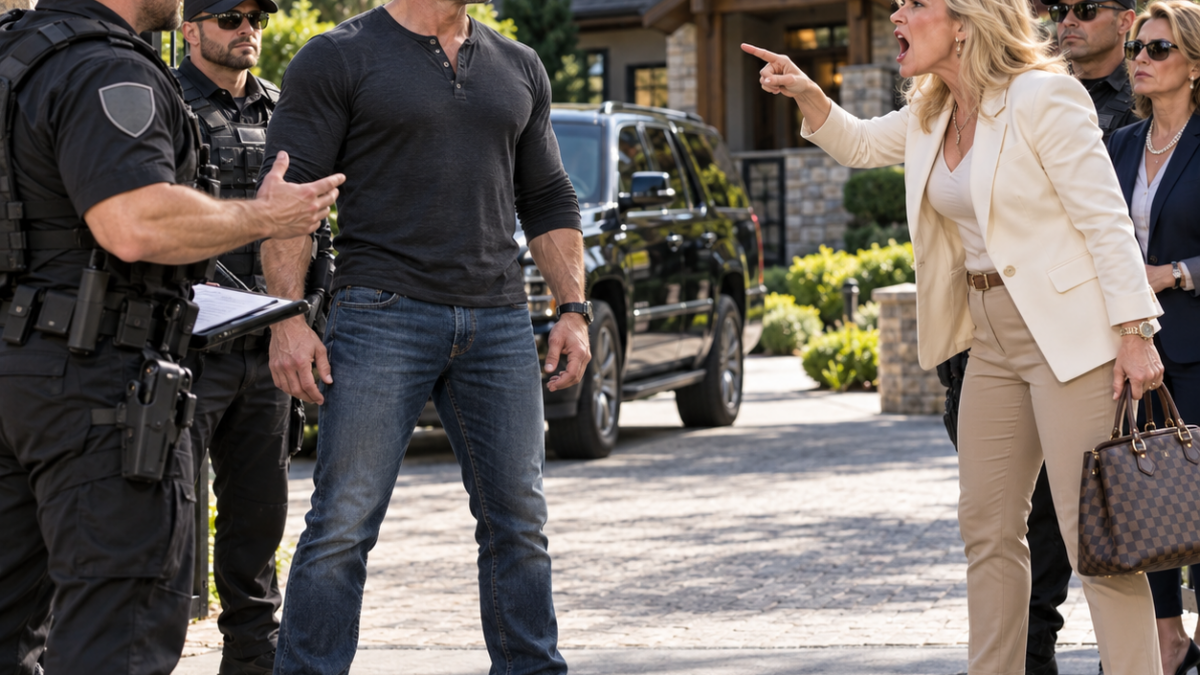
Three strangers in cheap suits blocked my driveway with a black SUV and told me I had forty-eight hours to leave the house my uncle had left me free and clear.
The woman in charge shoved an official-looking seizure notice toward my chest while the two men beside her flashed plastic badges and demanded a five-thousand-dollar “compliance deposit” before they changed my locks.
What none of them understood was that twenty years in the Navy had taught me to notice the tiny mistakes people make when they’re pretending to have authority they don’t actually possess.
My name is Jake Mercer. I’m forty-five years old, a retired Navy SEAL, and after two decades of deployments, training cycles, funerals, and enough nights spent sleeping in places I never want to see again, I moved to Pinewood Springs, Colorado, for one reason.
Quiet.
My uncle Roy had left me his ranch-style house eight months earlier.
Nothing luxurious.
A weathered porch.
A two-car garage.
A kitchen that looked like it had last been renovated when Jimmy Carter was president.
But the title was clear, the mortgage was paid off, and the place belonged to me.
I spent my mornings drinking coffee on the porch and my afternoons rebuilding it one project at a time.
I replaced rotten deck boards.
Painted cabinets.
Repaired windows.
For the first time in years, the only tools in my hands were hammers and drills.
Then Veronica Blackwood appeared.
She was fifty-two, drove a white BMW, wore beige blazers like a uniform, and introduced herself as president of the Pinewood Springs Homeowners Association.
Her first notice claimed replacing rotten deck boards was unauthorized construction.
Five hundred dollars.
The second fined me because my grass was supposedly two-tenths of an inch too tall.
The third called my Ford F-150 a prohibited commercial vehicle.
Every notice looked official.
HOA logo.
Violation number.
Payment deadline.
Threats of liens and enforcement.
There was only one problem.
There was no HOA on my street.
I’d checked the title before moving in.
No recorded covenants.
No mandatory association.
No dues.
No declaration giving Veronica authority over my property.
When I asked her for the governing documents, she told me I was being hostile.
That’s when my elderly neighbor, Mrs. Chen, quietly told me she’d seen this before.
“The Hendersons paid her eighteen hundred dollars because she threatened them over garden decorations,” she whispered.
Another neighbor had paid more than two thousand dollars for mailbox violations.
An elderly couple called the Millers had moved away after months of threats.
That changed everything.
An annoying neighbor was one problem.
Someone using fake legal authority to frighten vulnerable people into paying money was another.
So I began saving every letter.
Photographing every envelope.
Recording every conversation I legally could.
Three days later, Veronica returned with two men.
Rick and Darren.
Both had clipboards.
Both wore cheap badges.
Neither could explain which law gave them authority to seize property.
Rick told me I owed nearly forty-seven thousand dollars after accumulated fines, administrative fees, legal costs, and something he called a “community enforcement assessment.”
Then he held out a notice.
**FINAL PROPERTY SEIZURE AUTHORIZATION.**
Forty-eight hours to vacate.
I took the document.
Fresh toner.
Crooked seal.
No case number.
No judge’s signature.
No court listed anywhere.
I looked at Rick.
“Which court issued this?”
His face changed.
“It’s an HOA enforcement action.”
“Then it isn’t a court order.”
Veronica stepped closer.
“Mr. Mercer, your refusal to cooperate has consequences.”
“Show me the recorded covenants.”
“You’ve already been informed.”
“Show me the lien.”
Silence.
“Show me the judgment.”
Darren looked toward Veronica.
She snapped, “We don’t have to stand here being interrogated.”
I pulled out my phone.
“I’m recording.”
Rick’s badge suddenly didn’t seem to make him feel nearly as confident.
Veronica pointed toward my house.
“Tomorrow we’ll return with law enforcement.”
I nodded.
“Please do.”
She froze for half a second.
Not because I’d raised my voice.
I hadn’t.
Not because I’d threatened her.
I hadn’t.
She froze because people running legitimate enforcement don’t panic when you ask them to bring legitimate authority.
Their SUV finally backed down my driveway.
I watched until it disappeared.
Then I looked again at the fake seizure notice in my hand.
And in the lower corner, almost hidden beneath the copied seal, I noticed a printing code from a local copy shop.
The same shop where Veronica’s brother-in-law worked nights.
PART 2
I didn’t chase their SUV.
Didn’t stand in the driveway yelling.
Didn’t post an angry rant online.
I walked inside, locked the door, and laid the fake seizure notice on Uncle Roy’s kitchen table.
Then I made coffee.
That might sound strange.
Three people had just threatened to take my house.
Most people would probably feel panicked.
I felt something else.
Focused.
The military teaches you early that panic wastes information.
The first few minutes after something goes wrong are usually when the most important details are sitting right in front of you, waiting for emotion to make you miss them.
So I looked.
Paper stock.
Printer marks.
Names.
Dates.
Formatting.
Signature block.
The supposed association seal.
The notice claimed the Pinewood Springs Homeowners Association possessed authority to seize my property over unpaid assessments.
Except no deed attached to my property contained HOA covenants.
No court case was listed.
No recorded lien number.
No attorney name.
No statutory reference.
Nothing that would allow a person to independently verify the threat.
Then there was the printing code.
Tiny.
Almost invisible.
I enlarged it with my phone.
**MC-447 / MAIN STREET COPYWORKS**
I knew that shop.
Everybody in Pinewood Springs did.
Small town.
One grocery store.
One real hardware store.
Two coffee shops whose owners hated each other.
And Main Street Copyworks.
Rick Blackwood—Veronica’s brother-in-law—worked there.
I leaned back in the chair.
“Well, Rick.”
My coffee steamed beside me.
“That wasn’t smart.”
***
My first call was to Mike Hanley.
Mike and I had served together before he got out, went to law school, and somehow became the kind of man who owned three suits that all cost more than my first motorcycle.
He specialized in real-estate law in Denver.
When he answered, I heard restaurant noise.
“Jake.”
“Mike.”
“Whatever you’re about to tell me, I already regret answering.”
“Fake HOA is trying to confiscate my house.”
Silence.
Then:
“I’m sorry, what?”
I explained the violations.
The threats.
The fake badges.
The forty-seven-thousand-dollar balance.
The seizure notice.
When I reached the part about there being no HOA covenants on the property, Mike stopped me.
“Scan everything.”
“I already did.”
“Of course you did.”
“I also have video.”
“Of course you do.”
“And the print code appears to trace to a copy shop where one of their guys works.”
Mike sighed.
“Jake.”
“Yeah?”
“You’ve been retired less than a year.”
“Eight months.”
“And you’ve already built a case file.”
“I get bored.”
“Send it.”
I emailed the documents.
He called back twenty minutes later.
“This is garbage.”
“Technical legal term?”
“Highly technical.”
“No lien?”
“None I can find.”
“No association?”
“I’m checking corporate records, but there’s no recorded declaration tying your parcel to a mandatory HOA.”
“So the seizure notice—”
“Has no legal force that I can identify.”
I nodded even though he couldn’t see me.
“Thought so.”
“Do not let them inside.”
“I wasn’t planning to.”
“If anybody tries changing locks, call law enforcement.”
“Obviously.”
“And Jake?”
“Yeah?”
“Don’t play SEAL.”
I smiled.
“I’m making coffee.”
“That’s not reassuring.”
***
The next morning, Lou Harris stopped his postal truck in front of my house.
Lou had carried mail in Pinewood Springs for twelve years and somehow knew more about local politics than the mayor.
He climbed out holding a stack of envelopes.
“Heard you had visitors.”
I looked at him.
“How?”
“Mrs. Chen.”
Of course.
Lou handed me the mail.
“She says some HOA officers tried evicting you.”
“There is no HOA.”
“That’s what I told her.”
I glanced toward him.
“You’ve never delivered association notices here?”
“Not official ones.”
“What does that mean?”
Lou leaned against the truck.
“I’ve delivered envelopes with Pinewood Springs HOA printed on them. But they always had regular postage. No management company. No certified association mail until lately.”
“Where from?”
“Local return address.”
“Veronica?”
“Sometimes.”
“Rick?”
Lou scratched his chin.
“Come to think of it, Rick’s been using the copy shop after hours.”
“How do you know?”
“Coffee place across the street. I stop there before route. Seen him going in late.”
“Doing what?”
“No idea.”
I showed him the printing code.
Lou whistled.
“Well.”
“Exactly.”
He looked toward the street.
“Jake, that woman scares some people.”
“I know.”
“No.”
His expression became serious.
“Really scares them.”
I waited.
“Mr. Thompson paid her cash.”
“For what?”
“Mailbox violations or something.”
“How much?”
“Couple thousand.”
“Receipt?”
Lou laughed bitterly.
“I doubt it.”
Then he said, “The Millers moved because of her.”
That name again.
“What happened?”
“Nobody really knows.”
“I intend to find out.”
Lou studied me.
“You always this calm?”
“No.”
“What are you when you’re not calm?”
“Usually smart enough not to demonstrate it.”
He laughed.
Then drove away.
***
Mrs. Chen appeared that afternoon with chocolate-chip cookies.
Her late husband had served during Korea.
She had the kind of face that looked gentle until someone mistook gentle for weak.
Then you noticed the steel.
She sat at my kitchen table.
“Veronica came to my house last month.”
“For money?”
Mrs. Chen nodded.
“She said my garden retaining wall violated neighborhood standards.”
“Your retaining wall was built when?”
“1984.”
“How much?”
“One thousand.”
“Did you pay?”
Her expression became offended.
“My husband did not survive a war so I could give a woman in a beige jacket one thousand dollars because she dislikes bricks.”
I laughed.
“Good.”
“But Mr. Thompson paid.”
“I heard.”
“The Santos family too.”
“How much?”
“Fifteen hundred.”
“For?”
“Mailbox color.”
I rubbed my forehead.
“What color was it?”
“Blue.”
“Criminal.”
Mrs. Chen almost smiled.
Then her expression fell.
“The Millers paid several times.”
My stomach tightened.
“What happened to them?”
“They left.”
“Voluntarily?”
“I don’t think so.”
She lowered her voice.
“They were ashamed.”
“Of what?”
“Being afraid.”
That bothered me.
Nobody should be ashamed of fear.
Fear keeps people alive.
It’s what you do after fear that matters.
Mrs. Chen continued.
“They told me Veronica said they owed more than ten thousand dollars. She said she’d put a lien on the house.”
“Did she?”
“I don’t know.”
“Their house sold?”
“Yes.”
“For very little.”
I looked at Mike’s email on my laptop.
Fake HOA.
Fake fines.
Threatened liens.
Low-price sale.
Suddenly the pattern looked uglier.
***
Three days later, Veronica returned.
This time she brought a patrol car.
Or something that wanted very badly to look like one.
I was replacing kitchen countertops when I heard tires on gravel.
Through the front window, I saw Veronica’s BMW.
Behind it was a dark sedan painted with white door panels and a cheap magnetic emblem.
**COUNTY ENFORCEMENT**
No actual sheriff’s department in the county used that wording.
Then the driver stepped out.
Rick.
Uniform shirt.
Cheap metal badge.
Brown loafers.
If there is one thing special operations teaches you, it’s that small inconsistencies matter.
The wrong boot.
The wrong patch.
The wrong terminology.
The wrong way someone carries equipment.
Rick looked like a man wearing his idea of a police officer.
Not a police officer.
Veronica pounded on my door.
I opened it but remained inside.
“Mr. Mercer.”
“Veronica.”
She gestured toward Rick.
“This is Deputy Richardson.”
Rick deepened his voice.
“Sir.”
I looked at his badge.
“Badge number?”
He hesitated.
“Excuse me?”
“Department identification.”
Veronica interrupted.
“Don’t be ridiculous.”
I looked at Rick.
“Which sheriff do you work under?”
His mouth opened.
Nothing.
I pulled out my phone.
“Let’s call dispatch.”
Rick’s face lost color.
“That’s unnecessary.”
“Every law-enforcement officer I know carries identification.”
Veronica stepped forward.
“We have an immediate evacuation order.”
She handed me a new document.
I looked at it.
Again:
No judge.
No court number.
No clerk stamp.
Fresh toner.
“Who signed this?”
“The association’s legal authority.”
“That’s not a person.”
Rick shifted backward.
I tapped the sheriff’s non-emergency number.
Veronica saw the screen.
“You can’t waste police resources over this.”
“I agree.”
I smiled.
“That’s why impersonating them is a bad idea.”
Rick took another step back.
His voice changed completely.
“I’ve got somewhere to be.”
He turned.
Veronica grabbed his sleeve.
“Rick.”
“I’m not getting arrested for this.”
That told me more than any confession could have.
He walked fast toward the fake patrol car.
Veronica remained at my door.
Her face was red.
“You think you’re clever.”
“No.”
“You’re making a mistake.”
“Maybe.”
I looked at the document in my hand.
“But I don’t photocopy mine.”
She stormed away.
***
The real deputy arrived twenty minutes later.
His name was Carlos Martinez.
Mid-thirties.
Professional.
Afghanistan veteran.
He looked at my footage.
Then looked at me.
“That’s your fake deputy?”
“Apparently.”
Martinez rubbed one hand across his face.
“I know Rick.”
“Personally?”
“Know of him. Works at the copy shop.”
“Not the sheriff’s department?”
“No.”
“County enforcement?”
“No.”
I handed him the fake evacuation order.
He read it.
“This seal isn’t ours.”
“I know.”
“And this isn’t a court order.”
“I know.”
He looked toward me.
“You called before they left?”
“They left when I started calling.”
“Good.”
He paused.
“Mr. Mercer—”
“Jake.”
“Jake. Don’t confront them.”
“Not my plan.”
“You’re former military?”
“Navy.”
His eyes moved toward a shadow box Uncle Roy had insisted I hang in the hallway.
SEAL insignia.
Service ribbons.
Photographs.
Martinez looked back.
“How long?”
“Twenty years.”
His eyebrows rose.
“Okay.”
Then he gave me the exact advice Mike had.
“Don’t play operator.”
I smiled.
“Apparently everybody thinks retirement caused brain damage.”
“I’ve met veterans.”
“Fair.”
***
Veronica’s fake association held a “community standards hearing” at the library the following week.
About fifteen residents came.
I showed up because Mrs. Chen called and said, “If you don’t come, I’m going to yell at her, and I’m too old to get arrested.”
That was persuasive.
Veronica stood behind a folding podium.
Rick sat beside her in ordinary clothes.
Darren sat on the other side.
No badge this time.
She described my “dangerous resistance to neighborhood standards.”
Then she presented photographs of my deck, truck, and lawn.
I waited.
Finally she said:
“Repeated noncompliance threatens property values for everyone.”
I raised my hand.
She ignored me.
So I stood.
“Where are the recorded covenants?”
The room quieted.
Veronica’s face tightened.
“We’ve discussed this.”
“No. You’ve avoided it.”
I looked around.
“I checked county records.”
People shifted.
“There is no mandatory Pinewood Springs HOA attached to my parcel.”
Mr. Thompson sat near the front.
He looked confused.
I continued.
“There are no recorded restrictions authorizing these fines on my street.”
Mrs. Henderson raised her hand.
“Then why did we pay eighteen hundred dollars?”
Veronica turned.
“Your situation was different.”
“For garden gnomes?”
A few people laughed.
Maria Santos stood.
“I paid fifteen hundred because you said my mailbox violated association rules.”
Mr. Thompson said:
“I gave you twenty-three hundred.”
Now the room changed.
Fear became arithmetic.
And nothing motivates angry homeowners faster than discovering how much money they’ve collectively handed to someone who may not have had authority to demand it.
Veronica raised both hands.
“Everyone calm down.”
Mrs. Chen stood.
“No.”
Veronica glared.
“No?”
“You’ve been telling us to calm down for months.”
Mrs. Chen pointed at her.
“Now you explain.”
The room erupted.
***
Veronica panicked.
“Rick.”
He stood.
She said:
“Deputy Richardson can explain the enforcement consequences.”
I almost felt sorry for her.
Almost.
Rick froze.
I pulled out my phone.
“That’s perfect.”
Veronica stared.
“I spoke to the actual sheriff’s department.”
Rick’s face went gray.
“Deputy Martinez is on his way.”
Rick grabbed his jacket.
“Family emergency.”
He practically ran.
Five minutes later, Martinez entered.
Real badge.
Real uniform.
Real identification.
Rick was already gone.
Martinez looked around.
“Which individual represented himself as a deputy?”
Nobody needed to answer.
Every person in the room turned toward the door Rick had used.
Veronica suddenly became fascinated by her paperwork.
That was the first night the neighborhood stopped being afraid of her.
Not completely.
But fear cracked.
***
Three days later, Deputy Martinez came to my house.
This time he looked uncomfortable.
“Jake.”
“Carlos.”
“We got another complaint.”
“Veronica?”
“Yeah.”
“What now?”
“Threats.”
I set down the welding mask I was holding.
“Specific?”
“She says you referenced your military training and implied you could make her disappear.”
I laughed once.
Not because it was funny.
Because I’d expected something exactly like this.
“I’ve never said that.”
“I believe you.”
“But you have to investigate.”
“Correct.”
I pulled up my recordings.
Every interaction saved.
Time-stamped.
Veronica raising her voice.
Me asking for records.
No threats.
No mention of violence.
No statement about making anyone disappear.
Martinez watched.
Then sighed.
“She filed for a protective order too.”
“Of course.”
***
That afternoon, I sat in Judge Patricia Coleman’s courtroom.
Veronica wore black.
Carried tissues.
Dabbed at eyes that were completely dry.
“Your Honor, Mr. Mercer repeatedly references killing people overseas.”
Judge Coleman looked at me.
Then at Veronica.
“Do you have a recording?”
“No.”
“Witness?”
“Not exactly.”
“Written threat?”
“No.”
“Text message?”
“No.”
Veronica leaned closer to the microphone.
“It’s the implied threat.”
Judge Coleman had been on the bench twenty-three years.
Her expression suggested she had reached the limits of human patience sometime around year twelve.
She looked at me.
“Mr. Mercer?”
I stood.
“Your Honor, I’ve never threatened Ms. Blackwood.”
“Do you have anything supporting that?”
“Recordings of our interactions.”
Veronica spun toward me.
“You recorded me?”
Judge Coleman raised a hand.
“Ms. Blackwood.”
I played the library recording.
Veronica demanding payment.
Residents confronting her.
Rick being introduced as “Deputy Richardson.”
My statement that actual Deputy Martinez was coming.
Rick fleeing.
Judge Coleman listened.
Her face changed slowly.
When the recording ended, she looked at Veronica.
“Ms. Blackwood, did you know this individual was not a sworn deputy?”
Veronica swallowed.
“He handles community enforcement.”
“That’s not what I asked.”
“He may have misunderstood how he was introduced.”
I almost admired that sentence.
Almost.
Judge Coleman leaned back.
“I’m denying the requested order.”
Veronica’s face collapsed.
Then the judge continued.
“I am also directing that this recording and the documents submitted today be referred to appropriate authorities for review.”
Veronica went pale.
The judge looked at me.
“Mr. Mercer, do not contact Ms. Blackwood unnecessarily.”
“Understood.”
“Let law enforcement handle criminal allegations.”
“Yes, Your Honor.”
Outside the courtroom, Mike met me.
He’d driven down from Denver.
“That went well.”
“For me.”
“Very.”
“What now?”
He looked at the folder beneath his arm.
“Now we find out whether she’s only a fraud or a bigger fraud.”
***
While I was in court, two strangers came to my house.
Mrs. Chen watched them from across the street.
They wore polo shirts and carried clipboards.
Claimed to be property assessors.
Asked questions about my renovations.
Walked around the side yard.
Peered into windows.
They didn’t know Uncle Roy had installed cameras everywhere after a burglary fifteen years earlier.
I had upgraded them.
High definition.
Cloud storage.
Audio.
That evening, I reviewed the footage.
One man said:
“If we can document enough violations, she says she’ll have grounds.”
The other replied:
“Grounds for what?”
“Seizure.”
Then:
“We should check the shed.”
I paused the video.
There it was.
Not random.
Not imagined.
Planned.
I sent everything to Martinez and Mike.
Then I couldn’t sleep.
Because my instincts had finally caught up with what the evidence was saying.
Veronica wasn’t simply inventing HOA fines for extra cash.
The threats centered increasingly on property.
Liens.
Seizures.
Forced compliance.
Vacancy.
Something bigger was underneath.
So at 7:50 the next morning, I was standing outside the county recorder’s office with black coffee and no patience.
***
A clerk named Beverly helped me.
Mid-fifties.
Reading glasses on a chain.
The kind of person who loved records enough to remember parcel numbers from memory.
“What are we looking for?”
“Anything filed against properties in Pinewood Springs over the last year using HOA assessments, community fines, or association liens.”
She typed.
Then stopped.
“Oh.”
“What?”
“That’s unusual.”
The screen showed twenty-three properties.
Same claimed creditor.
Same language.
Same pattern.
Unpaid HOA assessments.
Violation penalties.
Administrative charges.
Legal costs.
Five thousand.
Seven thousand.
Fifteen thousand.
Twenty-three liens.
Except the association authority supporting them looked questionable.
My stomach tightened.
“Who filed these?”
Beverly opened the record.
“Pinewood Springs Homeowners Association.”
“Corporate address?”
She clicked.
Then frowned.
“Linked contact is Veronica Blackwood.”
I leaned closer.
“Anything involving property purchases?”
Beverly searched deed transfers.
Three appeared.
The Miller home.
Oak Street.
Market estimate around two hundred sixty thousand dollars.
Sale price:
Twenty-eight thousand.
I stared.
“Buyer?”
“Pinewood Property Solutions LLC.”
“Owner?”
More typing.
Beverly went still.
“Registered under Veronica Steel.”
“Steel?”
“Maiden name appears to be Blackwood’s previous name.”
I felt the room narrow.
Fake HOA.
Fake fines.
Fraudulent liens.
Owners unable to refinance or sell cleanly.
Then a company connected to Veronica acquired distressed houses for fractions of their value.
This wasn’t harassment.
It was acquisition.
“What about the other two?”
Same pattern.
Different victims.
Same buyer network.
Beverly looked troubled.
“There’s something else.”
“What?”
“Several lien documents were processed through Riverside Title Services.”
“Who?”
She clicked.
“Marcus Webb.”
I wrote the name down.
“Can I get certified copies?”
“Yes.”
“All twenty-three.”
Her eyebrows rose.
“That’s a lot of paper.”
“I’ve had worse mornings.”
***
I sat in my truck afterward staring at the courthouse steps.
I thought about the Millers.
Old.
Scared.
Ashamed.
Moved away.
Their house sold for twenty-eight thousand dollars.
Twenty-eight.
A lifetime of equity practically erased.
That made me angrier than anything Veronica had done to me.
She had picked vulnerable homeowners.
People who lacked lawyers.
People who believed official-looking paper.
People who thought paying a few thousand might end the nightmare.
Then, when they couldn’t keep fighting, she took the property.
My hands tightened around the steering wheel.
For twenty years, I had dealt with people who preyed on fear.
Different country.
Different clothes.
Different stakes.
But the logic was always familiar.
Find someone isolated.
Convince them resistance is useless.
Make surrender feel cheaper than fighting.
I called Mike.
“How bad?”
“Bad enough that you need to see these records.”
Then I called Carlos Martinez.
Then I called Sarah Mitchell.
Sarah and I had worked together overseas when she was Naval Intelligence.
After leaving active service, she’d gone federal and eventually joined a financial-crimes task force.
She answered:
“Jake Mercer.”
“Sarah.”
“You sound like trouble.”
“I found twenty-three questionable property liens, three distressed sales, a fake HOA, false enforcement notices, someone impersonating a deputy, and a title-company employee who appears connected.”
Silence.
Then:
“Start again.”
I did.
Slowly.
When I finished, Sarah’s voice was no longer friendly.
It was professional.
“Do not investigate beyond public records.”
“I know.”
“Do not access anyone’s private accounts.”
“I know.”
“Do not confront suspects.”
“I know.”
“Send copies through the secure channel I’m texting you.”
“Okay.”
“If the evidence is what you say it is, this could involve mail fraud, wire fraud, conspiracy, fraud affecting real property, and potentially a wider network.”
“RICO?”
“Don’t start throwing RICO around because you watched too many movies.”
I smiled.
“There she is.”
“Jake.”
“Yeah?”
“Be careful.”
That mattered coming from Sarah.
***
The neighborhood became its own evidence team.
Not vigilantes.
Not spies.
Witnesses.
Mrs. Chen collected copies of notices residents voluntarily provided.
Lou helped identify which houses had received suspicious correspondence, but I made sure he didn’t misuse postal records.
Mr. Thompson kept every document.
Maria Santos had receipts.
The Hendersons still had photographs of the garden gnomes Veronica had supposedly fined.
Ridiculous as that sounded, each document mattered.
Patterns are built from boring pieces.
Dates.
Amounts.
Signatures.
Repeated language.
Same account numbers.
Same return addresses.
Same pressure.
Tom Rodriguez, a Marine veteran turned investigative reporter, began researching Veronica’s history through public records.
A week later he called.
“Jake.”
“What’d you find?”
“Arizona.”
“Meaning?”
“Similar complaints in 2019.”
“HOA?”
“Different name.”
He continued.
“Then New Mexico.”
My stomach tightened.
“Same method?”
“Official-looking neighborhood compliance organization. Threats. Property disputes. Vulnerable homeowners.”
“Charges?”
“Never enough for a major case.”
“Why?”
“Victims scattered. Small losses individually. Different jurisdictions.”
That was the advantage predators like Veronica relied on.
Nobody connected the dots.
Until now.
***
Veronica must have sensed something changing.
Her attacks became uglier.
First came a lawsuit claiming I’d damaged her BMW after the library meeting.
Fifteen thousand dollars.
Photographs showed scratches.
My security footage showed I never went near the car.
Mike laughed when he saw it.
“She filed this?”
“Yep.”
“Under oath?”
“Apparently.”
“Wonderful.”
“You lawyers have a disturbing definition of wonderful.”
Then Mr. Thompson’s mailbox was spray-painted.
**SNITCH.**
A threatening note stuffed inside warned him to stop talking to reporters and government investigators.
The Santos family’s tires were slashed.
Someone scratched:
**MOVE AWAY**
into their car.
The Henderson garden gnomes were smashed.
Mrs. Chen called me furious.
“She is behaving like a gangster.”
“We don’t know she personally ordered it.”
Mrs. Chen stared at me.
“Jake.”
“I agree with you.”
“Good.”
“But we prove things.”
She folded her arms.
“You veterans are very annoying.”
“I’ve heard.”
***
Sarah called Thursday.
“We’ve opened a formal federal investigation.”
I sat down.
“That fast?”
“Your county documents helped.”
“How large?”
“Potentially larger than Colorado.”
She wouldn’t tell me everything.
Good.
That’s how real investigations work.
But she said enough.
Financial records connected Veronica’s network to property schemes in multiple states.
Mortgage irregularities.
Identity information.
Title fraud.
Fake assessments.
The supposed HOA operation in Pinewood Springs was one branch.
My neighborhood wasn’t the whole crime.
It was just where somebody finally refused to pay quietly.
I looked out the window toward Mrs. Chen watering flowers.
“How many victims?”
“We don’t know yet.”
That answer stayed with me.
***
Veronica approached Deputy Martinez two days later.
Offered him ten thousand dollars to “lose” paperwork and stop cooperating with investigators.
He recorded the interaction under department guidance.
When he called me afterward, he sounded insulted more than shocked.
“Ten thousand.”
“You’re offended by the amount?”
“I’m offended she thought I could be bought.”
“Everybody has a price.”
“Not everybody.”
I smiled.
“Good answer.”
He didn’t laugh.
“Jake, this is getting serious.”
“It was serious when she took the Millers’ house.”
“Fair.”
***
Friday morning, Veronica came to my door alone.
No Rick.
No Darren.
No fake badges.
She looked exhausted.
Designer suit.
Expensive perfume.
Shaking hands.
A thick envelope.
“Mr. Mercer.”
“Veronica.”
“We should resolve this.”
“What exactly?”
She smiled too carefully.
“Our misunderstanding.”
“Which one?”
Her eye twitched.
“All of it.”
She opened the envelope.
Cash.
Hundred-dollar bills.
A lot.
“Ten thousand.”
I stared.
“What for?”
“A neighborly resolution.”
“What does that mean?”
“You stop pushing complaints.”
“Which complaints?”
“The HOA issues. The police matters. Everything.”
I activated the recorder already running on my phone.
“So you’re offering me ten thousand dollars to stop cooperating with investigations?”
Her face drained.
“That’s not what I said.”
“What are you asking me to do?”
“Let things go.”
“Including alleged criminal conduct?”
“Jake.”
“Yes or no?”
She stepped backward.
“I came here in good faith.”
“With cash.”
She looked at the phone.
Then the money slipped.
Bills scattered across the porch.
For a surreal second, neither of us moved.
Veronica turned.
Walked quickly to her BMW.
Then drove away.
I called Sarah.
“You’re going to enjoy this.”
“I doubt it.”
“She brought cash.”
Silence.
“Tell me you didn’t touch it.”
“I didn’t.”
“Good.”
Federal agents later collected the scene appropriately.
No movie tricks.
No triumphant envelope in my pocket.
Evidence.
Chain of custody.
Procedure.
Boring.
Effective.
***
Then Veronica attacked the one part of my identity she thought would isolate me fastest.
My military service.
Fake social-media accounts appeared.
Posts claimed I had severe untreated PTSD.
That I stockpiled weapons.
That I had threatened neighbors.
Photos of me in uniform were edited beside quotes I’d never said.
One account claimed to represent a veteran who had served with me.
It accused me of violent instability.
Mrs. Chen came over carrying cookies and fury.
“People are sharing this.”
“I know.”
“Do something.”
“Federal investigators are documenting it.”
She slapped the plate onto my table.
“I mean emotionally.”
I stared at her.
“What?”
“Be angry.”
“I am.”
“You look like you’re organizing a garage.”
“That’s how I look angry.”
She sat down.
“Then eat.”
I ate a cookie.
Still angry.
But slightly better.
***
The smear campaign backfired badly.
Some posts included sensitive details about service assignments and personnel information that raised questions about how the data had been obtained.
Federal digital investigators traced accounts and associated activity back toward the wider network already under investigation.
What Veronica intended as character assassination became another trail.
That’s the danger of escalating when investigators are already watching.
Every new move creates more evidence.
Tom’s newspaper ran its first major story that weekend.
Not about me.
About the victims.
**FAKE HOA CLAIMS LINKED TO DISTRESSED HOME SALES IN PINEWOOD SPRINGS**
That headline mattered.
Because suddenly people stopped asking whether the angry veteran was feuding with a neighborhood woman.
They started asking:
Who owns Pinewood Property Solutions?
Who filed the liens?
Why did the Miller home sell for twenty-eight thousand dollars?
Where did residents’ cash payments go?
Who authorized Rick to wear a badge?
Questions are dangerous to fraud.
Especially public ones.
***
By Sunday night, Sarah called.
“Warrants approved.”
I sat quietly.
“When?”
“Tomorrow.”
She didn’t give operational details.
I didn’t ask.
“Veronica scheduled another town hall tomorrow morning.”
“We know.”
“She’s calling it a public safety forum about me.”
“We know.”
I laughed softly.
“Of course you do.”
“Jake?”
“Yeah?”
“Stay out of our way.”
“That sounds familiar.”
“Good.”
***
Monday morning, Pinewood Springs Community Center was packed.
Nearly two hundred people.
Local reporters.
County officials.
Neighbors.
Victims from nearby towns.
Mrs. Chen sat in the front row wearing a blue sweater and the expression of someone who had been waiting months for justice.
Lou stood near the back.
Deputy Martinez remained along the wall.
I sat in the middle.
Veronica stood at the podium.
Rick sat near her.
Darren wasn’t there.
She began with photographs of my truck.
My renovations.
My American flag.
She described me as unstable.
Dangerous.
Militarized.
“Combat veterans with unresolved trauma can become unpredictable.”
The room shifted.
Tom Bradley—another veteran neighbor—shook his head.
Veronica continued.
“Mr. Mercer has used his special-operations background to terrorize residents who simply want safe community standards.”
I stood.
Every camera turned.
“May I respond?”
Veronica’s face tightened.
“This is my presentation.”
Deputy Martinez said:
“He has a right to respond to allegations made publicly.”
I walked toward the front.
No uniform.
No medals.
Jeans.
Boots.
Plain blue shirt.
Because Sarah had been right.
My military service wasn’t what made me correct.
Evidence did.
I placed a folder on the table.
“Veronica says we have a community problem.”
I looked around.
“She’s right.”
Silence.
Then I displayed the county record.
“Twenty-three liens filed against Pinewood Springs homeowners under the authority of an HOA that does not appear in the governing documents for many of the targeted parcels.”
Murmurs.
Next:
“Pinewood Property Solutions.”
I displayed the corporate filing.
“Controlled by Veronica Blackwood under her previous surname.”
Her face went white.
Then the Miller deed.
“Market value roughly two hundred sixty thousand.”
I paused.
“Acquired for twenty-eight thousand dollars after disputed HOA debt clouded their title.”
People began shouting.
Veronica grabbed the microphone.
“This is confidential financial information!”
“It’s public property record.”
Tom Rodriguez stood near the cameras.
He smiled.
That was his favorite phrase too.
I continued.
“Three properties were acquired through similar distressed transactions.”
I showed payment receipts from residents.
“Thousands in cash fines.”
Fake seizure documents.
The library recording.
Rick in the fake uniform.
The room turned toward him.
Rick stood.
Then stopped.
Federal agents were already at the exits.
That’s when Sarah Mitchell rose.
She held up her credentials.
“Federal Bureau of Investigation.”
The room went silent so quickly I heard the projector fan.
“We have federal warrants relating to an ongoing investigation involving property fraud, mail fraud, wire fraud, conspiracy, bribery, and other alleged offenses.”
Veronica gripped the podium.
“This is insane.”
Sarah looked at her.
“Veronica Blackwood?”
“You know who I am.”
“Yes.”
The irony almost hurt.
Agents moved.
Rick backed toward the wall.
Another agent stopped him.
Veronica began shouting.
“This man set me up!”
She pointed at me.
“He’s a trained killer! He’s manipulating all of you!”
I didn’t respond.
Didn’t need to.
Sarah approached.
“Mrs. Blackwood, turn around, please.”
“I will sue everyone in this room.”
“Turn around.”
The handcuffs clicked.
That sound was quieter than movies make it.
Almost ordinary.
But around me, people exhaled.
Not cheered immediately.
Exhaled.
Like they’d been holding breath for months.
Then Mr. Thompson started clapping.
Maria Santos joined.
Mrs. Henderson.
Lou.
More people.
I didn’t.
I looked toward Mrs. Chen.
She looked back at me.
Tears in her eyes.
Then she nodded once.
It was over.
At least the part where Veronica controlled the neighborhood was.
***
The federal case took months.
Not sixty dramatic television seconds.
Months.
Records.
Interviews.
Account tracing.
Title reviews.
Witness preparation.
Victim statements.
The kind of slow work that doesn’t go viral but makes real cases survive court.
Investigators found a network spanning Colorado, Arizona, New Mexico, and parts of Utah.
Not every accusation from the beginning proved true.
Some were exaggerated by frightened residents.
Some transactions were legal but unethical.
Others were clearly fraudulent.
The strongest charges centered on false lien filings, mail and wire fraud, conspiracy, bribery attempts, and coordinated distressed acquisitions.
Veronica eventually pleaded guilty to multiple federal counts.
She received a substantial prison sentence—four years plus additional time related to false statements and obstruction issues resolved at sentencing—and restitution obligations.
Rick received a shorter sentence after cooperating.
Marcus Webb at the title company lost his professional license and faced separate prosecution.
Other members of the larger network entered pleas or went to trial.
The system moved slower than anger wanted.
But it moved.
***
The Miller case mattered most to me.
Federal and state civil proceedings established that their sale had been procured through fraudulent pressure and defective lien practices.
Unwinding property transfers is complicated.
It took lawyers.
Court orders.
Negotiation.
Restitution.
But eventually the Millers regained control of their house through a settlement structure that restored their equity and allowed them to return.
I stood across the street the day their moving truck arrived.
Mr. Miller stepped down from the cab.
Seventy-eight.
Thin.
Baseball cap.
He saw me.
Walked over.
Then hugged me.
I froze.
Not because I mind hugs.
Because I hadn’t expected one.
“Thank you.”
I shook my head.
“Federal investigators did the work.”
“You started it.”
“No.”
I looked toward Mrs. Chen.
“She started talking.”
Mrs. Chen waved dismissively.
Mr. Miller’s eyes filled.
“We thought we were stupid.”
That sentence hurt.
“Why?”
“Because we believed her.”
I looked at him.
“Professional fraud works because it looks professional.”
He nodded.
“We were ashamed.”
“Don’t be.”
His wife came over.
“Our grandchildren haven’t seen this house in almost a year.”
She wiped her eyes.
“Can you imagine?”
I couldn’t.
Then two children jumped from the moving truck.
They ran toward the porch.
Mrs. Miller began crying.
That was the moment the whole fight became worth it.
Not the arrest.
Not the fake deputy running from the library.
Not Veronica dropping cash on my porch.
Children running back into their grandparents’ home.
That was justice I could understand.
***
Recovered assets and restitution helped other victims.
Not everyone received every dollar lost.
Real life doesn’t wrap losses in perfect bows.
Some families had moved too far to return.
Some simply wanted compensation and distance.
The Hendersons got back what they’d paid, plus damages through civil settlement.
Maria Santos received reimbursement.
Mr. Thompson recovered his fake fines.
The title issues were corrected.
Fraudulent liens were released.
Homeowners who’d spent months afraid to open their mail finally stopped finding threats.
***
Mrs. Chen turned her living room operation into something permanent.
The Pinewood Springs Neighborhood Defense Network.
I hated the name.
She loved it.
“Defense makes it sound militant.”
“You were a Navy SEAL.”
“Retired.”
“Still dramatic.”
I surrendered.
The network wasn’t about confronting anybody.
It helped residents verify liens.
Check contractor licenses.
Find legitimate legal aid.
Understand official notices.
Report fraud.
Elderly neighbors got scheduled check-ins.
Lou helped build a communication list without using protected postal information.
Deputy Martinez gave community talks on recognizing impersonation scams.
Mike volunteered quarterly legal clinics.
Sarah connected us with victim-resource organizations.
Once a month, Mrs. Chen fed everybody enough cookies to create a separate public-health problem.
***
The house finally became what I’d wanted from the beginning.
Home.
I finished the kitchen.
Rebuilt the porch.
Restored Uncle Roy’s workshop.
The Ford stayed in the driveway.
Nobody fined me for it.
The grass occasionally reached three and a half inches.
Civilization survived.
One evening, Martinez stopped by off duty.
He sat on the porch.
“Looks good.”
“Thanks.”
“You ever miss it?”
“The Navy?”
He nodded.
“Every day.”
“Would you go back?”
“No.”
He laughed.
“That’s confusing.”
“Both can be true.”
We drank coffee.
Then he said:
“You know what bothers me?”
“What?”
“How close they got.”
I looked at him.
“The Millers.”
“Yeah.”
He shook his head.
“If you hadn’t started asking questions—”
“Somebody eventually would have.”
“Maybe.”
He looked down the street.
“Maybe not.”
That stayed with me.
Fraud doesn’t require everyone to be foolish.
It requires everyone to believe somebody else will handle it.
***
Tom Rodriguez’s reporting eventually expanded into a major series about small-community property fraud.
He interviewed victims across several states.
The series received national attention.
I refused most interviews.
Tom called me stubborn.
Mrs. Chen called me antisocial.
Sarah called it smart.
The state legislature eventually passed reforms tightening verification requirements around certain lien filings and strengthening penalties for fraudulent property claims.
People nicknamed part of the package the Blackwood reforms.
Veronica hated that from prison, according to Tom.
I didn’t care.
Laws don’t need villains’ approval.
***
The strangest part came when veterans started calling me.
A retired Marine in Texas had fake contractors threatening liens.
An Army veteran in Arizona was dealing with bogus code-enforcement letters.
A Navy chief in Nevada thought a property management company was misrepresenting authority.
I told every one of them the same thing.
“I’m not your lawyer.”
Then:
“Verify before paying.”
Read the deed.
Check the county recorder.
Call the issuing court using a number you find independently.
Verify badges.
Verify companies.
Keep copies.
Use legitimate lawyers.
Report fraud.
No tactical nonsense.
No intimidation.
No revenge.
Just facts.
Turns out the most useful part of twenty years in special operations wasn’t knowing how to fight.
It was learning how much preparation matters before a fight ever begins.
***
A year after Veronica first came to my house, Pinewood Springs held its first Unity Festival.
Mrs. Chen’s idea.
Naturally.
Eight hundred people attended.
Food trucks.
Music.
Fraud-prevention booths.
Legal-aid tables.
Kids everywhere.
The community center where Veronica had once called me dangerous now hosted a presentation on identifying fake legal notices.
The irony was nearly perfect.
Mrs. Chen found me beside the coffee stand.
“You look grumpy.”
“I’m surrounded by eight hundred people.”
“That’s called community.”
“I preferred combat.”
She slapped my arm.
“Liar.”
She was right.
I watched the Millers sitting beneath a canopy with their grandchildren.
Maria Santos volunteered at the information table.
Deputy Martinez—now Detective Martinez—explained how to verify law-enforcement identity.
Lou ran a neighbor-check-in booth.
Mike was answering property questions.
The same people Veronica had isolated were now protecting one another.
That’s what she never understood.
Fear works best when people are alone.
Community ruins the business model.
***
Late that afternoon, a young veteran approached me.
Maybe twenty-eight.
Prosthetic leg.
His wife beside him.
“Mr. Mercer?”
“Jake.”
He shook my hand.
“I read about your case.”
“I’m sorry.”
He laughed.
“We almost paid a fake contractor eight thousand dollars last month.”
I stopped smiling.
“What happened?”
“My wife remembered your quote.”
“What quote?”
She answered:
“Real authority can be verified.”
I didn’t remember saying it.
Maybe Tom had paraphrased.
The veteran continued.
“We called the county.”
“Fake permit?”
“Everything fake.”
His wife smiled.
“We kept the eight thousand.”
I nodded.
“Good.”
Then they walked away.
I stood there for a while.
Twenty years overseas and somehow one of the most useful things I’d done involved convincing people to check paperwork.
Life is strange.
***
That evening, after the festival, Mrs. Chen came to my porch with leftover cookies.
She sat in Uncle Roy’s old rocker.
Sunset burned orange over the mountains.
“You know,” she said, “Veronica thought you would scare easily.”
“Everybody scares.”
Mrs. Chen looked at me.
“You?”
“Especially me.”
She frowned.
“You didn’t look afraid.”
“That’s different.”
I leaned against the railing.
“Courage isn’t the absence of fear.”
She smiled.
“Very Navy SEAL.”
“Actually, probably stolen from somebody smarter.”
We sat quietly.
Then she asked:
“Were you ever going to hurt those men when they came to take your house?”
I looked toward the driveway.
I remembered Rick.
Darren.
Plastic badges.
Black SUV.
Forty-eight hours.
“No.”
“Never?”
“No.”
“Why?”
“Because they wanted me to.”
She studied me.
I continued.
“If I’d shoved Rick, threatened Veronica, pulled a weapon, anything like that, suddenly I become the story.”
Mrs. Chen nodded.
“The dangerous veteran.”
“Exactly.”
I looked down the road.
“They needed me emotional.”
“But you were.”
“Very.”
“What stopped you?”
“Twenty years of learning that feelings and decisions shouldn’t always happen at the same time.”
Mrs. Chen smiled.
“That’s actually wise.”
“Don’t tell anybody.”
***
Months later, I received a box from federal victim-services personnel.
Inside were copies of documents released after sentencing.
One was the original internal spreadsheet used by Veronica’s operation in Pinewood Springs.
Addresses.
Estimated equity.
Ages.
Whether owners lived alone.
Whether they had lawyers.
Whether homes had mortgages.
One column:
**RESISTANCE LEVEL**
The Millers:
**LOW**
Mr. Thompson:
**LOW**
Mrs. Chen:
**MEDIUM**
I laughed.
Of course.
Then I found my address.
**JAKE MERCER**
Estimated equity:
High.
Mortgage:
None.
Lives alone:
Yes.
New resident:
Yes.
Legal familiarity:
Unknown.
Resistance level:
**LOW / MODERATE**
I stared at it for a long time.
They thought living alone meant isolated.
They thought retirement meant vulnerable.
They thought an inherited paid-off property meant easy equity.
They thought I was another homeowner they could scare with official-looking paper.
They hadn’t known my history.
But even that wasn’t really their mistake.
You shouldn’t need to be a retired Navy SEAL to keep someone from stealing your house.
The Millers deserved the same protection.
Mrs. Chen deserved it.
Maria deserved it.
Every ordinary person deserved it.
That became the lesson I couldn’t shake.
A system isn’t fair because one difficult victim knows how to fight.
It’s fair when the vulnerable person doesn’t have to be difficult to survive it.
***
That thought changed the Defense Network.
We stopped focusing only on people after problems appeared.
We started education.
Free workshops.
Simple guides.
How to verify liens.
How to check a deed.
How to recognize fake law-enforcement impersonation.
Who to call.
What documents to preserve.
How not to let shame stop you from asking for help.
Mrs. Chen insisted on adding that last one.
“Victims always think they should’ve known better.”
She was right.
Fraudsters depend on embarrassment almost as much as fear.
So every presentation began with one sentence:
**Being deceived does not make you stupid. Staying silent only protects the deceiver.**
I liked that.
Mrs. Chen claimed she wrote it.
I think she stole it from somewhere.
I never investigated.
***
Two years after the arrest, I finished Uncle Roy’s house.
Completely.
New kitchen.
New bathroom.
Repaired deck.
Restored siding.
Workshop rebuilt.
But I kept one thing unchanged.
The front door.
Old oak.
Scratches near the bottom from Uncle Roy’s dog.
A small dent beside the handle.
That’s where Veronica’s fake seizure notice had hit when she shoved it toward me.
I could have sanded it out.
Didn’t.
Mike noticed.
“You missed a dent.”
“No.”
“You keeping it?”
“Yeah.”
“Why?”
I looked at the mark.
“Reminder.”
“Of Veronica?”
“No.”
I opened the door.
“Of asking questions.”
Mike laughed.
“Most people get tattoos.”
“I’ve made worse choices.”
***
Detective Martinez eventually brought Rick by the neighborhood after Rick finished his sentence and probation conditions allowed it.
Not for confrontation.
For restitution.
Rick had agreed to apologize to several people.
He stood at my driveway wearing jeans and a work shirt.
No badge.
No costume.
No clipboard.
He looked smaller.
“Jake.”
“Rick.”
For a few seconds, neither of us spoke.
Then he said:
“I was an idiot.”
“Yes.”
He nodded.
“I thought Veronica knew what she was doing.”
“She did.”
That surprised him.
“That’s worse.”
He looked down.
“Yeah.”
“I want to apologize.”
“Okay.”
“For pretending to be law enforcement.”
“Good.”
“For the documents.”
“Good.”
“For trying to scare you.”
I looked toward the house.
“You scared other people more.”
His eyes dropped.
“I know.”
“Apologize to them.”
“I am.”
“Then that’s where it matters.”
He nodded.
Before leaving, he said:
“You knew immediately, didn’t you?”
“About the uniform?”
“Yeah.”
“The loafers.”
He stared.
“My shoes?”
“Brown loafers.”
He closed his eyes.
“God.”
I laughed.
He did too.
Small laugh.
Embarrassed.
Human.
Then he left.
Not redeemed.
Not erased.
But maybe pointed somewhere better.
Sometimes consequences should create room for that too.
***
Veronica wrote me once from prison.
I almost threw the letter away.
Then I opened it.
Three pages.
Some apology.
Some self-pity.
Some justification.
She said she had started with small fines because people paid.
Then realized liens created leverage.
Then found investors.
Then title contacts.
One decision became another.
She wrote:
*I kept telling myself nobody was being forced. They could fight me if they wanted.*
That line made me angry.
The Millers had fought.
They just didn’t have her resources.
She continued:
*When you refused to be afraid, I became obsessed with making you afraid.*
At least that part was honest.
At the end:
*I don’t expect forgiveness.*
Good.
Then:
*I wish I had stopped before I became someone my own family was ashamed of.*
I folded the letter.
Put it in the case file.
Didn’t answer.
Some apologies don’t need replies.
***
One quiet October morning—the anniversary of the fake seizure attempt—I sat on the porch with coffee.
Same Colorado air.
Same mountains.
Same gravel drive.
No black SUV.
No plastic badges.
No strangers ordering me out.
Mrs. Chen walked over carrying a paper bag.
“Breakfast.”
“Cookies?”
“Muffins.”
“Healthy.”
“Blueberries cancel sugar.”
“I don’t think that’s how nutrition works.”
“You spent twenty years being shot at. Don’t lecture me about healthy choices.”
Fair.
She sat beside me.
Kids walked to the bus stop.
Mr. Thompson waved.
Lou drove past.
The Millers’ grandchildren rode bicycles down Oak Street.
Ordinary.
That was what I had come to Pinewood Springs searching for.
Not excitement.
Not another mission.
Ordinary life.
For a while, Veronica made ordinary feel impossible.
Then the community rebuilt it.
***
Mrs. Chen looked at my front door.
“You still have that dent.”
“Yep.”
“Ugly.”
“Sentimental.”
“Men become sentimental about strange things.”
I drank coffee.
She asked:
“If they came today, what would you do?”
“Who?”
“Fake officers.”
I thought.
“Same thing.”
“Record?”
“Verify.”
“Call police?”
“Yes.”
“No heroic Navy SEAL moves?”
“Disappointing, isn’t it?”
She smiled.
“Very.”
Then she became serious.
“You’re proud of what you did.”
I looked down the street.
“I’m proud of what everyone did.”
“You started it.”
“No.”
I shook my head.
“Veronica started it.”
Mrs. Chen laughed.
“You know what I mean.”
I did.
But I wasn’t interested in being the hero of Pinewood Springs.
Heroes make people think safety depends on someone extraordinary arriving.
The truth was better.
Mrs. Chen saved receipts.
Lou noticed patterns.
Beverly read records carefully.
Martinez refused a bribe.
Mike understood property law.
Sarah followed money.
Tom connected victims.
Neighbors spoke.
The Millers came back.
No single person did that.
***
That’s why when people tell the story online, I always correct one part.
They say:
**Fake HOA officers tried to steal a retired Navy SEAL’s home and picked the wrong man.**
Good headline.
But wrong lesson.
They didn’t pick the wrong man.
They picked the wrong assumption.
They assumed official-looking paper was stronger than truth.
They assumed elderly homeowners wouldn’t question them.
They assumed newcomers wouldn’t know local history.
They assumed embarrassed victims wouldn’t talk.
They assumed neighbors wouldn’t compare notes.
They assumed law enforcement wouldn’t notice impersonation.
They assumed government records were too boring for anyone to read.
They assumed nobody would ever connect the houses they frightened to the company buying them cheaply.
And for a while, those assumptions worked.
Until they didn’t.
***
I still have the fake seizure notice.
Framed.
Mike thinks that’s deranged.
Mrs. Chen loves it.
It hangs in the hallway near my Navy shadow box.
Visitors read:
**FINAL PROPERTY SEIZURE AUTHORIZATION**
Then underneath it I mounted the certified county record confirming no such lien or HOA authority existed against my house.
Below that, a small plaque:
**VERIFY BEFORE YOU OBEY.**
That’s the closest thing our little neighborhood has to a battle motto.
***
Sometimes I stand there and remember the first morning.
Veronica at the door.
Rick and Darren behind her.
The black SUV blocking my driveway.
Forty-seven thousand dollars in fake fines.
Forty-eight hours to leave.
For one second, I had been afraid.
Not of them physically.
Of losing home again.
After twenty years moving between bases and deployments, Uncle Roy’s house had become the first place where I could imagine staying.
They threatened that.
So yes.
I was afraid.
But fear didn’t make me weak.
It made me careful.
And careful people are extremely inconvenient targets for fraud.
***
The sun climbed over the mountains.
Mrs. Chen finished her muffin.
I finished my coffee.
A hammer sat beside the porch because I was rebuilding a small planter.
There’s always something to fix.
That’s the nice thing about a house.
It gives your hands work.
War had taught mine how to do things I spent years trying to forget.
Retirement taught them something better.
Repair.
Build.
Restore.
Help a neighbor.
Hold coffee.
Sign a legal affidavit.
Turn pages in county records.
Ordinary things.
Useful things.
***
Veronica Blackwood came to my home expecting fear to hand her my property.
Instead, she gave me the first piece of paper that eventually exposed a multi-state fraud operation.
Her fake officers thought plastic badges would make me obey.
Instead, their costumes gave real law enforcement evidence.
Her fraudulent liens were supposed to isolate homeowners.
Instead, they created a paper trail linking every victim.
Her attempt to silence witnesses made them organize.
Her offer to buy silence became evidence.
Her smear campaign brought more investigators.
Every time she escalated, she made the truth easier to see.
That was her final mistake.
She believed power meant controlling other people’s choices.
She never understood that real authority survives inspection.
Fake authority runs from it.
***
I looked at my house.
Paid off.
Mine.
Mrs. Chen’s flowers moved in the breeze across the street.
A child’s bicycle rolled past.
No sirens.
No threats.
No beige blazer.
Just Pinewood Springs.
I had spent twenty years believing the most dangerous battles happened far from home.
I was wrong.
Sometimes a battle arrives carrying a clipboard.
Sometimes it knocks politely.
Sometimes it prints its lies on official-looking paper and expects decent people to be too frightened to ask one simple question:
**Who gave you the authority?**
That question saved my house.
Then it helped save others.
And that ended up being worth more to me than any revenge I could have imagined.
Because the best part wasn’t watching Veronica Blackwood led away in handcuffs.
It wasn’t seeing her fake officers exposed.
It wasn’t getting my name cleared.
It was watching the Millers’ grandchildren run back through the front door of the home they thought they’d lost forever.
It was watching Mr. Thompson stop shaking when official mail arrived.
It was Mrs. Chen teaching elderly residents how to verify legal notices.
It was a neighborhood that once whispered behind curtains learning to knock on each other’s doors.
Twenty years as a Navy SEAL taught me how to survive hostile ground.
Pinewood Springs taught me something harder.
How to make a place safe enough that nobody should have to live like they’re behind enemy lines.
And after everything Veronica tried to take from us, that was the victory that mattered.
**THE END.**








