PART 2: Fake HOA Cops Came to Take My 78-Year-Old Grandpa—They Had No Idea His Granddaughter Was FBI
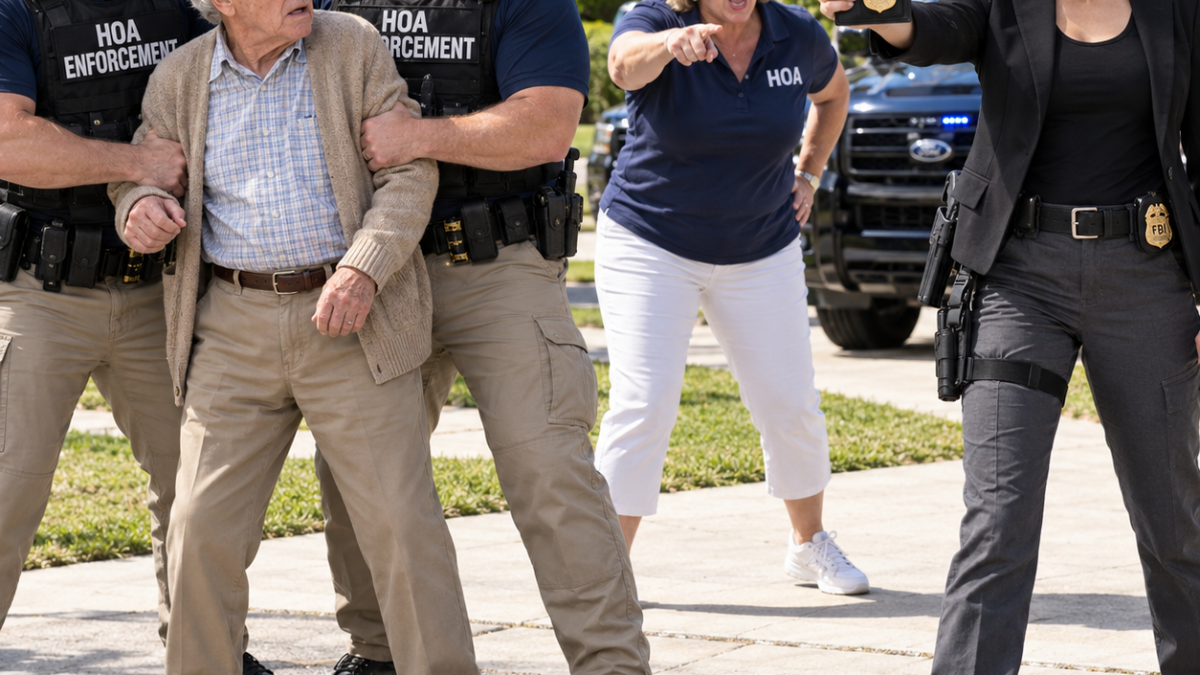
My seventy-eight-year-old grandfather called me whispering that three “police officers” were standing on his Arizona porch demanding he come with them over an HOA violation—but when I asked for their department name, warrant, and badge numbers, they refused to provide a single one.
They thought they had found another elderly man living alone, someone they could frighten with uniforms, threats, and official-looking paperwork until he handed over money or signed whatever they put in front of him.
What they did not know was that the granddaughter they had just forced him to call had spent seven years with the FBI learning exactly how fraudsters manufacture authority—and by the time I reached Arizona, I realized my grandfather was only one name on a much larger list.
I was halfway through a briefing at the Denver Field Office when my phone vibrated.
Grandpa never called during working hours unless something was wrong.
I stepped into the hallway.
“Grandpa?”
“Megan.”
His voice stopped me cold.
Harold Meyers was seventy-eight years old, a retired Boeing engineer who had spent four decades working on aircraft-navigation systems.
He was the kind of man who still calculated restaurant tips in his head and corrected television documentaries when they got technical details wrong.
He did not frighten easily.
That afternoon, he sounded frightened.
“There are men at the house.”
“What men?”
“They say they’re police.”
“What department?”
“They won’t tell me.”
I straightened.
“Did they show you a warrant?”
“No.”
“Badge numbers?”
“They said I didn’t need them.”
“What do they want?”
“They say I violated HOA rules. They want me to go somewhere with them.”
My chest tightened.
Real officers identify themselves.
Real arrests have legal foundations.
Real law enforcement does not show up because somebody’s desert landscaping supposedly offended a homeowners association and then refuse to provide a department name.
“Are you inside?”
“Yes.”
“Door locked?”
“Yes.”
“Keep it locked.”
One of the men apparently knocked again while we spoke.
Grandpa went silent.
Then:
“They’re telling me I’m making this worse.”
“Do not open the door.”
“Megan—”
“Listen to me. Stay inside. Don’t sign anything. Don’t pay anybody. Don’t go anywhere with them.”
He breathed slowly.
“All right.”
“I’m coming.”
I walked back into the briefing room.
My supervisor looked up.
He saw my face and closed the folder in front of him.
“Family?”
“My grandfather.”
“You need leave?”
“Yes.”
“Take it.”
Three hours later, I was on a flight to Phoenix.
I did not open restricted FBI systems.
I did not have an official case.
I was a granddaughter flying to help an elderly relative.
But public records were public records.
The men had left one name behind.
Whispering Sands Community Association.
I searched it.
The organization barely existed.
A mailing address.
Minimal filings.
A PO box.
A cheap-looking website.
Then I found a six-week-old post on a Sun City community forum.
HAS ANYONE ELSE BEEN VISITED BY HOA ENFORCEMENT OFFICERS?
I opened it.
An elderly woman described men in dark uniforms arriving at her home, accusing her of violations she did not understand, and demanding two thousand dollars.
Three replies followed.
One person said the same thing happened to his mother.
Another said local police treated it as an HOA dispute.
The third contained only six words.
Be careful. Something is wrong here.
I saved screenshots.
By the time I landed in Phoenix, I no longer believed Grandpa had encountered one aggressive HOA contractor.
Something was organized.
Something had been operating long enough to become confident.
And somebody had decided elderly homeowners living alone were easier targets than people likely to question a uniform.
Grandpa was waiting behind his locked door when I arrived near eleven that night.
The moment he opened it, I hugged him.
His shoulders felt smaller than I remembered.
He handed me the paper the men had left behind.
Plain white stock.
Cheap ink.
Generic shield logo.
COMMUNITY COMPLIANCE DIVISION.
No agency.
No officer names.
No phone number.
No address.
It ordered Harold Meyers to report within forty-eight hours for “processing” related to landscaping violations.
I looked through his front window.
Rock.
Cacti.
Drought-resistant plants.
No lawn.
No hedge.
Nothing matching the violation.
I photographed the document.
Then sat across from Grandpa at the kitchen table.
“Tell me everything.”
He rubbed both hands around a coffee mug.
“They asked if I lived alone.”
I stopped writing.
“What exactly did they say?”
“One asked whether family visited often.”
Another pause.
“Then he asked if anyone would notice if I was gone for the afternoon.”
That was the moment this stopped sounding like an HOA scam.
I looked at my grandfather.
“Grandpa, from now on, nobody gets through that door unless I know who they are.”
He nodded.
Outside, the Arizona night was quiet.
But I had already learned enough to know the quiet was lying.
PART 2
I did not sleep much that night.
Grandpa did.
Or at least he tried.
His bedroom light finally went dark around midnight.
I stayed at the kitchen table until nearly three in the morning with my laptop open and the fake violation notice lying beside it.
The document bothered me.
Not because it was sophisticated.
Because it wasn’t.
People imagine fraud as complicated.
Offshore accounts.
Encrypted messages.
Forged seals.
High-level technical tricks.
Most successful fraud depends on something simpler.
Confidence.
If a stranger appears in a uniform, carries a clipboard, uses official language, and acts offended when questioned, a surprising number of people obey before asking whether the authority is real.
The men at Grandpa’s door had built their entire performance around that instinct.
The paper looked official from six feet away.
The badge probably did too.
The language sounded bureaucratic enough to make a seventy-eight-year-old homeowner wonder whether he had missed some rule buried inside fifty pages of HOA documents.
And they chose an accusation almost impossible to disprove in the moment.
Landscaping compliance.
Vague.
Subjective.
Boring enough that a police dispatcher might hear the words and think:
Civil dispute.
The more I studied it, the more deliberate it looked.
At two-thirty, I searched publicly available Maricopa County complaints involving HOA scams, senior fraud, property-title disputes, suspicious lien filings, and private security companies.
I found fragments.
Nothing complete.
A seventy-nine-year-old man who said strangers threatened to place a lien on his home unless he paid a “community compliance balance.”
An eighty-one-year-old widow who signed documents she did not understand after being told they were HOA mediation papers.
A retired couple who paid cash to men claiming authority to seize personal property over repeated covenant violations.
Different neighborhoods.
Different company names.
Similar language.
I began a timeline.
Not an FBI file.
Not yet.
My own notes.
At three in the morning, I finally closed the laptop.
Before going to bed, I checked Grandpa’s locks.
Front door.
Back door.
Garage.
Windows.
Then I stood in the hallway outside his room.
I hated that.
Not checking locks.
The feeling behind it.
Grandpa had survived Grandma’s death.
He had rebuilt a life after fifty-one years of marriage.
He grocery-shopped alone.
Drove himself to appointments.
Played chess twice a week.
Refused to move closer to me because, in his words, “Denver winters are a personal insult.”
He had chosen independence.
And now three strangers had walked onto his porch and turned independence into vulnerability.
The next morning, coffee woke me before the alarm did.
Grandpa was already in the kitchen.
He wore khaki shorts and an old Boeing polo shirt.
For half a second, everything looked normal.
“Megan.”
“Morning.”
“You still take yours black?”
“Yes.”
“You have terrible taste.”
“So did Grandma.”
He smiled.
That was what I needed.
A normal exchange.
Something not connected to uniforms or fake violation notices.
Then I sat.
“Tell me again.”
“Everything?”
“Everything.”
He sighed.
“You already wrote it down.”
“I know.”
“FBI thing?”
“Granddaughter thing.”
He gave me a skeptical look.
“Fine.”
The first visit happened at ten in the morning.
Three men.
Dark uniforms.
One black SUV.
No obvious police department markings.
The man doing most of the talking had a faded circular tattoo on his left forearm.
He called himself Miller.
No first name.
No badge number.
He accused Grandpa of repeated landscaping violations.
Grandpa asked for photographs.
They had none.
He asked for an HOA board contact.
They said the matter had already moved beyond the board.
He asked whether they were police.
Miller answered:
“We handle enforcement.”
Careful wording.
They left after fifteen minutes.
Then returned around four.
Second visit.
Different tone.
Miller stood closer.
One of the others positioned himself so Grandpa could not easily see the street.
Then came the personal questions.
“You here by yourself, Harold?”
“Any children nearby?”
“Who checks on you?”
“Anyone staying with you tonight?”
Grandpa had told them:
“My granddaughter is coming.”
That apparently ended the visit.
“Did you tell them when?”
“No.”
“Good.”
Grandpa stared into his coffee.
“Why?”
“Because those weren’t HOA questions.”
“I figured that much.”
“They were checking vulnerability.”
His face tightened.
I softened my voice.
“You did everything right.”
He looked up.
“I almost went with them.”
That hit harder than anything else.
“They kept saying if I cooperated, we could clear it up quickly.”
His voice dropped.
“They said refusing would make it look like I had something to hide.”
I reached across the table.
“Grandpa.”
“I know.”
“No.”
I squeezed his hand.
“Listen to me. You didn’t do anything wrong.”
He looked embarrassed.
That angered me more than the fake badges.
Fraudsters don’t just steal money.
They steal confidence in your own judgment.
They make the victim ask:
How could I be so stupid?
Grandpa wasn’t stupid.
Ruth Navarro wasn’t stupid either.
I met her that morning.
Seventy-four.
Widowed.
Three houses down.
She opened the door with the security chain still connected.
“Mrs. Navarro?”
“Yes?”
“I’m Harold’s granddaughter.”
Her eyes softened slightly.
“Megan?”
“You know my name?”
“Your grandfather talks about you.”
“I’m sorry.”
She smiled.
“Come in.”
Her house was immaculate.
Family photographs everywhere.
Children.
Grandchildren.
A wedding portrait that had faded around the edges.
She poured iced tea.
I explained what happened to Grandpa.
Her hand stopped halfway to the table.
“They came to him too?”
“Three men?”
“Yes.”
“Dark uniforms?”
“Yes.”
“Black SUV?”
She nodded.
“Miller?”
Her eyes widened.
That was confirmation.
Ruth’s visit happened three weeks earlier.
Same script.
Different violation.
She supposedly owed two thousand dollars in compliance fees.
“What did they say would happen if you didn’t pay?”
Her fingers tightened around the glass.
“Legal action.”
“What kind?”
“They said they could place something on the house.”
“A lien?”
“I think so.”
“Did they show paperwork?”
She got up.
Returned with a folded receipt.
Handwritten.
$2,000.
No company name.
No printed address.
No phone number.
Illegible signature.
“How did you pay?”
“Cash.”
“Did they ask for cash?”
“Cash or wire.”
No check.
No credit card.
Harder to reverse.
“Why did you pay?”
The question came out too bluntly.
Ruth looked down.
I corrected myself.
“I’m sorry.”
“No.”
She shook her head.
“It’s okay.”
Then she answered anyway.
“Because I was afraid.”
Simple.
Honest.
“I called the non-emergency police number the next day.”
“What happened?”
“They said it sounded like an HOA issue.”
“Did you contact the HOA?”
“I tried.”
“Number?”
“Voicemail.”
“Return call?”
“No.”
Ruth looked toward her family photographs.
“I stopped telling people.”
“Why?”
“I felt foolish.”
There it was again.
Shame.
The fraudsters’ best protection.
I leaned forward.
“Mrs. Navarro.”
She looked at me.
“This wasn’t your fault.”
Her eyes filled.
“I should have known.”
“No.”
“They wore uniforms.”
“You were supposed to be able to trust that someone claiming official authority had a reason.”
I paused.
“They exploited that trust.”
She wiped one eye.
Then laughed embarrassedly.
“I’m crying over two thousand dollars.”
“No.”
“You’re crying because strangers made you afraid inside your own house.”
That broke something open.
She cried harder.
I stayed.
When I left, she allowed me to photograph the receipt and the fake notice.
I promised nothing.
I didn’t tell her I would catch anybody.
Federal investigations fail when investigators start promising outcomes.
I told her only:
“I’m going to find out what this is.”
Next, I called the actual HOA management office.
Not Whispering Sands.
The legitimate governing organization that administered Grandpa’s neighborhood.
Linda Martinez answered.
I introduced myself as Harold’s granddaughter.
“I need to verify whether your organization employs uniformed enforcement officers.”
Her answer was immediate.
“No.”
“Private security?”
“No.”
“Compliance officers?”
“No.”
“Anyone authorized to transport homeowners for violations?”
“What?”
That told me everything.
I explained.
Linda sounded genuinely alarmed.
“We mail notices.”
“Any in-person enforcement?”
“No.”
“Any processing center?”
“No.”
“Any group called Community Compliance Division?”
“No.”
“Whispering Sands Community Association?”
Long pause.
“That isn’t us.”
“Have you received complaints?”
“A few strange calls.”
“How many?”
“I’d have to check.”
“What kind?”
“People asking about fines we didn’t issue.”
“Why wasn’t it escalated?”
Another pause.
“Honestly?”
“Yes.”
“We thought residents were confused.”
That wasn’t cruel.
It was common.
One elderly homeowner complains about a fake violation.
Looks like misunderstanding.
Second complaint comes through a different employee.
Nobody connects them.
Third gets referred elsewhere.
No pattern exists until somebody puts the pieces in one place.
“Can you preserve any calls or written complaints involving fake enforcement?”
“I’ll talk to management.”
“Please do.”
I gave her my number.
“Do not contact any suspected company directly yet.”
That sounded more official than I intended.
Linda noticed.
“Are you law enforcement?”
I hesitated.
“Yes.”
“Local?”
“Federal.”
Silence.
“Oh.”
“Right now I’m here because Harold is my grandfather.”
“Understood.”
“But if this becomes official, someone will contact your office properly.”
She agreed.
That afternoon I sat on Grandpa’s front porch reviewing notes.
Arizona heat shimmered over the street.
Golf cart passed.
Sprinkler clicked.
Somewhere a television played too loudly.
Then a black SUV turned into Grandpa’s driveway.
Two men.
Miller drove.
Tattoo visible when he stepped out.
The second was younger.
Shaved head.
Rigid posture.
They walked toward the porch.
I stayed seated until they reached the walkway.
Then stood.
“Can I help you?”
Miller stopped.
His eyes moved from me to the front door.
“We need Harold Meyers.”
“No.”
“This is official business.”
“With what agency?”
“Community compliance.”
“That isn’t an agency.”
His expression changed.
“Ma’am, Mr. Meyers has been ordered to report.”
“By whom?”
“The association.”
“Which association?”
He smiled thinly.
“You asking questions doesn’t change his obligation.”
“It changes mine.”
I took out my phone.
Activated video.
“I’m recording.”
The younger man glanced at Miller.
Miller’s smile disappeared.
“If you have documents establishing lawful authority to enter this property, detain Mr. Meyers, or transport him anywhere, show them.”
“This is private business.”
“No.”
I held the camera steady.
“You are standing on private property after being told you have no authority here.”
He took one small step forward.
“Lady—”
“Stop.”
He stopped.
“Leave.”
He stared at me.
“You’re making a serious mistake.”
“Maybe.”
“We’ll return with attorneys.”
“Bring actual attorneys.”
His jaw flexed.
Then he turned.
The younger man followed.
I recorded the plate.
They drove away.
Grandpa opened the door.
“You enjoyed that.”
“I did not.”
“You did.”
“Maybe a little.”
He smiled.
Good.
I needed him smiling.
I ran the plate through public records available to me as a private citizen.
Registered owner:
Community Safety Solutions LLC.
Scottsdale mailing address.
PO box.
Company created eighteen months earlier.
No obvious staff.
No clear physical office.
Corporate language designed to sound official without actually claiming government status.
Community.
Safety.
Solutions.
Perfect.
I called the Phoenix FBI Field Office.
This time, I identified myself.
Special Agent Megan Meyers.
Denver.
Financial crimes.
The call transferred to Special Agent Carlos Rodriguez.
Fifteen years.
White-collar and elder-fraud experience.
I gave him facts only.
Fake HOA enforcement.
Elderly targets.
Cash and wire transfers.
Potential impersonation.
Questionable LLC.
Victim interviews.
He listened.
“How many confirmed?”
“Two with direct documentation.”
“Suspected?”
“More.”
“Your grandfather one?”
“Yes.”
“That’s a conflict issue.”
“I know.”
“You cannot run this informally using federal systems.”
“I haven’t.”
“Good.”
“What do you need?”
“I need this made official.”
Rodriguez was quiet.
Then:
“Send me what you have through proper channels.”
I did.
Within hours, the case had a preliminary number.
That changed everything.
I was no longer just a granddaughter with a laptop.
I was also a potential witness with a conflict.
Rodriguez would control federal steps.
Local jurisdiction still mattered.
He coordinated with the Maricopa County Sheriff’s Office.
That introduced Detective Pamela Adams.
Pamela had worked fraud and elder-abuse cases for more than a decade.
We met the next morning at a coffee shop near the sheriff’s station.
She read every page.
Ruth.
Grandpa.
Fake notice.
Community Safety Solutions.
Vehicle footage.
The plate.
Forum screenshots.
Then she leaned back.
“We’ve had these.”
“What?”
“Complaints.”
“How many?”
“I don’t know yet.”
“Why weren’t they connected?”
“Because they don’t come in as kidnapping or robbery.”
She pointed at the notice.
“They come in as HOA disagreements.”
“Different patrol zones.”
“Different dispatchers.”
“Different victims.”
“One says fake fine.”
“Another says private security.”
“Another says somebody threatened a lien.”
She shook her head.
“Nobody saw the whole thing.”
“We do now.”
Pamela looked at me.
“You want to go door to door?”
“Yes.”
“You’re family in this case.”
“I know.”
“Let me lead the interviews.”
That frustrated me.
Which meant she was right.
“Fine.”
“Fine?”
“Professionally fine.”
She smiled.
“You federal people are terrible at being witnesses.”
“Try being the granddaughter.”
We canvassed.
Eleven residents by noon.
Four confirmed contacts with the same men.
Mr. Patterson.
Eighty-two.
Paid $3,500 after being threatened with a lien.
Mrs. Dominguez.
Seventy-nine.
More serious.
She had been driven to another location.
“What location?” Pamela asked.
“I don’t know.”
“Office building?”
“I think so.”
“Do you remember street?”
“No.”
“Landmarks?”
“A pharmacy.”
“Anything else?”
Mrs. Dominguez’s hands shook.
“They gave me papers.”
“What papers?”
She brought copies.
At first glance, they resembled routine authorization forms.
One contained language granting broad financial power to a third party.
Power of attorney.
She had signed it believing she was authorizing HOA mediation.
My stomach tightened.
Pamela looked at me.
No words needed.
The Williams couple had refused to pay.
Three follow-up visits.
Increasing pressure.
They installed cameras.
The footage showed Miller.
Same tattoo.
Same SUV.
Same pattern.
By late afternoon, Rodriguez called.
“LLC is more active than it looks.”
“How active?”
“About four hundred thousand dollars in wire transfers over eighteen months.”
“Source?”
“Primarily older individuals.”
“Over seventy?”
“Mostly.”
That was enough for the preliminary case to expand.
“Registered owner?”
“Victor Harmon.”
I opened my laptop.
“Who is he?”
“Fifty-two.”
“Former real estate developer.”
“Several civil fraud suits.”
“No convictions.”
“Some settlements.”
“Anything tying him directly to field operations?”
“Not yet.”
Rodriguez continued.
“But this isn’t three idiots shaking down retirees.”
“No.”
“It looks organized.”
That evening, Miller came back.
This time with two others.
I was sitting on Grandpa’s porch.
Grandpa was inside.
The black SUV stopped.
Three doors opened.
Miller.
A larger man.
Another younger man.
They approached in a spread formation.
Not police.
But someone had taught them how to occupy space.
Miller stopped at the bottom of the steps.
“We tried polite.”
“I thought you were coming with lawyers.”
His expression hardened.
“Mr. Meyers has obligations.”
“No.”
“He’s coming with us tonight.”
That sentence changed everything.
I stood.
“Under what authority?”
“Step aside.”
“No.”
The large man moved half a step forward.
I reached slowly into my jacket.
Miller tensed.
I opened my credential case.
Federal Bureau of Investigation.
Special Agent Megan Meyers.
The transformation was immediate.
Miller’s face emptied.
The larger man stopped moving.
The younger one looked at the SUV.
Escape calculation.
I kept my badge visible.
“You are not police officers.”
Nobody answered.
“You have no arrest authority.”
Silence.
“You have no warrant.”
Miller swallowed.
“This is a misunderstanding.”
“No.”
“We’re contractors.”
“For whom?”
No answer.
“Community Safety Solutions?”
His eyes moved.
There.
Small reaction.
“Yes?”
He said nothing.
I lowered the credentials but kept them open.
“If you come onto this property again without lawful purpose, local law enforcement will be waiting.”
Miller tried to recover.
“We’re just doing our jobs.”
“Then tell me who pays you.”
No answer.
“Victor Harmon?”
His face changed.
Tiny.
Enough.
I had not planned to use Harmon’s name.
The reaction was valuable.
“You should leave.”
They did.
No threats.
No swagger.
They returned to the SUV.
Miller looked back once.
Then drove away.
Grandpa came outside.
He stared down the street.
“You scared them.”
“That isn’t always good.”
“Why?”
“Because now they know.”
“Know what?”
“That this is being taken seriously.”
His smile disappeared.
“You think they’ll come back?”
“I don’t know.”
I called Pamela.
“They know I’m FBI.”
She swore quietly.
“That was always going to happen.”
“I know.”
“Did you get anything?”
“Harmon’s name got a reaction.”
“Good.”
“Bad too.”
“Yes.”
I looked at Grandpa.
“They may start cleaning up.”
“Or escalate.”
That was the part I didn’t say out loud.
The next forty-eight hours were silent.
No visits.
No SUV.
No calls.
Silence in investigations often means somebody is making decisions.
I installed security cameras.
Front.
Back.
Driveway.
Motion alerts.
Window sensors.
Grandpa watched.
“You turning my house into Fort Knox?”
“Fort Harold.”
“I hate that.”
“Too late.”
He tried to joke.
But I noticed he started checking the windows.
Every hour.
That was unacceptable.
A home should not feel like a perimeter.
The third night, I stayed at a motel twenty minutes away.
That was a mistake in retrospect.
Not because I abandoned him.
Because I was trying to avoid turning his house into an FBI post while still keeping the investigation separate.
At 2:14 a.m., my phone rang.
Grandpa.
I answered before the second vibration.
“Megan.”
Whisper.
“There’s someone at the back door.”
I was already out of bed.
“Bedroom.”
“I’m in it.”
“Lock it.”
“Locked.”
“Call 911.”
“I already did.”
“Good.”
I called Pamela on my second phone.
Then drove.
I will not romanticize the drive.
I went faster than I should have.
Twenty minutes felt like two hours.
When I arrived, a sheriff’s cruiser sat in the driveway.
Lights flashing.
Back door damaged.
Pry marks.
Lock bent.
Door had held.
Alarm had sounded before entry.
Grandpa was physically unharmed.
I hugged him.
He shook.
That frightened me more than anything.
“I’m okay.”
“I know.”
“No.”
He pulled back.
“Megan.”
His voice firmed.
“I’m okay.”
I nodded.
The camera footage showed two masked men.
One moved with a slight left-side hitch.
Miller.
Not enough for a courtroom identification by movement alone.
Enough for investigative context.
The second carried a pry tool.
They retreated when the alarm sounded.
Attempted burglary.
Possibly intimidation.
Possibly something worse.
I contacted the other known victims.
Mrs. Dominguez had found her back gate open two weeks earlier.
Patterson noticed a car across the street several nights.
Williams heard footsteps on their patio.
The pattern looked different once connected.
These were not simply payment demands.
Targets who resisted were being watched.
Pressure escalated.
Pamela sat across from me at Grandpa’s kitchen table.
“You’re moving him.”
“Yes.”
“Where?”
“I have somewhere.”
“You trust it?”
“With my life.”
Grandpa hated the plan.
Frank Dawson lived in Tucson.
Retired Air Force colonel.
Old family friend.
Guest house.
Excellent security.
Zero patience for nonsense.
“Absolutely not,” Grandpa said.
“Absolutely yes.”
“This is my house.”
“I know.”
“I’m not running.”
“You’re relocating temporarily.”
“That is running with nicer vocabulary.”
I sat opposite him.
“Grandpa.”
“No.”
“Please.”
That word stopped him.
I almost never used please with him when I was serious.
He stared at me.
“You’re scared.”
“Yes.”
He looked down.
That was the first time I admitted it.
“I can’t investigate properly if I’m worrying about you every second.”
“That sounds manipulative.”
“It is also true.”
He sighed.
“How long?”
“Until the immediate threat is controlled.”
“And my chess club?”
“They’ll survive.”
“They won’t.”
“Grandpa.”
“Fine.”
Frank met us in Tucson.
Six foot three even in his seventies.
Straight posture.
White hair.
He hugged Grandpa.
Then me.
“You brought trouble?”
Grandpa pointed at me.
“She did.”
“I brought you.”
“Same thing.”
Frank’s guest house had cameras.
Alarm.
Gated entrance.
And Frank.
Enough.
As I carried Grandpa’s bag inside, he caught my arm.
“Promise me something.”
“What?”
“Finish it.”
I looked at him.
“That isn’t a promise investigators should make.”
“Then make it as my granddaughter.”
I swallowed.
“I’ll do everything I can.”
“Lawyer answer.”
“You raised me around engineers.”
He hugged me.
“Be careful.”
I returned to Sun City alone.
The house felt wrong without him.
Too quiet.
Pamela arranged periodic unmarked patrols.
We agreed on emergency protocols.
I remained a witness in the original incidents, but by then the case had widened enough that my role shifted formally.
Federal supervisors handled conflict procedures.
Rodriguez remained primary on the elder-fraud financial side.
I supported analysis where I was not directly implicated.
That mattered.
Personal anger cannot be allowed to become investigative authority.
For four nights, nothing happened.
Fifth night.
3:22 a.m.
Motion alert.
Four figures entered the backyard.
Dark clothes.
Faces covered.
No uniforms.
No paperwork.
No fake badges.
One had a pry bar.
Another carried plastic restraints.
My blood turned cold.
This was different.
I called Pamela.
Left the line open.
Sheriff’s units were already nearby.
I moved to a protected position inside the house.
Service weapon ready.
Training took over.
Not anger.
Not revenge.
Training.
The back door shuddered once.
Twice.
Third strike damaged the frame enough that it opened.
The first man entered.
“FBI! Stop!”
He froze.
Second man collided with him.
I kept distance.
Clear commands.
“Hands visible.”
“Down.”
“Do not move.”
Both complied after a second of hesitation that felt much longer.
Outside, shouting.
Pamela’s voice.
“Sheriff’s Office! Get on the ground!”
Third man ran.
Patrol unit intercepted him within a block.
Fourth never entered.
He was taken outside.
Less than five minutes.
No dramatic fight.
No cinematic heroics.
Just four men discovering they had entered a house under surveillance with law enforcement positioned nearby.
Miller was one of the two inside.
His mask came off after deputies secured him.
Tattoo.
Left forearm.
Grandpa’s “compliance officer.”
Real name:
Derek Finch.
The second man looked barely twenty-five.
Terrified.
The vehicle produced the most important evidence.
Search conducted under proper legal authority.
Inside:
Additional uniforms.
Fake badges.
Printed violation forms.
Multiple prepaid phones.
And a folded sheet containing names.
Fifteen homeowners.
All over seventy-five.
Addresses.
Notes.
Grandpa near the top.
HAROLD MEYERS — FAMILY INTERFERENCE.
Crossed out in red.
Next to another:
Patterson — pressure lien.
Dominguez — POA completed.
Williams — resistant.
I stared at the list.
Not for long.
Evidence technician took it.
Photographed.
Bagged.
The case changed overnight.
Attempted unlawful entry.
Possible abduction plan.
Conspiracy.
Fraud.
Target list.
Impersonation.
Federal and state investigators now had enough probable cause for aggressive next steps.
Finch lasted two days.
His lawyer saw the evidence.
Recommended cooperation.
Pamela led the local interrogation.
Rodriguez and federal prosecutors coordinated.
I watched remotely for portions where my presence would not contaminate anything.
Finch was not a mastermind.
That became clear quickly.
He was a field supervisor.
A hired intimidator.
Victor Harmon provided target lists.
Scripts.
Uniform specifications.
Fake notices.
Payment instructions.
Finch trained crews.
Approach elderly homeowner.
Establish authority.
State violation.
Create urgency.
Offer “resolution.”
If resident pays, collect.
If resident resists, escalate.
Repeat visit.
Threaten lien.
Threaten removal.
Threaten hearing.
If target appears isolated enough, transport them to a controlled office.
Get signatures.
Power of attorney.
Property documents.
Financial access.
Harmon rarely appeared.
Layers.
Distance.
Insulation.
“He said old people don’t fight paperwork,” Finch told Pamela.
That sentence made me leave the observation room.
I walked into the hallway.
Rodriguez followed.
“You okay?”
“No.”
“Want five?”
“I want twenty years.”
He understood what I meant emotionally.
He also understood why investigators cannot operate on that feeling.
“Take five.”
I leaned against the wall.
“They asked Grandpa if anyone would notice he was gone.”
“I know.”
“I keep hearing it.”
“I know.”
Rodriguez waited.
“He’s safe.”
“Yes.”
“And the others?”
“We’re getting there.”
I looked at him.
“That’s not enough.”
“No.”
“But it’s what we have today.”
That was investigation.
Today’s evidence.
Today’s protection.
Tomorrow’s work.
Finch gave us Harmon.
Not just name.
Meeting locations.
Encrypted-message method.
Corporate layers.
Payment routes.
Target-selection process.
And the inside source.
Richard Oaks.
Sixty-one.
HOA board member.
Three terms.
Access to resident data.
A consulting contract with Desert Community Advisers.
That company traced to Harmon.
Fifteen thousand dollars annually.
Not huge money.
Enough to buy access from someone drowning in debt.
Oaks provided lists.
Ages.
Property values.
Emergency contacts.
Whether homeowners had spouses.
Whether adult children lived nearby.
Information intended for administration became a hunting map.
That betrayal hit the community hardest later.
But first came the money.
Federal subpoenas.
Bank records.
Wire transfers.
Shell-company tracing.
Rodriguez assigned analysts.
The $400,000 through Community Safety Solutions was only one channel.
Other companies emerged.
Nevada.
New Mexico.
California.
Different names.
Same model.
Senior Living Solutions LLC sat above several entities.
Delaware registration.
Layered ownership.
Payment processors.
Real-estate acquisition companies.
What began with a fake landscaping violation in Grandpa’s kitchen expanded into a multi-state elder-fraud network.
214 confirmed victims.
Estimated losses above twelve million dollars.
Three homes transferred through fraudulent or deceptively obtained documents.
Fifteen pending transfers interrupted before completion.
Wire payments.
Cash collections.
Title manipulation.
Power-of-attorney abuse.
Fake enforcement.
Targeted intimidation.
I stared at the victim spreadsheet.
214.
Grandpa had become one row among 214.
That scared me in a different way.
If he had paid?
Maybe nothing else would have happened.
Or maybe payment would have marked him as compliant and profitable.
If he had gone with them?
What would they have asked him to sign?
How far would it have gone?
I stopped myself.
Investigators survive by separating what happened from what could have happened.
The what-ifs can destroy judgment.
I called Grandpa.
He answered from Frank’s guest house.
“Any progress?”
“Yes.”
“Good progress?”
“Complicated progress.”
“That sounds federal.”
I smiled.
“You’re one of more than two hundred victims.”
Silence.
“Two hundred?”
“Confirmed.”
“My God.”
“Across several states.”
Grandpa took a breath.
“They’ve been doing this for years.”
“Yes.”
“Megan.”
“Yes?”
“Don’t make this about me anymore.”
That stopped me.
“What?”
“I’m safe.”
“I know.”
“Those other people may not have grandchildren who work for the FBI.”
I closed my eyes.
Grandma used to say Grandpa could turn stubbornness into morality when convenient.
This time he was right.
“Okay.”
“Promise?”
“I’ll do my job.”
“That’s better.”
He paused.
“I’m proud of you.”
“Grandpa.”
“Your grandmother would be.”
I didn’t answer for several seconds.
Finally:
“I miss her.”
“So do I.”
The case became federal task-force scale.
Multiple field offices.
State partners.
Financial investigators.
Prosecutors.
Local sheriff’s agencies.
Analysts.
The source narrative later called it Operation Golden Shield.
That became the internal nickname used by several investigators, though I cared more about the victim chart than the operation title.
Harmon emerged at the center.
Victor Harmon.
Fifty-two.
Former real-estate developer.
Civil-fraud history.
Past cases that ended in settlements.
He had learned from exposure.
Never meet victims.
Never take cash personally.
Never place his own name on field documents.
Use layers.
Insiders.
Contractors.
Shell companies.
Encrypted communications.
But even layered systems need money to move.
Money leaves structure.
Structure leaves patterns.
Finch’s cooperation gave us the bridge.
Financial records gave us the road.
Oaks gave us the betrayal.
The evidence against Richard Oaks was painful.
Residents had elected him.
He attended holiday events.
Spoke about senior safety.
Helped organize community meetings.
Meanwhile, he sent information to Harmon.
Quarterly payments.
Fifteen thousand dollars a year.
His defense would eventually be debt.
Bankruptcy.
Creditors.
A failed restaurant.
Pressure.
All true.
None of it changed what his information enabled.
The assistant U.S. attorney reviewed the evidence.
Wire fraud.
Mail fraud.
Conspiracy.
Elder-targeted financial crimes.
Potential enterprise charges depending on final structure.
Prosecutors were careful.
They should be.
Dramatic labels sound satisfying.
Proof is better.
A separate thread surfaced involving a fictional state senator named Mark Develin, who had received campaign contributions from Harmon while supporting legislation expanding HOA contracting authority.
The contributions themselves were not proof of corruption.
Legal donations can be legal donations.
The timing and business interests were referred to the appropriate public-integrity team.
We did not turn suspicion into conclusion.
That distinction mattered.
The main case was strong enough without speculation.
A federal grand jury returned sealed indictments against Harmon, Oaks, Finch, and multiple members of the network.
Coordinated arrests were scheduled across four states.
Tuesday morning.
Simultaneous.
The night before, I slept for almost seven hours.
Then woke to a call.
Harmon was gone.
Surveillance lost him after he entered a Scottsdale coffee shop.
His car remained outside.
No phone.
No credit-card activity.
No hotel.
No airport record.
Somebody had warned him.
The task force went into containment mode.
Accounts flagged.
Travel alerts.
Known associates.
Properties.
Family.
Aliases.
The leak investigation found a weak point.
A routine coordination email had reached a local deputy.
That deputy had a family connection to someone employed by a Harmon-linked property company.
Whether the information was deliberately passed or simply discussed carelessly required its own investigation.
The result was the same.
Harmon knew enough to run.
But running costs money.
People abandon phones.
They change cars.
They hide.
Money remains necessary.
Financial monitoring flagged an attempted $2.3 million transfer from a brokerage account toward an offshore destination.
Blocked.
Originating IP:
Sedona.
Property research identified a vacation home connected to Harmon’s ex-wife.
Unreported in several disclosures.
Possible hide site.
The arrest team moved.
I requested participation.
My supervisor hesitated.
“You’re connected personally.”
“I’m also assigned to the task force.”
“You will not be point.”
“Understood.”
“You follow the tactical commander.”
“Absolutely.”
“No improvisation.”
“I heard you.”
The drive north felt endless.
Arizona changed outside the window.
Desert.
Red rock.
Juniper.
Sedona looked almost unreal in late afternoon sunlight.
Under different circumstances, I would have understood why people escaped there.
Harmon’s house sat at the end of a private road.
The tactical team controlled entry.
I remained in a support position behind the first element.
No heroic charge.
No personal confrontation.
Procedure.
The breach was fast.
Agents entered.
Commands.
Movement.
Rooms cleared.
Harmon was located in a bedroom-office area with a laptop.
He was attempting to delete or alter files when agents secured him.
By the time I saw him, his hands were restrained.
He looked smaller than the operation built around his name.
That happens often.
Systems magnify people.
Strip away money, intermediaries, phone calls, shell companies, and fear, and the mastermind becomes one person in a room.
I approached only after the arrest team cleared it.
Harmon looked at my badge.
Then at me.
“Megan Meyers.”
He knew my name.
I stopped.
“How?”
He smiled faintly.
“Your grandfather talks.”
That was probably a bluff.
Still, I felt anger rise.
I pushed it down.
An agent began reading him his rights.
Harmon interrupted.
“You have no idea how many people are involved.”
I answered:
“Then cooperating might be useful.”
That was all.
No revenge speech.
No threat.
No cinematic promise.
His laptop became far more valuable than anything I could have said.
Forensic recovery showed incomplete deletion.
Victim lists.
Communications.
Financial ledgers.
Target-selection discussions.
Payments to Oaks.
Instructions to Finch.
Internal language referring to elderly homeowners as “low-resistance accounts.”
That phrase went through me like ice.
Not people.
Accounts.
One file contained projections.
Average payment by age.
Likelihood of legal challenge.
Probability family would intervene.
Home equity.
Widowhood.
Medical debt.
The operation had quantified vulnerability.
I printed one page for case review.
Then had to put it down.
The arrests continued across four states.
Oaks taken at home.
Others in Las Vegas.
Albuquerque.
California.
By midnight, eleven principal targets were in custody.
The next morning, Grandpa called before I could call him.
“I saw the news.”
“Already?”
“Frank watches everything.”
“I do not,” Frank yelled from somewhere behind him.
Grandpa lowered his voice theatrically.
“He watches everything.”
I smiled.
“Are they all caught?”
“Most principal defendants are in custody.”
“Federal answer.”
“Yes.”
“Harmon?”
“Yes.”
Long silence.
“Good.”
No celebration.
Just good.
Then:
“When can I go home?”
“Soon.”
“Define soon.”
“After security review.”
“I’m seventy-eight.”
“I know.”
“I might die of boredom in Tucson before criminals get me.”
Frank shouted:
“You’re welcome!”
Grandpa laughed.
That laugh was what victory sounded like to me.
Not handcuffs.
Not headlines.
Grandpa laughing again.
The press conference came two days later.
U.S. attorney.
FBI.
Sheriff’s Office.
State representatives.
Two hundred fourteen confirmed victims.
Losses above twelve million under investigation.
Multiple charges.
Asset seizures underway.
Victim assistance.
I stood near the back.
Cameras flashed.
The U.S. attorney called the defendants an organized group accused of exploiting elderly homeowners through fraudulent authority.
Accused.
That word matters before conviction.
He described how trust in institutions had been weaponized.
That part was exactly right.
Sun City held a community meeting the next week.
Not FBI-run.
Residents organized it.
A temporary leadership group replaced Oaks.
The room filled beyond capacity.
Grandpa was still in Tucson.
I attended as Harold’s granddaughter first.
Agent second.
I explained warning signs.
Real law enforcement identification.
No rushed cash demands.
No secret compliance centers.
No signing legal documents under pressure.
Verify through published official numbers.
Call family.
Call police.
Call the HOA office directly.
Take time.
Anyone claiming you must decide immediately often benefits from preventing verification.
Mrs. Dominguez spoke.
She stood with a cane.
“I thought the paper was routine.”
Her voice shook.
“They drove me somewhere.”
She looked around.
“I was embarrassed to tell my children.”
A woman beside her reached for her hand.
Mr. Patterson stood next.
“I paid thirty-five hundred dollars.”
He stared at the floor.
“I didn’t tell my son.”
“Why?” someone asked.
“Because I raised him to think his father knew what he was doing.”
That broke the room.
Several people cried.
Patterson continued.
“I thought being fooled meant I had become weak.”
I stepped toward him.
He looked at me.
“You were targeted.”
“I know that now.”
That phrase repeated all night.
I know that now.
The Williams couple spoke.
Ruth spoke.
For the first time, neighbors compared experiences.
Same language.
Same threats.
Same uniforms.
Same fear.
No one had been uniquely foolish.
They had been systematically selected.
That realization gave them something back.
Not money.
Dignity.
Richard Oaks began cooperating after arrest.
His confession was ugly because it was ordinary.
Debt.
Desperation.
Rationalization.
Harmon approached him through “consulting.”
Provide non-sensitive homeowner information.
Then slightly more.
Ages.
Emergency contacts.
Property values.
Family distance.
Oaks told himself it was marketing.
Then enforcement planning.
Then collection efficiency.
Each step small enough to explain.
Until three families had lost homes connected to fraudulent paperwork.
Forty-seven people in his community had been financially harmed.
“I never thought it would go that far.”
The prosecutor reportedly answered:
“You kept providing names after you knew people were being harmed.”
That was the part excuses could not cover.
Oaks had multiple opportunities to stop.
He didn’t.
Finch also cooperated.
He admitted crews used uniforms specifically because older residents reacted differently to perceived authority.
He admitted sometimes touching flashlights or belts during conversations to increase intimidation without making explicit threats.
He admitted asking:
“Who checks on you?”
“Do you live alone?”
“Any children nearby?”
Those were screening questions.
Not small talk.
Grandpa’s instincts had saved him.
Or maybe Grandma’s voice lived in his head too.
Never trust somebody who refuses a direct question.
She used to say that.
The trials and plea agreements unfolded over months.
Not every defendant received the same outcome.
Roles differed.
Evidence differed.
Cooperation differed.
Harmon went to trial on major enterprise and fraud charges.
The financial evidence was devastating.
His laptop made it worse.
The victim-selection files removed any plausible claim that he merely ran an aggressive collection service.
Witnesses testified.
Finch.
Oaks.
Victims.
Analysts.
I testified about the original contact, Grandpa’s documents, the escalation, and my role in the investigation.
Defense counsel tried to make the case personal.
“Agent Meyers, this investigation began with your grandfather.”
“Yes.”
“You were angry.”
“Yes.”
That surprised him.
“You admit that?”
“Of course.”
“You wanted revenge.”
“No.”
“Your grandfather was threatened.”
“Yes.”
“You personally confronted my client’s employees.”
“I identified myself after they attempted to remove my grandfather without lawful authority.”
“You were emotionally invested.”
“Yes.”
He approached.
“How can this jury trust an investigation led by someone emotionally invested?”
I looked at the jury.
“Because my emotions are not the evidence.”
Silence.
“The bank records are.”
“The forged documents are.”
“The recorded communications are.”
“The target lists are.”
“The witness testimony is.”
“The seized laptop is.”
I paused.
“My grandfather is why I noticed the pattern.”
“He is not why the pattern exists.”
The attorney changed direction.
That answer followed me afterward.
My emotions are not the evidence.
It became something I repeated to young agents.
Feel everything.
Prove separately.
Harmon was convicted on the core counts supported by the evidence.
The court imposed a substantial federal prison sentence, major restitution, and forfeiture orders against assets linked to the scheme.
I won’t turn the exact sentence into a trophy.
It was long.
His freedom changed permanently.
More important, millions in recoverable assets entered the victim-restoration process.
Oaks received a materially shorter sentence because he cooperated, but he still went to federal prison.
Finch received a substantial sentence for his role in the intimidation, attempted unlawful removal of Grandpa, later break-in conduct, and conspiracy.
Other members received terms reflecting their participation.
Some cooperated.
Some fought.
Some pleaded.
The lawyers who knowingly helped structure fraudulent transfers faced professional discipline and criminal consequences where evidence supported it.
Asset forfeiture recovered only part of the losses.
About four million dollars initially identified for compensation.
Not enough.
Fraud almost never returns every stolen dollar.
Mrs. Dominguez’s property rights were restored after lengthy legal work.
Patterson received reimbursement.
Pending transfers were blocked.
Several elderly homeowners got titles cleared.
One home had already been sold onward, creating years of litigation.
That was the part headlines missed.
Arrests happen in a day.
Repair can take years.
Some damage cannot be repaired.
One victim died before the case finished.
Another had suffered severe emotional distress during the fraud and later took her own life.
I never used her story as courtroom theater.
Her family deserved more than that.
But her death haunted the task force.
Every time someone called the crime “paper fraud,” I remembered that paper can take a home.
Paper can empty retirement savings.
Paper can convince a seventy-eight-year-old man that strangers in uniforms can remove him from his own house.
Paper is not harmless when backed by fear.
The political side developed separately.
Campaign contributions linked to Harmon prompted review.
That did not automatically make the recipient corrupt.
Investigators examined whether any quid pro quo existed.
The HOA-enforcement legislation associated with the controversy died before becoming law.
Arizona authorities issued stronger warnings and guidance about verifying private compliance contractors.
Several retirement communities changed procedures.
No private enforcement visits without prior written notice.
No cash collection at doors.
Clear identification requirements.
Independent verification numbers.
Board-level review of security contracts.
Whispering Sands—the fake entity—disappeared.
The legitimate HOA redesigned its website specifically to make fraud harder.
A large banner appeared:
WE DO NOT SEND OFFICERS TO COLLECT FINES AT YOUR HOME.
WE DO NOT DEMAND CASH OR WIRE TRANSFERS.
VERIFY ALL NOTICES THROUGH THIS OFFICE.
I stared at that banner the first time I saw it.
Such simple language.
It might have saved Ruth two thousand dollars.
Maybe Mrs. Dominguez her signature.
Maybe others their homes.
Grandpa returned in November.
I flew back to Arizona to bring him home.
Frank drove us crazy for forty-five minutes explaining proper desert-road tire pressure.
Grandpa pretended not to hear.
When we reached Sun City, Grandpa sat quietly as I turned into his street.
“You okay?”
“Yes.”
“Really?”
“No.”
Honest.
I parked.
He stared at the house.
Same stucco.
Same rock landscaping.
Same porch.
But memory had changed it.
“Want me to go in first?”
“No.”
He opened the door.
Walked slowly up the path.
Then stopped where Miller had stood.
I came beside him.
Grandpa looked down at the concrete.
“They stood right there.”
“Yes.”
“I was afraid to open the door for weeks.”
“I know.”
He inhaled.
Then stepped inside.
The alarm system announced:
Front door open.
Grandpa frowned.
“I hate that voice.”
“We can change it.”
“To what?”
“British.”
“No.”
“Robot?”
“It already sounds like a robot.”
“Grandma?”
He stared at me.
I smiled.
“Too far?”
“Very.”
Good.
If he could be annoyed at me, he was home.
That night, we cooked Grandma’s old pasta recipe.
Grandpa over-salted the sauce.
He claimed Grandma did too.
False.
Ruth came over.
She brought garlic bread.
They argued about whether oregano belonged in the sauce.
For three hours, nobody discussed the case.
That felt sacred.
Later, after Ruth left, Grandpa sat at the kitchen table.
“Come with me tomorrow.”
“Where?”
“Senior center.”
“Why?”
“I’m speaking.”
I stared.
“You’re what?”
“Fraud awareness.”
“When did this happen?”
“While you were busy arresting half the Southwest.”
“Grandpa.”
“I’ve got slides.”
Of course he did.
Retired engineer.
Slides.
The next morning, forty seniors sat in folding chairs.
Grandpa stood at the front.
He wore his Boeing polo.
First slide:
IF SOMEONE REFUSES TO PROVE THEIR AUTHORITY, THEY PROBABLY DON’T HAVE IT.
He looked at me.
“Too aggressive?”
“Perfect.”
He told them what happened.
Not dramatically.
No hero version.
“I almost went with them.”
Several people shifted.
“That’s why I’m telling you.”
He pointed at the room.
“If you think you’re too smart to get fooled, you’re exactly who fraudsters want.”
Good line.
He had practiced.
He continued.
“They create urgency.”
“They make questions feel rude.”
“They make verification feel like resistance.”
“They want you alone.”
“So don’t be alone.”
Call somebody.
Family.
Neighbor.
Official office.
Police.
Bank.
Attorney.
Anybody.
Slow down.
Grandpa became good at it.
Too good.
Within months, he spoke at senior centers across Maricopa County.
Ruth sometimes joined.
She told her story too.
“I paid.”
Then:
“And I stopped being ashamed of that.”
That sentence may have prevented more losses than any arrest I made.
Victims hide fraud when shame survives longer than the scam.
The FBI later contacted me about similar operations in Florida.
Then Texas.
Different groups.
Same playbook.
Fake community authority.
Elderly targets.
Urgency.
Cash.
Property paperwork.
Some cases were crude.
Others sophisticated.
I became an informal resource inside the Bureau for a particular kind of elder-financial exploitation.
My supervisor called it expertise.
I called it Grandpa’s fault.
He loved that.
One Sunday in late spring, I visited again.
Ruth was at dinner.
Nobody acknowledged that she had become a regular guest.
Grandpa made Grandma’s recipe.
Still too much salt.
Afterward, Ruth left.
Grandpa walked me to the door.
“You did well.”
“We all did.”
He rolled his eyes.
“Federal modesty.”
“Task force.”
“You started it.”
“You called me.”
“Exactly.”
He smiled.
Then became serious.
“You know what bothered me most?”
“What?”
“Not that they wanted money.”
I waited.
“I spent forty years building things people trusted.”
“Navigation systems.”
“Systems.”
He nodded.
“I believed if something looked official, there were rules behind it.”
His eyes moved toward the porch.
“They used that belief against me.”
I didn’t have an answer.
He continued.
“But then I watched your investigation.”
“The real thing.”
“Warrants.”
“Records.”
“Courts.”
“People checking each other.”
“Supervisors telling you what you couldn’t do.”
I smiled.
“A lot.”
“That made me feel better.”
“Why?”
“Because real authority has limits.”
I looked at him.
Exactly.
Grandpa had reached the lesson I had been carrying since the first call.
Fake authority says:
Obey because I look powerful.
Real authority says:
Here is who I am.
Here is why I’m here.
Here are the rules limiting me too.
That became the distinction I used whenever somebody asked how Grandpa could tell.
Uniforms mean nothing alone.
Badges mean nothing alone.
Confidence means nothing alone.
Authority can be verified.
Years later, I still remembered Miller’s face when I opened my FBI credentials.
The story always got retold that way.
Fake HOA cops came for the wrong grandfather.
His granddaughter flashed an FBI badge.
They collapsed.
It sounds satisfying.
And yes, Miller froze.
Yes, his men stepped backward.
Yes, the badge changed the moment.
But the badge did not defeat them.
If anything, it warned them early enough to become more dangerous.
What defeated them came later.
Ruth’s receipt.
Grandpa’s fake notice.
Williams’ camera footage.
Patterson’s payment records.
Mrs. Dominguez’s documents.
Finch’s testimony.
Oaks’s transfers.
Harmon’s laptop.
Hundreds of bank records.
Dozens of victims.
Evidence.
The badge created silence on a porch.
Evidence dismantled an organization.
That difference mattered to me.
I returned to Denver after dinner.
Halfway home, my supervisor texted.
NEW ELDER-FRAUD REFERRAL — TEXAS.
INTERESTED?
I laughed.
Grandpa had just spent an hour telling me I worked too much.
I typed:
SEND IT.
Then deleted it.
Thought of Grandpa.
Typed:
SEND THE SUMMARY FIRST.
Growth.
Small, but real.
He replied:
WHO ARE YOU AND WHAT HAVE YOU DONE WITH MEYERS?
I smiled.
The work never really ends.
Not because fraud is unbeatable.
Because trust will always exist, and somebody will always try to monetize it.
The answer cannot be permanent suspicion.
That would mean the scammers win in a different way.
Grandpa still trusted people.
He trusted Ruth.
His chess group.
Frank.
The real HOA office.
His bank.
His doctors.
Me.
What changed was not his ability to trust.
It was his willingness to verify authority before surrendering control.
That is a healthier lesson than:
Trust nobody.
Months after the final sentencing, I visited one of Grandpa’s talks.
He had added a slide.
THREE QUESTIONS.
1. WHO ARE YOU?
2. WHAT AUTHORITY DO YOU HAVE?
3. HOW CAN I VERIFY THAT WITHOUT USING A NUMBER YOU GAVE ME?
I stood in the back.
Proud.
He saw me.
Pointed.
“My granddaughter taught me that.”
I shook my head.
“No?”
He smiled.
“I taught her stubbornness.”
The audience laughed.
Afterward, an eighty-six-year-old woman approached.
She had received a suspicious call the previous week.
Someone claiming to be from her HOA’s legal department demanded immediate payment.
She hung up.
Called the actual management office.
Fake.
“No money lost,” she said.
Grandpa beamed.
On the drive home, he said:
“That one woman makes all of it worth talking about.”
“Yes.”
“Even me looking foolish?”
“You never looked foolish.”
“I did a little.”
“No.”
He glanced at me.
“Granddaughters lie.”
“Federal agents too.”
He laughed.
We stopped for ice cream.
Grandpa ordered vanilla.
I told him vanilla was not a real flavor.
He threatened to remove me from his will.
Normal.
Beautifully normal.
That was the ending I cared about.
Not Harmon’s sentence.
Not Finch’s.
Not Oaks losing his board seat.
Not even the headlines about 214 victims and twelve million dollars.
The ending was Grandpa complaining about ice cream.
Ruth coming over for dinner.
Mrs. Dominguez getting control of her property back.
Patterson receiving reimbursement.
The Williams sleeping through the night.
Fifteen pending transfers stopped before more families lost homes.
The legitimate HOA telling residents clearly:
No one comes to your door demanding money.
Verify everything.
Call us.
Ask questions.
The fraud ring had depended on elderly people believing questions were disrespectful.
So the community learned to be disrespectful in exactly the right way.
Show me identification.
No.
I’m calling the real office.
I’ll have my attorney review this.
My daughter is coming over.
My grandson is on the phone.
Come back with paperwork.
Leave my property.
Simple sentences.
Powerful boundaries.
Grandpa kept the original fake violation notice.
I found it years later in a folder.
“Why do you still have this?”
He shrugged.
“Souvenir.”
“That is the worst souvenir in Arizona.”
“Better than a cactus.”
I looked at the paper.
Cheap shield.
Uneven font.
COMMUNITY COMPLIANCE DIVISION.
So flimsy.
Yet for one afternoon it terrified him.
That reminded me of something important.
Fear does not measure legitimacy.
A fake authority can create real fear.
A false document can cause real loss.
A costume can trigger real obedience.
That is why accountability matters.
And why skepticism is not disrespect.
I put the notice back in the folder.
Grandpa had written something across the bottom in blue ink.
ASK QUESTIONS.
I smiled.
“Subtle.”
“I’m an engineer.”
“Sure.”
When I left that night, he hugged me longer than usual.
“Drive safe.”
“I always do.”
“Lie.”
“Fair.”
He stood in the doorway while I walked to the car.
No fake officers.
No black SUV.
No whispering phone call.
Just my grandfather in his own home.
Exactly where he belonged.
I started the engine.
Before I pulled away, he called:
“Megan.”
I lowered the window.
“What?”
“If anybody comes for me again—”
“Yes?”
“I’ll make them wait for you.”
I laughed.
“Grandpa.”
He grinned.
“Still works.”
Then he closed the door.
The porch light remained on behind me as I drove away.
Years earlier, three men had looked at Harold Meyers and seen an easy target.
Old.
Widowed.
Living alone.
Comfortable home.
No nearby family.
They reduced a human being to variables.
Age.
Equity.
Isolation.
Probability of resistance.
They made the same mistake with Ruth.
Patterson.
Dominguez.
The Williams.
Two hundred fourteen people.
They thought vulnerability meant helplessness.
They thought trust meant weakness.
They thought uniforms could turn lies into authority.
And for a while, it worked.
Until one frightened grandfather made one phone call.
Not to the FBI.
To his granddaughter.
That distinction mattered.
I came because I loved him.
The FBI came later because the evidence demanded it.
And once the victims stopped being isolated, the organization lost the thing it depended on most.
Silence.
The men who stood on Grandpa’s porch expected him to disappear quietly into their system.
Instead, their visit became the first thread in a case that reached across four states.
Millions of dollars were traced.
Properties recovered.
Insiders exposed.
An entire fraud network dismantled.
But if you ask Grandpa, he’ll tell you the important part happened much earlier.
Before warrants.
Before arrests.
Before courtrooms.
Before anybody saw my FBI badge.
The important moment was when he locked the door and asked:
Who are you?
What authority do you have?
And how do I know you’re telling the truth?
Those questions saved him.
Then they helped save everyone who came after.





