PART 2: Fake HOA Cop Slapped My Wife in Our Driveway—He Had No Idea Her Husband Was a Navy SEAL Commander
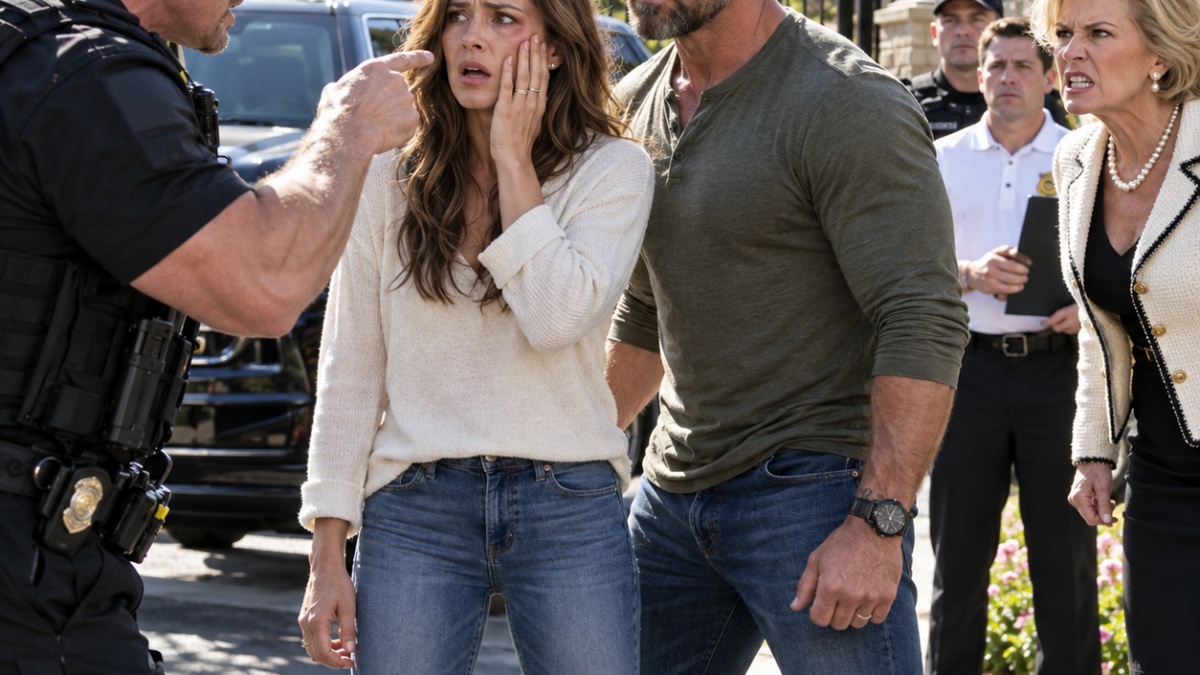
PART 2
I stopped with my hand wrapped around the front-door handle.
Not because I was afraid of Derek Hartwell.
Not because I didn’t know how to stop a man who had just assaulted my wife.
I stopped because of the name he’d spoken.
Brenda.
The president of our homeowners association.
The woman who had spent months threatening us with fines, accusing us of disrupting neighborhood harmony, and defending her nephew whenever we questioned his behavior.
Now Derek was standing over my injured wife, telling her that Brenda had known I was supposed to be away.
That changed everything.
Until that moment, I had considered Derek an unstable bully hiding behind a uniform.
But a bully who follows someone’s orders is different from a bully acting alone.
And I needed to know which one I was dealing with.
I opened the front door.
“Derek.”
He turned.
For the first time since I’d met him, the confident little smile disappeared from his face.
I stepped onto the porch.
Sarah looked toward me.
“Jake?”
Her voice was barely audible.
The sight of her nearly destroyed my composure.
A red mark was spreading across her left cheek. Her eyes were wet, and she was breathing in short, frightened bursts.
She wasn’t crying because the slap had hurt.
She was crying because a man had struck her outside her own home while she was doing something as ordinary as bringing groceries to her family.
I descended the porch steps.
Derek took one step backward.
“You’re supposed to be gone.”
I kept my voice calm.
“Apparently.”
His eyes moved toward my hands.
I wasn’t carrying a weapon.
I wasn’t wearing a uniform.
I was dressed in jeans and a plain gray T-shirt.
But he knew who I was.
He knew I served in the military.
And suddenly he seemed much less interested in explaining his authority.
“Your wife was refusing to comply with an HOA enforcement action,” he said.
I looked at Sarah.
“Are you hurt?”
She nodded slightly.
Then she whispered, “He hit me.”
I turned back toward Derek.
“I saw.”
He raised his hands defensively.
“She got aggressive.”
I felt something cold move through my chest.
“No.”
I pointed toward the camera above the garage.
“That recorded everything.”
His eyes followed my finger.
For a moment, he said nothing.
Then his expression changed.
“You can’t record an officer without consent.”
I almost couldn’t believe what I was hearing.
“You’re standing in my driveway, Derek. You’re not a police officer, and my exterior security camera is recording my property.”
He swallowed.
I took out my phone.
“Sarah, go inside.”
She hesitated.
“Jake—”
“Please. Take your phone with you and call the police.”
Derek stepped forward.
“There’s no reason to involve them.”
I looked at him.
“You assaulted my wife.”
“It was a misunderstanding.”
“Then you can explain it to the responding officers.”
His face reddened.
“You’re trying to intimidate me because you’re some kind of military hotshot.”
I shook my head.
“No. I’m asking you to stay here until the police arrive.”
Then I stepped aside, leaving him a clear path to his truck.
I wasn’t going to physically detain him or create another confrontation.
If he wanted to leave, the security cameras would record that, too.
Derek looked toward the street.
Then back at the house.
He seemed to be calculating which decision would cause him fewer problems.
Finally, he took several steps toward his truck.
“This isn’t over, Steel.”
I stared at him.
“You’re right.”
He climbed into the pickup and slammed the door.
The engine started.
His tires rolled across the scattered groceries as he backed into the street.
I photographed the truck and license plate before he disappeared around the corner.
Then I walked inside.
Sarah was sitting on the kitchen floor.
Our daughter Emma had come downstairs after hearing the noise.
She was kneeling beside her mother.
Marcus stood near the refrigerator, clutching a stuffed dinosaur he’d owned since he was four.
Neither child was speaking.
That was the moment I realized just how much damage Derek and Brenda had already done.
It wasn’t only the slap.
It wasn’t only the fines.
It wasn’t even the months of harassment.
My children were beginning to believe that their own home wasn’t safe.
And that was something I couldn’t accept.
***
I knelt beside Sarah.
“Look at me, sweetheart.”
She raised her eyes.
“I’m okay.”
I could see she wasn’t.
Her cheek was swelling, and her hands were shaking.
I gently brushed a strand of hair away from her face.
“Do you feel dizzy?”
She shook her head.
“Any trouble seeing?”
“No.”
“Does your jaw hurt?”
“A little.”
I nodded.
“We’re getting you checked.”
She reached for my wrist.
“Jake, please don’t do anything.”
I looked at her.
“What do you mean?”
“You know what I mean.”
Her eyes filled with tears.
“I saw your face when you came outside.”
I took a slow breath.
Sarah had known me for sixteen years.
She understood things about me that no military training ever could.
She knew when I was frightened.
She knew when I was angry.
And she knew that watching someone hurt my family could bring both emotions to the surface at once.
I covered her hand with mine.
“I’m not going after him.”
She searched my face.
“Promise?”
“I promise.”
I leaned closer.
“But I am going to make sure he answers for what he did.”
She nodded.
Then she started crying.
I wrapped my arms around her.
For several minutes, we stayed on the kitchen floor while our children huddled beside us.
I had spent fifteen years learning how to remain calm under pressure.
Yet in that moment, all I wanted was to make my family feel safe again.
And I didn’t know whether I could.
***
The responding officers arrived within minutes.
One was a veteran patrol officer named Daniel Morrison.
The other was younger, Officer Kevin Brooks.
They separated the witnesses, took photographs of Sarah’s injury, documented the damaged groceries, and collected information about Derek’s vehicle.
I showed them the camera footage.
Officer Morrison watched without speaking.
The video showed Sarah unloading groceries.
Derek approaching.
The argument.
The slap.
The groceries falling.
Then Derek crushing the eggs beneath his boot.
Morrison replayed the moment of the assault.
He looked at me.
“That’s clear.”
I nodded.
“Yes, sir.”
He turned toward Sarah.
“Ma’am, we’d like you to receive a medical evaluation and provide a complete statement.”
She agreed.
Then Morrison asked me a question.
“Does this man have any actual law enforcement authority?”
“Not that I’ve been able to verify.”
I showed him copies of the complaints I’d previously filed concerning Derek’s claimed security credentials.
Morrison studied them.
“He’s been representing himself as an officer?”
“Repeatedly.”
“Has he tried to conduct searches or detain anyone?”
I nodded.
“He attempted to search my truck. He’s also approached other homeowners claiming authority to inspect their property.”
Morrison exchanged a look with Brooks.
Then he turned back toward me.
“Mr. Steel, we’re going to document everything and investigate. Please don’t confront him yourself.”
“I won’t.”
He studied my face.
“You military?”
“Yes.”
“Active?”
“Reserve service now. Navy.”
He nodded.
“Then you understand why I need you to let us handle this.”
I looked toward Sarah.
“Believe me, Officer. I do.”
***
At the hospital, Sarah’s colleagues were waiting.
She’d worked there for years, caring for children with everything from broken bones to serious illnesses.
Now she was the patient.
A physician examined her cheek and jaw, documented the injury, and checked for signs of more serious trauma.
Fortunately, she hadn’t suffered a fracture.
But the swelling and bruising were significant.
More troubling was the way she reacted whenever someone unexpectedly entered the room.
She flinched.
My wife.
The woman who calmly held frightened children during painful procedures.
The woman who could reassure panicked parents in the middle of a medical emergency.
Now she was flinching at footsteps.
I sat beside her bed.
She looked toward the window.
“I keep hearing it.”
“What?”
“The sound.”
I knew immediately.
The slap.
The groceries hitting the driveway.
Derek’s voice.
She closed her eyes.
“I can hear him telling me I don’t belong in my own neighborhood.”
I reached for her hand.
“You belong wherever you choose to live, Sarah.”
She shook her head.
“That’s not what I mean.”
I waited.
“I’ve spent months trying to be polite. Trying to explain that we’re not breaking rules. Trying to convince Brenda that we’re decent people.”
Her voice cracked.
“And none of it mattered.”
I squeezed her hand.
“It mattered to me.”
She looked at me.
“I don’t want to spend the rest of our lives fighting these people.”
“Neither do I.”
“Then what are we going to do?”
I thought about the camera footage.
The false citations.
The complaints.
Derek’s fake badge.
And his comment about Brenda knowing I was away.
“We’re going to find out exactly what they’ve been doing,” I said.
Sarah studied me.
“And then?”
“Then we’re going to stop them through the law.”
For the first time that afternoon, she seemed to relax.
Just a little.
***
That night, after the children went to bed, I sat alone in our garage.
The house was quiet.
A ceiling fan hummed overhead.
I had connected my laptop to the security camera system.
On the screen was the recording of Derek striking Sarah.
I didn’t want to watch it again.
But I needed to preserve the evidence.
I copied the original video files, documented their timestamps, and made secure backups.
Then I began reviewing the preceding weeks.
Derek’s truck appeared again and again.
Monday, 6:04 p.m.
Tuesday, 5:57 p.m.
Wednesday, 6:12 p.m.
He parked across the street while we ate dinner.
He photographed our driveway.
He walked along our fence.
Several times, he appeared after dark.
The footage showed him shining a flashlight toward our backyard.
On one recording, he approached the side of the house near our bedroom window.
I stopped the video.
My stomach tightened.
Sarah had told me about footprints beneath that window.
I’d believed her.
But seeing him there made the threat feel different.
Real.
Deliberate.
I checked another camera.
The side camera captured Derek standing near the window for almost two minutes.
He wasn’t measuring a fence.
He wasn’t inspecting anything related to community maintenance.
He was watching our house.
I wrote down the date and time.
Then I continued.
The more footage I reviewed, the clearer the pattern became.
Derek had been monitoring our family.
And his behavior had intensified during the period when I was away.
I sat back in my chair.
A man wearing a security uniform had been using his supposed authority to frighten my wife and children.
And the HOA president had defended him every time we complained.
That raised a question I could no longer ignore.
Why?
***
I began with the company Derek claimed to represent.
Titan Security Solutions.
The name appeared on his truck, his invoices, and several HOA notices.
Yet the business information I’d been able to locate did not match the credentials he claimed.
I contacted the appropriate Texas regulatory authorities to verify whether the company and personnel held the licenses required for the services they purported to provide.
The responses raised serious concerns.
I could not verify a valid license for Titan Security Solutions under the information Derek supplied.
Neither could I identify authorization for Derek to act as a law enforcement officer.
His HOA badge was not a police badge.
His vehicle was not a patrol car.
And whatever private security work he might lawfully perform, he had no right to invent police powers.
I gathered the records into a folder.
Then I reviewed the HOA’s financial statements.
Oakwood Estates had two hundred households.
Each paid approximately $350 in monthly dues.
That represented a substantial amount of community money every year.
The payments were supposed to maintain shared facilities, landscaping, streets, and neighborhood amenities.
But one expense caught my attention.
A recurring monthly payment of $3,000.
The recipient was listed as a security contractor.
The payment came from the maintenance and repairs account.
I searched the board minutes.
No approved contract.
No documented procurement process.
No clear vote authorizing the expenditure.
I checked another month.
Another $3,000.
Then another.
The payments continued.
I leaned forward.
Brenda had hired her own nephew.
The HOA was paying him thousands of dollars.
And the association’s records did not show that the arrangement had been properly approved.
I knew what that could mean.
At minimum, a serious governance and financial oversight problem.
Potentially something worse.
But I also knew better than to call it theft before we had examined the underlying bank records.
I called an attorney I’d worked with during an earlier property dispute.
Her name was Maria Gonzales.
She specialized in homeowners association litigation.
I explained the situation.
When I finished, she was quiet.
Then she said, “Jake, send me everything.”
“How quickly can you review it?”
“Immediately.”
I looked toward the house.
Sarah was sleeping upstairs.
The bruise on her cheek would still be there in the morning.
“Maria, somebody needs to stop this.”
“We will pursue every lawful remedy available.”
I nodded.
“That’s all I’m asking.”
***
The following morning, Sarah came downstairs while I was making coffee.
Her cheek was swollen.
She wore one of my old Navy sweatshirts.
For a moment, she looked so tired that I wanted to send her back to bed.
Instead, she sat at the kitchen table.
“What are you working on?”
“The HOA financial records.”
She raised an eyebrow.
“Since when do you enjoy accounting?”
“Since Brenda started using it to pay Derek.”
Sarah looked at me.
“What?”
I showed her the statements.
Three thousand dollars a month.
Maintenance fund.
Security services.
No clear board authorization.
Sarah studied the figures.
Then she looked up.
“That’s our money.”
“Every homeowner’s money.”
She shook her head.
“Brenda told the board we couldn’t afford to repair the community pool this summer.”
I looked at her.
“She said what?”
“She told everyone the maintenance budget was too tight.”
I stared at the records.
“Interesting.”
Sarah leaned closer.
“Jake, have you checked the other accounts?”
“Not yet.”
She reached for the laptop.
“Then move over.”
I almost smiled.
“You’re supposed to be resting.”
“I’m sitting.”
“Sarah.”
She gave me the look she usually reserved for patients who refused to follow basic medical advice.
“Jake Steel, a man hit me in my driveway yesterday because he thought he had the authority to control my life.”
I remained silent.
“I’m not going to spend the next week lying in bed while you do all the work.”
I moved my chair.
She sat beside me.
And together, we started following the money.
***
It didn’t take long to find more problems.
The pool maintenance account contained payments that didn’t match the repair schedule.
Landscaping expenses had increased, but several common areas hadn’t received the contracted services.
Community event funds showed unusual transfers.
Some invoices lacked detailed descriptions.
Others were paid to vendors we couldn’t easily identify.
Sarah took notes.
I cross-referenced the payments.
By lunchtime, we had a list of transactions that needed independent review.
Then Sarah found a payment description that made her stop.
“Jake.”
I looked over.
“What?”
“Look at this.”
The entry concerned a charge apparently coded to community beautification.
The amount was suspiciously close to a monthly payment associated with Brenda’s luxury SUV, based on information that had circulated in a board discussion.
That wasn’t proof of misuse.
But it was a reason to obtain the actual supporting records.
I looked at Sarah.
“We need a forensic accountant.”
She nodded.
“And we need to know who approved these expenses.”
I opened the board minutes again.
Several were incomplete.
Others contained vague references to routine expenditures.
Bob, the HOA treasurer, appeared to have signed off on financial summaries that did not explain the transfers.
I knew Bob.
He lived four houses away.
A retired accountant who rarely spoke at neighborhood meetings.
I’d assumed he supported Brenda.
But perhaps he was simply accepting information she provided.
Sarah looked thoughtful.
“His wife, Carol, works with me on the community garden committee.”
“Do you trust her?”
“Yes.”
“Could you ask whether Bob knows about these payments?”
Sarah shook her head.
“Not directly. I don’t want to turn neighbors into informants.”
I nodded.
She was right.
“We’ll request the records properly.”
“Exactly.”
Then she placed her hand over mine.
“Jake, there’s something else.”
“What?”
“I want to read the entire HOA declaration.”
I stared at her.
“All of it?”
She nodded.
“Every page.”
I laughed softly.
“You’re a stronger woman than I am.”
She gave me a tired smile.
“I know.”
***
Sarah spent the next two days reading the Oakwood Estates governing documents.
She worked through the original declaration, the bylaws, the assessment provisions, and the enforcement procedures.
Some sections were straightforward.
Others were dense enough to make my military manuals seem like children’s books.
But she kept going.
On the third afternoon, she called me into the kitchen.
“Jake, I found something.”
I sat beside her.
She pointed to a section concerning expanded enforcement authority.
The provision required significant homeowner approval before certain new enforcement powers could be adopted.
Under the relevant governing documents, the particular changes Brenda had purported to implement required approval from sixty percent of the community’s homeowners.
Sarah looked at me.
“Did Brenda ever hold a community-wide vote?”
“No.”
“Did anyone circulate a petition?”
“Not that I’ve seen.”
She tapped the page.
“Then how did she give Derek expanded authority?”
I thought about the emergency board meeting.
Brenda had called it while I was away.
Sarah had attended and questioned Derek’s credentials.
The board had voted to expand his powers by a narrow margin.
Three to one.
I looked back at the declaration.
“If this provision applies, that board vote may not have been enough.”
Sarah nodded.
“That’s what I’m thinking.”
I picked up my phone and called Maria.
She asked us to send the provision and the meeting minutes.
Later that day, she called back.
“Sarah found a very important issue.”
I glanced at my wife.
Sarah smiled for the first time in days.
Maria continued.
“The board may have exceeded the authority granted by its governing documents. We need to examine the amendment history and voting requirements, but this could invalidate a significant portion of the enforcement program.”
I looked toward the folder containing Derek’s citations.
“All those fines?”
“Potentially many of them.”
Sarah leaned toward the phone.
“And the security policy?”
“That too.”
Sarah closed her eyes.
For a moment, she looked relieved.
Then her expression hardened.
“Good.”
I reached for her hand.
It was the first time I’d heard that kind of determination in her voice.
Derek had wanted to make Sarah feel powerless.
Instead, he’d given her a reason to examine every piece of authority Brenda claimed to possess.
And my wife was proving far more dangerous to their scheme with a stack of documents than I could ever have been with my military training.
***
The criminal investigation into Derek’s assault moved forward.
The police reviewed our security footage and interviewed witnesses.
They also examined the earlier harassment complaints.
Mrs. Chen, our neighbor, provided footage from her doorbell camera.
The recording showed Derek repeatedly approaching our property without any apparent legitimate reason.
The Rodriguez family reported several incidents in which Derek had targeted their household with unusual citations.
Mrs. Patterson, an elderly widow who lived near the end of the street, described an occasion when Derek appeared in her backyard after dark and demanded access to her late husband’s workshop.
Other complaints involved Derek approaching children at bus stops, following residents, and claiming authority he did not possess.
The pattern was becoming difficult to dismiss.
But what bothered me most was how many people had been afraid to speak.
A young mother on Maple Street told Sarah that Derek had followed her children on their way to school.
A retired teacher admitted that she’d paid fines she believed were improper because she didn’t want trouble.
Another homeowner said she’d stopped inviting relatives over because Derek had threatened citations for visitors’ vehicles.
Every family had believed its problem was isolated.
Every family had been embarrassed.
And every family had been told the same thing.
The HOA made the rules.
Derek enforced them.
Questioning either one would only make life harder.
Sarah began contacting neighbors.
Not to pressure them.
Not to recruit them into a personal feud.
But to ask whether they wanted to share documentation with an attorney.
The first meeting took place in our kitchen.
Five homeowners attended.
By the following week, there were fourteen.
Then twenty-three.
Within a month, forty-seven families had contributed information to what Sarah named the Oakwood Accountability Network.
I watched her organize the records with the patience and precision she brought to nursing.
She listened.
She asked questions.
She never interrupted someone describing an experience that frightened them.
And slowly, people began speaking openly about what had happened.
The neighborhood that Brenda had divided through fear was starting to recognize its own strength.
***
One evening, Mrs. Chen came to our house carrying a small box of homemade dumplings.
She placed it on the kitchen counter.
“For Sarah,” she said.
My wife smiled.
“You didn’t have to do that.”
Mrs. Chen shook her head.
“You have done so much for us.”
Sarah touched her arm.
“We’re just trying to fix things.”
Mrs. Chen’s expression changed.
“I need to tell you something.”
We sat down.
She explained that Derek had repeatedly cited her family for decorations near their front porch.
Beautiful red lanterns that had been part of their family celebrations for years.
He claimed they violated neighborhood aesthetic standards.
When she protested, he told her that Oakwood Estates expected residents to maintain a certain appearance.
“He said our decorations made the neighborhood look foreign,” she whispered.
My jaw tightened.
Sarah reached across the table.
“I’m so sorry.”
Mrs. Chen looked down.
“My husband told me to take them down. He didn’t want trouble.”
She wiped her eyes.
“We came here because we wanted a peaceful place to raise our family.”
I thought about our American flag.
The first citation.
Brenda’s comment about military families struggling with civilian expectations.
Then Mrs. Chen’s lanterns.
Different decorations.
Same message.
You don’t belong.
I asked whether she had kept the violation notices.
She nodded.
“Every one.”
“Would you be willing to let Maria review them?”
She looked toward Sarah.
My wife smiled gently.
“Only if you’re comfortable.”
Mrs. Chen took a breath.
“Yes.”
Then she said something I never forgot.
“I don’t want my grandchildren growing up believing they have to hide who they are to make their neighbors happy.”
Sarah squeezed her hand.
“They shouldn’t have to.”
***
The Rodriguez family came forward next.
They lived three houses down.
Their daughter had celebrated her quinceañera shortly before the harassment began.
Music played in their backyard during the family celebration.
The event ended within the neighborhood’s ordinary quiet hours.
Yet Derek issued a citation describing the music as a community disturbance.
Other neighbors held parties without receiving similar penalties.
Mr. Rodriguez had challenged the fine.
Derek responded by threatening additional inspections.
“At first, I thought he just didn’t like loud music,” Mr. Rodriguez told me.
He shook his head.
“Then I saw him sitting outside our house during family gatherings, writing things down.”
His wife leaned forward.
“Our kids started asking whether we were allowed to play Spanish music anymore.”
Sarah closed her eyes.
That question hurt.
Children shouldn’t have to ask whether the sounds of their family are permitted in their own home.
I looked toward Emma and Marcus, who were playing quietly in the living room.
I’d taught them that America was strongest when people respected one another’s differences.
Yet here, in a neighborhood that advertised itself as welcoming and family-friendly, a man with a fake badge had made children feel ashamed of their own homes.
I asked the Rodriguez family to provide their notices and any recordings they had.
They agreed.
The evidence file grew.
But so did something more important.
Trust.
People who had barely spoken to one another were beginning to sit at the same kitchen table.
Sharing experiences.
Comparing documents.
Realizing that they weren’t alone.
***
While Sarah worked with the neighbors, Maria pursued the legal side.
She requested the association’s complete financial records.
She examined Derek’s purported security contract.
She investigated the procedures used to authorize the enforcement program.
And she arranged for an independent forensic accountant to review the suspicious transactions.
The preliminary findings were troubling.
Derek had received monthly payments that lacked proper documentation.
Several invoices were inconsistent with the services supposedly provided.
Payments appeared to have been coded to maintenance accounts rather than security expenses.
Other transactions suggested association funds may have been diverted toward Brenda’s personal expenses.
Maria called me into her office one afternoon.
Sarah came with me.
The accountant sat at a conference table surrounded by financial statements.
Her name was Rachel Donovan.
She had spent years investigating financial irregularities in private organizations.
Rachel opened a spreadsheet.
“I want to walk you through what we’ve found.”
She pointed toward several transactions.
“These payments were charged to the pool maintenance account.”
Sarah leaned forward.
“But the pool was closed for repairs.”
Rachel nodded.
“The documentation provided so far does not support all the expenses.”
She moved to another section.
“These transfers came from landscaping and general maintenance funds.”
I studied the amounts.
Rachel continued.
“Some appear connected to personal expenditures rather than association operations.”
Sarah looked toward me.
“Brenda.”
Rachel remained careful.
“The records indicate that accounts controlled by Ms. Hartwell may have benefited. We need additional bank documentation to establish the complete flow of funds.”
I appreciated her precision.
Then she showed us the recurring payments associated with Derek.
Three thousand dollars a month.
The invoices were vague.
Some dates didn’t match the recorded service periods.
And the supposed vendor information raised serious concerns.
I leaned back.
“How much money are we talking about?”
Rachel folded her hands.
“Based on the records available, the potentially improper transactions exceed sixty thousand dollars. Further analysis may increase that figure.”
Sarah stared at her.
“Sixty thousand?”
Rachel nodded.
“At least.”
I thought about the neighbors.
Retirees.
Young families.
People paying monthly dues because they believed the money maintained their community.
Now they were learning that some of those funds may have been used to finance the very person who had terrorized them.
Sarah’s expression hardened.
“Then we need every homeowner to know.”
Maria nodded.
“Once the documentation is verified, they will.”
***
Brenda reacted exactly as Maria expected.
At first, she denied everything.
She claimed Derek had acted outside his instructions.
She described the assault as a personal disagreement unrelated to the HOA.
She insisted that any financial discrepancies were routine bookkeeping errors.
Then she sent an email to residents warning against spreading rumors about board members.
The message accused unnamed homeowners of creating unnecessary division.
I read it while sitting beside Sarah.
She shook her head.
“She still thinks she can talk her way out of this.”
I looked toward the screen.
“Maybe she believes she can.”
Then my phone rang.
It was Detective Morrison.
He wanted to speak with me about Derek.
I stepped into the garage.
“Detective.”
“Mr. Steel, we’ve located Mr. Hartwell.”
I took a breath.
“Okay.”
“He’s been interviewed concerning the assault and related complaints.”
I waited.
Morrison continued.
“We’re pursuing the appropriate charges based on the evidence.”
I looked toward the house.
Sarah was helping Marcus with homework.
“Thank you.”
“There’s something else.”
“What?”
“He’s made statements concerning instructions from Ms. Hartwell.”
My grip tightened around the phone.
“What kind of statements?”
“I can’t discuss all the details yet. But we are examining whether other individuals directed or encouraged his conduct.”
I thought about the words Derek had spoken in our driveway.
*Brenda told me your husband wouldn’t be home until next week.*
I closed my eyes.
“I understand.”
Morrison paused.
“Mr. Steel, I want you to know we’re taking the matter seriously.”
I looked toward the security camera mounted above the garage.
“So am I.”
***
The next several weeks were difficult.
Derek faced criminal proceedings connected to the assault and related conduct.
His earlier harassment was examined as part of the broader investigation.
Court-imposed restrictions limited his ability to contact Sarah and our family.
But Brenda continued trying to control the narrative.
Anonymous social media accounts began posting accusations about me.
They claimed I was using my military background to frighten civilian neighbors.
They described Sarah as confrontational.
One post suggested she had provoked Derek and then exaggerated the incident to gain sympathy.
I stared at that sentence for a long time.
My wife had been standing in her own driveway carrying groceries.
A man had struck her.
The video showed exactly what happened.
And someone was still trying to make her responsible.
Sarah found me reading the post.
“Jake?”
I looked up.
She studied my face.
“Don’t let them get to you.”
I set the phone down.
“She hit you through him, Sarah. Now she’s trying to make people believe you deserved it.”
Sarah sat beside me.
“I know.”
Her voice was quiet.
“But I also know the truth.”
I reached for her hand.
“So do I.”
She smiled sadly.
“Then that’s what we keep showing people.”
I looked at her.
The bruise had faded, but I knew the fear hadn’t disappeared completely.
Some nights she still checked the locks twice.
Sometimes she hesitated before walking to her car after work.
And whenever she heard a pickup engine idling outside, her shoulders tightened.
She was healing.
But healing didn’t happen simply because the visible injury disappeared.
That was something I was still learning.
***
Brenda’s next move was more personal.
Anonymous flyers appeared in several mailboxes.
They claimed that military combat veterans could be dangerous neighbors.
Some suggested I suffered from psychological problems related to my service.
Others accused our family of using military status to demand special treatment.
I was furious.
Not because someone criticized me.
I’d been criticized before.
But because the flyers used harmful stereotypes about veterans to make our family seem threatening.
Military service didn’t place me above the law.
It didn’t make me immune to mistakes.
And it certainly didn’t mean everyone who served was entitled to special treatment.
But it also didn’t make me a danger to my neighbors.
I had spent fifteen years serving my country.
Now someone was twisting that service into an excuse to discredit my wife after she was assaulted.
Maria advised us to preserve every flyer and document the distribution.
We did.
Sarah placed them in a folder.
Then she looked at me.
“They’re trying to make you angry enough to do something stupid.”
I nodded.
“I know.”
She stepped closer.
“Don’t give them that.”
I looked into her eyes.
“I won’t.”
She wrapped her arms around me.
For a moment, I held her tightly.
Then she whispered, “I married a good man, Jake. Don’t let Brenda convince you that proving you’re dangerous is the only way to prove you’re strong.”
I closed my eyes.
Those words stayed with me.
Because Sarah understood something that had taken me years to learn.
Real strength wasn’t always about confronting a threat directly.
Sometimes it meant controlling yourself when every instinct demanded otherwise.
Sometimes it meant allowing the truth to work slowly.
And sometimes it meant trusting the people you loved to stand beside you rather than trying to fight every battle for them.
***
The attacks on Sarah became more disturbing.
Someone began leaving negative online reviews about her work at the children’s hospital.
The comments accused her of being rude to families and emotionally unstable.
Several were posted by accounts with little or no history.
Anonymous callers contacted hospital administrators, questioning whether Sarah should be allowed to work with vulnerable children.
The hospital investigated the complaints.
Her supervisors reviewed her professional record.
They found no evidence supporting the accusations.
Sarah had years of strong evaluations.
Parents regularly praised her care.
Colleagues trusted her judgment.
The hospital took steps to support her and address the harassment.
But the damage to her peace of mind was real.
One evening, she came home after a twelve-hour shift and sat at the kitchen table without removing her shoes.
I knew something was wrong.
“What happened?”
She stared at her hands.
“A mother asked me whether the things online were true.”
I sat beside her.
“What did you say?”
“I told her they weren’t.”
Her eyes filled.
“She apologized. She said she’d heard about the neighborhood situation and didn’t want to believe the rumors.”
I reached for her hand.
“Sarah—”
“But for one second, Jake, I saw uncertainty in her face.”
Her voice broke.
“I’ve spent my life trying to make children and parents feel safe. And now people are questioning whether they can trust me because of something that happened in our driveway.”
I felt my chest tighten.
I wanted to tell her that none of it mattered.
That the people who knew her understood the truth.
But it mattered to her.
And I wasn’t going to dismiss that.
Instead, I pulled my chair closer.
“Tell me what you need.”
She looked up.
“What?”
“What can I do right now?”
She stared at me for several seconds.
Then she whispered, “Just sit with me.”
So I did.
No strategy.
No phone calls.
No research.
I sat beside my wife while she cried.
And for once, I understood that being her husband mattered more than being the man trying to solve everything.
***
The financial investigation continued.
As more records became available, Rachel Donovan identified additional questionable transfers.
The total amount under scrutiny grew beyond seventy-five thousand dollars.
Some expenses appeared connected to Brenda’s personal lifestyle.
Others involved payments to Derek or entities associated with him.
Several invoices had been altered or lacked adequate supporting documentation.
The records raised serious questions about misuse of association funds.
Meanwhile, Bob, the HOA treasurer, began cooperating with the independent review.
When Maria first approached him, he was defensive.
He insisted he’d relied on Brenda’s financial summaries.
He claimed he hadn’t approved improper payments knowingly.
But as investigators examined the records, Bob began acknowledging how little independent oversight he’d actually provided.
He had signed reports.
Accepted explanations.
And allowed Brenda to control information the board was supposed to review.
One afternoon, Bob came to our house.
He stood on the porch holding a folder.
I opened the door.
“Bob.”
He looked uncomfortable.
“Jake, can we talk?”
I stepped aside.
We sat at the kitchen table.
Sarah joined us.
Bob looked at her cheek, which had mostly healed.
His expression fell.
“I’m sorry about what happened to you.”
Sarah nodded.
“Thank you.”
He turned toward me.
“I’ve been reviewing the finances.”
I waited.
“Some of those payments should never have been approved.”
I remained silent.
Bob swallowed.
“I trusted Brenda.”
Sarah leaned forward.
“Bob, why didn’t you question the invoices?”
He looked down.
“Because I thought she knew what she was doing.”
The room was quiet.
Then he added, “And because every time someone challenged her, she made their life miserable.”
I thought about the other homeowners.
The families who had paid fines.
The neighbors who had removed decorations.
The children who had been frightened.
Bob continued.
“I should’ve done my job.”
I nodded.
“Yes.”
He looked up.
I didn’t soften the answer.
He had accepted responsibility as treasurer.
People had trusted him with their money.
And failing to question suspicious transactions had consequences.
But I also knew that accountability wasn’t the same thing as humiliation.
I leaned forward.
“Bob, if you want to help fix this, give the investigators everything you have.”
He nodded.
“I will.”
Then he placed the folder on the table.
Inside were copies of internal financial reports and correspondence Brenda had circulated to selected board members.
Maria would review them.
Bob stood to leave.
At the door, he paused.
“I hope your family can forgive me someday.”
Sarah looked at him.
“That depends on what you do next.”
He nodded slowly.
Then he left.
I watched him walk down the driveway.
For the first time, I understood how Brenda had kept control for so long.
She didn’t need every board member to be corrupt.
She only needed them to stop asking questions.
***
The investigation took a major turn when Derek began cooperating with prosecutors.
By then, he was facing significant legal exposure.
The assault was documented.
Multiple residents had reported harassment.
His claims of official authority had been challenged.
And questions concerning the security payments were growing.
Derek had expected Brenda to protect him.
Instead, she publicly blamed him.
She claimed he’d exceeded his instructions.
She suggested he had acted independently.
She insisted she never authorized physical intimidation.
Derek apparently didn’t appreciate being abandoned.
Through his attorney, he offered recordings of conversations he’d had with Brenda.
The recordings were preserved and examined as evidence.
When Maria informed us, I felt my stomach tighten.
“What do they contain?”
“Instructions concerning the way Derek was supposed to handle residents who challenged enforcement.”
“Sarah?”
“Your family is mentioned.”
I sat down.
Maria continued.
“There are also discussions relevant to the association’s finances.”
I closed my eyes.
For months, Brenda had insisted Derek was simply an overzealous contractor.
Now there were recordings that might establish what she’d actually told him.
A few days later, Maria arranged for us to hear portions that could lawfully be shared.
Sarah sat beside me.
The audio began with background noise.
Then Brenda’s voice.
Cold.
Impatient.
Unmistakable.
“Make the military family understand they aren’t welcome here.”
I felt Sarah’s hand tighten around mine.
Derek asked how far he should go.
Brenda responded that he should use pressure to make them comply with community standards.
The recording did not contain a direct instruction to slap Sarah.
But it supported the allegation that Brenda had encouraged a campaign of intimidation against our family.
Then another recording played.
This one concerned finances.
Brenda discussed moving expenditures between budget categories.
She spoke dismissively about homeowners who paid dues without examining the books.
I looked toward Maria.
She stopped the recording.
“That gives investigators a clearer basis for examining intent.”
Sarah was silent.
I turned toward her.
She was crying.
“Sarah?”
She shook her head.
“For months, I kept thinking maybe I was imagining it.”
I covered her hand.
“You weren’t.”
She looked toward the speaker.
“She wanted us gone.”
I nodded.
“Yes.”
Sarah wiped her eyes.
Then she sat straighter.
“Then let’s make sure everyone knows what happened.”
***
Brenda’s attempts to control the situation grew increasingly desperate.
Her attorneys challenged the interpretation of the financial records.
They disputed claims that she had directed harassment.
She accused Derek of lying to protect himself.
Then she began circulating documents suggesting she’d attempted to terminate Derek’s contract months earlier.
The documents were dated before several of the incidents.
At first glance, they appeared helpful to her defense.
But investigators compared them with earlier board records, emails, and document histories.
Questions emerged about when some of the letters had actually been created.
The records did not align cleanly.
Brenda’s explanations changed.
That damaged her credibility further.
Then something happened that stunned even the people who had been investigating her for months.
Brenda reported a break-in at her own home.
She claimed intruders had entered the house and left threatening messages.
She suggested people connected to my military background might be responsible.
I learned about the allegation when Detective Morrison called.
“Mr. Steel, I need to ask where you were last night.”
I felt my jaw tighten.
“At home with my family.”
“Can you verify that?”
“Yes. Our cameras were operating, and I was on a video call with a colleague for part of the evening.”
He nodded, though I couldn’t see him.
“All right.”
I took a breath.
“Detective, is this related to Brenda Hartwell?”
There was a pause.
“She’s made allegations concerning a reported burglary.”
I closed my eyes.
“Of course she has.”
Morrison remained professional.
“We’re investigating the report independently.”
“Understood.”
I provided the relevant information.
Then I called Maria.
She advised me not to contact Brenda or discuss the allegation publicly.
I followed her advice.
I was tired of being accused.
But I wasn’t going to let exhaustion make me careless.
***
Within days, investigators found serious inconsistencies in Brenda’s burglary report.
Neighboring security cameras did not support her account of intruders entering the property during the relevant period.
Other evidence suggested parts of the scene had been staged.
The threatening notes were examined.
The timeline changed.
The story fell apart.
The investigation produced additional questions concerning false reporting and evidence manipulation.
I didn’t celebrate.
There was something deeply unsettling about watching a person become so desperate to protect her reputation that she created more evidence against herself.
But Brenda had spent months telling our neighbors that Sarah was untrustworthy.
Now investigators were examining whether Brenda herself had fabricated a crime.
The irony was impossible to miss.
Sarah heard the news while organizing the Accountability Network’s next meeting.
She looked at me.
“Did she really try to blame your military friends?”
“That’s what the report suggests.”
Sarah shook her head.
“All because she couldn’t admit she was wrong.”
I sat beside her.
“Maybe she stopped believing she could be wrong a long time ago.”
Sarah looked toward the window.
“That’s what scares me most.”
“What?”
“Not Derek. Not even the money.”
She turned toward me.
“The idea that someone can become so convinced they’re entitled to control other people that they stop seeing those people as human beings.”
I thought about the children.
Mrs. Chen.
The Rodriguez family.
Mrs. Patterson.
And Sarah.
I nodded slowly.
“I know.”
***
The neighborhood’s opinion of Brenda began changing rapidly.
Residents who had previously defended her now demanded answers.
Some felt betrayed.
Others were embarrassed that they’d ignored complaints.
A few insisted the allegations should be resolved in court before anyone reached final conclusions.
That was fair.
But the board could no longer pretend the situation was routine.
Sarah helped organize a petition requesting an emergency membership meeting and leadership changes.
The response exceeded anything we’d expected.
Within three days, homeowners representing an overwhelming majority of the occupied properties had signed.
People who had never participated in HOA governance before were suddenly reading bylaws, requesting records, and asking detailed questions about how their dues had been spent.
I watched Sarah at the kitchen table one evening.
She had a laptop open, a stack of documents beside her, and a cup of cold coffee she’d forgotten to drink.
Emma was doing homework nearby.
Marcus was building a model airplane.
The house felt peaceful.
For the first time in months, Derek’s truck wasn’t circling the block.
I leaned against the doorway.
“You’ve become quite the organizer.”
Sarah looked up.
“I’m a nurse.”
I smiled.
“That’s supposed to explain everything?”
She laughed.
“At the hospital, you learn how to keep track of a hundred things at once while people are panicking.”
I walked over and kissed her forehead.
“I’m proud of you.”
Her expression softened.
“Thank you.”
Then she looked down at the petition.
“But I keep thinking about the families who were afraid to say anything.”
I sat beside her.
“So do I.”
She leaned her head against my shoulder.
“Jake, I don’t want to just remove Brenda.”
“What do you want?”
“I want a neighborhood where the next family doesn’t have to go through what we did.”
I looked toward our children.
“Then that’s what we’ll build.”
***
The emergency HOA meeting took place on a Saturday afternoon.
The community center was packed.
Nearly every available chair was occupied.
People stood along the walls.
Some carried copies of financial reports.
Others held violation notices.
Several residents brought photographs of incidents they wanted the board to address.
The atmosphere was tense.
Brenda did not attend in person.
Her attorney submitted a statement disputing the allegations and arguing that certain board actions had been misunderstood.
But the homeowners weren’t willing to accept another vague explanation.
Sarah stood at the front.
She wore a simple blue blouse.
The bruising on her cheek had faded, though I knew she still felt its presence whenever she looked in the mirror.
She held a microphone.
“My name is Sarah Steel.”
The room quieted.
“Most of you know me as Jake’s wife, or as the nurse who brings cookies to the neighborhood holiday party.”
A few people smiled.
She took a breath.
“But today I’m speaking as a homeowner.”
She looked around.
“Six months ago, my family moved here because we wanted a safe place to raise our children.”
Her voice trembled slightly.
“We thought Oakwood Estates was that place.”
I watched her from the second row.
Emma sat beside me.
Marcus held my hand.
Sarah continued.
“Instead, our family received repeated fines, threats, and harassment from someone claiming authority he did not possess.”
She paused.
“That harassment ended with me being assaulted in my own driveway.”
The room fell silent.
Sarah looked down at her notes.
Then she raised her eyes.
“But this meeting isn’t only about what happened to me.”
She gestured toward the homeowners.
“It’s about what happened to all of us.”
She described the complaints.
The questionable enforcement program.
The financial concerns.
The governance provisions that may have been ignored.
The need for independent oversight.
She didn’t exaggerate.
She didn’t insult Brenda.
She didn’t turn the meeting into a personal attack.
She simply explained what the records showed and what remained to be resolved.
Then she said something that made my chest tighten.
“I don’t want my children growing up believing that the loudest person in the room gets to decide what’s right.”
She looked toward Emma and Marcus.
“I want them to know that authority comes with responsibility.”
Her voice grew stronger.
“And I want them to know that when someone abuses power, decent people can stand together and stop it.”
For several seconds, nobody spoke.
Then Mrs. Chen began clapping.
The Rodriguez family joined.
Then Mrs. Patterson.
Within moments, the entire room was applauding.
I looked at Sarah.
Tears filled my eyes.
Derek had wanted to humiliate her.
Brenda had wanted to silence her.
Instead, my wife had become the person who helped our neighborhood find its voice.
***
The meeting continued for nearly three hours.
Residents reviewed the governing documents.
The financial oversight proposals were discussed.
Procedures for replacing board leadership were explained.
Eligible homeowners participated in the necessary votes.
Brenda’s authority was removed through the process permitted by the governing documents.
The association committed to an independent audit and the correction of improperly imposed fines.
The private security arrangement was terminated.
Derek would no longer patrol Oakwood Estates.
And residents voted to establish stronger controls over future enforcement contracts and expenditures.
Several homeowners encouraged Sarah to run for a temporary leadership position.
She hesitated.
I could see why.
She worked long hours at the hospital.
She was raising two children.
She was still recovering from a traumatic experience.
And HOA politics had caused our family enough pain already.
But Mrs. Patterson stood.
“Sarah, you’ve done more for this neighborhood in a few months than some people have done in years.”
Mrs. Chen nodded.
“We trust you.”
Mr. Rodriguez added, “And we know you’ll listen.”
Sarah looked toward me.
I gave her a small nod.
Not because I wanted her to accept.
Because I wanted her to know the choice was hers.
She turned back toward the room.
“If I do this, I want one thing understood.”
The residents grew quiet.
“No more decisions made behind closed doors when homeowners have a right to know.”
Several people nodded.
“No more using association money without proper oversight.”
More agreement.
“And no more treating neighbors like enemies because they ask questions.”
The room erupted in applause.
Sarah was elected to serve in a temporary leadership role while the association completed its reorganization.
I watched her step away from the microphone.
Then Emma leaned against me.
“Dad?”
“Yeah, sweetheart?”
“Mom’s pretty brave.”
I looked toward my wife.
“Yes, Emma.”
My voice cracked.
“She really is.”
***
The criminal proceedings continued.
Derek ultimately accepted responsibility for the assault and other charged conduct through a plea agreement.
The court imposed an eighteen-month custodial sentence, together with restrictions and conditions intended to prevent further harassment.
Brenda faced separate proceedings concerning the financial misconduct and related offenses.
The verified records, witness testimony, and recordings formed the basis of the prosecution.
The final accounting established that she had diverted substantial association funds over several years.
The amount exceeded seventy-five thousand dollars.
Some money had been used for expenses unrelated to the HOA’s authorized purposes.
Other transactions involved payments connected to Derek’s purported security services.
Additional evidence supported allegations that Brenda had knowingly misrepresented financial information and attempted to conceal misconduct.
Eventually, she was convicted and sentenced to four years in federal custody, with restitution and other financial consequences imposed through the court’s orders.
The exact outcome was not something Sarah and I controlled.
Nor should it have been.
We provided evidence.
We testified when required.
And we allowed the courts to determine responsibility.
By the time the cases ended, I understood something important.
Justice didn’t always feel satisfying in the moment.
Sometimes it felt exhausting.
Sometimes it required repeating painful details in front of strangers.
Sometimes it meant watching attorneys question your motives and suggest that your family had somehow caused the very harm you’d suffered.
But the process mattered.
Because consequences imposed through legitimate authority were different from the threats Derek had used while pretending to possess it.
That distinction was the entire point.
***
Our civil case reached a separate resolution.
The settlement included compensation for the harm Sarah and our family had suffered, together with provisions addressing legal expenses and other claims.
The total recovery reached $175,000 under the negotiated terms.
We didn’t consider the money a prize.
No amount could erase the sight of Sarah standing in our driveway with her groceries scattered around her.
No settlement could give Emma and Marcus back the months they spent afraid of Derek’s truck.
And no financial payment could instantly restore Sarah’s confidence when she walked alone through a parking lot.
But the resolution acknowledged the harm.
It provided resources for recovery.
And it allowed our family to begin moving forward.
The HOA’s independent financial review also led to corrective action.
Improper charges were examined.
Refunds were processed where required.
Financial controls were strengthened.
Residents gained clearer access to information about association decisions.
The neighborhood that had once depended on Brenda’s word began relying on written records and proper procedures.
That was the change I cared about most.
***
Several months after the assault, the county held a public discussion concerning neighborhood security, property association governance, and the misuse of private enforcement authority.
The meeting was well attended.
Residents from Oakwood Estates came.
So did homeowners from nearby communities.
Veterans’ organizations sent representatives.
Local reporters covered the proceedings.
Sarah and I were invited to describe our experience and offer recommendations.
I stood at the podium and looked across the room.
For a moment, I remembered Derek’s fake badge.
His white pickup.
The way he had stood in our driveway pretending that a piece of metal gave him the right to hurt my wife.
Then I thought about the actual officers who had responded.
The investigators.
The attorneys.
The judges.
The community members who had gathered evidence and demanded accountability.
I adjusted the microphone.
“My family moved to Oakwood Estates because we wanted what most families want.”
I paused.
“Safety.”
The room grew quiet.
“We weren’t looking for special treatment. We weren’t asking anyone to ignore legitimate neighborhood rules.”
I looked toward Sarah.
“We simply wanted to live in our home without being threatened.”
I described the harassment.
The false claims of authority.
The assault.
The financial misconduct.
And the difficulty residents had experienced when trying to challenge the people running their HOA.
Then I said something I had been thinking about for months.
“I’ve spent much of my adult life serving in the military.”
I looked around the room.
“And one of the most important lessons I’ve learned is that authority means nothing without accountability.”
Several people nodded.
“A uniform doesn’t make someone honorable.”
I paused.
“A badge doesn’t make someone trustworthy.”
The room was completely silent.
“And no organization should be allowed to treat its members as people who exist only to obey.”
I stepped back.
Then Sarah approached the microphone.
***
My wife stood quietly for a moment.
She looked toward the audience.
Some people recognized her from the news coverage.
Others knew her as a nurse.
A few were parents whose children she’d cared for at the hospital.
She took a breath.
“The day Derek Hartwell hit me, I was carrying groceries.”
Her voice was steady.
“I had milk, eggs, bread, and cereal because my children needed dinner and breakfast the next morning.”
The room remained silent.
“I wasn’t making a political statement. I wasn’t trying to challenge someone’s authority.”
She paused.
“I was trying to get home.”
I watched her hands.
They trembled slightly.
“But a man decided that I needed to be taught a lesson.”
She looked toward the front row.
“And afterward, I spent weeks wondering whether I could trust the people around me.”
Her voice softened.
“I started checking every window. Every lock. Every car that slowed down near our house.”
She swallowed.
“My children started asking whether the police would come because our grass was too tall.”
I closed my eyes.
Sarah continued.
“No child should have to ask that question.”
A woman in the audience wiped her eyes.
“No family should feel unsafe because someone with a clipboard decides they don’t belong.”
She paused.
“And no victim should have to become a legal expert just to prove that being assaulted in her own driveway was wrong.”
The silence was absolute.
Then Sarah looked toward me.
“My husband helped protect me that day.”
I felt my throat tighten.
“But what protected our family afterward wasn’t his military training.”
She turned back toward the audience.
“It was evidence.”
She held up a folder.
“It was neighbors willing to tell the truth.”
Another folder.
“It was attorneys who asked questions.”
Then she placed both on the podium.
“And it was a community that decided fear wasn’t going to make its decisions anymore.”
Applause filled the room.
I watched my wife stand there.
The woman Derek had tried to humiliate.
The woman Brenda had tried to silence.
She wasn’t hiding anymore.
She was helping other people understand how to protect themselves.
And I had never been prouder.
***
After the hearing, local officials discussed measures to improve procedures for responding to harassment carried out under claims of private security authority.
Community associations were encouraged to verify contractor licensing, provide clear enforcement policies, and maintain transparent financial records.
Resident advocacy groups began developing broader legislative proposals concerning HOA oversight and protections against abusive enforcement.
Sarah worked with several of those groups.
So did Maria.
I offered assistance where my experience was relevant, particularly concerning the distinction between private authority and legitimate law enforcement powers.
The process was slow.
Not every proposal became law.
Not every official agreed with every recommendation.
But the conversations were happening.
People who had never questioned the role of private enforcement personnel were now asking what training, licensing, and oversight should be required.
And homeowners in other communities were beginning to recognize warning signs that Oakwood residents had ignored.
Sarah started speaking at small workshops.
At first, she was nervous.
She’d never imagined herself as a public advocate.
She was a nurse.
A mother.
A woman who preferred quiet evenings with her family.
But after the third workshop, she came home smiling.
“How was it?” I asked.
She set her bag down.
“Good.”
“Just good?”
She laughed.
“Really good.”
I smiled.
“Tell me.”
She sat beside me.
“A woman came up afterward. She said she’d been afraid to challenge her HOA because she thought she’d lose her house.”
My expression softened.
“What happened?”
“She brought her documents. We connected her with an attorney.”
Sarah looked toward the kitchen.
“And she started crying because someone finally listened.”
I reached for her hand.
“That’s wonderful.”
She nodded.
“Jake, I think I found something I want to keep doing.”
I smiled.
“I think you did, too.”
***
Oakwood Estates changed gradually.
Not overnight.
Real change rarely happens that way.
The new board reviewed its contracts.
Financial reports became easier for homeowners to obtain.
Meetings were better documented.
Enforcement procedures were clarified.
Residents had opportunities to challenge fines through established processes.
The questionable private security program was not renewed.
And the community began addressing the damage caused by months of selective harassment.
Mrs. Chen rehung her red lanterns.
The first evening they appeared on her porch, Sarah walked over with a plate of cookies.
I watched from our driveway.
Mrs. Chen stood beneath the lanterns, smiling.
The red paper moved gently in the breeze.
There were no citations.
No threatening letters.
No white security truck.
Just a family celebrating something that mattered to them.
A few weeks later, the Rodriguez family hosted a backyard gathering.
Music drifted through the neighborhood.
Neighbors stopped by.
Children played.
Nobody treated the sound of a family’s celebration as a threat to property values.
Mrs. Patterson began spending more time in her garden.
Her grandchildren visited on weekends.
The backyard where Derek had once appeared after dark was filled with laughter again.
These changes weren’t dramatic enough to make national headlines.
But they mattered.
Because they were the ordinary freedoms our neighbors had been made to fear losing.
***
Sarah became one of the association’s most trusted leaders.
She never enjoyed the title.
She hated unnecessary meetings.
She frequently complained about the amount of paperwork.
And she insisted that every major decision follow the proper procedures, even when doing so took longer.
Especially then.
One evening, I found her reviewing a proposed landscaping contract.
I leaned against the kitchen doorway.
“Having fun?”
She gave me a look.
“Don’t start.”
I laughed.
“You know, six months ago, you wanted nothing to do with HOA politics.”
“Six months ago, I thought HOA politics meant arguing about flower beds.”
“And now?”
She looked down at the contract.
“Now I know it also means making sure nobody gets to treat community money like a personal bank account.”
I smiled.
“You’re good at this.”
She sighed.
“I’d rather be helping kids at the hospital.”
“Then why keep doing it?”
She looked toward the living room.
Emma was reading.
Marcus was building a model airplane.
“Because I want them to see what happens when ordinary people stop looking away.”
I stepped closer.
“That’s a pretty good reason.”
She smiled.
“Besides, somebody has to keep you from turning every problem into a mission.”
I laughed.
“Fair.”
She closed the folder.
Then she reached for my hand.
“Jake?”
“Yeah?”
“Thank you for not going after Derek that day.”
I looked at her.
She continued.
“I know how angry you were.”
I nodded slowly.
“I was.”
“If you’d hurt him, everything would’ve become about you.”
I looked down.
She squeezed my hand.
“Instead, it stayed about what he did.”
I thought about that for a long moment.
Then I said, “You were the one who reminded me.”
She smiled softly.
“That’s what marriage is for.”
***
The children changed, too.
At first, Emma had nightmares.
She worried that Derek might return.
She asked whether the police could be trusted.
She sometimes became anxious when an unfamiliar truck parked near the house.
Marcus was quieter.
He stopped playing in the front yard for a while.
He wanted to know whether he should tell us whenever someone wore a badge.
Sarah and I worked with them patiently.
We explained that Derek had pretended to possess authority he didn’t have.
We talked about the difference between real law enforcement officers and private security personnel.
We reassured them that adults were responsible for keeping them safe.
Most importantly, we listened when they were frightened.
We didn’t tell them to be brave.
We didn’t tell them to forget what happened.
We gave them time.
As the months passed, their confidence returned.
Emma started riding her bicycle around the neighborhood again.
Marcus joined a weekend baseball program.
They made friends with children whose families had once avoided us because of Brenda’s rumors.
The neighborhood slowly became what we’d hoped it would be when we moved there.
A place where children could play without worrying about enforcement trucks.
A place where parents could disagree without becoming enemies.
A place where neighbors looked after one another.
One Saturday morning, Marcus ran into the kitchen.
“Dad!”
I looked up from my coffee.
“What’s up?”
“Can you help me with something?”
“Sure.”
He held up a small American flag.
The same one we’d removed after our first HOA citation.
I stared at it.
“Where’d you find that?”
“In the garage.”
He looked nervous.
“Can we put it back?”
For a moment, I couldn’t speak.
That flag had started everything.
The first violation.
The first argument with Brenda.
The first time Sarah tried to reason with someone who had no interest in listening.
I looked toward the window.
The front yard was green.
The neighborhood was quiet.
There was no security truck.
No fake badge.
No threat of a fine waiting on the mailbox.
I smiled.
“Yeah, buddy.”
I stood.
“Let’s put it back.”
***
We walked outside together.
Emma followed.
Sarah came onto the porch.
Marcus carried the flag carefully.
I helped him place it beside the walkway.
The small stars and stripes moved gently in the morning breeze.
For several seconds, nobody spoke.
Then Emma asked, “Dad?”
“Yeah?”
“Is that why Derek got mad at us?”
I looked at her.
“It was one of the excuses they used.”
She frowned.
“Why would somebody get mad about a flag?”
I knelt beside her.
“Sometimes people use rules as an excuse to control others. The problem wasn’t really the flag.”
“What was it?”
I thought about Brenda.
The money.
The intimidation.
The way she had treated people who questioned her.
“The problem was that some people forgot rules are supposed to protect a community, not give one person power over everyone else.”
Emma considered that.
Then she nodded.
“That makes sense.”
Marcus looked up.
“Can we leave it here forever?”
I smiled.
“As long as we take care of it and follow the law.”
Sarah laughed softly behind me.
I looked toward her.
She stood on the porch with sunlight on her face.
No bruises.
No tears.
Just my wife.
The woman I’d fallen in love with because she believed kindness mattered.
The woman who had faced cruelty and refused to let it make her cruel.
I stood and walked toward her.
She slipped her hand into mine.
“Looks good,” she said.
I looked at the flag.
“Yeah.”
Then I looked at her.
“It really does.”
***
The following summer, Oakwood Estates held its first community unity festival.
Sarah helped organize it.
There were food stands, children’s games, music, and tables displaying information about neighborhood programs.
Veterans’ organizations participated.
Families shared food from different cultural traditions.
The Chens brought homemade dumplings.
The Rodriguez family helped organize the music.
Mrs. Patterson supervised a table where children decorated small flowerpots.
The atmosphere was completely different from the tense HOA meetings we’d endured the previous year.
People laughed.
Children ran through the grass.
Neighbors introduced themselves instead of avoiding eye contact.
For the first time, Oakwood Estates felt like a community rather than a collection of houses governed by fear.
At one point, Sarah asked me to stand beside her near the small stage.
I looked at the microphone.
“Absolutely not.”
She laughed.
“Jake.”
“I know that look.”
“What look?”
“The look that says you’ve volunteered me for something.”
She smiled.
“Just a few words.”
I sighed.
Then I stepped up.
I looked across the crowd.
There were families sitting beneath folding canopies.
Children playing near the playground.
Neighbors talking beside tables covered with homemade food.
I recognized faces that had once looked away when our family walked past.
Now they smiled.
I took the microphone.
“A year ago, I wouldn’t have believed this was possible.”
The crowd quieted.
“When we moved to Oakwood Estates, we wanted a peaceful neighborhood where our children could grow up.”
I paused.
“For a while, we thought we’d made a terrible mistake.”
A few people nodded.
“But what happened afterward taught me something important.”
I looked toward Sarah.
“Community isn’t created by perfect lawns or expensive houses.”
I turned back toward the audience.
“It’s created by people who care what happens to their neighbors.”
Applause began.
I continued.
“We made mistakes here. Some people stayed silent when they should have asked questions. Others trusted authority without demanding accountability.”
I paused.
“But when the truth came out, this neighborhood found the courage to change.”
I looked toward Mrs. Chen.
Then the Rodriguez family.
Then the children playing near the stage.
“And that’s something worth protecting.”
I handed the microphone back to Sarah.
She smiled.
Then she said, “One more thing.”
I looked at her.
She turned toward the crowd.
“This festival is dedicated to every family who helped make Oakwood Estates a place where everyone belongs.”
The applause was immediate.
I watched her.
And for a moment, I thought about the day Derek slapped her.
The groceries.
The milk.
The eggs.
The fear.
The humiliation.
Then I looked at the woman standing beside me.
She hadn’t allowed that moment to define the rest of her life.
She had turned it into a reason to help other people.
And I knew I would spend the rest of my life being grateful for her strength.
***
As the months passed, our family found its rhythm again.
I continued my military responsibilities while gradually expanding my involvement in veteran family advocacy.
Sarah remained a pediatric nurse.
She also completed additional legal education focused on helping homeowners understand their rights and navigate disputes.
We supported neighborhood accountability workshops and connected military families with qualified attorneys when they faced harassment or improper enforcement.
We didn’t promise that every HOA was corrupt.
We knew better.
Many associations were run by decent volunteers who worked hard to maintain their communities.
But we also knew how easily authority could become dangerous when nobody questioned it.
Our experience had taught us that ordinary people needed clear information, proper oversight, and reliable ways to challenge decisions.
The lessons weren’t complicated.
Document what happens.
Verify credentials.
Read governing documents.
Ask for financial records through proper procedures.
Report threats and violence to the appropriate authorities.
And never assume that someone wearing a badge or using official-looking language possesses the authority they claim.
Sarah repeated those principles whenever she spoke to homeowners.
I supported her.
But I also knew the most important lesson wasn’t written in any policy manual.
It was the one our family had learned on the worst day of our lives.
When someone tries to frighten you into surrendering your rights, the strongest response may be to refuse the fear without surrendering your judgment.
***
One evening, nearly a year after the assault, I came home to find Sarah sitting on the back porch.
The sun was setting.
The children were playing inside.
A warm breeze moved through the trees.
I sat beside her.
“Long day?”
She nodded.
“Very.”
“Hospital?”
“Mostly.”
She smiled faintly.
“Had a little boy today who was terrified of getting an IV.”
I looked at her.
“What happened?”
“He asked whether I could promise it wouldn’t hurt.”
I waited.
“What did you tell him?”
“I told him I couldn’t promise that.”
She looked toward the yard.
“But I promised I would stay beside him.”
I smiled.
“Sounds like you.”
She laughed softly.
“He held my hand the entire time.”
We sat quietly.
Then Sarah looked at me.
“Jake?”
“Yeah?”
“Do you remember what you said when we first bought this house?”
I thought for a moment.
“That the mortgage was going to kill me?”
She laughed.
“Besides that.”
I smiled.
“That I wanted us to have somewhere peaceful.”
She nodded.
“You said you wanted a place where we could stop worrying about the world for a while.”
I looked across the yard.
“Yeah.”
Sarah leaned her head against my shoulder.
“For a long time, I thought we’d lost that.”
I wrapped an arm around her.
“Me too.”
She was quiet for a moment.
“Do you think we’re there now?”
I listened.
Emma was laughing inside.
Marcus was arguing with his sister about a board game.
Somewhere down the street, a dog barked.
A sprinkler clicked on.
Ordinary suburban sounds.
Nothing dramatic.
Nothing threatening.
I looked at Sarah.
“Yeah, sweetheart.”
I kissed her forehead.
“I think we’re finally there.”
***
Later that night, after the children were asleep, I stepped outside.
The neighborhood was quiet.
The small American flag moved gently beside our walkway.
Mrs. Chen’s lanterns glowed farther down the street.
The Rodriguez family’s porch lights were on.
Mrs. Patterson’s garden looked beautiful beneath the moonlight.
Everything seemed ordinary.
And that was what made it extraordinary.
A year earlier, Derek Hartwell had driven through these streets wearing a fake badge, convinced that fear made him powerful.
Brenda Hartwell had sat behind her HOA president’s desk, believing she could control her neighbors through fines, threats, and intimidation.
They had treated community funds as though they belonged to them.
They had targeted families who asked questions.
They had made children afraid of their own neighborhood.
And when Sarah refused to be intimidated, Derek struck her.
He thought that would end the argument.
He thought hurting my wife would teach our family to obey.
He thought I was too far away to intervene.
But what neither he nor Brenda understood was that the strength of our family didn’t come from my military rank.
It came from Sarah’s courage.
From our children’s resilience.
From neighbors who finally found the confidence to speak.
From evidence that couldn’t be dismissed with threats.
And from the principle that nobody is above the law simply because they’ve convinced other people they possess authority.
I looked toward the driveway.
The pavement had been cleaned long ago.
There was no spilled milk.
No broken eggs.
No white pickup.
No fake security officer standing beside my truck.
But I still remembered the moment clearly.
I probably always would.
The sound of the slap.
Sarah stumbling.
The look on Derek’s face.
And the cold anger I felt when I opened the front door.
There was a time in my life when I might have believed the strongest response was to confront him physically.
To show him that he had picked the wrong family.
That he had underestimated the man standing across from him.
But I had learned something far more important.
Derek didn’t lose because I was a Navy SEAL commander.
He lost because he committed an assault that was recorded.
Because witnesses told the truth.
Because investigators examined the evidence.
Because my wife refused to be silenced.
And because the people who had once been frightened of Brenda’s authority finally realized they had the power to hold their association accountable.
I stood beside the flag for a moment.
Then I looked toward our front door.
Warm light spilled across the porch.
Inside, my family was safe.
That was all I had wanted.
Not revenge for its own sake.
Not humiliation.
Not headlines.
Just the right to come home after a long day and know that the people I loved were protected.
I heard the door open.
Sarah stepped onto the porch.
“Jake?”
I turned.
“Hey.”
She smiled.
“What are you doing out here?”
“Thinking.”
She walked toward me.
“About what?”
I looked at the driveway.
Then at her.
“How close we came to losing our peace.”
Her expression softened.
She slipped her hand into mine.
“But we didn’t.”
I nodded.
“No.”
We stood together in the warm Texas night.
For a moment, neither of us spoke.
Then Sarah looked toward the flag.
“You know something?”
“What?”
“I used to think being brave meant never being afraid.”
I smiled faintly.
“And now?”
She looked at our house.
“Now I think it means doing what matters even when you’re terrified.”
I squeezed her hand.
“That’s a pretty good definition.”
She laughed softly.
“Coming from a Navy SEAL commander, I’ll take that as a compliment.”
I looked at her.
“Sarah, I’ve known some incredibly brave people.”
She smiled.
“I know.”
“But you’re one of the bravest I’ve ever met.”
Her eyes filled with tears.
“Jake.”
I pulled her close.
We stood there beneath the porch light while the neighborhood slept.
And I realized that the most important victory of my life hadn’t happened overseas.
It hadn’t involved a mission, a medal, or a military operation.
It had happened right here.
In a quiet Texas neighborhood.
Where an ordinary woman carrying groceries had been told she didn’t belong.
Where a frightened family had refused to surrender.
And where an entire community had learned that real authority must answer to the truth.
I kissed Sarah’s forehead.
Then we walked inside together.
The front door closed softly behind us.
No one shouted.
No one threatened us.
No one demanded proof that we belonged.
We were home.
And after everything we’d endured, that simple fact was enough.
**They thought striking my wife would make our family afraid to stand up for itself. Instead, it exposed the people who had been abusing their neighbors for years.**
**They thought a fake badge made them powerful. They discovered that real power comes from accountability, courage, and the willingness to defend what is right.**
**And they thought they were taking on one military family. They had no idea they were about to awaken an entire neighborhood.**
**THE END.**








