PART 2: A Tumor Had Taken Over His Jaw—Every Vet Said Surgery Was Too Dangerous Until One Surgeon Looked Again
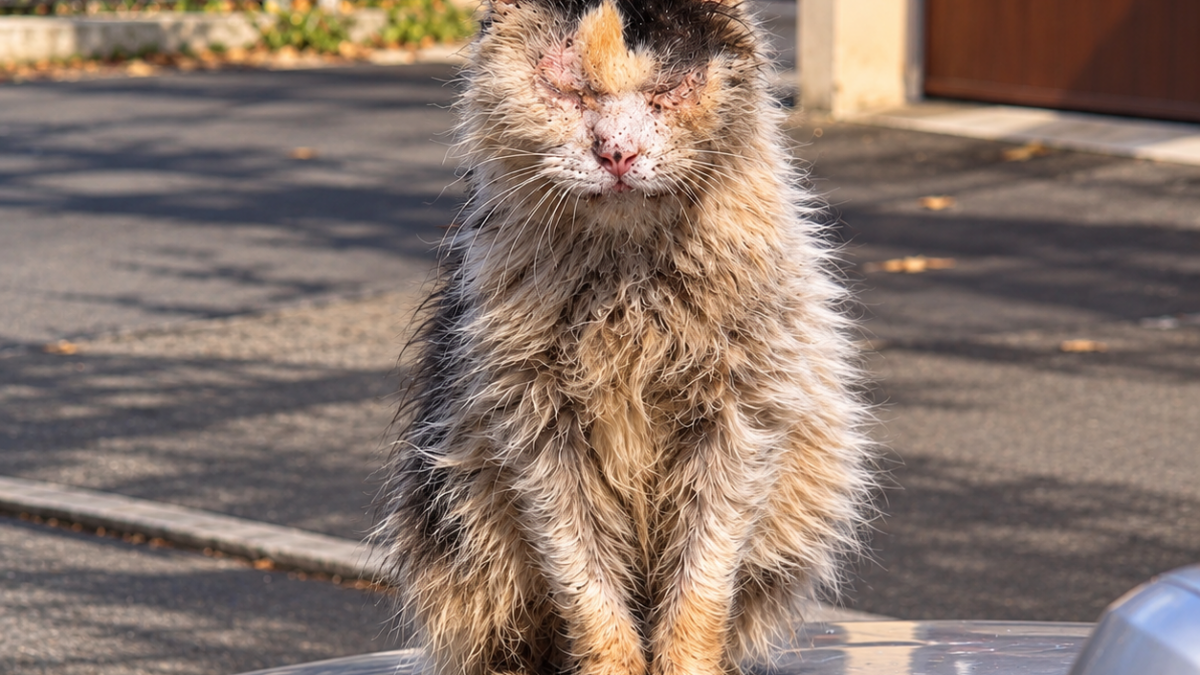
PART 2
Dr. Voichev enlarged the image.
“The lungs look clear.”
I stared at him.
“What does that mean?”
“On these scans, I don’t see obvious evidence that the tumor has spread to the lungs.”
I stopped breathing for a second.
He moved to another image.
“The nearby lymph nodes are not dramatically enlarged either. That doesn’t guarantee microscopic disease isn’t present, and pathology will matter, but this is much better than what I was afraid we might find.”
I looked at Sam.
He was sitting on the examination table with his front paws tucked beneath him, the enormous mass pulling one side of his lower face downward.
“So you can operate?”
Dr. Voichev did not answer immediately.
That kept me from celebrating too soon.
“I said the imaging gives us an option,” he replied. “I didn’t say it gives us a safe option.”
“How dangerous?”
“Very.”
He rotated the three-dimensional reconstruction of Sam’s skull.
The tumor had wrapped around a substantial portion of the lower jaw. Some bone had already been damaged.
Dr. Voichev pointed to the screen.
“To remove the mass with a reasonable margin, I may have to remove part of the mandible with it.”
“His jaw?”
“Part of it.”
“Can a cat live like that?”
“Yes.”
“Eat?”
“Yes.”
“Normally?”
He considered the word.
“Differently.”
That distinction scared me.
He continued.
“Cats can adapt remarkably well after partial mandibulectomy. But Sam is not a healthy cat coming in for a planned procedure. He is severely underweight. He’s anemic. He has chronic blood loss from the tumor. His mouth is contaminated. And I don’t know how long his body has been surviving like this.”
“What happens if we don’t operate?”
Dr. Voichev looked at Sam.
“The tumor keeps growing.”
“And then?”
“Eating becomes harder. Bleeding may worsen. Infection becomes more likely. Eventually pain control may not be enough.”
I already knew what that meant.
“How much time?”
“I can’t tell you.”
“Days?”
“Probably not.”
“Weeks?”
“Possibly.”
“Months?”
“Possibly.”
I hated the uncertainty.
Dr. Voichev folded his arms.
“If you want certainty, I can’t give it.”
“What can you give me?”
“A chance.”
The same word had brought me across two cities.
Chance.
Not cure.
Not guarantee.
A chance.
I reached toward Sam.
He lowered his forehead into my palm exactly as he had the first day.
Dr. Voichev watched him.
“He trusts you.”
“I don’t know why.”
“Cats don’t always explain themselves.”
Sam began purring.
The vibration sounded strange because the tumor had altered the shape of his lower face, but it was unmistakable.
Dr. Voichev listened for several seconds.
Then he said, “Before surgery, I want to improve his condition as much as we realistically can.”
“How long?”
“A few days if his blood work allows it.”
“Isn’t waiting dangerous?”
“So is anesthetizing a severely malnourished, anemic cat for major surgery.”
He was right.
Again.
I was becoming tired of reasonable people being right when I wanted them to say, “We’ll fix him tomorrow.”
Sam was admitted for stabilization.
That was the first night since I found him that he did not sleep at my house.
I hated it.
My apartment suddenly felt too quiet.
For less than a week, Sam had occupied almost no physical space and somehow altered every room.
His blanket remained on the couch.
A shallow dish of food sat in the kitchen.
The towel I used to clean blood from beneath his mouth hung over the sink.
I stood there looking at it.
The clinic had told me they would call if anything changed.
I checked my phone every ten minutes anyway.
At 11:17 p.m., it rang.
I answered before the second vibration.
“Sam?”
The overnight technician laughed softly.
“He’s fine.”
“You need to start with that.”
“I just did.”
“What happened?”
“He ate.”
I closed my eyes.
“How much?”
“Not much. But enough that I thought you’d want to know.”
I sat on the edge of the couch.
“What did you give him?”
“Recovery food mixed with warm water.”
“He managed it?”
“We put it on a flat plate so he didn’t have to open his jaw as much.”
“Did he bleed?”
“A little.”
My relief disappeared.
“Is that bad?”
“It’s expected with that tumor.”
Expected.
I hated how much suffering could fit inside that word.
“Can I come tomorrow morning?”
“After eight.”
I arrived at 7:42.
The receptionist looked at the clock.
“We said eight.”
“I can sit.”
She sighed.
“You people never listen.”
“You people?”
“Rescuers.”
“I’m not a rescuer.”
She looked toward the treatment room.
“Sure.”
At eight, they let me see him.
Sam was inside a large kennel with an IV catheter in one front leg.
He stood as soon as he heard my voice.
That mattered.
He had been tired before.
Now he looked alert.
Still thin.
Still grotesquely deformed by the tumor.
But present.
I opened the kennel.
Sam stepped onto my lap.
No hesitation.
He pressed himself against my chest and started purring.
The technician smiled.
“He did that with me once.”
“Once?”
“He prefers you.”
I tried not to look too pleased.
Dr. Voichev came by later with the new blood results.
Sam was anemic, but not so severely that transfusion was immediately required. His kidney and liver values were acceptable. His protein level was low, unsurprising in a cat who could barely eat.
“We’ll support him nutritionally,” he said. “Pain control. Antibiotics because the tumor surface is ulcerated. Fluids carefully.”
“When will you decide?”
“Forty-eight hours.”
Those became two of the longest days of my life.
Sam spent part of them in the clinic and part under observation in a quiet room where I was allowed to sit with him.
He ate tiny meals.
Very soft.
Very slow.
Every bite looked like work.
He would push the food against the side of his mouth, swallow, pause, then try again.
Sometimes a drop of blood appeared.
The first time I saw it, I turned my head.
Not because I was squeamish.
Because I was angry.
Not at Sam.
Not even at a specific person.
At time.
At however many weeks or months that tumor had been growing while Sam lived outside.
Someone must have seen him when it was smaller.
Someone must have noticed when chewing first became difficult.
Someone must have watched his face change.
But anger could not tell me whether those people had lacked money, knowledge, courage, or compassion.
I knew almost nothing about his past.
So I stopped inventing one.
The suffering in front of me was enough.
On the second evening, Dr. Voichev called me into his office.
“We can do it tomorrow.”
I swallowed.
“You’re sure?”
“No.”
That answer stopped me.
He leaned back.
“I’m confident surgery is medically reasonable. That is different from being sure of the outcome.”
“What are the biggest risks?”
“Bleeding. Anesthesia. Incomplete removal if the tumor is more invasive than imaging suggests. Problems eating afterward. Infection. Wound breakdown.”
“Death?”
“Yes.”
He did not soften it.
“During surgery?”
“Possible.”
“After?”
“Also possible.”
My eyes went to the door.
Sam was in the next room.
“What would you do?”
Dr. Voichev stared at his desk for a moment.
“I would operate.”
“Why?”
“Because he still has quality of life to recover.”
That sentence decided it.
Not that he could survive.
That he had something worth surviving for.
I signed the consent forms.
The surgery was scheduled for the following morning.
That night, Sam was allowed home because Dr. Voichev believed he would rest better with me.
I barely slept.
Sam did.
He climbed onto my chest, turned three careful circles, then lowered himself directly over my heart.
His tumor rested against my neck.
I could smell the medicated rinse the clinic had used.
Underneath it was the metallic odor of blood.
I stared into the darkness.
“Tomorrow’s going to be bad.”
Sam purred.
“You understand none of this.”
The purring continued.
“You could at least pretend to be worried.”
He stretched one paw across my collarbone.
I put my hand over him.
His ribs no longer felt quite as sharp as the first day.
Not much difference.
Enough for me to notice.
“You have to come back.”
I regretted the sentence immediately.
Promises made before surgery are dangerous.
Sam did not care.
He was asleep.
At 6:00 the next morning, I gave him no breakfast.
He considered this a betrayal.
For the first time since I found him, he became vocal.
A rough meow.
Then another.
“You can’t eat.”
He stared at me.
“Doctor’s orders.”
Another meow.
“This is a very encouraging argument.”
By seven-thirty, we were at the clinic.
The surgical technician took him from my arms.
Sam clung to my jacket for half a second.
That nearly destroyed me.
I kissed the top of his head.
“I’ll be here.”
The technician carried him away.
Dr. Voichev came out ten minutes later.
“We’re going to place a feeding tube while he’s anesthetized.”
I nodded.
“Because he might not eat?”
“Because I don’t want nutrition dependent on whether his mouth feels good enough immediately after surgery.”
“That sounds smart.”
“It is.”
I almost smiled.
“Modest too.”
He did not.
Surgeons apparently have privileges.
At 8:21, the surgery began.
I had intended to go home.
I did not.
I sat in the waiting room.
At nine, I bought coffee.
At nine-thirty, I forgot where I put it.
At ten, I found it beside me, untouched.
At ten-fifteen, the receptionist asked whether I wanted water.
“No.”
“You should.”
“I’m fine.”
“You’ve been staring at the same wall for an hour.”
“I like the wall.”
She brought water anyway.
At 10:47, a technician came out.
I stood so fast the chair scraped backward.
“Sam?”
“Still in surgery.”
“Why are you out here?”
“To get something from storage.”
“Oh.”
She must have seen what happened to my face.
“He’s stable.”
I nodded too quickly.
“Stable.”
“Yes.”
“Good.”
She disappeared.
I sat.
At noon, still nothing.
At 12:36, Dr. Voichev’s assistant came through the doors.
“He’s doing well under anesthesia.”
“How much longer?”
“Hard to say.”
“What have they done?”
“The mass has been removed.”
I almost stood again.
“But?”
“There’s still reconstruction and closure.”
That was the first moment I let myself imagine the tumor no longer attached to him.
The thought felt impossible.
For as long as I had known Sam, the tumor and the cat had seemed fused into one image.
At 1:42, I saw Dr. Voichev.
He was walking toward me.
No mask.
Surgical cap still on.
I stood.
He stopped several feet away.
“Sam is awake.”
I did not understand the words immediately.
“What?”
“He’s awake.”
“Alive?”
Dr. Voichev’s expression softened.
“Yes.”
My knees became unreliable.
I sat down.
“What happened?”
“We removed the mass and the affected portion of the lower jaw.”
“All of it?”
“All visible tumor we could safely remove.”
“Bleeding?”
“Controlled.”
“Anesthesia?”
“He handled it better than I expected.”
I closed my eyes.
The waiting room continued around me.
Phones.
Footsteps.
Someone opening a door.
All of it sounded far away.
“He survived.”
“Yes.”
I repeated it because I needed to hear myself say it.
“He survived.”
Dr. Voichev sat across from me.
“The operation is only one part of this.”
I opened my eyes.
“I know.”
“Do you?”
“Probably not.”
That was more truthful.
He explained what came next.
Pain control.
Antibiotics.
Tube feeding.
Monitoring for bleeding.
Swelling.
Airway problems.
Infection.
Wound breakdown.
Long-term adaptation to the altered jaw.
Pathology.
That last word brought reality back.
“Pathology could still be bad.”
“Yes.”
“Even though the scans showed no spread?”
“Yes.”
“What exactly are we waiting to know?”
“The tumor type, behavior, margins, and what that means for recurrence risk.”
I looked down.
“So we haven’t won.”
Dr. Voichev shook his head.
“I wouldn’t think about this as winning.”
“How should I think about it?”
“We removed the thing causing him pain today.”
That was enough.
For that day.
They let me see Sam that evening.
I almost cried before reaching the kennel.
His face looked shocking.
The huge tumor was gone.
So was part of the jaw that had supported it.
The lower contour of his face was changed. Swelling made everything look uneven. A feeding tube was secured along the side of his neck.
But there was no tumor hanging beneath him.
No raw mass.
No dried blood coating the fur.
Just Sam.
He was groggy.
His tongue rested slightly differently because of the altered jaw.
One eye opened.
“Hey.”
The eye closed.
I touched his shoulder.
“You look terrible.”
His ear moved.
“I mean better.”
Another ear movement.
“Still ugly.”
His eyes opened again.
I smiled.
There he was.
The first night after surgery was not peaceful.
At 10:30, Sam became restless.
At midnight, the swelling increased.
At 2:00 a.m., a small amount of blood appeared near the incision.
The surgical team checked him.
Not catastrophic.
Expected postoperative oozing.
Still enough to keep everyone alert.
His blood count dropped slightly.
Not enough for transfusion.
At four, he finally slept.
At six, he woke angry.
The technician texted me a photograph.
Sam was glaring from beneath a blanket.
I laughed for the first time in days.
I arrived at eight.
“He looks furious.”
The technician smiled.
“He is.”
“Good.”
“That’s what we said.”
Sam did not want anyone touching the feeding tube.
He did not want his temperature checked.
He did not want his mouth examined.
He did not want the blanket adjusted.
For a cat who had accepted almost everything when I found him, those objections felt beautiful.
Pain had made him passive.
Strength was making him difficult.
I welcomed difficult.
The feeding tube allowed us to support him without forcing his mouth.
The first tube feeding made me nervous.
The technician showed me how.
Slow.
Measured.
Flush before.
Nutrition.
Flush after.
Watch for nausea.
Keep the site clean.
I stared at the syringe.
“What if I do it wrong?”
“You won’t be doing it alone yet.”
“What about when he comes home?”
“You’ll learn.”
Sam watched us as if the entire conversation bored him.
By day two, the swelling peaked.
His face looked larger again.
That scared me.
I found Dr. Voichev.
“Is it coming back?”
“No.”
“You’re sure?”
“This is postoperative swelling.”
“It looks awful.”
“Yes.”
“Could you say something comforting?”
“He is alive, stable, and his blood count is acceptable.”
I stared at him.
“That’s your comfort?”
“Yes.”
It worked.
The first major milestone came on day three.
Sam groomed himself.
Only one front paw.
Three licks.
Then he stopped.
The technician who saw it came running for me.
“He groomed.”
I thought she had said something more serious.
“What?”
“His paw.”
“That’s good?”
“It means he feels well enough to care about being a cat again.”
I looked through the kennel door.
Sam licked once more.
I smiled.
“Very impressive.”
The next day, he attempted to rub his cheek against the side of the kennel.
We stopped him because the incision was still healing.
He appeared offended.
On day five, Dr. Voichev allowed a tiny amount of oral food.
Not because Sam needed it nutritionally.
Because we needed to know whether he could begin relearning the mechanics of eating.
A flat plate was placed in front of him.
Soft food.
Almost puréed.
Sam smelled it.
Then looked at us.
“Go ahead,” I whispered.
He lowered his head.
His mouth opened differently now.
The lower jaw no longer aligned as before.
He tried to scoop the food.
Missed.
Stopped.
Tried again.
This time, he got some.
He swallowed.
I grabbed the edge of the chair.
Sam took another.
Then another.
No jerk backward.
No cry.
No blood.
He was messy.
Food coated the fur near his mouth.
His tongue moved awkwardly.
But he ate.
And it did not hurt the way eating had hurt before.
I covered my face with both hands.
The technician asked, “Are you okay?”
“He’s eating.”
“I can see that.”
“He’s eating.”
She smiled.
“Yes.”
I had watched him fight every bite on the street.
That image had followed me for weeks.
Now he swallowed a mouthful and immediately tried for another.
It was not graceful.
It was not perfect.
It was freedom.
That evening, he ate less.
I panicked.
The next morning, more.
I relaxed.
Then less again.
I panicked again.
Dr. Voichev finally said, “Recovery is not a staircase.”
“What?”
“You keep expecting every day to be better than the one before.”
“Shouldn’t it be?”
“No. Recovery is messy. Some mornings are better. Some worse. We watch the trend.”
“The trend.”
“Yes.”
I wrote the phrase in my phone because apparently I needed instructions for having emotions.
Watch the trend.
The trend was good.
Slowly.
The incision stayed clean.
The swelling decreased.
Sam tolerated tube feedings.
Then oral feedings.
His blood count stabilized.
He started moving around the kennel.
The first time he stood at the door when I arrived, I nearly opened it without permission.
The technician stopped me.
“He still has a line.”
“I forgot.”
“Clearly.”
Sam meowed at us.
I pointed.
“He agrees with me.”
“He wants out.”
“Exactly.”
Two days later, he was discharged.
I received a bag containing medications, feeding supplies, wound-care instructions, emergency numbers, special food, and enough written information to make me wonder whether I had adopted a cat or accepted responsibility for a small hospital.
Dr. Voichev went through everything.
“If he stops eating completely, call.”
“Okay.”
“If the incision opens, call.”
“Okay.”
“If you see significant bleeding—”
“Call.”
“If the tube site becomes red, swollen, painful—”
“Call.”
“If he vomits repeatedly—”
“Call.”
“If he sneezes?”
Dr. Voichev looked at me.
“Probably don’t call.”
“Good. I’m learning.”
Sam traveled home in the same carrier I had used after finding him.
The difference was almost impossible to process.
The first ride, he had sat in pain with a tumor hanging from his jaw.
Now he wore a soft protective collar and looked deeply annoyed.
I kept talking.
“We’re going home.”
He stared out through the carrier door.
“My home.”
He blinked.
“Technically yours too.”
That sentence slipped out.
I did not correct it.
At home, I prepared one room.
Low furniture.
No places where he could jump high and risk disturbing the tube.
Food area.
Water.
Litter box.
Blankets.
Sam left the carrier, walked directly past everything I had prepared, and tried to climb onto the couch.
“No.”
He looked at me.
“You just had major surgery.”
He put one paw up.
“No.”
Second paw.
“Sam.”
He climbed.
I caught him.
He objected with a loud meow.
I settled him beside me.
He immediately crawled onto my chest.
Of course.
That was apparently nonnegotiable.
I lay back.
Sam lowered his head beneath my chin.
The shape of his face was different.
I could feel the swelling.
The feeding tube ran along the side of him.
But the purr was the same.
Maybe stronger.
I closed my eyes.
“You came back.”
He purred.
That first week at home exhausted me.
Tube feedings every few hours.
Medications.
Cleaning.
Checking the incision.
Checking the tube.
Checking whether he had urinated.
Checking whether he was breathing normally while sleeping.
At least twice every night, I woke and put my hand on his side.
Sam tolerated my anxiety.
Barely.
He began eating more on his own.
At first, only very soft food spread thinly on a plate.
He learned to approach from an angle.
He used his tongue more.
Some food fell out.
He ate what he could.
Then walked around the plate and ate what he had dropped.
His efficiency was impressive.
One afternoon, I caught him attempting dry kibble that I had accidentally left in another cat’s donation bag.
I removed it.
“You’re not ready.”
Sam stared at the cabinet after I put it away.
“You nearly died because eating hurt.”
His tail moved.
“Now you want crackers.”
He ignored me.
The feeding tube came out after his oral intake became reliable.
That day felt almost as important as surgery.
The technician removed the sutures securing it.
Sam protested.
Then it was gone.
The small opening would heal.
I drove him home feeling lighter.
For the first time, there was nothing connected to his body.
No IV.
No feeding tube.
No drains.
No equipment.
Just scars.
Three weeks after surgery, the pathology report came.
I had been dreading the call.
Dr. Voichev asked me to come in.
I immediately assumed the worst.
When I arrived, he had Sam’s file open.
“What did they find?”
“The mass is malignant.”
The word landed hard.
I looked at Sam.
He was smelling a cabinet.
“Cancer.”
“Yes.”
My stomach twisted.
“But you said it hadn’t spread.”
“The imaging showed no obvious distant spread. That remains encouraging.”
“Margins?”
He turned the report toward me.
“The pathologist believes we removed the primary mass with useful margins in most areas, but because of the tumor’s location and how distorted the tissues were, I will not tell you the recurrence risk is zero.”
“How high is it?”
“We don’t have a perfectly reliable number for Sam.”
“Then what do we do?”
“Monitor.”
That word again.
“What does monitor mean?”
“Regular oral exams. Repeat imaging. Chest films. Watch for swelling, bleeding, difficulty eating, weight loss.”
“For how long?”
“For as long as Sam is alive.”
I hated the answer.
Then Sam jumped onto the chair beside me and pushed his head against my arm.
Dr. Voichev smiled.
“He doesn’t appear interested in statistics.”
“No.”
“Good.”
I scratched Sam behind one ear.
“What would you do if this were your cat?”
“Exactly what we’re doing.”
That helped.
The first month after surgery, Sam gained weight.
Not much.
Enough.
The bones along his spine became less sharp.
His coat improved once good nutrition reached him consistently.
The tangled sections had been trimmed, and new fur grew softer.
He began grooming himself properly.
He spent ridiculous amounts of time washing one shoulder.
Then the other.
Then his chest.
Sometimes he forgot about the altered jaw and tried to groom too aggressively, stopped, recalibrated, and continued.
Adaptation was happening in front of me.
Not as one big transformation.
Thousands of tiny corrections.
How to eat.
How to drink.
How to groom.
How to pick up a toy.
How to position his head when sleeping.
Sam experimented until he found what worked.
His personality appeared at the same time.
I had thought he was a quiet cat.
He was not.
He had simply been sick.
Healthy Sam had opinions.
Many.
Breakfast at seven was late.
Closed doors were unacceptable.
The bathroom was apparently communal.
Laptop keyboards were beds.
Laundry baskets were territorial assets.
If I sat down without making room for him, he created room.
Usually on my chest.
The first time he played, I almost missed it.
A paper ball had rolled off the table.
Sam watched it.
His body lowered.
I froze.
He tapped it.
The ball rolled.
He followed.
Tapped again.
Then pounced.
The movement was awkward because he was still regaining strength, but the intent was unmistakable.
I took out my phone.
Then stopped.
I did not need to record everything.
Instead, I sat on the floor.
I rolled the ball toward him.
Sam hit it back.
For ten minutes, we played.
Afterward, he fell asleep beside it.
That was the day I stopped seeing a patient every time I looked at him.
He was becoming simply Sam.
Two months after surgery, we returned for imaging.
I barely spoke during the drive.
Sam complained the entire time.
At the clinic, Dr. Voichev examined his mouth.
Sam resisted more than he ever had before.
“Strong,” the doctor said.
“Annoying.”
“Both.”
They took chest X-rays.
I waited.
That old waiting-room dread returned immediately.
It did not matter how many good days we had.
One closed door could bring the past back.
Dr. Voichev finally came out.
“I don’t see metastatic disease.”
I exhaled.
“Nothing?”
“Nothing obvious.”
“Mouth?”
“No clear recurrence.”
“So he’s okay.”
“For today, yes.”
I smiled.
“For today is enough.”
It became our new measurement.
Not forever.
Today.
Three months.
Clear.
Six months.
Clear.
Nine months brought the first scare.
I noticed a small red area near the surgical site.
My stomach dropped.
I called the clinic.
They saw us that afternoon.
Dr. Voichev examined it.
“Inflammation.”
“Tumor?”
“I don’t think so.”
“You don’t think?”
“We’ll sample it.”
I hated waiting for pathology more the second time.
Sam did not.
He spent those days eating, sleeping, yelling at birds through the window, and stealing my pillow.
The result was benign inflammatory tissue.
I read the message three times.
Then sat on the kitchen floor and laughed.
Sam approached.
He smelled my face.
“You have no idea what you’re doing to me.”
He rubbed against my shoulder.
Maybe he did.
People who saw Sam after recovery sometimes stared.
I understood why.
His face would never look symmetrical.
Part of the lower jaw was gone.
His tongue occasionally rested slightly to one side.
When he ate, some food dropped.
When he drank, the floor became wet.
He was not a cat anyone would describe as physically perfect.
But I had seen him before.
That changed the way I saw after.
I remembered the tumor.
The blood.
The pain every time he tried to chew.
Compared with that, a crooked jaw looked beautiful.
Once, a visitor asked, “Does it bother him?”
“What?”
“Looking like that.”
I almost laughed.
“Sam has never seen a mirror.”
The visitor looked embarrassed.
I softened.
“He cares whether eating hurts. It doesn’t anymore. He cares whether he can sleep on my chest. He can. He cares whether breakfast arrives. Usually.”
Sam meowed from the hallway.
“See?”
The question was answered.
Nearly a year after I found him, I returned to the neighborhood where he had been living.
Not with Sam.
I did not see any reason to bring him back to a place he had survived.
I went alone with food for the street cats.
The broken planter was still there.
Cars still lined the curb.
The woman who had warned me not to touch him recognized me.
“What happened to the sick cat?”
“He survived.”
Her eyes widened.
“The one with the jaw?”
“Yes.”
“You found someone to operate?”
“I did.”
She shook her head.
“I thought he would die.”
“So did a lot of people.”
She looked down.
“I’m glad I was wrong.”
There was no accusation in me.
People had seen an animal whose condition looked impossible.
They had not known what to do.
Some had probably assumed someone else would help.
Some may have feared the cost.
Some may have believed touching him would make things worse.
I had been one decision away from walking past too.
That fact kept me humble.
I fed the other cats.
Before leaving, I looked at the patch of shade where Sam had sat.
For months afterward, I wondered whether I should feel something dramatic there.
Anger.
Triumph.
Grief.
I mostly felt quiet.
The place had not saved him.
The place had not hurt him.
It was just the last place he had been before his life changed.
Home was elsewhere now.
By Sam’s second year with me, his routine had become absurdly predictable.
5:48 a.m.
Wake me.
Not 5:45.
Not 6:00.
5:48.
He started with purring.
If that failed, one paw on my chest.
If that failed, he moved closer to my face.
If that failed, he bit my hair.
“Stop.”
Meow.
“It is not breakfast.”
Meow.
“You have no concept of time.”
He absolutely did.
At 5:55, I usually surrendered.
Dr. Voichev had asked us to keep Sam’s weight healthy.
Given how thin he once was, I found this emotionally difficult.
Every time he begged for food, part of me remembered him failing to eat on the street.
So I overfed him.
Of course I did.
At his checkup, the scale confirmed it.
Dr. Voichev looked at the number.
Then at me.
“No.”
“What?”
“He gained too much.”
“He was starving.”
“Two years ago.”
“He remembers.”
“His metabolism does not care.”
Sam sat beside the scale.
Traitorously silent.
Dr. Voichev pointed at him.
“He needs to lose weight.”
I stared at the cat I had once begged to eat three mouthfuls.
“This feels morally wrong.”
“It is medically correct.”
We reduced portions.
Sam responded as if I had personally destroyed civilization.
The irony was not lost on me.
Once, every meal had been agony.
Now the biggest conflict in his life was being told there would be no second breakfast.
That was the kind of problem I wanted for him.
The checkups continued.
Some were easy.
Some frightened me.
A swollen gum.
Negative.
A cough.
Minor respiratory infection.
A weight fluctuation.
Resolved.
Each time, cancer was the first thing my mind produced.
Each time, I had to relearn the difference between vigilance and fear.
Dr. Voichev once told me, “If you spend every healthy day waiting for disease, the disease steals more time than it actually has.”
I wrote that down too.
I had become a collector of veterinary sentences.
Sam did not collect anything except bottle caps.
I discovered this accidentally.
One fell from the kitchen counter.
He chased it.
After that, bottle caps began disappearing.
I eventually found eleven beneath the sofa.
Along with two paper balls.
A hair tie I had been missing for months.
One sock.
And a plastic spoon.
I sat on the floor surrounded by his stolen property.
“Explain.”
Sam walked away.
He had learned from the streets not to cooperate with investigations.
The years softened the memories.
Not erased them.
Softened.
The original photographs remained on my phone, but I rarely opened them.
When I did, the cat in those images seemed almost unrelated to the one sleeping beside me.
The old Sam looked exhausted.
Eyes dull.
Head low.
The tumor so large it dominated the frame.
The current Sam had bright eyes and a crooked mouth that always looked slightly amused.
Same cat.
Different relationship to the world.
One photograph affected me more than the others.
It had been taken within minutes of our first meeting.
My hand was extended.
Sam’s forehead touched my fingers.
The tumor filled the lower half of the image.
Every time I looked at it, I remembered what I had expected.
A frightened stray.
A bite.
A retreat.
Instead, he leaned in.
Trust came before rescue.
That felt backward.
Usually humans ask animals to trust after proving they are safe.
Sam had trusted first.
I had spent the years afterward trying to deserve it.
On the third anniversary of surgery, Dr. Voichev reviewed the newest scans.
Still no obvious metastasis.
Still no clear recurrence.
He leaned back.
“This is very good.”
I stared at him.
“You said ‘very.’”
“I did.”
“You usually say ‘encouraging.’”
“I can take it back.”
“No.”
He smiled.
Sam was sitting on the examination table trying to open a cabinet with one paw.
I looked at him.
“How long do you think he has?”
Dr. Voichev’s expression changed.
“We’ve discussed this.”
“I know.”
“Then why ask?”
“Because I still want a number.”
“I still don’t have one.”
I sighed.
He touched Sam’s shoulder.
“Maybe stop asking his future to prove itself to you.”
That annoyed me.
Mostly because I knew he was right.
So I tried.
I stopped counting time from the surgery date.
Instead, I counted ordinary things.
Winters by the radiator.
Summers at the open window.
Birthdays I invented because nobody knew his actual one.
Visitors he tolerated.
Plants he destroyed.
Mugs he knocked over.
Morning arguments.
That was his life.
Not medical survival divided into intervals.
Life.
Then, one spring, Sam did something he had never done before.
He refused breakfast.
I froze.
“Sam?”
He smelled the food.
Walked away.
My heart began racing immediately.
He returned ten minutes later and ate half.
Still wrong.
At the clinic, blood work showed dental inflammation around one remaining tooth and mild age-related kidney changes.
No obvious tumor recurrence.
Relief hit so hard I became dizzy.
The tooth was treated.
Sam resumed eating.
Dr. Voichev looked at me during the follow-up.
“You thought cancer.”
“Yes.”
“You will always think cancer.”
“Yes.”
He nodded.
“Then learn what to do after the thought.”
“What?”
“Check the facts.”
That became useful beyond veterinary medicine.
Fear speaks first.
Facts come later.
You have to wait for them.
Sam aged.
Gray hairs appeared around his eyes.
His jumps became more calculated.
The couch remained easy.
The kitchen counter became less reliable.
I placed a small step near the bed.
I told myself it was temporary.
Sam used it immediately.
He still climbed onto my chest.
That never changed.
Even as he grew heavier.
Even as my back objected.
Every evening, he found the same place.
Front paws near my shoulder.
Body stretched down my ribs.
Face beneath my chin.
The first time, I had been terrified of touching the tumor.
Years later, my fingers moved over smooth scar tissue.
The difference lived under my hand.
One evening, I realized I could no longer remember exactly how the tumor had felt.
That bothered me.
Then I understood something.
I did not need to preserve the pain accurately.
Sam certainly wasn’t trying to.
At his next checkup, a younger veterinarian examined him because Dr. Voichev was in surgery.
She had read the file before entering.
“This is Sam?”
“That depends. What did he do?”
She laughed.
“I mean *the* Sam.”
I never knew he was famous at the clinic.
Apparently younger staff had heard the story of the enormous jaw tumor and the cat who survived the surgery nobody else wanted to attempt.
The veterinarian examined his mouth.
“He adapted beautifully.”
I looked at Sam.
He was trying to bite the stethoscope.
“Beautifully is a strong word.”
“He eats?”
“Too much.”
“Grooms?”
“Yes.”
“Plays?”
“When it inconveniences me.”
“Seems pretty beautiful.”
Fair.
After the appointment, I stopped at the reception desk.
An old photograph of Sam was pinned on a staff board.
Not the worst one.
One from a few weeks after surgery.
Under it someone had written:
**SAM — NEVER UNDERESTIMATE THE QUIET ONES.**
I stared.
A receptionist noticed.
“Dr. Voichev put that up years ago.”
“He did?”
“Sam was one of the cases everyone followed.”
I looked toward the carrier.
Sam was asleep.
Of course.
He had no interest in his legend.
That was probably healthy.
By the time he reached what we estimated was ten or eleven years old, his kidney values required more attention.
Nothing catastrophic.
Early chronic disease.
Diet adjustment.
Hydration.
Periodic blood work.
The same things many older cats face.
I found that strangely comforting.
Sam had lived long enough to develop boring age-related problems.
He had earned boring.
His cancer monitoring continued.
No obvious return.
Dr. Voichev retired from regular surgical practice not long after.
On his final week at the clinic, I brought Sam.
The doctor came into the room without a white coat.
Sam recognized him anyway.
Or at least recognized the treat drawer.
He jumped onto the counter.
Slower than before.
Still successful.
Dr. Voichev scratched his neck.
“You look respectable.”
Sam turned his damaged jaw toward him.
“Almost.”
I laughed.
“You’re taking credit for the cat now?”
“I rebuilt the face.”
“Sam did the rest.”
Dr. Voichev nodded.
“That’s true.”
He opened a folder.
Inside was a printed CT image from the day we first met.
The tumor filled one side of Sam’s lower jaw.
I stared at it.
“Why do you still have that?”
“Teaching file.”
He placed another image beside it.
Recent scan.
The difference was extraordinary.
“There,” he said.
“What?”
“That’s why we operated.”
I looked at him.
He pointed not to the missing tumor.
To the healthy tissue around it.
“The first scans showed me there was still something to save.”
Those words brought me back to the first consultation.
I had assumed he was looking for reasons surgery could work.
He had been looking for what remained untouched.
Enough jaw.
Enough healthy tissue.
No visible distant spread.
Not certainty.
Possibility.
“What made you agree when the others wouldn’t?”
He thought for a moment.
“I had the equipment and experience for that surgery.”
“That’s it?”
“That’s not a small thing.”
“No.”
“Some of those veterinarians were right to decline. A surgeon should not attempt a procedure they cannot safely perform.”
I had never considered it that way.
All those earlier no’s had felt like abandonment.
Maybe some were responsibility.
“They weren’t giving up on him?”
“Not necessarily.”
He looked at Sam.
“Sometimes saying, ‘I can’t do this’ is the ethical answer.”
That changed part of the story for me.
I had carried resentment toward people who had closed doors.
But not every closed door was cruelty.
Some were limits.
The important thing was that we kept looking until we found the right door.
Before we left, Dr. Voichev lifted Sam carefully.
Sam tolerated approximately three seconds, then demanded release.
The doctor laughed.
“Still rude.”
“He worked hard for that personality.”
“So he did.”
We took a photograph.
The surgeon.
The cat.
Me.
No tumor.
No operating room.
No crisis.
Just three aging creatures standing in a veterinary clinic.
I treasure that photograph.
Sam’s final years were gentle.
Not perfect.
Gentle.
He slept more.
Played less.
Still demanded breakfast.
Still climbed onto me.
Sometimes he needed the small step.
Sometimes I lifted him.
He accepted that without pride.
Cats are better than humans at accepting changing bodies.
They complain about inconvenience, not dignity.
When his kidneys worsened, we started fluids at home.
I was terrible the first time.
My hands shook.
Sam noticed.
That made him restless.
The needle slipped.
I apologized repeatedly.
The veterinary nurse finally said, “You’re making this emotional.”
“It is emotional.”
“For you. For him, it’s a bag of fluid and a snack afterward.”
Sam looked at the snack.
She was right.
We improved.
Fluids.
Treat.
Done.
Life continued.
Then one winter morning, Sam stayed in bed after I stood.
That had never happened.
Not when breakfast existed.
I touched his shoulder.
“Hey.”
He opened his eyes.
Did not rise.
At the clinic, tests showed his kidney disease had advanced.
Not cancer.
A different enemy.
Age.
Time.
Dr. Petrova, who had taken over his long-term care, explained the options.
More aggressive fluid support.
Anti-nausea medication.
Appetite stimulant.
Diet.
Monitor.
We tried.
Sam improved.
For months.
He ate.
Sat at the window.
Argued about food.
Slept on me.
Then gradually, the good periods shortened.
He lost weight.
Not like the street.
Nothing like that.
But enough.
I hated seeing his spine become more visible.
It reminded me too much of the first day.
One afternoon, he approached his food.
Smelled it.
Took one bite.
Then walked away.
I sat on the kitchen floor.
“Not this again.”
Sam returned.
Not to the bowl.
To me.
He climbed into my lap.
Pressed his head against my chest.
Purred.
I cried into his fur.
The sound remained exactly the same after all those years.
Quiet.
Steady.
I called the clinic.
His kidney values were worse.
We changed treatment.
Bought more time.
Good time.
That mattered.
The last summer, Sam spent almost every afternoon in a patch of sunlight beside the balcony door.
I put a cushion there.
He ignored it.
Preferred the floor.
Typical.
Birds landed on the railing outside.
Sam watched them.
He had never been an effective hunter in my home.
That did not stop him from believing he was dangerous.
His tail flicked.
His shoulders lowered.
Then he would remember he was old and lie back down.
I would laugh.
He would ignore me.
One evening, I found the paper ball we had played with after his surgery.
Or at least I convinced myself it was the same one.
Crushed.
Dusty.
Under the sofa.
I rolled it toward him.
Sam watched it pass.
For a moment, nothing.
Then one paw came out.
Tap.
The ball rolled back.
I smiled.
“Still in there.”
Another tap.
That was enough.
The final decline happened slowly until suddenly it didn’t.
Sam stopped grooming.
That frightened me more than the appetite changes.
The cat who had spent hours washing himself after recovery no longer cared.
He drank.
Slept.
Accepted food from my hand.
But the world around him seemed less important.
Dr. Petrova examined him.
“He’s tired.”
“I know.”
“We can continue support.”
“Will it make him feel better?”
“Possibly for a little while.”
“How little?”
“I can’t tell you.”
That answer again.
After all those years.
No guarantees.
No numbers.
Only choices.
I took Sam home.
I promised myself I would not keep him alive simply because I could not imagine the apartment without him.
That is an easy promise to make before the moment comes.
Much harder inside it.
For three more days, Sam ate small meals.
He climbed onto my chest every evening.
On the fourth, he tried and could not.
His front paws reached the couch.
His back legs did not push enough.
I lifted him.
He did not object.
He settled beneath my chin.
His purr was faint.
I put one hand along his side.
“You’ve done enough.”
The words came before I meant to say them.
Sam’s eyes closed.
I stayed like that for hours.
The next morning, I called the clinic.
Dr. Petrova offered an appointment.
I asked whether she could come to the apartment instead.
She could.
That mattered.
Sam had spent enough of his life being moved between places where strangers made decisions about his body.
His last day would be home.
I opened the balcony door slightly so he could smell outside air.
Winter light filled the room.
Sam lay on his favorite blanket.
I offered him soft food.
He ate two bites.
Then stopped.
Later, he drank.
Walked slowly to the couch.
Looked up at me.
I lifted him.
We waited.
When Dr. Petrova arrived, she sat on the floor first.
No rushing.
She examined him gently.
Then looked at me.
“You’re making the right decision.”
I hated that sentence.
“Does it ever feel right?”
“No.”
That was a better answer.
She placed the catheter.
Sam barely reacted.
I lay back on the couch.
He climbed only halfway, so I helped him onto my chest.
Exactly where he had slept the first night.
His face rested beneath my chin.
The crooked jaw.
The old scars.
All of it familiar beneath my fingers.
Dr. Petrova gave the sedative.
Sam’s body softened.
The purring slowed.
I remembered the street.
The concrete planter.
The enormous tumor.
The woman telling me not to touch him.
My hand reaching.
Sam leaning closer.
One gesture.
That was where all of this had started.
“You trusted the wrong person,” I whispered.
His ear moved.
“Look what happened.”
My voice broke.
“I never left you alone.”
That was the only promise I had managed to keep perfectly.
Not that surgery would work.
Not that cancer would never return.
Not that he would live forever.
Only that he would not face it alone.
The final medication entered slowly.
Sam took one breath.
Another.
Then his heart stopped against mine.
No bleeding.
No pain when swallowing.
No operating room.
No street.
Just home.
For weeks afterward, I woke early expecting him.
I left room on my chest when I sat on the couch.
I heard phantom scratches near the bedroom door.
The first time I opened a can of food for another rescue cat, my hand stopped halfway.
Habit is grief’s favorite weapon.
His bowl stayed in the kitchen for a month.
Then two.
Eventually, I put it away.
Not because I was finished grieving.
Because grief did not need furniture to prove it existed.
A year later, I found the old photograph from our first meeting.
My hand.
Sam’s forehead.
The tumor.
I compared it with the photograph from Dr. Voichev’s retirement.
Same cat.
Same trust.
Everything else changed.
People sometimes described Sam as a miracle.
I understand why.
But that word can erase too much.
There was no single miracle.
There were decisions.
The decision to stop.
The decision to touch him.
The decision to drive to one clinic.
Then another.
Then another.
The decision of veterinarians to be honest when a surgery exceeded their capabilities.
The decision of Dr. Voichev to look again.
CT scans.
Anesthesia.
Surgical skill.
Nursing.
Tube feeding.
Medication.
Follow-up imaging.
Years of ordinary care.
Sam survived because many pieces lined up.
His own resilience was one of them.
Not the only one.
But an important one.
I keep one photograph of him on my desk.
Not the tumor.
Not the surgery.
Sam is sitting near the balcony door.
Older.
A little gray.
Crooked jaw.
Sun on his fur.
He is looking at something outside the frame.
Whenever I see it, I remember the question people asked after learning his story.
Why did you keep trying when everyone said it was too risky?
For years, I gave complicated answers.
Because he was affectionate.
Because the scans gave hope.
Because a surgeon finally offered an option.
Because he was eating.
Because he purred.
Because I could not watch him suffer.
All true.
But none is the real answer.
The real answer happened before the scans.
Before Dr. Voichev.
Before surgery.
Before I knew Sam had any realistic chance.
I reached toward a cat most people had already decided was dying.
And instead of running from me, Sam moved closer.
That was all.
He did not ask me to save him.
He did not know what surgery was.
He did not understand risk or prognosis or cancer.
He simply put his head in my hand as if human kindness was still something he believed might exist.
After everything the street had done to him, Sam had not given up on people.
So I could not be the person who gave up on him.
[END OF STORY]








