HOA TRIED TO BURN ME OUT OF MY 80-YEAR-OLD CABIN RESORT—THEN WENT PALE WHEN I OPENED THEIR $2.1 MILLION BUDGET
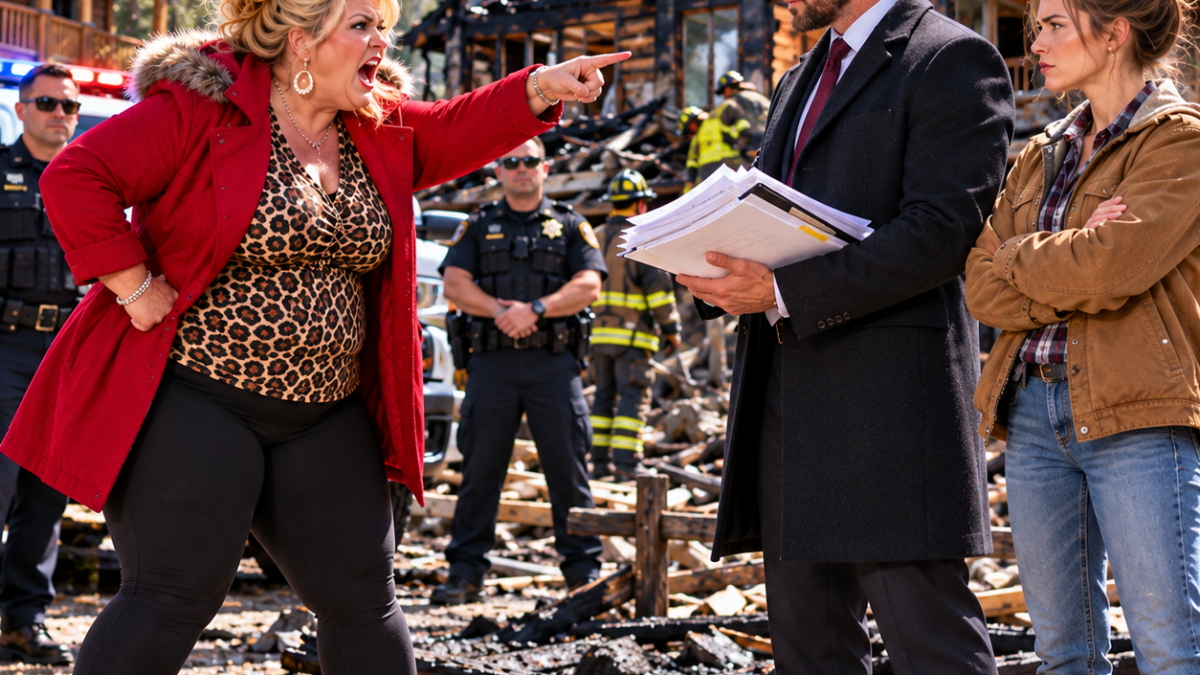
PART 2
Sarah stood beside me at our kitchen table while I stared at the reserve statement.
“Read that again.”
I did.
“Twenty-three thousand dollars.”
She looked toward the other documents.
“And there should be?”
“Close to eight hundred thousand based on their own reserve schedule.”
Sarah pulled out the chair across from me.
For several seconds, neither of us said anything.
Outside, the lake was calm.
A loon called somewhere beyond the cabins.
It was one of those autumn evenings when Pinehaven normally felt disconnected from the rest of the world.
Inside our kitchen, I was beginning to understand that the people who had spent months lecturing us about responsibility might have lost—or stolen—more money than my family had earned in years.
Sarah looked at the bankers boxes.
“How much did they collect altogether?”
I found the annual summaries.
“About two-point-one million over four years.”
She stared.
“Two million dollars?”
“More.”
“And the reserve has twenty-three thousand.”
“Yes.”
“Where’s the rest?”
“That’s what I’m going to find out.”
She reached across the table and covered my hand.
“Rex.”
“What?”
“You haven’t slept properly since the fire.”
“I’m fine.”
“You’re drinking coffee at ten o’clock at night.”
“That’s evidence.”
She almost smiled.
Then her face softened.
“Don’t let this destroy you too.”
I knew what she meant.
The shed was already gone.
The tools Grandpa used.
Dad’s old tackle boxes.
Photographs.
Guest ledgers dating back decades.
A rocking chair awaiting repair.
Every time I walked past the blackened concrete pad, anger moved through me like electricity.
Delilah had stood there smiling.
Maybe she hadn’t started the fire.
Maybe Morton hadn’t been the person in the marina footage.
Maybe the gasoline purchase meant nothing.
But somebody had tried to send a message.
Sell.
Comply.
Disappear.
Sarah squeezed my hand.
“We fight smart.”
I nodded.
“Smart.”
That became the rule.
Not angry.
Not reckless.
Smart.
Jenny Blackwood arrived the following morning carrying coffee and three empty binders.
Jenny was a paralegal, old family friend, and the only person I knew who became visibly happier when somebody handed her a thousand pages of badly organized paperwork.
She looked at the boxes.
“This all of it?”
“They claim it is.”
“That means no.”
She sat down.
“Let’s start.”
For six hours we sorted.
Budget.
Actual expenses.
Management agreements.
Vendor contracts.
Board reimbursements.
Reserve transfers.
Travel expenses.
Invoices.
Checks.
Receipts.
The numbers were ugly.
Then they became insulting.
Thornfield Property Management had billed the HOA roughly eight thousand dollars a month for administrative and landscaping coordination.
Actual market cost for equivalent services?
Jenny estimated less than half.
The owner of the company?
Delilah’s nephew in Phoenix.
Then there was snow removal.
Fifteen thousand dollars per season.
We didn’t even receive enough snow in a typical year to justify half of that.
A thirty-five-thousand-dollar plow truck had been purchased using HOA funds.
Registered to:
Mountain Properties LLC.
I looked at Jenny.
“Who owns that?”
She typed.
Waited.
Then turned her laptop.
Morton Thornfield.
I leaned back.
“You’ve got to be kidding.”
She shook her head.
“Keep going.”
Next:
Seventy-five thousand dollars in landscaping expenses tied directly to Delilah’s property.
Decorative stone.
Irrigation work.
Imported trees.
Custom lighting.
Paid from general association funds.
Then travel.
Twenty-eight thousand dollars over two years.
“Board education conferences.”
Hawaii.
Bahamas.
Scottsdale.
Sarah came into the kitchen.
“What kind of HOA conference happens in the Bahamas?”
Jenny answered without looking up.
“The expensive kind.”
Sarah stared at me.
“This is why they kept raising fees?”
“Partly.”
Jenny lifted one finger.
“Don’t jump ahead.”
She was right.
Bad spending wasn’t necessarily theft.
Board members can make terrible decisions legally.
Related-party contracts can exist if properly disclosed and approved.
We needed documents.
Authority.
Votes.
Invoices.
Actual work.
So we kept digging.
That’s when I found Mountain Properties LLC again.
Not a plow truck this time.
An acquisition agreement.
My name was in it.
Pinehaven Cabin Resort.
Target acquisition range:
$550,000–$650,000.
Projected redevelopment value:
More than two million.
I read the page three times.
Sarah sat beside me.
“They already planned the purchase.”
Jenny took the document.
Her expression changed.
This woman had spent twenty years reading ugly legal papers and rarely looked surprised.
Now she did.
“Where was this?”
“Inside the management contract exhibits.”
She read silently.
Then pointed at another paragraph.
The HOA’s enforcement agreement included a process for collecting unpaid assessments and fines through liens and eventual forced sale where permitted by law.
On its own, that kind of collection language wasn’t unusual.
But paired with the acquisition document?
Different story.
They had created fines.
Changed insurance rules.
Rejected extensions.
Expanded inspections.
Driven our balance higher.
Then Morton’s company positioned itself to purchase Pinehaven after financial collapse.
Sarah whispered:
“They’re trying to bankrupt us.”
I felt strangely calm.
All those months of wondering whether Delilah simply hated rustic cabins suddenly made sense.
She didn’t care about stain.
She cared about leverage.
The dock wasn’t ugly.
It was leverage.
The gravel lot wasn’t unsafe.
Leverage.
Insurance.
Sprinklers.
Fire pit.
Handrails.
Signs.
Every dollar they forced us to spend brought us closer to accepting the developer’s offer or defaulting on HOA demands.
And the fire?
I looked toward the ruined shed.
Jenny followed my eyes.
“Don’t connect that without evidence.”
“I know.”
“Seriously, Rex.”
“I know.”
Because that was the difference between us and Delilah.
We would not invent the missing piece simply because it fit.
We called Marcus Greene.
Marcus had been Pinehaven’s CPA for almost twenty years.
He also specialized in forensic accounting when local businesses discovered partners had sticky fingers.
He arrived after lunch.
By dinner, the four of us had turned our conference room into an evidence center.
Marcus went through the ledgers.
Then again.
He stopped at the reserve account.
“This isn’t normal.”
“Mismanagement?”
“Maybe.”
He pointed at transfers.
“But these are structured.”
Money moved out of reserve.
Into operating.
Then into vendors.
Some vendors shared addresses.
Some shared officers.
Others appeared independent until Marcus traced business registrations.
Family.
Business associates.
Old banking connections.
Morton had been a bank executive before retirement.
He knew how money moved.
That worried Marcus.
“People stealing casually round numbers.”
“What does that mean?”
“Five thousand. Ten thousand. Easy.”
He pointed at payments.
“People who understand scrutiny sometimes bury personal benefit inside legitimate-looking operations.”
“Can you prove theft?”
“Not tonight.”
“What can you prove?”
“That the reserve schedule doesn’t reconcile.”
He opened another spreadsheet.
“That several related-party transactions were not clearly disclosed in the records you’ve received.”
Another.
“That certain invoices are materially above market.”
Another.
“And that some association-funded assets appear controlled by private entities.”
He leaned back.
“That is enough to justify an independent audit and criminal referral if supporting records confirm misappropriation.”
I looked at Jenny.
She smiled without humor.
“Budget meeting.”
“What?”
She pulled out the bylaws.
“Annual budget and board election meeting.”
December fifteenth.
Every owner had voting rights according to ownership class.
The board needed votes.
Delilah had survived because most property owners didn’t attend.
She controlled the people who did.
Jenny tapped the page.
“You don’t beat this board by screaming outside Delilah’s house.”
“I wasn’t planning to.”
“You were imagining it.”
Fair.
“You beat them by proving the numbers, getting owners into the room, and voting them out.”
Sarah looked at me.
“That sounds safer.”
I thought about the fire.
Safer mattered.
Our fire investigation continued quietly.
The marina footage showed someone climbing our fence at 2:15 a.m.
Face hidden.
Build similar to Morton.
Not proof.
Then an envelope appeared in the resort office.
No return address.
Inside were photographs.
Morton at Brennan’s Hardware the afternoon before the fire.
Three five-gallon gas cans.
Receipt.
Credit card.
Signature.
The anonymous note said:
SOME OF US ARE DISGUSTED BY WHAT THEY’RE DOING.
A NEIGHBOR.
I called the sheriff.
Deputy Tom Bradley came personally.
I handed him everything.
He read the note.
Examined the receipt.
“Where’d this come from?”
“Found it on my desk.”
“Who has access?”
“Guests. Employees. Delivery people. Half the county during breakfast.”
He sighed.
“Helpful.”
“Sorry.”
He looked toward the burned shed.
“Fire marshal already collected samples.”
“Anything?”
“Can’t discuss active investigation.”
“I expected that.”
“But this helps.”
He put the photos into an evidence sleeve.
Then looked at me.
“Do not start following Morton.”
“I wasn’t going to.”
“You have that look.”
Apparently everybody knew my looks.
I nodded.
“Understood.”
The insurance claim became its own nightmare.
Our policy covered the shed.
Replacement value around twenty-five thousand dollars.
But the adjuster needed documents confirming compliance and reconstruction permission.
Delilah’s board refused.
At the next meeting, she sat beneath recessed lighting in the Thornfield clubhouse wearing a cream-colored jacket and a sympathetic expression.
“Given the suspicious circumstances of the fire, the board has concerns regarding Pinehaven’s risk-management practices.”
I stared.
“The fire chief ruled it arson.”
“Which suggests inadequate security.”
I almost laughed.
Someone burned our building.
Her conclusion:
Our fault.
“We need the compliance certificate.”
“Not until outstanding safety issues are resolved.”
“What issues?”
She slid a document across the table.
New emergency commercial safety regulation.
Automatic sprinkler systems.
Forty thousand dollars.
Sixty days.
I looked at Jenny.
She read it.
“Was this properly voted?”
Delilah smiled.
“Emergency safety powers permit accelerated action.”
Jenny turned pages.
“Not necessarily for a commercial assessment of this magnitude.”
Morton spoke.
“Are you an attorney?”
“No.”
“Then perhaps you should stop interpreting law.”
Jenny smiled.
“My supervising attorney will be happy to interpret it for you.”
That shut him up.
For approximately twelve seconds.
Delilah leaned forward.
“Rex, nobody wants Pinehaven to fail.”
I looked directly at her.
“Then stop trying so hard.”
Her smile vanished.
That night Sarah put the developer’s latest offer on the kitchen table.
Eight hundred thousand dollars.
Cash.
Enough to pay debts.
Relocate.
Start over.
Maybe buy another property.
No HOA war.
No fire investigator.
No fines.
No sleepless nights.
She stared at the page.
“I need you to hear me.”
“I am.”
“I am not telling you to sell.”
“Okay.”
“I’m telling you I’m tired.”
I stopped.
She continued.
“I wake up when cars drive past.”
I looked down.
“The boys ask me whether someone is going to burn the main lodge next.”
My chest tightened.
“They asked you that?”
“Yes.”
“Why didn’t they ask me?”
“Because they know what answer you’ll give.”
“What answer?”
“That nobody scares a Hartwell.”
I leaned back.
Sarah’s eyes filled.
“They’re sixteen, Rex. They don’t need a slogan. They need their dad.”
That hurt.
Because she was right.
I had become obsessed with defending Grandpa’s legacy.
But Grandpa’s legacy included the living people in the house.
Not just buildings.
I moved beside Sarah.
Took her hand.
“We can leave.”
She looked surprised.
“If you need to.”
Silence.
Then:
“Do you want to?”
“No.”
“Neither do I.”
She wiped her eyes.
“I just needed to know Pinehaven wasn’t more important than us.”
“It isn’t.”
She leaned her forehead against mine.
“Then fight.”
I smiled.
“Oh, I’m fighting.”
She laughed through tears.
“Smart.”
“Smart.”
We began calling owners.
Not guests.
Property owners with votes.
I didn’t lead with accusations.
I showed numbers.
Two-point-one million collected.
Reserve expectation.
Actual reserve.
Management fees.
Vendor comparisons.
Related-party relationships.
Then I asked:
“Do you think we deserve an independent audit?”
The answer was almost always yes.
Some Thornfield residents hated me.
Or thought they did.
They had heard Delilah describe Pinehaven as unsafe, deteriorating, commercially irresponsible.
Then they saw the financials.
One man named Thomas Reed stared at the reserve statement.
“My roof assessment increased twice.”
“I know.”
“Where did the money go?”
“That is exactly what we’re asking.”
He lowered his voice.
“Delilah says you’re trying to destroy the HOA.”
“I want the HOA to account for HOA money.”
Those aren’t the same thing.
Thomas eventually became one of our strongest supporters.
Not because he liked me.
Because he liked his money.
Sometimes democracy begins with principle.
Sometimes it begins with checking accounts.
I’ll take either.
Rita Gonzalez had retired from full-time journalism but still contributed investigations to local television and the newspaper.
She interviewed us.
Sarah insisted the boys stay mostly off camera.
Good decision.
Rita asked me:
“What do you believe is happening?”
I answered carefully.
“I believe Pinehaven has been subjected to escalating enforcement while people connected to the board positioned themselves to benefit financially if we fail.”
“Do you believe the board caused the fire?”
“I believe law enforcement should determine that.”
“What do you believe about HOA finances?”
“I believe the numbers require an independent audit.”
No dramatic accusations.
Just facts.
Rita later told me:
“That made Delilah furious.”
“Why?”
“Because you didn’t give her anything to sue over.”
Learned that from Jenny.
Labor Day guests had already rallied around us.
Now former visitors became loud supporters.
Save Pinehaven grew online.
Family photographs from the 1950s.
1960s.
1970s.
Children on the dock who were now grandparents.
Frank Morrison appeared on television.
Eighty-three.
He pointed toward Cabin Four.
“My father brought me there when I was six.”
Rita asked:
“What do you think of HOA concerns that Pinehaven no longer meets modern community standards?”
Frank stared at her.
“Lady, I lived through Vietnam.”
Pause.
“I can survive a weathered cabin.”
The clip went everywhere locally.
Delilah declined interviews after that.
October turned to November.
Then the attacks became uglier.
Anonymous flyers accused us of tax fraud.
Photos of the burned shed labeled Pinehaven a safety risk.
A fake quote claimed former guests had witnessed “dangerous maintenance conditions.”
Rita traced the printing through a local copy shop.
Security footage showed Morton making late-night copies.
Not illegal by itself.
Interesting.
Then the developer came personally.
David Morrison.
No relation to Frank.
Expensive suit.
Expensive car.
Smile designed by someone with orthodontic ambition.
“Mr. Hartwell.”
“Rex.”
“I think we can resolve all this.”
“How?”
“Nine hundred fifty thousand.”
Sarah was standing behind the office counter.
Her eyes widened.
That was real money.
More than Pinehaven would sell for under normal small-resort valuation without development rights.
“All HOA fines disappear?”
He smiled.
“We’ve discussed a comprehensive settlement.”
“With whom?”
“Relevant stakeholders.”
“Delilah?”
His smile tightened.
“I don’t discuss private negotiations.”
“Morton?”
“Rex, you’re focused on personalities.”
“No. I’m focused on why a developer knows my HOA fines can disappear if I sell.”
He lowered his voice.
“Sometimes difficult circumstances can be resolved when interests align.”
I had my phone recording legally.
“What happens if I say no?”
Another smile.
“I hope you reconsider before circumstances become more challenging.”
He left.
Sarah stared at me.
“Did he just threaten us?”
“He carefully implied something bad.”
“Recorded?”
I held up the phone.
She kissed me.
“Marry me again.”
“Tomorrow.”
Within a week, our internet line was cut twice by excavation work.
Phone service interrupted.
Health inspector arrived after anonymous complaints.
Found nothing.
Propane supplier temporarily suspended delivery after receiving information questioning our safety record.
Each event could be coincidence.
Taken together, they felt coordinated.
Then trail cameras caught Morton’s pickup creeping along our fence after two in the morning.
Headlights off.
Deputy Bradley received the footage.
He again told me:
“Don’t approach him.”
“I know.”
“Rex.”
“I know.”
My reputation for restraint needed work.
The worst attack came Thanksgiving week.
I woke to Sarah shouting from the office building.
Water.
Everywhere.
Main line ruptured.
Computers soaked.
File cabinets.
Guest records.
Photographs.
Old booking cards.
A framed picture of Grandpa teaching Dad to fish floated face-down in muddy water.
The plumber examined the pipe.
Clean tool marks.
Not accidental failure.
Sabotage.
Sarah found me kneeling in six inches of water trying to separate old photographs.
“They’re not going to stop.”
I looked at a ruined picture.
Grandpa’s face barely visible.
My father as a little boy beside him.
“They just made it easier.”
“What?”
I stood.
“They’re proving motive.”
She shook her head.
“I don’t care about motive right now.”
I stopped.
She was shaking.
Cold.
Exhausted.
I wrapped my jacket around her.
“Sorry.”
She cried into my chest.
Not because of the pipe.
Because four months of fear had finally found somewhere to go.
I held her.
No strategy.
No revenge.
Just my wife.
That’s the part those television stories never showed.
Fighting corruption sounds heroic after the ending.
Living inside it feels like waiting for the next thing you love to break.
December tenth changed the balance.
Channel 9 aired the investigation.
HOA CORRUPTION EXPOSED.
Their reporters had independently verified key elements.
Reserve shortfall.
Related-party contracts.
Pinehaven enforcement escalation.
Developer links.
Arson investigation.
They included Delilah’s refusal to comment.
Morton slammed his door on camera.
By sunrise, the district attorney announced a formal review.
Then the state attorney general.
Then federal financial-crime investigators requested records relevant to interstate transfers and management-company relationships.
I had never imagined seeing FBI agents at Pinehaven.
Jake thought it was amazing.
Luke didn’t.
“Dad, are we in trouble?”
“No.”
“Then why is the FBI here?”
I paused.
Fair question.
“They’re investigating other people.”
“That sounds like something people say before the FBI investigates them.”
Sarah laughed.
I didn’t.
Kid had a point.
Delilah tried canceling the December budget meeting.
Security concerns.
Media attention.
Potential unrest.
Jenny had anticipated that.
The court ordered the legally required meeting to proceed with reasonable security and access.
Then Morton made the mistake that almost ended everything before the meeting even started.
Security cameras caught boxes of financial records being loaded into a commercial shredding truck behind the management office.
Rita’s photographer was nearby.
Law enforcement intercepted the truck.
Records recovered.
Notes seized.
Evidence preserved.
Morton faced an obstruction allegation on top of whatever financial investigators eventually found.
The board began collapsing.
Two members resigned.
Another hired independent counsel.
One contacted investigators.
Then an internal recording reached us.
Morton’s voice:
“Once we own that resort, we’re sitting on a two-million-dollar gold mine.”
Then Delilah:
“Pinehaven is just the beginning.”
I listened.
My hands shook.
Then:
“We’ll force out every pre-existing property.”
Sarah covered her mouth.
Finally Delilah said:
“Mountain living should be for people who actually deserve it.”
That was the moment my anger became something colder.
Grandpa served in World War II.
Came home.
Built Pinehaven.
Families scraped together vacation money to spend a week here.
Mechanics.
Teachers.
Nurses.
Truck drivers.
Farmers.
Electricians.
Kids sleeping four to a cabin.
And Delilah thought she got to decide who deserved the mountains.
I saved the recording in three locations.
Then gave the original source information to investigators.
No leak before authentication.
Smart.
They attacked our family next.
Fake accounts mocked Sarah.
Anonymous posts questioned our sons.
Someone filed a child-welfare complaint claiming financial instability and an unsafe home.
It closed quickly.
No basis.
But Jake came into our bedroom afterward.
“Dad.”
“What?”
“Are we going to lose Pinehaven?”
He was sixteen.
Nearly my height.
Still a kid.
I sat beside him.
“No.”
“How do you know?”
I didn’t.
That was the truth.
We could win legally and still lose financially.
The business had suffered.
Bookings dropped during the worst harassment.
Insurance delays hurt.
Legal fees hurt.
Rebuilding hurt.
But he didn’t need false certainty either.
“I know we’re not going to lose each other.”
He stared at me.
“That sounds like something Mom told you to say.”
“She makes me emotionally responsible.”
He almost smiled.
Then Luke spoke from the other bed.
“Are you going to beat Delilah?”
I looked at both boys.
“Yes.”
This time, I knew what I meant.
Not hurt her.
Not destroy her.
Expose her.
Remove her power.
Stop the scheme.
That I could promise.
December fourteenth.
Night before the meeting.
Motorcycles circled our access road.
Voicemails threatened us.
Someone spray-painted:
SELL OR ELSE.
Sheriff’s patrol parked near the resort overnight.
Sarah wanted the boys with relatives.
They refused.
I compromised.
They stayed inside the main lodge with family friends and law enforcement nearby.
I sat on the dock until almost midnight.
Grandpa’s old work gloves in my hands.
I had found them in another building after the fire.
Worn leather.
His initials inside.
Sarah came down.
“You ready?”
“No.”
“Good.”
I looked at her.
“What?”
“People who think they’re ready for everything are usually dangerous.”
I laughed.
“Where do you get this stuff?”
“Marriage to you forced personal growth.”
She sat beside me.
The lake reflected the moon.
“Tomorrow changes things.”
“Yes.”
“No matter what happens, Pinehaven isn’t the buildings.”
I knew where she was going.
“It’s us.”
“And the people.”
“And Grandpa.”
“And those terrible mattresses in Cabin Nine.”
“Historic mattresses.”
“Biohazards.”
I laughed.
Needed that.
Then we went home.
December fifteenth.
Clear.
Cold.
The community center parking lot was half full before sunrise.
Media trucks.
Residents.
Guests.
Curious locals.
Property owners.
State officials.
Sheriff’s deputies.
The room held around two hundred safely.
Overflow watched through an adjacent area and live feed rather than violating fire capacity.
If there was one thing I wasn’t going to do, it was expose corruption by violating occupancy codes.
I arrived with my laptop.
And the manila folder.
The folder held certified bank summaries.
Invoices.
Vendor relationships.
Reserve records.
Acquisition documents.
Copies of the authenticated board recording.
Not eight hundred forty-seven thousand dollars in literal paper.
Evidence involving hundreds of thousands of dollars.
Enough to end careers.
Maybe send people to prison.
Delilah sat at the board table.
Cream suit.
Pearls.
Perfect hair.
But her fingers kept tapping.
Morton sat beside her.
Sweating.
Jenny whispered:
“They know.”
“Good.”
“Don’t enjoy it.”
“Little bit?”
“After.”
Delilah opened the meeting.
“Due to security concerns, public comment will be limited.”
Jenny stood.
“No.”
Every head turned.
Delilah stiffened.
“Excuse me?”
“Members have statutory and governing-document rights to reasonable participation in a budget and election meeting.”
Deputy Bradley stood near the wall.
He had no interest in HOA procedure.
But the court order had addressed access.
He said simply:
“The meeting proceeds in accordance with the order.”
Delilah swallowed.
First crack.
I connected the projector.
Slide one.
PINEHAVEN HOA FINANCIAL ANALYSIS.
Delilah stared at the screen.
Then at the folder.
Her face changed.
That was the pale look people later remembered.
I walked to the microphone.
“My name is Rex Hartwell.”
Someone laughed.
Everybody knew.
I continued.
“For months, this board has told my family our resort is a financial burden on the community.”
I clicked.
“Tonight, let’s discuss the community’s actual finances.”
Total association collections over the reviewed period:
Approximately $2.1 million.
Next slide.
Reported total expenditures:
Higher than sustainable operating revenue once reserve transfers and obligations were included.
Next.
Required or projected reserve targets based on board schedules:
Approximately $800,000.
Actual reserve balance disclosed in the records we obtained:
$23,000.
The room went still.
Then someone shouted:
“Where’s our money?”
Another voice:
“Twenty-three thousand?”
Delilah reached toward her microphone.
“These figures are misleading.”
I turned.
“Then correct them.”
Silence.
“Please.”
She glanced at Morton.
He looked down.
Second crack.
Next slide.
Management company fees.
Eight thousand per month.
Market comparison.
Roughly three thousand to four thousand for similar scope.
Company ownership.
Delilah’s nephew.
People murmured.
Next.
Delilah’s home landscaping.
Seventy-five thousand dollars in expenses routed through association accounts.
She stood.
“That work included common-area integration.”
Marcus Greene, our CPA, stepped to the microphone.
“We requested documentation identifying the common-area components.”
He held up a binder.
“The records produced do not justify the full amount as a common expense.”
Applause.
Delilah shouted:
“This isn’t a trial!”
“No,” I said. “It’s a budget meeting.”
Laughter.
She hated that.
Next slide.
Morton’s plow truck.
Thirty-five thousand dollars.
Association funds.
Private entity title.
Morton finally spoke.
“That equipment performed community services.”
“Then why is it titled to Mountain Properties LLC?”
His face went gray.
Next.
Board travel.
Hawaii.
Bahamas.
Twenty-eight thousand dollars.
Educational expenses.
Someone shouted:
“What did you learn, snorkeling?”
The room erupted.
Deputy Bradley raised his hand.
“Please.”
I waited.
Then clicked again.
PINEHAVEN ACQUISITION.
That slide silenced everybody.
Projected forced-acquisition range:
Six hundred thousand.
Purchaser:
Mountain Properties LLC.
Owner:
Morton Thornfield.
Redevelopment:
Luxury condominium concept.
I looked at Delilah.
“For months, this board created fines and rules that increased Pinehaven’s costs.”
She opened her mouth.
I continued.
“At the same time, your husband’s company prepared to acquire Pinehaven at a distressed price.”
“This is defamatory.”
I held up the document.
“This is your contract exhibit.”
She looked toward her attorney.
He didn’t move.
Third crack.
Then I played the recording.
Morton’s voice filled the room.
“Once we own that resort, we’re sitting on a two-million-dollar gold mine.”
Nobody moved.
Then Delilah:
“Pinehaven is just the beginning.”
Her recorded voice continued.
“We’ll force out every pre-existing property.”
A woman near the back said:
“Oh my God.”
Then the final line.
“Mountain living should be for people who actually deserve it.”
The reaction was instant.
People stood.
Shouting.
Some of Delilah’s former supporters looked sick.
A retired teacher yelled:
“You mean not us?”
Another resident:
“We paid your bills!”
Deputies moved closer.
Not to arrest anyone.
To keep order.
I raised both hands.
“Please sit down.”
Surprisingly, people listened.
I looked toward Delilah.
She was white.
Not metaphorically.
All the color had drained from her face.
“This recording was taken out of context.”
“What context makes it better?”
She had no answer.
Morton suddenly stood.
Headed toward the side exit.
Deputy Bradley’s partner stopped him.
“Sir, stay here.”
“I need air.”
“Investigators need to speak with you.”
That was when Morton knew.
Law enforcement wasn’t merely providing security.
They had warrants.
The votes came first.
Recall of board members subject to the governing process.
Overwhelming.
Termination of the management contract.
Overwhelming.
Independent audit.
Unanimous.
Election of interim leadership.
Someone nominated me.
I refused.
The room objected loudly.
“I own a resort.”
More shouting.
Jenny leaned over.
“Take interim.”
“Why?”
“Stability.”
I hated that word.
I accepted ninety days.
Only ninety.
Then Deputy Bradley approached the front table.
The room fell silent again.
“Delilah Thornfield?”
She stood.
“I am counsel. I know my rights.”
“Good.”
He identified himself formally.
Then advised that warrants had been issued in connection with the ongoing financial and obstruction investigation.
Morton looked toward the exit again.
No chance.
Delilah’s hands began shaking.
For months, I had imagined this moment.
I thought I would feel something explosive.
Triumph.
Revenge.
Satisfaction.
Instead, I looked at a fifty-eight-year-old woman realizing the systems she had manipulated were now examining her.
She looked small.
Human.
Still responsible.
But human.
The cuffs went on.
Morton followed.
Another board-connected individual was arrested separately later as the investigation expanded.
Cameras flashed.
Reporters shouted questions.
Delilah passed me.
She finally looked at me.
“You ruined everything.”
I shook my head.
“No.”
She stopped.
“You did.”
The deputy guided her forward.
That was all.
No speech.
No insult.
No victory pose.
Because Sarah was standing ten feet away crying.
And suddenly I wanted to be with my wife more than I wanted the last word.
Outside, reporters surrounded us.
“How does it feel?”
“Are you satisfied?”
“Did you expect arrests?”
“Is Pinehaven safe?”
“Did the Thornfields order the fire?”
I answered the last one carefully.
“That’s for investigators and the courts.”
Good answer.
Rita smiled behind the cameras.
Then:
“Was this revenge?”
“No.”
I looked at the building.
“This was accountability.”
“What’s the difference?”
“Revenge would’ve been hurting them because they hurt us.”
I paused.
“Accountability means stopping the harm and making people answer for what they actually did.”
That became the quote every station used.
For once, I didn’t hate it.
The criminal cases took time.
Months.
Evidence review.
Audits.
Interviews.
Digital records.
Fire evidence.
Financial transfers.
Management-company contracts.
Not every accusation turned into a charge.
Not every suspicious event was tied conclusively to Delilah or Morton.
That mattered.
The water-line sabotage remained difficult to attribute beyond reasonable doubt.
Some social-media attacks came from third parties investigators could not definitively connect.
But the financial fraud was documented.
The obstruction around records was documented.
The distressed-property strategy was documented.
The related-party contracts were documented.
The board recordings were real.
And the broader management-company investigation uncovered similar conduct elsewhere.
Delilah ultimately pleaded guilty to serious fraud-related offenses rather than face broader exposure at trial.
Her sentence:
Three years in state prison.
Restitution.
Professional consequences.
Permanent damage to the reputation she had used like armor.
Morton cooperated.
His cooperation reduced his sentence.
Eighteen months.
Long-term restrictions on serving in community-association leadership.
Mountain Properties LLC was dismantled as part of settlements and enforcement actions.
The management-company owner faced a larger federal corruption case spanning multiple states.
That was when we discovered Pinehaven hadn’t been unique at all.
We were simply the property that fought long enough for investigators to see the model.
The fire case was more complicated.
One participant connected to the wider scheme eventually provided information linking the arson setup to people acting on behalf of interests tied to the property-acquisition effort.
Evidence did not support every rumor neighbors had repeated.
What prosecutors could establish was enough for separate criminal consequences.
Morton’s gasoline purchase and movements formed part of the evidentiary picture, but I refused to turn uncertainty into a more dramatic story than the case supported.
The maintenance shed had burned.
It had been deliberately set.
People connected to the pressure campaign had involvement.
That was enough.
I didn’t need to embellish the worst night of my life.
Financial recovery came slowly.
Court orders.
Insurance.
Asset seizures.
Civil settlements.
Recovered association funds.
Eventually more than a million dollars flowed back into restitution and community accounts across the related matters.
Not everyone received some magical equal check.
People’s losses were different.
Assessments differed.
Property damages differed.
Some claims went through separate civil settlements.
But Pinehaven recovered enough to stabilize.
Our fire insurance finally paid.
We rebuilt the maintenance building.
Better fire separation.
Modern suppression equipment.
Security.
A metal archive cabinet.
Sarah insisted all irreplaceable photographs be digitally backed up offsite.
I never argued.
The first thing I put inside the rebuilt shed was Grandpa’s surviving hammer.
Handle scorched.
Head discolored.
Still usable.
I hung it above the workbench.
Not because I wanted to remember the fire.
Because I wanted the fire to stop owning the hammer.
Pinehaven’s debt disappeared within a year.
That surprised me more than anything.
Recovered money.
Improved bookings.
Lower fees.
Insurance settlements.
Guests returning.
People drove from other states because they’d seen the story.
I hated the idea at first.
Disaster tourism.
Then Frank Morrison called.
“Rex, stop being stubborn.”
“That’s genetically impossible.”
“People aren’t coming to stare at ashes.”
“What are they coming for?”
“To support the place.”
He was right.
Families booked Cabin Three because their grandparents stayed there.
People reserved Cabin Seven because they saw it on the news and wanted small businesses like ours to survive.
We ended the following summer with our strongest bookings in years.
I stood at the office counter looking at the totals.
Sarah smiled.
“What?”
“I hate being wrong.”
“About?”
“Maybe publicity isn’t always terrible.”
She kissed me.
“Write down the date.”
As interim board president, I had one job:
Make it harder for anyone like Delilah to take control again.
Independent audit.
Competitive bids.
Conflict-of-interest disclosures.
Term limits.
Clear reserve targets.
Monthly budget-versus-actual reporting.
Recorded votes.
No family vendors without full disclosure and independent approval.
Commercial properties represented on the board.
Legacy property owners represented.
Thornfield Estates residents represented.
Small businesses represented.
Every rule change posted in advance.
Emergency powers limited.
I resigned after six months instead of ninety days because implementation took longer than expected.
Sarah mocked me.
“Politician.”
“Temporary administrator.”
“Politician.”
“Resort owner.”
When the reforms were functioning, I stepped down.
No reelection.
No persuasion.
No “the community needs me.”
Power becomes dangerous when people start believing nobody else can hold it.
I had learned that from Delilah.
Monthly residential dues eventually dropped.
Management costs dropped dramatically once competitive bids replaced family deals.
Reserve funding improved.
Nobody needed fake fines to balance the budget.
The most satisfying board meeting I ever attended lasted forty minutes.
Topics:
Road repair.
Snow contractor.
Insurance.
Lake debris.
No screaming.
No cameras.
No arrests.
I nearly fell asleep.
Beautiful.
The boys changed through all of it.
Jake wrote about the fight for a school essay.
Luke helped.
They called it:
WHAT HOME COSTS WHEN SOMEONE ELSE PUTS A PRICE ON IT.
Sarah cried reading it.
I pretended I had dust in my eyes.
Their teacher submitted it to the regional newspaper.
It won an award.
Jake wanted journalism afterward.
Luke became interested in environmental engineering.
That made sense.
Our lake had become the center of everything.
One evening, Luke asked:
“Dad, what happens after you die?”
“Cheerful.”
“To Pinehaven.”
I looked at the water.
“You and Jake inherit.”
“What if we don’t want it?”
That question hurt for approximately half a second.
Then I remembered what we had fought for.
Choice.
“Then you decide what happens.”
“You wouldn’t be mad?”
“If you sell it to Delilah’s relatives, I’ll haunt you.”
He laughed.
Then I said:
“Pinehaven matters because people choose to care for it. Not because you’re trapped.”
That was important.
I had spent months fighting people who used rules to trap property owners.
I would not turn family legacy into another cage.
Sarah’s health improved after the case ended.
Stress had given her migraines, stomach problems, sleeplessness.
We took our first real vacation in two years.
Beach.
No mountains.
No HOA meetings.
No property records.
No fires.
On the third day, I started checking Pinehaven cameras.
Sarah took my phone.
“No.”
“What if—”
“No.”
“It’s our business.”
“Jake can call.”
“What if Jake forgets?”
“He won’t.”
“What if—”
She put my phone in the hotel safe.
I stared.
“That’s authoritarian.”
“File a complaint.”
I laughed.
Then we spent the afternoon walking beside the ocean.
That was when I realized vigilance had become habit.
Even after danger passed.
Fear doesn’t leave just because the court case ends.
You have to teach your body the emergency is over.
That took longer.
We established the Pinehaven Community Fund with part of our recovery and growing resort profits.
Scholarships.
Emergency grants for local small businesses.
Trail restoration.
Lake cleanup.
A low-interest loan program for local entrepreneurs.
Not huge money.
Useful money.
Sarah managed it.
She was better at judging people than I was.
A young couple used a loan to open a bakery.
A fishing guide replaced a failing boat motor.
A student studying forestry received tuition help.
The first scholarship recipient brought her mother to Pinehaven after the ceremony.
Her mother cried.
I understood.
There are good reasons to cry around old cabins.
Then we created a conservation easement covering substantial portions of the resort property.
Permanent protection against overdevelopment.
No wall of luxury condominiums along our shoreline.
No massive marina.
No clear-cutting the ridges.
Future Hartwells could still operate Pinehaven.
Repair it.
Improve it.
Maybe sell subject to protections.
But the landscape Grandpa fell in love with would remain recognizable.
I signed the final documents beside Sarah.
She looked at me.
“Delilah wanted two hundred condos.”
“Yep.”
“And her campaign resulted in permanent development restrictions.”
“Yep.”
She smiled.
“I enjoy irony.”
“Me too.”
That may have been the closest we came to revenge.
Not destroying anything.
Protecting what they wanted to destroy.
Forever.
The state legislature invited me to testify.
I did not want to.
Jenny made me.
“You complain about the law for a year, then refuse when lawmakers ask what went wrong?”
“When you say it like that, I sound unreasonable.”
“You are unreasonable.”
I testified.
Not that all HOAs were evil.
They’re not.
Shared roads.
Stormwater.
Amenities.
Insurance.
Someone has to manage communal obligations.
My point was simpler.
Financial power needs sunlight.
Audits.
Conflict disclosure.
Voting procedures.
Member access to records.
Penalties for self-dealing.
Meaningful notice.
I told lawmakers:
“The problem wasn’t that our HOA had rules. The problem was the people writing the rules were financially benefiting from the consequences.”
That line made the papers.
Legislation followed.
Not everything advocates wanted.
Some reforms.
Annual financial disclosures.
Stronger audit requirements for larger associations.
Conflict-of-interest safeguards.
More explicit owner access to records.
People started calling the reforms the Pinehaven provisions.
The source story later exaggerated it into one huge act named after us.
Reality was less cinematic.
Several reforms came through different legislative and regulatory actions.
Still mattered.
Calls came from other homeowners.
Oregon.
Tennessee.
Arizona.
Florida.
Michigan.
Some had real corruption.
Others had simple disputes.
At first I tried answering everyone.
Impossible.
So Jenny and I created a resource packet.
How to request records.
How to document.
How to distinguish HOA covenants from municipal law.
When to hire counsel.
When to contact regulators.
When to stop arguing online.
That last section was mostly Jenny.
People wanted a magic trick.
There wasn’t one.
The basic method was boring.
Read.
Save.
Compare.
Verify.
Organize.
Vote.
Report crimes through proper channels.
Don’t threaten people.
Don’t trespass.
Don’t fabricate evidence.
Don’t give your opponent an easy counterclaim.
Truth is slow enough without helping the liar.
Rita later produced a documentary segment about Pinehaven.
She wanted to film the burned-shed photographs.
I agreed.
Then she wanted dramatic reenactment footage.
I said no.
“Why?”
“Because you’ll make the fire look exciting.”
She considered.
“Fair.”
Instead, she filmed the rebuilt workshop.
Grandpa’s hammer.
The lake.
Old guest books.
Families.
The memorial wall.
That was better.
The story wasn’t really about fire.
It was about what survived.
Delilah eventually wrote me a letter from prison.
I didn’t open it for three weeks.
Sarah finally said:
“You’re thinking about it every day anyway.”
Annoying woman.
I opened it.
Delilah wrote that she had convinced herself Pinehaven’s redevelopment would benefit the entire region.
She wrote that escalating fines felt justified because I “refused to cooperate with progress.”
She apologized for financial misconduct in language so lawyerly that I wasn’t sure whether it qualified as an apology.
Then near the end:
I believed people like you were too emotionally attached to property to understand its best economic use.
I read that line again.
People like you.
I thought about Grandpa.
Hands cracked from work.
Dad teaching guests to fish.
Sarah baking cookies.
Jake and Luke clearing trails.
Families returning every summer.
I wrote back one sentence.
Some things are valuable because people refuse to reduce them to their highest resale price.
I never sent it.
Didn’t need to.
Morton never wrote.
Fine.
The management company’s federal case revealed financial misconduct across multiple associations.
Victims in other states recovered money.
Executives faced consequences.
Our little forty-acre resort had been one entry in a much larger spreadsheet.
The thought still made me angry.
Then I remembered those other families received help because our records cracked something open.
That gave the anger somewhere useful to go.
Five years after the fire, we held Pinehaven’s eightieth-anniversary celebration.
Technically eighty years plus, depending how you counted.
Frank Morrison attended in a wheelchair.
Three generations around him.
He looked toward the lake.
“Still ugly cabins.”
“Historic.”
“Ugly historic cabins.”
Fair.
The rebuilt shed stood behind us.
I had deliberately used exterior boards that would gray naturally rather than matching Thornfield’s old aesthetic rules.
Nobody fined me.
Families brought photographs.
We projected them onto the lodge wall after dark.
Grandpa in 1943.
First cabin.
Dad at twelve.
Me at ten.
Sarah when we first married.
The boys as toddlers.
Guests.
Weddings.
Fishing trips.
Rainy weekends.
Snowstorms.
Ordinary life.
Then one photograph appeared.
The burned shed.
I hadn’t included it.
Jake had.
I looked at him.
He whispered:
“It matters.”
I wanted to argue.
Then the next photograph appeared.
The rebuilt shed.
Then the conservation easement signing.
Then scholarship recipients.
Then trail cleanup volunteers.
He was right.
The fire belonged in the story.
It just didn’t get the last frame.
The final slide was Grandpa.
Sitting on the dock.
Coffee mug.
Old work jacket.
Nothing dramatic.
I stood in the back beside Sarah.
She took my hand.
“You did it.”
“We did.”
“No.”
She shook her head.
“You kept the place.”
I looked around.
Kids running.
Adults laughing.
Loons across the water.
Cabins glowing.
“I almost lost us doing it.”
Sarah nodded.
“Yes.”
No soft denial.
Truth.
Then she smiled.
“But you learned.”
I kissed her forehead.
Still learning.
People ask what was inside the manila folder.
They expect one secret document.
It wasn’t.
That’s the misconception.
Corruption rarely collapses because of one dramatic page.
The folder held boring things.
Bank statements.
Invoices.
Corporate registrations.
Contracts.
Reserve schedules.
Meeting minutes.
Property-acquisition plans.
Vendor disclosures.
Signatures.
Every page looked ordinary alone.
Together, they told a story no speech could defeat.
That’s why Delilah went pale.
Not because I had a magic piece of paper.
Because she recognized her own handwriting in the pattern.
Our maintenance shed has a fireproof cabinet now.
Inside are copies of the historical records.
Guest books are digitized.
Photos scanned.
Insurance current.
Fire systems inspected.
Sprinklers installed voluntarily where safety analysis justified them—not because a corrupt board used a fire as leverage.
That’s another lesson.
A bad person can misuse a good idea.
Fire protection wasn’t wrong.
Weaponizing it was.
Audits aren’t harassment.
Selective audits are.
Rules aren’t tyranny.
Rules used for private enrichment are.
You have to separate the tool from the abuse.
Otherwise anger teaches the wrong lesson.
The old HOA clubhouse still exists.
Different board.
Different culture.
Sometimes I attend.
Mostly when someone asks about Pinehaven.
One new resident once said:
“Why does the resort get exceptions from our modern standards?”
Good question.
Old me might have gotten defensive.
I explained legal nonconforming status.
Existing use.
Safety obligations.
Modern repairs.
Historic protections.
Then I invited him to visit.
He did.
Brought his family the next weekend.
His daughter caught her first fish off our dock.
A month later, he voted for trail-preservation funding.
People are easier to live with when nobody begins the conversation by calling them an enemy.
Delilah never learned that.
I had to learn it after she was gone.
Jake left for college and studied journalism.
Luke chose environmental engineering.
Both come home in summer.
Not every summer.
Their lives are growing outward.
That’s how it should be.
Jake once interviewed me for a class assignment.
His first question:
“What was your biggest mistake?”
“Thinking anger made me strong.”
He looked surprised.
“You were pretty angry.”
“I was.”
“Didn’t it help?”
“Energy helps.”
I thought.
“Anger can get you out of bed. It shouldn’t drive the truck.”
He wrote that down.
Then:
“Second biggest?”
“Trusting HOA financial reports without reading them.”
He laughed.
That answer also made the paper.
When Sarah and I sit on the dock now, she sometimes asks whether I would sell Pinehaven for the right number.
My answer changed over time.
During the fight:
Never.
Now:
Maybe someday.
If the boys don’t want it.
If we grow too old.
If the right owner agrees to preserve what matters.
That doesn’t betray Grandpa.
Choice was what we fought for.
Not permanence at any cost.
Delilah wanted to remove our choice through financial pressure.
Now the future belongs to us again.
That’s enough.
The fire chief retired two years ago.
At his retirement dinner, he found me.
“You remember that shed?”
“Every day.”
He nodded.
“I remember thinking whoever set it expected us to call it accidental.”
“Would you have?”
“Maybe if they hadn’t gotten greedy.”
“What gave it away?”
He smiled.
“Too many things didn’t fit.”
That described the entire case.
Too many things didn’t fit.
The fines.
The inspections.
The acquisition offer.
The reserve shortage.
The related vendors.
The fire.
The insurance hold.
The forced-sale language.
The development company.
Corruption survives while every piece is viewed separately.
Connect them.
Different picture.
One autumn morning, I woke before sunrise.
Made coffee.
Walked past the rebuilt shed.
Down to the lake.
Cold fog.
Still water.
No sirens.
No television crews.
No legal letters.
I sat in Grandpa’s chair.
Yes, I keep one outside now.
Sarah says it’ll rot.
I say it’s rustic.
She says rustic is what men call maintenance problems.
Marriage.
Across the lake, lights came on in Thornfield Estates.
Not enemies.
Neighbors.
Some had supported Delilah.
Some helped expose her.
Most were just people who wanted homes with mountain views.
I no longer saw the subdivision as the thing that almost killed Pinehaven.
A few people made choices.
A system enabled them.
Then other people changed the system.
That’s more accurate.
Also healthier.
The maintenance shed fire destroyed tools.
It destroyed photographs.
It nearly destroyed our courage.
But the thing Delilah misunderstood was that Pinehaven had survived eighty years because it was never just wood.
Grandpa rebuilt after storms.
Dad survived recessions.
Sarah and I survived bad seasons.
Families returned.
Employees cared.
Guests cared.
Community cared.
You can burn a shed.
You can threaten a business.
You can empty a reserve account.
You can write rules.
You can send inspectors.
You can manufacture fines.
But you cannot manufacture legitimacy forever.
Eventually somebody opens the books.
Delilah thought the fire would make us desperate enough to sell.
Instead, it made me ask for the budget.
That was her fatal miscalculation.
The budget led to contracts.
Contracts led to shell companies.
Shell companies led to Mountain Properties LLC.
Mountain Properties led back to Morton.
The reserve account led to vendor payments.
Vendor payments led to relatives.
The acquisition plan connected their money to our harassment.
The board recordings connected intention to the numbers.
And once homeowners saw all of it at once, Delilah’s authority collapsed before the deputies ever touched the handcuffs.
That is the part I remember most.
Not metal clicking around her wrists.
The moment the room stopped believing her.
Power built on fear can survive anger.
It cannot survive people comparing facts.
People sometimes call what happened revenge.
I understand why.
She burned us.
We exposed her.
She threatened our livelihood.
She lost hers.
She tried to seize Pinehaven.
Her company collapsed.
It has symmetry.
But revenge would have required me to want her family homeless.
I didn’t.
Revenge would have meant using power after the election to punish everyone who supported her.
I didn’t.
Revenge would have meant turning Thornfield Estates into the enemy forever.
We didn’t.
The satisfying ending was not Delilah suffering.
It was Pinehaven no longer suffering.
There is a difference.
The new board eventually approved something Delilah would have hated.
A historical-landscape exemption recognizing Pinehaven’s rustic visual character as part of local heritage.
Our silver-gray cabins?
Protected.
The hand-painted sign?
Protected.
The old dock style?
Protected subject to safety requirements.
The fire pit?
Still used, with updated safety controls.
One board member joked:
“Rex finally got permission to remain old-fashioned.”
I answered:
“I’ve had that permission since birth.”
The county later designated Grandpa’s original lodge as a historic local structure.
At the small ceremony, the official read a statement about cultural continuity and regional tourism.
Grandpa would have hated every word.
Too fancy.
He would’ve said:
“It’s a cabin.”
Then gone fishing.
I stood beside his photograph.
The boys placed the plaque.
Sarah cried.
I didn’t pretend dust this time.
I cried too.
Because eight years earlier, Delilah’s acquisition documents called that same lodge:
DEMOLITION PHASE 1.
Now nobody could casually erase it.
That felt good.
Very good.
One night Jake asked:
“If Grandpa were alive, what would he say to Delilah?”
I thought.
“Probably nothing.”
“Nothing?”
“He didn’t waste words on people after he figured them out.”
Luke laughed.
“What would he say to you?”
That required more thought.
Finally:
“He’d ask why it took me so long to check the books.”
Sarah laughed so hard she nearly spilled her drink.
She knew Grandpa.
That answer was accurate.
The manila folder is in the resort office now.
Empty.
The originals are stored properly.
But I kept the folder.
Coffee stain on one corner.
Bent edge.
Rita once asked why.
I told her:
“Because people think courage looks like shouting.”
I held it up.
“Sometimes it looks like walking into a room with receipts.”
She used that line in her documentary.
Of course she did.
I still smell smoke sometimes.
Not real smoke.
Memory.
If a guest starts a campfire before dawn, I wake instantly.
Heart racing.
For a few seconds I’m back at 2:30 a.m.
Sarah shaking me.
Orange window.
Shed burning.
Then I hear laughter outside.
See safe flames inside the fire ring.
Breathe.
Memory passes.
That’s the part nobody writes into triumphant endings.
Victory doesn’t delete your nervous system.
Healing takes repetition.
Safe night after safe night.
Until the dangerous night becomes one night in a long life instead of the center of every future night.
Last October marked another anniversary.
I didn’t realize until Jenny texted:
You know what today is?
I looked at the date.
Fire.
I had forgotten.
Not completely.
Just temporarily.
That might have been the best anniversary gift imaginable.
Forgetting until reminded.
I told Sarah.
She smiled.
“Good.”
We went to dinner.
No ceremony.
No speech.
No social media.
Just steak.
Then drove home.
Pinehaven sign illuminated beside the road.
No spray paint.
No threat.
No fine taped to it.
I pulled in.
The lake was dark.
The cabins warm.
Everything ordinary.
If someone asked me to summarize the whole fight now, I’d tell them this:
They believed pressure could manufacture consent.
They were wrong.
They believed authority could replace legitimacy.
Wrong.
They believed money taken in small enough pieces wouldn’t be noticed.
Wrong.
They believed old businesses would fold before expensive lawyers.
Wrong.
They believed homeowners wouldn’t attend meetings.
That was almost right.
Until we did.
They believed Pinehaven was worth more dead than alive.
They were wrong about that too.
Because its real value wasn’t what Mountain Properties could build on the shoreline.
Its real value was the eighty years people had already built there.
The most satisfying moment wasn’t when Delilah went pale.
It wasn’t the arrest.
It wasn’t the restitution.
It wasn’t the historic designation.
It wasn’t even the conservation easement.
It came years later.
A little boy staying in Cabin Six walked into the office holding a fish almost too small to see.
“Mr. Hartwell!”
“What?”
“I caught my first fish!”
His father stood behind him laughing.
The boy held it like a trophy.
I showed him how to wet his hands.
Remove the hook.
Release it.
The fish disappeared into the lake.
The boy looked amazed.
His father said:
“My grandfather brought me here.”
I looked at him.
“Really?”
“Cabin Six. Nineteen eighty-nine.”
Three generations.
Still coming.
I watched them walk back toward the dock.
And suddenly everything we had fought for became simple.
Not governance.
Not budgets.
Not property law.
Not HOA reform.
A father bringing his son back to the place his own grandfather had brought him.
That was Pinehaven.
That was what Delilah’s spreadsheets never understood.
She looked at forty acres and saw units.
I looked at forty acres and saw stories.
Neither perspective automatically makes someone evil.
Land has economic value.
Development has a place.
Change happens.
But no one has the right to create artificial distress, steal community funds, manipulate governance, and frighten people into surrendering property for personal profit.
That’s where Delilah crossed the line.
Then crossed it again.
And again.
Until the trail behind her became impossible to hide.
Today the reserve account is healthy.
Every owner can view financial reports online.
Independent auditor.
No relatives quietly receiving contracts.
No luxury board conferences disguised as education.
No emergency rules adopted in secret rooms.
No forced-acquisition plans.
No president serving indefinitely.
And the board president’s parking spot?
Gone.
I insisted.
Sarah asked why that mattered.
“It didn’t.”
“Then why?”
“Symbolism.”
She rolled her eyes.
But I still smile every time I see the empty pavement where Delilah used to park her Tesla like royalty.
Small pleasures.
I don’t know what Delilah thinks about Pinehaven today.
I don’t need to.
For years, my life revolved around predicting her next move.
What letter?
What inspector?
What fine?
What attack?
Freedom arrived when I stopped wondering.
Her opinion no longer mattered.
The resort didn’t need her approval to exist.
Neither did we.
Grandpa’s surviving hammer still hangs in the shed.
Below it is a small brass plate.
Not fancy.
It says:
HARTWELL FAMILY — BUILT 1943. STILL HERE.
Jake ordered it.
Too sentimental.
I love it.
Sometimes guests ask what “still here” means.
I usually say:
“Long story.”
It is.
A story about an HOA.
A fire.
A missing reserve fund.
A crooked management network.
A community finally showing up to vote.
But mostly, it’s a story about the difference between owning something and caring for it.
Delilah had control of the HOA.
She never cared for the community.
Grandpa never held a title beyond owner.
He cared for everybody who drove down that road.
That’s why people remembered him.
That’s why they fought for Pinehaven.
If I could go back to the morning after the fire, I’d tell the version of myself standing in the ashes one thing.
Don’t stare at Delilah.
Look at the paperwork.
The smile will make you angry.
The records will make you effective.
Anger gave me energy.
Evidence gave us victory.
And community made the victory worth having.
They tried to burn us out.
They tried to price us out.
They tried to regulate us out.
They tried to scare us out.
They tried to buy us out.
In the end, Pinehaven remained exactly where Grandpa put it.
Beside the lake.
Under the pines.
Cabins weathered silver.
Dock stretching over dark water.
Children learning to fish.
Sarah running the office.
Jake and Luke coming home when they can.
My coffee cooling while I talk too long to guests.
And somewhere in a storage cabinet rests the folder that made Delilah Thornfield turn pale in front of the entire community.
Not because the folder held revenge.
Because it held numbers.
And numbers don’t care how expensive your suit is.
They don’t care whether you’re HOA president.
They don’t care how many lawyers you know.
Eventually, they have to add up.
Delilah’s never did.
That was how an eighty-year-old cabin resort survived people who believed everything had a price.
They were right about one thing.
Pinehaven has value.
They just never understood what kind.
THE END.








