PART 2: They Left Lolo Tied Up to Starve—But They Never Expected Anyone to Discover What Happened to Her
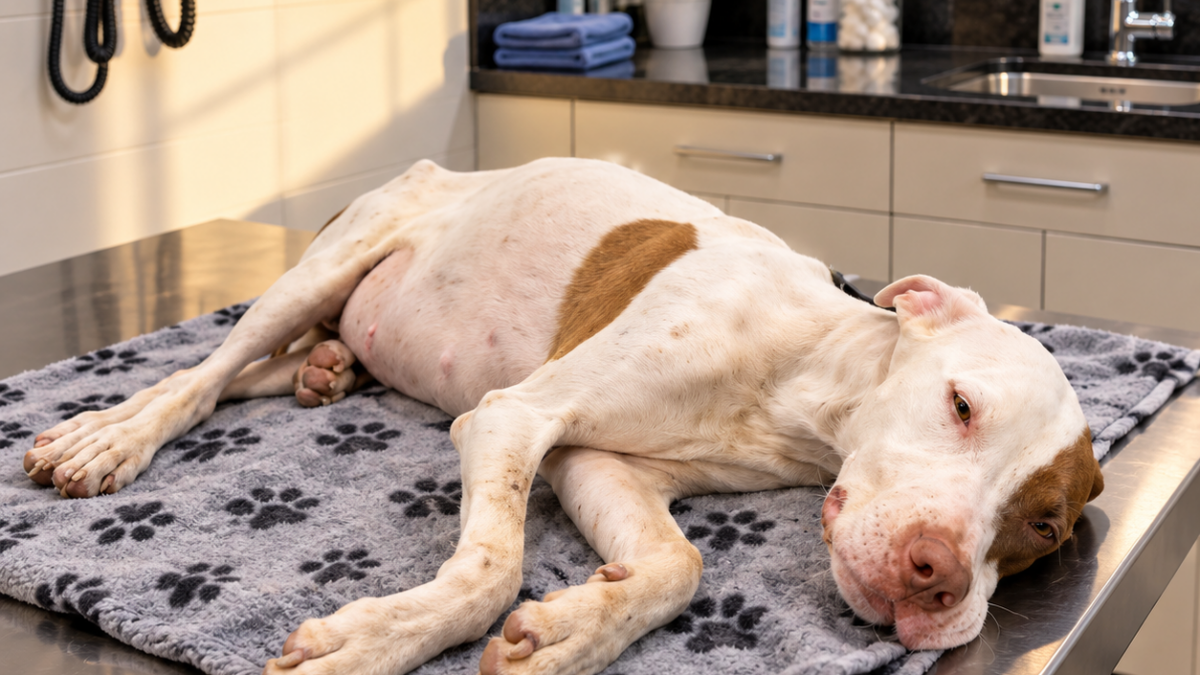
PART 2
“What’s happening?”
My voice came out louder than I intended.
One of the technicians moved between me and the examination table.
“Rachel, please give us some room.”
Dr. Carter was already checking Lolo’s pulse.
“Her blood pressure is dropping. Recheck her glucose.”
The room seemed to shrink around me.
I watched the veterinarian’s hands move quickly, watched another technician adjust the equipment, watched Daniel step backward until his shoulders touched the wall.
Nobody was panicking.
That should have reassured me.
Instead, it made everything more terrifying.
They were moving with the kind of controlled urgency that comes from knowing exactly how much danger an animal is in.
“Her temperature?” Dr. Carter asked.
“Still low.”
“Continue warming her gradually. Let’s correct what we can without overwhelming her.”
I wanted to ask a hundred questions.
Was Lolo dying?
Was the infection spreading?
Could she recover?
Had we found her too late?
But all I managed was, “Please.”
Dr. Carter glanced at me.
“We’re doing everything we can.”
I pressed my hand against my mouth.
Lolo lay motionless on the table.
Her chest rose.
Fell.
Rose again.
That small movement became the most important thing in my world.
Several minutes later, the monitor settled into a steadier rhythm.
A technician looked toward Dr. Carter.
“Pressure’s improving.”
“Good. Keep watching.”
I felt Daniel’s hand on my shoulder.
“She’s still here,” he whispered.
I nodded.
But I couldn’t stop staring at the dog who had been left alone beside that abandoned building.
The same dog who hadn’t possessed enough strength to lift her head toward food.
The same dog whose body had become so fragile that even helping her required extraordinary caution.
And I found myself wondering what her life had been like before we arrived.
Had someone ever loved her?
Had she slept beside a fireplace?
Had somebody taught her to sit?
Had she once run through a backyard chasing butterflies?
Or had her entire life been nothing but hunger, fear, and a rope around her neck?
I looked down at the frayed length of rope in my hand.
One end had been knotted.
The other was dirty and stiff.
I didn’t know who had tied it.
But I knew I never wanted Lolo to feel it around her neck again.
The First Night
Dr. Carter called us into a consultation room after the emergency treatment stabilized Lolo.
She looked exhausted.
Not discouraged.
Just deeply concerned.
“She’s suffering from severe malnutrition and dehydration,” she explained. “Her wound is infected, and her bloodwork shows that her body is under tremendous stress.”
Daniel sat beside me.
“Can she survive?”
Dr. Carter folded her hands.
“I can’t promise that.”
The words landed heavily.
“Her body has been deprived for so long that we have to be careful with every part of her treatment.”
She explained that dogs suffering from extreme starvation could develop refeeding syndrome if nutrition was restored too aggressively.
After prolonged malnutrition, introducing too many calories too quickly can trigger dangerous changes in the body’s electrolyte balance.
Lolo needed food.
But the very thing she was desperate for could become dangerous if we rushed.
“So what happens now?” I asked.
“We stabilize her hydration and circulation, monitor her electrolytes, manage her pain, and begin carefully controlled nutritional support when it’s appropriate. We’ll also treat the infection and evaluate the wound.”
“How long?”
“I can’t give you a timeline yet.”
I looked through the consultation room window toward the treatment area.
Lolo was resting beneath warm blankets.
“Will she ever walk again?”
Dr. Carter followed my gaze.
“We need to get her through tonight first.”
That was when I understood how serious the situation really was.
We weren’t talking about recovery.
Not yet.
We were talking about survival.
Daniel offered to drive me home.
I refused.
“I can’t leave her.”
“Rachel, it’s almost midnight.”
“I know.”
“You’re exhausted.”
“I know that too.”
He studied my face.
Then he pulled out the chair beside me.
“Okay,” he said. “Then I’m staying.”
For the next several hours, we sat in the clinic’s small waiting room beneath the fluorescent lights.
A vending machine hummed against the wall.
Somewhere behind the treatment doors, a dog barked.
A telephone rang twice.
Every ordinary sound felt strangely offensive.
How could the world continue behaving normally when Lolo was fighting so hard just to remain alive?
At 2:17 a.m., a technician named Melissa came into the waiting room.
I stood so quickly that my knees hit the chair.
“Is she okay?”
Melissa offered a tired smile.
“She’s stable right now.”
I closed my eyes.
“Can I see her?”
“Just for a minute.”
She led me into the treatment room.
Lolo looked even smaller beneath the hospital blankets.
An IV line was secured to her front leg.
Her wound had been cleaned and covered.
The rope was gone.
For the first time since we’d found her, nothing was pulling against her neck.
I approached the table slowly.
“Hey, sweetheart.”
Her eyelids fluttered.
“It’s me.”
I placed my hand near her cheek.
She moved her nose toward my fingers.
The movement was almost imperceptible.
But it was deliberate.
Melissa smiled.
“She recognizes your voice.”
I knew that might not be true.
Maybe Lolo was simply responding to sound.
Maybe she smelled someone familiar.
But I chose to believe she remembered the person who’d lifted her from the dirt.
I gently touched her head.
“You don’t have to do anything tonight,” I whispered. “You don’t have to stand. You don’t have to be brave. Just keep breathing.”
Her eyes closed.
And I stayed beside her until Melissa told me she needed to rest.
The Photograph That Changed Everything
The following morning, Daniel returned to the abandoned building.
We needed to document the location and determine whether anyone nearby knew where Lolo had come from.
At the clinic, I received a message from him just after ten.
Rachel, I found something.
Attached was a photograph of the ground near the fence.
At first, I couldn’t understand what I was looking at.
Then I noticed a rusted metal stake.
A fresh section of rope was still tied around it.
My stomach tightened.
Daniel called a moment later.
“The rope was tied to this stake,” he said.
“Are you sure?”
“The knot matches the remaining section. It looks like someone cut or tore it loose.”
I closed my eyes.
Lolo hadn’t simply wandered there.
Someone had restrained her.
Someone had left her where she could barely reach shelter.
“Did you find anything else?”
“There’s a plastic water container nearby. Completely dry. And an old feed bag.”
I looked toward the treatment room.
Lolo was sleeping.
“Take pictures of everything,” I told him.
“Already doing it.”
“And don’t disturb anything else. We need to report it.”
“I’ve called animal control.”
When Daniel returned that afternoon, he brought another photograph.
This one showed the abandoned building from the road.
A faded wooden sign stood near the driveway.
The property had once belonged to a small livestock supply business.
It had apparently been vacant for years.
I stared at the photograph.
“Who owns it?”
“County records list a holding company. I’m trying to reach someone.”
“And the neighbors?”
“There’s a farmhouse about a quarter mile away. Nobody answered.”
I set the photograph down.
The frustration was immediate.
Somewhere, someone might know exactly what had happened to Lolo.
And she couldn’t tell us.
She couldn’t explain the rope.
She couldn’t tell us how long she’d gone without food.
She couldn’t identify the person who had abandoned her.
She had only her wounds.
I made a decision that afternoon.
I was going to help her survive.
And I was going to make sure her suffering was properly investigated.
Not because revenge would heal her.
It wouldn’t.
But because whoever had left her there should never be allowed to pretend she had never existed.
Three Days Without a Miracle
For the next seventy-two hours, Lolo remained in critical condition.
Her treatment required constant adjustments.
The veterinary team monitored her hydration, blood glucose, electrolytes, temperature, and response to carefully introduced nutrition.
Her infected wound needed regular cleaning and assessment.
Every improvement seemed painfully small.
The first day, she managed to swallow a little food with assistance.
The second day, her temperature remained stable without as much external warming.
The third day, she lifted her head for several seconds.
I was there when it happened.
Dr. Carter had just finished examining her.
I was standing beside the table, talking about completely ordinary things.
The weather.
The traffic.
A bird I’d seen outside the clinic window.
Anything to fill the silence.
“And Daniel says you’re going to love the little garden behind my house,” I told her. “We have squirrels everywhere. They act like they own the place.”
Lolo’s ear twitched.
I smiled.
“You’d probably have a few opinions about that.”
Then her head moved.
Slowly.
Her neck trembled.
But she lifted her chin from the blanket.
I stopped speaking.
“Emily?”
Dr. Carter turned.
Lolo was looking straight at me.
For perhaps four seconds, she held her head up.
Then she lowered it again.
I began crying.
Dr. Carter smiled.
“That’s a good sign.”
“Did you see that?”
“I did.”
“She lifted her head.”
“She certainly did.”
It was such a small thing.
Most dogs do it hundreds of times a day without thinking.
But Lolo had fought through unimaginable weakness just to raise her face toward me.
I wanted to celebrate.
I wanted to call everyone I knew.
Instead, I bent close to her and whispered, “There you are.”
She blinked.
And for the first time, I allowed myself to imagine her living.
The Man at the Feed Store
Five days after Lolo’s rescue, animal control investigator Sarah Bennett contacted me.
Sarah had worked in the county for nearly twelve years.
She wasn’t the kind of person who made dramatic promises.
She believed in documentation, witness statements, veterinary records, and evidence that could withstand scrutiny.
That was exactly what Lolo needed.
“I’ve reviewed the photographs,” she told me. “We’re investigating.”
“Do you know who owned her?”
“Not yet.”
“Is there any way to find out?”
“We’re speaking to people who use the surrounding roads. We also have a possible lead.”
My heart jumped.
“What lead?”
“A man at a nearby feed store remembers seeing a dog matching her description.”
I gripped the phone.
“When?”
“Several weeks before she was found.”
I couldn’t speak.
Sarah continued.
“He remembers an extremely thin brown dog riding in the back of a white pickup truck. He noticed her because she appeared to have a rope tied around her neck.”
“Did he see the driver?”
“He says he might recognize him, but we’re still verifying the information.”
I sat down.
Several weeks.
Lolo might have been suffering for far longer than we’d imagined.
“Sarah?”
“Yes?”
“Please don’t let this disappear.”
Her voice softened.
“Rachel, I can’t promise an outcome. But I can promise we’re taking the evidence seriously.”
After the call, I returned to Lolo’s kennel.
She was awake.
I lowered myself onto the floor beside her.
“You’ve got people looking out for you now,” I said.
She watched me quietly.
“No matter what happens, you’re not going back there.”
Her tail moved.
Just once.
A faint sweep against the blanket.
I froze.
Then I laughed through my tears.
“Did you just wag your tail?”
Another tiny movement.
I covered my mouth.
For five days, I’d been measuring hope in heartbeats, blood tests, and milliliters of food.
Now, for the first time, hope had a tail.
The Setback
On the seventh day, Lolo stopped responding to food as well as she’d been doing.
Her energy dropped.
Her wound remained a concern, and her bloodwork required another adjustment to treatment.
Dr. Carter called me at 6:40 that evening.
“Rachel, I want to update you before you come in.”
My stomach sank.
“What happened?”
“She’s having a difficult day.”
I closed my eyes.
“How difficult?”
“We’re concerned about her ongoing weakness and some changes in her clinical condition. We’re repeating tests and reassessing the treatment plan.”
“Is she dying?”
There was a pause.
“She’s still very sick. I don’t want you to lose hope, but I also don’t want you to underestimate how fragile she is.”
I drove to the clinic with both hands gripping the steering wheel.
For one terrible moment, I was back beside the abandoned building.
Seeing her ribs.
Hearing her shallow breathing.
Watching her attempt to reach food she couldn’t lift her head toward.
When I arrived, Lolo was resting.
Melissa let me sit beside her for a few minutes.
I placed my palm against the edge of the blanket.
“Listen to me,” I whispered.
Lolo opened one eye.
“I know you’re tired.”
Her breathing was slow but regular.
“And I know you don’t understand any of this.”
I swallowed.
“But you have a chance now.”
I leaned closer.
“There’s a soft bed waiting for you. And fresh water. And people who won’t leave.”
Her gaze shifted toward me.
I smiled through tears.
“There’s a whole world you haven’t gotten to enjoy yet.”
I thought about the park near my house.
The walking trail through the woods.
The creek that ran beneath the little footbridge.
The way sunlight warmed the kitchen floor every afternoon.
All those ordinary things.
All those small experiences that should belong to every dog.
“You haven’t even learned what a couch is,” I whispered.
Melissa stood in the doorway, listening.
I gently stroked Lolo’s ear.
“So you can’t give up yet, okay?”
Of course, she couldn’t understand the words.
But she remained awake while I spoke.
And when I finally stood to leave, she moved her paw toward the place where my hand had been.
I looked at Melissa.
“Did you see that?”
She smiled.
“I did.”
I sat back down.
“Then I guess I’m not leaving just yet.”
The First Step
The turning point didn’t arrive with a dramatic announcement.
It arrived on an ordinary Thursday morning.
Lolo had begun responding more consistently to treatment.
Her electrolyte values had improved.
She was tolerating her carefully increased meals.
The infected wound was gradually healing under veterinary care.
She was still dangerously thin.
Still weak.
Still dependent on others for nearly everything.
But the veterinary staff had started discussing the next stage.
Gentle physical rehabilitation.
The first goal wasn’t walking.
It was simply helping her bear a little weight.
Dr. Carter explained that prolonged malnutrition had caused significant muscle loss.
Even after her medical condition stabilized, Lolo would need time to regain strength.
“She’s not going to wake up one morning and suddenly be healthy,” she told me.
“I know.”
“This may take weeks. Possibly longer.”
“Then we give her weeks.”
Dr. Carter smiled.
That morning, a rehabilitation technician named Olivia joined us.
We placed Lolo on a nonslip padded surface.
Olivia supported her chest.
I steadied her hindquarters as instructed.
“Ready, sweetheart?” I whispered.
Lolo looked confused.
Her paws touched the mat.
Her front legs trembled.
For one brief moment, her body rose.
Then she sank back into our support.
“Good girl,” Olivia said immediately.
I looked at her.
“That counted?”
“Absolutely. We asked her muscles to do a little work, and she tried.”
We rested.
Then tried again.
This time, Lolo held some of her weight for a few seconds.
Her legs shook so hard that I could feel the effort through my hands.
But she didn’t collapse immediately.
Olivia nodded.
“That’s enough for today.”
I stared at Lolo.
“She did it.”
“She did.”
I knelt beside her.
“You’re amazing.”
Lolo looked at me with the same dark eyes I’d seen beside the abandoned building.
But something was different.
The emptiness was beginning to disappear.
In its place was curiosity.
And perhaps, finally, a little trust.
A Name From the Past
Two weeks after her rescue, Sarah Bennett called again.
This time, her voice sounded different.
“We’ve identified someone we’d like to interview regarding Lolo.”
I sat down at my kitchen table.
“Who?”
“A local man named Curtis Hale.”
The name meant nothing to me.
Sarah explained that Curtis lived outside town and had previously kept dogs on a property connected to a small breeding operation.
Investigators had received information that a female dog matching Lolo’s appearance had been seen there.
“Does he own the abandoned building?” I asked.
“No. But we’re looking into his connection to the location.”
“Do you think he left her?”
“We haven’t reached that conclusion.”
I understood why Sarah was cautious.
Suspicions weren’t proof.
Rumors weren’t evidence.
And I didn’t want Lolo’s case destroyed by accusations we couldn’t substantiate.
Still, I felt anger rising.
“Sarah, she’s barely survived.”
“I know.”
“Someone tied her up and left her without adequate care.”
“That’s what we’re investigating.”
I took a breath.
“What happens next?”
“We’re seeking records and interviewing witnesses. The veterinary documentation you’ve provided is important.”
After the call, I sat alone for several minutes.
I had imagined confronting the person who’d hurt Lolo.
In those imaginary conversations, I always knew exactly what to say.
But now there was a name.
A real human being.
And the words disappeared.
I looked toward my refrigerator.
A photograph of Lolo was held there by a small magnet.
It had been taken the previous morning.
She was lying in a clean bed with her head lifted.
A little pink blanket was tucked around her body.
She looked exhausted.
But alive.
I stood, touched the edge of the photograph, and made myself a promise.
I wouldn’t turn this into a public spectacle.
I wouldn’t spread unverified accusations.
And I wouldn’t let my anger become more important than the truth.
But I would cooperate with every lawful step needed to establish what had happened.
Because Lolo deserved more than sympathy.
She deserved accountability.
The First Time She Asked for Affection
Three weeks after we found Lolo, I walked into the clinic carrying a small fleece blanket.
She was awake when I entered.
At first, she simply watched me.
Then something remarkable happened.
Her tail began moving.
Not the weak little twitch I’d celebrated days earlier.
A real wag.
Slow.
Careful.
But unmistakable.
“Oh, Lolo.”
I set the blanket down.
“Are you happy to see me?”
Her tail moved again.
I crouched beside her bed.
She lifted her head.
Then she extended her neck toward my hand.
I touched her cheek.
Lolo leaned into my palm.
I stopped breathing for a second.
Up until then, most of our contact had been necessary.
Helping her eat.
Supporting her during therapy.
Assisting with medical care.
But this was different.
She wasn’t being examined.
She wasn’t being asked to move.
She was simply requesting affection.
My eyes filled.
“Is that what you wanted?”
She pressed her head against my fingers again.
I laughed.
“Okay. Okay, sweetheart.”
I sat beside her and gently scratched behind her ears.
For almost twenty minutes, she rested against my hand.
When Dr. Carter passed the doorway, she stopped.
“Well, look at that.”
I smiled.
“She’s getting demanding.”
“Good,” Dr. Carter said. “I like demanding patients.”
I looked down at Lolo.
“Me too.”
What the Investigation Revealed
Sarah contacted us again near the end of Lolo’s fourth week in care.
Investigators had gathered veterinary records, site photographs, witness statements, and information about the rope and location.
They had also interviewed Curtis Hale.
Sarah couldn’t share every detail of an active investigation.
But she explained that authorities believed they had sufficient grounds to pursue an animal cruelty case.
I sat silently while she spoke.
The evidence would need to be reviewed by the prosecutor.
Any criminal charges would have to be established through the legal process.
There were still questions.
Still things nobody could prove.
But the case was moving forward.
“There’s another part of this,” Sarah said.
“What?”
“We’ve been checking the welfare of other animals associated with the property.”
My chest tightened.
“Other dogs?”
“We’re working with the appropriate authorities to ensure any animals involved are assessed.”
I gripped the edge of the table.
All along, I’d been focused on one dog.
One wounded, starving dog who had nearly died before anyone found her.
I hadn’t allowed myself to think about the possibility that others might still be suffering.
“Please tell me they’re safe.”
“We’ll share confirmed information when we’re able.”
That night, I barely slept.
I thought about Lolo’s rope.
Her empty stomach.
Her swollen leg.
And I wondered how many animals the world never heard about because nobody arrived in time.
The next afternoon, Sarah called with news that several dogs from a related location had been examined and placed under appropriate care following an authorized welfare intervention.
Some needed veterinary treatment.
Others were frightened and underweight.
But they were alive.
I sat down on the kitchen floor and cried.
Not because every question had been answered.
Not because the case was over.
But because Lolo’s rescue had helped draw attention to animals who might otherwise have remained unseen.
For the first time, I began to believe that something meaningful could emerge from everything she’d endured.
The Day Lolo Walked
The clinic called me on a Tuesday morning.
“Rachel,” Olivia said, “can you come in around eleven?”
I immediately panicked.
“Is something wrong?”
“No,” she replied, laughing softly. “Actually, I think you’re going to want to see this.”
I arrived twenty minutes early.
Lolo was resting on a padded mat in the rehabilitation room.
She had gained weight.
Not dramatically.
Her ribs were still visible.
Her hind legs remained thin.
But her eyes were brighter, her posture stronger, and her coat had started to look healthier.
Olivia stood beside her holding a supportive walking harness.
“We’ve been working on weight-bearing and short assisted movements,” she explained.
I nodded.
“How is she doing?”
“She’s been surprising us.”
Olivia helped Lolo into position.
Then she looked at me.
“Come stand over here.”
I moved several feet away.
Lolo looked up.
“Hi, baby.”
Her ears lifted.
Olivia supported her gently.
“Come on, Lolo.”
Lolo shifted her weight.
One front paw moved forward.
Then the other.
Her hind legs followed with assistance.
I felt my heart pounding.
“That’s it,” I whispered.
Lolo took another step.
And another.
Olivia gradually reduced the support as Lolo maintained her balance.
Then, for a few astonishing moments, Lolo moved forward on her own.
Her steps were uneven.
Her back legs trembled.
But she was walking.
Toward me.
I dropped to my knees.
“Lolo!”
She took one more step.
Then another.
Finally, she reached me and pressed her head against my chest.
I wrapped my arms around her carefully.
And I cried so hard that I couldn’t speak.
Olivia was crying too.
Dr. Carter appeared in the doorway.
“Did I miss it?”
I looked up.
“She walked.”
Dr. Carter smiled.
“I heard.”
I buried my face against Lolo’s neck.
Weeks earlier, I’d carried this dog from the dirt because she couldn’t lift her head toward food.
Now she had crossed the rehabilitation room to reach me.
Not perfectly.
Not easily.
But under her own power.
She had fought for every inch.
And she’d made it.
The First Night at Home
Lolo wasn’t ready for adoption immediately.
Her recovery still required follow-up care, wound monitoring, nutritional management, and gradual exercise.
But several weeks later, Dr. Carter finally gave us encouraging news.
“She’s medically stable enough to transition into an appropriate foster home.”
I stared at her.
“Really?”
“With clear instructions, continued checkups, and controlled activity.”
I grinned.
“I know a place.”
Dr. Carter raised an eyebrow.
“Do you?”
“There’s this little house with a fenced backyard.”
“Sounds promising.”
“And a sunny kitchen.”
“Very nice.”
“And a woman who has already purchased three dog beds.”
Dr. Carter laughed.
“Three?”
“I couldn’t decide.”
That was how Lolo came home with me.
Daniel helped carry her supplies into the house.
We arranged her favorite blanket inside a soft bed near the living room window.
There were water bowls in two rooms.
A comfortable resting area away from the stairs.
A folder containing every instruction from the veterinary team.
And a carefully measured meal schedule taped to the refrigerator.
Lolo stood in the doorway for a moment.
Her nose moved.
She looked around.
Then she took several cautious steps inside.
I watched her examine the rug.
The couch.
The doorway leading toward the kitchen.
She didn’t seem to know what to do with so much space.
“Welcome home, sweetheart,” I whispered.
She approached her bed.
Sniffed it.
Circled once.
Then lowered herself onto the blanket.
I sat beside her.
For several minutes, she watched me.
Then she put her head down.
And fell asleep.
No rope.
No dirt.
No flies hovering around an infected wound.
Just a quiet room.
A clean blanket.
And a door that would close to keep her safe rather than trap her.
That night, I slept on the couch.
Not because Lolo needed constant attention.
But because I couldn’t bring myself to leave her alone in an unfamiliar house.
At approximately three in the morning, I woke to a soft sound.
Lolo was standing beside the couch.
She looked at me.
Then she gently rested her chin against the cushion.
“Hey, baby.”
Her tail moved.
I reached down and stroked her head.
She stayed there for a moment.
Then returned to her bed.
I watched her settle down.
And I realized something.
For the first time since we’d met, Lolo was beginning to understand that people could disappear into another room and still come back.
The Hearing
Several months after Lolo was found, the animal cruelty case reached court.
I attended because I had participated in her rescue and had provided photographs and testimony about her condition when we discovered her.
I was nervous.
I had never wanted to be part of a courtroom proceeding.
I preferred helping animals.
Cleaning kennels.
Transporting injured dogs.
Finding foster homes.
But Lolo couldn’t explain what had happened to her.
So I told the court what I had personally witnessed.
I described the rope.
The abandoned location.
Her inability to raise her head.
Her extreme thinness.
The wound.
The shallow breathing.
I explained how Daniel and I had transported her to emergency veterinary care.
Dr. Carter presented her medical findings.
Sarah discussed the investigation and evidence gathered by animal control.
Other witnesses gave their accounts.
Curtis Hale appeared with legal representation.
I had imagined that seeing him would make me furious.
Instead, I felt an enormous sadness.
For months, the image of Lolo lying helpless in the dirt had lived in my mind.
And now we were sitting inside a courtroom, discussing her suffering as evidence.
At one point, I looked down at my hands.
They were trembling.
Then I thought about the rehabilitation room.
Lolo taking her first independent steps.
Her tail wagging when I entered the clinic.
Her chin resting against my couch cushion in the middle of the night.
I lifted my head.
And I answered every question as clearly as I could.
The proceedings ultimately established responsibility for the neglect that had been documented.
The court imposed penalties and restrictions consistent with the charges and applicable law, including limits relating to the keeping of animals.
I won’t pretend the outcome erased what happened.
No ruling could restore the time Lolo had spent hungry and afraid.
No punishment could make her infected wound disappear from memory.
And no courtroom could give her back the days she’d lost.
But there was something powerful about hearing her suffering acknowledged in an official setting.
For so long, someone had treated her as disposable.
Now her life mattered enough for people to stand beneath oath and tell the truth.
When we left the courthouse, Daniel walked beside me toward the parking lot.
“You okay?” he asked.
I looked up at the sky.
“I think so.”
“Feel better?”
I considered the question.
“Not exactly.”
He waited.
“I thought I’d feel happy when it was over.”
“And?”
“I just want to go home.”
Daniel smiled.
“To Lolo?”
I nodded.
“To Lolo.”
Because I’d spent months imagining justice as a dramatic confrontation.
But when the day finally came, the thing I wanted most wasn’t to see someone punished.
It was to return to the dog who had survived.
The Real Victory
Lolo’s recovery didn’t happen all at once.
There were setbacks.
Days when her appetite worried me.
Appointments when the veterinarian adjusted our plan.
Mornings when she seemed tired after doing very little.
Her muscles needed time.
Her skin needed time.
Her digestive system needed time.
And perhaps most importantly, her confidence needed time.
At first, sudden noises made her freeze.
If a door slammed, she’d lower her body.
If someone approached too quickly, she’d pull away.
When I picked up an old garden rope one afternoon, she backed toward the house.
I immediately set it down.
“Oh, sweetheart.”
I knelt several feet away.
“It’s okay.”
She watched me.
I didn’t move closer.
I let her decide.
After a moment, she approached cautiously.
I offered my hand.
She sniffed it.
Then leaned into my fingers.
We never used that rope again.
Instead, Lolo learned that a soft, properly fitted harness meant a short walk.
A food bowl meant a meal she didn’t have to compete for.
A closed door meant warmth and safety.
And my footsteps in the hallway meant someone was coming to see her.
The first time she barked at a squirrel, I nearly dropped my coffee.
It was a bright Saturday morning.
We were sitting together on the back porch.
Lolo was lying beside my chair, watching the yard.
A squirrel raced along the fence.
Lolo’s ears shot upward.
She stood.
And barked.
One short, surprisingly loud bark.
I stared at her.
“Lolo!”
She looked at me.
Then back at the squirrel.
And barked again.
I started laughing.
“Well, excuse me.”
The squirrel disappeared into a tree.
Lolo stood proudly for another moment before returning to her bed.
I called Daniel immediately.
“You’re not going to believe what happened.”
“What?”
“Lolo barked at a squirrel.”
He laughed.
“That’s the emergency?”
“You don’t understand. She actually barked.”
“Rachel, she’s a dog.”
“I know!”
But he did understand.
We both remembered the animal who hadn’t made a sound when we found her.
The dog who hadn’t had enough strength to lift her head.
The dog whose body had been so depleted that her survival was uncertain.
Now she was barking at squirrels like the world belonged to her.
And in a small, beautiful way, it finally did.
Six Months Later
By the sixth month, Lolo had changed so much that some people struggled to recognize her.
She had regained substantial weight under veterinary supervision.
Her coat had become softer and fuller.
Her eyes were bright.
The wound on her hind leg had healed, leaving a scar beneath her fur.
She could walk comfortably for longer periods.
She loved lying in the grass.
She loved slow morning walks.
She loved watching Daniel unload groceries because she had decided that every shopping bag must contain something interesting.
But her greatest discovery was the couch.
I had resisted at first.
Not because I didn’t want her there.
But because I’d spent weeks arranging comfortable beds and wanted her to have safe, easy places to rest.
Then one rainy afternoon, she approached the couch and looked at me.
I patted the cushion.
“Come on, sweetheart.”
With a little assistance, she climbed up.
Turned around twice.
And settled beside me.
Five minutes later, she was asleep.
Her head rested on my thigh.
One paw stretched across my lap.
I looked at the dog who had once been too weak to reach food.
And suddenly I couldn’t see clearly through my tears.
I remembered our first meeting.
The rope hanging from her neck.
The terrible wound.
The way her eyes followed the food container.
The frightening drive to the hospital.
The alarm sounding inside the examination room.
Dr. Carter’s warning that Lolo’s body was beginning to shut down.
For months, those memories had returned whenever I closed my eyes.
But now there was another image.
A healthy, peaceful dog sleeping beside me.
Completely unaware that she had just given me the most beautiful moment of my year.
The Photograph on the Wall
I eventually printed two photographs and placed them in a small frame.
The first showed Lolo shortly after her rescue.
She was lying on a veterinary blanket.
Her ribs were visible.
Her expression was exhausted.
The second showed her six months later.
Standing in my backyard.
Wearing a blue harness.
Her ears lifted.
Her tail raised.
Her face turned toward the camera.
The difference was extraordinary.
But I didn’t display the photographs simply to show how much she had changed.
I kept them together because I never wanted to forget what recovery had required.
Lolo hadn’t been saved by one heroic moment.
She’d been saved through many careful decisions made by people who refused to give up on her.
The delivery driver who noticed her.
Daniel, who helped carry her.
Dr. Carter and the veterinary team, who stabilized her fragile body.
Olivia, who supported her trembling legs.
Sarah, who pursued the evidence.
And everyone who offered care when the outcome remained uncertain.
I had been one small part of that journey.
Lolo had done the hardest work.
She’d endured the hunger.
The pain.
The frightening treatments.
The weakness.
The effort of standing.
The struggle of learning to walk again.
And somehow, through all of it, she had found the courage to trust people.
That was the part I found most extraordinary.
Not that she survived.
But that after everything she’d experienced, she still wanted to love.
One Year After the Rescue
On the anniversary of the day we found her, Daniel visited with a small gift.
He carried a blue stuffed dog toy in one hand and a paper bag in the other.
“I brought something for the anniversary girl.”
Lolo was standing near the front door before he’d finished speaking.
Her tail wagged furiously.
Daniel laughed.
“Well, hello to you too.”
She pushed her nose against his hand.
He gave her the toy.
She immediately carried it into the living room.
Then returned to inspect the bag.
“She hasn’t changed,” Daniel said.
“She’s gotten bossier.”
“That’s what happens when you spoil her.”
I smiled.
“She deserves it.”
We sat outside that afternoon beneath a clear blue sky.
Lolo wandered through the grass, stopping occasionally to investigate something only she found interesting.
At one point, she approached the fence.
I watched her carefully.
For a brief moment, I remembered the rusted fence beside the abandoned building.
The dirt.
The rope.
Her unmoving body.
But Lolo didn’t seem interested in the past.
She sniffed a flower.
Sneezed.
Then trotted back toward us.
Daniel looked at her.
“Remember when we thought she might never walk again?”
I nodded.
“Every day.”
He smiled.
“Look at her now.”
Lolo stopped in front of me.
Her tail wagged.
I held out my hand.
She pressed her nose against my palm.
“Yeah,” I whispered. “Look at her now.”
Later that evening, after Daniel had gone home, Lolo followed me into the kitchen.
I prepared her dinner.
She sat patiently beside her bowl.
Her eyes remained fixed on my hands.
I measured her food, checked the bowl, and lowered it to the floor.
“Okay, sweetheart.”
She began eating.
And as I watched, a memory returned so vividly that I had to lean against the counter.
The first time I’d offered Lolo food, she couldn’t even lift her head.
She had wanted it so badly.
I’d seen the hunger in her eyes.
But her body had been too weak to respond.
Now she stood comfortably beside her bowl, eating a healthy meal in a warm kitchen.
No fear.
No desperation.
No struggle to raise her head.
Just an ordinary dog enjoying dinner.
It was such a simple sight.
And it meant everything.
When she finished, she walked over and nudged my hand.
I scratched behind her ears.
“You’re welcome, baby.”
She wagged her tail.
Then headed toward the living room.
I followed.
She climbed onto her favorite spot, curled into a comfortable ball, and closed her eyes.
A few minutes later, she was sleeping.
I sat beside her and listened to the steady rhythm of her breathing.
That sound used to terrify me.
In the rescue van, I had listened to every fragile breath, afraid the next one wouldn’t come.
Now it was the peaceful breathing of a dog who was safe.
I rested my hand against her back.
“Goodnight, Lolo.”
She opened one sleepy eye.
Her tail tapped the cushion.
And then she drifted back to sleep.
I used to think that the most important part of rescuing an animal was the moment you carried them away from danger.
But Lolo taught me something different.
Sometimes the rescue is only the beginning.
Sometimes the real work happens in the quiet hours afterward.
When nobody is watching.
When recovery is slow.
When the setbacks are frightening.
When a dog has to learn that a human hand can offer comfort instead of pain.
When the smallest progress feels like a miracle.
And when the animal who once had nothing finally begins to believe that tomorrow will be better.
I never learned every detail of Lolo’s life before that afternoon.
There are things about her past that will always remain unknown.
I can’t give back the time she lost.
I can’t erase the scar on her leg.
And I can’t change the fact that someone allowed her to suffer so terribly.
But I can give her something she didn’t have when we found her.
A home.
Safety.
Food.
Care.
And the certainty that she will never have to face the world alone again.
The people responsible for her neglect had to face the consequences of their actions.
Lolo, meanwhile, got something far more important.
She got her life back.
And I got to witness the moment that life became something beautiful.
The dog who once couldn’t lift her head to reach a bite of food now lifts it every morning to greet me.
The dog who once lay silent beside a rope now barks at squirrels, chases toys, and sleeps peacefully on my couch.
And the dog someone left behind has become the most loved member of my family.
Some people thought Lolo’s story would end beside that abandoned building.
They were wrong.
That was only the place where her second life began.
And every time she curls up beside me, rests her head against my hand, and falls asleep without fear, I know exactly what justice looks like.
It looks like Lolo.
Alive.
Loved.
And finally home.
They Left Lolo Tied Up to Starve—But They Never Expected Anyone to Discover What Happened to Her
[FACEBOOK CAPTION — PART ONE]
The first time I touched Lolo, I was afraid she would die beneath my hand. Someone had left her tied up, starving and wounded, as though her life meant absolutely nothing. But what frightened me most was the one thing I noticed when I looked into her eyes.
She wasn’t fighting.
She wasn’t barking.
She wasn’t even trying to crawl away.
She just lay on the hard, dusty ground, with a dirty rope hanging loosely around her neck.
Every rib was visible.
Her hips protruded sharply beneath her skin. Her legs were so thin that I wondered how they had ever supported her weight.
And when I knelt beside her, she barely moved.
“Hey, sweetheart,” I whispered. “Can you hear me?”
One of her ears twitched.
That was all.
My name is Rachel Morgan, and I’ve been volunteering with a small animal rescue organization in southern Missouri for almost seven years.
I’ve seen dogs abandoned beside highways, puppies left inside cardboard boxes, and elderly animals surrendered when their owners no longer wanted them.
But something about Lolo stopped me cold.
Maybe it was the rope.
Maybe it was the infected wound on her hind leg.
Or maybe it was the way she looked at me without making a sound.
She didn’t seem surprised that someone had finally arrived.
She seemed too exhausted to care.
“Rachel,” my rescue partner, Daniel, said quietly behind me. “We need to move fast.”
I nodded, but my hands were shaking.
Earlier that morning, we’d received a call from a delivery driver who had spotted a motionless dog near an abandoned agricultural building.
The caller thought she might already be dead.
When we arrived, I understood why.
Lolo was lying beside a rusted metal fence, partially sheltered from the afternoon sun by a broken wooden panel.
There was no food bowl.
No clean water.
Only a torn piece of plastic and a length of rope dragging across the dirt.
I opened my rescue bag and reached for a small container of wet food.
The moment I peeled back the lid, Lolo’s nostrils moved.
Her eyes followed my hand.
For one brief second, I saw something change in her expression.
She wanted to eat.
Desperately.
I placed a small amount near her nose.
She tried to lift her head.
Her neck trembled.
Her front legs shifted beneath her.
Then she collapsed back onto the ground.
I felt my throat tighten.
“Oh, baby.”
Daniel crouched beside me.
“She can’t even reach it?”
I shook my head.
A dog should never have to struggle this hard just to take a bite of food.
I dipped two fingers into a little water and gently moistened her lips.
She moved her tongue weakly.
That tiny movement almost broke me.
Daniel examined the rope while I checked her breathing.
It was shallow and uneven.
Her gums were pale and tacky.
A terrible smell came from her back leg.
When I carefully moved the matted fur aside, I discovered an open wound surrounded by swollen, inflamed tissue.
Daniel looked over my shoulder.
“That’s badly infected.”
“I know.”
“We need the clinic.”
I slipped a folded towel beneath Lolo’s head while Daniel prepared the stretcher.
She didn’t resist when we lifted her.
She didn’t whimper.
She simply let her body go limp in our arms.
And somehow, that frightened me more than if she’d been screaming.
During the drive, I sat in the back of our rescue van with Lolo resting beside me.
Every few minutes, I leaned closer to make sure she was still breathing.
“Stay with me,” I whispered.
Her eyes opened slightly.
“Just a little longer.”
Daniel called the veterinary clinic and explained what we were bringing in.
By the time we arrived, two veterinary technicians were waiting outside.
They carried Lolo directly into an examination room.
Dr. Emily Carter, the veterinarian on duty, took one look at her and immediately began issuing instructions.
“Start checking her vitals. I want bloodwork, glucose, electrolytes, and an IV catheter. Carefully.”
I stood near the doorway, still holding the dirty rope we’d removed from her neck.
Dr. Carter listened to Lolo’s heart.
Then she examined the infected wound.
Her expression changed.
“How long has she been like this?” she asked.
“We don’t know.”
“Did she eat anything before you brought her?”
“Almost nothing. She couldn’t lift her head.”
Dr. Carter nodded grimly.
“That’s probably a good thing. In her condition, feeding too much too quickly could be extremely dangerous.”
I stared at her.
“She’s starving.”
“I know, Rachel. But her body may not be able to handle normal feeding yet.”
The technician connected a monitor.
A faint electronic beep filled the room.
Dr. Carter studied the initial readings.
Then she turned toward me.
“Rachel, there’s something you need to understand.”
I could barely speak.
“What?”
She glanced back at the fragile dog on the examination table.
“Lolo isn’t just starving. Her body is beginning to shut down.”
And when the monitor suddenly sounded an alarm, everyone in the room moved at once.
[END OF FACEBOOK CAPTION — PART ONE]
[FIRST COMMENT / FULL STORY CONTINUATION]
“What’s happening?”
My voice came out louder than I intended.
One of the technicians moved between me and the examination table.
“Rachel, please give us some room.”
Dr. Carter was already checking Lolo’s pulse.
“Her blood pressure is dropping. Recheck her glucose.”
The room seemed to shrink around me.
I watched the veterinarian’s hands move quickly, watched another technician adjust the equipment, watched Daniel step backward until his shoulders touched the wall.
Nobody was panicking.
That should have reassured me.
Instead, it made everything more terrifying.
They were moving with the kind of controlled urgency that comes from knowing exactly how much danger an animal is in.
“Her temperature?” Dr. Carter asked.
“Still low.”
“Continue warming her gradually. Let’s correct what we can without overwhelming her.”
I wanted to ask a hundred questions.
Was Lolo dying?
Was the infection spreading?
Could she recover?
Had we found her too late?
But all I managed was, “Please.”
Dr. Carter glanced at me.
“We’re doing everything we can.”
I pressed my hand against my mouth.
Lolo lay motionless on the table.
Her chest rose.
Fell.
Rose again.
That small movement became the most important thing in my world.
Several minutes later, the monitor settled into a steadier rhythm.
A technician looked toward Dr. Carter.
“Pressure’s improving.”
“Good. Keep watching.”
I felt Daniel’s hand on my shoulder.
“She’s still here,” he whispered.
I nodded.
But I couldn’t stop staring at the dog who had been left alone beside that abandoned building.
The same dog who hadn’t possessed enough strength to lift her head toward food.
The same dog whose body had become so fragile that even helping her required extraordinary caution.
And I found myself wondering what her life had been like before we arrived.
Had someone ever loved her?
Had she slept beside a fireplace?
Had somebody taught her to sit?
Had she once run through a backyard chasing butterflies?
Or had her entire life been nothing but hunger, fear, and a rope around her neck?
I looked down at the frayed length of rope in my hand.
One end had been knotted.
The other was dirty and stiff.
I didn’t know who had tied it.
But I knew I never wanted Lolo to feel it around her neck again.
The First Night
Dr. Carter called us into a consultation room after the emergency treatment stabilized Lolo.
She looked exhausted.
Not discouraged.
Just deeply concerned.
“She’s suffering from severe malnutrition and dehydration,” she explained. “Her wound is infected, and her bloodwork shows that her body is under tremendous stress.”
Daniel sat beside me.
“Can she survive?”
Dr. Carter folded her hands.
“I can’t promise that.”
The words landed heavily.
“Her body has been deprived for so long that we have to be careful with every part of her treatment.”
She explained that dogs suffering from extreme starvation could develop refeeding syndrome if nutrition was restored too aggressively.
After prolonged malnutrition, introducing too many calories too quickly can trigger dangerous changes in the body’s electrolyte balance.
Lolo needed food.
But the very thing she was desperate for could become dangerous if we rushed.
“So what happens now?” I asked.
“We stabilize her hydration and circulation, monitor her electrolytes, manage her pain, and begin carefully controlled nutritional support when it’s appropriate. We’ll also treat the infection and evaluate the wound.”
“How long?”
“I can’t give you a timeline yet.”
I looked through the consultation room window toward the treatment area.
Lolo was resting beneath warm blankets.
“Will she ever walk again?”
Dr. Carter followed my gaze.
“We need to get her through tonight first.”
That was when I understood how serious the situation really was.
We weren’t talking about recovery.
Not yet.
We were talking about survival.
Daniel offered to drive me home.
I refused.
“I can’t leave her.”
“Rachel, it’s almost midnight.”
“I know.”
“You’re exhausted.”
“I know that too.”
He studied my face.
Then he pulled out the chair beside me.
“Okay,” he said. “Then I’m staying.”
For the next several hours, we sat in the clinic’s small waiting room beneath the fluorescent lights.
A vending machine hummed against the wall.
Somewhere behind the treatment doors, a dog barked.
A telephone rang twice.
Every ordinary sound felt strangely offensive.
How could the world continue behaving normally when Lolo was fighting so hard just to remain alive?
At 2:17 a.m., a technician named Melissa came into the waiting room.
I stood so quickly that my knees hit the chair.
“Is she okay?”
Melissa offered a tired smile.
“She’s stable right now.”
I closed my eyes.
“Can I see her?”
“Just for a minute.”
She led me into the treatment room.
Lolo looked even smaller beneath the hospital blankets.
An IV line was secured to her front leg.
Her wound had been cleaned and covered.
The rope was gone.
For the first time since we’d found her, nothing was pulling against her neck.
I approached the table slowly.
“Hey, sweetheart.”
Her eyelids fluttered.
“It’s me.”
I placed my hand near her cheek.
She moved her nose toward my fingers.
The movement was almost imperceptible.
But it was deliberate.
Melissa smiled.
“She recognizes your voice.”
I knew that might not be true.
Maybe Lolo was simply responding to sound.
Maybe she smelled someone familiar.
But I chose to believe she remembered the person who’d lifted her from the dirt.
I gently touched her head.
“You don’t have to do anything tonight,” I whispered. “You don’t have to stand. You don’t have to be brave. Just keep breathing.”
Her eyes closed.
And I stayed beside her until Melissa told me she needed to rest.
The Photograph That Changed Everything
The following morning, Daniel returned to the abandoned building.
We needed to document the location and determine whether anyone nearby knew where Lolo had come from.
At the clinic, I received a message from him just after ten.
Rachel, I found something.
Attached was a photograph of the ground near the fence.
At first, I couldn’t understand what I was looking at.
Then I noticed a rusted metal stake.
A fresh section of rope was still tied around it.
My stomach tightened.
Daniel called a moment later.
“The rope was tied to this stake,” he said.
“Are you sure?”
“The knot matches the remaining section. It looks like someone cut or tore it loose.”
I closed my eyes.
Lolo hadn’t simply wandered there.
Someone had restrained her.
Someone had left her where she could barely reach shelter.
“Did you find anything else?”
“There’s a plastic water container nearby. Completely dry. And an old feed bag.”
I looked toward the treatment room.
Lolo was sleeping.
“Take pictures of everything,” I told him.
“Already doing it.”
“And don’t disturb anything else. We need to report it.”
“I’ve called animal control.”
When Daniel returned that afternoon, he brought another photograph.
This one showed the abandoned building from the road.
A faded wooden sign stood near the driveway.
The property had once belonged to a small livestock supply business.
It had apparently been vacant for years.
I stared at the photograph.
“Who owns it?”
“County records list a holding company. I’m trying to reach someone.”
“And the neighbors?”
“There’s a farmhouse about a quarter mile away. Nobody answered.”
I set the photograph down.
The frustration was immediate.
Somewhere, someone might know exactly what had happened to Lolo.
And she couldn’t tell us.
She couldn’t explain the rope.
She couldn’t tell us how long she’d gone without food.
She couldn’t identify the person who had abandoned her.
She had only her wounds.
I made a decision that afternoon.
I was going to help her survive.
And I was going to make sure her suffering was properly investigated.
Not because revenge would heal her.
It wouldn’t.
But because whoever had left her there should never be allowed to pretend she had never existed.
Three Days Without a Miracle
For the next seventy-two hours, Lolo remained in critical condition.
Her treatment required constant adjustments.
The veterinary team monitored her hydration, blood glucose, electrolytes, temperature, and response to carefully introduced nutrition.
Her infected wound needed regular cleaning and assessment.
Every improvement seemed painfully small.
The first day, she managed to swallow a little food with assistance.
The second day, her temperature remained stable without as much external warming.
The third day, she lifted her head for several seconds.
I was there when it happened.
Dr. Carter had just finished examining her.
I was standing beside the table, talking about completely ordinary things.
The weather.
The traffic.
A bird I’d seen outside the clinic window.
Anything to fill the silence.
“And Daniel says you’re going to love the little garden behind my house,” I told her. “We have squirrels everywhere. They act like they own the place.”
Lolo’s ear twitched.
I smiled.
“You’d probably have a few opinions about that.”
Then her head moved.
Slowly.
Her neck trembled.
But she lifted her chin from the blanket.
I stopped speaking.
“Emily?”
Dr. Carter turned.
Lolo was looking straight at me.
For perhaps four seconds, she held her head up.
Then she lowered it again.
I began crying.
Dr. Carter smiled.
“That’s a good sign.”
“Did you see that?”
“I did.”
“She lifted her head.”
“She certainly did.”
It was such a small thing.
Most dogs do it hundreds of times a day without thinking.
But Lolo had fought through unimaginable weakness just to raise her face toward me.
I wanted to celebrate.
I wanted to call everyone I knew.
Instead, I bent close to her and whispered, “There you are.”
She blinked.
And for the first time, I allowed myself to imagine her living.
The Man at the Feed Store
Five days after Lolo’s rescue, animal control investigator Sarah Bennett contacted me.
Sarah had worked in the county for nearly twelve years.
She wasn’t the kind of person who made dramatic promises.
She believed in documentation, witness statements, veterinary records, and evidence that could withstand scrutiny.
That was exactly what Lolo needed.
“I’ve reviewed the photographs,” she told me. “We’re investigating.”
“Do you know who owned her?”
“Not yet.”
“Is there any way to find out?”
“We’re speaking to people who use the surrounding roads. We also have a possible lead.”
My heart jumped.
“What lead?”
“A man at a nearby feed store remembers seeing a dog matching her description.”
I gripped the phone.
“When?”
“Several weeks before she was found.”
I couldn’t speak.
Sarah continued.
“He remembers an extremely thin brown dog riding in the back of a white pickup truck. He noticed her because she appeared to have a rope tied around her neck.”
“Did he see the driver?”
“He says he might recognize him, but we’re still verifying the information.”
I sat down.
Several weeks.
Lolo might have been suffering for far longer than we’d imagined.
“Sarah?”
“Yes?”
“Please don’t let this disappear.”
Her voice softened.
“Rachel, I can’t promise an outcome. But I can promise we’re taking the evidence seriously.”
After the call, I returned to Lolo’s kennel.
She was awake.
I lowered myself onto the floor beside her.
“You’ve got people looking out for you now,” I said.
She watched me quietly.
“No matter what happens, you’re not going back there.”
Her tail moved.
Just once.
A faint sweep against the blanket.
I froze.
Then I laughed through my tears.
“Did you just wag your tail?”
Another tiny movement.
I covered my mouth.
For five days, I’d been measuring hope in heartbeats, blood tests, and milliliters of food.
Now, for the first time, hope had a tail.
The Setback
On the seventh day, Lolo stopped responding to food as well as she’d been doing.
Her energy dropped.
Her wound remained a concern, and her bloodwork required another adjustment to treatment.
Dr. Carter called me at 6:40 that evening.
“Rachel, I want to update you before you come in.”
My stomach sank.
“What happened?”
“She’s having a difficult day.”
I closed my eyes.
“How difficult?”
“We’re concerned about her ongoing weakness and some changes in her clinical condition. We’re repeating tests and reassessing the treatment plan.”
“Is she dying?”
There was a pause.
“She’s still very sick. I don’t want you to lose hope, but I also don’t want you to underestimate how fragile she is.”
I drove to the clinic with both hands gripping the steering wheel.
For one terrible moment, I was back beside the abandoned building.
Seeing her ribs.
Hearing her shallow breathing.
Watching her attempt to reach food she couldn’t lift her head toward.
When I arrived, Lolo was resting.
Melissa let me sit beside her for a few minutes.
I placed my palm against the edge of the blanket.
“Listen to me,” I whispered.
Lolo opened one eye.
“I know you’re tired.”
Her breathing was slow but regular.
“And I know you don’t understand any of this.”
I swallowed.
“But you have a chance now.”
I leaned closer.
“There’s a soft bed waiting for you. And fresh water. And people who won’t leave.”
Her gaze shifted toward me.
I smiled through tears.
“There’s a whole world you haven’t gotten to enjoy yet.”
I thought about the park near my house.
The walking trail through the woods.
The creek that ran beneath the little footbridge.
The way sunlight warmed the kitchen floor every afternoon.
All those ordinary things.
All those small experiences that should belong to every dog.
“You haven’t even learned what a couch is,” I whispered.
Melissa stood in the doorway, listening.
I gently stroked Lolo’s ear.
“So you can’t give up yet, okay?”
Of course, she couldn’t understand the words.
But she remained awake while I spoke.
And when I finally stood to leave, she moved her paw toward the place where my hand had been.
I looked at Melissa.
“Did you see that?”
She smiled.
“I did.”
I sat back down.
“Then I guess I’m not leaving just yet.”
The First Step
The turning point didn’t arrive with a dramatic announcement.
It arrived on an ordinary Thursday morning.
Lolo had begun responding more consistently to treatment.
Her electrolyte values had improved.
She was tolerating her carefully increased meals.
The infected wound was gradually healing under veterinary care.
She was still dangerously thin.
Still weak.
Still dependent on others for nearly everything.
But the veterinary staff had started discussing the next stage.
Gentle physical rehabilitation.
The first goal wasn’t walking.
It was simply helping her bear a little weight.
Dr. Carter explained that prolonged malnutrition had caused significant muscle loss.
Even after her medical condition stabilized, Lolo would need time to regain strength.
“She’s not going to wake up one morning and suddenly be healthy,” she told me.
“I know.”
“This may take weeks. Possibly longer.”
“Then we give her weeks.”
Dr. Carter smiled.
That morning, a rehabilitation technician named Olivia joined us.
We placed Lolo on a nonslip padded surface.
Olivia supported her chest.
I steadied her hindquarters as instructed.
“Ready, sweetheart?” I whispered.
Lolo looked confused.
Her paws touched the mat.
Her front legs trembled.
For one brief moment, her body rose.
Then she sank back into our support.
“Good girl,” Olivia said immediately.
I looked at her.
“That counted?”
“Absolutely. We asked her muscles to do a little work, and she tried.”
We rested.
Then tried again.
This time, Lolo held some of her weight for a few seconds.
Her legs shook so hard that I could feel the effort through my hands.
But she didn’t collapse immediately.
Olivia nodded.
“That’s enough for today.”
I stared at Lolo.
“She did it.”
“She did.”
I knelt beside her.
“You’re amazing.”
Lolo looked at me with the same dark eyes I’d seen beside the abandoned building.
But something was different.
The emptiness was beginning to disappear.
In its place was curiosity.
And perhaps, finally, a little trust.
A Name From the Past
Two weeks after her rescue, Sarah Bennett called again.
This time, her voice sounded different.
“We’ve identified someone we’d like to interview regarding Lolo.”
I sat down at my kitchen table.
“Who?”
“A local man named Curtis Hale.”
The name meant nothing to me.
Sarah explained that Curtis lived outside town and had previously kept dogs on a property connected to a small breeding operation.
Investigators had received information that a female dog matching Lolo’s appearance had been seen there.
“Does he own the abandoned building?” I asked.
“No. But we’re looking into his connection to the location.”
“Do you think he left her?”
“We haven’t reached that conclusion.”
I understood why Sarah was cautious.
Suspicions weren’t proof.
Rumors weren’t evidence.
And I didn’t want Lolo’s case destroyed by accusations we couldn’t substantiate.
Still, I felt anger rising.
“Sarah, she’s barely survived.”
“I know.”
“Someone tied her up and left her without adequate care.”
“That’s what we’re investigating.”
I took a breath.
“What happens next?”
“We’re seeking records and interviewing witnesses. The veterinary documentation you’ve provided is important.”
After the call, I sat alone for several minutes.
I had imagined confronting the person who’d hurt Lolo.
In those imaginary conversations, I always knew exactly what to say.
But now there was a name.
A real human being.
And the words disappeared.
I looked toward my refrigerator.
A photograph of Lolo was held there by a small magnet.
It had been taken the previous morning.
She was lying in a clean bed with her head lifted.
A little pink blanket was tucked around her body.
She looked exhausted.
But alive.
I stood, touched the edge of the photograph, and made myself a promise.
I wouldn’t turn this into a public spectacle.
I wouldn’t spread unverified accusations.
And I wouldn’t let my anger become more important than the truth.
But I would cooperate with every lawful step needed to establish what had happened.
Because Lolo deserved more than sympathy.
She deserved accountability.
The First Time She Asked for Affection
Three weeks after we found Lolo, I walked into the clinic carrying a small fleece blanket.
She was awake when I entered.
At first, she simply watched me.
Then something remarkable happened.
Her tail began moving.
Not the weak little twitch I’d celebrated days earlier.
A real wag.
Slow.
Careful.
But unmistakable.
“Oh, Lolo.”
I set the blanket down.
“Are you happy to see me?”
Her tail moved again.
I crouched beside her bed.
She lifted her head.
Then she extended her neck toward my hand.
I touched her cheek.
Lolo leaned into my palm.
I stopped breathing for a second.
Up until then, most of our contact had been necessary.
Helping her eat.
Supporting her during therapy.
Assisting with medical care.
But this was different.
She wasn’t being examined.
She wasn’t being asked to move.
She was simply requesting affection.
My eyes filled.
“Is that what you wanted?”
She pressed her head against my fingers again.
I laughed.
“Okay. Okay, sweetheart.”
I sat beside her and gently scratched behind her ears.
For almost twenty minutes, she rested against my hand.
When Dr. Carter passed the doorway, she stopped.
“Well, look at that.”
I smiled.
“She’s getting demanding.”
“Good,” Dr. Carter said. “I like demanding patients.”
I looked down at Lolo.
“Me too.”
What the Investigation Revealed
Sarah contacted us again near the end of Lolo’s fourth week in care.
Investigators had gathered veterinary records, site photographs, witness statements, and information about the rope and location.
They had also interviewed Curtis Hale.
Sarah couldn’t share every detail of an active investigation.
But she explained that authorities believed they had sufficient grounds to pursue an animal cruelty case.
I sat silently while she spoke.
The evidence would need to be reviewed by the prosecutor.
Any criminal charges would have to be established through the legal process.
There were still questions.
Still things nobody could prove.
But the case was moving forward.
“There’s another part of this,” Sarah said.
“What?”
“We’ve been checking the welfare of other animals associated with the property.”
My chest tightened.
“Other dogs?”
“We’re working with the appropriate authorities to ensure any animals involved are assessed.”
I gripped the edge of the table.
All along, I’d been focused on one dog.
One wounded, starving dog who had nearly died before anyone found her.
I hadn’t allowed myself to think about the possibility that others might still be suffering.
“Please tell me they’re safe.”
“We’ll share confirmed information when we’re able.”
That night, I barely slept.
I thought about Lolo’s rope.
Her empty stomach.
Her swollen leg.
And I wondered how many animals the world never heard about because nobody arrived in time.
The next afternoon, Sarah called with news that several dogs from a related location had been examined and placed under appropriate care following an authorized welfare intervention.
Some needed veterinary treatment.
Others were frightened and underweight.
But they were alive.
I sat down on the kitchen floor and cried.
Not because every question had been answered.
Not because the case was over.
But because Lolo’s rescue had helped draw attention to animals who might otherwise have remained unseen.
For the first time, I began to believe that something meaningful could emerge from everything she’d endured.
The Day Lolo Walked
The clinic called me on a Tuesday morning.
“Rachel,” Olivia said, “can you come in around eleven?”
I immediately panicked.
“Is something wrong?”
“No,” she replied, laughing softly. “Actually, I think you’re going to want to see this.”
I arrived twenty minutes early.
Lolo was resting on a padded mat in the rehabilitation room.
She had gained weight.
Not dramatically.
Her ribs were still visible.
Her hind legs remained thin.
But her eyes were brighter, her posture stronger, and her coat had started to look healthier.
Olivia stood beside her holding a supportive walking harness.
“We’ve been working on weight-bearing and short assisted movements,” she explained.
I nodded.
“How is she doing?”
“She’s been surprising us.”
Olivia helped Lolo into position.
Then she looked at me.
“Come stand over here.”
I moved several feet away.
Lolo looked up.
“Hi, baby.”
Her ears lifted.
Olivia supported her gently.
“Come on, Lolo.”
Lolo shifted her weight.
One front paw moved forward.
Then the other.
Her hind legs followed with assistance.
I felt my heart pounding.
“That’s it,” I whispered.
Lolo took another step.
And another.
Olivia gradually reduced the support as Lolo maintained her balance.
Then, for a few astonishing moments, Lolo moved forward on her own.
Her steps were uneven.
Her back legs trembled.
But she was walking.
Toward me.
I dropped to my knees.
“Lolo!”
She took one more step.
Then another.
Finally, she reached me and pressed her head against my chest.
I wrapped my arms around her carefully.
And I cried so hard that I couldn’t speak.
Olivia was crying too.
Dr. Carter appeared in the doorway.
“Did I miss it?”
I looked up.
“She walked.”
Dr. Carter smiled.
“I heard.”
I buried my face against Lolo’s neck.
Weeks earlier, I’d carried this dog from the dirt because she couldn’t lift her head toward food.
Now she had crossed the rehabilitation room to reach me.
Not perfectly.
Not easily.
But under her own power.
She had fought for every inch.
And she’d made it.
The First Night at Home
Lolo wasn’t ready for adoption immediately.
Her recovery still required follow-up care, wound monitoring, nutritional management, and gradual exercise.
But several weeks later, Dr. Carter finally gave us encouraging news.
“She’s medically stable enough to transition into an appropriate foster home.”
I stared at her.
“Really?”
“With clear instructions, continued checkups, and controlled activity.”
I grinned.
“I know a place.”
Dr. Carter raised an eyebrow.
“Do you?”
“There’s this little house with a fenced backyard.”
“Sounds promising.”
“And a sunny kitchen.”
“Very nice.”
“And a woman who has already purchased three dog beds.”
Dr. Carter laughed.
“Three?”
“I couldn’t decide.”
That was how Lolo came home with me.
Daniel helped carry her supplies into the house.
We arranged her favorite blanket inside a soft bed near the living room window.
There were water bowls in two rooms.
A comfortable resting area away from the stairs.
A folder containing every instruction from the veterinary team.
And a carefully measured meal schedule taped to the refrigerator.
Lolo stood in the doorway for a moment.
Her nose moved.
She looked around.
Then she took several cautious steps inside.
I watched her examine the rug.
The couch.
The doorway leading toward the kitchen.
She didn’t seem to know what to do with so much space.
“Welcome home, sweetheart,” I whispered.
She approached her bed.
Sniffed it.
Circled once.
Then lowered herself onto the blanket.
I sat beside her.
For several minutes, she watched me.
Then she put her head down.
And fell asleep.
No rope.
No dirt.
No flies hovering around an infected wound.
Just a quiet room.
A clean blanket.
And a door that would close to keep her safe rather than trap her.
That night, I slept on the couch.
Not because Lolo needed constant attention.
But because I couldn’t bring myself to leave her alone in an unfamiliar house.
At approximately three in the morning, I woke to a soft sound.
Lolo was standing beside the couch.
She looked at me.
Then she gently rested her chin against the cushion.
“Hey, baby.”
Her tail moved.
I reached down and stroked her head.
She stayed there for a moment.
Then returned to her bed.
I watched her settle down.
And I realized something.
For the first time since we’d met, Lolo was beginning to understand that people could disappear into another room and still come back.
The Hearing
Several months after Lolo was found, the animal cruelty case reached court.
I attended because I had participated in her rescue and had provided photographs and testimony about her condition when we discovered her.
I was nervous.
I had never wanted to be part of a courtroom proceeding.
I preferred helping animals.
Cleaning kennels.
Transporting injured dogs.
Finding foster homes.
But Lolo couldn’t explain what had happened to her.
So I told the court what I had personally witnessed.
I described the rope.
The abandoned location.
Her inability to raise her head.
Her extreme thinness.
The wound.
The shallow breathing.
I explained how Daniel and I had transported her to emergency veterinary care.
Dr. Carter presented her medical findings.
Sarah discussed the investigation and evidence gathered by animal control.
Other witnesses gave their accounts.
Curtis Hale appeared with legal representation.
I had imagined that seeing him would make me furious.
Instead, I felt an enormous sadness.
For months, the image of Lolo lying helpless in the dirt had lived in my mind.
And now we were sitting inside a courtroom, discussing her suffering as evidence.
At one point, I looked down at my hands.
They were trembling.
Then I thought about the rehabilitation room.
Lolo taking her first independent steps.
Her tail wagging when I entered the clinic.
Her chin resting against my couch cushion in the middle of the night.
I lifted my head.
And I answered every question as clearly as I could.
The proceedings ultimately established responsibility for the neglect that had been documented.
The court imposed penalties and restrictions consistent with the charges and applicable law, including limits relating to the keeping of animals.
I won’t pretend the outcome erased what happened.
No ruling could restore the time Lolo had spent hungry and afraid.
No punishment could make her infected wound disappear from memory.
And no courtroom could give her back the days she’d lost.
But there was something powerful about hearing her suffering acknowledged in an official setting.
For so long, someone had treated her as disposable.
Now her life mattered enough for people to stand beneath oath and tell the truth.
When we left the courthouse, Daniel walked beside me toward the parking lot.
“You okay?” he asked.
I looked up at the sky.
“I think so.”
“Feel better?”
I considered the question.
“Not exactly.”
He waited.
“I thought I’d feel happy when it was over.”
“And?”
“I just want to go home.”
Daniel smiled.
“To Lolo?”
I nodded.
“To Lolo.”
Because I’d spent months imagining justice as a dramatic confrontation.
But when the day finally came, the thing I wanted most wasn’t to see someone punished.
It was to return to the dog who had survived.
The Real Victory
Lolo’s recovery didn’t happen all at once.
There were setbacks.
Days when her appetite worried me.
Appointments when the veterinarian adjusted our plan.
Mornings when she seemed tired after doing very little.
Her muscles needed time.
Her skin needed time.
Her digestive system needed time.
And perhaps most importantly, her confidence needed time.
At first, sudden noises made her freeze.
If a door slammed, she’d lower her body.
If someone approached too quickly, she’d pull away.
When I picked up an old garden rope one afternoon, she backed toward the house.
I immediately set it down.
“Oh, sweetheart.”
I knelt several feet away.
“It’s okay.”
She watched me.
I didn’t move closer.
I let her decide.
After a moment, she approached cautiously.
I offered my hand.
She sniffed it.
Then leaned into my fingers.
We never used that rope again.
Instead, Lolo learned that a soft, properly fitted harness meant a short walk.
A food bowl meant a meal she didn’t have to compete for.
A closed door meant warmth and safety.
And my footsteps in the hallway meant someone was coming to see her.
The first time she barked at a squirrel, I nearly dropped my coffee.
It was a bright Saturday morning.
We were sitting together on the back porch.
Lolo was lying beside my chair, watching the yard.
A squirrel raced along the fence.
Lolo’s ears shot upward.
She stood.
And barked.
One short, surprisingly loud bark.
I stared at her.
“Lolo!”
She looked at me.
Then back at the squirrel.
And barked again.
I started laughing.
“Well, excuse me.”
The squirrel disappeared into a tree.
Lolo stood proudly for another moment before returning to her bed.
I called Daniel immediately.
“You’re not going to believe what happened.”
“What?”
“Lolo barked at a squirrel.”
He laughed.
“That’s the emergency?”
“You don’t understand. She actually barked.”
“Rachel, she’s a dog.”
“I know!”
But he did understand.
We both remembered the animal who hadn’t made a sound when we found her.
The dog who hadn’t had enough strength to lift her head.
The dog whose body had been so depleted that her survival was uncertain.
Now she was barking at squirrels like the world belonged to her.
And in a small, beautiful way, it finally did.
Six Months Later
By the sixth month, Lolo had changed so much that some people struggled to recognize her.
She had regained substantial weight under veterinary supervision.
Her coat had become softer and fuller.
Her eyes were bright.
The wound on her hind leg had healed, leaving a scar beneath her fur.
She could walk comfortably for longer periods.
She loved lying in the grass.
She loved slow morning walks.
She loved watching Daniel unload groceries because she had decided that every shopping bag must contain something interesting.
But her greatest discovery was the couch.
I had resisted at first.
Not because I didn’t want her there.
But because I’d spent weeks arranging comfortable beds and wanted her to have safe, easy places to rest.
Then one rainy afternoon, she approached the couch and looked at me.
I patted the cushion.
“Come on, sweetheart.”
With a little assistance, she climbed up.
Turned around twice.
And settled beside me.
Five minutes later, she was asleep.
Her head rested on my thigh.
One paw stretched across my lap.
I looked at the dog who had once been too weak to reach food.
And suddenly I couldn’t see clearly through my tears.
I remembered our first meeting.
The rope hanging from her neck.
The terrible wound.
The way her eyes followed the food container.
The frightening drive to the hospital.
The alarm sounding inside the examination room.
Dr. Carter’s warning that Lolo’s body was beginning to shut down.
For months, those memories had returned whenever I closed my eyes.
But now there was another image.
A healthy, peaceful dog sleeping beside me.
Completely unaware that she had just given me the most beautiful moment of my year.
The Photograph on the Wall
I eventually printed two photographs and placed them in a small frame.
The first showed Lolo shortly after her rescue.
She was lying on a veterinary blanket.
Her ribs were visible.
Her expression was exhausted.
The second showed her six months later.
Standing in my backyard.
Wearing a blue harness.
Her ears lifted.
Her tail raised.
Her face turned toward the camera.
The difference was extraordinary.
But I didn’t display the photographs simply to show how much she had changed.
I kept them together because I never wanted to forget what recovery had required.
Lolo hadn’t been saved by one heroic moment.
She’d been saved through many careful decisions made by people who refused to give up on her.
The delivery driver who noticed her.
Daniel, who helped carry her.
Dr. Carter and the veterinary team, who stabilized her fragile body.
Olivia, who supported her trembling legs.
Sarah, who pursued the evidence.
And everyone who offered care when the outcome remained uncertain.
I had been one small part of that journey.
Lolo had done the hardest work.
She’d endured the hunger.
The pain.
The frightening treatments.
The weakness.
The effort of standing.
The struggle of learning to walk again.
And somehow, through all of it, she had found the courage to trust people.
That was the part I found most extraordinary.
Not that she survived.
But that after everything she’d experienced, she still wanted to love.
One Year After the Rescue
On the anniversary of the day we found her, Daniel visited with a small gift.
He carried a blue stuffed dog toy in one hand and a paper bag in the other.
“I brought something for the anniversary girl.”
Lolo was standing near the front door before he’d finished speaking.
Her tail wagged furiously.
Daniel laughed.
“Well, hello to you too.”
She pushed her nose against his hand.
He gave her the toy.
She immediately carried it into the living room.
Then returned to inspect the bag.
“She hasn’t changed,” Daniel said.
“She’s gotten bossier.”
“That’s what happens when you spoil her.”
I smiled.
“She deserves it.”
We sat outside that afternoon beneath a clear blue sky.
Lolo wandered through the grass, stopping occasionally to investigate something only she found interesting.
At one point, she approached the fence.
I watched her carefully.
For a brief moment, I remembered the rusted fence beside the abandoned building.
The dirt.
The rope.
Her unmoving body.
But Lolo didn’t seem interested in the past.
She sniffed a flower.
Sneezed.
Then trotted back toward us.
Daniel looked at her.
“Remember when we thought she might never walk again?”
I nodded.
“Every day.”
He smiled.
“Look at her now.”
Lolo stopped in front of me.
Her tail wagged.
I held out my hand.
She pressed her nose against my palm.
“Yeah,” I whispered. “Look at her now.”
Later that evening, after Daniel had gone home, Lolo followed me into the kitchen.
I prepared her dinner.
She sat patiently beside her bowl.
Her eyes remained fixed on my hands.
I measured her food, checked the bowl, and lowered it to the floor.
“Okay, sweetheart.”
She began eating.
And as I watched, a memory returned so vividly that I had to lean against the counter.
The first time I’d offered Lolo food, she couldn’t even lift her head.
She had wanted it so badly.
I’d seen the hunger in her eyes.
But her body had been too weak to respond.
Now she stood comfortably beside her bowl, eating a healthy meal in a warm kitchen.
No fear.
No desperation.
No struggle to raise her head.
Just an ordinary dog enjoying dinner.
It was such a simple sight.
And it meant everything.
When she finished, she walked over and nudged my hand.
I scratched behind her ears.
“You’re welcome, baby.”
She wagged her tail.
Then headed toward the living room.
I followed.
She climbed onto her favorite spot, curled into a comfortable ball, and closed her eyes.
A few minutes later, she was sleeping.
I sat beside her and listened to the steady rhythm of her breathing.
That sound used to terrify me.
In the rescue van, I had listened to every fragile breath, afraid the next one wouldn’t come.
Now it was the peaceful breathing of a dog who was safe.
I rested my hand against her back.
“Goodnight, Lolo.”
She opened one sleepy eye.
Her tail tapped the cushion.
And then she drifted back to sleep.
I used to think that the most important part of rescuing an animal was the moment you carried them away from danger.
But Lolo taught me something different.
Sometimes the rescue is only the beginning.
Sometimes the real work happens in the quiet hours afterward.
When nobody is watching.
When recovery is slow.
When the setbacks are frightening.
When a dog has to learn that a human hand can offer comfort instead of pain.
When the smallest progress feels like a miracle.
And when the animal who once had nothing finally begins to believe that tomorrow will be better.
I never learned every detail of Lolo’s life before that afternoon.
There are things about her past that will always remain unknown.
I can’t give back the time she lost.
I can’t erase the scar on her leg.
And I can’t change the fact that someone allowed her to suffer so terribly.
But I can give her something she didn’t have when we found her.
A home.
Safety.
Food.
Care.
And the certainty that she will never have to face the world alone again.
The people responsible for her neglect had to face the consequences of their actions.
Lolo, meanwhile, got something far more important.
She got her life back.
And I got to witness the moment that life became something beautiful.
The dog who once couldn’t lift her head to reach a bite of food now lifts it every morning to greet me.
The dog who once lay silent beside a rope now barks at squirrels, chases toys, and sleeps peacefully on my couch.
And the dog someone left behind has become the most loved member of my family.
Some people thought Lolo’s story would end beside that abandoned building.
They were wrong.
That was only the place where her second life began.
And every time she curls up beside me, rests her head against my hand, and falls asleep without fear, I know exactly what justice looks like.
It looks like Lolo.
Alive.
Loved.
And finally home.








