They Seated the Groom’s “Poor” Parents by the Kitchen—Then the Hotel Manager Took the Microphone
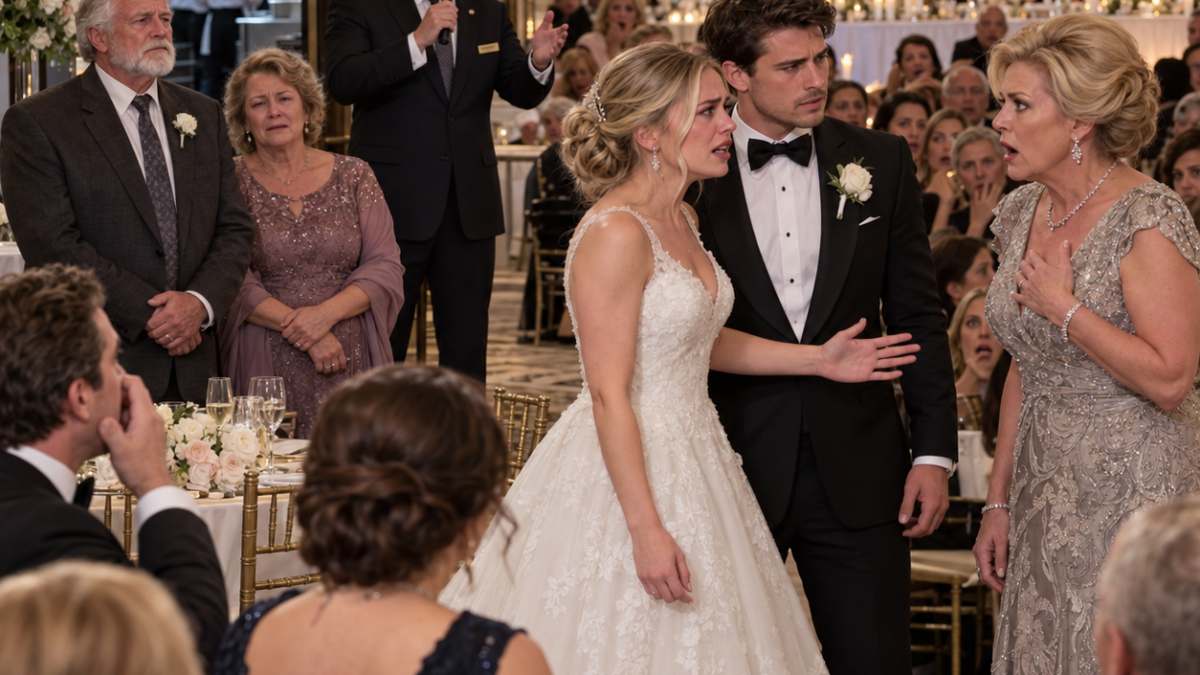
They Seated the Groom’s “Poor” Parents by the Kitchen—Then the Hotel Manager Took the Microphone.
My mother seated my husband’s parents beside the kitchen doors at our five-hundred-guest wedding because she thought a man who arrived in an old pickup and said he “worked construction” would embarrass the family she was trying to impress.
Then she cut his father-of-the-groom toast, mocked the handmade wedding gift he brought us, and finally ordered hotel security to remove him while I stood there realizing I had spent my entire life being afraid of a woman who measured human beings by where they sat.
What my mother did not know was that Harold Brooks owned the Ashford Grand, the hotel she had spent two years bragging she could barely get into—and I defended him before anyone told me, which was why his first words after the ballroom learned the truth were not about revenge, money, or status, but about me.
My name is Chloe Whitfield.
For most of my life, I believed my mother was simply particular.
That is the polite word children use for controlling parents before they are old enough to understand the difference.
Diane Whitfield liked things arranged.
Flowers.
Furniture.
People.
She believed every room had a correct hierarchy.
At home, my father sat at the head of the table.
Mother sat opposite him.
Guests were placed according to usefulness.
At charity dinners, she could glance at a seating chart for ten seconds and tell you which marriage had improved, which family was struggling financially, whose business was expanding, and which woman had been removed from the museum board.
Status was not something Mother admired.
It was a language.
And she spoke it fluently.
My father, Richard Whitfield, was different.
Quieter.
A commercial architect and development consultant.
Successful.
Kind enough in private.
Weak in the specific way decent men sometimes become weak when married to dominating women.
He disagreed with my mother often.
PART2:
Usually after everyone else had left the room.
Growing up, I learned the family pattern early.
Mother would say something cruel.
Dad would look uncomfortable.
I would wait.
Nothing would happen.
Later he would find me.
“You know how she is.”
That sentence did enormous damage in our house.
You know how she is.
As though understanding a person’s cruelty created an obligation to absorb it.
As though the people being hurt should adapt because the person doing the hurting had already established a pattern.
By twenty-eight, I had built most of my adult personality around preventing Mother from becoming disappointed in me.
Then I met Ethan Brooks.
And Ethan did something nobody else had managed.
He made disappointment survivable.
We met in Raleigh at a restaurant opening.
PART3:
I was helping coordinate an art installation for the dining room.
He was standing on a ladder adjusting a light fixture that technically should have been handled by an electrician.
I told him:
“You’re going to fall.”
He looked down.
“Good afternoon to you too.”
“You are holding a screwdriver in your mouth.”
He removed it.
“Safety improvement.”
“You’re welcome.”
He climbed down.
Six-foot-one.
Brown hair.
Work boots.
Button-down shirt rolled to the elbows.
Hands with small scars across the knuckles.
“Ethan.”
“Chloe.”
He looked at the wall.
“You’re the person who chose the giant metal sculpture?”
“Yes.”
“I’ve hit my head on it twice.”
“That sounds like a height problem.”
He laughed.
That was the beginning.
Ethan worked in design and construction management.
Or that was how he described it.
Not wealthy.
Not flashy.
He drove a three-year-old Ford.
Lived in a townhouse.
Cooked.
Fixed his own sink.
Owned one good suit.
I fell in love partly because nothing about him performed.
When Ethan liked something, he said it.
When he disagreed, he said that too.
No layered compliments.
No social codes.
No dinner-table archaeology.
The first time I took him home, Mother asked:
“Brooks?”
“Yes.”
“Any relation to the Brookstone Brooks family?”
Ethan paused.
“Maybe distantly.”
I later learned he was trying not to laugh.
Mother moved on.
Brookstone Hotels was one of the largest privately held hospitality companies in the Southeast.
Luxury hotels.
Historic restorations.
Conference properties.
Resorts.
The company had been started decades earlier by a man named Harold Brooks.
But there were almost no public photographs of him.
No social media.
Rare interviews.
Brookstone’s public face was executives, regional presidents, and professional spokespeople.
Mother had spent years trying to get Dad’s development firm into Brookstone’s vendor network.
To her, Harold Brooks was practically mythological.
Ethan never corrected her assumptions.
Neither did I.
Because I didn’t know.
I knew his parents were Harold and Martha Brooks.
I knew they lived outside a small North Carolina town on land that had once belonged to Harold’s father.
I knew Harold “worked construction.”
I knew Martha gardened.
I knew they drove an old red pickup.
That was enough.
The first time Ethan took me to meet them, I spent the entire drive preparing myself for awkwardness.
Instead I stepped out beside a white farmhouse and smelled cornbread.
Martha opened the screen door before we reached it.
She hugged me immediately.
Not performative air kisses.
Real hug.
“You’re too skinny.”
Ethan groaned.
“Mom.”
“She is.”
“I’m standing here.”
Martha smiled.
“Then you can hear me clearly.”
Harold came around the side of the house wearing faded jeans and a gray work shirt.
He had dirt on one knee.
“Chloe.”
He shook my hand.
Warm grip.
Then looked at Ethan.
“She’s prettier than you said.”
“I said she was beautiful.”
“You undersold it.”
I loved him instantly.
Their house was comfortable but not extravagant.
Old wood floors.
Family photographs.
Books.
A porch swing.
A kitchen table with knife marks.
One painting that Martha admitted she bought at a flea market because “the cow looked judgmental.”
Dinner was pot roast.
Harold asked about my work.
Not my family name.
Not my parents’ connections.
My work.
“What do you like about museums?”
I answered.
He listened.
Actually listened.
Later, I realized how rare that had become in my life.
Ethan proposed fourteen months later.
Nothing elaborate.
We were walking beside Falls Lake.
He stopped.
Reached into his coat.
I said:
“If you drop that ring in the water, I’m leaving you.”
He laughed so hard he nearly did.
Then:
“Chloe Whitfield, will you marry me?”
“Yes.”
I called my parents that night.
Mother screamed.
Then cried.
Then immediately asked:
“When?”
“Mom.”
“I’m just asking.”
“We’ve been engaged nine minutes.”
“Spring would be lovely.”
Dad said:
“Congratulations, sweetheart.”
Mother continued:
“The Ashford Grand would be extraordinary.”
There it was.
Nine minutes.
Venue.
Ethan looked at me from across the room.
He could hear everything.
The Ashford Grand was the crown jewel of luxury hotels in our region.
Old limestone exterior.
Massive ballroom.
Gardens.
A staircase every bride seemed to want photographed.
Two-year waiting list for Saturday weddings.
Mother had attended fundraisers there.
She talked about the hotel like admission proved citizenship in a better class of society.
I said:
“Mom, we haven’t even discussed venues.”
“Well, discuss quickly.”
Three days later she called.
“I got us the Ashford.”
“What?”
“June twenty-second.”
“How?”
She paused.
“I know people.”
That was Mother.
The phrase meant nothing and everything.
I looked at Ethan.
He was standing at the kitchen counter slicing an apple.
His expression had gone strangely neutral.
I covered the phone.
“She got the Ashford.”
He nodded.
“Okay.”
“Okay?”
“Beautiful hotel.”
“Two-year wait.”
He bit the apple.
“Maybe somebody canceled.”
I should have noticed.
I did not.
What I also didn’t know was that Ethan called his father that evening.
Harold answered from his workshop.
“What’s up?”
“Chloe’s mother booked the Ashford.”
Pause.
Then Harold:
“June twenty-second?”
“Yes.”
“I know.”
Ethan stared at the phone.
“What do you mean you know?”
“Daniel called me.”
Daniel Price was general manager of the Ashford Grand.
Ethan sat down.
“Dad.”
“She wanted that date.”
“There was already a corporate event.”
“What did you do?”
“Moved it.”
“Dad.”
“What?”
“Did Mom know?”
“Martha knows everything.”
“That is deeply threatening.”
Harold laughed.
Then Ethan became serious.
“Chloe doesn’t know.”
“I assumed.”
“Her parents don’t either.”
“Good.”
“Dad.”
“What?”
“Promise me.”
“Promise what?”
“No Brookstone.”
“No chairman.”
“No owner.”
Harold became quiet.
Ethan continued:
“I need to know.”
“Know what?”
“What happens when they think we’re ordinary.”
Harold understood immediately.
He had lived most of his life seeing money change a room.
Thirty-five years earlier, he had been a mason.
Then contractor.
Then motel owner.
Then hotel developer.
He had built wealth slowly enough to remember exactly when people’s laughter became more attentive.
Harold said:
“Son, we have never lied about who we are.”
“I know.”
“We just don’t lead with what we own.”
“I know.”
“If Chloe is a good woman, nothing about us should matter.”
“She is.”
“And if her family isn’t?”
Ethan looked toward me.
I had no idea this conversation was happening.
“Better to know before the wedding becomes the marriage.”
That was how the test began.
Not planned as a trap.
Not designed to humiliate anybody.
They simply chose not to correct an assumption.
Our families met formally three months before the wedding.
Mother chose her country club.
Naturally.
Harold and Martha drove from North Carolina in the old red Ford pickup.
Twenty-six years old.
Restored engine.
Faded paint.
Harold loved it.
Mother saw it through the dining-room window.
Her smile slipped.
“Is that theirs?”
Ethan said:
“Yes.”
“Interesting.”
I knew that word.
Dangerous.
When Harold and Martha entered, Mother became charm itself.
“Martha.”
“Diane.”
“Harold.”
“Pleasure.”
Drinks came.
Mother asked Harold:
“And what is it you do?”
He said:
“Bit of construction.”
I saw Ethan look down.
“Commercial?”
“Some.”
“Residential?”
“Some.”
“Development?”
Harold smiled.
“I’ve fixed a lot of things.”
Mother laughed politely.
Dad looked interested.
“What kind?”
“Hotels sometimes.”
Mother leaned forward.
“Hotels?”
“Here and there.”
“Not Brookstone, I suppose.”
Harold almost smiled.
“Why?”
Mother gestured toward his work shirt.
“Do you look like a hotel man?”
Silence.
I felt heat rise through my neck.
“Mom.”
“What?”
Harold laughed softly.
“Fair question.”
It was not.
Mother continued.
“You know, Richard has been trying to get a meeting with Brookstone’s founder for almost two years.”
Dad looked embarrassed.
“Diane.”
“What?”
She turned to Harold.
“Apparently the man is practically invisible.”
Harold nodded.
“I’ve heard that.”
“No photographs.”
“Probably camera shy.”
“No interviews.”
“Maybe he doesn’t like talking.”
Mother smiled.
“The funny thing is Richard finally gets a meeting the Monday after your children’s wedding.”
Dad said:
“It’s preliminary.”
“Still.”
Mother reached for her wine.
“If Brookstone approves the development partnership, it could mean ten years of work.”
Harold looked at Dad.
“Then I hope the meeting goes well.”
“Thank you.”
Mother said:
“I just hope this mysterious owner is reasonable.”
Harold took a drink.
“I’ve heard mixed things.”
Ethan coughed.
I kicked him beneath the table.
Later, outside, I apologized to Martha.
“My mom can be…”
Martha smiled.
“You don’t need to finish.”
“She shouldn’t have said that.”
“No.”
Her answer surprised me.
Not:
It’s fine.
Not:
Don’t worry.
Just:
No.
Then she touched my arm.
“But you said something.”
“Barely.”
“You noticed.”
That became important.
Wedding planning with Mother became warfare disguised as stationery.
Five hundred guests.
Half of whom I did not know.
Senator’s wife.
Business owners.
Museum board.
Donors.
People Mother called “important.”
Ethan asked:
“Can we invite the plumber who coached my Little League team?”
Mother stared at him.
“Is he family?”
“No.”
“Then no.”
He invited him anyway.
Three weeks before the wedding, I saw the seating chart.
Harold and Martha were table nine.
Not ideal.
But near family.
I assumed everything was fine.
It wasn’t.
Mother changed it forty-eight hours before the wedding.
Table nineteen.
Beside the kitchen service doors.
Nobody told me.
She also cut Harold’s toast.
The original program had:
Father of bride.
Mother of bride.
Father of groom.
Best man.
Maid of honor.
Mother decided the senator’s wife needed to say “a few words.”
Harold disappeared.
Nobody told me that either.
Wedding morning arrived.
I should have been happy.
I was.
Mostly.
The Ashford Grand looked impossible.
White roses.
Greenery.
Long glass windows.
Gold chairs.
Hundreds of candles.
Staff moving with silent precision.
Mother had been there since six in the morning.
She wore champagne silk and authority.
My father entered the bridal suite.
He looked at me.
Stopped.
Cried.
That nearly destroyed my makeup.
“You look like your grandmother.”
“Which one?”
“My mother.”
“Good answer.”
He hugged me.
For a moment, I was simply his daughter.
Then Mother entered.
“Richard, photography in seven minutes.”
Moment over.
Ethan’s parents arrived an hour before ceremony.
I found out later what happened at the entrance.
Harold wore a dark navy suit.
Martha wore pale blue.
They looked completely appropriate.
But an event assistant stopped them.
“Deliveries are around the side.”
Harold said:
“We’re here for the wedding.”
The assistant looked embarrassed.
Then saw their invitation.
“Oh.”
Mother happened to be passing.
She smiled.
“Harold.”
“Diane.”
“You look lovely.”
He meant it.
She said:
“Table nineteen is at the back, past the bar.”
Harold paused.
“Thank you.”
Martha looked toward Mother.
“Is family seating not assigned near the front?”
Mother smiled.
“Space became complicated.”
Harold put one hand lightly on Martha’s back.
“It’s okay.”
Then they walked in.
Daniel Price, the hotel’s general manager, saw them.
Nearly stopped breathing.
He approached Harold privately.
“Sir.”
Harold shook his head once.
Daniel stopped.
“Your table…”
“I know.”
“Mr. Brooks, I can—”
“Leave it.”
“Sir.”
“And Daniel?”
“Yes?”
“Do not tell anyone.”
Daniel stared.
“Until I say so.”
“Yes, sir.”
At the ceremony, Mother created another small humiliation.
“Immediate family first” for photographs.
Harold and Martha stepped forward.
A photographer’s assistant said:
“We’ll call extended family after.”
Ethan heard.
“That’s my father.”
The assistant went white.
Mother said quickly:
“We’re trying to keep the formal set efficient.”
Harold touched Ethan’s arm.
“Not today.”
Ethan whispered:
“Dad.”
“Not today.”
The ceremony began.
I walked down the aisle with Dad.
Saw Ethan.
Everything else disappeared.
That part was real.
His face when he saw me.
The way his mouth trembled.
The way he forgot to stand correctly until his best man nudged him.
We made vows.
Ethan said:
“I promise to stand beside you in every room.”
I didn’t understand how prophetic that sentence was yet.
Then:
“I promise to see you.”
“Not what you have.”
“Not what people think you should be.”
“You.”
My mother smiled from the front row.
I almost laughed at the irony.
I said my vows.
We kissed.
Married.
For twenty minutes I believed the hardest part was over.
Then dinner.
Ethan and I entered the ballroom.
Applause.
Music.
People standing.
I looked toward family tables.
Mother.
Dad.
Natalie.
Aunts.
Uncles.
Then:
Where were Harold and Martha?
I searched.
Could not find them.
Ethan saw first.
His face changed.
He walked toward the back.
I followed.
Table nineteen.
Literally beside swinging kitchen doors.
Servers passed every thirty seconds.
One chair had been bumped so often Harold had moved it closer to the wall.
Martha had a wine stain on the lower part of her dress.
I stopped.
“What happened?”
Martha smiled.
“Nothing.”
“It’s only wine.”
I looked at the table number.
“Nineteen?”
Harold said:
“We’re fine.”
“No.”
I turned toward Ethan.
His jaw had tightened.
“Did you know?”
“No.”
Mother appeared behind us.
Of course.
“Chloe, sweetheart, we’re about to begin dinner.”
“Why are Ethan’s parents here?”
Mother glanced at the table as if I had asked about a centerpiece.
“Last-minute adjustment.”
“They were table nine.”
“The Hendersons confirmed.”
“So move somebody else.”
“Chloe.”
“They are his parents.”
Mother lowered her voice.
“Do not do this today.”
“Do what?”
“Create unnecessary drama.”
Ethan said:
“Diane.”
Harold touched his shoulder.
“Son.”
Mother continued.
“They’re comfortable.”
Martha said nothing.
That hurt more.
“Mom.”
Mother leaned closer.
“People are watching.”
I looked around.
Yes.
They were.
I hated that I cared.
That was the moment I failed the first test.
I whispered:
“Can we deal with it after dinner?”
Ethan looked at me.
Not angry.
Disappointed.
That was worse.
Harold said:
“It’s fine.”
I knew it wasn’t.
Still, I walked away.
I think about that moment more than anything else.
Because courage rarely appears fully formed.
Sometimes you fail once before you find it.
Dinner began.
I barely ate.
Ethan spoke very little.
Then gifts.
Harold had brought something.
Large rectangular wooden object wrapped in brown paper.
Handmade wrapping.
Twine.
Mother saw it when a staff member placed gifts near the family table.
“What is that?”
Harold said:
“Something for the kids.”
She touched the paper.
“Did someone bring something from a garage sale?”
My face burned.
“Mom.”
She waved at an event planner named Simone.
“Please put this somewhere less visible.”
Harold said quietly:
“Leave it.”
Ethan stood.
“Enough.”
I grabbed his hand.
“Ethan.”
He looked at me.
I saw the decision.
He was going to tell them.
Whatever secret he had protected was over.
He whispered:
“I’m done.”
Harold stood too.
“Not yet.”
“Dad.”
“Today isn’t about us.”
“They’re treating you like—”
“I know exactly how they’re treating me.”
His voice stayed calm.
Then he looked at me.
“Let her decide what kind of day this becomes.”
Me.
Not Ethan.
Not him.
Me.
I did not understand why the words landed so heavily.
The toasts began.
Dad first.
Beautiful.
Short.
He cried.
I cried.
Then Mother.
Of course she had written six pages.
“To my beautiful daughter…”
She spoke about standards.
Excellence.
The best venue.
The best schools.
The best people.
The best families.
Ethan’s hand tightened around mine.
I whispered:
“I’m sorry.”
He looked at me.
“For what?”
I didn’t know where to begin.
Then the emcee announced the senator’s wife.
I looked at the program.
“Where’s Harold?”
Ethan said nothing.
I stood.
Found Simone.
“Where is the father-of-the-groom toast?”
She froze.
“Your mother changed the program.”
“When?”
“Yesterday.”
“Why?”
“She said timing.”
I knew that was a lie.
I marched toward Mother.
She saw my face.
“Oh, don’t.”
“You cut Harold’s toast?”
“The program was too long.”
“You added Senator Henderson’s wife.”
“She speaks beautifully.”
“He is Ethan’s father.”
“Chloe.”
“You did this because you don’t think he matters.”
Mother’s expression hardened.
“I did this because a five-hundred-person event requires judgment.”
“Whose?”
“Mine.”
Harold approached.
“It’s all right.”
“No.”
Finally.
The word came out loud enough for people nearby to hear.
“No.”
Mother’s eyes flashed.
“Chloe.”
I turned toward Harold.
“You get to speak.”
He smiled sadly.
“You don’t owe me a toast.”
“This isn’t about owing.”
That was when Mother made the worst mistake of her life.
She looked toward Harold and Martha.
Then at Simone.
“Could security help Mr. and Mrs. Brooks to their truck?”
Everything stopped.
Ethan stood.
Dad stood.
I stared at my mother.
“What did you say?”
She straightened.
“They are upsetting you.”
“No.”
“You’re emotional.”
“No.”
“Chloe, sit down.”
“No.”
Her face changed.
I had never spoken to her like that publicly.
Maybe ever.
“Sit down.”
“No, Mom.”
People turned.
Five hundred guests.
Exactly what she had always feared.
A scene.
I said:
“You made the scene.”
Her mouth opened.
I continued before fear could get me back.
“You made it three months ago when you decided his parents weren’t good enough.”
“You made it when you mocked Harold’s work.”
“When you moved them to the kitchen.”
“When you cut his toast.”
“When you told photographers they weren’t immediate family.”
“And now you’re trying to throw my husband’s parents out of my wedding.”
Mother whispered:
“They’re embarrassing you.”
I looked toward Martha.
Wine on her dress.
Harold standing quietly beside her.
The old pickup outside.
Then toward Ethan.
My husband.
“You’re embarrassing me.”
Mother recoiled.
“Chloe.”
“I’ve spent my whole life worrying about what happens when you disapprove of me.”
Ethan moved beside me.
I took his hand.
“I’m done.”
Silence.
Then:
“If Harold and Martha leave, I leave.”
Mother stared.
“So does Ethan.”
Ethan said:
“Absolutely.”
My father closed his eyes.
Mother looked at him.
“Richard.”
Dad said nothing.
Again.
The old pattern.
Then Harold’s gift sat near the edge of the table.
I walked over.
Picked it up.
Heavy.
Carried it to the center.
Mother said:
“That does not belong there.”
“Yes.”
I placed it between the flowers.
“It does.”
Mother’s voice rose.
“I am paying for this event.”
A different voice answered from behind us.
“No, ma’am.”
Daniel Price.
General manager.
Mother turned.
“Excuse me?”
Daniel wore a black suit and the expression of a man who had spent three hours watching someone insult his employer and finally received permission to stop pretending.
“No one is escorting Mr. or Mrs. Brooks from this hotel.”
Mother laughed.
“I don’t know who you think you are.”
“The general manager.”
She paused.
Daniel continued.
“And Simone?”
The event planner looked terrified.
“Yes?”
“You moved the groom’s parents to Table Nineteen?”
“Mrs. Whitfield instructed me.”
“And removed Mr. Brooks from the program?”
“Yes.”
“Against the couple’s original event sheet?”
“Yes.”
Daniel nodded.
“We’ll discuss your continued work with the Ashford tomorrow.”
Mother stared.
“You cannot blame her for following my instructions.”
Daniel looked directly at her.
“You told one of my staff to isolate a family beside a service corridor because you did not want them photographed.”
Mother paled.
“I never said that.”
Simone said quietly:
“You did.”
People were definitely listening now.
Mother looked around.
Status had become a cage.
Then Daniel turned toward Harold.
“Sir.”
Harold closed his eyes briefly.
“Daniel.”
“May I?”
Silence.
Harold looked at Ethan.
Then me.
I still had no idea what was happening.
Finally:
“All right.”
Daniel walked to the microphone.
The emcee stepped aside.
“Ladies and gentlemen.”
The room settled.
“There has been one omission from tonight’s program.”
Mother sat slowly.
Daniel continued.
“The father of the groom was scheduled to speak.”
“And given that this wedding is taking place in a property with which he has some history…”
Ethan squeezed my hand.
I looked at him.
“What?”
He whispered:
“I’m sorry.”
“For what?”
Daniel smiled.
“It is my privilege to introduce the founder and chairman of Brookstone Hotels…”
My brain stopped.
No.
No.
“…and the owner of the Ashford Grand…”
I turned toward Harold.
He looked almost embarrassed.
“…Mr. Harold Brooks.”
Five hundred people changed at once.
That is the only way I can describe it.
Postures.
Faces.
Eyes.
People who had barely glanced toward Table Nineteen suddenly stared.
Men my mother had spent months trying to impress whispered to each other.
My father went completely still.
Mother looked like someone had unplugged her.
“Harold?”
She whispered.
Harold walked to the microphone.
No hurry.
No triumph.
No revenge.
That disappointed some people later when they retold the story.
They wanted him to destroy her.
Harold was better than that.
He looked at Ethan.
Then me.
“Thirty-five years ago, I laid the first brick of a roadside motel outside Greensboro.”
The ballroom became silent.
“My wife painted the sign.”
Martha called from Table Nineteen:
“Badly.”
People laughed.
Harold smiled.
“Very badly.”
More laughter.
“We had twelve rooms.”
“Four leaked.”
“Two air conditioners worked only when kicked.”
“And the ice machine produced approximately six cubes per hour.”
Even Mother almost smiled.
Almost.
Harold continued.
“We worked.”
“One motel became two.”
“Two became several.”
“Eventually, somebody persuaded us to call it a hotel company.”
He looked around the ballroom.
“I have spent my life inside buildings like this.”
“Not always as the owner.”
“I have been the man carrying drywall through the service entrance.”
“I have cleaned construction debris.”
“Repaired toilets.”
“Painted trim.”
“Parked cars.”
“Loaded boxes.”
“Sat beside kitchens.”
His eyes moved briefly toward Table Nineteen.
Nobody breathed.
Then he looked at Ethan.
“But I did not come here tonight as chairman of anything.”
“I came as a father.”
Ethan’s eyes filled.
Harold turned toward me.
“Chloe.”
I swallowed.
“Yes, sir?”
He smiled.
“Don’t call me sir.”
A few people laughed.
I didn’t.
“You did something tonight that matters to me more than anything you could ever learn about my company.”
I stared.
He continued.
“You stood up for two old people from North Carolina who arrived in a pickup truck.”
Martha said:
“Old?”
Harold ignored her.
“You did it before Daniel picked up that microphone.”
“Before you knew my title.”
“Before you knew who owned the hotel.”
“Before you knew whether I could help your family or hurt them.”
His voice softened.
“That is the only test that ever mattered.”
I started crying.
Not graceful.
Harold said:
“And you passed.”
I shook my head.
“No.”
He paused.
“I almost didn’t.”
That was true.
“I saw the table.”
“I walked away.”
Harold looked at me for a long moment.
Then:
“But you came back.”
That was more grace than I deserved.
He continued.
“Courage is not always having the right reaction immediately.”
“Sometimes it’s correcting yourself while there’s still time.”
I cried harder.
Ethan put his arm around me.
Then Harold turned toward Mother.
Diane could barely look at him.
He did not attack.
Instead:
“Mrs. Whitfield.”
She lifted her head.
“I believe you asked me at lunch whether I looked like a hotel man.”
A few nervous laughs.
Harold smiled.
“I still don’t know what one is supposed to look like.”
That was all.
Enough.
He stepped away.
Then remembered something.
“Oh.”
He pointed toward the wooden package I had placed on the center table.
“Chloe.”
“Yes?”
“Open that.”
The entire ballroom was watching.
I untied the twine.
Removed brown paper.
Inside was a framed architectural rendering.
A house.
Beautiful but not enormous.
Deep porch.
Large kitchen.
Studio windows.
Garden.
I looked at Ethan.
His face had gone red.
“What is this?”
Harold said:
“My son designed a house when he was twenty-four.”
Ethan muttered:
“Dad.”
“For a family he did not have yet.”
People laughed softly.
Harold continued.
“I found the plans.”
“Had it built on four acres near our place.”
I stared.
“No.”
“Yes.”
Martha smiled.
“Kitchen is finished.”
Harold added:
“Your mother-in-law chose everything.”
Martha said:
“Because Harold thinks gray is a color palette.”
I turned toward Ethan.
“You knew?”
“No.”
He looked equally stunned.
Harold said:
“The deed is in both your names.”
I could barely speak.
“You built us a house?”
Harold shrugged.
“I build things.”
Of course.
Mother sat at the front table staring at the rendering.
The irony was almost cruel.
The man she had dismissed for “fixing things” had just given us a home.
But Harold was not finished.
He looked at us.
“A home isn’t walls.”
His voice changed.
Quieter.
“It’s the people you refuse to leave behind.”
Ethan looked at me.
I knew that sentence would stay with us forever.
After the toast, people surrounded Harold.
Of course.
Business owners.
Politicians.
Executives.
People who had ignored him before.
That was almost funny.
He escaped after ten minutes and returned to Table Nineteen.
Yes.
Returned.
Daniel offered a front table.
Harold refused.
“My dessert is here.”
Martha said:
“And I’m not walking across the room in these shoes again.”
So we moved.
Not them.
Ethan and I carried our plates to Table Nineteen.
Then Dad came.
Then my aunt.
Then Ethan’s best man.
Then several friends.
Within twenty minutes, the kitchen table Mother had chosen as an invisible corner became the liveliest table at the wedding.
Servers laughed every time they passed.
Daniel eventually brought another bottle of champagne.
“Compliments of the owner.”
Harold said:
“I’m sitting here.”
“Still technically true.”
Mother remained at the front.
Alone for several minutes.
Then Dad stood.
Walked toward us.
That mattered more than I expected.
He pulled out the last chair.
“Room?”
Harold said:
“Always.”
Dad sat.
Mother watched.
Finally she came too.
No one stopped talking when she arrived.
No one moved for her.
That was new.
She stood behind an empty chair.
Martha looked at her.
“Sit down, Diane.”
Mother did.
For several seconds nobody spoke.
Then Mother whispered:
“I didn’t know.”
Martha looked at her.
“That is exactly the problem.”
Mother’s eyes filled.
“I didn’t know who you were.”
Martha shook her head.
“You knew who we were.”
Mother looked confused.
“Ethan’s parents.”
“Harold and Martha.”
“People invited into your family.”
“You knew enough.”
Silence.
Then Mother said:
“I’m sorry.”
Harold looked at her.
“For what?”
She opened her mouth.
I watched her struggle.
This was important.
Not:
I’m sorry things became awkward.
Not:
I’m sorry there was a misunderstanding.
Finally:
“For deciding what you were worth before I knew you.”
Harold nodded slowly.
“That’s a start.”
Not forgiveness.
Not absolution.
A start.
Dad cleared his throat.
“Harold.”
“Yes?”
“Our meeting Monday…”
Mother closed her eyes.
“Richard.”
Dad looked embarrassed.
“I have to ask.”
Harold smiled.
“Monday.”
“Nine.”
Dad blinked.
“You’re still taking it?”
“I said I would.”
“After tonight?”
Harold shrugged.
“Your work didn’t move my wife to Table Nineteen.”
That was Harold.
He could separate business from humiliation.
Mother could not understand it.
Dad said:
“Thank you.”
“Don’t thank me until after the meeting.”
Dad laughed.
The following Monday, he went.
Harold made him present the project exactly as planned.
No shortcut.
No favor.
Brookstone awarded Dad’s company part of the work six weeks later.
Not because he became family.
Because the proposal was good.
Harold insisted legal and procurement review it independently.
When Dad told me, he sounded more relieved about that than the contract itself.
“I wanted to know I earned it.”
Maybe he had learned something too.
Mother changed more slowly.
At first she changed performatively.
That was predictable.
She overcorrected.
Invited Harold and Martha to everything.
Mentioned Brookstone too often.
Told friends:
“My son-in-law’s family owns…”
Ethan stopped her.
“Mom.”
She froze.
He had started calling her Mom after the wedding.
Not before.
Funny.
“Don’t.”
“Don’t what?”
“Use my father as your credential.”
Her face flushed.
“I was only—”
“I know.”
She stopped.
Progress.
Months later, we hosted Thanksgiving at our new house.
The house Harold built from Ethan’s old drawings.
It was beautiful.
Not mansion beautiful.
Home beautiful.
Wide porch.
Big kitchen.
Mudroom.
A studio for me.
Workshop for Ethan.
One guest room Martha had already declared hers.
Mother arrived with expensive wine.
Martha arrived with pie.
Harold arrived in the red pickup.
Same truck.
Mother saw it from the window.
This time she smiled.
“He’ll never replace that thing, will he?”
Ethan said:
“No.”
Mother looked thoughtful.
“I used to think people kept old things because they couldn’t afford new ones.”
I waited.
She continued:
“Apparently some people just love them.”
That was one of her better realizations.
During dinner, Harold told the story of Brookstone’s first motel.
Mother listened.
Actually listened.
Asked:
“Were you scared?”
Harold laughed.
“Constantly.”
“I always assumed successful people knew what they were doing.”
“No.”
He cut turkey.
“They just survive more mistakes.”
Mother smiled.
I watched her.
She was changing.
Not becoming Martha.
Not becoming warm overnight.
But she was learning curiosity.
That was harder for her than manners.
One year after the wedding, Mother and I returned to the Ashford Grand for lunch.
Her idea.
When the hostess asked where we wanted to sit, Mother looked toward the ballroom corridor.
Then said:
“Anywhere.”
I laughed.
“What?”
“Nothing.”
We ate.
Halfway through, she said:
“I’ve thought about Table Nineteen almost every day.”
I put down my fork.
“That sounds exhausting.”
“I deserve it.”
“No.”
She looked surprised.
“You don’t need to punish yourself forever.”
“Then what?”
“Learn.”
Mother nodded.
“I was cruel.”
“Yes.”
“I thought I was protecting you.”
“From what?”
She laughed sadly.
“Being judged.”
The irony hung between us.
“I judged everyone first so nobody could judge us.”
That was probably the closest she ever came to explaining herself.
She continued.
“My mother was worse.”
I knew some of that.
Grandmother Evelyn believed family reputation was a moral virtue.
Mother had grown up terrified of looking poor.
Wrong dress.
Wrong school.
Wrong car.
Wrong friends.
“I spent my entire childhood believing one embarrassing relative could ruin us.”
She looked down.
“Then I became the embarrassing relative.”
I reached across the table.
Took her hand.
Not because everything was fixed.
Because honesty deserves somewhere to land.
Ethan and I stayed in that house.
Had children.
Two.
Our daughter Grace inherited my mother’s eyes and Martha’s complete lack of social fear.
Dangerous combination.
Our son Henry inherited Harold’s obsession with taking things apart.
Harold began teaching him woodworking at six.
Mother once walked into the workshop and found Henry covered in sawdust.
She said:
“Oh my God, your clothes.”
Then stopped.
I watched her.
She took a breath.
“Are you having fun?”
Henry shouted:
“Yes!”
She smiled.
“Then continue.”
That tiny correction mattered more to me than most apologies.
Harold stepped back from Brookstone eventually.
Not completely.
People like Harold do not understand retirement.
He just stopped attending meetings and began showing up at properties unannounced to inspect faucets.
Daniel once called Ethan.
“Your father is in the laundry room.”
“Which property?”
“Atlanta.”
“Why?”
“He says the dryer vent sounds wrong.”
“Is it?”
Pause.
“Yes.”
Of course.
Martha said:
“He’ll die inside a mechanical closet.”
Harold said:
“Good ventilation.”
Their marriage remained my model for quiet partnership.
Not because they never fought.
They did.
Martha once refused to speak to Harold for an entire afternoon because he bought another truck he absolutely did not need.
But neither made the other earn respect.
That was the difference.
Mother finally understood the lesson in the strangest way.
Seven years after our wedding, we attended another wedding at the Ashford.
Not ours.
A cousin’s.
Mother received her seating card.
She stared.
Table nineteen.
I nearly choked.
“Who did this?”
She looked at me suspiciously.
“Was this you?”
“No.”
Ethan was already laughing.
Harold definitely did not arrange it.
Pure coincidence.
Table numbering had changed with a ballroom renovation.
Mother walked toward the back.
Sure enough:
Near kitchen doors.
She stood there.
Then started laughing.
Not polite laughter.
Real.
Tears.
Martha found her.
“What?”
Mother held up the card.
“Nineteen.”
Martha looked.
Then laughed too.
Mother sat down.
“This table has a lovely view of the kitchen.”
That line had become family history.
She stayed there.
Did not ask to move.
Later a senator walked by.
Mother barely noticed.
That is when I knew she had really changed.
My wedding became one of those stories people retold incorrectly.
At first:
Rich hotel owner humbles snobbish woman.
Then:
Poor farmer secretly billionaire.
Then:
Bride’s mother tries to throw tycoon out of his own hotel.
All technically adjacent to truth.
None of them understood what mattered.
The important moment happened before Daniel picked up the microphone.
Before anyone said Brookstone.
Before Mother discovered Harold’s name meant something to the people she wanted to impress.
The important moment was when I looked at Harold and Martha standing near the kitchen doors and finally chose.
Not money.
Not power.
People.
I wish I had chosen faster.
I wish I had objected the instant I saw Table Nineteen.
I wish I had confronted Mother when she mocked Harold’s truck.
Wish I had caught every insult before it landed.
But life rarely gives us perfect moral performances.
Sometimes you notice late.
Sometimes fear wins first.
What matters next is whether you keep obeying it.
Harold taught me that.
Not through owning a hotel.
Through staying seated beside a kitchen door without letting humiliation tell him who he was.
He did not need the room’s respect.
That was why the room eventually gave it.
My mother needed everyone’s respect.
That was why she nearly lost mine.
The difference had nothing to do with money.
That is what people miss.
If Harold really had been a construction worker living paycheck to paycheck, Mother still would have been wrong.
If the red pickup had been all he could afford, she would have been wrong.
If Martha’s dress had come from a thrift store, wrong.
If Harold’s gift had actually been something built in his garage from scrap wood, wrong.
His ownership did not create his dignity.
It revealed Mother’s blindness.
Years later, I asked Harold why he never told us sooner.
We were sitting on our porch.
He was older.
Gray.
Still wearing work boots.
I said:
“You could have ended all of it at the country club.”
“I know.”
“At the wedding entrance.”
“Yep.”
“When Mom put you at nineteen.”
“Yes.”
“When she cut the toast.”
“Yes.”
“When she tried to throw you out of your own hotel.”
He laughed.
“That one was tempting.”
“Then why not?”
Harold looked across the yard where Grace and Henry were playing.
“Because the minute people know what you own, you stop learning certain things.”
“What things?”
“Who holds the door when there’s nothing to gain.”
“Who listens.”
“Who laughs at the truck.”
“Who sits beside you.”
He looked at me.
“And who stands up.”
I thought about my wedding.
“I almost didn’t.”
“You keep saying that.”
“Because it’s true.”
Harold shook his head.
“No.”
“You hesitated.”
“That’s different.”
I waited.
He said:
“Courage isn’t never being afraid of somebody.”
“Sometimes courage is the first time you decide you’re more afraid of becoming like them.”
That one stayed too.
After Harold died years later, Brookstone held a memorial at the Ashford Grand.
Thousands could have come.
Martha kept it small.
Family.
Employees.
Old friends.
Housekeepers.
Maintenance staff.
Executives.
Construction crews.
Daniel Price, retired by then.
My mother.
Dad.
Us.
Harold had left specific instructions.
No giant photograph.
No corporate tribute video.
No politician speeches.
Maximum three minutes per person.
Martha said:
“He knew all of you talk too much.”
Everyone laughed.
The final speaker was a retired maintenance worker named Luis Ramirez.
He had worked with Harold at the first roadside motel.
Luis stood at the microphone.
“He had no money.”
Martha called:
“Neither did I!”
Luis smiled.
“He had one truck.”
“A bad ladder.”
“And confidence far beyond his skill.”
More laughter.
Then Luis said:
“The thing about Harold…”
Room quieted.
“He treated the owner and the man fixing the toilet the same.”
Pause.
“Back then, sometimes he was both.”
That was Harold.
Not hotel empire.
Not net worth.
Not chairman.
A man who never forgot what service entrances looked like from the other side.
After the memorial, I walked into the ballroom.
Empty.
Tables removed.
Lights low.
For no reason I can explain, I walked toward the service doors.
Table Nineteen was not there.
Just open floor.
Mother followed me.
She knew.
“Thinking about the wedding?”
“Yes.”
She stood beside me.
“I would do anything to change that night.”
I looked at her.
“I wouldn’t.”
She seemed hurt.
Then I explained.
“If you changed it, maybe I wouldn’t have.”
“Wouldn’t have what?”
“Chosen.”
Her eyes filled.
I continued.
“I needed to know whether I could stand up to you.”
“You could’ve learned another way.”
“Maybe.”
“But I learned.”
Mother nodded.
Then smiled faintly.
“You know what the worst part is?”
“What?”
“I really thought Table Nineteen was invisible.”
I laughed.
“So did everyone.”
She looked toward the ballroom.
“Turned out to be the most important table in the room.”
Exactly.
People still ask me whether Harold planned the whole thing.
No.
He did not arrange the insult.
Did not secretly instruct staff to let Mother humiliate him.
Did not create some billionaire test.
He moved the date because his son wanted to marry me at the Ashford.
Then he chose not to announce himself.
That is all.
My mother supplied the rest.
And when the truth arrived, Harold could have destroyed her publicly.
He had every advantage.
The building.
The staff.
The microphone.
The name.
He did not.
He gave a toast about his son.
He gave me a home.
He let my mother sit with what she had done.
Maybe that was why the lesson lasted.
Humiliation can make people defensive.
Grace gives them nowhere to hide.
The house he built us still stands.
Ethan and I have changed it over the years.
Added a bedroom.
Expanded the workshop.
Removed one wall.
Martha complained about the kitchen color.
Mother defended me.
That was funny.
Above our fireplace hangs the original architectural rendering.
The one wrapped in brown paper.
The one Mother tried to hide.
The twine is tucked behind the frame.
On the back, Harold wrote something before he gave it to us.
We did not discover it until years later when the frame needed repair.
One sentence.
HOME IS WHO YOU REFUSE TO LEAVE BEHIND.
I cried when I saw it.
Ethan did too.
Then pretended sawdust was in his eye.
His father’s son.
I sometimes wonder what would have happened if I had failed.
If Mother told security to remove Harold and Martha and I had stayed silent.
Maybe Harold would still have revealed himself.
Maybe not.
Maybe Ethan would have left with them.
Probably.
Maybe there would have been no marriage after that.
I would have deserved that consequence.
Because love is not what you promise at an altar while everyone is watching.
Love is who you choose when choosing costs something.
That night, choosing Ethan cost me my mother’s approval.
For most of my life, that had seemed unbearable.
Then I did it.
And nothing terrible happened.
Mother was angry.
People stared.
My hands shook.
Then the world kept turning.
That was freedom.
Not learning that my father-in-law owned the hotel.
Learning that my mother did not own me.
And the strangest part?
Harold’s money had absolutely nothing to do with that lesson.
The hotel merely made the hypocrisy visible.
The real revelation happened before anybody knew his name.
When I finally stood in a ballroom full of the people my mother considered important, looked at two quiet people she had hidden beside a kitchen because she thought they had nothing, and understood that the only opinion I had spent my entire life fearing belonged to the person behaving worst in the room.
So yes.
My mother tried to throw the “poor” father of the groom out of our wedding.
Yes.
He owned the hotel.
Yes.
She discovered it in front of five hundred people.
But if that is all you remember, you miss what Harold Brooks understood long before any of us.
Money can tell you what a person owns.
A seating chart can tell you what somebody values.
And sometimes the clearest view of a person’s character is from the table they thought nobody important would ever see.




