The Billionaire Pretended His Card Was Declined—Then the Gas Station Cashier Did Something He Never Expected
The Billionaire Pretended His Card Was Declined—Then the Gas Station Cashier Did Something He Never Expected
I froze every credit card in my wallet, put on a rain-soaked work jacket, climbed into an old pickup nobody would connect to my name, and drove to a rural gas station my company was preparing to close.
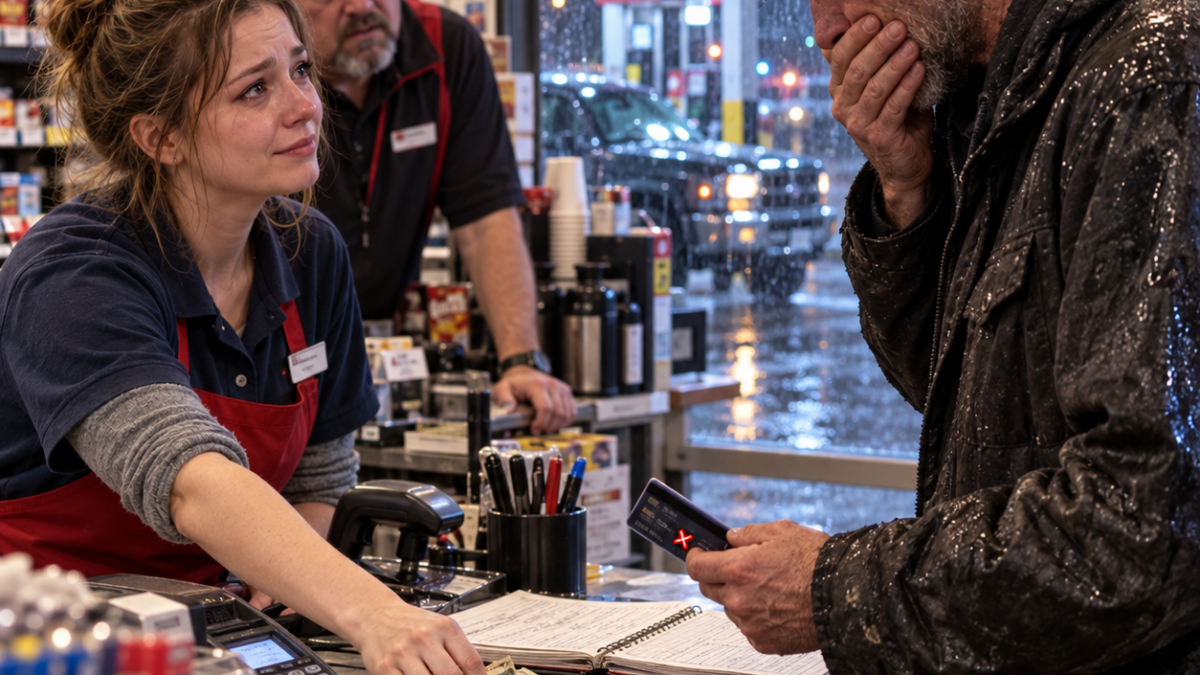
When my fake “declined card” left $38.60 of fuel already sitting in my tank, the night cashier quietly took forty dollars from her own wallet—the money she needed to get herself to work until payday—and paid for a stranger she believed might never come back.
I thought I had gone there to learn whether one failing store deserved to survive; by Monday morning, I would discover that the woman behind that counter had exposed a lie inside my company, a mistake affecting twelve towns, and something in me that no balance sheet had ever been able to measure.
My name is Owen Prescott.
And yes, I am a billionaire.
I hate opening with that sentence.
It makes everything that follows sound like a parable somebody invented after dinner.
Rich man disguises himself.
Poor woman proves kind.
Rich man learns lesson.
Everyone goes home better.
Real life was messier.
I had money.
Hannah Reese did not.
That difference mattered.
So did the fact that I lied to her.
No amount of good that came afterward erased that.
The night I met Hannah, I was fifty-four years old and the majority owner of Prescott Holdings, a private company that had grown from commercial real estate into logistics, agricultural distribution, and, most recently, forty gas stations scattered across three states.
We had purchased the Ridgeline Fuel chain six weeks earlier.
Thirty-eight profitable or stable stores.
Two marginal.
Then the finance team revised the numbers.
Twelve rural locations were worse than marginal.
They were losing money.
Some had been declining for years.
Maintenance costs were high.
Fuel volumes were low.
PART2:
Convenience-store margins were weak.
Inventory shrinkage was above average.
The board wanted all twelve closed.
Monday vote.
The recommendation arrived in a seventy-two-page presentation with colored charts, traffic forecasts, property valuations, and a phrase I had seen too many times in corporate work:
LOW-PERFORMING ASSETS.
Cobb’s Route 9 was one of them.
Store 17.
Bellweather County.
Route 9 at County Road 44.
Twenty-three years old.
Eight pumps.
Tiny convenience store.
Old canopy.
One soda fountain.
Two restrooms.
Three full-time employees.
Four part-time.
PART3:
Negative operating margin for sixteen consecutive months.
The recommendation was straightforward.
Close.
Sell property.
Move on.
I should have agreed.
Instead, one photograph on slide 43 bothered me.
The store sat beneath a faded roadside sign.
The sign was old enough that the paint had cracked.
I enlarged the image.
At the bottom, beneath the fuel prices, was a hand-painted board:
PUMP FIRST.
PAY INSIDE.
WE STILL TRUST OUR NEIGHBORS.
I stared at it.
My chief financial officer, Neil Barton, noticed.
“Problem?”
“Why are they still post-pay?”
“Legacy operation.”
“Every station on Route 9 requires prepay.”
“Correct.”
“Why doesn’t this one?”
Neil shrugged.
“Local preference.”
“Whose?”
“I don’t know.”
“Find out.”
The answer came from regional manager Gloria Kemp.
The sign had been installed almost thirty years earlier by Walter Cobb, the original owner.
Walter had operated the station until he died fourteen months before our acquisition.
His son Vince now managed it.
Vince had refused to remove the sign.
At first I thought that was sentimental.
Then I read a comment in the due-diligence report.
CUSTOMER PAYMENT CULTURE CONTRIBUTES TO LOSS EXPOSURE.
I asked:
“What does that mean?”
Nobody had a good answer.
The board did not care.
The numbers were numbers.
Close twelve.
Keep twenty-eight.
Simple.
Except I had spent enough years buying companies to know simple numbers often contain complicated human behavior.
So I told Theo Grant, my executive assistant and the only person who knew what I was doing:
“Freeze my personal cards Friday night.”
He stared at me.
“All of them?”
“Yes.”
“Why?”
“I’m driving out to Cobb’s.”
He already disliked the plan.
“I can send an operations auditor.”
“They’ll know what an auditor is.”
“We can mystery shop.”
“People know mystery shoppers too.”
“Owen.”
“What?”
“You are fifty-four.”
“Thank you.”
“You own forty gas stations.”
“Also true.”
“And you want to drive into a thunderstorm in your 2004 pickup pretending your card doesn’t work?”
“Yes.”
Theo rubbed his face.
“You know normal billionaires buy islands.”
“I get seasick.”
“That has never stopped a billionaire.”
I slid the board packet toward him.
“I want to know how they treat someone who looks like he has nothing.”
Theo leaned back.
“And if they treat you badly?”
“Then maybe the spreadsheet is right.”
“And if they treat you well?”
“Then I have a reason to ask better questions.”
He looked at me for several seconds.
“This is ethically strange.”
“I know.”
“Potentially manipulative.”
“I know.”
“You could simply talk to employees.”
“Not if I want to see what happens when nobody knows my name.”
He sighed.
“Cards frozen at six.”
“Phone?”
“Working.”
“Company accounts?”
“Do not touch them.”
“Cash?”
I emptied my wallet except for twelve dollars.
Theo stared.
“You’re enjoying this.”
“No.”
“You are absolutely enjoying this.”
He was wrong.
At least I thought he was.
Friday evening, I traded my normal sedan for the old Ford pickup I kept at a property outside Richmond.
Rust beginning over one wheel well.
Bench seat.
Cracked dashboard.
No company plates.
No driver.
No security.
No suit.
I wore jeans, work boots, a faded canvas coat, and a baseball cap I had owned long enough for the brim to bend permanently.
Then the storm rolled in.
Hard.
Cold October rain.
Lightning over farmland.
Route 9 disappeared beneath water in places.
My wipers could barely keep up.
At 10:47 p.m., the low-fuel light came on.
Cobb’s appeared ahead beneath a yellow canopy.
One pump island still lit.
The sign glowed weakly through rain.
PUMP FIRST.
PAY INSIDE.
WE STILL TRUST OUR NEIGHBORS.
I pulled to Pump 4.
Thirty-eight dollars and sixty cents.
The pump stopped.
I went inside.
The store looked older than the photographs.
Brown tile.
Coffee station.
Two aisles of chips.
Glass refrigerator doors humming along back wall.
A bulletin board covered with handwritten cards:
FIREWOOD FOR SALE.
MISSING BEAGLE.
CHURCH SUPPER SATURDAY.
TRACTOR REPAIR.
The cashier behind the counter looked about thirty.
Dark blond hair pulled into a loose ponytail.
Blue store polo.
Name tag:
HANNAH.
She was writing something in a thick ledger.
Not scrolling her phone.
Not leaning against the counter.
Writing.
I stepped closer.
“Pump four.”
She looked up.
“Thirty-eight sixty.”
I handed her my card.
She ran it.
The terminal beeped.
DECLINED.
She frowned.
“Let’s try again.”
Second time.
Declined.
I acted surprised.
“That can’t be right.”
“It happens in storms.”
“There’s money on it.”
“I believe you.”
She ran it once more.
Declined.
Before I could say anything, a man came from back office.
Mid-forties.
Heavy shoulders.
Red face.
VINCE stitched on his shirt.
“What’s the holdup?”
Hannah said:
“His card won’t go through.”
Vince looked at screen.
“Then he needs another card.”
I pulled out a second.
Declined.
Third.
Declined.
Exactly as planned.
I could feel guilt forming already.
Hannah tried terminal reset.
Vince looked out toward Pump 4.
“Thirty-eight sixty already in his truck?”
“Yes.”
His expression hardened.
“Great.”
I said:
“I can come back tomorrow.”
“No.”
“Vince,” Hannah said quietly.
He ignored her.
“Every other station on Route 9 went prepay years ago.”
He pointed toward window.
“Not us.”
“Because my father’s stupid sign is still hanging out there.”
Hannah stiffened.
“Your dad believed in it.”
“My father believed in everybody.”
“And look where that got us.”
He turned toward me.
“The new owners have this place on the closing list.”
“One more drive-off makes my report worse.”
“You pay, or I call the sheriff.”
Customers were watching.
A trucker near coffee machine.
An older woman with lottery tickets.
Two teenagers holding energy drinks.
I said:
“I’m not trying to cheat you.”
“That’s what everybody says.”
“Vince.”
Hannah’s voice sharpened.
“Keep your voice down.”
“Why?”
“Because he’s soaked.”
“Because people are staring.”
“Let them stare.”
Vince pointed toward old sign.
“My father trusted people his whole life.”
“He trusted this store right into the ground.”
“Whoever bought Ridgeline should rip that sign down first thing.”
Then lightning cracked close enough to make lights flicker.
The terminal went dark.
Refrigerator compressors stopped.
Entire store fell silent.
Emergency lights came on.
Hannah immediately reached beneath counter.
Pulled out the same thick ledger.
Vince stared.
“What are you doing?”
“Writing down the sale.”
“For what?”
“When the system goes down, everything gets logged by hand.”
“That book is ancient.”
“Your dad taught me.”
Vince laughed without humor.
“My dad taught everybody stupid habits.”
Hannah did not answer.
She opened the ledger.
Then reached into her purse.
Pulled out two twenties.
Placed them on the counter.
My stomach dropped.
“No.”
She looked at me.
“It’s okay.”
“No.”
Vince stared.
“You can barely put gas in your own car.”
Hannah ignored him.
“This is my gas money until Friday.”
“Then don’t do this.”
She slid the bills beneath register drawer.
“Could be me stuck in the rain one night.”
“That doesn’t mean you—”
She wrote:
PUMP 4 — $38.60 CASH.
Then looked at me.
“You’re all set.”
I stood there.
This had been the test.
The test was over.
I should have told her immediately.
I should have reached into pocket, taken out phone, called Theo, fixed everything.
Instead, I froze.
Because she had just given away money she needed.
For me.
A stranger.
And I had let her.
Vince muttered:
“You can’t fill every empty tank that rolls off highway.”
Hannah closed the ledger.
“No.”
“Just this one.”
Then she pointed toward window.
“Don’t take the bridge at mile twelve.”
“It floods in storms like this.”
“Use County Road 6.”
I looked at her.
“You don’t know anything about me.”
She shrugged.
“Don’t need to.”
“You’re soaked.”
“You’re stuck.”
“That’s enough.”
That sentence followed me all the way back to the motel.
Theo was waiting in the parking lot under umbrella.
He had tracked my phone.
He opened passenger door.
“You look terrible.”
I climbed in.
“Thanks.”
He handed me towel and my phone.
“Cards stay frozen until morning, like you asked.”
“Thanks.”
“How did it go?”
I didn’t answer.
He looked over.
“Owen?”
“The manager wanted to call the sheriff.”
Theo nodded.
“And?”
“The cashier paid my gas.”
His face changed.
“What?”
“Out of her own pocket.”
“How much?”
“Thirty-eight sixty.”
“Why?”
“She said it could be her one night.”
Theo stared.
“You’re a billionaire with forty gas stations.”
“I am aware.”
“And a night cashier bought your gas.”
“Yes.”
“I can have a reimbursement check on her counter by morning.”
“No.”
“Why?”
“A check makes it look like what she did had a price.”
“She needs the money.”
“I’ll go back.”
“Personally.”
“Yes.”
“And tell her?”
I looked through rain.
“The truth.”
Theo said:
“Board vote is Monday.”
“I know.”
“Cobb’s is still closing unless you find more than one nice cashier.”
“I know.”
He waited.
“Did you?”
I thought of Vince.
The sign.
The ledger.
Hannah’s two twenties.
“I found enough to keep looking.”
At 6:45 the next morning, I returned.
Hannah was climbing out of an old sedan in the employee lot.
Or trying to.
The car coughed once and died.
She slapped steering wheel.
A woman in a diner uniform had driven her there.
Hannah got out.
“Thanks for the ride.”
The woman waved.
Hannah shut door.
I approached.
“Morning.”
She looked over.
“Back already?”
“You only got off at six.”
She narrowed eyes.
“How do you know that?”
“I guessed.”
That was another lie.
Theo had pulled staffing schedules.
I hated myself a little more.
“Picked up day shift,” she said.
“Mom’s bills don’t wait.”
I looked toward her car.
“Out of gas?”
“Made it home on fumes.”
“Payday Friday.”
I held out forty dollars.
“I came to pay you back.”
“Thirty-eight sixty.”
She looked at money.
Then at me.
“Keep it.”
“Hannah.”
“You know my name?”
I pointed to tag.
She looked down.
“Right.”
“That was your gas money.”
“I know.”
“You needed it.”
“I knew that too.”
“Then why?”
She opened employee door.
“My mom always says an empty wallet doesn’t mean empty hands.”
I stood still.
“That doesn’t make sense.”
“It does if you grew up with her.”
She smiled.
Then:
“You can be broke and still carry groceries for someone.”
“Still give directions.”
“Still make a phone call.”
“Still help.”
“Money isn’t the only thing people have.”
I swallowed.
“There’s something about last night you should know.”
The door opened behind her.
Vince.
“Well, look who’s back.”
His face tightened.
“Mr. Free Gas.”
Hannah sighed.
“Good morning, Vince.”
“You’re on clock.”
“There’s a receipt waiting at Pump 2.”
I said:
“That’s on me.”
“I’ve been keeping her talking.”
Vince looked at me.
“Then buy something or leave.”
My phone rang.
Not mine.
Hannah’s.
She glanced at screen.
County Hospital.
Everything in her face changed.
She answered.
“Hello?”
Pause.
“Yes, this is Hannah.”
Another.
Her color disappeared.
“Worse?”
“How soon?”
Her hand tightened around phone.
“Okay.”
“I’m coming.”
She hung up.
I forgot my confession.
“What happened?”
“My mom.”
“What about her?”
“Her heart valve.”
“They want to operate.”
She stared toward road.
“My car…”
Then laughed once.
A terrible sound.
“You know the funny part?”
“What?”
“My gas money for the week is sitting in your truck.”
I put the forty dollars into her hand.
“Then let it get you to her.”
She looked at me.
“No.”
“Hannah.”
“I need to get inside.”
Vince had heard enough.
“Where are you going?”
“My mother is at County Hospital.”
“I have to leave.”
“You’re scheduled until three.”
“I know.”
“Then call someone.”
“I don’t have someone.”
He pointed at me.
“Some drifter?”
“First you give a drifter free gas.”
“Now you’re walking out with him?”
“I’m not asking permission to care about my mother.”
Vince stepped closer.
“You walk out today, don’t bother coming back.”
Everything in me wanted to end it.
One sentence.
My name.
His job.
Done.
But that would have made Hannah’s worst day about my power.
So I said:
“I’ll drive you.”
She looked at me.
“Why?”
“Because your mother needs you.”
“And your truck has gas.”
Despite everything, she almost smiled.
“Yes.”
“My truck has gas.”
On the way to County Hospital, Hannah stared through passenger window.
I drove.
Rain had weakened.
Roads shone.
After several miles, I asked:
“Is it just you and your mother?”
“Yes.”
“Has been since I was nine.”
“Your father?”
“Left.”
She said it without drama.
“Mom worked doubles at a diner.”
“Breakfast shift.”
“Then dinner.”
“Sometimes I’d sleep in booth until closing.”
“Now it’s my turn.”
“You pay her bills?”
“What insurance doesn’t.”
“Rent.”
“Groceries.”
“Whatever.”
She looked at me.
“You?”
“What about me?”
“Family?”
I hesitated.
“Complicated.”
“That usually means rich people or divorced people.”
I laughed despite myself.
“Why rich?”
“Poor families don’t call themselves complicated.”
“We just say broke.”
I smiled.
She did too.
For maybe ten seconds, she looked younger.
Then fear returned.
At hospital, she rushed toward cardiology.
I followed far enough to make sure she arrived.
A nurse stopped us.
“Hannah Reese?”
“Yes.”
“Your mother is stable.”
“But Dr. Patel needs to talk with you.”
Hannah closed her eyes.
Stable.
That word saved her knees.
I caught her elbow.
She looked at me.
“I’m okay.”
“No.”
“I’m standing.”
“Those aren’t same.”
She let me guide her to chair.
Later, the cardiologist explained Diane Reese’s valve had deteriorated.
A minimally invasive repair was possible.
Saturday.
Soon.
Hannah kept saying:
“Okay.”
Then:
“How much?”
The doctor’s face changed.
Financial counselor would speak with her.
That was answer enough.
Diane Reese was sixty-one.
Small.
Sharp-eyed.
Funny even in hospital gown.
She looked at Hannah.
“There’s my girl.”
Then immediately:
“Have you eaten?”
“Mom.”
“That’s a no.”
Her eyes shifted toward me.
“And who’s this?”
I said:
“Owen.”
Hannah spoke first.
“He had trouble at the station last night.”
“I drove him—”
Then corrected:
“He drove me here.”
Diane smiled.
“That sounds like Hannah.”
“What?”
“She’d give her last cookie to a kid next to her and swear she wasn’t hungry.”
Hannah looked embarrassed.
“Mom.”
“What?”
“It’s true.”
The financial counselor arrived later.
After insurance:
Nine thousand dollars.
Hannah said nothing.
That frightened me more than tears.
Outside the room she stared at bill.
“I’ve taken every extra shift.”
“And Vince fired me.”
I looked at her.
“He did what?”
“He said don’t come back.”
“That doesn’t mean—”
“Yes, it does.”
I pulled out phone.
Called Theo.
He answered immediately.
“Yes?”
“This hospital has a patient assistance program?”
“I’ll find out.”
“Find the application.”
“Standard process.”
“No names elevated.”
Theo paused.
“Understood.”
Hannah looked suspicious.
“Who was that?”
“My assistant.”
Her expression changed.
“Assistant?”
I had pushed too far.
“There’s something I need to tell you.”
She looked toward her mother’s room.
“Not now.”
“Please.”
“Just—”
She closed eyes.
“Please don’t make today bigger.”
That stopped me.
So I did not tell her.
Not yet.
Instead I said:
“I heard this hospital has assistance for patients who can’t cover everything.”
“I don’t want charity.”
“It’s not charity if it’s a program designed for this.”
She stared at application once a counselor brought it.
Then said:
“If there’s a form, I’ll fill it out.”
Good.
No strings.
No favors.
No billionaire phone call.
She waited in the same line as everyone else.
That mattered later.
That afternoon Theo called me from hallway.
“We have a problem.”
“What?”
“Store inspection packet came in.”
“Vince Cobb submitted written statement.”
“About?”
“Losses.”
I could hear paper moving.
“He blames his night cashier.”
My stomach tightened.
“What exactly?”
“Claims Hannah Reese has been giving free fuel to drifters.”
“Claims Tuesday night—”
He stopped.
“What?”
“Pump four.”
“Thirty-eight sixty.”
“System shows fuel dispensed.”
“No card payment.”
“Vince classified as drive-off.”
I went cold.
“That was me.”
“I know.”
“She paid cash.”
“The system didn’t capture it because outage.”
“She wrote it in ledger.”
“Apparently nobody reconciled handwritten book.”
“Drawer?”
Theo said:
“I asked regional accounting.”
“Tuesday night closed thirty-eight sixty over.”
There it was.
Cash existed.
Transaction didn’t.
Vince knew—or should have known—the drawer was over.
Instead he turned it into proof Hannah was irresponsible.
Theo continued:
“There are six similar incident notes in Vince’s packet.”
“Were they actually free fuel?”
“We don’t know.”
“Find out.”
“And?”
“Get Gloria Kemp.”
“Regional manager?”
“Yes.”
“Face to face.”
“Tell her Friday inspection stays.”
“And Hannah attends.”
“She’s fired.”
“Her name is in report.”
“She gets to answer it.”
Theo paused.
“When do you tell Hannah who you are?”
“After her mother’s surgery.”
“Owen.”
“She has enough.”
“And Friday?”
“I stay in car unless necessary.”
Theo sighed.
“You are making this much harder.”
“I know.”
Diane’s surgery was scheduled Saturday.
Friday morning, Gloria Kemp arrived at Cobb’s.
I sat across road in old Ford.
Hannah arrived in Maria’s borrowed car.
Yes, Maria.
The hospital cafeteria friend who had started driving her.
She looked tired.
Vince stood inside with arms crossed.
Theo joined Gloria.
They reviewed the report.
I listened through a conference call with Theo’s phone on the table.
Vince read:
“This store has been bleeding money because Hannah ran the night shift like a charity.”
“Free gas.”
“Unpaid tabs.”
“Tuesday, Pump 4, thirty-eight sixty.”
Gloria asked Hannah:
“What happened?”
“Customer’s cards failed.”
“Storm knocked power out.”
“I paid cash.”
“Whose cash?”
“Mine.”
Vince laughed.
“Exactly.”
“She gave fuel away.”
Hannah said:
“I didn’t give store money away.”
“I paid.”
“It’s in ledger.”
Silence.
Paper moving.
Hannah continued:
“Your father taught me to use that book when system fails.”
Gloria asked:
“Drawer total Tuesday?”
Theo answered:
“Thirty-eight sixty over electronic transactions.”
Gloria looked at Vince.
“Then nobody drove off.”
Vince said:
“Fine.”
“She paid for the bum.”
“That proves point.”
“She is just like my father.”
“Trust everybody.”
“Word gets around.”
“Drifters come.”
“That’s why we’re losing money.”
I got out of the truck.
Crossed Route 9.
Rain had stopped.
Bell jingled when I entered.
Vince saw me.
His face reddened.
“What are you doing here?”
Gloria stood.
Theo did too.
Hannah looked confused.
Theo said:
“Everyone, this is Owen Prescott.”
Vince froze.
Gloria didn’t.
She already knew.
Theo continued:
“CEO of Prescott Holdings.”
“The company that acquired Ridgeline last month.”
Hannah stared at me.
I hated that look.
Not awe.
Betrayal.
Vince whispered:
“You…”
I looked at him.
“The drifter at Pump 4.”
“That was me.”
“The man you wanted the sheriff to remove.”
“Me.”
I nodded toward Hannah.
“She paid my $38.60.”
“Your store did not lose a cent.”
Vince started:
“But—”
“No.”
I walked behind counter.
Picked up old ledger.
Heavy.
Pages filled with names.
Amounts.
Dates.
Some entries decades old.
Walter Cobb’s handwriting in early pages.
Then Hannah’s.
I flipped.
PAID.
PAID.
PAID.
PAID.
Monthly tabs.
Farmers.
Teachers.
County employees.
People settling bills after payday.
Nearly every account closed.
Then an abrupt change eighteen months earlier.
Tabs stopped.
I asked:
“When did Ridgeline cancel customer tabs?”
Gloria answered:
“Corporate policy change.”
“Eighteen months ago.”
“When did this store start its steepest decline?”
Theo:
“Same quarter.”
I looked at Vince.
“Your father didn’t trust people into bankruptcy.”
“He built repeat business.”
“The company took that away.”
Vince shook head.
“No.”
“Customers stopped coming.”
“Yes.”
“Because we told them we didn’t trust them.”
I looked at Gloria.
“The other twelve stores?”
She already knew where I was going.
“All rural.”
“Legacy tab programs at nine.”
“Post-pay flexibility at eleven.”
“Most removed under same policy cycle.”
Theo added:
“Traffic decline begins immediately after.”
There it was.
Not charity.
Not one cashier.
A corporate decision.
Vince had blamed Hannah because numbers looked bad and she was easiest target.
His report was false.
His termination lacked cause.
And he had not cleared dismissal through regional HR as required.
I held out my hand.
“Keys.”
Vince stared.
“You can’t—”
“Keys.”
“This is my father’s store.”
“Then you should have cared enough not to lie about his employee.”
His jaw worked.
Finally, he dropped keys into my hand.
I turned to Hannah.
“Your termination is void.”
She did not smile.
“Gloria says your drawer hasn’t come up short in three years.”
Gloria nodded.
“No one else in district can say that.”
I continued.
“This store needs an interim manager.”
Hannah’s face hardened.
“No.”
I stopped.
“No?”
“You don’t get to do that.”
“Hannah—”
“You froze your cards.”
Silence.
“You came in here pretending to be broke.”
“Yes.”
“You let me give you forty dollars.”
“Yes.”
“Money I needed.”
“Yes.”
Her voice trembled.
“So when I paid for your gas, you were deciding whether I’d still have a job?”
“No.”
“That isn’t answer.”
“The store was on closing list.”
“The board votes Monday.”
“So yes.”
I had no defense.
“Yes.”
She laughed once.
Bitter.
“That ride to hospital?”
“Real.”
“My mom?”
“Real.”
“The assistance program?”
“Standard program.”
“I did not move her ahead.”
“You called someone.”
“To find application.”
“You could have paid the nine thousand without blinking.”
“Yes.”
“But you didn’t.”
“No.”
“Why?”
“Because that would have turned helping you into something about me.”
She looked at me for a long time.
“The test ended the second you paid.”
I said.
“Everything after was real.”
“But I let you keep thinking I was nobody.”
“That was wrong.”
“I’m sorry.”
She looked exhausted.
“My mother’s surgery is tomorrow.”
“I can’t do this right now.”
I nodded.
“You don’t have to.”
She left.
I did not follow.
The board met Monday.
By then Gloria and Theo had completed a deeper review.
All twelve rural stores on closure list had experienced significant traffic loss after Ridgeline eliminated localized trust programs.
Not identical circumstances.
Not all would survive automatically.
But enough to challenge original recommendation.
I took Walter Cobb’s ledger into boardroom.
Placed it on table.
One director frowned.
“What is that?”
“Thirty years of customer behavior our spreadsheets don’t contain.”
We spent two hours arguing.
Finance wanted closures.
I wanted a one-year operating trial.
Restore limited post-pay program.
Company-funded hardship fuel pool.
Better local inventory.
Community-account options for vetted customers.
No store-level hit for approved emergency fuel.
Stronger controls.
Not blind trust.
Structured trust.
A director asked:
“You’re changing policy because one cashier bought you gas?”
“No.”
“If it were only Hannah, I’d have no case.”
I pushed revised financial analysis forward.
“I’m changing policy because twelve stores began declining after we stripped away the reason customers chose them over national chains.”
That was a business argument.
The board needed one.
Eventually:
Approved.
One year.
All twelve remained open.
Performance review quarterly.
Local trust programs restored with controls.
The hardship fuel program was my idea.
But I refused to put my name on it.
Signs went to all forty stations.
At bottom:
STRANDED TONIGHT?
ASK US.
A limited emergency tank could be approved at register.
Company funded.
No employee out-of-pocket.
No store penalty.
No one should ever have to do what Hannah did with her own money because company lacked policy for human decency.
Diane’s medical assistance application was approved after ordinary review.
Hannah received notification in hospital room.
She called me.
First time since Friday.
“Approved.”
“I heard.”
“Same process?”
“Yes.”
“No favors?”
“No favors.”
She was quiet.
“Thank you.”
“I didn’t do it.”
“I know.”
“That is why I’m thanking you.”
That taught me something too.
Sometimes refusing to intervene is harder than intervening.
Power creates temptation to turn every kindness into control.
Diane’s procedure went well.
A new valve.
Two days observation.
Home.
Hannah returned to Cobb’s the next week.
Not as interim manager.
She made me wait.
Gloria offered role properly.
Salary increase.
Benefits.
Training.
No pressure from me.
Hannah accepted after three days.
The first time I returned as myself, she stood behind counter.
No disguise.
No frozen cards.
No old jacket.
“Owen Prescott,” she said.
“Full name this time.”
“Yes, ma’am.”
“Card working?”
“Unfortunately.”
She almost smiled.
Then:
“You owe me something.”
“I know.”
“Thirty-eight sixty.”
I handed her forty.
She took it this time.
Put $1.40 change on counter.
I pushed it back.
“No.”
She pushed it toward me.
“Do not start.”
I took change.
Lesson learned.
Months passed.
The twelve stores improved.
Not all equally.
Two remained weak.
But Cobb’s became profitable again by spring.
Not because charity replaced business.
Because the store remembered its community.
Farmers came back.
Teachers.
Construction crews.
People who hated prepaid pumps because they didn’t know exactly how much fuel old trucks would take.
The tab program changed.
Nobody got unlimited credit.
Accounts required identification.
Limits.
Monthly settlement.
Controls.
Trust with structure.
Walter Cobb had not been foolish.
He had known his customers.
We had replaced knowledge with policy.
Then wondered why loyalty disappeared.
Hannah became a very good manager.
Demanding.
Accurate.
No-nonsense.
She fired a part-time employee for stealing scratch tickets.
She refused my request to repaint the old sign.
“Why?”
“Because it looks terrible.”
“It looks like Route 9.”
“That is not an aesthetic.”
“It is here.”
She won.
We repaired the wood.
Kept paint.
One evening, months after all of it, I came by near closing.
Not for inspection.
Not for test.
Pump 4.
Card approved.
I went inside.
Hannah looked up.
“Evening.”
“Evening.”
“Coffee?”
“Yes.”
She poured.
I paid.
Then stood there longer than necessary.
She noticed.
“What?”
“I’d like to buy you coffee.”
She lifted the cup already in front of me.
“I believe you just bought yourself one.”
“Different coffee.”
Her eyebrows rose.
“After your shift.”
She stared.
I immediately regretted asking.
Not because I didn’t mean it.
Because power complicated everything.
I said:
“You can say no.”
“And nothing changes here.”
“Your job.”
“Store.”
“Nothing.”
She studied me.
Then said:
“My mom told me letting somebody do something for you can be kindness too.”
I smiled.
“Wise woman.”
“She also said billionaires are suspicious.”
“Also wise.”
“Coffee.”
“After my shift.”
“One cup.”
“Start over.”
I held out my hand.
“Owen Prescott.”
She shook it.
“Hannah Reese.”
“Nice to meet you.”
“You too.”
Before her shift ended, a woman came through the door.
Wet coat.
Two kids waiting in an old minivan.
She looked embarrassed.
“I already pumped.”
“My card won’t go through.”
“I get paid Friday.”
“I swear I can come back.”
Hannah looked at terminal.
Then toward sign.
The new small line beneath Walter Cobb’s old words:
STRANDED TONIGHT?
ASK US.
She smiled.
“See that?”
The woman turned.
“Yes.”
“Tonight your tank’s on us.”
The woman started crying.
Hannah handed her receipt.
“No need.”
“Just get those kids home.”
I watched from the coffee aisle.
No test.
No hidden camera.
No frozen card.
No billionaire deciding whether kindness deserved to survive.
Just a policy built because one cashier once had forty dollars and gave away thirty-eight sixty of it.
The woman left.
Hannah turned toward me.
“What?”
I shook my head.
“Nothing.”
“You’re doing the billionaire stare.”
“What is the billionaire stare?”
“Like you’re about to buy a railroad.”
“I don’t own a railroad.”
“Yet.”
I laughed.
Then looked through window.
Pump 4.
Old Route 9.
Walter Cobb’s sign.
The storm long gone.
For most of my career, I thought companies survived because leaders knew when to cut what wasn’t working.
Sometimes that’s true.
But numbers can tell you a store is failing without telling you why.
They can tell you thirty-eight dollars and sixty cents is missing.
They cannot tell you a cashier opened her own wallet.
They can show traffic declining.
They cannot show that three generations of customers stopped coming after someone removed a policy that made them feel known.
They can tell you a location is inefficient.
They cannot tell you the night clerk knows the bridge at mile twelve floods before county dispatch posts the warning.
A spreadsheet can count transactions.
It cannot measure what happens when a stranger walks into a store looking like he has nothing.
That was what I went to Route 9 to discover.
I thought I was testing Hannah.
I wasn’t.
Hannah had nothing to prove.
I was testing a company I had already bought without understanding what made it worth owning.
And, whether I intended to or not, I was testing myself.
I failed part of that test.
I let her give me money she needed.
I let her believe I was someone I wasn’t.
I saw how easy wealth makes deception when you know you can repair the damage afterward.
That bothered me more as time passed.
Because not everything can be repaired with money.
Trust least of all.
Hannah eventually forgave me.
Slowly.
Not because I saved her mother’s surgery.
I didn’t.
Not because I saved her job.
Her own records did.
Not because I saved the store.
The store’s history and customers did.
She forgave me because after I admitted what I had done, I stopped trying to purchase the forgiveness.
I let her be angry.
I answered her questions.
I accepted no when she said no.
And I tried to build something useful out of what she had shown me.
That was all.
Sometimes that is all an apology gets to ask for.
A chance to behave differently next time.
Years later, the old ledger is still in my office.
Walter Cobb’s handwriting.
Hannah’s entries.
Thirty years of names.
Paid.
Paid.
Paid.
Some late.
Almost all eventually settled.
On the inside cover, I added one entry.
Not officially.
Just pencil.
PUMP 4 — $38.60.
PAID BY HANNAH REESE.
Then underneath:
DEBT NOT REPAID WITH MONEY.
Theo saw it once.
“You know that’s dramatic.”
“Yes.”
“You hate dramatic.”
“Yes.”
“Keeping it?”
“Yes.”
Because some debts are not debts at all.
They are instructions.
Hannah gave me forty dollars one rainy night.
I gave thirty-eight sixty back the next morning.
Financially, we were even.
But the thing she actually handed me was never the money.
It was the question that followed me into every boardroom afterward:
What would this decision look like to someone who has no power in the room?
I wish I could say I ask it every time.
I don’t.
I am still a businessman.
I still close locations.
Fire managers.
Reject proposals.
Say no.
Kindness does not mean pretending numbers do not matter.
It means remembering numbers belong to people before turning them into conclusions.
Cobb’s is still open.
So are ten of the other eleven rural stores from that list.
One eventually closed because the traffic simply could not support it.
We helped the employees transfer.
Another became an unmanned fuel site with a smaller community store operated by a local family.
That is real business.
Not every story ends with every door staying open forever.
But we stopped closing doors because one spreadsheet told us nobody important was standing behind them.
Diane is doing well.
Hannah sends me photos of her mother gardening, usually accompanied by messages complaining that Diane ignores doctor’s instructions.
Hannah still manages Cobb’s.
The store has the best audit score in the rural district.
Her car now has gas.
Usually.
And Walter Cobb’s old sign still hangs under the price board.
PUMP FIRST.
PAY INSIDE.
WE STILL TRUST OUR NEIGHBORS.
Below it is our newer line.
Smaller.
Simple.
STRANDED TONIGHT?
ASK US.
Sometimes I drive Route 9 without telling anyone.
No disguise anymore.
No test.
I stop.
Buy coffee.
Pay before anyone can get clever.
And every once in a while, I stand near Pump 4 and remember the storm.
The dead terminal.
Vince’s anger.
Two twenty-dollar bills.
A woman who could barely afford her own tank deciding a stranger should not be left stuck in the rain.
That was the night I learned something my accountants could never have placed in a cell.
An empty wallet does not mean empty hands.
And having full hands does not mean you know how to use them.
Hannah did.
I had to learn.




