HOA Karen Brought 5 Lawyers to Seize My Grandfather’s Farm—Then She Saw Me in a Judge’s Robe and Her Entire Case Began to Collapse
HOA Karen Brought 5 Lawyers to Seize My Grandfather’s Farm—Then She Saw Me in a Judge’s Robe and Her Entire Case Began to Collapse
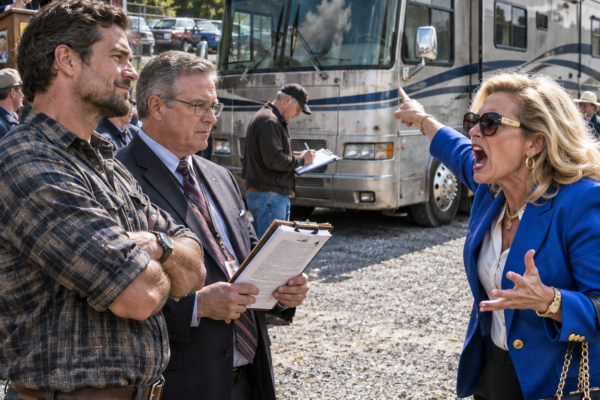
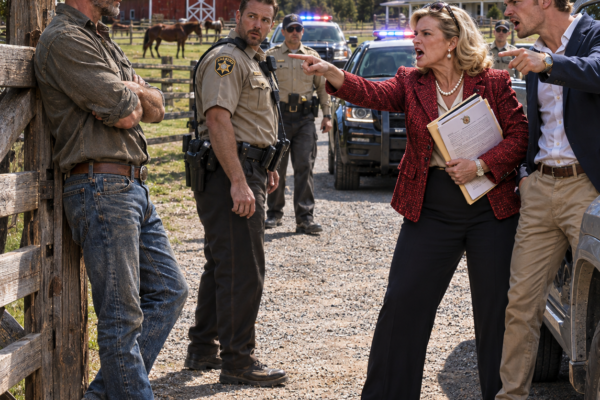
“YOU’RE GOING TO LOSE THAT FILTHY LITTLE FARM TODAY, HENRY! I BROUGHT FIVE OF THE BEST LAWYERS MONEY CAN BUY, AND WHEN THEY’RE FINISHED WITH YOU, YOUR GRANDFATHER’S LAND WILL BELONG TO MY HOA!” Diane Kessler shouted outside the Pennsylvania courthouse, waving a thick legal folder as though she already owned all twenty-six acres of my family’s property.
For three months, the HOA president had threatened me with fraudulent fines, sent construction crews into my apple orchard, and tried to force an elderly widow off her land—but when she walked through the courthouse doors and saw me standing in a black judicial robe, her confident smile vanished.
Then one of her lawyers opened a sealed envelope, discovered that the supposed court order authorizing the takeover carried a judge’s signature it could never legally have contained, and whispered something to Diane that made her turn toward me in absolute terror.
The first thing Diane Kessler noticed was the robe.
Not my face.
Not the folder in my hand.
The black judicial robe.
She stopped so abruptly that one of the five lawyers walking behind her nearly collided with her shoulder.
For three months, Diane had called me an ignorant farmer.
A stubborn old fool.
A man who didn’t understand how the modern world worked.
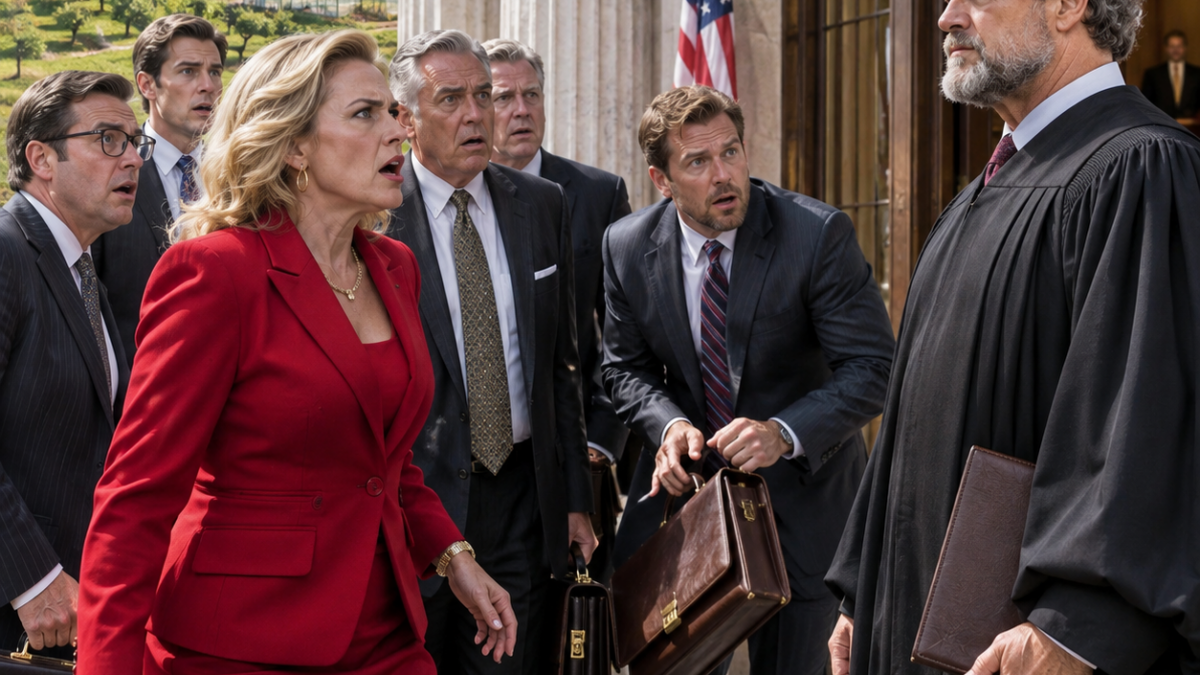
Now she stood in the hallway of the county courthouse staring at me as if the floor had suddenly disappeared beneath her expensive shoes.
Her bright red designer suit looked completely out of place against the dark wood and gray stone of the courthouse.
Five attorneys surrounded her.
Expensive suits.
Leather briefcases.
Thick folders of legal papers.
Charles Bennett, the attorney who had been coordinating the property claim, lingered a few steps behind them.
Diane had spent thousands of dollars assembling a legal team to take control of the eastern section of Willow Creek Farm.
She had told my neighbors I was going to lose.
She had told the HOA board the land was practically theirs already.
She had even discussed construction plans for a road through my grandfather’s apple orchard.
Then she saw me standing near the courtroom entrance.
And for the first time since we’d met, she couldn’t find anything to say.
The oldest attorney in her group was a silver-haired man named Raymond Pierce.
He stared at me for several seconds.
Then stepped forward.
“Judge Dalton?”
Diane turned toward him.
“What?”
Raymond’s expression changed.
“Your Honor, I didn’t realize you’d be here today.”
Diane looked from Raymond to me.
Then back at Raymond.
“WHAT DID YOU JUST CALL HIM?”
I didn’t smile.
“Good morning, Raymond.”
He shook my hand.
Diane’s face went pale.
“You’re telling me this farmer is a judge?”
“Retired judge,” I corrected.
I had served in Pennsylvania’s court system for more than twenty years before returning to my family’s farm.
Diane hadn’t known that.
She had never bothered to ask.
To her, I was simply Henry Dalton.
The man who wore muddy boots.
Drove an aging pickup.
Sold apples at the farmers’ market.
PART2:
And refused to obey her HOA regulations.
She had no idea I’d spent decades listening to lawyers make arguments in courtrooms just like this one.
Before she could recover, a court employee approached Raymond with a sealed envelope.
“Mr. Pierce, this was delivered regarding the Willow Creek property matter.”
Raymond accepted it.
Opened it.
Read the first page.
Then the second.
The color drained from his face.
He turned toward Charles Bennett.
“Charles, where did these documents come from?”
Charles stiffened.
“Our client’s development records.”
Raymond held up one page.
“Did you personally verify the original?”
“I was assured everything was properly prepared.”
“That isn’t what I asked.”
Diane stepped forward.
“What is going on?”
Raymond ignored her.
He turned another page.
Then looked directly at Charles.
“This document claims the property transfer was completed weeks ago.”
Charles said nothing.
Raymond continued.
“But another version says Henry Dalton won’t sign until tomorrow.”
Diane’s expression changed.
Then Raymond lowered his voice.
“We have a serious problem.”
I stood there in my robe, watching the confidence drain out of the people who’d spent months threatening my family.
But the most disturbing discovery was still waiting inside the courthouse.
Because the documents Diane’s lawyers had brought didn’t merely contain a questionable land agreement.
Somebody had forged an order from a court.
And the name printed beneath the supposed judicial approval was mine.
To understand why that mattered, you need to know what Diane had been trying to take.
My name is Henry Dalton.
I was fifty-seven when the trouble began.
Willow Creek Farm sat in rural Pennsylvania, about forty minutes from the nearest major town.
Twenty-six acres.
A white farmhouse with a green roof.
A red equipment barn.
Two greenhouses.
A chicken coop.
A vegetable garden.
And an apple orchard my grandfather had planted decades before I was born.
The property wasn’t impressive by modern development standards.
But it was home.
My grandfather bought the first acreage when the surrounding countryside was still mostly farmland.
My father grew up working those fields.
He taught me how to repair fences, care for animals, and recognize when apple trees needed pruning.
He also taught me something I carried into my later career.
“Henry, a person’s word ought to mean something, especially when nobody’s watching.”
I left the farm as a young man.
Studied law.
Worked as an attorney.
Eventually became a judge.
For decades, I spent my days listening to people argue about property, money, contracts, and the decisions that could change their lives.
When I retired from regular judicial service, I returned to Willow Creek.
My father had passed away, and the old place needed attention.
I repaired the barn.
Restored the greenhouses.
Replanted sections of the orchard.
And started selling apples, vegetables, eggs, and homemade preserves at the local farmers’ market.
My wife Laura loved the farm.
She was a schoolteacher who believed children learned more from touching soil than memorizing textbook definitions.
Every spring, she invited local families to help plant vegetables.
She taught children how seeds became plants and why healthy soil mattered.
We never had children of our own.
But that didn’t mean the farm was lonely.
Ten-year-old Billy Cooper came almost every Saturday to feed the chickens.
His grandmother, Martha, lived in a cottage near our western fence.
Martha was seventy-four.
She had been close to my family for decades.
After her husband died, she sometimes struggled with heavy groceries and yard work.
I helped whenever I could.
She always insisted she didn’t need assistance.
Then she would send me home with enough homemade pie to feed six people.
That was the kind of community we’d built.
People didn’t ask what car you drove.
They asked whether your tomatoes were growing.
And if somebody’s fence collapsed during a storm, neighbors showed up with tools.
Then the empty land east of Willow Creek was sold.
Within two years, open pasture became Silverbrook Estates.
Large houses.
Stone driveways.
Perfect lawns.
Decorative fences.
A beautiful entrance sign.
And a homeowners association.
I didn’t object to the development.
People needed homes.
Most of the new residents were good neighbors.
But a few seemed surprised that they’d purchased expensive houses beside an actual working farm.
Sometimes tractors started early.
Chickens made noise.
Freshly turned soil smelled like freshly turned soil.
Then Diane Kessler became HOA president.
I first met her while repairing a fence beside my driveway.
A black luxury SUV stopped near the gate.
Diane stepped out wearing expensive sunglasses and carrying a thick white folder.
She looked at my tractor.
Then the greenhouse.
Then the red equipment barn.
“Are you Henry Dalton?”
“Yes, ma’am.”
She pointed toward the barn.
“WHEN ARE YOU GOING TO REPAINT THAT EYESORE? OUR COMMUNITY DOESN’T ALLOW BUILDINGS THAT LOOK LIKE THEY BELONG IN A JUNKYARD!”
I glanced behind me.
“My grandfather painted it red about sixty years ago.”
“Well, it doesn’t meet our approved architectural standards.”
“That’s unfortunate.”
She looked irritated.
“I’m Diane Kessler, president of Silverbrook Estates.”
“Nice to meet you.”
“Our community has strict rules regarding visible structures, fencing, outdoor equipment, and property appearance.”
I set down my hammer.
“I’m sure it does.”
“Then you’ll understand why I’m here.”
I looked toward the rooftops beyond my eastern fence.
“Diane, Willow Creek Farm isn’t part of your neighborhood.”
She blinked.
“Excuse me?”
“My property predates Silverbrook. I have my own deed, independent road access, and no HOA membership.”
She opened her folder.
“Properties affecting the appearance of our community are expected to comply.”
“Not mine.”
Her smile disappeared.
“Do you understand who you’re talking to?”
“Perfectly.”
“Then sign this.”
She handed me a membership agreement.
I skimmed it.
Monthly dues.
Architectural restrictions.
Rules about animals and agricultural equipment.
Fines for noncompliance.
I returned it.
“No, thank you.”
Diane laughed coldly.
“You don’t get to decide whether your property affects our neighborhood.”
“I do get to decide whether I voluntarily join an association.”
“People like you always think they can do whatever they want until somebody with real authority tells them otherwise.”
I picked up my hammer.
“Then I suppose we’ll both learn something.”
She climbed into her SUV and drove away.
Three days later, the first violation notice arrived.
Six hundred dollars.
For refusing mandatory HOA registration.
Additional warnings covered my tractor, barn, and wooden fencing.
The letter threatened legal action if I didn’t pay.
Laura read it at the kitchen table.
“She wants to fine you for keeping a tractor on a farm?”
“Apparently.”
“That’s ridiculous.”
“Yes.”
But I knew official-looking paperwork frightened people.
A person unfamiliar with property law might pay simply because they feared losing their home.
So I went to the county records office.
Susan Reynolds, a longtime clerk, helped me obtain certified copies of the deed and recorded property map.
Everything confirmed what I already knew.
Willow Creek Farm was outside Silverbrook Estates.
No HOA covenants applied.
No mandatory membership.
I sent Diane the documents with a polite letter asking her to withdraw the notice.
For several days, nothing happened.
Then Martha called.
“Henry, have you agreed to sell part of the farm?”
I nearly dropped my coffee.
“What?”
“A man came by yesterday talking about a new road.”
“What road?”
“He said Silverbrook might get another entrance to the county highway.”
I sat down.
Martha continued.
“He showed me a map, Henry. The road goes through your eastern orchard.”
“Did he say I agreed?”
“He said arrangements were being handled.”
I felt my jaw tighten.
“Do you remember his name?”
“Charles Bennett. I think.”
She described a man in an expensive suit driving a silver Mercedes.
I thanked her.
Then I walked toward my eastern field.
Beyond the orchard stood the rooftops of Silverbrook.
A road through my land would give the neighborhood a direct connection to the highway.
And suddenly Diane’s obsession with controlling my property began making more sense.
I called the county planning office.
No public road had been approved across Willow Creek Farm.
But a development company had recently asked questions about potential access routes for future construction.
That evening, Laura found me looking over the property map.
“You think they want the orchard?”
“I think somebody wants a road through it.”
“Have they offered to buy anything?”
“No.”
She looked out the window toward the trees.
“Then why is Diane acting like she already owns it?”
That was exactly what I wanted to know.
A week later, another HOA notice arrived.
My supposed balance had increased to $1,800.
The new charges included storing equipment in public view, keeping unapproved farm animals, and refusing an inspection.
I called the management office.
A young assistant named Kelly Price answered.
When I gave her my address, she became quiet.
“Mr. Dalton, your account is under special review.”
“By whom?”
“Mrs. Kessler.”
“Did the board approve these fines?”
She hesitated.
“I’m not authorized to discuss internal decisions.”
Then she asked a strange question.
“Has Mrs. Kessler shown you any documents about property access?”
“No.”
Silence.
Before I could ask why, I heard another woman speaking sharply in the background.
Kelly ended the call.
She sounded frightened.
I started documenting everything.
Letters.
Dates.
Phone calls.
Threats.
Property records.
Then Diane returned.
This time, Charles Bennett stood beside her.
He introduced himself as an attorney representing interests connected to future development near Silverbrook.
Unlike Diane, Charles was polite.
He complimented the farm.
Then opened a map.
His clients wanted an access agreement across my eastern field.
A road, possibly utilities, and construction access.
He said the project would improve traffic and increase property values.
I asked why the road had to cross my orchard.
He explained that it provided the most practical route.
Then he showed me a compensation figure.
It was far below what I considered reasonable.
And money wasn’t the only issue.
My grandfather had planted those trees.
Laura used that part of the farm for children’s educational visits.
A road would change the property permanently.
“I appreciate the offer,” I told Charles. “But I’m not interested.”
Diane stepped forward.
“Hundreds of homeowners shouldn’t suffer because one selfish farmer refuses progress!”
“I don’t see how refusing to sell my own land makes me selfish.”
“You’re standing in the way of development!”
“Then the developer should find another route.”
Her face reddened.
“We have lawyers who deal with people like you every day.”
Charles looked uncomfortable.
Diane leaned closer.
“If you won’t cooperate willingly, there are other ways to solve this.”
I didn’t raise my voice.
“Then make sure those ways are legal.”
She drove away furious.
Charles followed.
That night, Laura found me studying the map.
“Are you worried?”
“Not about the threats.”
“Then what?”
“I’m worried they’re preparing something we haven’t seen.”
She sat beside me.
“Some people confuse a quiet man with a weak one.”
I smiled.
She knew me better than anyone.
I had spent enough years in courtrooms to know that the loudest person wasn’t necessarily right.
But I also knew false claims could become dangerous when people were willing to spend money defending them.
The next letter came from a Philadelphia law firm.
It claimed that Silverbrook possessed a historic legal interest in part of my property.
According to the letter, my grandfather had granted access rights along the eastern boundary decades earlier.
The document threatened further legal action if I refused to cooperate.
I returned to the county records office.
Susan helped me search older maps.
One showed a narrow dotted line along the eastern edge.
An old farm lane.
It had connected neighboring agricultural properties long before Silverbrook existed.
But an old lane drawn on a map didn’t automatically give a modern developer the right to build a residential road.
I needed to know what agreements, if any, had actually been signed.
Then a larger envelope arrived.
A hearing had been requested.
Diane’s lawyers claimed access rights and unpaid HOA penalties.
They also suggested the association might seek legal control over the disputed land.
The financial demands had grown beyond $100,000.
I read that figure twice.
Diane wasn’t trying to make me repaint my barn anymore.
She was trying to create enough financial and legal pressure to threaten my farm.
I called an old friend.
Robert Ellis.
Robert was an experienced property attorney I’d known for years.
He reviewed the documents and immediately noticed inconsistencies.
The supposed historic agreement carried an office designation that didn’t exist when the paper was allegedly signed.
That didn’t prove the entire document was false.
But it was a serious warning.
Robert advised me to stop speaking directly with Diane about legal matters.
He would handle correspondence.
Then he asked whether Diane knew about my former profession.
“I doubt it.”
Robert laughed once.
“That explains a few things.”
“What things?”
“She described you as an uneducated farmer who’d panic when five lawyers walked into court.”
I looked toward my old work boots beside the door.
“That’s quite an assumption.”
“She’s made several.”
But Robert reminded me of something important.
My former position wouldn’t give me special treatment.
The case would be decided by the judge assigned to it.
On evidence.
Not reputation.
I agreed completely.
Then Diane escalated again.
One cold Friday morning, three black SUVs and a utility truck appeared outside my eastern fence.
Workers unloaded measuring equipment.
Orange flags appeared along my driveway.
Someone stretched a measuring tape toward the orchard.
I hurried outside.
Diane stood beside Charles and two survey workers.
“THE PROPERTY REVIEW HAS BEGUN, HENRY! YOU CAN EITHER COOPERATE OR PAY THE PRICE!”
I looked toward the men carrying equipment.
“Who authorized you to enter my property?”
Charles handed me an old-looking agreement bearing my grandfather’s name.
It supposedly granted access along the eastern field.
I examined it.
The signature looked similar to my grandfather’s.
But I couldn’t confirm it.
And nothing about the paper established immediate permission to begin surveying.
“I need time to verify this,” I told Charles.
Diane laughed.
“More excuses.”
“No, Diane. Verification.”
She pointed toward the workers.
“Continue.”
I looked at them.
“Gentlemen, you don’t have my permission to enter.”
One worker stepped back.
The other began winding up the measuring tape.
Diane exploded.
“YOU ARE INTERFERING WITH OFFICIAL BUSINESS!”
“Then call the sheriff and show him your authorization.”
Charles quietly suggested they leave.
Diane glared at him.
Then leaned toward me.
“You have no idea how many powerful people are behind this project.”
I looked directly at her.
“Powerful people still need lawful permission.”
She pointed toward my orchard.
“Everything beyond that fence will soon belong to someone else.”
Then she left.
That evening, Robert found another problem in the supposed historic agreement.
The original wording appeared to concern limited agricultural access.
The newer documents described development rights, construction vehicles, and expanded road use.
Those were very different things.
Robert also discovered that the original business involved in the agreement, Mercer Valley Land Partners, had closed decades earlier.
There was no clear record showing how any legitimate old rights could have passed to Silverbrook.
Then Martha called me crying.
Diane’s people had delivered a notice to her cottage.
It claimed the proposed road could require removing part of her garden fence.
The garden had been planted by Martha’s late husband.
She was terrified of losing it.
I went over immediately.
Martha sat at her kitchen table holding the letter.
“Henry, I can’t afford lawyers.”
I sat beside her.
“You don’t have to sign anything today.”
“They said fighting it could cost me my house.”
“A threat isn’t proof they own anything.”
She wiped her eyes.
“I don’t understand why they’re doing this.”
Neither did I.
At least not completely.
But I promised we’d help her find proper legal advice.
That night, I opened a wooden box in my study.
Inside were old photographs, letters, and the black judicial robe I’d worn during my years on the bench.
Laura appeared in the doorway.
“Thinking about telling Diane who you used to be?”
“No.”
“Why not?”
“Because it doesn’t change our property rights.”
She smiled faintly.
I folded the robe and returned it to the box.
If Diane wanted to take this matter into court, she’d discover my background eventually.
But I wasn’t going to use an old title to intimidate her.
The law was supposed to protect people regardless of who they were.
That included farmers.
Teachers.
Elderly widows.
And even unpleasant HOA presidents.
Then, just before midnight, a vehicle stopped near our eastern fence.
Its headlights went dark.
Two figures moved toward the orchard carrying flashlights.
I called the sheriff’s non-emergency line.
Then stepped onto the porch.
“YOU’RE ON PRIVATE PROPERTY! LEAVE NOW!”
The figures stopped.
One flashlight pointed toward me.
Then both hurried back to the truck and drove away.
The next morning, I found new stakes among the apple trees.
Bright ribbons marked three of the oldest trunks.
Two trees had been planted by my grandfather himself.
I photographed everything.
Robert told me not to disturb the markers until the scene was documented.
Later that week, Diane returned with construction equipment.
Three large trucks.
A small excavator.
Workers carrying chainsaws.
She claimed preliminary work could begin under emergency authority.
No actual court order had been presented.
I told everyone to stop.
One worker started his chainsaw.
Another moved the excavator toward the fence.
Wood cracked.
Laura shouted from the porch.
I called 911.
Then a worker near the oldest apple tree suddenly stopped.
He’d uncovered a small metal box buried beside the roots.
Rusted chain wrapped around it.
Faded writing on the lid.
Charles Bennett hurried over.
The moment he saw the markings, his expression changed.
He took the box and tried to hide it beneath his coat.
Diane noticed.
“What is that?”
Charles whispered something.
Her expression shifted.
For the first time, I saw fear instead of anger.
Then sheriff’s vehicles arrived.
Officer Frank Wilson stepped out.
He’d already delivered legal papers to my home and knew about the dispute.
He ordered the workers to stop.
Diane immediately protested.
“We have legal authority!”
“Show me the order,” Wilson said.
She handed him several pages.
He examined them.
Then frowned.
“Mrs. Kessler, this case number doesn’t match the pending property matter.”
Diane stopped talking.
Wilson turned toward Charles.
“Where did this document come from?”
Charles looked toward his Mercedes.
Before he could answer, Martha came hurrying toward us.
She was crying.
“Henry, I saw them!”
“Who?”
She pointed at Charles.
“He was near that tree two nights ago. With another man. They were digging.”
Charles went pale.
Wilson asked him to show what he was hiding.
The metal box came out.
Inside were old papers.
A brass key.
A photograph.
And documents bearing names connected to an earlier land dispute.
One name caught my attention immediately.
Calvin Mercer.
A wealthy businessman whose name appeared in the development papers Charles had given me.
The photograph showed my grandfather standing beside Calvin and a younger man in front of the old farmhouse.
Charles insisted the contents were private records.
Wilson asked why they had been buried on my property.
Charles couldn’t give a clear answer.
Then he said something I never forgot.
“That box wasn’t supposed to be found before the hearing.”
I stared at him.
“What does that mean?”
Charles looked toward Diane.
Then away.
“Someone has been using your grandfather’s name in connection with this land for years.”
The officers preserved the box as potential evidence.
They also informed Diane that her papers didn’t authorize construction or tree removal.
The workers packed up and left.
But the orchard had already been damaged.
Several fence boards were broken.
Deep tire tracks cut through the grass.
One of my grandfather’s oldest apple trees had lost large branches.
I stood beneath it after the trucks left.
My father used to lift me onto his shoulders so I could reach the apples.
Now I was looking at fresh chainsaw cuts.
Laura came beside me.
“We’ll save it if we can.”
I nodded.
But I was beginning to understand how far Diane was willing to go.
Robert and a second attorney, Sarah Whitman, examined the documents recovered from the metal box.
The old business records suggested Calvin Mercer had once proposed a land arrangement involving my grandfather.
But the evidence didn’t establish the sweeping rights Diane claimed.
One handwritten note in my grandfather’s old notebook caught Sarah’s attention.
It said he would never risk the family farm for somebody else’s development project.
The wording was exactly like something he would have said.
Then Sarah found evidence of a disputed private loan.
Diane’s lawyers were claiming my grandfather had borrowed money, pledged part of the farm as security, and never repaid the debt.
They said decades of interest had made the obligation enormous.
But none of our recorded property history showed such a lien.
Robert warned me not to dismiss the claim without examining it.
So we searched the old family files.
Receipts.
Letters.
Tax records.
Farm equipment purchases.
Correspondence.
And somewhere among them, an envelope labeled CALVIN MERCER.
I remembered seeing it.
But when I returned to my study later that week, it was gone.
One storage box had been moved.
The window was slightly open.
Fresh scratches marked the lock.
Someone had entered my house.
Not to steal jewelry.
Not cash.
Old papers.
That frightened me more than a missing television would have.
Whoever entered knew exactly what they wanted.
Officer Wilson photographed the window and took my statement.
Laura and I barely slept that night.
The following morning, Martha called repeatedly.
When I tried calling back, she didn’t answer.
I hurried to her cottage.
The front door stood open.
Papers were scattered across the porch.
A chair had been knocked over.
One of her flower pots lay broken.
Inside, Martha was crying at the kitchen table.
Billy stood beside her.
Two men had come demanding that she sign permission to remove her garden fence.
When she refused, one pushed the door.
They threatened expensive legal consequences.
Billy shouted at them to leave.
Eventually, they went away.
Martha’s hands were trembling.
“I thought they were going to take my home.”
I sat beside her.
“No one gets to take your home because two strangers arrive with papers and threats.”
She looked at me.
“Henry, I’m seventy-four. I can’t fight people like that.”
“You won’t have to face them alone.”
Laura brought breakfast while I contacted Officer Wilson.
Then we helped clean the porch.
I was furious.
Not because Diane was threatening me anymore.
Because her campaign was frightening people who had done nothing wrong.
The next few weeks brought more documents, more legal threats, and more pressure.
Then Diane sent heavy equipment onto the farm again.
This time, the danger became real.
It happened after dark.
Laura and I were preparing dinner when engines roared near the eastern field.
Bright work lights appeared among the apple trees.
A bulldozer was moving toward our oldest orchard section.
Men unloaded chainsaws.
A truck carried barriers and surveying equipment.
I called 911 and hurried outside.
Diane stepped from a black SUV.
Charles stood behind her with two men in dark suits.
“HENRY, I WARNED YOU! THIS LAND IS NO LONGER YOURS TO CONTROL!”
I stopped several yards away.
“The hearing hasn’t even taken place!”
“We have emergency authorization.”
“Then show me the order.”
Charles raised a folder.
He claimed the association had temporary permission to protect the disputed access route.
Diane ordered the workers to continue.
A chainsaw started.
The bulldozer pushed toward the fence.
Wood broke.
Laura ran out of the farmhouse.
“STOP THAT MACHINE!”
I pulled her away from the moving equipment.
Then Martha appeared near the western path.
“Henry!”
Her voice sounded terrified.
“Billy’s missing!”
My stomach dropped.
“What?”
“He went to check the chickens. I can’t find him!”
I looked toward the orchard.
Heavy machinery was moving through the darkness.
A frightened ten-year-old could have been anywhere.
I shouted his name.
Laura called from near the greenhouse.
Then we heard crying behind the old equipment shed.
Billy stood beside a fallen section of fence.
He was holding his left arm.
His face was wet with tears.
A loose board had struck him when he tried to get away from the machinery.
I hurried over.
“Billy, look at me.”
He nodded.
“Can you move your fingers?”
He did.
“Good. We’re getting you out of here.”
Laura wrapped him in her coat.
Martha held him tightly.
Then Officer Wilson arrived with flashing lights.
He ordered the workers to stop.
The chainsaw went silent.
The bulldozer shut down.
Diane hurried toward him.
“You’re interfering with court-authorized construction!”
Wilson held out his hand.
“Show me the order.”
Charles gave him the papers.
Wilson studied the seal.
Then the case number.
He contacted dispatch.
After several moments, his expression hardened.
“Mr. Bennett, the court has no record of issuing this order.”
Diane shouted that he was wrong.
Wilson ignored her.
“The case number belongs to a different matter.”
Charles went pale.
Then the bulldozer operator approached.
He handed Wilson the work order he’d been given.
The instructions required the crew to remove the oldest apple trees before sunrise.
Even if the property owner objected.
Then Wilson turned the final page.
He looked at Charles.
“Why does this document say Willow Creek Farm has already been transferred to another owner?”
I stepped closer.
The company name was unfamiliar.
EVERGREEN LAND HOLDINGS.
Beneath it was a signature that looked like mine.
Supposedly approving the sale of my farm.
Then I saw the date.
Tomorrow.
Someone had prepared a document claiming I’d sold my property.
But according to the paper, I wouldn’t even sign until the following day.
I stared at Charles.
“You can’t seriously expect anyone to believe this.”
He began explaining it was a draft.
Wilson pointed to the section stating the transfer had already been completed.
“Then why are contractors relying on it as an executed sale?”
Charles had no convincing answer.
Diane threatened to make the sheriff’s department regret interfering.
Wilson ordered the work stopped.
The contractors began packing their tools.
One worker, Peter Collins, approached me before leaving.
He apologized.
His company had been promised a large payment if it finished clearing the orchard before sunrise.
He said the instructions had seemed unusually strict.
Remove the oldest trees first.
Don’t answer questions from neighbors.
Finish before the hearing.
I thanked him for telling the truth.
Then I took Billy to urgent care with Martha and Laura.
Fortunately, his arm was bruised but not broken.
The doctor said he would recover.
But the fear in his eyes stayed with me.
He looked up from the examination bed.
“Mr. Henry, are they going to cut down all the trees?”
I swallowed.
“Not if I can help it.”
He nodded.
Then asked:
“Can I help fix the fence when my arm gets better?”
I smiled.
“Absolutely.”
The next morning, Robert and Sarah came to the farm.
We spread the latest documents across the kitchen table.
The proposed road would cross the eastern orchard and connect Silverbrook to hundreds of acres behind the development.
Without that route, construction would be harder and considerably more expensive.
Evergreen Land Holdings had been created only months earlier.
Its business address was connected to companies involved in the expansion.
The supposedly completed property sale looked fraudulent.
And the old documents were increasingly suspicious.
But Robert reminded me that we still had to prove our case through the proper process.
That mattered to me.
I had spent most of my working life insisting that everyone deserved fair treatment under the law.
I wasn’t going to abandon that principle simply because someone was threatening my own home.
Then the hearing date arrived.
The courthouse had already scheduled a ceremony that morning honoring several retired judges and long-serving public employees.
I’d agreed to attend months earlier.
Long before Diane began threatening the farm.
I would wear my old judicial robe for the recognition ceremony.
Then change into a regular suit before attending the property hearing as a private citizen.
Judge Margaret Whittaker would preside over my case.
I would have no judicial role in it.
Robert understood the arrangement.
The court staff understood it.
Everything had been handled properly.
But Diane knew none of that.
That morning, I woke before sunrise.
Fed the chickens.
Checked the greenhouse.
Walked through the orchard.
A thin mist hung between the trees.
I stopped beside the old apple tree with its damaged branches.
My grandfather had planted it when my father was a boy.
I placed my hand against the bark.
“We’re not finished yet.”
Then I went inside.
Laura had laid out my dark suit.
Beside it hung the robe.
She straightened my collar.
“You ready?”
“As ready as I can be.”
“Your grandfather would be proud.”
I smiled.
“I hope so.”
At the courthouse, several old colleagues greeted me.
The recognition ceremony took place in a second-floor courtroom.
Retired judges and courthouse employees were honored for their years of service.
When my name was called, I received a plaque.
It was a quiet, respectful event.
Afterward, I remained in my robe briefly while speaking with an old colleague near the courtroom entrance.
Then I heard Diane’s voice in the hallway.
Loud.
Confident.
Mocking.
She was telling someone that the farmer who refused her offers would finally discover what happened when ordinary people challenged powerful organizations.
Then she walked around the corner.
Five lawyers.
Leather briefcases.
Red designer suit.
Charles Bennett behind them.
And she saw me.
Standing in the robe.
Raymond Pierce recognized me immediately.
“Judge Dalton?”
Diane froze.
“What did you call him?”
I greeted Raymond.
Diane stared.
“You’re a judge?”
“Retired.”
For several seconds, she seemed unable to process what she was seeing.
Then anger replaced shock.
“This is outrageous! You’re trying to influence the court by wearing that robe!”
“No, Diane. I attended a separate recognition ceremony.”
“You planned this!”
“I agreed to the ceremony long before this dispute existed.”
I pointed toward the hallway.
“Judge Whittaker will hear our property case, and I’ll be appearing as a private citizen.”
Raymond looked at me.
“Henry Dalton of Willow Creek Farm?”
“Yes.”
He turned toward Charles.
“Why wasn’t his background disclosed during our preparation?”
Charles muttered that it was irrelevant.
Raymond didn’t look satisfied.
Then the court employee arrived with the sealed envelope.
Raymond opened it.
And everything changed.
The documents contained inconsistencies among the supposed property transfer records.
One version claimed the transfer was already complete.
Another carried tomorrow’s date.
A third suggested I’d signed weeks earlier.
Raymond asked Charles whether he’d inspected the originals.
Charles couldn’t give a clear answer.
Diane demanded that Raymond stop wasting time.
“I PAID YOU TO WIN THIS CASE, NOT TO ARGUE WITH MY OWN ATTORNEY!”
Raymond looked directly at her.
“Mrs. Kessler, lawyers cannot ignore evidence suggesting a document may be false.”
A courthouse deputy approached.
The property hearing was about to begin.
I excused myself.
Returned to the changing room.
Removed the robe.
Folded it carefully.
Put on my suit jacket.
Then looked in the mirror.
In a few minutes, I would enter another courtroom.
Not as a judge.
As a farmer fighting to protect the place his grandfather had built.
And I would need the same thing every other person needed.
Proof.
Robert and Sarah were already seated when I entered Judge Whittaker’s courtroom.
Laura sat in the gallery beside Martha and Rebecca Foster.
Diane arrived with her legal team.
Her confidence had disappeared.
Raymond carried the sealed envelope.
Charles remained near the back.
When Judge Whittaker entered, everyone stood.
She explained that the hearing concerned the HOA’s request for temporary control of disputed land and the authenticity of the documents supporting that request.
Robert spoke first.
He described our property history.
The absence of HOA membership.
The disputed lane.
The unauthorized construction.
The damage to my orchard.
And the lack of any valid order authorizing Diane to take possession.
Then Raymond stood.
He began explaining Silverbrook’s position.
But before presenting the claimed access rights, he asked permission to raise concerns about documents his team had recently received.
Judge Whittaker allowed him to proceed.
Raymond explained that different versions of a supposed transfer contained conflicting dates and statements about whether ownership had already changed.
Diane leaned toward him.
Whispered something angrily.
He ignored her.
The judge requested the documents.
Raymond handed them to the clerk.
Judge Whittaker examined the first page.
Then the second.
Then asked whether Robert had received copies.
He hadn’t.
The clerk provided them.
Sarah read her copy.
Stopped.
Then leaned toward Robert.
His expression changed.
He turned the paper toward me.
“Henry, look at this.”
I read the name beneath the official-looking seal.
My name.
My signature.
Not the everyday signature I used on farm checks.
The formal signature I’d used during my years on the bench.
Beneath it was a judicial title identifying me as the person who had supposedly approved an emergency order allowing the association to take control of Willow Creek Farm.
I stared at the paper.
I had retired long before that order was supposedly issued.
I had never heard the matter.
Never signed the document.
And I could never have lawfully approved an order concerning my own land.
Someone had forged my judicial signature.
Not merely my signature as the farm’s owner.
My signature as a former judge.
Robert immediately stood.
“Your Honor, my client denies signing or authorizing this document.”
Judge Whittaker looked at me.
“Mr. Dalton, do you recognize this signature?”
“Yes, Your Honor. It’s a copy of my former judicial signature.”
“Did you sign this order?”
“No.”
“Did you authorize it?”
“Absolutely not.”
The courtroom went silent.
Diane slowly turned toward Charles.
He looked as though he wanted to disappear.
Judge Whittaker instructed the clerk to check the official docket.
There was no such order.
No record of its issuance.
No valid judicial approval.
Raymond stood motionless beside his table.
Then Judge Whittaker asked whether the disputed paper had been sent to contractors or law enforcement as proof of court authority.
Nobody answered immediately.
That silence told me everything.
Then the courtroom doors opened.
Officer Frank Wilson entered and spoke with a courthouse deputy.
The deputy approached the bench.
Judge Whittaker read the message.
Then asked Wilson to explain.
He told the court investigators had learned that copies of the false order had already been distributed outside the courthouse.
One to a construction contractor.
Another to a private company claiming authority over my farm.
Then he said something that made my blood run cold.
“Your Honor, paperwork was submitted this morning claiming Willow Creek Farm has already transferred ownership.”
The judge looked up.
“Transferred to whom?”
“Evergreen Land Holdings.”
I stood so abruptly my chair scraped the floor.
Wilson continued.
“People are reportedly at the property now, acting on that claim.”
Laura rose in the gallery.
I reached for my phone.
A message had arrived from Billy.
A photograph.
My farmhouse.
Several unfamiliar vehicles.
Men in dark uniforms standing near the front door.
One carried a heavy chain toward the gate.
Below the photograph, Billy had written:
Mr. Henry, they say you don’t own the farm anymore. Grandma tried to stop them and now they’re taking her away.
I read it twice.
My hands began shaking.
Then Wilson received another call.
His expression changed.
He turned toward the judge.
“Your Honor, an elderly woman has been injured at the property, and security personnel are reportedly preventing an ambulance from entering.”
For a second, I couldn’t breathe.
Martha.
Billy.
My farm.
Then Charles Bennett suddenly rushed toward the courtroom exit.
A deputy stopped him.
His briefcase fell.
Papers scattered across the floor.
Diane jumped up.
“YOU CAN’T TREAT MY LAWYER LIKE A CRIMINAL!”
Judge Whittaker ordered everyone to remain calm.
The court directed its staff to confirm to the appropriate authorities that the supposed takeover order had never been issued.
Robert requested permission for me to leave because of the emergency.
The judge suspended the property hearing.
I was already moving toward the door.
Laura followed me.
On the courthouse steps, my phone rang.
Rebecca Foster.
Her voice was shaking.
“Henry, Martha fell.”
“Is she breathing?”
“Yes.”
“Where is she?”
“On your porch. She hit her head.”
“What happened?”
“Men came with locks and papers. They said the property belongs to Evergreen now.”
I closed my eyes.
“Where’s Billy?”
“With her.”
“Is the ambulance there?”
“They’re trying to get through the gate.”
Then the line disconnected.
I drove toward Willow Creek while Robert contacted the sheriff’s department.
Laura sat beside me, trying to reach Billy.
Every minute felt endless.
I kept thinking about Martha sitting at our kitchen table.
Her homemade pies.
Her stories about my mother.
The little garden her husband planted.
And now strangers had injured her while trying to take a farm they didn’t own.
When we reached the county road, flashing lights filled the distance.
Two sheriff’s vehicles.
An ambulance.
A fire department truck.
A dark security SUV blocked my gate.
Several men in black uniforms argued with deputies.
I pulled over and hurried toward them.
One security guard raised his hand.
“Sir, this property has changed ownership.”
Before I could answer, a deputy stepped between us.
“Move away from the gate.”
Officer Wilson approached.
“They’re using the false order.”
I looked toward the heavy chain across my entrance.
“Get that thing off.”
“We’re handling it.”
The security supervisor, Dennis Harper, insisted his company had been hired to secure the property for Evergreen Land Holdings.
Wilson examined the paperwork.
Then looked at him.
“A forged judicial order does not authorize you to take possession of this property.”
Dennis continued arguing.
Then Wilson pointed toward the waiting ambulance.
“And it certainly doesn’t authorize you to obstruct emergency medical care.”
The chain came off.
The gate opened.
The ambulance hurried up the driveway.
I followed with Laura.
Martha lay on the porch.
A small bandage covered part of her forehead.
Billy knelt beside her, holding her hand.
When she saw me, she tried to smile.
“Henry.”
I dropped beside her.
“Don’t try to get up.”
Her voice was weak.
“I’m sorry.”
Those words almost broke me.
“Sorry for what?”
“For causing trouble.”
I took her hand.
“Martha, you didn’t cause anything.”
She looked toward the orchard.
“I didn’t want them to take your home.”
I swallowed hard.
“They’re not taking it.”
Paramedics carefully placed her on a stretcher.
Billy refused to release her hand until one promised he could accompany her.
Laura went with them.
I stood in the driveway watching the ambulance leave.
For the first time in months, my anger felt almost impossible to contain.
Then Officer Wilson approached.
He needed my statement.
I gave it.
Calmly.
Carefully.
The same way I’d asked witnesses to answer questions when I was a judge.
Dennis admitted his company had been promised substantial payment to secure the farm before noon.
The paperwork came through Charles Bennett’s office.
Workers had been instructed to replace locks and prevent unauthorized entry.
When Wilson asked whether those instructions included emergency responders, one guard looked down.
“I was following orders.”
Wilson’s expression hardened.
“An injured person doesn’t stop needing help because somebody hands you paperwork.”
The security crew was ordered off the property.
Investigators preserved their documents.
Several locks had already been changed.
An equipment shed was secured with hardware I didn’t recognize.
One greenhouse door had been forced.
But the main orchard had been spared further destruction.
That evening, Laura called from the hospital.
Martha had a concussion and a broken wrist.
She would need rest and treatment.
But she was stable.
Expected to recover.
I sat at the kitchen table and covered my face with my hands.
For the first time all day, I could breathe.
Martha was going to live.
Billy still had his grandmother.
And my farm was still standing.
The next morning, I visited her.
She sat upright in bed with her wrist in a cast.
Billy had brought flowers from her garden.
When she saw me, she smiled.
“Is the farm safe?”
I laughed softly.
“You’re supposed to be worrying about yourself.”
“Answer the question.”
“For now, yes.”
She squeezed my hand.
“Good.”
We talked for almost an hour.
About my grandfather.
The old farmhouse.
The summer picnics our families had shared.
She remembered watching my father teach me to drive the tractor.
Before I left, she said something I carried with me throughout the rest of the case.
“Henry, don’t let what they’ve done make you cruel.”
I looked at her.
“I’m trying.”
“I know.”
The investigation became much more serious after that.
Authorities examined the false court order, forged land transfer, questionable historic agreement, unauthorized construction, and security company’s actions.
Robert and Sarah continued defending the property case.
We asked the court for appropriate protection against further interference.
Every document mattered.
Every signature.
Every filing date.
Every work order.
Then something unexpected happened.
Raymond Pierce, the oldest lawyer Diane had brought to court, contacted Robert.
He wanted a meeting.
Raymond explained that his firm had initially received documents that appeared genuine.
But after discovering the false court order and conflicting property transfers, he no longer trusted the information provided by Charles or Diane.
His firm stopped relying on the questionable papers.
It began cooperating with the proper authorities.
Raymond looked directly at me.
“Henry, I owe you an apology.”
“For what?”
“For accepting a client’s confidence as a substitute for verifying the documents.”
I appreciated that.
Not every lawyer Diane brought had acted dishonestly.
Some had been misled.
Once the truth became clear, they had choices to make.
Raymond chose to help correct the record.
Then investigators uncovered the financial motive.
Evergreen Land Holdings had been formed shortly before Diane began sending fines to my farm.
Its business connections led back to people involved in the proposed expansion behind Silverbrook.
Financial records showed that Diane had been promised a substantial payment if Evergreen gained control of the eastern portion of Willow Creek Farm.
Suddenly, everything made sense.
The barn color was never the real issue.
Neither were the chickens.
Or the tractor.
Or the fence.
Diane wanted the land.
It would provide a shorter, cheaper access route for a large development project.
Instead of approaching me with an honest offer, she tried to bring my farm under HOA control.
Then she created financial pressure through fake fines.
Then legal threats.
Then forged documents.
Then unauthorized construction.
Until someone finally attempted to claim ownership using my own name.
But one mystery remained.
My grandfather’s supposed agreement with Calvin Mercer.
Sarah eventually located records from the law firm that had represented my grandfather decades earlier.
The firm had closed.
Its archived documents had been transferred to another office.
Among them was a signed letter.
My grandfather had rejected Calvin’s proposed land arrangement.
Another record showed that the private loan Diane’s lawyers claimed had existed had never been completed.
There was no outstanding debt matching the one they said had grown for forty years.
I sat in Robert’s office staring at my grandfather’s signature.
For months, Diane had used his name to make me wonder whether my family had hidden some financial obligation.
Now the surviving records supported what I’d believed.
He had refused to risk the family farm for someone else’s development project.
My eyes filled with tears.
Then Sarah showed me an old photograph from the archived file.
It was nearly identical to the picture found in the buried metal box.
But this copy had all three names written clearly on the back.
My grandfather.
Calvin Mercer.
Richard Kessler.
I looked at the last name.
Kessler.
Diane’s father.
He had once worked with Calvin on local development projects.
Now I understood why Diane knew so much about an agreement almost nobody remembered.
Her family had been connected to the land dispute decades earlier.
That didn’t automatically prove she had forged the modern documents.
But it explained how people around her could have access to the older history.
Investigators began tracing how those records reached Charles and Evergreen.
The buried metal box became particularly important.
Experts found indications that at least one supposedly old document had been prepared much more recently.
Charles eventually admitted helping create paperwork designed to strengthen the developer’s claim.
According to his account, the initial strategy was to pressure me into accepting a low offer for the access corridor.
When I refused, the people involved tried to establish the appearance of existing legal rights.
The false judicial order had been prepared using an old example of my signature from public court records.
Hearing that made me sick.
Someone had taken a signature from my years of public service and used it to create a forged court order against my family’s farm.
Charles also explained the buried metal box.
It had been placed near the apple tree to create the appearance that historic records supporting the development claim had been discovered on the property itself.
But the box was found before the hearing.
And Charles feared the documents wouldn’t withstand examination.
His attempt to hide it only made matters worse.
Diane continued insisting she hadn’t personally forged anything.
She said she relied on Charles and the development company.
But investigators recovered communications showing she knew Willow Creek Farm wasn’t part of Silverbrook Estates.
Other messages showed her pushing for faster action and discussing how legal expenses might pressure me into surrendering the eastern field.
The evidence wasn’t based solely on Charles’s statements.
Financial records.
Contractor instructions.
Emails.
Filing histories.
Witness accounts.
All helped establish what had happened.
Meanwhile, Silverbrook homeowners demanded answers.
Rebecca Foster and Thomas Reed organized a proper review of HOA finances.
Large payments had gone toward lawyers and development discussions without clear approval from the full board.
Residents had believed their dues were paying for roads, landscaping, and community maintenance.
Instead, substantial money had been spent supporting Diane’s attempt to control land outside the association.
The homeowners voted to remove her from leadership under their bylaws.
An interim board took over.
An independent accountant began reviewing the records.
The association withdrew unsupported claims that it could enforce its covenants against Willow Creek Farm.
And the community finally began separating itself from Diane’s private ambitions.
Several residents came to apologize.
I told them the same thing.
They hadn’t entered my orchard with bulldozers.
They hadn’t threatened Martha.
They hadn’t forged a judge’s signature.
Most had simply trusted someone who claimed to represent them.
What mattered now was how they responded to the truth.
The property case eventually ended in our favor.
The court rejected the association’s unsupported claims to control the farm.
The disputed documents did not establish a lawful transfer of ownership to Evergreen Land Holdings.
The supposed emergency court order had never existed as a valid judicial order.
The recorded property ownership remained exactly where it belonged.
With me.
With Willow Creek Farm.
When Robert called with the decision, I sat silently for a long time.
Laura watched my face.
Then asked one question.
“Henry?”
I swallowed.
“We kept it.”
She began crying.
I stood and held her in the kitchen.
Around us were jars of apple butter.
Old family photographs.
A calendar filled with farm chores.
Ordinary things.
Things that would have seemed unimportant to someone like Diane.
But to us, they were everything.
The criminal proceedings continued after the property dispute ended.
Charles ultimately entered a guilty plea involving fraudulent documents and cooperated with investigators.
Diane later admitted responsibility for her role under a plea agreement.
The court imposed consequences, while financial losses and property damage were addressed through separate proceedings.
The security company’s conduct toward Martha and its interference with emergency access also faced scrutiny.
I testified when required.
Answered questions carefully.
Refused to exaggerate.
I wasn’t interested in turning my testimony into revenge.
I wanted the truth established.
That was enough.
I didn’t celebrate anyone’s punishment.
Some damage couldn’t be repaired by a court order.
Martha still remembered falling on the porch.
Billy sometimes became nervous when unfamiliar trucks appeared near the farm.
Laura spent months worrying about our safety.
And I’d learned how quickly a peaceful home could become the center of someone else’s financial scheme.
But life gradually returned.
Walter Jenkins, a retired carpenter, helped repair the remaining fence.
Thomas brought neighbors from Silverbrook.
We planted three new apple trees beside the old ones.
Martha’s wrist healed.
Billy returned to feeding chickens.
Laura organized a spring farm day for neighborhood children.
Families who’d once believed Diane’s accusations came to help plant vegetables and pick apples.
The farm filled with laughter again.
One afternoon, Rebecca Foster asked whether I’d help Silverbrook start a community garden.
The new board wanted residents to grow vegetables and share produce with families who needed assistance.
I liked the idea.
I offered seeds.
Tools.
And some of my time.
But Willow Creek Farm would remain independent.
Thomas laughed when I said that.
“I think we’ve finally learned the difference between being neighbors and trying to own your neighbors.”
I smiled.
“That’s a good lesson.”
The new HOA board focused on what it actually existed to manage.
Community roads.
Shared landscaping.
Common facilities.
Resident concerns.
No fake fines against farms outside the development.
No secret road projects.
No threats against elderly neighbors.
It wasn’t complicated.
It was simply what responsible leadership should have looked like from the beginning.
A few weeks later, Billy asked if he could help plant the last replacement apple tree.
I gave him a small shovel.
We dug a hole near the eastern fence.
Martha watched from a chair while Laura took photographs.
Billy lowered the young tree into the ground.
We filled the hole with soil.
Then he looked toward the older trees.
“Mr. Henry?”
“Yeah?”
“Will this tree still be here when I’m old?”
I looked at the thin branches.
“If we take care of it, maybe your grandchildren will pick apples from it.”
He smiled.
“I hope nobody ever tries to cut it down.”
I rested my hand on his shoulder.
“So do I.”
That evening, after everyone had gone home, I returned to my study.
The wooden box was still inside the locked drawer.
I opened it.
Lifted out my judicial robe.
And remembered Diane standing in the courthouse hallway.
Five expensive lawyers.
A bright red suit.
A confident smile.
Until she saw the man she’d spent months insulting wearing the black robe she never expected him to own.
For a moment, I had enjoyed the surprise on her face.
I won’t pretend otherwise.
She’d treated me like an ignorant farmer because she saw an old truck, weathered hands, and muddy boots.
She had assumed money and legal titles made her superior.
Then she discovered I’d spent much of my life working in the very system she intended to use as a weapon.
But the robe hadn’t saved Willow Creek Farm.
My former title hadn’t made a forged deed disappear.
It hadn’t allowed me to preside over my own case.
And it certainly hadn’t given me the right to punish Diane simply because she angered me.
The farm survived because my grandfather’s records were preserved.
Because Robert and Sarah examined every document.
Because honest investigators followed the evidence.
Because Raymond Pierce refused to ignore inconsistencies once he discovered them.
Because Martha spoke up when she was frightened.
Because homeowners questioned where their HOA money was going.
And because ordinary people refused to let intimidation replace the truth.
I folded the robe and placed it back in the box.
Then I looked at the photograph of my grandfather beside his old tractor.
He had never been a judge.
Never worn expensive suits.
Never owned a luxury car.
But he’d understood something Diane seemed unable to grasp.
Owning property didn’t make you better than anybody else.
It meant you had a responsibility to care for what had been entrusted to you.
I closed the drawer.
Then went outside.
The orchard was quiet.
A soft breeze moved through the leaves.
Chickens settled inside their coop.
The new trees stood beside the old ones.
Laura was sitting on the porch.
I joined her.
For a long time, neither of us spoke.
Then I heard footsteps on the gravel driveway.
Billy came running toward the house.
Martha followed more slowly.
Billy was carrying a wooden sign.
He held it up proudly.
“Mr. Henry, I made something for the farm!”
Painted across the front were the words:
WILLOW CREEK FARM — KINDNESS GROWS HERE.
I smiled so hard my cheeks hurt.
“That’s beautiful, Billy.”
“Can we put it by the gate?”
“Absolutely.”
We carried it to the same entrance where Diane had first stood demanding that I sign her HOA agreement.
The same gate she’d threatened to take.
The same driveway where security guards had once blocked an ambulance.
Together, we mounted the sign.
Martha stepped back.
Laura took a photograph.
Billy grinned.
And standing there, I realized that the farm had become even more meaningful than it was before.
It wasn’t simply twenty-six acres passed down through my family.
It was a place people had fought to protect.
A place where neighbors had chosen to help rather than look away.
A place where an elderly woman had found the courage to speak up.
And where a ten-year-old boy could understand something that five expensive lawyers and one arrogant HOA president had nearly forgotten.
You don’t have to own something to respect it.
Whenever people ask me about the HOA president who brought five lawyers to take my grandfather’s farm, they usually want to hear about the moment she recognized me.
They want to know whether she screamed.
Whether her lawyers panicked.
Whether I stood up in court and announced that she had chosen the wrong farmer.
I tell them the truth.
Diane was shocked.
Raymond recognized me.
Her confidence collapsed.
And the discovery of the forged judicial order turned the hearing into something very different from what she’d expected.
But the greatest surprise wasn’t that I’d once been a judge.
It was that an HOA president, a development company, and a room full of expensive lawyers couldn’t turn false documents into lawful ownership.
Diane believed that if she spent enough money and frightened enough people, my grandfather’s farm would eventually become hers.
She believed authority belonged to whoever shouted the loudest, hired the most lawyers, or arrived with the thickest folder.
She was wrong.
And every spring, when the apple blossoms return to Willow Creek Farm, I remember the lesson my father taught me beside that old red barn.
Real power isn’t having enough money or influence to take something from another person—it’s having the courage to stand for what is right, even when everyone around you insists that you should surrender.
Diane brought five lawyers to take my farm.
She left having exposed the lies that threatened it.
And I went home to the same twenty-six acres my grandfather had spent his life protecting.
Not because I wore a judge’s robe.
But because the truth was still the truth.
Even when the man telling it had mud on his boots.