HOA Karen Called 3 Police Cars to Arrest Me After Her Son Tried to Seize My Ranch—Then the Sheriff Called Me “Chief Dawson”
HOA Karen Called 3 Police Cars to Arrest Me After Her Son Tried to Seize My Ranch—Then the Sheriff Called Me “Chief Dawson”
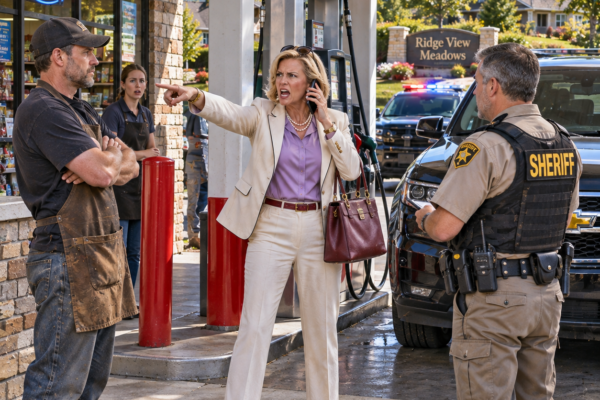
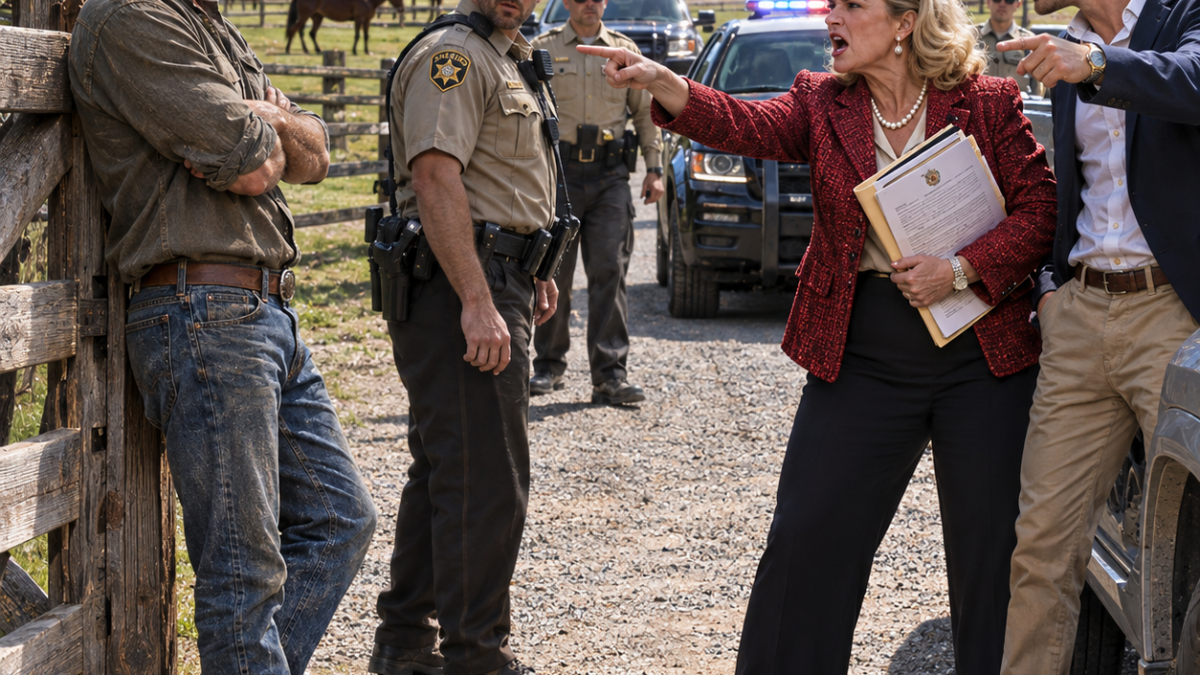
“GET THIS FILTHY, STUBBORN RANCHER OFF MY PROPERTY RIGHT NOW! MY SON OWNS THESE THIRTY ACRES, AND IF YOU DON’T PUT HIM IN HANDCUFFS, I’LL HAVE EVERY ONE OF YOU FIRED!”
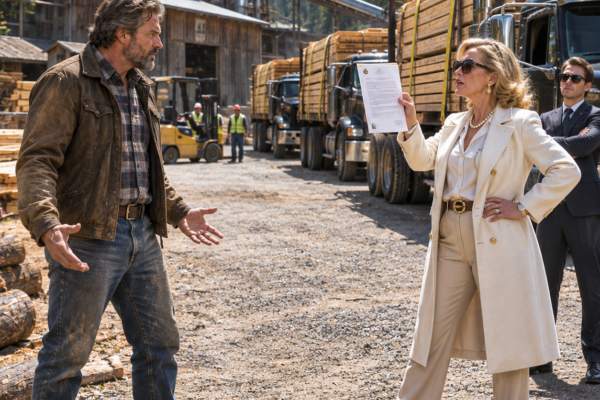
Carolyn Whitmore stood at my broken ranch gate in a bright red jacket, screaming at three sheriff’s deputies while her 28-year-old son ordered workers to steal my horses and change the locks on the farmhouse my father had left me.
But when Sheriff Robert Fletcher stepped out of his patrol vehicle, studied the supposed court order bearing his signature, and recognized the man Carolyn wanted arrested, his expression changed—and the question he asked her was only the beginning of a much bigger nightmare.
The red-and-blue lights flashed across my wooden fence as the third patrol car pulled into my driveway.
Carolyn Whitmore practically ran toward the deputies.
“OFFICERS! THAT MAN IS TRESPASSING! HE’S REFUSING TO LEAVE PROPERTY THAT LEGALLY BELONGS TO MY SON!”
I stood beside my broken gate, my boots covered in mud, watching her wave a thick folder as though it were a court order.
Her son Ryan stood behind her, smiling.
Twenty-eight years old.
Expensive boots.
Silver pickup truck.
The kind of confidence that comes from never having been told no by someone willing to mean it.
“Should’ve taken my offer, old man,” Ryan called toward me. “Now you’re getting nothing.”
I didn’t answer.
My attention was on the eastern pasture.
Two of my horses had been pushed toward a livestock trailer.
My oldest mare, Rosie, was frightened and pacing near the fence Ryan’s workers had already damaged.
One of the younger horses kicked against a trailer partition.
A worker yelled for somebody to close the loading ramp.
I turned toward him.
“STOP LOADING THOSE HORSES! YOU DON’T HAVE MY PERMISSION!”
Ryan laughed.
“YOU DON’T OWN THEM ANYMORE!”
Carolyn pointed at me.
“See? He’s threatening my employees! Arrest him!”
Deputy Tyler Morgan stepped out of the first patrol car.
He looked at Carolyn.
Then Ryan.
Then at me.
His eyes widened.
He knew me.
We had attended several law enforcement training programs together.
But before he could speak, I gave him a small shake of my head.
Not now.
There were animals in danger, property had been damaged, and the situation needed to be handled properly.
I didn’t want my professional position deciding anything.
Tyler turned toward Carolyn.
“Ma’am, I need everyone to stop moving equipment until we establish what’s happening.”
Carolyn looked offended.
“We’ve already established it! My son has legal possession!”
She thrust the folder into his hands.
“READ THE DOCUMENT!”
Tyler opened it.
PART2:
The first page carried an official-looking county seal.
The second identified Cedar Creek Ranch.
Thirty acres.
My farmhouse.
My barn.
My pastures.
My father’s land.
Near the bottom was a signature that appeared to belong to Sheriff Robert Fletcher.
Tyler stared at it.
Then he turned toward his partner.
“Contact dispatch. I need the sheriff’s office to verify this authorization.”
Carolyn laughed.
“WHY ARE YOU WASTING TIME? THE SIGNATURE IS RIGHT THERE!”
Tyler didn’t answer.
He was still examining the document.
Then his radio crackled.
He listened.
His expression became serious.
“Mrs. Whitmore,” he said carefully, “where did your son get this paperwork?”
Carolyn folded her arms.
“From our legal team.”
“Who prepared it?”
“That is none of your business.”
“It is now.”
Ryan stepped forward.
“Look, Deputy, this is a multimillion-dollar development. We don’t have all night to explain real estate law to a patrol officer.”
Tyler closed the folder.
“Nobody is removing anyone from this property until we verify ownership and legal authority.”
Carolyn’s face turned red.
“YOU HAVE NO IDEA WHO YOU’RE DEALING WITH!”
At that moment, another vehicle stopped near the gate.
Sheriff Robert Fletcher stepped out.
He looked at Carolyn.
Then at Ryan.
Then at the document in Tyler’s hand.
Finally, he looked toward me.
“Daniel?”
I nodded.
“Evening, Robert.”
Carolyn stared at us.
The sheriff walked closer.
His expression hardened as he examined the damaged fence and the livestock trailer.
Then he looked at Carolyn.
“Mrs. Whitmore, before we discuss your accusations, you need to explain why you’re using a document with my signature to claim ownership of Chief Dawson’s ranch.”
Carolyn blinked.
“Chief?”
Robert looked at her.
“Chief Daniel Dawson. Police chief of Briar Glen.”
For several seconds, she didn’t move.
The woman who had spent weeks calling me an ignorant cowboy suddenly looked as though she’d forgotten how to speak.
But the sheriff wasn’t finished.
He raised the document.
“And I have another question, Mrs. Whitmore.”
Carolyn swallowed.
“What?”
“Who copied my signature onto an order my office never issued?”
That was the moment I saw genuine fear cross her face.
Not anger.
Not irritation.
Fear.
And standing beside my damaged gate, I finally understood that Carolyn and Ryan had done far more than try to intimidate an ordinary rancher.
They had tried to turn false paperwork into legal authority.
To understand how we reached that night, you have to go back almost two months.
My name is Daniel Dawson.
I was forty-six years old when Carolyn Whitmore first decided she wanted control over Cedar Creek Ranch.
The ranch sat in a quiet Colorado valley about twenty-five minutes outside Briar Glen, the town where I had served as police chief for fourteen years.
Thirty acres.
A two-story farmhouse.
A large red barn.
Fenced pastures.
A fishing pond surrounded by pine trees.
And a narrow creek running along the western property line.
It wasn’t an enormous cattle operation.
But it was home.
My father, William Dawson, had spent nearly fifty years caring for that land.
He raised cattle and horses, repaired his own fences, and believed that a man’s reputation should be measured by what he did when nobody was watching.
When I was young, Dad taught me how to handle horses, fix a broken water trough, and check every gate before a storm.
He also taught me something I’ve carried through my entire career.
“Daniel, strength doesn’t mean frightening people weaker than you. It means knowing when not to.”
Dad died three years before this story began.
I inherited the ranch.
By then, I’d already spent years in law enforcement, and returning to the property gave me something my job rarely offered.
Quiet.
After difficult days at the station, I’d drive home, change into old jeans, feed the horses, and walk beside Cedar Creek.
Some evenings, I sat on the porch watching the sun disappear behind the mountains.
The ranch wasn’t just valuable property.
It was where I could still remember my father laughing.
Where I could hear his voice when I worked on the same fence he’d repaired twenty years earlier.
Where every field held a memory.
Most people near Ridgewood Valley knew me simply as Daniel.
A middle-aged man in a dusty pickup who spent weekends fixing equipment and caring for horses.
I rarely discussed my profession.
I wasn’t hiding from anyone.
I just didn’t believe being police chief needed to be the first thing people knew about me.
My closest neighbor was Helen Parker.
Seventy-two years old.
Widowed.
Living in a small white cottage south of my property.
Helen had been a friend of my parents for years.
Whenever I had time, I helped her repair steps, cut grass, or carry groceries.
She always tried to pay.
I always refused.
Her eleven-year-old grandson, Jacob, visited almost every Saturday.
He loved horses.
Especially Rosie, my oldest brown mare.
Rosie had been on the ranch since my father was alive.
She was gentle, patient, and smart enough to recognize the sound of Jacob opening the feed container.
The boy wanted to become a veterinarian.
He said animals deserved help because they couldn’t always explain when something hurt.
I liked that answer.
Some of my happiest mornings were spent teaching Jacob how to brush Rosie, check her hooves, and recognize when an animal was frightened.
Helen usually brought lunch around noon.
Those were the days I wanted to protect.
Then Ridgewood Estates expanded along my eastern boundary.
It was an upscale neighborhood with wide streets, large houses, landscaped yards, and a homeowners association.
Most residents were friendly.
Some bought eggs from local farms.
Others brought their children over to see the horses, after asking permission.
I had no objection to the development.
My ranch had existed long before Ridgewood Estates, and the recorded boundaries were clear.
We could live beside one another without trouble.
At least, that’s what I believed.
Then Carolyn Whitmore became HOA president.
I met her on a Monday afternoon while repairing a fence near the eastern pasture.
A black luxury SUV rolled up beside my gate.
Carolyn stepped out in a white jacket, sunglasses, and expensive jewelry.
She looked from my tractor to the barn.
Then toward the horses.
Her face suggested she’d discovered something deeply offensive.
“Are you the owner?”
“Yes, ma’am. Daniel Dawson.”
“I’m Carolyn Whitmore. President of the Ridgewood Estates Homeowners Association.”
“Nice to meet you.”
She didn’t return the greeting.
“Several residents have complained about the condition of this property.”
I glanced behind me.
“The ranch?”
“Yes. The barn is outdated. Your fencing isn’t consistent with our standards. And that tractor is visible from the neighborhood road.”
I looked at my tractor.
It was old.
Reliable.
And absolutely necessary.
“Carolyn, this is a working ranch.”
“That doesn’t excuse poor appearance.”
“My property isn’t part of Ridgewood Estates.”
She gave a small laugh.
“That distinction is more complicated than you realize.”
“No, ma’am. My deed is pretty clear.”
She opened her handbag and removed a thick folder.
HOA guidelines.
Architectural standards.
Landscaping requirements.
And a membership agreement.
She pointed toward the signature line.
“You’ll need to sign this before Friday.”
I handed it back.
“No, thank you.”
Her smile disappeared.
“Excuse me?”
“I’m not joining your HOA.”
“Everyone in this community has responsibilities.”
“I agree. But I don’t belong to your association.”
She pointed at the barn.
“Refusing to cooperate could become expensive.”
I looked at her calmly.
“Then I suggest you don’t spend money trying to enforce rules on land you don’t control.”
She stared at me.
I picked up my hammer and returned to the fence.
For several seconds, she stood beside her SUV, apparently waiting for me to apologize.
I didn’t.
Eventually, she drove away.
Three days later, an envelope arrived.
OFFICIAL HOA VIOLATION NOTICE.
Fine: $500.
Reason: Failure to comply with neighborhood appearance standards.
Additional penalties would follow if I didn’t correct the violations within seven days.
I read it twice.
Then I made a copy.
Instead of arguing with Carolyn, I visited the county property office.
Susan Mitchell, the county clerk, confirmed what I already knew.
Cedar Creek Ranch was not part of Ridgewood Estates.
No HOA covenant covered my thirty acres.
No membership agreement had been recorded.
I requested certified copies of my deed and boundary survey.
When I mentioned Carolyn’s name, Susan looked uncomfortable.
“Has she been sending you notices?”
“Apparently.”
She hesitated.
“You’re not the first person asking questions about her.”
I didn’t press her for gossip.
I simply took my documents home and sent Carolyn a polite letter.
The ranch was outside her association.
The fine was invalid.
She had no authority to enter my property without permission.
I expected the matter to end there.
Instead, her son arrived.
It was a warm afternoon.
Jacob had been helping me feed Rosie when a silver pickup pulled into the driveway.
A young man stepped out wearing expensive boots and dark sunglasses.
“Daniel Dawson?”
“That’s me.”
“Ryan Whitmore. Carolyn’s son.”
I immediately understood why he looked familiar.
Same confident smile.
Same assumption that everyone should listen when he spoke.
Ryan said he worked with a property development group interested in expanding Ridgewood Estates.
He spread a map across his truck’s hood.
A proposed road crossed directly through my eastern pasture.
Beyond my land were several large parcels intended for luxury homes.
“The new development needs better highway access,” Ryan explained. “Your ranch is in the perfect position.”
I studied the route.
“You’re asking about an easement?”
He laughed.
“Actually, we’re thinking bigger.”
He pointed toward my farmhouse.
“The entire property could become a premium residential section.”
Then he indicated the pond.
“Private recreation area.”
The barn.
“That comes down.”
The pastures.
“High-value home sites.”
He spoke as though my home and animals were already gone.
I handed the map back.
“Not interested.”
Ryan smiled.
“Everyone has a price.”
“Maybe. But this ranch isn’t for sale.”
“You’re being emotional.”
“It’s my father’s land.”
“That doesn’t change what it’s worth.”
“No, but it changes what it’s worth to me.”
His smile faded.
“Do you understand how much money my investors are putting into this project?”
“That’s between you and your investors.”
He folded the map.
“Turning down an opportunity like this could be a very expensive mistake.”
I looked directly at him.
“Are you threatening me?”
He laughed.
“I’m giving you a chance to be smart.”
Then he got into his pickup.
Before driving away, he lowered the window.
“My mother warned me you were difficult.”
I watched him leave.
Carolyn wanted to control how my ranch looked.
Ryan wanted to remove the ranch entirely.
Two days later, they came back together.
This time, they brought a man in a gray suit named Patrick Sloan, who represented the investment group.
Patrick was polite.
He presented a written offer.
The money was substantial, but the proposed development could make the land far more valuable.
More importantly, I didn’t want to sell.
“Thank you, Patrick,” I said. “But I’m declining.”
Patrick nodded and began closing his briefcase.
Ryan slapped the agreement onto the picnic table.
“Leave it. He’ll sign.”
I stood.
“No, I won’t.”
Ryan stepped into my path.
“Listen carefully, old man. My company wants this ranch, and we’re going to get it.”
Carolyn folded her arms.
“You should think about what happens when people refuse to cooperate with the community.”
I looked at her.
“Your HOA has no authority over my property.”
She leaned closer.
“You’ll regret embarrassing my son.”
Patrick looked deeply uncomfortable.
I told all three to leave.
Ryan finally stepped aside.
But before climbing into his truck, he pointed toward my farmhouse.
“Enjoy it while you can.”
The following morning, Helen called me.
Two men had visited her cottage with development maps.
They claimed a proposed road might require part of her backyard.
When she refused to sign a permission form, one had warned her about legal consequences.
I went over immediately.
Helen was sitting at her kitchen table, frightened.
Jacob stood beside her.
“Daniel, can they make me leave?” she asked.
“Not simply because they’ve drawn a road through your garden.”
“But they said—”
“People can say plenty of things. Ask them to show valid legal authority.”
I encouraged her to have a property attorney review everything before signing.
Jacob looked toward the flowers outside the window.
His grandfather had planted most of them.
“Are they going to destroy Grandma’s garden?”
“Nobody’s shown us a lawful reason for that to happen.”
He looked relieved.
Then he asked whether Ryan was a bad man.
I considered my answer carefully.
“He’s making bad choices. What matters is that we don’t let those choices make us act the same way.”
The harassment continued.
Another HOA fine arrived.
$1,500.
Ryan started driving past the ranch several times a day.
He photographed my fences.
Survey flags appeared inside my eastern pasture.
I contacted attorney Rebecca Collins.
She confirmed that neither Carolyn’s HOA nor Ryan’s company had established any legal ownership or access rights.
She sent formal notices demanding that they stop entering the property.
But Ryan wasn’t interested in legal boundaries.
One Saturday morning, Jacob came running toward my barn.
“Mr. Dawson! There are men cutting your fence!”
I hurried outside.
A white utility truck was parked near the eastern pasture.
Two workers were installing survey stakes.
Several strands of fencing wire had already been removed.
“Stop right there,” I called.
The older worker approached.
He showed me a work order carrying Ryan Whitmore’s name.
It claimed preliminary work had been approved by the property owner.
“That’s false,” I said. “I never authorized this.”
The man looked embarrassed.
“We were told the paperwork was finished.”
“It isn’t. Please stop.”
He immediately called his crew back.
Before leaving, he quietly told me Ryan had demanded that the fence be opened before Monday so investors could inspect the proposed route.
I thanked him for stopping.
Then I spent the afternoon repairing the fence.
One of the younger horses could have escaped through the opening.
Rosie was safe near the barn, but the thought of livestock reaching the highway made my stomach tighten.
Two days later, Ryan returned.
He slapped another purchase agreement onto my porch railing.
“Final chance.”
“No.”
“You’re costing my company money.”
“You spent money planning a road through land you don’t own.”
His face reddened.
“My family has connections all over this county.”
“I’m sure you do.”
“By the end of the month, you’re going to be out of this ranch.”
I stared at him.
He stepped closer.
“One way or another, we’re taking it.”
“Leave my property, Ryan.”
He laughed.
“What are you going to do? Call the police?”
“If necessary.”
“Good luck. My mother has more influence with local officers than you can imagine.”
He drove away.
I reported the threat and documented everything.
Because the ranch was outside Briar Glen’s jurisdiction, I kept the matter entirely separate from my own police department.
I would not use my position to pressure anyone.
But I also wasn’t going to ignore threats against my home.
Several peaceful days followed.
Then a storm moved into the valley.
That evening, I secured the barn and moved the horses toward the upper pasture.
Just after sunset, headlights appeared outside my gate.
Ryan’s silver pickup.
A white utility truck.
Two men carrying equipment.
Ryan climbed out holding a thick folder.
“Cedar Creek Ranch is under new management,” he announced.
I walked toward the gate.
“According to who?”
He held up an official-looking document.
It claimed his development company had temporary rights to my property.
My name appeared near the bottom.
Beside a signature that wasn’t mine.
I felt a cold wave of anger.
“That document is not genuine.”
Ryan smiled.
“You’re too late.”
He ordered one of the workers to open the gate.
The man hesitated.
I told him he had no permission to enter.
Ryan went back to his truck, retrieved bolt cutters, and placed them around my chain.
“Don’t do it,” I warned.
He squeezed.
The lock snapped.
My gate swung open.
Carolyn’s black SUV arrived moments later.
She stepped out and looked at the broken chain.
Then she smiled.
“Good. It’s about time.”
I stared at her.
“Your son just destroyed my lock.”
“He’s securing property for the development.”
“Neither of you owns this ranch.”
Carolyn pulled out her phone.
“I’m calling the police.”
She told the dispatcher that an aggressive rancher was threatening her son.
She claimed Ryan had legal authority.
She demanded officers come immediately.
I called the sheriff’s office myself to report the trespass and damage.
But while Carolyn was still speaking, Ryan drove through the gate.
His pickup headed straight toward the upper pasture.
“RYAN! STOP THAT TRUCK!”
He ignored me.
Moments later, I heard wood breaking.
He had struck a section of pasture fence.
The horses panicked.
Rosie kicked backward.
Two younger horses rushed toward the opening.
Ryan kept moving the truck as though he were trying to clear the animals from the area.
I shouted for him to shut off the engine.
Instead, he rolled down the window.
“THE HORSES HAVE TO GO ANYWAY!”
Then Rosie broke through the damaged fence.
Two younger horses followed.
They ran along the gravel service road toward County Road 18.
My heart almost stopped.
That road carried cars, delivery trucks, and school buses through the valley.
I ran after the animals.
The wind was growing stronger.
Rain had made the gravel slick.
One younger horse stumbled near the roadside.
Rosie stopped beside it.
The third kept running.
Then I heard an approaching engine.
A yellow school bus came around the curve.
Its driver sounded the horn.
I waved both arms.
“STOP! HORSES IN THE ROAD!”
The driver braked.
The tires slid across wet pavement.
The bus swerved toward the ditch.
Then its front wheels dropped off the road.
Glass shattered.
Children screamed.
For one terrible second, I thought the entire bus was going to roll.
It tilted against the muddy bank, one rear wheel partly lifted.
The driver’s hands gripped the steering wheel.
Carolyn was still shouting behind me.
“ARREST HIM! HE RELEASED THOSE HORSES!”
But the ranch dispute had stopped mattering.
There were children inside that bus.
Deputy Tyler Morgan arrived seconds later.
He jumped out and recognized me.
“Chief—”
“Tyler, the bus! Get fire and EMS here!”
He immediately called for rescue units.
I approached the driver.
Her name was Patricia Lewis.
She was terrified.
“Seventeen kids,” she told me. “One hurt his head. Another’s leg is trapped.”
I asked her to shut off the engine and keep everyone still.
Moving too quickly could make the leaning bus shift.
Fire Captain Andrew Miller arrived with his crew.
He took command of the rescue.
I stepped back and followed his instructions.
Firefighters stabilized the vehicle and opened the rear emergency exit.
One by one, the children came out.
Some cried.
Others were too frightened to speak.
A little girl in a purple jacket gripped my hand.
“Where’s my brother?”
“They’re checking everyone, sweetheart.”
She wouldn’t let go until a firefighter brought him outside.
Then Andrew called out that two boys remained inside.
One had an injured leg.
The other refused to leave his friend.
The firefighters carefully freed the trapped child and carried him out on a stretcher.
Finally, all seventeen students were safe.
A few needed medical care, but there were no apparent life-threatening injuries.
I sat beside the driver while paramedics checked her.
She kept apologizing.
I told her she’d been forced into a dangerous situation and had tried to protect the children.
Then I remembered my horses.
Deputies had found all three.
Two were near a neighboring pasture.
The third had wandered toward some trees farther down the road.
They were frightened, but alive.
That was when Carolyn marched toward us.
“WHY IS HE STILL WALKING AROUND? I WANT HIM ARRESTED!”
Deputy Morgan looked at her.
“Ma’am, we just rescued seventeen children.”
“He released those animals to attack my son!”
I stared at her.
She hadn’t even asked whether the children were safe.
Tyler asked who had broken the fence.
Carolyn claimed I had been aggressive.
I explained that Ryan had cut my gate chain, driven into the pasture, and struck the fence.
My security cameras had recorded much of it.
One of Ryan’s workers confirmed that he’d been warned not to drive near the animals.
Ryan called him a liar.
Tyler told Ryan to stop interrupting.
Then Carolyn produced another document.
It carried what appeared to be Sheriff Fletcher’s signature.
Ryan claimed it gave his company legal control of Cedar Creek Ranch.
Tyler examined it carefully.
Then asked where it came from.
“Our lawyers,” Ryan answered.
“Which lawyer?”
“You don’t need to know that.”
Tyler took the document to his patrol car for verification.
He later spoke to me privately.
“Chief Dawson, I didn’t realize this was your ranch.”
“Most people around here only know me as Daniel.”
He nodded.
“That document looks wrong.”
“Then verify it through the proper office.”
“Understood.”
I reminded him that I was involved as a private property owner.
Not as his supervisor.
He assured me the investigation would be handled independently.
Carolyn and Ryan eventually left after officers instructed them to stop entering my property.
But Ryan shouted one final threat through his pickup window.
“This ranch will be mine before the month ends!”
That evening, my neighbor Thomas Walker helped me repair the pasture fence.
Thomas was a retired rancher who lived about a mile away.
He brought rope, panels, and a flashlight.
We worked until dark.
I checked every horse.
Rosie settled after I fed her.
The younger animals were still nervous.
The next morning, Helen arrived with muffins.
Jacob rushed toward Rosie and wrapped his arms around her neck.
Then he asked about the children on the bus.
I told him they’d all been rescued.
He looked relieved.
But he didn’t understand why Ryan had frightened the horses.
Neither did I.
Not completely.
A few days later, Sheriff Robert Fletcher called.
His office had examined the supposed authorization Ryan had presented.
The signature didn’t match their official records.
No order transferring Cedar Creek Ranch had ever been issued.
More importantly, a sheriff’s signature could not simply transfer private ownership to a development company.
Robert also revealed that similar documents had been shown to other property owners.
An elderly couple had allowed surveyors into their yard after being frightened by an official-looking notice.
Another family had received threats of financial penalties.
This was no longer just about my ranch.
Someone was using false authority to pressure multiple landowners.
Rebecca began investigating Mountain Crest Holdings, the investment group behind Ryan’s project.
The company had promised investors that road access would be secured.
My property offered the easiest route.
Without it, construction would face delays and additional costs.
Then we discovered another connection.
Richard Whitmore.
Carolyn’s former husband.
Ryan’s father.
He had been involved in property development for years and appeared repeatedly in the investment records.
The family had a much deeper financial interest than Carolyn had admitted.
An anonymous message arrived one morning.
“Don’t trust the development papers. Ask who owns Mountain Crest Holdings.”
I forwarded it to Rebecca.
She began reviewing the company’s ownership records and related businesses.
Before we could finish, Ryan escalated again.
A livestock transport company contacted me after receiving a booking to remove animals from my address.
Someone claiming to represent the new owner had scheduled the job.
I told the supervisor the ranch had not been sold.
He immediately placed the booking on hold.
Then strange vehicles began appearing near my eastern fence.
Survey markers.
Fresh holes.
Men photographing the creek.
My property was being treated like an active construction site despite the ongoing dispute.
One rainy night, a large truck arrived near my barn pulling a horse trailer.
Ryan stood beside it.
Carolyn arrived with another document carrying the sheriff’s seal.
“Your animals are being removed,” Ryan announced.
I stayed on my porch.
“You have no authority to touch them.”
“Your ownership is over.”
He ordered the workers toward the barn.
One man hesitated.
Another cut the rear gate chain.
The horses began moving nervously.
Rosie kicked against her stall.
I warned them to stop.
Ryan grabbed a rope and approached her.
“Move, you stupid animal!”
“RYAN, GET AWAY FROM HER!”
Then the barn lights flickered.
A popping sound came from the electrical box near the rear wall.
Blue sparks flashed.
The lights went out.
Smoke began rising toward the dry hay.
I grabbed the extinguisher near the entrance.
But Ryan slammed the heavy barn door between us.
He pushed a metal bar through the outside brackets.
“YOU’RE NOT ALLOWED INSIDE! THIS BARN BELONGS TO MY COMPANY!”
I stared at him.
“There are animals in there!”
He ignored me.
Then I heard a child scream.
Jacob.
I looked through the side window.
He was standing near Rosie’s stall, holding a feed bucket.
He must have entered through the side passage before the trucks arrived, hoping to calm the horses.
Now smoke was filling the barn.
“JACOB! GET AWAY FROM THE HAY!”
A bright orange flame climbed the rear wall.
Then fire spread into the wooden roof supports.
Jacob began coughing.
“MR. DAWSON! HELP!”
I pulled at the bar holding the door.
It wouldn’t move.
Carolyn was screaming that the fire was my fault.
Ryan stood near his truck, staring at the flames.
I grabbed a heavy fence post and struck the metal bar until it fell free.
The doors swung open.
Black smoke rolled out.
I could barely see inside.
Then something exploded near the rear wall.
A wooden beam crashed across the passage beside Rosie’s stall.
Jacob screamed.
Then his voice disappeared.
My heart stopped.
I started toward the doorway, but the heat forced me back.
Fire engines were approaching.
Captain Andrew Miller arrived with firefighters wearing protective equipment.
I told him exactly where Jacob had been standing.
“Eleven-year-old boy. Near the rear stalls. Fallen beam. Three horses inside.”
Andrew immediately organized a rescue team.
Two firefighters entered with breathing equipment.
Another crew attacked the flames.
I stood beside the entrance, listening desperately.
Then someone shouted from inside.
“WE FOUND THE BOY!”
Another crash shook the roof.
For a moment, I couldn’t breathe.
Then the firefighters appeared.
They were carrying Jacob.
His face was blackened with soot.
He was coughing.
But he was alive.
I rushed toward the stretcher.
He reached for my hand.
“Mr. Dawson…”
“I’m here, buddy.”
His eyes filled with tears.
“Rosie…”
I looked toward the burning barn.
“Firefighters are helping her.”
Another rescue team opened the side livestock passage.
Two horses came out.
Rosie was still missing.
Minutes passed.
Then a firefighter appeared through the smoke, guiding my old mare toward the opening.
Her coat was covered in soot.
Her legs shook.
But she was standing.
I felt tears running down my face.
Jacob was taken to the hospital with smoke inhalation and a shoulder injury.
Helen arrived just as the ambulance was leaving.
The sound she made when she saw her grandson on the stretcher is something I will never forget.
I held her while she cried.
Then she climbed into the ambulance beside him.
By morning, the barn was nearly destroyed.
The roof had collapsed in several places.
The stalls were ruined.
Equipment my father had used for decades lay beneath blackened timber.
Thomas brought temporary fence panels.
Neighbors helped build a safe enclosure.
A veterinarian examined Rosie and confirmed she needed rest but should recover.
I visited Jacob at the hospital.
He was sitting upright, his shoulder bandaged.
His first question was about Rosie.
“She’s safe,” I told him.
He started crying.
Then he apologized for entering the barn without telling me.
I sat beside him.
“Jacob, loving animals is a good thing. But you can’t help them if you put yourself in danger.”
He nodded.
“I won’t do it again.”
Helen squeezed his hand.
That afternoon, I returned to the ranch and stood beside the ruins of my father’s barn.
I had spent most of my career responding to other people’s emergencies.
But nothing had prepared me for hearing a child scream inside a building that was burning on my own property.
Then Rebecca called.
Fire investigators had discovered signs that the electrical box had been opened shortly before the failure.
Some wiring appeared to have been disturbed.
The damage made the cause difficult to determine immediately.
But one of my surviving security cameras showed a man in a dark raincoat carrying a tool bag toward the rear wall shortly before the lights went out.
I remembered seeing a worker near that area.
I gave investigators everything I knew.
I didn’t accuse anyone without proof.
The sheriff’s office continued examining the fire, the false property documents, and the attempted livestock removal.
Meanwhile, Mountain Crest Holdings kept pushing the development.
A new filing appeared in county records.
It claimed I had agreed to transfer access rights across the eastern pasture.
My name was printed on it.
The signature was wrong.
Another document claimed I had agreed to vacate the ranch within forty-eight hours.
Rebecca immediately challenged the paperwork.
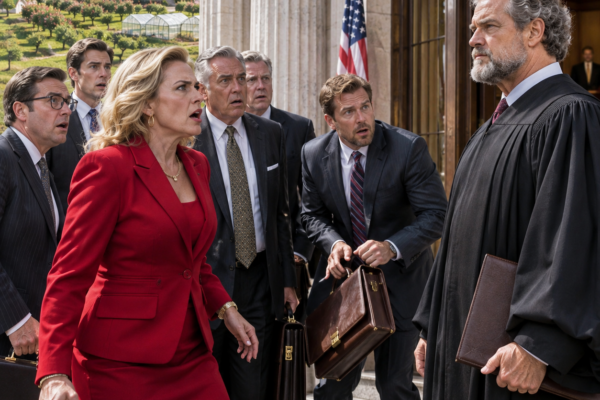
Then came a county planning meeting.
Mountain Crest wanted approval for the proposed road.
Ryan arrived with lawyers.
Carolyn stood beside him.
They both looked confident.
But when their representative claimed the company had secured access, Rebecca stood and presented my deed.
The recorded boundary map.
The disputed signature.
The sheriff’s ongoing investigation.
A board member asked whether Mountain Crest could prove I had signed.
The lawyer hesitated.
He said the company had relied on documents provided by its partners.
Another member asked about the supposed sheriff’s authorization.
Ryan looked uncomfortable.
Thomas Walker stood and asked why HOA money was being spent on a private development project involving land outside Ridgewood Estates.
Several homeowners demanded answers.
Carolyn tried to interrupt.
The planning board chair stopped her.
For the first time, she couldn’t control the room by raising her voice.
The board declined to approve the road and requested additional documentation.
I left feeling relieved.
That feeling lasted only a few hours.
Just after midnight, headlights swept across my farmhouse.
Several black SUVs.
Two large trucks.
Ryan’s silver pickup.
Carolyn’s SUV.
Men climbed out carrying chains, fence panels, signs, and folders.
I called the county sheriff’s office.
Then I stepped onto my porch.
Ryan walked toward me.
“The planning meeting changed nothing.”
“Leave my property.”
He smiled.
“We have emergency authority to take possession while the ownership dispute is reviewed.”
“No court has ordered me to leave.”
He waved a document.
“You’ve got ten minutes to get your belongings.”
Carolyn stepped forward.
“I’ve already called the police.”
“Good,” I said.
She smiled.
“You should’ve listened to me from the beginning.”
Then a truck crashed through the temporary fence near my eastern pasture.
The horses panicked.
I shouted for the workers to stop.
Ryan ordered them to continue loading animals.
Two men stepped into my path.
I stopped rather than risk a physical confrontation.
“This is private property,” I told them. “And those horses can hurt you if you frighten them.”
One worker looked uncertain.
The other claimed he was following orders.
Carolyn was already on her phone, describing me as a dangerous rancher.
Then Ryan walked toward me.
“You’ve got ten minutes before we change the locks.”
“You don’t own this ranch.”
He leaned closer.
“I’ve spent too much money to let you ruin this project.”
“Money doesn’t make a false document real.”
His face turned red.
Then sirens sounded beyond the trees.
Three patrol vehicles arrived.
And we were back at the moment when Carolyn demanded my arrest.
Deputy Tyler Morgan examined her document.
The sheriff’s office confirmed it had not issued the order.
Then Sheriff Fletcher arrived.
But before he could finish speaking with Carolyn, a worker shouted from the pasture.
A livestock truck had started moving.
Two horses were already loaded.
The driver accelerated toward the main gate.
“STOP THAT TRUCK!”
He didn’t.
The vehicle smashed through the wooden gate.
Broken rails flew across the gravel.
Rosie jumped backward, but one rail struck her front leg.
She stumbled and fell.
I ran toward her.
Sheriff Fletcher called for units to intercept the truck.
Deputies moved toward their vehicles.
I knelt beside Rosie.
She was breathing hard.
A cut ran along her leg.
I rubbed her neck.
“Easy, girl. I’ve got you.”
Behind me, Ryan was shouting that the stolen horses belonged to his company.
Sheriff Fletcher turned toward him.
“Did you order those animals removed?”
“Yes. We legally control this property.”
Robert held up the document.
“My office never issued this order.”
Ryan stopped smiling.
Carolyn stepped forward.
“That can’t be right. Our attorneys said it was valid.”
“A sheriff doesn’t transfer private land to developers by signing a piece of paper.”
She pointed toward me again.
“Then arrest him for threatening my family!”
Robert looked at her.
“Mrs. Whitmore, do you know who this man is?”
She laughed.
“A stubborn rancher who thinks he’s above the law.”
Robert nodded.
“Nobody is above the law.”
Then he gestured toward me.
“This is Chief Daniel Dawson. He’s been the police chief of Briar Glen for fourteen years.”
Carolyn stared at me.
Her mouth opened.
Then closed.
Ryan looked equally stunned.
“You… you’re a cop?”
“Police chief,” I answered.
Carolyn shook her head.
“No. That’s impossible.”
Sheriff Fletcher remained calm.
“I’ve worked with Chief Dawson for years.”
She immediately changed her tone.
“Well, obviously, if we’d known he was a respected law enforcement officer—”
Robert interrupted.
“That wouldn’t change anything.”
She blinked.
“What?”
“Every property owner deserves the same treatment. The issue is whether your son entered land without permission, damaged property, removed livestock, and used false documents.”
Her face went pale.
Then Tyler’s voice came through the radio.
Deputies had located the livestock truck several miles down the highway.
Both horses were alive.
The driver had stopped after realizing patrol vehicles were following him.
I closed my eyes.
For the first time that night, I felt some relief.
The veterinarian arrived and examined Rosie.
Thankfully, the cut wasn’t as deep as I feared.
She needed rest, but she would recover.
By morning, the horses had been returned.
Deputies interviewed the livestock workers.
Several admitted Ryan had hired them to remove the animals before sunrise.
One said he believed the paperwork was genuine.
Another acknowledged being told to ignore my objections.
The driver who fled with the horses was also questioned about why he continued after seeing police lights.
I didn’t demand special treatment.
I wanted the facts documented correctly.
The investigation continued for several months.
Fire investigators eventually established that a worker had opened the barn’s electrical box under Ryan’s instructions to disconnect power.
The unauthorized work caused an electrical failure that ignited nearby hay.
The worker claimed he hadn’t intended to start a fire.
But Jacob had nearly died because someone had interfered with equipment he didn’t understand.
Investigators also traced the false sheriff’s authorization to materials prepared for Mountain Crest Holdings.
The document used a copied image of Sheriff Fletcher’s signature.
There had never been a valid county order transferring my ranch.
Messages showed that people involved in the development discussed using official-looking paperwork to convince contractors and landowners that access rights were already secured.
Then investigators found communications between Carolyn and Ryan.
They had discussed using HOA fines and complaints to make life difficult until I agreed to sell.
Carolyn planned to portray my ranch as a nuisance.
Ryan hoped the pressure would force me to accept a low offer before investors demanded proof of his road access.
That explained his desperation.
He had promised access to land he didn’t own.
His investors expected progress.
Instead of telling them the truth, he tried to make his false promises real through intimidation.
Kelly Brooks, a young HOA employee, helped expose the financial side.
She had noticed unusual payments connected to Ryan’s development.
She also turned out to be the person who sent the anonymous warning.
Kelly had been frightened of losing her job.
But she’d seen elderly homeowners crying over fines and threatening letters.
Eventually, she decided she couldn’t remain silent.
She gave relevant records to Rebecca and the proper investigators.
An independent accountant reviewed HOA spending.
Several payments required investigation because they appeared to support development-related activities that homeowners had not properly authorized.
Ridgewood residents demanded a special meeting.
Carolyn tried to defend herself.
She claimed everything had been done to protect property values.
But residents wanted financial records.
They wanted answers about the fines.
And they wanted to know why their association was involved in helping her son’s business.
After following the required voting procedures, they removed Carolyn as HOA president.
A temporary board took over.
The new leadership promised transparent accounts, fair violation hearings, and independent review of major spending.
The criminal cases continued.
Carolyn and Ryan faced charges connected to the false documents and their efforts to claim property they didn’t own.
Ryan faced additional charges relating to trespassing, property damage, and the attempted removal of my horses.
The worker involved in the electrical failure faced separate consequences connected to the barn fire.
I understood that accusations weren’t convictions.
I waited for the evidence to be tested in court.
Eventually, Ryan admitted responsibility for his role in preparing and using false documents as part of a plea agreement.
Carolyn also admitted involvement in the pressure campaign and support for the fraudulent property scheme.
Their cases resulted in criminal penalties and orders addressing the losses they caused.
Separate civil claims addressed damage to the ranch and other losses resulting from their actions.
Mountain Crest’s investors began reviewing the agreements Ryan had made.
The false property documents were challenged and could no longer be used to claim ownership of Cedar Creek Ranch.
Rebecca obtained clear confirmation that my thirty acres remained mine.
I didn’t celebrate when the cases ended.
I felt relieved.
But I also felt sad.
So much harm had come from two people refusing to accept that someone else’s property was not theirs to take.
My father’s barn had burned.
Jacob had been hospitalized.
Rosie had been injured.
Seventeen schoolchildren had nearly been seriously hurt.
Elderly homeowners had been frightened.
And a neighborhood had lost trust in the people who claimed to represent it.
None of it had been necessary.
By the following spring, Cedar Creek Ranch was beginning to look like home again.
The barn had been rebuilt.
The new roof shone in the morning sunlight.
The eastern fence was repaired.
The horses returned to their familiar routines.
Rosie recovered, although she moved more slowly than before.
Jacob recovered too.
He returned on Saturdays, but now he understood that protecting an animal sometimes meant calling trained adults rather than rushing into danger.
He wanted to help teach younger children about horse safety.
I thought it was a wonderful idea.
With Helen’s help, we began hosting small educational visits for families around Ridgewood Valley.
Children learned to feed horses properly, care for chickens, and recognize when animals were frightened.
We also talked about farm safety.
The importance of listening.
And why doing the right thing sometimes means stepping back and asking for help.
Thomas organized a volunteer day to repair Helen’s garden fence.
Kelly helped the new HOA board improve its recordkeeping.
Neighbors who had once been afraid to challenge Carolyn began speaking openly at community meetings.
Ridgewood Estates slowly became a friendlier place.
The HOA still had rules.
But those rules were no longer being used as weapons against people who refused to obey its president’s personal demands.
One Saturday afternoon, we held a small celebration at Cedar Creek Ranch.
Helen baked pies.
Thomas brought food.
Several Ridgewood families arranged picnic tables beneath the pine trees.
We invited the firefighters who had rescued Jacob.
The neighbors who helped rebuild the barn.
And the families who stood beside us during the investigation.
Captain Andrew Miller arrived with his rescue crew.
Jacob ran toward him.
“Thank you for saving me.”
Andrew smiled.
“Best way to thank us is to keep making good choices, buddy.”
Jacob nodded seriously.
“I will.”
Then he asked whether the firefighters wanted to meet Rosie.
Everyone laughed.
Later, Helen asked me to say a few words.
I stood near the picnic tables and looked across the crowd.
Neighbors.
Friends.
Children.
People who had carried feed, repaired fences, brought meals, and helped restore a place that had nearly been destroyed.
“When Carolyn first came to my gate,” I said, “I thought we were dealing with a misunderstanding about HOA rules.”
Several people smiled.
“I never imagined her son would try to take the ranch, or that we’d end up dealing with false documents, a school bus accident, and a barn fire.”
The crowd grew quiet.
“But I learned something important.”
I looked toward the rebuilt barn.
“Some people think power means having enough money, influence, or connections to force everyone else to obey.”
Then I looked toward Helen.
“But the strongest people I met during all of this weren’t the ones shouting orders.”
I gestured toward the neighbors.
“They were the people who showed up with fence panels when my horses needed somewhere safe.”
I looked toward Kelly.
“The people who told the truth even when they were afraid.”
Then toward the firefighters.
“And the people who entered a burning building because a child needed help.”
I paused.
“Being police chief never made me more deserving of respect than anybody else.”
I looked toward the county road.
“If I’d been a retired farmer, a schoolteacher, or a man who had never worn a uniform, I’d still have deserved to live peacefully on my own land.”
Nobody spoke.
“And so would every one of you.”
Afterward, Sheriff Fletcher walked beside me toward the repaired eastern fence.
Rosie was grazing nearby.
Robert looked across the pasture.
“Glad to see the place recovering.”
“Me too.”
He smiled.
“You know, Carolyn’s face when she found out you were police chief was something.”
I laughed.
“Hard to forget.”
“She seemed to think it changed the whole case.”
“That’s what bothered me.”
Robert nodded.
“Because it shouldn’t have.”
“Exactly.”
We stood quietly for a moment.
Then he looked at me.
“You handled it the right way, Daniel. You let the county investigate.”
“I had a good reason.”
“What’s that?”
“If I used my position to win a private fight, I’d be doing a version of what Carolyn tried to do.”
Robert nodded.
“Authority isn’t supposed to work that way.”
We shook hands.
Then he headed toward his vehicle.
As the sun began setting, I walked down to the pond.
The mountains turned orange behind the trees.
A light breeze moved across the water.
I remembered Dad teaching me to ride my first horse along that same bank.
He used to say that a good man didn’t prove his strength by making other people afraid.
He proved it by protecting what mattered without becoming cruel.
There had been plenty of moments when I wanted to shout at Carolyn and Ryan.
Moments when I wanted them to feel the fear they’d caused Helen, Jacob, and the families on that bus.
But revenge wouldn’t rebuild the barn.
It wouldn’t heal Rosie.
And it wouldn’t erase the sound of Jacob crying beneath a fallen beam.
What mattered was that we were still here.
The ranch was still ours.
The people I loved were safe.
And the law had eventually caught up with the people who thought they could manipulate it.
When I returned to the farmhouse, Jacob was standing beside Rosie.
He was brushing her coat while Helen watched from a nearby chair.
The new barn lights glowed against the evening sky.
Laughter drifted from the porch.
Everything felt peaceful.
Then Jacob looked up.
“Mr. Dawson?”
“Yeah, buddy?”
“Would Carolyn have treated you differently if she’d known you were police chief?”
I thought about that.
“Probably.”
He frowned.
“Then why didn’t you just tell her?”
“Because she should’ve treated me fairly even if I wasn’t.”
Jacob looked down at Rosie.
“Horses don’t care what job somebody has.”
I smiled.
“No, they don’t.”
“They just care whether you’re nice to them.”
I laughed softly.
“That’s a pretty good way to judge people.”
He returned to brushing Rosie’s neck.
I looked toward the rebuilt barn.
My father had left me thirty acres.
But during those difficult months, I’d learned that the real value of Cedar Creek Ranch wasn’t measured only by its land, buildings, or market price.
It was measured by the people who cared enough to protect it.
The neighbors who came when I needed help.
The firefighters who saved a little boy.
The attorney who refused to let forged paperwork become accepted fact.
The employees and witnesses who chose honesty over fear.
And the child who still believed that every animal deserved kindness.
Carolyn Whitmore thought she could use her HOA title to take whatever her son wanted.
Ryan thought money and connections could force an owner to surrender.
They even tried to make the sheriff’s authority part of their scheme.
But when the truth finally came out, none of those things could change who owned Cedar Creek Ranch.
Carolyn called three police cars to have a dirty rancher arrested, never realizing she’d been threatening a police chief for weeks—but the real reason she lost wasn’t my badge. It was that my land was never hers to give away, and no forged document could make her son’s threats more powerful than the truth.