“You Danced With Him Twice,” the Mafia Boss Said, Jaw Tight. “Were You Counting?” She Teased.v
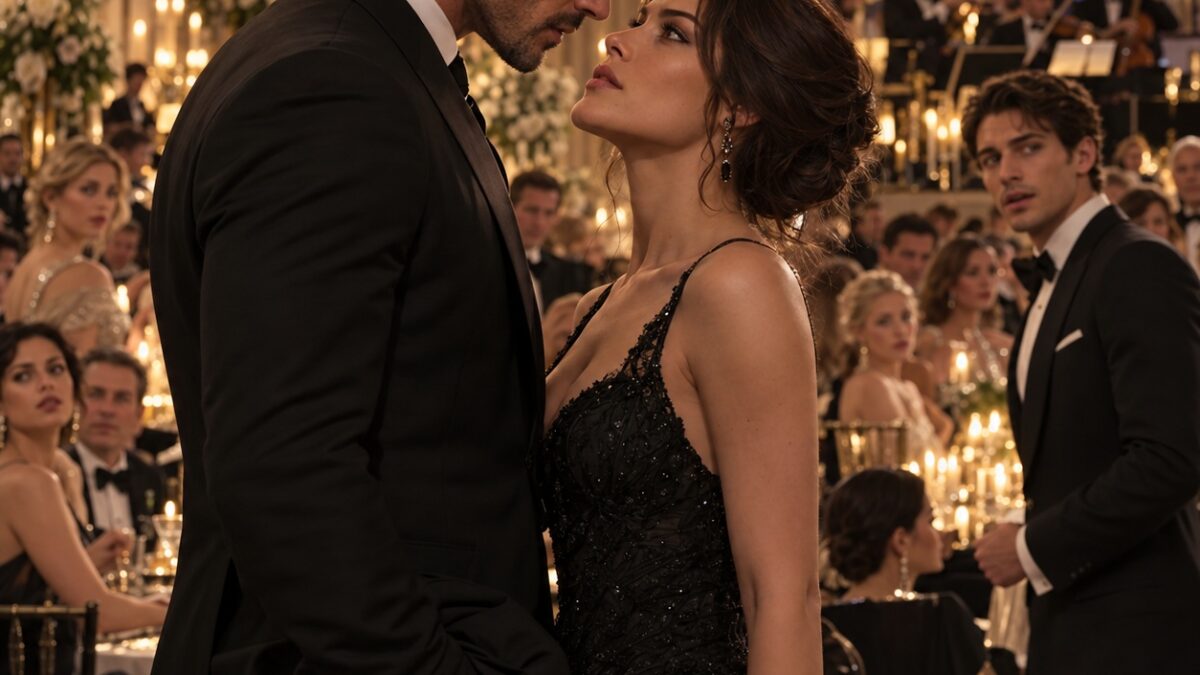
FULL STORY CONTINUATION
For once in my life, I had nothing clever to say.
My mouth actually opened.
Nothing came out.
Roman noticed.
Of course he noticed.
That was the problem with a man who spent his entire life surviving by reading every room before anyone else understood there was danger in it.
A faint satisfaction touched his expression.
Not smugness exactly.
Something warmer.
Much more dangerous.
I finally found my voice.
“You cannot say things like that while I’m working.”
“Why?”
“Because I have responsibilities.”
“So do I.”
“Mine involve keeping a five-tier cake upright.”
“Mine involve keeping you from dancing with Lucas Whitmore a third time.”
I almost laughed.
“That is not a responsibility.”
“It feels increasingly like one.”
“Roman.”
“What?”
“You’re jealous.”
His expression became blank.
It was such an obviously deliberate blankness that I nearly laughed again.
“I am observant.”
“You counted two dances.”
“I count many things.”
“Do you count all the women you dance with?”
“I don’t dance.”
That stopped me.
“You don’t?”
“No.”
“Ever?”
“No.”
I looked toward the band.
“Well, then perhaps you’re simply bitter because Lucas knows how.”
His eyes narrowed.
“Sophia.”
Someone called my name from across the ballroom.
A caterer.
Problem with the dessert station.
Thank God.
“Duty calls.”
I stepped around Roman.
He caught my wrist.
Not hard.
Barely even a hold.
Just enough to stop me.
My whole body reacted anyway.
His thumb rested against my pulse.
His eyes dropped briefly to where he touched me.
Then he released me immediately.
“I will see you after.”
It was not phrased as a question.
I should have corrected him.
Instead, my heart decided to behave like a teenager.
“I’m busy.”
“I know.”
“That means perhaps.”
“No.”
“What does it mean?”
“It means I’ll wait.”
I hated how much I liked that answer.
I escaped into the service corridor.
The second the ballroom doors shut behind me, I pressed both palms to my cheeks.
“Get yourself together.”
The corridor was narrow, lined with linen carts, racks of folded tablecloths, extra chairs, silver trays, and emergency supplies.
It was one of the only places in the Hotel Marand where nobody expected me to smile.
I leaned against the wall.
“He is a mafia boss.”
Saying it aloud helped.
“You own a one-eyed orange cat.”
That helped less.
“Your roof leaks.”
Still nothing.
“This does not end well.”
Then I heard voices.
Male.
Low.
Coming from the stairwell at the far end of the corridor.
I should have walked away.
My father would have told me that curiosity got loud people in trouble.
He would also have told me that quiet people survived because they listened.
Daniel Bennett had been deaf since infancy.
I learned American Sign Language before I learned cursive.
I learned to read lips before I understood why the world so often treated people who could not hear as though they could not understand.
Dad taught me that communication existed everywhere.
Hands.
Shoulders.
Eyes.
The angle of a mouth.
The way someone stood when they lied.
“The quietest person in the room,” he used to sign, “usually sees the most.”
So I listened.
“The east terrace door,” one man said.
Rough voice.
“After the toast.”
My body went still.
“The lights go down for the cake. He always steps outside when it gets loud.”
The second man sounded younger.
Nervous.
“Our friend inside says ten.”
A pause.
Then:
“What about the girl?”
My skin prickled.
“What girl?”
“The coordinator. Bennett.”
My breath stopped.
“She walks everywhere.”
“She sees me?”
“She sees a waiter.”
A lighter flicked.
“Nobody remembers a waiter.”
The first man inhaled.
“Castellain wants it clean. One shot. One door. Lights come up, Devo is down, we’re already on Decatur.”
My fingers went cold.
“And afterward?”
“The throne is empty.”
Another pause.
“Our friend inside takes his place.”
Footsteps.
Descending.
A heavy door closed below.
I stood behind the linen rack long after they were gone.
Ten o’clock.
East terrace.
Roman.
Shot.
Friend inside.
My body suddenly remembered how to move.
I ran.
My heels struck tile so loudly that three servers turned.
I burst back into the ballroom.
Two hundred people laughed beneath chandeliers.
The orchestra played.
Champagne moved on silver trays.
Charlotte Bowmont stood near her enormous cake with no idea that someone intended to murder a man fifteen yards away.
I found Roman near the east wall.
“Roman.”
First name.
No Mr. Devo.
I didn’t even notice.
He did.
His head turned immediately.
One look at my face and he stopped speaking to the man beside him.
“I need you.”
His expression changed.
“Now.”
He followed me without asking why.
We went into a tiny linen room.
I shut the door.
Then told him everything.
“The east terrace. Ten o’clock. When the lights dim for the cake.”
He said nothing.
“One shooter, maybe more.”
Nothing.
“They said someone inside gave them the information.”
His face lost color.
Then something colder replaced it.
Not anger.
Roman angry was frightening.
Roman without visible emotion was worse.
He touched the small radio clipped beneath his cuff.
“Jonah.”
A response crackled.
“East terrace. Now.”
His voice was perfectly calm.
“Two men. One may be dressed as hotel staff.”
Then:
“Quietly.”
He looked at me.
“Where is Theo?”
My brain stumbled.
“What?”
“Your brother.”
“At Tulane.”
“Dorm?”
“Yes.”
“Which?”
“Roman, why?”
“Because you heard something they did not intend you to hear.”
He held my gaze.
“If my traitor learns that, Theo becomes leverage.”
My stomach dropped.
Roman touched the radio again.
“Send someone to Bennett’s brother. No contact unless necessary.”
Then he looked at me.
“You stay with me.”
“I have an event.”
“You stay with me.”
“Roman—”
“This one is not jealousy.”
That shut me up.
At ten, the ballroom lights dimmed.
The band swelled.
Charlotte laughed as Henry guided her hand toward the cake knife.
The east terrace doors remained closed.
Roman stood beside me.
His hand rested lightly at the small of my back.
Any guest watching would have seen a courteous man standing near the event coordinator.
I felt the tension in every one of his fingers.
Outside, Jonah and two men intercepted a waiter wearing a hotel jacket one shade too dark.
A pistol was taped beneath his tray.
Nobody inside knew.
The cake was cut.
Guests applauded.
Charlotte kissed Henry.
And Roman remained alive beside the champagne fountain.
That was my first lesson about his world.
Death could stand twenty feet from a bride cutting cake, and if the right people did their jobs, the frosting still got served on time.
After the guests left, Roman took me onto the terrace.
Cool air moved through the ironwork.
Below us, Royal Street gleamed damp beneath old lamps.
“Two men will remain outside your house.”
“No.”
“Jonah drives you.”
“No.”
“A second car will—”
“Roman.”
He stopped.
“No.”
His jaw hardened.
“I wasn’t asking.”
“I know.”
I folded my arms.
“That’s the problem.”
“Sophia.”
“I have a job.”
“I know.”
“A brother.”
“Yes.”
“A one-eyed cat who despises strangers.”
“I have heard extensively about Gumbo.”
“And a life I built myself.”
My voice trembled.
I hated that.
“I am not giving it up because somebody with a gun decided to be dramatic at my engagement party.”
“It was not your engagement party.”
“You know what I mean.”
“This is no longer about what you need.”
My anger flared.
“Then what exactly is it about?”
For a moment, Roman said nothing.
His face changed.
The command disappeared.
His voice, when it came, was almost rough.
“What I am not willing to lose.”
I forgot my next argument.
Wind lifted a strand of my hair.
Roman did not reach for it.
He simply stood there.
And suddenly I remembered the rooftop.
A week earlier.
Mémère’s birthday brunch.
Roman’s grandmother, Celeste Marchand Devo, was eighty-two, terrifying, deeply Catholic, permanently unimpressed, and probably the only person alive who could humiliate Roman in public without consequences.
She had inspected me from head to toe.
“You are too thin.”
Roman had closed his eyes.
“Mémère.”
“Why is she thin?”
“I am not responsible for her weight.”
“You are looking at her like a starving dog. You should feed her.”
I nearly choked on tea.
Mémère pointed at me.
“What do you eat?”
“Food?”
“Bad answer.”
“Sometimes cereal.”
“For breakfast?”
“Sometimes dinner.”
Her face registered genuine horror.
“Roman.”
“Mémère.”
“Write this down. Sundays she eats with me.”
I started laughing.
Mémère leaned toward me.
“My grandson counts everything.”
She nodded toward him.
“His guards. His money. His doors. My pills.”
“Mémère.”
“The minutes until you walk into a room.”
Roman’s ears turned red.
I treasured that memory instantly.
“He has been looking at that hotel door every four minutes.”
“I have not.”
“I counted.”
Then she lowered her voice.
Which for Mémère still meant half the courtyard heard.
“I would like him to stop counting and start living.”
That night Roman stayed after cleanup.
We ended up on the roof.
I took off my heels.
The Mississippi curved beyond the Quarter, black water catching gold moonlight.
Roman stood at the railing.
“I had a sister.”
I had never heard about her.
“Vivien.”
His voice became quieter.
“She was nineteen.”
I stood.
“I was twenty-three.”
He stared at the river.
“I thought being older meant I could protect her.”
Something cold moved through me.
“Gabriel Castellain’s father disagreed.”
I said nothing.
“A car.”
Roman’s jaw tightened.
“Sunday morning. She was going to church.”
His hands closed around the railing.
“I was in the house when I heard it.”
I understood without needing details.
“I have heard that sound every Sunday since.”
I crossed the roof.
Took his hand.
He went completely rigid.
Then slowly closed his fingers around mine.
“My father was deaf,” I told him.
Roman looked at me.
“His heart failed two years ago.”
“I’m sorry.”
“He used to say the loudest grief is the kind nobody hears.”
Roman looked back toward the river.
“I signed for him at the hospital.”
My voice tightened.
“His last words were only three.”
“What were they?”
“Take care, Sophie.”
Roman’s thumb moved once over my knuckles.
“I’ve been trying ever since.”
We stood quietly.
Then I taught him the sign for thank you.
He did it badly.
Three times.
“Your hand goes from your chin.”
“Like this?”
“No.”
“This?”
“You look like you’re throwing an invisible insect.”
His mouth twitched.
Fourth attempt.
Correct.
“There.”
He looked at me.
For a second, the feared man disappeared.
Something younger replaced him.
Tired.
Lonely.
Open.
He touched my cheek.
Barely.
His phone rang.
The moment shattered.
Roman returned to the world that needed him dangerous.
But before leaving, he looked at me.
“I will see you tomorrow.”
Now, standing on the terrace after someone had nearly shot him, I finally understood what lived beneath all that control.
Vivien.
Seventeen years of believing love created targets.
I looked at him.
“You’re afraid.”
“No.”
“Roman.”
His jaw shifted.
“Yes.”
The honesty softened me.
“Fine.”
His eyes narrowed.
“Fine?”
“Jonah.”
“What?”
“I choose Jonah.”
“For?”
“My bodyguard.”
Roman blinked.
“I like him.”
“Sophia—”
“He is afraid of pigeons.”
“That has nothing to do with his qualifications.”
“It makes him relatable.”
A laugh escaped Roman.
A real one.
Low.
Rough.
Startled.
I had never heard it before.
I wanted to keep hearing it for the rest of my life.
That thought terrified me.
The next week was absurd.
Jonah shadowed me through the hotel.
He was six-foot-six, built like a church door, and incapable of blending into anything smaller than a parade.
Gumbo adored him.
The first night Jonah came inside, my cat climbed onto his shoulder and refused to leave.
Theo stared.
Theo was nineteen, engineering student, tall, sweet, permanently underfunded, and convinced I did not know exactly how much of his tuition scholarship failed to cover.
He pointed at Jonah.
“Who is this?”
“Temporary security.”
“For what?”
“Complicated work situation.”
Theo looked at the enormous man with my cat on his shoulder.
“Is your work situation the mob?”
“No.”
Jonah coughed.
Theo looked at me.
“Sophia.”
“Eat your dinner.”
“That means yes.”
The unanswered question was the traitor.
Roman avoided discussing it around me.
Naturally, I refused to allow that.
Four nights after the engagement ball, he arrived at my office near midnight.
Exhausted.
Tie loosened.
Face pale.
I pushed a chair toward him.
“Sit.”
“Sophia.”
“Sit.”
He sat.
I spread the ballroom floor plan across my desk.
“Who knew?”
His eyes lifted.
“The terrace.”
“The shooter knew you would use that door.”
Roman said nothing.
“Not the general schedule.”
I pointed.
“The exact terrace.”
Still silence.
“Who decided it?”
“My security team.”
“When?”
“That afternoon.”
“So the leak came from someone close.”
Roman leaned back.
“Five people knew.”
“Names.”
He gave me a warning look.
“Roman.”
“Jonah.”
“Not Jonah.”
“No.”
“Who else?”
“My cousin Dominic.”
“The one who tells every story six times?”
“Yes.”
“He cannot keep a secret.”
“He once accidentally announced his own surprise birthday party.”
“Probably not Dominic.”
“Marcel Boudreaux. Accountant. Thirty years.”
“Okay.”
“Paul Renard. Young lieutenant.”
“And?”
Roman looked down at the floor plan.
For the first time, I saw hesitation.
“Tony Bellamy.”
“Who is Tony?”
“My father’s closest friend.”
Something in his voice made me careful.
“He taught me to shoot.”
Roman looked toward the dark courtyard outside my office.
“He taught me ledgers.”
A pause.
“He stood beside me at Vivien’s funeral.”
His expression went flat.
“He is the closest thing I have to a father.”
I reached across the desk.
Covered his hand.
“It isn’t him.”
He looked at me.
I did not know whether I was reassuring him or myself.
Roman designed the test.
Five false shipment details.
Five different warehouses.
Each man received one.
Whichever location Castellain’s people touched would identify the leak.
It would take days.
On Sunday, Mémère insisted I attend lunch.
The restaurant belonged to Roman’s family.
Old Creole place off Esplanade.
Checkered tablecloths.
Slow ceiling fans.
Oak trees outside.
I sat between Jonah and Dominic.
Mémère questioned me like an immigration officer.
“Can you make roux?”
“Yes.”
“Dark?”
“Usually.”
“Usually is suspicious.”
“I occasionally set off the smoke detector.”
Mémère nodded approvingly.
“Every honest roux requires smoke.”
Dominic showed me an expensive watch.
Mémère slapped his wrist with a napkin.
“She is not impressed.”
“I wasn’t trying—”
“You were born trying.”
Roman watched me from across the table.
Tenderly.
Openly.
It made me forget what I was chewing.
Mémère noticed.
Naturally.
“Is it hot in here?”
Roman ignored her.
Tony Bellamy sat at the far end.
Sixties.
White hair.
Warm smile.
Gold pocket watch.
He asked about Dad.
Actually listened.
I liked him.
That made what happened next worse.
Halfway through lunch, Tony stood.
“Need air.”
He walked outside.
A man in a gray jacket stopped beneath the oak tree beside him.
Through the restaurant window, I saw them talking.
No sound.
Thirty feet away.
For almost anyone else, privacy.
For me, words.
Dad had trained me before I could remember.
Faces were language.
Tony’s mouth formed:
Thursday.
Warehouse on Poydras.
The other man answered.
Castellain wants the terminal.
Then Tony:
He will come himself if you have the girl.
My fork slipped.
Hit the plate.
Roman looked at me immediately.
“Sophia?”
I could not speak.
Tony continued.
He will do anything for her.
I have seen it.
My stomach turned.
Tony dropped his cigar.
Stepped back inside.
I reached beneath the table.
My hands were shaking.
I signed:
DANGER.
Then fingerspelled:
T-O-N-Y.
Roman did not understand ASL.
But he understood my face.
“Sophia.”
He stood.
“A word.”
We walked into the back hallway.
“What happened?”
“I can read lips.”
He went still.
“My dad was deaf.”
I could barely breathe.
“I have done this my whole life.”
“Sophia.”
“Tony spoke to a man outside.”
Roman’s face changed.
I repeated every word.
Thursday.
Poydras.
Castellain.
Terminal.
The girl.
He will do anything for her.
When I finished, tears were running down my face.
I wasn’t sure whether they were mine or Roman’s.
He pressed one hand against his mouth.
His shoulders bowed.
Only for a second.
Then he straightened.
“You are certain?”
“Yes.”
“Completely?”
“I would stake my life on it.”
He crossed the small hallway.
Took my face between his hands.
“I believe you.”
I blinked.
“Roman—”
“I have known Tony thirty years.”
His thumbs wiped my tears.
“And I believe you over him.”
Something inside me cracked open.
“Do you understand what I am saying?”
I did.
No flowers.
No poetry.
No grand declaration.
Just trust.
Absolute.
Immediate.
It was the most romantic thing anyone had ever said to me.
The plan was for Roman to confront Tony quietly.
It failed before dinner.
Tony saw my face through the restaurant window.
Saw Roman take me aside.
By six, Tony’s house was empty.
Half a sandwich remained on the kitchen counter.
Still warm.
At eight-fifteen, I left the hotel.
Jonah walked beside me.
I carried leftover pastries.
A white van slammed to the curb.
Side door opened.
Two masked men jumped out.
Everything happened at once.
Something struck Jonah across the head.
He dropped.
“JONAH!”
I swung the pastry bag.
Hit one man.
Kicked another.
Someone caught me from behind.
A hand crushed over my mouth.
My feet left the pavement.
I saw Jonah reaching toward me.
Blood at his temple.
Bridget appeared in the hotel doorway.
“BABY GIRL!”
The van door slammed.
Darkness.
When I woke, I smelled diesel.
River mud.
Rust.
My wrists were tied behind a metal chair.
Head pounding.
I kept my eyes closed.
Listened.
Ferry horn.
Traffic overhead.
Water hitting pilings.
Dad’s lesson.
Do not panic first.
Listen first.
Warehouse.
Near the river.
Close to the Crescent City Connection.
A light came on.
Gabriel Castellain stood beneath it.
Sixty-one.
Silver hair.
Beautiful suit.
Gentle face.
Eyes with nothing human behind them.
“Miss Bennett.”
I looked at him.
“I apologize for the inconvenience.”
“You kidnapped me.”
“Yes.”
“You hit my bodyguard.”
“Yes.”
“You are having a very strange idea of manners.”
He smiled.
“I understand Roman appreciates your mouth.”
“That makes one of you.”
“Your brother Theo is nineteen.”
My blood went cold.
“And your cat has one eye.”
I said nothing.
“Do not worry.”
He tilted his head.
“They are currently irrelevant.”
“Currently?”
“Roman is coming.”
My heart slammed.
“I have spent eleven years trying to make Roman Devo afraid.”
Castellain smiled faintly.
“I finally discovered how.”
He left a guard with me.
The guard was nineteen.
I noticed immediately.
Lanky.
Pale.
Jacket too large.
Gun shaking.
He would not look at me.
“What’s your name?”
“I’m not supposed to talk.”
“That is fair.”
He stared at the floor.
“I’m not supposed to be tied to a chair, either.”
Nothing.
“I’m Sophia.”
Silence.
“I won’t hurt you.”
His mouth twitched.
“And I know you don’t want to hurt me.”
He looked toward the door.
“What’s your name?”
Long pause.
“Luke.”
“Hi, Luke.”
He looked about twelve when frightened.
“How old?”
“Nineteen.”
“My brother is nineteen.”
His eyes flickered.
“Theo.”
I swallowed.
“He studies engineering.”
Luke’s gun lowered slightly.
“He apologizes to furniture when he bumps into it.”
A tiny confused expression.
“It’s ridiculous.”
My voice cracked.
“But if somebody put a gun in his hand and told him to guard a woman tied to a chair, he would be terrified.”
Luke stared at me.
“And I would pray somebody was kind to him.”
His face changed.
“Do you have a mother?”
“She works nights.”
“Where?”
“Hospital.”
“What does she think you do?”
“Car wash.”
My heart hurt.
“They said one job.”
Luke swallowed.
“One night.”
His grip trembled.
“They said nobody gets hurt.”
“They lied.”
He looked at me.
“They always do.”
Silence.
“You still have a choice.”
“I don’t.”
“Yes.”
“They’ll kill me.”
“Maybe.”
He looked startled by my honesty.
“But you still choose who you are before that happens.”
His eyes filled.
“You are nineteen.”
I whispered.
“It is not too late.”
Luke lowered the pistol.
Reached into his boot.
Pulled out a tiny black phone.
He walked behind me.
Pressed it against my bound hands.
“It’s on.”
My fingers closed around it.
“I don’t know who to call.”
I did.
I dialed.
Did not speak.
Left the connection open.
Then waited.
Roman arrived at eleven.
Alone.
Same charcoal coat from the day we met.
Leather case in one hand.
Documents in the other.
He walked beneath the hanging warehouse bulb while six armed men stood along the walls.
Tony Bellamy stood in the shadows.
He could not meet Roman’s eyes.
Roman saw me.
For one second, his entire face broke.
I saw the twenty-three-year-old boy who had heard his sister die.
Then Roman locked everything back down.
“Untie her.”
Castellain smiled.
“Signature first.”
A contract lay on a steel table.
“Devo Maritime’s port terminal.”
Castellain spread the pages.
“Every berth.”
Roman stared at me.
“Every crane.”
No reaction.
“Every lease.”
Nothing.
“Every contract.”
Castellain gestured toward the leather case.
“And your private ledgers.”
Roman opened the case.
Placed them on the table.
Three generations.
Secrets.
Power.
Everything that kept the Devo organization standing.
Castellain offered a pen.
Roman took it.
“Read the agreement if you like.”
I laughed.
I could not help it.
The sound came out broken.
“Honestly, you should.”
Roman looked at me.
“I write contracts for a living.”
Technically I handled them more than wrote them, but kidnapping allowed some exaggeration.
“I never let anybody sign anything without reading it.”
My voice shook.
“It’s practically a rule.”
Roman’s expression shifted.
Pain.
Love.
Something too large for either word.
Then he bent down.
Signed.
Did not read one sentence.
Eleven seconds.
That was all.
Castellain lifted the document.
“Forty years of family work.”
He smiled.
“Gone in eleven seconds.”
Roman’s eyes stayed on me.
“I expected more resistance.”
“I signed because there is nothing in that case worth one hair on her head.”
The warehouse became completely silent.
Roman did not seem to realize what he had just confessed.
“If that disappoints you, Gabriel, you have never loved anything.”
Castellain’s smile disappeared.
Then he gestured.
“Bring her.”
Two men moved.
Roman’s body tightened.
Castellain continued.
“I believe I misjudged our arrangement.”
Roman stared at him.
“You are far too dangerous to leave alive.”
Tony suddenly looked up.
“No.”
Everyone turned.
Castellain sighed.
“Tony.”
“You said he would live.”
Tony’s voice broke.
“You said the terminal and the girl.”
Roman did not move.
“I gave you the terrace.”
Tony’s face collapsed.
“I gave you the ledger access.”
Roman’s eyes became ice.
“My granddaughter.”
Tony looked at him.
“Marisol.”
“Marisol?”
Roman’s voice changed.
“She is seven.”
Tony’s hands shook.
“She cannot hear.”
My heart stopped.
“He threatened her.”
Tony looked at me.
“Said he would take her.”
Roman stood completely still.
“I thought if I cooperated…”
Tony broke.
“I thought nobody would die.”
Castellain laughed softly.
“I said many things.”
He raised one hand.
Guns came up.
Then the rear warehouse door opened.
Luke stood there.
White-faced.
Terrified.
He had unlocked it.
Jonah came through first.
Blood crusted along his head.
He looked like an avalanche wearing a coat.
A dozen Devo men followed.
Sirens screamed outside.
Blue light flashed through grimy windows.
Castellain turned.
Confusion finally touched his face.
My phone.
The open 911 call.
The dispatcher had heard everything.
The kidnapping.
The extortion.
The threats.
The confession.
The plan to murder Roman.
State police had followed the signal.
The next forty seconds became noise.
Shouting.
A gunshot.
Someone hit my chair.
I threw myself sideways.
Concrete slammed into my shoulder.
Then Roman was there.
“SOPHIA!”
His hands tore at the ropes.
He cut one.
Pulled the other apart.
Then his arms locked around me.
“I have you.”
He was shaking.
“I have you.”
His face pressed into my hair.
“I have you.”
“I know.”
I started laughing and crying.
“I told you to read the contract.”
His laugh cracked.
“You idiot.”
“I was somewhat occupied.”
Blue lights washed across us.
Gabriel Castellain knelt with his hands behind his head while a state police detective named Marguerite Fontineau read him enough charges to last through breakfast.
Luke sat against a wall crying.
Jonah found him.
Instead of hitting him, he sat down beside the boy.
Tony remained standing alone.
Waiting.
Roman eventually put me in the back of an ambulance.
Blanket around me.
Paramedic examining my wrists.
Then he crossed the warehouse.
Tony looked up.
“My boy.”
Roman stopped.
“I am sorry.”
Tony cried.
“I have no excuse.”
Roman’s hands clenched.
“I wanted to keep Marisol safe.”
“You should have come to me.”
“I was ashamed.”
Tony looked suddenly ancient.
“Afraid.”
Roman said nothing.
“I convinced myself Gabriel would never hurt you.”
Tony closed his eyes.
“I have wanted to die every night for a year.”
I knew what Roman’s world expected.
Betrayal required blood.
Men around them went quiet.
Roman’s face became unreadable.
I stepped down from the ambulance.
My feet were scraped.
My dress torn.
The paramedic protested.
I ignored her.
Walked to Roman.
Touched his arm.
“He was afraid.”
Roman looked down at me.
“That changes nothing.”
“No.”
My voice shook.
“It doesn’t excuse him.”
Tony stood perfectly still.
“But he is not Castellain.”
Roman’s jaw hardened.
“He loved someone more than he loved his honor.”
I held Roman’s gaze.
“And I think you understand that tonight.”
His expression broke slightly.
“Please.”
I swallowed.
“Don’t make a seven-year-old girl lose her grandfather in this warehouse.”
A very long silence.
Roman looked at Tony.
“You put a knife within reach of the only person I have left.”
Tony began crying harder.
“I let you live because she asks it.”
Roman’s voice went raw.
“No other reason.”
Tony nodded desperately.
“You leave New Orleans tonight.”
“Yes.”
“You never return.”
“Yes.”
“Whatever Marisol needs, you send through Jonah.”
Tony looked up.
“It will be paid.”
His mouth opened.
“But you never sit at my table again.”
Roman’s eyes shone.
“You never use my name.”
Tony bowed his head.
“You taught me everything.”
Roman breathed once.
“I hope you understand what it cost you.”
Tony dropped to his knees.
Detective Fontineau turned away.
Pretended to study a wall.
Roman put his arm around me.
We walked out.
Mémère lived in an old Garden District house beneath live oaks.
Roman carried me up the steps.
I objected.
He ignored me.
Mémère opened the door wearing a lavender robe, curlers, and the expression of a general interrupted during a military campaign.
She saw my wrists.
Burst into tears.
Then immediately stopped.
“Kitchen.”
Roman blinked.
“Mémère—”
“Kitchen.”
“It’s three in the morning.”
“People still eat at three.”
Nobody argued.
By dawn, I was bathed, bandaged, and wearing one of Mémère’s enormous cotton nightgowns.
It said BON VOYAGE across the front.
I drank hot chocolate on the back porch.
Jonah sat on the steps with a bandage around his head and a plate large enough to require architectural approval.
Bridget arrived at five.
She sobbed into my shoulder.
Mémère fed her.
Theo arrived in pajama pants.
Hair wild.
Graphing calculator in his fist.
He hugged me so hard I squeaked.
Then Roman appeared.
Theo stepped between us.
Roman stopped.
Theo raised the calculator.
“I brought this.”
Roman looked at it.
“In case?”
“You make her cry.”
Theo narrowed his eyes.
“It has very sharp corners.”
Silence.
Then Roman nodded solemnly.
“I would expect nothing less.”
Theo tried to hold his expression.
Failed.
He laughed.
Jonah laughed.
Bridget.
Mémère.
Then me.
We were not laughing because anything was funny.
We were laughing because we were alive.
Because morning sunlight touched the garden.
Because nobody was tied to anything.
Because sometimes relief has nowhere else to go.
Later, everyone drifted inside.
Roman sat beside me on the porch swing.
Sleeves rolled up.
Bruise on his jaw.
For a long time, we listened to birds.
“I signed the terminal away.”
“I know.”
“The attorneys say it will not hold.”
I looked at him.
“Coercion. Recording. Threats.”
“Good.”
“But I did not know that when I signed.”
I became still.
“Sophia.”
He turned toward me.
“I need you to understand.”
“I do.”
“No.”
His gray eyes held mine.
“I believed I was giving him Devo Maritime.”
His voice dropped.
“All of it.”
“I was there.”
“It was the easiest decision of my life.”
My eyes filled.
“Roman.”
“I spent seventeen years building a wall.”
The porch swing creaked.
“After Vivien, I decided that if I loved nothing, nobody could take anything from me.”
He smiled faintly.
“Then a woman with a clipboard walked across a hotel lobby and told me yes was not necessarily the safest answer.”
I laughed through tears.
“I was correct.”
“You usually are.”
“Not always.”
“Often enough to be exhausting.”
I wiped my eyes.
He took my hand.
“I have been saying something wrong.”
“What?”
“That I want to keep you safe.”
I waited.
“I do not want to keep you safe.”
“That sounds ominous.”
“I want to keep you.”
I raised an eyebrow.
He immediately shook his head.
“No.”
“Very bad phrasing.”
“I know.”
“Terrible.”
“I am trying.”
“Continue.”
“Not inside a cage.”
His thumb moved across my hand.
“Not behind guards.”
“Though apparently sometimes near Jonah.”
“Jonah stays.”
I smiled.
Roman continued.
“Beside me.”
The humor disappeared.
“In daylight.”
His voice roughened.
“In front of everyone.”
My chest tightened.
“For however long you choose.”
I stared at this impossible man.
The most feared man in New Orleans.
Sitting beside me while I wore a BON VOYAGE nightgown.
“You know what I wanted you to say?”
“What?”
“That you were sorry about the bodyguard.”
“I am sorry.”
“The spying?”
“I am sorry for the spying.”
“The beignets?”
“I will never apologize for the beignets.”
I laughed.
Then cried again.
“Oh, God.”
Roman looked alarmed.
“Why are you crying?”
“Because you’re impossible.”
“I can stop talking.”
“That would be worse.”
I put my hands on his face.
Then kissed him.
Slow.
Careful.
No ballroom.
No witnesses.
No guns.
Hot chocolate and salt and morning air.
Roman made a low sound against my mouth.
His hand slid into my hair.
And I felt this enormous, controlled man tremble.
When we separated, his forehead rested against mine.
“You belong to no one.”
I smiled.
“Good start.”
“I know that.”
“Continue.”
“I will never say otherwise.”
His eyes opened.
“But you should understand something about me.”
“What?”
“Every man in a ballroom can borrow your smile for one song.”
I almost laughed.
“There it is.”
“One.”
“The jealousy.”
“Two dances was excessive.”
“Roman.”
His mouth finally curved.
“But only one of them gets to keep you for the rest of the evening.”
“Possessive.”
“Accurate.”
“You do remember that I choose?”
“Every day.”
“Good.”
He kissed me once.
Soft.
Then:
“I would burn this city down before I let it take you from me.”
I stared.
“That is an absurdly dramatic promise.”
“I am a dramatic man.”
“You are the most dramatic man in Louisiana.”
“That sounds like praise.”
“It was not.”
He kissed me again anyway.
Six weeks later, the Hotel Marand held its Founders Ball.
For the first time in nine years, I attended as a guest.
No clipboard.
No radio.
No emergency stain remover.
Bridget had threatened me with physical violence if I entered the service corridor.
Mémère chose my gown.
Deep emerald silk.
Theo described it as “extremely regal,” then immediately asked whether that meant Roman would pay his student loans.
I said absolutely not.
Roman, overhearing, said, “Of course.”
I kicked his ankle.
The ballroom doors opened.
I stood at the top of the staircase.
Two hundred fifty people turned.
For nine years, I had stood at the edges of those rooms.
Invisible unless something went wrong.
Now nobody looked past me.
Bridget cried openly at the bar.
Marcus held champagne like an offering.
Jonah stood at the bottom of the stairs in a tuxedo looking so uncomfortable I nearly laughed.
And beside him was Roman.
Black suit.
Silver at his temples.
Gray eyes fixed on me.
No calculation.
No scanning exits.
For once, the man who counted everything was only looking at one thing.
Me.
I descended.
He held out his hand.
“You’re late.”
“I was making an entrance.”
“I counted.”
“Of course you did.”
He raised my hand.
Kissed it.
Right there.
Judges.
Senators.
Old families.
Men who feared him.
Women who had once asked me to refill their champagne without realizing I was the event coordinator.
Mémère’s voice rang from somewhere behind us.
“FINALLY.”
I laughed.
The orchestra started.
Roman looked almost suspicious.
“What?”
“I should tell you something.”
“Oh, no.”
“I am not an accomplished dancer.”
I stared.
“You were issuing orders about my dances and you cannot dance?”
“I understand strategy.”
“Dancing is not maritime logistics.”
“I am aware.”
“Are you?”
He placed one hand at my waist.
“I intend to learn.”
“Do not count.”
He frowned.
“I count automatically.”
“Stop.”
“That is not a useful instruction.”
“Feel the music.”
“I prefer measurable variables.”
“You’re hopeless.”
We started.
Roman stepped on my foot.
He froze.
“I apologize.”
I laughed.
“I am deeply sorry.”
“Roman.”
“Are you injured?”
“It was a shoe.”
“I weigh—”
“Dance.”
He did.
Badly at first.
Then better.
Across the floor, Lucas Whitmore spotted us.
He lifted his glass.
I waved.
Roman noticed.
Naturally.
“Do not.”
I looked up.
“Do not what?”
“Encourage him.”
“He is dancing with your grandmother.”
I turned.
Lucas was indeed dancing with Mémère.
Or more accurately, Mémère was directing him with the authority of a tugboat captain.
I laughed against Roman’s chest.
For a little while, I forgot everything.
The warehouse.
Tony.
The poisoned wine.
The terrace.
The van.
My wrists.
The pen in Roman’s hand.
I listened to his heartbeat.
Warm.
Steady.
Alive.
Later, I stood alone near a pillar with champagne.
I felt him watching me before I found him.
That had always been the way.
A warmth at the back of my neck.
A pull across a room.
Roman stood beyond the dancers.
Half hidden.
Watching me with quiet, absorbed attention.
I smiled.
Raised my glass.
“Still counting?”
He could not have heard me over the band.
But perhaps he read my mouth.
Or perhaps by then he simply knew me.
Roman set down his glass.
Crossed the ballroom.
People moved aside.
As always.
He stopped in front of me.
Close.
“What did you say?”
“You know.”
His eyes warmed.
“Ask again.”
I smiled.
“Still counting, Roman?”
“Always.”
This time, I did not tease him.
I simply turned my hand palm up.
Offered it.
The way he had offered me choices.
The way Luke had offered me a phone.
The way Dad had offered me a language.
The way Roman had offered everything he owned for the chance to see me walk out of a warehouse alive.
He looked down at my hand.
Then took it as though it were the only thing he had ever wanted to hold.
The orchestra began another song.
Roman led me onto the floor.
“Just one?” I whispered.
His jaw tightened playfully.
“Sophia.”
I laughed.
“Two?”
He pulled me closer.
“Do not test me.”
“Were you counting?”
His mouth moved near my ear.
“From the first moment you walked across that lobby.”
My teasing disappeared.
He looked at me.
“I counted the days you were safe before I knew why it mattered.”
His thumb moved lightly against my back.
“The minutes between your messages.”
Another step.
“The times you smiled when you thought nobody was looking.”
My throat tightened.
“The number of doors between me and you when I knew Castellain had taken you.”
“Roman.”
“I counted everything because counting was how I survived.”
His gray eyes held mine.
“Then you taught me there are things worth living for instead.”
The ballroom blurred.
My eyes filled.
“That was dangerously romantic.”
“I have been warned I am dramatic.”
“Repeatedly.”
He kissed my forehead.
Around us, New Orleans glittered beneath chandeliers.
People watched.
Some whispered.
Some smiled.
Mémère probably counted how many times Roman stepped on my shoes.
I did not care.
I had spent nine years at the edge of beautiful rooms making sure everybody else had an evening worth remembering.
I had thought being unnoticed was the price of being useful.
Dad had taught me the quietest person saw the most.
Roman taught me something else.
Sometimes someone sees the quiet person too.
Not because she saves his life.
Not because she notices poisoned wine.
Not because she hears an assassination plot or reads treason on a man’s lips.
Simply because she is there.
Because her laugh matters.
Because her anger matters.
Because whether she ate lunch matters.
Because she is not invisible to the right eyes.
Roman turned us slowly beneath the lights.
I smiled against his shoulder.
“You know Lucas danced with me twice.”
His arm tightened.
“I remember.”
“Still bothered?”
“Yes.”
“After all this?”
“Especially after all this.”
I started laughing.
“You are ridiculous.”
“I have never claimed otherwise.”
“Actually, you claim very little.”
“I claimed you once.”
“And corrected yourself.”
“Immediately.”
“Good.”
I looked up at him.
“What am I, then?”
Roman thought.
Not because he did not know.
Because he understood that words mattered to me.
“My choice.”
He paused.
“And I am yours.”
Something inside me softened completely.
No throne.
No terminal.
No armed men.
No promises of ownership.
A choice.
I placed my cheek against his chest.
The woman who had once teased a mafia boss for counting her dances moved with him into the center of the ballroom.
Into the light.
And Roman Devo, who had survived half his life by counting every threat, every guard, every exit, and every enemy, finally stopped counting long enough to dance.








