They Called Me the Slowest Nurse in the ER Until a Black Hawk Came Looking for Me.v
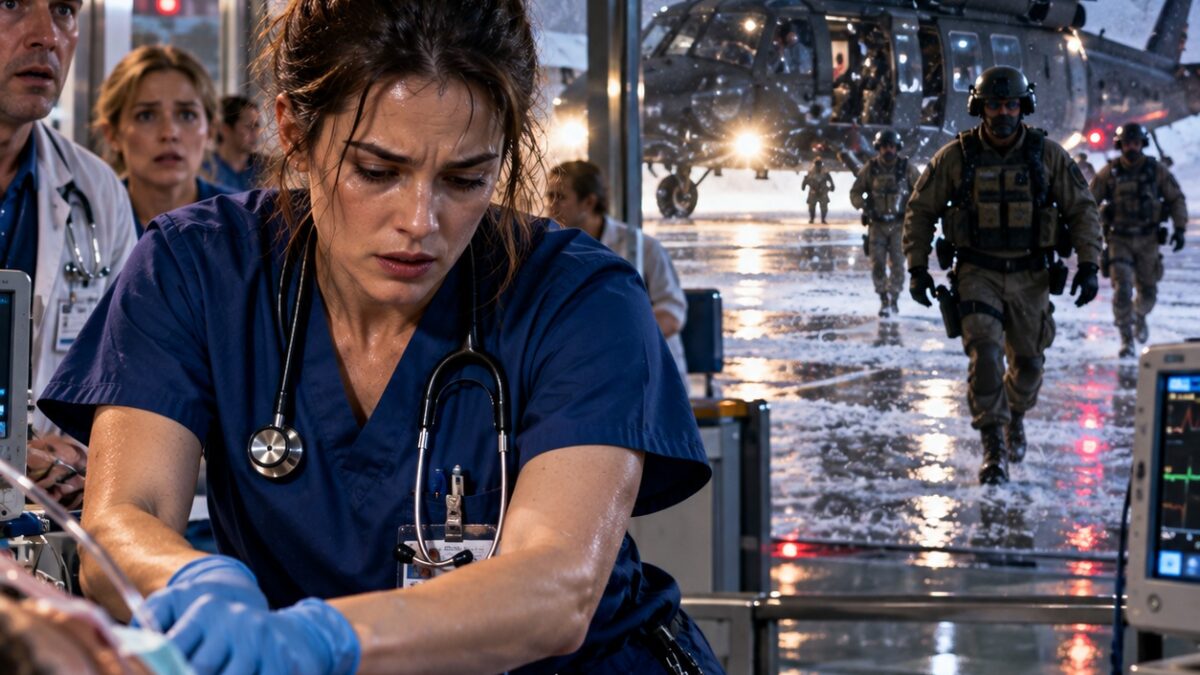
PART 2 and FULL ENDING  Thank you

My real name is Jessica Shaw.
Major Jessica Shaw, if we’re being precise.
Although for nearly three years before I arrived in Montana, I had been trying very hard to forget the rank.
Forget the missions.
Forget operating rooms assembled inside places that never officially existed.
Forget men whose names I couldn’t write down even after they died.
Forget the smell of burning fuel and clotting blood.
Forget what it felt like to decide, in less than ten seconds, which wounded man had enough life left in him to justify the last unit of blood.
Most people imagine walking away from a career like mine would feel like freedom.
It didn’t.
It felt like falling off a cliff in complete silence.
There was no parade.
No retirement party.
No ceremonial speech.
I had told General Richard Clark that I was done.
I said it after Syria.
I meant it.
I had stitched too many young men back together long enough for someone else to send them into another dark place.
I had watched medics become casualties.
I had operated during mortar attacks.
I had slept thirty minutes at a time for days because the wounded kept coming.
At some point, I stopped remembering the faces of the living as clearly as the faces of those who died.
That was when I knew I had to leave.
The government had given me a way out.
A clean identity.
A nursing license attached to a background designed to survive ordinary scrutiny.
Evelyn Gallagher.
Recent graduate.
No husband.
No children.
No meaningful professional history.
An apartment outside Billings.
A job in an underfunded civilian hospital where nobody looked twice at a quiet nurse willing to clean the things ambitious people considered beneath them.
I loved it.
Not the disrespect.
The anonymity.
Nobody saluted me.
Nobody called me Major.
Nobody brought me a classified casualty report at three in the morning.
Nobody asked whether I could keep a man alive long enough to fly him across a border.
Brenda could complain that I was too slow.
Keller could ignore me.
Young nurses could hand me trash bags.
I had been underestimated before.
Underestimation was safe.
That night, safety ended.
I was changing out of blood-soaked scrubs in the locker room when I heard the first heavy thump from the helicopter.
I stopped.
Civilian medical helicopters have a sound you recognize after enough nights in trauma care.
Higher.
Sharper.
This was different.
Deep.
Heavy.
A vibration you felt inside your ribs before your ears properly registered it.
I closed my eyes.
“No.”
Another thump.
Closer.
The metal lockers rattled.
I knew exactly what was landing above us.
I also knew why.
Someone had opened my file too deeply.
The alias was designed to handle routine credential checks.
Employment verification.
State nursing-board inquiries.
Basic hospital screening.
But the moment someone attempted the kind of background query required for termination, lawsuit preparation, or liability investigation, the system triggered an alert.
Evelyn Gallagher had been touched by the wrong search.
And somewhere inside a secure network, Jessica Shaw woke up again.
I changed quickly.
Dark jeans.
Black fleece.
Hiking boots.
I zipped my duffel bag.
Everything I owned that mattered fit inside it.
That was intentional.
People who disappear should not collect heavy furniture.
My hands were steady.
My stomach was not.
I had spent years entering dangerous places without hesitation.
Walking back into that hospital hallway frightened me more.
Because for the first time in my life, I had built something ordinary.
And ordinary had been taken from me.
I opened the locker-room door.
The emergency department had gone almost silent.
Dozens of people were staring toward the elevator near the rooftop access corridor.
Administrator David Thornton stood beside the nurse’s station.
Brenda was beside him.
Dr. Keller had one hand pressed to his sternum where I had knocked him backward when he tried to pull me away from the dying trauma patient.
The elevator bell sounded.
Four men stepped out.
Snow melted from their tactical gear.
No visible names.
No bright unit insignia.
Only subdued American flag patches and the unmistakable posture of men accustomed to entering rooms where everybody else moved aside.
The man in front had a salt-and-pepper beard.
Broad shoulders.
Hard gray eyes.
Colonel James Donovan.
I hadn’t seen him since Damascus.
Keller stepped toward them.
“Excuse me. This is a restricted trauma facility.”
Nobody stopped.
“You cannot bring weapons into this hospital.”
Donovan kept walking.
Keller raised his voice.
“Who is your commanding officer?”
That almost made me smile.
Donovan finally stopped.
Slowly, he looked at Keller.
“I am.”
Keller’s mouth shut.
Thornton stepped forward.
“I’m David Thornton, hospital administrator. May I ask what this is about?”
“Colonel James Donovan. Joint Special Operations Command.”
Every person within earshot went still.
Donovan’s gaze moved across the department.
“I’m looking for Evelyn Gallagher.”
Thornton swallowed.
“She works here.”
“I know.”
“We were attempting to verify her employment history and encountered some… unusual records.”
Donovan’s face gave nothing away.
“Your inquiry triggered a federal notification.”
Keller looked between them.
“What does that mean?”
Nobody answered him.
Then Donovan saw me.
Everything in his face changed.
He stopped.
The three men behind him stopped too.
I walked toward them carrying my duffel.
The nurses stared at me.
Brenda stared hardest.
For three months, she had seen my posture deliberately rounded.
My eyes down.
My voice muted.
Every movement calculated to occupy as little space as possible.
I wasn’t doing that anymore.
There was no reason.
Donovan’s boots snapped together.
So did the others.
Four men raised their hands in a perfect salute.
“Major Shaw.”
Somebody behind me gasped.
I closed my eyes for half a second.
Then opened them.
“Evelyn Gallagher is the name on the badge, Jim.”
Donovan lowered his hand.
“So I heard.”
“I told Clark I was finished.”
“I know.”
“I told you too.”
“You did.”
“So why are you here?”
His expression changed.
The formal hardness faded.
What appeared underneath frightened me.
Urgency.
“We’re not here to bring you back.”
“Then why did you land a Black Hawk on my hospital?”
“Because Viper is dying.”
That name stopped everything inside me.
Call sign Viper.
I knew several men who had carried it over the years.
Only one would make Donovan come for me personally.
Before I could ask, the elevator opened again.
Two operators came through pushing a field stretcher.
The man on it was barely recognizable beneath blood, blankets, and tactical equipment.
Gray skin.
Weak breathing.
Massive trauma through the torso.
I dropped my duffel.
“What happened?”
“High-velocity round during an insertion.”
“Location?”
“Left posterior thorax. Exit near right lateral abdomen.”
My brain changed gears.
The hospital disappeared.
The gossip.
Keller.
Brenda.
The alias.
None of it mattered.
I stepped to the stretcher.
“Pressure?”
“Barely detectable.”
“What have you done?”
“Field balloon occlusion. Temporary.”
“How long?”
“Too long already.”
Donovan lowered his voice.
“The aircraft that was supposed to move him west is grounded. Storm closed the route.”
“Where is the vascular team?”
“You.”
I looked at him.
“No.”
“Jess.”
“No.”
“You’re the only person within range who has performed this repair under comparable conditions.”
“I am a nurse here.”
“Tonight you’re whatever keeps him alive.”
I hated him for saying it.
Because he knew exactly which part of me he was talking to.
I leaned over the stretcher.
Viper’s pulse fluttered beneath my fingers.
His abdomen was distended.
He was bleeding internally faster than any civilian transfer would tolerate.
He didn’t have hours.
He might not have twenty minutes.
“What imaging?”
“None.”
“Operating room?”
“One available.”
Keller found his voice.
“No.”
Everybody looked at him.
He stepped forward.
“She cannot operate here.”
He pointed toward my hospital badge.
“She is employed as a nurse. She has no surgical privileges at this facility.”
He wasn’t wrong.
That almost made the moment worse.
Thornton looked trapped between three different disasters.
Hospital liability.
Federal authority.
A dying man.
Me.
I stared at Keller.
He had humiliated nurses for months.
Taken credit for my intervention three weeks earlier.
Frozen twice when patients needed decisive action.
Then tried to fire me after I saved the bus-crash victim.
But none of that mattered now.
He could have insulted me for another hour and I would not have cared.
A man was bleeding.
That simplified everything.
I looked at Thornton.
“OR One available?”
He hesitated.
“Yes.”
“Blood?”
“We’re already depleted from the pileup.”
Donovan gestured toward one of his men.
“We brought units.”
Of course they had.
I looked at the military medic.
“Equipment?”
“Enough for field vascular repair.”
“Move.”
Keller stepped in front of the stretcher.
“You are not commandeering my operating room.”
Donovan moved between us.
He put one gloved hand against Keller’s chest and stopped him without apparent effort.
“Doctor.”
Keller went rigid.
“Get your hand off me.”
“As of this moment, a federal emergency medical operation is being coordinated on this site.”
Keller looked toward Thornton.
“David!”
Thornton said nothing.
Donovan leaned slightly toward Keller.
“If you obstruct my team while that man dies, your professional humiliation tonight will be the least complicated problem you have tomorrow.”
Keller’s face went white.
Donovan removed his hand.
“Understood?”
Keller stepped backward.
I grabbed the stretcher rail.
“Enough. Move him.”
The corridor exploded into motion.
For the first time since I entered Sacred Heart, nobody told me to stay out of the way.
They got out of mine.
Brenda followed us.
I noticed her only when we reached the operating-room doors.
“Where are you going?”
She looked terrified.
“To help.”
“You don’t have to.”
“I know.”
That surprised me.
She swallowed.
“I can run the transfuser.”
For three months, Brenda had assigned me bedpans and trash.
Now she was standing in front of Major Jessica Shaw.
But I didn’t need reverence.
I needed a nurse.
“You follow orders?”
“Yes.”
“Then scrub in.”
Her shoulders straightened.
“Okay.”
Inside OR One, the old part of me came back so quickly it almost hurt.
There is a rhythm to emergency surgery.
Not the elegant version people see on television.
Real trauma surgery is ugly.
Blood hides landmarks.
Vital signs change faster than conversations.
You make decisions without complete information.
You accept that every intervention creates another risk.
And you keep moving.
I scrubbed.
Gowned.
Gloved.
The military medic gave me the field report.
Viper’s heart rate raced.
His pressure barely held.
The temporary balloon keeping him alive could not stay inflated indefinitely without starving everything below it of blood.
We were running on borrowed minutes.
I looked at Brenda.
“Rapid transfuser.”
She moved.
Not perfectly.
But fast.
“Four units ready.”
“Good.”
She glanced at me.
No sarcasm.
No condescension.
Only concentration.
“Tell me what you need.”
That was the first truly professional thing Brenda had ever said to me.
I respected her for it.
I turned back to Viper.
The bullet path suggested a catastrophic vascular injury.
The field intervention had slowed death.
It had not stopped it.
My hands moved.
The room narrowed.
Everything outside the sterile field disappeared.
I had learned surgery in pristine rooms.
Then in military hospitals.
Then in temporary surgical units where sand found its way into everything and the generators failed at the worst possible moments.
I had operated while helicopters shook the roof.
I had operated beneath red lights during security lockdowns.
I had once completed a vascular repair while an entire field facility prepared to evacuate.
Compared to those places, Sacred Heart’s operating theater felt luxurious.
The problem was not the room.
The problem was time.
I found the injury.
Worse than I hoped.
Better than I feared.
“Clamp.”
The medic placed it in my hand.
Brenda stared at the exposed damage.
She looked like she might be sick.
“Eyes on the blood line,” I said.
She snapped back to work.
“Yes, Major.”
I looked at her.
She froze.
“Sorry.”
“Jessica.”
She blinked.
“What?”
“In this room, call me Jessica.”
“Yes.”
We prepared for the most dangerous transition.
Once the temporary occlusion was released, the injury could bleed catastrophically.
I looked around.
“Everyone ready?”
Nods.
“On my count.”
The balloon was reduced.
Blood surged.
Brenda gasped.
I clamped above.
Then below.
The field cleared enough.
“Graft.”
The medic handed it to me.
My hands did not shake.
That was always the part people misunderstood.
Courage wasn’t why they stayed steady.
Training was.
You repeat a motion enough times under controlled conditions so that one day, when everything else is chaos, the body remembers what fear would rather forget.
I worked.
The monitor deteriorated.
Brenda called out the pressure.
Then the rhythm.
Then finally:
“I’m losing him.”
“Keep the blood running.”
“Jessica—”
“Do not watch the monitor. Watch your job.”
She obeyed.
I sutured.
One pass.
Another.
Another.
Donovan stood outside the OR window.
I could feel him watching.
I hated that too.
Not because I blamed him.
Because every stitch tied me back to the life I had abandoned.
The years I had tried to bury were returning through my hands.
I finished.
Checked the repair.
“Prepare to restore flow.”
Nobody moved unnecessarily.
“Now.”
The clamps came off.
For one terrifying second, I waited.
The graft held.
No major leak.
Blood moved through the repaired vessel.
The medic exhaled.
Brenda whispered, “Oh my God.”
The monitor remained flat.
“Medication.”
It went in.
Five seconds.
Nothing.
Ten.
Then one electrical spike.
Another.
A rhythm appeared.
Weak.
Then stronger.
Brenda stared.
“Pressure is coming up.”
I kept watching.
“Again.”
She checked.
“Ninety over sixty.”
The medic laughed once.
A broken, exhausted sound.
“He’s stabilizing.”
I stepped backward.
Only then did I realize how badly my shoulders hurt.
The adrenaline left by degrees.
I looked at Viper.
Alive.
Not safe.
Not healed.
Alive.
That was enough for the next step.
“Prepare him for transport once the weather gives you a window.”
The medic nodded.
“We’ll move him to Walter Reed.”
“The repair should hold.”
Brenda looked at me as if she had never seen another human being before.
I stripped off my gloves.
“Close.”
The medic stepped forward.
I removed my gown.
Blood had soaked the front.
Again.
For years, that had been my uniform.
That night, I hated how familiar it felt.
I walked into the hallway.
Everyone was waiting.
Thornton.
Keller.
Nurses.
Technicians.
Security.
A few patients who had no business being out of bed.
Donovan stepped toward me.
“How is he?”
“Alive.”
A breath went through the corridor.
“The graft should hold for transport.”
Donovan nodded.
“Incredible work.”
I looked at him.
“Don’t.”
His face softened.
“I mean it.”
“That doesn’t change anything.”
“I know.”
“I am not coming back.”
“I know.”
“I told Clark that.”
“I know.”
“I mean it, Jim.”
He looked tired suddenly.
“Understood.”
I walked to my duffel.
Picked it up.
Keller was standing near the wall.
His face looked gray.
Our eyes met.
For three months, he had treated me as incompetent.
Now he knew too much.
He opened his mouth.
“Who are you?”
I almost kept walking.
Instead, I stopped.
“That isn’t the question you should be asking.”
His face tightened.
“What is?”
“Who was the nurse standing beside you every day?”
He had no answer.
I looked at Brenda.
She looked ashamed.
I didn’t want that either.
“You saved his life tonight,” she said quietly.
“So did you.”
Her eyes filled.
“I treated you terribly.”
“Yes.”
The honesty surprised her.
I continued.
“You thought the work you gave me was beneath you.”
She looked down.
“Cleaning patients isn’t beneath a nurse.”
“No.”
“Taking out waste isn’t beneath a nurse.”
“No.”
“Helping someone use the bathroom—”
“Is nursing.”
Her voice broke.
“I know.”
I shifted the duffel higher on my shoulder.
“Then remember that after I’m gone.”
She nodded.
That was enough.
Keller stepped forward again.
“Gallagher—Major—whatever your name is—”
“Jessica.”
“You assaulted me.”
The room became painfully still.
He was technically right about that too.
During the earlier mass-casualty trauma, when he tried to pull me away while my hand was controlling a catastrophic bleed, I had driven an elbow backward into his sternum.
Not because I wanted to humiliate him.
Because he was interfering with an emergency.
“I stopped you from breaking my control of an artery,” I said.
“You struck an attending physician.”
“Yes.”
“You practiced beyond the scope of your nursing license.”
“Yes.”
He seemed almost encouraged by my admissions.
“You cannot just walk away.”
I looked at Thornton.
The administrator looked deeply tired.
He said quietly, “Doctor Keller.”
Keller turned.
“Not now.”
“She—”
“Not now.”
Keller looked toward Donovan.
Then me.
Then the blood still drying on the floor outside the operating room.
His anger collapsed under the weight of everything else.
I didn’t enjoy that.
Humiliation is satisfying only when imagined.
In real life, it usually makes people smaller, and watching someone become smaller is less rewarding than you expect.
I walked toward the elevator.
Donovan followed.
“Jess.”
I pressed the button.
“What?”
“You could stay.”
I almost laughed.
“At Sacred Heart?”
“Anywhere.”
“No.”
“You miss it.”
That made me turn.
“Don’t do that.”
“I watched you in there.”
“You watched me perform a necessary operation.”
“I watched you become yourself again.”
Anger came fast.
“This is myself.”
I touched the hospital badge clipped to my fleece.
“Evelyn?”
“Yes.”
“You invented her.”
“I chose her.”
“That isn’t the same.”
“It is to me.”
The elevator arrived.
The doors opened.
Donovan lowered his voice.
“You can’t erase what you are.”
“No.”
I stepped inside.
“But I can decide what gets to own me.”
The doors began closing.
He stopped them with one hand.
“Viper asked for you before he lost consciousness.”
That hurt.
I looked at him.
“What did he say?”
“Tell Shaw she still owes me fifty bucks.”
I laughed.
Actually laughed.
“Idiot.”
Donovan smiled.
“He knew you’d say that.”
I reached into my pocket.
Pulled out folded cash.
Handed him fifty dollars.
“Tell him debt settled.”
“I will.”
“And Jim?”
“Yeah?”
“Lose my number.”
The smile disappeared.
He nodded.
“Understood.”
The elevator doors closed.
Ten minutes later, the Black Hawk lifted through the storm.
I did not leave on it.
That part of the story became distorted afterward.
Hospital gossip turned the truth into something cinematic.
Somebody claimed four operators escorted me aboard.
Someone else swore Donovan saluted while I walked through the snow.
Another version had me disappearing with a secret surgical team.
People love legends because ordinary decisions disappoint them.
The truth was quieter.
The aircraft took Viper and his team once the weather permitted.
I left through an employee exit.
Alone.
Carrying one duffel.
I walked three blocks through blowing snow to the small parking lot where my old Subaru waited.
Then I drove back to the apartment assigned to Evelyn Gallagher.
I sat in the dark for almost an hour.
No television.
No lights.
Just the heater ticking.
My hands smelled faintly of surgical soap no matter how many times I washed them.
The night replayed in pieces.
The bus-crash patient.
Keller freezing.
My hand inside the wound controlling the hemorrhage.
The hospital administrator opening the wrong file.
The Black Hawk.
Donovan.
Viper.
The graft.
Brenda calling me Major.
It had been years since I felt that tired.
Not physical exhaustion.
Identity exhaustion.
I had worked so hard to divide myself into two women.
Jessica Shaw was the one who could open a chest while people screamed around her.
Evelyn Gallagher was the one who changed sheets and accepted insults because attention was more dangerous than disrespect.
I had convinced myself one had to die for the other to survive.
That night proved I had been wrong.
The dangerous part wasn’t Jessica.
The dangerous part was believing I had to amputate her from my life completely.
My phone vibrated.
Secure number.
I almost ignored it.
Then answered.
“Shaw.”
General Richard Clark.
His voice had aged.
“So much for retirement.”
“Don’t start.”
“I wasn’t going to.”
“You sent Donovan.”
“Donovan went because Viper was dying.”
“You authorized him.”
“Yes.”
Silence.
Then Clark said, “How is Viper?”
“Alive.”
“I heard.”
“Then why ask?”
“Because I wanted to hear you say it.”
I leaned back against the couch.
“You burned my cover.”
“No.”
“My administrator ran the file.”
“Yes.”
“Which means Evelyn Gallagher is finished.”
A pause.
“Probably.”
I closed my eyes.
“You told me I’d have a clean exit.”
“You did.”
“For three years.”
“That’s longer than most people get.”
“Comforting.”
“Jessica.”
“What?”
“You saved two men tonight.”
“One man was already in my hospital. The other was brought to me.”
“You still saved them.”
I hated praise.
Praise creates ownership.
People praise what they want to use again.
“I’m not coming back.”
“I didn’t ask.”
“Donovan did.”
“He shouldn’t have.”
That surprised me.
“You mean that?”
“Yes.”
Clark breathed out.
“When you left Syria, you looked at me like one more deployment would finish something inside you that surgery couldn’t repair.”
I said nothing.
“I believed you.”
“Then leave me alone.”
“I will.”
“Promise?”
“Yes.”
I almost hung up.
Then he said, “You were always a better doctor than soldier.”
“I was never much of a soldier.”
“That’s what made you useful.”
I laughed without humor.
“Good night, General.”
“Good night, Major.”
I disconnected.
The next morning, Sacred Heart tried to locate Evelyn Gallagher.
They couldn’t.
Thornton logged into the employee system.
My file was there.
Then it wasn’t.
I know because he later told someone, who told someone else, who eventually told Brenda.
Black redaction bars disappeared.
Then the profile returned an error.
FILE NOT FOUND.
That was not magic.
Not some cinematic intelligence trick.
It was simply the administrative death of an identity created for a specific purpose.
Evelyn Gallagher had been compromised.
So the system closed her.
People at Sacred Heart turned that into mythology.
The ghost nurse.
The secret surgeon.
The woman a Black Hawk came to collect.
The invisible orderly who saved two lives and disappeared.
I heard some of those stories months later.
Most were wrong.
Some were hilarious.
One claimed I had commanded a classified medical unit that reported directly to the President.
Another claimed I had personally performed surgery on heads of state.
Brenda supposedly corrected people at first.
Then stopped.
Keller did not talk about me.
That interested me more.
Three weeks after I left Montana, the sixty-two-year-old cardiac patient I had shocked during my first month went home.
The bus-crash patient survived too.
He needed multiple surgeries.
Rehabilitation.
Months of recovery.
But he lived.
Viper made it to Walter Reed.
The graft held.
He developed complications later but recovered.
Two months after the Montana storm, I received a postcard with no return address.
Front: a terrible tourist photograph of Washington, D.C.
Back:
YOU STILL OWE ME INTEREST.
— VIPER
I laughed for ten minutes.
Then cried for five.
Healing is humiliating that way.
Sometimes the body doesn’t ask permission before deciding what emotion comes next.
I never returned to Sacred Heart.
Not because I was ashamed.
Not because federal agents ordered me away.
Because Evelyn Gallagher could no longer give me what I had needed from her.
Invisibility.
Once a secret becomes a legend, it is the opposite of hidden.
I moved.
Different city.
Different name, legally this time.
No classified background.
No fabricated degree history.
I did something harder than disappearing.
I told the truth.
Not all of it.
Some parts of my career would remain sealed longer than I would live.
But enough.
Military physician.
Trauma surgeon.
Special operations medical support.
Retired.
I applied to a small teaching hospital.
The chief of surgery interviewing me looked at the gap in my public record.
Then at the federal credentialing documents he had been authorized to see.
Then at me.
“You understand I’m going to have questions.”
“I hope so.”
“You disappeared for three years.”
“Yes.”
“Why?”
“I wanted to know whether I was still a person when nobody needed me to save anyone.”
He stared at me.
“And?”
“I was.”
That answer got me the job.
Or maybe my credentials did.
I prefer the first version.
I returned to medicine differently.
No secret operating rooms.
No military aircraft.
No commanders.
No classified casualties.
I took trauma call.
Taught residents.
Worked with nurses instead of around them.
And every time I saw a physician dismiss a quiet nurse because she didn’t speak loudly enough, I intervened.
Not dramatically.
Usually with one question.
“What did she see that you didn’t?”
Sometimes doctors hate that question.
That is exactly why they need it.
Years later, I ran into Brenda.
Of all places, at a national emergency nursing conference.
I was giving a presentation on decision-making under mass-casualty conditions.
I walked offstage.
She was waiting near the exit.
Older.
Different haircut.
Same eyes.
For a moment neither of us spoke.
Then she said, “Jessica.”
I smiled.
“Brenda.”
She looked nervous.
I had never seen Brenda nervous around me before that night in Montana.
“I didn’t know if you’d remember me.”
“I remember everybody who told me I lacked hustle.”
Her face fell.
I laughed.
“I’m joking.”
“You’re terrible at joking.”
“I’ve been told.”
We went for coffee.
She apologized.
Not generally.
Specifically.
For giving me degrading work because she assumed I lacked ambition.
For joining Keller when he mocked my speed.
For failing to ask what I knew.
For praising doctors while overlooking nurses.
I listened.
Then I asked, “Did you change?”
“Yes.”
That mattered more than the apology.
“How?”
“I stopped treating new nurses like they had to prove they deserved dignity.”
I nodded.
“Good.”
“And Keller?”
I almost didn’t ask.
Brenda smiled slightly.
“He transferred.”
“Why?”
“He couldn’t stand the story.”
“What story?”
“The one where the nurse he tried to fire turned out to be the best trauma surgeon he’d ever worked beside.”
I looked down at my coffee.
“I wasn’t trying to humiliate him.”
“I know.”
“He wasn’t entirely wrong.”
Brenda frowned.
“About what?”
“I was operating outside what he believed my hospital role allowed.”
“You saved the patient.”
“That doesn’t erase process.”
She stared at me.
“You’re defending Keller?”
“No.”
I smiled.
“I’m saying being right about the patient doesn’t make me right about everything.”
Brenda thought about that.
“You always were annoying.”
“Thank you.”
We laughed.
Then she told me something I hadn’t known.
After I disappeared, Thornton changed hospital policy.
Nurses received stronger escalation rights when they believed a physician had missed a critical deterioration.
Mass-casualty drills were rebuilt.
Training improved.
And the hospital created a culture review after staff described how hierarchy had affected care.
“That night embarrassed everybody,” Brenda said.
“Good.”
She looked at me.
“Thought you didn’t enjoy humiliation.”
“Institutional humiliation is different.”
She laughed.
Fair.
The strangest thing about becoming visible again was realizing how much I had learned while pretending to be nobody.
When I was Major Jessica Shaw, people listened before I spoke.
Rank enters the room ahead of you.
Reputation does too.
When I became Evelyn, I learned what happened when neither existed.
Some people were kind anyway.
Orderlies.
Respiratory therapists.
Patients.
A night-shift janitor named Lewis who brought me coffee when he noticed I had missed dinner.
A young nurse named Maddie who always asked whether I needed help without making it sound like pity.
Others treated me according to how useful they thought I was to their ambitions.
Doctors who barely looked at me.
Nurses who assigned me their worst tasks.
Managers who assumed silence meant incompetence.
That experience changed how I led later.
I started noticing the person cleaning the room.
The student standing in the back.
The quiet nurse who had not spoken in rounds.
The medic everyone interrupted.
Because sometimes the person saying the least knows the most.
Not because they have a classified past.
Because expertise does not always advertise itself.
Viper visited me years later.
No Black Hawk.
No tactical team.
He walked into my hospital carrying a cheap cup of coffee.
He had a scar from his back around his torso.
He called it his zipper.
“You look terrible,” he told me.
“You nearly died.”
“Still dramatic.”
“You had a bullet through your aorta.”
“Details.”
We sat in my office.
He placed fifty dollars on the desk.
I stared at it.
“What’s this?”
“Interest.”
“You’re an idiot.”
“Donovan said you called me that.”
“I did.”
“He said you cried.”
“I did not.”
“Now who’s lying?”
I folded the money and pushed it back.
“Keep it.”
“No.”
“You almost died.”
“Exactly. Learned to settle debts.”
I left the cash on my desk for months.
Eventually I spent it on pizza for residents after an eighteen-hour trauma shift.
That felt appropriate.
Donovan contacted me only once after Montana.
Christmas.
One text.
STILL ALIVE?
I replied:
UNFORTUNATELY FOR YOU.
He answered:
GOOD.
That was all.
No recruitment.
No missions.
No request.
Clark kept his promise.
The military let me go.
Really go.
It took me years to understand how generous that was.
Institutions are not good at releasing people they find useful.
Neither are people.
Sometimes we hold onto roles because they make us feel necessary.
I had held onto Jessica the surgeon until I nearly disappeared inside her.
Then I held onto Evelyn so tightly I nearly disappeared inside her instead.
Balance took longer.
Today, if someone asks who I am, the answer is less dramatic than either version.
I’m Jessica.
I’m a trauma surgeon.
I used to serve.
For a while, I worked as a nurse under another name because I needed distance from my old life.
I have saved people.
I have lost people.
I have made mistakes.
I have been arrogant.
I have been afraid.
I have frozen.
Yes, even me.
People assume experience eliminates fear.
It doesn’t.
Experience teaches you what to do while fear is present.
That is all.
The night in Montana became a legend because people saw the Black Hawk.
The salute.
The classified file.
Those were the theatrical parts.
They made good stories.
But when I remember that night, I remember smaller things.
The bus-crash patient’s blood warming my glove.
Brenda’s hands shaking as she hung the first blood bag for Viper.
Keller standing helpless beside a monitor he had misread.
Thornton realizing the quiet nurse had a federal file he could not access.
Donovan looking at me not like a legendary surgeon, but like a friend he hated having to ask for one more impossible favor.
And the moment after Viper’s graft held.
That moment most of all.
No applause.
No dramatic music.
Just a monitor beginning to show life again.
Beep.
Beep.
Beep.
People imagine heroes feel powerful at moments like that.
I felt tired.
Profoundly, completely tired.
Because saving someone does not make you invincible.
It only reminds you how close people are to being lost.
That was why I left the military.
That was why I hid.
And ultimately, that was why I came back to medicine on my own terms.
I no longer wanted to be a ghost.
Ghosts cannot build anything.
They only haunt.
I wanted students.
Colleagues.
Patients who remembered my face.
A home with books I didn’t have to pack into one duffel.
A refrigerator with actual food instead of takeout containers.
Neighbors who knew my real name.
Ordinary problems.
A leaking faucet.
A parking ticket.
Someone playing music too loudly upstairs.
Things that would once have seemed trivial became precious.
Normal life is wildly underrated by people who have never had it taken away.
Sacred Heart gave me that lesson.
Not because it was kind.
Because it was ordinary enough for me to understand what I had been missing.
Years after that blizzard, I returned to Billings.
Not secretly.
I was invited to speak at a trauma symposium.
Sacred Heart had renovated the emergency department.
Brighter lights.
New floors.
More trauma bays.
Thornton had retired.
Keller was gone.
Brenda worked in nursing education.
She walked me through the department.
Near Trauma Bay One, she stopped.
“You know they still tell the story.”
“I was afraid of that.”
“New nurses think it’s exaggerated.”
“It is.”
“Which part?”
“Most of it.”
She laughed.
A young nurse nearby overheard us.
“Wait.”
She looked at Brenda.
“Is this her?”
I sighed.
Brenda smiled.
“Ask her.”
The nurse looked at me.
“Are you the Black Hawk nurse?”
“No.”
Her face fell.
“I’m the nurse who was working here the night a Black Hawk landed.”
Brenda rolled her eyes.
“You’re impossible.”
The young nurse looked confused.
I smiled.
“Don’t believe legends.”
“Why?”
“Because they turn people into something they never were.”
She thought about that.
“What were you?”
“Tired.”
Brenda laughed.
But I was serious.
I had not been a superhero.
Not then.
Not ever.
I was a woman with training who happened to be present when people needed it.
The man in Trauma Bay One survived because paramedics kept him alive long enough to reach us.
Because nurses found blood.
Because surgery arrived.
Because dozens of people did their jobs.
Viper survived because field medics placed temporary measures.
Because Donovan moved him through impossible weather.
Because Sacred Heart had an open operating room.
Because Brenda ran the transfuser.
Because the military team brought equipment.
Because I had done that repair before.
Medicine is almost never one hero.
It is a chain.
Stories like to pick one link because it is easier.
Reality is heavier.
Before I left Sacred Heart that afternoon, I walked past the old locker room.
Same door.
Different paint.
I remembered zipping that duffel after hearing the helicopter.
I remembered believing my ordinary life was over.
In a way, it was.
But the life that came after was better because it belonged to the whole of me.
Not only Major Shaw.
Not only Evelyn Gallagher.
Me.
I stopped at the exit.
Snow had begun falling lightly outside.
Nothing like the blizzard.
Just quiet flakes drifting beneath the parking-lot lights.
Brenda stood beside me.
“Where are you going?”
“Hotel.”
“I mean after Billings.”
“Home.”
She nodded.
That word still feels good.
Home.
No operational designation.
No secure coordinates.
No alias.
No evacuation plan.
Just home.
Behind us, the emergency department continued.
Monitors.
Phones.
Doors opening.
Someone calling for respiratory therapy.
A child crying.
A nurse laughing.
Medicine moving forward without me.
Exactly as it should.
For years, I thought being needed was proof that I mattered.
The military reinforced that.
Every emergency made my skills feel essential.
Every impossible save made it harder to imagine who I was when nobody was bleeding.
Then Sacred Heart taught me something different.
A person’s value is not measured by how spectacularly they can rescue others.
Sometimes dignity looks like taking out trash.
Cleaning a stranger.
Holding someone’s hand.
Catching a rhythm change.
Speaking when a doctor is wrong.
Or stepping away from a life everyone else thinks you should want.
People at Sacred Heart ignored Evelyn Gallagher because they thought quiet meant empty.
They learned otherwise.
But I learned something too.
I had spent three years believing invisibility was peace.
It wasn’t.
Peace was being seen accurately and discovering I no longer had to perform either greatness or weakness to deserve a place in the room.
The Black Hawk didn’t reveal who I really was.
It revealed only who I had been.
The harder part came afterward.
Deciding who I wanted to become.
And this time, when I walked out into the snow, nobody saluted.
Nobody followed.
Nobody called me Major.
I smiled anyway.
Then I went home.








