“POUR THE CONCRETE—THAT DISGUSTING WATER TANK HAS TO GO!” HOA Karen Destroyed My Grandfather’s 48-Year-Old Water System and Bragged About It Online—Then 38 Families Discovered Why Their Faucets Were Running Dry
“POUR THE CONCRETE—THAT DISGUSTING WATER TANK HAS TO GO!” HOA Karen Destroyed My Grandfather’s 48-Year-Old Water System and Bragged About It Online—Then 38 Families Discovered Why Their Faucets Were Running Dry
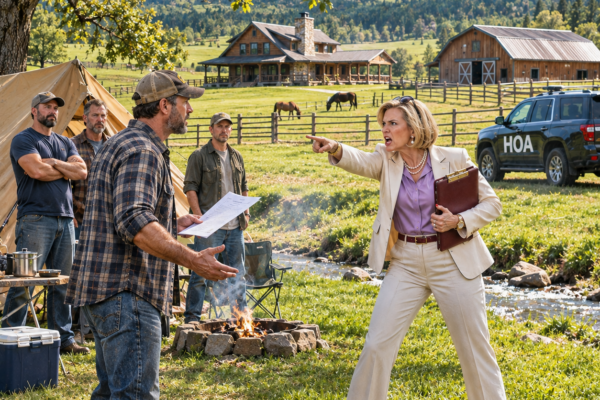
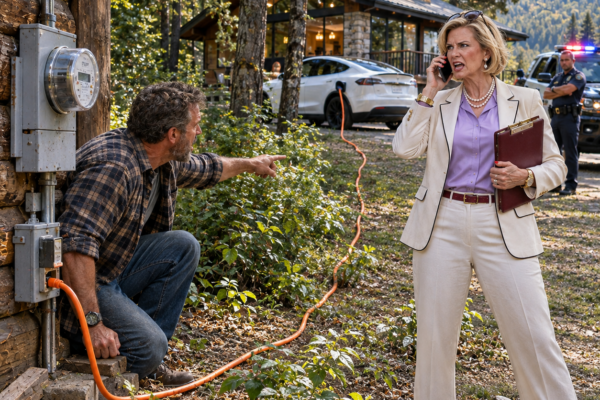
“That disgusting hillbilly science project is destroying our property values, and if you’re too stubborn to remove it, I’ll get rid of it myself!” HOA president Brenda Kessler shouted after I explained that my grandfather’s water system helped supply thirty-eight homes in her luxury Texas subdivision.
Two years later, while I was visiting my daughter in Houston, Brenda paid a concrete contractor $1,200, falsely claimed to manage my property, and destroyed the heart of our family’s 20,000-gallon cistern before proudly announcing her accomplishment on Facebook.
But when a brutal Texas drought arrived and the water stopped flowing halfway through Brenda’s expensive shower, the woman who had spent two years threatening me suddenly discovered that her own house depended on the very thing she had destroyed.
I was sitting in a restaurant in Houston with my twenty-two-year-old daughter, Emily, when I finally checked my phone.
Twenty-three missed calls.
Eight voicemails.
And a photograph from my seventy-one-year-old neighbor, Arthur Polk, that made my stomach turn.
A concrete truck was parked on the north side of my eighteen-acre property.
Its delivery equipment was positioned beside the open access hatch of the underground cistern my grandfather had built in 1976.
Wet concrete was disappearing into it.
Standing beside the truck, wearing white capri pants, designer sunglasses, and gold-trimmed wedge sandals, was Brenda Kessler.
She was smiling.
“Dad?”
Emily looked at me.
“What’s wrong?”
I enlarged the photograph.
There was no mistake.
“Oh, dear God.”
I called Arthur.
He answered immediately.
“Caleb, I’ve been trying to reach you all morning.”
“Tell me that’s not what I think it is.”
His silence answered the question.
“She told the driver she was your property manager,” he finally said. “I tried to stop them. She told me it was being handled and I’d thank her later.”
“How bad?”
“Bad enough that you need to come home.”
I closed my eyes.
My grandfather, Dutch Rains, had spent twenty-two years working in the Texas oil fields before buying that land. He had built the cistern with my father and uncle, using knowledge acquired through a lifetime of hard work rather than a university education.
My father had maintained it until his death in 2019.
His final entry in our maintenance notebook read:
Spring flow steady. Pressure good. System clean.
I had spent nineteen years as a water systems engineer. I understood exactly how much damage a truckload of concrete could do to that infrastructure.
And Brenda had just destroyed it because she didn’t like looking at the pump house.
Emily reached for my hand.
“Dad, I’m coming with you.”
I shook my head.
“Stay here, sweetheart. I’ll handle it.”
“Are you going to confront her?”
I looked at the photograph again.
“No.”
I collected my belongings.
“I’m going to find out exactly what she’s done.”
By the time I reached home that evening, the concrete had hardened considerably.
The severed padlock lay in the grass.
The access cover had been moved.
I knelt beside the hatch with a flashlight and stared at the gray mass where functioning equipment should have been.
Forty-eight years of family history.
Forty-eight years of reliable infrastructure.
Destroyed in forty minutes.
Arthur approached carrying his phone.
“You need to see something else.”
He opened the Pinecrest Meadows Facebook group.
There was Brenda’s photograph.
The caption read:
Dangerous abandoned infrastructure finally sealed. Safety first. You’re welcome, neighbors.
Fourteen likes.
Six thank-you comments.
A prayer-hands emoji.
I handed Arthur his phone.
“Abandoned?”
He nodded.
“That’s what she’s telling everybody.”
I looked toward the distant houses.
Thirty-eight of them received supplementary water through the system beneath my feet.
Including hers.
I checked the regional drought notice.
Stage Two restrictions were already in effect. More severe restrictions were anticipated within weeks.
The municipal supply alone had never reliably maintained adequate pressure throughout those older sections of the subdivision during severe drought conditions.
That was precisely why the developer had negotiated access to our cistern thirteen years earlier.
I called my attorney, Margaret Cho Woodward.
After listening carefully, she asked whether the damaged system remained connected to the homes.
“Yes.”
“Caleb, isolate it immediately. We cannot risk contaminated water entering those residences.”
I nodded.
“I understand.”
That evening, I shut down the supplementary distribution system for safety.
Arthur stood beside me as the equipment fell silent.
“What’s going to happen when the drought gets worse?”
I looked toward Lot 47, where Brenda lived.
“Thirty-eight households are going to discover what that ugly little pump house was doing for them.”
PART2
Arthur didn’t smile.
He looked toward the subdivision, where the lights were beginning to come on inside houses whose owners had no idea that their water system had changed that morning.
“My daughter’s friends live in some of those houses,” he said. “Retired people, too. A few families with young children.”
“I know.”
“What are we supposed to tell them?”
“The truth.”
I checked the system one more time. The supplementary supply had been isolated, but the municipal connection remained available to the neighborhood. I hadn’t turned off anyone’s municipal water, and I had no intention of using access to an essential service as a weapon.
The destruction was bad enough without somebody becoming sick because contaminated water entered their plumbing.
I intended to notify the relevant parties in writing, preserve the evidence, and make sure the condition of the infrastructure was properly assessed.
Arthur looked down at the severed lock.
“You know what makes me angry, Caleb?”
“What’s that?”
“She walked around here like she owned the place. That driver believed her. The workers believed her. She had a piece of paper with the HOA letterhead, and apparently that was enough.”
I looked at him.
“Did you photograph everything?”
He nodded.
“Twenty-seven pictures.”
“Keep the originals.”
“Already done.”
“And the Facebook post?”
“Screenshot.”
I smiled faintly.
“Good man.”
Arthur reached into his pocket and produced a folded piece of paper.
“I wrote down what I saw as soon as they left. Figured you’d want the details while they were fresh.”
I accepted it.
“Thank you.”
He shook his head.
“I should’ve called the sheriff.”
“You tried to stop them, Arthur. You documented what happened. Don’t blame yourself for what Brenda decided to do.”
He looked toward the pump house.
“Your grandfather would’ve been furious.”
I thought about Dutch Rains.
“Probably.”
Arthur waited.
“Although I think he’d have been more concerned about getting the water running again.”
We stood there together until darkness settled over the property.
The spring was still flowing beneath the limestone.
But for the first time since my grandfather installed that system, the equipment responsible for delivering its water to the neighborhood stood useless.
Brenda had accomplished something that droughts, decades of summer heat, and nearly half a century of ordinary wear hadn’t accomplished.
And somewhere inside her expensive house, she was probably congratulating herself.
The following morning, I spread the contents of my family’s infrastructure records across the kitchen table.
I had retained documents that went back farther than some of the homeowners in Pinecrest Meadows had been alive.
My grandfather’s original drawings.
The construction permit for the pump house.
Recorded easement documents.
Inspection certificates.
Maintenance logs.
Water quality reports.
Engineering assessments.
And correspondence from two years of dealing with Brenda Kessler.
There were enough records to establish not only what the system did, but how many opportunities Brenda had been given to understand it.
My grandfather purchased our property in 1974. It sat eleven miles west of Dripping Springs, on eighteen acres of Central Texas hill country covered in cedar, live oak, and limestone.
Dutch had left school after seventh grade.
He had never taken a university engineering course.
But after twenty-two years working in the Permian Basin oil fields, he understood pumps, pressure, and the importance of knowing where your water came from.
There was a natural limestone seep on the northern slope of the property that fed a year-round spring. The water had been moving through that rock long before anybody thought about building expensive subdivisions in the area.
In 1976, Dutch rented a backhoe and enlisted the help of his two sons, Raymond and Hank.
Raymond was my father.
The three of them built a reinforced underground cistern capable of holding approximately 20,000 gallons, connected it to the spring, and gradually developed the pumping, filtration, and purification equipment that would serve our family for decades.
The following year, Dutch built the twelve-by-sixteen-foot concrete block pump house.
It had a corrugated metal roof, a steel door, and the practical, industrial appearance of a building designed by somebody who intended to use every dollar for something important.
There wasn’t a decorative column anywhere.
No architectural embellishments.
No expensive landscaping.
Just a structure that protected valuable equipment from the weather and allowed people to maintain it.
My grandfather was enormously proud of it.
I remember standing beside him when I was a boy, watching him check a gauge.
“What’s it supposed to say, Grandpa?”
He told me.
I stared at the needle.
“How do you know when something’s wrong?”
“You learn what right looks like.”
He tapped the instrument gently.
“Then you pay attention when it changes.”
I asked whether he planned to make the little building look nicer.
He laughed.
“Caleb, water doesn’t care what a pump house looks like.”
I remembered that sentence while sitting at my kitchen table forty years later.
It seemed particularly relevant now.
By the time I inherited the property, I had acquired considerably more formal education than my grandfather.
I studied civil engineering at Texas A&M and water resources at the University of Texas at Austin. I spent nineteen years working on municipal water distribution infrastructure in Harris County, dealing with systems that served vastly more people than the one Dutch had built.
I understood hydraulic demand, water quality, pressure management, and the many regulations associated with delivering water safely.
But whenever I returned to the old family property, I appreciated the simplicity of my grandfather’s work.
He had understood the essential problem.
He had built something practical to address it.
And he had maintained it.
My father carried on that tradition.
Every test went into a spiral-bound notebook in blue ink. Every significant repair was recorded. If something needed replacing, he replaced it before neglect turned a manageable problem into an expensive one.
I never heard him describe the cistern as a burden.
He considered it a responsibility.
That responsibility became considerably larger in 2011, when developer Paul Westbrook bought 130 acres south of our property and began developing Pinecrest Meadows.
The proposed subdivision contained 142 residential lots, a community swimming pool, a fitness center, landscaped areas, walking trails, and a guardhouse near the entrance.
The homes were marketed as a comfortable slice of Texas Hill Country living.
There was just one problem.
Water.
Westbrook’s engineers estimated that extending the necessary municipal main from Dripping Springs would cost approximately $2.3 million and push important infrastructure work eighteen months beyond the developer’s construction financing deadline.
He needed another arrangement.
That was when he approached my father.
They negotiated a supplementary water agreement covering thirty-eight homes in the first two development phases.
The cistern would provide additional support during periods of high demand and drought-related pressure reductions. The HOA would pay an annual maintenance fee of $4,800 and contribute toward necessary upgrades.
The agreement was recorded in the Hays County property records and incorporated into the relevant subdivision documentation.
The affected buyers received disclosures concerning it when they purchased their homes.
Nothing about the arrangement was secret.
Nothing was temporary simply because a future HOA president might find the pump house unattractive.
My father understood that allowing other people to depend on the system meant accepting responsibilities that extended beyond our property line.
He accepted them.
And he performed them faithfully until his death.
I turned to his final notebook entry.
March 14, 2019.
Spring flow steady. Pressure good. System clean.
Two weeks later, he was gone.
There were many things I inherited from him.
The house.
The land.
The equipment.
But sitting there with his handwriting in front of me, I felt that the most valuable thing he had left was the expectation that I would take care of what he had entrusted to me.
I placed the notebook carefully beside the other records.
Then I opened the folder labeled Pinecrest Meadows HOA.
The first photograph inside showed Brenda standing beside the pump house in April 2022.
And that was where the evidence of her knowledge began.
Brenda had purchased Lot 47 in February 2021.
She was forty-four when she arrived, with an impeccably maintained ash-blonde bob, ice-blue eyes, an expensive wardrobe, and a talent for making ordinary conversations feel like meetings with somebody who believed she occupied a higher position than everybody else.
She drove a white Cadillac Escalade.
After becoming HOA president, she obtained personalized license plates reading PREZ1.
Arthur once remarked that it was probably helpful to have her position displayed on the vehicle.
“Why’s that?” I asked.
“So the rest of us have a warning she’s coming.”
Brenda had won the election in March 2022 with nineteen votes in a community of 142 homes.
Nobody else had run.
Her campaign philosophy could be summarized in three words.
Curb appeal matters.
She mentioned it constantly.
At meetings.
In newsletters.
In conversations with neighbors.
Whenever somebody suggested that maintenance, financial planning, or infrastructure might deserve more attention than exterior paint colors, Brenda found a way to return the discussion to appearances.
Six weeks after taking office, she arrived at my property wearing cream linen pants, platform shoes, and a silk blouse that looked remarkably unsuitable for inspecting utility infrastructure.
She spent several minutes photographing the pump house.
Then she walked toward me.
“I’m Brenda Kessler, the new HOA president.”
“I know.”
“Wonderful. Then you understand why I’m here.”
She pointed toward the building.
“I assume this is some kind of utility shed?”
“It’s the pump house.”
“And those?”
She indicated the yellow steel access covers set into the ground.
“Cistern access hatches.”
She looked at me with theatrical disgust.
“Do you have any idea what this looks like from our subdivision?”
I glanced toward the building.
“A pump house?”
“A junkyard, Mr. Rains.”
I waited.
She continued.
“People here paid serious money for their homes. Half a million dollars in some cases. They shouldn’t have to look at this.”
I explained that the infrastructure had existed since the 1970s and that thirty-eight homes in her subdivision depended on its supplementary supply.
She nodded impatiently.
“I’m aware there’s some arrangement.”
“It’s a recorded easement.”
“Fine. Whatever you want to call it.”
She pointed toward the access covers again.
“What I’d like is for you to make all this disappear.”
“Disappear?”
“Put landscaping over it. Bury it. Install a decorative patio. Surely there’s a way to make it invisible.”
“The access points are there because the system requires inspection and maintenance.”
She sighed.
“There’s always an excuse.”
“That’s not an excuse, Brenda. It’s an engineering requirement.”
“Don’t lecture me.”
“Then don’t ask me to bury equipment that needs to remain accessible.”
Her expression hardened.
“You’re dragging this community down simply by being here.”
I looked at the land my grandfather had purchased before the subdivision existed.
Then I looked back at her.
“You moved next to my pump house. My pump house didn’t move next to you.”
She stared at me.
“We’ll revisit this.”
I nodded.
“Bring an engineer next time.”
She marched toward the Escalade.
There was no engineer during her next visit.
Instead, there was a letter.
Then another.
And eventually, enough documentation to demonstrate that what happened on June 15, 2024, hadn’t been the innocent mistake Brenda would later claim it was.
The first three notices were written in the familiar language of an organization attempting to make a demand sound official simply by putting it on attractive stationery.
The pump house was described as an unauthorized utility structure.
The access hatches were described as ground-level hazards.
The property supposedly presented unacceptable aesthetic and liability exposure to Pinecrest Meadows.
Brenda established a thirty-day compliance deadline and threatened fines of $200 per day.
There was one rather substantial problem with her approach.
I wasn’t a member of her homeowners association.
My property wasn’t within the recorded subdivision boundaries.
I had never signed an agreement placing my land under its architectural control.
The only significant contractual relationship between my property and the association concerned the water infrastructure she wanted me to remove.
I forwarded the letters to Margaret Cho Woodward, an Austin attorney who understood water rights and property disputes.
She called me after reviewing the first few notices.
“Caleb, has this woman actually read the subdivision plat?”
“I don’t think she’s particularly interested in maps.”
“Has she read the easement?”
“She knows it exists.”
Margaret sighed.
“That’s not quite the same thing.”
Her written response was deliberately brief.
It explained that my property was outside the association’s jurisdiction, that the water infrastructure operated under a recorded agreement and applicable permits, and that further correspondence should be directed to her office.
I thought the issue might end there.
Brenda apparently interpreted the letter as an invitation to become more creative.
Over six months, she sent eleven letters.
She claimed the pump house constituted an unauthorized commercial operation.
She characterized the secured access hatches as attractive nuisances presenting dangers to children, even though they were locked and located on private property.
She presented proposed landscape screening arrangements.
One of her submissions actually included images of decorative patios and ornamental shrubs.
I looked at them and wondered whether anybody had told her what happened when maintenance personnel needed to reach equipment beneath a patio.
Eventually, she filed a formal complaint with county code enforcement.
Mitchell Reeves, the officer assigned to examine it, came out on a Tuesday morning.
I met him beside the pump house.
“Morning, Mitchell.”
“Morning. Sorry about this.”
I held up a thick manila folder.
“Everything you’ll need should be in here.”
He looked at its thickness.
“I’m beginning to suspect you’ve been expecting me.”
“Since about the third HOA letter.”
He laughed.
“Fair enough.”
Mitchell inspected the equipment and reviewed the relevant documents.
I showed him the testing records, the maintenance arrangements, and the information establishing the system’s function.
He asked appropriate questions.
I answered them.
By the time he finished, there was nothing to support the allegations Brenda had submitted.
He closed his clipboard.
“Mr. Rains, this is one of the best-maintained private systems I’ve encountered.”
“Thank you.”
“I’ll record the complaint as unfounded.”
I nodded.
Then he paused.
“Between you and me, she’s contacted our office three times in six months.”
“About me?”
“Different things.”
He sighed.
“She is, professionally speaking, exhausting.”
I laughed.
“That’s a remarkably diplomatic description.”
Mitchell smiled.
“Have a good afternoon, Caleb.”
After he left, I added his report to the folder.
Now, sitting at my kitchen table after the destruction, I read his findings again.
The system wasn’t abandoned.
It wasn’t an unidentified underground hazard.
A county official had examined it and found no basis for Brenda’s complaint.
She knew that.
She had received the result.
And still, she told the concrete company she was sealing abandoned infrastructure.
When the official complaints failed, Brenda turned to the residents.
She circulated a petition describing the pump house as a blight on the subdivision’s character.
The language sounded as though somebody had combined a real estate advertisement with a legal complaint.
She approached homeowners personally.
She discussed neighborhood values, visual standards, and the importance of protecting their investments.
Some residents signed because they agreed with her.
Others signed because they didn’t particularly enjoy disagreeing with Brenda.
The final petition contained forty-one signatures.
Out of 142 homes.
Brenda presented those signatures at a board meeting as evidence of overwhelming community support.
Arthur Polk, a retired municipal engineer, was the only board member who consistently challenged her.
He had spent enough time working with distribution infrastructure to understand why our agreement mattered.
When Brenda proposed allocating $15,000 from the association’s reserve fund to challenge the easement, Arthur raised his hand.
“Before we vote, does everybody understand which homes receive supplementary water from the Rains system?”
Brenda looked annoyed.
“We’ve discussed this repeatedly.”
“No, we’ve discussed landscaping repeatedly. I’m asking whether everybody understands the water arrangement.”
Marcus Webb, another board member, glanced through the paperwork.
“Isn’t it just a backup?”
Arthur nodded.
“Exactly.”
Brenda smiled.
“So we don’t need it under normal circumstances.”
Arthur stared at her.
“Brenda, you don’t buy a fire extinguisher because your kitchen is already burning.”
Several residents laughed.
She didn’t.
“The municipal system is available now,” she insisted.
“And the supplementary system is there when municipal pressure becomes inadequate.”
“We can address that separately.”
Arthur shook his head.
“You’re proposing to spend fifteen thousand dollars challenging the very agreement that protects some of our residents during drought.”
Brenda looked toward the other board members.
“Arthur has made his position clear. Shall we vote?”
The proposal passed four to one.
Arthur voted against it.
Nobody could later say that a professional engineer hadn’t warned them.
The association retained Craig Dunbar, an attorney whose first demand requested that I voluntarily decommission the infrastructure.
Margaret called me after receiving it.
“Caleb, you need to hear this.”
She summarized the letter.
I stared at the wall.
“He wants me to disconnect his own client’s water backup?”
“That’s precisely what he’s asking.”
I laughed.
“Does he know what he’s asking?”
“I’m about to explain it to him.”
Her response apparently persuaded Craig to reconsider the legal merits of the association’s position.
Within days, he advised Brenda that the easement was valid and that attempting to obtain an injunction against functioning water infrastructure could raise serious questions about the association’s own obligations.
Brenda fired him by email.
The subject line announced that his services were no longer needed.
The message complained that he clearly didn’t understand what was at stake.
I found that particularly amusing.
Craig understood exactly what was at stake.
Brenda simply disliked his conclusion.
She hired another attorney, Vera Sandoval, at $350 per hour.
Vera argued that the supplementary infrastructure was no longer essential because municipal water service had been extended.
Margaret responded with hydraulic information, demand analysis, and correspondence from the water district supporting the system’s continuing role.
The relevant administrative challenge was rejected eleven days later.
Brenda had now spent considerable association money learning something my grandfather could have explained while drinking a cup of coffee.
The system was useful.
The agreement was valid.
And wanting the pump house removed didn’t make removing it sensible.
Her next complaint went to the Texas Commission on Environmental Quality.
She claimed the cistern presented a possible groundwater contamination problem.
A hydrogeologist examined the system and reviewed the water quality.
Samples were assessed at three locations.
The results were reassuring.
The purification equipment was functioning appropriately, and the inspection identified no basis for the action Brenda was requesting.
I framed the report.
It hung inside the pump house beside a copy of one of my grandfather’s early drawings.
I liked having those two things next to each other.
A modern professional assessment.
And a pencil drawing made by a man who never finished seventh grade.
Both reflected the same fundamental achievement.
A dependable water system.
After that inspection, Brenda stopped contacting me.
For three weeks, there were no new complaints.
No letters.
No visits.
No photographs taken from the edge of my property.
I assumed she had finally become tired of losing arguments about infrastructure she didn’t own.
Arthur wasn’t as optimistic.
“She’s too quiet,” he told me.
I laughed.
“Arthur, don’t complain about receiving something we’ve wanted for two years.”
“I’m not complaining.”
He took a sip of coffee.
“I’m just saying that a woman who put PREZ1 on her Cadillac doesn’t generally change her mind without announcing it.”
I smiled.
“You might have a point.”
Neither of us knew she was paying attention to my travel routine.
I visited Emily in Houston approximately one weekend each month. Brenda had apparently noticed the pattern and made casual inquiries with Jean, the friendly retired postal worker who manned the subdivision’s guardhouse.
Jean had no reason to suspect that an HOA president asking about a neighbor’s truck was preparing to interfere with utility infrastructure.
He answered an ordinary question.
Brenda used the information.
On Friday, June 14, 2024, I left for Houston.
The following morning, she arrived with the concrete truck.
And now I had documents establishing that every legitimate effort she had made to have the system condemned had failed before she decided to destroy it herself.
I closed the folder.
Margaret would receive copies of everything.
So would the investigators.
For once, Brenda’s habit of creating mountains of paperwork was going to be useful to somebody other than Brenda.
On Monday morning, Buck Reeves from Central Texas Underground Solutions arrived to assess the damage.
Buck was one of those contractors who could spend several minutes looking at something without saying a word.
He walked around the access area.
Examined the visible damage.
Looked through the system information I provided.
Then he stood beside me and shook his head.
“Who did this?”
“HOA president.”
He looked at me.
“Your HOA?”
“I’m not in it.”
He looked back toward the damaged equipment.
“Well, that’s a new one.”
I handed him the relevant system drawings.
He reviewed them.
“This isn’t going to be cheap, Caleb.”
“I figured.”
He explained that the damaged equipment would need to be removed and the cistern carefully assessed. The affected pumping, distribution, and treatment components would require replacement and proper testing before the system could be returned to service.
The initial estimate came to $94,000.
If the structural integrity of the cistern had been compromised, the cost could rise to $142,000.
I stared at the estimate.
“How long?”
“Twelve to sixteen weeks, assuming we don’t find something worse.”
I nodded slowly.
Buck looked toward the subdivision.
“Those houses are still getting municipal water?”
“Yes. I’ve isolated the damaged supplementary system.”
“Good.”
He returned his attention to the estimate.
“Somebody’s going to have an expensive lesson.”
I thought about Brenda’s $1,200 concrete payment.
She had probably believed it was the cheapest and fastest solution to her pump house problem.
Now, before any legal expenses, she was looking at a repair bill nearly eighty times larger.
I took the estimate inside and called Margaret.
“Ninety-four thousand,” I told her.
She became quiet.
“Send it to me.”
“Could reach a hundred and forty-two if the tank needs rebuilding.”
“Send that information, too.”
I heard her typing.
“Caleb, we’re dealing with intentional property damage and interference with an established utility arrangement. The fact that she used a contractor doesn’t eliminate responsibility.”
“I know.”
“We need the driver’s account.”
“Arthur has the company name.”
“Excellent. And the social media material?”
“Preserved.”
“Good.”
She paused.
“Do not argue with her. Do not threaten her. Let the evidence speak.”
I looked at the photograph of Brenda smiling beside the concrete truck.
“I don’t think I’m going to need to say much.”
Margaret laughed quietly.
“No. I suspect she’s done most of the talking for us.”
The concrete company was considerably more cooperative than I expected.
When its management learned that Brenda wasn’t my property manager and had no authority to commission work on my land, they began reviewing the transaction.
The driver was particularly angry.
He had accepted an assignment that was represented to him as a legitimate safety-related job.
He hadn’t been told that the structure remained in use.
He hadn’t been told that thirty-eight houses depended on its operation.
And he certainly hadn’t been told that the woman directing the work had spent two years attempting unsuccessfully to have the equipment removed.
He voluntarily provided the invoice and explained what Brenda had told him.
She had identified herself as the person responsible for managing the property and provided a handwritten authorization on association letterhead.
Emergency infrastructure remediation.
That was how she had described it.
Not destruction of somebody else’s water system.
Not an unauthorized alteration of private property.
An emergency.
I examined the document when it became available.
It was remarkable how little information appeared on it.
There was no authorization from me.
No supporting order from a governmental authority.
No evidence that anybody had declared the cistern abandoned.
Just Brenda’s signature and her HOA title.
Margaret reviewed it.
“She’s representing authority she doesn’t possess.”
“Yes.”
“And we have the driver willing to explain what she told him.”
“Correct.”
“Plus Arthur’s photographs.”
“Twenty-seven.”
She sighed.
“She’s going to have difficulty explaining this.”
I filed a criminal complaint with the Hays County Sheriff’s Office that Monday afternoon.
The submission included the photographs, Arthur’s written account, the available contractor documentation, the repair estimate, and the preserved Facebook post.
I also included the prior correspondence concerning the system.
The sheriff’s office could assess the criminal allegations independently. Margaret would handle the civil claims.
I wasn’t going to make my own findings about guilt or dictate what charges should be filed.
That was the responsibility of the investigators and prosecutors.
My responsibility was to make sure they had the information they needed.
When I returned home, I prepared written notice for every member of the HOA board.
Individually.
I wanted each of them to understand that the supplementary water supply was unavailable because the infrastructure had been vandalized and isolated for safety.
I explained the continuing availability of municipal service, the anticipated consequences of losing the backup during worsening drought conditions, and the need for a proper restoration process.
There was no demand that they pay me for something Brenda had done.
There was no threat to disconnect the municipal supply.
There was no attempt to frighten people into taking sides.
Just the facts.
Arthur later told me how the board members responded.
Marcus read his letter and immediately called him.
“Wait a minute. She actually destroyed it?”
“That’s what I’ve been trying to tell you.”
“She said she was going to improve the landscaping.”
“Does a truck full of concrete sound like landscaping to you?”
Marcus became quiet.
Julia Chen, another board member, asked whether the system was abandoned.
Arthur said, “Julia, you live in the subdivision. You’ve been receiving quarterly information about that system for years.”
“I thought it wasn’t necessary anymore.”
“Then I suggest you read your closing documents.”
Dorothy Finch, a retired schoolteacher, responded with considerably less diplomacy.
“That woman has finally lost her mind.”
Dorothy was seventy-three, barely five feet two inches tall, and possessed the kind of directness that develops after decades of attempting to persuade children to stop making excuses.
She wasn’t easily impressed by designer clothing.
She wasn’t intimidated by board titles.
And when she eventually confronted Brenda, she would prove that you don’t need a luxury wardrobe or an enormous vocabulary to make somebody understand how badly they’ve behaved.
For the moment, however, all we could do was prepare for what the approaching drought might bring.
The summer heat intensified.
Anybody who has lived through a Central Texas summer understands that the temperature can become something more than an unpleasant number on a weather report.
It becomes part of every decision.
People plan errands around it.
They worry about elderly relatives.
They watch their gardens struggle.
They look toward the sky hoping to see clouds.
Water becomes increasingly important precisely when the available supply is under the greatest pressure.
On July 3, regional authorities issued Stage Three mandatory drought restrictions.
The neighborhood’s municipal supply became subject to significant operating restrictions and pressure reductions.
I watched the notices carefully.
Arthur called that afternoon.
“Here we go.”
I looked at the drought information.
“Unfortunately.”
“What are you expecting?”
“The older phases are going to notice the difference.”
“Think Brenda’s figured it out?”
“I hope somebody has.”
He sighed.
“She keeps telling people everything’s normal.”
I didn’t find that encouraging.
The first complaints arrived on July 5.
A homeowner reported that the shower pressure had become unusually weak.
Another complained about a washing machine taking considerably longer to fill.
Somebody else said the flow from a faucet was insufficient compared with what they were accustomed to.
More reports followed over the next several days.
Arthur began keeping track of them.
He knew which residences had participated in the supplementary water arrangement.
The affected homes were concentrated in the first two phases of Pinecrest Meadows.
Exactly where he expected them to be.
Brenda insisted the difficulties were a consequence of the drought and that every resident was experiencing similar problems.
But Arthur began asking people in the later development phases how their municipal service was performing.
Those homes had different distribution circumstances and weren’t relying on our supplementary system in the same way.
They were affected by restrictions, of course.
But they weren’t reporting the same severity of pressure problems.
Arthur obtained a printed subdivision plat.
He marked the affected addresses.
Then he identified homes where the same difficulties hadn’t been reported.
The resulting pattern was impossible to overlook.
He called me.
“Caleb, you’ve got to see this.”
I went to his house.
He had spread the map across his dining table.
Red markings identified the reported trouble.
Blue markings identified properties without comparable complaints.
I leaned forward.
“That’s the easement footprint.”
“Exactly.”
He handed me a copy.
“I’m bringing this to the next board meeting.”
I nodded.
“Make sure they understand it’s a record of reported problems, not a substitute for a professional assessment of every individual home.”
He laughed.
“Spoken like an engineer.”
“Retired municipal engineer talking to a water systems engineer. What did you expect?”
He smiled.
Then his expression became serious.
“Some of these people are furious.”
“They have every right to be concerned.”
“Brenda’s still telling them to be patient.”
I looked at the map.
“Patience isn’t going to repair that equipment.”
By the second week of July, residents were beginning to compare experiences.
That was when Brenda’s explanation became increasingly difficult to maintain.
One homeowner spoke to a friend who lived in a later phase.
“How bad’s your water pressure?”
“Not too bad. Why?”
“Ours is terrible.”
“Really?”
“It’s been getting worse.”
The conversation spread.
Somebody mentioned that several affected houses were located near the original entrance.
Another person remembered something about a private supplementary system mentioned in their purchase paperwork.
An elderly resident retrieved an old closing folder and found the recorded agreement.
Questions began appearing in the community Facebook group.
Are the older phases experiencing different pressure problems?
Does anybody know whether we’re still connected to the Rains system?
Has the HOA contacted the water district?
Brenda answered some questions with general statements about drought restrictions.
She ignored others.
When Arthur referred to the destroyed cistern, she removed his comment.
That only made residents more interested.
Arthur eventually showed Marcus the map.
Marcus studied the markings for a long time.
He traced the affected area with his finger.
“Every one of these houses?”
Arthur nodded.
“Connected to the supplementary system.”
Marcus looked toward him.
“And the others?”
“Different circumstances.”
For several seconds, Marcus didn’t speak.
Then he whispered, “Oh, no.”
Arthur leaned back.
“Yes, Marcus. Oh, no.”
I could imagine how Marcus must have felt.
He had voted in favor of spending association money challenging the easement.
Perhaps he believed Brenda’s arguments.
Perhaps he simply didn’t want another unpleasant board meeting.
Whatever his reason, he was now discovering that the issue they had treated as an aesthetic disagreement involved something considerably more important.
An essential part of the neighborhood’s ability to cope with drought.
And the woman who had promised to make the subdivision prettier had removed it.
I wish I could say Brenda was the first person to experience the consequences.
She wasn’t.
There were innocent residents dealing with inadequate pressure.
There were families whose household routines became more difficult.
There were people who had trusted their association to make reasonable decisions and now found themselves wondering why something they had paid for was unavailable.
I felt terrible for them.
I was also determined not to allow their frustration to become an excuse for rushing the damaged system back into operation before it was safe.
Margaret and I discussed appropriate arrangements for emergency water assistance where necessary. The resulting expenses would become part of the civil claim.
There was no satisfaction in watching people struggle because somebody else had behaved recklessly.
But I confess that when I eventually heard what happened inside Brenda’s master bathroom on Wednesday, July 17, I laughed.
I couldn’t help it.
Arthur told me the story several days afterward.
He had heard it from Julia, who had heard it directly from Brenda.
And considering how much Brenda enjoyed discussing the expensive details of her lifestyle, it wasn’t difficult to imagine the circumstances.
The evening temperature was still around 103 degrees.
Brenda had returned from a Pilates class at the community fitness center.
She was hot, tired, and presumably looking forward to standing beneath the rainfall shower fixture she had purchased for approximately $400.
She turned on the shower.
For a short time, everything appeared normal enough.
She began washing her hair.
Then the flow weakened.
The luxurious rainfall became a disappointing drizzle.
Brenda adjusted the controls.
Nothing improved.
She tried again.
The water dwindled until there was barely enough to rinse a hand.
Then it stopped.
She stood there with shampoo in her expensive ash-blonde hair and conditioner still on her shoulders, staring at a showerhead that had apparently lost all interest in providing the luxurious experience advertised on its packaging.
She turned the handle farther.
The plumbing made a hollow sound.
Then silence.
Brenda later told Julia that she initially stared at the drain in complete disbelief.
She didn’t immediately assume there had been a plumbing failure.
She didn’t immediately suspect a broken municipal main.
Her first thought was two words.
The tank.
And according to Julia, that realization had frightened her more than the inconvenience itself.
Because Brenda finally understood.
The concrete she had paid to pour into my family’s infrastructure had eliminated the supplementary source that helped maintain pressure inside her own house.
The woman who had spent two years insisting the system was unnecessary was now standing beneath a useless showerhead wishing desperately that it still existed.
She had personally destroyed the answer to her problem.
Arthur was barely able to finish telling me the story without smiling.
I looked at him.
“Did she actually admit she thought about the tank?”
He nodded.
“That’s what Julia said.”
I covered my mouth.
Arthur shook his head.
“Go ahead.”
I started laughing.
He joined me.
For two years, Brenda had instructed me to improve the appearance of my equipment.
She had questioned my professional judgment.
She had threatened fines.
She had paid attorneys.
She had contacted regulators.
And when none of that worked, she had decided to take matters into her own hands.
Now she couldn’t rinse the shampoo out of her hair.
I looked at the framed inspection report hanging inside my damaged pump house.
“Grandpa would’ve enjoyed that.”
Arthur smiled.
“Dutch would’ve told her to read the manual.”
Brenda’s shower incident occurred on a Wednesday evening.
By Thursday morning, Marcus Webb had called an emergency board meeting.
Arthur prepared for it with an enthusiasm I hadn’t seen from him during the entire time I’d known him.
He brought the recorded easement.
He brought the map of the reported pressure problems.
He brought copies of relevant correspondence and the criminal complaint reference.
And he brought Brenda’s Facebook post.
Not on his phone.
Not printed on an ordinary sheet of paper.
He had enlarged it to eleven by seventeen inches and laminated it.
I saw it before he left for the meeting.
There was Brenda beside the concrete truck.
Her triumphant caption.
Her declaration about safety.
Her little prayer-hands emoji.
I stared at it.
“Arthur, did you really need to laminate that?”
He adjusted his glasses.
“It’s an important historical document.”
I laughed.
“Apparently.”
He held it up.
“Look at the clarity. You can read every word.”
“I think they’ll manage.”
“That’s the intention.”
He collected his papers.
“Some people have spent the last two years telling us what we can and can’t look at.”
He smiled.
“Today, Brenda’s going to look at this.”
I wasn’t present at that board meeting. It was the association’s responsibility to address its own leadership.
But Arthur later described what happened in sufficient detail that I could almost hear Dorothy Finch’s voice cutting through the room.
Brenda arrived wearing a structured white blazer, pearl jewelry, her familiar expensive bracelets, and statement earrings that spelled QUEEN.
She looked perfectly prepared for a meeting in which she expected to remain the most important person present.
Marcus opened the discussion.
“We need to address the water complaints.”
Brenda folded her hands.
“I’ve been communicating with residents about the drought.”
Arthur interrupted.
“This isn’t simply about the drought.”
She turned toward him.
“Arthur, please allow Marcus to finish.”
Marcus looked at her.
“Actually, I want to hear what Arthur has to say.”
Her expression changed.
Arthur unfolded the map.
He explained the pattern of complaints.
Then he placed the recorded easement beside it.
“The homes experiencing the most serious pressure issues are the homes that used to receive supplementary water through Caleb Rains’s system.”
Brenda looked down.
“We’ve already discussed that arrangement.”
“Apparently not well enough.”
She straightened.
“The county needs to address the pressure problems.”
Arthur nodded.
“The municipal district has responsibilities, certainly. But the system that helped those houses manage those problems was destroyed last month.”
Brenda adjusted her pearl choker.
“It was an abandoned structure.”
Arthur looked at her.
“No, it wasn’t.”
She began speaking again.
He placed the laminated Facebook post directly in front of her.
“You knew it was operational.”
The room became quiet.
“You were told repeatedly. You had access to the agreement. You received professional advice. The county found no basis for your complaint, and the environmental inspection found no reason to condemn the system.”
Brenda stared at the enlarged photograph.
Arthur continued.
“You hired a contractor under the false representation that you controlled Caleb’s property. You interfered with equipment that supplies thirty-eight homes, including your own. You did it without board authorization.”
Julia looked toward Brenda.
“You told me you were just arranging landscaping.”
Brenda shook her head.
“There were safety concerns.”
Marcus opened his copy of the correspondence.
“Where’s the emergency order?”
She looked at him.
“What?”
“The order requiring you to seal the cistern.”
Brenda didn’t answer.
Arthur tapped the laminated photograph.
“You publicly took credit for destroying it.”
She looked around the table.
Then she said, in a voice Arthur described as considerably higher than usual, “I WAS PROTECTING THE COMMUNITY FROM A SAFETY HAZARD!”
Dorothy Finch leaned forward.
Her reading glasses hung from a beaded chain. She was wearing a cardigan with a cat embroidered on it.
She looked Brenda directly in the eyes.
“Brenda, the only safety hazard in this community is you.”
Nobody spoke.
Dorothy continued.
“And if you touch one more thing that doesn’t belong to you, I will personally call the sheriff and hold the door open for him.”
Brenda’s mouth fell open.
Arthur said he had spent years sitting through board meetings in which residents were reluctant to challenge their president.
But after Dorothy finished speaking, something changed.
Nobody rushed to reassure Brenda.
Nobody defended her actions.
Nobody complimented her efforts to protect property values.
Marcus simply looked down at the agenda.
“I move that we remove Brenda Kessler as president, effective immediately.”
Julia seconded the motion.
Brenda stood.
“You can’t do that!”
Dorothy looked up.
“Sit down, Brenda.”
And for the first time in more than two years, Brenda Kessler sat down when somebody else told her to.
The motion passed four to one.
The sole vote against removing Brenda was Brenda’s own.
The board also voted to remove her from committee assignments, revoke her access to the management office, and formally apologize to me.
Arthur drafted the apology.
He delivered it personally the next morning.
I was standing beside the garage when he arrived.
He handed me the envelope.
“Special delivery.”
I opened it.
The letter acknowledged that the destruction had occurred without proper authorization. It expressed regret for the damage to my property and for the consequences experienced by the affected residents.
It also confirmed that Brenda was no longer serving as president.
I looked at Arthur.
“Four to one?”
He nodded.
“Apparently, her opinion of herself remains unchanged.”
I laughed.
“How’d Dorothy handle it?”
“Magnificently.”
He described the confrontation.
When he reached the part about Dorothy calling Brenda a safety hazard, I had to sit down.
“Oh, my Lord.”
Arthur smiled.
“I almost wanted to ask Dorothy to run for president.”
“Would she?”
“Absolutely not. She said she’d already spent thirty-five years telling children to behave.”
I laughed harder.
Then I folded the apology and returned it to the envelope.
“Arthur, I appreciate this.”
He nodded.
“There’s something I need to say, Caleb.”
I waited.
“We should’ve stopped her a long time ago.”
“You tried.”
“Yes. But the board kept treating her complaints as ordinary disagreements.”
He looked toward the damaged infrastructure.
“We allowed her to make the conversation about what things looked like. We should’ve insisted that everybody understand what those things did.”
I looked at him.
“That would’ve helped.”
He nodded.
“And the people who live here shouldn’t be the ones carrying the entire financial burden.”
I agreed.
There were legitimate questions concerning the association’s earlier spending and the decisions its board had made.
But the actual destruction of my cistern had been an unauthorized action undertaken by Brenda herself.
Margaret and I wanted to pursue responsibility where the evidence established it.
I wasn’t interested in making 142 households pay for a concrete delivery they had neither requested nor authorized.
Arthur understood.
“We want to make this right.”
I looked toward the pump house.
“Then let’s get the water system rebuilt.”
On July 22, the district attorney filed criminal charges against Brenda arising from the damage to my property and the circumstances surrounding the contractor’s involvement.
The criminal mischief allegation was serious because of the substantial repair estimates.
The false representations to the concrete company formed the basis of an additional fraud-related allegation.
Suddenly, the woman who had spent two years threatening legal action against me needed an attorney to defend her own conduct.
Margaret filed the civil case that same week.
We named Brenda individually.
The initial claims sought the documented repair costs, lost maintenance-related revenue, emergency water assistance expenses, and additional damages associated with the deliberate conduct.
The figures accumulated quickly.
Approximately $94,000 in estimated physical restoration costs.
Another $18,000 in lost revenue and associated maintenance-related losses.
Approximately $12,000 in emergency water expenses.
There would also be legal costs.
And Margaret intended to pursue punitive damages through the civil proceedings.
I remembered Brenda threatening to fine me $200 every day until I agreed to hide my access hatches.
Now she was discovering what actual financial liability looked like when somebody could produce evidence of genuine damage.
Her first hope was apparently that the HOA’s insurance policy would protect her.
That hope didn’t last.
The carrier reviewed the circumstances and denied coverage for her conduct, citing the unauthorized, intentional nature of the damage.
Her personal homeowner’s insurance did not provide the protection she wanted, either.
I learned through the legal communications that Brenda had become considerably less confident about the distinction between her own decisions and the association’s responsibilities.
While arranging the concrete delivery, she had represented herself as a person entitled to direct what happened on my property.
While posting photographs on Facebook, she had personally taken credit for what occurred.
Now that the expenses were becoming clear, she wanted somebody else to assume responsibility.
Unfortunately for her, the documents established a different story.
Margaret called me one afternoon.
“Caleb, her attorney is exploring the possibility of a settlement.”
I leaned back in my chair.
“Already?”
“He’s seen the evidence.”
I laughed quietly.
“I imagine the photograph of her smiling helped.”
“It certainly didn’t help her defense.”
“What does he want?”
“Initially, to limit the amount she’s personally responsible for.”
I looked toward the window.
“Are they disputing that she hired the truck?”
“Not effectively.”
“Are they disputing the cost of the repairs?”
“They may question aspects of the estimate. That’s normal.”
“Fine. We’ll document every expense.”
Margaret paused.
“One thing I want you to remember. A settlement can provide a more reliable route to restoring the infrastructure than a lengthy trial followed by collection problems.”
“I understand.”
“Your objective is to recover the losses and get the system working again.”
I nodded.
“Exactly.”
She smiled through the phone.
“Good. Because I don’t think Brenda’s interested in having Arthur’s photographs displayed in a courtroom.”
I laughed.
“Especially not the laminated one.”
The negotiations continued through the latter part of the summer.
They were less entertaining than a dramatic courtroom confrontation would have been.
There were written proposals.
Revisions.
Questions concerning estimates.
Supporting documents.
Discussions about payment arrangements and how the remaining risks would be handled.
But every significant conversation came back to the same evidence.
The contractor’s invoice.
Brenda’s representation of authority.
The photographs of the work taking place.
The damage itself.
The records demonstrating that the system was permitted and operational.
And the warnings she had received before deciding to interfere with it.
The defense couldn’t convincingly present the cistern as abandoned.
My grandfather’s infrastructure had a long documented operating history.
My father’s notebook established years of maintenance.
My own records continued that history after his death.
The recorded agreement identified the relationship between the infrastructure and the thirty-eight participating homes.
Brenda’s previous complaints established her knowledge of that relationship.
The engineering information provided during the easement challenge explained why the system remained important.
And the inspections she’d personally requested had confirmed that there was no identified justification for condemning it.
Taken together, the records created a history she couldn’t erase simply by insisting she had intended to protect the community.
I thought about the driver, who was willing to explain exactly what she had told him.
I thought about Arthur, who had stood beside his fence photographing something he desperately wanted to stop.
And I thought about Brenda deleting his comment from Facebook.
You have no idea what you just did.
That was perhaps the most accurate statement anybody made during the entire dispute.
Brenda had understood that she was destroying something she disliked.
She hadn’t understood the magnitude of the consequences.
Now those consequences were being calculated in dollars.
The settlement was finalized on September 9, 2024.
The total was $178,000.
Of that amount, $94,000 covered the estimated physical repairs.
Eighteen thousand covered lost revenue.
Twelve thousand covered emergency water expenses.
Thirty-two thousand covered legal fees.
And twenty-two thousand represented the negotiated punitive damages portion, reduced from the $50,000 initially sought in that part of the claim.
I reviewed the settlement documents carefully before signing.
There were practical reasons for accepting the resolution.
The infrastructure needed restoration.
The residents needed their supplementary supply available again.
And I wasn’t interested in delaying that work simply to enjoy a prolonged legal battle with Brenda.
Margaret called when the payment arrangements were completed.
“It’s done, Caleb.”
I looked toward the pump house.
“Good.”
“You sound relieved.”
“I am.”
She laughed.
“Most people would be celebrating.”
“I’ll celebrate when Buck tells me the system’s ready.”
“That seems appropriate.”
I thanked her for her work.
Then I called Arthur.
“One hundred seventy-eight thousand.”
There was a pause.
“Good heavens.”
“That’s the settlement.”
He whistled.
“Did you ever calculate how much that comes to per cubic yard of concrete?”
I laughed.
“I’m not going to.”
“Pity.”
“Arthur.”
“I’m just interested in construction economics.”
I shook my head.
“You’re a terrible man.”
He laughed.
“See you for coffee tomorrow.”
Brenda funded the payment through a home equity line of credit.
The house whose value she had spent two years claiming to protect became the financial resource she needed to address the damage she had caused.
I thought there was something especially revealing about that.
She had treated property value as the ultimate measure of importance.
She had believed that an unattractive concrete building threatened her investment.
But the building had been performing a valuable service.
Her own actions, not my pump house, had created the enormous financial obligation threatening her investment.
The irony didn’t require much explanation.
Three weeks after the settlement, a real estate sign appeared outside Lot 47.
Brenda listed the house for $465,000.
Eventually, she accepted an offer of $412,000.
That was $53,000 below her asking price, in addition to the considerable settlement obligation she had already incurred.
I didn’t know everything about her purchase price, outstanding mortgage, or personal financial arrangements.
Those matters weren’t my business.
What I did know was that the departure she’d never intended to make was now being arranged.
Arthur noticed the sign before I did.
He called me.
“Lot forty-seven is for sale.”
I looked toward the subdivision.
“Really?”
“Beautiful listing photographs.”
I laughed.
“I’m sure.”
“Apparently, the description mentions the neighborhood’s excellent amenities.”
“Does it mention the supplementary water system?”
“Not prominently.”
I shook my head.
Arthur continued.
“Maybe they should include a photograph of your pump house.”
“Don’t you dare.”
He laughed.
There were times throughout the dispute when his sense of humor had been one of the few things keeping me from becoming completely consumed by anger.
I appreciated it.
The destruction of my family’s infrastructure had been a serious matter.
But there was something absurd about a woman who spent enormous amounts of time discussing neighborhood appearances discovering that her own behavior had become the thing neighbors most wanted to see disappear.
In October, the criminal case concluded through a negotiated plea.
Brenda pleaded no contest to a reduced criminal mischief charge.
She received two years of probation and four hundred hours of community service. The financial terms of the criminal resolution included $10,000, and the additional fraud-related charge was dropped as part of the agreement.
There was no dramatic prison departure.
There was no need for one.
The criminal consequences, personal financial settlement, loss of her leadership position, and eventual sale of her home represented a substantial reckoning.
She had spent nineteen votes’ worth of political authority as though it gave her unlimited power.
It didn’t.
She had spent $1,200 as though she could purchase the right to destroy somebody else’s infrastructure.
She couldn’t.
And she had spent two years dismissing the people who tried to explain the consequences of her choices.
Now those consequences belonged to her.
Not the concrete driver.
Not the other board members.
Not the homeowners she claimed to represent.
Her.
The restoration work began in October.
Buck and his crew arrived with the equipment needed to remove the hardened concrete and recover what remained of the damaged system.
I watched the work with a strange mixture of relief and sadness.
There were components my father had maintained.
Equipment I had inspected countless times.
Parts of the infrastructure that reminded me of afternoons spent learning how the system operated.
Some of those things could no longer be saved.
When the remains of the old pump were finally recovered from the hardened mass, I stood looking at them for several minutes.
Buck noticed.
“You all right?”
I nodded.
“Just remembering.”
“Your dad worked on this?”
“For years.”
He looked at the damaged equipment.
“I’m sorry, Caleb.”
“Thanks.”
He paused.
“We’ll put something good back.”
I smiled.
“I know you will.”
The structural examination brought the best news we had received since the destruction.
The tank walls were intact.
A complete demolition and reconstruction wouldn’t be necessary.
And the spring, which had continued flowing throughout the entire period, remained available.
When Buck told me, I walked toward the northern slope and stood listening to the familiar sounds of the property.
For months, I had worried about the possibility that something my grandfather constructed nearly half a century earlier might have been damaged beyond recovery.
Now I knew that the fundamental structure had survived.
We would replace the destroyed equipment.
We would modernize the treatment and distribution components where appropriate.
We would recommission the system carefully.
But the cistern itself would remain.
I called Emily.
“Sweetheart, I’ve got good news.”
“What happened?”
“The old tank’s structurally sound.”
She immediately understood why that mattered.
“Oh, Dad.”
I smiled.
“Looks like Grandpa Dutch built it pretty well.”
Emily laughed.
“Of course he did.”
I told her about the restoration plans.
She asked questions about the spring, the water quality assessments, and the environmental considerations associated with the work.
Listening to her, I felt something familiar.
Pride.
Emily was studying environmental science at Rice University.
I had never pressured her to pursue a particular career, but I loved that she was interested in the natural systems that sustained human communities.
There were four generations connected to that conversation.
My grandfather, who understood limestone and water through practical experience.
My father, who maintained the equipment with extraordinary discipline.
Me, who had spent my professional life working with water infrastructure.
And Emily, who was developing her own understanding of the environment those systems depended upon.
Brenda had seen an ugly concrete building.
I saw nearly half a century of accumulated knowledge.
The difference between those two perspectives explained everything.
Before Thanksgiving, Brenda prepared to leave Pinecrest Meadows.
The moving truck arrived outside Lot 47.
Arthur told me that several neighbors watched from their porches.
Nobody organized a demonstration.
Nobody stood beside the road holding signs.
Nobody needed to announce that the former president had lost the support of the community.
Her departure spoke for itself.
Brenda supervised the movers wearing white jeans, a cashmere wrap, and the enormous designer sunglasses she had worn during the destruction of my cistern.
Apparently, some habits were more durable than her position on the HOA board.
When the truck was loaded, she climbed into her white Escalade.
The personalized PREZ1 plates were still attached.
She drove toward the subdivision entrance.
Jean was working at the guardhouse.
He waved.
Jean waved at everybody.
Brenda didn’t wave back.
And that was the last anyone in Pinecrest Meadows saw of their former president for a long time.
Arthur called me that afternoon.
“She’s gone.”
I looked toward the northern slope, where Buck’s crew was continuing the restoration.
“Good.”
“Thought you’d sound happier.”
I smiled.
“I am happy.”
“Doesn’t sound like it.”
I looked at the construction activity.
“Arthur, her leaving doesn’t fix the pump.”
He became quiet.
Then he laughed.
“Fair point.”
We talked for another few minutes.
Afterward, I returned to the restoration work.
I didn’t know where Brenda planned to live.
I didn’t know whether the community she moved into possessed another homeowners association or whether she would attempt to become involved in its leadership.
I hoped she had learned something.
Not merely that destroying private property could become expensive.
That would’ve been a relatively narrow lesson.
I hoped she understood that the world contained useful things she didn’t personally appreciate.
That other people possessed knowledge she lacked.
That authority had limits.
And that the opinions of somebody wearing work boots beside an unattractive pump house might occasionally deserve more attention than the opinions of a woman wearing designer shoes.
Whether she learned those lessons wasn’t something I could control.
But I could control what happened next on my property.
And I intended to build something that would continue working long after the entire neighborhood stopped talking about Brenda Kessler.
The restoration took fourteen weeks.
New distribution equipment.
A replacement pump.
Updated purification and filtration components.
Improved access covers.
Better security.
Additional monitoring arrangements.
The total final restoration cost reached $94,200.
Two hundred dollars above the initial repair estimate.
The additional amount was covered by Brenda as part of resolving the documented restoration expenses.
I took considerable pleasure in preserving the invoices.
Not because I enjoyed looking at bills.
Because every document represented another part of the infrastructure returning to service.
My grandfather hadn’t constructed the original system expecting somebody to photograph it for a home design magazine.
He had built it because people needed water.
And during the restoration, I tried to approach every decision with the same philosophy.
Was the equipment appropriate?
Could it be maintained?
Did it meet the necessary requirements?
Would it serve the people depending on it?
If the answer was yes, its appearance was a considerably less important consideration.
Emily visited while the work was nearing completion.
I showed her the repaired access area and the updated equipment.
She walked through the pump house.
Then she pointed toward the framed environmental inspection report and my grandfather’s drawing, which I had preserved during the reconstruction.
“You kept those.”
“Of course.”
She studied Dutch’s drawing.
“Imagine what he’d think of everything you’ve done.”
I smiled.
“He’d probably ask how much it cost.”
Emily laughed.
“And then?”
“He’d tell me the concrete building still looked perfectly fine.”
She laughed harder.
We walked outside.
She looked toward the subdivision.
“Do you think the residents really understand what this system does now?”
“I hope so.”
“They probably never thought about it before.”
“Most people don’t think about infrastructure when it works.”
Emily nodded.
“That’s kind of the point, isn’t it?”
I looked at her.
She continued.
“You turn on a faucet, and water comes out. You don’t have to understand everything that happened before it reached you.”
“Exactly.”
She smiled.
“But somebody does have to understand it.”
I nodded.
And I thought that was one of the best explanations of my profession I had ever heard.
Somebody had to understand.
Somebody had to maintain the equipment.
Somebody had to remember the inspections.
Somebody had to ask questions before an apparently simple decision produced consequences nobody intended.
And when somebody did that work properly, everybody else could get on with their lives.
They didn’t need to know the engineer’s name.
They didn’t need to compliment the pump house.
They didn’t need to admire the access covers.
They just needed the water to keep flowing.
January 22, 2025.
Eight o’clock in the morning.
The air was cool, the sky was clear, and Arthur Polk stood outside the pump house holding two Styrofoam cups of gas station coffee.
“Figured you’d need this.”
I accepted one.
“Thanks.”
He looked toward the equipment.
“Everything ready?”
“Everything’s been checked.”
The appropriate commissioning and water quality procedures had been completed, and the system was ready to return to service under the updated arrangements.
I opened the distribution valves.
The equipment began operating.
Arthur stood beside me while I watched the pressure gauge.
Forty pounds per square inch.
Fifty.
Sixty.
Sixty-two.
Holding steady.
I waited.
The reading remained stable.
There were no unexpected changes.
No concerning sounds.
Just the familiar hum of functioning equipment inside a little concrete block building my grandfather constructed in 1977.
For a moment, I couldn’t speak.
Arthur raised his coffee cup.
“Dutch would be proud.”
I looked toward the framed drawing.
“Yes.”
My voice cracked slightly.
“He would.”
Arthur smiled.
We touched our coffee cups together.
Then I took out the spiral-bound maintenance notebook.
I found the next available page.
And with the same kind of blue ballpoint pen my father had always used, I recorded the date, the relevant operating information, and the successful return to service.
I thought about his final entry.
Spring flow steady. Pressure good. System clean.
I wrote those same three observations beneath the new readings.
Then I closed the notebook.
Arthur looked at me.
“That’s it?”
I smiled.
“That’s it.”
He laughed.
“After all that?”
“After all that.”
He took another sip of coffee.
“Well, it’s nice to have things working properly again.”
I nodded.
There wasn’t much else that needed to be said.
The new Pinecrest Meadows board approached its relationship with my property considerably differently.
Instead of demanding decorative landscaping or threatening to impose fines, they wanted to discuss the technical and financial arrangements necessary to maintain dependable supplementary water service.
Margaret reviewed the proposed agreement.
We discussed an increased maintenance fee, appropriate cost-sharing arrangements for upgrades, quarterly reporting, and protections against unauthorized interference with the infrastructure.
Arthur insisted that the association adopt particularly clear restrictions concerning its officers.
Any proposed activity affecting the Rains infrastructure would require my written consent and the agreement of at least four-fifths of the board, along with whatever permits and professional approvals were otherwise required.
No individual board member could simply announce an emergency and hire somebody to modify the system.
Arthur had a name for the provision.
“The Brenda Clause.”
Marcus laughed when he first heard it.
“We can’t actually call it that.”
Arthur looked at him.
“Why not?”
“It’s a formal agreement.”
“All right. We can call it something more respectable on paper.”
Dorothy Finch smiled.
“But everybody’s going to know what it means.”
Arthur nodded.
“Exactly.”
The agreement was completed.
Thirty-seven of the thirty-eight previously connected homes initially elected to participate again.
The only outstanding property was Lot 47.
By then, Brenda’s former house belonged to a young couple named Garcia.
They had purchased it without being intimately familiar with the history of the subdivision’s water arrangements.
Arthur invited them over for coffee.
He explained the supplementary system.
He described its importance during drought restrictions.
He showed them the relevant documents.
Then, apparently unable to resist, he told them the story of their home’s previous owner.
Three weeks later, the Garcias completed the arrangements to participate.
All thirty-eight homes were back.
Mrs. Garcia stopped by my property one afternoon.
“Mr. Rains?”
I looked up from what I was doing.
“Caleb’s fine.”
She smiled.
“Arthur told us about everything that happened.”
I laughed.
“I hope he didn’t take up your entire afternoon.”
“Only most of it.”
“Sounds like Arthur.”
She looked toward the pump house.
“I just wanted to thank you for getting it repaired.”
“You’re welcome.”
She smiled.
“And for continuing to provide the supplementary service.”
I appreciated her saying that.
The residents weren’t required to become fascinated by hydraulic infrastructure simply because somebody had destroyed it.
But knowing they appreciated the service made the work feel a little more personal.
As Mrs. Garcia prepared to leave, she glanced toward the access covers.
“Can I ask you something?”
“Sure.”
“Are those the hatches she wanted you to hide?”
I nodded.
Mrs. Garcia studied them.
“They don’t bother me.”
I laughed.
“I’m glad.”
She smiled.
“Honestly, after Arthur explained what happened, I’d rather know where they are.”
I watched her walk back toward the road.
There was a considerable difference between that conversation and my first encounter with Brenda.
The new owner of Lot 47 had asked what the infrastructure did before deciding what she thought about its appearance.
That was all I had ever wanted.
Emily came home for a visit not long after the restoration.
We walked toward the pump house together.
She looked at the building.
“You know, Dad, it’s definitely not winning any architectural awards.”
I laughed.
“Don’t start.”
She smiled.
“I’m kidding.”
We stood beside the access area.
She asked about the new equipment and listened while I explained some of the improvements.
Then she looked toward the spring.
“Do you ever wish Grandpa Raymond could see it?”
I nodded.
“All the time.”
She became quiet.
I continued.
“He’d have been pretty upset when it was destroyed.”
“I know.”
“But I think he’d be pleased with how it turned out.”
Emily took my arm.
“He would be.”
We walked back toward the house.
I thought about the day my daughter found me staring at Arthur’s photograph in that Houston restaurant.
I remembered the anger and helplessness I felt.
The overwhelming sense that somebody had destroyed something I couldn’t replace.
For a while, I believed that was precisely what had happened.
But I understood something different now.
The equipment could be replaced.
The reinforced structure remained.
The spring still flowed.
And my grandfather’s legacy wasn’t limited to the original pieces of equipment somebody had damaged.
It was the knowledge he had passed down.
The work ethic he had taught his sons.
The understanding that maintaining useful things mattered.
Those things had survived.
Brenda couldn’t bury them beneath concrete.
Nobody could.
These days, I still perform the quarterly testing and maintenance work.
I still record the results in blue ink.
I still keep the documents organized.
And I still walk past the pump house without feeling the slightest urge to disguise it as a decorative patio.
Its roof remains practical.
Its walls remain plain.
Its access covers remain accessible.
The equipment inside continues doing exactly what it was designed to do.
Whenever the summer becomes particularly hot and drought restrictions begin affecting the municipal system, I think about the thirty-eight homes relying on the supplementary arrangement.
There are people preparing dinner.
Parents washing clothes.
Retired couples watering their permitted garden areas.
Children getting ready for school.
Ordinary people carrying out ordinary activities.
Most of them aren’t thinking about my grandfather.
They aren’t thinking about Dutch’s rented backhoe, his seventh-grade education, or the years he spent earning enough money to buy eighteen acres of Texas limestone.
They aren’t thinking about my father checking the equipment and carefully writing another entry in his notebook.
They aren’t thinking about me standing beside a pressure gauge with Arthur Polk and a cup of terrible gas station coffee.
They shouldn’t have to.
Infrastructure exists to support life, not to demand constant attention from the people using it.
And when the work is done properly, an ordinary afternoon remains ordinary.
That is the achievement.
That is what Brenda never understood.
On the anniversary of the restoration, I walked toward the pump house shortly after sunrise.
The light was beginning to reach the tops of the live oaks.
The property was quiet.
I stopped beside the access area and looked at the clear spring water during my routine inspection.
It was beautiful.
Not because anybody had decorated it.
Not because a landscape committee had selected a fashionable design.
Because it was clean, dependable water moving through a natural system that had existed long before our subdivision disputes, our legal arguments, or our attempts to decide what the landscape ought to look like.
I thought about the day Brenda stood here wearing her expensive sunglasses and told Arthur he would thank her later.
I thought about the photograph of her smiling while the concrete disappeared.
The Facebook post.
The prayer-hands emoji.
The fourteen likes.
The six congratulatory comments.
And the extraordinary amount of suffering, expense, and inconvenience that followed her moment of self-congratulation.
Then I looked toward the restored pump house.
The structure remained standing.
The association had changed.
The development continued.
The Garcias were living comfortably in Brenda’s former home.
The thirty-eight properties once again had their supplementary supply available.
Arthur was probably drinking coffee and finding something to complain about.
And somewhere in my kitchen was a notebook containing the handwriting of the father I missed.
I smiled.
My grandfather had understood something that Brenda’s expensive clothes, impressive vocabulary, and years of insisting on her own importance had never taught her.
There is a difference between making a community look prosperous and making it capable of prospering.
One requires photographs, attractive entrances, and pleasant advertising.
The other requires people who know what they’re doing, respect the boundaries of their authority, and maintain the things everyone else takes for granted.
Brenda had wanted the first without appreciating the second.
She had believed an old concrete building made her neighborhood look cheap.
She had believed my family’s infrastructure was beneath the standards of a community filled with half-million-dollar homes.
But none of those expensive homes could purchase another forty-eight years of my grandfather’s work merely because she had decided his pump house was ugly.
I closed the access cover.
Checked that everything was secure.
Then I stood listening to the familiar hum of the equipment.
Almost fifty years earlier, a man with a seventh-grade education and hands hardened by twenty-two years in the oil fields had built something that eventually helped sustain an entire neighborhood.
Two generations had maintained it.
A third had restored it.
And it was still working.
Brenda Kessler had lost her presidency, paid $178,000 in civil damages and related expenses, faced criminal consequences, and sold the house whose curb appeal she had once considered more important than everything else.
She was gone.
The concrete she poured into our cistern was gone.
But the spring was still flowing.
The pump was still running.
And thirty-eight families could once again benefit from a system that had never needed to be beautiful in order to be valuable.
Brenda spent two years trying to bury my grandfather’s ugly little water system because she thought it was ruining her neighborhood—yet in the end, the only thing that ugly little pump house ever ruined was her belief that she was more important than the people and the water keeping that neighborhood alive.