“ARREST HIM—THAT BLACK MAN STOLE MY $45,000 CAMARO!” HOA Karen Called 911 When I Opened My Own Garage—Three Months Later, the Car She Tried to Take From Me Exposed Her $112,000 Criminal Enterprise
“ARREST HIM—THAT BLACK MAN STOLE MY $45,000 CAMARO!” HOA Karen Called 911 When I Opened My Own Garage—Three Months Later, the Car She Tried to Take From Me Exposed Her $112,000 Criminal Enterprise
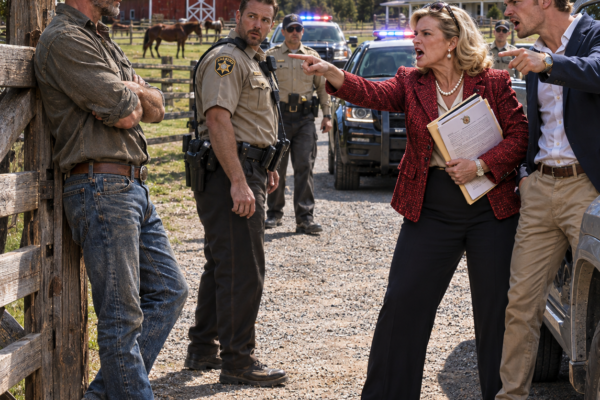
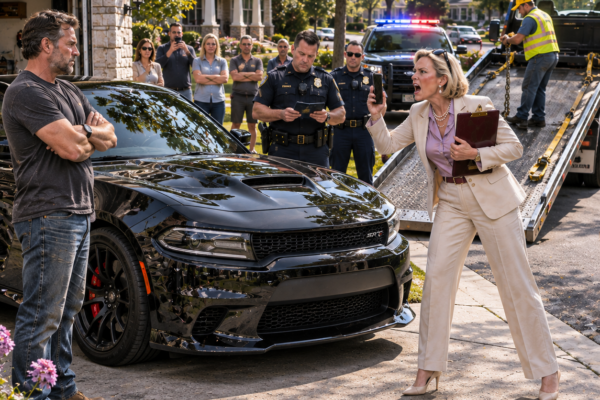
“THAT MAN IS A THIEF—PUT HIM IN HANDCUFFS!” HOA president Brenda Wilson screamed as four police officers surrounded me in my own driveway, accusing me of stealing the classic Chevrolet Camaro I had spent eighteen months restoring with my own hands.
She waved photographs downloaded from the internet, insisted that a Black mechanic like me couldn’t possibly own such an expensive car, and demanded that the officers arrest me before I could produce my ownership documents.
But when I opened the three-ring binder containing my car’s entire history, Brenda made the mistake of accusing me of forgery—and her desperate attempts to force me out of the neighborhood eventually exposed a $112,000 theft that sent her to state prison.
After twelve hours at the family auto shop, all I wanted was a shower, a cold drink, and twenty minutes admiring the most beautiful thing I owned.
My 1967 Chevrolet Camaro SS.
Hugger Orange paint.
Perfect chrome.
A beautifully rebuilt engine that sounded like everything Detroit had gotten right in the 1960s.
I pressed the garage remote.
The door rose.
And somebody screamed.
“THIEF!”
I turned.
Brenda Wilson was charging across her lawn, holding a cell phone against her ear.
“Yes! He’s standing right there! A Black man is stealing my Camaro!”
I looked around.
There was nobody else in my driveway.
“Brenda, what are you talking about?”
“DON’T TOUCH THAT CAR!”
Police sirens sounded in the distance.
My stomach tightened.
She had already called 911.
Two patrol vehicles pulled up, their lights flashing across the orange paint. Four officers stepped out.
I placed my keys on the hood of my work van and kept my hands visible.
An experienced officer named Rodriguez approached.
“Sir, we’ve received a report of a stolen vehicle.”
I nodded toward my garage.
“That vehicle belongs to me.”
Brenda pushed closer.
“HE’S LYING! I bought that Camaro yesterday for forty-five thousand dollars!”
Officer Rodriguez turned toward her.
“Do you have proof of purchase?”
“Of course I do!”
She produced several glossy photographs.
Officer Chen examined them.
“Ma’am, these are photographs from a dealer’s website.”
“It’s the same car!”
“Do you have a vehicle identification number?”
She hesitated.
“The paperwork is being processed.”
I spoke carefully.
“Officers, I can show you eighteen months of ownership and restoration records.”
Rodriguez nodded.
“Go ahead.”
I showed him photographs on my phone.
The rusted body.
The engine installation.
The rebuilt suspension.
The transmission.
Four months of bodywork and painting.
My hands were visible in practically every photograph.
Rodriguez studied the images.
“You did all this yourself?”
“Yes, sir. Third-generation mechanic.”
Brenda interrupted.
“Anybody can download photographs!”
I retrieved the binder from my workbench.
The registration was in my name.
The vehicle identification number matched.
The insurance documents matched.
The receipts established a continuous restoration history.
Brenda stared at the documents.
Then she pointed at me.
“He forged everything! He’s probably running some kind of identity theft operation!”
I looked at Officer Rodriguez.
“There’s one more thing.”
From the back of my binder, I removed a handwritten bill of sale.
Eighteen months earlier, a ninety-three-year-old widow named Eleanor Hutchinson had sold me the rusted remains of her late husband’s Camaro for $3,200.
Her signature was still there.
So was her telephone number.
Officer Rodriguez examined the document.
Then he looked at Brenda.
“Ma’am, this gentleman has provided substantial evidence that he owns this vehicle. You’ve provided photographs of a similar car and no evidence establishing that it belongs to you.”
She opened her mouth.
He continued.
“Knowingly making a false police report can result in criminal charges.”
For the first time that evening, Brenda became quiet.
Then she glanced at me with an expression that made my skin crawl.
“There must have been a misunderstanding.”
I didn’t argue.
I didn’t insult her.
I simply collected my documents.
After the officers departed, I stood beside my Camaro listening to the neighborhood become quiet again.
Several neighbors were watching through their windows.
My hands had begun shaking.
It wasn’t because I was afraid of losing my car.
It was because somebody had deliberately created a situation in which I might never have walked safely back inside my house.
Brenda disappeared into her home.
I closed the garage door.
And I thought the nightmare was over.
On Monday morning, I opened my mailbox and discovered a $200 HOA fine bearing Brenda Wilson’s signature.
By Wednesday, there would be three more.
By the end of the month, I would discover that my neighbor wasn’t simply trying to punish me for owning a car she couldn’t have.
She was desperately trying to get her hands on something worth considerably more.
My house.
PART2
The violation notice was printed on thick paper bearing the Willowbrook Estates association logo.
Unauthorized commercial vehicle storage.
According to Brenda, my Ford Transit work van was incompatible with the residential character of the neighborhood. I had forty-eight hours to remove it and pay the fine.
There was nothing unusual about the van. It was white, well maintained, and carried the words Rodriguez Family Auto on both sides.
It was how I got to work.
It was also how my father had occasionally transported tools between our shop and customers’ vehicles before he retired.
I stood beside my mailbox reading the notice while Brenda power-walked past my driveway.
She slowed down.
“Good morning, Marcus.”
I held up the envelope.
“Something you want to tell me?”
Her smile widened.
“Just maintaining community standards.”
“Funny how those standards became so important after Saturday.”
“I have no idea what you mean.”
“Of course you don’t.”
She glanced at the van.
“You have forty-eight hours.”
Then she continued walking.
I went inside, set the notice on my kitchen table, and called my father.
He answered on the fourth ring.
“What’s broken?”
“Nothing.”
“Then why are you calling this early?”
I laughed.
“Good morning to you, too.”
I explained what had happened with Brenda and the police, followed by the violation notice.
Dad became quiet.
“She actually called the police on you?”
“Yeah.”
“Because you opened your garage?”
“Pretty much.”
He took a deep breath.
“Marcus, listen to me. You’re going to want to get angry. Don’t give her anything she can use against you.”
“I know.”
“And keep every piece of paper.”
I looked at the envelope.
“Already started.”
“Good. A man can argue with another man’s memory. It’s a whole lot harder to argue with a stack of dated receipts.”
That was my father.
Everything came back to records, patience, and doing things properly.
He had taught me to rebuild an engine before I was old enough to drive. His father had taught him, and between the three of us, our family had been keeping vehicles running in the same town for sixty years.
Our business wasn’t particularly glamorous.
We didn’t have a television commercial or a luxurious customer lounge. What we had were customers whose parents and grandparents had trusted our family.
We knew their vehicles.
We remembered their names.
We sometimes knew more about their lives than their doctors did.
I had spent my childhood watching my father explain expensive repairs to people who couldn’t afford them and helping them decide what needed immediate attention and what could wait.
He believed that knowing more than somebody else created an obligation not to exploit them.
Brenda Wilson appeared to have developed the opposite philosophy.
“Dad?”
“Yeah?”
“You think she’s going to keep doing this?”
He didn’t hesitate.
“Probably.”
I looked through the kitchen window.
Brenda was passing my driveway again.
“Then I guess I’d better start another binder.”
Dad chuckled.
“That’s my boy.”
I had purchased my house in Willowbrook Estates shortly after my divorce became final.
It was a modest place with three bedrooms, a decent backyard, and a garage large enough to accommodate my tools and the Camaro.
After the financial and emotional exhaustion of the divorce, I wanted somewhere peaceful.
I wasn’t looking for another complicated relationship.
I wasn’t interested in neighborhood politics.
I wanted to work, come home, restore my car, and occasionally sleep past seven on a Sunday.
My real estate agent assured me that Willowbrook was a friendly middle-class community.
“Everybody mostly minds their own business.”
That statement had probably been worth investigating more thoroughly.
Still, I liked the house.
I liked the quiet streets.
I liked the fact that families walked their dogs in the evenings and children rode bicycles along the sidewalks.
I imagined spending years there.
And because I intended to keep the house, I took the time to review the association documents before closing.
At lunch on Monday, I visited the county courthouse and examined the recorded restrictions and amendments concerning commercial vehicles.
The relevant amendment had been adopted in 2020.
My van had been purchased in 2017.
More importantly, the association’s own documents contained provisions concerning vehicles already owned before the restriction took effect.
I made copies of the relevant records.
I attached my purchase documentation.
Then I prepared a written response disputing the violation and requesting that the association identify the specific basis for applying the later restriction to my vehicle.
I delivered everything to the management office.
The receptionist read the first page.
Then the second.
Her expression changed.
“Oh, dear.”
I looked at her.
“Is there a problem?”
She glanced toward Brenda’s empty office.
“Mrs. Wilson isn’t going to appreciate this.”
I smiled.
“It’s not addressed to her feelings.”
She struggled to suppress a laugh.
“I’ll make sure it’s received.”
“Thank you.”
I requested written confirmation of delivery and left.
That should have been enough.
The association could review its own documents, recognize the problem, and withdraw the notice.
Instead, Brenda sent three more.
One alleged oil stains on my driveway.
Another complained about excessive automotive odors.
The third accused me of operating power tools during prohibited hours.
I read the notices at my kitchen table.
Then I walked outside and examined my driveway.
It was cleaner than the floor of many restaurants.
I washed it regularly.
My tools were stored properly.
There was no evidence of any significant spill.
And the alleged noise incident had occurred during hours when hobby work was permitted under the relevant rules.
Brenda wasn’t discovering violations.
She was manufacturing reasons to create them.
I took photographs.
I recorded the dates.
And I started the binder my father had suggested.
Its first section contained the false vehicle theft report.
Its second contained the association correspondence.
I didn’t know it yet, but that little binder would eventually become part of a case involving dozens of households, multiple investigators, a forensic accountant, and more money than I had ever imagined could disappear from a neighborhood association.
My first significant expense associated with Brenda wasn’t a legal fee.
It was a security system.
Four high-definition cameras covering my driveway, garage entrance, and the relevant portions of my property.
I arranged secure storage for the footage and made sure the cameras were positioned appropriately.
My intention wasn’t to monitor the private lives of my neighbors.
I wanted a reliable record of what happened at my house.
After what Brenda had done with the police, I wasn’t willing to depend on her version of events.
The cameras immediately revealed something unsettling.
She was photographing my property almost every morning.
Sometimes she stood beside the shared boundary with a measuring stick.
Sometimes she took pictures of the garage.
Sometimes she walked past repeatedly, looking toward the work van.
One morning, I counted seventeen passes along my driveway.
I mentioned it to Dad.
“Seventeen?”
“Seventeen.”
“Maybe she’s trying to get her exercise.”
“Dad.”
He laughed.
“Sorry.”
I looked at the footage.
“She really doesn’t like me.”
He became serious.
“Son, she’s already demonstrated that she doesn’t need a good reason to involve the police. Take that seriously.”
“I am.”
“Good.”
I wished I could dismiss Brenda as an eccentric neighbor with too much free time.
But the memory of those patrol vehicles remained vivid.
The flashing lights.
Her screaming.
My decision to place the keys on the van and keep my hands visible.
I knew what the consequences of a misunderstood movement or a false accusation could be.
I didn’t get the luxury of treating her behavior as harmless neighborhood entertainment.
She had deliberately introduced my race into an allegation of criminal conduct.
And she had done it before asking me a single question about the car.
That was something I couldn’t forget.
On Thursday afternoon, a notice appeared in my mailbox announcing an emergency HOA meeting.
The meeting was scheduled for seven that evening.
The notice arrived around four.
Apparently, three hours was the amount of preparation Brenda believed a homeowner deserved before being subjected to a new set of restrictions.
I arrived at the community center carrying the association bylaws on my phone.
Inside, Brenda sat behind a conference table with two other board members.
Clara looked nervous.
Janet looked determined to agree with whatever Brenda said.
I pulled out a chair.
“Where’s everybody else?”
Brenda smiled.
“We have sufficient representation.”
“Really?”
“Yes. Tonight we’re addressing the ongoing problems associated with your activities.”
I sat down.
“Which activities?”
She opened a folder.
“We intend to implement an emergency prohibition on residential automotive repair.”
I stared at her.
“An emergency prohibition?”
“Effective immediately.”
Clara looked down.
Brenda continued.
“Previous violations will carry a five-hundred-dollar penalty.”
I opened the bylaws.
“Section 4.3 requires seven days’ advance notice for matters involving an official vote.”
Brenda’s smile disappeared.
I continued scrolling.
“And Section 4.7 requires five board members for a quorum.”
I looked around the room.
“One. Two. Three.”
Janet shifted in her chair.
I looked back at Brenda.
“Unless you’ve got two more people hiding underneath the table, you don’t have a quorum.”
Clara spoke quietly.
“Perhaps this should be considered a preliminary discussion.”
“That’s fine,” I replied. “But then you can’t vote to impose a new restriction.”
Brenda slammed her folder shut.
“You think you’re so clever.”
“I think I’ve read the bylaws.”
“You come into OUR neighborhood with your people and your activities, and suddenly we’re supposed to change everything for you?”
The room became completely silent.
I looked directly at her.
“My people?”
She realized what she had said.
Then she attempted to recover.
“People who don’t appreciate the standards we’ve established.”
I kept my voice level.
“I bought a house here, Brenda. I didn’t apply for permission to exist.”
Clara stared at the table.
Janet said nothing.
I stood.
“I’ll respond to any valid notices through the appropriate process. But there is no valid vote taking place here tonight.”
Brenda pointed toward the door.
“This isn’t over.”
I collected my phone.
“I figured.”
Outside, the evening air felt unusually good.
I walked home without looking back.
I was sitting in my driveway a little later when my neighbor Tom approached.
He carried two cups of coffee.
“Got a minute?”
“Sure.”
He handed me one.
We sat beside the garage.
For a while, he looked at the Camaro.
“Beautiful car.”
“Thanks.”
Then he sighed.
“Marcus, I think it’s time we had a conversation about Brenda.”
I looked at him.
“You too?”
He laughed without much humor.
“Buddy, you have no idea.”
Tom had lived in Willowbrook considerably longer than I had.
He was a retired postal worker, the kind of man who knew which neighbors were recovering from surgery, which families had recently welcomed children, and whose elderly parents might need help moving a trash can on collection day.
He understood the neighborhood in a way Brenda never had.
When he spoke about the people living there, he used their names.
Brenda generally referred to lot numbers, violations, and property values.
Tom looked toward her house.
“She wasn’t always this bad.”
I took a sip of coffee.
“What happened?”
“She got elected. Then everybody stopped paying attention.”
He explained that the original association had been relatively unobtrusive. It maintained shared spaces, handled basic administrative responsibilities, and occasionally reminded somebody about a neglected property issue.
Then Brenda became president.
She began treating minor disagreements as challenges to her authority.
She developed a reputation for arriving at people’s homes with a clipboard and an expression suggesting she had personally discovered a serious criminal offense.
“Remember the Hendersons?” Tom asked.
I shook my head.
“They moved before you got here.”
He told me about a family with a teenage son who loved basketball.
The hoop stood in their driveway.
Brenda complained about the noise, the placement of the hoop, its appearance, and eventually almost every other aspect of the property.
The Hendersons fought the notices for months.
Then they sold.
“Forty thousand under appraisal,” Tom said.
I looked at him.
“Why?”
“They were exhausted. Had a buyer ready to close quickly. Brenda helped arrange it.”
I became quiet.
“She’s a real estate agent.”
“Exactly.”
Tom continued.
“Then the Patels.”
I recognized the name from another neighbor’s conversation.
“What happened to them?”
“Cooking odors.”
I stared.
“Cooking odors?”
“She called their food culturally inappropriate.”
I put down my coffee.
“You’re kidding.”
“Wish I were.”
He described repeated complaints, hostile conversations, and the family’s eventual decision to move somewhere they felt more comfortable.
Brenda had become involved in the sale of their house, too.
“There’s another family,” Tom added. “Same general story. Different excuses.”
I looked toward my own house.
Its estimated value was approximately $380,000.
The thought arrived unexpectedly.
“What if she wants me to sell?”
Tom looked at me.
“That’s crossed my mind.”
For several seconds, neither of us spoke.
I had assumed Brenda’s harassment began with her humiliation over the Camaro.
But if other homeowners had experienced similar treatment before I arrived, perhaps there was something more organized behind her behavior.
Perhaps the car wasn’t the cause.
Perhaps it was simply the excuse she needed.
Tom finished his coffee.
“Most of us think she’s lost it, Marcus. But everybody’s been dealing with her individually.”
I nodded.
“Divide and conquer.”
“Pretty much.”
He stood.
“Coffee tomorrow?”
“Absolutely.”
He smiled.
“I think there are some people you ought to meet.”
At seven-fifteen the following morning, my doorbell rang.
I opened the door expecting an unusually enthusiastic delivery driver.
Instead, I found a city code enforcement officer named Dave Martinez standing on the porch.
He held a clipboard.
“Mr. Rodriguez?”
“Yes.”
“Sorry to bother you this early. We’ve received a complaint about an unlicensed automotive repair business operating at this address.”
I closed my eyes briefly.
“Let me guess. Anonymous?”
He nodded.
“That’s correct.”
I stepped aside.
“Come take a look.”
My garage was my sanctuary.
Every socket had its place.
My tools were organized on pegboards.
The workbench was clean.
Automotive supplies were stored appropriately.
And the Camaro occupied the central portion of the space.
Dave entered and looked around.
“Wow.”
I smiled.
“Is that a good wow?”
He laughed.
“This is cleaner than the shop where I get my truck serviced.”
I explained that I worked at our family’s professional repair business and restored vehicles at home as a hobby.
He examined the space.
He asked about customers, payments, business records, and whether commercial activities were being conducted at the address.
I answered everything.
He found no evidence of the illegal operation described in the complaint.
Before leaving, he admired the Camaro.
“Sixty-seven?”
“SS.”
“Nice.”
“Thanks.”
He completed his documentation.
“I’m recording that I found no evidence supporting the allegation.”
I nodded.
“Could I receive a copy of the inspection findings?”
“Sure.”
As he stepped toward his truck, he paused.
“I’ve been called out to this neighborhood four times this month.”
I looked at him.
“Same kind of complaint?”
“Different complaints. Very similar voice.”
He smiled faintly.
“Somebody needs a hobby that doesn’t involve my department.”
After he departed, I added the inspection report to my growing collection.
Then I went to meet Tom.
I was beginning to appreciate how much time Brenda was spending trying to make me appear dishonest.
Every independent inspection seemed to establish the opposite.
And yet she kept going.
Tom introduced me to Mike Patterson, a semi-retired corporate attorney who lived three streets away.
Mike had been cited for using an unauthorized typeface on his mailbox.
When he told me that, I assumed he was making a joke.
He wasn’t.
“I sent her a letter requesting the approved font specifications,” he explained.
“What happened?”
“She sent another violation.”
I laughed.
“Of course.”
There was also Sarah Morgan.
Sarah was a forensic accountant who had been threatened with fines after planting flowers Brenda claimed hadn’t received architectural approval.
She brought a folder containing correspondence concerning the dispute.
I examined it.
“She objected to those?”
“Apparently, purple flowers threaten civilization.”
Tom laughed.
Sarah smiled.
Then she looked at the documents I brought.
Her expression changed when she reached the account of the police incident.
“She told them you’d stolen your own car?”
“Yes.”
“Did she actually make a reference to your race?”
I nodded.
Sarah looked at Mike.
He took a breath.
“Marcus, we need to keep this separate from ordinary HOA disagreements. There are potentially serious issues here.”
“I understand.”
“And we need evidence for everything we intend to allege.”
I smiled.
“That’s something I can provide.”
Mike looked at my binder.
“Your father teach you that?”
“Every day for thirty years.”
He laughed.
“Tell him I approve.”
We discussed our separate experiences with Brenda.
The more we talked, the clearer it became that her behavior wasn’t directed exclusively toward people who were actually violating established restrictions.
She seemed to focus on homeowners who questioned her.
People who refused to accept her interpretation of the rules.
People who didn’t immediately become uncomfortable when she mentioned legal consequences.
And sometimes, people whose identities or lifestyles she appeared to consider inconsistent with her preferred image of Willowbrook.
Sarah suggested that we begin collecting records from other residents.
“Not rumors,” she said. “Actual documents.”
Mike agreed.
“Exactly. Notices, written responses, photographs, meeting records, financial disclosures.”
Tom leaned back.
“Maybe if enough of us complain together, somebody will finally listen.”
I looked at the three of them.
For the first time since Brenda called the police, I didn’t feel as though I was standing alone in my driveway.
And I had no idea how important that feeling was about to become.
Brenda’s next attempt involved my insurance company.
A certified letter informed me that concerns had been raised about the fire risk associated with activities in my garage.
According to the complaint, my property threatened neighboring homes.
An inspection was arranged.
I had spent years dealing with insurance requirements connected to automotive work and vehicle restoration, so I understood the importance of maintaining appropriate safety arrangements.
Still, I resented having to prove myself again.
My insurance representative, Bill, arrived on Tuesday afternoon.
He entered the garage and immediately became distracted by the Camaro.
“That’s beautiful.”
I smiled.
“Thank you.”
He leaned toward the engine bay.
“You rebuild this?”
“Every weekend for eighteen months.”
He shook his head.
“Somebody’s put a whole lot of love into this thing.”
I laughed.
“Love and a whole lot of money.”
He smiled.
“Always the money.”
Then he conducted the inspection.
He reviewed the storage of automotive supplies, the electrical arrangements, the fire safety equipment, and the actual activities being conducted in the garage.
When he finished, he looked at me.
“Whoever made this complaint really wants to cause you trouble.”
“That’s an understatement.”
He completed his report.
“I’ve found nothing supporting the allegations we’ve been given.”
I nodded.
“Thank you.”
He looked toward the Camaro again.
“Mind if I take another look?”
“Go ahead.”
For ten minutes, we discussed old Chevrolets.
Then he left.
The insurer subsequently sent Brenda correspondence directing her to stop submitting unsupported allegations and warning her about the potential consequences of providing false information.
I read the relevant communication with a mixture of relief and frustration.
Every time Brenda invented a new problem, somebody with actual expertise arrived and determined that the problem didn’t exist.
I wanted to believe she would eventually recognize the pattern.
Instead, she abandoned the professionals and turned to the internet.
The Facebook group was called Willowbrook Neighborhood Watch.
It appeared almost overnight.
Brenda’s first significant post contained photographs of my van and garage.
She didn’t directly accuse me of stealing another vehicle.
She didn’t openly repeat the language she had used during the emergency meeting.
Instead, she wrote about maintaining the character of established neighborhoods and ensuring that certain activities occurred in appropriate industrial areas.
The implication was obvious.
Tom showed me the post over coffee.
“Twenty-three members in the first hour.”
I glanced through the comments.
Several people expressed support for Brenda.
Others began questioning why she was posting photographs of a specific homeowner’s property.
One resident wrote:
Marcus fixed my wife’s flat tire when she was stranded. He’s a good neighbor.
Another asked:
Didn’t code enforcement already inspect his garage?
Then somebody mentioned the Hendersons.
Brenda removed the comment.
Another person asked why it had disappeared.
She removed that one, too.
Within hours, the group had become a collection of arguments concerning selective enforcement, censorship, and Brenda’s treatment of homeowners.
Sarah sent me screenshots.
Mike advised me not to get drawn into the arguments.
I followed his advice.
I didn’t post photographs of Brenda.
I didn’t make allegations that hadn’t been investigated.
I didn’t respond to every insult.
Instead, I retained the material relevant to the escalating dispute.
That Sunday morning, however, the situation changed from irritating to genuinely frightening.
I opened my garage door and stepped outside.
Something glittered on the driveway.
I stopped.
Roofing nails.
Approximately two dozen of them.
I stared at the metal scattered across the concrete.
My first thought was the Camaro.
The tires I had carefully selected.
The possibility of driving over one without noticing.
Then I thought about my work van.
And about the fact that damaged tires could create a serious danger once I was traveling at highway speed.
I backed away and contacted the police.
Officer Morgan arrived.
He examined the driveway and photographed the evidence.
“Have you got cameras?”
I nodded.
We reviewed the relevant recording.
It showed a figure in a dark hoodie approaching my property during the night.
The image wasn’t clear enough for me to establish the person’s identity conclusively.
But the person’s movements looked familiar.
I explained why I suspected Brenda, while making it clear that the recording alone didn’t prove it.
Morgan nodded.
“Good. Stick to what you can establish.”
I showed him the earlier records.
The original false report.
The complaints.
The Facebook material.
The association notices.
He looked through them.
“You’ve been dealing with quite a bit.”
“Feels like it.”
He handed back the documents.
“Keep recording incidents. If the behavior escalates, we need to understand the whole pattern.”
After he departed, I stood beside my van.
For the first time, I didn’t feel comfortable simply backing out of my own driveway.
I examined the ground.
I checked around the tires.
And I looked toward Brenda’s house.
The curtains were closed.
That afternoon, I went to visit my father.
I didn’t tell him how frightened I had become until we were sitting alone behind the family shop.
He listened quietly.
Then he put a hand on my shoulder.
“Marcus, you’ve worked too hard for that house to let somebody frighten you out of it.”
I nodded.
“But don’t confuse staying with doing everything alone.”
I thought about Tom, Sarah, and Mike.
“I won’t.”
He squeezed my shoulder.
“Good.”
Three days later, I discovered an anonymous letter in my mailbox.
And this time, whoever wrote it had abandoned even the pretense that the dispute was about neighborhood appearance.
The letter contained only two sentences.
Your kind doesn’t belong here.
Leave voluntarily or face escalating consequences.
I read it once.
Then I read it again.
There was no signature.
No return address.
Just those words printed on an ordinary sheet of paper.
I sat in my kitchen holding the letter, and suddenly every conversation I’d had with Brenda seemed to acquire another meaning.
The way she had looked at my Camaro.
The way she described me to the dispatcher.
The reference to “your people” at the emergency meeting.
The Facebook posts about protecting the character of an established community.
I had spent my entire adult life working hard, paying my bills, and treating other people with respect.
My grandfather had taught me those values.
My father had reinforced them.
I had purchased my house with money I earned honestly.
And now somebody was telling me that none of those things mattered because I was the wrong kind of person to live there.
I felt anger rising inside me.
Not the anger I experienced when a stubborn bolt refused to move.
Not the irritation I felt when somebody questioned a repair estimate.
Something deeper.
I thought about my grandfather.
About the things he must have experienced while building our family’s reputation decades earlier.
I thought about the stories he occasionally told me about being forced to demonstrate competence to people who had already decided he possessed none.
He had taught me to take pride in my work because nobody could honestly take that pride away from me.
But I wondered how he would have felt seeing his grandson sitting in a house he legally owned, holding a letter telling him to leave because of who he was.
I called the police.
Detective Martinez, who had become involved in the investigation of the escalating incidents, examined the letter and discussed the surrounding circumstances.
She explained that the threatening language and possible discriminatory motivation were important matters for investigators to assess.
I mentioned that the paper appeared similar to material used in the HOA notices.
She examined it.
“That may be worth comparing,” she said. “But we shouldn’t assume it establishes who wrote this.”
I nodded.
“I understand.”
She looked through the documents.
“Has anybody else received anything similar?”
“Not that I know of.”
“Ask them to report it directly if they have.”
I thanked her.
Before leaving, she looked at me.
“Mr. Rodriguez, are you considering moving?”
I hesitated.
The truthful answer was that I had thought about it.
There had been evenings when I imagined how much easier everything might become if I simply sold the house and found somewhere else to live.
Somewhere I could open my garage without worrying about police sirens.
Somewhere nobody watched my driveway seventeen times a morning.
But then I thought about Tom’s stories concerning the Hendersons and the Patels.
If Brenda had learned that harassment could force people to sell, my departure might simply encourage her to select another target.
I looked at the detective.
“No.”
She nodded.
“Keep us informed.”
After she left, I called Tom.
We arranged to meet that evening.
And when I showed the letter to the people who had begun gathering around my little dispute, nobody suggested that I simply ignore it.
Sarah read it.
Her face hardened.
Mike asked for a copy for the relevant records.
Tom shook his head.
“This isn’t Willowbrook,” he said.
I looked at him.
“Maybe it is.”
He stared at the letter for a moment.
Then he answered.
“Not the Willowbrook we’re going to let it become.”
By the end of that week, six households had begun working together.
Linda Martinez, a high school teacher, helped organize the incident records. Carlos Mendes, a local contractor, understood residential construction and was familiar with the frustration of dealing with arbitrary restrictions.
Each person brought a different experience.
Each possessed information that hadn’t seemed particularly significant when viewed alone.
But when we put those experiences together, a pattern began appearing.
Linda spread several violation notices across a table.
“Look at the wording.”
Some of the letters sent to different homeowners contained almost identical language, despite describing completely different alleged offenses.
Mike examined them.
“She’s using standardized demands and then adapting them to whatever she wants to challenge.”
Sarah looked at a set of financial disclosures.
“And somebody’s paying for all this correspondence.”
Tom shook his head.
“We pay dues so she can harass us?”
“That’s one possibility,” Sarah replied. “I want to understand where the money actually goes.”
She asked whether anybody possessed copies of complete budgets, vendor invoices, and financial statements.
Several people had partial records.
Nobody seemed to have a satisfactory understanding of the association’s overall financial position.
Brenda had regularly discouraged detailed questions during meetings.
She described financial matters as complicated and sometimes suggested that individual homeowners had no reason to examine transactions that had already received board approval.
Sarah looked at me.
“Marcus, can you get copies of whatever corporate records are publicly available?”
“I can try.”
Mike explained which documents we could appropriately request and which would require cooperation from the association or further legal process.
Tom looked around the room.
“What if we find something?”
Sarah closed one folder.
“Then we establish exactly what it is before we start making accusations.”
I liked that answer.
Brenda had spent months making accusations first and looking for evidence afterward.
We were going to do things in the opposite order.
The county courthouse basement smelled of old paper and coffee that had probably been sitting around since the beginning of the week.
I took Friday afternoon off from the shop and went looking for records.
A clerk directed me toward the relevant public filings.
I spent approximately three hours examining documents, comparing dates, and taking notes.
At first, the work was painfully boring.
There were routine filings.
Names of officers.
Changes in addresses.
Statements concerning ordinary association expenditures.
Then I noticed a payment reference to an entity called BNB Property Solutions.
Fifteen thousand dollars for consulting services.
The available description didn’t explain what those services consisted of.
I wrote down the name.
A little later, I found payments associated with Brenda’s Best Gardens.
Eight thousand five hundred dollars for landscaping.
I thought about the community landscaping work.
I couldn’t remember anything substantial that corresponded with the expenditure.
Then I found Wilson and Associates.
Twelve thousand dollars in legal expenses.
The dates seemed interesting.
The payments began around the period when Brenda’s own divorce proceedings were creating considerable personal financial pressure.
I wrote that down, too.
Individually, none of the entries established that a crime had occurred.
Perhaps the companies had performed legitimate services.
Perhaps there were invoices I hadn’t seen.
Perhaps Brenda had disclosed relevant relationships.
I needed more information.
I checked the business records.
Then I stared at the addresses.
BNB Property Solutions.
Brenda’s Best Gardens.
Wilson and Associates.
The records connected all three to the same residential address.
1247 Maple Lane.
Brenda Wilson’s house.
I leaned back in my chair.
“Holy hell.”
The clerk glanced toward me.
“Everything okay?”
I nodded.
“Sorry.”
I returned to the records.
BNB Property Solutions was registered to Brenda.
Brenda’s Best Gardens had been dissolved the previous year.
The available filings connected Wilson and Associates to her former husband’s legal practice.
The records didn’t demonstrate why all those payments had been made, but they raised extraordinarily serious questions.
I continued working.
By the time I finished the preliminary review, approximately $78,000 in transactions required explanation.
Seventy-eight thousand dollars.
From the same neighborhood where people were being fined over mailbox fonts and flower choices.
I thought about the homeowners paying their association dues every month.
Tom.
Sarah.
Mike.
Linda.
Families trying to manage mortgages, groceries, school expenses, and medical bills.
They had trusted the association to use their money for legitimate purposes.
What if somebody had been exploiting that trust?
I copied the relevant material.
The clerk charged me seventeen dollars.
I paid without hesitation.
Then, before leaving, I decided to examine another set of records.
The property transactions.
The sales involving families Tom had mentioned.
And finally, the records associated with Brenda’s own house.
That was where I discovered the detail that connected her financial troubles with the urgency of her campaign against me.
Her house was in default.
The property records and associated proceedings revealed considerable financial obligations.
Approximately $23,000 in unpaid association dues and related charges were being claimed against her property.
There were other debts, tax concerns, legal expenses, and foreclosure proceedings.
A hearing was scheduled approximately four weeks later.
I stared at the dates.
Brenda Wilson.
The president who threatened homeowners over minor violations.
The woman demanding that I pay two hundred dollars because she disliked my work van.
The woman who described herself as the guardian of property values.
She hadn’t been meeting her own association obligations.
Her own house was in danger.
And if the pattern surrounding those earlier sales meant what I suspected it might mean, she had been looking for a way to generate money quickly.
I thought about my $380,000 house.
A recently divorced homeowner.
A man living alone.
Somebody she apparently believed could be intimidated.
She might have assumed I would become desperate enough to sell below market value.
Then she could involve herself in the transaction.
Receive a commission.
Perhaps arrange another profitable deal with one of her investor contacts.
I couldn’t yet prove that was her intention.
But the similarities to what happened with the earlier families were impossible to ignore.
I collected my copies and walked outside.
Then I called Tom.
“You sitting down?”
“Why?”
“Because I think we just found out why Brenda wants me gone.”
We gathered in Tom’s garage the following morning.
He had set up a folding table, several chairs, and enough coffee to keep a small repair shop operating for an entire weekend.
Sarah arrived carrying her laptop.
Mike brought a notebook and several folders.
Linda appeared with poster board and colored markers.
Carlos brought breakfast.
“This looks serious,” he said.
I spread out the financial records.
“It’s about to.”
Sarah examined the entries.
She didn’t react dramatically at first.
She checked the dates.
Compared the business information.
Reviewed the documents supporting the payments.
Then she removed her glasses.
“Marcus, where did you get these?”
I explained.
She nodded.
“Good. We can establish where the records came from.”
She looked back at the documents.
“These relationships should have been disclosed and the expenses properly supported.”
Tom leaned forward.
“How bad is it?”
Sarah pointed toward the payments.
“Right now, approximately seventy-eight thousand dollars in transactions need substantial explanation.”
“Stolen?”
“Potentially misappropriated. I want the complete records before making a final conclusion.”
Mike nodded approvingly.
“Exactly.”
Linda began organizing the dates associated with the earlier homeowners.
The Hendersons.
The Patels.
The other family that had moved.
She examined the complaints, the timing of the sales, and Brenda’s professional involvement.
Then she placed my first violation notice beside the developing timeline.
“Look at the progression,” she said.
“Initial complaints. Escalation. More expensive demands. Then pressure to sell.”
Carlos leaned over.
“And when somebody sells, Brenda knows people interested in buying.”
Tom stared at the timeline.
“That’s disgusting.”
I looked at the names.
There were families behind those entries.
Children who had changed schools.
Adults who had left neighborhoods where they had expected to remain.
People who might have believed they had simply been unlucky enough to live beside an unreasonable HOA president.
If the records supported what we suspected, their suffering had been financially useful to somebody.
Mike began discussing the next steps.
We would pursue association records through the proper channels.
Sarah would coordinate an independent financial review.
We would encourage residents to report harassment and preserve relevant correspondence.
We would provide material concerning potential criminal activity to investigators instead of attempting to decide the cases ourselves.
And with three board positions due for election, we would organize candidates committed to transparency.
Tom would run for president.
Sarah would seek responsibility for the financial affairs.
Mike would pursue a board position through which he could help address governance and legal compliance.
Linda smiled.
“I’ll organize the homeowners.”
Carlos nodded.
“I’ll help anybody who wants their property security improved.”
I looked around the garage.
A retired postal worker.
An accountant.
An attorney.
A teacher.
A contractor.
And me.
A mechanic who had moved into Willowbrook because he wanted a peaceful place to restore his car.
Nobody around that table had originally intended to become involved in a campaign against the association president.
But every person had reached the point where remaining silent felt more dangerous than speaking.
Tom looked at me.
“Marcus, she’s going to find out.”
“I know.”
“She’s going to get desperate.”
“I know that, too.”
Mike folded his hands.
“Then we need to remain careful. No retaliation. No confrontations that don’t need to happen. We let the evidence establish what she’s done.”
I nodded.
My father would have approved.
And somewhere inside the white BMW parked outside Brenda’s house, the woman who believed she controlled Willowbrook was beginning to realize that people were asking questions she couldn’t answer.
On Monday morning, Brenda was pacing her driveway with her phone pressed against her ear.
I could hear her voice from inside my kitchen.
“We need an emergency meeting! TONIGHT!”
I looked through the window.
She was gesturing furiously.
“I don’t know what they’ve been telling people, but this has gone far enough!”
I returned to my coffee.
A little later, Clara arrived at Brenda’s house.
Janet followed.
Neither looked particularly enthusiastic.
That afternoon, every household received a notice announcing a special assessment of five hundred dollars.
The money was supposedly necessary to protect the association against outside agitators attempting to destabilize community governance.
The notice specifically referred to threatened litigation and the need for immediate legal representation.
I laughed when I read it.
I had been living in Willowbrook for months.
I owned property there.
I paid association dues.
I wasn’t an outside agitator.
Neither was Tom.
Neither was Sarah.
Neither was Mike.
We were homeowners asking what happened to our money.
Tom called.
“Have you seen this?”
“Five hundred dollars.”
“She’s unbelievable.”
“Has the assessment actually been approved?”
“Not through any procedure I’m aware of.”
Mike began reviewing the notice and the circumstances surrounding it.
Meanwhile, Tom provided information concerning statements Brenda had made during her emergency gathering.
A recording he had obtained captured her discussing the financial inquiries.
Mike advised that the recording and the circumstances of its creation be reviewed before anybody relied on it in a legal proceeding.
But what Brenda could be heard saying was revealing.
“They’re investigating our finances. I don’t know how much they know, but we need to control the narrative before this gets out of hand.”
Clara’s voice followed.
“Brenda, maybe we should just—”
“No! I’ve worked too hard building this community to let them destroy everything.”
There was a pause.
Then Brenda continued.
“If I have to leave town, fine. But I’m not going down alone.”
Sarah listened to the recording.
She looked at Mike.
“That’s concerning.”
He nodded.
“Especially considering the financial records.”
I thought about the special assessment.
If Brenda could persuade the residents to provide another five hundred dollars per household, she would suddenly have access to a substantial amount of money.
Money she claimed was necessary to defend the association.
At precisely the moment her own financial difficulties were becoming impossible to conceal.
I wondered how often she had used the organization’s money to solve her personal problems.
Sarah was working to answer that question.
And while she did, Brenda made another decision that placed her behavior directly in front of my security cameras.
I discovered the footage early Thursday morning.
The recording showed Brenda approaching the rear portion of my property during the night.
She was wearing dark clothing.
She carried several items, some of which she placed near the garage.
I watched the recording twice.
Then I called the police.
I didn’t confront her.
I didn’t touch anything unnecessarily before the relevant items could be examined.
And when another code enforcement complaint arrived alleging an environmental problem, I showed the inspector the footage.
Several containers of motor oil had been left near my garage.
The inspector examined them.
They appeared newly purchased.
There was no evidence establishing the kind of contamination described in the complaint.
I showed him the recording.
He looked from the screen to the containers.
Then back to me.
“Is this the person making the complaint?”
“That’s Brenda Wilson, the HOA president.”
He shook his head.
“I’m going to document exactly what I’m seeing.”
I thanked him.
He took the necessary photographs and prepared his findings.
Another report.
Another independent witness.
Another incident in which Brenda’s attempt to manufacture evidence produced evidence against her.
Later that afternoon, I received a telephone call from Detective Martinez.
The investigators wanted copies of the relevant recordings and documentation.
I made sure they received them.
When I finished, I sat alone inside my garage.
The Camaro stood in front of me.
The sunlight through the open door reached its front fender.
I ran my hand gently along the polished surface.
I remembered the first day I saw the car at Eleanor Hutchinson’s estate sale.
Most of the people walking around her property had been looking at furniture, tools, and household belongings.
I had wandered toward the old vehicles.
Then I saw the Camaro.
The paint was almost gone.
Rust had consumed portions of the body.
The interior was in terrible condition.
But the basic shape was there.
I could see what it might become.
Eleanor approached slowly.
“Interested in that old thing?”
I smiled.
“Yes, ma’am.”
She looked at it.
“My husband always said he was going to finish it.”
I nodded.
“Never quite got around to it?”
She smiled sadly.
“There’s never as much time as you think.”
We talked.
She told me about her husband and the cars he had collected.
Eventually, we agreed on $3,200.
Before I left, she held my hand.
“Promise you’ll bring it back when you’re finished.”
“I will.”
She smiled.
“I’d like to see what he was dreaming about.”
I remembered those words throughout the restoration.
Whenever the work became frustrating, whenever something cost more than I expected, whenever I became tired enough to wonder whether I should have chosen an easier project, I remembered Eleanor’s expression.
The car wasn’t simply a possession.
It represented the ability to take something neglected and make it valuable again.
It represented my grandfather’s skills, my father’s patience, and a promise I had made to a ninety-three-year-old widow.
And now Brenda Wilson had turned that car into the starting point of a campaign designed to convince me that I didn’t deserve the life I’d built.
I looked at the footage again.
Then I closed the computer.
She wasn’t going to decide that for me.
The following Saturday, Carlos was helping Linda install security equipment on her property.
Brenda approached him while he was working.
According to Carlos, she began the conversation by claiming that I was paying people to lie about her.
He disagreed.
She then produced an envelope.
“There’s two thousand dollars here.”
Carlos looked at her.
“What’s that for?”
“Stop helping Marcus. Forget about these cameras. Stop participating in this harassment campaign against me.”
Carlos continued working.
“I’m helping my neighbors protect their property.”
Brenda became irritated.
“Everybody suddenly thinks he’s some kind of hero.”
“I think he’s a neighbor who wants to be left alone.”
She shook her head.
“That man has turned the entire community against me.”
Carlos suggested she speak with her attorney.
Brenda raised her voice.
“I don’t need another lawyer! I NEED THIS NEIGHBORHOOD BACK UNDER CONTROL!”
Carlos preserved a record of the encounter and reported it.
When he later told me what happened, I stared at him.
“She offered you two thousand dollars?”
He nodded.
“Cash.”
I shook my head.
“While trying to collect another five hundred from everybody else?”
He laughed.
“She’s got an interesting financial strategy.”
I wasn’t laughing quite as much.
The attempted payment suggested Brenda wasn’t simply annoyed by our documentation efforts.
She was frightened by them.
She wanted people to stop collecting information.
She wanted the cameras gone.
She wanted our conversations to end.
And she appeared increasingly willing to offer money or make threats to accomplish those things.
Mike advised Carlos to provide the relevant information to the authorities.
Sarah added the date to the broader timeline.
Linda contacted the other residents to remind them not to engage in unnecessary arguments with Brenda.
We were beginning to understand that the final stages of her campaign could become considerably more dangerous than the earlier ones.
Unfortunately, Brenda still had one weapon she had demonstrated a willingness to use against me.
The police.
On Sunday evening, several neighbors were visiting my garage.
We were discussing a transmission problem and looking at some mechanical components.
Carlos was there.
Tom was there.
Another neighbor had stopped to ask a question concerning his vehicle.
We weren’t conducting a commercial transaction.
We were doing what neighbors who shared an interest in cars sometimes did.
Talking about cars.
Then patrol lights appeared outside.
I looked toward the driveway.
My entire body tightened.
Officer Morgan stepped out of one of the vehicles.
I placed the tool I was holding on the workbench.
“Evening, officer.”
“Mr. Rodriguez.”
He looked around.
“We’ve received a report that you threatened someone with a weapon.”
I stared at him.
“What?”
Tom immediately stood.
“He’s been here with us.”
Morgan looked at the people present.
“Who reported it?”
I already knew.
Brenda appeared near the property boundary.
“THAT’S HIM!”
Morgan turned toward her.
She pointed.
“He threatened me!”
I kept my hands visible.
“What confrontation are you talking about?”
She claimed I had approached her in the driveway and threatened her during an argument.
The three people with me knew that conversation hadn’t happened as she described it.
The security recordings could also be reviewed.
Morgan spoke separately with the relevant people and assessed the information.
The allegation fell apart.
There was no supporting evidence.
The witnesses contradicted Brenda’s account.
And the available documentation established that I had been occupied inside my garage.
Morgan approached her.
“Ma’am, we’ve now received multiple unsupported reports involving this gentleman.”
She shook her head.
“He’s manipulating everybody!”
Morgan remained calm.
“Knowingly providing false information to the police is serious. You have been informed of that before.”
She looked toward me.
“He’s dangerous!”
Morgan glanced at the garage.
Tom stood beside the workbench.
Carlos had grease on his hands.
Another neighbor looked absolutely bewildered.
Morgan returned his attention to Brenda.
“Ma’am, I need you to stop.”
She stared.
Then she turned and walked toward her house.
I watched her go.
When the officers eventually departed, I sat down heavily.
Tom approached.
“You okay?”
I nodded.
Then shook my head.
“No.”
He sat beside me.
I took a breath.
“She keeps doing this.”
“I know.”
“She keeps telling the police I’m some kind of criminal.”
Tom looked at me.
“We know you’re not.”
I turned toward him.
“But the officers who respond don’t always know me, Tom.”
He became quiet.
“Every time that happens, I have to hope somebody listens before something goes wrong.”
Carlos lowered himself into a chair.
Nobody said anything for a while.
I continued.
“She’s making me afraid to do ordinary things in my own house.”
Tom put a hand on my shoulder.
“You shouldn’t have to live that way.”
I swallowed.
“I just wanted to fix my car.”
He nodded.
“I know, buddy.”
The other men stayed with me that evening.
They didn’t make speeches.
They didn’t tell me how courageous I needed to be.
They simply remained there until the shaking in my hands stopped.
And I realized that Brenda had badly miscalculated when she decided I was isolated.
Because the people standing in my garage weren’t simply witnesses anymore.
They were my friends.
The following morning, Sarah sent the preliminary audit findings.
I opened the report during my lunch break.
The initial estimate of $78,000 had increased.
The more complete records revealed additional questionable expenditures, inflated charges, and payments for services that couldn’t be adequately substantiated.
The revised figure was approximately $96,000 over thirty months.
I stared at the number.
Then I called Sarah.
“Ninety-six?”
“That’s the current supported estimate.”
“Are you finished?”
“Not yet.”
I leaned back.
“How much worse can it get?”
She sighed.
“I’m not going to speculate. But there are still records we’re reviewing.”
She explained the findings carefully.
Certain vendor payments lacked appropriate supporting documentation.
Some charges appeared to include amounts exceeding the value of the services actually provided.
There were related-party transactions that hadn’t been handled transparently.
And the records increasingly suggested that money collected from homeowners had been redirected toward Brenda’s personal financial obligations.
I closed the report.
“Sarah, how did nobody notice?”
“People trusted the reports they were given.”
“Even the other board members?”
“Some apparently didn’t ask enough questions. We’re trying to establish what each person knew.”
I thought about Clara.
Janet.
The emergency meeting.
The way they had sat beside Brenda without challenging her.
Perhaps they had been frightened of her.
Perhaps they had been careless.
Perhaps they simply believed that somebody else was examining the details.
Whatever the explanation, their willingness to remain silent had helped create the environment in which Brenda could operate.
I looked at the report again.
Ninety-six thousand dollars.
I thought about the $3,200 I had paid Eleanor for the Camaro.
The months I had saved for replacement parts.
The weekends I had spent doing work myself because I couldn’t afford to hire somebody else.
Brenda appeared to have redirected more money than many homeowners could save in several years.
And she had done it while telling the rest of us that protecting the community was her highest priority.
I asked Sarah what would happen next.
“We finish the audit. Mike coordinates with the appropriate people. We provide the evidence.”
I nodded.
Then she added, “Marcus, be careful.”
“I will.”
“I mean it. She’s cornered.”
I understood.
Unfortunately, the advice proved relevant almost immediately.
Because the next time Brenda was captured on a security camera, she wasn’t approaching my garage.
She was inside the HOA management office, destroying the very records Sarah needed.
The management office alarm was triggered during the night.
When Officer Rodriguez arrived, he discovered Brenda inside the building, surrounded by shredded documents.
The office’s security system had recorded her entering and moving through the administrative area.
She had accessed the records without proper authorization and was destroying financial material connected to the association.
By then, the investigators had already received extensive documentation concerning her activities.
The scene inside the office provided another important piece of evidence.
Officer Rodriguez ordered Brenda to step away from the equipment.
She looked at him.
“You don’t understand!”
He repeated his instruction.
“They’re destroying everything I’ve built!”
She was placed under arrest.
According to the account that later became available, she continued talking about how perfect the neighborhood had been before certain people arrived.
Nobody needed to ask whom she meant.
When Tom told me what happened, I was standing beside a vehicle at the shop.
“She’s been arrested?”
“Yep.”
“For what?”
“She was shredding association records.”
I stopped working.
“Sarah’s going to love that.”
Tom laughed.
“She’s already asking which documents were destroyed.”
I looked toward the tools on my bench.
For months, Brenda had attempted to get me arrested.
She had called the police.
She had accused me of theft.
She had alleged that I threatened her.
She had questioned the legitimacy of my work.
She had attempted to convince everybody that I was a danger to the neighborhood.
Now Officer Rodriguez, the same officer who examined my Camaro ownership documents on the first evening of this nightmare, had arrested her inside an office where she was trying to destroy evidence.
I couldn’t have invented a more appropriate reversal.
Her bail was set at $25,000.
She remained in county custody for three days.
And during that period, Clara made a decision that changed her relationship with Brenda permanently.
For years, Clara had been Brenda’s reliable supporter.
She had sat beside her during meetings.
She had voted with her.
She had frequently looked uncomfortable when Brenda became particularly aggressive, but she rarely challenged her.
I had sometimes wondered why.
Later, Clara admitted that she had been frightened of becoming Brenda’s next target.
She had seen what happened to homeowners who disagreed with her.
She believed that remaining close to Brenda protected her from the worst of that behavior.
But once the financial allegations emerged and Brenda was arrested, Clara began to understand how dangerous that loyalty had become.
She visited Brenda while she was in custody.
During their conversation, Brenda made an extraordinary proposal.
Information concerning the exchange, including a recording, was subsequently provided for appropriate legal review.
Brenda claimed she had cash hidden at her house.
Fifty thousand dollars.
She wanted Clara to help her leave.
“We can both disappear before this gets worse.”
Clara refused.
Brenda continued pressing her.
“We can start over somewhere. They don’t know us.”
Clara refused again.
When the conversation was later discussed with our group, Mike’s expression became grim.
“This needs to go to the investigators.”
Sarah looked at the financial records.
“Fifty thousand dollars?”
Tom shook his head.
“And she’s been telling us the HOA needs emergency legal money.”
I looked toward Clara.
She was crying.
“I’m sorry,” she whispered.
Nobody immediately answered.
She continued.
“I should’ve stopped helping her a long time ago.”
Tom took a breath.
“Yes, you should have.”
Clara wiped her face.
“I thought she knew what she was doing.”
Sarah looked at her.
“She did know what she was doing. That’s the problem.”
Clara lowered her head.
I studied her.
I remembered the emergency meeting.
The way she had stared at the table when Brenda referred to “your people.”
I remembered wondering whether anybody in that room understood how humiliating it was to hear those words spoken about me.
Clara could have objected.
She hadn’t.
But now she was choosing to cooperate.
That choice mattered, even if it couldn’t erase her previous failures.
“Tell the investigators everything,” I said.
She nodded.
“I will.”
“And don’t protect anybody because you’re embarrassed about your own decisions.”
She looked at me.
“I understand.”
I hoped she did.
Willowbrook had already suffered enough because people were afraid to challenge Brenda Wilson.
Thursday evening’s emergency neighborhood meeting was unlike anything I had witnessed since moving into Willowbrook.
Representatives from forty-three households arrived.
The community center filled with people carrying folders, notebooks, and copies of notices they had received over the years.
Some looked furious.
Some looked embarrassed.
Several appeared genuinely frightened about the financial future of the association.
Tom stood at the front.
Sarah sat beside him with the completed audit findings.
Mike had prepared an explanation of the governance issues and the steps homeowners could take.
Linda had organized the materials so people could follow the presentation.
I sat near the front.
Tom began.
“Thank you for coming. Tonight, we’re going to explain what has been discovered and what we intend to do about it.”
The room became quiet.
Sarah stood.
She didn’t begin with accusations or dramatic language.
She explained how the financial review had been conducted.
She described the documents examined and the methods used to evaluate the transactions.
Then she presented the final findings.
Approximately $112,000 over three years.
There was an audible gasp.
Sarah continued.
The total included improper vendor payments, inflated service charges, unsupported expenses, and transactions associated with the suspected kickback arrangements.
She explained that the amount reflected the accumulated findings, rather than simply the preliminary figures residents had previously heard.
A man near the back stood.
“A hundred and twelve THOUSAND?”
Sarah nodded.
“That’s the total documented in the final review.”
A woman began speaking angrily.
“I’ve been paying my dues on a credit card!”
Another resident raised his hand.
“My wife and I postponed replacing our furnace because we couldn’t afford another assessment!”
Tom allowed them to express their frustration.
Then he explained the approximate financial impact.
For the forty households affected by the relevant charges, the amount averaged $2,800 per household.
Actual losses would need to be determined through the appropriate accounting and restitution process.
People began looking at one another.
Two thousand eight hundred dollars.
For some households, that represented several mortgage payments.
For others, groceries for months.
School supplies.
Medical expenses.
Car repairs.
Money they had earned, saved, and handed over because they trusted the association.
One elderly woman stood holding several notices.
“She fined me because my trash can was outside too long after I had knee surgery.”
She began crying.
“I paid her. I didn’t know what else to do.”
Linda walked toward her.
The woman continued.
“And all this time, she wasn’t even paying her own dues?”
Nobody answered immediately.
Tom looked toward the financial documents.
“The records show substantial unpaid obligations associated with her property.”
The woman sat down.
I felt my chest tighten.
For months, I had thought about the injustice of being falsely accused of stealing my Camaro.
But watching that woman cry, I understood that Brenda’s actions had caused a much broader kind of damage.
She had made ordinary people feel powerless.
She had exploited the assumption that somebody with an official title knew what she was doing.
She had collected money from people who were frightened of challenging her.
And then she had used their obedience as a resource for her own benefit.
Mike explained the legal and administrative actions being pursued.
There would be cooperation with the criminal investigation.
There would be efforts to recover the missing money.
There would be changes in leadership and oversight.
Residents would have access to relevant financial information.
No individual officer would be permitted to operate as though the association belonged personally to them.
Then came the vote of no confidence.
Not a single vote supported Brenda.
Janet abstained.
Thirty-three households expressly demanded her immediate removal, criminal accountability, and full restitution.
When the result was announced, several people began applauding.
I looked around the room.
These were the same homeowners who had spent years dealing with Brenda individually.
The same people who believed their private complaints didn’t matter enough to change anything.
Now they were sitting together.
Listening to the same evidence.
Demanding the same answers.
And the woman who had frightened them into silence no longer controlled the conversation.
Channel 7 arrived the following morning.
Investigative reporter Janet Mills had been following the developments after Sarah contacted her concerning the financial findings.
By the time the story became public, other news organizations were expressing interest.
The sight of news vehicles entering Willowbrook felt surreal.
For years, Brenda had talked about the neighborhood’s reputation as though it were something she personally owned.
She had worried about how the garage looked.
How the work van looked.
How the mailboxes looked.
How other homeowners’ gardens looked.
Now the neighborhood was attracting attention because of the conduct of the woman who claimed to protect its image.
Janet interviewed Tom.
She interviewed Sarah.
She spoke with residents who had experienced years of selective enforcement.
Then she asked to interview me beside the Camaro.
I agreed.
She looked at the car.
“This is the vehicle that started the dispute?”
I nodded.
“Yes.”
“Can you tell me what happened?”
I described the false theft report.
I explained how I had demonstrated ownership.
I discussed the subsequent complaints and the experience of repeatedly having to defend myself against unsupported allegations.
Then she asked a question I hadn’t expected.
“Do you think this is about revenge?”
I looked at her.
“No.”
“Why not?”
“Because if I wanted revenge, I could’ve spent the last three months trying to make Brenda miserable.”
I gestured toward the neighborhood.
“Instead, we spent those months discovering what happened to people’s money and why families were being pressured out of their homes.”
She nodded.
I continued.
“This is about holding people accountable when they abuse positions of trust.”
Janet looked toward the Camaro.
“And what does that car mean to you now?”
I smiled.
“It’s still my car.”
She laughed.
I rested my hand against the fender.
“I restored it because I needed something good in my life. Nobody’s going to change that.”
The report aired that evening.
It included the financial allegations, the criminal investigation, the arrest, and relevant footage concerning the destruction of association records.
The story received considerable attention.
People contacted the station with their own experiences involving abusive association leadership.
Others expressed concern about the discriminatory nature of Brenda’s accusations.
Some simply wanted to know how a neighborhood had allowed one person to exercise that much control for that long.
I thought the answer was complicated.
People were busy.
People were frightened.
People assumed somebody else would intervene.
And many of us had accepted a little unfairness because resisting it seemed like too much trouble.
Brenda had benefited from those decisions.
Now she was experiencing what happened when people stopped making them.
Her professional life began unraveling.
Her real estate brokerage suspended her from its activities while the allegations were being addressed.
Past clients submitted complaints concerning transactions they now viewed differently.
The relevant licensing issues came under scrutiny.
And the foreclosure proceedings concerning her house continued.
The property eventually sold at auction for $280,000.
Approximately $70,000 below its estimated market value.
I watched the news about the sale with complicated feelings.
I remembered the Hendersons.
Their forty-thousand-dollar reduction.
The circumstances surrounding their departure.
The Patels moving after being made to feel that the food they prepared inside their own home was somehow unacceptable.
The other family whose sale fit the same troubling pattern.
Brenda had apparently viewed the pressure experienced by those homeowners as an opportunity.
Now she was losing her own property under circumstances she couldn’t control.
I didn’t need to celebrate that loss.
The irony was enough.
Her last major public statement came in a late-night Facebook video.
She appeared exhausted.
Her makeup was smeared.
She cried while insisting that her intentions had always been to protect the community.
“Sometimes good people have to make hard decisions.”
I watched the recording once.
Then I turned it off.
Sarah was sitting beside me.
“What do you think?” she asked.
I shook my head.
“I think she still believes protecting the community means protecting herself.”
Sarah nodded.
There was something especially troubling about Brenda’s inability to acknowledge the people she had harmed.
She had experienced financial pressure.
She had endured a divorce.
She had been afraid of losing her home.
I could understand those things.
My own divorce had left me financially and emotionally exhausted.
But I hadn’t responded by trying to steal somebody else’s car.
I hadn’t redirected money entrusted to me.
I hadn’t called the police to frighten a homeowner.
And I hadn’t told another person that their kind didn’t belong in a neighborhood.
Hard circumstances could explain why somebody felt desperate.
They didn’t make every decision taken in desperation acceptable.
That distinction would become particularly important when Brenda finally stood before Judge Patricia Hernandez.
The courthouse parking lot looked like a Willowbrook neighborhood gathering on the morning of Brenda’s sentencing.
More than forty residents arrived.
Some had organized carpools.
Others came directly from work.
Linda carried copies of the relevant material.
Sarah had the final financial findings.
Tom wore a suit I suspected hadn’t been out of his closet in several years.
I stood beside my Camaro for a moment before going inside.
I’d decided to drive it.
Not because I wanted to make a dramatic entrance.
Because I was done allowing the car to remind me of fear.
It belonged to me.
I had earned it.
And I wanted to drive it wherever I had a legitimate reason to go.
Tom approached.
“Ready?”
I looked toward the courthouse.
“Yeah.”
He smiled.
“Let’s finish this.”
Inside, Judge Patricia Hernandez’s courtroom was crowded.
Janet Mills was present, covering the proceedings under the applicable courtroom arrangements.
At the defendant’s table sat Brenda Wilson.
There was no designer blazer.
No meticulously arranged handbag.
No clipboard.
No association title embroidered onto anything she possessed.
She wore an orange detention uniform and sat beside her attorney.
For a moment, I found myself remembering the first time she approached me with a complaint about the noise from my garage.
The certainty in her voice.
The smile.
The assumption that whatever she wanted would eventually become reality.
Now she was waiting for somebody else to decide what would happen to her.
And every person in that courtroom had arrived because the consequences of her behavior had finally caught up with her.
When Judge Hernandez invited victim impact statements, I stood.
My heart was pounding.
I had spent sixty hours a week working with customers, explaining repairs, managing disagreements, and occasionally delivering news people didn’t want to hear.
But standing in that courtroom felt different.
I looked toward the judge.
“Your Honor, this case began for me when a woman called 911 because I opened my own garage door.”
The room became quiet.
“She told the dispatcher that I was stealing a car. She made sure to tell them I was Black. That car belonged to me, and I had spent eighteen months restoring it.”
I looked toward Brenda.
She stared at the table.
“I could prove my ownership. Fortunately, the responding officers listened and examined the evidence.”
I swallowed.
“But I shouldn’t have needed to prepare for a potentially dangerous encounter with law enforcement simply because a neighbor disliked seeing me enjoy something I worked hard to buy.”
Several people nodded.
I continued.
“When the theft accusation failed, the complaints multiplied. My home was photographed. My garage was inspected. My insurance was challenged. I received repeated HOA notices, and eventually I received a letter telling me that my kind didn’t belong in Willowbrook.”
My voice tightened.
“I started checking the ground around my tires before driving to work. I started worrying whenever somebody rang my doorbell. I began wondering whether opening my garage might result in another false police report.”
I paused.
Then I looked at the residents behind me.
“But this wasn’t really about a car.”
I turned back toward the judge.
“It was about power. It was about control. And it was about somebody deciding that the people living around her were entitled to peace only when they gave her what she wanted.”
I thought about the Hendersons.
The Patels.
The homeowners struggling to recover their money.
The elderly woman who paid a fine after knee surgery because she was afraid of what would happen if she refused.
“She didn’t just steal our money, Your Honor.”
I took a breath.
“She stole our peace of mind. She stole our confidence that we could live comfortably in our own homes. She made people believe that questioning their association could put their property and their reputations at risk.”
I looked at Brenda again.
“I don’t want another homeowner to experience what we experienced.”
Then I returned to my seat.
Sarah squeezed my hand.
Tom nodded.
For the first time since the original police incident, I felt as though I had finally been able to explain what Brenda’s actions had taken from me.
Not just in dollars.
In dignity.
Tom spoke next.
He described the neighborhood he remembered before Brenda’s leadership became a source of fear.
He talked about people moving away, residents avoiding meetings, and homeowners accepting unreasonable demands because they didn’t believe anybody would help them.
Sarah addressed the financial consequences.
She explained how the $112,000 loss had been established and what it meant for the households whose money had been improperly used.
Linda spoke about families.
About children watching their parents become anxious whenever another envelope arrived.
About the importance of demonstrating that community organizations could be governed through fairness rather than intimidation.
When the defense presented its position, Brenda’s attorney discussed her personal circumstances.
The divorce.
The financial pressure.
Her emotional struggles.
Her willingness to participate in counseling and make restitution.
I listened carefully.
I didn’t doubt that some of those difficulties were genuine.
I had experienced personal difficulties myself.
But I remembered sitting inside my garage after the second major false police accusation, trying to stop my hands from shaking.
I remembered my father telling me to be careful.
I remembered the nails in the driveway.
And I hoped Judge Hernandez would recognize that Brenda’s personal troubles didn’t make the harm experienced by everyone else less significant.
Finally, Brenda stood.
She accepted a tissue from her attorney.
“I never meant to hurt anybody.”
Someone behind me sighed.
She continued.
“This community meant everything to me. I was trying to maintain standards and protect property values.”
I closed my eyes briefly.
She still sounded like the woman standing in my driveway with a ruler.
“I understand now that some of my decisions may have been misunderstood.”
Judge Hernandez looked at her.
Brenda continued.
“Leadership sometimes requires making difficult decisions.”
The judge allowed her to finish.
Then she addressed her directly.
“Ms. Wilson, the conduct established in these proceedings goes considerably beyond difficult leadership decisions.”
Brenda looked up.
“You held a position of trust. You used that position to obtain financial benefits at the expense of the people whose interests you were supposed to protect.”
The judge reviewed the seriousness of the financial offenses, the pattern of harassment, the false reports involving me, and the conduct associated with destroying records and attempting to evade accountability.
Then she continued.
“You deliberately targeted a homeowner with allegations that could have resulted in tragic consequences. You cannot excuse that behavior by repeatedly referring to community standards.”
Brenda began crying.
Judge Hernandez’s expression remained steady.
“This community was not yours to control.”
She paused.
“The funds were not yours to take. And the homeowners were not yours to intimidate.”
I looked down at my hands.
Then the sentence was announced.
Four years in state prison.
Full restitution of $112,000, plus court costs.
Five years of supervised probation following her release.
For several seconds, the courtroom was silent.
Then people began reacting.
Some applauded before court personnel restored order.
Some cried.
Tom exhaled so loudly that I almost laughed.
Sarah squeezed my hand again.
And Brenda Wilson turned toward our section of the courtroom as she was escorted away.
She didn’t look at us with gratitude for the opportunity to explain herself.
She didn’t appear to acknowledge the suffering she had caused.
She looked furious.
I met her eyes for a moment.
Then I looked away.
I didn’t need anything else from her.
Not an apology.
Not an explanation.
Not another argument.
The people responsible for determining the consequences of her conduct had done their work.
And I was finally free to return my attention to the life I had wanted before she decided I wasn’t entitled to it.
Outside the courthouse, reporters gathered around several residents.
Janet Mills approached me.
“Mr. Rodriguez, what would you tell somebody going through a similar situation?”
I thought about the past three months.
The first false accusation.
The binder.
The security footage.
Tom appearing in my driveway with two cups of coffee.
Sarah discovering what the financial records actually contained.
Mike insisting that every allegation be supported.
Linda organizing people who had previously been frightened to speak.
Carlos helping neighbors feel safer.
And the forty households waiting for their money to be returned.
Then I answered.
“Document everything. Build community. Truth wins.”
Janet smiled.
Tom stood beside me.
“That’s pretty good,” he whispered.
I laughed.
“My dad’s going to claim he taught me that.”
“Didn’t he?”
“Most of it.”
We stood together beneath the afternoon sunshine.
For the first time in months, I could think about going home without wondering what might be waiting in the mailbox.
And that feeling was worth considerably more to me than I could express to a television reporter.
Six months after Brenda’s sentencing, Willowbrook Estates felt like an entirely different neighborhood.
Tom had become president of the newly constituted HOA board.
Sarah handled the association’s finances.
Mike took responsibility for helping the board understand its governance and legal obligations.
The changes they introduced weren’t particularly revolutionary.
Monthly financial reports became available to homeowners.
Meetings were properly announced.
Proposed rules were discussed openly.
Violation notices required appropriate supporting information and reasonable opportunities to respond.
Significant expenditures were documented and subjected to meaningful oversight.
And people who asked questions were treated like homeowners participating in their community rather than criminals challenging somebody’s authority.
One evening, I attended a board meeting because Tom had asked me to stop by.
A resident raised a question about a planned expenditure.
Sarah opened the relevant financial information.
She explained the amount, the purpose, and the available supporting documentation.
The resident nodded.
“Thank you.”
Sarah smiled.
“Of course.”
That was it.
Nobody became angry.
Nobody threatened a fine.
Nobody photographed the resident’s mailbox the following morning.
A person asked where their money was going.
And the person responsible for the money answered.
I looked at Tom.
He smiled.
It was almost embarrassingly simple.
The neighborhood began changing in other ways.
Linda organized a community garden in a previously restricted area behind the clubhouse.
She assigned planting spaces, coordinated maintenance, and persuaded several people who had never grown anything more complicated than a houseplant to try raising vegetables.
Carlos helped with some of the construction.
Tom brought tools.
Sarah produced a surprisingly detailed spreadsheet.
I laughed when I saw it.
“It’s a garden, Sarah.”
She looked offended.
“It has expenses.”
“Of course it does.”
She smiled.
“And somebody has to keep track of them.”
I shook my head.
“Can’t argue with that.”
The children loved the garden.
People who had barely spoken to one another during Brenda’s presidency began spending Saturday mornings discussing tomatoes, peppers, and the mysterious failure of certain plants to survive.
One afternoon, I saw an elderly resident sharing seedlings with a family she had previously known only by sight.
They were laughing.
A few feet away, two children were attempting to decide which of them had grown the largest tomato.
I stood watching them for a while.
Brenda had spent years talking about protecting the character of Willowbrook.
Yet she had never seemed interested in the relationships that actually gave a neighborhood its character.
Now people were developing those relationships without her permission.
And nobody needed to measure the height of the grass before they could enjoy themselves.
The financial recovery took longer.
The court-ordered restitution was addressed through the appropriate collection and distribution arrangements.
Over the following twelve months, homeowners began receiving their recovered funds and the applicable interest.
Sarah worked carefully to ensure the amounts were properly accounted for.
People responded differently.
Some paid down debts.
Others used the money for repairs they had postponed.
Several were simply grateful to receive something they had believed was gone forever.
The association’s improved financial management also helped restore confidence in the neighborhood.
Property values rose approximately fifteen percent during the subsequent period, according to the figures residents were reviewing.
Tom found that particularly amusing.
“Remember Brenda telling us your garage would destroy property values?”
I laughed.
“I remember.”
He looked toward the Camaro.
“Maybe we should put that thing on the association brochure.”
“Don’t even think about it.”
He laughed.
For once, Willowbrook’s reputation was connected to something people could genuinely take pride in.
Not the perfection of matching mailboxes.
Not the number of fines imposed during a particular month.
But the fact that ordinary residents had come together and corrected something that had been wrong.
Clara occasionally received information concerning Brenda’s circumstances.
Apparently, Brenda was assigned work in the prison laundry, earning approximately sixty cents an hour.
The lifestyle was considerably different from the one she had enjoyed while driving her white BMW around Willowbrook.
When Tom mentioned it, I shrugged.
“I hope she’s learning something.”
He looked at me.
“That’s it?”
“What else am I supposed to say?”
He considered the question.
Then nodded.
“Fair enough.”
I had spent enough time thinking about Brenda.
I didn’t want her prison routine to become another regular subject of conversation in my life.
Four years was a substantial sentence.
The restitution was substantial.
The damage to her professional reputation was substantial.
And when she eventually returned to ordinary life, she would have to decide what kind of person she intended to become.
I didn’t need to make that decision for her.
I had other things to do.
One of them involved a promise I had made long before any of this happened.
Eleanor Hutchinson was sitting outside her house when I brought the Camaro back to see her.
I had contacted her family beforehand and arranged the visit.
She looked toward the street when she heard the engine.
Then her eyes widened.
“Oh, my goodness.”
I parked and stepped out.
“Hello, Miss Eleanor.”
She looked at the car.
“Is that really it?”
I smiled.
“Yes, ma’am.”
She slowly stood with assistance.
For several moments, she simply stared at the orange paint.
Then she approached the front fender.
Her hand trembled as she touched it.
“My husband would’ve loved this.”
I looked at her.
“I hope I did it justice.”
She nodded.
“Oh, sweetheart.”
Tears filled her eyes.
“You did.”
I showed her photographs from the restoration.
The original condition.
The progress.
The work on the engine and body.
She remembered her husband talking about the things he wanted to accomplish.
Some of the details I had restored were apparently things he had dreamed about for years.
She laughed when I showed her the old seats.
“I told him those things belonged in the garbage.”
I laughed.
“They certainly looked like it.”
Then she asked about the bill of sale.
“Did you keep that little piece of paper?”
I smiled.
“I certainly did.”
I told her how important it had become.
I explained that somebody had falsely claimed ownership of the Camaro and that her handwritten receipt had helped establish its history.
She stared at me.
“Somebody tried to say this wasn’t yours?”
“Yes, ma’am.”
She shook her head.
“Well, I know who I sold it to.”
I laughed.
“That’s what I told them.”
She looked toward the vehicle again.
“People can be awfully foolish.”
“Yes, ma’am.”
Then she smiled.
“But look what you made.”
I stood beside her.
The car reflected the afternoon sunlight.
For eighteen months, I had thought finishing the restoration would be the greatest reward associated with purchasing it.
Now I knew I had been wrong.
Seeing Eleanor touch the car and remember the man she loved was worth every hour I had spent working on it.
I had kept my promise.
And whatever Brenda had attempted to turn the Camaro into, nothing could take that moment away from me.
The story continued attracting attention.
Students from State University produced a documentary called Garage Door Justice: An American Story.
It examined the experience of the Willowbrook residents, the financial investigation, and the broader importance of accountability in community organizations.
The documentary received recognition at a regional film festival and was subsequently selected for national distribution.
I found the whole situation rather strange.
I’d never imagined appearing in a documentary.
I was a mechanic.
I liked engines.
I knew how to diagnose an unpleasant noise coming from underneath a vehicle.
I wasn’t particularly interested in becoming famous for anything else.
But the documentary provided an opportunity to accomplish something I cared about.
I donated my appearance fees toward establishing the Willowbrook Automotive Education Scholarship.
Recovered funds donated through the community’s arrangements helped support the project as it developed.
Three young people eventually received assistance to pursue automotive technical education.
One of them was Linda’s nephew, Diego Martinez.
When Diego graduated from community college with an associate degree in automotive technology, I attended the ceremony.
Linda cried.
I pretended I wasn’t crying.
Carlos laughed at both of us.
Afterward, Diego approached wearing his graduation gown.
“Mr. Rodriguez?”
“Marcus.”
He smiled.
“Thank you.”
I shook his hand.
“You earned it.”
He looked at me.
“I want to work on classic cars someday.”
I grinned.
“Then you’d better learn to be patient.”
He laughed.
“I’ve heard that before.”
“Good. You’re already learning.”
Watching that young man begin his professional life meant considerably more to me than the attention generated by the court case.
Brenda had tried to characterize automotive work as something incompatible with a respectable community.
Now the neighborhood was helping young people pursue careers in that very profession.
I couldn’t think of a better response.
Sarah and I began dating.
Slowly.
Carefully.
Neither of us wanted to rush into anything simply because we had shared an extraordinary experience.
Our first actual date involved dinner and a conversation during which we attempted not to mention Brenda.
We lasted approximately twenty minutes.
Then Sarah laughed.
“We’re terrible at this.”
I smiled.
“Want to try again?”
“Absolutely.”
We discovered that we had plenty to discuss besides financial misconduct and association bylaws.
She enjoyed old movies.
I enjoyed cooking, although my repertoire was somewhat limited.
We both appreciated people who took pride in doing useful work.
And she possessed an attention to detail that occasionally made me suspect she would have been an excellent mechanic.
One afternoon, she stood beside my workbench while I organized receipts.
“You kept all of these?”
“Every one.”
She examined the binder.
“I’m impressed.”
I looked at her.
“Coming from a forensic accountant, that’s practically a marriage proposal.”
She burst out laughing.
“Don’t get ahead of yourself.”
I grinned.
“Understood.”
For a long time after my divorce, I had wondered whether anybody would appreciate the ordinary things I valued.
The hours spent working with my hands.
The smell of the garage.
The satisfaction of fixing something instead of throwing it away.
Sarah never treated those things as embarrassing.
She understood the beauty of patient work.
And four months into our relationship, I realized how grateful I was that the life Brenda had tried so hard to destroy had become considerably richer than the one I possessed before she entered it.
The legal and organizational lessons from Willowbrook reached communities beyond our neighborhood.
Mike participated in professional discussions concerning fiduciary responsibilities and financial oversight.
Other homeowners contacted us about documenting their own experiences and seeking appropriate remedies.
In our state’s subsequent legislative effort, the measure known as the Willowbrook Act established additional annual audit requirements for associations with budgets exceeding $50,000.
Tom attended the signing ceremony.
Sarah was there.
Mike was there.
I stood beside them thinking about the seventeen dollars I had spent making copies in the courthouse basement.
At that moment, I hadn’t believed I was participating in anything particularly significant.
I was simply a homeowner looking for an explanation.
Now the information we had uncovered had helped demonstrate why meaningful financial oversight mattered.
The measure wasn’t going to prevent every dishonest act.
No law could do that.
But it established another mechanism through which homeowners could discover problems before they became as serious as the ones Willowbrook experienced.
And if another neighborhood avoided losing thousands of dollars because people could review the finances more effectively, that mattered to me.
Sometimes restoring something involved more than replacing the damaged parts.
Sometimes it required understanding why those parts failed and making changes so the same failure didn’t happen again.
My grandfather would have understood that.
He had spent his life applying that principle to automobiles.
We had simply applied it to a neighborhood.
These days, the garage door usually stays open on Saturday mornings when I’m working.
Children sometimes stop by with their parents to look at the Camaro.
Carlos’s son has developed an interest in engines, and I occasionally show him how automotive systems operate.
His father watches with obvious pride.
Tom regularly appears carrying coffee.
Linda sometimes brings something she baked.
Sarah occasionally stands beside the workbench, asking questions and reminding me that certain parts of the garage could use better organization.
I tell her not to become another HOA president.
She laughs.
On Sundays, I still attend classic car shows.
The Camaro has appeared in magazines, and I’ve received several generous offers to purchase it.
I refuse them.
People sometimes assume I’m waiting for a higher offer.
I’m not.
There are things whose value can’t be adequately measured by a sales price.
That car carried me through a difficult divorce.
It reminded me what I could accomplish with patience and skill.
It connected me to my grandfather and father.
It allowed me to keep a promise to an elderly widow.
And when somebody decided that I didn’t deserve to live in my own neighborhood, it became the unlikely starting point of a struggle that brought an entire community together.
I’m not selling those memories.
Not for $45,000.
Not for twice that.
Not for any amount somebody happens to write on a check.
Last Saturday, Willowbrook hosted another neighborhood barbecue.
Children rode bicycles.
Adults gathered around grills.
People shared food, discussed work, and offered advice about household projects.
Nobody complained that a particular family’s cooking smelled inappropriate.
Nobody stood near the mailboxes with a clipboard.
Nobody threatened to fine children because their games were too enthusiastic.
Tom approached me holding a plate.
“Remember when you first moved here?”
I laughed.
“Unfortunately.”
He nodded toward the gathering.
“Pretty good neighborhood now, isn’t it?”
I looked around.
The same houses.
The same streets.
Many of the same people.
Yet everything felt different.
“Yes,” I said. “It is.”
Sarah joined us.
“What’s everybody talking about?”
Tom smiled.
“Property values.”
I burst out laughing.
Sarah shook her head.
“Don’t start.”
We stood together watching the children play.
For a moment, I thought about Brenda standing in her driveway screaming into her telephone.
I remembered the patrol lights reflected across the orange paint.
I remembered the fear of knowing that somebody’s false accusation could change my life forever.
Then I looked at the people surrounding me.
The neighbors who had listened.
The neighbors who had shared their records.
The people who refused to accept that an association title gave somebody the right to exploit them.
They had helped restore something I hadn’t realized was damaged when I first moved into Willowbrook.
A sense of belonging.
I understood now that a real community wasn’t created through uniform mailboxes, meticulously measured lawns, or carefully selected architectural standards.
It was created when people decided that their neighbors’ dignity mattered as much as their own.
When they refused to allow somebody to be isolated because of prejudice.
When they asked difficult questions about shared responsibilities.
When they recognized that protecting a neighborhood meant protecting the people inside it.
When the barbecue ended, I walked back toward my house.
The Camaro was waiting inside the garage.
I pressed the remote.
The door rose.
For a moment, I stood in the driveway remembering the evening that changed everything.
A woman screaming that I was a thief.
Four officers responding to her accusation.
A binder containing eighteen months of photographs and receipts.
I had believed I was about to lose something precious.
Instead, Brenda’s accusations eventually exposed her own financial misconduct, her systematic harassment of homeowners, and the corruption that had been hiding behind the association’s polished reputation.
She had lost her house.
Her position.
Her professional standing.
And four years of her freedom.
The homeowners she had exploited recovered their money.
The families who remained discovered a different kind of neighborhood.
And I was still standing in the same driveway, holding the keys to the same car.
Dad called while I was looking at it.
“Working tomorrow?”
“Probably.”
“Anything interesting?”
I smiled.
“Just a few adjustments on the Camaro.”
He laughed.
“That thing’s going to outlive both of us.”
“That’s the plan.”
We talked for a while.
Before hanging up, he asked whether everything was peaceful at the house.
I looked toward the street.
Tom was walking home.
Linda’s lights were on.
A child rode past on a bicycle.
Somewhere nearby, somebody was laughing.
I smiled.
“Yeah, Dad.”
I paused.
“I’m home.”
He chuckled.
“Good.”
I put my phone away, walked into the garage, and picked up a wrench.
There was work to do.
And for the first time in a long while, the only thing I needed to worry about was whether I had selected the right socket.
Brenda Wilson called the police because she couldn’t accept that a Black mechanic could own a beautiful $45,000 Camaro—but in trying to steal my peace, my dignity, and my home, she exposed the $112,000 she had stolen from her own neighbors and taught Willowbrook what a real community looks like.