PART2:Ozgur Was Found Covered in Deep Infected Wounds and Barely Alive—Months Later, the Dog We Thought Might Not Make It Started Chasing Toys
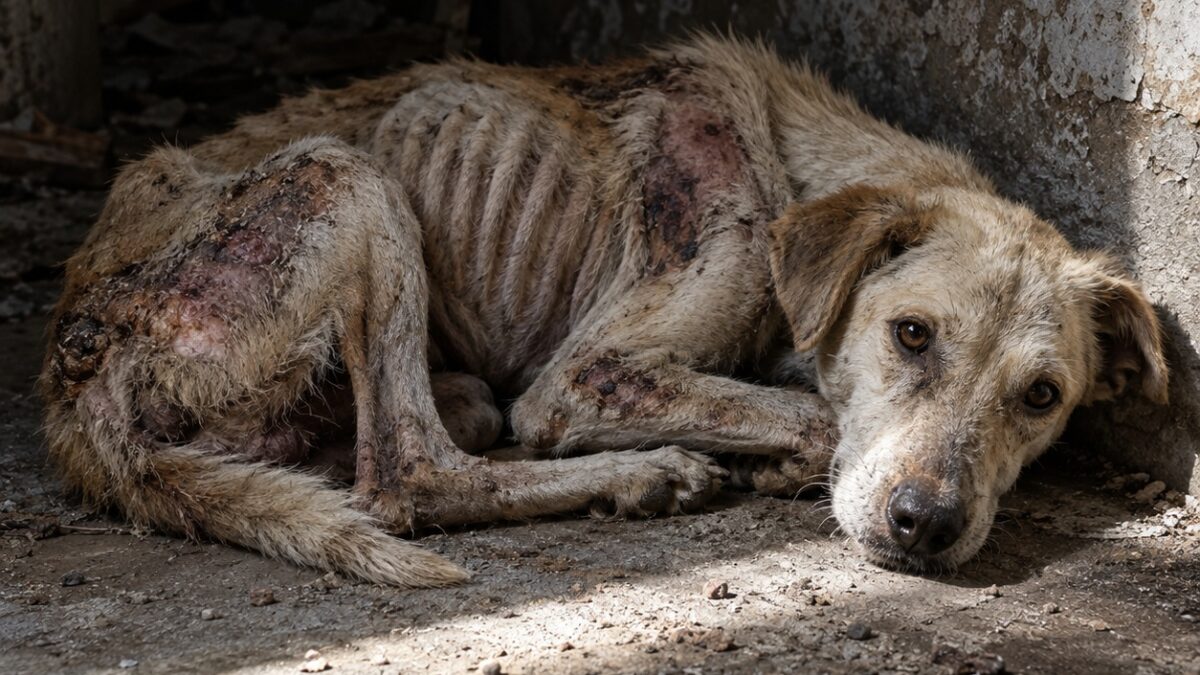
PART2
Cleaning the wounds was the first thing that truly showed us how much damage he had been living with.
The fur around several areas had to be carefully clipped.
The skin beneath was angry and swollen.
Some wounds were deep enough that the team had to irrigate them slowly, washing away material that had collected inside.
Dirt.
Fluid.
Discharge.
Evidence that these injuries had gone untreated while infection settled in.
Ozgur lay on thick padding.
Medication helped with pain.
Even so, I could see when something hurt.
His muscles tightened.
His head moved.
Sometimes his eyes widened for a second.
A technician would stop.
“Okay.”
Wait.
Then continue.
Nobody rushed because the wounds looked terrible.
Rushing would not make healing faster.
It would only make Ozgur more frightened.
So every part of care became deliberate.
Rinse.
Pause.
Check.
Clean.
Pause.
Reposition.
Speak.
Continue.
It took a long time.
Longer than I expected.
When one wound was finally clean enough to assess properly, the veterinarian exhaled.
“We’ll need to stay on top of infection.”
“What are you thinking?”
“Medication. Repeated cleaning. Pain control. Support.”
“And nutrition?”
She looked at him.
“Nutrition is going to be one of the biggest parts of this.”
That sounded obvious.
Ozgur was starving.
Feed him.
Except severe malnutrition is never that simple.
The body adapts to deprivation.
When food returns too aggressively, dangerous shifts can happen.
So the veterinarian designed a feeding plan.
Small meals.
Frequent meals.
Careful amounts.
Monitor tolerance.
Increase gradually.
I hated the plan emotionally.
The first time food reached Ozgur, he changed.
His nose lifted.
Eyes became sharper.
His whole body focused on the bowl.
He tried to stand.
Could not.
So the food came to him.
A small amount.
He ate slowly at first.
Then faster.
The bowl emptied.
He kept licking.
The bottom.
The edges.
The bedding near it.
He looked up.
That look hurt.
More.
That was what his body was asking.
More.
I wanted to fill the bowl.
Everyone did.
Instead, the technician removed it.
Ozgur followed it with his eyes.
My throat tightened.
“He’s starving.”
“I know.”
“Can’t we give him a little more?”
“Not yet.”
I knew why.
Still hated it.
Ozgur lowered his nose and began searching the blanket for anything he might have missed.
One tiny smear.
One crumb.
Gone.
Then he looked toward the person holding the bowl.
I sat beside him.
“There’s another one coming.”
No response.
“Later.”
He did not know what later meant.
That became one of the saddest parts of the early days.
We had a schedule.
Ozgur had hunger.
Those are not the same thing.
We knew breakfast was not the last meal.
He did not.
We knew another portion had already been calculated.
He did not.
We knew people were now watching every calorie because they wanted him to survive.
His body had learned a different lesson.
Food might disappear.
Take what exists.
Search after.
Do not assume tomorrow.
We could not explain the new rules.
We had to demonstrate them.
Meal.
Then another.
Then another.
Day after day.
The bowl returns.
That was how Ozgur would learn.
The first night was difficult.
His wounds had been cleaned.
Medication started.
Fluids running.
Warm blankets around him.
He slept in pieces.
Pain woke him.
Movement in the hospital woke him.
A door.
A voice.
A cart.
He would raise his head, then lower it again.
I stayed longer than I needed to.
One technician said:
“You should go home.”
“I know.”
“He’s monitored.”
“I know.”
“We’ll call.”
I nodded.
Then remained another twenty minutes.
Eventually I left.
I slept badly.
At six in the morning, I checked my phone before my eyes were fully open.
No missed calls.
That was good.
I called anyway.
“How is Ozgur?”
“He made it through the night.”
That sentence became the first milestone.
Not:
He’s better.
Not:
He’ll be fine.
He made it through the night.
I drove back.
Ozgur looked almost exactly the same.
That is the cruel thing about the first days of recovery.
So much work happens inside the body while the outside still looks terrible.
Ribs.
Spine.
Wounds.
Blankets.
But there were tiny differences.
He lifted his head faster when food came.
His hydration was improving.
His temperature was steadier.
The infection had not suddenly disappeared, but treatment was underway.
Sometimes underway is all you get.
Day two.
Wound cleaning again.
Ozgur tolerated it.
Day three.
More.
One area looked slightly less swollen.
We celebrated quietly.
Day four.
His appetite remained strong.
Too strong, in a way.
He wanted everything.
The plan remained strict.
Small.
Frequent.
Controlled.
Ozgur began learning the sound of meal preparation.
A container opened.
Head up.
Someone moved near his space.
Eyes focused.
I laughed once.
“You hear food through walls.”
His tail did not move.
Not yet.
He only watched.
Nutrition began doing what nutrition does.
Slowly.
Blood protein had somewhere to come from.
Muscles had raw material.
Immune function had support.
Wounds gained resources to repair.
But every bit of progress required patience.
The wounds had needed treatment long before we found him.
We could not demand his body make up for that delay instantly.
One of the largest wounds developed healthier-looking tissue around the edges.
The veterinarian pointed it out.
“See that?”
I leaned closer.
“It looks red.”
“Healthy red.”
“There are categories?”
“Very much.”
I smiled.
Rescue teaches you strange forms of optimism.
Healthy red.
Less discharge.
Better appetite.
Normal temperature.
A dog lifting his own head.
All good news.
Ozgur remained quiet.
He did not seek us out.
He tolerated.
Watched.
Sometimes stiffened when hands approached.
We did not know what his history with people had been.
The dark, filthy environment where he was found gave us enough to understand that trust would not necessarily come quickly.
So we stopped asking him for it.
We cared.
That was all.
Medication.
Meals.
Cleaning.
Warmth.
Pain control.
Rest.
Trust could decide when to arrive.
One afternoon I sat next to his bedding while he ate.
Usually he kept all attention on food.
This time, after finishing, he looked at me.
I held out my hand.
No food.
Just fingers.
Ozgur sniffed.
Paused.
Then rested his nose lightly against them.
I did not touch him.
He stayed there maybe three seconds.
Then pulled away.
I smiled.
“Okay.”
Three seconds.
Enough.
The next wound cleaning was easier.
Not because the wound hurt less necessarily.
Because Ozgur seemed less afraid of the people around him.
Familiar voices.
Familiar hands.
He started learning patterns.
This person cleans.
This one feeds.
This one gives medication.
This one sits and talks too much.
Me.
I accepted the role.
I told Ozgur ordinary things.
Weather.
Traffic.
What I had eaten.
Things he did not care about.
The goal was not understanding.
The goal was presence without demand.
Sometimes I sat and said nothing.
Those may have been the better visits.
Week one ended.
Ozgur had not died.
That sounds brutal.
It was also honest.
In the beginning, survival itself was uncertain enough that reaching seven days felt enormous.
He had gained a little weight.
Not enough to look dramatically different.
Enough for the scale.
The ribs remained visible.
Spine obvious.
But his eyes had more focus.
His head stayed up longer.
He repositioned himself without help sometimes.
The wounds smelled less infected.
That mattered more than photographs.
Week two.
The antibiotics and wound care continued working.
Swelling eased.
Some discharge reduced.
The skin around several injuries began looking calmer.
Ozgur’s meals increased carefully.
Still divided.
Still measured.
He tolerated them.
That was a victory.
No rushing.
His body was accepting nourishment.
I started seeing one subtle change.
After eating, Ozgur sometimes rested instead of searching.
Not every time.
But sometimes.
The first time, I watched him finish.
Lick the bowl.
Then lower his head onto the blanket.
No frantic scanning.
No looking for more.
I whispered:
“Good.”
Maybe his stomach finally felt something close to satisfied.
Maybe exhaustion won.
Either way, he rested.
That mattered.
The wounds remained difficult to look at.
Healing wounds are not pretty.
Scabs.
Granulation tissue.
Changing edges.
Areas where the future scars were already becoming obvious.
I stopped wanting them to look perfect.
I wanted them closed.
No infection.
No pain.
Scar tissue would be welcome if it meant the body had sealed itself.
That changed my understanding of appearance.
Before Ozgur, scars looked like evidence of damage.
With him, I started seeing them as evidence that damage had stopped progressing.
A scar means the wound is no longer open.
That matters.
His coat slowly improved too.
Nutrition affects everything.
Even the way fur sits.
Ozgur still looked like a dog recovering from something terrible.
But he began looking more like a dog and less like a medical emergency.
That shift happened so gradually I almost missed it.
One day a new staff member walked in and said:
“He’s thin.”
I looked at her.
Thin.
Not skeletal.
Not dying.
Thin.
I smiled.
“What?”
“Nothing.”
I realized the word had changed.
That was progress.
Ozgur started standing.
At first only with encouragement.
His legs shook.
Muscles had been consumed by prolonged malnutrition.
He rose.
Stayed up.
Then sat again.
A few days later, he walked several steps.
Slow.
Careful.
His body seemed uncertain about its own weight.
There was not much weight yet, but even that required strength.
One technician placed food a short distance away.
Not far.
Just enough to encourage movement.
Ozgur stood.
Step.
Pause.
Step.
Reached bowl.
Ate.
We all pretended not to be emotional.
Nobody succeeded.
Week three brought more obvious changes.
The scale climbed.
Ribs still visible but not as violently sharp.
His shoulders had a little more shape.
The deepest wounds were improving.
Some were still bandaged.
Others no longer needed the same level of coverage.
The infection was clearing.
Pain reduced.
That changed his behavior.
Pain steals personality.
It makes every interaction about self-protection.
As Ozgur became more comfortable, we began seeing something underneath.
Curiosity.
He watched people farther down the hallway.
He followed movement with his eyes.
One day a cart rolled past.
Ozgur lifted his head and kept watching until it disappeared.
Another day a dog barked in another room.
His ears rose.
Before, noise had either frightened him or received no reaction because he was too tired.
Now the world interested him.
That is a wonderful stage.
A sick animal begins noticing things that do not involve survival.
We gave him a soft toy.
He looked at it.
Then looked at us.
No idea.
We left it.
No expectations.
The toy remained untouched for days.
Fine.
Ozgur had other priorities.
Food.
Healing.
Sleep.
I continued visiting.
One afternoon he did something new.
I sat beside him.
He stood.
Walked over.
Not toward food.
Toward me.
Stopped beside my leg.
I waited.
Ozgur sniffed my knee.
Then stood there.
I moved one hand slowly.
Touched the side of his neck where the skin was healthy.
One stroke.
He stayed.
Second.
His body loosened.
Not much.
Enough.
I looked down.
“You like that?”
Ozgur moved his head slightly closer.
My chest hurt.
A dog who had spent the first weeks merely tolerating hands had decided one could feel good.
I scratched gently.
He stayed until his legs tired.
Then returned to bed.
That was all.
It meant everything.
The veterinary team eventually said the words we had been waiting for.
“He can probably continue recovering outside the hospital.”
I immediately felt happy.
Then terrified.
“Already?”
“Already?”
The vet laughed.
“You’ve been asking when he can leave for weeks.”
“I know.”
“He’s stable.”
“What about the wounds?”
“Continue care.”
“Food?”
“Continue the plan.”
“Medication?”
“You’ll have it.”
“What if—”
“We’ll recheck.”
I nodded.
Hospital discharge does something strange emotionally.
The hospital is stressful.
You want the animal out.
Then the hospital becomes the place where everybody knows exactly what to do.
Home suddenly feels dangerously ordinary.
No monitor.
No professional down the hall.
But home was what Ozgur needed next.
A hospital can save a body.
A home can teach that body what safety feels like between treatments.
One of his rescuers offered to bring him home.
That person was me.
I had been moving toward the decision for days without admitting it.
Temporary.
Recovery foster.
That was the phrase.
No promises beyond what we knew.
I prepared a room.
Soft bed.
Washable blankets.
Food area.
Medication supplies.
Everything low and easy to reach.
No stairs needed.
Quiet.
When Ozgur arrived, he stopped at the doorway.
I kept the leash loose.
“Come on.”
He did not.
New place.
Different smells.
No hospital staff.
No familiar cage.
His eyes moved from the room to me.
I stepped inside.
Waited.
Ozgur took one step.
Pause.
Then another.
He crossed the threshold.
That was his first decision in the house.
I did not realize then how many would follow.
The bed was large and soft.
I expected him to collapse into it.
He sniffed.
Then walked around it.
Then chose the floor beside the wall.
Of course.
Softness can be unfamiliar.
People think an abused or neglected animal will immediately understand comfort.
Not always.
Sometimes comfort is suspicious because it is new.
I placed a folded blanket on the floor near him.
Ozgur lowered himself onto it.
Progress.
The expensive bed remained untouched.
I did not care.
Use whatever feels safe.
His first meal at home followed the hospital plan precisely.
Measured.
Small.
Ozgur ate.
Then looked around.
The bowl empty.
His nose checked the floor.
He walked toward where the food container sat.
I blocked access gently.
“Later.”
He stared.
“Sorry.”
He returned to the blanket.
An hour later, I found him watching the kitchen.
He had mapped the food source in less than a day.
Smart dog.
That first night, I slept badly.
Ozgur slept worse.
Every sound woke him.
Pipes.
A car outside.
Floor creak.
He would lift his head.
Sometimes stand.
Then settle again.
I sat with him at midnight.
“You’re home.”
I corrected myself.
“Temporary home.”
Ozgur looked at me.
“Don’t get ideas.”
His eyes closed.
Temporary became harder to say each day.
The first week at home taught me how different recovery looks outside a clinic.
At the hospital, improvement was charted.
Weight.
Wound measurements.
Medication.
At home, you notice things like:
Ozgur slept three hours without waking.
He ate and did not search afterward.
He moved from the wall to the middle of the room.
He chose the soft bed.
That last one took five days.
I walked into the room one afternoon and stopped.
Ozgur was on it.
Curled awkwardly at first, as if he had not decided whether it belonged to him.
I whispered:
“Oh.”
He opened his eyes.
I immediately looked away.
“Sorry.”
I did not want him thinking the bed came with attention.
He stayed.
Ten minutes later, he stretched.
Full body.
His head resting against the raised edge.
I took a photograph from the hallway.
The image meant more to me than most medical milestones.
He had somewhere comfortable to lie down.
And he had chosen it.
The wounds continued needing care.
Home did not mean treatment stopped.
Cleaning remained part of the routine.
Medication.
Monitoring.
Veterinary rechecks.
Ozgur still stiffened during wound care.
But less.
We developed a pattern.
I prepared everything first.
No searching for supplies while he waited nervously.
Approach.
Let him sniff.
Touch healthy skin.
Then care.
Finish.
Reward.
Rest.
Predictability made it easier.
His body gained more weight.
Slowly.
The spine softened under returning flesh.
Ribs became less prominent.
He still looked lean.
But no longer like touching him might reveal every bone.
I ran my hand carefully along his side one day.
Stopped.
Could not count ribs as easily.
I smiled.
Ozgur looked at me.
“What?”
He did not answer.
“Nothing.”
That night I cried in the kitchen.
Not sadness.
Relief stored too long.
Recovery is full of those ambushes.
Something small suddenly proves how far you have come.
Ozgur began following me.
Not constantly.
At first, only when food might be involved.
I would walk toward the kitchen.
Ozgur behind.
Bathroom?
He stopped.
Wrong destination.
Very practical.
Later, he started following even when no meal was due.
Living room.
Hallway.
Back room.
He would come.
Stop several feet away.
Lie down.
He was not demanding affection.
He simply preferred not to be alone.
That changed something between us.
I began talking to him as though he were already part of the household.
“Laundry.”
Ozgur watched.
“This is why humans invented dogs. Moral support.”
No response.
“You’re not good at it.”
Tail.
One movement.
I froze.
“Was that for me?”
Tail again.
Ozgur had wagged before at the hospital occasionally, but home made it feel different.
The dog who arrived quiet and wary was beginning to answer.
His eyes brightened as strength returned.
That is the part photographs captured best.
The first eyes looked distant.
Later eyes looked engaged.
Interested.
Sometimes mischievous.
That surprised me.
Mischief requires energy.
Ozgur started sniffing places he had ignored.
A shoe.
Bag.
Table leg.
He once pushed his nose into a shopping bag and came out with it stuck briefly around his face.
I laughed.
He startled at the sound.
Then looked at me.
I softened.
“Sorry.”
A few seconds later, his tail moved.
That felt like permission.
His scars became clearer as wounds finished closing.
One long area.
Several smaller marks.
They would remain.
I stopped seeing them first.
At the beginning, wound.
Later:
Ozgur.
The scars became background.
That is what I wanted.
His body could carry evidence without being reduced to evidence.
Another vet visit confirmed what we were already seeing.
Better weight.
Infections resolved or significantly controlled.
Wounds closing well.
Strength returning.
The veterinarian looked at him.
“You look much better.”
Ozgur sniffed her pocket.
“She doesn’t have food.”
He kept sniffing.
“Optimist.”
The vet laughed.
“He’s got more personality.”
“Yes.”
That word again.
Personality.
It had been there all along.
Pain and starvation simply occupied too much space for us to see it.
At home, Ozgur started approaching visitors cautiously.
Not everyone.
He preferred quiet people.
Someone who ignored him at first usually got farther than someone who called excitedly.
That made sense.
Choice.
Let him approach.
One friend sat on the couch.
Ozgur watched from the doorway.
Five minutes.
Ten.
Then walked over.
Sniffed a shoe.
The friend remained still.
Ozgur sat three feet away.
Later, two.
By the end of the visit, he let the person touch his shoulder.
No big reaction.
Just acceptance.
I felt proud, though I knew pride belonged mostly to him.
Trust should never be rushed because humans want proof of progress.
Ozgur got to decide.
We were getting better at letting him.
Then one afternoon, the toy moved.
The same kind of soft toy he had ignored before.
I had brought it home with his things.
It lay near the bed.
Ozgur walked past.
Stopped.
Backed up.
Sniffed.
I pretended not to watch.
He nudged it.
The toy rolled.
Ozgur’s head tilted.
He nudged again.
Roll.
He put one paw on it.
Then mouth.
Picked it up.
Dropped it.
I smiled.
No movement.
“Do it.”
Wrong thing to say.
Ozgur looked at me and walked away.
I laughed.
Of course.
Next day, the toy was in the hallway.
I had not moved it.
Progress.
Then another day, I saw him carry it.
Just several feet.
That was all.
But the change had begun.
Soon he started following toys when I moved them slowly.
Not full running.
Not yet.
His body was still rebuilding.
I would slide the toy.
Ozgur walked after.
Nose.
Paw.
Bite.
Then one afternoon, I tossed it a little farther.
Ozgur ran.
Only a few steps.
But ran.
I stopped breathing.
He reached the toy.
Grabbed it.
Turned.
For one second, he looked like the dog he might have been before everything went wrong.
Then I realized that thought was unfair.
This was the dog he was now.
No comparison needed.
Ozgur shook the toy.
Hard.
His whole front end moved.
I laughed.
He ran the other direction.
“Ozgur!”
Tail high.
I stood.
He came back.
Not because he understood fetch.
Because he wanted another interaction.
I took the toy.
Tossed.
He followed.
Again.
I cried halfway through.
Of course I did.
The dog who had been found barely alive now had calories to waste on chasing something that had absolutely no survival value.
That is one of the purest signs of recovery.
Play is wasteful.
Beautifully wasteful.
Energy spent on joy.
Ozgur had enough.
Not only food.
Enough safety.
Enough strength.
Enough confidence.
He could afford nonsense.
I wanted him to have an entire life of nonsense.
The playing increased.
Slowly.
We still protected his body.
No exhausting sessions.
No pretending weight gain meant everything inside had fully recovered.
Short play.
Rest.
Meal.
Treatment.
Walk.
The rhythm mattered.
Ozgur’s walks grew too.
At first, just outside.
Sniff.
Bathroom.
Back.
Then a little farther.
He approached the world cautiously.
Different surfaces.
Sounds.
People.
Cars.
Every new thing received consideration.
He never rushed toward unfamiliar spaces.
That was fine.
We had no deadline.
One morning, we walked far enough for Ozgur to stop at a patch of grass and smell for several minutes.
I almost pulled him along from habit.
Then stopped myself.
What was the rush?
This dog may have spent a long time shut in a filthy, dark place.
Let him smell grass.
Five minutes.
Ten if he wants.
Exploration was part of recovery too.
The world had been small.
Now it could expand.
He met another calm dog.
Careful introduction.
Ozgur stood stiff at first.
Sniff.
Pause.
The other dog moved away.
Ozgur followed.
Tail low but moving.
No drama.
That was good.
Not every milestone needs tears.
Sometimes normal is the victory.
A normal dog introduction.
A normal nap.
A normal toy.
A normal meal.
I started longing for normal more than transformation.
The wound care eventually became minimal.
Scars remained.
No more deep cleaning.
No discharge.
No swelling.
The skin had closed.
I touched one healed area gently.
Ozgur did not react.
At first, anything near the wounds had made him tense.
Now my hand moved across scar tissue and he stayed relaxed.
Pain was becoming memory instead of current experience.
That mattered.
The scars were permanent.
Fine.
A scar is preferable to a wound every time.
His body continued filling.
One photograph made people say:
“That can’t be the same dog.”
I hated and loved that sentence.
Loved because he looked better.
Hated because the dog at the beginning was still Ozgur.
He had mattered then too.
His worth had not increased with body weight.
He was not more deserving now because he could play.
The emaciated dog who could barely lift his head deserved the same care as the playful one.
Recovery revealed him.
It did not create value.
That distinction became important to me.
People are naturally drawn to happy after photos.
I was too.
But I kept one early image.
Not publicly everywhere.
For myself.
Ozgur lying under a blanket.
Eyes exhausted.
Bones visible.
I looked at it rarely.
Enough to remember.
Not where he had come from exactly—we never knew every detail.
But how close he had been to having no future at all.
Then I looked at him sleeping in my house.
Soft bed.
Scar along one side.
Weight returning.
Toy near his paws.
Two images.
Same dog.
One received emergency.
One received life.
Both mattered.
Weeks became months.
The “temporary” foster conversation became ridiculous.
Friends stopped asking when Ozgur was leaving.
I stopped bringing it up.
One evening, he was asleep beside the couch.
I said:
“You know this was temporary.”
His ear moved.
“You’re not supposed to look comfortable.”
No response.
“Very unprofessional.”
Tail against floor.
I smiled.
I did not need paperwork in that moment to know what had happened.
Ozgur had become part of the shape of the house.
His food container had a place.
Medication supplies.
Bed.
Toy basket, though “basket” was generous for three toys.
Leash by the door.
His footsteps became recognizable.
The sound of him drinking water at night.
His sigh when he settled.
Home accumulates around an animal gradually.
Then one day you realize removing those sounds would create silence.
Ozgur trusted touch more openly.
He learned chest scratches.
Favorite.
Behind one ear.
Acceptable.
Paws?
Depends on mood.
Reasonable.
Sometimes he walked directly over and leaned against my leg.
No food involved.
That still surprised me.
A dog who arrived needing everything now approached because he wanted affection.
Want is different from need.
Wanting means there is room beyond emergency.
Ozgur had that room.
One night, thunder started.
He became restless.
I sat near his bed.
No grabbing.
Ozgur stood.
Walked to me.
Pressed his chest against my knees.
I placed my hands around him gently.
He stayed.
Not because I forced comfort.
He asked.
That moment told me trust had moved deeper.
When afraid, he no longer assumed isolation was safer.
He looked for someone.
That is attachment.
Earned over meals.
Wound cleanings.
Walks.
Ordinary days.
I scratched his neck until the storm eased.
Afterward, Ozgur went back to bed.
I whispered:
“Good night.”
He slept.
I thought about the dark place where he had been found.
The contrast was painful.
People sometimes say rescued dogs are grateful.
Maybe.
I prefer saying they adapt to evidence.
Ozgur received evidence every day.
Food comes.
Pain gets treated.
Hands can comfort.
Beds remain.
A person is here after thunder.
The door opens in the morning.
Walk.
Return.
Another meal.
Evidence accumulates.
Trust follows.
No magic.
That is more beautiful to me.
The playful side became impossible to miss.
Ozgur liked toys that moved.
He liked chasing more than returning.
Fetch remained incomplete.
He invented his own game:
I throw.
He runs.
He keeps it.
I negotiate.
Sometimes he brought it near me and pulled away when I reached.
I laughed.
“You’re rude.”
Tail.
The first time he play-bowed, I almost fell apart.
Front legs down.
Rear end up.
Tail moving.
The universal dog invitation.
Play.
A body once too weak to maintain itself asking another living thing to waste energy together.
I dropped to the floor.
“Fine.”
Ozgur bounced sideways.
Awkward.
Happy.
We played.
Five minutes.
Then he tired.
He lay down.
Panting lightly.
I worried automatically.
Old habits.
Checked breathing.
Normal.
He looked at me.
“Sorry.”
I laughed.
“I still think you’re going to break.”
Ozgur rested his head.
He was not breakable in the way I feared.
Not invincible either.
Just alive.
Those are different things.
The hospital rechecks became easier.
At first, returning to the clinic made him nervous.
Then he recognized staff.
A technician called his name.
Tail.
Someone knelt.
Ozgur approached.
The same people who had cleaned infected wounds now got kisses.
That felt like forgiveness, though I know they had done nothing requiring forgiveness.
Maybe it was simply new association.
Clinic once meant pain because pain was already inside him.
Later, clinic meant familiar people.
Healing changes places too.
The veterinarian examined the scars.
“Looks good.”
I laughed.
“They look terrible.”
“She means healed.”
“I know.”
Again, new definitions.
Scar can look ugly and still be good.
Ozgur’s labs and physical condition continued improving.
No dramatic miracle.
Consistent recovery.
That became his story.
He had survived the dramatic part.
Now success looked boring.
Weight.
Food.
Walks.
Play.
Sleep.
Perfect.
I started noticing something about his sleep.
Early home sleep was shallow.
Head up at sounds.
Body curled tightly.
Later, Ozgur stretched on his side.
Then eventually, once, on his back.
Paws loose.
Belly exposed.
I stared.
Do not take a picture.
I took a picture.
Quietly.
He did not wake.
A dog exposing his belly while asleep is not making a social statement necessarily.
But the physical vulnerability mattered to me.
Ozgur trusted the room enough to stop protecting himself for several hours.
That was home.
Not the bed.
Not the walls.
The ability to stop guarding.
I thought of how he must have slept before we found him.
Dark.
Dirty.
Wounds infected.
Pain.
I stopped.
No need to imagine everything.
We knew enough.
Present tense.
Ozgur is safe.
Stay there.
That became a personal rule.
Do not torture yourself inventing suffering that cannot be verified.
Respond to what is real now.
Ozgur needs dinner.
Good.
Much better use of energy.
I prepared food.
He heard instantly.
Of course.
Walked to the kitchen.
Waited.
At first, meal time had made him frantic.
Now he waited.
Not perfectly.
Sometimes vocal.
Sometimes pacing.
But no desperate floor-searching afterward.
The bowl emptied.
Ozgur drank water.
Then left.
No panic.
The certainty of the next meal had finally entered his behavior.
I remember the first time I noticed.
He ate.
Walked away.
I stood there staring at the empty bowl.
“Daniel?”
A friend asked.
“What?”
“You okay?”
“He left.”
“Who?”
“Ozgur.”
“He’s in the living room.”
“No, I mean the bowl.”
They stared.
I laughed at myself.
“He finished and left.”
They understood eventually.
“That’s good?”
“It’s huge.”
To everyone else, ordinary.
To a formerly starving dog, trust.
There will be more.
That lesson may have been as important as weight gain.
Hunger is not only in the stomach after prolonged deprivation.
It lives in expectation.
Ozgur’s expectation changed.
Tomorrow contains food.
Once he learned that, meals became part of life rather than emergency.
That freed more of him.
He became curious about windows.
Birds.
Visitors.
Sounds outside.
One afternoon, a leaf blew across the yard.
Ozgur chased it.
I watched.
A leaf.
Nothing.
Everything.
He caught it.
Spit it out.
Looked offended.
I laughed.
Wrong prey.
He tried again with another.
Waste of energy.
Wonderful.
The dark place no longer defined the limits of his attention.
The world had become interesting.
That is what I wanted.
Not simply healing.
Interest.
A future is partly the assumption that something else is worth looking at.
Ozgur had that.
He would stand at the door sometimes.
Not frightened.
Ready.
Walk?
Yes.
The dog who once needed to be carried now asked to go outside.
His gait strengthened.
Distance increased.
We remained mindful of his body.
Weight gain puts different stress on muscles rebuilding from severe wasting.
So walks grew sensibly.
Not heroic.
A little farther.
Rest.
Another day.
Ozgur never needed a marathon.
He needed choices.
Left or right.
Sniff here.
Pause.
Continue.
His surroundings became his.
I realized how much recovery involved giving control back.
Neglect and confinement take control.
You eat if someone feeds.
Move if space allows.
Rest where the floor is.
Treatment, if it comes, may not.
At home, Ozgur could choose.
Bed or rug.
Toy one or toy two.
Sit near me or elsewhere.
Walk slowly.
Stop to sniff.
Choice sounds small until you watch an animal discover it.
Ozgur discovered it.
His scars remained obvious in certain light.
Some fur did not cover them perfectly.
People noticed.
“What happened?”
Sometimes I told the short version.
“He was found badly neglected and injured.”
Sometimes more.
Never every imagined detail.
We did not know everything.
I wanted to be honest.
What mattered was the person usually looked at Ozgur afterward and said:
“He seems happy now.”
Yes.
That I could confirm.
Happy is hard to scientifically prove in one sentence.
But I could point to behavior.
Play.
Relaxed sleep.
Affection-seeking.
Curiosity.
Appetite.
Tail movement.
Engagement.
If those are not at least ingredients of a good life, I do not know what are.
One day, Ozgur brought me a toy without prompting.
Not chased after one.
Brought.
Placed near my foot.
I looked down.
Then at him.
“You figured it out.”
Tail.
I threw it.
He ran.
Brought it back halfway.
Dropped.
Progress.
I threw again.
This time he returned closer.
We played until he tired.
Then Ozgur walked to his soft bed.
Turned twice.
Lay down.
I sat on the floor near him.
He put one paw against my leg.
Not clinging.
Contact.
I rested my hand over it.
Scars visible along his side.
Body no longer hollow.
Toy nearby.
Everything in one frame.
I thought:
This is enough.
People want rescue stories to end with something enormous.
A mansion.
A dramatic adoption.
A miraculous physical transformation.
Ozgur’s ending did not need that.
The satisfying part was how ordinary he became.
A dog on a bed.
A toy.
A person.
Regular meals.
Scars.
Play.
That was victory.
The hospital saved him from infection and starvation.
Home saved him from becoming only a patient.
He became somebody who could have preferences.
Dislikes.
Habits.
Favorite sleeping positions.
A ridiculous relationship with one particular toy.
That is life.
I started calling him “little man.”
He ignored the phrase unless food followed.
Fair.
His play sometimes became noisy.
Not barking constantly.
Little excited sounds.
His eyes bright.
Tail moving.
The quiet dog we first found had discovered that making noise could lead to response rather than danger.
I responded.
Always.
Maybe too much.
Friends said:
“You’re spoiling him.”
I said:
“Correct.”
But I tried not to confuse spoiling with lack of structure.
Meals still healthy.
Medical follow-up.
Boundaries.
Love is not chaos.
Ozgur needed reliability more than indulgence.
He got both in proper proportion.
The wounds were eventually officially healed enough that wound care was no longer part of daily life.
That felt strange.
I had built mornings around supplies.
Then suddenly:
No bandage.
No cleaning.
Just dog.
I packed away the unused materials.
Ozgur watched.
“You’re retired from being disgusting.”
Tail.
“Congratulations.”
I put the supplies in a cabinet.
The absence of treatment created empty time.
We filled it with walks.
Play.
Naps.
Better things.
One morning, sunlight came through the window and landed directly on his bed.
Ozgur moved into it.
Curled.
I watched.
The warmth on healed scar tissue did not hurt him.
He slept.
It reminded me of Cloe, another animal whose pain had once controlled her body, though every story is different.
But with Ozgur the feeling was the same.
Comfort becoming ordinary.
That is what I wish for every neglected animal.
Not constant celebration.
Ordinary comfort.
A bed soft enough that nobody remarks on it after a while.
Food so reliable nobody photographs the bowl.
A scar nobody thinks about every day.
Ozgur reached that.
I stopped checking his ribs compulsively.
That was another milestone for me.
At first, my hand measured.
Is there more flesh?
Does he look thinner today?
Later, I simply petted him.
No analysis.
That is when I realized I had healed a little too.
Caretakers carry fear after crisis.
You expect relapse.
Every quiet moment becomes suspicious.
Eventually, confidence returns.
Ozgur’s body was not an emergency.
It was his body.
Strong enough.
Recovering.
Alive.
I could touch without evaluating.
That felt good.
The person who had first found him visited once.
Ozgur approached cautiously.
Sniffed.
Then leaned.
The rescuer’s eyes filled.
“Is that really him?”
“Yes.”
“He looks…”
They stopped.
“Different?”
“Alive.”
That was the right word.
Not because he had been technically dead before.
Because life is more than heartbeat.
Now there was presence.
The rescuer scratched his neck.
Ozgur enjoyed it.
They looked at me.
“He wouldn’t even lift his head.”
“I know.”
“And now he plays?”
“Constantly.”
As if to prove it, Ozgur went to get a toy.
Everyone laughed.
Perfect timing.
He carried it back.
The rescuer sat on the floor.
Ozgur dropped it nearby.
There was something healing in that moment for all of us.
Finding an animal in terrible condition can stay with you.
You wonder whether the suffering simply moved somewhere else after the ambulance leaves.
Seeing the animal later closes a loop.
The rescue mattered.
The hospital mattered.
The slow days mattered.
There he was.
We did not undo the past.
We changed what came next.
That is all rescue can truly promise.
And sometimes that is enough.
I eventually stopped calling my home a foster home for Ozgur.
There was no ceremony.
No big announcement.
One day somebody asked:
“Are you keeping him?”
I looked at Ozgur.
He was asleep on the couch.
Not the dog bed.
My couch.
Comfortably.
A toy near his paw.
I said:
“I think he’s already decided.”
The person laughed.
Ozgur did not wake.
That was the answer.
He had somewhere to rest.
Someone to notice.
That matched the ending of his source better than any dramatic adoption montage I could invent.
The rescuer who brought him home stayed.
So did Ozgur.
That was enough.
His scars became part of the map of him.
Some were thick.
Some faint.
They did not bother him the way open wounds had.
Occasionally I noticed them while he stretched.
I would think about the hospital.
Then move on.
Ozgur did.
That is perhaps the kindest lesson animals teach.
Pain can be remembered without being rehearsed every day.
Scar.
Then toy.
Scar.
Then breakfast.
Scar.
Then sleep.
Life keeps adding things beside what happened.
Eventually the scar is no longer the largest item in the room.
Ozgur’s world filled.
He got more toys.
Not too many.
Okay, too many.
He had a favorite.
Of course.
Soft, slightly ridiculous.
He carried it from room to room.
Sometimes slept with it nearby.
The first toy had represented play returning.
This one represented something else.
Possession without desperation.
His.
Not food.
Not something swallowed because hunger demanded it.
Just an object he liked.
That difference moved me.
He could own something useless.
Luxury.
I once watched him choose between food residue on the kitchen floor and a toy.
He sniffed the floor.
Then took the toy.
I laughed.
A dog who once may have searched for anything edible choosing play instead.
I cannot prove what that means psychologically.
I know what it meant to me.
The emergency was over.
The world contained options.
Ozgur’s tail wag became easier too.
At first, rare.
Then familiar.
I learned different versions.
Food wag.
Greeting wag.
Play wag.
I am about to steal something wag.
Yes, that became a category.
He stole a sock once.
I followed him.
“Ozgur.”
He ran faster.
I stopped.
Stared.
Then laughed.
Months earlier, I carried him because he did not have strength.
Now he was fleeing with my sock.
What could I do except celebrate?
“Fine.”
He dropped it anyway.
Maybe socks lack flavor.
Good.
We added “do not eat household objects” to the general house rules even though there was no evidence he intended to.
He became mischievous enough that boundaries felt normal.
No fragile survivor treatment forever.
Ozgur was allowed to be corrected gently.
“No.”
“Leave it.”
“Come.”
Structure is part of belonging too.
A dog permanently treated like a tragedy never fully becomes family.
Family includes:
Stop stealing that.
Ozgur graduated.
The veterinary team saw him less often as medical crises ended.
Routine check.
Weight.
Scars.
General condition.
The first time we left without a complicated plan, I sat in the car for a moment.
Ozgur beside me.
“That’s it?”
He looked out the window.
“No new medicine?”
Nothing.
“Boring?”
Tail.
I smiled.
“Good.”
Boring veterinary appointments.
Wonderful.
On the drive home, Ozgur watched the world through the window.
Trees.
Cars.
People.
His face alert.
I thought of the dark filthy place.
Then stopped again.
Present.
Window.
Home.
Dinner later.
Do not drag him backward every time he does something good.
He deserves a future tense.
So I started thinking that way.
Ozgur will walk tomorrow.
Ozgur will eat breakfast.
Ozgur will probably steal something stupid.
Ozgur will sleep.
Will.
That word had once felt dangerous.
Now it felt ordinary.
That is recovery too.
I do not know exactly how long Ozgur had been neglected before we found him.
The source never gave us every detail.
I do not need to invent them.
His body told enough.
Deep infected wounds do not happen in one afternoon.
Severe malnutrition is not one missed meal.
A dirty confined environment does not become filthy in a minute.
That knowledge is enough.
We can honor suffering without fictionalizing it.
What I know is what happened after.
People cleaned the wounds.
Gave fluids.
Treated infection.
Managed pain.
Fed him correctly.
Kept him warm.
Watched.
Stayed.
Then someone brought him home.
Gave him a bed.
Time.
Gentle hands.
And eventually a toy.
Ozgur did the rest at his pace.
That is the story.
I think about the first time he leaned into touch.
That may matter even more to me than the first game.
Play showed strength.
Leaning showed trust.
A body once covered in painful wounds choosing contact with another body.
That is profound.
Touch had once meant cleaning infected tissue.
Necessary discomfort.
Later:
Scratch my neck.
Same hands.
Different meaning.
Recovery changes language.
A hand no longer means procedure.
A bowl no longer means last chance.
A room no longer means confinement.
A bed means rest.
A toy means play.
A person means home.
That transformation is why Ozgur’s ending feels complete even without some enormous final event.
His environment gained new meanings.
He learned them.
We learned him.
One afternoon, Ozgur woke from a nap and stretched.
Front legs long.
Back high.
Then he shook.
Walked over.
Placed his head against my leg.
I scratched behind his ear.
He closed his eyes.
No trembling.
No checking.
I kept my hand there.
I thought about how much attention had been required just to bring him to that moment.
Someone had to notice him.
Transport.
Hospital care.
Wound cleaning after wound cleaning.
Medication schedules.
Fluids.
Small meals instead of emotional overfeeding.
Pain relief.
Warm blankets.
Follow-up.
Home care.
Trust.
All of that work for one dog to stand in a quiet room and enjoy having his head scratched.
Some people might call that disproportionate.
I do not.
Life is built from exactly those moments.
You save the body so the ordinary moments can exist.
The ordinary moments are the point.
Ozgur began greeting me at the door.
The first time, I almost missed it.
I came home.
Unlocked.
Opened.
There he was.
Standing.
Tail.
Not barking.
Just waiting.
I stopped.
“Hey.”
Tail faster.
I crouched.
Ozgur approached.
I touched his chest.
He leaned.
That routine became normal.
Homecoming.
For both of us.
He no longer had to wait in a dark place for somebody to remember he existed.
Someone came back every day.
That repetition may have healed something no veterinarian could measure.
Leave.
Return.
Leave.
Return.
Food.
Return.
Safety.
Return.
A dog can build a whole new worldview from that.
Ozgur did.
If I was gone longer than usual, he still greeted.
No panic.
That was important too.
Trust is not only attachment.
It is belief in return.
He gained that.
One rainy evening, we stayed inside.
Ozgur had energy.
Too much.
I rolled a toy across the floor.
He chased.
Slid slightly.
Recovered.
Came back.
Again.
Again.
Eventually he flopped onto the rug, panting.
I sat beside him.
“Enough?”
Ozgur looked at the toy.
“No.”
Tail.
“You’re ridiculous.”
We played once more.
Then he truly tired.
Went to bed.
I watched him sleep.
The scars visible under shorter areas of fur.
His ribs no longer shouting through the skin.
Eyes closed.
Warm.
I realized I was no longer afraid he would not wake.
That fear had left without announcement.
For months, part of me had been listening for danger.
No longer.
Ozgur had entered the category of ordinary living things.
Not invulnerable.
No one is.
But not actively slipping away.
That felt like freedom for me too.
People often focus on how much animals change.
Caretakers change.
Ozgur taught me patience.
He taught me not to confuse speed with success.
He taught me that feeding can be an act of restraint as much as generosity.
That scar tissue can be beautiful because it means closure.
That trust is evidence accumulated over time.
That play is not trivial.
And that sometimes the most emotional sight in the world is a dog choosing a soft bed.
Nothing dramatic.
Bed.
He had probably spent a long time without comfort.
Now he had favorite positions.
A corner.
Then sprawled.
Sometimes half off the bed because apparently getting healthy also makes you bad at using furniture.
Good.
I loved it.
One morning, I woke early and found Ozgur still asleep.
Sunlight beginning through the window.
I made coffee quietly.
He eventually lifted his head.
Saw me.
Tail against bed.
I said:
“Morning.”
He stretched.
Got up.
Walked to the kitchen.
Breakfast.
Nothing special.
That was the ending.
Not the hospital.
Not the wounds.
Not the first toy.
Morning.
An animal knows where food comes from.
Knows who the person is.
Knows the bed.
Knows the house.
No fear.
That is enough.
I sometimes think of the people who first saw Ozgur and wondered whether his body had anything left.
They were right to worry.
He had very little.
But little is not nothing.
There was still enough heartbeat.
Enough appetite.
Enough response.
Enough body to accept fluids.
Enough skin to heal.
Enough trust left somewhere to grow.
Rescue works with what remains.
It does not ask why more is not there.
Start.
One wound.
One meal.
One day.
Ozgur’s life rebuilt exactly that way.
People say:
“Look how far he came.”
True.
But distance is made of steps.
His were small.
First night.
First meal.
First cleaner wound.
First pound.
First comfortable touch.
First bed.
First toy.
First run.
First greeting at the door.
Put them together and you get transformation.
Separate them and you get work.
I want people to remember the work.
Because transformations look magical only when the labor is hidden.
Ozgur’s was not magic.
It was care.
And his own body using care as material.
The infections cleared because they were treated.
The wounds healed because they were cleaned and protected.
Weight returned because food came safely and consistently.
Trust grew because hands stopped hurting and started helping.
Play appeared because there was enough energy left after survival.
Every outcome had inputs.
That makes the story more hopeful, not less.
It means compassion can be practical.
You do not need magic.
Show up.
Do the next right thing.
Repeat.
I still keep the soft toy he first really played with.
It is damaged now.
Ozgur improved its condition significantly in the wrong direction.
One ear missing.
Seam repaired.
I refuse to throw it away.
Sentimental.
Yes.
Ozgur does not care.
He has newer toys.
That is fine.
The old one reminds me of the moment he became unnecessary.
Not Ozgur.
Survival behavior.
The moment he had enough strength to do something unnecessary.
That is why play mattered.
Today, when I see him chase something, I do not think:
How cute.
Not first.
I think:
There was a time he could barely lift his head.
Then I let the thought go.
Because Ozgur does not need me turning every game into a memorial.
He wants the toy.
Throw it.
So I do.
He runs.
Tail.
Eyes bright.
Body moving.
Some scars still visible.
The body remembers in its own way.
But life is not asking the scars for permission.
Ozgur grabs the toy.
Comes back.
Sometimes.
Usually not.
We are still working on fetch.
Some recoveries are harder than others.
I laugh.
He looks at me.
No fear.
Just dog.
That is the word I wanted for him from the beginning.
Dog.
Not victim.
Not patient.
Not starvation case.
Not wound management.
Ozgur.
Dog.
A living, playful, slightly stubborn little dog with a safe place to sleep.
The dark space where we found him is not where his story ends.
Neither is the hospital.
He left both behind.
His scars came with him.
That is okay.
You can carry scars without carrying the room where you got them.
Ozgur proved that.
He sleeps somewhere soft now.
He wakes to food.
He knows the person reaching toward him.
Sometimes he walks over before the hand arrives.
He leans in.
Then later he plays.
Those two things tell the entire story.
Trust.
Joy.
Everything else was the road between.
If I had been able to explain his future to the dog on that first blanket, I would not have promised that every scar would disappear.
They did not.
I would not have promised he would forget.
I do not know what dogs remember.
I would have promised only things I know became true.
Your wounds will be cleaned.
The infection will be treated.
Food will come slowly because people are trying to protect you, not deprive you.
There will be another meal.
And another.
You will get warm.
You will sleep somewhere soft.
A person will notice when you hurt.
Eventually, hands will stop feeling like something you need to endure.
You will walk through a house.
You will explore.
You will chase a toy.
You will wag your tail.
And one day, people will look at your scars only after they notice the life around them.
That all happened.
Ozgur never heard the promise.
He did not need to.
People kept it anyway.
That is what care is supposed to be.
A promise made through behavior.
Meal.
Medicine.
Blanket.
Touch.
Home.
Repeat.
The dog who once lay barely alive with infected wounds covering his body eventually learned that repetition.
And because he did, he stopped waiting for pain.
He started expecting life.
One evening, I sat beside his bed while he chewed a toy.
He stopped.
Looked at me.
I held out my hand.
Ozgur leaned his head into it.
I rubbed behind his ear.
He stayed for a while.
Then suddenly grabbed the toy and ran.
I laughed.
“Okay.”
He disappeared around the corner.
Seconds later, he came charging back.
Not fast enough to be impressive.
Fast enough for me.
He dropped the toy.
Tail moving.
Eyes bright.
Waiting.
I picked it up.
And for a second, I saw both versions of him at once.
The dog we had carried out because he barely had strength left.
And the dog in front of me now, impatient because I was taking too long to throw a toy.
I preferred the second.
So did he, probably.
I threw.
Ozgur ran.
And this time, nothing hurt badly enough to stop him.








