PART 2:The HOA President Told Me to Stay Out of Her Creek—Then Her Own Golf Course Went Underwater
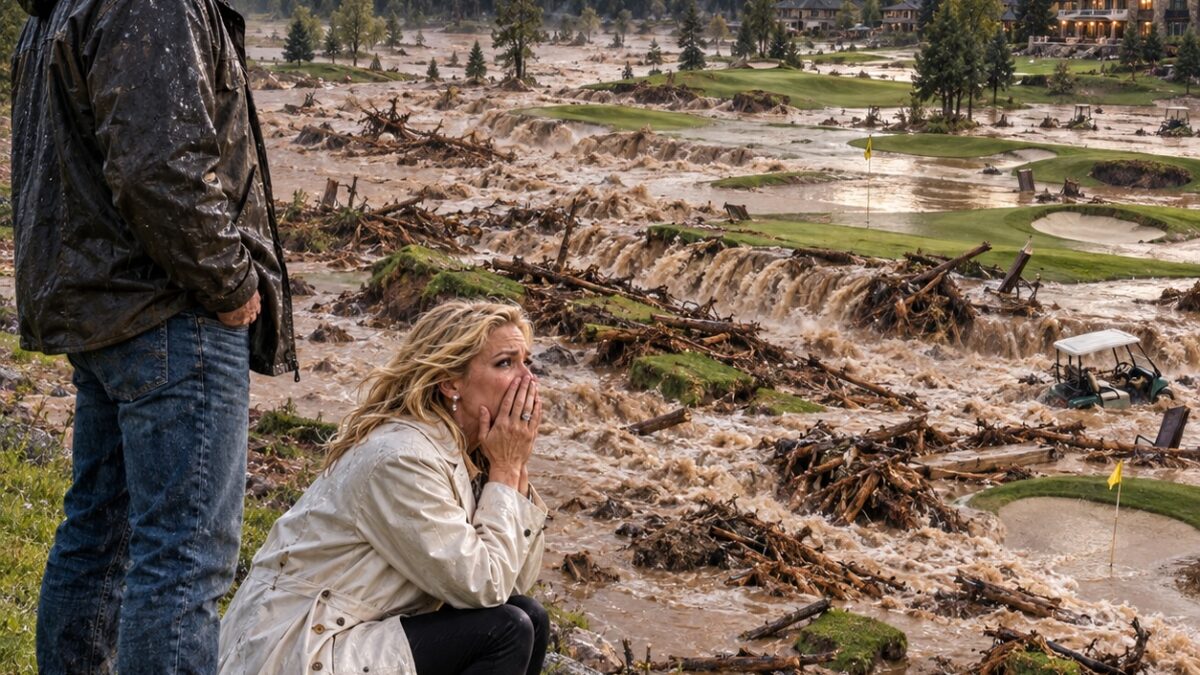
FULL STORY CONTINUATION..
I did not sleep much that night.
That sounds dramatic now.
At the time, it was mostly irritating.
I had spent enough years around contractors and property disputes to know that many problems look dangerous at six in the evening and ridiculous by nine the next morning.
Maybe the Blue Finch crew would come back and remove everything.
Maybe somebody on the HOA board would look at the same easement I had read and say, “This is obviously not what maintenance means.”
Maybe Cynthia would talk to an actual drainage engineer and quietly reverse course.
People do occasionally correct themselves.
I did not know Cynthia well enough yet to understand how unlikely that was.
I made coffee at five-thirty, carried it into the kitchen, and spread the old maps over the table again.
The survey that came with my deed was nearly thirty years old.
Creek.
Fence lines.
Elevation marks.
Old access lanes.
A blue-shaded area ran away from the main channel toward what was now Stonebrook.
NATURAL OVERFLOW CORRIDOR.
Once I noticed those words, I couldn’t stop seeing what they implied.
I pulled the newer county parcel map.
Then the Brier Glenn development plan.
The shape matched.
Holes eight, nine, ten, and part of eleven occupied the low ground.
That explained something I had always wondered about.
The nicest homes in Brier Glenn were built on higher terraces overlooking Stonebrook.
None sat in the middle of that broad green basin.
Of course they didn’t.
The developer had not been stupid.
Somebody had looked at the flood data and understood that houses did not belong there.
Golf did.
Grass could go underwater and recover.
A clubhouse full of people couldn’t.
I found the original planning approval inside an old folder with curled corners.
The language was dry.
Government writing usually is.
But the meaning was clear enough.
Recreational use had been approved within the flood-prone corridor provided the development did not materially obstruct historic drainage and overflow patterns.
I read that sentence three times.
Then I folded my arms.
“Wonderful.”
I was talking to nobody.
The kitchen was quiet except for the refrigerator and rainwater dripping off the eaves from a light shower that had passed during the night.
The creek outside was probably still barely ankle-deep in places.
That was the trap.
When water is low, people convince themselves they control it.
I learned otherwise when I was twenty-six.
I was working for an earthmoving contractor outside Pueblo.
We had a superintendent who decided he could save three days by stacking excavated soil across what he called a “dry ditch.”
The ditch had been dry for two months.
No water.
Nothing.
We told him there was rain forecast in the foothills.
He told us the storm would miss.
It did miss us.
It did not miss the hills upstream.
Water arrived at two in the morning.
The “dry ditch” became a brown river.
That pile of soil redirected the flow through a temporary equipment yard.
Two loaders were destroyed.
A fuel tank floated nearly a quarter mile.
Nobody died.
That was luck.
Afterward, the superintendent blamed the weather.
The project engineer said something I never forgot.
“The storm was weather. The damage was design.”
That sentence stayed with me for almost twenty years.
Looking at Cynthia’s debris piles on my phone, I heard it again.
The storm would be weather.
Anything after that would be design.
I finished my coffee and drove the perimeter road around Stonebrook.
The golf course was beautiful.
I will give them that.
Stonebrook had wide fairways, mature trees, clean bunkers, and the sort of landscaping designed to make rich people believe nature naturally grows in perfect curves.
Ground crews were already working.
One mower moved across Hole 6.
A maintenance cart passed me near the east service entrance.
I kept going.
When I reached Hole 9, I slowed.
That was when I noticed the berm.
It was not huge.
Maybe three or four feet higher than the surrounding low ground in places.
Fresh sod.
Clean grading.
Probably invisible to most people.
To me, it might as well have had a sign saying WATER GOES HERE.
I pulled onto the shoulder of the public road.
The berm followed the fairway.
On one side was the low corridor shown on my old map.
On the other was the creek system.
During normal rain, the berm probably worked.
It prevented runoff from spreading across the playing surface.
Members stayed happy.
Maintenance stayed easier.
The course looked cleaner.
But during a major flood, the same structure could trap water and send it somewhere concentrated.
I took photographs from the road.
Not because I had decided to sue anyone.
I had not.
I was trying to understand what I was looking at.
Back home, I called Brier Glenn.
A receptionist transferred me.
Cynthia answered after three rings.
“Reed.”
Her tone made it obvious she already knew why I was calling.
“You raised a berm along Hole 9.”
There was a pause.
Then:
“Why are you driving around our golf course?”
“I was on the public perimeter road.”
“That doesn’t answer my question.”
“The old flood corridor runs through that area.”
She laughed softly.
“That map again?”
“Yes.”
“Reed, those drawings are decades old.”
“So is the creek.”
“We have modern drainage.”
“Then your modern drainage should not need twenty-two—”
I stopped.
At that point there were fourteen loads, not twenty-two.
That detail mattered later.
I corrected myself.
“Fourteen loads of tree waste packed into the upstream bank.”
“It isn’t tree waste.”
“What do you call it?”
“Bank stabilization material.”
“Branches?”
“Yes.”
“Rolled sod?”
“Biodegradable.”
“Roots?”
“Natural.”
“Tree trunks?”
There was a silence.
Then:
“You’re looking for a fight.”
“No.”
I leaned against the kitchen counter.
“I’m looking at a waterway that crosses my property and ends at your golf course.”
“Our easement gives us access.”
“I know.”
“Then stop interfering.”
“I am not interfering.”
“You told my contractor to leave.”
“Because he was filling the creek.”
“He was maintaining it.”
“No.”
My voice was still calm.
That seemed to annoy her more than yelling would have.
“Cynthia, I have spent almost twenty years doing grading and drainage work. Loose woody debris is not bank armor. Rolled sod is not riprap. Tree trunks are not erosion control when you lay them where floodwater can lift them.”
“We have consultants.”
“Who?”
“That’s none of your concern.”
“It becomes my concern if your work changes flow across my land.”
Her voice hardened.
“Stonebrook has existed for years without your supervision.”
“I’m not supervising your golf course.”
“Then act like it.”
She hung up.
I stood there holding the phone.
Then I laughed once.
Not because anything was funny.
Because the alternative was calling her back and saying something unhelpful.
Instead, I opened my laptop.
I wrote an email.
Short.
Professional.
No adjectives.
No accusation that anybody was stupid.
No mention of Cynthia laughing.
No mention of threats.
I attached photographs from the previous day.
Images of the debris.
The narrowed channel.
Blue Finch trucks.
The excavator.
I attached the easement.
Then a scan of the old overflow map.
My message said that the material appeared likely to obstruct flow during high-water conditions and migrate toward the downstream box culvert.
I asked for removal within seventy-two hours.
Before hitting send, I read it twice.
Then again.
Years in contracting teach you another rule.
Write every email as if a stranger will someday read it in a room where you are not allowed to explain yourself.
I hit send.
Cynthia replied twenty-nine minutes later.
Three sentences.
The HOA was performing lawful maintenance.
There was no flood risk.
Mr. Talbot was instructed not to interfere with the easement.
I printed it.
Added it to the folder.
The following morning, I went out to check a fence near the north pasture.
When I came back, there was a certified-looking envelope in my mailbox.
Brier Glenn Homeowners Association.
I opened it standing beside the road.
NOTICE OF VIOLATION.
According to the letter, I had placed cameras and survey markers in a manner that obstructed association access to the drainage easement.
I read the first paragraph.
Then the second.
Then I started laughing.
My ranch was not inside Brier Glenn.
Never had been.
The development came after my parcel was already established.
I paid no HOA dues.
Signed no covenants.
Accepted no restrictions.
The association had a specific recorded easement across a limited strip near the creek.
That did not make the rest of my land subject to their rules.
Still laughing, I carried the letter inside.
Part of me wanted to write back:
Please provide the section of your covenants that applies to property you do not govern.
I didn’t.
Not yet.
Instead, I put the violation letter in the folder.
The folder had begun with one video.
Now it had photos, emails, maps, and a letter documenting an HOA attempting to regulate a nonmember.
I wrote the date on a yellow tab.
That evening, I walked the creek.
Nothing had been removed.
Blue Finch had added more material.
The channel looked narrower.
I stood on my side of the boundary while Calvin watched me from the excavator.
He shut the machine down.
“You filming again?”
“Yes.”
He climbed down.
“You know this is legal, right?”
“I know you have an access easement.”
“That’s what I said.”
“Not the same thing.”
He wiped his hands on his work pants.
Calvin was probably mid-fifties.
Weathered face.
Heavy build.
The expression of a man used to talking to property owners who didn’t know what his equipment did.
“I’ve been in landscaping twenty-five years.”
“Good.”
“You think I don’t know a bank stabilization project?”
“I think you’re dumping loose material into a creek.”
He shook his head.
“You ranch people always think you own water.”
“I don’t own water.”
“Then why do you care?”
That question told me more about him than he probably intended.
“Because water moves.”
He frowned.
“So?”
“So whatever you put here won’t necessarily stay here.”
“It’ll compact.”
“Until it floats.”
“You really think all this is going somewhere?”
“Yes.”
He laughed.
Not cruelly.
More like someone listening to an overcautious neighbor.
“You want to bet?”
“No.”
I looked downstream.
“I don’t gamble with drainage.”
Calvin started the excavator again.
I walked away.
Two nights later, my phone buzzed at 11:43 p.m.
Trail-camera motion.
I was asleep.
At first I almost dismissed it.
Deer triggered that camera all the time.
Then I opened the feed.
Headlights.
Two dump trucks.
Work lights.
The Blue Finch logo.
I sat up.
“What the hell?”
I dressed and went into the kitchen but did not go down to the creek.
If they were working within the easement, confronting a crew at midnight would accomplish nothing except create another argument.
So I watched.
The first truck dumped whole branches.
Not trimmings.
Branches thick enough to need a chainsaw.
Then roots.
Turf.
Sections of small trunk.
The excavator operator pushed material down the bank.
Calvin stood beside him in reflective gear.
At one point, a log rolled sideways until it lay almost perpendicular to the current.
The excavator pressed it deeper.
That was when I stopped seeing the project as merely careless.
Nobody with even basic drainage experience should want a log positioned like that inside a channel.
I saved the footage.
Then saved a second copy.
By morning, I had three backups.
One on a drive in my office.
One in a safe.
One uploaded offsite.
Again, that was not paranoia.
Contracting had trained me.
Cameras fail.
Phones break.
People delete things.
Backups don’t argue.
I sent the clips to my insurance carrier with a short note.
Potential third-party drainage risk adjacent to insured property.
Then I filed the county stormwater complaint.
I described what had been placed.
Where.
When.
I attached representative still images.
And I requested inspection.
No demand.
No accusation of fraud.
No request that somebody punish Cynthia.
Inspection.
That was all.
By lunchtime, Cynthia knew.
Her SUV came up the ranch drive.
She stopped at the gate because I had closed it.
I walked down.
She lowered the window.
“You filed a county complaint.”
“Yes.”
“You need to withdraw it.”
“No.”
“I’m serious.”
“So am I.”
She opened the door and got out.
Her clothes were different from the first day but the effect was the same.
Perfect.
Clean.
Expensive.
Out of place beside pasture fencing and muddy boots.
“You have no idea what county involvement can do to a project.”
“Then maybe your project should have a permit.”
Her expression tightened.
“We don’t require one for routine easement maintenance.”
“Then an inspector should confirm that quickly.”
“You are deliberately escalating this.”
“No.”
I leaned one forearm on the gate.
“I asked you to stop putting loose material in the creek.”
“And I explained that it is organic.”
“Plastic irrigation tubing is organic?”
She froze.
I had spotted a section of old black tubing mixed into one pile that morning.
“Contractor debris.”
“Exactly.”
“That doesn’t mean—”
“There’s also landscape fabric.”
She stared at me.
I continued.
“And packaging.”
“That can be cleaned.”
“After the flood?”
“There is not going to be a flood.”
That sentence became important.
I didn’t know it yet.
She took a breath.
Then changed tactics completely.
Her voice softened.
“Reed, I think we got off on the wrong foot.”
I said nothing.
“The HOA is willing to clean your creek frontage at no cost.”
“My frontage does not need cleaning.”
“We could remove brush.”
“No.”
“Flatten the banks.”
“No.”
“Improve sightlines.”
“Sightlines?”
“For maintenance.”
“It’s a creek, Cynthia, not a subdivision entrance.”
Her smile faded.
“We could straighten the channel.”
That was when I knew she did not understand the waterway.
Or she understood and cared only about where she wanted water to go.
“You don’t straighten a living creek because it looks untidy.”
“It would improve flow.”
“Sometimes bends slow water.”
“Sometimes bends cause erosion.”
“Yes.”
We stared at each other.
“Which is why you hire an engineer.”
“We have professionals.”
“Then show me the engineered plan.”
Her eyes narrowed.
“That is association business.”
“Then the county can look at it.”
She stepped toward the gate.
“You are making this adversarial.”
“No.”
I shook my head.
“You are.”
That ended the conversation.
She turned toward the SUV.
Before getting in, she said, “You’re going to regret turning this into a legal issue.”
I pulled out my phone.
“Would you like to repeat that?”
She looked at the phone.
Then at me.
She got in and drove away.
I did not know whether the camera had captured the words clearly.
It didn’t matter.
I had seen her reaction.
An hour later, I found the new sign by the maintenance lane.
STORMWATER IMPROVEMENT PROJECT
AUTHORIZED PERSONNEL ONLY
No permit number.
No county seal.
No project engineer.
No contractor reference.
Nothing.
I photographed it.
Three angles.
Date-stamped.
Into the folder.
The folder was now thick enough that I had to replace the clip.
I bought a binder.
That same week, Bryce Kincaid made what turned out to be one of the most important decisions of the whole dispute.
I did not know him well then.
We had spoken maybe twice over the years.
Once about a fence.
Once when one of Stonebrook’s irrigation lines broke near the road.
He was the course superintendent.
Forty-six.
Quiet.
Competent.
Later, over coffee, he told me what was happening inside Stonebrook while I was fighting Cynthia from the outside.
Months before the dumping began, Bryce had already told the board the culvert was too small.
Not dramatically too small.
Not something that failed every rain.
That was the problem.
Systems operating near capacity are easy to ignore.
They work.
Until they don’t.
Bryce had pushed for a proper drainage project.
New swale.
Larger culvert.
Improved overflow routing.
Engineer’s estimate:
$318,000.
Cynthia hated the number.
Stonebrook was preparing for a showcase tournament.
Buyers.
Sponsors.
Membership prospects.
Photographers.
A drainage project would tear up parts of the course.
Heavy equipment.
Construction fencing.
Mud.
Temporary hole closures.
Blue Finch offered a cleaner alternative.
Bank stabilization.
Landscape-material processing.
Drainage appearance improvement.
Approximately $37,000 for the initial phase.
Cynthia chose Blue Finch.
Bryce told me he argued with her.
“Branches float.”
She apparently replied, “Not once they’re packed.”
“Sod floats.”
“It’ll decompose.”
“Logs move.”
“Not if they’re embedded.”
Bryce refused to sign the completion report.
Cynthia reminded him his contract was due for renewal.
According to him, she said:
“People who create problems often discover we can hire people who solve them.”
Bryce understood.
He still refused.
A week later, he walked the culvert.
Low water.
Normal conditions.
Already a few branches had collected against the grate.
He took pictures.
Then sent an email to Cynthia.
Copied the full board.
He warned that any rapid rainfall over roughly three inches should trigger immediate inspection of the upstream creek and culvert.
Cynthia replied to him privately.
She removed the rest of the board.
Don’t create unnecessary records.
Bryce stared at that sentence for several minutes.
Then he forwarded the chain to his personal account.
When he told me that later, I asked why.
He shrugged.
“Same reason you kept the violation letter.”
He was right.
Sometimes your instincts know a document matters before your brain fully understands why.
Three days after his warning, the forecast changed.
The weather service started talking about a stalled system over the western hills.
Five to seven inches possible.
Not unheard of.
Serious.
The first thing I did was walk the ranch.
I cleared my own drainage ditches.
Moved the tractor.
Moved the skid steer.
Checked culverts.
Propped open several lower gates.
A closed wire gate can catch branches.
Branches catch more branches.
Suddenly your fence becomes a dam.
I drove stakes into the ground at known elevations.
Not to manipulate anything.
To measure.
Then I took photographs from the same fixed points I had used all week.
Creek bank.
Debris piles.
Channel width.
Fence corner.
Maintenance lane.
The following morning, I emailed Cynthia again.
Forecast attached.
Photos attached.
Twenty-two documented loads of loose material.
Expected rainfall five to seven inches.
Immediate removal recommended.
This time I copied the county stormwater department.
Cynthia replied within the hour.
Stonebrook has handled bigger storms than this.
That was all.
I printed it.
Binder.
Another tab.
I stood at the window looking down the valley.
Maybe she was right.
Maybe the storm shifted.
Forecasts miss.
Maybe Stonebrook took five inches and nothing happened.
Maybe I spent weeks collecting evidence for an event that never came.
I would have preferred that.
Being right about danger is overrated.
I wanted to be wrong.
The county scheduled an inspection for the following afternoon.
Unfortunately, weather would arrive twelve hours earlier.
By four-thirty, clouds covered the hills.
By five-thirty, wind picked up.
Before dark, I made one last circuit.
Camera on.
Single continuous recording.
I started at the house.
Said the date.
Time.
Weather.
Walked down past the equipment parked on high ground.
Showed the open gates.
Clear ditches.
Survey stakes.
Fence.
Creek.
Debris.
Maintenance lane.
I did not stop recording.
Did not edit.
Did not touch the bank.
At one point, I stood near the largest pile.
The logs were dark with moisture.
Grass clippings were already matting together.
The creek was still relatively low.
I remember thinking how ordinary everything looked.
That is another thing about disasters.
Before they happen, the ingredients often look boring.
A branch.
A culvert.
A berm.
Rain.
Nothing cinematic.
Then cause meets timing.
At six, the first real rain began.
By eight, the creek looked like strong coffee.
By ten, water had risen to the base of the Blue Finch piles.
I sat at the kitchen table with my laptop open.
Infrared camera feeds.
Rain gauge.
Weather radar.
I made notes.
10:08 p.m. — grass/mulch movement.
10:34 — first turf section released.
10:51 — small branches downstream.
At 11:20, I made another cup of coffee.
I had no intention of sleeping.
Across the valley, Cynthia was at the Stonebrook clubhouse.
Bryce told me later there were several board members with her.
Tournament planning.
Wine.
Budget discussions.
The storm hammered the windows.
Someone asked about the creek.
Cynthia said Stonebrook had seen worse.
Bryce left the clubhouse.
He took a utility cart toward Hole 11.
The culvert was already nearly two feet above normal level.
He watched a slab of sod drift down.
It lodged at the opening.
Then a branch.
Then roots.
He called Cynthia.
“We need the excavator.”
She asked why.
“The grate is catching material.”
“Clear it manually.”
“Not safe.”
“Then wait.”
“If we wait, the opening may plug.”
“How much material?”
“Enough.”
Bryce told me he could hear voices in the background.
Cynthia was still in the clubhouse.
“Do not bring heavy equipment down there.”
“Why?”
“Because we are not tearing up the course in the middle of the night.”
“It’ll be underwater if this clogs.”
“It won’t.”
“Cynthia.”
“Leave it until morning.”
Then she added something Bryce remembered exactly.
“I don’t need another dramatic record of a problem that doesn’t exist.”
He ended the call.
Midnight.
Four inches.
My rain gauge climbed.
I heard the sound around 12:20.
Hollow.
Rhythmic.
Wood striking rock.
I opened the upstream camera.
Rain blurred everything.
Then movement.
A massive section of debris shifted.
For a second, it looked like the whole bank was breathing.
Water had worked underneath the pile.
Sod lifted.
Roots rolled.
Branches rotated.
Then a long tree trunk moved.
The mass broke loose.
Not all at once.
Pieces tearing free.
Then dozens of pieces.
Hundreds.
I leaned closer to the screen.
“No.”
There was nothing I could do.
Not safely.
Not legally.
Not now.
The lower camera showed debris entering faster water.
Ten minutes later, the feed went black.
I called the county emergency number.
The dispatcher logged everything.
“Can public works respond?”
“Not in that channel right now.”
“Understood.”
“Are you near the water?”
“No.”
“Stay away.”
“I plan to.”
At 1:17 a.m., Stonebrook’s camera recorded the moment the box culvert plugged.
We reconstructed it later.
First partial blockage.
Then a log pivoted sideways.
Sod pressed against it.
Roots tangled.
More debris struck.
Within minutes, the opening became a wall.
Water backed up.
The creek rose.
With the normal path blocked, it searched for another.
Historic overflow.
Except Cynthia’s berm stood across part of it.
So the water ran along the berm.
That concentrated the flow.
Pressure built.
At 1:56, my phone rang.
Cynthia.
I answered.
“You need to get down here!”
She wasn’t talking.
She was yelling.
“What’s happening?”
“Water is coming onto the course!”
“I know.”
“You need to open the creek.”
“How?”
“Use your excavator.”
“No.”
“Reed, this is an emergency.”
“Exactly.”
“Then help!”
“I am not sending equipment or people into floodwater in the dark.”
“This is your creek!”
“Nothing I placed is blocking it.”
“You have equipment.”
“My equipment is on high ground.”
“Then bring it down!”
“No.”
Her breathing was ragged.
“You understand you will be liable for this?”
I looked at the upstream camera.
The bank where Blue Finch’s debris had been was nearly bare.
“Cynthia.”
“What?”
“Nothing of mine is blocking the culvert.”
Silence.
Then:
“You’re going to regret this.”
The line went dead.
I wrote the time down.
1:58 a.m.
Across Stonebrook, Bryce was standing on a raised cart path.
Water spread in front of him.
Not randomly.
Almost exactly along the old overflow corridor.
That mattered later.
At the time, he was trying not to drown.
He drove the cart toward higher ground.
At 2:41 a.m., the berm failed.
One low section gave.
Everything stacked behind it came through.
Hole 8 disappeared first.
Then 9.
The flood crossed 10.
Bunkers emptied.
Sand stretched across fairways in pale streaks.
Cart paths cracked.
One section of asphalt lifted.
An irrigation pump station flooded.
Electrical controls shorted.
The water carried Blue Finch’s material everywhere.
Mulch on greens.
Logs against railings.
Roots around signs.
Rolled sod hanging from bridge structures.
Some bundles still had orange supplier tags attached.
The creek had not destroyed the evidence.
It redistributed it.
By five, the rain eased.
The flood did not.
The culvert remained choked.
Hole 13 began taking water.
The practice area flooded.
Maintenance parking disappeared.
The clubhouse stayed mostly safe because it sat higher.
At sunrise, almost half of Stonebrook looked like a lake.
I stood on my hill.
Coffee in hand.
Rain jacket soaked.
I did not smile.
I did not feel triumphant.
Anybody who thinks watching millions of dollars of damage proves a point worth celebrating has never watched real work disappear under water.
Somebody had laid those paths.
Maintained those pumps.
Cut those greens.
Paid dues.
Worked maintenance shifts.
Most of them had no role in Cynthia’s decisions.
I felt sick.
Mostly because none of it needed to happen.
When light improved, I walked toward the creek.
Stayed well back.
The piles were gone.
Not dissolved.
Moved.
At eight, Cynthia’s SUV arrived.
The HOA attorney was with her.
He wore clean rubber boots.
Probably purchased that morning.
They stopped at the property line.
I walked down.
The attorney introduced himself.
Then said:
“The association believes your failure to maintain the creek materially contributed to flooding at Stonebrook.”
I nodded.
He seemed confused.
“Mr. Talbot, we are preparing a formal demand.”
“All right.”
Cynthia stared.
“Do you understand what he’s saying?”
“Yes.”
“You’re responsible.”
I looked at the attorney.
“Would you like to see the video before you send the letter?”
He stopped.
“What video?”
Cynthia snapped:
“What video?”
I opened my phone.
Scrolled.
Pressed play.
11:43 p.m.
Blue Finch trucks.
Calvin.
Excavator.
Whole trunks.
Sod.
Branches.
Material compacted into the bank.
The attorney watched without expression for maybe twenty seconds.
Then asked:
“Is that the night before your complaint?”
“Two nights after the original complaint.”
“Do you have the complete file?”
“Yes.”
“Original metadata?”
“Yes.”
“Can you provide it?”
“To the county.”
He looked at Cynthia.
Her face had gone stiff.
She said, “That doesn’t prove the material caused anything.”
I pointed toward Stonebrook.
A large branch drifted slowly across flooded Hole 10.
Blue paint circled the bark.
Stonebrook maintenance color.
The attorney followed my finger.
He did not answer Cynthia.
Later that morning, torn bags surfaced near the culvert.
Material labels.
Plastic ties.
Landscape fabric.
Sections of irrigation tube.
By noon, Cynthia sent a notice to every homeowner.
Stonebrook had suffered flooding caused by a drainage event originating from neighboring property.
No mention of Blue Finch.
No dumping.
No Bryce.
No prior warning.
No midnight work.
I received another HOA letter.
This one said I was not to alter the creek because of the active insurance investigation.
I smiled when I read it.
For once, we agreed.
I had no intention of touching anything.
Monica Pritchard arrived that afternoon from county stormwater.
She was forty-one, sharp, practical, and completely immune to titles.
She wore muddy work boots within fifteen minutes.
I liked her immediately.
She started downstream.
The blockage was obvious once the water dropped enough.
Logs.
Rolled sod.
Roots.
Soil bags.
Plastic.
Geotextile.
Old irrigation tubing.
Cynthia said:
“Floodwater can carry debris from anywhere.”
Monica nodded.
“Correct.”
Cynthia relaxed slightly.
Then Monica asked:
“Where is your pre-storm security footage?”
Cynthia said several cameras had lost power.
Monica looked at me.
I handed her a hard drive.
“What’s this?”
“Truck footage.”
“How much?”
“Every visit I recorded.”
“Timestamped?”
“Yes.”
“Original?”
“Copy of the originals.”
She took it.
Then I gave her the fixed photographs.
Map.
Pre-storm walkthrough.
Violation letter.
Easement.
Emails.
She looked at the binder.
“You expected litigation?”
“No.”
“What did you expect?”
“An argument.”
She almost smiled.
“Same preparation.”
By evening, Monica had a preliminary sequence.
The HOA reduced the creek’s effective capacity.
Loose material migrated.
Culvert blocked.
Water backed up.
Berm redirected overflow.
Historic flood corridor activated.
No action by me was required to explain the event.
Cynthia tried another position.
“Reed owns the land. He should have removed the material.”
I opened the binder.
Pulled the easement.
Monica read it.
Maintenance rights.
Maintenance obligations.
The same document Cynthia used to justify entering the area also assigned the HOA responsibility for maintaining that section.
Monica looked up.
“Mrs. Marlo, did your association place the material?”
Cynthia’s jaw tightened.
“Our contractor performed stabilization.”
“That wasn’t my question.”
Silence.
Monica repeated:
“Did your association authorize the work?”
“Yes.”
That answer would matter.
Then Bryce approached.
He waited until Cynthia left.
He handed Monica printed emails.
The board warning.
Then Cynthia’s private reply.
Don’t create unnecessary records.
Monica read the line.
Her expression did not change.
“Send me the entire chain.”
Bryce did.
Stonebrook’s insurer arrived that evening.
The adjuster walked the course for hours.
Greens.
Bunkers.
Bridge.
Pump station.
Electrical cabinets.
Irrigation.
Paths.
Lost play.
He kept writing.
The preliminary estimate passed $1.9 million.
Cynthia insisted the loss should be treated as an act of nature.
The adjuster looked around at a fairway covered in tagged landscape debris.
Then asked:
“Before the rain started, who changed how water moved?”
Nobody answered.
That night, Bryce emailed me.
PAGE 47.
Attached engineering study.
I opened it at my kitchen table.
Eight months old.
Commissioned by Brier Glenn.
The study said the box culvert was operating near capacity.
The berm near Hole 9 could intensify flow during major overflow.
Then came the sentence.
Bold.
NO LOOSE MATERIAL SHOULD BE PLACED IN THE UPSTREAM SECTION OF THE CREEK UNDER ANY CIRCUMSTANCES.
I read it again.
Then looked at the meeting notes.
Cynthia present.
She had known.
That changed everything.
Until Page 47, I could still believe Cynthia had made a stupid decision.
Stubborn.
Arrogant.
Wrong.
But ignorance was still possible.
Now it wasn’t.
The HOA’s own engineer had warned them.
So why use Blue Finch?
County investigators started asking the same question.
The answer came through invoices.
Not one large contract.
Several.
$28,400.
$31,800.
$24,600.
$36,900.
Different labels.
Bank stabilization.
Organic debris management.
Landscape recycling.
Drainage appearance improvement.
Small enough individually to attract less attention.
Together, substantial.
Then Monica’s crew documented non-organic material mixed into the debris.
Plastic.
Packaging.
Irrigation pipe.
Fabric.
Cynthia’s original claim that everything would naturally decompose became indefensible.
The county issued an emergency order.
Remove the obstruction.
No further bank work without approval.
Supervised remediation only.
Stonebrook closed the damaged sections.
That was when Cynthia turned on Calvin.
She told investigators Blue Finch independently selected the disposal method.
Calvin responded with text messages.
USE THE CREEK SIDE. KEEP THE COURSE CLEAN BEFORE THE EVENT.
PACK THE BANK TIGHTER. I DON’T WANT RUNOFF CROSSING NINE AGAIN.
I was not there when those messages came out.
Bryce was.
He said Cynthia stared at Calvin like she had just discovered contractors keep records too.
But those texts were not the worst part.
Gloria Hensley, the HOA treasurer, was a retired accountant.
She started reviewing vendor filings.
Blue Finch Property Services.
Ownership structure.
Thirty-two percent held by Marlo Capital Holdings.
Cynthia Marlo.
Signature.
No meaningful disclosure to the board.
Gloria called me.
She sounded almost angry enough to shake.
“Did you know?”
“No.”
“She owns part of Blue Finch.”
“How much?”
“Thirty-two percent through the holding company.”
I sat down.
That explained the resistance to the $318,000 engineering job.
A proper project would be expensive and visible.
Blue Finch contracts kept the course looking neat before the tournament.
And money flowed toward a business in which Cynthia had a financial interest.
I did not say “corruption.”
Not then.
Words like that are emotional.
Documents were enough.
Gloria brought everything to the board.
The county pulled historic flood maps.
The results were worse.
The original Stonebrook approval required the low golf holes to remain functional overflow space.
No berms or structures that materially redirected floodwater.
Fairways were acceptable.
Blocking the floodplain was not.
Over years, managers had forgotten or ignored the condition.
Cynthia had actively changed it.
In small storms, the berm succeeded.
That made the decision psychologically dangerous.
Success reinforced the wrong idea.
Keep runoff off the fairway.
Course stays dry.
Members happy.
Therefore berm good.
Until a large storm arrived.
Then the same berm became a chute.
Debris created the plug.
Berm created the pressure.
Golf course sat in the historic path.
That was the model Monica presented at the emergency HOA meeting.
I attended with Diane Whitaker, the land-use attorney I had hired after the first demand letter.
Diane was quiet.
Soft-spoken.
The kind of lawyer who rarely interrupted because she preferred letting people talk themselves into problems.
The meeting room was packed.
Homeowners stood along the walls.
Cynthia sat at the front.
She looked composed.
At first.
Monica presented maps.
Photos.
Flow diagrams.
She explained that the storm was severe.
Cynthia seized on that.
“Exactly.”
Monica looked at her.
“Severe rainfall does not erase responsibility for man-made conditions that increased the damage.”
The room changed.
Then Gloria stood.
Folder in hand.
Marlo Capital Holdings.
Blue Finch.
Thirty-two percent.
No disclosure.
People started shouting.
“Did you make money off this?”
“Was that why Blue Finch got the work?”
“Did the board know?”
Cynthia raised her hands.
“This is being misrepresented.”
Someone asked:
“Yes or no. Did you own part of the company?”
Cynthia did not answer directly.
She said:
“My family has diversified investments.”
That was not a good answer.
Another homeowner stood.
“Did you profit?”
“I did not personally direct—”
Bryce stood.
He held Page 47.
Cynthia saw him.
Her face hardened.
He read the engineering warning.
Then his storm email.
Then her reply.
Don’t create unnecessary records.
Silence.
Cynthia looked at him.
“You’re doing this to save your contract.”
Bryce answered calmly.
“I was trying to save this golf course long before you decided to bury a creek.”
That line ended her presidency in everything but paperwork.
The board voted that night to suspend her authority pending audit.
No handcuffs.
No police.
No dramatic removal.
She simply lost the chair.
The microphone.
The room.
I thought I would feel satisfied.
Mostly I felt tired.
Three days later, the HOA attorney called Diane.
Settlement offer.
Substantial.
Enough that Diane told me not to reject anything before reading it.
We met at the law firm.
Cynthia sat across from me.
Not at the head.
That was new.
Two attorneys.
Insurance representative.
Diane beside me.
The offer covered restoration of my creek bank.
Withdrawal of the violation notice.
End of the easement dispute.
Legal fees.
Documented costs.
Property damage.
Plus a lump-sum settlement.
Then I reached the clause.
No admission of fault.
Flood primarily caused by extraordinary rainfall.
I read it slowly.
Diane waited.
I asked:
“If I sign this, what happens to the creek?”
The HOA lawyer said:
“The association will develop an appropriate remediation plan.”
“When?”
“After insurance matters resolve.”
“Who designs it?”
“To be determined.”
“County review?”
“Likely.”
“Independent engineer?”
“That can be discussed.”
I put the pen down.
Cynthia stared at me.
“You cannot be serious.”
The insurance representative said:
“This is a generous resolution.”
“I know.”
“Then what is preventing agreement?”
“The water.”
Cynthia laughed.
“This stopped being about water weeks ago.”
I unfolded the old flood map.
Placed it between us.
Tapped the blue corridor.
“No.”
I looked at her.
“It was always about water.”
My conditions were simple.
Remove all dumped material.
Engineer the bank.
Reevaluate the berm.
Upgrade the culvert.
Restore native riparian vegetation.
Limit easement use to lawful drainage work.
County approval.
Independent review.
No rebuilding the same problem.
Cynthia called it extortion.
Diane did not react.
The HOA lawyer said:
“Those are remediation terms.”
Exactly.
I did not want Stonebrook destroyed.
Most homeowners did nothing wrong.
Employees did nothing wrong.
Golfers did nothing wrong.
I wanted the system fixed.
The audit finished weeks later.
Blue Finch had received more than $240,000 in related contracts over two years.
Cynthia’s stake had not been properly disclosed.
The board removed her permanently.
Blue Finch lost the contract.
Insurers negotiated responsibility.
Projected recovery passed $2.6 million once everything was included.
Cynthia tried telling neighbors she had been scapegoated.
It didn’t work.
Too much paper.
Videos.
Emails.
Invoices.
Engineering report.
Texts.
Maps.
Corporate filings.
No one document destroyed her.
The pattern did.
That was something I understood.
People imagine major consequences come from one dramatic mistake.
Usually they don’t.
They come from small choices stacked on top of each other.
One shortcut.
One hidden interest.
One ignored warning.
One midnight truck.
One order to keep going.
One message telling someone not to create records.
Then the storm arrives.
The eventual civil settlement spread costs among responsible parties.
HOA.
Blue Finch.
Insurance.
And because of the undisclosed financial connection, Cynthia personally carried part of the legal and financial burden.
But the harshest consequence to her was not money.
The county would not allow Stonebrook to rebuild the flooded holes the same way.
The overflow corridor had to return.
Six months later, I stood beside the creek in morning fog.
An excavator rolled onto old Hole 9.
For the last time.
Not to save Cynthia’s design.
To dismantle it.
The berm came down.
The old culvert came out.
A wider structure went in.
Creek banks were reshaped.
Native grasses.
Willows.
Flood-tolerant planting.
Stonebrook redesigned the low holes.
Part of old Hole 9 became seasonal wet meadow.
A detention area went where engineers had recommended one years earlier.
Irrigation equipment was raised.
Flow paths restored.
Bryce kept his job.
The new board expanded his authority over technical work.
Calvin lost Stonebrook.
Blue Finch paid its share.
Cynthia sold her stake.
She stayed in Brier Glenn for a while.
I saw her SUV occasionally.
We never spoke.
I never put up a sign.
Never wrote I TOLD YOU SO on the fence.
Never celebrated.
I kept one thing from the entire fight.
The old map.
I framed it.
Hung it above the kitchen table.
The same table where I first traced the pale blue line.
The next spring, another heavy storm came.
Not as large.
Enough to test the rebuilt system.
I stood on the slope.
Creek rose.
Water moved fast.
The new culvert passed it.
No blockage.
At high water, the creek slipped gently over the bank.
Into the restored corridor.
Across the meadow.
Slow.
Wide.
Controlled.
Then back into the creek downstream.
No surge.
No failing berm.
No golf course becoming a river.
Bryce stood on the other side.
When the rain eased, he walked toward the fence.
We watched the water.
Neither of us spoke for a while.
Finally, he said:
“Turns out the best way to control water is to stop trying to control every inch of it.”
I nodded.
“You just have to give it somewhere to go.”
Below us, the creek ran cleaner than it had in years.
No sod.
No trunks.
No midnight excavator.
Across Stonebrook, natural grass moved in the rain where Cynthia had once demanded a perfectly dry fairway.
Sometimes people asked whether I considered what happened karma.
I never did.
Karma sounds mystical.
Nothing about Stonebrook was mystical.
Branches float.
Culverts clog.
Water runs downhill.
Berms redirect flow.
Paper records survive lies.
That was enough.
I never broke a dam.
Never opened a gate.
Never redirected the creek.
Never sabotaged Stonebrook.
I recorded.
Photographed.
Saved emails.
Preserved the site.
When the flood came, everybody had a version of events.
Cynthia had hers.
Blue Finch had theirs.
Lawyers had theirs.
Insurers wanted theirs.
But the creek did not have an opinion.
It left physical evidence.
Mud lines.
Logs.
Flow paths.
Broken pavement.
Tagged debris.
And I had documented where it all began.
Years later, the old violation letter is still in my binder.
The one telling me my cameras violated HOA rules that never applied to my ranch.
Sometimes I find it while looking for tax records.
It still makes me laugh.
But it also reminds me what Cynthia misunderstood from the beginning.
She thought authority worked through confidence.
If she acted certain enough, maybe everybody else would accept her version of reality.
She treated an easement like ownership.
A warning like disrespect.
An engineering report like bad publicity.
A floodplain like an inconvenience.
And me like someone who would eventually get tired and step aside.
I did get tired.
There were nights when I wished I had never filed the complaint.
Days I wondered whether I should have let Stonebrook solve its own problems.
Then I remembered the storm.
If the blockage had failed differently, water might have reached homes.
If Bryce had stayed on that cart path minutes longer, he could have been trapped.
That was why the documentation mattered.
Not revenge.
Not victory.
Responsibility.
A few years later, Brier Glenn elected another president.
Aaron Mills.
He came to my gate one afternoon.
Stayed outside.
Good start.
“Reed?”
“That’s me.”
“I’m Aaron. New HOA president.”
“I heard.”
“The board wanted me to introduce myself.”
“All right.”
He looked toward the creek.
“We rewrote the easement policy.”
“How?”
“Independent engineering review for drainage changes. County notification. Full board approval for contractor work.”
“Sounds reasonable.”
“We’re trying.”
He hesitated.
“Can I ask you something?”
“Sure.”
“Why didn’t you take the first settlement?”
I looked at Stonebrook.
The wet meadow was visible from the gate.
“That was a lot of money,” Aaron said.
“It was.”
“More than most people would turn down.”
“Probably.”
“Then why?”
“Because the agreement let them call the flood natural and decide what to do with the creek later.”
“You thought they’d rebuild the same system?”
“At the time?”
I thought of Cynthia.
“Yes.”
Aaron studied the meadow.
“I’m glad you didn’t.”
That mattered more to me than an apology.
Because it meant the lesson outlived the person who caused the problem.
The funny thing is that Stonebrook became better.
The restored wet meadow attracted birds.
Wildflowers.
The detention pond looked natural once vegetation took hold.
Golfers adapted.
Bryce told me the redesigned Hole 9 was actually more interesting.
People had to play around the water.
Cynthia nearly ruined the course trying to make it perfect.
The rebuilt version became more memorable because it accepted the valley as it was.
One rainy evening, long after the lawsuits and audits ended, I stood beneath the framed map in my kitchen.
The creek was high enough that I could hear it through the open back door.
I touched the old blue line.
Some engineer decades ago had looked at that land and written down a truth.
Water needs somewhere to go.
Cynthia spent hundreds of thousands of dollars pretending that truth was negotiable.
It wasn’t.
That is the thing about bad systems.
Sometimes they appear successful for years.
The berm kept moderate runoff off Hole 9.
The fairway stayed dry.
Members were happy.
The tournament looked good.
Blue Finch cost less than the major engineering project.
Every short-term result rewarded the shortcut.
Then the one storm the system actually needed to survive arrived.
And every shortcut pointed toward the same failure.
No cosmic justice required.
No revenge.
Cause and effect handled everything.
I bought the ranch because I wanted quiet.
Eventually, I got it back.
Pasture.
Fence.
Weather.
Creek.
Coffee.
No certified HOA letters.
No midnight equipment.
No calls from angry attorneys.
Just water following the path it had been using long before any of us arrived.
And whenever someone asks me what finally defeated Cynthia Marlo, I tell them the same thing.
It wasn’t me.
It wasn’t Monica.
It wasn’t Bryce.
It wasn’t the board.
It wasn’t even the flood.
It was the record.
Every time Cynthia made a bad decision, she left something behind.
A letter.
An email.
A contract.
A text.
An invoice.
A truck on camera.
A sentence in a meeting.
A financial filing.
One piece seemed small.
Together, they told the truth.
All I did was keep the truth intact long enough for everyone else to see it.
And in the end, the creek did the rest.








