“I’m Too Dangerous for Dinner,” the Older Mafia Boss Warned — She Said, “Good, I’m Hungry.”.v
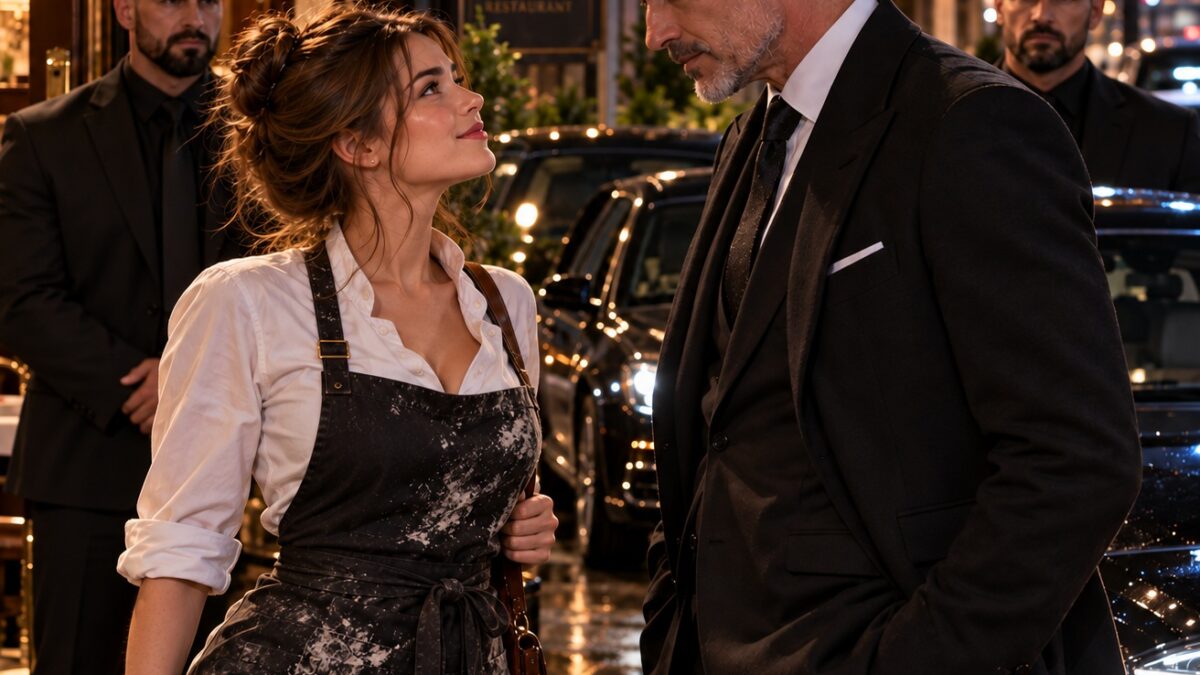
FULL STORY CONTINUATION
The Copper Lantern sat on a corner in Westport in Kansas City, Missouri, inside a narrow brick building that had survived three owners, two floods, and one decorating period in the eighties involving so many ferns that my father still refused to discuss it.
My parents, Frank and Loretta Winslow, bought the place in 1994.
They had almost no money.
They had one bank loan, another loan from my mother’s sister, mismatched chairs, a zinc-topped bar that had already been used for twenty years, and the unreasonable confidence of two people who believed good food could fix most business problems.
My mother spent years collecting the copper lamps hanging over the dining room.
Estate sales.
Antique stores.
Roadside auctions.
Three states.
She never bought two that matched.
That was the point.
“Rooms should look like people live in them,” she used to say. “Perfect things make everybody nervous.”
The menu worked the same way.
Nothing clever.
Nothing designed for photographs.
Fourteen-hour brisket.
Short ribs my father guarded like state secrets.
Lemon chicken people drove across the state line for.
Mashed potatoes containing enough butter to frighten cardiologists.
And my mother’s pear tart.
Brown sugar crust.
Pears cooked until they almost collapsed.
No written recipe.
Loretta cooked by instinct and considered measurements a personal insult.
When she died six years before I met Leonard, I spent almost a year rebuilding that tart from memory.
Forty-one failures.
Too sweet.
Too dry.
Wrong spice.
Wrong crust.
Then one Tuesday afternoon, I tasted attempt forty-two and started crying because for half a second my mother was standing beside me again.
After Loretta died, Dad and I kept the Lantern going together.
Then two winters before Leonard walked through our door, my father had a stroke while slicing onions.
It took most of the strength from his right hand.
It stole some of his words.
It left his intelligence, pride, and sarcasm completely intact, which made losing the stove even harder for him.
He was sixty-eight and suddenly couldn’t lift a stockpot.
Couldn’t work the grill.
Couldn’t stand for twelve hours.
So I took over.
Not symbolically.
Actually.
I ordered produce.
Balanced the books.
Set schedules.
Negotiated deliveries.
Checked payroll.
Covered the floor.
Worked the pass.
Met health inspectors.
Handled angry customers.
Cleaned bathrooms when necessary.
And somehow people still walked into my restaurant and asked me whether the owner was around.
One food writer described me in print as “the owner’s daughter who seems to be doing her best.”
I cut that sentence out and taped it to the inside of my office door.
Part punishment.
Part motivation.
Mostly anger.
I was thirty-four years old and keeping the entire place upright, but to a lot of people I was still somebody filling in for the important person.
My former fiancé, Kyle, had thought so too.
He stayed four months after Dad’s stroke.
Then one night in the parking lot, he told me he hadn’t “signed up for a business and an invalid.”
He said it gently.
People always think cruelty counts less when they lower their voice.
I gave him back his ring.
Then I went inside and served one hundred and twenty Friday-night covers while my hands shook.
After closing, I sat on an upside-down pickle bucket in dry storage and cried for exactly nine minutes.
Then I washed my face.
Restaurants don’t give you much time to fall apart.
There is always another table.
My staff became my second family.
Marisol Reyes ran the kitchen with a ladle, a terrifying stare, and equal fluency in English, Spanish, and profanity.
Toby, nineteen, washed dishes while saving for community college.
Dena could seat forty people in ten minutes while simultaneously texting three friends.
Walter Pruitt had served tables at the Lantern for twenty-two years.
He had taught me at sixteen to carry five plates on one arm.
His wife, Carol, had kidney disease and went to dialysis three mornings every week, so I built his schedule around it without discussing it.
And behind the restaurant lived Gravy, an orange alley cat who technically belonged to nobody and in practice owned the building.
That was my world.
Leonard Cross came from another one entirely.
I would learn later that on paper he owned Cross Freight and Cold Storage.
Warehouses.
Trucks.
Distribution contracts.
All perfectly legitimate.
The part that wasn’t on paper had made his name something people in Kansas City lowered their voices around.
Loans.
Gambling.
Union influence.
Protection.
Quiet problems handled before newspapers learned they existed.
For more than twenty years, Leonard had been the man other dangerous men called when they wanted to know where the line was.
He lived alone in Mission Hills.
A huge gray house.
A housekeeper several days a week.
No children.
No pets.
A garden he never walked through.
And for twenty-eight years, he had eaten nearly every meal with his back to a wall and his eyes on the door.
Because twenty-eight years earlier, his wife, Catherine, had died in a car bombing meant for him.
She had been standing outside a bakery.
Leonard survived only because he was eleven minutes late.
He had never forgiven himself for those eleven minutes.
Afterward, he adopted a rule.
Anything you loved eventually became a weapon somebody else could use against you.
So Leonard made himself hard to reach.
Then harder.
Then impossible.
Every year on the anniversary of Catherine’s death, he visited the cemetery alone and afterward ate somewhere quiet.
That Thursday, he told his driver, Bruno Castellano, not to take him to his usual steakhouse.
“Somewhere nobody knows me.”
Bruno drove until Leonard saw the Copper Lantern.
That was how he ended up at my hostess stand.
He entered alone.
I remember looking at him and immediately noticing that he wasn’t admiring the room.
He was studying exits.
Windows.
Reflections.
The mirror behind the bar.
I almost asked whether he was a health inspector.
Instead, I smiled.
“We’re between services, but the kitchen is open another twenty minutes.”
“One.”
“Just you?”
“Yes.”
“Quiet table?”
“If you don’t mind my father’s photograph judging you.”
I showed him the back corner beneath the framed picture from the Lantern’s opening day.
He chose the chair facing the door.
Naturally.
I handed him a menu.
“I won’t stay long.”
“Everybody says that right before dessert.”
Something moved at the corner of his mouth.
Then he said, almost gently, “You shouldn’t be so quick to invite strangers to stay.”
I frowned.
“I didn’t invite you.”
His eyebrows rose.
“You walked in. That’s on you.”
For several seconds, he just looked at me.
Then the mouth moved again.
“The lemon chicken.”
“No capers?”
He blinked.
“Why would you ask?”
“People either love them or think they’re evidence of moral decline.”
“No capers.”
“I’ll write you down as morally opposed.”
That almost got a smile.
I served him.
He ate slowly.
Not like a businessman rushing between meetings.
Like somebody who had forgotten what hot food tasted like.
When he finished, I poured coffee he hadn’t requested.
Then brought pear tart.
“I didn’t order this.”
“I know.”
“Then why is it here?”
“Thursday rule.”
He stared.
“Nobody leaves hungry.”
He ate half.
Slowly.
And when he left, he put a hundred-dollar bill inside the check folder.
I almost followed him outside to return it.
Then he stopped at the door.
“Are you free tomorrow evening?”
I blinked.
“Are you asking me out?”
“I am warning you not to accept.”
I laughed.
“That is the worst invitation I’ve ever heard, and somebody once proposed to me in ketchup.”
He stood perfectly still.
Then nodded once.
“Eight o’clock.”
He walked out.
Marisol appeared at the pass.
“You’re not going.”
“I know.”
“That man looks like granite learned to wear a coat.”
“I know.”
“There was a huge guy sitting in a car down the block.”
“I saw.”
“You are absolutely not going to dinner with him.”
“Obviously not.”
I repeated that until seven-fifty the next night.
Then I stood in our staff bathroom wearing borrowed lipstick and asking my reflection what exactly it thought it was doing.
Which brought me back to Leonard warning me he was too dangerous for dinner.
And me getting into the car anyway.
The interior smelled like leather and cedar.
Leonard sat on the opposite side.
Bruno drove.
For three blocks, nobody spoke.
Finally I leaned forward.
“You’re Bruno, right?”
His eyes moved to the mirror.
“Yes, ma’am.”
“I saw you yesterday. You sat in that car for two hours.”
Leonard sighed.
I continued.
“Nobody brought you a sandwich.”
Bruno’s ears turned red.
“I’m fine, ma’am.”
“I’ll send you something next time.”
“You do not need to adopt my staff,” Leonard said.
“I am not adopting him.”
I settled back.
“I’m feeding him. Different paperwork.”
Bruno’s mouth twitched.
Leonard stared straight ahead.
“You know,” I said, “for a man taking a woman to dinner, you have the conversational energy of someone reading his own will.”
He finally looked at me.
“Would it kill you to say something normal?”
“What would you consider normal?”
“Favorite color. Breakfast. Anything.”
He thought.
For far too long.
“I had coffee.”
I waited.
“Black.”
“Good.”
“At six.”
“Fantastic. Now ask me something.”
He frowned.
“What do you do when you’re very tired?”
That was not what I expected.
I looked out at the passing lights.
“I fold napkins.”
“Why?”
“Because they don’t need anything from me except to become squares.”
He said nothing.
But he remembered.
The restaurant he took me to was Marchesi’s, a low brick steakhouse where every head turned when Leonard entered and immediately turned away.
The owner hurried over.
Leonard raised two fingers.
“She’ll have the filet—”
I set down my water glass.
“No.”
The owner went pale.
Leonard looked at me.
“Excuse me?”
“I run a restaurant.”
I opened the menu.
“I have opinions.”
“I was trying to be courteous.”
“You can be courteous while letting me order my own dinner.”
The owner looked as if he wanted to hide beneath the table.
Leonard slowly lowered his hand.
“Of course.”
Then, unexpectedly:
“I apologize.”
That mattered.
“Accepted.”
I ordered a wedge salad, a bone-in ribeye, creamed spinach, the most irresponsible potato on the menu, and bread.
When the bread came, I buttered a piece and ate it with enough enthusiasm that Leonard stared.
“What?”
“I am not staring.”
“You are.”
“I am observing.”
“That’s staring with better manners.”
He looked at the bread.
“In twenty-eight years, I have never watched somebody eat bread as if receiving a religious revelation.”
“Then you’ve been eating with the wrong people.”
I passed him the basket.
After a moment, he took a piece.
Dinner became easier.
I told him about Dad.
About Gravy stealing an entire rotisserie chicken.
About Marisol threatening suppliers.
About reconstructing my mother’s pear tart from memory.
Leonard listened.
Actually listened.
Most people wait for their turn to speak.
He did not.
Finally I asked the question.
“Why dangerous?”
His knife stopped.
“You’ve mentioned it twice. I feel like details are reasonable.”
For a long time, he said nothing.
Then:
“I run businesses that do not always respect the law.”
“Okay.”
“I’ve made decisions that hurt people.”
He looked directly at me.
“Some deserved it. Some, I suspect, did not.”
I let that sit.
“I am known as someone you do not cross.”
“And is that true?”
“Yes.”
I nodded.
“That’s honest.”
Then I pushed the salt toward him.
“For the record, I don’t need the legend right now.”
He glanced down.
“I need somebody who can pass salt.”
Leonard Cross looked at the shaker.
Then picked it up.
That was when I noticed the man at the bar.
Gray work jacket.
About fifty.
Beer untouched for twenty minutes.
Right hand inside his pocket.
Eyes not on the television.
Not on the bartender.
On the mirror.
Watching Leonard.
I had watched people in restaurants for thirteen years.
This man was not drunk.
Not waiting for somebody.
Not planning a robbery.
He had already made a decision.
And he was terrified of it.
I kept smiling.
“Don’t move your hand.”
Leonard’s eyes sharpened.
“The man at the bar has a gun.”
His expression didn’t change.
“He isn’t here to rob you.”
Bruno, near the entrance, subtly moved.
“If your men rush him, he’ll fire because he’s scared.”
Leonard barely moved his lips.
“Sit still, Miss Winslow.”
That phrase hit something old in me.
Sit still.
Let someone else handle it.
Wait quietly.
So naturally, I stood.
“Harper.”
It was the first time Leonard used my name.
“Two minutes.”
I picked up the bread basket.
“Why the bread?”
“Few emergencies get worse because somebody is holding bread.”
I walked to the bar.
My heart was beating so hard I could hear it.
I set down the basket.
“Sir, I think the kitchen forgot you.”
He flinched.
“You’ve had one beer for half an hour and no dinner. I don’t allow that.”
His face went gray.
I slid onto the stool beside him.
My hands stayed visible.
“I’m Harper.”
Silence.
“What’s your name?”
“Ray.”
His voice cracked.
“Raymond Kesler.”
“Ray’s a good name.”
His eyes filled.
I noticed the keys on the bar.
A little pink hair elastic looped around them.
“You have a daughter.”
His mouth trembled.
“Lily.”
“How old?”
“Nine.”
Everything spilled out.
Garage on Southwest Boulevard.
Wife sick.
Forty-thousand-dollar loan from Mickey Doyle.
Interest that never stopped growing.
Garage taken.
Truck taken.
House gone.
Wife and daughter forced to move to Wichita.
Ray had been told the money belonged to Leonard.
He sent letters.
Begged.
Never got an answer.
“Tonight I was going to make him look at me.”
He was crying now.
“That’s all. I wanted him to see what he did.”
Behind me, I heard a chair move.
Leonard approached slowly.
Ray’s hand came out.
Small pistol.
Shaking.
Bruno started forward.
Leonard stopped him with two fingers.
Ray pointed the gun at Leonard.
Then the floor.
Then nowhere.
“Ray.”
I kept my voice steady.
“Look at me.”
He did.
“Nobody here is hurting you tonight.”
His breathing came in broken pulls.
“I promise.”
The gun lowered.
Leonard spoke.
“Miss Winslow. Step aside.”
“No.”
His eyes met mine.
“I am not asking.”
“I know.”
Then Leonard did something extraordinary.
He removed his hand from inside his coat.
Both hands visible.
Empty.
“Mickey Doyle worked for me.”
Ray stared.
“He stole.”
Leonard’s voice carried through the silent room.
“He charged people beyond what I permitted. He destroyed lives.”
Ray’s face twisted.
“I found out eight months ago and removed him.”
Leonard swallowed.
“But I found out too late because I chose not to look closely enough.”
His voice went quieter.
“The debt was not mine.”
Then:
“The damage was.”
Ray began to cry.
“You are angry at the right man.”
The gun dropped.
I took it gently.
Bruno received it like a live grenade.
Ray folded over the bar.
I rubbed his back.
Leonard told Bruno, “Take him home.”
Bruno nodded.
“Not as a prisoner.”
Leonard looked at Ray.
“As a guest. Feed him first.”
Then:
“Find out who put the gun in his hand.”
Ray raised his head.
“A man named Victor.”
Leonard went completely still.
“Gray coat.”
Ray wiped his face.
“He knew you’d be here. He said you’d be alone. He bought me coffee. He was… kind.”
Leonard’s expression emptied.
“Yes.”
That one word frightened me more than everything else.
After Ray left, my hands began shaking.
Not gradually.
Violently.
I stared at them.
“I think my body just realized what happened.”
Leonard was beside me immediately.
He took off his overcoat and wrapped it around my shoulders.
Then instead of returning to the seat across from me, he sat beside me.
Nobody in that restaurant seemed to know what to do with that.
Neither did I.
“You understand,” he said, “that three men in this room would have shot Raymond before he cleared his pocket.”
“I know.”
“I would have been one.”
“I know.”
His voice hardened.
“I’ve spent my life reaching first.”
I wiped my face.
“That’s why I stood up.”
He looked at me.
“You weren’t the wrong person.”
I breathed carefully.
“You were the wrong tool.”
His brow furrowed.
“Sometimes you don’t need the person who can end something.”
I looked toward the door Ray had left through.
“Sometimes you need somebody willing to sit next to it.”
Leonard stared at me for a long time.
“Nobody has ever said that to me.”
A dessert appeared.
I had no idea who ordered it.
I picked up a fork.
“Adrenaline makes me hungry.”
Leonard picked up a second fork.
I assumed that would be the end.
It wasn’t.
Tuesday afternoon, he walked into the Copper Lantern alone.
No bodyguards inside.
No dark coat.
Bruno remained parked half a block away because apparently Leonard had announced he intended to “eat lunch like a normal human being.”
According to Bruno, this caused immediate concern among senior management.
Leonard sat at his corner table.
I placed coffee in front of him without asking.
He tasted it.
Then stared at me.
“What?”
“This is how you take yours.”
A little cream.
One sugar.
I’d done it automatically.
“Apparently.”
He looked at the cup again.
Then at me.
Something unspoken passed between us.
After that, he came regularly.
Tuesdays.
Thursdays.
Eventually Saturdays.
Once during dinner rush, he wore a dark sweater instead of a suit and sat at the bar watching me work for three hours.
He remembered everything.
One sugar.
Counterclockwise stir.
Scar on my thumb from a mandoline accident.
The radio station I hated.
The fact that I forgot meals.
Especially that.
“When did you eat?”
“I had a roll.”
“A roll is not a meal.”
“It is if you believe in it.”
Forty minutes later, Bruno delivered a steak sandwich, salad, and chocolate torte.
A note in Leonard’s precise handwriting:
EAT THIS BEFORE YOU ARGUE.
I ate everything.
Then complained on principle.
When Leonard learned about Dad, he sent flowers.
To my father.
White roses and eucalyptus.
The card read:
To Mr. Winslow, from a man who has eaten your wife’s pear tart and is prepared to be judged for it.
Dad read it twice.
“Who sends flowers to a man with a cane?”
“A respectful person.”
“Who is he?”
“Nobody.”
Dad raised one eyebrow.
“Nobody sends roses.”
Leonard came to our house the next Sunday with a pie because apparently he had researched proper visiting etiquette.
Dad greeted him from his armchair.
“You’re the flower man.”
“I am.”
“I’m told you’re dangerous.”
“I’ve been told that.”
“Good.”
Dad pointed with his cane.
“Sit down.”
Then he beat Leonard at cribbage three times.
During the fourth game, Dad said, “You’re fifty-nine.”
“Yes.”
“She’s thirty-four.”
“Yes.”
“You’re too old for my daughter.”
Leonard considered this solemnly.
“You are sixty-eight.”
Dad stared.
“That is different.”
“Why?”
Leonard paused.
“Because you’re her father and therefore allowed.”
Dad’s good side twitched.
Then he destroyed him in the fourth game too.
At the door, Dad grabbed Leonard’s sleeve.
I didn’t hear what he said until Leonard told me months later.
“She feeds everyone on Earth and forgets herself.”
Dad’s voice had been low.
“I can’t watch over that anymore.”
Leonard answered:
“I’ve noticed.”
Then:
“I’m working on it.”
The real truth came later.
One November night after closing, I found Leonard alone at his corner table.
I sat across from him.
I started folding napkins.
He watched my hands.
“You asked why I came here that first Thursday.”
I stopped.
“It was the anniversary of Catherine’s death.”
My hands stilled.
“Your wife?”
“Yes.”
He told me about the bomb.
Bakery.
October morning.
Eleven minutes late.
Twenty-eight years of guilt.
“I have eaten alone every day since.”
My chest hurt.
“Because being alone was easier than wondering who would die next.”
He looked toward one of my mother’s copper lamps.
“Then you put pear tart in front of me because it was Thursday.”
I reached across the table.
Took his hand.
For a moment, it didn’t move.
Then his fingers closed around mine.
“I want you to know everything.”
His voice changed.
“The man who gave Ray the gun is Victor Dre.”
I listened.
“Victor worked for me when I was younger.”
Leonard’s jaw tightened.
“He believed my position should have been his.”
“He wants you dead?”
“Not necessarily.”
“That doesn’t sound comforting.”
“He wants me weak.”
His eyes met mine.
“He wants me to lose something.”
A chill went through me.
“If he learns you matter, he will use you.”
Silence.
“Every sensible instinct I possess tells me to walk out that door and never return.”
My throat tightened.
“I can’t seem to make my feet do it.”
I sat back.
Every sensible instinct I had said the same thing.
Dad.
Mortgage.
Employees.
Restaurant.
My entire life could be damaged by the man sitting across from me.
But another thought was stronger.
“You don’t get to decide for me.”
His eyes narrowed.
“I’ve had people deciding what’s best for me and then leaving when the decision gets inconvenient.”
I squeezed his hand.
“If you want me gone, say it.”
He didn’t.
“Say it and mean it.”
A long silence.
“I cannot.”
I smiled sadly.
“Then I guess we’re both in trouble.”
For a while, trouble looked almost funny.
Dr. Paul Hendricks, one of our regulars, was a widowed orthodontist with nice manners and a predictable short-rib order.
One Thursday he asked whether I’d like coffee sometime.
I was halfway through saying I’d check my schedule when I felt something behind me.
Leonard.
Three feet away.
Cutting lemon chicken into microscopic pieces.
Dr. Hendricks glanced over.
His survival instincts activated.
“I just remembered an appointment.”
He left.
I turned.
“Four minutes.”
Leonard looked up.
“You’ve been cutting one piece of chicken for four minutes.”
“I prefer small bites.”
“You’re jealous.”
“I do not experience jealousy.”
“You’ve ordered lemon chicken eleven times in two weeks.”
“It is consistent.”
“Leonard.”
He put down the knife.
For a man who had apparently negotiated with criminals and politicians, admitting jealousy looked physically painful.
“He has a pleasant face.”
I waited.
“He could take you to a normal dinner.”
“And?”
“Return you home at a normal hour.”
“Yes?”
His jaw tightened.
“I find that I dislike it.”
I laughed so loudly Marisol came out of the kitchen.
“What happened?”
“History.”
Leonard glared at me.
I leaned across the table.
“You know what I dislike?”
“What?”
“You assuming I want normal.”
That silenced him.
“Normal told me my father was too much work and left.”
I stole a piece of his chicken.
“You’re the first man in years who’s asked whether I’ve eaten.”
He looked down at the plate.
“Next time just say you don’t like it.”
Several seconds passed.
“I do not like it.”
I laughed again.
By December, Leonard’s oldest friend, Enzo Ricci, came to inspect me.
He didn’t say that was why.
He didn’t need to.
Sixty-three.
Elegant.
Compact.
Gold ring on his little finger.
Eyes that had seen too much.
I served him lemon chicken.
He ate suspiciously.
Then pear tart.
He stared at the plate afterward.
“Signorina.”
“Yes?”
“In thirty-five years, I have never seen Leonard eat dessert.”
“Maybe he needed better dessert.”
Enzo smiled.
“Perhaps.”
Later I learned he told Leonard:
“Keep her safe.”
Leonard replied:
“That was never the question.”
The first card came December ninth.
Toby found it inside the ice machine.
Plain white card.
Typed.
No signature.
THE BROWN BUTTER GNOCCHI WAS A LOVELY EXPERIMENT. WHAT A SHAME IT NEVER MADE THE MENU.
My blood went cold.
That gnocchi had been staff meal.
Never served.
Never advertised.
Only employees should have known.
By noon, somebody discovered the walk-in cooler had been unplugged.
Eleven thousand dollars in brisket, dairy, and produce spoiled.
Leonard arrived that night.
His face hardened.
“Close the restaurant.”
“No.”
“Harper.”
“No.”
“I’ll pay every employee.”
“No.”
“I’ll move you and Frank somewhere secure.”
I put down my coffee.
“My mother bought those lamps one at a time across three states.”
He stared.
“I am not putting a padlock on them because Victor owns a typewriter.”
“This is not a joke.”
“I know.”
“If something happens to you—”
“Bring your people.”
His mouth closed.
“I’ll feed them.”
We argued for forty minutes.
Neither of us shouted.
That made it worse.
Eventually we negotiated.
Bruno would work inside.
Undercover.
As a dishwasher.
This was hilarious for everybody except Bruno.
He broke four plates the first afternoon.
Flooded half the floor the second.
On the third day, Toby took the sprayer away from him.
“Dude.”
Bruno stared.
“You’re holding it like it owes you money.”
“I am holding it correctly.”
“You absolutely are not.”
Toby taught a professional bodyguard how to wash sheet pans.
Within a week they were friends.
Bruno admitted he had secretly wanted to attend culinary school since he was twenty.
I remembered that.
The second card appeared inside a flower bin.
It referenced Leonard’s caper comment.
Something he’d said exactly once.
Then somebody called the health department anonymously.
We passed.
Barely.
The third card appeared under the lid of a soup pot.
ENJOY THE LAST OF THEM.
That night, a brick shattered the front window.
I arrived at two-fifteen in the morning.
Glass covered the dining room.
One of Mom’s copper lamps swayed above the wreckage.
Leonard stood near the door.
Bruno held a dustpan.
I picked up a broom.
Leonard looked at me.
“Harper.”
“No.”
“Let someone else—”
“I need to do this.”
I swept for an hour.
When I finished, I leaned against the broom.
“I am not afraid.”
Leonard’s hand tightened.
“I am furious.”
Those are different emotions.
The police took a report.
After everyone left, I sat in my office with the three cards in sandwich bags.
Dad always said paperwork was the only honest witness.
So I worked backward.
Brown-butter gnocchi.
Who had been there?
Capers.
Who could have heard?
Pear tart.
Who had cleared Leonard’s plate?
I pulled schedules.
Tickets.
Server assignments.
My memory supplied the rest.
Dena had been in the coat room.
Toby had been washing dishes.
Marisol had been behind roaring exhaust fans.
Enzo had never been in the building alone.
Leonard’s people had limited access.
But one person had been at the side station that first afternoon, rolling silverware.
A man I trusted.
A man who had worked for us twenty-two years.
A man whose private laugh I remembered hearing when Leonard called capers an unnecessary opinion.
Walter.
I wrote names.
Crossed them off.
One remained.
WALTER PRUITT.
I cried.
Quietly.
Not because I doubted myself.
Because I didn’t.
Leonard came the next night around midnight with snow in his hair.
He stood in my office doorway.
“I have to tell you something.”
I looked up.
“I am ashamed.”
That got my attention.
“For three weeks, I have suspected Enzo.”
I stared.
“Why?”
“Someone saw him meeting Victor’s brother.”
Leonard looked exhausted.
“I asked Bruno to take Enzo to one of my cold-storage buildings tomorrow.”
Something about his tone made my stomach turn.
“What were you going to do?”
“Ask a question.”
“In a warehouse?”
“Yes.”
“With no windows?”
He said nothing.
“Leonard.”
“I would know by his face whether he lied.”
“And if he did?”
He looked away.
“I am telling you this because you deserve to understand what kind of man you’ve allowed into this place.”
I stood.
Walked around the desk.
Took his face between my hands.
“Listen to me.”
His eyes met mine.
“It isn’t Enzo.”
He went still.
I showed him everything.
Gnocchi.
Tart.
Capers.
Schedules.
Who could have known each detail.
Then I handed him my list.
Leonard read each crossed-out name.
Reached Walter.
Stopped.
“Enzo.”
His voice cracked.
He sat in my chair.
“I was going to take him into that room.”
He pressed his hand over his eyes.
And the man half of Kansas City feared almost broke in front of me.
“You have just saved my brother’s life.”
I knelt.
Wrapped my arms around him.
He held me so hard it hurt.
The next morning, he wanted Walter handled his way.
I knew what that meant.
“No.”
“Harper.”
“One hour.”
His face hardened.
“Give me one hour before anybody touches him.”
“Why?”
“He taught me how to carry plates.”
“That does not erase betrayal.”
“No.”
I held his eyes.
“But it earns a conversation.”
Leonard looked at me like I had asked him to hand over a piece of his spine.
Finally:
“One hour.”
Walter came in at ten.
Bow tie.
Small joke about the weather.
Then he saw me at the bar.
Two coffees.
Three evidence bags.
His face collapsed.
I slid the first card toward him.
“Oh, honey.”
He sat heavily.
“They said nobody would get hurt.”
“Who?”
“A man in a gray coat.”
Victor.
“He knew Carol was on dialysis.”
Walter began shaking.
“The transplant center wanted a deposit.”
“How much?”
“More than we had.”
His eyes filled.
“He gave me fifteen thousand.”
I couldn’t speak.
“I only had to tell him when Leonard came.”
Walter’s voice broke.
“Then he wanted the cooler.”
I closed my eyes.
“Then the window.”
“I’ve been sick every morning.”
I looked at the man who had held my mother’s funeral flowers.
Who had taught teenage me to balance plates.
Who had betrayed all of us because he was terrified his wife would die.
“I’m not going to tell you it’s all right.”
He sobbed.
“It isn’t.”
I took his hand anyway.
“You hurt people who loved you.”
He nodded.
“You helped someone put a brick through my mother’s window.”
Another nod.
“But I know what it feels like to be scared for someone you love.”
I squeezed his hand.
“You’re not a monster, Walter.”
His eyes closed.
“You made the worst choice of your life for the best reason in it.”
I leaned closer.
“Now make one right choice.”
He looked at me.
“Victor has another move planned.”
His silence answered.
“When?”
“Thursday.”
“Where?”
“Here.”
My blood cooled.
“After close. I’m supposed to leave the back door unlocked.”
“What does he want?”
“You.”
My stomach tightened.
“He said he wanted to send Leonard a message.”
I swallowed.
Then nodded.
“Do exactly what Victor told you.”
Walter stared.
“What?”
“Leave the door unlocked.”
“No.”
“Walter.”
“He’ll hurt you.”
“Not if we know he’s coming.”
I covered his hand with mine.
“And when it’s over, I will stand next to you.”
The following afternoon, I went to see Detective Anna Ruiz.
We had known each other since high school.
Years earlier, she had helped Dad with paperwork after the stroke without making him feel stupid.
I brought the cards.
The schedules.
Everything I could safely explain.
When Leonard found out, he went dangerously quiet.
“You called the police.”
“Yes.”
“On my business.”
“On Victor.”
“Harper.”
“Different address.”
He stared.
I stepped closer and put my palm on his chest.
His heart beat hard underneath.
“I love you.”
That was how I told him.
Not at candlelight.
Not over dessert.
While arguing about police involvement in a kidnapping trap.
Leonard stopped breathing.
I continued before fear could catch me.
“I don’t want you safe because you ran.”
His hand covered mine.
“I want you safe because you were standing there when the right people came through the door and did the right thing.”
“Harper—”
“Give me this.”
His jaw flexed.
Finally:
“Enzo will be in the alley.”
“Fine.”
“Bruno in the pantry.”
“Fine.”
“And I will be at the corner table.”
I smiled.
“Having dinner.”
Thursday came cold and clear.
We closed at ten.
Everybody left.
At least that was what it looked like.
I wore my good black dress.
The dining room lights were mostly off.
A pear tart waited at the pass.
At 10:14, the back door opened.
Victor Dre entered.
Fifty-two.
Gray coat.
Graying hair.
Pleasant face.
Two men behind him.
“Miss Winslow.”
His voice was gentle.
“I believe in meeting people who matter.”
Now I understood why Ray had called him kind.
Predators often sound kind when they want the door opened.
“Leonard isn’t here.”
Victor smiled.
“Where is he?”
“You’re late.”
I gestured toward the dining room.
“Dinner’s getting cold.”
He crossed the kitchen fast.
Too fast.
His hand closed around my arm.
A gun pressed against my ribs.
“You can scream.”
His voice remained pleasant.
“It won’t improve the evening.”
Then a chair scraped in the dark.
Bar lights came on.
One by one.
Leonard stood at his corner table.
Napkin in one hand.
Water glass in front of him.
“Victor.”
His voice was quiet.
“Let her go.”
Victor laughed.
“You always said caring about something was how a man lost it.”
The gun dug harder into my side.
“I wanted to test the theory.”
Leonard’s face went white.
He reached inside his coat.
Slowly removed his gun.
Set it on the zinc bar.
Slid it away.
Then raised both hands.
“Take me.”
Victor smiled.
“I’ll walk out with you.”
Leonard’s voice remained steady.
“Nobody follows.”
“No, Leo.”
Victor almost sounded disappointed.
“That’s not the game.”
Leonard stepped closer.
“Listen carefully.”
The entire room seemed to lean toward him.
“Everything you do to her, you do to me.”
Victor’s smile widened.
“I have never been merciful about what is mine.”
Something in me bristled even then.
Of course it did.
But Leonard continued.
“Take your hand off her.”
His voice dropped.
“Or you will learn exactly what that word costs.”
Victor shifted.
That was when the trap closed.
Movement exploded from the pantry.
Bruno.
One of Victor’s men reached inside his jacket.
Enzo came through the rear hall.
The second man turned.
I drove my heel backward into Victor’s shin and threw my weight away from the gun.
The weapon fired.
The sound destroyed the room.
One of my mother’s copper lamps exploded against the wall.
Glass rained.
I hit the floor.
Bruno slammed one man into the kitchen door.
Enzo disarmed the other.
Victor’s gun slid across the tile.
Leonard crossed the room faster than any fifty-nine-year-old man had a right to move.
He caught Victor by the throat.
Drove him into the wall.
Hard.
For one terrible moment, I saw the Leonard everyone else saw.
The man behind the whispers.
His hand tightened.
Victor’s face darkened.
Then Victor smiled.
Even choking, he smiled.
“There.”
The word came out broken.
“There he is.”
Leonard’s arm tightened.
I pushed myself up.
My dress had torn at the shoulder.
My hair had come loose.
Sirens were already approaching somewhere outside.
“Leonard.”
He didn’t move.
I crossed the kitchen.
Put my hand on his arm.
“Not like this.”
His entire body shook.
“Don’t let him be right about you.”
Victor wheezed.
I held Leonard tighter.
“Let the law have him.”
His jaw worked.
“Stay with me.”
Thirty years of habit fought across Leonard’s face.
Thirty years of reaching first.
Punishing first.
Making sure nobody got another chance.
Then his hand opened.
Victor dropped to the floor coughing.
Leonard turned.
Pulled me against him.
I could feel his heart slamming beneath his shirt.
“I have never chosen anything over that.”
His voice broke against my hair.
“Not once.”
I held him.
“Well.”
My own voice shook.
“First time for everything.”
Enzo disappeared through the back.
Bruno removed his apron and somehow became an innocent dishwasher.
Leonard returned calmly to his corner table.
When Detective Ruiz came in, Leonard Cross was eating pear tart.
She looked at the shattered lamp.
At Victor.
At me.
Then at Leonard.
“How was dinner?”
Leonard swallowed.
“Excellent.”
For once, the law did exactly what it was supposed to.
Victor was charged.
Armed trespass.
Conspiracy.
Attempted kidnapping.
The cards mattered.
Walter’s statement mattered.
The evidence mattered.
Nobody needed Leonard to make Victor disappear.
That changed something.
Not immediately.
Men like Leonard do not unlearn thirty years in one night.
But a door had opened.
At Walter’s hearing in February, I wore my mother’s navy coat.
I told the judge about the man who had taught me to carry five plates when I was sixteen.
About Carol.
About fear.
About responsibility.
I did not excuse him.
I asked for room for him to become better.
Walter received probation.
Restitution.
I arranged for most of it to be worked off in our prep kitchen at six in the morning, where forgiveness smelled like onions and nobody made speeches about it.
Carol’s transplant deposit was mysteriously covered by an anonymous foundation in March.
When I mentioned it to Leonard, he became unusually interested in his soup.
“Did you do that?”
“Do what?”
“You’re terrible at lying.”
“I have been told otherwise.”
“Not by me.”
He continued eating.
I let him have that one.
Raymond Kesler’s garage reopened that spring.
Fresh red letters:
KESLER AUTO.
Lily came back from Wichita.
Bruno enrolled in culinary school in January.
Toby helped him study knife skills.
The first time Bruno came into the Lantern wearing a culinary-school jacket, Marisol cried and then denied it.
The Copper Lantern reopened after repairs on a snowy Saturday in February.
New front glass.
Fresh paint.
And the copper lamp shattered during the confrontation had been restored piece by piece by an old craftsman in Lawrence.
Leonard paid for that.
I let him.
There is a difference between being rescued and allowing somebody who loves you to repair what was broken because of his world.
I was learning that too.
The restaurant was packed.
Frank held court in his booth.
Enzo ate pear tart at the bar like a man recently converted to religion.
Marisol ran the pass.
Walter worked quietly in prep.
Bruno showed Toby pictures from school.
At eight, Leonard stood.
He tapped a spoon against a glass.
The room became silent.
Not gradually.
Instantly.
That was what his name still did.
“I have been asked several times this winter what I am to this woman.”
I stopped moving.
Leonard looked toward me.
“I have not had a satisfactory answer.”
Oh God.
Frank grinned.
“So I will say it plainly.”
Leonard straightened.
“Harper Winslow is under my protection.”
My eyes narrowed.
Every dangerous man in the room seemed to listen more carefully.
“And every person in this city who has ever lowered his voice around my name will understand that she is never to be threatened, touched, or diminished.”
I put down the plate I was holding.
“Leonard.”
“Anyone who tries—”
“Leonard Cross.”
The room went even quieter.
I walked across the floor.
Dish towel still over my shoulder.
“I am not yours.”
Marisol’s mouth opened.
Enzo suddenly found his tart fascinating.
Leonard looked at me.
“I didn’t—”
“You just publicly claimed me like an expensive coat.”
A few people coughed.
“I belong to me.”
I pointed toward Dad.
“And partially to that man because he raised me.”
Dad lifted his coffee.
“And possibly Gravy.”
The orange cat was visible through the back window.
“In that order.”
Leonard’s expression changed.
Slowly.
A smile.
That smile.
The one I had worked months to uncover.
“Then let me say it properly.”
I folded my arms.
“Please do.”
Leonard looked at me.
Not at the room.
“I am yours.”
Everything inside me stopped.
“I have been yours since a Thursday in October when you told me nobody left your restaurant hungry.”
My eyes burned.
“You do not need my protection, Harper.”
His voice softened.
“You have been protecting me since the first plate you put in front of me.”
Nobody moved.
“I am asking only for the privilege of standing beside you while you continue doing whatever you were going to do anyway.”
From the corner booth, Dad shouted:
“Well, it’s about damn time.”
The restaurant exploded.
Laughter.
Applause.
Marisol cried openly.
Enzo stood.
Toby whistled.
And Leonard crossed the final distance between us.
His scarred hands touched my face.
He waited.
That mattered.
I closed the distance myself.
He kissed me.
Slowly.
Carefully at first.
Then like a man putting thirty years of loneliness down.
When we separated, I whispered:
“You’re still too old for me.”
His eyes narrowed.
“Your father is older.”
“He’s my father.”
“I have already been informed this is different.”
I laughed against his mouth.
Months passed.
Spring came.
The Lantern got busy again.
Really busy.
A food writer returned in March.
The same one who had once called me “the owner’s daughter doing her best.”
This time, the article described the Copper Lantern as one of the best rooms in Kansas City.
And then came the sentence I read three times.
Run by Harper Winslow, who knows every guest’s name and every dish’s secret, and who has made the Copper Lantern entirely her own.
I taped that clipping next to the old one.
Stood there.
Read both.
Then removed the first.
Folded it once.
Dropped it into the trash.
I didn’t need the dare anymore.
One warm Thursday in April, we finished after midnight.
The windows were cracked open.
Lilacs drifted in from somewhere down the block.
The copper lamps glowed against dark glass.
Frank had gone home.
Staff gone.
Gravy scratched once at the back door, received chicken, and disappeared.
Then the door opened again.
Leonard walked in alone.
No Bruno.
No car visible.
Shirt sleeves.
Jacket over one arm.
He came to the corner table.
I already had a plate waiting.
Lemon chicken.
No capers.
He sat.
Looked at the plate.
Then at me.
“What is this?”
“Dinner.”
One eyebrow lifted.
“You aren’t afraid of me anymore.”
I sat across from him.
“I was never afraid of dinner.”
“And me?”
I picked up my fork.
Stole a bite from his plate.
He looked offended.
I chewed.
“Still deciding.”
Leonard laughed.
Not the restrained sound I had first heard on the sidewalk.
A deep, easy laugh.
The kind that filled the empty restaurant and came back from the old brick walls.
Twenty-eight years earlier, Leonard had decided that love was simply a weapon waiting for the right enemy.
So he had made himself untouchable.
He built walls.
Commands.
Fear.
A fortress made of silence.
I had built something different.
A restaurant.
Not because restaurants are safe.
They aren’t.
Businesses fail.
Parents die.
Fathers get sick.
Fiancés leave.
Windows break.
Friends betray you.
Danger can walk through the back door wearing a polite smile.
But restaurants teach another lesson.
You keep setting tables.
You keep feeding people.
You repair the glass.
You replace the spoiled food.
You forgive carefully.
You remember who takes cream.
You remember who hates capers.
And when someone walks in carrying more pain than they know what to do with, sometimes you do not need to solve them.
Sometimes you sit down.
Sometimes you pass the bread.
Sometimes you tell them it doesn’t all need to be fixed tonight.
It only needs to be survived.
Leonard had spent a lifetime making people afraid.
I had spent years feeling invisible inside a place I was holding together with both hands.
Somehow, we found each other in the middle.
He became the first man in years who noticed whether I had eaten.
I became the first woman in decades who heard him say he was dangerous and stayed anyway.
Not because I believed danger was romantic.
Not because I thought love would magically turn him into a different man.
It didn’t.
Leonard still had darkness in him.
He still made choices I did not always like.
He still entered rooms and made conversations stop.
But he had learned that restraint was not weakness.
That asking was different from ordering.
That protecting someone did not mean owning them.
That sometimes the strongest thing he could do was open his hand.
And I learned that accepting love did not mean surrendering myself.
I could let somebody feed me without becoming dependent.
Let somebody repair a lamp without handing them my restaurant.
Let somebody stand beside me without letting them stand in front.
Leonard looked down at his plate.
“You stole the best piece.”
“You hesitated.”
“I was speaking.”
“Restaurants are unforgiving environments.”
He pushed the plate toward me.
“Take the rest.”
I pushed it back.
“Eat your dinner.”
“Bossy.”
“You like it.”
His mouth curved.
“I tolerate it.”
“Liar.”
He took another bite.
Outside, Westport had gone quiet.
Inside, the copper lamps glowed.
My mother’s lamps.
Dad’s old corner booth.
The zinc bar Walter had polished for twenty-two years.
A restored window.
A repaired lamp.
A photograph from 1994 hanging over Leonard’s shoulder.
There had been a time when every chair around that man was kept empty by fear.
Now his coat hung over the chair beside him.
Sometimes Bruno sat there.
Sometimes Enzo.
Sometimes Dad brought his cane over and demanded another cribbage game.
Usually it was me.
Leonard finished the chicken.
I brought pear tart.
He looked at it.
“You didn’t ask whether I wanted dessert.”
“Thursday rule.”
His eyes softened.
“I remember.”
“Nobody leaves hungry.”
He picked up his fork.
Then stopped.
“Harper.”
“Yes?”
“That night outside the restaurant.”
“What about it?”
“When I told you I was too dangerous for dinner.”
I smiled.
“Yes?”
“Did you believe me?”
I thought about Ray’s gun.
Victor.
Broken glass.
Catherine.
The man Leonard had once been.
The man he was still capable of becoming.
“Yes.”
That surprised him.
“You did?”
“Of course.”
“Then why did you get into the car?”
I leaned back.
There were probably a hundred clever answers.
I could have reminded him that I had worked fourteen hours.
That my stomach growled.
That I had always made terrible decisions on an empty stomach.
Instead, I gave him the real one.
“Because you warned me.”
He frowned.
“What?”
“Dangerous men don’t usually stand on sidewalks trying to convince women not to have dinner with them.”
I reached across the table.
Took his hand.
“You were giving me a choice before you knew how important choices were to me.”
Leonard stared at our hands.
“I nearly changed my mind when you said yes.”
“I know.”
“I considered sending you home.”
“You should’ve tried.”
“I have since learned that.”
I smiled.
“And I was hungry.”
He laughed.
There it was again.
That sound.
Easy now.
No longer a miracle.
Just Leonard.
Years of fear had taught him that people obeyed because of his name.
The Copper Lantern taught him something his empire never could.
People could stay because they wanted to.
And that was different.
Better.
Terrifying in its own way.
But better.
The first night Leonard Cross took me to dinner, he warned me that he was too dangerous.
He wasn’t lying.
What neither of us understood yet was that danger wasn’t the thing that would change us.
Dinner was.
Sitting across from another person.
Telling the truth.
Passing the salt.
Sharing bread.
Listening.
Staying.
Choosing not to reach for the gun.
Choosing not to walk away.
Choosing, again and again, to sit at the same table.
I stole another bite of his pear tart.
Leonard narrowed his eyes.
“That was mine.”
“You’re dangerous. Stop me.”
His expression became very serious.
Then he pushed the entire plate across the table.
“I’ve become soft.”
“No.”
I took the plate.
“You’ve become civilized.”
“Worse.”
I laughed.
Then Leonard leaned back under the photograph of my parents’ old restaurant and smiled at me like a man who had finally discovered that being feared and being loved were not remotely the same thing.
The copper lamps glowed above us.
Outside, the city still knew his name.
People probably still lowered their voices.
Maybe they always would.
But inside the Copper Lantern, he was simply Leonard.
Fifty-nine.
Impossible.
Jealous of orthodontists.
Suspicious of capers.
Bad at cribbage.
Protective to the point of irritation.
And still slightly offended whenever I stole food from his plate.
He had spent twenty-eight years eating alone because he thought solitude was the price of survival.
Now, most Thursdays, he waited for me.
And no matter how late the kitchen ran, no matter how many invoices were waiting on my desk or how tired I was, eventually I sat down.
Not because he commanded it.
Because I chose the chair.
And every time I did, Leonard looked at me for half a second like he still couldn’t believe I was there.
Maybe that was why I kept doing it.
Some people spend their lives searching for somebody who will save them.
I never wanted that.
Neither did Leonard, although it took him longer to understand.
What we both needed was somebody who could see the worst parts clearly and still insist on choice.
Somebody who could say:
I know what you are.
I know what you’ve survived.
I know what you are capable of.
Now pass the salt.
And eat before it gets cold.
That turned out to be enough.
More than enough.
On the night Leonard first warned me, he said:
“I am too dangerous for dinner.”
I answered:
“Good. I’m hungry.”
Months later, after guns, threats, broken windows, betrayals, grief, forgiveness, and more pear tart than any criminal organization should reasonably consume, I finally understood why he had laughed.
Everyone else heard the word dangerous and moved away.
I heard dinner.
And stayed.








