FULL STORY:“Tonight You Will Be Entirely Mine… No Way Out,” Warned the Mafia Boss She Froze
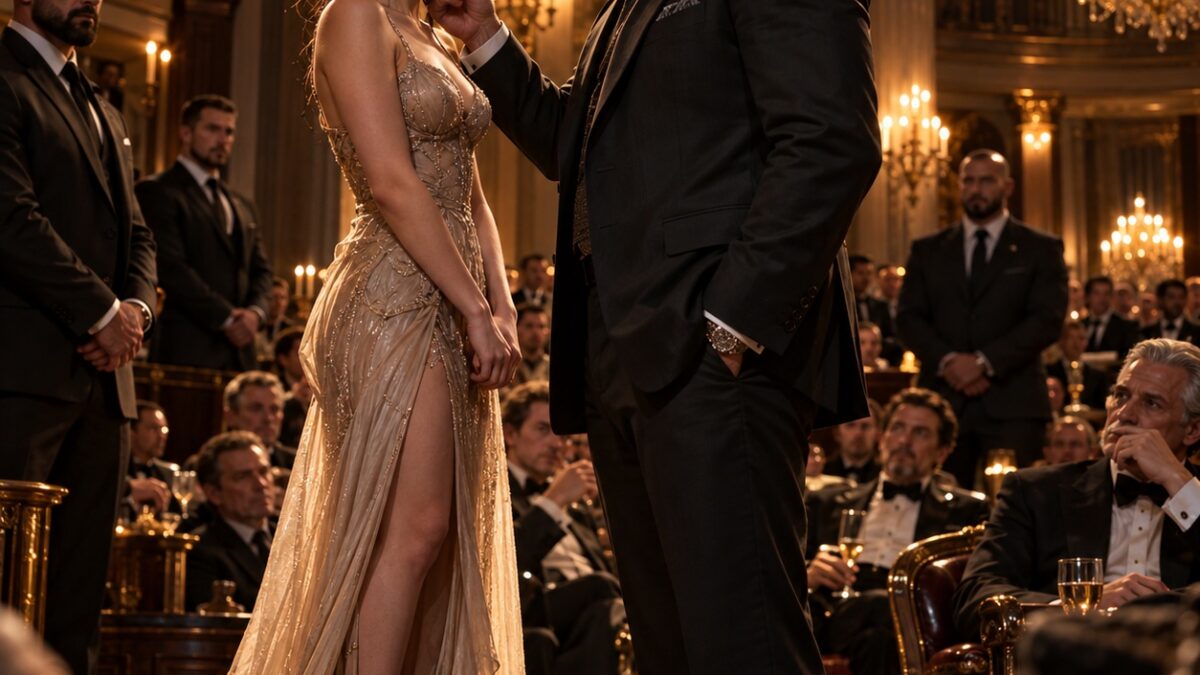
FULL STORY CONTINUATION
The car was black.
Naturally.
Men like Nikolai apparently received black vehicles at birth.
I sat in the back seat beside him with my hands folded tightly enough to turn my knuckles white.
He did not touch me.
Did not speak.
The city passed outside the window in blurred gold.
My phone was hidden beneath my thigh.
That was when Carla’s messages started arriving.
Carla had been my best friend since we were fifteen.
She knew every humiliating version of me.
The braces.
The first boyfriend.
The year I cut my own bangs and looked like an injured Victorian child.
She knew where I hid my diary.
Knew the names of the boys I lied about not liking.
Knew about my father.
The debt.
Everything.
Her first voice message began with:
“Livia, please don’t hate me.”
That sentence has never once preceded useful information in human history.
I angled the phone beneath my coat and listened through one earbud.
Carla was crying.
Her gambling debt had become something uglier.
Private lenders.
No paperwork.
Interest calculated by men who preferred broken fingers to late fees.
She owed people connected to Nikolai’s network.
Then somebody offered her a way out.
A woman was needed for the private auction.
Young.
Attractive.
No wealthy family.
No person powerful enough to make trouble afterward.
Carla had been selected.
She panicked.
And gave them my name instead.
I stopped breathing.
Her second message explained how.
She told someone I owed money.
True.
Said my family had old connections.
Also true.
Said I would be easier to move.
Apparently true.
“I’m sorry,” she sobbed.
“I thought he would buy you because of your family name. I thought you’d be safer with him than anyone else.”
Him.
Nikolai.
The arrangement had never been random.
I switched off the phone.
Anger was useful.
Grief was not.
Not yet.
The car eventually turned through iron gates.
Nikolai’s house rose behind them.
Not flashy.
That would’ve been easier.
It looked old.
Permanent.
The kind of estate built by people who assumed future generations would continue deserving it.
Inside, I counted.
Cameras.
Windows.
Hallways.
Doors.
Service staircase.
Possible exits.
Law students are trained to identify arguments.
People trapped in unfamiliar mansions identify hinges.
Nikolai noticed.
“You’re counting.”
I looked at him.
“Decorating choices.”
“You dislike them?”
“I dislike being kidnapped more.”
“You were not kidnapped by me.”
“You purchased a kidnapped woman.”
A pause.
“That distinction will be fascinating in court.”
One side of his mouth moved.
Not a smile.
Almost.
He stopped outside a bedroom.
“This is yours.”
The room was larger than my apartment.
Bed.
Bathroom.
Garden view.
Fireplace.
Heavy curtains.
No obvious bars.
I looked behind the curtains.
Bars.
Of course.
“Mine temporarily?”
No response.
“Or until death?”
Nikolai turned.
“The rules are simple.”
“I adore rules.”
“Don’t run.”
“Unreasonable.”
“Don’t lie.”
“Hypocritical, considering I know almost nothing about you.”
“Don’t provoke me.”
I smiled.
“Then you selected the wrong woman.”
Something changed behind his eyes.
He walked out.
The door remained unlocked.
That was either confidence or a trap.
I slept two hours.
At four in the morning, hunger won.
I found the kitchen after wandering through half the house.
Imported cheeses.
Fruit.
Cold chicken.
Three containers labeled in Russian.
I had just reached for the cheese when Nikolai’s voice came from the doorway.
“What are you doing?”
I turned.
He leaned against the frame with his arms folded.
“Hunting.”
“For cheese?”
“I have limited equipment.”
“You could have asked.”
“Whom?”
Silence.
“It is four in the morning.”
Nikolai walked to the refrigerator.
Removed a covered plate.
Put it in front of me.
“Dinner.”
“I wasn’t invited.”
“You are now.”
I stared.
“You’re very strange for a criminal.”
“So I’ve been told.”
“By kidnapped women?”
His eyes cooled.
“Eat.”
I did.
Mostly because starving for moral reasons has never improved a legal strategy.
He stayed.
Across the island.
Not looming.
Not touching.
Just watching.
“You were looking through the cameras.”
“Yes.”
“You saw me leave my room.”
“Yes.”
“Creepy.”
“Security.”
“Still creepy.”
No argument.
I washed the plate.
As I turned away, he asked:
“Why didn’t you run?”
I stopped.
There had been an opportunity at the auction.
A side corridor before I stepped onto the platform.
Later, another during the transition to the car.
Small chances.
Bad chances.
But chances.
The honest answer involved him.
Years of anger.
My father.
That hallway.
My need to see what kind of man he had become.
“Still doing the math,” I said.
Then left.
Over the next few days, captivity developed routines.
Which sounds insane because it was.
I was allowed nearly everywhere inside the property.
Guards existed.
Cameras existed.
The gates remained guarded.
But my bedroom stayed unlocked.
I could eat where I wanted.
Read.
Walk the garden.
Use the library.
Nikolai appeared without warning.
He didn’t speak much.
I did.
Especially when nervous.
One afternoon I found a piano.
I had played as a teenager.
Mom sold ours when my father’s debts began swallowing ordinary things.
I sat down.
My first attempt was awful.
Then muscle memory returned.
An old melody.
Slow.
Fragile.
When I finished, I realized Nikolai was standing behind me.
“You play.”
“Used to.”
“Continue.”
“Is that an order?”
His gaze held mine.
“A request.”
Barely different.
But different.
So I played.
When I finished, he sat beside me.
Close.
“My mother played.”
I looked at him.
It was the first voluntary personal fact he’d offered.
“Was she good?”
“Yes.”
A pause.
“She died when I was eleven.”
I didn’t say I was sorry.
Sometimes sympathy turns grief into performance.
I let the silence hold it.
He looked at the keys.
Then at me.
“You irritate me.”
The sentence struck something old.
My heartbeat changed.
“Natural gift.”
His eyes narrowed.
“You have done it before.”
There.
Recognition circling.
Not landing.
He left soon afterward.
But before he reached the door:
“The red dress.”
I looked down.
That morning, a closet full of clothing had appeared.
Everything exactly my size.
I’d picked the red dress because it was the least invisible thing there.
“What about it?”
“Don’t wear it again.”
Then he left.
So I wore it Saturday.
I am not proud of every choice I have made.
Some of them were extremely satisfying.
Nikolai saw me near breakfast.
His eyes remained at face level with almost violent discipline.
That alone made the decision worth it.
I discovered that provoking his self-control was dangerously entertaining.
When he read, I asked questions.
When he stood on business calls, I crossed the room closer than necessary.
He noticed everything.
Said almost nothing.
Until late afternoon.
I sat on a couch pretending to read.
Nikolai ended a phone call.
Crossed the room.
Stopped in front of me.
“Stand.”
“I am comfortable.”
“Livia.”
First time he said my name.
Not girl.
Not you.
Livia.
I stood.
Immediately regretted it because we were too close.
His eyes stayed on mine.
“You are doing this deliberately.”
“Reading?”
“You know what.”
“Wearing clothes?”
His jaw tightened.
“If my dress causes operational difficulties, your operation lacks discipline.”
Something dark flashed behind his eyes.
He lifted one hand.
My strap had slipped slightly.
His fingers moved it back onto my shoulder.
Barely a touch.
My breath stopped anyway.
He noticed.
Of course he noticed.
“This conversation isn’t finished.”
“I don’t remember starting it.”
“No.”
His gaze dropped briefly toward my mouth.
“But you will.”
Then he walked away.
Two days later, everything changed.
Nikolai entered the library carrying a file.
Dropped it onto the table.
My surname stared from the first page.
Carvalo.
Old accounts.
Debts.
Connections.
Names.
Morozov.
My stomach turned cold.
“You’re tied to the Carvalo family.”
“That is usually how surnames work.”
“This is not a joke.”
“I noticed.”
“The Carvalos owed favors to Morozov’s organization.”
I knew the name.
Barely.
Enough.
“He has been my enemy for eleven years.”
Nikolai moved closer.
“The auction was arranged to reach me.”
I stared.
“Through you.”
“Carla—”
“Was used.”
“She used me.”
“Both can be true.”
The room seemed smaller.
Nikolai stopped in front of me.
His hands came to either side of my face.
Not violent.
Firm.
Controlled.
His eyes searched mine.
“You wanted out.”
I said nothing.
“You wanted to escape this house.”
“Naturally.”
“Not anymore.”
My pulse jumped.
“What?”
His voice dropped.
“Tonight, you are mine.”
Every muscle in my body went still.
“No more running.”
The title of possession should have made me afraid.
Instead, something stranger happened.
Recognition.
Not his.
Mine.
The same hand.
Same face.
Same eyes.
Years earlier.
He still didn’t remember.
I did.
And that terrified me far more.
The following morning, Nikolai placed a contract beside my coffee.
“Sign.”
I looked down.
Marriage agreement.
I looked up.
“Is this your idea of proposing?”
“I am not proposing.”
“That much I gathered.”
“It protects you.”
“How romantic.”
“It changes your legal status inside my organization.”
“Meaning?”
“No one touches you.”
“People already shouldn’t touch me.”
“This makes the consequence unambiguous.”
I read.
Of course I read.
Three years of law school.
Property clauses.
Security provisions.
Names.
Conditions.
Some parts were unenforceable nonsense.
Some surprisingly careful.
I found a pen.
Nikolai watched.
“You’re signing.”
“I am buying time.”
“Call it whatever you like.”
“I will.”
The wedding was arranged.
A woman named Irina arrived with assistants.
Dress fittings.
Measurements.
Schedules.
No one asked if I wanted lilies or roses because there were no flowers.
This wasn’t that kind of wedding.
During those days, Nikolai watched me constantly.
And I watched him.
The closer the date came, the more memory pressed at me.
I had been sixteen when I first saw him.
My father had already started drowning financially.
At first, we thought it was business trouble.
Then strange men began appearing at home.
Money arrived and vanished.
One night Dad brought me to a gathering.
Nikolai was twenty-three.
Already dangerous.
Already controlled.
I followed him around like the embarrassing teenager I was.
I tried to catch his eye.
He ignored me.
I hated him for that before I even understood anything else.
Then I overheard my father’s meeting.
He offered something as collateral.
Me.
Not directly in the ugliest possible language.
Men like my father preferred euphemisms when doing monstrous things.
Family bond.
Marriage understanding.
Future alliance.
I was sixteen.
Nikolai’s voice came through the wall.
Cold.
Immediate.
“I don’t involve children in business.”
Dad argued.
Nikolai cut him off.
“And I don’t negotiate with men who offer daughters as collateral.”
Remove my family from the agreement or there was no agreement.
Dad lost Nikolai’s protection.
The deal collapsed.
Afterward came debts.
Creditors.
Failures.
Eventually Dad died still owing people money.
I inherited more consequences than assets.
For years, I linked everything backward.
Nikolai refused the deal.
Dad fell.
Our family collapsed.
Therefore Nikolai destroyed us.
Emotion loves simple equations.
Reality rarely cooperates.
The night before the wedding, I lay awake knowing the man I blamed had actually refused to buy me when I was a child.
And now, years later, I had ended up on an auction platform anyway.
Not because of him.
Because the same cycle of debt and cowardice had found another route.
Carla.
Morozov.
My family’s name.
It was almost cruelly symmetrical.
The wedding lasted forty minutes.
No flowers.
No music.
Only people required to witness it.
I wore an outrageously expensive white dress.
And white sneakers because Irina forgot the shoes.
That felt like my private victory.
Nikolai waited downstairs.
Dark suit.
No tie.
His gaze met mine as I descended and never left.
Not the dress.
Not my body.
My eyes.
We signed.
Rings.
Legal words.
Done.
That night, I stood on the balcony outside what had become our bedroom.
Our.
That word required structural reinforcement.
Nikolai joined me.
For a long time, neither of us spoke.
Then:
“Are you all right?”
I turned.
The question sounded awkward coming from him.
Real.
“I am processing.”
He nodded.
I decided silence had had enough power.
“Do you fix the straps of every woman you buy?”
“I’ve only bought one.”
“That is not the defense you think it is.”
“No.”
His gaze traveled over me.
Slowly.
Then returned to my eyes.
“Come inside.”
Not an order.
Close.
But not.
Inside, the lights were low.
He stood across from me like the distance hurt.
I crossed my arms.
“You are staring.”
“Yes.”
“At least you’re honest.”
“I try.”
“That is debatable.”
He moved closer.
His hand lifted.
Pushed one loose strand of hair behind my ear.
His fingertips moved down to my chin.
That gesture again.
My body remembered before my mind could defend itself.
“Nikolai.”
“Don’t.”
“Don’t what?”
“Speak.”
It sounded almost like a plea.
He stopped inches from me.
Every part of me knew this was dangerous.
Not because I thought he would hurt me.
Because I wanted him closer.
Then his expression changed.
Suspicion.
Memory.
“You know me.”
I stepped back.
“Livia.”
His voice sharpened.
“Where?”
I could have lied.
I was tired.
Of lies.
“My father.”
Silence.
“Carvalo.”
Nikolai said the name slowly.
Pieces fell into place.
“How old?”
“Sixteen.”
His face went still.
“You were there.”
“Yes.”
“You heard.”
“Everything.”
I told him.
The agreement.
His refusal.
Dad’s collapse.
Years of blaming him.
When I finished, Nikolai walked to the window.
“I didn’t remember you.”
“I know.”
“At the auction, something was familiar.”
I waited.
“You were sixteen.”
“Yes.”
“I was twenty-three.”
He looked at me.
“And I was not the kind of man who looked at sixteen-year-old girls that way.”
The old wound inside me shifted.
Not healed.
Reframed.
“I know that now.”
He turned fully.
“What I did to your father was right.”
“I know.”
“He offered you.”
“I know.”
“I would make the same decision again.”
Pain rose.
“I know.”
His voice softened.
“That does not mean what happened afterward was fair to you.”
That was the sentence I hadn’t known I needed.
I looked down.
“I built you into a villain.”
“Why?”
“Because villains are easier.”
His eyes stayed on me.
“If one man caused everything, then everything had a shape.”
“And after you met me?”
I laughed bitterly.
“You were worse and better.”
That almost-smile.
“Difficult combination.”
“Extremely.”
He returned to me.
Touched my cheek.
“I ignored you at that party because you were a child.”
His eyes moved over my face now with a very different awareness.
“But you aren’t sixteen now.”
My breath caught.
His kiss, when it came, was not possession.
It was a question.
That mattered.
I could have stepped back.
I didn’t.
Years of anger did not disappear.
But anger stopped being the only truth in the room.
When we separated, his forehead rested against mine.
“There are things I still don’t know about you.”
“Yes.”
“I’ll find them.”
“Probably.”
That night, we slept.
Nothing else.
For once, Nikolai did not force the future to arrive before either of us was ready.
A week passed.
Something between us softened.
He left early.
Returned late.
We had dinner.
Actual conversations.
He brought me a criminal law textbook because apparently he’d noticed I was bored.
“You complained.”
“Not out loud.”
“You make a face.”
“What face?”
“The one you have now.”
“I hate you.”
“No.”
The certainty with which he said it made my stomach turn over.
Thursday brought a storm.
Violent spring rain.
Wind rattled one library window.
I reached for the latch.
Nikolai entered at the same moment.
Our hands collided.
Outside, thunder shook the glass.
Inside, everything that had been restrained for weeks became impossible to ignore.
His fingers closed around mine.
“Livia.”
I looked up.
He looked wrecked.
Not the mafia boss.
Not the strategist.
A man who had spent every day controlling everything and had finally found the one thing he could not organize into obedience.
“You can leave.”
I stared.
“The door is unlocked.”
“I know.”
It was.
For the first time since the auction, I understood exactly what he was saying.
Not leave the library.
Leave him.
Leave the house.
Leave the marriage, eventually, if I chose to fight it.
He was giving me the one thing he’d taken at the beginning.
Choice.
“Then why are you still here?” I asked.
His jaw tightened.
“Because I don’t want you to go.”
Honesty.
Painful.
Simple.
I moved closer.
“For the same reason you haven’t opened the door for me.”
His eyes darkened.
The storm hit the windows.
And this time, when he kissed me, I kissed him back.
No auction.
No contract.
No audience.
No confusion about age or memory.
No one making a choice for me.
Just mine.
His hands stopped whenever mine did.
Moved only when I moved toward him.
Every time our past threatened to turn the moment into something it wasn’t, he waited.
And I chose again.
Closer.
Stay.
Yes.
Later, we lay in the dark while rain settled into a softer rhythm.
Nikolai’s hand rested in my hair.
“You can still leave.”
His voice sounded different.
Rough.
Exhausted.
I lifted my head.
“You don’t want me to.”
“No.”
One word.
Probably the most vulnerable thing Nikolai Volkov had ever said.
I rested my cheek against his chest.
His heartbeat was slow beneath my ear.
“Do you still think you can escape me?”
The old arrogance returned faintly.
I smiled.
“I could.”
Silence.
His hand tightened.
“But?”
I closed my eyes.
“I don’t think I want to.”
He said nothing.
He didn’t need to.
Outside, the storm moved farther away.
For weeks, I had thought escape meant freedom.
That if I could get beyond the gates, beyond Nikolai, beyond the strange legal marriage, I would automatically recover the life that had existed before.
But that life was gone before I ever entered the auction.
My father had seen to that.
Debt had seen to that.
Carla had finished it.
The choice in front of me now was not between Nikolai and the past.
The past no longer existed.
It was between living according to an old anger—or finding out what could happen if I finally stopped needing that anger to hold me upright.
I thought about sixteen-year-old me.
Humiliated because a man seven years older did not see her.
I wanted to reach backward and tell her:
Good.
He shouldn’t have.
I thought about my father offering me as leverage.
About Nikolai refusing.
I had spent years furious at the one person in that room who had actually said I was not property.
Life had a vicious sense of irony.
“You’re thinking too loudly,” Nikolai murmured.
I laughed softly.
“Occupational hazard.”
“Lawyers.”
“Future lawyer.”
“You’ll finish.”
I lifted my head.
“What?”
“School.”
“You sound very sure.”
“Yes.”
“You plan to lock a law student inside your mansion and pay her tuition?”
“No.”
“Good.”
“I plan to let my wife return to law school and make my attorneys miserable.”
I smiled.
“That does sound more respectful.”
“I am learning.”
“You have a long way to go.”
“I have time.”
I settled back against him.
For the first time since the auction, the word wife didn’t feel entirely like a legal threat.
Morning arrived gray and wet.
I woke alone.
For half a second, panic hit.
Then I found a note on the pillow.
Three words.
Library. When ready.
Not come now.
Not we need to talk.
When ready.
I stared at it longer than necessary.
Downstairs, Nikolai stood near the window.
Coffee in one hand.
My criminal law textbook open on the table.
“You’ve been reading my book?”
“No.”
“It’s open.”
“I was verifying something.”
“What?”
“Whether you were right.”
“About?”
He closed it.
“You were.”
I smiled.
“Good answer.”
His expression became serious.
“There is something else.”
Of course there was.
With Nikolai, peace apparently came in fifteen-minute installments.
He placed a second file on the table.
Morozov.
Carla.
The auction.
Full records.
Not fragments.
Everything.
“You kept this from me.”
“Yes.”
Anger stirred.
Nikolai raised one hand.
“Before you begin.”
“I am already beginning.”
“I know.”
“Why?”
“I did not know which pieces were true.”
“And now?”
“Enough.”
I sat.
The auction had not been organized by Nikolai.
It belonged to an allied network he tolerated because certain negotiations required ugliness he preferred not to see directly.
That distinction did not make him innocent.
He knew auctions existed.
Had attended before.
Had never purchased anyone.
Until me.
“You knew what was happening there.”
“Yes.”
“Women.”
“Yes.”
“You allowed it.”
His jaw tightened.
“I did.”
I hated the answer.
Good.
Some truths should remain ugly.
“Why buy me?”
“At first?”
“Yes.”
“Your face.”
“That is shallow.”
“It was familiar.”
I waited.
“Then I recognized the Carvalo name when the auction record was handed to me.”
My pulse changed.
“So you knew before we left.”
“I knew your surname.”
“Not who I was.”
“No.”
“And you thought Morozov put me there.”
“Yes.”
That explained something.
“You didn’t choose me by accident.”
“No.”
The text message from the unseen future had not arrived yet, but the possibility was already there.
“I bought you partly to remove you from that room.”
“Partly?”
“And partly because if Morozov arranged for you to be there, I needed to know why.”
Pain.
Not unexpected.
Still pain.
“So I was leverage to you too.”
“At the beginning.”
He didn’t soften it.
That helped.
“And later?”
His eyes met mine.
“You became the reason leverage stopped mattering.”
I looked away.
“Very smooth.”
“I did not intend smoothness.”
“That is why it worked.”
He came closer.
“I cannot rewrite the auction.”
“No.”
“I cannot make your father’s choices mine so you can punish the person you wish had been responsible.”
“No.”
“I cannot change that I kept you here.”
His voice lowered.
“But I can stop pretending possession and protection are the same thing.”
That sentence landed deep.
I looked at him.
“What happens now?”
“You choose.”
“Everything?”
“Within reason.”
I laughed.
“Define reason.”
“No.”
“Then I reject the restriction.”
He almost smiled.
“Of course you do.”
I went back to law school.
Not immediately.
There were legal complications.
Security.
My debt.
My name.
And a marriage license obtained under circumstances that would make my professors develop migraines.
But I returned.
Part-time first.
Nikolai’s driver took me.
I protested.
Then somebody connected to Morozov photographed me outside campus.
I accepted the driver.
Independence is not the same thing as stupidity.
Carla wrote.
Twelve messages.
Then twenty.
I ignored them.
Eventually I agreed to meet her in a public café with security somewhere nearby.
She looked smaller than I remembered.
Fear does that to people.
“I am sorry.”
“I know.”
“I thought…”
“No.”
She stopped.
“Do not tell me you thought I would be safe.”
Tears filled her eyes.
“You put me in another woman’s place.”
“Yes.”
“You knew exactly enough to know it was dangerous.”
“Yes.”
“And you did it anyway.”
Her face folded.
“I was scared.”
“I know.”
That was the worst part.
I did know.
Fear explains many terrible choices.
It does not absolve them.
“I don’t know whether I can forgive you.”
Carla nodded.
“I understand.”
“And even if I do someday, we will never go back.”
Another nod.
I stood.
“Pay whatever you can toward what you owe.”
“I will.”
“Stop letting fear choose who you become.”
She cried harder.
I left anyway.
Some endings do not need reconciliation.
Sometimes survival requires distance.
Morozov’s pressure continued for months.
Not constant attacks.
That would’ve been easier.
Phone calls.
Photographs.
Messages.
Small reminders.
Nikolai tightened security.
This time he told me before doing it.
Mostly.
I caught him adding an extra car once.
We argued.
He removed it.
Then I saw the photo Morozov’s people had taken of me outside the courthouse.
I asked him to put it back.
Growth is humiliating.
So is adulthood.
One evening, I returned to the mansion exhausted from class.
Nikolai sat at the dining table reading case summaries.
My case summaries.
“You are studying constitutional criminal procedure?”
“I was waiting.”
“That sentence does not explain the reading.”
“I became curious.”
“This is deeply disturbing.”
“You highlighted badly.”
I dropped my bag.
“You highlighted my textbook?”
“Only obvious errors.”
“Nikolai.”
“Sit.”
“I am divorcing you.”
“No.”
“Then I am murdering you.”
“Also no.”
I laughed.
He looked up.
That was the strange thing about the life that formed.
Danger remained.
But so did ordinary ridiculousness.
Coffee.
Books.
His inability to admit he liked certain desserts.
My habit of leaving pens everywhere.
His habit of collecting them and placing them in a neat row.
The piano.
I began playing again.
One night, he sat beside me.
“Your mother played this one?”
“Yes.”
“Show me.”
“I don’t play.”
“You have hands.”
“That is not a qualification.”
“Neither was owning half a criminal enterprise, but you improvised.”
His look could have frozen water.
I taught him three notes.
He was terrible.
I laughed until my stomach hurt.
That was when I realized I was happy.
Not safely.
Not simply.
But genuinely.
Happiness after chaos does not always feel like sunshine.
Sometimes it feels like noticing you have stopped waiting for the floor to collapse.
Morozov was eventually cut off from the networks he needed to keep pressuring Nikolai.
Deals failed.
Allies disappeared.
Accounts froze.
I did not ask for operational details.
Nikolai did not offer them unless they affected me.
That became our rule.
Not perfect.
But ours.
My inherited debt was another fight.
He wanted to pay it.
I refused.
He stared.
I stared.
Three hours.
Eventually we compromised.
Nikolai purchased the debt from the people holding it at an enormous discount because, apparently, terrifying creditors is a negotiation skill.
Then he transferred the note into a legal trust.
I would repay principal after graduation.
No predatory interest.
No threats.
Actual paperwork.
I read every page.
Twice.
“You could simply accept the gift.”
“No.”
“I am your husband.”
“Congratulations.”
“Livia.”
“I need to know I can build something that belongs to me.”
He looked at me for a long time.
Then signed.
“Fine.”
That mattered more than paying it off ever could have.
Months after the auction, I finally asked him something I had avoided.
“If I had run that first night…”
Nikolai’s expression changed.
“What?”
“Would you have stopped me?”
Silence.
“At the mansion.”
“Yes.”
“For how long?”
“Until I understood what Morozov wanted.”
I nodded.
Honest.
Ugly.
Necessary.
“And now?”
“The door is unlocked.”
I smiled faintly.
“That’s not an answer.”
“Yes, it is.”
He came closer.
“If you leave tomorrow, I will hate it.”
“Comforting.”
“I will attempt to convince you to return.”
“Threaten?”
“No.”
“Buy me?”
His face hardened.
“Never again.”
“Good.”
“But I will not cage you.”
My chest tightened.
I touched his hand.
“That is the answer.”
A year after I first saw the auction platform, I stood outside a courtroom holding a folder containing my final clinic assignment.
Nikolai waited beside the car.
Still intimidating.
Still impossible.
Silver light on the scar near his eyebrow.
I handed him the folder.
“What?”
“Read the result.”
He opened it.
My professor had written one word above the grade.
Excellent.
Nikolai looked at me.
“I told you.”
“That is unbearably smug.”
“Yes.”
“You understand I will eventually be licensed to challenge men exactly like you.”
“I am counting on it.”
“Why?”
His gaze warmed.
“So someone in this house will finally understand the laws I am accused of breaking.”
“Nikolai.”
“Joke.”
“You are developing them.”
“Unfortunately.”
I laughed.
He reached for my hand.
I gave it.
That was the difference.
Always.
I gave it.
That night we ate in the kitchen instead of the formal dining room.
I sat on the counter.
He cooked badly.
I corrected him.
He ignored me.
Eventually, I asked:
“Do you regret buying me?”
The knife stopped against the cutting board.
He turned.
“Yes.”
That surprised me.
“Completely?”
“I regret the action.”
He set the knife down.
“Not what followed.”
My throat tightened.
“If I could begin again, I would take you out of that room and give you a choice before putting you in the car.”
I looked at him.
“Would I have gone?”
“No.”
I laughed.
“You sound confident.”
“You would’ve threatened me with federal charges.”
“I still might.”
“I know.”
“And then?”
Nikolai came closer.
“I would wait.”
“For what?”
“For you to get curious.”
That was unfairly accurate.
I put my arms around his neck.
“You’re still arrogant.”
“You stayed.”
“My worst argument.”
His hands settled at my waist.
“No.”
His forehead touched mine.
“Your choice.”
The word choice had become sacred between us.
Because neither of us had treated it that way at the beginning.
Not my father.
Not Carla.
Not the men at the auction.
Not even Nikolai.
He had needed to learn that keeping a person and being chosen by them were entirely different things.
I had needed to learn that anger could protect me for a while without becoming the house I lived inside forever.
That night, rain began outside.
Almost like the storm the first time I had stayed because I wanted to.
I stood near the bedroom window.
Nikolai came behind me.
No command.
No warning.
Just warmth.
“Do you remember what you said?”
“When?”
“The first night.”
“I said many things.”
“You said you don’t stay anywhere against your will.”
“I meant it.”
His arms settled around me.
“I know.”
I turned.
There was no locked door behind him.
No armed men blocking an exit.
No auctioneer.
No father offering me as collateral.
No Carla trading my name for her own safety.
Only me.
Only Nikolai.
Only the life we had built out of choices that had once been taken from both of us in different ways.
“You told me there was nowhere to run.”
“Yes.”
“You were wrong.”
A faint smile.
“I’ve learned that.”
“I could walk out right now.”
“Yes.”
“Go back to my apartment.”
“Yes.”
“File for an annulment.”
“That would be difficult.”
“Law student.”
“I am aware.”
I smiled.
“And yet I’m still here.”
His face changed.
That rare opening.
The one almost nobody else ever saw.
“I know.”
I touched the scar near his eyebrow.
“That’s the only reason any of this works.”
He covered my hand.
“Livia.”
“Yes?”
“Tonight…”
I raised one eyebrow.
He stopped.
I waited.
Something like amusement entered his eyes.
“Tonight, you are entirely your own.”
I smiled.
“Better.”
“And?”
“And I am hoping you choose to spend it with me.”
There.
That was the man he had become.
Not harmless.
Not innocent.
Not transformed into someone uncomplicated.
Still Nikolai Volkov.
Still dangerous.
Still powerful.
Still a man whose name could silence rooms.
But a man capable of learning the difference between possession and devotion.
I stepped toward him.
“I do.”
And this time when he held me, there was no auction price between us.
No debt.
No contract.
No command.
No way out had become something far more frightening to a man like Nikolai.
An open door.
And a woman who stayed anyway.








