FULL STORY:Millionaire Came Back to Sign the Divorce — And Found a Daughter He Never Knew About!
FULL STORY CONTINUATION
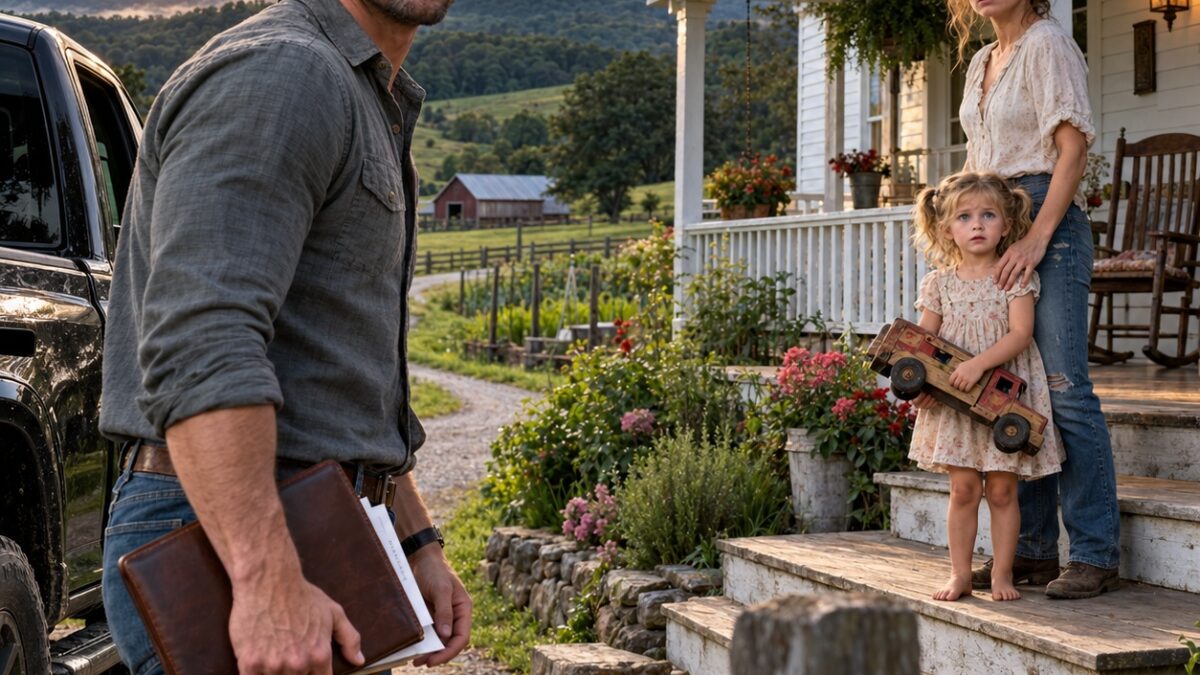
I grabbed the wooden gatepost because my knees stopped trusting me.
“That’s not possible.”
Even as I said it, I knew how stupid it sounded.
Rosalyn’s face hardened.
“You would have told me.”
“I did.”
The anger in her voice had depth.
Not fresh anger.
Something stored for years.
“I called you more times than I can count.”
I stared.
“My number never—”
“I texted.”
“I went to Nashville.”
She lifted the little girl into her arms because the child had wrapped herself around her leg.
“I was five months pregnant when I walked into your office and begged to see you.”
My mouth went dry.
“Who did you talk to?”
She laughed once.
No humor.
“Your uncle.”
Something inside me turned over.
“Dwight?”
“He came downstairs himself.”
Rosalyn shifted our daughter higher on her hip.
“He took me into a private office.”
“He told me you had met someone in London.”
I shook my head immediately.
“No.”
“He said she was connected to the investors.”
“There was nobody.”
“He said it was serious.”
“Rosalyn—”
“He told me you didn’t want to be bothered by anything from home.”
I could barely hear her over the blood rushing in my ears.
“He told me you wanted me to get on with my life.”
The little girl pressed her cheek against Rosalyn’s shoulder.
“Mama, is that man mad?”
That nearly broke me.
Rosalyn kissed the side of her head.
“No, baby.”
Then she looked at me.
Her eyes said something very different.
I forced air into my lungs.
“What’s her name?”
Rosalyn hesitated.
“Birdie.”
Birdie.
My daughter’s name was Birdie.
I had missed knowing that for nearly three years.
I had missed every night she cried as an infant.
First smile.
First tooth.
First word.
First step.
Everything.
I stared at her little face.
“Rosalyn.”
My voice sounded unfamiliar.
“I need you to tell me everything.”
“Now?”
“Yes.”
“Now you want to understand?”
“I didn’t know.”
“You expect me to believe that?”
“Yes.”
The word came out harder than I intended.
Then I softened it.
“Because it is true.”
She studied me.
Three years of hurt standing between us.
“Leave.”
I stared.
“Rosalyn—”
“Birdie does not know you.”
She held our daughter closer.
“And I am not going to let you walk into her life and tear everything open because you’re shocked.”
I wanted to argue.
Demand proof.
Demand explanations.
Demand the right to know my own child.
Then Birdie looked at me.
Wide-eyed.
Confused.
I understood Rosalyn was right.
Whatever had happened between adults, that little girl had done nothing.
Charging into her world because my grief suddenly became urgent would be selfish.
“All right.”
Rosalyn looked surprised.
“I’ll go.”
I pointed toward the road.
“But I’m not leaving town.”
She said nothing.
“And you need to hear this from me.”
I swallowed.
“I never received anything.”
“Not one call.”
“Not one message.”
“Not one letter.”
Her eyes searched mine.
“That is what you say now.”
“It is the truth.”
Birdie had started playing with a strand of her mother’s hair.
Rosalyn looked down at her.
Then back at me.
“Tomorrow.”
“What?”
“Come back tomorrow morning.”
“Birdie will be with Miss Opal down the road.”
“We’ll talk.”
I nodded.
That was all I was getting.
I walked back to my truck.
My hands shook so hard I almost dropped the keys.
Before starting the engine, I looked through the windshield.
Rosalyn stood on the porch holding our daughter.
Both watching me.
A family.
My family.
Built without me.
I never made it to the county clerk.
The divorce papers stayed in the passenger seat.
That night I rented a room at a roadside motel in Sugar Hollow.
The room smelled faintly of bleach and old air conditioning.
I did not sleep.
I sat outside beneath more stars than I had seen in years and rebuilt the timeline.
The last year of our marriage.
I had been thirty-three when everything started breaking.
Ashby Medical Systems was expanding too fast.
My father had been dead four years.
Dwight kept telling me the European deal would secure everything he had built.
Rosalyn told me she barely saw me.
I told her it would only be temporary.
She said temporary had lasted two years.
Our final fight happened the night before I flew to London.
She stood in our kitchen.
Bare feet.
Arms folded.
“You are married to that company.”
“That company pays for this house.”
“I never asked for this house.”
I remember that sentence now.
At the time, I barely heard it.
“I’m doing this for us.”
“No.”
She was crying.
“You’re doing it because you don’t know who you are if you stop working.”
I got angry.
Because she was right.
The next morning, I left without a real goodbye.
I assumed we would cool down.
Assumed distance would fix something distance had helped destroy.
The night before that fight, we had still been husband and wife.
I did the math again.
Birdie’s age.
Rosalyn’s pregnancy.
Everything aligned.
Then another memory came back.
Eight months into London.
A night when the hotel room felt so empty I could hear the heating system inside the walls.
I had called Rosalyn’s old number.
Disconnected.
I asked Dwight to find her.
A week later he called.
His voice had been gentle.
Almost fatherly.
“She’s seeing somebody, son.”
I remember standing at the window looking over London.
“What?”
“She asked me to tell you not to call anymore.”
“She said that?”
“Yes.”
“Let her go.”
“It’s the decent thing.”
I had believed him.
A year later I told my attorney to begin divorce proceedings.
I called it kindness.
Maybe it was cowardice.
At sunrise, I finally understood one thing with certainty.
Dwight had spoken to both of us.
And neither of us had ever spoken to each other.
Rosalyn was alone on the porch when I returned.
Birdie was with Miss Opal.
Two mugs of coffee sat on the rail.
She did not offer me one.
Fair enough.
“A few weeks after you left, I found out I was pregnant.”
She kept both hands around her mug.
“I didn’t know whether you’d be happy or furious.”
“I would have come home.”
“I know you can say that now.”
“I would have.”
She looked away.
“I tried calling.”
“Your number stopped working.”
“My texts got nothing.”
“I thought you blocked me.”
“I didn’t.”
“So I went to your office.”
She told me again.
Five months pregnant.
Visible.
Scared.
Dwight meeting her personally.
The London woman.
The message that I did not want anything from home interfering with the deal.
Then:
“I wrote you.”
My head lifted.
“A letter.”
“I put the ultrasound picture inside.”
She stared across the fields.
“I left it with Dwight’s assistant.”
“What did you write?”
Rosalyn swallowed.
“That I wasn’t writing to fight.”
“That you deserved to know.”
“That it was a girl.”
Her voice cracked.
“That she kicked hardest at night, around the time you used to finally come home.”
I closed my eyes.
“I said I was scared.”
“That I was doing it alone.”
“And I told myself the man I married had to still be in there somewhere.”
I could not speak.
“I asked you to call once.”
She wiped one tear angrily.
“Just once.”
“And when you didn’t, I took it as my answer.”
I stared at the porch floor.
“Eight months after I left, I tried finding you.”
Rosalyn went still.
“I asked Dwight.”
“He told me you were seeing someone.”
Her face lost color.
“No.”
“He said you asked me to stop calling.”
“He said letting you go was the decent thing.”
She set the mug down with great care.
“He told you that?”
“Yes.”
Silence.
Then Rosalyn whispered:
“He lied to both of us.”
Neither of us moved.
Three years had been built around a lie neither of us created.
But the lie had worked because our marriage was already cracked enough for us to believe the worst.
That truth mattered too.
“If I had received one message—”
I looked at her.
“One.”
“I would have been on the first flight home.”
“I want to believe you.”
Her voice broke.
“But I raised her alone, Dalton.”
“I know.”
“No, you don’t.”
She stood.
“I got put on bed rest.”
“Lost my job.”
“Burned through my savings.”
“I moved out here because Grandma’s farmhouse was the only place I could afford.”
“A legal-aid lawyer told me I could take you to court.”
“Paternity.”
“Support.”
“All of it.”
My stomach twisted.
“Why didn’t you?”
She looked at me like the answer should have been obvious.
“Because I would not drag a man into court and force him to be somebody’s daddy.”
My chest hurt.
“If you didn’t want Birdie, you didn’t get her.”
“That’s what I believed.”
I stood.
“I’m going to prove what happened.”
“That doesn’t erase anything.”
“I know.”
“I’m going to find every record.”
“Every message.”
“Every person who touched that letter.”
“Then I am going to put the truth in front of you.”
Rosalyn’s expression stayed guarded.
“Fine.”
“But Birdie comes first.”
“Always.”
“No grand gestures.”
“I understand.”
“No expensive toys.”
I almost smiled.
“I understand.”
“You don’t get to show up with a pony because you suddenly discovered you are rich and guilty.”
“No pony.”
“No buying her affection.”
“Agreed.”
She watched me.
“And you show up when you say you will.”
That landed differently.
“I will.”
“Words are easy, Dalton.”
Her eyes held mine.
“That was our marriage.”
“Promises.”
“Then absences.”
I deserved that.
“I failed you.”
“Yes.”
“I know.”
“I am not asking you to trust me for us.”
I looked toward the road where Miss Opal’s house sat beyond a stand of trees.
“Let me prove myself to Birdie.”
Rosalyn nodded slowly.
“Then we go slow.”
I called my attorney that afternoon.
“Postpone the divorce.”
Priscilla Dunagan did not ask questions immediately.
That was why I paid her.
“On what grounds?”
“Complex financial matters.”
A pause.
“That sounds like the phrase lawyers use when their clients don’t want to tell them what happened.”
“I found out I have a daughter.”
Longer pause.
“I see.”
“I didn’t know.”
Another silence.
Then her voice softened.
“All right.”
I called Lyall Brangan next.
Lyall ran corporate security.
Former federal investigator.
Almost impossible to surprise.
I surprised him.
“I need every internal communication from my time in London.”
“Why?”
“Calls.”
“Mail logs.”
“Forwarding instructions.”
“Messages through Dwight’s office.”
“You think something happened?”
“I know something happened.”
I lowered my voice.
“Quietly.”
“My uncle cannot know.”
Lyall understood.
Meanwhile, I rented a farmhouse two miles from Rosalyn.
Not because I needed a farmhouse.
Because a hotel room made visiting Birdie feel temporary.
I needed to prove I was not temporary.
The first time I saw her knowingly, she hid behind Rosalyn’s legs.
I crouched.
“Hi.”
No answer.
“I’m Dalton.”
Birdie pressed her face against her mother’s jeans.
I had negotiated contracts in five countries.
A silent two-year-old destroyed every skill I thought I possessed.
Rosalyn watched.
Do not rush.
I did not.
I sat on the porch floor.
Eventually Birdie peeked.
Then disappeared again.
Second visit, same.
Third visit, I brought a paper packet.
Sunflower seeds.
Nothing expensive.
I set them between us.
Rosalyn looked surprised.
“She likes planting.”
Birdie heard that.
Her curiosity won.
“Real seeds?”
“Real.”
She approached.
I held out the packet.
“You know how to plant them?”
“Yes.”
“Can you show me?”
That did it.
Ten minutes later, I was on my knees in dirt while my daughter explained gardening with the authority of a university professor.
“Not too deep.”
“Yes, ma’am.”
“Water every day.”
“Every day.”
“And wait.”
“How long?”
“A lot.”
Rosalyn smiled from the porch.
A small smile.
The first one I had seen.
I carried it home with me.
The next visit, I brought a toolbox.
Birdie’s wooden truck was still missing one wheel.
I had grown up around tools.
My father believed every boy should be able to repair what he owned before buying something new.
I carved a replacement wheel from oak.
Birdie watched every step.
When I put the truck down and all four wheels rolled, her mouth opened.
“It works!”
She grabbed the toy.
Pushed it across the porch.
Then ran back.
Threw her arms around my neck.
I froze.
Every nerve in my body stopped.
Then I held my daughter.
Carefully.
Like the world had somehow placed three stolen years inside my arms and trusted me not to waste another second.
Over Birdie’s shoulder, I saw Rosalyn wiping at her eyes.
She turned away before I could say anything.
Visits became routine.
Four o’clock.
Every afternoon.
That mattered more than any gift.
Two weeks later, a board member called at 3:30.
“Supplier crisis.”
“I need you in Nashville.”
The old me would have been on the interstate before he finished.
I looked at the clock.
“I’ll join remotely at seven.”
“Dalton—”
“Seven.”
I hung up.
At 3:55, I turned onto Rosalyn’s road.
Birdie stood at the gate with both hands wrapped around the fence.
Waiting.
She jumped when she saw the truck.
I had closed nine-figure deals that did not feel as important as arriving five minutes early.
That evening, Rosalyn walked me outside.
“She came out at 3:45.”
“I didn’t tell her to.”
She looked at me.
“She just knew.”
My throat tightened.
“That’s what it costs.”
“What?”
“Being her father.”
Rosalyn pointed toward the gate.
“Every day.”
“You do not ever make her stand there for nothing.”
“I won’t.”
“Don’t promise lightly.”
“I’m not.”
For the first time, she looked like she wanted to believe me.
While I learned Birdie, I also learned the woman Rosalyn had become.
After the pregnancy became complicated, she had lost her job at a Nashville dental office.
Savings disappeared.
She moved to her grandmother’s farm.
Then built a business from dirt.
Organic vegetables.
Peach preserves.
Blackberry jam.
Farmers markets across three counties.
A cooperative in the next town.
One afternoon I watched her stack jars with handwritten labels.
“You built all this yourself?”
“I didn’t have a choice.”
She shrugged.
“I had a baby to feed.”
“And I wasn’t taking money from the Ashbys.”
“Not after what I thought.”
I understood.
What hurt was realizing how much our old marriage had centered my ambitions.
The house in Nashville had been mine before us.
The company was mine.
The travel was mine.
The schedule was mine.
Rosalyn had fit around me.
“I admire this.”
She looked up.
“What?”
“What you built.”
I meant it.
“No money.”
“No safety net.”
“A baby.”
“This place exists because you made it exist.”
Something in her face softened.
“Thank you.”
She looked down.
“That means more than you think.”
Lyall called two days later.
The investigation had become serious.
Rosalyn’s number had called mine dozens of times after I left.
My personal cell had been moved onto a company-managed account during the European expansion.
The forwarding rules?
Set by Dwight.
Lyall found Velma Tuggle, a retired receptionist who remembered Rosalyn.
“She was visibly pregnant.”
Velma said.
“Crying.”
“Your uncle came down personally.”
“And the letter?”
Lyall went quiet.
“We found something.”
I drove to Nashville that night.
The envelope sat in my office.
Opened.
Old.
My name in Rosalyn’s handwriting.
Inside was a black-and-white ultrasound.
BABY ASHBY—20 WEEKS.
Then the letter.
I read it once.
Twice.
Three times.
Rosalyn’s words from nearly three years earlier.
I’m not writing to fight.
It’s a girl.
She kicks hardest at night.
I’m scared.
I keep telling myself the man I married is still in there somewhere.
Call once.
If you don’t, I’ll understand.
I sat behind my desk for hours.
Declined every call.
Then I called an emergency board meeting.
Dwight arrived annoyed.
“Couldn’t this wait?”
“No.”
I placed the phone records down.
Velma’s statement.
Then the letter.
Dwight stared.
Color faded from his face.
“Explain.”
He rubbed both hands over his face.
“Dalton—”
“Explain why you hid my wife’s pregnancy.”
His eyes closed.
“I protected the company.”
I almost laughed.
“You protected the company.”
“You were about to close the most important deal in Ashby history.”
“You flying home because Rosalyn was pregnant could have ruined everything.”
“You lied.”
“I made a decision.”
“You told her I had another woman.”
“She needed to move on.”
“You told me she had another man.”
“You needed to focus.”
My voice rose.
“You kept me from my daughter for three years over a contract.”
“I protected you.”
“No.”
The word came from somewhere deep.
“You told me exactly what I needed to hear because it kept me overseas.”
Dwight stared at the table.
“That is not protection.”
I leaned closer.
“That is manipulation.”
Then something occurred to me.
Not logically at first.
Instinct.
“Why did it matter so much that I stay in London?”
Dwight looked up.
Too fast.
A flash of panic.
Gone immediately.
Not quickly enough.
I knew men.
I had spent my life across board tables reading tiny changes.
“What were you protecting?”
“Nothing.”
“Do not lie again.”
“Dalton—”
I stood.
“Full forensic audit.”
His face changed.
“That is unnecessary.”
“To you.”
I called Lyall.
Every contract Dwight touched while I was overseas.
Every vendor.
Consultant.
Wire transfer.
Shell company.
The truth took weeks.
Fourteen million dollars.
More.
Inflated contracts.
Vendors that barely existed.
Consulting fees for work never performed.
Payments routed back toward accounts Dwight controlled.
He had lost money on a lake development.
Borrowed.
Covered one hole with another.
Then another.
By the time I left for London, the fraud needed one thing above all else.
Me absent.
Rosalyn’s pregnancy had threatened that.
Dwight did not destroy our family to protect Ashby Medical Systems.
He destroyed it to protect himself.
When I confronted him again, he looked twenty years older.
“It started small.”
“There is no small version of this.”
“I thought I could repay it.”
“You could have asked me for help.”
“I was ashamed.”
“So you chose us.”
He looked up.
“What?”
“You chose my family as the price.”
“I never imagined it would go three years.”
“You chose it every day.”
My voice went quiet.
“That is what you do not understand.”
“You did not make one mistake.”
“Every morning, you could have told me.”
“Every morning, you didn’t.”
His face crumpled.
“I held you up at your father’s funeral.”
My anger almost gave way.
Almost.
“I know.”
He began crying.
“That is the part I will never forgive.”
Not the money.
Not even the business betrayal.
My father had trusted him.
I had trusted him because my father had.
He used grief to make himself indispensable.
Then used that trust to steal my child.
The board removed Dwight from every position.
I turned the files over to federal prosecutors.
He was family.
That did not make him less guilty.
It made it hurt more.
I drove back to Rosalyn with copies of everything.
She read the records at her kitchen table.
No words.
When she reached the letter, her hand flattened against the page.
“He kept it.”
“Yes.”
“All that time.”
“Yes.”
Her eyes closed.
“He could have destroyed it.”
“I think some part of him couldn’t.”
“That does not make him better.”
“No.”
“It makes him human.”
“That is not the same thing.”
Rosalyn looked at me.
For once, there was no anger.
Only grief.
A few days later, the sunflowers Birdie and I had planted reached almost to my waist.
Rosalyn sat with Birdie between the rows.
I stayed back.
This was her conversation to lead.
She used the simple truth.
“That man you like planting with?”
Birdie nodded.
“Dalton?”
“Yes.”
“He is your daddy.”
Birdie looked toward me.
I forgot how to breathe.
“He was far away.”
Rosalyn continued.
“He didn’t know about you.”
“But he knows now.”
Birdie considered this.
Two-year-olds accept certain truths adults destroy themselves trying to analyze.
“Daddy push me?”
She pointed at the swing.
Rosalyn laughed through tears.
“Yes.”
The next afternoon, I heard her before I was fully through the gate.
“DADDY’S HERE!”
Birdie came running across the yard.
I stopped.
Completely.
That one word entered somewhere no business success had ever reached.
Daddy.
I picked her up.
Cried into her hair.
Did not care who saw.
Rosalyn saw.
Her expression held two emotions at once.
Joy for Birdie.
Pain for herself.
The truth about Dwight did not automatically repair us.
It only removed one lie.
Three years of believing I had abandoned them still lived in Rosalyn’s body.
One night after Birdie fell asleep, we sat on the porch.
“I believe you now.”
I waited.
“That you didn’t know.”
“Thank you.”
“But it doesn’t erase what those years were.”
“I know.”
“I hated you.”
“I know.”
“I gave birth thinking you had chosen another woman over our daughter.”
My eyes burned.
“I cannot imagine that.”
“No.”
She looked at me.
“You can’t.”
“And I raised Birdie learning not to need anybody.”
“That changed me.”
“I see that.”
“I’m not the woman you married.”
“I don’t want you to be.”
She frowned.
I leaned forward.
“I’m not asking for the old marriage.”
“I don’t think the old marriage was good enough.”
Rosalyn looked away.
“I want a chance to build something honest.”
“Maybe not marriage.”
“Maybe not even us.”
“Whatever you’re willing to give.”
She was quiet.
“Slow.”
“As slow as you need.”
“Very slow.”
“I’m staying.”
The divorce remained on hold.
Then Rosalyn brought it up.
“We need to finish it.”
Those words hurt.
I tried not to show it.
“We can’t live in limbo.”
“Do you still want it?”
She looked exhausted.
“I don’t know what I want.”
“But the marriage on paper does not match the life we have.”
She was right.
Two months after I arrived at the gate, we went to the Sugar Hollow county clerk’s office.
Same papers.
Different people.
I signed.
My hand barely shook.
Rosalyn took the pen.
Stopped.
Seconds passed.
“You okay?”
“I don’t know.”
She stared at the signature line.
“I don’t know if I’m ending a marriage that failed or one that never got the chance to survive the truth.”
“Maybe both.”
Her eyes filled.
“This does not mean there can never be anything again.”
I said it carefully.
“It makes official what ended years ago.”
Rosalyn signed.
Three years of pain in one stroke.
The divorce became final.
I walked outside feeling worse than I had expected.
The old Dalton would have driven directly to Nashville.
Work until midnight.
Sleep four hours.
Repeat.
Instead, I went to Birdie.
Then I bought the neglected farm next door.
Not Rosalyn’s land.
Not control over her business.
My own place.
Close enough to be present.
Far enough to respect what she built.
I restructured my role at Ashby Medical Systems.
Delegated.
Promoted competent people instead of treating my physical presence like proof of leadership.
Spent most of each week in Sugar Hollow.
And I took on every legal and financial responsibility for Birdie.
“None of this is about you and me.”
I told Rosalyn.
“Her insurance.”
“Education.”
“Anything she needs.”
“No strings.”
“You built your life.”
“I am not using money to take it over.”
That mattered to her.
I could tell.
Trust returned slowly.
Not through declarations.
Through routine.
Four o’clock.
Dinner.
Farmers markets.
Bedtime.
I learned Birdie’s rules.
Two pigtails.
Never one braid.
Both had to be approximately even or she would stare at me like I had violated federal law.
Her favorite bedtime songs had an exact order.
Thunder frightened her.
Talking during storms made it worse.
So I learned to sit on the floor beside her bed.
Silent.
Until the thunder passed.
Fatherhood was mostly things nobody applauded.
That made me love it more.
I also saw Rosalyn differently.
During our marriage, I had admired what she gave me.
Her patience.
Support.
Ability to turn wherever we lived into a home.
Now I saw what existed apart from me.
She woke before sunrise.
Knew soil.
Markets.
Weather.
Customers.
Could turn bruised peaches into preserves that sold out by noon.
She understood Birdie without words.
One afternoon we watched our daughter chase barn kittens.
“I never asked what you wanted.”
Rosalyn glanced at me.
“Out of life.”
“I assumed my plans were ours.”
“I never told you otherwise.”
“You shouldn’t have had to fight to exist inside our marriage.”
She sighed.
“I got busy helping you build your dream.”
“Somewhere in there I forgot I could have one too.”
I turned toward her.
“So what do you want?”
She looked surprised.
“You.”
“Not Birdie’s mother.”
“Not my ex-wife.”
“Rosalyn.”
“What do you want?”
She looked toward the garden.
“I want to grow the farm.”
“The jams.”
“Maybe a permanent shop in town.”
“I want Birdie to grow up understanding money can help, but it isn’t happiness.”
Then she hesitated.
“And I want to trust people again.”
“Without waiting for them to leave.”
My chest tightened.
“I would like to help.”
She looked at me.
“Not take over.”
“No.”
“Not send consultants.”
“No.”
“Not turn my farm into an Ashby subsidiary.”
I smiled.
“I was going to suggest a logo.”
She stared.
“Joking.”
“You are bad at jokes.”
“I’m improving.”
“Slowly.”
That word again.
Slowly became the foundation of everything.
Almost a year after I first saw Birdie, I stopped pretending what I felt for Rosalyn was only regret.
I had fallen in love again.
Not with the woman I remembered.
With her.
The version who existed because she survived me.
We stood near the fence at sunset.
Birdie was inside with Miss Opal.
“I need to tell you something.”
Rosalyn’s shoulders stiffened.
“That sounds dangerous.”
“I’m not here only for Birdie.”
She looked at me.
“I will never make your relationship with her depend on us.”
“I know.”
“But I love you.”
Her face changed.
“Again.”
“No.”
I shook my head.
“Not again.”
“Different.”
“I loved the woman I married.”
“I love who you are now.”
“Everything you built.”
“Everything you survived.”
“The parts I had nothing to do with.”
Rosalyn was silent a long time.
“I feel something too.”
Hope hurt.
I had forgotten that.
“But I’m scared.”
“That is fair.”
“If we do this again, what stops you from disappearing into work?”
“The empty chair?”
“The calls?”
“Waiting?”
“Nothing stops it except choices.”
I held her gaze.
“Mine.”
“Every day.”
“I’m not asking you to trust promises.”
“Watch me.”
“That could take years.”
“I have them.”
The second courtship looked nothing like the first.
No jewelry.
No extravagant trips.
No expensive restaurants.
Walks after Birdie went to sleep.
Sitting on a fence.
Coffee before sunrise.
A little catfish restaurant near the river with paper towels on the tables and sweet tea in mason jars.
I knew how to entertain investors in rooms where dinner cost more than some people’s rent.
Rosalyn and I were happier eating fried catfish beneath a neon sign.
We talked.
Actually talked.
Not logistics.
Not what the house needed.
Not my schedule.
What frightened us.
What we regretted.
What we wanted.
We remembered our first apartment in East Nashville.
No air conditioning.
One old box fan rattling in the window.
“I hated that fan.”
“You refused to replace it.”
“We were saving.”
“For the future.”
Rosalyn smiled sadly.
“We spent so much time saving for a future we forgot to live in the present.”
“Yes.”
“That is why this farm matters.”
She looked toward the dark fields.
“It reminds me happiness is smaller than people think.”
I understood.
I had built wealth until I had enough money to eliminate almost any ordinary inconvenience.
Yet the happiest moments of my life were becoming:
Birdie’s muddy hands.
Rosalyn’s jam kitchen.
A repaired wooden truck.
A seat on the porch.
One night I tucked Birdie into bed.
She looked up.
“Daddy?”
“Yes?”
“You sleeping here?”
“Not tonight.”
Her mouth turned down.
“But I’ll be back in the morning.”
“Promise?”
“Promise.”
She thought.
Then smiled.
“You always come back.”
Not a question.
A fact.
I had to sit there for a moment before standing.
Always.
That was the man I wanted to become.
Not the man who promised.
The man whose return was so reliable that his daughter stopped needing the promise.
Dwight eventually pleaded guilty.
Wire fraud.
Embezzlement.
Millions in restitution.
Federal prison.
I did not attend sentencing.
Priscilla asked whether I wanted to make a statement.
No.
I had said everything that mattered.
Some people thought I should hate him more loudly.
Spend more time punishing him.
I had lost enough years.
I would not give him more.
I kept Rosalyn’s letter.
Not hidden.
Not as something to torture myself with.
As evidence.
Of the cost of silence.
Of what happens when people decide they know what is best for other adults and manipulate the truth to achieve it.
I read it once each year.
Then put it away.
A year and a half after the afternoon I arrived carrying divorce papers, I stood on the same porch.
Birdie played in the yard with kittens that were no longer kittens.
Rosalyn sat in one of the refinished rockers.
Peach trees moved in the wind.
I had been carrying the ring for almost a month.
The first ring I bought Rosalyn years earlier had been large.
Expensive.
Impressive.
The kind of thing a young man buys when he confuses cost with meaning.
The new one was simple.
Small.
Inside, one word.
Always.
I waited until Birdie ran around the side of the barn.
Then I stood in front of Rosalyn.
Her eyebrows narrowed.
“What?”
“Nothing.”
“You look strange.”
“I’m nervous.”
She laughed.
“You?”
“Yes.”
I got down on one knee.
Her laughter disappeared.
Her hands covered her mouth.
“I know we’ve been here before.”
My voice shook.
“I know.”
“The first time I asked you to marry me, I thought loving you meant bringing you into the life I had already decided to build.”
“I didn’t ask enough.”
“I didn’t listen enough.”
“I did not understand who you were outside of what you gave me.”
Tears filled her eyes.
“I know exactly who you are now.”
“The woman who built a farm from nothing.”
“The woman who raised our daughter alone.”
“The woman who learned to survive betrayal and still found enough courage to consider trusting me again.”
I opened the box.
“I’m completely in love with that woman.”
Rosalyn cried openly.
“I don’t want our old marriage back.”
I said.
“I want a new one.”
“Built on the truth.”
“On showing up.”
“On asking.”
“On listening.”
I looked at her.
“Will you build that with me?”
She stared at the ring.
Then me.
For a terrifying second, she said nothing.
Then she laughed through tears.
“Yes.”
My breath left me.
“Yes?”
“Yes, Dalton.”
I barely got the ring onto her finger before Birdie came running up the steps.
She stopped.
“Mama crying?”
Rosalyn scooped her up.
“Happy crying.”
Birdie looked suspicious.
“What happened?”
“Mama and Daddy are getting married again.”
Birdie’s whole face lit up.
She clapped.
“Can I wear a pretty dress?”
Rosalyn and I both laughed.
That question settled the wedding.
A few months later, we married on the farm.
No ballroom.
No business press.
No giant guest list.
Close family.
Real friends.
Miss Opal.
Velma Tuggle, who cried through most of the ceremony.
Lyall in a suit that fit poorly enough to become a running joke.
Birdie wore the pretty dress she had been promised.
She carried the rings between rows of sunflowers with such serious concentration that every adult watching started smiling.
Rosalyn walked beneath the peach trees.
No one gave her away.
She did not need giving.
She came to me because she chose to.
That mattered.
When we said our vows, I did not promise her I would never fail again.
That would have been another beautiful lie.
I promised that when I failed, I would not hide behind work.
I would not make decisions for both of us.
I would not let silence do the talking.
I would come home.
Rosalyn promised honesty too.
Not accommodation.
Not quiet resentment.
If she needed something, she would say it.
If she hated something, I would know.
Our first marriage had died partly because we had allowed assumptions to become a language.
The second one would require actual words.
After the ceremony, Birdie held both our hands.
She swung between us until Rosalyn told me we were going to pull her arms out of their sockets.
I looked around.
Farmhouse.
Sunflowers.
Peach trees.
Chickens somewhere they were not supposed to be.
My wife.
My daughter.
Nothing in that view would have impressed the investors who had once controlled every hour of my life.
That was what made it perfect.
I thought about the afternoon I first came down that road.
Leather folder on the passenger seat.
Two signatures.
Ten minutes.
Done.
I had believed I was arriving to finish something.
Instead, I found a daughter I did not know existed.
I found evidence that the man I trusted most had been lying to me for years.
I found out the marriage I believed had simply failed had actually been starved of truth.
But none of that automatically gave me Rosalyn back.
That is the part people misunderstand about betrayal.
Exposing the liar does not repair everything the lie broke.
Dwight was guilty.
That did not make me innocent.
I had still been an absent husband before London.
I had still assumed money and hard work excused neglect.
I had still made my plans the center of our life.
Rosalyn had still learned not to speak until resentment became silence.
The truth gave us a chance.
It did not do the rebuilding for us.
That took time.
Four o’clock every afternoon.
Seeds.
A toy wheel.
Missed board meetings.
Bedtime songs.
Storms beside Birdie’s bed.
Hard porch conversations.
A divorce we still chose to finalize because pretending the old marriage remained alive would have been dishonest.
Then courtship.
Trust.
Another proposal.
Another wedding.
The entire difference between my old life and the new one could be summed up in one sentence Rosalyn had said to me:
Words are easy.
She was right.
I had once believed promises proved love.
Now I believed repetition did.
Coming back.
Again.
And again.
And again.
When Ashby Medical Systems had emergencies, I handled them.
I did not abandon responsibility.
I simply stopped treating every problem like only I could solve it.
That was ego disguised as leadership.
I hired better people.
Trusted them.
Changed reporting structures after Dwight’s fraud.
Brought in independent controls.
The company survived my absence from certain rooms.
That was humbling.
Also freeing.
Sometimes I attended meetings from my farmhouse porch while Birdie drew with chalk nearby.
Executives learned to ignore the occasional chicken crossing behind me during video calls.
Once, a major investor asked:
“Is that a rooster?”
I looked over my shoulder.
“Yes.”
“Does he belong there?”
“No.”
Birdie shouted from somewhere off screen:
“Daddy, he got out again!”
The investor laughed.
Five years earlier, I might have muted the call in embarrassment.
Instead:
“Give me thirty seconds.”
I chased a rooster in expensive dress shoes.
Rosalyn watched from the kitchen window laughing.
That was success too.
Different metric.
Better one.
Rosalyn’s business grew.
Carefully.
On her terms.
She opened the small shop in town she had dreamed about.
Farm produce.
Preserves.
Local honey.
Bread from a neighboring family.
She named it Birdie’s Table.
I offered capital once.
“Loan.”
She said.
“Not investment.”
“Done.”
“Market interest.”
I frowned.
“Rosalyn.”
“Market interest.”
“I am your husband.”
“Exactly.”
We negotiated.
I learned.
She paid me back early.
I framed the final payment receipt and put it in my office.
She called that ridiculous.
It reminded me of the woman I had almost lost by assuming financial dependence was love.
Birdie grew.
First preschool.
Then kindergarten.
I cried more than Rosalyn the first morning she boarded the school bus.
Rosalyn took a picture.
“You look devastated.”
“She left.”
“She is going six miles.”
“She is five.”
“She will return.”
“She better.”
Birdie leaned out the bus window.
“Daddy, stop being weird!”
The driver laughed.
Apparently my daughter had inherited honesty from both parents.
When Birdie was old enough to understand more, we told her the truth in pieces.
Not Dwight’s crimes first.
The human truth.
Her mother and I loved each other.
We made mistakes.
Someone lied.
I did not know she existed.
When I learned, I came.
I stayed.
Later, when she asked why I had not figured it out sooner, I told her the hardest truth.
“Because adults can be smart and still believe the wrong person.”
“Why?”
“Because sometimes trust makes you stop asking questions.”
She thought about that.
“Is trust bad?”
“No.”
I shook my head.
“Trust is important.”
“But you should still listen when something feels wrong.”
She nodded.
Then went back to coloring.
Children often carry lessons more lightly than adults.
Years passed.
The broken wooden dump truck stayed in my office.
Birdie outgrew it.
Rosalyn tried throwing it away during a cleanup.
I rescued it from the trash.
“Dalton.”
“No.”
“It has no purpose.”
“It has four wheels.”
“Because you repaired it.”
“Exactly.”
She understood.
That truck was the first thing Birdie ever trusted me to fix.
I would probably keep it until I died.
The sunflowers returned every summer.
Birdie and I planted them together.
Eventually she could plant straighter rows than me.
“You’re doing it wrong.”
“I taught you.”
“Mama taught me better.”
Traitor.
Rosalyn smiled from the porch.
I never won that argument.
Sometimes on quiet evenings, she and I talked about the three missing years.
Less often as time passed.
Not because they stopped mattering.
Because grief became one room in a much larger house.
That is what healing eventually did.
It stopped making the worst thing the only thing.
One evening, maybe six years after I returned, Rosalyn brought the old letter onto the porch.
I recognized the envelope immediately.
“You still have it.”
“Yes.”
She had asked for a copy after Dwight’s case.
We sat together.
“You ever wonder?”
She asked.
“What?”
“What would have happened if he had given it to you.”
I looked at the sunset.
“All the time.”
“You would have come home?”
“Yes.”
“No hesitation?”
“No.”
“You might have lost London.”
“Maybe.”
“The company might be smaller now.”
“Probably.”
She looked at me.
“Do you regret the success?”
Hard question.
“No.”
She waited.
“I regret what I thought success was allowed to cost.”
That was the truth.
I could not hate everything I had built.
Thousands of people worked for Ashby.
Hospitals relied on our equipment.
The company mattered.
The mistake was treating every sacrifice as automatically justified because the goal was large.
People are not line items.
Marriage is not overhead.
Children are not interruptions.
My uncle forgot that.
So had I in smaller ways.
Rosalyn rested her head against my shoulder.
“I used to think if you came back, I would want you to suffer.”
“Did you?”
“Yes.”
I smiled.
“Fair.”
“Then you started showing up.”
“Every day.”
“That was irritating.”
“I try.”
She laughed.
“What changed?”
I asked.
“Birdie.”
Rosalyn watched our daughter running across the field.
“She trusted you before I did.”
“Children are reckless.”
“Or honest.”
She squeezed my hand.
“You never asked her to forgive you.”
“There was nothing for her to forgive.”
“That matters.”
I had never considered it that way.
Birdie had lost three years too.
But I refused to put the weight of my guilt onto a child.
I did not tell her how much I hated myself.
Did not ask whether she forgave me.
I simply became her father.
That was the apology.
Years later, my mother-in-law—Rosalyn’s mother had died young, so Miss Opal had unofficially become grandmother to half the road—once told me:
“Your trouble was thinking money could make up for time.”
“I know.”
“And then you got smarter.”
“Eventually.”
She nodded.
“Slow learner.”
Everyone in Sugar Hollow enjoyed humbling me.
I deserved it.
Dwight served his sentence.
Near the end of his first year in prison, I received a letter.
I did not open it for three days.
Then I did.
He apologized.
Not beautifully.
Not completely.
There were still explanations.
His debt.
Panic.
Belief that he would confess eventually.
Shame.
The letter ended:
I know I cannot give you back what I stole. I hope one day you remember I loved you too.
I sat with that for a long time.
Rosalyn found me.
“What did he say?”
I gave her the letter.
She read it.
“What are you going to do?”
“Nothing.”
“You’re not answering?”
“Not now.”
Maybe one day.
Maybe never.
Forgiveness was not something I owed on schedule.
I could believe Dwight loved me.
I could also believe he betrayed me.
Those truths were not mutually exclusive.
People like simple villains because simple villains make us feel safe.
Dwight was not simple.
He was the uncle who held me at my father’s funeral.
The mentor who taught me business.
The man who stole millions.
The man who deliberately kept me from my child.
All true.
I did not need to erase one to accept another.
Eventually, I stopped thinking about him every day.
That was its own freedom.
The divorce papers stayed in a drawer for years.
Not the signed final decree.
The original folder I had carried to the farm.
Priscilla once asked why I kept it.
“Evidence.”
“Of what?”
“That paperwork is dangerous.”
She rolled her eyes.
Really, I kept it because it reminded me how certain I had been.
I thought I knew why my marriage ended.
I thought I knew what Rosalyn believed.
I thought I knew what kind of man Dwight was.
I thought I knew what mattered.
All of it fit inside one leather folder.
Then I reached a porch and found out my entire life had existed outside the documents I trusted.
Certainty should sometimes make us nervous.
That was another lesson.
My father used to say numbers do not lie.
He was wrong.
Numbers can be arranged by liars.
People can be arranged by liars too.
What saves you is not suspicion of everyone.
It is refusing to let a third person speak permanently for someone you love.
I should have called Rosalyn myself from London.
More than once.
I should have found another number.
Written.
Gone home.
I had trusted Dwight because I wanted an easy answer.
She moved on.
Fine.
Painful, but simple.
Rosalyn trusted Dwight’s story because my absence made it believable.
He found the fracture.
Then widened it.
That is how most manipulation works.
It rarely invents a weakness.
It exploits one already there.
Our second marriage survived because we stopped pretending the fracture had never existed.
We talked about work.
Money.
Resentment.
Fear.
Parenthood.
Sometimes conversations ended badly.
Sometimes one of us walked outside.
But nobody disappeared.
That was the rule.
Take space.
Come back.
Always come back.
Birdie became a teenager eventually.
That deserves its own warning label.
At thirteen, she informed me my shirts were “aggressively dad.”
At fourteen, she informed Rosalyn that farm life was oppressive because the internet went out during storms.
At fifteen, she brought home a boy named Caleb.
I became every cliché I had promised not to become.
Rosalyn caught me staring through the kitchen window while they sat on the porch.
“Stop.”
“I’m standing in my house.”
“You’re interrogating him through glass.”
“He has poor posture.”
“He is fifteen.”
“He should work on it.”
Rosalyn turned me around by the shoulders.
“Remember the lesson.”
“What lesson?”
“You do not get to control someone just because you love her.”
“That lesson had terrible timing.”
She laughed.
Birdie later told me Caleb was afraid of me.
“Good.”
“Daddy.”
“Kidding.”
Mostly.
When she turned sixteen, I gave her the repaired dump truck.
She stared.
“You kept this?”
“Yes.”
“Why?”
“First thing we fixed together.”
Birdie’s face softened.
“I was two.”
“I know.”
“I don’t remember.”
“I do.”
That was the thing.
Her first years were missing from my memory.
But the years after were full.
Not replacement.
You cannot replace what you never lived.
But you can refuse to waste what remains.
She put the truck on a shelf in her room.
I pretended not to notice.
Rosalyn noticed me pretending.
That night she held my hand in bed.
Nothing needed saying.
Our second wedding anniversary came.
Then five.
Then ten.
By then, Ashby Medical Systems was run day to day by people better suited to most operations than I ever had been.
I still chaired the board.
Still worked.
Still cared.
But work belonged inside life now.
Not the other way around.
Rosalyn’s farm had expanded into neighboring acreage.
Not mine.
Hers.
Birdie’s Table had two locations.
Then three.
She remained suspicious of every growth proposal that sounded too polished.
I loved that.
Once, a consultant suggested franchising.
Rosalyn looked at the forty-page presentation.
“No.”
The consultant looked at me.
I raised both hands.
“Her company.”
He tried again.
“Mrs. Ashby, the revenue opportunity—”
“I heard you.”
She closed the binder.
“I don’t want fifty stores.”
“Why not?”
“Because I like knowing the names of the people who run the three I have.”
Conversation over.
I smiled the entire drive home.
“What?”
“Nothing.”
“You are smug.”
“I married well.”
“The second time.”
“Especially the second time.”
She laughed.
That phrase became ours.
The second time.
Our first marriage was love without enough honesty.
The second was love with scars.
I preferred it.
Not because pain makes love deeper.
I do not believe suffering should be romanticized.
I would erase those three years if I could.
I would give anything to have held Birdie the day she was born.
But since I could not, I refused to pretend the people we became through survival were somehow lesser versions.
Rosalyn was stronger.
I was humbler.
Birdie was loved by a whole rural community before I arrived.
None of that justified what happened.
It simply existed.
Life does that.
Makes meaning without asking whether the cause deserved it.
One evening long after Birdie left for college, Rosalyn and I sat on the porch.
Same porch.
Older rockers.
Same peach trees, thicker now.
The gate had been replaced, but one section of old wood hung in my workshop because apparently I had become sentimental enough to preserve infrastructure.
Rosalyn leaned back.
“Do you remember what you looked like?”
“When?”
“The day you came with those papers.”
“Handsome?”
“Terrified.”
“I was not terrified until you told me Birdie was mine.”
“You looked terrible before that too.”
“Thank you.”
“You were wearing city shoes.”
“I didn’t know I was visiting a farm.”
“You stepped in chicken mud.”
“I had forgotten that.”
“I haven’t.”
We laughed.
Then she looked at me.
“If Dwight hadn’t done what he did, do you think we would have made it?”
I took time answering.
The younger version of me would have said yes immediately because love wants certainty.
The older version had more respect for truth.
“I don’t know.”
Rosalyn nodded.
“Me either.”
“We were already hurting each other.”
“Yes.”
“I might have come home for Birdie and still failed as your husband.”
“Maybe.”
“I might have learned sooner.”
“Maybe.”
I took her hand.
“But I know what we did with the chance we actually got.”
She smiled.
“That’s enough.”
It was.
People sometimes think peace means finally getting an answer to every what-if.
It doesn’t.
Peace is losing the need to know.
I know this much.
I drove into the Tennessee hills intending to end my marriage.
I found a child.
Then a crime.
Then the truth.
But the most important thing I found was not what had been taken from me.
It was what still remained possible.
I could not go backward.
Could not become Birdie’s father from birth.
Could not erase Rosalyn’s loneliness.
Could not untrust Dwight.
Could not rescue our first marriage.
So I stopped trying to rebuild the exact thing we had lost.
We built something else.
That was why signing the divorce papers had ultimately been the right choice.
Strange as that sounds.
We needed to let the old marriage die honestly.
Because the second one deserved to begin without pretending.
No ghosts hidden inside legal paperwork.
No obligation.
No “we stayed together for Birdie.”
We divorced.
We learned each other again.
Then we chose each other.
That distinction mattered.
The second time Rosalyn said yes to me, she knew exactly who I was.
My ambition.
My failures.
My money.
My guilt.
My capacity to change.
I knew her too.
Her independence.
Her anger.
Her strength.
Her refusal to let wealth decide the shape of her life.
We were not young.
Not naive.
Not believing love automatically solved incompatibility.
We made a promise built on evidence.
Always.
The word inside her ring became the word beneath our life.
Not always happy.
Not always easy.
Always return.
Always tell the truth.
Always show up.
Always ask.
Always listen.
Always come back.
The first time Birdie told me, “You always come back,” I thought it was the most beautiful thing anyone had ever said to me.
Decades later, I still think that.
Because a child does not care about your net worth.
Your title.
Quarterly revenue.
International contracts.
She measures you by whether the truck appears at the gate when you said it would.
Rosalyn measured me the same way eventually.
So did I.
I stopped asking whether I was successful.
Started asking whether I was present.
That changed everything.
On the day Birdie married, years later, I stood beneath the same peach trees.
She had chosen the farm.
Of course.
Before the ceremony, she found me alone near the porch.
“You okay?”
“No.”
She laughed.
“You’re supposed to say yes.”
“My daughter is getting married.”
“I noticed.”
I looked at her.
The pale-gold hair had darkened.
But the eyes were still mine.
The head tilt still my father’s.
“You know something?”
“What?”
“The first time I ever saw you, your toy truck only had three wheels.”
Birdie smiled.
“You tell that story constantly.”
“I know.”
“You fixed it.”
“Yes.”
“You fixed a lot.”
The words hit me.
I shook my head.
“No.”
She frowned.
“I did not fix what happened.”
“I showed up after.”
“There’s a difference.”
Birdie hugged me.
“I know.”
Then she whispered:
“That was enough.”
I closed my eyes.
For years, I thought my guilt required something impossible.
A way to compensate for missing time.
Birdie never asked for that.
She asked for a father after the gate.
I became one.
The wedding began.
Rosalyn took my arm.
We watched Birdie walk toward a future none of us could control.
I was finally all right with that.
Afterward, guests danced beneath strings of lights.
Rosalyn and I found our way back to the porch.
Older.
Grayer.
Still us.
She rested her head against my shoulder.
“You know.”
“What?”
“You came here to get divorced.”
“I remember.”
“You were very efficient about it.”
“I had tabs.”
“You had tabs.”
“I was prepared.”
“You had no idea.”
“No.”
I looked across the yard.
Birdie laughing.
Family.
Friends.
The farm glowing beneath summer lights.
“I had no idea about anything.”
Rosalyn squeezed my hand.
That was the ending I never could have planned from a Nashville boardroom.
Not money.
Not revenge.
Not even getting back everything that had been lost.
You never get everything back.
That is not how time works.
What we got was a second chance.
Not handed to us.
Built.
One day at a time.
One truthful conversation at a time.
One arrival at four o’clock.
One repaired wheel.
One sunflower seed.
One simple ring engraved with the promise I had once been incapable of keeping.
Always.
I had driven into those hills with papers meant to turn a marriage into a closed file.
Instead, I discovered a daughter with my eyes.
A betrayal hidden inside my own company.
A woman I thought I had lost who had become more extraordinary without me than I had ever understood while she was beside me.
And ultimately, I discovered something no amount of money had ever taught me.
You cannot buy back lost time.
You cannot undo abandonment after someone has lived it.
You cannot repair trust with one apology, one check, one dramatic promise, or one perfect explanation.
You rebuild it the same way Birdie taught me to plant those first sunflower seeds.
Not too deep.
Water every day.
Be patient.
Come back tomorrow.
And tomorrow.
And tomorrow.
That was how I became her father.
That was how Rosalyn became my wife again.
And that was how the old farmhouse I once drove toward believing I was ending my family became the only place in the world I ever truly learned how to come home.








