FULL STORY:HOA Queen Built a $2.3 Million Mansion 200 Feet Inside My 900-Acre Inheritance—She Thought Her Lawyers Could Bury Me Until Her Own Paper Trail Turned Against Her
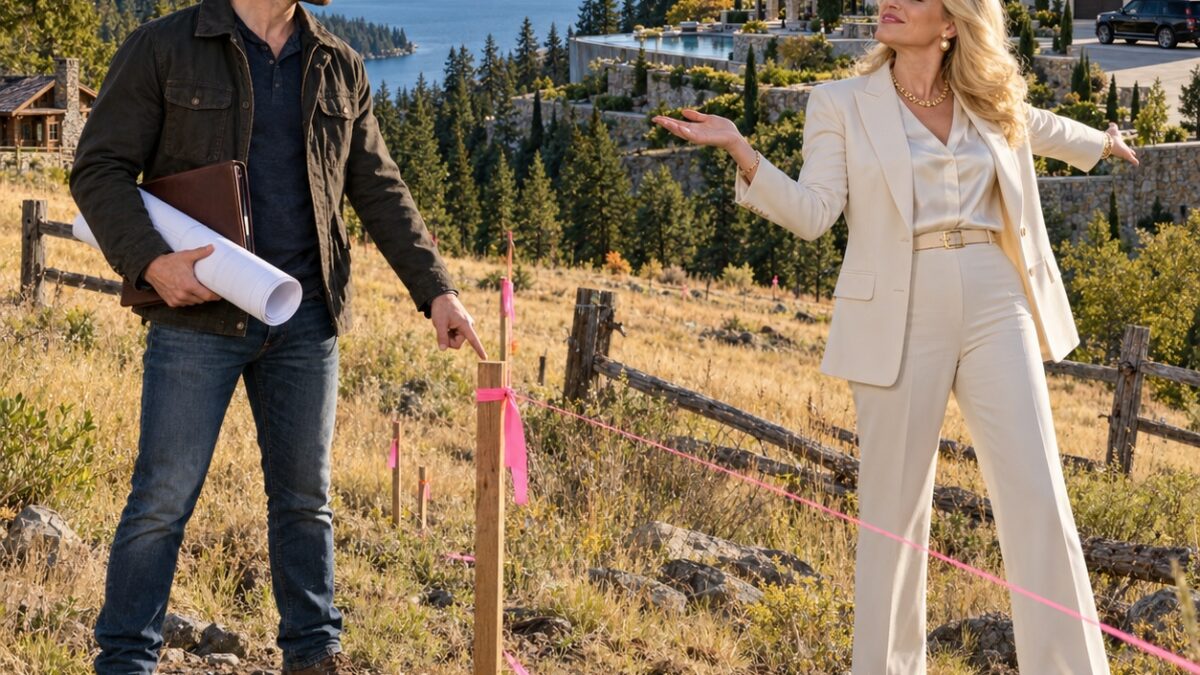
FULL STORY CONTINUATION
The first thing David told me the next morning was not to touch the mansion.
That sounds obvious now.
At the time, standing on land I legally owned while staring at a $2.3 million structure someone else had planted on it, restraint felt less obvious.
“I’m not going to bulldoze it,” I said.
“Good.”
“I considered chaining the driveway.”
“Don’t.”
“A fence?”
“Not yet.”
“Can I at least put up signs?”
“Yes. On your property. Accurately.”
I looked through the lodge window toward the distant white house.
“TRESPASSING MANSION sounds accurate.”
“Try PRIVATE PROPERTY.”
“You lawyers hate creativity.”
“I am your lawyer.”
“Exactly.”
David had already started reviewing Arthur’s files.
My great-uncle had apparently spent years collecting correspondence.
Brenda’s offers.
HOA letters.
Survey disputes.
Cease-and-desist notices.
County paperwork.
Photographs.
He had not been confused about what was happening.
He had fought.
What he had lacked near the end was time.
His health had declined while Brenda’s construction progressed.
That realization made the mansion feel different.
At first, it had been outrageous.
Now it felt personal.
Arthur had stood on this land watching someone build over his objections while powerful people treated his age and isolation like strategic advantages.
I had barely known the man.
But I understood why he had left me the property.
Maybe not emotionally.
Practically.
I was young enough to fight.
I understood technical plans.
And apparently Arthur knew enough about my profession to think I would not be intimidated by somebody waving a questionable survey in my face.
David sent me scanned copies of several letters.
The first was polite.
Arthur had informed the Pine Crest HOA that its planned lakefront expansion crossed his boundary.
The second was firmer.
Stop all work.
The third came from an attorney.
Cease and desist immediately.
There were photographs of survey stakes.
Property markers.
Construction equipment.
Workers.
Dates.
Everything.
“Brenda said the boundary was disputed,” I told David.
“People use the word disputed when they don’t like the answer.”
“What does her survey show?”
“We’re getting it.”
“The county issued permits based on something.”
“That’s what interests me.”
Two days later, David called.
“I have the survey used for permitting.”
“And?”
He paused.
“You’re going to enjoy this.”
“That’s rarely good when a lawyer says it.”
“The survey moves the western boundary approximately two hundred feet.”
“Convenient.”
“Extremely.”
“Any legitimate basis?”
“None I can find.”
I opened my laptop.
“Send it.”
The map appeared.
I laid it beside the county survey.
The difference was not subtle.
Someone had effectively shifted the property line enough to capture the most valuable portion of Arthur’s lakefront meadow.
Exactly where Brenda’s house now stood.
I zoomed in.
“This monument reference is wrong.”
“I know.”
“And this bearing doesn’t connect to the recorded corner.”
“I know.”
“This isn’t a mistake.”
“That is also my current opinion.”
I sat back.
“Who prepared it?”
David gave me the name of a surveyor I had never heard of.
“The permit file was approved unusually quickly.”
“How quickly?”
“Very.”
“By whom?”
“A county official Brenda apparently knew socially.”
“Define socially.”
“Golf.”
I closed my eyes.
“You’re kidding.”
“I wish.”
“Where is he now?”
“Retired.”
“When?”
“About a month after the mansion was completed.”
“Where did he retire?”
“Florida.”
I laughed without humor.
“Of course he did.”
David remained cautious.
“Knowing someone who approved a permit does not prove bribery.”
“I know.”
“The source transcript characterizes what happened as bullying, bribery, and willful ignorance, but what we can prove cleanly is the fraudulent survey, the notice Arthur gave them, the permit documentation, and the boundary itself.”
“Then we prove what we can prove.”
“Exactly.”
That became our strategy.
Brenda wanted drama.
We gave her documents.
The first formal demand required removal of the encroaching structure and restoration of my land.
Her lawyers responded by denying the boundary.
Then disputing the survey.
Then questioning Arthur’s title history.
Then asserting that the HOA had exercised longstanding use of the disputed area.
David read the response on the phone.
“They’re laying groundwork for adverse possession.”
“She’s been there two years.”
“I know.”
“That’s nowhere near enough.”
“They’re trying to combine alleged HOA use before construction.”
“Of what?”
“Access.”
“To my meadow?”
“Apparently.”
I stood at the lodge window.
There was no road through the disputed area except what Brenda’s construction crews had created.
“This is garbage.”
“Yes.”
“Can the court just throw it out?”
“Eventually.”
I hated that word.
Eventually.
David understood.
“Winning and winning quickly are different things.”
That became the next fourteen months of my life.
But the first six were the worst.
Legal warfare is rarely dramatic in the way television makes it look.
It is email.
Deadlines.
Motions.
Responses.
Affidavits.
Expert reports.
Invoices.
Another motion.
Another response.
Another invoice.
Brenda’s attorneys knew exactly how to make the process expensive.
Every claim required an answer.
Every challenge to the survey required documentation.
Every procedural maneuver consumed time.
Arthur had left money with the estate, enough to maintain the property and cover legal expenses for a while.
I watched the balance fall.
At first slowly.
Then frighteningly fast.
Five thousand.
Twelve thousand.
Another expert.
Another filing.
Another deposition-related expense.
I called David after one invoice.
“Is this her strategy?”
“Yes.”
“Make me run out of money?”
“Yes.”
“Can she?”
“Maybe.”
I appreciated that he didn’t lie.
“How much can she spend?”
“More than you.”
“Helpful.”
“You asked.”
I stood on the lodge porch looking across the meadow.
Brenda’s house glowed white in the afternoon sun.
A monument to the theory that enough money could turn theft into a negotiation.
“I’m not selling.”
“I know.”
“No, David. I’m telling you because I need you to remember when this gets expensive.”
He was quiet.
“I remember.”
“I’m not selling one foot of that lakefront to make this easier.”
“Then we keep going.”
I moved into Arthur’s lodge full time.
My Seattle apartment lease ended, and rather than keep paying for two places, I committed.
The lodge was beautiful.
Also freezing.
Drafts came through windows older than some states’ highway systems.
The plumbing made sounds at night that suggested either air in the pipes or ghosts.
The roof needed work.
One fireplace was functional.
The other seemed mostly decorative.
But the lodge was mine.
Legally mine.
And every morning I woke to the same view.
Forest.
Lake.
Mountains.
And Brenda’s illegal mansion.
Sometimes I hated the house itself.
That was irrational.
The stucco had not trespassed.
The infinity pool had not forged a survey.
But the structure sat there like a physical insult.
A gleaming white middle finger pointed toward Arthur’s lodge.
Brenda escalated outside court too.
The first county complaint claimed the lodge had deteriorated below neighborhood standards.
I received an inspection notice.
The inspector came.
Walked through.
Found things that needed maintenance.
Nothing remotely connected to Brenda’s authority.
I fixed what mattered.
Then came a noise complaint.
I laughed when I opened it.
I lived on nine hundred acres.
The loudest thing near the lodge most nights was wind.
Then she complained about vehicles.
Then alleged my presence near the lake disturbed Pine Crest residents.
I forwarded everything to David.
His reply became repetitive.
Document. Do not engage.
One afternoon Brenda drove past the lodge slowly.
She stopped.
Rolled down her window.
“You look tired.”
I stood on the porch.
“You look trespassy.”
Her smile disappeared.
“That legal strategy won’t last forever.”
“Neither will your house.”
She laughed.
“You actually believe a judge is going to order a $2.3 million home torn down?”
“If it’s on my property.”
“No judge is that stupid.”
“That’s a fascinating thing to say before trial.”
She accelerated away.
I wrote down the date and conversation.
Document.
Do not engage.
I was becoming very good at it.
But the pressure worked.
Not enough to make me quit.
Enough to make me understand why Arthur had been exhausted.
The battle seeped into everything.
Every certified envelope raised my pulse.
Every unknown number looked like another legal problem.
When money left the estate account, I calculated how long I could continue.
I picked up more engineering consulting work remotely.
I reduced expenses.
I repaired the lodge myself where I could.
At night, I spread surveys across Arthur’s old dining table.
I knew the boundary better than I knew most family members.
The original land grant.
County maps.
1923 records.
Later deeds.
No meaningful change.
The line was boringly consistent.
That was our greatest advantage.
Brenda needed the history to be confusing.
It wasn’t.
She needed Arthur’s objection to be ambiguous.
It wasn’t.
She needed her possession to look innocent.
That was becoming increasingly difficult.
One evening, about six months into the fight, three vehicles came up the lodge drive.
Brenda got out first.
Two HOA board members followed.
One was a woman I recognized from the neighborhood.
The other was a thin man in his early sixties named Gary.
Not the same Gary from my other HOA nightmare; apparently every HOA contains at least one nervous Gary.
Brenda held a folder.
I stepped onto the porch.
“Can I help you?”
“We’re here to resolve this.”
“Excellent. Move the mansion.”
Gary looked at the ground.
Brenda ignored me.
“The HOA is prepared to purchase fifty acres along the lake.”
I stared.
“Including the section where your home is located.”
“Obviously.”
“You would retain approximately eight hundred fifty acres.”
“How generous.”
She opened the folder.
“We’re prepared to pay fair market value.”
That phrase made me suspicious immediately.
“How much?”
“Seventy-five thousand dollars.”
I thought I had heard incorrectly.
“For fifty acres?”
“Yes.”
“Of lakefront?”
“Yes.”
“Including the land under a house you say cost $2.3 million?”
Brenda’s jaw tightened.
“The valuation reflects the disputed title and litigation risk.”
I laughed.
I couldn’t help it.
Full laugh.
Not polite.
Gary shifted uncomfortably.
Brenda’s face hardened.
“You spend more than that on your kitchen.”
The woman beside her glanced away.
Gary finally spoke.
“Brenda, maybe we should—”
“Quiet, Gary.”
His mouth closed.
There it was.
The HOA dynamic in one second.
Brenda turned back to me.
“That is our final offer.”
“No.”
“You should think carefully.”
“I did.”
“You are burning through your inheritance.”
“I know.”
“Our legal resources are substantially greater than yours.”
“I know.”
“We can keep this tied up for years.”
“Probably.”
Her eyes narrowed.
“You are willing to lose everything over fifty acres?”
“No.”
I stepped down from the porch.
“You are.”
She stared.
I continued.
“You built on land you knew Arthur claimed. You ignored cease-and-desist letters. You obtained permits using a survey that moves a recorded boundary two hundred feet. And now that the litigation is going badly enough to scare your board, you’re offering me seventy-five thousand dollars for lakefront acreage containing a $2.3 million mansion.”
The woman beside her looked at Brenda.
Gary looked sick.
Brenda lifted her chin.
“You have no idea what you’re dealing with.”
“I know exactly what I’m dealing with.”
“You control nothing here.”
“I own this land.”
“We control the only access road into this section.”
That got my attention.
“We control relationships with county commissioners,” she continued. “We control development approvals. We control everything that matters.”
Gary looked at her sharply.
“Brenda—”
I smiled.
“You don’t control the law.”
Then I closed the door.
My hands were shaking afterward.
Not fear exactly.
Adrenaline.
Anger.
Seventy-five thousand dollars.
They were not negotiating value.
They were pricing exhaustion.
They expected me to calculate future legal fees and accept pennies simply to make the problem stop.
I called David.
He listened.
Then said:
“She said they control county commissioners?”
“Yes.”
“Exact words?”
“I wrote them down.”
“Any recording?”
“No.”
“Too bad.”
“Gary heard it.”
“That may matter later.”
“She offered seventy-five thousand.”
David laughed.
“I’m sorry.”
“For fifty acres.”
“I know.”
“With lakefront.”
“I know.”
“I hate these people.”
“I know.”
“Are you tired of saying that?”
“Yes.”
Then his tone changed.
“But the offer is useful.”
“How?”
“It shows they understand there is risk.”
“Not necessarily admissible depending on context.”
“Look at you being a lawyer.”
“I’ve suffered contamination.”
David laughed.
Then said:
“I found something else in discovery.”
I went quiet.
“What?”
“Emails.”
“Whose?”
“Brenda’s.”
I stood.
“What do they say?”
“I’m not reading them over the phone.”
“That sounds promising.”
“Come to my office tomorrow.”
David’s office was three hours away.
I arrived before he did.
He walked in carrying coffee and a laptop.
“You look terrible.”
“So does your invoice.”
“Good morning.”
He opened a folder.
The emails came from records produced after repeated discovery fights.
Brenda had corresponded with HOA board members during the period when construction plans were being developed.
At first, the messages were ordinary.
Contractor schedules.
Architectural revisions.
Pool designs.
Landscape choices.
Then David scrolled.
An email from Brenda appeared.
She referred to Arthur as “the stubborn old man.”
I felt my jaw tighten.
Then the sentence that changed the case.
She wrote that the disputed lakefront section needed to be occupied quickly before Arthur could “create enough procedural delay to interfere.”
Another email described the need to “establish possession.”
Another referred to creating “facts on the ground” that would become too expensive for Arthur to undo.
I read them twice.
Then a third time.
“She knew.”
David nodded.
“She absolutely knew.”
“This kills good faith.”
“Yes.”
“It kills the survey-error argument.”
“Substantially.”
“The verbal-permission theory?”
“Wait until trial.”
I looked at him.
“You’re enjoying this.”
“Professionally.”
“This is why you left your father’s firm?”
“One reason.”
I looked back at the emails.
Brenda had written the strategy herself.
No coded language.
No ambiguity.
Build fast.
Establish possession.
Make reversal expensive.
It was exactly what she had done.
Arthur had not failed to stop an innocent boundary mistake.
He had been deliberately outspent while his health declined.
That hurt more than I expected.
I never had a close relationship with my great-uncle.
But I sat there furious on behalf of a dead man.
“He knew what she was doing.”
“Yes.”
“And nobody listened.”
“Somebody will.”
That sentence stayed with me.
The next eight months were still brutal.
Evidence does not cancel procedure.
Brenda’s team filed more motions.
Their adverse-possession theory evolved.
Then boundary ambiguity.
Then reliance on county permits.
Then good-faith construction.
Then, near trial, a new claim.
Arthur had verbally permitted the house.
I called David.
“Seriously?”
“Yes.”
“When?”
“Apparently years ago.”
“Where?”
“Informal conversation.”
“Witnesses?”
“Conveniently vague.”
“Arthur sent written cease-and-desist letters.”
“I know.”
“There are photos of him protesting construction.”
“I know.”
“Then how exactly do they think this works?”
“They don’t need it to work perfectly. They need something to argue.”
I hated litigation.
Not law.
Litigation.
Two sides can know something is ridiculous and still spend thousands proving it.
By the time trial arrived, fourteen months had passed since I first stood in the meadow.
I had lost weight.
The lodge was in better condition.
My bank account was in worse condition.
Brenda’s mansion remained pristine.
From outside, she still looked untouchable.
The trial was held in Wenatchee.
Old courtroom.
Dark wood.
High ceiling.
The kind of room designed to remind everyone that individual confidence becomes much smaller once formal authority enters.
Brenda sat at the defense table in a navy suit.
Three attorneys.
One paralegal.
At the center was David’s father.
I had never met him.
He looked like an older, more severe version of David.
Brenda had not exaggerated that connection.
Sterling, Vance, and Hughes really was serious representation.
I had David.
One laptop.
One flash drive.
And fourteen months of rage compressed into evidence.
Before proceedings began, David’s father approached us.
“David.”
“Dad.”
Awkward.
I almost felt sorry for them.
Almost.
His father looked at me.
“Mr. Mitchell.”
I shook his hand.
“Counselor.”
He glanced at David.
“This could still settle.”
David said nothing.
I did.
“The house comes down.”
His father’s expression stayed neutral.
“That is not a settlement position.”
“It’s my land.”
“Then I suppose we’ll let the court decide.”
“That’s why we’re here.”
He walked away.
David looked at me.
“Coffee shop employee has developed attitude.”
“I’m growing.”
The trial lasted days.
Brenda’s team began exactly where we expected.
Survey uncertainty.
Old boundary references.
Permit reliance.
They tried to make a straight property line sound like an archaeological mystery.
David responded with history.
The original land grant from 1904.
County records.
1923 title documents.
Subsequent deeds.
Survey after survey.
The boundary did not move.
Three independent surveyors testified.
All three placed Brenda’s mansion approximately two hundred feet inside my property.
Not two feet.
Not a fence post.
Two hundred feet.
The defense attacked methodology.
Equipment.
Historical interpretation.
Nothing changed.
Then they argued permits.
A county permit, they suggested, proved Brenda acted in good faith.
David stood.
“Your Honor, a building permit is not a deed.”
Simple.
The judge nodded.
I almost applauded.
He established that permits had been issued using the fraudulent survey.
The county’s administrative approval did not convey title.
The defense pivoted.
Arthur had known construction was occurring and failed to stop it.
David brought out the letters.
Cease.
Desist.
Trespass.
No permission.
Then he introduced the photographs.
I had seen most of them before.
One showed heavy equipment arriving.
Another showed framing beginning.
Then a photograph I had somehow missed.
Arthur stood near the edge of the construction area.
Older.
Thin.
Holding a hand-painted sign.
TRESPASSERS WILL BE PROSECUTED.
The courtroom went silent for a beat.
David looked toward the defense.
“So this is your evidence of verbal permission?”
Brenda’s attorney objected.
The judge overruled.
David did not smile.
That made it stronger.
He simply moved on.
The photograph destroyed something emotionally.
It showed what the paperwork could not.
Arthur had been there.
He had objected physically, visibly, publicly.
And construction continued around him.
I looked at Brenda.
For the first time, her posture seemed slightly less certain.
Then came the emails.
David waited until the defense had spent days saying words like:
Mistake.
Confusion.
Reasonable reliance.
Good faith.
He let them build the story.
Then he opened Brenda’s own correspondence.
The first email appeared on a courtroom monitor.
David read the relevant passage.
Brenda’s plan to establish possession before Arthur could stop construction.
Her attorney objected.
Lost.
The next email.
“Facts on the ground.”
Make removal expensive enough that Arthur would be forced into compromise.
Another.
Concern that delays could allow him to obtain injunctive relief.
Another.
References to the old man’s refusal to cooperate.
I watched Brenda’s face.
Color disappeared.
Not all at once.
Slowly.
Her attorney leaned toward her.
She whispered something.
He did not look happy.
David continued.
No theatrics.
He did not call her a thief.
He did not need to.
He let Brenda describe herself.
That is one of the most powerful things evidence can do.
The judge asked a question directly.
“Mrs. Sterling, when you wrote that you wanted to establish possession before Mr. Arthur Mitchell could stop you, what did you mean?”
Brenda’s attorney rose.
The judge waved him down.
“I’m asking the witness.”
Brenda swallowed.
“We believed the land was ours.”
The judge looked at the email.
“Then why were you concerned Mr. Mitchell could stop you?”
Brenda hesitated.
“Because he was litigious.”
Arthur had sent cease-and-desist letters.
That apparently made him litigious.
The judge’s expression did not change.
“That does not answer my question.”
Brenda looked toward her attorneys.
No one could answer for her.
“We believed our survey was correct.”
David stood.
“With permission, Your Honor?”
“Proceed.”
He pulled up another email.
One Brenda had sent after receiving Arthur’s formal boundary objection.
In it, she discussed accelerating construction before the dispute could interfere.
The timeline was devastating.
Notice.
Then acceleration.
Not innocent mistake.
Calculated risk.
Brenda had gambled that once the house existed, nobody would have the stomach or money to remove it.
She was almost right.
That was the terrible part.
If Arthur’s estate had gone to someone frightened by litigation, she would have won.
If I had accepted $75,000, she would have won.
If legal fees had drained me a little faster, she would have won.
Her strategy was not stupid.
It was predatory.
There is a difference.
The judge delivered the verdict in less than an hour after final arguments.
I sat beside David.
My hands felt cold.
People assume certainty removes fear.
It doesn’t.
We had strong evidence.
Judges are still human.
Appeals exist.
Remedies can differ.
The judge entered.
Everyone stood.
Then sat.
She began.
“This is one of the most brazen cases of property theft I have seen in thirty years on the bench.”
I stopped breathing.
David’s pen stopped moving.
Across the room, Brenda’s attorney lowered his eyes.
The judge continued.
She found that Brenda knowingly, willfully, and maliciously built a structure on property she did not own.
No permission.
Clear title held by Arthur and then by me.
No credible good-faith explanation.
Her written statements contradicted her trial position.
The fraudulent survey did not change ownership.
The permits did not change ownership.
The adverse-possession claim failed.
The verbal-permission story failed.
Everything failed.
Then came the remedy.
The mansion had to be removed.
Completely demolished.
Ninety days.
Brenda made a sound.
Small.
Almost a gasp.
Her attorney touched her arm.
The judge continued.
Damages.
Legal fees.
Compensation for use of my land.
Property devaluation.
Emotional distress.
Additional losses established through the case.
The total exceeded one million dollars.
I heard the number.
I understood it.
Emotion arrived later.
Brenda stood frozen.
Her face changed from pale to red.
Then something darker.
“This isn’t over.”
Her attorney whispered urgently.
“I’ll appeal.”
This time she said it loudly enough for us to hear.
“I’ll fight this all the way to—”
“Brenda.”
Her own lawyer sounded exhausted.
Not forceful.
Tired.
She turned.
He leaned closer.
“There’s nothing to appeal that changes the core facts.”
Her mouth opened.
He shook his head.
“We lost badly.”
Those words carried more finality than the judge.
Brenda sat.
For fourteen months, she had behaved as though delay itself was victory.
As though enough money could keep turning time into leverage.
Now time had a deadline.
Ninety days.
Her mansion.
Gone.
We walked out of the courthouse.
Reporters were not waiting.
No dramatic crowd.
Just courthouse steps.
Cold air.
Cars.
David stood beside me.
“Well?”
I looked at him.
“Well what?”
“You won.”
I laughed once.
“Did I?”
He frowned.
“What does that mean?”
“I’m fourteen months older, poorer, and I still have to watch someone demolish a house off my land.”
“You’re getting fees.”
“Eventually.”
“You’re impossible.”
I looked back at the courthouse.
“Arthur should have been here.”
David’s expression softened.
“He left you everything for a reason.”
“You think?”
“I think he knew you’d understand what she did.”
That hurt.
I nodded.
Then looked toward the mountains.
“I want the meadow back.”
“You’re getting it.”
That became the final phase.
Not trial.
Restoration.
Brenda declared bankruptcy rather than satisfy the judgment in full.
The financial mechanics became their own legal mess, but by then the central issue was over.
The house had to go.
The HOA fractured almost immediately.
Half the board resigned.
Some blamed Brenda.
Some blamed themselves.
Some apparently claimed they never understood how far the project had crossed Arthur’s boundary.
Gary came to the lodge.
Alone.
No cream-colored pantsuit in sight.
I opened the door.
He removed his hat.
“I owe you an apology.”
I said nothing.
“I should have spoken up.”
“When?”
“Earlier.”
“That’s broad.”
He looked embarrassed.
“When Brenda first pushed the development.”
“You knew?”
“I knew Arthur objected.”
“Did you know the survey was false?”
“No.”
I believed him.
Mostly because he looked miserable enough not to need interrogation.
“But I knew things weren’t clean,” he continued. “I let Brenda tell us the lawyers would handle it.”
“They did.”
He gave a humorless laugh.
“I’m sorry.”
I looked at him.
Part of me wanted to punish him.
Not legally.
Emotionally.
Make him stand there.
Make him explain why twelve wealthy homeowners had allowed one woman to bulldoze an old man’s objections.
But Gary was already doing something Brenda had never done.
Admitting responsibility.
“Thank you.”
He looked surprised.
“That’s it?”
“What do you want me to do?”
“I don’t know.”
“Then that’s it.”
He nodded.
Before leaving, he looked toward the mansion.
“It was beautiful.”
I followed his eyes.
“It was.”
“That makes this feel strange.”
“Beautiful things can still be built in the wrong place.”
Gary nodded.
Then left.
Three months after the verdict, demolition equipment arrived.
I stood in the meadow early that morning.
Cold air.
Thin mist above the lake.
The mansion looked exactly as it had the first day.
White walls.
Terracotta roof.
Perfect terraces.
Infinity pool.
Nothing about it looked temporary.
That was Brenda’s entire strategy.
Build something so substantial that everyone would treat its existence as a legal argument.
Facts on the ground.
But concrete is not title.
Stucco is not permission.
Two-point-three million dollars does not move a property line.
The demolition crew began.
The first impact against the structure made a sound I felt in my chest.
I expected satisfaction.
Instead I felt grief.
Not for Brenda.
For waste.
Materials.
Labor.
Money.
A house someone could have built legally somewhere else.
All destroyed because arrogance insisted physical size could overpower ownership.
I watched part of the roof come down.
Dust rose.
Machines moved.
Walls opened.
The interior became visible.
Then meaningless.
Brenda had already left Washington.
Texas, according to people in Pine Crest.
The HOA had changed leadership.
Several board members were gone.
Her dream house was becoming rubble.
I did not cheer.
I took no victory photo of the excavator crushing walls.
That surprised people later.
They asked why.
Because I never wanted the mansion.
I wanted the land.
There is a difference.
When the crew paused, I walked farther into the meadow.
Past the angle where the house dominated the view.
Toward the lake.
I pulled out my phone.
The mountains were visible across the water.
Morning light on the surface.
Pines reflected near shore.
I took a photograph.
Not of demolition.
Of what would remain after it.
Nine hundred acres.
Arthur’s lodge.
Forest.
Meadow.
Lake.
Sky.
The things that had been there before Brenda decided “development” meant taking whatever she could force into reality.
Over the following weeks, the house disappeared piece by piece.
Roof.
Walls.
Pool structure.
Foundation.
Debris removed.
Earth graded.
Restoration work began.
The land looked wounded.
There was no poetic instant return to wildflowers.
Construction damages ground.
Demolition damages it again.
Soil compaction.
Disturbance.
Bare earth.
I knew that as an engineer.
The meadow would need time.
That mattered.
People sometimes think court orders restore everything the moment ink dries.
They do not.
Legal restoration and physical restoration move at different speeds.
But the structure was gone.
That was the beginning.
I stood where the living room had been.
Nothing.
Where Brenda’s kitchen had probably cost more than my first car.
Dirt.
Where the infinity pool had overlooked the lake.
Open ground.
I smiled.
Not because she lost.
Because the land stopped pretending to belong to her.
The deed and reality matched again.
That matters more than people realize.
Property ownership is abstract until somebody physically occupies what is yours.
Then every fence post, driveway, tree line, and survey monument becomes personal.
Arthur had understood that.
Brenda had counted on everyone else not understanding it enough to fight.
She underestimated the one thing stubborn people have in abundance.
Patience when angry.
I repaired the lodge.
Slowly.
Windows first.
Insulation.
Roof.
Plumbing.
Nothing extravagant.
The building had survived nearly a century.
I wanted to preserve that.
Every contractor asked about the demolition area.
Word traveled.
I told the short version.
“Neighbor built on the wrong land.”
Their eyes widened when they heard “two hundred feet.”
More when they heard “$2.3 million.”
By the time I mentioned the emails, they usually stopped working just to listen.
One contractor whistled.
“She knew?”
“Yes.”
“And built anyway?”
“Yes.”
“Why?”
“Because she thought once it existed, no one would tear it down.”
He looked toward the meadow.
“She was wrong.”
“Yes.”
Very.
Pine Crest HOA still existed.
The twelve-home community on the hill did not evaporate just because Brenda left.
I did not join.
Arthur had refused for reasons of his own.
I had even more reasons now.
But my relationship with the remaining neighbors became less hostile.
Some waved.
Some avoided me.
Fine.
I did not need social victory.
I needed boundaries respected.
That happened.
One day a new board representative called.
Much younger man.
Polite.
“We’d like to formalize mutual access understandings near the shared road.”
“Through attorneys?”
“If you prefer.”
“I prefer.”
He laughed nervously.
“Understandable.”
We handled it normally.
Maps.
Documents.
Written terms.
No threats.
No seventy-five-thousand-dollar offers for fifty acres.
It was almost boring.
I loved it.
That experience confirmed something for me.
The problem had never been the existence of an HOA.
The problem was Brenda treating the association like a private sovereign government.
A small community organization can manage shared responsibilities.
Road maintenance.
Common landscaping.
Security.
Whatever members agree to.
What it cannot legitimately do is decide a neighboring landowner’s deed is inconvenient and then move the boundary on paper.
Authority has edges.
Brenda hated edges.
Arthur’s property represented one.
Five years earlier, he had refused to join Pine Crest.
Brenda interpreted refusal as obstruction.
That was the beginning.
She wanted cohesive development around the lake.
Arthur wanted to keep his land.
Both desires could coexist if ownership mattered.
Brenda decided hers mattered more.
Everything after followed logically from that arrogance.
First pressure to join.
Then development plans.
Then boundary manipulation.
Then construction.
Then litigation.
Then intimidation.
Then the absurd offer.
The pattern was clear.
She did not wake up one morning and decide to steal two hundred feet of property.
She crossed boundaries incrementally.
Each successful overreach made the next one easier.
That is how entitlement grows.
Nobody stops the first inch.
So take ten.
Nobody stops ten.
Take a hundred.
Eventually someone looks around and discovers a mansion.
I began reading Arthur’s personal papers during the winter after the trial.
Not legal files.
Letters.
Notes.
Old photographs.
He had written little about me.
Expected.
We barely knew each other.
But one notebook mentioned my engineering graduation.
A single line.
Mitchell boy understands land. Good.
I sat there staring at it.
That was probably why he chose me.
Not because we were emotionally close.
Because he believed I would understand what the property meant.
Not as an investment.
As land.
Boundaries.
Continuity.
Stewardship.
Arthur’s methods of affection were apparently concise.
I laughed.
Then cried a little.
I wish I had known him better.
That is the inheritance I could not litigate back.
Time.
But fighting for his property gave me some understanding of the man.
He was stubborn.
Yes.
Brenda had used the word like an insult.
Sometimes stubbornness is just refusal to pretend a lie is true because everyone else finds the truth inconvenient.
Arthur refused.
So did I.
The legal damages exceeded one million dollars on paper.
Brenda’s bankruptcy complicated collection.
People heard “million-dollar judgment” and imagined I became rich.
I did not.
Lawyers.
Experts.
Restoration.
Estate costs.
Time away from work.
Not every judgment arrives as a suitcase of cash.
That never bothered me as much as people expected.
Money mattered.
Of course.
I wanted reimbursement.
David deserved payment.
The estate had taken losses.
But if somebody had offered me two choices—
Keep every dollar of the award but Brenda keeps the land,
or
lose most of the award and restore title—
I would choose the land.
Every time.
You cannot manufacture another Lake Chelan shoreline.
Money is replaceable.
Land is not.
That was the mistake Brenda made.
She assumed everyone shared her valuation system.
To her, enough money could convert trespass into ownership.
Build an expensive house.
Make removal financially irrational.
Offer the owner something.
Threaten legal costs.
Eventually economics wins.
But value is not always price.
Arthur’s land had family history.
Ecological value.
Location.
Continuity.
And simple principle.
You do not get to steal something because returning it is expensive.
That rule mattered beyond nine hundred acres.
If expense could legalize wrongful possession, wealthy people would merely build faster than courts could act.
Brenda had essentially written that strategy in her email.
Create facts on the ground.
David used that phrase for months afterward whenever one of us did something prematurely.
I once bought furniture before a lodge renovation was finished.
He pointed at the boxes.
“Facts on the ground.”
“Shut up.”
Another time he ordered dessert before I agreed.
“Facts on the ground.”
“You’re unbearable.”
He smiled.
We remained friends.
His relationship with his father became more complicated after trial.
I never pried.
One evening he mentioned it.
“He hasn’t forgiven me.”
“For winning?”
“For making him lose.”
“That’s not how litigation works.”
“Tell him.”
I looked at David.
“Did he know Brenda was lying?”
“No. Not everything.”
“That matters.”
“I know.”
“He represented a client.”
“I know.”
“He also told her there was nothing meaningful left to appeal.”
David smiled slightly.
“He did.”
“Maybe that was his version of reality returning.”
David looked at his drink.
“Maybe.”
Family conflict around law is strange.
Your job is adversarial.
Relationships do not always understand the distinction.
David had left his father’s firm because he disliked clients like Brenda.
Then he ended up across the courtroom from his father defending land against exactly that kind of client.
There was symmetry.
Not pleasant symmetry.
But real.
I owed David more than legal skill.
He believed the case before I had enough evidence to understand it.
The night of my first call, he had said:
“It’s bad for her.”
That confidence kept me steady when bills rose.
But even David could not predict the emails.
Those changed everything.
Without them, we still had a strong case.
Clear title.
Surveys.
Arthur’s objections.
But Brenda might have preserved some argument that she relied on bad advice.
The emails removed innocence.
Intent is hard to prove because intelligent people rarely write:
I know this is wrong, and here is my plan.
Brenda came surprisingly close.
Maybe power had made her careless.
Nine years running an HOA.
Wealth.
Connections.
County contacts.
Board members who rarely challenged her.
Arthur aging and isolated.
Success trains arrogance when nobody interrupts it.
By the time she wrote those emails, perhaps she no longer imagined anyone would read them in a courtroom.
That is another thing about records.
Private confidence becomes public evidence eventually.
Write accordingly.
The next spring, wildflowers returned.
Not everywhere.
The demolition area still showed scars.
But green pushed through.
Small blossoms appeared near the edges.
I walked there early one morning.
The lake was glass.
Mountains reflected on the water.
No mansion.
The view felt bigger.
That sounds irrational.
The land had always been the same size.
But structures control perception.
Brenda’s house had dominated the meadow.
Without it, distance returned.
Open sky.
The natural slope toward water.
Arthur’s photographs made sense again.
I sat on a fallen log.
Nine hundred acres.
Mine legally.
Mine physically.
Finally aligned.
The source story ends there emotionally.
It should.
I could invent years of future development.
A conservation trust.
A luxury resort.
A wedding.
A new HOA war.
None belongs here.
The satisfaction lies in restoration.
Arthur’s land returned.
Brenda’s mansion came down.
The board fractured.
Gary apologized.
Brenda left Washington after bankruptcy.
The meadow began healing.
That is enough.
Still, some lessons stayed with me.
The first is obvious.
Read surveys.
Do not assume fences, driveways, buildings, or landscaping prove a boundary.
Physical occupation can be wrong.
Recorded title and competent surveying matter.
I knew that professionally before.
I understand it personally now.
The second lesson is less technical.
Never confuse expense with legitimacy.
Brenda spent $2.3 million.
That number impressed everyone.
It impressed permit reviewers.
HOA board members.
Neighbors.
Maybe even Arthur’s early attorneys.
Once a project becomes expensive enough, people start treating demolition as unreasonable.
That psychology was Brenda’s weapon.
She believed value created entitlement.
But if someone knowingly builds a twenty-million-dollar tower on land they do not own, the extra zeros do not improve their title.
They only make the mistake more expensive.
The third lesson is about intimidation.
Brenda never once began with law when law hurt her.
She began with status.
Money.
Connections.
Law firm names.
County commissioners.
HOA control.
“Sweetheart.”
“Child.”
“Coffee shop.”
Those insults were strategic.
She needed me to feel smaller than the fight.
If I believed she was richer, better connected, more sophisticated, and more legally dangerous, maybe I would discount my own evidence.
People like Brenda often use certainty as camouflage.
They sound absolutely sure because uncertainty would invite examination.
The moment you examine the documents, the performance weakens.
Her sentence:
“I’ve lived here for fifteen years. I know every inch of this land.”
Completely irrelevant.
A survey does not care how familiar you feel.
Her permits.
Also irrelevant to title.
Her $2.3 million investment.
Irrelevant to ownership.
Her HOA board’s approval.
Irrelevant outside HOA property.
Her law firm.
Powerful, yes.
But lawyers cannot rewrite a recorded boundary merely because the client pays well.
Reality kept surviving each layer of intimidation.
That gave me confidence over time.
The fourth lesson is the one I think about most.
Arthur fought alone.
That made Brenda’s strategy more effective.
Isolation magnifies intimidation.
If you are old, sick, financially strained, or socially separated from the people who might challenge a bully, even obvious rights can become difficult to enforce.
Arthur had title.
He had sent letters.
He had evidence.
Still construction continued.
Rights without enforcement can feel theoretical.
That is why systems matter.
Lawyers.
Courts.
Records.
Neighbors willing to speak.
Board members willing to stop saying “quiet, Gary” and actually vote.
It took all of that after Arthur died to reverse what should never have happened.
The situation made me more sympathetic to people who settle.
Before, I might have thought:
Why would anyone sell fifty acres of valuable lakefront for $75,000?
After fourteen months of litigation, I understood.
Because exhaustion has value.
Certainty has value.
Sleep has value.
People will accept terrible deals simply to stop waking up afraid of the next letter.
Brenda knew that.
Her offer was not based on land value.
It was based on expected emotional depletion.
She miscalculated mine.
Barely.
There were nights I almost quit.
That part rarely appears in triumphant retellings.
One night, around month nine, I sat at Arthur’s dining table with three new invoices.
The estate cash was low.
My consulting work had slowed.
David needed another expert report.
The lodge roof had developed a leak.
I looked at the numbers.
Then at Brenda’s mansion glowing across the meadow.
I thought:
Take the money.
Not because $75,000 was fair.
Because I was tired.
I imagined going back to Seattle.
Selling the remaining ranch someday.
Let Brenda have her lakefront.
Let the court fight disappear.
I poured another drink.
Sat there for an hour.
Then I opened Arthur’s file.
The photograph of him holding the trespassing sign was on top.
I laughed bitterly.
“Really?”
The dead man offered no sympathy.
I looked at him.
Old.
Thin.
Standing in front of construction equipment.
Still holding the sign.
I closed the settlement offer.
That was it.
Not heroism.
Spite.
Sometimes spite is a renewable resource.
The next morning, I called David.
“We continue.”
He said:
“I know.”
“How?”
“You’re Arthur’s heir.”
Fair.
When people later called me brave, I rejected it.
I had advantages.
Professional knowledge.
Some inherited cash.
A good lawyer.
A technical background.
Brenda underestimated all of them.
Another person might have lost the same land.
That is uncomfortable.
Justice should not depend on whether the victim happens to understand survey monuments.
But in practice, expertise changes outcomes.
It makes me angry.
The best correction I can offer is telling the story accurately.
Not as fantasy revenge.
As a warning.
Documents matter.
Get independent surveys.
Preserve correspondence.
If a neighbor or HOA claims your property, do not rely on handshakes.
Do not let a multimillion-dollar structure intimidate you into assuming the issue is already decided.
Existence is not legality.
Brenda’s mansion existed.
Until it didn’t.
A year after demolition, I found one remaining fragment of terracotta tile near the meadow edge.
Probably missed during cleanup.
I picked it up.
For a moment I considered keeping it.
Trophy.
Then I laughed at myself and threw it into the debris bin.
I did not need relics.
The land was the trophy.
The absence was the trophy.
Open meadow.
No structure.
No Brenda.
No litigation deadline.
No threat.
Silence.
That was enough.
Sometimes I sat on the lodge porch at sunset.
The mountains turned purple, exactly like the estate photographs.
Lake Chelan caught the light.
Wildflowers moved in the breeze.
I began understanding why Arthur stayed there.
The ranch was not merely acreage.
It was distance from noise.
Space.
Control over one’s own surroundings.
Perhaps that was why his refusal to join Pine Crest mattered so much to him.
He had nine hundred acres.
Why would he want twelve luxury homeowners deciding what he did with them?
Brenda saw undeveloped lakefront and imagined wasted opportunity.
Arthur saw peace.
Neither perspective is objectively illegal.
The problem begins when one person imposes theirs by force.
I chose Arthur’s.
Not because inheritance requires loyalty.
Because after living there, I understood.
The land did not need a Mediterranean mansion.
It did not need an infinity pool pretending to improve a lake.
The actual lake was enough.
One morning Gary visited again.
This time he brought coffee.
“Peace offering?”
“Second apology.”
“You already apologized.”
“I know.”
He sat on the porch.
We looked toward the meadow.
“Brenda moved to Texas for good.”
“So I heard.”
“She blamed the board.”
“Of course.”
“She says we abandoned her.”
I almost laughed.
“What did you expect?”
“I don’t know.”
Gary looked tired.
“We let her run everything.”
“Yes.”
“She was good at it at first.”
I turned.
“That’s probably true.”
People become caricatures in conflict.
Barbara had likely not spent nine years doing nothing useful.
Maybe she organized road repairs.
Security.
Budgets.
Landscaping.
Community issues.
Power rarely arrives fully corrupt.
Sometimes competence earns trust.
Then trust reduces oversight.
Then authority expands.
Then one day somebody says:
“We control everything that matters.”
Gary stared into his coffee.
“We should have stopped her before Arthur.”
“Yes.”
He nodded.
No excuse.
That earned respect.
“What happens to Pine Crest now?” I asked.
“Smaller board. More votes. More outside review.”
“Good.”
“We’re also not expanding toward your property.”
“Very good.”
He laughed.
“I figured.”
We sat quietly.
For once, an HOA conversation ended without legal correspondence.
Progress.
I stayed at the ranch.
That surprised even me.
I had expected to settle the estate, maybe sell eventually, return to Seattle.
Instead the lodge became home.
My engineering work adapted.
Some remote.
Some travel.
The property gave me projects.
Drainage.
Trail repair.
Shoreline stabilization.
Lodge restoration.
Things I understood.
Things with physical answers.
Water flows downhill.
Loads transfer.
Soil behaves according to conditions.
Concrete cracks for reasons.
Engineering felt comforting after litigation because nature rarely lies.
It can surprise.
It does not forge surveys.
I kept Arthur’s old sign.
TRESPASSERS WILL BE PROSECUTED.
That one I did preserve.
It hung inside the lodge workshop.
Not outside.
I did not want my life defined by hostility.
But I wanted to remember him.
Sometimes visitors asked about it.
Then I told the story.
The short version if dinner was waiting.
The long version if they had brought good whiskey.
Every retelling begins with inheritance.
People think that is the unbelievable part.
Nine hundred acres from a relative I barely knew.
It is not.
The unbelievable part is walking onto legally inherited land and finding a mansion someone knowingly built there because they assumed reversing physical reality would be too expensive.
That still amazes me.
Brenda gambled on inertia.
Most systems have inertia.
She understood that.
Construction once completed becomes politically and financially harder to challenge.
Neighbors become accustomed.
County records incorporate addresses.
Utilities connect.
Mail arrives.
Landscaping matures.
A house begins feeling permanent.
Then a judge looks at title.
All that permanence becomes temporary.
That is why her face changed during the emails.
She knew the real argument had never been legal.
It was practical.
Nobody will make me undo this.
She was wrong.
I never saw her after trial.
Not once.
That is probably best.
A dramatic final confrontation would have added nothing.
What could she say?
Sorry?
I would not trust it.
Still mine?
No.
You ruined me?
She did that herself.
The court had given us closure more effectively than any conversation could.
I do not need villains to understand the lesson before consequences count.
Sometimes they never do.
The meadow does not care.
That line from the source stays with me because it is true.
Lake Chelan remained indifferent.
Mountains did not celebrate the verdict.
Pines did not care about Sterling, Vance, and Hughes.
Wildflowers returned because seasons changed, not because justice prevailed.
There is humility in that.
Our conflicts feel enormous while we are inside them.
Land operates on another timescale.
Arthur lived there.
Then Brenda fought him.
Then I inherited.
Then a mansion rose.
Then disappeared.
The lake remained.
I find that comforting.
One day I will be gone too.
Whoever owns the ranch after me will hopefully read the deed.
Maybe the only real stewardship is making sure the next person receives fewer problems than you did.
Arthur could not do that completely.
He did the next best thing.
He left evidence.
Photos.
Letters.
Files.
Records.
Enough for us to finish.
That changed how I organized everything.
The final judgment.
Surveys.
Restoration documents.
Updated title report.
All stored clearly.
Future owner will not need to reconstruct history from a dead man’s kitchen drawers.
I owe them that.
I owe Arthur that.
The one thing Brenda accidentally gave the property was an unusually strong documented boundary history.
Nobody will plausibly dispute that line again.
Three surveyors.
Trial findings.
Demolition order.
If someone builds two hundred feet over it in the future, they are doing so with impressive dedication to bad decisions.
David says I should put that in the deed notes.
I declined.
Mostly.
Every year when wildflowers bloom, I walk through the former mansion site.
At first I could identify exactly where rooms had been.
Kitchen.
Garage.
Pool.
Then vegetation blurred them.
That was satisfying.
Nature erases arrogance patiently.
The ground settled.
Grass filled.
Flowers returned.
The boundary remained.
Eventually, a visitor could stand there and never know a mansion had existed.
That is the final victory.
Not seeing rubble forever.
Seeing nothing.
No scar large enough to dominate the land.
Brenda had wanted to create facts on the ground.
Time created different ones.
Meadow.
Water.
Sky.
Title.
I took another photograph one spring morning.
Almost identical to the one after demolition.
Mountains.
Lake.
Open grass.
I sent it to David.
His reply:
Expensive lawn.
I wrote:
Worth it.
He replied:
Arthur would agree.
I think he would.
Some inheritances are money.
Some are obligations disguised as gifts.
Mine was both.
Nine hundred acres looked like wealth on paper.
For fourteen months, it felt like litigation with trees.
Then eventually it became what Arthur intended.
A place.
Mine not merely because a deed said so.
Mine because the people trying to take part of it had finally been forced to stop.
I do not say that triumphantly.
Ownership carries responsibility.
Taxes.
Maintenance.
Environmental care.
Lodge repairs.
Roads.
Insurance.
Nine hundred acres can consume money with remarkable creativity.
But those are honest burdens.
I choose them.
That makes all the difference.
Brenda’s burden was imposed.
Her house.
Her survey.
Her terms.
Her HOA.
Her threat.
My choice had been erased.
Court restored it.
Keep.
Sell.
Develop.
Preserve.
Join nothing.
That is what property rights ultimately protect.
Decision-making authority.
I chose peace.
If there is one image that defines the story for me, it is not Brenda’s face during the verdict.
Not the mansion being demolished.
Not the ridiculous $75,000 offer.
It is Arthur standing behind a construction crew holding that sign.
Old man.
Outnumbered.
Clearly angry.
TRESPASSERS WILL BE PROSECUTED.
He looked almost ridiculous compared with the machinery around him.
But he was right.
That matters.
Sometimes the person who appears powerless in the moment is still legally right.
Power can delay that truth.
Money can bury it in motions.
Connections can obscure it.
Construction can physically cover it.
But evidence has patience too.
Arthur’s photograph waited.
His letters waited.
The deed waited.
County records waited.
Brenda’s own emails waited.
Then David put them on a screen in a courtroom.
That was the unexpected counterattack she had never planned for.
Not one clever trick.
Her own history.
Every decision preserved long enough to be read by someone she could not intimidate.
The judge.
That is why I never call what happened revenge.
Revenge would have been me doing something to Brenda.
I barely needed to.
She had spent years building the case against herself.
We simply organized it.
Her fraudulent survey.
Her emails.
Her construction timeline.
Her response to Arthur’s objections.
Her offer.
Her claims.
Her knowledge.
All of it converged.
Then the law did what Arthur had been asking it to do from the beginning.
Recognize the line.
Ninety days later, the mansion was rubble.
Three months after that, Brenda was gone.
The HOA was fractured.
Gary had apologized.
My legal bills were part of the judgment.
The meadow began recovering.
And I stood beside Lake Chelan with nine hundred acres stretching around me.
Not enriched by conflict.
Exhausted by it.
But finally able to look at the land without seeing somebody else’s arrogance sitting on top of it.
I took one photograph.
Not of Brenda losing.
Of what remained after she did.
Mountains.
Water.
Sky.
Pines.
Open meadow.
Nine hundred acres of peace.
My great-uncle had spent years trying to protect it.
I had spent fourteen months finishing the fight.
And for the first time since opening that certified letter in Seattle, the inheritance actually felt like mine.
Not just on the deed.
In truth.








