FULL ENDING:The Military K9 Everyone Feared Chose Me Over His Own Handler, and the Reason Had Been Buried for Seven Years
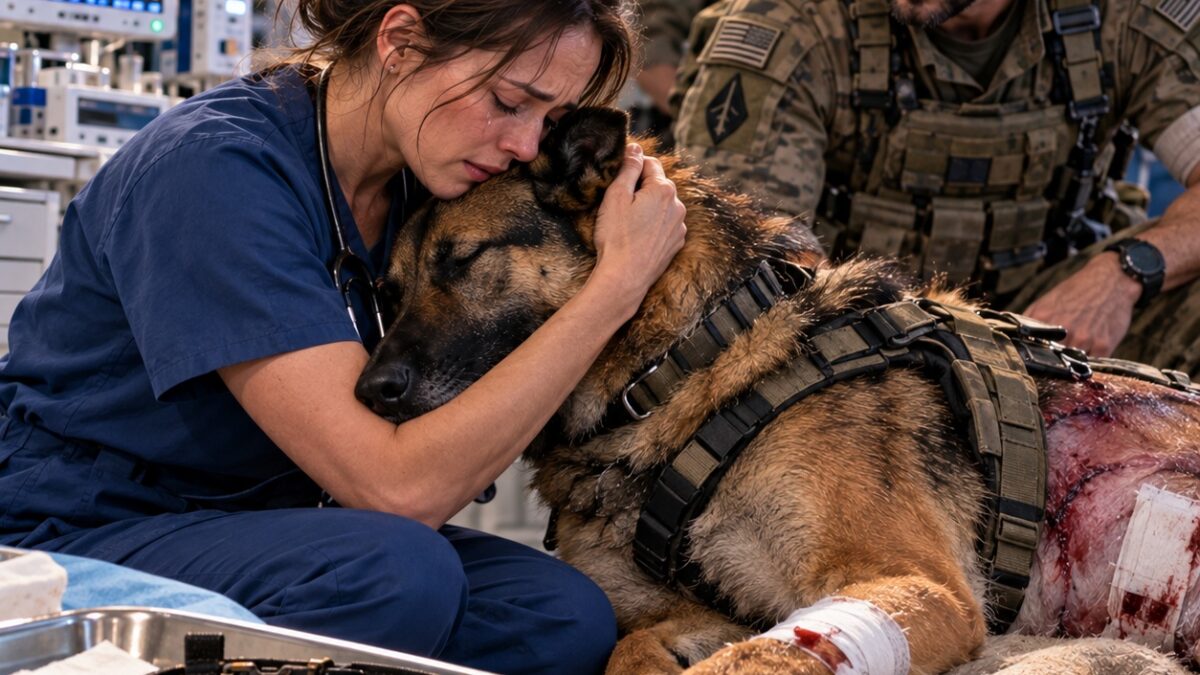
FULL ENDING 


I sat beside Atlas for twelve seconds without moving.
I know it was twelve because the recovery monitor displayed seconds in the corner, and when your life changes twice because of the same kind of evidence, your mind begins recording strange details.
Twelve seconds.
Then I stood.
Put on fresh gloves.
Photographed the collar from four angles.
Photographed the seam where the electronic housing had been opened.
Photographed the embossed Vantec logo.
Then I carefully documented the injuries beneath Atlas’s fur.
Not what I believed they were.
What I could see.
Location.
Size.
Distribution.
Healing stage.
Appearance.
That distinction had been beaten into me long before I came to Idaho.
Write what exists.
Separate observation from inference.
Because eventually somebody may want to make the truth smaller.
And when they do, adjectives become vulnerabilities.
Measurements survive.
I placed the collar inside an evidence bag.
Wrote the date.
Time.
My initials.
Sealed it.
Locked it inside the clinic’s evidence cabinet.
Then I sat beside Atlas.
He was still sedated.
His paws twitched occasionally.
His breathing had stabilized.
The monitor showed a heart rate moving gradually toward something I could live with.
My hand rested near his shoulder without touching him.
Seven years earlier, I had been twenty-nine.
I worked inside the Military Working Dog Rehabilitation Program in San Marcos, Texas.
Veterinary specialist.
Security clearance.
A career I thought would last decades.
I believed institutions corrected themselves when presented with accurate information.
That belief lasted longer than it should have.
We had begun receiving dogs with patterns that bothered me.
Behavioral regression after conditioning cycles.
Neck injuries.
Strange aversion responses to handlers reaching toward electronic equipment.
Nothing dramatic enough by itself.
That was the problem.
Institutional harm rarely walks through the door introducing itself.
It arrives as anomalies.
One dog flinching.
Another refusing equipment.
A technician saying:
That’s strange.
Then somebody deciding strange is not worth writing down.
I wrote it down.
I began comparing cases.
Equipment batch numbers.
Handlers.
Training dates.
Manufacturer information.
A contractor whose name then was not quite Vantec but whose corporate lineage led directly to the same people.
I documented electronic conditioning equipment operating outside parameters I believed were medically safe.
I submitted a report.
Forty-seven pages.
Supporting logs.
Photographs.
Names.
Dates.
I expected an investigation.
Technically, I got one.
Just not the investigation I thought.
First my system access was questioned.
Then the source of my technical records.
Then my judgment.
Then my professionalism.
A review opened into whether I had accessed restricted equipment data outside the scope of my position.
Nobody ever said:
Norah, stop talking about the dogs.
They did not need to.
Good systems of suppression are rarely dramatic.
One memo.
One access restriction.
One supervisory concern.
One temporary reassignment.
Each step individually defensible.
Together, they remove the person from the room.
Three weeks later, I received a choice.
Resign quietly.
Or face a formal conduct investigation likely to become public.
I resigned.
I told myself I had been practical.
For eighteen months afterward, I existed somewhere between functioning and collapse.
Then I used the veterinary nursing certification I had been completing part-time.
Started again.
Civilian medicine.
Different states.
Different clinics.
Different animals.
Eventually Idaho.
But I kept one thing.
The printed copy of my report.
Forty-seven pages inside a fireproof box in my apartment closet.
I never knew why.
Hope?
Anger?
Evidence?
Maybe throwing it away would have felt too much like agreeing they had been right to erase it.
Atlas made a small sound.
I returned to the present.
His eyes remained closed.
Forty minutes after surgery, I went to find Captain Ror.
He stood exactly where I had left him.
Arms crossed.
Back against the hallway wall.
A man performing patience because actual patience was apparently unavailable.
“I need to ask you something before you see Atlas.”
“Is he awake?”
“Not fully.”
“The collar he was wearing.”
His eyes changed.
Very slightly.
“Where did it come from?”
“Standard issue.”
“It isn’t.”
“You work in a civilian clinic.”
“I know what military working dog equipment looks like.”
That landed.
Ror straightened.
“The housing has been modified.”
I said.
“The casing was opened and resealed, and there’s a manufacturer mark on the internal surface.”
His voice dropped.
“That collar is military property.”
“It’s currently evidence in a locked cabinet.”
“You don’t have authority to seize military equipment.”
“I have a legal obligation to preserve potential evidence of animal abuse found on a patient inside this facility.”
“I’m not debating ownership with you.”
“I’m telling you I am not handing it back until the appropriate process says I should.”
The hallway went quiet.
Decker stood several feet away.
He had the rigid posture of somebody suddenly realizing a conversation he had spent months avoiding was happening without his permission.
Ror stared at me.
“What logo?”
“Vantec K9 Solutions.”
Nothing dramatic happened.
He did not gasp.
Did not look guilty.
Did not step backward.
His breathing changed.
That was enough.
People are animals with better storytelling ability.
Their bodies still answer before the story is ready.
“I’ll need to make a call.”
Ror said.
“Okay.”
I stepped aside.
“When you’re done, you can see Atlas.”
Then I gave him instructions.
Let the dog approach.
No reaching.
No call name until fully oriented.
If Atlas showed agitation, Ror backed away immediately.
He looked offended.
Then something in his expression shifted from offense to assessment.
“Fine.”
We entered Recovery Room Two.
Atlas lay on the padded mat.
His heart rate had dropped below one hundred.
Still high.
No longer alarming.
Ror stopped several feet away.
“Hey, buddy.”
Atlas’s ear moved.
Not toward Ror.
Toward the door.
Then back.
Ror stayed still.
Better than I expected.
Almost two minutes passed.
Atlas opened his eyes fully.
Lifted his head.
Looked around.
Found Ror.
Stared.
Then looked at me.
His tail moved twice.
Slow.
Cautious.
Ror’s face softened.
“He recognizes me.”
“Yes.”
I said.
“But he isn’t greeting you.”
Ror looked toward me.
“He’s checking with me.”
“For what?”
“Whether responding to you is safe.”
His jaw tightened.
“He’s disoriented.”
“Yes.”
“But disorientation looks different.”
“What are you saying?”
“I’m saying this behavior did not start tonight.”
Atlas lowered his head.
Turned his nose toward my side of the room.
I thought about the burns.
The collar.
Vantec.
The report in my apartment.
And Ror’s breathing when I said the name.
I documented the interaction.
Every piece.
By seven that morning, the clinic had shifted into daytime chaos.
Phones.
Appointments.
Technicians arriving.
Military vehicles sitting crooked in the parking lot attracting questions nobody had time to answer.
Greta Halverson, our clinic manager, listened to my summary.
Military working dog.
Gunshot wound.
Surgery.
Possible evidence of repeated electrical injury.
Military handler unhappy.
Potential legal issue.
Greta had managed veterinary clinics for twenty-two years.
Her reaction was:
“Give me the chart.”
I loved her.
I gave her the chart.
Then went for coffee.
I had been awake twenty-six hours.
My body was beginning to send formal complaints.
Staff Sergeant Decker appeared in the break-room doorway.
“You have a minute?”
“Thirty seconds.”
He closed the door.
That bought him more.
“How long have you worked here?”
“Two years.”
“And before?”
I looked at him.
“What are you actually asking?”
“The logo.”
He said.
“Vantec.”
I set my coffee down.
“Go on.”
“Ror made his call.”
“Whoever answered told him not to discuss the collar with you further.”
“Okay.”
“I’m not here because he sent me.”
“Then why are you here?”
Decker sat.
He looked exhausted in a deeper way than the night explained.
“I’ve been Atlas’s secondary handler for fourteen months.”
“I noticed marks under his collar eight weeks ago.”
My hand stopped near the coffee cup.
“What kind of marks?”
“Red.”
“Small.”
“Repeated pattern.”
“Did you report it?”
“Yes.”
“To your chain.”
“Yes.”
“What happened?”
“I was told Fort Aldrin veterinary had assessed him and found no injury.”
“Did you believe that?”
“No.”
“Then?”
“Two weeks later, Atlas was removed from my rotation.”
“Assigned full-time to Ror.”
“Operational decision.”
I looked toward the closed door.
“Who supplied the collars?”
“Contract upgrade four months ago.”
“Electronic monitoring equipment for the whole unit.”
“Company representative did a two-day install and calibration.”
He did not need to say the name.
I made him.
“Which company?”
“Vantec K9 Solutions.”
There are moments when fear returns so quickly it feels physical.
My first instinct was not:
I was right.
It was:
Not again.
That angered me.
I had spent seven years rebuilding.
I was good at my job.
Useful.
Stable.
Respected.
I had a clinic where the worst politics usually involved scheduling and whether Dr. Parish could be convinced to replace a piece of equipment before it died publicly.
I did not want to become twenty-nine again.
I did not want another hallway.
Another closed-door meeting.
Another person explaining that the most responsible thing I could do was disappear quietly.
Decker was watching me.
“Was there technical documentation for the collars?”
“Manual.”
“Output specs?”
“Not that I saw.”
“Who cleared Atlas?”
“Dr. Whitmore.”
“Fort Aldrin MWD vet.”
“Yes.”
“Write everything down.”
Decker looked at me.
“Everything?”
“Date you saw the marks.”
“Who you reported them to.”
“What they told you.”
“Date Atlas was reassigned.”
“Names.”
“Exact words if you remember them.”
His expression changed.
“You understand what that could do?”
“Yes.”
“No.”
He said.
“I mean to me.”
I looked at him.
“I do.”
He held my gaze.
Then nodded.
“I’ll write it.”
I handed him a clinic notepad.
Cheap paper.
Blue Harllo logo.
He sat at the break-room table and began writing something he would never be able to unwrite.
At eleven, Captain Ror came back to Recovery Room Two.
He had been arguing on the phone.
I could hear it before he entered.
When he reached me, his face was reconstructed into command neutrality.
Almost.
“I need the collar.”
“No.”
“The situation is now operational security.”
“That doesn’t change my evidence responsibilities.”
“Military property under active classification is subject to immediate return.”
“Who told you?”
“My commanding officer.”
“Put that instruction in writing through somebody with jurisdiction over this clinic.”
His eyes tightened.
“You’re a veterinary nurse.”
“You said that last night.”
I returned to Atlas’s blood work.
“I’ve contacted the Idaho State Veterinary Medical Board and our legal compliance officer.”
“The evidence log already exists.”
“That creates a chain I cannot erase even if I wanted to.”
“I don’t.”
“You’re making this bigger than it is.”
That phrase.
Seven years collapsed again.
Making this bigger.
Noise.
Overreaction.
Professional judgment.
Words people use when the facts are inconvenient but not yet disproven.
Atlas was awake.
Watching us.
Ror glanced at him.
Atlas’s body changed.
Subtle.
Muscles tightened.
Not fear of a stranger.
Predictive tension around somebody familiar.
“He’s watching you.”
I said.
“He always watches me.”
“Not like that.”
Ror stared at Atlas.
For the first time, he looked less angry than defeated.
“He was the best dog in the unit six months ago.”
He said quietly.
“Now I can barely get him to hold a position for thirty seconds without—”
He stopped.
“Without what?”
His eyes snapped toward me.
Then he left.
I documented that too.
At 1:40 that afternoon, a woman I had never seen walked into Harllo and asked for me by name.
Mid-forties.
Dark civilian coat.
Gray-threaded hair.
Stillness that read neither military nor civilian.
She showed identification.
“Investigator Callaway.”
“Defense Criminal Investigative Service.”
DCIS.
That changed the scale immediately.
She requested privacy.
We used the conference room.
Two old coffee cups sat on the table.
Veterinary catalog.
Normal room.
Abnormal conversation.
I did not wait for her opening.
“How long have you been investigating Vantec K9 Solutions?”
Callaway paused.
“How did you know we were investigating them?”
“You’re DCIS.”
“You arrived four hours after I logged evidence involving a defense contractor.”
“Either you had a flag on this clinic, unlikely, or you already had one on Vantec.”
“How long?”
She studied me.
“Eleven months.”
My heart slowed.
Not because I relaxed.
Because the world finally shifted into a shape I understood.
“What kind of investigation?”
“Contract fraud.”
“Government billing for equipment outside specification.”
“Falsified certification.”
“Possible kickbacks involving procurement personnel at two installations.”
“Fort Aldrin?”
“Yes.”
She opened a folder.
“What we did not have was a clear animal-welfare component.”
“Your documentation may change that.”
I thought about the fireproof box.
Seven years.
Forty-seven pages.
Callaway asked:
“What is it?”
“There was another investigation.”
“When?”
“Seven years ago.”
“Military Working Dog Rehabilitation Program.”
“San Marcos, Texas.”
“A veterinary specialist reported electronic conditioning equipment operating outside approved parameters.”
“The contractor was Vantec under a previous corporate identity.”
Callaway became very still.
“I know about that report.”
“Then you know it was accurate.”
“We believe it may have been.”
“The original documentation was never recovered.”
“I have it.”
She put her pen down.
The room changed.
“You have the original report?”
“Printed copy.”
“Personal logs.”
“Names.”
“Dates.”
“The sequence of what happened after I submitted it.”
Callaway watched me.
“You were the specialist.”
“Yes.”
“Why didn’t you bring it forward?”
The honest answer hurt.
“Because the last time I did, I lost my clearance, my career, and almost two years of my life.”
“What changed?”
I thought of Atlas on the stretcher.
Atlas looking at Ror.
Atlas looking at me.
Decker writing his statement.
“The dog chose me over his own handler.”
I said.
“And I’ve spent enough time with animals to know when they are telling you something is wrong.”
“He wasn’t asking Ror for help.”
“He was asking me.”
“And I’m not looking away again.”
Callaway picked up her pen.
“Start at the beginning.”
So I did.
For two hours and forty minutes, I told the story I had spent seven years not telling.
Not emotionally.
Chronologically.
Case by case.
Observation versus inference.
Where I knew.
Where I suspected.
Where somebody told me something I could not independently verify.
Callaway noticed the distinctions.
That reassured me.
When I finished, she said:
“I need the original report today.”
“I can get it.”
“I’m coming with you.”
“That isn’t necessary.”
“It is for chain of custody.”
She looked at me.
“If this becomes what I think it may become, I need every defense attorney who touches that document to have nowhere to go.”
I knew how that worked.
“All right.”
We stood.
My pager went off.
Recovery Room Two.
The sound reached us before the door.
A sustained low vocalization.
Not barking.
Not a yelp.
The sound of a dog who believed he had no safe option left.
I pushed through.
Atlas was on his feet.
He should not have been.
Fresh flank surgery.
Injured foreleg.
Still he stood.
Every muscle vibrating.
Captain Ror was three feet from him.
Hand extended.
Voice too controlled.
“Atlas, down.”
“Atlas—”
“Stop talking.”
I said.
Not loudly.
Flatly.
Ror’s hand dropped.
I moved toward Atlas’s side.
Not directly in front.
Angled.
Crouched.
Then breathed.
Slow.
Visible.
Nothing else.
Atlas watched.
Forward.
Back.
Assess.
His ears shifted.
After forty seconds, his weight lowered.
The sound stopped.
He sat.
I turned toward Ror.
“What were you doing?”
“Checking him.”
“I gave you a visit protocol.”
“I know.”
Then I saw the cabinet.
Open.
The lock on the floor.
The evidence bag on the examination table.
My body went cold.
“Get out.”
“Norah—”
“Get out of this room right now.”
“If you stay, I call police and report breaking a secured evidence cabinet, interference with preserved evidence, and interference with a patient.”
His jaw moved.
“These aren’t threats.”
I said.
“They are descriptions of what has already happened.”
“Three seconds.”
Ror looked at the bag.
Then me.
Then walked out.
I checked the seal.
Intact.
He had disturbed the outer closure.
Not opened the primary evidence packaging.
Callaway appeared behind me.
She looked at the broken lock.
The bag.
Atlas.
“I need to make a call.”
“So do I.”
Atlas pressed his nose against the back of my knee.
Not frantic.
Contact.
Anchor.
I rested my hand lightly on his head.
“I know.”
I whispered.
“I know.”
Callaway’s call lasted four minutes.
When she returned, she had agents coming from Boise.
Two hours.
Maybe less.
She needed the collar transferred into federal custody.
Timestamped photographs.
Chain log.
My statement.
Ror was not supposed to leave.
Fort Aldrin’s JAG office had been notified.
We moved Atlas to the surgical prep suite at the rear of the clinic.
Lockable from inside.
Priya, one of our technicians, helped.
Dr. Parish came out of surgery early.
We used a padded transfer board because Atlas was still injured.
Through all of it, Atlas watched my face.
Priya noticed.
“He trusts you.”
“He’s exhausted, hurting, and I’m currently the least threatening thing in his environment.”
“Same difference.”
“No.”
I said.
“It really isn’t.”
Trust is not the absence of alternatives.
I had learned that too.
Parish locked the prep room.
Then said:
“Talk.”
So I gave him the immediate version.
Collar.
Burns.
DCIS.
Vantec.
Broken evidence cabinet.
Not my entire seven-year history.
Not yet.
When I finished, he asked:
“What do you need from me?”
“I need you to handle Fort Aldrin if they call.”
“They’ll try to frame this as military jurisdiction.”
“This happened in our clinic.”
“The patient is under our care.”
“The evidence was discovered here.”
“State animal-welfare law still exists.”
Parish almost smiled.
“You’ve thought about versions of this before.”
“Yes.”
More than he knew.
At 3:22, Ror left.
Greta texted me:
HE JUST LEFT.
I heard the vehicle start.
Callaway swore.
First emotion I had seen from her.
She called.
Tracked the vehicle transponder.
He was not headed toward Fort Aldrin.
He went north.
Highway 21.
Twenty-two miles outside Milbrook sat a decommissioned Vantec training site.
Lease expired eight months earlier.
Corporate subsidiary still had keys.
“If there are dogs there…”
I started.
“We don’t know there are.”
Callaway said.
“If there are, the site has had no active inspection record for eight months.”
“No documented transfers.”
“Vantec is already under fraud investigation.”
“And Ror just broke an evidence cabinet and drove directly toward it.”
Callaway stared at me.
“I cannot take you into an active federal investigation.”
“I’m not asking you to let me investigate.”
“I’m telling you that if there are animals there, two hours could matter.”
Silence.
She made three calls.
When she returned, she already had her coat on.
“My Boise agents are diverting to the site.”
“State police support.”
“I need an animal-welfare subject-matter consultant once the structure is secure.”
“I need my kit.”
“You have five minutes.”
I made it in four.
The drive north felt longer than twenty-two miles.
Callaway drove.
I held my medical bag on my lap.
We spoke little.
I understood why.
You cannot prepare emotionally for a bad animal facility without risking becoming useless when you arrive.
I had done versions of this.
Kennels.
Neglect.
Pain.
You learn one rule.
The first thirty seconds belong to inventory.
Emotion comes later.
At the site, we waited behind a tree line until federal agents and state police were positioned.
Ror’s vehicle sat outside the main building.
Agents secured it first.
One person detained.
Ror.
Then Callaway gave the all-clear for secondary structures.
That was when I heard the dogs.
Multiple.
Overlapping.
Not healthy barking.
Low, exhausted distress sounds.
“How many?”
Callaway asked.
I listened.
“More than ten.”
“Probably under twenty.”
The first outbuilding was padlocked.
State police cut it.
The door opened.
Smell first.
Urine.
Waste.
Fear.
Untended wounds.
I wanted to react.
Did not.
Thirty seconds.
Inventory.
Wire kennels on both walls.
Adequate size, poorly maintained.
Bad ventilation.
Flickering light.
Twelve dogs.
Working breeds.
German Shepherds.
Belgian Malinois.
One Dutch Shepherd.
Eight standing.
Three down.
One trembling against the back of the kennel.
Thin.
Poor coat condition.
Water present in some kennels.
Empty in others.
I went to the three down dogs first.
Two weak but responsive.
Third German Shepherd breathing poorly.
Pale gums.
Compromised circulation.
“I need my kit.”
I called.
A state trooper brought it.
I called Parish.
“Down German Shepherd.”
“Non-ambulatory.”
“Severe dehydration.”
“Possible cardiac compromise.”
“Body condition around two of nine.”
“Respiratory twenty-eight.”
Parish gave instructions.
Careful fluids.
No aggressive volume.
I placed the catheter on the second attempt.
Then the second building opened.
Seven more dogs.
“Nineteen.”
Callaway said later.
Nineteen.
Two became immediate critical cases.
Three guarded.
The rest stable enough to transport but nowhere close to healthy.
For two hours I moved between kennels.
A state officer named Garrett had previous EMT experience and became my extra set of hands.
Parish remained on the phone.
Veterinary transport units came from Milbrook.
Greta apparently called every clinic within forty miles.
That woman could organize the evacuation of a small country if given a clipboard.
The site had not truly been abandoned.
Recent feed receipts.
Functional water.
Sparse kennel logs.
Somebody had been visiting.
Not enough.
But enough to establish ongoing use.
Ror lawyered up.
Callaway told me.
“Smart.”
I said.
“Is he protecting himself?”
“Or somebody above him?”
“That is the question.”
Near sunset, two dark SUVs appeared at the gate.
Fort Aldrin plates.
Four men got out.
No uniforms.
They moved like men who had worn them most of their lives.
One had a folder tucked under his arm.
Callaway’s voice dropped.
“That’s Colonel Marcus Dryden.”
“Installation commander.”
He was in his mid-fifties.
Tall.
Controlled.
The kind of authority that does not need to announce itself because a lifetime of rooms have already moved when he entered.
He looked over the outbuildings.
Transport cages.
Agents.
Evidence.
Dogs.
There was something missing from his expression.
Shock.
“He doesn’t look surprised.”
I said.
Callaway did not answer.
Then Dryden looked at me.
Everything inside me went still.
Recognition.
Tiny.
Instant.
He knew my face.
Or my name.
Seven years.
San Marcos.
My report.
Something in my body understood before my conscious mind finished.
He was there.
Maybe not physically in my office.
But inside what happened.
Dryden walked toward us.
“Investigator Callaway.”
“Colonel Dryden.”
Then he looked at me.
“You’re the clinic nurse.”
“Veterinary nurse.”
I said.
“Norah Voss.”
His eyes changed.
Small.
Enough.
“Ms. Voss.”
He knew.
I filed that fact mentally.
Dryden began talking jurisdiction.
Military property.
Command interests.
Active personnel.
Callaway answered with facts.
Privately leased facility.
No active military designation.
Captain Ror found removing documents.
Potential federal evidence.
Animal welfare concerns.
No ambiguity.
Dryden requested her supervisor.
Callaway called.
Handed him the phone.
I went back to the dogs.
That is one of the most important choices I made that day.
Not because I was above the confrontation.
I was terrified of it.
Seven years earlier, men like Dryden had been the geometry of my whole world.
They determined access.
Career.
Credibility.
This time he stood twenty feet away while I secured a kennel containing a dog who needed medical treatment.
And the dog needed me more than Dryden needed my attention.
So I worked.
The transport convoy left at 6:47.
I rode with the three most critical dogs.
Callaway followed.
During the drive, I made a call to a number I had not dialed in seven years.
Major Elise Fontaine answered on the fourth ring.
“Voss?”
“It’s Norah.”
Silence.
“After seven years, that’s how you start?”
“I don’t have time for a better opening.”
“Vantec is active.”
“DCIS.”
“Fort Aldrin.”
“Nineteen dogs.”
“My original report.”
Then:
“I need to know whether Marcus Dryden means anything to you.”
The silence lengthened.
“Where did you see that name?”
“He showed up at the Vantec site tonight.”
Fontaine had been my supervisor in San Marcos.
Three weeks before I was pushed out, she sat across from me and said:
I believe you.
Then she did nothing.
That sentence had hurt more than disbelief.
Disbelief can be fought.
Belief followed by silence is abandonment.
“He retired in February.”
Fontaine said.
“But he’s been consulting for—”
“Vantec.”
I finished.
She did not deny it.
“Norah…”
“I need documents.”
“Anything you kept.”
“Anything tying Dryden to closing my report.”
Long pause.
“I’ll look.”
“I know I should have—”
“Later.”
I said.
“Find the records first.”
I hung up.
The next six hours blurred.
Two emergency surgeries.
Nineteen dogs stabilized.
Priya moved through the ward like she had been born for it.
Two veterinarians from another clinic arrived.
Greta found food nobody ate until our bodies forced us.
Decker returned at ten that night.
He had the statement.
Also something else.
“I contacted two other secondary handlers.”
“Both noticed behavior changes after the new collar system.”
“Both reported them.”
“Both reports went through Whitmore.”
“Both closed.”
“They’re willing to talk.”
“How many of your unit’s dogs were at the facility?”
He asked.
“Eleven.”
His face changed.
“The other eight?”
“Fort Carver.”
He looked down.
I let him.
“How bad?”
“Two critical but stable after surgery.”
“Three guarded.”
“All nineteen alive.”
“For now.”
He breathed out.
“You did the right thing this morning.”
I told him.
“Little late.”
“Better late than suppressed.”
That was the truest thing I had.
At 11:15, Callaway found me.
“Ror is talking.”
He had negotiated cooperation.
His statement was complicated.
So was he.
Dryden had steered Vantec into Fort Aldrin’s contract system three years earlier.
The modified collars were specifically required.
Dryden had a financial interest in a Vantec subsidiary not disclosed in public procurement records.
Ror suspected something was wrong.
Nine months earlier, he had noticed Atlas changing.
More tension.
Less reliability.
Behavioral regression.
Ror raised concerns.
Dryden told him formal review would trigger evaluation of the collar system.
Atlas might be declared operationally compromised.
Retired.
Ror loved the dog.
So he stayed quiet.
“He chose the dog over the system.”
I said.
Then looked toward Atlas.
“And then he chose the system over the dog.”
Callaway nodded.
“Not a simple case.”
“They never are.”
Ror’s statement included something else.
Dryden had told him about San Marcos.
About me.
Not as a warning against bad equipment.
As a warning against speaking without enough protection.
“What happens when people make noise.”
That phrase sat in my chest.
For seven years, my career collapse had felt anonymous.
Institutional.
Diffuse.
Now it had a name.
Marcus Dryden.
“Where is he?”
I asked.
“Federal custody.”
Callaway said.
“His lawyer is better than Ror’s.”
She almost sounded impressed.
Fontaine had already contacted investigators.
Three old internal communications named Dryden as the officer who ordered the San Marcos review closed.
Dr. Whitmore was cooperating too.
He said he had been told the collar system operated under special defense classification and anomalous findings were to bypass normal medical channels.
Did he truly believe that?
Maybe.
Authority has a powerful ability to make cowardice feel procedural.
Callaway asked what I wanted to know next.
“The dogs.”
I said.
That surprised her.
Not me.
A federal seizure order would be filed.
They would remain under licensed veterinary care.
Our care.
Because of their condition and histories, returning them directly to operational units was not realistic.
They needed rehabilitation.
Someone with military working dog rehabilitation experience.
Callaway looked at me.
I laughed once.
No humor.
“Of course.”
The next morning, a federal attorney named Marsh came to document the evidentiary chain.
She was precise.
Unsentimental.
Exactly what I wanted.
She asked about the collar.
Every decision.
Why I removed it.
Why I photographed it.
Why I bagged it.
Who had access.
When Ror entered the room.
How the lock was broken.
What was observation.
What was interpretation.
Seven pages into her notes, she said:
“You document everything.”
“I’ve practiced what happens when documentation doesn’t exist.”
“The San Marcos case.”
“Yes.”
She was honest with me.
Some conduct from seven years earlier was outside prosecutable limitations.
Not all.
Fraud elements remained viable.
Related acts continued.
I understood.
I had not waited seven years expecting a courtroom to repair my twenties.
I wanted the record to exist.
That afternoon, Ror asked to see Atlas.
He stood at the recovery-room door.
No command voice.
No authority performance.
Just tired.
“I didn’t know what the collar was doing.”
He said.
“I believe you didn’t know the specifics.”
“But I knew something was wrong.”
“Yes.”
“And I didn’t push hard enough.”
I said nothing.
Silence is sometimes the only honest response.
“How many dogs from my unit?”
“Eleven.”
His face tightened.
“Any die?”
“All nineteen are alive.”
“Today.”
“That’s what I can promise.”
He looked toward Atlas.
“Can what was done to him be reversed?”
Physical injuries?
Likely.
Behavior?
Harder.
Triggers could perhaps be reduced.
Trust rebuilt.
Maybe.
No guarantees.
Anybody offering certainty was lying.
“I’d like to visit during recovery.”
Ror said.
“The dog decides.”
I answered.
“If your presence helps, you stay.”
“If it hurts, you leave.”
He nodded.
That was the first time I saw him accept a boundary without testing it.
Dryden was formally charged that evening.
Fraud.
Contract-related offenses.
Conspiracy counts would change as the investigation developed.
The story reached media.
By the next night, reporters were outside Harllo.
I hated it.
Not because public scrutiny was bad.
Because stories love heroes and villains faster than facts can keep up.
The headline version was already forming.
QUIET VET NURSE EXPOSES MILITARY DOG ABUSE RING.
That was not what happened.
I removed a collar.
I documented burns.
I refused to return evidence.
Other people did their jobs.
Decker wrote a statement.
Callaway had already been investigating Vantec eleven months.
Agents raided the facility.
Priya held IV lines.
Parish operated.
Garrett monitored fluids.
The system did not turn because one brave woman stood up.
It turned because enough people finally stopped sitting down.
Still, reporters wanted a statement.
Greta said avoiding them forever would become its own story.
So I prepared one.
Before I walked outside, I saw someone at the back of the crowd.
Gray jacket.
Elise Fontaine.
Seven years older.
Exactly as uncomfortable as I imagined I would feel seeing her.
She held a folder.
“I brought documentation.”
She said.
“Paper originals.”
“I kept them in storage for four years.”
“I didn’t know what to do with them.”
I looked at her.
“There is now.”
Before we could say more, my phone rang.
Unknown Idaho number.
I almost ignored it.
Answered.
“Ms. Voss?”
Dryden.
His voice no longer sounded like the man who had walked across the Vantec compound believing authority would rearrange the scene.
“What do you want?”
“There are more reports.”
My body stilled.
“How many?”
“Six.”
“Give me the programs.”
Fort Carver.
Redstone K9 Training Center in New Mexico.
A Nevada subcontractor called Meridian Tactical.
Two overseas project codes.
MT7.
MT9.
And San Antonio.
Eighteen months before my report.
A handler named Delgado.
Complaint about modified equipment.
Closed.
Handler’s performance monitored.
Later discharged.
Dryden had been on Vantec’s advisory board.
Three years.
He knew the documents existed.
“Why are you telling me?”
I asked.
Long silence.
“My lawyer advised me not to.”
“That isn’t what I asked.”
Another pause.
Maybe conscience.
Maybe strategy.
Maybe a man watching the structure he protected collapse and choosing which piece of himself he wanted left standing.
I did not care.
Not yet.
“Tell Callaway.”
I said.
“Everything.”
“My case—”
“This is not about your case anymore.”
“There are dogs in those programs right now.”
“Handlers watching animals deteriorate while somebody tells them it’s training failure.”
“People who reported this before me.”
“People who lost careers.”
“The case against you already exists.”
“What you do now matters to everyone who is not sitting in your interview room.”
Silence.
Then:
“I’ll call.”
I hung up.
Called Callaway immediately.
She had already found MT7 and MT9 in financial records.
That made my stomach drop.
Because independent evidence is different from confession.
Now they had both.
Investigators moved before Vantec could.
Fort Carver.
Redstone.
Nevada.
The next day, the Nevada facility yielded eleven more dogs.
Eleven.
Callaway texted only the number.
I was in the middle of Atlas’s rehabilitation assessment.
I read the message.
Set the phone down.
Finished my work.
Atlas had changed.
Still watchful.
Still sensitive to certain electronic sounds.
But he no longer braced against every human movement.
I held my hand out.
Palm up.
He looked at it.
Then my face.
Then my hand.
Pressed his nose against my palm for three seconds.
Voluntary contact.
No stress response.
Three seconds can be a whole world.
I documented it.
The Vantec offices in Arizona were searched that morning.
Federal fraud investigation.
Contractor misconduct.
Procurement irregularities.
News grew.
I tried to keep the ward small.
Animal by animal.
Chart by chart.
That was the only scale where I could function.
Fontaine and I finally sat together in the break room after midnight.
Her folder held old communications.
Dryden’s name.
My report.
Instructions to close review.
References to “personnel reliability.”
Language used to transform a whistleblower into a problem.
“I’m sorry.”
Fontaine said.
I looked at her.
Seven years earlier, I imagined this apology hundreds of times.
In every version, it fixed something.
Reality was quieter.
“You believed me.”
I said.
“Yes.”
“And you did nothing.”
“Yes.”
“Why?”
She stared into her coffee.
“Fear.”
Simple.
“I told myself I was trying to preserve my ability to help later.”
“Were you?”
“At first.”
“And after?”
She shook her head.
“No.”
That honesty mattered more than a complicated excuse.
“I should have stood beside you.”
“Yes.”
She absorbed it.
No defense.
Then I asked:
“Why bring the documents now?”
“Because seven years of being ashamed did not make the decision better.”
That was good enough for the moment.
Callaway’s investigation expanded.
Dryden’s case grew.
Other handlers came forward.
Delgado—the San Antonio handler—was found working at an animal shelter in Austin.
Four years.
When investigators told him they had recovered evidence supporting his complaint, he cried on the phone.
Callaway told me.
“He said he had been waiting for someone to look.”
I understood that sentence more than I wanted to.
The nineteen dogs from the Idaho facility remained at Harllo longer than anyone planned.
Our clinic changed around them.
Temporary partitions became real kennels.
Extra staff.
Independent specialists.
Federal partnership.
What began as emergency housing turned into something else.
Ror began visiting Atlas on Tuesdays and Thursdays.
Seven in the morning.
Under my direction.
The first time he showed up, his old command habits entered the building before he did.
“I’d like to begin rebuilding operational obedience.”
“No.”
He looked at me.
“That wasn’t a request.”
“Neither was my answer.”
Atlas watched us from behind the kennel door.
“This is not about getting him operational.”
“It’s about getting him safe.”
“Then confident.”
“Then we see what he wants and what he can tolerate.”
“He’s a working dog.”
“He’s an injured working dog.”
“Different thing.”
Ror’s jaw tightened.
Then he looked at Atlas.
That ended the argument.
I established rules.
No electronic equipment.
No corrective collar.
No pressure to perform through stress.
Atlas set the pace.
Ror listened.
Not because he suddenly became humble.
Because guilt had finally made control less comfortable.
Weeks passed.
Tuesday.
Thursday.
Ror sat outside the kennel.
Sometimes talked.
Sometimes did nothing.
Atlas stopped avoiding him.
Then tolerated proximity.
Then approached the barrier.
The first time Ror extended a hand too quickly, Atlas pulled back.
Ror immediately withdrew.
No command.
No frustration.
Good.
“You learned.”
I said.
He gave me a look.
“I’m trying.”
That was more honest.
The other dogs progressed at different rates.
Some recovered quickly once pain and stress were treated.
Some did not.
One gray-muzzled Malinois we called Bram had probably been past operational age before Vantec warehoused him.
He wanted food, sunlight, and nobody telling him to do anything difficult.
We respected his career goals.
Six dogs eventually went to former handlers through placement.
Four required prolonged rehabilitation.
Several showed potential for demonstration or education roles.
None were treated as inventory anymore.
That difference changed the entire ward.
Harllo’s federal partnership became official six weeks later.
DCIS.
Department of Defense.
Clinic.
A new name went into the paperwork.
Harllo Military Working Dog Recovery Center.
Dr. Parish suggested a ribbon-cutting.
I threatened to quit.
He settled for a break-room meeting.
I told the staff three things.
“The work matters more than the name.”
“The standard in this building cannot become what we found in those outbuildings.”
“And if you see something wrong, you document it.”
“You tell somebody.”
“And you keep telling somebody until the information reaches a place where it can act.”
“That is the job.”
Then I went back to rounds.
Ror’s legal situation remained complicated.
He had broken into the evidence cabinet.
Driven to the Vantec facility.
Attempted to remove documents.
Those things were real.
So was his later cooperation.
So was the pressure Dryden used.
So was Ror’s failure to protect Atlas when he knew something was wrong.
A person can be guilty and still be more complicated than a villain.
I needed to believe that because otherwise institutions teach the wrong lesson.
If every failure requires a monster, ordinary people can always reassure themselves.
I’m not evil.
Therefore what I did cannot be harmful.
Ror was not evil.
He loved Atlas.
And that love became one of the reasons he stayed quiet.
Dryden had told him:
Complain formally and the dog may be retired.
Ror wanted to protect Atlas’s career.
So he allowed the thing harming Atlas to continue.
Good intention.
Cowardly choice.
Real damage.
He understood that eventually.
One morning, he stood beside me watching Atlas work through a controlled stimulus protocol.
“He would’ve followed me anywhere.”
Ror said.
“He probably still would.”
I replied.
“That doesn’t mean he should have had to.”
Ror looked down.
I did not soften it.
Part of rehabilitation belonged to the dog.
Part belonged to the man.
Atlas’s Phase Two evaluation happened early in spring.
Standardized environmental stimuli.
Controlled social contact.
No electronic triggers beyond carefully managed acoustic exposures.
Atlas moved differently.
Not perfect.
Present.
That mattered.
Alert without constant bracing.
He completed one element.
Then another.
Ror stood at the end of the corridor.
Present.
Not directing.
At the end, Atlas looked at me.
I released him.
He walked toward Ror.
Stopped.
Sat.
Ror crouched.
Slowly placed one hand along the side of Atlas’s neck.
Not where the old collar had burned him.
Atlas leaned into the contact.
Ordinary.
Not desperate.
Not fearful.
A dog making a decision.
My throat tightened.
I wrote:
Phase Two cleared.
Voluntary handler approach.
No stress response.
Recommend Phase Three.
Ror said something quietly to Atlas.
I walked away.
Some moments do not need witnesses.
Dryden’s sentencing happened on a Monday.
Forty-one months on consolidated counts.
Restitution for fraudulent contract billing.
Permanent bar from future federal contracting.
His undisclosed Vantec advisory role entered the judicial record.
Vantec lost federal contracting status.
The company’s CEO became part of a related criminal referral.
The modified collars were recalled from active military installations.
Official language made it sound boring.
Inventory replacement.
Certification update.
Procurement correction.
Institutional failures love bureaucratic funerals.
Quiet words bury loud harm.
Still, the collars were removed.
Independent technical review became mandatory for replacements.
That mattered.
Callaway called me with the sentencing outcome.
She also gave updates on Fort Carver.
Redstone.
Nevada.
Then she said:
“One more thing.”
I held my pen above the notepad.
“The DoD review board completed your San Marcos personnel review.”
My heart slowed.
“The conduct finding has been expunged.”
I said nothing.
“The review concluded that the investigation leading to your separation was initiated directly in response to a factually accurate complaint.”
“There’s a formal letter coming.”
I stared at the wall.
For seven years, I had imagined vindication as something explosive.
A door opening.
Somebody apologizing in front of everyone.
A title restored.
Instead, I sat in a small office with a clinic notepad in front of me.
Dogs breathing through the wall.
“Okay.”
I said.
Callaway paused.
“Okay.”
She understood.
After we hung up, I stayed there.
Pen in hand.
Did not write.
The ward made its normal sounds.
Water bowls.
Nails against kennel flooring.
A low whine.
A technician opening a latch.
Life continuing.
My record was corrected.
Was that enough?
Seven years earlier?
No.
It would not have been.
I wanted the career back.
The clearance.
Time.
Reputation.
The certainty I had before I learned an institution could punish accuracy.
Now?
I had nineteen dogs who had survived because somebody documented the first injury correctly.
I had a center that did not exist six months earlier.
I had Priya.
Parish.
Greta.
Callaway.
Decker.
Fontaine, even.
Ror learning to listen to the dog he once believed love entitled him to command.
The letter mattered.
But it was not the thing that made those seven years have meaning.
The meaning lived in what we built after.
Atlas completed formal rehabilitation in April.
Two independent military working dog specialists performed the final assessment.
I recused myself.
That surprised some people.
“He trusts you more than anyone.”
Priya said.
“Exactly.”
“The assessment needs to survive scrutiny.”
“So you’re not going in?”
“No.”
“You hate this.”
“Yes.”
She smiled.
Growth.
Two hours later, Dr. Sato brought me the summary.
Medically cleared.
Behaviorally non-deployable for active field operations.
Permanent acoustic sensitivity remained.
Certain electronic sounds triggered responses too significant for operational risk.
But—
excellent candidate for training demonstrations.
Handler education.
Public engagement.
Behavioral communication work.
“He’s a strong dog.”
Sato said.
“Whatever happened to him, most of him came through.”
“That isn’t guaranteed.”
“No.”
I looked at the report.
“What happens now?”
“Program decision.”
“Handler recommendation.”
“I have one.”
She raised an eyebrow.
“He stays here.”
Three weeks later, I discovered Ror had reached the same conclusion.
He submitted a formal request assigning Atlas permanently to Harllo’s handler education program.
Approved in twelve days.
The morning the notice arrived, I posted it on the ward board.
Ror was already there.
Too early.
Atlas stood on the other side of the kennel.
They looked at each other.
No commands.
“You’re early.”
I said.
“I wanted a minute before the day started.”
I looked at Ror.
Then Atlas.
The man who made wrong choices for complicated reasons.
The dog who paid for them.
Both still standing.
“Go ahead.”
I said.
“Open it.”
Then I went to morning rounds.
Behind me, I heard the latch.
Atlas’s paws.
Ror saying his name.
Once.
Not the voice of a captain giving an order.
A man being steady.
There is a difference.
Months later, Harllo looked nothing like the clinic that received Atlas at 5:17 that morning.
The ward had been rebuilt.
Staff trained.
Federal protocols integrated.
Dogs from other programs began arriving.
Two from Fort Carver.
One referral from Nevada.
Cases where handlers suspected equipment-related trauma.
Cases unrelated to Vantec.
The work expanded because the infrastructure existed now.
Bram still watched everyone with the dignified exhaustion of a dog who had retired mentally long before paperwork caught up.
Six of the original nineteen had permanent homes.
Four remained in long rehabilitation tracks.
Three entered educational programs.
Others moved through evaluation slowly.
Atlas worked in the open area with Ror several mornings a week.
Their sessions barely looked like training anymore.
Conversation through body language.
Ror gave less.
Watched more.
Atlas communicated.
Ror adjusted.
One morning, Priya stood beside me.
Coffee in one hand.
Tablet in the other.
“You know what I think every time I see those two?”
“What?”
“That first morning.”
“Ror walking in telling everybody what to do.”
“And you telling him to let you do your job.”
I watched Atlas change direction.
Ror followed.
“He learned.”
Priya smiled.
“You made him learn.”
I thought about that.
“No.”
“I held a line.”
“Same thing.”
“Not really.”
I looked down the ward.
“At some point, the people around you decide whether they’re going to hold it too.”
Priya went quiet.
“Is that enough?”
“Just not moving?”
I thought about a printed report in a fireproof box.
A cabinet lock on the floor.
Decker writing on cheap clinic paper.
Fontaine driving six hours with documents she had been ashamed to keep.
Callaway arriving because somebody had logged the right evidence.
Delgado waiting four years in an Austin shelter for somebody to say:
We found it.
We believe you.
Atlas pressing his head into my chest while everybody else saw a dangerous dog.
Sometimes courage looks nothing like people imagine.
It is not always running toward danger.
Sometimes it is refusing to hand back a collar.
Saving a photograph.
Writing the date.
Answering a phone.
Holding an uncomfortable truth long enough for somebody with authority to finally catch up to it.
“Sometimes.”
I told Priya.
“Sometimes not moving is exactly enough.”
Atlas crossed the room in the morning light.
Loose gait.
Alert.
Present.
Not the dog he had been before.
Recovery does not reverse time.
It does not erase burns.
It does not make a nervous system forget.
It builds forward from the materials left behind.
That was true for him.
It was true for me.
For seven years, part of my life existed inside a sentence somebody else had written about me.
Conduct concerns.
Clearance review.
Resigned.
That was the official version.
Now another version existed.
Factually accurate complaint.
Retaliatory review.
Record corrected.
But even that was not the whole story.
The whole story was that I kept working after being pushed out.
I learned more.
Got better.
Built a life in Idaho.
Stayed late with Puck because his bandage worried me.
Answered an emergency phone at 4:52.
Asked the dog’s name before asking whether the soldiers understood who I used to be.
Nobody at Harllo needed my old title.
Atlas certainly did not.
He needed someone to notice.
That is what people forget about quiet strength.
It rarely arrives looking powerful.
It looks like a nurse in blue scrubs.
A cheap notepad.
A locked cabinet.
A photograph with a timestamp.
A man choosing to write down what he saw even though he knows the paper may cost him something.
An investigator who listens without performing sympathy.
A doctor who says:
What do you need from me?
A technician holding an IV line for a dog whose name she learned ten minutes earlier.
A former supervisor driving across a state with documents she should have produced years ago.
Even a guilty man deciding that if he cannot undo what he helped protect, he can at least tell investigators where the next six doors are.
None of those things feel large while they are happening.
That morning at 5:17, Atlas was bleeding.
Afraid.
People called him dangerous.
Ror still believed command could solve him.
Decker had already tried once to speak and been ignored.
I still believed the worst thing Vantec had done belonged seven years behind me.
By noon, one collar had reopened everything.
By evening, nineteen dogs were coming out of hidden kennels.
Within months, multiple programs were under review.
A federal contractor lost access.
Equipment was recalled.
Records were corrected.
A rehabilitation center existed where there had been only a civilian recovery ward.
People like neat causality.
One brave action changes everything.
That is not what happened.
There was never one action.
There was the moment I noticed the collar.
Then the decision to photograph it.
Then the decision to lock it away.
Then Decker deciding to write.
Then Callaway deciding old evidence mattered.
Then Ror making one bad choice and later one better choice.
Then Fontaine finally carrying her documents into daylight.
Then Dryden deciding the truth was bigger than his plea strategy and naming the other programs.
Then investigators moving before records disappeared.
Then staff doing months of ugly, repetitive rehabilitation work nobody filmed.
That is how change happened.
Not one moment.
A chain.
Weak in places.
Late in places.
Human.
But unbroken long enough to hold.
Sometimes I think about what would have happened if Atlas had behaved differently that first morning.
If he had greeted Ror normally.
If the collar had stayed on.
If the burns were under thicker fur and I had missed them.
If I had decided removing military equipment was more trouble than it was worth.
That line of thought is dangerous.
You can turn survival into guilt by imagining every nearby version where it failed.
I try not to.
Instead, I remember Atlas now.
Not bleeding.
Not cornered.
Not looking between me and Ror like he needed permission to choose safety.
I remember him walking into the education yard.
A group of new military working dog handlers standing along the fence.
Ror beside them.
Atlas moving calmly.
One handler asks:
“What’s the biggest thing we should learn from him?”
Ror does not answer immediately.
That alone would have shocked the man I met at 5:17.
Then he says:
“Your dog is always communicating.”
“If you only listen when the communication looks like obedience, you’ll miss the important part.”
I stand at the back.
Say nothing.
Atlas looks over.
Finds me.
His tail moves once.
No question this time.
No checking whether the room is safe.
Just recognition.
Then he returns his attention to Ror.
That is enough.
More than enough.
Because seven years earlier, somebody decided the truth I documented was inconvenient.
They removed me from the room and assumed the problem left with me.
It did not.
Truth is difficult that way.
You can suspend a clearance.
Change an assignment.
Close a report.
Reclassify equipment.
Threaten somebody’s career.
Make silence look professional.
But the thing that happened still happened.
The dogs still remember.
Bodies still carry records.
Paper survives in fireproof boxes.
People survive too.
Sometimes they go somewhere quieter.
A small clinic in Idaho.
A shelter in Austin.
A secondary handler who keeps watching his dog even after the official veterinary report tells him he saw nothing.
They keep working.
Keep notes.
Get better.
Wait.
Not passively.
Not for revenge.
For the moment when somebody finally asks the right question.
Atlas was that moment for me.
A wounded dog on a stretcher.
Ninety pounds of pain and distrust.
He did not know anything about Vantec.
Dryden.
San Marcos.
My career.
He did not know what his collar meant legally.
He only knew what his body had learned.
Who hurt.
Who pressured.
Who listened.
When he looked away from his own handler and chose to rest against me instead, everybody in that room saw a strange behavioral reaction.
I saw testimony.
Not enough for court.
Not enough to accuse anyone.
Enough to look closer.
That is all attention ever promises.
Not answers.
A reason to keep looking.
And sometimes, if you look long enough and write down what you find, the people who thought nobody would ever take you seriously discover something they should have understood from the beginning.
Being quiet is not the same as having nothing to say.
Sometimes the quiet person in the room is simply the one collecting the evidence.








