Baltimore’s Most Feared Man Came for a Lost Book and Met the One Woman Who Refused to Fear Him
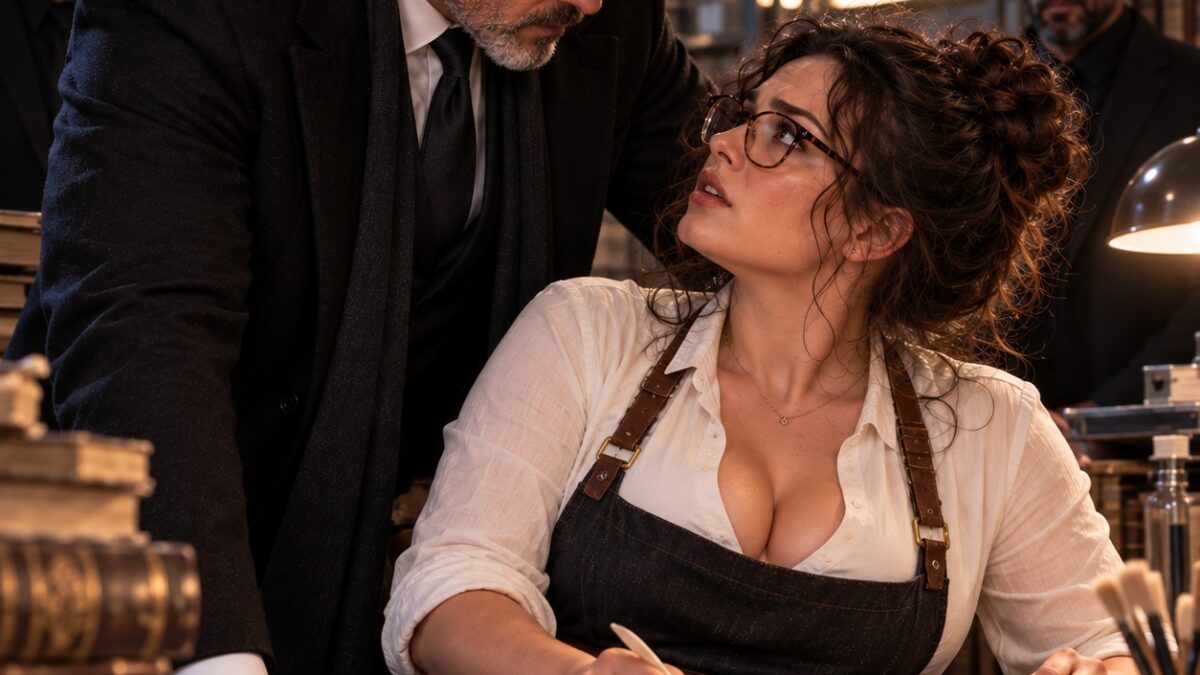
FULL STORY CONTINUATION
It was not a polished laugh.
That was what surprised me.
A man like Dominic Vale looked like he should have had an elegant laugh.
Controlled.
Brief.
Something practiced for charity dinners.
Instead, the sound came out rusty and startled, as if it had been locked in a drawer for two decades and I had accidentally found the key.
He lifted one hand to his mouth.
Failed to hide it.
“Does that work on people?” he asked.
“Occasionally.”
I pushed my glasses back up.
“Mostly they glare harder.”
Thomas looked away.
His shoulders moved once.
Dominic noticed.
“Reyes.”
“I coughed.”
“You did not.”
“I developed a respiratory problem.”
I almost smiled.
Almost.
Then Dominic looked back at the archive boxes.
His face became serious.
“I was told you were the best person to find this journal.”
“That part was accurate.”
“My grandfather’s papers were donated here in 1981.”
“I know.”
“His journal disappeared after his death.”
“I know that too.”
He studied me.
“And you still cannot tell me where it is.”
“Correct.”
His jaw tightened.
I gestured toward the boxes.
“The collection was never properly cataloged. Somebody put thirty-one cartons in storage forty years ago and wrote an inventory vague enough to qualify as performance art.”
Thomas coughed again.
This time I knew it was laughter.
“I’m on box nineteen.”
I continued.
“If the journal is here, I’ll find it.”
“When?”
“I don’t know.”
“That is not an answer.”
“It’s the only honest one I have.”
Dominic stepped closer.
I had to tilt my head up.
His eyes were gray.
Cold rain on slate.
“I did not come here to be told something cannot be done.”
“I didn’t tell you it couldn’t be done.”
“You said you don’t know when.”
“Yes.”
“I want every box opened today.”
“No.”
Silence.
Thomas became very interested in the ceiling.
Dominic’s voice dropped.
“You are saying no.”
“Yes.”
“To me.”
“I assume that is the part upsetting you.”
His eyes narrowed.
I rested my hand on the archive box.
“If I rush this because you are impatient, I could damage material that has already survived forty years of neglect.”
“My grandfather’s journal belongs to my family.”
“If it is inside a donated collection, it belongs to the process before it returns to anybody.”
He stared.
I stared back.
Inside, my pulse was sprinting.
I was not naturally confrontational.
People mistook calm for fearlessness.
They were different things.
I was afraid.
I simply hated damaged paper more than I feared difficult men.
Finally Dominic nodded once.
“What do you need?”
That surprised me more than the laughter.
“Time.”
He looked at the squeaky chair near the window.
“May I wait?”
“You may.”
I pointed at it.
“But do not breathe directly on anything.”
Thomas turned his whole body away.
Dominic sat.
That was how the next three days began.
He came back.
Again.
And again.
At first he watched in silence.
Then questions appeared.
“Why gloves for that page but not this one?”
“Because cotton gloves reduce dexterity and can tear brittle paper. Clean dry hands are safer here.”
“What is that?”
“Japanese tissue.”
“And that?”
“Wheat starch paste.”
“What does the little yellow object do?”
“My bone folder.”
“You carry it every day.”
“Yes.”
“Why?”
I looked down at it.
“My grandmother’s.”
He was quiet for a long moment.
Then said:
“So it isn’t a tool.”
I looked at him.
His face was already closed again.
“What is it, then?”
“A person.”
That answer stayed with me.
On the third afternoon, box twenty-six gave us what Dominic had spent forty-five years without.
The carton was labeled PARISH ACCOUNTS in faded pencil.
Inside were brittle ledgers.
Receipts.
Letters.
And beneath them, wrapped in old bread cloth, was a thick leather volume.
Cracked cover.
Broken spine.
Water damage.
On the title page, in slanted black handwriting:
Il libro di Salvatore Vale, Baltimore.
Dominic walked into the lab while I was lifting it toward the light.
He was carrying two coffees.
Thomas behind him had apparently been sent on the mission.
The moment Dominic saw the journal, the mask disappeared.
Only for a second.
But I saw him.
Not Dominic Vale.
Not the man whose name made trustees lower their voices.
A boy.
Maybe nine years old.
Waiting at the edge of a bed for someone to tell him something important.
He set the coffees down without looking.
“Is it—”
“Yes.”
He approached slowly.
I expected him to reach for it.
He did not.
“It’s damaged.”
His eyes moved over the cracked leather.
“How badly?”
“Repairable.”
That word seemed to hit him.
“Really?”
“Yes.”
“The spine needs rebuilding. Some leaves are water-stained. Corners torn.”
I touched the cloth.
“Three weeks.”
His eyebrows lifted.
“Possibly four.”
He looked at me.
Then the journal.
“So I will be coming back.”
It sounded like a threat.
It did not feel like one.
The next three weeks changed the shape of my workdays.
Dominic appeared most afternoons.
He did not demand updates.
He sat in the squeaky chair by the window.
Removed his coat.
Folded it neatly.
Watched.
Sometimes he read.
Terrible detective novels.
The kind with lurid covers and titles involving dead dames and crimson cufflinks.
He folded the covers backward so nobody could see.
I noticed.
Of course I noticed.
I said nothing for almost a week.
Then:
“Is that called Murder on Pier Nine?”
Dominic slowly lowered the book.
“No.”
“The title is on the spine.”
“I am researching.”
“Researching what?”
“Crime.”
I looked at him.
He looked at me.
The silence lasted five seconds.
“They’re terrible,” he admitted.
“I know.”
“I enjoy them.”
“That is deeply embarrassing.”
“I trusted you with that information.”
“I am already abusing the privilege.”
Coffee became another problem.
The first cup he brought me was black.
Bitter.
Strong enough to dissolve furniture.
I took one polite sip.
Coughed.
Dominic frowned.
“You dislike it.”
“It tastes like regret.”
“This is excellent coffee.”
“This is punishment in a paper cup.”
“How do you drink it?”
“Oat milk latte.”
He looked suspicious.
“With cinnamon.”
The next afternoon, he arrived carrying five cups in a cardboard tray.
Thomas followed looking exhausted.
Dominic set them down.
“I did not know which kind of cinnamon you meant.”
I stared.
“The barista asked whether I wanted it stirred, dusted, flavored, or incorporated.”
He looked almost offended.
“I was unprepared.”
I laughed so hard I had to put down my tools.
Dominic waited with the dignity of a statesman being mocked by parliament.
I tasted each.
The third one was perfect.
He took the receipt.
Wrote the order on the back.
Put it in his breast pocket.
Every coffee afterward arrived exactly right.
That was Dominic.
He remembered.
I mentioned once that lilies made my eyes swell.
Weeks later, flowers arrived at the library for an event.
Dominic walked in.
Looked at the arrangement.
Asked Margaret whether the white flowers were lilies.
They were removed within ten minutes.
He never told me he had done it.
I knew anyway.
Gregory noticed Dominic’s attention.
Gregory noticed anything involving status.
He leaned in the lab doorway one morning.
“Take your time with the Vale project, sweetheart.”
I did not look up.
“No reason to rush into anything you can’t handle.”
Before I could answer, Dominic spoke from the window.
“Mr. Puit.”
Gregory straightened.
Dominic did not even lift his eyes from his paperback.
“Miss Cole is the only person in this building who has told me no and been correct.”
Gregory’s smile froze.
“I would not concern yourself with what she can handle.”
Gregory disappeared.
I stared at Dominic.
“You did not have to do that.”
“No.”
“Then why did you?”
“He irritated me.”
“That is not an answer.”
“It is the answer I am giving.”
A week later, the Meridian received a massive anonymous donation.
New climate control for the rare-book vault.
A new vacuum suction table for my lab.
Supply funding.
Margaret announced it in the reading room and cried.
Gregory clapped like a man sitting on a tack.
I stood in the back and felt suspicion crawl up my neck.
By afternoon, I found the invoice.
The donor name had been blacked out.
The shipping address had not.
The trust was:
SV MEMORIAL CHARITABLE FUND
I walked into my lab.
Dominic was sitting in the squeaky chair reading one of his awful books.
“Salvatore Vale.”
He lifted one eyebrow.
“A very common name.”
“You bought my suction table.”
“No.”
“You bought the library a suction table.”
“Yes.”
“That I will use.”
“Possibly.”
“You also paid for climate control.”
“For the building.”
“And supplies.”
He closed his book.
“Paper should not be destroyed because a nonprofit lacks money.”
“That is the most manipulative legal distinction I have ever heard.”
“I employ excellent lawyers.”
I tried to stay angry.
I truly did.
Then my mouth twitched.
Then I laughed.
Then, humiliatingly, I cried.
Dominic stood immediately.
Did not touch me.
That mattered.
Trevor used to touch me whenever he wanted my feelings to end.
A pat.
A squeeze.
An embrace that really meant enough now.
Dominic pulled a linen handkerchief from his pocket.
Held it out.
“I wanted the paper safe.”
My tears got worse.
“That is all.”
His voice softened.
“I’m not purchasing gratitude.”
He waited.
“I am not asking you for anything.”
I took the handkerchief.
“Thank you.”
Something moved across his face.
He looked like a man who did not hear those words often unless money had changed hands.
The journal took twenty-two days.
On the final afternoon, I did something I had been thinking about since the first day.
The pastedown inside the back cover had a slight ridge beneath it.
A hidden rectangle.
Someone had concealed something.
I told Dominic before lifting it.
“There’s something under here.”
He came closer.
“I can remove the pastedown safely.”
“What is it?”
“I don’t know.”
He went very still.
“Do it.”
Then:
“Would you mind if I stayed?”
That question told me how much he had changed in three weeks.
Not:
I’m staying.
May I?
I warmed the old adhesive carefully.
Lifted the paper little by little.
Underneath was a folded sheet of blue stationery.
Same black hand as Salvatore’s journal.
I laid it on clean blotter.
Took off my gloves.
Stepped back.
“It’s yours.”
Dominic unfolded it.
Read.
Went back to the beginning.
Read again.
His hand started trembling.
“It’s Sicilian.”
I waited.
“He wrote it in 1979.”
Dominic swallowed.
“A year before he died.”
His voice roughened.
“It’s addressed to me.”
I said nothing.
He translated slowly.
Salvatore wrote to the grandson he did not yet know.
He confessed that his greatest regret was not violence.
Not money.
Not the dangerous life he had built.
It was six years.
Six years spent loving Rosalia without telling her because he believed he was protecting her.
When he finally spoke, she looked across a bakery counter and told him:
“You wasted six years of my life being noble. Do not waste another day.”
They had forty-one years together.
He never got the six back.
The final line said:
Do not decide for the woman you love what she is strong enough to survive. Ask her. Then believe the answer.
Dominic stopped reading.
His fingers tightened around the blue paper.
“I have been alone for twenty-three years.”
I stayed beside him.
“Because I decided nobody could survive me.”
He looked at the letter.
“And my grandfather wrote the answer before I was even born into the question.”
For the first time, Dominic Vale did not look dangerous.
He looked devastated.
Human.
The library closed in rain that evening.
Dominic waited in the lobby with the restored journal under his arm like a sleeping child.
“Thomas went home.”
I raised an eyebrow.
“He did?”
“I asked him to.”
“That is suspicious.”
“I would like to drive you home.”
The rain hammered the windows.
“If you allow it.”
I said yes.
His car smelled faintly of cedar and leather.
He drove carefully.
When we reached my apartment, he turned off the engine.
Neither of us reached for the door.
Rain filled the silence.
Finally Dominic said:
“A man my age should not ask you out.”
I smiled.
“Why?”
“I am sixty-three.”
“I know.”
“You’re thirty-one.”
“I also know that.”
“You have most of your life ahead of you.”
“So?”
“There is cruelty in asking someone young to carry the ending of an older life.”
I turned toward him.
“That is not your decision.”
His eyes met mine.
I smiled softly.
“Let me decide.”
For once, Dominic Vale had no answer.
Eventually he breathed out.
“I had a speech.”
“I’m sure it was excellent.”
“It was.”
“What is the real reason?”
His expression changed.
“The age is easier.”
“Than?”
“The truth.”
He looked at our hands.
“The last woman I loved died because of me.”
I stopped breathing.
“Elena.”
He had never said her name before.
“She was a teacher.”
His voice went flat.
“Twenty-three years ago, someone put a bomb in a car intended for me.”
The rain seemed louder.
“My car was being repaired.”
“Elena took mine to the grocery store.”
He stared ahead.
“She was four months pregnant.”
I closed my eyes.
Nobody had to explain the rest.
“I built my life around one equation afterward.”
He continued.
“If I loved someone, that person became a target.”
His eyes came back to mine.
“So I stopped.”
My heart hurt.
“Then you walked into my lab.”
A helpless smile.
“Paste on your wrist.”
“You closed an archive box in my face.”
“You deserved it.”
“I realized I had been dying very politely for twenty-three years.”
He looked down.
“I will not pull you into a life you did not choose.”
“Then tell me what I am choosing.”
“Sabrina.”
“All of it.”
“You may not like what you hear.”
“Probably not.”
“You may leave.”
“Possibly.”
His jaw tightened.
“But if you hide the truth, you are choosing for me again.”
The blue letter.
Salvatore’s warning.
I saw it land.
“Sunday.”
Dominic said.
“Cylburn Arboretum.”
“A bench near the old wall.”
“I will tell you everything.”
He did.
Shipping.
Unions.
Property.
Influence.
Favors.
Violence.
Not as much as newspapers claimed.
More than he could forgive.
He did not romanticize himself.
That mattered.
When he finished, I sat silently beneath new spring leaves.
A cardinal called above us.
Dominic watched me.
“You are not frightened.”
“I am terrified.”
He looked almost relieved by the honesty.
“I am also not leaving.”
Those truths could coexist.
“I do not understand your whole world.”
I looked at him.
“But I understand some of you.”
His expression softened.
“You’re a man who replaced an entire library climate system because you could not stand the idea of old paper being destroyed.”
“That does not erase anything else.”
“I know.”
I reached for his hand.
“It is not the whole picture.”
I threaded my fingers through his.
“But it is still part of it.”
He breathed.
“May I take you to dinner?”
I smiled.
“Properly?”
“Candles.”
“Cloth napkins.”
“A waiter who hopefully does not recognize me.”
“I would like that.”
Dating Dominic Vale was like watching a nineteenth-century gentleman attempt modern courtship with organized crime operating quietly in the background.
He stood when I left tables.
Opened every door.
Pulled out every chair.
Once I asked whether he intended to throw his coat over puddles.
He examined one.
“The coat is wool.”
“So?”
“The puddle is larger than anticipated.”
I laughed until the restaurant owner sent free tiramisu.
I took him to a cramped bookstore in Hampden.
The owner had a three-legged cat.
Mystery section full of lurid paperbacks.
Dominic lowered himself into a tiny velvet chair.
Then could not get up.
“I am imprisoned.”
I leaned against a shelf laughing.
“Help me.”
“You are the most powerful man in Baltimore.”
“I am being defeated by furniture.”
When I finally pulled him free, four terrible detective novels fell from under his arm.
I stared.
“Research?”
“For work.”
We looked at each other.
He sighed.
“They are terrible.”
“I know.”
“I love them.”
That night I laughed until my stomach hurt.
That was the thing nobody understood about Dominic.
His darkness was real.
So was his ridiculousness.
He could silence men with one look and still become personally offended by oat-milk foam.
He could terrify city officials but read bad detective dialogue aloud with different voices.
He could move millions of dollars without blinking and remember exactly how I took cinnamon on coffee.
I fell slowly.
Then all at once.
In August, the past came to dinner wearing Trevor Lindquist’s face.
Dominic and I were at a harbor restaurant.
I wore a wine-colored wrap dress.
It had taken me twenty minutes to leave my apartment in it.
Not because it was too revealing.
Because it fit me.
Actually fit me.
My curves.
My hips.
My stomach.
No camouflage.
No apology.
I was finally beginning to understand that flattering and hiding were not synonyms.
Trevor appeared beside our table.
Two attorneys behind him.
He looked at me.
Then Dominic.
Then me again.
“Sabrina.”
“Trevor.”
“Wow.”
His eyes traveled over my dress.
“You look great.”
I knew the tone.
I braced.
“Really brave.”
There it was.
Then he nodded at Dominic.
“Is this your father?”
The entire table changed temperature.
Dominic set down his glass.
Slowly.
Trevor took half a step back without understanding why.
I put my hand over Dominic’s wrist.
“I’ve got this.”
His eyes shifted to me.
He stayed still.
That meant everything.
I smiled at Trevor.
“This is Dominic Vale.”
Trevor’s face drained.
His firm had done work connected to companies that answered to Dominic.
“Mr. Vale.”
His voice thinned.
“It is an honor.”
“I doubt that.”
Dominic’s tone was almost pleasant.
I drew Trevor’s eyes back to me.
“You once told me I’d be easier to love if I tried harder.”
He flushed.
“Sabrina—”
“I believed you for a long time.”
He looked uncomfortable.
Good.
“I thought I had to change my body, my clothes, my appetite, my laugh.”
I smiled.
“I never needed to try harder.”
Trevor stood very still.
“You simply were not looking at the right things.”
I nodded.
“Enjoy your dinner.”
He left.
Fast.
I exhaled.
My hands trembled.
Dominic watched me.
“I wanted to put him through the window.”
“I know.”
“Thank you for stopping me.”
I laughed softly.
“You stopped yourself.”
“You asked.”
“I did not need you to hurt him.”
“No.”
I put my hand over his.
“But I liked that you stayed beside me.”
He lifted my fingers.
Pressed his lips to them.
A slow kiss.
Like a vow.
Two tables away, Thomas pretended to be a man enjoying calamari by himself.
He closed his eyes with the expression of someone whose prayers had finally been answered.
October broke the peace.
The first note appeared on my new suction table.
Cream laid paper.
Block letters.
A threat.
It mentioned an old psalter in the Meridian collection and warned Dominic that his friends were not safe anywhere.
I did what Josephine taught me with damaged paper.
Do not touch.
Step back.
Understand first.
I called Dominic.
He arrived in eleven minutes.
Thomas behind him.
Dominic read the message through a protective sleeve.
His face emptied.
“This is Raymond Kesler.”
I knew the name only vaguely.
East Side docks.
Rival organization.
A six-year truce with the Vale interests.
That truce would expire at the end of the year.
Nine days later, somebody set a fire in a wastebasket inside the library.
Walter smelled smoke through a vent.
Put it out before the periodicals room caught.
When I arrived, he sat on the marble steps with fire-extinguisher dust on his cheek.
His hands were shaking.
“I’m too old for this, Miss Cole.”
I knelt beside him.
“You saved the building.”
“I smelled something.”
“That is half of preservation.”
He laughed weakly.
A week later, a gray sedan followed me from the grocery store.
Six blocks.
Turn after turn.
It disappeared only when I entered my building.
I did not tell Dominic that night.
I told him the next morning.
A promise was a promise.
His face changed when I finished.
“You are coming to Ruxton tonight.”
“No.”
“I have a room ready.”
“No.”
“Security outside.”
“No.”
“Sabrina.”
I stood in his enormous study.
Unopened leather books.
Cold fireplace.
A house designed to keep every human being at a careful distance.
“I have a job.”
He said nothing.
“A cat.”
Still nothing.
“A home.”
I put my hand in my pocket around Josephine’s bone folder.
“A life I built with these hands.”
“I know.”
“I am not going to disappear into your house like something placed in a vault.”
His jaw tightened.
“This is not about controlling you.”
“I know.”
“I am trying to keep you alive.”
“I know.”
His voice broke slightly.
“Then why are you fighting me?”
“Because you asked me to choose you.”
That stopped him.
“I did.”
“And I chose.”
“Yes.”
“Do not take away my choice now because you’re scared.”
He turned toward the window.
For a long time, silence.
Then:
“I spent twenty-three years believing the only way to protect somebody was to lock them away from me.”
He looked over his shoulder.
“I read my grandfather’s letter.”
His eyes were exhausted.
“I understood every word.”
A bitter breath.
“And the first time it mattered, I reached for the lock.”
I crossed the room.
Put both hands on his face.
“Then teach yourself.”
He closed his eyes.
“Start now.”
“How?”
“Show me everything you know.”
That night, Dominic covered the long dining table with evidence.
Photographs.
Threats.
Vehicle records.
Bank information.
Names.
Thomas hovered near the door.
Tea went cold.
I studied the first note again.
Something nagged.
I leaned closer.
Held the paper sleeve against a lamp.
“Laid paper.”
Thomas frowned.
“What?”
“Cotton rag.”
I pointed to faint lines.
“Not something bought at a drugstore.”
I turned it.
“This stock comes from our restricted conservation workroom.”
Dominic went still.
“You’re certain?”
“I sign for every box.”
My pulse accelerated.
“Only library staff with access could get it.”
Then I saw the date inside the threat.
1403.
My stomach dropped.
“The psalter.”
“Yes.”
“The Aldrich Psalter is from 1430.”
Thomas looked confused.
Dominic understood immediately.
“The note says 1403.”
“Yes.”
“A mistake?”
“Exactly.”
I sat down.
“An internal typo.”
I explained.
Our restricted database had accidentally listed the manuscript as 1403.
I had flagged the error months earlier.
It had not yet been corrected because of system work during the climate upgrade.
Every published source said 1430.
Auction records.
Scholarship.
Public catalog.
There was exactly one place where 1403 existed.
Inside the Meridian’s private staff database.
Dominic spoke slowly.
“So whoever wrote this had access.”
“Or information from somebody who did.”
Four people.
Margaret.
Priya.
Me.
Gregory.
I rejected Margaret almost immediately.
Priya had been out of state during one of the incidents.
Gregory—
I stopped.
Gregory wanted a promotion.
Gregory resented me.
Gregory’s money never made sense.
Thomas cleared his throat.
“I ran Mr. Puit’s finances.”
I stared.
“Why?”
“He is rude.”
“That is not legal methodology.”
“I am not employed by the library.”
Dominic gave him a look.
Thomas continued.
“Two hundred ten thousand dollars owed to a poker room.”
My stomach sank.
“Eight weeks ago he received fifty thousand dollars from a shell company.”
“Connected to Kesler?”
“The registered address overlaps with Kesler’s accountant.”
Silence.
Dominic reached across the table.
Covered my hand.
“Gregory will not be harmed.”
I looked at him.
“Until we are certain.”
His thumb pressed lightly against mine.
“And now I need you to listen to me as the woman who taught me not to decide for her.”
I waited.
“Do not be alone with him.”
That was reasonable.
“I will assign Eli to escort you.”
I nearly objected.
Dominic continued.
“I ask for nothing else.”
He looked at me.
“Please.”
That one word mattered.
“I promise.”
I kept the promise for nineteen days.
Then Gregory called me at 9:40 on a Thursday night.
Dominic was meeting Raymond Kesler at a harbor restaurant.
A formal sit-down.
A truce nearing expiration.
He kissed my forehead before leaving my apartment.
“Lock the deadbolt.”
“I know.”
“Phone beside you.”
“Yes.”
“Do not answer Gregory.”
“I am not twelve.”
“That was not—”
“Go.”
He went.
Then Gregory called.
I almost ignored it.
His voice stopped me.
Panicked.
A water main had ruptured over the subbasement.
The vault was flooding.
The Aldrich Psalter and forty other rare volumes were at risk.
Margaret would not answer.
He needed me.
Immediately.
I did not go alone.
That is important.
I called Eli.
Told him exactly what was happening.
He drove me to the Meridian.
Walked beside me toward the loading dock.
Gregory stood under the yellow light.
Hands in his pockets.
Smile too bright.
I knew before we reached him.
Some part of me knew.
“Gregory.”
“I’m sorry.”
Eli stepped toward the door.
A shape moved from the dark.
Everything happened quickly.
Eli went down.
Two men came from the shadows.
One large.
Shaved head.
Brandt.
The other thinner.
Pike.
Gun low at his side.
I looked at Gregory.
He would not meet my eyes.
“I’m sorry.”
He kept saying it.
“They said nobody would get hurt.”
Those words.
Men always said them after they had already helped someone get hurt.
They took me downstairs.
Past the new climate machines Dominic had bought for the paper.
Past the vault.
Through an old iron door into a storage chamber that had not been used since the heating plant was converted.
One work lamp.
Wooden stool.
Cold stone.
Brandt shoved me down.
Pike bolted the door.
I had always imagined terror would make me smaller.
It did not.
Fear made the world narrow.
Clear.
Gregory paced.
Arms crossed over himself.
Shaking.
I watched him.
Not Brandt.
Not Pike.
Gregory.
“How much?”
He stopped.
“What?”
“The debt.”
His face changed.
“How much now?”
“Sabrina—”
“Two hundred ten thousand?”
He stared.
That was confirmation.
“They told you it would disappear.”
He looked at the floor.
I kept my voice gentle.
“1403.”
He flinched.
“That’s how I knew.”
He looked at me.
“You copied the typo from our internal database.”
His face collapsed.
“You wrote your own name into the threat.”
Brandt told me to shut up.
I kept talking to Gregory.
“They will not let you walk away.”
He shook his head.
“You know that.”
“No.”
“You do.”
I leaned forward.
“There is still a door.”
He started crying.
“A real door.”
I continued.
“Tell the truth.”
“Give them everything.”
“Lawyer.”
“Police.”
“Federal investigators.”
“It will be terrible.”
He pressed both hands against his ribs.
“But you can survive terrible.”
Brandt grabbed my arm.
Hard.
Pulled me off the stool.
I struck a metal shelf.
Pain opened across my palm.
Blood.
I pressed the hand against my chest.
Inside my cardigan pocket, Josephine’s bone folder rested against my fingers.
Smooth.
Steady.
My grandmother’s thumb.
“Don’t.”
My voice surprised me.
Brandt looked amused.
“Please don’t.”
“I said shut up.”
His phone buzzed.
He checked it.
“The old man is on his way.”
My blood chilled.
“Kesler kept him busy.”
Brandt smiled.
“But he figured something out.”
He turned the lamp toward me.
“When Dominic Vale walks through that door, sweetheart, you become very valuable.”
At 10:45, the bolt moved.
Walter Ellis appeared first.
Seventy years old.
Master keys in his hand.
Silent.
He had seen us taken through the loading dock from an upstairs window.
Months earlier, after the first threat, I had slipped a card with Dominic’s private number into Walter’s wallet.
“In case of anything.”
Walter had used it.
Behind him stood Thomas.
Dark coats.
Men I did not recognize.
And Dominic.
He stopped in the doorway.
Everything in the room changed.
“Take your hand off her.”
His voice was quiet.
That was what made Gregory start sobbing.
Brandt froze.
Pike lifted the gun.
Pointed it at me.
I heard water dripping inside a wall.
Dominic looked at me.
Only me.
“Let her go.”
Pike shook his head.
“You sign the harbor contracts tonight.”
Dominic did not blink.
“All of them.”
Pike’s voice stayed flat.
“Or she bleeds.”
I looked at Dominic.
For one long second, the basement disappeared.
I saw Elena in his eyes.
The woman he could not save.
The life he had built from that failure.
The promise he made never to love anybody because love created a target.
And now here I was.
Exactly what he had feared.
Dominic did not hesitate.
“Whatever you want.”
My throat closed.
“Anything.”
He looked at me.
“Do not hurt her.”
I wanted to scream at him.
Then I saw Gregory.
Crying.
Destroyed.
Still standing near Pike.
“Gregory.”
He looked at me.
His whole face was wet.
“It’s a door.”
I said it softly.
“You can still walk through it.”
For one second, nobody moved.
Then Gregory made a broken sound and threw himself into the only brave act I had ever seen him attempt.
The gun discharged into the ceiling.
Dust came down.
The room erupted.
Thomas moved on Brandt.
Other men restrained Pike.
Dominic crossed the room.
Suddenly I was against his chest.
His arms around me.
His heart beating so violently I could feel it through his shirt.
“You’re bleeding.”
“My palm.”
“You’re bleeding.”
“Dominic.”
His hands shook as he took mine.
Pressed the injured hand gently against his white shirt.
Red spread.
Then he looked over my shoulder.
At Brandt.
Something entered Dominic’s face.
Ancient.
Cold.
Patient.
A man who knew exactly what violence cost and exactly how to deliver it.
He stepped away from me.
“Dominic.”
He stopped.
“Please.”
My good hand caught his sleeve.
“Not here.”
He looked back.
“Not like this.”
His eyes were almost black.
“Not for me.”
I held him.
“If you do that, I will see it every time I look at you.”
His jaw clenched.
“You told me you wanted a future.”
Silence.
“A future does not start with a body in a library basement.”
He closed his eyes.
I could feel the whole room waiting.
“Let the law take them.”
His breathing slowed.
“Let it be slow.”
“Ugly.”
“Boring.”
I stepped closer.
“Choose me instead.”
Four heartbeats.
Maybe five.
Then Dominic opened his eyes.
The thing in them was gone.
He turned slightly.
“Thomas.”
“Yes.”
“Call the police.”
Thomas stared.
Dominic added:
“Actual police.”
A tiny shift at Thomas’s mouth.
“Yes, boss.”
“And get Walter upstairs before he sees anything he should not have to remember.”
Walter protested immediately.
“I have seen worse.”
“I am certain.”
Dominic’s voice softened.
“You have done enough tonight, Mr. Ellis.”
By the time sirens filled the marble halls, most of Dominic’s men had disappeared.
No spectacle.
No story for the newspapers.
Walter stayed with Eli.
Gregory sat against the wall.
When police entered, Gregory held out his wrists.
He handed over his phone.
Passwords.
Texts.
Payments.
Everything.
Before they took him away, he looked at me.
Shame had wrecked his face.
I nodded once.
Not forgiveness.
Not absolution.
Recognition.
He had finally done one hard thing right.
Brandt and Pike were charged.
Kidnapping.
Assault.
Attempted extortion.
Gregory’s phone led investigators straight into Kesler’s financial operation.
Within a month, the East Side organization began collapsing.
Raymond Kesler left Baltimore before winter ended.
Nobody saw him on the docks again.
Outside the library, a paramedic stitched my palm.
Dominic stood near the ambulance doors.
Hands in his coat pockets.
Watching me like a man standing in a church.
When the paramedic left, Dominic sat beside me.
“I should have been faster.”
“You were fast enough.”
“No.”
“Yes.”
“I thought keeping you outside my world was the safest thing.”
I took his hand.
“If I had been locked in your house, we would not have found Gregory.”
His eyes lowered.
“You saw what trained men missed.”
“Because I know paper.”
“It was you.”
His voice cracked.
“It has always been you.”
I held his hand against my knee.
Cold air.
Diesel.
Rain.
Old paper drifting through the open library doors.
“Sometimes trusting me is safer than deciding for me.”
Dominic lowered his forehead onto our joined hands.
Stayed there.
Breathed.
The Meridian reopened the reading room the first Saturday in December.
Margaret called the event The Evening We Did Not Close.
Every important person in Baltimore seemed to attend.
Champagne.
String quartet.
Politicians.
Donors.
White roses I personally checked for lilies.
Priya wore a gold jumpsuit and spent an hour narrating the room into my ear.
“Councilman left. Hates the Orioles.”
“Woman with pearls. Donated nothing last year. Do not smile unless she produces a check.”
I wore emerald green.
A gown I bought myself.
At home, I stood in front of the mirror and heard the old voices.
Flattering.
Slimming.
Too much.
Too fitted.
I looked at my reflection.
Bandaged palm against my hip.
Josephine’s bone folder tucked into my evening bag.
Then I said:
“No.”
Out loud.
To every voice.
I zipped the dress.
Went downstairs.
Dominic arrived at eight.
Black dinner jacket.
Thomas one respectful pace behind him.
Dominic did not look at the politicians.
He looked at me.
Only me.
When he reached the top of the steps, he stopped.
I smiled.
“What?”
He said nothing.
“Dominic.”
“I am thinking.”
“That is dangerous.”
“You look…”
I waited.
He cleared his throat.
“Extraordinary.”
Priya made a sound behind me like she had been punched in the heart.
“Thank you.”
Dominic glanced at my bandaged hand.
“Pain?”
“Minimal.”
“Tell me if that changes.”
“Yes.”
“Have you eaten?”
I stared.
“What?”
“You have been here all day.”
“Thomas.”
He looked over.
“Did you teach him this?”
Thomas looked innocent.
“I value my employment.”
Dominic guided me into the hall.
Not controlling.
Not leading.
Beside.
That mattered.
The library’s recovery became a story larger than the attack.
Donations increased.
Rare books got attention.
Walter received a raise.
Dominic quietly paid for Loretta’s hip surgery after asking me whether that would offend Walter.
It did not.
Walter cried.
Then claimed dust had gotten in his eye.
Gregory eventually pleaded guilty.
He testified against Kesler’s remaining associates.
Months later I received a short letter from him.
Three lines.
He wrote that my kindness in the basement was the only reason he had been able to look at himself afterward.
I did not answer.
I kept the letter in a drawer.
Some things can be preserved without being restored to their original place.
I understood that better than most.
Winter settled over Baltimore.
Dominic’s squeaky chair became a permanent fixture in my lab.
I had a brass plate made.
It read:
RESERVED FOR D. VALE. MAY BREATHE NEAR PAPER IF NECESSARY.
He pretended to hate it.
Thomas photographed it.
Priya threatened to order a second plaque reading:
PLEASE DO NOT FEED AFTER MIDNIGHT.
Dominic began reading his terrible detective novels aloud while I worked.
He did all the voices.
Badly.
Especially women.
“Why does she sound like a seventy-year-old dockworker?”
“She is a hardened criminal.”
“She is twenty-six.”
“Trauma ages people.”
“That is not how voices work.”
“You are interrupting.”
“I am improving the performance.”
Dewey eventually accepted Dominic.
Not warmly.
But the cat began sitting on his coat whenever Dominic visited my apartment.
The first time, Dominic looked at me.
“He is shedding.”
“Yes.”
“On cashmere.”
“Yes.”
“Will he move?”
“No.”
Dominic stared at the cat.
Dewey closed his eyes.
Dominic left the coat where it was.
Growth.
It looked ridiculous sometimes.
There were harder moments too.
Dominic’s fear did not disappear just because I had told him to trust me.
Mine did not disappear either.
Some nights a car would slow outside my building and my body would remember the basement.
Some nights Dominic woke after dreaming about Elena.
Sometimes he became overprotective.
Sometimes I became stubborn simply because I could.
We argued.
Real arguments.
Once he assigned two extra men to my route without telling me.
I found out because one of them bought coffee three mornings in a row and never drank it.
I confronted Dominic in his study.
“You lied.”
“I increased security.”
“Without asking.”
“There was a threat.”
“You agreed.”
“I made a judgment.”
“About my life.”
His mouth tightened.
“I will not apologize for keeping you alive.”
“I am not asking you to.”
That stopped him.
“I am asking you to respect the agreement.”
He looked away.
“I am not Elena.”
Pain flashed across his face.
“I know.”
“No.”
I stepped closer.
“You know intellectually.”
“That is not the same.”
He said nothing.
“I am not the woman you lost.”
“No.”
“You cannot save her by controlling me.”
That hurt him.
I saw it.
Still, some truths must be handled like damaged paper.
Gently.
Not avoided.
Dominic closed his eyes.
Then nodded.
“You are right.”
He removed the extra men.
The next time a concern appeared, he told me first.
We decided together.
That was our progress.
Not perfection.
Choice.
In January, he took me back to the story of Salvatore and Rosalia.
We sat at his enormous kitchen table.
The restored journal nearby.
The blue letter framed beside it.
Dominic traced the edge of the frame.
“My grandfather thought fear was wisdom.”
“Many people do.”
“He called it protection.”
“Many people do that too.”
He looked at me.
“How do I know the difference?”
“Protection gives someone information and options.”
I took his hand.
“Control gives them instructions and calls the fear love.”
Dominic absorbed that.
Then gave me a faint smile.
“You should put that on a plaque.”
“I have access to engravers.”
“I withdraw the suggestion.”
By February, life had become something I had not expected.
Not safe exactly.
Safe was no longer the correct word.
Alive.
That was different.
I still worked every morning.
Still repaired books.
Still made lemon bars on Fridays.
Still forgot one cardigan button by noon.
Priya still complained I worked too much.
Margaret finally approved more staffing.
Walter still hummed through the marble hallways.
Loretta’s new hip let her attend the spring fundraiser.
Trevor existed somewhere in Baltimore, presumably making cruelty sound professional to somebody else.
I barely thought about him.
That may have been the greatest victory.
I had spent years waiting to become enough for somebody who had already decided I was not.
Once I stopped trying, the memory lost its teeth.
Dominic never asked me to become easier.
Not younger.
Not thinner.
Not quieter.
Not less useful.
Not less stubborn.
When I laughed too loudly in expensive restaurants, he watched me like the room had finally become interesting.
When I wore fitted dresses, his face made my knees unreliable.
When I wore old cardigans and had wheat paste on my cheek, his face did exactly the same thing.
One Friday evening in February, the Meridian was nearly empty.
Snow fell outside the tall windows.
I was finishing the daily log at the front desk when Dominic entered.
Dark coat dusted white.
Something small in his hand.
A velvet box.
I stared.
“Dominic.”
“It is not what you think.”
“That is exactly what men say immediately before opening jewelry boxes.”
“It is not jewelry.”
“Good.”
He set the box down.
I opened it.
Inside lay an old-fashioned silver key.
Worn smooth.
I looked up.
“What is this?”
“My house.”
I raised an eyebrow.
“You’re giving me a key.”
“No.”
He shook his head.
“I am asking whether you want one.”
That sentence.
That difference.
I looked down at the key.
Months earlier, Dominic would have had copies made.
Sent movers.
Assigned a room.
Called it protection.
Now he stood there asking.
No pressure.
No speech about safety.
Just a choice.
I picked up the key.
Cool weight.
Real.
“I already decided.”
His eyes searched mine.
“When?”
“The night you told me a man your age should not ask me out.”
A slow smile.
“And you told me to let you.”
“I meant it.”
I stepped closer.
The lamplight caught in my glasses.
My green cardigan was, miraculously, buttoned correctly.
“I’m not moving in tomorrow.”
“I did not ask you to.”
“I am keeping my apartment.”
“I assumed.”
“Dewey may destroy your furniture.”
“That animal has already declared war on cashmere.”
“And I will not become decorative.”
Dominic’s smile deepened.
“I cannot imagine anyone making you decorative.”
“Good answer.”
“I have learned.”
“You have.”
He touched my cheek.
“I love you.”
It was the first time he said it plainly.
No metaphor.
No protection language.
No careful substitute.
I felt the old version of myself stir.
The woman who had believed love came with conditions.
Try harder.
Eat less.
Dress differently.
Take up less room.
Be grateful.
Be easier.
I looked at Dominic.
A man who had spent twenty-three years convinced love was a death sentence.
We were both wrong in different directions.
“I love you too.”
His eyes closed briefly.
Then he kissed me.
Outside, snow fell over Charles Street.
Soft.
White.
The whole city looked like clean paper.
The Aldrich Psalter rested safely in the Meridian vault under perfect humidity.
Salvatore’s leather journal sat in Dominic’s house beside the blue letter.
Walter was home with Loretta.
Priya was probably texting me something inappropriate.
Dewey was almost certainly asleep on an invoice.
Gregory was facing consequences.
Kesler was gone.
Brandt and Pike would answer to courts instead of Dominic.
And for once, no one had to die for us to move forward.
That mattered to me.
More than power.
More than revenge.
More than the myths people built around Dominic Vale.
He had once believed violence was the only language his world respected.
In the basement, I had asked him to choose something slower.
Law.
Time.
A future.
He did.
Not because he became a different man overnight.
People do not work that way.
Books do not either.
You do not take a damaged volume, apply one piece of tissue, and declare a century of harm erased.
You stabilize.
You clean what can be cleaned.
You mend one tear.
Then another.
You preserve what remains.
You accept that some scars stay visible because removing them would destroy the page.
That was what Dominic and I did.
He never pretended Elena had not existed.
I never wanted him to.
I never erased Josephine.
Never forgot Trevor.
Never forgot the basement.
Never forgot Gregory’s shaking hands.
Those things belonged to the binding.
They had shaped us.
But damage was not the same as destiny.
That was the lesson my work had been teaching me long before I was ready to apply it to myself.
A manuscript can survive fire.
A spine can be rebuilt.
Water stains can remain without making the words unreadable.
Something old can still hold a future.
By spring, Dominic had learned how to make my latte.
Badly.
The first one had too much cinnamon.
The second had almost none.
The third was drinkable.
The fourth was perfect.
I looked at him across my apartment kitchen.
“You practiced.”
“No.”
“Thomas helped.”
“No.”
“You threatened a barista.”
He looked offended.
“I asked questions.”
“How many?”
“Several.”
“Did you write them down?”
He paused.
I reached into his jacket pocket.
Pulled out a folded receipt.
My full coffee order.
Detailed.
Oat milk.
Two shots.
Cinnamon dusted, not syrup.
He took it back.
“That is private.”
I laughed.
He kissed my forehead.
Somewhere along the way, the man Baltimore feared had become the person I called when Dewey was vomiting at midnight.
The man who had once negotiated shipping arrangements across half the harbor spent two hours in an emergency vet waiting room holding a cat carrier while Dewey screamed like we were murdering him.
The veterinarian eventually said:
“Hairball.”
Dominic stared at the cat.
Dewey stared back.
“I have been threatened more convincingly by governments.”
I laughed until I cried.
Those were the moments I loved most.
Not charity galas.
Not expensive dinners.
Not the way rooms went quiet when Dominic entered.
The ordinary moments.
Him reading beside my workbench.
Holding grocery bags.
Trying to understand why cardigans had so many buttons.
Arguing with Priya about whether hard-boiled detective fiction was literature.
Losing.
Thomas smiling into his coffee.
Walter calling him “that nice Mr. Vale” as if Dominic were a retired accountant.
Ordinary was the thing Dominic had believed he forfeited decades earlier.
And I learned something about myself too.
I had not stopped wanting love after Trevor.
I had stopped asking because wanting felt humiliating.
That was different.
Priya had been right.
Comfortable can become the word we use when we stop reaching.
I had built a warm life.
A good one.
But I had confused self-sufficiency with completeness.
Dominic did not complete me.
I hate that phrase.
I was already whole.
So was he, however damaged.
What we did was make room.
For joy.
For risk.
For somebody else’s habits in the silence.
For another toothbrush.
For detective novels stacked on my nightstand.
For oat milk in a refrigerator that had once contained only black coffee and bottled water.
For my grandmother’s bone folder beside Salvatore’s blue letter.
For a future neither of us had planned.
Dominic was still sixty-three.
I was still thirty-one.
People noticed.
Of course they did.
Some stared.
Some whispered.
Some assumed money.
Some assumed something uglier.
The first months bothered me.
Then less.
One evening I asked Dominic whether it bothered him.
“What?”
“The staring.”
He looked around the restaurant.
Three people immediately looked away.
“I rarely notice.”
“I believe that.”
He reached for my hand.
“Do you?”
“Sometimes.”
“Should we leave?”
“No.”
He nodded.
That was it.
No speech.
No threat.
No attempt to make the room stop looking.
He let me decide.
That remained the most romantic thing he did.
Not the library donation.
Not the key.
Not the dinners.
Not the way he could make whole systems move.
He asked.
Then he believed my answer.
Josephine would have liked him.
I know that.
She would have disliked his suits.
“Too dark,” she would say.
“You look like a funeral.”
She would have fed him pierogi.
Then asked him inappropriate questions about organized crime while pretending she was simply making conversation.
Dominic would have answered half.
Avoided half.
Josephine would have caught every omission.
Eventually she would have handed him a bone folder and made him learn how to crease book cloth properly.
He would have done it.
Because despite everything, the man did take instruction remarkably well from certain women.
Sometimes I thought about Salvatore too.
An old Sicilian baker writing to a grandson he would never meet.
Confessing the mistake of deciding for a woman he loved.
He could not have known where the letter would end up.
A library basement.
Hidden behind a pastedown.
Water damaged.
Nearly lost.
Found by me.
Repaired.
Read by Dominic at exactly the moment he needed it.
That was what I loved about old documents.
People think archives are about the past.
They are not.
The past is only the sender.
The reader always lives in the present.
A letter can wait forty-five years for the correct pair of hands.
A warning can cross generations.
A man dead before Dominic was born could still change the way Dominic loved me.
A grandmother gone three years could still steady my palm in a basement.
Nothing we preserve is truly finished.
That was why I stayed at the Meridian.
Even when Dominic offered me everything else.
“I could establish a private conservation studio.”
“No.”
“Endowment.”
“No.”
“Better equipment.”
“I have better equipment.”
He sighed.
“You are impossible.”
“You knew that when you got the key made.”
I never left the library.
Eventually I became head of conservation.
Margaret retired and cried through her farewell.
Priya became director two years later and immediately replaced three policies Gregory had written because she disliked the font.
Walter retired at seventy-three.
We gave him a reception under the glass dome.
Loretta danced with her new hip.
Dominic danced once.
With me.
Slowly.
People watched.
I did not care.
Gregory’s letter remained in my drawer for a long time.
One afternoon, years later, I reread it.
Three lines.
No excuses.
No request for forgiveness.
Just gratitude that somebody had told him a door still existed.
I placed it in an archival sleeve.
Priya saw me.
“You’re preserving that?”
“Yes.”
“Why?”
“Because people should remember what choosing late looks like too.”
She was quiet.
Then nodded.
Not every damaged thing returns to where it began.
Some become warnings.
Some become evidence.
Some become proof that a person can still turn toward the door before it closes.
I never forgave what Gregory did in a way that erased it.
But I was glad he helped stop Pike.
Both truths were possible.
Life became easier when I stopped forcing one truth to cancel another.
Dominic had done terrible things.
He could also be tender.
Trevor had once loved me in whatever limited way he knew.
He also hurt me.
I could love Dominic and still challenge the parts of him I feared.
I could be terrified and stay.
I could be independent and accept help.
I could be full-figured and beautiful without qualifying either word.
I could be soft without being weak.
That last one took longest.
For years people used softness as evidence against me.
Soft body.
Soft voice.
Soft cardigans.
Soft hands.
Gregory assumed soft meant easy to diminish.
Trevor assumed soft meant desperate to be approved.
Brandt assumed soft meant breakable.
They were all wrong.
Conservators know something about softness.
Japanese tissue looks nearly transparent.
Wheat paste looks like nothing.
A thin repair can hold a page together for another hundred years.
Strength does not always look hard.
Sometimes the strongest material is the thing flexible enough not to tear.
I eventually told Dominic that.
He looked at me.
Then said:
“Are you comparing yourself to repair tissue?”
“Yes.”
“That is the most librarian declaration of confidence I have ever heard.”
“Book conservator.”
“My apologies.”
“You should be.”
He smiled.
Even at seventy, Dominic still came to the Meridian with coffee.
Still used the squeaky chair, though by then it had been reupholstered twice.
Still read terrible crime novels.
Still pretended each new one was research.
Silver entered the rest of his hair.
His hands became slower.
Mine did too.
That was the thing about the age difference he had feared.
It never disappeared.
I never asked it to.
Love did not make arithmetic dishonest.
We knew time might be unequal.
We knew one of us would probably be asked to carry grief first.
But Salvatore had already answered that question.
Six years.
Gone.
Forever.
Dominic had wasted twenty-three years trying to avoid loss by refusing life.
I would not help him waste more.
Neither would I waste mine.
One winter evening, years after the basement, we stood in front of the same tall windows where he had first given me the silver key.
Snow fell across Charles Street.
Dominic took my injured hand.
The scar across my palm had faded into a pale line.
He traced it once.
“Do you regret it?”
“What?”
“Any of this.”
I looked at him.
His hair was white now.
Eyes still gray.
Still capable of frightening a room.
Still incapable of ordering the correct oat milk without a written note.
“No.”
He searched my face.
“Not even the basement?”
“I regret the basement.”
“That is not what I asked.”
I smiled.
“No.”
He brought my knuckles to his lips.
“I sometimes do.”
“Regret me?”
“Never.”
His voice roughened.
“I regret that loving me gave danger your name.”
I stepped closer.
“And loving me gave you a librarian who tells you what to do.”
“Book conservator.”
“Good.”
He smiled.
I touched his face.
“You asked.”
“Yes.”
“I answered.”
“You did.”
“I’m still answering.”
His forehead touched mine.
Outside, snow collected on the granite steps.
Inside, the Meridian remained warm.
Climate system humming.
Rare books sleeping safely.
The Aldrich Psalter in its custom box.
My grandmother’s bone folder in my pocket.
And somewhere in Dominic’s house, Salvatore’s journal rested beside the framed blue letter that had crossed almost half a century to tell one stubborn man:
Ask her.
Believe the answer.
Dominic did.
So when he offered me that first silver key, I understood what he was really giving me.
Not a house.
Not access.
Not protection.
A door he was no longer closing on my behalf.
And when I put that key in my pocket, I was not giving up my apartment, my work, my choices, or myself.
I was choosing another room.
Another life.
Another morning.
For a long time, I thought being invisible kept me safe.
If nobody looked too closely, nobody could tell me I was too much.
If I made myself useful enough, nobody had to choose me.
If I expected nothing, nothing could humiliate me by failing to arrive.
That was not safety.
It was absence.
Dominic had made the opposite mistake.
He believed being feared kept people safe.
If nobody got close, nobody could be taken.
If he never loved anyone, no one could become leverage.
If he expected loss, it could never surprise him again.
That was not safety either.
It was loneliness with excellent tailoring.
We met in the middle.
At a workbench.
Over a damaged book.
He demanded.
I said no.
He laughed.
Then came back.
Maybe that was all love needed to begin.
Not destiny.
Not perfection.
Just one person doing something the other did not expect.
One person refusing to disappear.
One person deciding to stay long enough to be known.
I was once the woman Trevor thought would be easier to love if I changed.
The woman Gregory called sweetheart.
The quiet conservator people walked past while admiring the books I had saved.
Years later, I no longer needed the world to notice me.
That was the strange ending.
Being loved properly did not make me crave attention.
It made attention less important.
I saw myself.
That was enough.
Dominic saw me too.
All of me.
Cardigans.
Curves.
Paste on my wrists.
Temper.
Fear.
Kindness.
Stubbornness.
And he never asked for less.
I saw him.
Not the myth Baltimore whispered about.
Not the empire.
Not the threat.
The man who read awful detective novels.
Who mourned Elena.
Who carried his grandfather’s journal like a child.
Who had spent twenty-three years being afraid of tomorrow because tomorrow might contain someone he could lose.
The first line of this story could easily have been about danger.
People prefer stories like that.
The feared man.
The rival.
The gun.
The basement.
But when I think about Dominic, that is not the first image I remember.
I remember a Tuesday afternoon.
My workroom.
A squeaky chair.
A stack of archive boxes.
Dominic Vale standing over me, certain the world could be ordered into obedience.
“I want it now.”
And me closing the box.
“Rare books do not become easier to find because you glare at them.”
He stared at me.
Then laughed.
That was the moment everything changed.
Not because I defeated him.
Because something inside him woke up.
And something inside me did too.
Years later, when people asked Dominic how he met me, he always told the story wrong.
He would say:
“I came looking for my grandfather’s journal.”
I would correct him.
“You came demanding it.”
“I was firm.”
“You were insufferable.”
“I was grieving.”
“You were still insufferable.”
Then he would take my hand.
Smile the smile he saved for me.
And say:
“I came looking for the past.”
That part was true.
Then he would look at me.
“And she gave me a future.”
I always pretended that line was too dramatic.
It was.
Dominic Vale never stopped being dramatic.
But I never corrected him twice.
Because somewhere between the damaged leather, the hidden blue letter, the basement door, the silver key, and all the ordinary mornings that came afterward, the man who believed his future had ended twenty-three years earlier finally learned something his grandfather had been trying to tell him before he was even born.
Love is not safer when you refuse it.
Time is not kinder because you waste it.
Protection is not love if it removes the other person’s choice.
And the future is not measured only by how many years remain.
It is measured by who is standing beside you when the next morning arrives.
Dominic once told me I was the first person in more than two decades who made him want to see the next day.
I understood later that he had done something similar for me.
He made me stop merely preserving my life.
He made me live inside it.
So on a snowy February night, I walked out of the Meridian with my hand in his and an old silver key in my pocket.
I was still Sabrina Cole.
Still a book conservator.
Still Josephine’s granddaughter.
Still the woman who had survived Trevor, Gregory, a gun, a basement, and every quiet voice that had ever suggested I needed to become easier to love.
I had not become smaller.
Dominic had not made me smaller.
He had learned how to make room.
And for the first time in my life, I did not feel invisible.
Not to Baltimore.
Not to Dominic.
Most importantly, not to myself.








