Abandoned and Wasting Away, Chester’s Broken Little Body Was Hiding a Devastating Secret
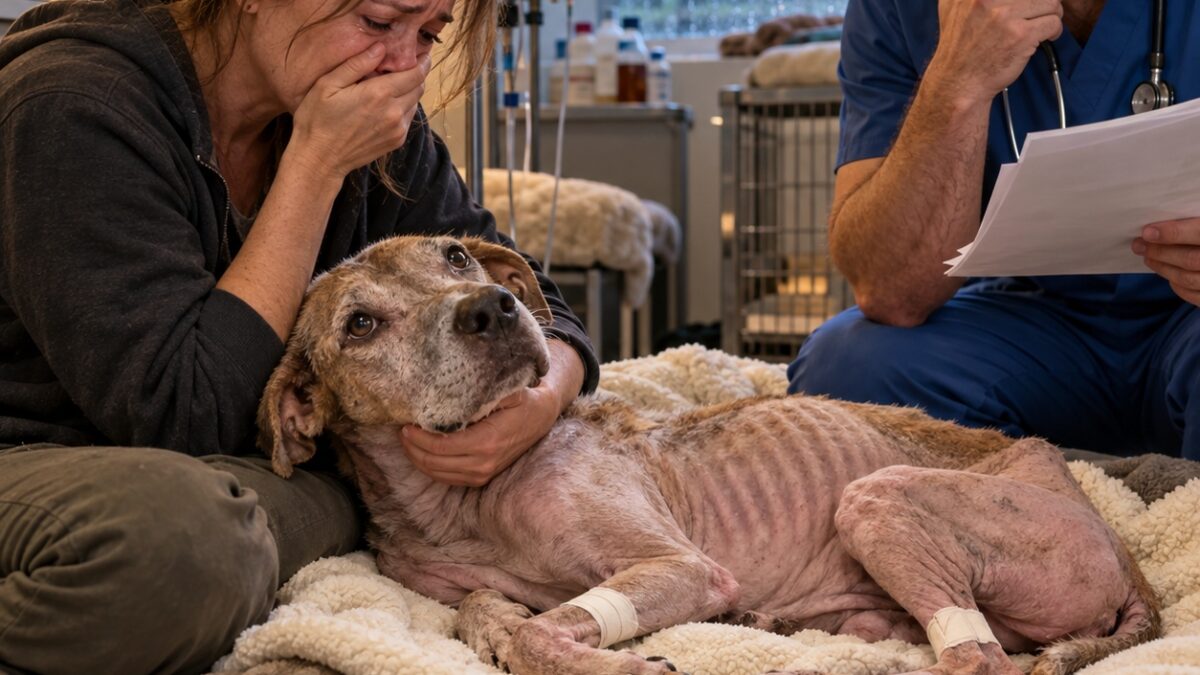
They Abandoned Chester Because He Was Sick—Then, Even After We Rescued Him, He Kept Getting Weaker
When we found Chester wandering the streets, painful wounds covered his nearly hairless body, his ribs showed through his skin, and his dirty nails had grown so long that even standing seemed exhausting.
We thought getting him off the street would be the turning point, but after warm baths, medicine, carefully prepared meals, and every bit of care we knew how to give, Chester continued getting weaker right in front of us.
Then his laboratory results came back, and suddenly we understood the cruelest part of his story: the illness that had likely gotten him abandoned was also the illness quietly killing him while we were desperately trying to save him.
I still remember the first time I saw Chester.
Not because he looked dramatic.
Because he looked defeated.
There is a difference.
A dog can be badly injured and still fight every hand that comes near him.
A frightened dog can bark, growl, run, hide, pull against a leash.
Chester did almost none of those things.
He stood in the street as if he had already learned there was nowhere useful left to go.
Much of his fur was gone.
The patches that remained were filthy and tangled.
His skin was exposed in broad areas, angry and damaged, with sores that looked painful even from several feet away.
His body had become so thin that the shape of his ribs was impossible to ignore.
Hip bones.
Spine.
Shoulders.
Everything looked too close to the surface.
His nails curled farther than they should have because nobody had cared for them in a long time.
But it was his expression that stopped me.
Chester did not look like a dog expecting rescue.
He looked like a dog who had stopped expecting anything.
I approached slowly.
“Hey, buddy.”
His head lifted.
Barely.
No bark.
No tail.
No attempt to come toward me.
He simply watched.
I crouched several feet away.
“It’s okay.”
Those words felt useless the moment they left my mouth.
What part of his life could possibly have taught him those words were true?
He was sick.
Hungry.
Covered in wounds.
Alone.
Whatever had happened before we found him had already been happening for far too long.
I held out food.
Chester sniffed the air.
For a moment, something moved behind his eyes.
Hunger.
He took one step.
Stopped.
Then another.
I expected him to grab the food.
Instead, he approached carefully and took it from my hand with a gentleness that almost hurt more than desperation would have.
He chewed slowly.
I gave him another piece.
Then another.
Only after several bites did his tail move.
Not a wag.
One uncertain shift.
As though his body remembered the motion but no longer trusted the feeling behind it.
I looked at the others with me.
“We’re taking him.”
Nobody argued.
The dog needed help long before we arrived.
That was obvious.
What we did not understand yet was how much help.
We rushed Chester to the veterinary clinic.
The examination revealed problem after problem.
Worms.
Severe malnutrition.
Damaged skin.
Infection and inflammation that had been allowed to progress.
His coat was so dirty and matted in places that we couldn’t properly evaluate everything beneath it until he was cleaned.
The veterinarian ran hands carefully along his body.
Chester stood quietly.
Too quietly.
“Good boy.”
I said.
His eyes moved toward me.
No excitement.
Just acknowledgment.
Blood was drawn.
Samples were taken.
Tests ordered.
The vet explained that with a dog in Chester’s condition, you don’t assume one visible problem explains everything.
Malnutrition could have multiple causes.
Skin damage could be secondary to something else.
The parasites needed treatment.
But there might be a deeper problem.
So we started with what we could do immediately.
Food.
Medication.
Cleaning.
Warmth.
Rest.
A chance.
Back at the rescue, I prepared a bath.
The water turned dirty almost instantly.
Chester stood with his head low while I worked.
I expected fear when water touched the damaged places on his skin.
He flinched.
But he didn’t resist.
I kept speaking.
“You’re okay.”
Pause.
“We’re almost done.”
Pause.
“No one’s going to hurt you.”
That last sentence caught in my throat.
Because somewhere along the way, someone had already hurt him in the simplest, most brutal way possible.
They had left.
PART2
After the bath, we carefully shaved away what remained of the badly matted fur.
Bit by bit, Chester’s real condition became even harder to look at.
Without dirt and tangled hair hiding the damage, his thinness was undeniable.
His skin told its own story.
Red.
Raw.
Wounded.
Places that needed treatment.
Places that must have bothered him for weeks, perhaps longer.
He should have been angry.
He should have mistrusted every hand.
Instead, Chester stood quietly while we worked.
I sat on the floor afterward with a pair of nail clippers.
His nails had grown painfully long.
I lifted one paw.
Chester tensed.
I waited.
“It’s just me.”
His eyes met mine.
Then his muscles slowly softened.
I clipped one nail.
Then another.
Chester watched.
No pulling.
No snapping.
No attempt to escape.
When I moved to the next paw, he simply let me take it.
That trust felt undeserved.
I remember thinking:
Who taught you to be this gentle?
And then immediately:
Who taught you that being gentle wouldn’t make someone stay?
We learned more about Chester’s past soon afterward.
He had not always been a street dog.
That information changed the way I looked at everything.
The wounds.
The nails.
The thin body.
The quiet.
He had belonged to someone.
He had known a home.
Then he got sick.
And instead of receiving treatment when he needed it most, Chester was abandoned.
There are facts that make you angry in a clean, uncomplicated way.
That was one.
A dog doesn’t stop needing his family because he becomes sick.
That is when he needs them most.
Illness is confusing to an animal.
They do not understand blood tests.
Diagnoses.
Medication.
They understand that their body feels wrong.
They understand pain.
Hunger.
Weakness.
And they understand who stays.
Someone Chester trusted had apparently decided his sickness made him disposable.
Maybe they were overwhelmed.
Maybe afraid of costs.
Maybe unwilling to handle medical care.
I didn’t know.
And because I didn’t know, I refused to invent excuses or villains beyond the one fact we had.
Chester had been abandoned because he was ill.
That was enough.
I looked at him sleeping beneath a clean blanket that evening.
His shaved body looked even smaller.
“You needed them.”
I whispered.
Chester opened one eye.
“They should have stayed.”
He lowered his head again.
I sat beside him.
“I’m staying now.”
A promise.
Dangerous word.
I intended to earn it.
We followed the veterinarian’s instructions carefully.
Medication at the right times.
Treatment for parasites.
Skin care.
Carefully prepared meals designed to help his underweight body recover without overwhelming it.
Fresh water.
Rest.
Monitoring.
I wrote down times because I didn’t trust myself to remember everything when tired.
Morning dose.
Meal.
Evening dose.
Skin treatment.
Check wounds.
Everything.
At first, I believed improvement was only a matter of time.
How could it not be?
He was off the street.
Warm.
Eating.
Receiving medicine.
Parasites being treated.
He had a bed.
Clean water.
People watching him.
This was the part of rescue stories where the dog was supposed to start getting stronger.
But Chester didn’t.
The first day, I told myself his body was exhausted.
The second, same.
The third, he looked weaker.
I adjusted nothing without talking to the veterinarian.
We followed instructions.
He ate, but not with the appetite I wanted.
Some days he seemed interested.
Other days he stared at the bowl.
I sat near him.
“Come on, Chester.”
He sniffed.
Took a little.
Stopped.
“Just a little more.”
Nothing.
I brought the bowl closer.
He licked once.
Then lay down.
That cold feeling started in my stomach.
Something was wrong.
Not the obvious things.
Something underneath.
We returned to the vet.
More examination.
More questions.
How much was he eating?
Drinking?
Urination?
Energy?
Changes?
We answered everything.
Waiting for the lab results became unbearable.
In the meantime, we kept caring for him.
Every day.
Every day Chester seemed to lose another tiny piece of strength.
That is one of the hardest forms of rescue.
Not finding an animal at the edge of death.
Watching an animal you already rescued move toward it anyway.
You keep thinking:
We got you out.
Why isn’t that enough?
We did the right things.
Why are you still getting worse?
Chester started sleeping more.
When he stood, there were moments of hesitation before his legs seemed ready to support him.
He walked a little.
Then lay down.
His eyes remained gentle.
That almost made it worse.
He never complained.
Never demanded.
I began wishing he would.
Bark at me.
Chew something.
Make trouble.
Anything that looked like excess energy.
Instead, he conserved every ounce.
One afternoon, I sat beside him while he slept.
My hand rested near his shoulder.
I could feel each breath.
In.
Out.
Too easy to count.
The body beneath my hand seemed impossibly light.
I whispered:
“Don’t you dare.”
His ear moved.
“I mean it.”
Nothing.
“You waited until we found you.”
My voice broke.
“So don’t leave now.”
That was unfair.
Chester did not owe me survival because I loved him.
I knew that.
But fear makes selfish people out of rescuers.
You start bargaining with creatures who never agreed to the terms.
Eat and I’ll stop worrying.
Stand and I’ll believe.
Make it through tonight and tomorrow will be better.
The next morning, Chester looked at me.
Still there.
But weaker.
I started wondering whether the illness had already progressed too far.
Whether we had found him days too late.
Maybe weeks.
The idea made me furious.
Not at him.
At time.
At whoever abandoned him.
At myself, irrationally, for not somehow finding him sooner when I hadn’t even known he existed.
One of the hardest thoughts was imagining Chester alone during the early days of the disease.
Before his coat became damaged.
Before the worms worsened.
Before his body became skeletal.
At some point, he must have felt the first signs.
More thirsty maybe.
More tired.
Hungry but losing weight.
Something wrong.
And instead of a familiar person bringing him to a veterinarian, he eventually found himself outside.
I refused to create exact scenes because I did not know them.
But the fact remained:
He had been ill.
Then abandoned.
He had needed medical care and companionship.
He received neither.
Now he was lying in front of me while we raced to understand what his body was trying to tell us.
“Lab should be back soon.”
We were told.
Soon.
Rescue teaches hatred of that word.
Soon can feel like forever when a body is fading.
I watched Chester drink water.
Then return to bed.
I wrote down how much he had eaten.
Barely enough.
Medication.
Done.
Skin.
Treated.
Everything done.
Everything not enough.
That night I barely slept.
Every small sound woke me.
I checked Chester repeatedly.
He was breathing.
Still.
I touched his side.
Warm.
“Sorry.”
I whispered when he opened his eyes.
He looked at me as though I was the inconvenience.
Good.
Be annoyed.
Anything.
The results finally came.
I remember the call.
I remember the veterinarian’s voice becoming more deliberate.
“There’s something important here.”
My hand tightened around the phone.
“What?”
“Chester is diabetic.”
I didn’t immediately understand what that meant in context.
“Diabetic?”
“Type 1 diabetes.”
The words rearranged the entire story.
The weight loss.
Weakness.
His body’s failure to improve despite food.
The decline.
The sense that something invisible was consuming him from inside.
His body wasn’t producing the insulin it needed.
Food could enter him, but his cells could not use glucose normally without proper insulin.
We had been feeding a starving body that, metabolically, was still unable to access what it needed.
I sat down.
“So this is why.”
“This is a major part of it.”
“Can we treat him?”
“Yes.”
The answer came without hesitation.
Not easy.
Treatable.
That difference felt like oxygen entering a sealed room.
“What do we do?”
The care plan changed.
Veterinary guidance.
Specialist input.
Insulin.
Diet.
Timing.
Monitoring.
His other medical problems didn’t disappear because we found the diabetes.
Skin still needed treatment.
Parasites still had to be addressed.
Nutrition still mattered.
But now we finally knew the enemy that had been hiding beneath all of it.
Type 1 diabetes.
For the first time since Chester started deteriorating, I felt we were no longer swinging in darkness.
The first insulin dose frightened me.
I’d cared for injured animals before.
Medication?
Yes.
Wounds?
Yes.
But insulin carries precision.
Timing matters.
Food matters.
Dose matters.
Monitoring matters.
Too little is a problem.
Too much can become dangerous.
I listened to every instruction.
Asked questions twice.
Then asked again.
The veterinarian showed us what to do.
Chester stood quietly.
Of course he did.
He had already tolerated baths, clipping, treatment, tests, medication.
One more needle.
I wanted to apologize.
Instead I said:
“This is supposed to help.”
Needle in.
Dose.
Done.
Chester looked at me.
I gave him affection.
No drama.
The world didn’t change immediately.
That’s important.
People hear diagnosis and treatment and imagine the turnaround begins that afternoon.
It didn’t.
His body had been sick for a long time.
Insulin was not magic.
It was something his body desperately needed, delivered consistently enough that healing could finally become possible.
So we waited again.
But this wait felt different.
Before diagnosis:
What are we missing?
After diagnosis:
Give it time.
The days were still frightening.
I watched Chester eat.
Recorded everything.
Medication.
Insulin.
Meals.
Behavior.
Energy.
Water.
The first few days, I searched for improvement so aggressively that I could have imagined it.
“Did he stand faster?”
“Maybe.”
“Did he eat more?”
“Maybe.”
“Was that a tail wag?”
Possibly.
I forced myself to stop measuring every hour.
The veterinarian told us to watch the overall trend.
So I watched.
Day five.
Day seven.
Day ten.
Some changes.
Small.
Chester seemed more interested in food.
Not dramatically.
Enough that I noticed.
One morning, I prepared his special meal.
Put it down.
Chester walked over.
No coaxing.
Sniffed.
Then ate.
And kept eating.
I sat very still.
I didn’t want to distract him.
Bite.
Another.
Another.
He finished more than he’d eaten in one sitting in days.
I looked at the empty part of the bowl.
Then at Chester.
“You’re hungry.”
He licked his mouth.
I laughed.
A ridiculous response.
Of course he was hungry.
But seeing appetite return felt like watching someone come back from a place I couldn’t reach.
Around fifteen days after starting insulin, the change became impossible to deny.
Chester began waking up before I approached him.
He looked interested when people entered.
He stood more readily.
His tail moved.
Actually wagged.
And then, one afternoon, I saw the first glimpse of the dog illness had buried.
A toy lay several feet away.
Chester noticed.
He stared.
For the longest time, he had saved his energy for survival.
No reason to play when standing itself was expensive.
But now he walked over.
Sniffed the toy.
Touched it with his nose.
Looked at me.
I rolled it lightly.
Chester followed.
Not running.
Walking.
But following.
He reached it.
Picked it up.
For half a second, I could not breathe.
There he was.
The puppy beneath the sickness.
Not magically cured.
Not fully recovered.
But present.
Chester dropped the toy.
I rolled it again.
This time his tail wagged before he followed.
I laughed.
“Okay.”
He brought it partway back.
“That’s cheating.”
Tail.
I nearly cried.
Actually, no.
I did cry.
Quietly.
Because fifteen days earlier I had sat beside his bed wondering whether he was disappearing in front of me.
Now he was stealing a toy from my hand.
That’s the thing about chronic illness.
Once managed properly, the return of ordinary behavior can feel enormous.
The insulin wasn’t curing Chester’s diabetes.
He would need management.
But control gave his body something it hadn’t had in too long:
Access to energy.
A chance to use the food he ate.
A chance to rebuild.
Recovery accelerated slowly.
His appetite improved.
Meals became something he looked forward to.
Timing remained important.
His diet was carefully managed.
Insulin stayed part of the routine.
Medication continued for the other issues.
Checkups.
Monitoring.
Nothing casual.
But now every effort produced visible results.
Weight began returning.
Not overnight.
Ounce by ounce.
His ribs became less sharp beneath the skin.
His hips filled out.
Muscles strengthened.
The wounds changed.
Redness decreased.
Skin began healing.
And then something I hadn’t allowed myself to expect too soon happened.
Fur.
Tiny new growth.
At first, barely visible.
Soft little patches where skin had been exposed.
I ran my hand gently over one area.
“Look at you.”
Chester leaned into the touch.
Weeks earlier, his body had looked ravaged.
Now the coat was beginning to reclaim him.
Hair returned in stages.
Uneven.
Then thicker.
The dirty matted remnants we’d shaved away were replaced by healthy fur.
Shiny.
Soft.
Real.
It felt almost like watching evidence of the past get covered—not erased, but overtaken by something new.
We kept photographs.
The early ones hurt to see.
Thin.
Wounded.
Nearly hairless.
Later photo:
Eyes brighter.
Later:
More weight.
Later:
Fur.
Later:
Toy in mouth.
If you’d put the first and most recent images beside each other without context, some people might have questioned whether it was the same dog.
It was.
Same Chester.
That mattered.
The healthy dog was not a different animal.
He had been there all along under disease.
Illness had taken his weight.
Coat.
Energy.
Confidence.
It had not erased him.
Treatment gave him room to return.
His personality grew louder with strength.
The first time he tried to run, I panicked.
“Chester!”
He did three fast steps.
Stopped.
Looked at me.
I pointed.
“No.”
He wagged.
“You nearly died.”
No remorse.
“You should have perspective.”
Chester picked up a toy.
Healing had made him disrespectful.
Excellent.
Soon walking wasn’t enough.
He wanted to explore.
Sniff.
Follow.
Play.
He started keeping everyone busy.
Exactly the kind of problem we’d dreamed of having.
“Where’s Chester?”
Running toward something.
“What does Chester have?”
Something he shouldn’t.
“Why is Chester wet?”
We would eventually discover he loved water.
That came later.
But the first signs of confidence were everywhere.
He stopped moving like a dog apologizing for taking up space.
He stretched.
Occupied beds.
Followed people.
Asked for affection.
When food preparation began, he knew.
That became important because diabetes required discipline.
Meals weren’t random.
Treats couldn’t be thoughtless.
Insulin wasn’t optional.
Love for a diabetic dog has a clock attached.
You learn the schedule.
Plan around it.
Respect it.
At first, that sounded intimidating.
Then it became routine.
Prepare.
Feed.
Insulin as prescribed.
Observe.
Live.
Repeat.
Diabetes was a permanent part of Chester’s life.
It did not need to become his entire identity.
That distinction shaped everything.
Chester was not “the diabetic dog” to us.
He was Chester.
Who happened to need insulin.
Same as some animals need other medication.
You build treatment into the day, then let the dog be a dog.
That’s the goal.
One of the happiest milestones happened outside.
Chester had enough strength now that we could safely give him more activity.
He stepped onto grass.
Really stepped.
Not weak, careful survival walking.
Confident.
Nose down.
Tail up.
He smelled everything.
Every blade.
Every bush.
Every impossible scent humans cannot appreciate.
Then he ran.
I mean truly ran.
A short distance at first.
But fast.
Legs stretching.
Body working.
Fur moving in the air.
I watched him and saw the street dog from the first day at the same time.
That is what rescue does to memory.
You see two images layered.
Chester then:
Bare skin.
Wounds.
Ribs.
Long nails.
No energy.
Chester now:
Running.
I felt the ache in my throat.
“Go.”
He did.
Turned.
Ran back.
Passed me.
“Apparently not to me.”
He looped again.
Joy doesn’t always look sentimental.
Sometimes it looks like a formerly dying dog refusing to come when called because he’s too busy running.
I accepted that.
Soon we discovered swimming.
Chester loved it.
The first time he went into water, I watched closely.
No assumption.
Some dogs hate it.
Chester entered with the confidence of someone who believed every body of water had been placed specifically for his entertainment.
Paws.
Splash.
Then swim.
I laughed until my face hurt.
He came out soaked.
Shook water over everyone.
Ran.
Back in.
This dog.
This same dog.
The one who barely had strength to stand for nail trimming.
Swimming.
The comparison was almost unbearable.
I often thought about whoever abandoned him.
Not obsessively.
I had work to do.
But moments like that brought the question back.
If they’d gotten him diagnosed.
If they’d stayed.
If he’d received insulin earlier.
How much suffering could have been avoided?
We’ll never know.
Maybe they didn’t understand.
Maybe they knew and couldn’t handle it.
The source tells us he was abandoned because he was sick.
That is the fact I keep.
I don’t need to invent the conversation.
The fact alone is painful enough.
At the moment Chester needed treatment and security, he lost his home.
Yet now, watching him swim, I realized something else.
His abandonment was part of his past.
It did not need to remain the central event of his future.
That became important.
Rescue stories can accidentally trap animals inside the worst thing that happened to them.
Poor Chester.
Abandoned Chester.
Sick Chester.
No.
Eventually:
Chester.
The dog who loves swimming.
The dog who eats on schedule.
The dog who plays too much.
The dog whose coat is shiny.
The dog who follows people.
That’s healing too.
When new people met him, they often couldn’t believe the early photographs.
“This was him?”
“Yes.”
“He looks completely different.”
“He feels different too.”
His confidence had changed.
At first, Chester submitted to handling almost passively.
I once thought that was trust.
Partly.
Later, I understood some of it might have been weakness.
He didn’t resist because he didn’t have energy.
Healthy Chester had opinions.
Nail trimming?
Negotiation.
Bath?
Depends.
Medication?
Where’s the reward?
I loved it.
The return of boundaries is good.
A dog comfortable enough to say, “I would prefer not to,” is often safer emotionally than one too shut down to react.
We worked with him patiently.
Treatment did not become punishment.
He learned the insulin routine.
The people caring for him learned what made it easiest.
Calm.
Predictable.
No drama.
Then move on with the day.
Chester became incredibly resilient around medical handling because the handling was paired with consistency.
Nobody disappeared afterward.
That may have mattered more than we knew.
Touch.
Medication.
Then food.
Affection.
Play.
Sleep.
Next day, same people.
Repeat.
The opposite of abandonment.
His checkups improved.
Diabetes controlled.
Skin healing.
Weight increasing.
Parasites resolved with treatment.
The veterinarian who had seen him at his worst smiled differently now.
“You’ve been busy.”
Chester wagged.
The vet examined the coat.
Looked at body condition.
Asked about appetite and insulin routine.
Good.
Good.
Good.
Those words had once felt impossible.
I stood beside the table.
Thought about our first exam.
Every answer had been bad.
Worms.
Wounds.
Malnutrition.
Unknown underlying illness.
Now:
Controlled.
Healing.
Improving.
The veterinarian looked at me.
“He’s doing really well.”
I let out a breath I had been holding for weeks.
I knew.
But hearing it mattered.
Some fear lingers after crisis.
You see the dog playing and part of you still expects collapse.
You need enough good days to convince your own nervous system that disaster is no longer standing at the door.
Chester accumulated good days.
Then good weeks.
I stopped checking his breathing every time he slept too long.
Mostly.
He stopped looking fragile.
Completely.
The coat came back thick and shiny.
If sunlight hit it, you could see how far he had come.
We took another photo.
Chester standing proudly.
Head high.
Healthy body.
The comparison with the first image went around our rescue group.
People cried.
Not because he looked sad.
Because he didn’t.
Success can hurt when you remember what it replaced.
I touched the screen where early Chester stood.
Then looked at real Chester trying to convince someone to give him something.
“You have no idea.”
I said.
Tail.
“Good.”
Maybe animals are fortunate not to narrate recovery the way humans do.
Chester didn’t stand in front of mirrors remembering bald patches.
He didn’t measure his weight gain emotionally.
He didn’t think:
I used to be dying.
He lived in what came next.
Food.
Insulin.
Play.
Water.
People.
We carried the memory for him.
That’s fair.
Someone should remember what it cost.
Eventually, the conversation we knew would come began.
Adoption.
I had mixed feelings.
Of course.
We wanted him in a permanent loving family.
Also:
Diabetes.
Chester would need insulin.
Diet management.
Veterinary monitoring.
Someone had to understand that loving him meant a long-term medical commitment.
Not just taking home the cute recovered dog in the final photograph.
The illness hadn’t vanished.
It was controlled.
Huge difference.
We needed people willing to live inside that reality.
The first questions mattered.
Can you maintain his schedule?
Can you give insulin?
Are you prepared for regular veterinary care?
Do you understand changes in appetite or behavior may matter?
Will you follow medical instructions rather than guessing?
Anyone can say:
“I love dogs.”
Chester needed:
“I will give the injection when it’s due even if I’m tired.”
That’s love too.
Sometimes more important than affection.
We were careful.
Very careful.
He had already been abandoned once because he was sick.
I could not tolerate the idea of someone taking him because he looked healthy, then changing their mind when diabetes became inconvenient.
That fear sat underneath every adoption conversation.
Chester deserved a family who understood:
The reason he looks this good is because treatment works.
You don’t stop treatment because he looks good.
You continue because it keeps him good.
Eventually, that family appeared.
Not perfect fantasy people.
Real people willing to take responsibility.
A mom.
Brothers.
A household with enough love—and enough understanding—to make Chester part of daily life rather than a medical project.
They met him.
Chester did what healthy Chester did.
Investigated everyone.
Accepted attention.
Moved around with confidence.
No tragic performance.
Good.
His history was discussed.
Diabetes.
Insulin.
Meals.
Checkups.
Everything.
They listened.
Asked questions.
The right kinds.
That reassured me.
One question nearly made me emotional:
“What does he like to do?”
Not:
How hard is his illness?
Not:
How much will he cost?
Those questions matter too.
But they asked who Chester was.
“Play.”
I said.
“Run.”
“Swim.”
Someone smiled.
“He swims?”
“Oh, unfortunately, yes.”
Laughter.
Good.
They were meeting the dog beyond the diagnosis.
That was what I wanted.
The adoption did not happen recklessly.
We made sure the family understood his medical needs.
There was guidance.
Information.
The daily routine.
What to watch.
How important consistency was.
Then came the day.
I knew it would hurt.
No matter how many rescue animals you see leave, some departures cut differently.
Chester had nearly died after we rescued him.
We had spent days afraid care wasn’t enough.
Then we found the diabetes.
Insulin.
Fifteen days.
First returning energy.
Fur.
Running.
Swimming.
It all sat inside him as he stood ready to leave.
I crouched.
Chester came over.
I ran my hand through the coat that had once barely existed.
Thick.
Healthy.
“You look ridiculous.”
He wagged.
“I liked you bald.”
Lie.
“You’re very high maintenance.”
Wag.
“Don’t embarrass us.”
More wagging.
I looked at his new family.
“Take care of him.”
They promised.
I believed them enough to let go.
That is the hardest threshold in rescue.
Not saving.
Trusting someone else to continue.
Chester walked away with them.
No looking back dramatically.
No crying.
Honestly, good.
A confident dog doesn’t need to perform gratitude.
He went toward his next life.
I watched until they left.
Then cried.
Obviously.
The first update came sooner than I expected.
Chester playing.
Then another.
With his new mom.
Then his brothers.
He fit.
That’s the word.
Not merely tolerated.
Not accommodated.
Fit.
The insulin routine became part of family life.
Meals managed.
Checkups kept.
Chester remained Chester.
The medical needs existed around the relationship rather than replacing it.
Then came the swimming photos.
Of course.
Chester in water.
Happy.
Confident.
Wet.
Apparently his family had learned the truth quickly:
If there is water, Chester believes access is a constitutional right.
I laughed.
One picture showed him after swimming, soaked and proud.
I remembered the bath from rescue day.
Back then, water ran over wounded skin while Chester stood almost motionless.
Now he chose water for joy.
Same element.
Different dog.
Not exactly.
Same dog.
Different life.
That’s more important.
He had not become someone else.
Safety and treatment revealed who illness had hidden.
Later, we learned about his relationship with the human baby in the house.
That image did something to me.
Chester stayed close.
Gentle.
Present.
The dog who had once been left when he was vulnerable now choosing to remain near someone even more vulnerable.
I didn’t turn it into a mystical story.
Dogs can simply bond.
But the contrast was beautiful.
Someone had failed Chester when he was dependent.
Chester did not respond by becoming incapable of attachment.
He remained close.
He remained loving.
He remained available.
That says something about animals I never stop admiring.
They can carry history without making cruelty their only language.
He had every reason to distrust people.
Instead, once healthy and safe, Chester chose relationship.
His family sent photos.
Chester near the baby.
Watching.
Resting nearby.
Playing with his mom and brothers.
Swimming.
Sleeping.
Eating.
Living.
Every photograph was ordinary.
That is the point.
Rescue should end in ordinary.
No emergency music.
No veterinary table.
No one checking whether he survives the night.
Just family.
But before that ordinary ending, I want to remember the part people skip.
The middle.
The days when we thought we had rescued him and he still got worse.
Those days changed me more than the happy ones.
If Chester had improved immediately after treatment for worms and skin problems, we might have told a simpler story.
Neglected dog rescued.
Care works.
Happy ending.
But Chester’s body forced us to keep asking.
Why isn’t he better?
What are we missing?
That question saved him.
Not giving up when the obvious treatment failed.
Going back.
Testing.
Looking beneath the visible wounds.
The most dangerous illness he carried was not the easiest one to see.
His skin looked terrible.
The diabetes was invisible.
That’s an important truth in animal rescue.
Visible suffering attracts attention.
Invisible disease can keep doing damage after the obvious things are treated.
You need veterinary medicine.
Diagnostics.
Patience.
Observation.
Love alone is not enough.
I love Chester deeply.
Love could not replace insulin.
That’s important.
We often sentimentalize rescue.
Warm bed.
Good food.
Cuddles.
All valuable.
But some animals need medication every day.
Surgery.
Special diets.
Blood tests.
Specialists.
Love means doing those things too.
Chester’s recovery required affection and science.
One without the other might not have been enough.
The veterinarian gave us the diagnosis.
Insulin changed the trajectory.
Careful diet supported it.
Monitoring kept it safe.
Then Chester’s body responded.
That’s the real rescue.
Not one heroic act.
A system of small correct actions repeated.
Medication on time.
Meal prepared correctly.
Injection.
Check.
Next day.
Again.
People sometimes praised us:
“You saved him.”
I always thought:
Chester was saved at 7 a.m.
Then again at dinner.
Then next morning.
Chronic illness makes rescue recurring.
There is no single finish line.
Management is the life.
That’s okay.
It doesn’t make the life lesser.
Chester proved that.
Diabetes did not stop him from running.
Swimming.
Playing.
Bonding.
Being annoying.
It became something the family handled so he could do all the other things.
That’s successful chronic disease care.
The illness remains.
The dog gets bigger than the illness.
I think about the word abandoned too.
It carries anger.
Rightfully.
But if we let that word dominate Chester’s entire story, the person who abandoned him gets too much power.
They are not the ending.
They are not even the most important part anymore.
The important part is everyone who stayed after.
The person who found him.
The veterinary team.
The people who gave medicine.
The person who prepared food.
The hands that shaved damaged fur.
The hand clipping nails while Chester stood quietly.
The people giving insulin.
The specialists.
The family who accepted the lifelong responsibility.
Abandonment was one act.
Staying became hundreds.
That’s how you overcome it.
Not by pretending it didn’t happen.
By outnumbering it.
One abandonment.
Then:
A thousand returns.
A thousand meals.
A thousand injections given on time.
A thousand nights indoors.
That is how trust wins statistically.
Chester’s coat eventually became almost symbolic to people who knew him.
They would touch his fur and say:
“I can’t believe this is the same dog.”
I understood.
But sometimes I wished they’d look at his eyes instead.
Those changed even more.
First day:
Quiet.
Tired.
Almost resigned.
Later:
Bright.
Mischievous.
Expectant.
Confidence transforms posture.
A healthy Chester walked into spaces as though he belonged there.
That was perhaps the most satisfying change.
Because abandonment teaches the opposite.
You’re unwanted.
You’re inconvenient.
You’re disposable.
His new family taught him:
You belong.
Your medicine belongs in our schedule.
Your food belongs in our kitchen.
Your wet paws belong on our floors—within reason.
Your body, even with a chronic disease, belongs in this family.
That’s the cure abandonment needs.
Not medical cure.
Relational cure.
Consistency.
Chester’s diabetes would still be there tomorrow.
So would his family.
That’s the ending.
I remember trimming those nails.
His paw in my hand.
He was too weak to resist.
I had thought:
What a sweet dog.
He is sweet.
But now I know there was another layer.
His body had no extra energy for protest.
Months later, I saw a video of his family trying to wipe his feet after swimming.
Chester was perfectly capable of expressing opinions.
Twisting.
Moving.
Playful resistance.
I laughed until I cried.
“There he is.”
Not because difficult behavior is always good.
Because this was life force.
He had enough energy to be inconvenient.
Take the victory.
One of his brothers chased him.
Chester ran.
The dog who once couldn’t maintain strength now required other people to keep up.
Poetic justice.
His mom learned his routines.
The house adjusted.
That’s another thing I love about good adoption.
The animal does not simply squeeze into an unchanged human life.
The family changes.
Meal times become Chester’s times.
Medical supplies get a place.
Vet appointments enter calendar.
Swimming opportunities become part of weekends.
A dog’s needs become woven into household rhythm.
Belonging is structural.
Not just emotional.
People say:
“We love him.”
Great.
Where is his insulin stored?
Who gives it when someone travels?
What happens during schedule changes?
Good families answer.
Love has backup plans.
Especially with chronic disease.
Chester had those.
That let me breathe.
Years of neglect can make rescuers controlling.
You fear no one else will do it right.
Then a good adopter proves you wrong.
Wonderful.
Let them.
His family sent updates without us asking constantly.
That helped.
Chester eating.
Chester playing.
Chester sleeping near the baby.
Chester swimming.
The medical updates were good too.
Diabetes controlled.
Checks ongoing.
Body condition healthy.
But the lifestyle updates became more important emotionally.
Because they showed the point of control.
We don’t manage diabetes so a number looks good.
We manage it so Chester gets to play with his brothers.
Swim.
Grow older.
Stay near the baby.
Eat dinner.
Sleep.
Medicine exists in service of life.
That perspective matters.
One photo showed Chester stretched out after a long day.
Eyes closed.
Fur thick.
Body relaxed.
No visible wounds.
I stared at his paws.
Nails healthy.
Such a small detail.
The first day, they had told us how long basic care had been absent.
Now trim.
Normal.
Maintained.
Nobody would look at those nails and cry.
Good.
Maintenance should become boring.
A neglected need transformed into routine.
Same with fur.
Same with medication.
Boring is one of my favorite words in rescue.
Boring meal.
Boring checkup.
Boring nap.
No crisis.
Yes.
Give me boring.
Chester had enough drama.
There were still moments that reminded his family he had a medical condition.
Diabetes requires respect.
Schedules.
Monitoring.
Professional advice.
Any unusual change needs attention.
But those responsibilities did not diminish affection.
Often they intensified it.
When you care for a chronically ill animal, you become intimately aware of small changes.
Is he eating normally?
Is energy normal?
Behavior?
You learn him.
Not obsessively, ideally.
Attentively.
Chester was seen.
That’s the opposite of his abandonment.
Before:
Too sick.
Leave.
After:
Sick.
Notice more.
Huge difference.
I sometimes think about the moment his original people decided to let him go.
Again, I do not know the scene.
I won’t invent dialogue.
Maybe they opened a door.
Maybe drove somewhere.
Maybe Chester simply ended up outside after being discarded.
What matters is what he likely learned from outcome.
When body failed, home vanished.
That is devastating.
His new family rewrote that lesson daily.
When body needs insulin:
Family comes closer.
When checkup is due:
Family drives with him.
When meals require management:
Family prepares them.
Illness no longer predicts abandonment.
It predicts care.
If dogs could understand concepts, that’s the one I’d want Chester to know.
Your diabetes is not the reason you’ll be left.
It is one of the reasons we pay attention.
One night, after receiving a photo of Chester near the baby, I thought about vulnerability.
We often admire dogs for guarding children.
I wasn’t interested in calling Chester a protector without evidence.
What moved me was simpler.
Proximity.
He stayed close.
Maybe because he liked the warmth.
The family.
The sounds.
The bond.
Enough.
A dog once left alone during illness now spending his days embedded in a family.
That’s sufficient poetry.
No need to exaggerate.
He had people.
Brothers.
Mom.
Baby.
Home.
The plural matters.
Not one person who might disappear.
A family system.
Support.
His life had redundancy now.
A beautiful word from engineering applied to love.
If one person is busy, someone else is there.
Care doesn’t collapse because one human has a bad day.
That’s safety.
I think Chester knew it in the only way dogs know anything.
Through pattern.
Every morning.
Someone.
Every meal.
Someone.
Every injection.
Someone.
Every night.
Home.
The first fifteen days after insulin remain the hinge in my memory.
Before them, uncertainty.
After them, evidence.
People sometimes say:
“He turned around in fifteen days.”
Not exactly.
His appetite and energy began showing meaningful improvement around then.
Recovery continued for weeks.
Weight.
Skin.
Fur.
Strength.
Diabetes control.
Long process.
That’s important.
A visible improvement is not a reason to stop care.
It’s a reason to continue what is working.
Chester kept getting insulin.
Diet.
Medication.
Checkups.
And his body kept answering.
The coat thickened.
The wounds closed.
The dog emerged.
That phrase—“the dog emerged”—sounds poetic.
It felt literal.
Illness had reduced Chester to needs.
Feed me.
Treat me.
Keep me alive.
Health expanded him into wants.
I want that toy.
I want to go outside.
I want to swim.
I want attention.
I want whatever you’re eating even though it’s not in my diet.
Wanting is a luxury.
Healthy animals have many wants.
Sick animals can become trapped in needs.
Chester’s recovery was the return of desire.
That’s beautiful.
One day, during the later stage of recovery, he barked because someone stopped playing.
Everyone laughed.
I remember thinking:
At the beginning, I would’ve paid anything to hear that bark.
Now:
“Chester, enough.”
That’s how healing should go.
The miracle becomes annoying.
Normality restored.
I also learned something about malnutrition.
Weight gain is emotionally loaded when you’ve seen ribs.
Every small increase feels like proof.
But we followed veterinary guidance rather than overfeeding from sympathy.
That’s essential.
A starving-looking animal makes you want to give everything at once.
Care sometimes means restraint.
The correct food.
Correct amounts.
Medical plan.
Not emotional feeding.
Chester’s body needed structured rebuilding.
The same with exercise.
Once energy returned, he wanted more than recovery should immediately allow.
We let his strength build properly.
Then running.
Then swimming.
Patience protects success.
Rescue has many moments where love says:
Not yet.
You want to run?
Soon.
You want unlimited food?
No.
You need this injection?
Yes.
Love is not only giving what feels good.
It’s doing what supports life.
Chester’s adopters understood that.
That is why the ending worked.
If the family had treated his diabetes like an inconvenience, the ending would not be satisfying.
Instead, the disease became manageable because the humans became reliable.
Reliability may be the central theme of Chester’s life.
His first people weren’t there when he needed them.
Then we were.
Then his family was.
At some point, a dog stops waiting for abandonment because it fails to arrive often enough.
I hope Chester reached that point.
The updates suggest he did.
He plays.
Sleeps.
Swims.
Bonds.
Those are behaviors of an animal living in the present.
One photograph remains my favorite.
Not necessarily the prettiest.
Chester standing wet after swimming.
Fur plastered in ridiculous directions.
Mouth open.
Body healthy.
Energy radiating from him.
If you’d told me on the first day that this wounded dog would one day require a towel because he’d voluntarily thrown himself into water for fun, I might not have believed you.
But there he was.
Wet.
Alive.
Loved.
Diabetic.
All true.
The word diabetic does not cancel the others.
That’s another lesson.
We often reduce sick animals to diagnosis.
Cancer dog.
Diabetic dog.
Blind cat.
Three-legged dog.
Medical labels are useful for treatment.
They are terrible as whole identities.
Chester has Type 1 diabetes.
Chester is also playful.
Chester swims.
Chester loves his family.
Chester stays close to the baby.
Chester has brothers.
Chester is more than the disease someone once abandoned him for.
That is probably the most satisfying part of the ending.
The thing that made him unwanted in one home became simply something managed with love in another.
Same illness.
Different humans.
That’s powerful.
Nothing about Chester had to change to become worthy.
The circumstances around him changed.
Treatment.
Care.
Commitment.
He was worthy when he was wounded on the street.
He was worthy while getting weaker.
Worthy before the lab result.
Worthy before insulin worked.
Worth is not retroactive based on recovery.
I remind myself of that because rescue success stories can accidentally imply:
Look, he became beautiful, therefore saving him was worth it.
No.
He was worth helping when he looked terrible.
The shiny fur is outcome, not justification.
Even if Chester had remained scarred, he deserved care.
Even if swimming never happened.
Even if medical management had remained more difficult.
Worth wasn’t earned through becoming photogenic.
That’s important.
He survived and flourished.
Wonderful.
But compassion came first.
I think back to the nail trim often.
Before diagnosis.
Before insulin.
Before energy.
Chester quiet.
Paw in hand.
I saw trust.
Now I see something sadder too.
He may have been too exhausted to resist.
Both can be true.
But he watched me.
Stayed.
Later, as his strength returned, trust became more active.
He sought people.
Played.
Followed.
Leaned.
That’s the trust I celebrate more.
Not passive tolerance.
Choice.
He chose human company after humans had failed him.
That takes something remarkable inside an animal.
We did not create that capacity.
We were lucky he still had it.
His new family received it.
I hope they know how valuable that is.
From what I’ve seen, they do.
There were questions from people about whether caring for a diabetic dog is “too much.”
I understand the concern.
It’s responsibility.
It can affect schedule.
Costs.
Planning.
Not every home is equipped.
That’s why matching matters.
But “too much” depends on willingness and resources.
For Chester’s family, it became normal.
That’s what love often does with repeated care.
What initially feels complicated becomes Tuesday.
Prepare meal.
Insulin.
Done.
Go live.
People manage chronic conditions in animals every day.
With veterinary guidance, routines become familiar.
Chester’s life did not need pity.
It needed competence.
He got it.
That allowed love to be fun again.
Swims.
Play.
Brothers.
Baby.
Those things exist because someone handles the boring medical part correctly.
I respect that kind of love deeply.
The caregiver who knows the dose.
The meal timing.
The warning signs.
Who doesn’t need applause.
Just does it.
Those people finish rescues.
Maybe there is no true “finish” with chronic illness.
Still, they carry it forward.
One of Chester’s later checkups showed what we already saw.
Healthy weight.
Skin recovered.
Coat thick.
Diabetes controlled.
I imagined the first veterinarian comparing records.
Same name.
Different body.
The medical chart held the bridge.
First:
Severely malnourished.
Wounds.
Parasites.
Skin damage.
Then:
Type 1 diabetes.
Treatment.
Then:
Controlled.
Improved.
Stable.
Charts can be beautiful when they move in that direction.
Behind every line is a human doing something every day.
And a dog continuing.
I stopped thinking of Chester as lucky.
Luck played a role in being found.
Sure.
But recovery was not luck.
Diagnosis.
Veterinary skill.
Adherence.
Medication.
Nutrition.
Monitoring.
Adoption matching.
Work.
Calling it luck can erase that.
He was fortunate to be found.
Then people worked.
His body worked.
That’s better.
Sometimes the most painful question is:
Why was he abandoned before someone tried this?
No answer.
Maybe his previous people never reached a diagnosis.
Maybe they did.
The source only supports that illness was the reason he was abandoned.
I stay there.
Anything else risks turning anger into fiction.
Truth is enough.
A sick dog was left.
A rescue found him.
A hidden disease was diagnosed.
Treatment worked.
A family stayed.
That is already a complete moral contrast without embellishment.
Leave versus stay.
That is Chester’s story.
Who do you become when care becomes inconvenient?
Someone left.
Others stayed.
The ending tells you which choice mattered.
I imagine Chester waking in his new home.
Not literally know his thoughts.
But I know the observable things.
He has people.
He plays.
He swims.
He stays near the baby.
He receives his care.
His days contain activity instead of street survival.
His body no longer announces neglect.
Fur covers skin that was once wounded.
Muscle covers ribs that once showed.
Nails maintained.
Food measured.
Insulin given.
Every part of his appearance now carries evidence of repeated attention.
That’s what a cared-for animal looks like.
Not perfection.
Maintenance.
Love made visible through upkeep.
I sometimes wish the person who abandoned Chester could see him.
Not for revenge.
Not to shame them publicly.
Just because the contrast would be undeniable.
This was not an untreatable “bad dog.”
Not hopeless.
Not ruined.
He was sick.
He needed medicine.
That’s all.
The illness that made his body fall apart could be managed.
And once managed, Chester did what animals often do when given the chance.
He lived.
Fully.
Maybe that is the most painful thought.
How many animals are labeled difficult, weak, dying, unclean, when what they really need is diagnosis?
I cannot generalize every case.
But Chester reminds me to ask.
What are we missing?
What looks like neglect but also contains disease?
What looks like poor appetite but may be metabolic?
Veterinary care matters.
Do not guess.
Test.
Diagnose.
Treat.
Chester is alive in his new life because someone kept asking after the first explanation wasn’t enough.
That’s what I want people to take from his middle.
Not only compassion.
Persistence.
If treatment isn’t working, tell the veterinarian.
Reassess.
The body may be communicating.
Chester’s was.
We finally understood.
Type 1 diabetes.
Once insulin began, the mystery became management.
I will never forget watching him eat with real appetite after those frightening days.
At first, every bite felt like a promise.
Later, meals became normal.
Now I hope nobody watches every bite emotionally.
I hope his family talks while he eats.
The baby makes noise.
His brothers move around.
Chester finishes.
Insulin routine.
Then someone throws a toy.
That’s the life he deserves.
Not to remain a symbol.
To be integrated.
Family noise.
Wet towels.
Schedules.
Ordinary love.
One of the final updates described him as keeping everyone busy.
I smiled at that phrase.
Keeping everyone busy.
The dog who once had almost no energy now has excess.
Perfect.
That’s the revenge on illness.
Not anger.
Energy.
Run until humans complain.
Swim until someone brings a towel.
Play until brothers tire.
Stay near the baby.
Eat.
Sleep.
Wake.
Repeat.
A chronic illness well managed is not absence of illness.
It is presence of life.
Chester has that.
I think about those first days when he kept weakening and how close I came to despair.
I had secretly started preparing myself for loss.
Not because a veterinarian told me there was no hope.
Because my eyes were telling me love wasn’t working.
That was my mistake.
Love was working.
It was keeping him alive long enough to reach the correct diagnosis.
Warmth.
Food.
Parasite treatment.
Skin care.
Observation.
Those weren’t failures because they didn’t cure diabetes.
They were the support that held Chester until insulin entered the picture.
Sometimes care doesn’t solve the final problem.
It buys time to discover it.
That matters.
If we’d said:
“He isn’t improving. Nothing can be done.”
Too soon.
Instead:
Why?
That question.
Again.
Why?
Then lab.
Then insulin.
Then Chester.
Medical uncertainty is terrifying.
But uncertainty is not the same as hopelessness.
Chester taught me that.
His family probably does not think about all of this every day.
Good.
They shouldn’t.
Chester doesn’t need his past recited over breakfast.
Let him be present.
But I remember.
Rescuers remember so adopters don’t have to carry the whole weight.
We remember the ribs.
The wounds.
The shaved coat.
The long nails.
The phone call.
Type 1 diabetes.
The first injection.
Fifteen days.
The toy.
The first stronger steps.
Fur.
Run.
Water.
Family.
The line from street to home.
And when people ask why rescue work is worth the hard days, Chester is one answer.
Not because every story ends this way.
They don’t.
That’s why these endings matter.
Sometimes the dog gets the diagnosis.
Sometimes treatment works.
Sometimes a family says:
Yes, we understand the insulin.
We still want him.
Sometimes the animal who was thrown away because his body became complicated ends up in a house where complexity does not frighten anyone away.
That is a satisfying ending because it repairs the exact wound that began the story.
Not the diabetes.
The abandonment.
The diabetes is managed medically.
Abandonment is healed through staying.
Every dose given says:
Still here.
Every scheduled meal:
Still here.
Every vet appointment:
Still here.
Every towel after swimming:
Still here.
Every night:
Still here.
That is what Chester needed most when he got sick the first time.
Someone to remain.
He has that now.
Sometimes I look at his first photograph.
I don’t do it often.
Chester standing with damaged skin exposed.
Thin.
Tired.
Then I look at a new one.
Healthy coat.
Bright face.
Water somewhere nearby.
Family.
The visual transformation is obvious.
The invisible transformation matters more.
The first Chester had no reason to assume a human would stay once care became difficult.
The current Chester lives inside proof that humans can.
That’s everything.
I don’t know whether dogs form that thought.
Probably not in words.
But bodies learn patterns.
His body knows who feeds him.
Who handles the insulin.
Who plays.
Who returns.
Who is there when he wakes.
Trust is stored in repetition.
Chester gets repetition.
One day his family will probably forget how unusual their routine seemed at first.
Giving insulin will feel ordinary.
That’s good.
When special care becomes ordinary, the animal is fully woven into family.
No heroics.
No speeches.
Just:
It’s time for Chester.
Do it.
Then continue.
That is permanent love in practical form.
If Chester could understand his story as humans tell it, I wouldn’t want him to hear the part about being abandoned most loudly.
I’d want him to hear the end.
You were sick.
It wasn’t your fault.
Your body needed something.
People eventually figured it out.
You responded.
You grew strong.
You found a home.
They learned your routine.
You swim.
You play.
There is a baby who knows you as part of the house.
You are not temporary.
That’s the message.
Not:
Look what terrible people did.
But:
Look how thoroughly the ending contradicted them.
You were not too sick to love.
You were not too complicated to keep.
You were not too much work.
You needed the right care.
The right people.
That’s all.
There is something almost cruel about how simple the treatment sounds after diagnosis.
Insulin.
Special diet.
Veterinary management.
Of course, implementing it responsibly is ongoing work.
But compared with Chester wandering the street and wasting away, the answer feels heartbreakingly tangible.
There was something that could be done.
He needed somebody willing to do it.
Eventually, he found those people.
First us.
Then family.
That is why I don’t call Chester’s ending a miracle.
Miracle can imply nobody knows how it happened.
We know quite a lot.
Medicine.
Nutrition.
Persistence.
Care.
Time.
The extraordinary part is not magic.
It’s that enough people chose to continue.
That’s more hopeful because it can be repeated.
Someone sees a sick dog.
Gets veterinary care.
Follows instructions.
Doesn’t quit when improvement isn’t immediate.
Tests reveal disease.
Treatment adjusts.
Responsible family adopts.
That’s a chain humans can build intentionally.
Chester was the beneficiary.
That makes his story useful, not only emotional.
But yes.
It is emotional.
I can’t tell it without remembering how quiet he was during that nail trim.
The paw.
The clippers.
His tired eyes.
I thought I was helping with something small.
I didn’t know there was a metabolic disease inside him.
I didn’t know we were still days away from the answer.
I only knew this dog had been neglected long enough.
So I held his paw.
Clip.
Another.
Another.
Maybe rescue begins like that.
You fix the thing you can reach.
Then keep looking.
Bath.
Nails.
Food.
Vet.
Tests.
Insulin.
Home.
No single act looks like the whole salvation.
Together, they become it.
Chester’s family sent a photo one day of him beside the baby.
He wasn’t doing anything.
No heroic pose.
Just near.
I saved it.
Because that is the final image I prefer.
Not swimming.
Not running.
Not before-and-after.
Quiet proximity.
A dog who once had no one.
A baby who has never known the house without him.
Family.
The abandoned dog has become part of somebody else’s childhood.
Think about that.
Years from now, that baby may grow up knowing Chester as one of the first animals they ever loved.
Maybe photographs.
Stories.
“Chester always stayed near you.”
The dog discarded when he became sick now woven into another family’s memories so deeply that removing him from the story would leave a hole.
That’s restoration.
Not just body.
Place.
Belonging.
He belongs.
I don’t need a bigger ending than that.
No dramatic revenge.
No confrontation with former owners.
No miraculous disappearance of diabetes.
Those would cheapen it.
The satisfying ending is precisely that the illness remains manageable and nobody leaves.
Because real love is not proven when everything is easy.
Chester already had easy-love once, perhaps.
A home while healthy.
Then disease came and revealed its limit.
His new family has the harder, more meaningful kind.
We know what you need.
We’re still here.
That’s the answer to his whole story.
Today, Chester is not the nearly hairless dog from the street.
He is not the patient getting weaker despite our efforts.
He is not even primarily the diabetic rescue dog.
He is Chester.
He plays with his mom and brothers.
He swims whenever he gets the chance.
He stays close to the baby.
His wounds have healed.
His body has filled out.
His coat is thick and shiny.
His energy keeps people busy.
His diabetes is controlled through the routine his family maintains with veterinary guidance.
And every ordinary day is proof of something I wish Chester had known before anyone abandoned him:
Getting sick does not make you less deserving of a home.
Needing medication does not make you a burden.
Requiring schedules and checkups does not make you disposable.
Love that disappears the moment care becomes difficult was never the kind of love he needed.
Now he has the kind that stays.
Sometimes I think back to the day the results came in.
Type 1 diabetes.
At the time, the diagnosis scared me.
Now I see that call differently.
It was not the day we learned what might kill Chester.
It was the day we learned how to help him live.
There is an enormous difference.
Before that call, we watched him weaken and could not explain why.
After it, we had a plan.
Insulin.
Diet.
Monitoring.
Time.
Fifteen days later, appetite.
Then energy.
Then play.
Weeks later, weight.
Skin.
Fur.
Confidence.
Then water.
Family.
Home.
That is the sequence I carry.
Not because every diabetic animal follows exactly the same path.
They don’t.
Every treatment plan must come from a veterinarian.
But because Chester shows what can happen when diagnosis meets commitment.
The illness someone once saw as a reason to leave became a condition another family simply learned to manage.
Same dog.
Same disease.
Different love.
And sometimes, that is the difference between dying alone and living a full life.
When I found Chester, I thought the most heartbreaking thing about him was the way he looked.
I was wrong.
The wounds healed.
Fur returned.
Weight returned.
The most heartbreaking thing was learning he had belonged to someone before us and had been left when he became sick.
For a long time, that fact made me angry.
Now another fact is bigger.
He belongs to someone again.
This time, when he needs care, hands reach toward him instead of doors closing behind him.
When his meal needs preparing, someone prepares it.
When insulin is due, someone remembers.
When a checkup is needed, someone takes him.
When he wants to play, someone plays.
When he wants to swim, somebody eventually ends up holding a towel.
When the baby is nearby, Chester is part of the quiet life around them.
Nobody is asking whether he is worth the trouble.
The answer was made long ago.
Yes.
And the most beautiful part?
Chester no longer has to prove it.
He can simply live.








