PART 2: We Found a Mother Dog Unable to Stand With Six Puppies Clinging to Her—Then a Warehouse Camera Showed How She Got There
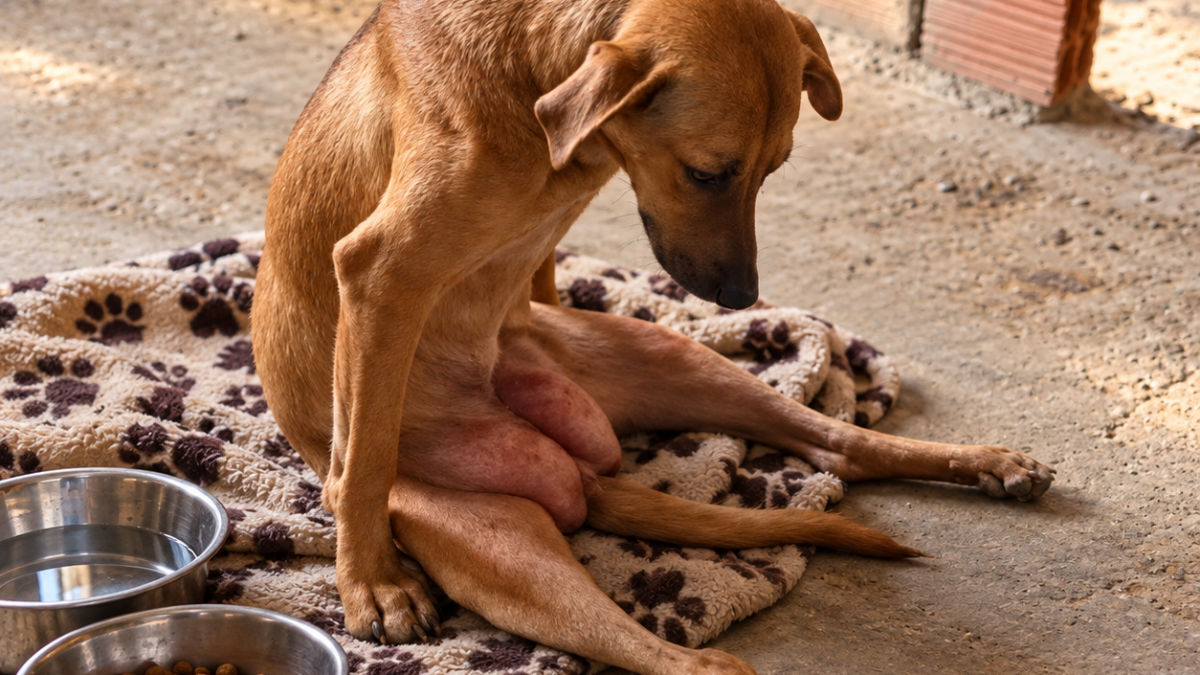
PART 2
I showed the message to Rachel.
She stared at the photograph.
“Does Luis know if it works?”
“I don’t know.”
“Ask.”
I called immediately.
Luis answered before the first full ring.
“The camera,” I said. “Is it recording?”
“Yes.”
“How far back?”
“Maybe thirty days.”
“Do not erase anything.”
“I won’t.”
“Can you check the time she was hit?”
“I can call my boss.”
“Do that.”
Then I stopped.
Allison was still inside the hospital.
Whatever a camera showed could wait.
Her body couldn’t.
I put my phone away.
Rachel looked at me.
“Good.”
“What?”
“You were about to turn into a detective.”
“Someone left her in the road.”
“We don’t know that.”
“A motorcycle hit her.”
“We know what Luis heard from someone else.”
I sighed.
“You’re right.”
“I know.”
“I dislike that.”
“I know that too.”
Dr. Ortiz returned twenty minutes later.
He had stabilized Allison enough to keep her overnight.
The puppies were healthy.
Thin but not dangerously so.
They had fleas.
Mild intestinal parasites.
Nothing unusual for puppies born outside.
Allison was the real concern.
The injury appeared concentrated in her lower spine.
No major fracture that required immediate surgery, which was good.
But swelling around the spinal cord could still affect mobility severely.
“What do you mean by ‘some sensation’?” I asked.
“If we apply controlled pressure to her toes, she responds.”
“So her brain knows her feet exist?”
“In simple terms, yes.”
“That means she’ll walk?”
“No.”
The word came gently but firmly.
I hated it.
“What would make you say yes?”
“Time.”
“How much?”
“Days before we understand the injury better. Weeks before rehabilitation tells us what she’s capable of.”
I looked at the treatment room.
Allison’s puppies were piled against one another in the enclosure.
“Can she nurse?”
“For short supervised periods, probably. But we don’t want the puppies climbing over her injured back constantly.”
“We can supplement.”
“Yes.”
That became the next problem.
Six puppies eat like a small army.
By 2:00 a.m., Rachel and I were in the hospital parking lot discussing formula, foster space, cleaning schedules, and whether either of us could function at work the next morning.
“My guest room,” I said.
“For the puppies?”
“Yes.”
“What about Allison?”
“When she’s discharged.”
Rachel stared at me.
“You’ve already decided she’s coming home with you.”
“No.”
“Megan.”
“Temporary medical foster.”
“You have said that before.”
“It’s an important phrase.”
“The last ‘temporary medical foster’ slept on your couch for nine years.”
“That was different.”
“How?”
“He was charming.”
Rachel looked through the hospital window.
Allison was staring toward the puppy enclosure.
“So is she.”
I went home at three.
I slept for maybe two hours.
At six thirty, Luis called.
“We found it.”
I sat upright.
“The accident?”
“Yes.”
“Don’t send it around.”
“I didn’t.”
“Can you send it to me?”
He hesitated.
“My boss says maybe police should get it.”
His boss was smarter than both of us.
“Good. Keep the original. I’ll contact animal control and traffic police.”
Luis was silent.
Then he said, “It’s bad.”
I closed my eyes.
“Don’t describe it.”
“The motorcycle stops.”
That opened my eyes.
“What?”
“After he hits her. He stops.”
“Then what?”
Luis didn’t answer immediately.
“Tell the police.”
I hung up.
For a second I sat there staring at the wall.
A collision can be an accident.
A dog crosses a road.
A rider doesn’t have time.
Something happens in a fraction of a second.
But stopping afterward changed things.
Not legally necessarily.
Not until we knew more.
Emotionally?
Absolutely.
I showered, drank half a cup of coffee, and drove back to the hospital.
Allison was awake.
Her eyes tracked me.
“Morning, Mama.”
Her tail moved.
Just once.
That was enough to make me smile.
Dr. Ortiz came in with updated test results.
Her bloodwork was better than expected.
No internal bleeding.
No signs of organ failure.
The spinal inflammation remained the largest problem.
He showed me how to support her when turning her.
How to keep her skin clean.
How to position her legs.
How to prevent pressure sores if she remained unable to move them.
“You’re showing me a lot,” I said.
“Because if she goes into foster care in a few days, someone will need to know.”
“Someone?”
He looked at me.
“I’ve met rescue volunteers.”
“That’s profiling.”
“Yes.”
I stayed with Allison during the first supervised nursing session.
We placed her on her side.
Then brought in the puppies.
The moment they reached her, everything changed.
Allison stopped watching the room.
Stopped watching us.
Her entire attention narrowed to them.
She licked one puppy’s head.
Then another.
The smallest pup struggled to reach a comfortable place.
Allison stretched one front leg and nudged him closer.
I looked at Rachel.
“She can’t move her own back legs and she’s organizing them.”
Rachel swallowed.
“Mothers.”
After ten minutes, we removed the puppies so Allison could rest.
She whined.
I touched her shoulder.
“They’re right there.”
We moved their enclosure closer.
She could see them through the clear side.
Her body relaxed.
That morning we gave the puppies names because referring to them as Puppy One through Puppy Six was becoming impossible.
Rachel chose Scout for the boldest male.
I named the smallest one Peanut.
Luis, when he visited later, named a tan female Luna.
The hospital staff chose Ruby, Finn, and Olive.
Six tiny names for six lives that had begun on the wrong side of a road.
The footage reached traffic investigators and animal control before noon.
Officer Daniel Brooks called me.
“I understand you’re the rescue representative?”
“One of them.”
“Did you witness the collision?”
“No.”
“Did anyone from your group?”
“No.”
“Then please don’t post anything about the motorcycle.”
“We haven’t.”
“Good.”
“What did the video show?”
He paused.
“I can tell you generally.”
“Okay.”
“Allison was crossing from the warehouse side toward a vacant lot.”
“With the puppies?”
“No.”
That surprised me.
“Alone?”
“Yes.”
“Probably looking for food.”
“Possible.”
The motorcycle entered frame at a high rate of speed.”
“How high?”
“We’re analyzing.”
“Did the rider stop?”
“Yes.”
My jaw tightened.
“For how long?”
“About forty seconds.”
“Forty seconds.”
“He got off.”
I stood completely still.
“Did he go to her?”
“He walked toward her.”
“And?”
“He appears to look at her.”
“And then?”
“Returns to the motorcycle and leaves.”
I closed my eyes.
“Did he call anyone?”
“We don’t know yet.”
“Did he move her?”
“No.”
“Could he see she was alive?”
“The footage appears to show movement.”
My anger sharpened.
Then Officer Brooks said, “Megan.”
“What?”
“Don’t build the rest before we have it.”
Everyone in my life had apparently joined a conspiracy to stop me from getting ahead of evidence.
“Fine.”
“Camera quality is decent. Plate visibility is partial. We’re working on it.”
“What about the tire-shop worker who found her?”
“We’re interviewing him.”
“Good.”
“Focus on the dog.”
I looked through the hospital window.
Allison’s head was resting on her paws.
“That’s what I’m doing.”
It was mostly true.
Over the next four days, Allison became medically stable enough to leave the emergency hospital.
She still couldn’t stand.
Her right hind leg responded more than the left.
That became our first tiny piece of optimism.
Dr. Ortiz referred us to a rehabilitation center called Motion Veterinary Rehab.
Dr. Lena Park, their lead therapist, reviewed Allison’s scans and notes.
Then she examined her on a padded mat.
Allison tolerated everything except being away from the puppies.
When Scout began crying from the carrier, Allison tried to turn.
Dr. Park looked at me.
“How old are they?”
“Five or six weeks.”
“Good.”
“Why good?”
“They’ll be weaned soon.”
I laughed.
“You sound relieved.”
“I need this patient concentrating on her own legs occasionally.”
We started rehabilitation immediately.
Very small things.
Range-of-motion exercises.
Gentle massage.
Supported positioning.
Weight shifting while her abdomen rested in a wide sling.
The first time we tried to put Allison into a standing posture, her front legs locked beneath her.
Her hind legs folded.
Dr. Park supported one hip.
I supported the other side.
“Easy.”
Allison’s muscles trembled.
“Three seconds,” Dr. Park said.
Then we lowered her.
“That was it?”
“For today.”
“That was nothing.”
Dr. Park looked at me.
“No. Nothing was yesterday when she couldn’t try.”
I learned quickly that rehabilitation professionals had a frustrating relationship with hope.
They gave it in tiny measured doses.
Never enough to let you become comfortable.
Never so little that you could give up.
Allison came home with me two days later.
The puppies came too.
My guest room became a nursery.
My living room became a rehabilitation ward.
I put down nonslip mats.
Covered one corner with washable pads.
Borrowed an exercise pen.
Installed a baby gate.
Bought a supportive orthopedic mattress for Allison.
Then watched all six puppies sleep on her mattress while Allison ended up on the floor beside it.
“This arrangement seems unfair.”
Allison looked at me.
Tail.
“Your children have taken your bed.”
No concern.
She simply lowered her head.
That was Allison.
She could not use her back legs.
She had lost weight.
She had gone through a terrifying accident.
But if one puppy squeaked, she lifted her head.
If one wandered too far, she watched.
If I picked one up, her eyes followed until I put it down.
The puppies, meanwhile, had no understanding that their mother was fragile.
They climbed.
Bit ears.
Tugged blankets.
Attempted to chew my furniture.
Peanut once crawled into Allison’s food bowl and fell asleep.
I sent Rachel a picture.
She replied:
GENETIC INTELLIGENCE UNCONFIRMED.
I wrote:
HE’S VERY YOUNG.
Rachel:
SO IS THE BOWL.
I laughed.
Normality mattered.
Without it, Allison’s story could have become nothing but injury.
I didn’t want that.
She was already becoming more than what happened to her.
She liked chicken.
Hated carrots.
Loved when I scratched the side of her neck.
Disliked the washing machine spin cycle.
And despite being unable to stand, she had developed a habit of barking exactly once when breakfast was late.
The first bark startled me so much I dropped a spoon.
Allison looked pleased.
“Excuse me?”
Another bark.
“You found your voice.”
Tail.
“Dangerous development.”
The puppies began weaning.
That helped Allison physically.
She needed calories for her own recovery.
We fed the puppies separately four times a day.
Their personalities exploded.
Scout climbed everything.
Ruby wanted to be held.
Finn was obsessed with shoelaces.
Luna followed Allison everywhere she could.
Olive slept through almost anything.
Peanut remained half the size of Scout and twice as determined to start arguments with him.
Applications came almost immediately.
Puppies are easy to place.
That sounds cynical.
It’s simply true.
People see puppies and imagine futures.
Old dogs, disabled dogs, frightened dogs—people sometimes see work.
But puppies?
Families line up.
We rejected several applicants.
Approved others.
No puppy would leave until old enough, vaccinated, medically cleared, and ready.
Still, adoption conversations began while Allison was learning to flex her toes.
That contrast hurt.
Her babies were moving toward homes.
She was fighting for a single step.
One night, I sat beside her after the puppies were asleep.
“You know they’re going to leave.”
Allison rested her head on my knee.
I rubbed her ear.
“That’s the goal.”
Her tail moved.
“I don’t think I’m convincing either of us.”
Scout’s adoption was approved first.
A couple named Andrew and Melissa had lost their old dog the year before.
They had a fenced yard, flexible work schedules, and exactly the right amount of puppy-related nervousness.
They visited three times before adoption day.
On the third visit, Melissa sat beside Allison.
“Thank you for him.”
It sounded silly.
Allison didn’t understand.
But Melissa cried anyway.
Scout tried to eat her shoelace.
That helped.
The day Scout left, Allison watched him.
He struggled in Andrew’s arms.
Then settled.
They walked toward the door.
Allison’s ears lifted.
I was ready for panic.
Instead, she whined once.
Scout heard.
His head popped over Andrew’s shoulder.
Allison’s tail moved.
Then he disappeared.
I sat beside her.
“He’s okay.”
She sniffed the air.
For twenty minutes, she looked toward the door.
Then Peanut bit her tail and normal motherhood resumed.
Ruby went next.
Then Finn.
Each adoption was easier and harder.
Easier because Allison seemed to understand the household shrinking.
Harder because every departure made the temporary nature of the family more obvious to me.
Luna stayed longer.
She had developed a mild skin condition.
Olive needed an extra vaccine appointment.
Peanut was simply small and needed more time.
So Allison still had three.
Meanwhile, rehabilitation continued.
Week one:
Supported standing for five seconds.
Week two:
Ten seconds.
Then fifteen.
Then twenty.
Her right rear leg began bearing a tiny amount of weight.
The left lagged.
Dr. Park remained cautious.
“She may compensate more with one side.”
“Can she walk like that?”
“Possibly.”
“Possibly is my least favorite word.”
“You prefer guarantees?”
“Yes.”
“Wrong profession.”
She was right.
Then came the underwater treadmill.
Allison hated it.
Absolutely.
The water rose around her body.
She stared at me with betrayal.
“You’re safe.”
Her eyes said otherwise.
Dr. Park smiled.
“She has opinions.”
“She lives in my house. I know.”
The warm water supported some of her weight.
The treadmill moved slowly.
At first, Allison’s front legs walked.
Her back legs barely responded.
Dr. Park guided them manually.
One.
Two.
One.
Two.
Again.
Again.
Allison tired after three minutes.
We stopped.
Next session:
Four minutes.
Then five.
By the fifth session, her right hind leg initiated a step on its own.
I screamed.
Not loudly.
But enough.
Dr. Park looked at me.
“You cannot do that every time.”
“I saw it.”
“So did Allison. Then you scared her.”
“Sorry.”
Allison looked deeply offended.
I gave her chicken.
Forgiven.
Officer Brooks called during week six.
“We identified the motorcycle.”
I walked outside so the puppies wouldn’t hear my voice rising.
“How?”
“Partial plate, vehicle model, repair records, and delivery GPS.”
“Delivery?”
“The rider was working.”
“For who?”
“A restaurant-delivery platform contractor.”
My anger became colder.
“Name?”
“Ethan Cole.”
“Did he admit it?”
“He admits he was on the road.”
“That isn’t the same thing.”
“No.”
“What does he say happened?”
“That the dog ran into the road unexpectedly.”
“That might be true.”
“Yes.”
I forced myself to say it.
The collision itself might have been impossible to avoid.
“What about leaving?”
“He says he believed the dog got up after he drove away.”
I stopped.
“The video shows she couldn’t.”
“We know.”
“He stood near her.”
“Yes.”
“Forty seconds.”
“Yes.”
“How could he think she got up?”
“That is one of the questions.”
“Did he call animal control?”
“No.”
“Police?”
“No.”
“A vet?”
“No.”
“Anybody?”
“We haven’t found evidence of a call.”
I stared at my backyard fence.
“What happens?”
“The traffic unit is handling the collision and leaving-the-scene aspects. Animal control is reviewing the failure to seek help after observing an injured domestic animal. There may also be civil liability.”
“Will he be arrested?”
“Megan.”
“What?”
“Stop trying to write the ending.”
I hated him a little.
“Fine.”
“How’s Allison?”
That softened me immediately.
“She moved her right back leg in water.”
“Good.”
“That’s all?”
“What do you want me to do, throw a parade?”
“Yes.”
He laughed.
“You rescue people are strange.”
“Correct.”
Then he became serious.
“We also found something else.”
“What?”
“GPS data shows his speed.”
I waited.
“He was significantly over the posted limit.”
There it was.
Not an unavoidable accident anymore.
Maybe Allison entered suddenly.
But speed reduced reaction time.
“What limit?”
“Thirty miles per hour.”
“And him?”
“We’re still finalizing the evidence.”
He wouldn’t give me the number.
Later, the report would show the delivery GPS and nearby cameras estimated his speed at roughly fifty.
Not racing.
Not a hundred.
Just fast enough to turn a bad moment into a devastating one.
Ethan had received multiple warnings from the delivery company for speeding.
No crashes.
No major discipline.
His response to investigators was that fast deliveries meant better tips.
That sentence reached me through the official report weeks later.
I read it twice.
Better tips.
Allison lay beside me while I read.
Her back legs still weak.
Peanut sleeping across them.
Better tips.
I wanted to hate Ethan.
It would have been easy.
But then I saw his age.
Twenty-two.
College student.
Part-time worker.
No previous criminal record.
No history of harming animals.
A bad driving pattern.
Pressure to deliver quickly.
A terrible decision after a collision.
That made my anger more complicated.
Not smaller.
More useful.
The traffic case moved forward.
So did Allison.
At week eight, she stood for the first time with only minimal support.
We had her in the therapy room.
Dr. Park held the sling loose beneath her abdomen.
I stood in front with chicken.
Allison pushed with her front legs.
Her right hind foot planted.
Then left.
Her body rose.
I expected the sling to take weight.
It didn’t.
Dr. Park’s eyes widened.
“Don’t touch.”
I froze.
Allison stood.
Three seconds.
Five.
Eight.
Her legs trembled.
Ten.
Then she sat.
I forgot every instruction about staying calm.
“Allison!”
Her tail slapped the mat.
Dr. Park laughed.
“You can celebrate that one.”
I dropped to the floor and wrapped my arms around Allison’s neck.
She immediately searched my pockets for chicken.
“You’re standing.”
Food.
“You’re standing!”
More food.
“You have no appreciation for the emotional significance of this.”
Chicken.
Fair.
I sent the video to every puppy adopter.
Scout’s family responded first.
They sent back a photograph of Scout standing in their yard.
Caption:
MOM IS SHOWING OFF.
Ruby’s family sent a video of Ruby barking at the screen when she heard Allison’s name.
Finn’s family wrote:
Tell Mama we’re cheering.
I cried.
Then Peanut peed on my rug.
Life remained balanced.
Luna’s skin cleared.
Her adoption family lived fifteen minutes away and promised updates.
Olive went to a retired teacher.
Then Peanut.
Little Peanut.
The runt.
The one who had slept in the food bowl.
He was adopted by a veterinary technician from Allison’s rehab center.
That felt right.
On Peanut’s final morning, all six puppies were gone except him.
The house sounded strange.
No pile of bodies.
No wrestling.
No squeaking from the guest room.
Peanut climbed onto Allison’s bed.
He curled beneath her chin.
She licked him for almost a minute.
I sat on the floor.
“You know he’s leaving?”
She ignored me.
Peanut slept.
That afternoon, his adopter, Carla, arrived.
She had worked with Allison during several sessions.
Allison knew her.
Peanut adored her.
Still, when Carla picked him up, Allison stood—supported, but standing.
She watched.
Peanut licked Carla’s face.
Carla cried.
I cried.
Everyone cried except Peanut.
He was busy eating a treat.
Then they left.
The door closed.
My house became completely quiet.
Allison stared toward it.
I sat beside her.
Her six babies had survived the road.
The warehouse.
Hospital.
Weaning.
Vaccinations.
Everything.
Now all six had homes.
The rescue part should have felt complete.
Instead, Allison put her head in my lap, and I realized she was the one still waiting for her own ending.
“You and me now.”
Tail.
“Apparently.”
That night, she slept beside my bed for the first time.
Not because she had suddenly become mobile.
I dragged her orthopedic bed into my room.
She seemed to approve.
At 2:00 a.m., I woke to the sound of her moving.
She was trying to stand.
I switched on the lamp.
“Need help?”
She pushed.
Front legs up.
Right hind foot planted.
Left dragged.
I reached for the support sling.
Then stopped.
Allison shifted her weight.
Her left foot moved beneath her.
She stood.
Alone.
For two seconds.
Then four.
She took one step.
I didn’t breathe.
Second.
Her rear legs shook.
Third.
Then she sat.
I started crying.
Allison looked at me.
“What?”
Tail.
“You did three.”
She yawned.
I laughed through tears.
“You have the dramatic instincts of a brick.”
I called Dr. Park at 6:01 the next morning.
She answered sleepily.
“Someone better be dying.”
“Allison walked.”
Silence.
“How many steps?”
“Three.”
“On what surface?”
“Bedroom runner.”
“Did you assist?”
“No.”
“Was she dragging the left?”
“Not on the second and third.”
Dr. Park was fully awake now.
“Get video if she does it again. Don’t force it.”
“Can I bring her early?”
“Our appointment is at eleven.”
“I know.”
“Eleven.”
“You’re difficult.”
“I have boundaries.”
I arrived at ten twenty.
Dr. Park made us wait.
Revenge.
At eleven, Allison stood again.
Two steps.
Then five.
Then six.
The therapist crouched beside her.
“Okay.”
I stared.
“Okay?”
“This is important.”
“That’s better.”
“She still has significant weakness. Don’t mistake first steps for complete recovery.”
I hated responsible professionals.
“Can I enjoy it for thirty seconds?”
“Yes.”
I did.
The next month became the fastest stretch of progress.
Six steps became ten.
Ten became across the room.
The sling became backup rather than support.
We added low obstacles.
Weight shifts.
Turns.
Controlled inclines.
Her left leg improved slowly.
She stumbled.
A lot.
She fell.
Not dangerously.
But enough to frustrate her.
The first time she tried to turn too quickly and sat sideways, Allison barked at the floor.
Dr. Park laughed.
“She blames the equipment.”
“She blames everyone.”
Good.
Anger was energy.
We used it.
Three months after the rescue, Allison walked from my kitchen to the back door without help.
I opened it.
She hesitated at the threshold.
The backyard was one step down.
I had built a temporary ramp.
Allison sniffed.
Looked at me.
“Ramp.”
She moved forward.
One paw.
Another.
Her rear legs followed.
Outside.
Sunlight.
Grass.
She stopped.
Then something happened that still makes my throat tighten when I remember it.
Allison smelled the air.
Her tail rose.
Not high.
Not yet.
But higher than I’d seen it.
She took one step into the grass.
Then another.
She stumbled.
Recovered.
Walked farther.
Ten feet.
Fifteen.
At the fence, she turned.
Her face seemed different.
Not human emotion.
I won’t pretend that.
But alert.
Engaged.
Alive in a way she hadn’t been on the warehouse floor.
I sat on the porch and cried.
Allison sniffed a bush.
She had more important things to do.
The next major milestone was running.
But that came later.
First came strength.
Muscle.
Balance.
Confidence.
And one setback that terrified me.
Allison woke one morning unable to bear weight on her left leg.
I panicked.
Called Dr. Park.
Called Dr. Ortiz.
We rushed her in.
New imaging.
No new spinal damage.
Muscle strain.
She had done too much the previous day.
My fault.
I had let her walk longer because she looked happy.
Dr. Park was kind but firm.
“Recovery doesn’t mean unlimited.”
“I know.”
“Do you?”
“I do now.”
Allison spent three days on reduced activity.
The old fear returned immediately.
What if we’d lost progress?
What if she stopped walking?
What if—
She stood on day four.
Carefully.
No drama.
She looked at me as if I’d been the only one doubting.
We resumed.
Slower.
Smarter.
The case against Ethan Cole reached its first hearing around the same time.
I didn’t have to attend.
I did anyway.
Not because I wanted to see him punished.
At least that’s what I told myself.
The courtroom was small.
Ethan sat beside an attorney.
He looked younger than I expected.
Thin.
Dark hair.
Nervous.
His mother sat behind him.
That complicated my anger immediately.
Officer Brooks testified about the footage.
The camera video played.
I had never watched the entire thing.
I almost left.
Then I stayed.
Allison entered frame.
She was trotting across the road.
Not slowly.
Not wandering.
She moved with purpose.
Maybe food.
Maybe water.
Maybe returning to her puppies.
The motorcycle appeared.
Fast.
Too fast.
Impact occurred partly at the edge of frame.
Nothing graphic.
Allison disappeared from view.
The motorcycle wobbled.
Stopped.
Ethan got off.
Walked back.
He stood near Allison.
She moved her front legs.
He stepped closer.
Then stopped.
He looked around.
Returned to the motorcycle.
And left.
Forty-one seconds.
That’s how long he gave her.
Forty-one seconds.
I gripped the bench.
The prosecutor presented GPS records.
Delivery timestamps.
Speed estimates.
No emergency call.
No report.
No contact with the warehouse.
The tire-shop worker found Allison nearly forty minutes later.
He moved her with help from another man.
Then Luis contacted us.
Ethan’s attorney did not deny the collision.
He argued that Ethan panicked.
His client’s helmet visor had been damaged.
He believed Allison might become aggressive if he approached closer.
He had no experience with injured animals.
He was frightened.
All of those things could have been true.
Then the prosecutor asked:
“Why did he not call emergency services?”
The attorney said Ethan believed the dog was a stray.
The judge interrupted.
“That does not answer the question.”
Ethan eventually testified.
I wasn’t prepared for that.
He admitted speeding.
Not because he wanted to hurt anyone.
Because he was behind on deliveries.
His phone app had warned him about late orders.
He had already received complaints.
He feared losing the job.
When Allison ran into the road, he reacted too late.
Afterward, he stopped.
“I saw her move.”
“What did you do?” the prosecutor asked.
“I walked toward her.”
“Then?”
“She looked at me.”
“Was she standing?”
“No.”
“Did she try?”
“Yes.”
“Could she?”
“No.”
My chest tightened.
“Then what did you do?”
Ethan stared at his hands.
“I left.”
“Why?”
“I was scared.”
“Of the dog?”
“Everything.”
“Did you call anyone?”
“No.”
“Why?”
He swallowed.
“I thought I’d get arrested.”
There it was.
Not cruelty.
Cowardice.
He had chosen the possibility of protecting himself over certainty that Allison needed help.
I had imagined hearing his explanation would make me angrier.
Instead, I felt tired.
The prosecutor asked one final question.
“If someone had stopped after you left, could they have found her sooner?”
“Yes.”
Ethan’s voice broke.
“Yes.”
His mother cried behind him.
I looked away.
The court did not treat him like a monster.
Good.
He wasn’t one.
He was a twenty-two-year-old who had driven recklessly and then made a selfish decision when confronted with the result.
That was serious enough.
He faced traffic penalties for the speeding and collision circumstances, a license suspension, restitution obligations related to emergency veterinary costs, community service, and additional consequences tied to leaving an injured animal without reporting the incident.
The delivery company terminated his contract after reviewing the GPS history.
People online later called it justice.
Some called it too soft.
Others called it too harsh.
I stopped reading after ten comments.
The court wasn’t the climax of Allison’s life.
Rehabilitation was.
Four months after the collision, Dr. Park removed the support harness completely during a session.
“We’re trying something.”
“What?”
“Running.”
I stared at her.
“No.”
She smiled.
“You’ve been asking when she’ll run for three months.”
“Yes, as a hypothetical future.”
“We’re at future.”
My heart started pounding.
Allison stood at one end of the long therapy room.
I crouched about twenty feet away.
Dr. Park stood behind her.
“No forcing,” she said.
“Understood.”
“Call once.”
I did.
“Allison!”
Her ears lifted.
Tail.
She started walking.
Fast walk.
Then faster.
Her front legs accelerated.
Her rear legs tried to match.
For one second, the movement became awkward.
I almost moved toward her.
Dr. Park said, “Wait.”
Allison corrected.
Then she ran.
Not like a young greyhound.
Not perfectly symmetrical.
But undeniably running.
Her tail lifted.
Her ears came back.
Her mouth opened.
She crossed the room and reached me.
I caught her around the chest.
“Allison!”
She nearly knocked me over.
Dr. Park was laughing.
I was crying.
Allison was looking for treats.
Of course.
I knelt beside her.
“You ran.”
Tail everywhere.
“You actually ran.”
She barked.
Once.
Then again.
Dr. Park wiped her eyes.
“I hate when patients make me emotional.”
I looked at her.
“You cried.”
“No.”
“You are literally crying.”
“Allergies.”
“In a rehab room?”
“Severe.”
We recorded the second run.
That became the video everyone eventually saw.
Allison at one end.
Me at the other.
She starts slowly.
Then moves.
Then runs.
Tail high.
No stretcher.
No sling.
No hands holding her body upright.
Just Allison.
I sent it to all six puppy families.
The replies arrived almost simultaneously.
Scout’s family sent him running around their yard.
Ruby’s family sent a photograph of her asleep across their daughter’s bed.
Finn had become enormous and apparently believed he was a lapdog.
Olive lived with the retired teacher and went on quiet morning walks every day.
Luna had a canine sister and spent afternoons digging holes she was not supposed to dig.
Peanut remained small but had become, according to Carla, “the manager of the household.”
Every one of them was safe.
Every one loved.
I compiled the updates into one folder.
Then I sat beside Allison.
“Want to see your children?”
She sniffed my phone.
“That isn’t how this works.”
She licked the screen.
“Close enough.”
The rescue posted the running video with the adopters’ permission.
It spread farther than any of us expected.
That was when Ethan saw it.
I know because he wrote to us.
Not directly to me.
Through the rescue office.
The envelope arrived without a return address.
Inside was a handwritten letter.
He didn’t ask for anything.
No forgiveness.
No meeting.
No public statement.
He wrote that he had watched the video of Allison running dozens of times.
He said he had spent months trying not to think about the forty-one seconds in the street.
Then:
“I kept telling myself I was only a kid who panicked. The more I say it, the less useful it sounds. I was old enough to stop. I was old enough to call. I didn’t.”
I read that twice.
He continued:
“I can’t undo what I did. I paid the restitution, but I know the money didn’t make her walk. Please use the enclosed amount for another injured dog.”
Inside was a cashier’s check.
Not huge.
More than symbolic.
I called Rachel.
“What do we do?”
“With what?”
I read the letter.
She became quiet.
“Accept it.”
“You think?”
“Yes.”
“Why?”
“Because accountability isn’t supposed to be decorative.”
I laughed slightly.
“What does that mean?”
“If he is trying to do something useful, let it be useful.”
We deposited the money into the rescue’s emergency medical fund.
I sent Ethan one short response through his attorney.
Allison is walking and running. Your donation will be used for another emergency case. The best thing you can do now is make sure fear never decides your next action.
I didn’t say I forgave him.
I didn’t say I hated him.
Neither seemed necessary.
Months later, I learned his community-service placement had initially been with a municipal cleanup crew.
He requested reassignment.
Not to our rescue.
That would have been inappropriate.
To a low-cost pet-food warehouse run by a local nonprofit.
His job was simple.
Unload bags.
Build boxes.
Load vans.
No animals.
No public redemption.
Work.
I respected that more than an interview.
Allison’s physical recovery continued.
By six months, she could walk nearly normally.
A slight weakness remained in her left rear leg.
Running was still controlled.
No long sprints.
No rough play with large dogs.
But she could move.
She could climb a low step.
She could turn.
She could squat without collapsing.
Things healthy dogs do without anyone noticing.
I noticed all of them.
Then came the adoption question.
Allison had technically been in foster care with me the whole time.
The rescue director, Rachel, came over one evening holding forms.
I looked at them.
“No.”
“You haven’t even read them.”
“I know what they are.”
“Adoption application.”
“She isn’t ready.”
Rachel stared.
“Allison is six months post-injury.”
“She needs therapy.”
“Her adopter can continue it.”
“She has medication.”
“Her adopter can give it.”
“She needs nonslip floors.”
“Her adopter can have rugs.”
I crossed my arms.
“She is complicated.”
Rachel smiled.
“Yes.”
“That will reduce applications.”
“Probably.”
“Good.”
Her smile grew.
“What?”
“You know you’re terrible at pretending.”
“I am not adopting her.”
Allison walked into the room.
She had one of my socks in her mouth.
Rachel pointed.
“Your dog stole your sock.”
“Foster dog.”
Allison climbed onto the couch.
Technically, she wasn’t allowed.
Rachel sat beside her.
“When was the last time you posted her for adoption?”
I thought.
“Medical hold.”
“Lifted six weeks ago.”
“Still evaluating.”
“With whom?”
“Me.”
Rachel laughed.
I glared.
“You’re enjoying this.”
“A lot.”
I refused to sign anything that evening.
That was important.
I needed to be sure I wanted Allison, not just the emotional reward of completing her rescue.
Fostering and adopting are not the same.
A foster home exists to bridge a dog toward the right permanent home.
If every foster became mine, I would eventually own forty-seven dogs and live in a tent.
So I waited.
A family applied.
Good people.
Couple in their forties.
One calm older dog.
Large fenced yard.
Experience with rehabilitation.
I hated them immediately.
That told me everything.
They visited.
Allison liked them.
I hated that too.
Their dog, Murphy, was gentle.
Allison played with him for ten minutes.
I wanted Murphy banned.
After the visit, Rachel asked, “Thoughts?”
“They seem irresponsible.”
“How?”
“They drove a silver SUV.”
“Megan.”
“I distrust silver.”
“Their references are excellent.”
“Suspiciously excellent.”
She stared.
I sighed.
“Fine.”
“What is the actual problem?”
I looked through the window.
Allison was asleep on my rug.
“The problem is I don’t want her to leave.”
Rachel softened.
“There.”
I sat.
“That doesn’t automatically mean I should keep her.”
“No.”
“I work weird hours.”
“You’ve managed.”
“She’s expensive.”
“You can afford her.”
“I foster.”
“You can still foster short-term cases if appropriate.”
I looked at Allison.
“She was supposed to go somewhere.”
“She did.”
I swallowed.
Rachel placed the adoption form on the table.
“Think tonight.”
I signed before she left.
Allison Carter.
Official.
I looked at the name.
“This is embarrassing.”
Rachel grinned.
“No returns.”
“I run the rescue intake shift Tuesday.”
“Still no returns.”
Allison did not react to becoming legally mine.
She slept.
The next morning, she stole toast from my plate.
Ownership confirmed.
A year passed.
Then two.
Allison’s spinal injury became something we managed rather than feared.
She remained slightly weaker on one side.
Cold mornings made her stiff.
We continued exercises.
Short runs.
Swimming in summer.
She loved water far more than the underwater treadmill, which seemed unfair considering the principle was similar.
I told Dr. Park.
“She has standards.”
“She has memory.”
Fair.
The six puppies grew.
We arranged one reunion when they were almost eighteen months old.
That could have been chaos.
It was.
Scout arrived first and immediately knocked over a water bowl.
Ruby came next and barked at everyone.
Finn tried to climb into my lap despite weighing almost sixty pounds.
Olive hid behind her adopter for ten minutes, then suddenly decided the party was acceptable.
Luna dug beneath my fence within twenty minutes.
Peanut remained physically smallest and socially convinced he was in charge.
Then Allison entered the yard.
Everyone stopped.
I don’t know whether adult dogs recognize their mothers in the sentimental human way people hope.
I won’t pretend.
But something happened.
Scout approached.
Sniffed.
Allison sniffed back.
Ruby joined.
Then Finn.
Within a minute, Allison was surrounded by six grown dogs who had once fit around her body on a piece of cardboard.
I stood beside Rachel.
“You’re crying.”
“No.”
“Everyone says that around you.”
“Allergies.”
“To puppies?”
“They aren’t puppies.”
Peanut jumped against Allison’s shoulder.
She barked.
He backed down.
Motherhood remembered.
The adopters shared stories.
Scout slept in bed despite rules.
Ruby loved children.
Finn was afraid of balloons.
Olive had become a therapy dog in a reading program.
Luna stole tomatoes from the garden.
Peanut had recently figured out how to open a cabinet.
I looked at Allison.
“They survived.”
Rachel nodded.
“So did she.”
That reunion became the real ending people online wanted.
But life doesn’t end where videos do.
Allison kept living.
That mattered.
Her fourth year with me, she developed arthritis near the old spinal injury.
Dr. Park had predicted it.
We adjusted.
Medication.
Weight management.
Swimming.
Fewer high-impact activities.
Allison became less of a runner.
But nobody could take away the fact that she had run.
The video still existed.
Whenever I doubted how far she had come, I watched the first rehab recording.
Three seconds standing.
Then the running clip.
The distance between those two videos was months of work nobody saw.
That’s what bothered me about rescue stories sometimes.
People love the transformation.
Before.
After.
Helpless.
Running.
But there is an entire life in the middle.
Medication at 5:30 in the morning.
Laundry.
Accidents.
Missed work.
Tiny improvements.
Setbacks.
Bills.
Appointments.
Hope one day.
Fear the next.
Recovery is mostly ordinary repetition.
Allison taught me to respect ordinary repetition.
Years later, Officer Brooks visited our rescue for an unrelated case.
He saw Allison in the office.
“That’s her?”
I laughed.
“You don’t remember?”
“I remember the case. I haven’t seen her in person since early on.”
Allison walked toward him.
He crouched.
She sniffed his hand.
“She looks normal.”
I felt strangely defensive.
“She is normal.”
“You know what I mean.”
“I do.”
He scratched behind her ears.
“Ethan finished probation last year.”
I looked at him.
“I didn’t know.”
“Thought you might.”
“Any problems?”
“No.”
“Driving?”
“License restored after the suspension. No new citations that I can see.”
I nodded.
“Good.”
Officer Brooks looked at Allison.
“Ever hear from him?”
“Once.”
“The letter?”
I stared.
“How do you know about that?”
“His attorney mentioned the donation in a compliance report.”
“Oh.”
He stood.
“People sometimes do better after consequences.”
“Sometimes.”
“Sometimes they just get angry.”
“Yes.”
“Better when they don’t.”
I looked at Allison.
“Better for everyone.”
A few months later, Ethan contacted the rescue again.
This time through official channels.
He didn’t ask to meet Allison.
He asked whether he could volunteer at the pet-food warehouse after his required service ended.
The nonprofit needed help.
We had no objection.
He stayed.
That was all.
No dramatic redemption scene.
I preferred it.
The person who had driven away after forty-one seconds had learned to keep showing up somewhere for hours at a time.
That was a more useful ending.
The emergency fund created from restitution and donations eventually became a formal program.
We named it the Allison Recovery Fund.
I argued against the name.
Rachel ignored me.
It paid for rehabilitation for injured rescue animals whose prognosis was uncertain but reasonable.
Not every animal walked again.
That was important.
A program shouldn’t measure worth only by dramatic recovery.
One dog used a wheelchair permanently.
Another regained partial mobility.
A senior dog improved enough simply to stand comfortably for meals.
Their outcomes were different.
Their lives still mattered.
Dr. Park helped design the program.
At the opening, she gave a short speech.
“Rehabilitation is not about forcing a body to become what it was before.”
She looked toward Allison, lying beside my chair.
“It is about discovering the best life that body can have now.”
That sentence described Allison better than any viral caption ever did.
The motorcycle collision did not disappear from her body.
She never became exactly the dog she had been before.
We didn’t even know who she had been before.
Allison became herself afterward.
That was enough.
When Allison turned—we estimated—eight, she started slowing noticeably.
Not alarmingly.
Age.
Arthritis.
History.
She still played.
Still barked when dinner was late.
Still stole socks.
Peanut visited frequently because Carla worked at Motion Rehab and occasionally brought him.
Their relationship amused me.
Peanut would enter like he owned the house.
Allison would sniff him.
Then ignore him.
Peanut followed her everywhere.
Some habits apparently survive adulthood.
One winter afternoon, Peanut curled beside Allison on her bed.
I took a photograph.
Then found the original warehouse picture.
Tiny Peanut beneath Allison’s chin.
Years between them.
Same arrangement.
I sent both to Carla.
She replied:
HE NEVER GREW UP.
I wrote:
NEITHER DID SHE.
The six adopters remained in contact.
Not perfectly.
People moved.
Jobs changed.
Children were born.
But once a year, I sent an update thread.
Scout’s family moved to Oregon.
Ruby became best friends with their newborn daughter.
Finn eventually got over balloons.
Olive continued visiting children at the reading program.
Luna’s tomato theft became a seasonal tradition.
Peanut still opened cabinets.
And Allison?
Still here.
That’s what I wrote every year.
Still here.
Then, when Allison was around ten, something changed.
She started stumbling more.
At first, only after long walks.
Then on stairs.
Dr. Park examined her.
New imaging showed degenerative changes around the original injury.
My stomach dropped.
“Are we going backward?”
“No.”
“She is weaker.”
“Yes.”
“That feels backward.”
Dr. Park looked at me.
“She is older.”
I hated that answer.
“She worked so hard.”
“I know.”
“It isn’t fair.”
“No.”
I expected a speech about gratitude.
Instead she let me be angry.
Then said, “What does Allison enjoy?”
“Food.”
“Excellent.”
“Walks.”
“Shorten them.”
“Water.”
“Keep swimming if she’s comfortable.”
“People.”
“Bring people.”
“She likes Peanut.”
“Questionable judgment, but fine.”
I laughed.
We adjusted.
Again.
The support harness returned.
Not all the time.
On bad days.
I hated seeing it.
The first time I slid it beneath her, I remembered the rehab room.
The first three seconds.
Then I realized Allison didn’t care about symbolism.
The harness helped.
So we used it.
One morning, I cried while putting it on.
Allison licked my chin.
“Don’t.”
Tail.
“You’re supposed to be upset too.”
She walked toward breakfast.
Priorities unchanged.
That year, we held another puppy reunion.
The “puppies” were nearly ten.
Not all could attend.
Scout lived too far away.
Finn had recently had surgery and stayed home.
Ruby, Olive, Luna, and Peanut came.
Gray around muzzles.
Slower.
Still recognizable.
Allison walked into the yard wearing her support harness.
Peanut approached first.
Of course.
He sniffed her.
Then lay beside her.
The others joined.
Four aging dogs around their aging mother.
I thought about the warehouse floor.
Cold concrete.
Six tiny bodies pressed against Allison because she was their world.
Now every one of them had lived full lives.
Homes.
Families.
Beds.
Veterinary care.
Birthdays.
Ordinary mornings.
That was more extraordinary than any courtroom outcome.
Rachel stood beside me.
“You know what I remember?”
“What?”
“Counting them.”
I smiled.
“One, two, three, four, five, six.”
“We were terrified we’d missed one.”
“I searched behind the pallets twice.”
“Three times.”
“Did I?”
“Yes.”
I laughed.
“Good.”
Luna’s adopter approached Allison.
“Thank you for her.”
The same thing Scout’s family had said years ago.
This time, I understood why people needed to say it.
Allison didn’t.
But we did.
We wanted gratitude to have somewhere to go.
The dogs left one by one.
Peanut last.
Carla hugged me.
“Call me if Allison has a bad night.”
“I will.”
“You won’t.”
“I might.”
“You never call until morning.”
“I respect sleep.”
“You panic alone.”
Fair.
After they left, Allison stood in the yard.
She took a few slow steps.
Her left leg dragged slightly.
Then she stopped beside me.
I scratched her head.
“You did good.”
Tail.
A year later, Scout died peacefully after a short illness.
He was the first of the puppies we lost.
Andrew called me.
His voice broke.
“He had a good life.”
“I know.”
“I wanted you to know.”
“Thank you.”
He sent a final photograph.
Scout asleep beside the same couple who had carried him away from my house years earlier.
I showed it to Allison.
Not because I thought she understood.
Because I needed to.
Over the next several years, time did what time does.
Finn died at twelve.
Ruby at thirteen.
Olive lived to fourteen.
Luna surprised everyone and reached fifteen.
Peanut, the smallest, outlived almost all of them.
There was sadness.
But no tragedy in those endings.
They had gotten what Allison almost lost in the road:
time.
Allison reached an age we never expected.
Maybe fourteen.
Possibly fifteen.
We didn’t know her exact age when rescued.
Her muzzle turned almost completely white.
Her left hind leg weakened considerably.
She used a support harness outdoors.
Inside, rugs covered every slippery surface.
She slept more.
Barked less.
Still demanded chicken.
Still hated carrots.
Still knew the sound of my car before I reached the driveway.
Then one spring morning, she refused breakfast.
I waited.
Offered chicken.
Nothing.
Cheese.
Nothing.
That frightened me.
We saw Dr. Park first.
Then Dr. Ortiz.
Bloodwork showed kidney decline.
Her heart had also developed changes.
Nothing immediately catastrophic.
But the pattern was clear.
Allison was tired.
We adjusted medication.
For two months, she rallied.
Ate.
Went into the yard.
Lay in the sun.
Peanut—now ancient himself—visited twice.
The second time, both dogs slept almost the entire visit.
Carla and I sat beside them.
“Remember the food bowl?”
She laughed.
“He still tries to sleep in things too small for him.”
Peanut’s head rested across Allison’s front paw.
Carla looked at me.
“You ready?”
“No.”
“Me neither.”
We weren’t talking about Peanut.
Not only.
Allison’s final decline happened slowly enough that I had time to dread it and quickly enough that I still felt unprepared.
One Sunday, she couldn’t stand even with the harness.
She tried.
Her front legs pushed.
Her back end didn’t cooperate.
The image hit me like a physical blow.
Warehouse.
Stretcher.
Puppies.
First day.
“Allison.”
She tried again.
“No.”
Her ears turned toward me.
“You don’t have to.”
She lay back down.
I sat beside her.
For years, standing had become the symbol of everything.
Standing.
Walking.
Running.
But maybe the final gift was letting her stop.
I called Dr. Ortiz.
Then Dr. Park.
Rachel.
Carla.
No hospital.
We had already agreed.
Unless there was something reversible causing suffering, Allison would stay home.
Dr. Ortiz came that afternoon.
He examined her gently.
Listened.
Checked.
Then sat on the floor.
“She isn’t in acute crisis.”
I knew what was coming.
“But?”
“Her body is failing in several ways.”
“Can we buy time?”
“Yes.”
“How?”
“Hospitalization. Fluids. More medications. Maybe.”
“Good time?”
He looked at Allison.
“I can’t promise that.”
I stared at my hands.
“She fought so hard to walk.”
“I know.”
“I don’t want to quit on her.”
He leaned closer.
“Megan, choosing comfort isn’t quitting.”
I had heard versions of that sentence a hundred times.
For other animals.
It is different when the dog is yours.
“I need tonight.”
“You have tonight.”
He adjusted medication.
Allison slept.
Rachel came.
Then Dr. Park.
Carla brought Peanut.
He walked slowly into the house.
Allison lifted her head when she smelled him.
Tail.
One small movement.
Peanut went directly to her bed.
He circled.
Lay down against her chest.
Almost exactly where he’d slept as a puppy.
I lost control then.
Not dramatic.
Just tears I couldn’t stop.
Rachel put an arm around me.
“Look at them.”
“I am.”
The photograph in my memory overlapped with the room.
Cold warehouse.
Warm house.
Tiny puppy.
Old dog.
Young mother unable to stand.
Ancient mother allowed to rest.
Carla whispered, “He remembers her.”
I didn’t correct her.
Maybe.
Maybe not.
Some moments don’t need scientific certainty.
That evening, we watched old videos.
The first rehabilitation session.
Allison standing three seconds.
Dr. Park laughed.
“I forgot how angry you were.”
“I wasn’t angry.”
“You said, ‘That’s nothing.’”
“I was emotionally overwhelmed.”
“You were rude.”
“Also possible.”
Then the running video.
Allison crossing the therapy room.
Tail high.
I looked toward the bed.
“You did that.”
Her ear moved.
We played videos of the puppies.
Scout in the yard.
Ruby with the little girl.
Finn fighting a balloon.
Olive at the reading program.
Luna stealing tomatoes.
Peanut opening a cabinet.
Carla groaned.
“I hate that video.”
“It’s historically important.”
Peanut slept.
Allison slept.
Everyone went home except Rachel.
She stayed on the couch.
I lay beside Allison’s bed.
Around midnight, she woke.
I offered water.
She drank a little.
Then she looked toward the back door.
“You want outside?”
Her head moved.
We used the harness.
Rachel supported one side.
I supported the other.
We carried most of her weight down the ramp.
Outside, the night was warm.
Allison stood in the grass.
Not truly standing alone.
But upright.
She smelled the air.
Then looked toward the yard.
I wondered whether she remembered running there.
Dogs don’t need to.
We do enough remembering for them.
She took one assisted step.
Then another.
I stopped.
“No more.”
We lowered her onto a blanket.
Allison rested beneath the stars.
Rachel sat beside me.
“Do you ever think about Ethan?”
The question surprised me.
“Not often.”
“Good.”
“Why?”
“I was thinking about what you wanted back then.”
“What did I want?”
“For him to pay.”
I looked at Allison.
“He did.”
“You know what I mean.”
I did.
At the beginning, I wanted some dramatic balance.
Allison hurt.
Therefore someone else should hurt.
Years changed that.
The best consequence had already happened.
A medical fund.
Safer driving.
A young man who apparently learned from one awful decision.
Dozens of injured animals getting rehabilitation.
Six puppies growing old in homes.
Allison spending more than a decade after the day someone thought forty-one seconds was enough time to give her.
“I don’t need anything else from him,” I said.
Rachel nodded.
“That sounds healthier.”
“Don’t get used to it.”
At three in the morning, Allison wanted back inside.
We carried her.
She slept.
The next morning, Dr. Ortiz returned.
Carla brought Peanut again.
Dr. Park came before work.
Rachel stayed.
No crowd.
Allison had never liked crowds.
I placed her favorite blanket in the living room.
The same blanket we had used through years of therapy.
Peanut lay several feet away.
Too old to climb over her now.
Dr. Ortiz explained the first medication.
Relaxation.
Sleep.
No discomfort.
I knew.
I still made him explain.
Then I sat beside Allison.
My hand rested on her shoulder.
“You know what’s ridiculous?”
Her eyes remained on me.
“When I first saw you, I was worried we’d left one of your puppies behind.”
Tail barely moved.
“I counted those babies so many times.”
My voice cracked.
“One, two, three, four, five, six.”
Rachel began crying.
“All six made it.”
I stroked Allison’s ear.
“They grew up.”
Her breathing was slow.
“They had homes.”
I swallowed.
“They got old.”
Tears blurred everything.
“You did your job.”
Peanut shifted.
Allison’s ears turned toward him.
Carla covered her mouth.
I continued.
“You can stop now.”
Dr. Ortiz gave the first medication.
Allison relaxed.
Her body became heavy against the blanket.
No effort.
No trembling legs.
No sling beneath her.
No need to prove anything.
Dr. Park knelt.
“You were the hardest worker I ever had.”
I smiled through tears.
“Tell her the truth.”
Dr. Park laughed.
“One of the hardest.”
Allison’s breathing deepened.
I put my forehead against hers.
“You came to me on a stretcher.”
My voice broke.
“And then you ran.”
Her eyes closed.
“That was enough.”
Dr. Ortiz waited until she was completely asleep.
Then administered the final medication.
Her breathing slowed.
One breath.
Another.
Then quiet.
He listened to her heart.
Waited.
Then whispered, “She’s gone.”
I kept my hand on her.
For a long time.
Peanut stood.
Slowly.
Carla helped him closer.
He sniffed Allison.
Then lay beside her.
No one moved him.
That was how we said goodbye.
The following week, I opened the folder containing all six puppy adoption records.
Scout.
Ruby.
Finn.
Olive.
Luna.
Peanut.
Then Allison.
I had spent years calling them “the Allison family.”
Now only Peanut remained.
He died peacefully seven months later at nearly sixteen.
Carla called me first.
“He’s with his mom now,” she said.
I normally resist sentences like that.
That day, I didn’t.
We buried part of Allison’s ashes beneath a tree in my backyard.
Carla later brought some of Peanut’s.
Several puppy families sent small memorial stones.
Scout.
Ruby.
Finn.
Olive.
Luna.
Peanut.
Six names around Allison’s.
Not a sad monument.
A complete one.
The Allison Recovery Fund grew after her death.
We expanded it.
Not just rehabilitation.
Emergency transport.
Diagnostic imaging.
Temporary foster care for mothers with litters.
Physical therapy scholarships for injured rescue dogs.
A local motorcycle-safety organization donated one year.
That surprised me.
Their coordinator said, “We tell riders all the time that speed changes reaction distance. Allison’s story makes it real.”
I agreed to let them use one photograph.
Not the warehouse.
Not the stretcher.
Allison running.
Underneath:
SLOW DOWN. SOMEONE’S WHOLE WORLD MAY BE CROSSING THE ROAD.
That became one of the most widely shared things connected to her.
Years later, I was speaking to a new group of rescue volunteers when one young woman asked:
“Was Allison the miracle dog?”
I smiled.
“I hate that phrase.”
She looked embarrassed.
“Sorry.”
“No. It’s okay.”
I pointed toward the framed photograph on the wall.
Allison running.
“She wasn’t a miracle.”
“What was she?”
“A patient.”
The room became quiet.
“She had good veterinary care. Rehabilitation. Foster support. Time. Some luck. A body capable of responding. And a stubborn personality.”
People laughed.
I continued.
“Calling her a miracle makes the middle disappear.”
The young volunteer nodded.
“What middle?”
“The part where she stood for three seconds.”
I looked toward the picture.
“Then five.”
I could hear Dr. Park in my head.
Small is how bodies rebuild.
“Then ten. Then she had a setback. Then another step. Then six. Then across the room.”
I smiled.
“The running video was twenty seconds. Recovery was months.”
That is the story I tell now.
Not just the motorcycle.
Not the rider.
Not the court case.
Not even the puppies.
Allison’s story was repetition.
A mother dog unable to stand.
Six babies pressed against her.
A stretcher.
A hospital.
Hands supporting legs that wouldn’t support themselves.
One toe responding.
One foot moving.
Three seconds standing.
Three steps in my bedroom.
A ramp into the backyard.
A run across a therapy room.
Years of ordinary life afterward.
The man who found her in the street, José from the tire shop, remained in contact too.
He had been the first person to stop.
I once asked why.
“What do you mean?” he said.
“Other people drove past.”
“So?”
“You stopped.”
He looked confused.
“She was in the road.”
That answer stayed with me.
Sometimes people make goodness too complicated.
Allison didn’t need someone extraordinary that first night.
She needed someone to stop.
José stopped.
Luis sent the video.
We came.
Doctors treated her.
Therapists worked.
Families adopted the babies.
A frightened young rider eventually faced what he’d done.
Many people carried one piece.
Allison carried the rest.
I still have the original security footage.
I almost deleted it after she died.
I didn’t.
But I don’t watch it.
I don’t need to.
I remember the part after.
The therapy room.
Allison at one end.
Me at the other.
Dr. Park releases the sling.
I call her name.
She starts moving.
Slowly.
Then faster.
Her back legs find the rhythm.
Her tail rises.
And the mother dog we once carried from a warehouse on a stretcher runs straight toward me as though nobody ever told her she might not walk again.
That’s where I end the story now.
Not on cold concrete.
Not with six frightened puppies pressed against an injured body.
With Allison running.
And somewhere beyond that camera frame, six dogs she kept alive were already beginning lives of their own.
[END OF STORY]







