PART 2: They Returned Tank and Diesel After Just 48 Hours—So I Gave Up My Apartment Before I’d Let Them Lose Another Home
PART 2
Melissa stood there staring at me as if she was waiting for the punch line.
There wasn’t one.
“You don’t have another apartment.”
“No.”
“You just told your landlord you did.”
“Yes.”
“Where are you going to live?”
“My sister has a couch.”
“With two eighty-pound dogs?”
“Tank is seventy-six.”
“That distinction really changes things.”
I looked through the kennel gate.
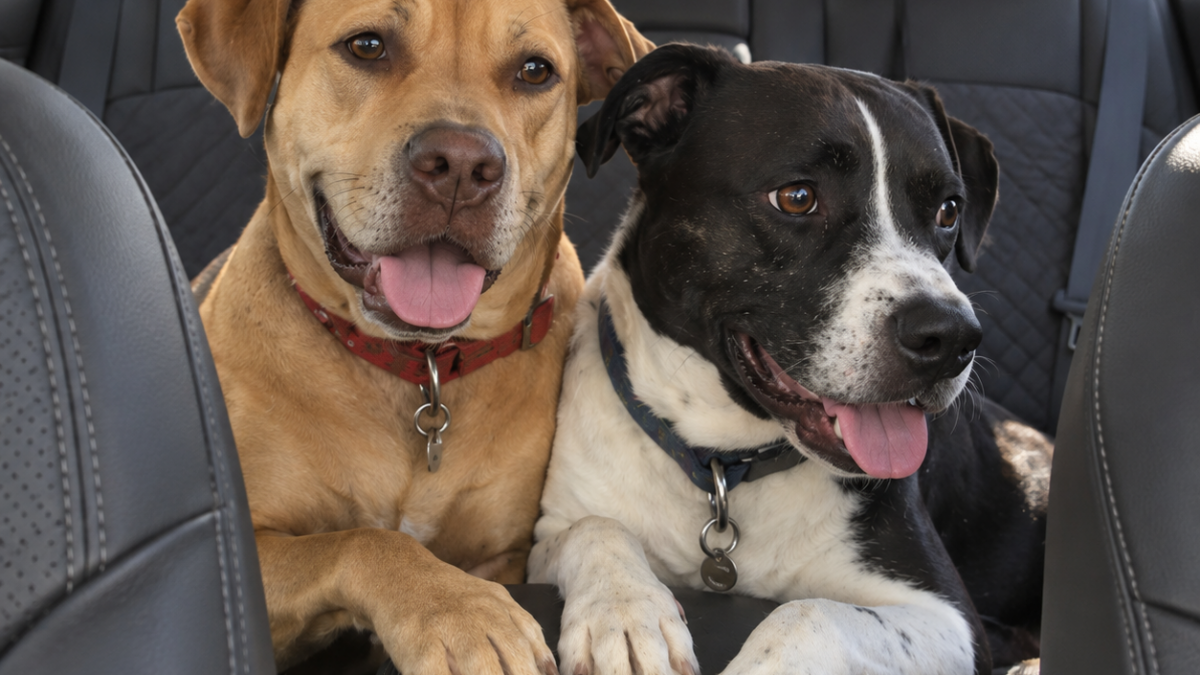
Diesel had finally stopped staring at the door, but he hadn’t relaxed.
His body was pressed against Tank’s.
Tank leaned into him.
Two dogs trying to reassure each other because the humans who had taken them away had suddenly brought them back.
Again.
That word mattered.
Again.
Before the failed adoption, Tank and Diesel had already lost one home.
Their original owner, a construction worker named Ray, had kept them from puppyhood.
From everything we knew, he had loved them.
Then his rent went up, his job hours were cut, and the room he eventually found to rent wouldn’t allow dogs.
He had arrived at our shelter crying.
“I’ve called everybody.”
I hadn’t been there for the surrender, but Melissa had.
“He slept in his truck with them for almost three weeks,” she told me later.
“Why didn’t we help him with temporary boarding?”
“We tried. He needed long-term housing. Nothing came through.”
Ray signed the surrender forms with both dogs leaning against his legs.
Tank stopped eating the next day.
Diesel spent every evening at the kennel door.
They eventually adjusted.
Not completely.
But enough.
Then the couple adopted them.
Forty-eight hours.
Another car ride.
Another house.
Another promise they didn’t understand.
Another door closing.
Another return.
I crouched near Tank.
“You guys have excellent timing.”
Tank rested his chin against the gate.
“I was planning on renewing my lease next month.”
Diesel came closer.
“Apparently not.”
Melissa folded her arms.
“You need to think about this.”
“I am.”
“No, you’re reacting.”
“That’s thinking with speed.”
“That’s not a thing.”
“It is now.”
She sat beside me.
For a while we both watched the dogs.
Finally she said, “What happens if you don’t find housing?”
“I find housing.”
“And if you don’t?”
“I keep looking.”
“You work full time.”
“I know.”
“Your sister has two kids.”
“I know.”
“She also has a cat.”
“I know.”
“Does the cat know?”
“Not yet.”
Melissa rubbed her face.
“I understand why you want to do this.”
“No, you don’t.”
“I do.”
I looked at her.
She pointed toward Diesel.
“I’ve watched him look at that door for four months.”
That silenced me.
Then she added, “But the answer to someone failing these dogs isn’t for you to create another unstable situation.”
That one landed.
Because she was right.
Love does not magically create square footage.
Good intentions do not override leases.
You cannot feed two large dogs with emotion.
You cannot pay veterinary bills with outrage.
I looked at Tank.
“I’m not bringing them home tonight.”
“Good.”
“I’ll start the adoption process properly.”
“Good.”
“Home check.”
“Yes.”
“References.”
“Yes.”
“And I’ll find housing.”
Melissa nodded.
“Then maybe you’re only seventy percent insane.”
“Generous.”
I filled out the application before leaving.
It felt ridiculous.
I had processed hundreds of those forms for other people.
Now I was writing my own answers.
Why are you interested in these dogs?
I stared at the blank line.
The truthful answer was:
Because somebody gave them forty-eight hours to understand an entirely new life and then punished them for being confused.
That sounded emotional.
Also true.
I wrote:
I know their behavior, history, exercise needs, and bond. I am prepared to adopt them together and provide training and long-term care.
Housing status?
That one hurt.
Moving. Temporary accommodation with family while securing permanent pet-friendly housing.
Melissa looked over my shoulder.
“At least you didn’t lie.”
“I lied to my landlord. I’ve reached my daily limit.”
The next morning, I called my sister.
Her name is Katie.
She answered while making breakfast.
I could hear my niece arguing about cereal in the background.
“Hey.”
“Quick question.”
“No.”
“You don’t even know the question.”
“The last time you started like that, I helped move a refrigerator down three flights of stairs.”
“This involves less lifting.”
“No.”
“I might need to stay with you temporarily.”
Silence.
“How temporarily?”
“I don’t know.”
“What happened to your apartment?”
“I’m moving.”
“Why?”
I hesitated.
“Dogs.”
Another silence.
“How many?”
“Two.”
“Absolutely not.”
“Can I explain?”
“You quit your apartment for dogs?”
“I haven’t quit yet. Technically I’ve announced my intention to quit.”
“That is not better.”
“They were returned.”
“All shelter dogs were returned by somebody at some point.”
“These two were adopted and brought back after forty-eight hours.”
Katie sighed.
“What did they do?”
“Chewed one shoe.”
“Okay.”
“Accident on carpet.”
“Normal.”
“Played rough.”
“Dogs.”
“Exactly.”
She was quiet.
I could hear a spoon hit a bowl.
Then she asked the question I knew was coming.
“Are they pit bulls?”
“No.”
“Rottweilers?”
“No.”
“What are they?”
“Big.”
“How big?”
“Medium-big.”
“How big?”
“Seventy-ish each.”
She laughed.
“No.”
“Katie.”
“My living room is twelve feet wide.”
“They’re very efficient.”
“At what?”
“Taking up floors.”
“What about Mr. Whiskers?”
Her cat.
“Separate room.”
“The cat owns every room.”
“That sounds like a governance issue.”
“You’re unbelievable.”
“Can I stay?”
She sighed.
“How long?”
“Two weeks.”
That was wildly optimistic.
“Three maximum.”
Also optimistic.
“If either dog chases the cat—”
“They won’t.”
“You don’t know.”
“I’ll manage introductions.”
“If one pees on my couch—”
“I’ll clean it.”
“If they destroy anything—”
“I replace it.”
“If they eat my children—”
“They’re good with kids.”
“That was not the comforting answer you thought it was.”
I smiled.
“So yes?”
She sighed again.
“Yes.”
I closed my eyes.
“Thank you.”
“But you owe me.”
“I already owe you.”
“Now you owe me enough that I get a kidney.”
“Fine.”
“And the good kidney.”
“Let’s not get unreasonable.”
For the next ten days, my life became an apartment search.
I discovered something quickly.
There is a huge difference between “pet friendly” and “two large dogs friendly.”
Listing number one:
Pets allowed.
I called.
“How many dogs?”
“One.”
Listing number two:
Large dogs welcome.
“How many?”
“One.
Listing number three:
No breed restrictions.
Two dogs allowed.
Perfect.
Then:
Combined weight limit sixty pounds.
Tank alone could violate the lease by standing near Diesel.
Listing number four accepted both.
Then I saw the monthly pet rent.
Four hundred dollars.
In addition to deposit.
I stared at the screen.
“Are you renting them their own bedroom?”
The leasing agent did not laugh.
I kept looking.
Meanwhile, I visited Tank and Diesel every day.
I started training sessions at the shelter.
The first thing I learned was that the return paperwork had been technically accurate.
They were clingy.
Tank wanted to be touching a human constantly.
Sit down?
Tank leaned against your leg.
Stand up?
Tank stood too.
Walk ten feet?
Tank followed.
Diesel was worse.
If I disappeared behind a door, he whined.
If I stayed gone longer than thirty seconds, he paced.
Those weren’t character flaws.
Those were predictable behaviors from dogs who had lost stability repeatedly.
The “wild” part was accurate too.
Put them in the exercise yard and they exploded.
Tank tackled Diesel.
Diesel chased Tank.
Both ran into chairs.
One afternoon, Diesel hit a plastic water bucket so hard he wore it around his head for two seconds.
I laughed until my stomach hurt.
“You two are disasters.”
Tank ran past.
Diesel followed.
The problem wasn’t energy.
It was unchanneled energy.
No routine.
No decompression.
No one had given them time.
Karen, one of our volunteer trainers, agreed to help me build a transition plan.
“First two weeks,” she said, “boring.”
“Boring?”
“Predictable.”
“That sounds easier.”
“It isn’t.”
She handed me a printed schedule.
“Same wake time. Same feeding. Structured walks. No dog park. No parade of visitors. Short training. Rest.”
“Rest?”
“They may not know how.”
I looked at Diesel.
He was standing beside the training-room door.
Watching.
Karen noticed.
“You see that?”
“Separation anxiety?”
“Potentially. Don’t diagnose from one behavior. But yes, attachment insecurity.”
“What would you have told the adopters?”
“Give them weeks.”
“They gave them two days.”
Karen’s face tightened.
“Then the return was not about these dogs failing.”
That sentence stayed with me.
On day eleven, the shelter approved my adoption conditionally.
Condition:
Proof of appropriate housing before release.
Fair.
Infuriating.
Fair.
I had given notice on my apartment.
My move-out date was three weeks away.
I still had nowhere permanent to go.
That was when I started to wonder if Melissa had been right.
Maybe I had acted emotionally.
Maybe loving them meant letting someone with a house adopt them instead.
Then I remembered the applications.
There weren’t any.
Not serious ones.
One inquiry asked whether they could be separated.
Another wanted Tank only because Diesel “looked nervous.”
A third family lived in a building allowing one dog.
Every path led back to splitting them.
I visited one evening after closing.
Diesel was lying near the kennel door.
Tank beside him.
I sat on the floor.
“What if I screwed this up?”
Tank lifted his head.
“You’re not helpful.”
Diesel came forward.
He pushed his nose through the bars.
I scratched it.
“You need somebody with a house.”
His tail moved.
“Preferably a yard.”
More wagging.
“Money.”
Tank stood.
“Stop agreeing.”
Melissa walked past.
“You talking yourself out of it?”
“Trying.”
“How’s it going?”
“Terribly.”
She unlocked the kennel.
Tank immediately sat against me.
Diesel leaned over my legs.
Melissa smiled.
“Terrible.”
I looked at her.
“I found nothing.”
“You have time.”
“Three weeks.”
“You have your sister.”
“She has a cat who may file for emancipation.”
Melissa sat.
“What’s your budget?”
I told her.
She thought.
“My cousin has a duplex.”
I stared.
“Where?”
“West side.”
“Pets?”
“She has a seventy-pound Lab.”
“How many?”
“She owns the building.”
My heart jumped.
“Call her.”
“I can ask.”
“Now.”
“She’s asleep.”
“It’s eight-thirty.”
“She has a baby.”
“Babies don’t respect schedules.”
“That argument works against you.”
She texted.
The next afternoon, I toured it.
Small.
Old.
Two bedrooms.
Fenced backyard shared with the neighboring unit.
Hardwood floors.
No carpet.
A landlord named Jenna who met me wearing slippers while holding a six-month-old baby.
“You’re the dog guy.”
Apparently Melissa had been descriptive.
“Yes.”
“How big?”
I showed photographs.
Jenna looked.
“They look huge.”
“Perspective.”
“They’re beside a standard kennel door.”
“Unhelpful perspective.”
She smiled.
“Any bite history?”
“No.”
“House-trained?”
Mostly.
I paused.
“Honest answer?”
“Please.”
“They had one accident in a new home after less than forty-eight hours.”
She nodded.
“That doesn’t scare me.”
“Chewed a shoe.”
“I have a Labrador.”
“Then you understand.”
“Breed?”
“Mixed.”
“What mix?”
“Shelter guesses boxer, mastiff, shepherd, maybe some bully breed.”
“Insurance restrictions?”
“I checked after Melissa called. None affecting them based on their records.”
I almost hugged her.
Rent was seventy-five dollars above my old place.
Pet deposit reasonable.
Fenced yard.
Two dogs allowed.
I walked outside.
Called Katie.
“I found one.”
“Thank God.”
“You don’t want me?”
“I love you deeply from another address.”
“Harsh.”
“How soon?”
“Two weeks.”
“My cat will mark the calendar.”
The move itself was chaos.
I boxed my entire apartment while working and visiting the shelter.
My landlord, Mr. Collins, called.
“You’re actually leaving over this?”
“Yes.”
“I thought you were angry when you said that.”
“I was.”
“So reconsider.”
“Will you change the dog limit?”
“No.”
“Then nothing changed.”
“You’ve been a good tenant.”
“And I’ll leave the unit clean.”
“You understand the market?”
“Yes.”
“You’re paying more somewhere else?”
“Yes.”
“For two shelter dogs?”
“Yes.”
He sighed.
“Seems foolish.”
Maybe.
But there are different kinds of foolish.
I had spent years choosing the safe option.
Cheap rent.
Small life.
No major obligations.
Then Tank and Diesel looked at a door waiting for people who weren’t coming back.
Something shifted.
“I’ll return the keys Friday.”
Mr. Collins paused.
Then said:
“Hope the dogs are worth it.”
I looked around the half-packed apartment.
“They already are.”
Friday morning, I signed the new lease.
Friday afternoon, the shelter released Tank and Diesel.
Karen stood beside my car.
“Remember.”
“Boring.”
“Structured.”
“Predictable.”
“Give them space.”
“They don’t understand space.”
“Teach them.”
Melissa handed me the adoption folder.
Medical records.
Microchip numbers.
Vaccination certificates.
Training notes.
Then two old collars.
“I’m not using those.”
“I know. Just history.”
Tank pulled toward the car.
Diesel hesitated.
That hurt.
Cars had become transitions.
Home to shelter.
Shelter to adopter.
Adopter back to shelter.
Every car ride changed his world.
I crouched.
“This one is different.”
Diesel looked at me.
“You can take your time.”
Tank jumped into the back seat and immediately stepped on a bag of treats.
Diesel watched him.
Then climbed in.
Melissa hugged both dogs.
Karen scratched Tank’s ears.
I closed the door.
Diesel stood.
He did not lie down the entire drive.
At the duplex, I opened the car.
Tank jumped out.
Diesel stayed.
I waited.
“Come on.”
Nothing.
I sat on the curb.
Five minutes.
Ten.
Finally he stepped down.
We walked into the house.
Both dogs froze.
New place.
Again.
Tank started mapping immediately.
Living room.
Kitchen.
Hall.
Bedroom.
Back door.
Diesel stayed close to me.
I didn’t show them everything at once.
Karen’s advice.
Small world first.
Living room.
Kitchen.
Yard.
Their beds were in the living room.
Identical.
Tank sniffed both.
Chose Diesel’s.
Of course.
Diesel stood near the front door.
I pretended not to notice.
Dinner at six.
Walk at seven.
Lights low by eight-thirty.
No visitors.
No excitement.
At ten, I sat on the floor watching television.
Tank was beside me.
Diesel remained near the door.
At eleven, I went to bed.
Both followed.
I had intended to enforce no dogs on the bed.
That lasted seven minutes.
Tank jumped up.
I pushed him down.
He jumped again.
“Tank.”
He stared.
Down.
Three minutes later, Diesel climbed up from the other side.
I looked at both.
“This is not sustainable.”
Tank lay against my legs.
Diesel curled near my shoulder.
I slept approximately fourteen inches from the edge.
At 2:17 a.m., I woke because Diesel was whining.
I took both outside.
Diesel urinated immediately.
Tank stared at the moon.
Back inside.
At 4:06, Tank vomited because he had eaten grass.
At 5:30, Diesel barked at a garbage truck.
By 6:15, I understood exactly why inexperienced adopters might call them “too much.”
I also understood how absurd two days was.
They weren’t bad.
They were overwhelmed.
The first week proved it.
Diesel had two accidents.
Tank chewed the corner of a cardboard box.
Both barked at Jenna’s Lab through the fence.
They pulled on leash.
Tank stole a chicken breast from my kitchen counter.
Diesel followed me into the bathroom every single time.
On day four, I tried showering with the door closed.
Diesel cried outside.
I opened it.
He was sitting there trembling.
That nearly broke me.
I crouched with a towel around my waist.
“Hey.”
Diesel pressed against me.
I realized then that “clingy” was an easy word.
Too easy.
It turned fear into inconvenience.
He wasn’t trying to annoy anyone.
He was trying to make sure the person he trusted still existed.
From then on, we practiced doors.
One second.
Close.
Open.
Reward calm.
Three seconds.
Five.
Ten.
I walked into the bedroom.
Returned.
Bathroom.
Returned.
Front porch.
Returned.
Every single time.
I became predictable.
That was the work.
Tank’s issue was different.
He needed physical contact when uncertain.
He leaned.
Hard.
At nearly eighty pounds, Tank could move furniture simply by loving it.
Karen came over.
“Don’t reward constant leaning.”
“Why?”
“He should learn he can settle independently.”
Tank leaned against her.
She pushed gently away.
“Sir.”
Tank leaned harder.
I laughed.
Karen glared.
“You’re creating a monster.”
“He came preinstalled.”
We taught “place.”
Tank hated it.
His bed was apparently five feet too far from my body.
At first he stayed three seconds.
Then ten.
Then thirty.
Eventually five minutes.
Diesel learned faster if Tank was nearby.
They were bonded, yes.
But bonded did not have to mean incapable.
That distinction became our goal.
Together without dependence.
Attached without panic.
The second week, Mr. Collins called.
My old landlord.
“I have mail for you.”
“I changed address.”
“Something arrived anyway.”
“I’ll come by.”
I left Tank and Diesel alone for eleven minutes.
First deliberate absence.
Camera running.
I sat in my car around the corner watching the feed.
Diesel went to the front door.
Tank stood behind him.
Diesel whined once.
Tank sniffed the door.
Then walked to his bed.
Diesel stayed.
Thirty seconds.
One minute.
Two.
Then he walked to Tank.
Lay down.
I almost cried in my car.
Eleven minutes.
Nobody destroyed anything.
Nobody panicked.
I returned.
Diesel exploded with joy.
Jumping.
Whining.
Tail whipping.
I waited.
Calm.
Then greeted.
“See?”
He licked my chin.
“I come back.”
By month one, the house looked destroyed.
Not literally.
Emotionally.
Dog beds.
Toys.
Blankets.
Leashes.
Training treats everywhere.
A giant water bowl Tank stepped into twice a day.
Mud.
So much mud.
My bank account looked worse.
Adoption fee.
Deposit.
Pet rent.
Food.
Crates.
Trainer.
Vet check.
My sister visited.
She walked in.
Tank greeted her like a long-lost war buddy.
Diesel brought a rope toy.
Katie stared at me.
“You seem happy.”
“That sounds accusatory.”
“You do.”
“I am.”
Tank put his head under her hand.
She scratched.
“This is the shoe criminal?”
“Tank was never officially identified.”
“So Diesel?”
“No evidence.”
“Two hardened suspects.”
“Exactly.”
Katie’s kids came later.
Controlled introduction.
No chaos.
Tank loved them.
Diesel stayed cautious, then warmed.
My niece sat on the floor reading.
Twenty minutes later, Diesel lay beside her.
Katie photographed it.
“I hate that this is cute.”
“Say you were wrong.”
“No.”
“Coward.”
The cat remained at her house.
Everyone lived.
Month two brought our first real crisis.
I came home from work and found blood on the kitchen floor.
Not much.
Enough.
Tank’s front paw had a deep cut.
Probably from something sharp in the yard.
I panicked.
More than the injury justified.
Vet.
Stitches.
Cone.
Antibiotics.
Tank acted like nothing happened.
Diesel reacted worse.
At the veterinary clinic, when staff took Tank into the treatment area, Diesel lost control.
Whining.
Pulling.
Panting.
Scratching the door.
I held him.
“He’s coming back.”
Didn’t matter.
The separation was too similar.
Tank disappeared behind a door.
Diesel’s world said:
Gone.
Again.
Karen came after work.
We discussed it.
“They need structured separation training.”
“I thought we were doing that.”
“You were. This exposed the weak point.”
“I hate weak points.”
“They’re information.”
We began harder practice.
One dog walked separately.
One stayed home.
At first, terrible.
Then less terrible.
Tank learned to enjoy solo walks.
Diesel learned that Tank could leave and return.
Diesel eventually went alone too.
That was harder for me than him.
I kept checking the time.
Funny.
I had become clingy.
Karen noticed.
“Who are we training?”
“Shut up.”
By month three, both dogs could stay home alone for ninety minutes.
No destruction.
No accidents.
No frantic pacing.
Tank still greeted me like I had returned from war.
Diesel still stood at the window when my car pulled up.
But waiting had changed.
It was no longer desperation.
It was expectation.
There is a huge difference between expecting someone and fearing they will never return.
I learned it by watching Diesel’s body.
Then came the part I didn’t expect.
The original adopters contacted the shelter.
The couple who returned Tank and Diesel.
Melissa called me.
“Don’t get angry.”
Terrible opening.
“What?”
“Remember the Reynolds couple?”
“Unfortunately.”
“They called.”
“Why?”
“They saw the adoption update.”
Our shelter had posted one photograph after I approved it.
Tank and Diesel asleep on my couch.
Caption:
Third month home. Still together. Still learning. Still loved.
Nothing dramatic.
“What do they want?”
“They said they regret returning them.”
I went quiet.
“They want them back?”
“No.”
“Then what?”
“They asked if they could visit.”
“No.”
That came out instantly.
Melissa paused.
“I figured.”
“Why would they need to see them?”
“They said they feel guilty.”
“That’s not Tank and Diesel’s job.”
“I agree.”
My anger surprised me.
For months, I had imagined confronting those people.
I pictured saying everything.
You gave two traumatized dogs forty-eight hours.
You called fear clinginess.
You called decompression bad behavior.
You returned them through a night drop instead of looking anyone in the eye.
Now I had the chance.
And I didn’t want it.
Because Tank and Diesel were doing well.
Why drag strangers from a failed chapter back into their lives so those strangers could feel forgiven?
Melissa said:
“They did ask me to give you a message.”
“What?”
“She said they were overwhelmed, made a bad decision, and they’re sorry.”
I exhaled.
“That’s it?”
“Pretty much.”
“Tell them I appreciate the apology.”
“You do?”
“No.”
Melissa laughed.
“But tell them the dogs are safe. They don’t need a visit.”
“I will.”
I sat on the couch after the call.
Tank’s head was in my lap.
Diesel slept upside down on the rug.
I thought revenge would feel like making the Reynolds see what they lost.
Instead, the satisfying thing was that they didn’t matter anymore.
Tank did not stare at the door waiting for them.
Diesel did not remember their house in any way that controlled his day.
The forty-eight-hour rejection that once felt enormous had become two days inside a much longer life.
That was better.
Month four.
Tank learned to swim.
Badly.
Diesel hated water.
Jenna invited us to use her parents’ farm pond.
Tank jumped in after a stick.
Immediately forgot how water worked.
Splashing.
Panic.
I waded in.
“You weigh seventy-eight pounds. Help me.”
He climbed onto me.
Almost drowned both of us.
Diesel stood on shore looking deeply embarrassed.
Tank eventually learned.
Then refused to leave.
Diesel got his paws wet and considered himself accomplished.
Month five.
Diesel stopped sleeping by the front door.
That was the milestone.
Not a trick.
Not obedience.
Not a vet result.
I woke one morning.
Tank beside the bed.
Diesel missing.
I got up.
He was in the living room.
On the couch.
Curled into the corner.
Front door ten feet away.
He wasn’t facing it.
He was facing the window.
Asleep.
I stood there for several minutes.
The dog who had once sat in shelter intake staring at a handle was sleeping with his back to a door.
That image meant more to me than any adoption certificate.
I took a photo.
Sent it to Melissa.
She replied immediately.
He stopped waiting.
I looked again.
Yes.
Maybe he had.
Not completely.
Dogs carry patterns.
But something fundamental had shifted.
Home was no longer where somebody might return.
Home was where he already belonged.
At six months, I renewed my lease at the duplex.
Jenna laughed.
“So the experiment worked?”
“What experiment?”
“Quitting an apartment for two shelter dogs.”
“I prefer ‘housing transition.’”
“How much furniture survived?”
“Define survived.”
Tank had destroyed one throw pillow.
Diesel had chewed a remote.
Together they had killed three dog beds.
But the shoe count remained zero.
I considered writing the Reynolds with statistical evidence.
I did not.
My sister gave me a framed print for the housewarming.
It said:
ONE DOG ONLY.
Underneath, she taped photographs of Tank and Diesel.
I hung it in the hallway.
A year passed.
On their adoption anniversary, I took them back to the shelter.
Not inside the kennel area.
We used the outdoor field.
Melissa came out crying before she reached us.
“Oh my God.”
Tank dragged me toward her.
Diesel ran too.
She knelt.
Both dogs climbed over her.
“You’re fat.”
Tank wagged.
“Healthy,” I said.
“Tank is fat.”
“He has dense emotions.”
Karen arrived.
Diesel brought her a ball.
She looked at me.
“He plays fetch?”
“Poorly.”
“He wouldn’t touch toys here.”
“I know.”
We walked the field.
Staff came out.
People who had fed them.
Cleaned their kennels.
Walked them.
Watched adoption after adoption pass by because nobody wanted two large dogs.
One intake employee stood near the gate.
She had been there the night they were returned.
She pointed at Diesel.
“He used to sit right there.”
I knew what she meant.
By the kennel door.
Waiting.
Diesel was now rolling in grass.
Back covered in dirt.
Tank tried stealing his toy.
They wrestled.
The intake worker smiled.
“That’s revenge.”
“What?”
She nodded toward them.
“The people said they were too much.”
Tank tackled Diesel.
Both ran in circles.
She laughed.
“They were right.”
I smiled.
“Yeah.”
Too much dog.
Too much energy.
Too much attachment.
Too much need.
And now?
Too much joy.
Too much couch.
Too much mud.
Too many toys.
Too many reasons for me to leave work on time.
Maybe “too much” had never been an insult.
Maybe the problem was trying to fit two huge lives into people who only had forty-eight hours of patience.
At eighteen months, Diesel had a setback.
Thunderstorm.
Huge one.
Lightning struck somewhere close.
Power went out.
Diesel panicked.
He ran to the front door.
Scratched.
Whined.
Old behavior.
Tank paced too.
I sat in the hallway.
No lights.
Rain hammering the windows.
“Come here.”
Tank came first.
Diesel stayed at the door.
Another thunderclap.
He shook.
I wanted to pull him away.
Instead, I sat.
Waited.
Ten minutes.
Twenty.
Eventually Diesel turned.
Saw Tank beside me.
Walked over.
Lay down.
Still shaking.
I put one hand against his side.
“You’re home.”
Not magic words.
But true.
The storm passed.
Next morning, Diesel was normal.
Recovery is not never going backward.
It’s knowing how to come forward again.
That applied to me too.
Because adopting Tank and Diesel changed more than my address.
I had been living a very controlled life before them.
Work.
Apartment.
Takeout.
Television.
Sleep.
Repeat.
I volunteered at the shelter because helping dogs felt easier than building a life around people.
Dogs didn’t ask why I was single at thirty-eight.
They didn’t ask why I worked too much.
They didn’t ask what my five-year plan was.
Then Tank and Diesel arrived.
Suddenly I had neighbors.
Because everyone knew the two giant dogs.
I had hiking friends.
Because Karen organized shelter-dog hikes.
I knew Jenna’s family.
My sister visited more.
Her kids asked to sleep over because they wanted “dog camp.”
My world got bigger because two dogs were too much for my old apartment.
That irony wasn’t lost on me.
At two years, I bought a small house.
Not fancy.
Three bedrooms I didn’t need.
A fenced backyard.
Big maple tree.
Mortgage payment slightly terrifying.
I signed the closing documents and drove straight to the duplex.
Tank and Diesel had no idea.
I loaded them into the car.
“Moving again.”
Diesel froze.
Immediately.
I regretted the wording.
“No.”
I crouched.
“This is good.”
He stared.
I realized how unfair it was to expect a dog to understand real estate.
At the new house, Diesel stayed in the car longer than Tank.
Again.
Tank jumped out.
Ran to the porch.
Diesel watched.
I opened both doors.
Then walked to the front door.
Unlocked it.
Left it open.
Tank explored.
Diesel eventually followed.
The old pattern returned for twenty minutes.
Door.
Rooms.
Windows.
Me.
Then he found the dog beds.
Same beds from the duplex.
Blankets smelled familiar.
Water bowl familiar.
Tank familiar.
Me.
Diesel exhaled.
Lay down.
That was the day I learned home can travel if enough familiar pieces come with it.
Within a week, the backyard became theirs.
Tank dug one hole.
I filled it.
Tank dug it again.
We entered negotiations.
Diesel discovered squirrels.
His life changed.
The house gave them space.
But more importantly, by then they had internalized stability.
A door was just a door.
A car ride sometimes meant hiking.
A person leaving sometimes meant groceries.
A shoe on the floor was not an emotional emergency.
Though I never fully trusted Tank around leather.
At three years, I received a letter.
Actual paper.
No return name.
Inside was a card from the Reynolds.
The former adopters.
They had apparently gotten my mailing address through the shelter with my permission—I had forgotten agreeing to forwarding correspondence.
The note said:
We still think about Tank and Diesel. Returning them was one of the worst decisions we made. We expected them to fit into our life immediately instead of understanding they had just lost everything again. We’re glad they found someone who gave them what we didn’t. We’re sorry.
I read it twice.
Then placed it on the kitchen counter.
Tank was asleep.
Diesel was outside.
For a moment, the old anger came back.
Forty-eight hours.
Then another feeling.
Relief.
Not for them.
For me.
I didn’t need to be angry anymore.
They had admitted what mattered.
The dogs had not failed.
The humans had expected too much too soon.
I wrote one response.
Thank you for acknowledging it. Tank and Diesel are doing well and are still together. I hope if you ever adopt again, you give the next animal time.
I mailed it.
That was all.
No speech.
No punishment.
Sometimes accountability is simply someone learning before they repeat the same mistake.
Would I ever trust them with Tank and Diesel?
No.
Could I accept that they regretted it?
Yes.
Those truths fit together.
Four years.
Tank began slowing first.
He was always larger.
His hips stiffened.
The veterinarian diagnosed early arthritis.
Joint supplements.
Weight management.
Eventually medication.
Diesel remained athletic.
He still chased squirrels.
Tank preferred supervising.
They were probably nine by then.
Maybe ten.
Their exact birthdays were unknown.
I bought orthopedic beds.
Tank used the cheapest old blanket instead.
Of course.
Diesel stole the orthopedic bed.
Also predictable.
Their bond changed with age.
When young, they wrestled.
Now they slept touching.
Back to back.
Shoulder against shoulder.
The same position I had seen in intake.
But completely different meaning.
Then, one spring morning, Tank couldn’t stand.
I heard him trying.
Nails sliding on hardwood.
I ran from the kitchen.
“Tank.”
His back legs failed.
Diesel immediately came over.
Licked his face.
I got a towel under Tank’s belly.
Helped him up.
Emergency vet.
Imaging.
Severe arthritis.
A ruptured ligament.
Not catastrophic.
Treatable.
I almost cried from relief.
Surgery wasn’t ideal at his age, but conservative management had a chance.
We built ramps.
Non-slip runners.
More medication.
Tank adapted.
Diesel did not understand why playtime changed.
He brought toys.
Tank looked.
Diesel pushed the toy into his face.
Tank growled.
Diesel stepped back.
Then lay beside him.
Some relationships don’t need explanation.
Tank recovered enough to walk comfortably.
Never ran the same.
Fine.
He didn’t need to.
We moved at his speed.
At five years together, the shelter invited us to an adoption event.
They wanted bonded pairs highlighted.
Tank and Diesel were the “success story.”
I hated that phrase slightly.
Success implies completion.
Life isn’t complete until it is.
But we went.
The dogs wore blue bandanas.
Tank moved slowly.
Diesel strutted.
A young couple approached.
They were considering two smaller bonded dogs.
The woman asked:
“Is two really that hard?”
I laughed.
“Yes.”
She seemed surprised.
“You’re supposed to convince us.”
“I’m supposed to tell the truth.”
Her boyfriend smiled.
“What’s hard?”
“Twice the food. Vet bills. Training. Housing is harder. Travel is harder. If one has separation issues, they can reinforce each other. You need space.”
The woman looked worried.
Then I said:
“But if you want both and can truly care for both, hard doesn’t mean wrong.”
She looked at Tank and Diesel.
“Did they adjust fast?”
“No.”
“How long?”
“Months.”
“Months?”
“Yes.”
She glanced at the bonded pair she was considering.
“What if they have accidents?”
“Clean them.”
“Chew things?”
“Manage the environment and train.”
“What if they’re clingy?”
“Understand why before you label it.”
That word.
Clingy.
I still hated it.
The couple did not adopt that day.
Good.
They went home.
Thought.
Returned the following week.
Asked more questions.
Then adopted both.
Better.
Sometimes slowing down is part of rescue too.
Year six.
Diesel developed a lump.
I found it while scratching his chest.
Biopsy.
Cancer.
The word removed every sound from the room.
Soft-tissue sarcoma.
Potentially removable.
Surgery.
Margins clean.
I cried in the parking lot when the surgeon called.
Diesel recovered wearing the world’s largest cone.
Tank hated it.
Every time Diesel turned, the cone hit Tank.
Tank eventually moved rooms.
Brothers have limits.
For nearly two years, Diesel remained cancer-free.
Then Tank’s health began failing.
Kidneys.
Age.
Mobility.
One evening, he refused dinner.
Tank had never refused dinner voluntarily in his life.
I knew.
Bloodwork confirmed kidney disease.
Treatment helped.
For months.
Then less.
He became thinner.
Slower.
Needed help standing.
Diesel stayed beside him.
Always.
The dog who once couldn’t tolerate Tank going behind a veterinary door now seemed to understand his brother needed care.
One cold December morning, Tank collapsed again.
This time different.
I drove to the clinic.
The veterinarian examined him.
Numbers bad.
Quality of life declining.
Could hospitalize.
Maybe stabilize briefly.
But Tank was tired.
I sat on the floor.
His giant head in my lap.
Diesel beside us.
The veterinarian gave me time.
I called Katie.
She came.
My niece, now a teenager, came too.
She sat beside Tank.
“You used to knock me over.”
Tank’s tail moved.
Katie cried.
“You moved out for this idiot.”
“Two idiots.”
Diesel looked offended.
We brought Tank home for one final night.
He slept in the living room.
Diesel pressed against him.
I slept on the floor beside both.
Just like those weeks at my sister’s years earlier.
Life has strange circles.
At two in the morning, I woke.
Tank was awake.
Looking at me.
I put my hand on his chest.
“Still here.”
His tail tapped.
“You taught me that one.”
I thought about the shelter.
The door.
Two dogs waiting.
I had spent years teaching them:
I come back.
Now I had to teach Tank one final thing.
He did not need to wait for me anymore.
The veterinarian came the next morning.
Home visit.
Soft light.
Tank on his blanket.
Diesel beside him.
First sedative.
Tank relaxed.
I buried my hand in the fur around his neck.
“You were never too much.”
My voice broke.
“You hear me?”
His eyes closed slowly.
“You were exactly enough.”
Diesel sniffed his face.
I kissed Tank’s forehead.
Then his heart stopped.
Diesel stayed beside him for several minutes.
Sniffed.
Walked away.
Returned.
Finally lay down across the room.
That night, he waited at Tank’s bed.
Not the front door.
Tank’s bed.
I sat beside him.
“We lost him.”
Diesel put his head against my leg.
For weeks, he searched.
Backyard.
Bedroom.
Car.
Not constantly.
Enough.
His appetite dropped.
I called Karen, who was still training dogs and still telling me when I was overthinking.
“Routine,” she said.
“I know.”
“Walk.”
“I know.”
“Eat.”
“He is.”
“You too.”
I hadn’t been.
That annoyed me.
We grieved.
Together.
Diesel eventually stopped checking Tank’s bed.
I did not remove it immediately.
Then one day he climbed onto it.
Turned three times.
Lay down.
I cried.
Not because he replaced Tank.
Because the bed was no longer only absence.
It could become comfort again.
Diesel lived another two and a half years.
Those years were quieter.
No brother to wrestle.
He became more attached to me.
But not panicked.
If I left, he slept.
That alone showed how far he had come.
He grew white around the muzzle.
Slept more.
Still hated storms.
Still chased one particular squirrel well past the age when chasing anything was sensible.
He became the neighborhood old man.
Kids knew him.
Delivery drivers carried treats.
Jenna visited once and laughed.
“This is the dog who cried outside the bathroom?”
“Yes.”
Diesel was asleep while we talked.
I stood.
Walked out the front door.
Closed it.
Waited ten seconds.
Opened it.
Diesel never lifted his head.
Jenna smiled.
“That’s something.”
“Yeah.”
It was everything.
At roughly thirteen, Diesel developed heart disease.
Medication helped.
Then didn’t.
His last months were gentle.
Slow walks.
Chicken.
Sleeping in sun patches.
I started working from home more.
Not because he couldn’t be alone.
Because time had become valuable.
The final day came quietly.
He stopped eating.
Breathing harder.
Veterinarian confirmed his heart was failing.
I chose not to hospitalize.
He had spent enough of his life worrying about where people had gone.
He would leave from home.
Katie came.
Her kids—nearly grown now.
Melissa came.
Karen came briefly.
The people who had known the beginning wanted to be there near the end.
Melissa sat beside Diesel.
“You were such a sad little thing.”
Diesel’s tail moved.
“Remember that door?”
I looked at her.
“Don’t.”
She cried.
“I’m sorry.”
I scratched Diesel’s neck.
“He doesn’t.”
Maybe he did.
I hoped the memory had been buried beneath thousands of better ones.
The veterinarian arrived.
Diesel was on Tank’s old bed.
Of course.
I sat beside him.
His head in my lap.
Before the sedative, I whispered:
“You spent two days in the wrong house.”
My throat tightened.
“Then you gave me more than ten years in the right one.”
Diesel breathed slowly.
“Pretty good trade.”
His eyes softened.
“You don’t have to wait anymore.”
The sedative took effect.
“You don’t need the door.”
His body relaxed.
“No one is returning you.”
Tears dropped into his fur.
“You’re home.”
The veterinarian gave the final medication.
Diesel died quietly.
The house became silent in a way I had never experienced.
No nails.
No water bowl.
No tail against furniture.
No Tank breathing.
No Diesel sighing.
For the first time since the night I called my landlord, there were no dogs in my life.
I kept both collars.
Tank’s.
Diesel’s.
I kept the ridiculous ONE DOG ONLY sign Katie had given me.
It still hangs in the hallway.
Underneath are two photographs.
Not shelter photographs.
Not intake.
Not the night they were returned.
Tank lying in mud after discovering the backyard hose.
Diesel asleep upside down with all four legs against the couch.
That is how I remember them.
People sometimes ask whether I regret moving.
Financially?
It was absurd.
I spent more on rent.
Then bought a house partly because renting with two large dogs was exhausting.
Vet bills were brutal.
Tank needed orthopedic care.
Diesel had cancer surgery.
Furniture died.
Shoes survived, ironically.
Travel became complicated.
My car was permanently covered in hair.
My backyard never recovered.
Would my life have been easier without them?
Yes.
Not even close.
Would it have been better?
No.
That is another distinction people miss.
Ease and worth are not the same thing.
Tank and Diesel were “too much.”
They were.
Too much for people who expected instant obedience.
Too much for a lease written around convenience.
Too much for forty-eight hours.
But they were not too much for a life that made room.
That is the part I wish every adopter understood.
Dogs do not arrive knowing your house rules.
They don’t know your carpet is expensive.
They don’t know that shoe is your favorite.
They don’t understand why yesterday they belonged somewhere else and today you expect them to sleep calmly in a strange kitchen.
They need decompression.
Structure.
Training.
Patience.
Sometimes professional help.
And yes, sometimes an adoption truly isn’t safe or sustainable.
Returning an animal is not automatically cruelty.
There are legitimate situations.
Bites.
Severe incompatibility.
Medical crises.
Housing emergencies.
But Tank and Diesel were given forty-eight hours.
That wasn’t a fair evaluation.
It was an expectation of perfection.
Years later, I understood something else.
I had originally told myself I was teaching them that forever meant something.
That sounded noble.
The truth was less dramatic.
Forever was built through Tuesdays.
Feed them.
Walk them.
Leave.
Return.
Clean the accident.
Replace the pillow.
Go to the vet.
Train.
Get frustrated.
Try again.
Move houses.
Pay bills.
Sit beside them when they are sick.
Hold them when they die.
Forever was not a promise I made once in a shelter.
It was thousands of ordinary decisions afterward.
And maybe that was why the ending felt satisfying.
Not because the couple who returned them regretted it.
Not because my old landlord lost a tenant.
Not because anyone got punished.
The revenge was time.
Two days of rejection became almost invisible beside more than a decade of belonging.
One chewed shoe became a joke.
One carpet accident disappeared entirely.
“Too clingy” became Diesel sleeping through me leaving the house.
“Too wild” became Tank growing old enough to need help standing.
“Too much” became two collars hanging in a hallway that still felt too quiet after they were gone.
The people who returned them had forty-eight hours of Tank and Diesel.
I got their whole lives.
Their worst habits.
Their best years.
Gray muzzles.
Vet bills.
Muddy floors.
Cancer scares.
Arthritis.
Birthdays with no known birth date.
Tank’s giant head in my lap.
Diesel finally sleeping with his back to the front door.
All of it.
They lost the dogs because they wanted easy.
I got the dogs because I accepted real.
And if there was any revenge in that, it didn’t need anger.
It looked like Tank asleep in a house nobody could return him from.
It looked like Diesel hearing a key in the lock and knowing exactly who was coming through.
It looked like two unwanted dogs getting old.
That was enough.
More than enough.
Sometimes I still think about Wednesday night at the shelter.
Diesel staring at the door.
Tank beside him.
That plastic adoption bag in the corner.
The note.
“They were too much.”
I remember calling my landlord without a plan.
I remember Melissa asking what I had just done.
I remember saying:
“Something financially irresponsible.”
I was right.
It was irresponsible.
Impulsive.
Terrifying.
One of the best decisions I ever made.
Because Tank and Diesel did eventually find a home that deserved them.
It just turned out I had to leave mine first to build it.
For a long time after Diesel died, I still woke up expecting to hear him.
Not barking.
Not whining.
Just the soft sounds a dog makes when he has lived in your house long enough to become part of its machinery.
A collar shifting against the floor.
Nails clicking once against hardwood.
A long sigh from the living room.
The sound of a body changing position in the dark.
For more than a decade, Tank and Diesel had filled every quiet space in my life.
Then suddenly they were both gone.
I thought I had prepared myself.
I had known Tank was old.
I had known Diesel’s heart was failing.
I understood the medical realities.
I had made the decisions carefully.
I had held both of them when they died.
None of that prepared me for the silence afterward.
The first morning without Diesel, I walked into the kitchen and automatically reached for two bowls.
I stood there holding them.
One in each hand.
Then remembered.
Tank’s bowl had already been stored in the lower cabinet after he died.
Diesel’s was still beside the sink.
I put both bowls down.
Made coffee.
Didn’t drink it.
For three days, I left Diesel’s water bowl where it had always been.
Not because I thought he was coming back.
Because picking it up felt too final.
Katie finally noticed when she came over.
She didn’t say anything at first.
She walked through the living room.
Saw Tank’s old orthopedic bed still against the wall.
Diesel’s blanket still folded on the couch.
Two leashes hanging beside the back door.
She sat down.
“You sleeping?”
“Enough.”
“That means no.”
“I sleep.”
“How much?”
“Couple hours.”
She looked toward the empty dog bed.
“You want me to stay tonight?”
“No.”
“You sure?”
“Yes.”
She nodded.
Then, after a minute, she said, “The house feels weird.”
I laughed once.
“Thank you.”
“You know what I mean.”
“I do.”
She looked around.
“It used to smell like dogs.”
“It still smells like dogs.”
“Not as much.”
“That’s because your standards are disturbing.”
She smiled.
For a few minutes, we talked about ordinary things.
Her kids.
Work.
A plumbing issue at her house.
Then her eyes landed on the framed sign hanging in my hallway.
ONE DOG ONLY.
Underneath were the two photographs she had taped there years earlier.
Tank covered in mud.
Diesel upside down on the couch.
Katie walked over.
“You kept this stupid thing.”
“Obviously.”
“I made it as a joke.”
“It became historical documentation.”
She touched Tank’s picture.
“You really moved because of them.”
“Yes.”
“No hesitation.”
“There was plenty of hesitation.”
“You called your landlord before you had another apartment.”
“That was not my strongest planning moment.”
She looked at me.
“Do you regret it?”
The answer came immediately.
“No.”
“Even now?”
I understood the question.
Even now that loving them had turned into losing them.
Even now that the house felt unbearable.
Even now that every room contained the shape of something missing.
“No.”
Katie nodded.
“Good.”
Then she walked into the kitchen and picked up Diesel’s water bowl.
I almost told her to put it back.
Instead, I watched her wash it.
Dry it.
Set it beside Tank’s in the cabinet.
That was the first thing we put away.
Not erased.
Just moved.
There is a difference.
For weeks, I struggled with the rhythm of my days.
I still woke at six because Tank had trained me to wake at six.
I still came home directly after work because Diesel hated when dinner was late.
I still glanced toward the back door around seven because that had been our evening walk time.
Habit outlives necessity.
Sometimes I would reach for the leash before remembering there was nobody to clip it onto.
The strangest part was work.
For years, people had expected me to leave on time.
“You’ve got the boys.”
“Don’t keep Tank waiting.”
“Diesel probably has his nose against the window.”
Now there was no reason to hurry.
So I stayed late.
One night, I looked at the clock.
8:47.
Everyone else had gone.
I was still answering emails nobody needed until morning.
And I suddenly realized what I was doing.
I wasn’t working.
I was avoiding the house.
That bothered me.
Because Tank and Diesel had spent their lives learning home was not the place they were abandoned.
I couldn’t let their absence turn it into a place I abandoned myself.
So I closed the computer.
Drove home.
Opened the front door.
Silence.
I stood there.
“All right.”
My voice echoed slightly.
“This is stupid.”
Nothing answered.
I made dinner.
Sat at the kitchen table instead of eating in front of the television.
Then I walked around the house.
Not cleaning.
Not organizing.
Just walking.
In the spare room, I found an old plastic storage bin.
Inside were adoption papers.
Vet receipts.
Training notes.
Photographs.
The original shelter folder.
I hadn’t opened it in years.
The first page was Tank’s intake photograph.
Younger.
Thinner.
Eyes uncertain.
Diesel’s was beneath it.
Same anxious eyebrows.
Same worried expression that had fooled people into thinking he was fragile.
Then I found the return form from those forty-eight hours.
RETURN REASON:
Too clingy.
Too energetic.
Destructive behavior.
Accident in house.
Rough play.
I stared at the handwriting.
For years, those words had made me angry.
That night, they almost made me laugh.
Too clingy.
Tank eventually became so confident that when I left for work he sometimes didn’t bother getting off the couch.
Too energetic.
By twelve, Diesel needed ten minutes to decide whether a squirrel was worth standing up for.
Destructive.
Tank destroyed exactly one couch pillow after adoption.
Diesel destroyed two remotes.
Over ten years.
Statistically, I had caused more property damage myself.
Accident in house.
I couldn’t remember the last one.
Maybe month two.
Maybe earlier.
Rough play.
That one remained accurate.
They had wrestled like idiots until Tank’s hips finally forced retirement.
I sat on the floor with the paper in my hand.
Forty-eight hours.
That couple had seen forty-eight hours.
I had seen thousands of days.
That was the part that changed how I thought about everything.
When the Reynolds returned Tank and Diesel, they believed they had discovered who the dogs were.
They hadn’t.
They had discovered who Tank and Diesel were during forty-eight hours of confusion after another major life change.
That isn’t identity.
That’s stress.
And maybe people do the same thing to each other.
We see someone during grief.
Fear.
Change.
Failure.
Then decide that moment is the person.
Tank and Diesel had taught me otherwise.
Behavior is information.
Not a verdict.
I folded the return form.
Put it back.
Then I found another piece of paper.
My old lease.
ONE DOG MAXIMUM.
I laughed.
“Still wrong.”
The following Saturday, I went to the shelter.
Not because I wanted another dog.
I need to make that clear.
I wasn’t ready.
Maybe I thought being around barking and kennel noise would make my empty house feel less strange.
Melissa still worked there part time.
More gray hair now.
Same expression.
She saw me in the lobby and immediately hugged me.
Not the polite kind.
The kind that says someone already knows what you lost.
“I’m sorry about Diesel.”
“Thanks.”
“How are you?”
“Functional.”
“So terrible.”
“Pretty much.”
She pulled back.
“You want coffee?”
“Yes.”
We sat in the staff room.
For twenty minutes, we talked about Tank and Diesel.
Not how they died.
How they lived.
Tank stealing the chicken.
Diesel’s thunderstorm panic.
The failed swimming incident.
The tumor surgery.
The ONE DOG ONLY sign.
Melissa laughed.
Then she became quiet.
“You know their old kennel is still there.”
“Obviously.”
“No, I mean same location.”
I knew immediately which one.
Near intake.
Close enough to see the main door.
I walked down the hall.
The shelter had been remodeled.
Different paint.
New kennel fronts.
Better sound panels.
But the location was the same.
A young shepherd mix occupied it now.
She jumped when I approached.
Then brought a rubber toy to the gate.
Not waiting.
Just hopeful.
I stood there for several minutes.
Melissa came beside me.
“You okay?”
“Yeah.”
“You’re staring.”
“I’m remembering.”
Diesel had sat here.
Eyes fixed on the handle.
Waiting for people who had already decided not to return.
I had spent years thinking the most important moment was when I called my landlord.
It wasn’t.
The most important moment happened afterward.
I returned.
Every day.
Every time.
That was what changed Diesel.
Not one heroic choice.
Repetition.
The next morning.
And the next.
The next year.
The next house.
The next difficult vet appointment.
The next storm.
Forever wasn’t the sentence I said when I adopted them.
Forever was the accumulation of returns.
That thought followed me home.
Months passed.
I didn’t adopt.
People expected me to.
The shelter sent me pictures occasionally.
My sister sent me listings.
Karen once texted:
“Senior mastiff. Giant. No manners. Your type.”
I replied:
Blocked.
She sent another photograph.
I ignored it.
Not because I didn’t love dogs.
Because I didn’t want to use a new dog to silence grief.
Tank and Diesel deserved to be mourned.
A future dog, if there was one, deserved to arrive without being asked to replace them.
So I waited.
About eight months after Diesel died, I started volunteering at the shelter again.
Only Saturday mornings.
I told Melissa:
“No adoption pitches.”
She agreed.
Mostly.
I began working with returned dogs.
Not intentionally at first.
But I understood them.
The dog labeled destructive after chewing a door frame.
The young Lab returned for jumping.
The hound brought back after one night because he cried.
The old shepherd returned because the family had a baby.
Different situations.
Different legitimacy.
Not every return was cruel.
Some were necessary.
Some homes genuinely weren’t safe.
Some people had tried.
Some hadn’t.
But every returned dog arrived carrying disruption.
And I knew one thing for certain.
The first seventy-two hours after losing a home should not be treated as a final personality test.
So I sat.
Walked.
Fed.
Waited.
One Saturday, a young couple came in looking for a dog.
They stopped at a kennel with a two-year-old mix named Cooper.
Cooper barked.
Jumped.
Spun.
The woman backed away.
“Too hyper.”
I nearly kept walking.
Then I didn’t.
“Can I show you something?”
They looked at me.
I asked staff permission and brought Cooper to the exercise yard.
For five minutes, he was chaos.
Then ten.
We walked him.
Did some sniffing.
Scatter-fed treats in the grass.
At twenty minutes, Cooper lay down.
The man stared.
“That’s the same dog?”
“Yes.”
“He looked insane in the kennel.”
“He’s been in there six hours.”
The woman crouched.
Cooper approached more calmly.
She scratched his chest.
“What happens if we take him home and he does that?”
“He probably will.”
She looked concerned.
I continued.
“He may pace. Have an accident. Chew something. Refuse food. Follow you everywhere. Sleep badly. He may act nothing like this.”
“How long?”
“No exact answer.”
The man asked, “So how do we know if it works?”
“You give reasonable time. Use management. Training. Ask for help. Look for progress.”
The woman smiled slightly.
“You sound experienced.”
“Unfortunately.”
They didn’t adopt Cooper that day.
Good.
They returned twice.
Asked questions.
Then took him home.
Six weeks later, they sent an update.
Cooper asleep on a couch.
The message said:
Week one was hard. Week two better. We’re glad you warned us.
I stared at the photo.
Tank and Diesel were still teaching people.
That mattered.
The shelter eventually asked me to help create a short handout for adopters taking home bonded pairs and recently returned dogs.
We called it:
THE FIRST DAYS ARE NOT THE WHOLE DOG.
I liked that title.
It explained decompression.
Routine.
Accident management.
Chewing prevention.
Separation.
Exercise.
Rest.
Professional training.
When to ask for help.
When safety means an adoption truly should end.
No guilt.
No romantic promises.
Just realistic expectations.
At the bottom, Melissa wanted to add Tank and Diesel’s story.
I said no.
“Why?”
“They don’t need to become marketing.”
“They could help.”
“The handout already helps.”
She respected that.
Instead, we added one sentence:
Give the animal time to understand that this door is different.
That was theirs.
Quietly.
A year after Diesel died, the Reynolds wrote again.
I hadn’t heard from them since their apology.
The letter was shorter this time.
They had adopted an older dog.
Not a bonded pair.
One dog.
Seven years old.
They wrote that the first month had been difficult.
Separation anxiety.
Accidents.
Barking.
They had worked with a trainer.
The dog was still with them.
At the end:
We did better this time because of what happened with Tank and Diesel. We wish we had understood sooner.
I sat with that sentence.
There had been a time when I wanted them punished emotionally.
I wanted regret to hurt.
Now I felt something different.
Good.
One more dog didn’t get returned after forty-eight hours.
Tank and Diesel had influenced that too.
I wrote back:
That’s the best apology you could give.
Nothing more.
Revenge had become a strange word by then.
When I first adopted the boys, revenge felt like proving everyone wrong.
My landlord.
The failed adopters.
People who said two big dogs were impractical.
Every happy picture felt like evidence.
Look.
They weren’t too much.
You were wrong.
But eventually I understood that Tank and Diesel did not need their lives to function as an argument.
They were not living well to defeat anyone.
They were living well because living well was what they deserved.
The strongest revenge against rejection was not making the rejecter jealous.
It was reaching a point where the rejecter no longer mattered.
Tank didn’t know the Reynolds regretted giving him back.
Diesel didn’t know my old landlord thought my decision was foolish.
They didn’t care.
Dogs are often wiser about irrelevance than humans.
They live where life is happening.
Years later, I drove past my old apartment building.
The one I had left because of the one-dog rule.
I hadn’t been there in a long time.
New paint.
Different cars.
Same narrow patch of grass where one dog under fifty pounds would apparently have been acceptable.
I pulled over for a minute.
I pictured the life I would have had if I’d stayed.
Maybe quieter.
Cheaper.
Cleaner.
No destroyed dog beds.
No emergency veterinary bills.
No mud on the back seat.
No mortgage partly motivated by fenced-yard requirements.
No cancer diagnosis.
No arthritis.
No final mornings.
That life might have hurt less.
But avoiding grief would have required avoiding everything before grief too.
Tank’s head in my lap.
Diesel learning doors could open and people could return.
Swimming disasters.
Hikes.
Snow days.
My niece reading beside Diesel.
Tank trying to climb into a chair clearly built for one human.
The first night in the duplex.
The first morning in the house I bought.
Two gray muzzles.
Two lives.
People sometimes say:
“I could never adopt because losing them would destroy me.”
I understand.
Losing Tank destroyed part of me.
Losing Diesel did it again.
But destruction wasn’t the only thing love did.
Love built far more than grief took.
I started the car.
Drove home.
My house still had the dog door I no longer needed.
Scratches on the back door frame.
A stain in one corner of the hallway rug I never managed to remove completely.
For a long time, I considered replacing the floor.
I didn’t.
Not because every scratch was sacred.
That would be ridiculous.
But because a home doesn’t need to look untouched to prove it was loved.
Two years after Diesel died, I adopted again.
Not a bonded pair.
Not because I couldn’t handle two.
Because one dog happened to need me.
Her name was Ruby.
Nine years old.
Forty-three pounds.
Gray face.
Returned after her owner entered assisted living.
She did not resemble Tank or Diesel.
Good.
She hated other dogs.
Loved people.
Slept eighteen hours a day.
Did not care when I left the house.
Did not wait at doors.
Did not destroy shoes.
She stole butter.
Frequently.
Our relationship was completely different.
The first night, Ruby climbed onto Tank’s old bed.
I nearly moved her.
Then stopped.
A bed is for sleeping.
She turned in a circle.
Lay down.
Snored.
I sat on the couch.
Something eased inside me.
The boys were not being replaced.
The space they created in my life was being used.
That felt right.
Months later, Katie visited.
Ruby was asleep.
Katie looked at the hallway sign.
ONE DOG ONLY.
Then at Ruby.
“You finally obeyed.”
“For now.”
She laughed.
“You still think quitting the apartment was smart?”
I looked around.
At the house I might never have bought otherwise.
At Ruby asleep on the old bed.
At Tank and Diesel’s photographs.
“Yes.”
“Still financially irresponsible?”
“Extremely.”
“Worth it?”
I smiled.
“Absolutely.”
That answer had never changed.
Over time, I stopped telling people Tank and Diesel were returned after two days unless it mattered.
When someone asked about the photographs, I said:
“Those were my dogs.”
Not:
“They were returned.”
Not:
“They were too much.”
Their rejection was no longer introduction-worthy.
It had shrunk to its proper size.
Two days.
That’s all.
Two days inside lives that stretched across more than a decade.
That is what time can do to cruelty, impatience, and mistakes when they are followed by enough care.
It does not erase them.
It changes the scale.
Forty-eight hours once felt like the most important thing that had ever happened to Tank and Diesel.
Years later, it was barely enough time to explain in conversation.
Their real story became everything after.
The duplex.
The house.
Training.
Storms.
Illness.
Recovery.
Age.
Death.
Love.
If I could go back to that Wednesday night at the shelter, I wouldn’t tell Diesel the people were coming back.
They weren’t.
I wouldn’t tell Tank everything was going to be easy.
It wasn’t.
I wouldn’t promise no one would ever leave.
That’s impossible.
People leave.
Dogs leave.
Death eventually takes everyone somewhere the others cannot follow yet.
I would tell them something more truthful.
“You are going to stop believing every goodbye is abandonment.”
That was what they learned.
And maybe what I learned too.
The Reynolds said goodbye after forty-eight hours and did not return.
I left for work thousands of times and did.
Tank went into veterinary surgery and came back.
Diesel disappeared behind clinic doors and came back.
My sister went home after visits and returned another weekend.
Kids grew up and still came by.
People left rooms.
Cars left driveways.
Doors closed.
And the world kept proving that absence was not always abandonment.
Then one day Tank left and could not return.
Later Diesel did the same.
By then, they had taught me enough to survive that kind of leaving too.
Grief hurt.
But grief was not rejection.
Death was not a night drop box.
Love had not changed its mind.
Their lives had simply reached the ending every good life eventually reaches.
That distinction saved me.
These days, the shelter still occasionally gets bonded pairs.
Every time, someone jokes:
“Calling you.”
I say no.
Usually.
But I always stop at the kennel.
I look at the dogs.
If they’re pressed together, I remember two large bodies beside an intake door.
If one is whining, I remember Diesel.
If the other leans hard against a volunteer, I remember Tank.
And I always tell potential adopters the same thing.
“Two is harder.”
I never hide that.
“Twice the food. Twice the medicine. Housing can be brutal. Training matters. They may grieve separately. They may age differently. One day you may lose one and have to help the other understand.”
Sometimes people walk away.
That’s okay.
Better before adoption than after forty-eight hours.
But sometimes people listen.
Ask questions.
Come back.
Those are the ones I notice.
Because coming back matters.
Everything about Tank and Diesel taught me that.
I came back to the shelter the day after submitting my application.
I came back the next day.
I came back until housing was ready.
I brought them home.
I came back from work.
From grocery stores.
From trips.
From hospital visits.
From grief.
Again and again.
That was forever.
Not staying in one room for eternity.
Returning.
Choosing again.
Being there tomorrow.
And tomorrow.
Until one day there are no tomorrows left to give.
Then you stay for the final one.
Tank’s final morning, I stayed.
Diesel’s final day, I stayed.
They never had to wonder at the end whether someone had changed their mind.
That may be the promise I’m proudest of keeping.
The dogs returned after two days because somebody decided they were too difficult.
They died years later because their bodies had become old.
There is no more satisfying answer to rejection than that.
They were not passed around.
Not separated.
Not abandoned again.
They got old in the same family.
Together for almost their entire lives.
Together through moves.
Illness.
Gray hair.
Slower walks.
And when Tank went first, Diesel stayed with the person who had promised both of them a home.
Then when Diesel’s time came, the same hands were there.
The door he once stared at no longer mattered.
He died on Tank’s old bed.
Inside the house.
His house.
The one I eventually bought because two dogs had changed what I thought home was supposed to be.
People sometimes laugh when I say I moved out because of shelter dogs.
I laugh too.
It sounds ridiculous.
Maybe it was.
But there are moments when a life changes because logic fails to account for what matters most.
My old apartment had cheap rent.
Good parking.
A decent kitchen.
It also had a rule that said there was room for only one dog.
Tank and Diesel came as two.
So the apartment had to go.
That was the calculation.
Simple.
Years later, I understood the irony.
I thought I left one home to save two dogs.
What really happened was that Tank and Diesel forced me to build a larger definition of home.
One with room for inconvenience.
Commitment.
Noise.
Expense.
Fear.
Training.
Failure.
Second chances.
And eventually loss.
Before them, home had been the place where I kept my things.
After them, home became the place where someone could be difficult and still belong.
That is a much harder standard.
And a better one.
The ONE DOG ONLY sign still hangs in my hallway.
Ruby sleeps beneath it sometimes.
Visitors ask why I keep it.
I tell them:
“Long story.”
Sometimes I tell the whole thing.
Sometimes I don’t.
But whenever I look at Tank and Diesel’s photographs beneath those words, I remember the shelter door.
Diesel staring.
Tank beside him.
Two dogs wondering what they had done wrong.
The answer, of course, was nothing.
They had simply been too much for the wrong people.
Too much energy.
Too much fear.
Too much attachment.
Too much adjustment.
Too much dog.
But not too much life.
Not too much love.
Not too much responsibility for someone willing to make room.
And eventually, that is what we did.
We made room.
First on my sister’s living-room floor.
Then in a duplex.
Then in a house.
Then in routines.
Then in my future.
And even after Tank and Diesel were gone, the room they made inside my life never closed again.
That was their ending.
And, in a way, my beginning.
Two dogs were returned after forty-eight hours because someone said they were “too much.”
I got more than ten years with them.
If you ask me who got the better deal, there has never been any question.
I did.







