PART 2: My HOA Demanded a Spare Key to My Inherited House—So I Installed Biometrics and Told Their President, “Bring Your Finger Here”
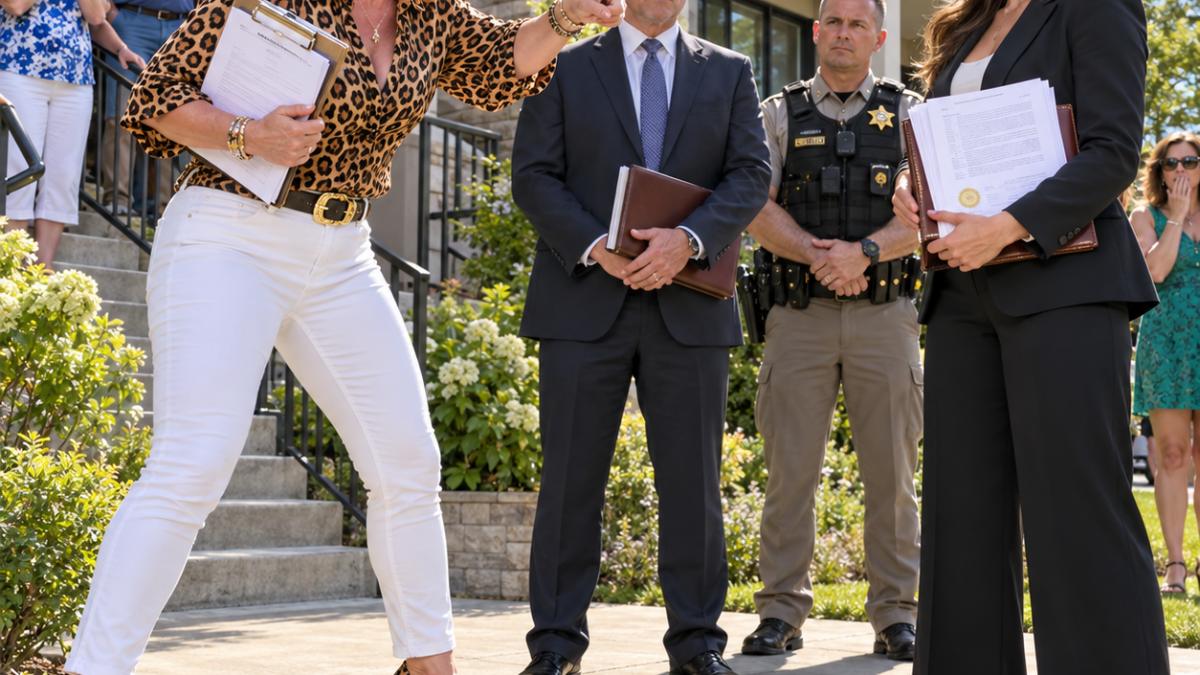
PART 2
For three full seconds, Beverly Sinclair stared at the biometric scanner like I had placed a live snake on the door.
Behind her, the two board members exchanged uncertain looks.
The locksmith shifted his weight.
I held the tablet in one hand and waited.
The scanner emitted a soft green pulse.
“Go ahead,” I said. “Section 4.2 requires a reliable emergency-entry method maintained by the board. I am prepared to enroll one authorized board representative right now.”
Beverly’s expression tightened.
“You want my fingerprint?”
“Technically, the system maps both surface ridges and subdermal vascular structure.”
The locksmith raised his eyebrows.
I continued.
“It stores an encrypted template, not a reusable image.”
Beverly looked disgusted.
“I am not giving you my biometric data.”
“Then you’re declining the access method I provided.”
“I require a physical key.”
“Show me where the covenant says physical.”
She opened her binder.
I waited.
She flipped pages.
Then again.
I already knew what she would find.
The language was broad.
A homeowner shall provide and maintain a reliable method of emergency entry accessible to the Association for verified safety or maintenance emergencies.
No key.
No lock cylinder.
No mechanical requirement.
Arthur had probably handed over a physical spare simply because that was how people did things when Willow Creek was built.
But custom wasn’t contract.
Beverly slammed the binder shut.
“Mr. Henderson.”
The locksmith stopped looking at the scanner and turned toward her.
“Replace it.”
He frowned.
“Replace what?”
“The lock.”
“With what?”
“Standard Willow Creek cylinder.”
Mr. Henderson looked at me.
“Homeowner consent?”
“No,” Beverly said.
I answered at the same time.
“No.”
The locksmith scratched his jaw.
“Court order?”
Beverly’s voice sharpened.
“The association bylaws authorize emergency access.”
“That isn’t what I asked.”
Her head snapped toward him.
“You are the association’s contractor.”
“I am a locksmith.”
“And we pay you.”
Mr. Henderson stared at the biometric housing.
Then at me.
“Is this permitted?”
“Yes.”
“Fire egress still mechanical from inside?”
“Yes.”
“Power failure backup?”
“Battery plus emergency external power contact.”
“Fire department override?”
“Documented emergency procedure registered with local dispatch.”
He nodded slowly.
Then stepped back.
“I’m not touching it.”
Beverly’s face flushed.
“Excuse me?”
“I don’t drill homeowner locks during ownership disputes without consent or a court order.”
“This isn’t a dispute.”
“It looks like one from where I’m standing.”
“You have a service contract with Willow Creek.”
“And I’d like to keep my license more than I’d like to keep your contract.”
He picked up his toolbox.
Beverly stepped into his path.
“Mr. Henderson.”
He moved around her.
“Nope.”
Then, under his breath but loud enough for all of us:
“I don’t do domestic invasions before lunch.”
One of the board members coughed to hide a laugh.
Beverly heard it.
Her composure cracked.
Only for a second.
Then it returned.
“You think you’re clever,” she said to me.
“I think I read the document.”
“You are not the first homeowner who has decided the rules don’t apply to him.”
“The rule does apply.”
I pointed toward the scanner.
“That’s why your access method is waiting.”
“I will not put my finger on that device.”
“Then we agree you’re refusing access.”
“I am refusing an illegal demand for biometric information.”
“And I refused an unsupported demand for a key.”
The second board member, a thin man with glasses, spoke carefully.
“Beverly, perhaps counsel should review—”
She turned on him.
“This was already reviewed.”
He went silent.
That told me something.
Not that the board agreed with her.
That they feared her.
Beverly walked back toward her SUV.
I thought the confrontation was over.
Then she opened the rear hatch.
Inside was a mobile printer.
I almost admired the preparation.
She tapped several commands on a tablet.
A printer whined.
Then she ripped off a long sheet and marched back.
“Because you obstructed a scheduled emergency inspection and caused the forfeiture of a contracted service call, the association is assessing an additional $750.”
I took the paper.
“Anything else?”
“Your account is frozen.”
“My HOA account?”
“You will have no access to the pool, clubhouse, architectural approvals, or community services until compliance.”
“I’ve lived here four days.”
“Then you’re learning quickly.”
She turned.
I called after her.
“Beverly.”
She stopped.
“You still have not explained why you need routine access to my uncle’s house.”
She didn’t face me.
“The association does not owe residents explanations for standard governance.”
Then she got in the SUV.
Ten minutes later, my phone chimed.
A title-monitoring notification.
A preliminary lien notice had been submitted against the property.
One thousand dollars.
The amount was small compared with the value of the house.
The speed was not.
A lien filed within minutes of the confrontation meant the paperwork was already prepared.
This wasn’t an HOA improvising after a disagreement.
Beverly had anticipated refusal.
Maybe she had seen it before.
I brought the notice into Arthur’s office and placed it beside his severed camera cables.
For the first time, two apparently unrelated facts seemed to touch.
Beverly had once possessed a key to this house.
Arthur’s cameras were disabled shortly before his death.
Now, the moment I prevented uncontrolled access, Beverly launched an unusually aggressive effort to get back inside.
I did not yet know why.
But I was done assuming the answer was simply control.
Arthur had been an auditor.
Auditors notice money.
I started searching.
His desk contained tax files, utility statements, insurance policies, HOA notices, and maintenance receipts arranged with obsessive precision.
Nothing obvious.
The basement was another story.
Arthur had used it as a workshop.
Fluorescent lights.
Soldering station.
Old test equipment.
Shelves labeled by year.
Handwritten expense ledgers.
I spent two hours opening drawers.
Then I noticed something in the wine cellar.
One limestone block near the floor sat slightly proud of the others.
Arthur hated uneven work.
That alone made it suspicious.
I removed the wine rack.
Pulled the block.
Behind it was a fireproof safe bolted into the concrete.
Mechanical combination.
Of course.
Arthur distrusted cloud services.
Fortunately, he also distrusted his own memory.
I found the combination disguised in one of his maintenance ledgers exactly where someone like him would hide it—in a sequence of boiler-pressure readings that made no mechanical sense.
The safe opened.
Inside was one manila envelope.
Across the front:
PROJECT WILLOW
I carried it to the workbench.
The first page was a spreadsheet.
Five years of HOA capital-improvement expenditures.
Arthur had highlighted dozens of payments.
Roof repairs.
Storm drainage.
Sewer maintenance.
Pool filtration.
Landscaping remediation.
Emergency erosion work.
Every questionable invoice came from one company.
Sinclair Environmental Services.
I stopped.
Sinclair.
I searched Florida corporate records from my laptop.
The company was controlled by a trust whose registered mailing address matched a commercial mailbox.
But Arthur had already done more.
A note beside the filing read:
Beverly’s brother—nominee owner?
There were photocopies of checks.
Cancelled invoices.
Photographs of work sites.
Vendor comparisons.
Board minutes.
Arthur had been tracing money.
A lot of money.
According to his summary, almost half a million dollars had disappeared from the Willow Creek Capital Improvement Fund through inflated or entirely fictitious vendor bills.
One roof replacement payment had no corresponding permit.
A sewer excavation invoice referred to work on a street that contained no sewer line requiring replacement.
The HOA had paid more than $60,000 for pool resurfacing during a year when photographs showed no resurfacing occurred.
Then I reached the photographs.
Beverly at a Mediterranean resort.
Beverly standing beside a new luxury SUV.
Beverly at charity galas.
Arthur had printed social media posts and written dates beside large HOA withdrawals.
The final folder concerned something called the West Parcel Redevelopment.
Beverly wanted to convert community green space into private luxury homes.
Arthur had found zoning problems.
Utility-right problems.
And an original irrigation agreement proving Willow Creek did not possess the rights Beverly claimed it did.
That document alone could have killed the development.
Suddenly I understood why she wanted access to Arthur’s house.
She wasn’t looking for an emergency key.
She was looking for evidence.
A metallic snap came from upstairs.
I froze.
Not the normal settling of an old house.
A window latch.
Then another sound.
Wood flexing.
Someone was inside.
I moved the Project Willow documents back toward the safe.
Footsteps crossed the first floor.
Slow.
Deliberate.
Not Beverly’s heels.
Heavier.
I switched off the basement light.
The house became almost silent.
My phone showed a security alert.
Guest-bedroom window.
Forced opening.
I pulled up the camera.
A tall man in a dark jacket moved through the hallway.
He carried a heavy flashlight.
There was a bulge at his waistband.
I did not know whether it was a firearm.
I had no intention of finding out from three feet away.
I quietly triggered the external emergency alert to local police.
Then I moved behind the furnace-room partition.
The basement door opened.
Light swept down the staircase.
One step.
Two.
Three.
The man descended.
He was not searching randomly.
He walked directly toward Arthur’s workbench.
His flashlight landed on the open safe.
He stopped.
My stomach tightened.
He knew there was a safe.
That eliminated coincidence.
He moved closer.
Then his radio crackled.
Static.
A woman’s voice.
“Get out. Police response triggered.”
The man spun around.
He ran upstairs.
Seconds later I heard a vehicle accelerate away.
I remained where I was until my exterior cameras showed the street empty.
Police arrived minutes later.
They took the forced-entry report.
Photographed the window.
Collected the footage.
The intruder’s face was partially covered.
Vehicle plate obscured.
No arrest that night.
But the message was clear.
Someone knew what Arthur had hidden.
And now they knew I had found it.
I barely slept.
At eight the next morning, a courier arrived.
Three legal filings.
The first increased my HOA fines.
Seven hundred fifty dollars per day.
Retroactive.
The second requested an injunction ordering removal of my biometric lock.
The third was the most serious.
Notice of Intent to Foreclose HOA Lien.
I read it twice.
Beverly wasn’t just trying to get inside.
She was trying to create enough financial pressure to take control of the property itself.
That was when I hired counsel.
Her name was Rachel Mendoza.
Property attorney.
Former prosecutor.
The first thing she told me was:
“Stop thinking of this as a lock dispute.”
“I stopped yesterday.”
I placed Project Willow on her conference table.
She spent twenty minutes reading.
Then another ten staring at Arthur’s notes.
“Where did you get this?”
“In his basement.”
“Anyone else know?”
“Someone broke in looking for it.”
Rachel looked up.
“You reported that?”
“Yes.”
“Good.”
She picked up the lien notice.
“This is aggressive even for a hostile association.”
“Can they foreclose?”
“They can start a process if statutory conditions are met.”
“Are they met?”
“Not remotely yet.”
“So what do we do?”
“We make Beverly prove everything.”
That became our strategy.
Not defensive.
Forensic.
We filed a formal records demand under Florida HOA law.
Every official financial record.
Five years.
Every capital-project invoice.
Every vendor agreement.
Every bank statement.
Every board authorization.
Every contract involving Sinclair Environmental Services.
Ten-business-day production deadline.
Certified mail.
Signature confirmation.
At the county clerk’s office, we filed a notice contesting the lien.
That shortened the association’s time to enforce it properly or lose the leverage.
Rachel smiled as the clerk stamped the document.
“Beverly likes deadlines.”
“So do I.”
We returned home.
By two in the afternoon, another violation appeared.
Curtain color.
Mine were gray.
Willow Creek supposedly required eggshell or off-white.
I almost laughed.
Then another notice.
My exterior infrared security lighting allegedly harmed community nighttime aesthetics.
That one wasn’t funny.
Someone wanted my cameras weakened.
I installed three more.
Hidden.
Low-light.
Independent battery backup.
Encrypted off-site storage.
If Beverly wanted darkness, I intended to make darkness useless.
The next visitor was a city inspector.
Miller.
Tired eyes.
Professional demeanor.
“Complaint about unauthorized basement modifications.”
I almost admired Beverly’s creativity.
“Come in.”
Miller looked surprised.
Most homeowners facing HOA warfare apparently resist every inspection.
I did the opposite.
Aggressive transparency.
I showed him permits.
Security installation.
Basement.
Wine cellar.
Workshop.
The safe remained closed.
He examined everything.
“No structural issue.”
“Any hidden-room violation?”
He laughed.
“Unless you’re hiding Narnia behind the furnace, no.”
Before leaving, he asked who installed the biometric access system.
“I did.”
“What do you do?”
“Security engineering.”
He took my card.
Across the street, Beverly sat inside her SUV.
Watching.
Miller noticed.
“That the complainant?”
“Yes.”
He shook his head.
Then drove away.
That evening, an encrypted email arrived from an unknown sender.
No greeting.
One attachment.
HOA bank statement.
A transfer made three hours earlier.
$50,000.
Destination:
Cayman Islands.
Description:
Emergency Legal Defense Retainer.
I called Rachel.
“Somebody inside is feeding us documents.”
“Do not reply.”
“I wasn’t planning to.”
“Forward it to me exactly as received.”
I did.
“Can we use it?”
“Not until we authenticate source and acquisition.”
“What if it disappears?”
“Preserve it. Don’t touch the account. Don’t log in anywhere. Don’t do anything clever.”
“I’m offended by your lack of trust.”
“I hired you as a client, not a cyber vigilante.”
Fair.
Midnight brought the next message.
Not digital.
Paper.
Black envelope under my front door.
Expensive stationery.
Faint perfume.
A handwritten note.
You have Arthur’s files. You do not have the drive.
I kept reading.
If you want the rest, come to the community pool house at 2:00 a.m. Alone.
Then the line that made my hands cold.
Otherwise the drive is destroyed, and Arthur’s death stays a natural tragedy.
I called Rachel.
She called law enforcement.
Nobody liked the idea of me attending.
But the location was public common property.
We arranged observation at a distance.
No heroics.
No weapons.
No confrontation.
At 1:58, I entered the pool house.
Chlorine.
Wet concrete.
Buzzing fluorescent light.
“Hello?”
Movement in the pump room.
A woman stepped out.
Eleanor Price.
HOA recording secretary.
I had seen her behind Beverly at the inspection.
Always quiet.
Always taking notes.
Tonight she was trembling.
“You came.”
“You mentioned my uncle’s death.”
She held out a rugged USB drive.
I didn’t take it immediately.
“What is it?”
“Arthur’s backup.”
“How did you get it?”
“He gave it to me.”
“When?”
“Two weeks before he died.”
“Why?”
“Because he knew Beverly suspected him.”
My throat tightened.
“What did he know?”
“Everything.”
Eleanor looked toward the window.
“Beverly was taking reserve money. The development project was worse. Arthur discovered forged utility records and payments to two council members.”
“Why didn’t he go to police?”
“He was preparing to.”
“What happened?”
Eleanor’s eyes filled.
“He collapsed.”
“That’s what I was told.”
She shook her head.
“Not exactly.”
I stared at her.
“What does that mean?”
“Arthur wore a medical-alert device.”
I remembered it.
He had heart problems.
“He activated it?”
“Yes.”
“How do you know?”
“I saw the server log.”
My mouth went dry.
“What happened?”
“Beverly had administrative access through the HOA welfare system.”
“She delayed it?”
Eleanor began crying.
“Seventeen minutes.”
I couldn’t speak.
“She delayed the emergency relay by seventeen minutes.”
“Why?”
“She told me he was having one of his episodes and that she was checking personally.”
“Was she at the house?”
“Yes.”
The porch key.
The camera cables.
My stomach turned.
“She had his key.”
Eleanor nodded.
“She was there before EMS.”
“Did she call them?”
“Eventually.”
“Why would she delay medical help?”
“Because Arthur told her that morning he was submitting Project Willow to state investigators.”
I looked at the USB drive.
“Is that proof?”
“Yes.”
I took it.
“Why help me now?”
Eleanor wiped her face.
“Because I was afraid then.”
“And now?”
“I’m still afraid.”
A pause.
“But Arthur died while I stayed quiet.”
Those words hung between us.
I did not promise forgiveness.
It wasn’t mine to give.
“I’ll get this to investigators.”
Eleanor nodded.
“Good.”
Back home, I did not connect the drive to my personal network.
Rachel had already arranged for a forensic examiner.
The next morning, we delivered it under documented chain of custody.
That decision mattered later.
A lot.
The drive contained financial ledgers.
Emails.
Internal recordings.
System logs.
Deleted messages.
And audio.
One file was timestamped the day Arthur died.
Beverly’s voice.
I listened only once.
Arthur sounded weak in the background.
Beverly spoke to someone on the phone.
“He activated the alert.”
A man asked whether emergency services were coming.
Beverly answered:
“Not yet.”
Then:
“I need five minutes to find the folder.”
Another voice warned her.
She said:
“He’s sick anyway.”
I stopped the recording.
I couldn’t continue.
Rachel did.
The forensic examiner did.
Investigators did.
I went outside and sat on Arthur’s porch.
For the first time since inheriting the house, I cried.
Not because I had proof.
Because the proof contained his voice.
Weak.
Confused.
Alive.
And someone had treated his final minutes like an administrative inconvenience.
Until that moment, Beverly Sinclair was an adversary.
After that, she became evidence in a criminal investigation.
Rachel made something very clear:
“You do not contact her.”
“I understand.”
“You do not accuse her publicly.”
“I understand.”
“You do not access HOA banking systems, even if you have credentials.”
“I understand.”
“You let investigators work.”
I looked toward the biometric lock.
“And if she comes back?”
“Call police.”
Beverly did come back.
Not personally.
At 4:06 the following morning, perimeter sensors detected movement.
Four men entered my front yard.
Private security.
Dark uniforms.
Heavy tools.
One carried a battering ram.
A vehicle waited at the curb.
My cameras captured everything.
I called 911.
Then I activated the house’s exterior speaker.
“Attention. You are on private property. Police have been notified. This entry is being recorded.”
The men stopped.
The leader looked toward the street.
Then Beverly stepped from behind the SUV.
So much for distance.
“This property is under HOA foreclosure enforcement,” she shouted.
“No court has authorized entry.”
“You have an enforceable lien!”
“Contested.”
She pointed at the door.
“Proceed!”
The contractor holding the ram hesitated.
I spoke again.
“Before you damage that door, ask Mrs. Sinclair to show you a signed writ granting physical possession.”
He turned toward Beverly.
She shouted something I couldn’t hear.
The contractor lowered the ram.
Smart man.
The second contractor began backing toward the lawn.
Beverly lost control.
“Do your jobs!”
Sirens approached.
One contractor immediately placed his tool on the grass.
Another raised both hands.
Beverly stared toward the corner as two marked cruisers appeared.
No dramatic neighborhood broadcast.
No vigilante trick.
Just cameras, police, and a woman who had assumed paperwork she controlled was equivalent to judicial authority.
It wasn’t.
Officers separated everyone.
The private firm produced its work order.
The order came from Beverly.
No sheriff.
No judge.
No valid foreclosure writ.
The contractors were released after statements.
Beverly was questioned.
She wasn’t arrested that morning.
People sometimes expect justice to work like a movie.
Evidence appears.
Handcuffs follow.
Real cases move slower.
Especially financial ones.
Especially when intent has to be proved carefully.
But something did change.
Neighbors watched police tell Beverly she had no right to enter my house.
That mattered.
By breakfast, Willow Creek was no longer whispering about the stubborn nephew who refused to follow HOA rules.
People were asking why their president had sent a private team to breach a resident’s home at four in the morning.
Beverly responded the only way she knew how.
Control the narrative.
At 8:57 a.m., every Willow Creek homeowner received an email.
I was described as a “technically sophisticated resident engaged in unauthorized interference with community systems.”
My biometric lock became a “military-grade access obstruction.”
My refusal to surrender a key became a threat to firefighters.
The private security team became an “emergency safety response.”
Project Willow was dismissed as stolen, manipulated data.
She even accused me of fabricating Arthur’s records using artificial intelligence.
I read it twice.
Then I laughed.
Rachel did not.
“Do not respond.”
“But she just accused me of—”
“I know.”
“She’s telling two hundred households I hacked the HOA.”
“I know.”
“Then we correct it.”
“Not emotionally.”
“I wasn’t planning emotionally.”
Rachel gave me the look attorneys give engineers who think precision automatically prevents arrogance.
“What can we release?”
“Public records. Your own documents. Court filings. Nothing obtained through the criminal investigation unless authorized.”
So that was what we did.
No secret bank logs.
No audio.
No evidence under investigative hold.
Just documents every homeowner had a right to see.
The recorded lien contest.
Official records request.
Clean city inspection.
Biometric permit.
A spreadsheet built entirely from HOA financial statements already distributed to members.
And there were enough inconsistencies even without Project Willow.
$62,000 allocated for pool reconstruction.
No reconstruction.
$48,000 for drainage work.
Residents on the affected street confirmed no work.
$37,500 paid to Sinclair Environmental Services for roof repairs on a clubhouse roof replaced by insurance the previous year.
Homeowners started asking questions.
The online forum changed in less than six hours.
At 9:15:
Elias is dangerous.
At 11:30:
Can someone explain the Sinclair Environmental invoices?
At 12:10:
Why is our reserve fund almost empty?
At 12:45:
Who authorized $50,000 in emergency legal spending?
At 1:03:
Beverly, answer the financial questions.
Then Mr. Henderson called.
The locksmith.
“I need to talk.”
He came to my house with Rachel present.
He looked miserable.
“Beverly asked me to sign an affidavit.”
“What did it say?”
“That your lock violated fire code.”
“Does it?”
“No.”
“Did you sign?”
“No.”
“What happened?”
“She threatened to cancel every Willow Creek service contract my company has.”
Rachel asked:
“Would you provide a sworn statement?”
Henderson nodded.
“I brought emails.”
He handed her printed copies.
Beverly had written:
We need documentation that the Thorne lock presents an emergency-access hazard. Please provide professional confirmation immediately. Future association contracts depend upon cooperation.
Rachel read it twice.
“Mr. Henderson, do not delete anything.”
“I won’t.”
“Do you still have the original emails?”
“Yes.”
“Good.”
He looked at me.
“I should’ve refused the first job before I ever came here.”
“You did refuse.”
“After showing up.”
“You left before touching the door.”
He nodded.
“I still let her use my presence to scare you.”
“Then fix the part you can.”
That was enough.
That evening Beverly announced an emergency town hall.
Community park.
Seven o’clock.
She probably expected a rally.
Instead, nearly every chair filled with angry homeowners holding copies of financial statements.
Beverly stood on a temporary platform.
Navy blazer.
Pearls.
Microphone.
For ten minutes she talked about malicious misinformation.
Cybersecurity.
Property values.
Community unity.
Then a woman near the back shouted:
“WHERE IS THE RESERVE FUND?”
The crowd erupted.
Beverly lifted both hands.
“Please.”
Another voice:
“My family paid a twelve-hundred-dollar assessment last year.”
“Where did it go?”
“Why did Sinclair Environmental get ninety thousand dollars?”
“Is that company related to you?”
Beverly’s voice cracked.
“These are complex accounting matters.”
That was the wrong answer.
Homeowners understand one thing extremely well.
Their money.
Gerald Pike, the HOA treasurer, stood behind her.
He looked twenty years older than he had at the last board meeting.
Then he stepped toward the microphone.
Beverly turned.
“What are you doing?”
Gerald removed his board badge.
Placed it on the table.
“I resign.”
Silence.
Beverly stared at him.
He looked at the crowd.
“I should have spoken sooner.”
Her face changed.
“Gerald.”
He ignored her.
“There are financial irregularities.”
“Sit down.”
“I signed checks Beverly told me were approved expenditures.”
“Gerald!”
“I did not verify them.”
A man shouted:
“How much?”
Gerald swallowed.
“Hundreds of thousands.”
The crowd exploded.
Beverly lunged for the microphone.
Gerald stepped back.
Then he held up a leather folder.
“I retained copies.”
Beverly went pale.
Not angry.
Pale.
That reaction told everyone what they needed to know.
Within twenty minutes, residents had enough signatures to demand a recall election under the association procedures.
Beverly tried to adjourn.
Nobody left.
The meeting turned from her speech into a rebellion.
I stayed near the edge.
I did not need the microphone.
Arthur’s numbers had done what good evidence always does.
They made personality irrelevant.
The next morning Beverly’s attorney called Rachel.
Settlement proposal.
All fines withdrawn.
Lien released.
Written clarification concerning key access.
In exchange:
I would stop distributing financial information.
Return all Project Willow materials.
Delete all copies.
Withdraw complaints.
Rachel put the offer on speaker.
When the lawyer finished, she asked:
“Are you proposing my client suppress evidence relevant to an active criminal investigation?”
Silence.
“I am proposing a comprehensive civil resolution.”
“Then put your request in writing.”
Another pause.
“I’ll confer with my client.”
He never sent it.
Probably the smartest choice anyone on Beverly’s side had made.
Two days later, state financial-crimes investigators contacted us formally.
They had reviewed Arthur’s records.
The HOA documents.
Gerald’s statements.
Eleanor’s drive.
The evidence was sufficient for search warrants.
That was the first moment I allowed myself to believe Beverly might actually face consequences.
The public board meeting happened the following Friday.
Willow Creek had never seen attendance like it.
Two hundred folding chairs.
Standing room along the walls.
Residents recording on phones.
Local reporters outside.
Beverly remained president until the recall process was formally completed, so she sat at the center table as if title alone could resurrect authority.
She opened with a gavel.
“This emergency session concerns illegal dissemination of confidential association records.”
People booed.
Beverly banged the gavel again.
“This is precisely the mob behavior our bylaws are designed to prevent.”
A resident shouted:
“THE BYLAWS DIDN’T STEAL OUR MONEY.”
Applause.
Beverly looked toward me.
“You.”
The room quieted.
“You have illegally accessed systems you had no authorization to enter.”
I stood.
“My attorney can address your accusation.”
“You have manipulated records.”
“No.”
“You installed surveillance technology against the association.”
“I installed security at my private residence after someone cut my uncle’s cameras.”
Her face twitched.
Small.
But visible.
“You have no proof the association had anything to do with that.”
“I didn’t say the association did.”
That answer bothered her.
Because guilty people sometimes defend themselves against accusations you never made.
Rachel stepped toward the microphone.
“We have provided all relevant evidence to state investigators. Mr. Thorne will not litigate criminal matters in an HOA meeting.”
Beverly laughed sharply.
“State investigators?”
She looked around.
“Do you hear this? He wants you to believe government agents are coming because of accounting discrepancies.”
Two men along the side wall stood.
Plain suits.
Badges clipped at their belts.
The room went quiet instantly.
The first investigator approached.
“Mrs. Sinclair?”
Beverly stopped moving.
“We’d like you to remain after this meeting.”
Her mouth opened.
Closed.
Then the investigator continued.
“We also have a warrant for association financial records and electronic devices identified in the attached inventory.”
He handed the document to the board’s attorney.
Beverly’s authority disappeared before anyone placed a hand on her.
That was the real collapse.
The crowd saw a warrant.
Not my accusation.
Not Arthur’s notes.
Not neighborhood gossip.
A warrant signed by a judge.
Beverly sat down.
For the next forty minutes, residents spoke.
Not about me.
About themselves.
A widow who had been fined $2,400 over landscaping.
A young couple threatened with a lien after questioning a special assessment.
An elderly man whose renovation approval had stalled after he voted against Beverly.
Mr. Henderson described the false affidavit request.
Gerald admitted he had signed checks without adequate review.
Eleanor did not speak.
She sat in the front row.
Hands folded.
Watching.
At the end, residents voted overwhelmingly to begin immediate removal of Beverly and the remaining board members responsible for the financial controls.
State investigators seized records that night.
Servers.
Desktop computers.
Phones.
Accounting files.
Paper ledgers.
The search of Beverly’s home followed.
Three days later, she was arrested.
Not for being an HOA bully.
That is not a criminal charge.
Not for demanding my key.
Not for hating biometric locks.
She was arrested because investigators found evidence supporting a much larger scheme.
Grand theft.
Wire fraud.
Fraudulent invoices.
Money laundering through shell vendors.
Evidence tampering.
And conduct connected to Arthur’s medical emergency.
The exact criminal responsibility for his death became the most emotionally difficult part of the case.
Prosecutors could prove Beverly interfered with the HOA-linked alert system.
They could prove she entered his home during the period he needed medical assistance.
They could prove she delayed the emergency notification while searching for records.
What they could not honestly claim was that Arthur would certainly have survived with an immediate response.
His heart condition was serious.
That distinction mattered to me.
I wanted truth.
Not a better lie.
The prosecutor explained it in his office.
“We can prove interference.”
“Can you prove she killed him?”
“Not medically beyond a reasonable doubt.”
I looked at the floor.
“So she gets away with it?”
“No.”
He leaned forward.
“She is responsible for what we can prove she did. We do not inflate facts because we hate the defendant.”
Arthur would have approved that.
He had spent his career auditing government contracts.
Numbers either supported a conclusion or they didn’t.
I nodded.
“Charge what you can prove.”
“We will.”
The indictment was extensive.
Beverly remained free on bond for part of the pretrial process, under strict restrictions.
She could not contact me.
Could not access HOA systems.
Could not dispose of identified assets.
Could not communicate with certain board witnesses.
Willow Creek replaced the entire leadership structure.
A temporary management company took over.
For the first time in years, residents received complete monthly financial statements.
The reserve account was nearly empty.
People were furious.
Some demanded Beverly’s house be sold immediately.
Others wanted lawsuits against every board member.
The new management company asked me to consult on access control because the key system Beverly had championed was worse than I imagined.
The HOA office contained a cabinet.
Inside were labeled keys to more than one hundred homes.
House number.
Street.
No tamper seal.
No checkout log.
No access history.
No dual-control requirement.
Anyone with the cabinet key could walk into those houses.
I stared at it.
“Who has access?”
The temporary manager looked embarrassed.
“Formerly? Board president, secretary, facilities chair, and security contractor.”
“Victor?”
“Different community.”
“Sorry. Wrong nightmare.”
He didn’t understand the joke.
We documented every key.
Contacted every affected homeowner.
Recommended immediate rekeying.
Some residents were horrified.
One woman asked:
“Are you saying Beverly could have entered my house?”
“I’m saying the system did not provide sufficient controls to prove who accessed which key.”
Her face changed.
“That’s worse.”
She was right.
I helped Willow Creek create a new policy.
No mandatory residential keys.
Ever.
Emergency access belonged to public emergency services.
Owners could voluntarily enroll contact information or smart-access codes held by an independent emergency management provider.
Every access attempt logged.
No board member could enter a house simply because a bylaw used the word “oversight.”
My biometric reader stayed.
Residents started calling it “the finger door.”
I hated the name.
It stuck anyway.
The criminal case took eleven months.
Eleven long months.
Depositions.
Forensic accounting.
Expert reports.
Motion hearings.
Asset tracing.
Beverly’s defense blamed Arthur.
Then Gerald.
Then sloppy accounting.
Then outdated software.
Then the management company.
At one point her attorneys argued that Sinclair Environmental Services performed legitimate consulting work even when no physical repairs occurred.
Investigators produced internal messages showing Beverly instructing her brother to create invoices with descriptions matching whatever capital-budget category had available money.
That defense died quickly.
The strongest financial evidence came from something Arthur had done years earlier.
He had created hash-verified copies of monthly HOA statements.
Every file had a timestamp.
The numbers could not be retroactively edited without detection.
Beverly’s attorneys attacked his methodology.
Then the forensic examiner testified.
Arthur’s archives were pristine.
My uncle had turned his paranoia into a prosecution exhibit.
I sat in the courtroom fighting tears.
He wasn’t there.
But his work was.
The evidence concerning his final day came later.
Eleanor testified.
Her hands shook as she took the oath.
She described Beverly’s anger when Arthur challenged the West Parcel project.
She described the missing invoices.
She described Arthur telling Beverly he intended to contact investigators.
Then she described the medical alert.
“Mr. Thorne activated his emergency device at 3:14 p.m.”
“What happened?”
“The system generated an alert.”
“Was it transmitted immediately?”
“No.”
“Why?”
“There was an administrator hold.”
“Whose credentials?”
Eleanor looked toward Beverly.
“Mrs. Sinclair’s.”
The prosecutor displayed the server log.
3:14 p.m.
Emergency activation.
3:15.
Administrative override.
3:31.
Release to dispatch.
Sixteen minutes.
Not seventeen.
Arthur’s log corrected Eleanor’s memory.
Again, truth mattered more than drama.
The prosecutor asked:
“What happened during that delay?”
Eleanor began crying.
“She went to his house.”
“How do you know?”
“She called me from there.”
“What did she say?”
“That Arthur had hidden documents.”
The courtroom was silent.
“Did she tell you to call 911?”
“No.”
“Did you?”
“I should have.”
Her voice broke.
“I should have.”
The prosecutor paused.
“Why didn’t you?”
“Because Beverly told me emergency services were already being handled.”
Eleanor looked toward me.
“I believed her.”
I nodded once.
Not forgiveness.
Acknowledgment.
Then the audio played.
Beverly’s voice.
“Give me five minutes.”
Arthur in the background.
Weak.
A chair scraping.
Then Beverly:
“Where did he put it?”
I looked down.
Rachel put a hand on my arm.
I kept breathing.
The medical examiner later testified that earlier intervention might have improved Arthur’s chances but could not guarantee survival.
That kept the prosecution from turning tragedy into speculation.
Beverly was charged with tampering, obstruction, and crimes related to interference with the emergency system.
Not murder.
Some neighbors were furious.
I wasn’t.
If Arthur taught me anything, it was that numbers do not become different because you need them to tell a better story.
The financial charges were devastating enough.
Nearly $500,000 diverted.
Multiple shell entities.
Forged service confirmations.
Unauthorized transfers.
False invoices.
The West Parcel zoning corruption eventually implicated two local officials.
That came from Eleanor’s second memory card, which she turned directly over to investigators.
Emails showed campaign contributions and undisclosed benefits linked to favorable zoning discussions.
One council member resigned.
The other was indicted separately.
Willow Creek’s problem had never been just one aggressive HOA president.
Beverly was simply the person at the center.
Her trial lasted twelve days.
On the final morning, the courtroom was full.
Residents occupied almost every public seat.
Arthur’s old friend Raymond sat beside me.
He had known my uncle for thirty years.
Before the verdict, Raymond leaned over.
“He’d hate all this attention.”
I smiled.
“He’d complain about parking.”
“And attorney fees.”
“Definitely.”
The jury returned.
Beverly stood.
Count after count.
Guilty.
Fraud.
Grand theft.
Wire-related offenses.
Money laundering.
Evidence tampering.
Conspiracy.
Interference with the emergency alert system.
Not every charge.
But enough.
Her face barely moved.
Until the clerk read the count involving Arthur.
Then she looked at me.
For the first time in almost a year, our eyes met.
I had imagined that moment countless ways.
Anger.
Triumph.
Revenge.
What I felt was grief.
She had spent months trying to take Arthur’s house from me.
But the house was never the thing she had taken that mattered most.
The sentencing hearing came six weeks later.
Residents submitted statements.
So did I.
I almost didn’t.
Then Rachel said:
“Arthur doesn’t get to speak.”
So I did.
I stood at the podium.
Beverly sat beside her attorney.
I looked at the judge.
“My uncle Arthur was difficult.”
A few people smiled.
“He checked restaurant bills twice. He once returned a toaster because the receipt had the wrong serial number.”
More smiles.
“He believed every system failed eventually if nobody audited it.”
I looked toward Beverly.
“He audited Willow Creek.”
The room became quiet.
“He found numbers that didn’t make sense. Instead of correcting them, people decided he was the problem.”
I took a breath.
“He died believing he had not finished the work.”
My voice tightened.
“But he had.”
I held up a copy of Project Willow.
“He kept the records.”
I paused.
“Mrs. Sinclair demanded a key to his house after he was gone. She tried fines. A lien. A foreclosure threat. Contractors. She believed controlling the door would let her control what was inside.”
I looked at the judge.
“But Arthur understood something she didn’t.”
“Truth doesn’t need a master key.”
Nobody moved.
“I am not asking the court for revenge.”
Beverly looked up.
“I am asking for accountability proportional to what can actually be proved.”
That was Arthur’s language.
Proportional.
Supported.
Documented.
The judge ultimately imposed a lengthy prison sentence across the combined offenses, followed by restitution obligations and restrictions preventing Beverly from holding fiduciary positions in community associations after release.
Her assets were seized where legally traceable to stolen HOA funds.
Luxury vehicle.
Investment accounts.
A vacation property partly funded through diverted money.
The restitution order began rebuilding Willow Creek’s reserves.
But money didn’t repair everything.
For years, the neighborhood had learned to fear questions.
Residents had stopped challenging invoices.
Board members had stopped demanding documentation.
Contractors had learned that cooperation meant getting paid.
Silence had become the price of peace.
Changing that culture took longer than convicting Beverly.
The provisional board asked me to run for president.
I refused immediately.
“You’re exactly who we need,” Marcus Reed said.
Marcus was a retired school principal who had joined the transition committee.
“No.”
“Why?”
“Because I moved here to inherit a house, not an unpaid government.”
“It isn’t government.”
“That sentence is how all of this started.”
He laughed.
I agreed to help with technical controls instead.
No blockchain miracle.
No magical security platform.
Just boring, proven financial controls.
Three signatures for large expenditures.
Independent annual audits.
Vendor conflict disclosures.
Competitive bids.
Digital records accessible to homeowners.
Immutable backups.
No single-person administrator access to emergency systems.
Every privilege logged.
Access reviewed quarterly.
If Beverly’s power had grown in shadows, the answer was light.
Arthur would have approved.
Eleanor joined the records committee.
At first, some residents opposed it.
“She helped Beverly.”
They weren’t wrong.
Eleanor had stayed silent too long.
She knew it.
At the first meeting, she stood.
“I did help Beverly.”
Nobody expected that.
“Not by stealing.”
She swallowed.
“By being afraid.”
The room stayed quiet.
“I watched things I knew were wrong and told myself that because I wasn’t doing them, I wasn’t responsible.”
She looked around.
“I was wrong.”
An older resident asked:
“Why should we trust you now?”
Eleanor nodded.
“You shouldn’t.”
That surprised everyone.
“You should verify everything I do.”
Arthur would definitely have approved that answer.
She got the position.
Not because people forgot.
Because she stopped asking them to.
My house changed too.
After Beverly’s arrest, I inspected every room Arthur used.
I found old copies of board minutes.
Vendor bids.
Notes in walls.
Flash drives inside toolboxes.
Nothing criminally explosive after Project Willow.
Mostly the accumulated life of a man who prepared for disaster because he didn’t trust institutions to preserve memory.
I repaired the guest-room window.
Rewired the cut camera feeds.
Removed two hidden sensors Arthur had installed behind wall plates.
Then I simplified.
During the conflict, I had turned the house into a hardened technical shell.
Motion zones.
Redundant cameras.
Multiple encrypted storage devices.
Active alerts everywhere.
It made sense when somebody was breaking in.
Afterward, it began to feel like Beverly still controlled how I lived.
So I removed most of it.
Not security.
Fear.
There is a difference.
I kept exterior cameras.
Normal ones.
Kept monitored fire protection.
Kept the biometric front lock.
That one had become personal.
One Sunday afternoon, I removed the titanium faceplate.
Placed it under my precision engraver.
And added two words beside the sensor:
ARTHUR THORNE
Not a slogan.
Not a threat.
His name.
Then I reinstalled it.
The green status light pulsed.
I stood on the porch looking at it.
A year earlier Beverly had stood in that same place demanding his key.
Now her master-key cabinet was gone.
The bylaw had been rewritten.
No homeowner in Willow Creek could ever again be forced to surrender unrestricted physical access to a board.
Three nearby communities later adopted similar language after residents there learned what happened.
That may have been the most satisfying reform of all.
No grand victory speech.
Just fewer keys sitting in cabinets.
Marcus walked past while I was testing the lock.
He stopped at the edge of my lawn.
He did not step onto the porch.
That detail made me smile.
“New upgrade?”
“No.”
He pointed.
“Arthur?”
“Yeah.”
“Looks good.”
“Thanks.”
He shoved his hands into his pockets.
“Barbecue next Saturday.”
“I heard.”
“You coming?”
“Is attendance mandatory under Section 4.2?”
Marcus laughed.
“No.”
“Then yes.”
“Bring something.”
“Drinks.”
“Deal.”
He waved and continued down the sidewalk.
I watched him go.
Nobody wanted access.
Nobody wanted compliance.
Nobody wanted proof that I belonged.
He just invited me to a barbecue.
Normal felt strangely luxurious.
Arthur’s second anniversary came quietly.
I visited the cemetery in the morning.
No speeches.
I brought coffee.
Ridiculous, I know.
Arthur hated flowers.
He loved coffee.
I sat beside the stone.
“You were right about the invoices.”
Wind moved through the trees.
“Also, your basement organization was terrible.”
Nothing.
“I’m fixing that.”
I looked at his name.
The prosecution had vindicated him publicly.
The newspaper printed stories calling him a whistleblower.
Willow Creek dedicated a small records room at the clubhouse in his name.
He would have hated that too.
But none of those things brought him back.
Justice has limits.
People rarely say that in satisfying stories.
A conviction cannot restore sixteen minutes.
A restitution payment cannot make a phone ring sooner.
A rewritten covenant cannot give Arthur another morning.
Justice can prevent repetition.
Sometimes that has to be enough.
On the walk back to my car, Eleanor called.
“I found something.”
For one second my stomach dropped.
“What?”
“Relax.”
“I hate when people say that.”
“It’s not criminal.”
“What is it?”
“Arthur wrote a letter.”
I stopped walking.
“To whom?”
“You.”
She had found it in a sealed envelope within archived board correspondence Arthur had asked her to hold if anything happened.
I drove straight to the clubhouse.
Eleanor handed me the envelope.
My name.
Arthur’s handwriting.
I didn’t open it there.
I took it home.
Sat at his desk.
Then broke the seal.
Elias,
If you are reading this, I probably ran out of time.
Classic Arthur.
No sentimentality.
He continued.
I know you think I am paranoid.
Sometimes I am.
That does not mean the numbers are correct.
I laughed through tears.
Arthur wrote that he had discovered irregularities in Willow Creek.
He believed Beverly had too much unchecked access.
He did not know exactly how far the fraud went when he wrote the letter.
Then he wrote:
If something happens to me, do not inherit my anger with the house.
That stopped me.
The house is wood, concrete, wire, and paperwork. It is worth defending, but it is not worth becoming afraid inside it.
I looked toward the front door.
The biometric lock glowed faintly.
Then:
Check the basement. Trust Eleanor when she finally gets scared enough to tell the truth. She is better than her silence.
Arthur knew.
He always knew more than he said.
At the bottom:
And Elias—read the bylaws. Nobody else does.
I laughed so hard I cried harder.
That was the closest Arthur came to telling a joke.
I framed that sentence.
Not the whole letter.
Just:
Read the bylaws. Nobody else does.
It hangs in my office.
Months later, Willow Creek held its first fully audited annual meeting.
The independent accountant stood at the front.
Projected every reserve balance.
Every major expenditure.
Every contract.
Residents asked brutal questions.
Not hostile.
Specific.
Why did landscaping increase eight percent?
Why was pool insurance renewed without competing quotes?
Who approved the roof reserve assumption?
I sat in the back grinning.
Marcus noticed.
“What are you smiling at?”
“This is beautiful.”
“People arguing about depreciation schedules?”
“Exactly.”
He shook his head.
“You engineers need hobbies.”
Maybe.
But boring transparency was the opposite of Beverly.
Her power depended on complexity nobody challenged.
Now everyone challenged everything.
The board found it exhausting.
Good governance often is.
At the end, a resident raised her hand.
“What about emergency access to homes?”
Marcus looked toward me.
I shook my head.
Do not drag me into this.
He smiled.
“Our policy is simple. We do not hold residential keys.”
Applause.
“If emergency services need entry, emergency services make entry. Owners may voluntarily register emergency contacts or approved digital-access methods through the third-party service.”
Another homeowner asked:
“What about Elias’s fingerprint thing?”
The room laughed.
I raised my hand.
“My finger remains privately owned.”
More laughter.
It felt good.
Not because I had won.
Because people could joke about the thing that once terrified them.
Fear loses power when a community understands it.
Three years passed.
Willow Creek became uneventful.
That was perfect.
The reserve fund recovered.
The West Parcel remained green space after the corrupted zoning process was voided.
Two officials tied to Beverly’s development scheme pleaded to ethics and fraud-related charges.
Sinclair Environmental Services was dissolved.
Gerald completed his restitution agreement and moved away.
Eleanor remained.
She became one of the most demanding records officers Willow Creek ever had.
Residents joked that requesting an invoice from her produced eleven supporting documents whether you wanted them or not.
Arthur would have loved her transformation.
Mr. Henderson remained the HOA locksmith.
The first time he came to replace a clubhouse lock under the new board, he rang my bell afterward.
I opened the door.
He pointed to the biometric reader.
“Still there.”
“Still works.”
“Still need Beverly’s finger?”
“That window closed.”
He laughed.
“I’ve told that story fifty times.”
“Which version?”
“The one where you told her to bring her finger.”
“That’s approximately accurate.”
“Approximately?”
“I said it more politely.”
“Don’t ruin it.”
He became serious.
“I’ve stopped accepting forced-entry HOA calls.”
“Good.”
“My company policy now requires verified homeowner consent or a court order.”
“Better.”
He nodded at Arthur’s engraved name.
“Your uncle?”
“Yes.”
“Never met him.”
“He would’ve liked you.”
“Why?”
“You walked away from money when something smelled wrong.”
Henderson smiled.
“High praise.”
“It is.”
After he left, I stood in the doorway.
The house no longer smelled like Arthur’s cedar and old paper.
It smelled like mine now.
Coffee.
Electronics.
Wood polish.
Sometimes that made me sad.
Sometimes it felt like permission.
Inheritance is strange.
At first, I thought Arthur had left me a house.
Then I thought he had left me a case.
Eventually I understood he had left me a responsibility.
Not to preserve everything exactly as he had it.
Not to live surrounded by evidence.
Not to spend my life watching Beverly from a courtroom.
To finish the part he couldn’t.
Then live.
The most important test of that came unexpectedly.
A woman named Catherine moved into Willow Creek five houses down.
Young mother.
Recently divorced.
Two children.
One evening her smoke alarm triggered while she was away.
Neighbors smelled something.
Marcus called the fire department.
Firefighters arrived.
Catherine could not be reached.
Nobody had a key.
For one moment, I wondered whether Beverly had been right about anything.
Then firefighters opened the door using lawful emergency procedures.
Electrical short.
Minor smoke.
No serious damage.
Catherine arrived twenty minutes later.
The next HOA meeting, she stood up.
“I understand now why people thought emergency keys were convenient.”
The room quieted.
“But I’m still glad you don’t have mine.”
Marcus nodded.
“Emergency services handled it.”
“Exactly.”
That was the point.
Security doesn’t mean preventing access at all costs.
It means controlling access according to legitimate authority.
The biometric lock was never about keeping firefighters out.
It was about keeping Beverly from deciding she was one.
There is a difference between emergency access and entitlement.
Between governance and ownership.
Between helping and controlling.
Beverly never understood any of those distinctions.
Her appeals eventually ended.
The conviction remained.
Restitution continued from seized assets.
I received periodic updates because of the case involving Arthur.
At first, I read every one.
Then less often.
Finally I asked Rachel:
“Do I have to keep following this?”
“No.”
“Good.”
“You can stop.”
So I did.
That felt like another kind of victory.
Beverly no longer deserved permanent residence in my mind.
One evening, almost four years after I first moved in, I was installing a new shelf in Arthur’s old workshop.
My drill hit something behind the drywall.
Metal.
I groaned.
“Arthur, please.”
I removed the panel.
A small tin box was wedged between the studs.
Of course there was.
Inside were receipts.
Old photographs.
And one tiny brass key.
A paper tag hung from it.
FRONT DOOR — SPARE
I stared at it.
Then started laughing.
The original key.
The one Beverly had probably copied years earlier.
The reason this whole nightmare began.
I carried it upstairs.
Placed it beside the biometric reader.
Such a small thing.
Brass.
Two inches.
Maybe six dollars to duplicate.
Yet the question of who possessed it had represented everything.
Privacy.
Authority.
Control.
Fear.
Evidence.
Arthur’s death.
Beverly’s desperation.
I turned it in my fingers.
For a moment I considered keeping it.
Then I drove to a hardware store.
I handed it to the clerk.
“Can you destroy this?”
He frowned.
“Why?”
“Sentimental reasons.”
He shrugged.
Cut it in half with a bench tool.
I took the two pieces home.
Placed them inside the Project Willow archive.
Not because the key had value.
Because it represented the old system.
A world where an HOA president believed access to every private house was normal.
A world where nobody asked who checked the person holding the master key.
That world was over.
At the next annual barbecue, I finally felt like I wasn’t attending Arthur’s neighborhood.
It was mine too.
Kids ran across the green.
Marcus grilled burgers badly.
Eleanor argued with the treasurer about receipt categories.
Henderson told the “bring your finger” story to anyone who would listen.
I stood near a picnic table when a new homeowner approached.
“You’re Elias?”
“That depends who’s asking.”
He laughed.
“I heard about the lock.”
“Everyone has.”
“Is it true Beverly demanded your key?”
“Yes.”
“And you told her she needed to give you her fingerprint?”
“Essentially.”
He shook his head.
“That took guts.”
“No.”
“What do you call it?”
“I read the contract.”
He thought I was joking.
I wasn’t.
People imagine resistance requires courage.
Sometimes it does.
But often the first requirement is information.
Beverly succeeded for years because residents did not read financial statements.
Did not inspect vendor relationships.
Did not question emergency powers.
Did not ask why one board member needed so many keys.
Did not demand audit logs.
Did not ask whether a “requirement” actually appeared in the covenant.
Silence gave her room.
Complexity gave her cover.
Fear kept both intact.
The biometric lock mattered because it interrupted a routine.
For years, Beverly could enter.
Then suddenly:
No.
That one word forced her to reveal how badly she needed access.
The fines.
The lien.
The locksmith.
The foreclosure threat.
The false inspection.
The private contractors.
Each escalation told me more.
If she had simply accepted the biometric emergency method, Project Willow might have stayed hidden for years.
Her need to control the door exposed the reason she feared what was behind it.
That is the irony I remember most.
Beverly believed my security system was her obstacle.
It became her witness.
Arthur’s cameras had failed because she could cut cables.
My system logged.
Backed up.
Alerted.
Documented.
But technology alone didn’t win.
Technology can lie when people configure it badly.
Data can be misunderstood.
Recordings can lack context.
A smart lock is still just hardware.
The victory came because technology was paired with process.
Lawful records requests.
Independent inspections.
Chain of custody.
Attorneys.
Police reports.
Forensic accountants.
Residents willing to question.
A prosecutor willing to charge only what evidence supported.
A jury.
Systems correcting systems.
Arthur would have liked that.
He never believed any institution was perfect.
He believed institutions worked best when people made them show their work.
Years after his death, I still occasionally place my thumb on the scanner and think of him.
Green light.
Soft click.
Door opens.
Nothing dramatic.
That is exactly how I prefer it.
One Sunday, Marcus passed while I was cleaning the porch.
He stopped near the sidewalk.
“Barbecue next week.”
“I know.”
“Bringing drinks?”
“As required.”
He smiled.
“Section 4.2.”
“Don’t start.”
He looked at the lock.
“You ever think about going back to a regular key?”
“No.”
“Because of Beverly?”
I considered that.
“No.”
“Then why?”
“Because this works.”
He nodded.
“Fair enough.”
Then he walked away.
No hidden agenda.
No binder.
No demand.
No inspection.
Just a neighbor talking from the sidewalk.
That was the ending I wanted.
Not Beverly in prison.
Not newspaper stories.
Not seized cars.
Not the lien disappearing.
Not even Arthur being vindicated.
Those things mattered.
But the real measure of whether Willow Creek recovered was simpler.
Could somebody walk past my house without believing they had authority over it?
Could I hear a knock without checking three monitors first?
Could a board meeting discuss money without anyone whispering?
Could Eleanor question a president without fear?
Could emergency services handle emergencies while neighbors respected locked doors?
Could I live in Arthur’s house instead of guarding it?
Eventually, yes.
On the fifth anniversary of Arthur’s death, I opened Project Willow one last time.
Every document had been digitized properly.
Originals stored according to evidence-release requirements.
The criminal case was complete.
Appeals exhausted.
Restitution structure established.
There was no practical reason to keep the manila envelope on my desk.
So I placed it into a fireproof archive box with Arthur’s letter and the two halves of the old brass key.
Then I closed the lid.
I did not hide it behind limestone.
I put it on a shelf.
The truth did not need hiding anymore.
Before leaving the workshop, I shut off the light.
Went upstairs.
Walked to the front door.
My thumb touched the scanner.
Green.
The bolt retracted.
Outside, the neighborhood was quiet.
Not the suffocating quiet I noticed when I first arrived.
That silence had been fear.
This was ordinary peace.
A bicycle lay on a lawn.
Somebody’s sprinkler clicked.
A dog barked two streets over.
The community center lights came on for an evening meeting.
I knew every homeowner could request the financial records discussed inside.
I knew nobody in that building possessed a key to my house.
And I knew the woman who once stood on my porch insisting she had the right to enter had finally learned the difference between a title and authority.
I ran my finger across Arthur’s engraved name.
When Beverly demanded my key, she thought she was protecting control she had enjoyed for years.
I thought I was protecting my privacy.
Neither of us understood that the argument at my front door would expose half a million dollars in stolen community funds, a corrupt development project, a compromised emergency system, and the truth about my uncle’s final afternoon.
All because I refused to hand a stranger a piece of brass.
People still laugh when they hear the line.
Bring your finger here.
I laugh too.
But underneath the joke is something I no longer take lightly.
Your home is not just a structure.
It is a boundary.
And boundaries only mean something when the person on the other side is required to ask.
Beverly stopped asking years before I arrived.
She believed the HOA’s name on a binder gave her permission.
It didn’t.
She believed holding everyone’s keys made her powerful.
It only made her unchecked.
She believed Arthur’s death buried the evidence.
He had prepared for her.
She believed threatening me would make me surrender.
It made me investigate.
And she believed the smartest thing in my house was the lock.
She was wrong about that too.
The smartest thing Arthur left me was not technology.
It was a habit.
Check the record.
Verify the claim.
Follow the money.
Never let somebody’s confidence substitute for proof.
That habit brought Beverly down.
It restored the community’s stolen money.
It cleared Arthur’s name.
And it gave me something I had not expected when I first unlocked his door after the funeral.
A home.
Not a fortress.
Not a crime scene.
Not an inheritance I was afraid to lose.
A home.
That evening, I stepped back inside.
Pressed my thumb to the sensor from the interior panel.
The lock engaged with one clean mechanical sound.
No spare key existed.
No HOA president could enter.
No secret cabinet contained access to my life.
The green light beside Arthur’s name settled into its steady pulse.
For once, there was no alert waiting on my phone.
No fine taped to the door.
No attorney calling.
No stranger in the basement.
Nothing needed investigating.
I turned off the porch light and walked toward the kitchen.
Behind me, the biometric lock remained silent.
Exactly the way good security should.
And for the first time since Beverly Sinclair stood on my porch with her hand out and ordered me to surrender my uncle’s key, I understood the full meaning of what I had told her.
If you want access to another person’s home, their money, their records, their life, or their trust, you do not get to take it because you have a title, a binder, or enough frightened people standing behind you.
You ask.
And the person on the other side still has the right to say no.
Beverly never understood that.
Arthur did.
Now Willow Creek did too.
And the only fingerprint that opened my front door belonged exactly where it should have from the beginning.
To me.
[END OF FULL STORY]








