PART 2: My Dog Took the Blast Meant for My Baby—Then Kept Himself Alive Until I Found Him
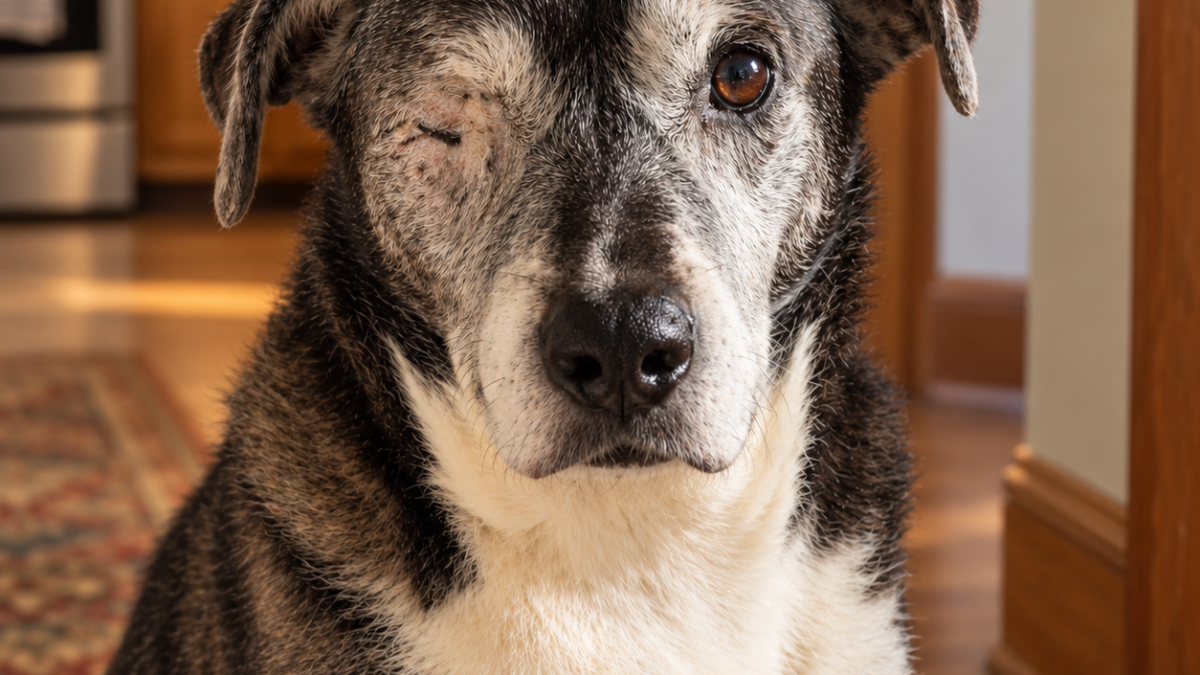
PART 2
I stared at him.
“What do you mean, he made it himself?”
The veterinarian, Dr. Fraser, looked at Pip again before answering.
We were standing in a small emergency treatment room under lights that seemed far too bright for what had just happened.
Pip lay on a padded table.
Someone had started an IV.
Another nurse was clipping burned fur away from his neck.
His breathing was shallow.
Every inhale came with that same faint whistle from his cheek.
Dr. Fraser pointed without touching.
“The opening here.”
I forced myself to look.
It was small.
Smaller than the end of my little finger.
“Those marks along the inside edge look like tooth trauma.”
I shook my head.
“I don’t understand.”
“His mouth has partially fused on the injured side. There’s extensive swelling in his nasal passages and throat. One nostril is completely obstructed. The other is barely moving air.”
I looked at Pip’s face.
“You’re saying he bit himself?”
“I’m saying it appears he repeatedly worked at the inside of his cheek until he created an opening.”
“For what?”
Dr. Fraser met my eyes.
“To breathe.”
For several seconds, I heard nothing.
Not the monitors.
Not the footsteps outside.
Not Rosie making little noises from the carrier seat my sister had brought to the hospital.
Nothing.
Just those two words.
To breathe.
“That’s impossible.”
“I would normally say so.”
“He knew he was suffocating?”
“I can’t tell you what he understood.”
“But he did that?”
“It appears that way.”
I put one hand on the metal counter because the room tilted.
Dr. Fraser continued.
“The tissue around the opening suggests it wasn’t created recently. He may have been breathing through it for hours.”
“How many hours?”
“When did the accident happen?”
“About two-fifteen.”
“And what time did you arrive?”
I looked at the clock.
Just after eight.
“Almost six hours.”
He nodded.
I felt sick.
Six hours.
For six hours, Pip had been inside that apartment fighting to breathe.
And I hadn’t understood.
I had wrapped him in a blanket.
Called the emergency line.
Held Rosie.
Waited for transportation.
Kept checking his pulse.
But I hadn’t known that the tiny sound from his cheek was the thing keeping him alive.
“I should have brought him sooner.”
Dr. Fraser shook his head.
“You brought him.”
“It took too long.”
“You were dealing with a baby, a burst heating system, an unsafe room, and a critically injured animal in the middle of the night.”
“I should have known.”
“How?”
I couldn’t answer.
Because there was no answer.
Guilt doesn’t need logic.
It just needs somewhere to live.
I looked at Pip.
His good eye was partly open.
“Is he going to survive?”
Dr. Fraser did not answer immediately.
That scared me more than anything.
“We have several problems,” he said.
“Tell me.”
“Severe thermal injury to the right side of the face. Significant airway swelling. Damage to the eye. Damage to the ear. His mouth has fused in places. There may be deeper tissue injury that we won’t fully understand until swelling settles.”
“Can you fix it?”
“We can try.”
“That isn’t what I asked.”
He was quiet.
Then he said, “I don’t know.”
I started crying.
Not loudly.
I had already used up whatever dramatic emotion I had during the night.
This was quieter.
Tears just kept coming.
Rosie made a sound behind me.
I turned.
My sister, Claire, was holding her.
Rosie was warm.
Pink-cheeked.
Perfect.
Alive.
I walked over and touched her hair.
Then I looked back at Pip.
That was when the shape of the night finally became clear.
The radiator had been on one side of the room.
Rosie’s crib had been four feet away.
Pip had been on the floor between them.
The steam blast traveled in a direct line.
Dr. Fraser had not yet seen the room, but when I described it, his face changed.
“Where exactly was the dog found?”
“Behind the crib.”
“Between the radiator and the crib?”
“Yes.”
“Where was he lying before the explosion?”
“On the floor. Closer to the radiator.”
“How close?”
“Maybe two feet from the crib.”
“And the baby has no burns?”
“None.”
He looked at Pip.
Then back at Rosie.
“I think you already know what happened.”
I did.
I just didn’t want to say it.
Claire did.
“He took it.”
Her voice broke.
“The steam hit Pip instead of Rosie.”
I put my hand over my mouth.
“No.”
But I knew.
The crib itself had a mark.
I remembered seeing it.
One side had darkened.
A plastic edge near the bottom had warped slightly.
At Pip’s height.
Not at Rosie’s.
He had been directly in front of the blast.
Maybe he had been sleeping there by accident.
Maybe he had risen when the radiator made that first metallic crack.
Maybe he had moved toward the crib.
I would never know.
I do know where his body was.
And I know my daughter did not have a single burn.
That was enough.
Dr. Fraser placed one hand gently on my arm.
“We need to move fast.”
“What do you need from me?”
“Permission.”
“For what?”
“Airway support first. Pain control. Imaging. Wound stabilization. Then we’ll know what surgery is possible.”
“Do it.”
“There may be significant cost.”
“Do it.”
“I need you to understand—”
“I said do it.”
He nodded.
Paperwork appeared.
I signed whatever they put in front of me.
I didn’t ask how much.
At that moment, money was a future problem.
Pip was the current one.
They moved him into intensive care.
I sat outside with Rosie.
Claire sat beside me.
For a while, neither of us spoke.
Then she whispered, “He saved her.”
I stared at the floor.
“I know.”
“You don’t have to say anything.”
“I complained about that radiator.”
Claire turned.
“What?”
“Twice.”
“To the landlord?”
“The property manager.”
“What did they say?”
“That it was old.”
My voice hardened.
“That old radiators make noise.”
Claire’s face changed.
“You told them it was knocking?”
“Yes.”
“When?”
“Maybe three weeks ago. Then again about a week before this.”
“Do you have it in writing?”
“The second one was an email.”
Her expression went from grief to something else.
Anger.
“Find it.”
“Not now.”
“Find it later.”
“I don’t care about the radiator right now.”
“You will.”
I looked at her.
She nodded toward the intensive care doors.
“Because that didn’t happen for no reason.”
I didn’t answer.
She was right.
But that morning I had only enough strength to care about one thing.
Pip.
The first surgery happened that afternoon.
They had stabilized his airway as much as possible.
His damaged eye could not be saved.
The tissue was too badly injured.
Dr. Fraser explained it gently.
I barely heard him.
“Take it.”
“You’re sure?”
“If keeping it hurts him, take it.”
“It will.”
“Then take it.”
The ear damage was permanent too.
Parts of the outer ear had been destroyed by the steam.
The biggest challenge was his mouth.
The right side had contracted and fused.
Scar tissue had formed rapidly in the heated tissue.
He could barely open his jaw.
Dr. Fraser told me reconstruction would come later.
First they had to keep Pip alive.
I sat at the clinic until they forced me to go home.
Home.
I hated that word that night.
The apartment didn’t feel like one.
It smelled damp and metallic.
The damaged radiator had been shut off.
A maintenance crew had disconnected the system.
Rosie’s bedroom door remained closed.
I couldn’t go inside.
I put her crib mattress in my room.
Claire stayed with us.
Around midnight, after Rosie finally slept, I sat at the kitchen table.
“Show me the email,” Claire said.
I opened my laptop.
Search.
Radiator.
There it was.
Sent eleven days before the explosion.
I had written:
The radiator in the baby’s room is making loud knocking and hissing noises. It seems worse than normal and I’m worried because it’s beside the crib. Can someone inspect it?
The response came the next morning.
Old cast-iron systems can be noisy in cold weather. We have no current indication of a safety fault. We will add it to the routine maintenance list.
Routine maintenance list.
I read it again.
And again.
Claire whispered, “Save that.”
“I have it.”
“Screenshot it too.”
“Claire.”
“I’m serious.”
“So am I.”
My voice rose.
Rosie moved in the next room.
I lowered it immediately.
“I don’t want to think about court or landlords or anything else. Pip might die.”
“I know.”
“Then stop.”
She nodded.
“Okay.”
We sat in silence.
A minute later my phone rang.
Emergency clinic.
I answered before the first ring finished.
“Hello?”
Dr. Fraser.
“The surgery is finished.”
I closed my eyes.
“And?”
“He’s alive.”
I started crying.
Claire grabbed my hand.
“Is he stable?”
“He’s critical, but stable enough for now.”
“Can I come?”
“In the morning.”
“I want to come now.”
“He’s heavily sedated. You won’t be able to interact with him.”
“I don’t care.”
There was a pause.
Then Dr. Fraser said, “Come.”
I drove back with Claire.
The roads were almost empty.
At the clinic, Pip looked even smaller than before.
Bandages covered much of the right side of his face.
One eye.
One ear altered beneath dressings.
Tubes.
Monitors.
The tiny opening he had made in his cheek remained.
They couldn’t close it yet.
It was still part of his airway management.
I sat beside him.
“Hey.”
Nothing.
I put my hand near his paw.
“Rosie’s okay.”
His paw twitched.
That could have been medication.
Reflex.
Anything.
I chose to believe he heard me.
“She’s okay because of you.”
I swallowed.
“So you need to stay too.”
The first three days passed in fragments.
Clinic.
Home.
Baby.
Phone calls.
Sleep when possible.
Food when reminded.
Pip remained critical.
His airway swelling slowly improved.
The burns had to be cleaned and dressed.
Pain management was complicated.
He hated anyone near the right side of his face.
Even sedated, he flinched.
The staff moved slowly.
Spoke before touching him.
Let him smell hands on the left side.
“He’s still Pip in there,” one nurse told me.
Her name was Megan.
She worked nights.
“What do you mean?”
“He reacts to his name.”
“Really?”
“Watch.”
She leaned toward him.
“Pip.”
His good ear moved.
I broke down again.
Megan handed me tissues.
“You people must buy these by the truckload.”
She smiled.
“We should.”
On the fourth day, Pip opened his good eye and focused on me.
Not just reflexively.
Focused.
“Hi.”
His tail moved.
Once.
I gasped.
“Do that again.”
Nothing.
“You can’t give me one and stop.”
His tail moved again.
Megan laughed behind me.
“There.”
I leaned down carefully.
“You ridiculous dog.”
He tried to lift his head.
“No.”
I touched his shoulder.
“You’ve done enough.”
He relaxed.
It was the first moment I believed he might come home.
Then Dr. Fraser reminded me recovery would not be simple.
“We still need to reconstruct the mouth.”
“How soon?”
“When the tissue tells us.”
“What does that mean?”
“When swelling decreases and we can clearly identify what’s viable.”
“Days?”
“Possibly weeks.”
“How does he eat until then?”
“Assisted feeding.”
“Through a tube?”
“For now.”
I hated it.
Pip loved food.
He had always been shameless about food.
Before Rosie was born, he would sit three feet from the kitchen table and perform what I called the starvation face.
After Rosie started solids, he became convinced she was his personal catering service.
She dropped food.
He cleaned it.
Perfect partnership.
Now he couldn’t open his mouth properly.
I stood beside his bed feeling furious.
At the radiator.
At the building.
At whoever had answered my email.
At myself.
At physics.
At everything.
That afternoon, someone from the property management company called.
A man named Graham Wallace.
“I understand there was an incident involving the heating system.”
An incident.
I almost laughed.
“My dog is in intensive care.”
“I’m very sorry.”
“My daughter was four feet away.”
“I understand.”
“No, I don’t think you do.”
He paused.
“We’re arranging an inspection.”
“Now?”
“Yes.”
“I asked for one eleven days ago.”
Silence.
I continued.
“I have the email.”
“Yes, we’ve reviewed the correspondence.”
“Good.”
Another pause.
“Our insurer may contact you.”
“Why?”
“To discuss property damage and associated losses.”
“My dog isn’t property damage.”
“I didn’t mean—”
“He took a steam blast in the face.”
“I understand this is emotional.”
That sentence changed me.
I had been exhausted.
Scared.
Guilty.
But until then, I had not been truly angry at a person.
“I’m sorry?”
“I simply mean—”
“You think I’m emotional?”
“No, that was poorly phrased.”
“My seven-month-old daughter was sleeping beside a radiator I reported as unsafe.”
“You reported noise.”
“I reported hissing and knocking and said I was worried because it was beside my baby’s crib.”
“The system had passed its previous inspection.”
“Then your inspection wasn’t good enough.”
“Ms. Campbell—”
I hung up.
Claire was in the room.
She had heard enough.
“Good.”
“Don’t.”
“He deserved that.”
“I don’t want revenge.”
“You will.”
I looked at her.
“No.”
“I don’t mean hurting someone.”
“Then what?”
“I mean you’re going to want them to admit they failed.”
That stayed with me.
Admit they failed.
Because right then, every official sentence sounded passive.
The radiator failed.
The valve corroded.
The pressure released.
The incident occurred.
As if no human decision existed anywhere in the chain.
But I had complained.
Someone had categorized the complaint.
Someone had decided routine maintenance was enough.
Someone had not come.
And Pip had paid for that decision with half his face.
The building inspection happened two days later.
I insisted on being there.
Claire came too.
So did a representative from the city housing authority after the fire service report raised concerns.
The radiator was partially disassembled.
The pressure-release valve was heavily corroded.
One engineer stared at it for a long time.
“How old is that?” I asked.
He looked uncomfortable.
“Hard to say without records.”
“Try.”
“Several decades.”
“When was it last replaced?”
“We’d need the maintenance history.”
The property manager said, “We’re retrieving that.”
I laughed.
“Of course you are.”
The engineer pointed toward the broken section.
“This should have relieved pressure before it reached a dangerous level.”
“But it didn’t.”
“No.”
“Why?”
“The internal mechanism appears seized.”
“From corrosion?”
“Likely.”
“Would knocking and hissing be a warning?”
The property manager interrupted.
“Individual radiators can make numerous sounds that are not dangerous.”
I looked at the engineer.
“I didn’t ask him.”
The engineer hesitated.
Then answered.
“Persistent abnormal knocking combined with venting or hissing can justify inspection.”
Claire crossed her arms.
“Which she requested.”
Nobody answered.
I stood in Rosie’s bedroom for the first time since the accident.
The crib had been moved.
But the marks remained.
The wall behind it showed moisture and heat damage.
The lower portion of the crib rail had warped.
Exactly where Pip’s body had been.
The engineer measured the line.
He looked at the radiator.
Then the crib.
Then at me.
“Where was your dog?”
I pointed.
“Here.”
He crouched.
The angle was obvious.
The blast had struck Pip.
Behind him was Rosie.
The engineer stood.
“Your dog blocked a significant portion of the direct steam path.”
Claire began crying.
I did too.
The property manager looked away.
For the first time, nobody called it an incident.
Three days later, I received another phone call from Graham Wallace.
This time he sounded different.
“Our insurer would like to discuss reimbursement.”
“For Pip?”
“Yes.”
“How much?”
“They need invoices.”
“I have invoices.”
“We can reimburse emergency treatment subject to review.”
“And future surgeries?”
“Those would need authorization.”
I laughed.
“You’re joking.”
“No.”
“Pip needs reconstructive surgery because your radiator exploded.”
“The question of liability has not been formally determined.”
There it was.
Liability.
I had been waiting for that word.
“What are you offering?”
He named a number.
It sounded large.
Until I looked at the estimate for Pip’s care.
Then it sounded like a fraction.
“And what do I sign?”
Silence.
“I know how this works.”
“It would be a standard settlement document.”
“Meaning I agree not to pursue anything else.”
“That would be one provision.”
“No.”
“Ms. Campbell—”
“No.”
“I would recommend you review the terms before—”
“I don’t need to.”
I ended the call.
Claire stared at me.
“You just refused how much?”
I told her.
She winced.
“We need that money.”
“I know.”
“Pip’s bills—”
“I know.”
“So what are you doing?”
I sat down.
My hands were shaking.
“I don’t know.”
That was the truth.
Bravery is easier in stories.
In reality, I was a mother with bills.
I worked part-time.
The cost of Pip’s first surgery alone was terrifying.
The clinic had already discounted treatment.
Neighbors had started quietly asking how they could help.
Still, the money mattered.
Claire sat across from me.
“You don’t have to decide tonight.”
“They want me tired.”
“What?”
“They want me scared enough about the bill that I sign.”
She didn’t answer.
I looked at the closed door to Rosie’s room.
“I complained.”
“Yes.”
“I did what I was supposed to do.”
“Yes.”
“And they ignored it.”
“Yes.”
“So no.”
That became the beginning of the other fight.
Pip was fighting for his body.
I started fighting for accountability.
Not revenge.
At least, that’s what I told myself.
A housing solicitor agreed to look at the case after seeing the email and preliminary inspection report.
Her name was Aileen Murray.
She read everything quietly.
Then asked, “Was this your first complaint about heating?”
“No.”
I searched old messages.
There had been others.
Not about an explosion.
Cold spots.
Pressure drops.
Radiator knocking.
One from a neighbor upstairs complaining about a valve leaking.
Another tenant had mentioned inconsistent heating in a building group chat.
Aileen looked at me.
“This may be broader than your apartment.”
“What do you mean?”
“If maintenance complaints were repeatedly deferred, we need records.”
“Can you get them?”
“We can request them.”
“And if they refuse?”
“We make the request less optional.”
I liked her immediately.
Meanwhile, Pip reached day twelve.
His airway swelling had improved enough that the hole he had made was no longer essential.
But the cheek could not yet be closed.
The tissue needed reconstruction.
Dr. Fraser showed me diagrams.
He explained grafts.
Scar release.
How they would try to restore enough movement for Pip to eat and drink normally.
“Will he look the same?”
“No.”
The honesty hurt.
“How different?”
“Significantly.”
“Will he know?”
Dr. Fraser smiled faintly.
“Dogs are generally less concerned with mirrors than we are.”
I laughed for the first time in days.
“Will he be in pain forever?”
“That’s what we’re trying to prevent.”
“And the eye?”
“Gone.”
“Ear?”
“Permanent damage.”
“Eating?”
“We hope to restore useful function.”
“Breathing?”
“Much better.”
I looked at Pip.
He was awake.
Watching us with his one good eye.
“He saved my baby.”
Dr. Fraser nodded.
“I know.”
“So whatever he needs.”
“We’ll do everything we reasonably can.”
The second surgery lasted nearly five hours.
They released fused tissue along the mouth.
Removed damaged tissue that could not survive.
Used healthy tissue to reconstruct part of the right lip.
The opening Pip had created remained temporarily.
Dr. Fraser wanted more healing before closing it.
When Pip woke, he was miserable.
There is no inspiring way to describe that day.
He hurt.
He was confused.
He pawed at the bandaging.
He whined despite medication.
I sat beside him and cried because I could not explain why saving him required hurting him again.
“I’m sorry.”
His good eye stayed on me.
“I know.”
I didn’t know what I was apologizing for.
The radiator.
The delay.
The surgery.
All of it.
Megan came over.
“You need to stop doing that.”
“What?”
“Apologizing to him.”
“I can’t.”
“He doesn’t think you caused this.”
“You don’t know that.”
“No, but I know what he does when you walk in.”
I looked at Pip.
His tail moved.
Slowly.
Megan smiled.
“That.”
For the first time, I thought about the difference between guilt and responsibility.
Guilt asked what I should have prevented.
Responsibility asked what I could do now.
I couldn’t go back to the night before the explosion.
I could sit beside Pip today.
So I did.
Day after day.
His first food by mouth after surgery was barely a teaspoon of soft meat.
Dr. Fraser placed it carefully on the left side.
Pip smelled it.
His eye widened.
I laughed.
“There he is.”
He tried to eat too fast.
“Slow.”
He ignored me.
Some things survive catastrophe untouched.
Pip’s appetite was one of them.
He managed the first bite.
Then the second.
Food leaked slightly from the reconstructed side.
He became frustrated.
I wanted to cry.
Instead I adjusted the dish.
“Other side, buddy.”
He tried again.
Better.
By the fifth bite, he understood.
Dogs are remarkable that way.
Humans grieve the old method.
Dogs search for the next workable one.
Left side.
Tilt head.
Eat.
Problem solved.
Rosie visited once the intensive care team felt it was safe.
She was too young to understand.
Claire held her.
Pip was lying on his bed.
The moment he heard Rosie babbling, his good ear lifted.
His head came up.
His tail started moving.
I froze.
“Pip.”
Rosie squealed.
Pip tried to stand.
“No, no.”
Megan helped steady him.
Rosie reached one little hand outward.
I kept her far enough away from his dressings.
Pip stretched his nose toward her.
He smelled her sock.
Tail.
Faster.
Claire started crying.
I didn’t even pretend not to.
“He knows her.”
“Of course he knows her.”
Pip settled.
But he kept watching Rosie.
One eye.
Full attention.
That was the moment I stopped seeing his injuries first.
He was still Pip.
Not half a face.
Not a burn case.
Not a heroic headline.
Pip.
Rosie’s shadow.
My kitchen thief.
The dog who hated rain but loved snow.
The dog who barked exactly once when someone knocked and then hid behind me.
The dog who once ate an entire stick of butter.
He was still there.
The scar was not the dog.
That mattered later.
Because once neighbors heard what happened, people started talking about him.
Word traveled through the building.
Then the neighborhood.
Someone told a local reporter.
I refused an interview at first.
I didn’t want Pip turned into spectacle.
Then the veterinary bills grew.
Dr. Fraser told me quietly that the clinic would cover a substantial portion.
“You can’t.”
“We can.”
“Why?”
He looked at Pip.
“Because half the staff has become irrationally attached.”
Megan called from across the room, “Accurate.”
I laughed.
“What about the rest?”
“People have been asking.”
“Who?”
“Neighbors.”
That became another part of the story I never expected.
Mrs. Donnelly from two floors up brought twenty pounds in an envelope.
“I’m sorry it isn’t more.”
“It’s too much.”
“Nonsense.”
A mechanic from the next street handed the clinic fifty.
A schoolteacher sent ten.
Someone left an envelope with no name.
A teenager who walked dogs after school donated part of one week’s money.
I cried over all of it.
Not because of the amounts.
Because Pip’s suffering had made the world feel cruel.
The response reminded me cruelty wasn’t the whole world.
A local paper eventually ran a small story.
I agreed only if they focused on the maintenance issue and Pip’s recovery.
The headline called him a hero.
I hated the word at first.
Hero made what happened sound clean.
There had been nothing clean about it.
He had suffered.
He had nearly died.
Still, I understood why people used it.
The evidence was impossible to ignore.
The burn pattern on the crib.
The engineer’s report.
Pip’s position.
Rosie’s complete lack of injury.
He had taken the blast.
Whether by instinct, chance, or choice in a fraction of a second, his body had been between the steam and my baby.
People sent cards.
One said:
FOR THE BRAVEST BOY IN GLASGOW.
Pip tried to eat it.
Heroism had not improved his judgment.
The legal side became uglier.
Aileen obtained maintenance records.
Or what records existed.
Some inspection dates were missing.
Several tenant complaints had been categorized as “non-urgent.”
An engineer’s recommendation from the previous winter suggested older radiator valves in the building should be inspected before the next heating season.
The full inspection had never happened.
I read that line three times.
“Why?”
Aileen looked at the papers.
“Cost appears to have been discussed.”
“What does that mean?”
“There are internal emails.”
She slid one toward me.
The language was bureaucratic.
Budget.
Scheduling.
Deferment.
Prioritization.
No immediate evidence of system-wide failure.
Target next fiscal maintenance period.
I stared.
“They delayed it.”
“Yes.”
“Because of money.”
“Partly.”
I thought about Pip’s missing eye.
“Do they know we have this?”
“They produced it.”
“Why would they?”
“Because failing to produce it would be worse.”
I laughed without humor.
“Good.”
Aileen studied me.
“What outcome do you want?”
“The building fixed.”
“Yes.”
“Pip’s bills paid.”
“Yes.”
“My daughter safe.”
“Of course.”
“And I want them to admit they were warned.”
She leaned back.
“That last one may be harder.”
“Why?”
“Organizations like settling without admitting liability.”
“Then I don’t want a settlement.”
She sighed.
“I knew you’d say that.”
“I’m serious.”
“So am I.”
She folded her hands.
“Listen carefully. Accountability can take different forms. A written admission is emotionally satisfying. A binding repair order, full compensation, and documented findings may protect more people.”
I hated how much sense that made.
“I want both.”
“We’ll ask.”
That was when the revenge feeling arrived.
Not violence.
Not humiliation.
Exposure.
I wanted every ignored email read aloud.
Every deferment explained.
Every phrase like routine maintenance list placed beside a photograph of Pip.
I wanted the people who had treated risk as paperwork to see what risk looked like when it had fur and a heartbeat.
But Aileen kept me disciplined.
“Facts.”
“I know.”
“No social media accusations we can’t prove.”
“I know.”
“No contacting individual staff.”
“I know.”
“No threats.”
“I wasn’t going to threaten anyone.”
She raised an eyebrow.
“Not even a strongly worded kettle?”
I laughed.
“Fine.”
Pip’s third surgery happened almost six weeks after the explosion.
By then he could walk.
Eat soft food.
Drink.
Sleep without constant monitoring.
His airway was stable.
The surgeons closed the opening in his cheek—the opening he had made to stay alive.
Before they did, Dr. Fraser asked whether I wanted a photograph for the medical record.
“Yes.”
I still have it.
I rarely look at it.
Seven millimeters.
That tiny hole.
Something so small had carried every breath between death and morning.
Dr. Fraser stood beside me before surgery.
“You know this part is going to feel strange.”
“What?”
“Closing it.”
“Why?”
“Because psychologically, everyone here thinks of it as the thing that saved him.”
I looked at Pip.
“But he doesn’t need it anymore.”
“No.”
“Then close it.”
The surgery went well.
When the bandages came off weeks later, a faint circular scar remained.
Nothing dramatic.
Most people wouldn’t know what it was.
I always would.
By the end of the second month, Pip came home.
I had imagined that day constantly.
In reality, it was messy.
He hated the car.
Rosie cried halfway home.
Claire forgot the medication schedule in the clinic and had to turn around.
I cried when Pip walked through the apartment door.
Then Pip immediately went to the kitchen and searched for food.
Perfect.
Absolutely perfect.
Rosie was sitting in a high chair.
The moment she saw him, she bounced.
Pip walked over.
Sat beneath her.
I laughed.
“Of course.”
She dropped a piece of banana.
Pip caught it.
Left side.
Chewed carefully.
Claire covered her mouth.
“He’s back.”
“Yes.”
He was.
Different.
But back.
The first night, I worried he would avoid Rosie’s room.
I would not have blamed him.
I had moved the crib.
The old radiator was gone.
A temporary safe heater had been installed while the whole system was reviewed.
I put Pip’s bed in the living room.
At bedtime, he followed me down the hall.
Stopped at Rosie’s door.
I froze.
“You don’t have to.”
He entered.
Smelled the floor.
Walked toward the place where the radiator had been.
Stopped.
Then lay down.
I started crying.
“Pip.”
He looked at me.
“You don’t have to guard her.”
Tail.
Once.
I sat beside him.
For twenty minutes.
When I stood, he stayed.
That became his place.
Years later, it still is.
The legal confrontation happened three months after Pip came home.
We didn’t end up in a dramatic criminal trial.
Reality is rarely that theatrical.
Instead, we attended a formal mediation involving the property company, their insurer, lawyers, safety representatives, and the local housing authority.
Aileen warned me.
“They may apologize without admitting legal fault.”
“I know.”
“They may make a significant offer.”
“I know.”
“Do not respond emotionally to the first number.”
“I know.”
She smiled.
“You’re going to respond emotionally.”
“Probably.”
The property company’s representative was not Graham Wallace.
It was a senior director named Martin Keane.
He wore an expensive suit.
His solicitor opened with condolences.
I listened.
Then Martin spoke.
“We deeply regret the injuries suffered by your dog and the distress caused to your family.”
Distress.
I looked at Aileen.
She shook her head slightly.
Wait.
Martin continued.
“We have undertaken extensive review and already begun upgrades.”
I placed a folder on the table.
Inside was a photograph of Pip.
Not the worst one.
I wouldn’t do that to him.
A recent one.
One eye.
Scarred cheek.
Damaged ear.
Sitting beside Rosie.
I slid it across the table.
Martin looked.
“That is Pip now.”
He nodded.
“I understand.”
“No, you understand a file.”
Silence.
Aileen did not stop me.
So I continued.
“I wrote to your office because the radiator beside my baby’s crib was hissing and knocking.”
Martin looked at his solicitor.
“I was told it was normal.”
He remained silent.
“Eleven days later it exploded.”
No one interrupted.
“My daughter has no scars because my dog has all of them.”
Martin looked at the photograph again.
“He lost an eye.”
Silence.
“Part of his ear.”
Silence.
“He needed three surgeries.”
I pointed at the faint mark visible on the cheek.
“And that circle there? That’s where he tore through his own face because he couldn’t breathe.”
One of the insurance representatives looked down.
I felt my hands shaking.
I kept going.
“So when you say distress, understand what the word means in this room.”
Martin took a breath.
“You’re right.”
That stopped me.
I had expected defense.
Not that.
He continued.
“The complaint should have triggered an inspection.”
His solicitor shifted.
Martin looked at him.
Then back at me.
“It did not.”
Aileen became very still.
Martin said, “Our internal review found failures in maintenance triage and follow-up.”
My heart started pounding.
“Say it plainly.”
He did.
“We failed to respond appropriately to your warning.”
There it was.
Not perfect.
Not enough to restore Pip.
But real.
Aileen wrote something.
I stared at Martin.
“If Pip hadn’t been there?”
He looked at Rosie’s photograph.
“I don’t want to speculate.”
“An engineer already did.”
He closed his eyes for half a second.
“I have read the report.”
“So have I.”
No one spoke.
Then he said, “The likely outcome for the child would have been severe.”
“Or fatal.”
“Yes.”
The room changed.
That was the closest thing to revenge I ever needed.
Not watching someone suffer.
Watching the truth become impossible to hide.
The final agreement included full coverage of Pip’s past and expected future veterinary care related to the burns.
Compensation for damaged property and displacement.
A formal independent inspection of the entire heating system.
Replacement of obsolete pressure valves throughout the building.
A revised emergency maintenance protocol.
A requirement that complaints involving heating equipment in bedrooms with infants, elderly residents, or medically vulnerable occupants receive elevated priority.
And written acknowledgment that my complaint had not been appropriately escalated.
I signed.
Not because money fixed anything.
Because the agreement forced change.
Within weeks, engineers were in every apartment.
Three additional valves were replaced immediately.
One upstairs radiator showed corrosion serious enough that the engineer said it should not remain in service.
Mrs. Donnelly called me afterward.
“Your Pip may have saved more than Rosie.”
I sat down.
“What?”
“They found mine was bad too.”
I closed my eyes.
That was when the whole fight finally felt worth it.
Not because the property company lost money.
Because another radiator didn’t get the chance to explode.
Pip’s suffering had bought a warning.
We made sure people listened to it.
A year after the accident, Rosie could walk.
Pip had adjusted completely to one eye.
At first, he bumped into chair legs on his blind side.
Then he learned.
He turned his head more.
Approached stairs differently.
Slept with his good eye facing the room.
Eating stayed slightly awkward.
He chewed primarily on the left.
Hard treats had to be broken.
Drinking could get messy.
Pip did not care.
He cared about quantity.
One morning Rosie dropped toast.
Pip caught it.
I said, “You are supposed to be medically complicated.”
He wagged.
Rosie laughed.
That became their relationship.
She dropped things.
He appeared.
She crawled.
He followed.
When she learned to walk, she used Pip once to steady herself.
I nearly screamed.
“Gentle!”
Pip didn’t move.
Rosie grabbed fur.
He looked at me with one eye that clearly said, Are you handling this?
I removed her hand.
“Sorry.”
He licked her cheek.
Left side.
She laughed again.
I watched those two and wondered what memory means to a dog.
Did Pip remember the steam?
The pain?
The clinic?
I don’t know.
He never panicked when the heating came on.
He did not avoid Rosie’s room.
He did not react to the new radiator.
That surprised everyone.
Sometimes a pipe clicked.
Pip’s ear lifted.
Then settled.
That was it.
Humans expected trauma to become a story he carried visibly.
Pip refused.
He adapted.
That doesn’t mean animals don’t experience trauma.
They do.
It means his trauma did not become his only identity.
That distinction matters.
People who met him after the accident often stared.
They tried not to.
But they did.
Children were the most honest.
“What happened to his face?”
“An accident.”
“Does it hurt?”
“Not now.”
“Can he see?”
“With one eye.”
“Is he sad?”
That question always made me smile.
Usually Pip was trying to obtain someone’s sandwich.
“No.”
The child would pet his left side.
Pip would lean in.
Question answered.
One woman once asked if we had considered rehoming him.
I thought I had misunderstood.
“Why?”
“Because of the baby.”
“What about her?”
“After everything he went through. Maybe being around the same environment is stressful.”
I stared at her.
Pip was lying at Rosie’s feet.
Rosie was stacking blocks.
“Rehome him?”
“I only mean for his well-being.”
I looked down at Pip.
Then back at her.
“He kept himself alive long enough for me to find him after taking a blast that would have hit my daughter.”
She looked embarrassed.
I continued.
“He stayed.”
My voice softened.
“So will I.”
That quote later got repeated after someone heard me say it.
I never intended it to become anything.
It was simply true.
Pip stayed.
So would we.
At two years, Rosie understood that Pip looked different.
She had started noticing faces.
Eyes.
Ears.
One morning she touched the scarred side gently.
“Pip eye?”
I sat beside her.
“Pip has one eye.”
She pointed at herself.
“Rosie two.”
“Yes.”
“Pip one.”
“Yes.”
She thought about it.
Then hugged him.
That was the entire philosophical discussion.
Children are sometimes better at acceptance than adults.
One.
Two.
Still Pip.
At three, Rosie began asking for the story.
Not the full story.
Never the painful details.
She knew Pip got hurt when she was a baby.
She knew he helped keep her safe.
That was enough.
“Pip saved me?”
She asked once.
I looked at him.
He was asleep.
I answered carefully.
“Pip was there when something dangerous happened, and he got hurt instead of you.”
“Because he loves me?”
That question broke me.
“I think Pip has always loved you.”
Rosie walked over.
Kissed the top of his head.
Pip woke.
Looked offended.
Then realized she had a cracker.
Love restored.
As time passed, the scar tissue changed color.
Cold weather made it paler.
Warmth made it slightly pink.
The right ear remained a small hardened curl.
The missing eye area softened after reconstruction.
The cheek scar stayed.
And that faint circle where he had breathed through his own face remained visible if you knew where to look.
I knew.
Every morning.
Sometimes light came through the front window and crossed that side of him.
The ridges cast small shadows.
At first, I hated seeing them.
Then something changed.
The scars became proof of time.
One year healed.
Two.
Three.
Pip was alive long enough for scars to mature.
That was a privilege.
On the third anniversary, Dr. Fraser came to our home.
Not professionally.
We had somehow become friends.
You spend months handing someone your terrified dog and eventually normal boundaries blur.
He brought Pip treats.
“Soft ones,” he said.
“You remembered.”
“I reconstructed that mouth. I’m invested.”
Pip recognized him.
Tail wag.
Dr. Fraser sat on the floor.
Pip pressed his head into his shoulder.
“Look at you.”
I brought tea.
Rosie climbed beside them.
Dr. Fraser looked at both.
Then at me.
“I still think about that opening.”
“So do I.”
“I’ve discussed it with colleagues.”
“What do they say?”
“Same thing I do.”
“Which is?”
“We can explain the mechanics. He needed air. He had usable teeth on one side. He experienced severe obstruction.”
“But?”
“We can’t explain the behavior with certainty.”
“You mean how he knew.”
“Yes.”
I looked at Pip.
“Maybe he didn’t.”
Dr. Fraser nodded.
“Exactly.”
“Maybe he just fought.”
“That may be all it was.”
That answer pleased me more.
Pip didn’t need supernatural knowledge.
He didn’t need to understand airway anatomy.
His body wanted to live.
He fought.
Again.
Again.
Again.
Until air came through.
Sometimes survival looks intelligent because desperation is incredibly creative.
The point wasn’t how he knew.
The point was that he didn’t stop.
By the fourth year, Pip had become slower.
Not old exactly.
But entering that phase where getting up required a second thought.
Rosie was four.
Energetic enough for three children.
Pip still slept at the foot of her bed.
Always on the radiator side.
We had replaced the entire heating unit years earlier.
Modern.
Inspected.
Safe.
Still, Pip chose that spot.
Every night.
At first, I tried moving his bed.
He moved back.
I stopped.
Maybe it was habit.
Maybe the room layout felt comfortable.
Maybe he liked being near the warm wall.
Maybe some part of him still positioned himself between Rosie and whatever he once believed dangerous.
I will never know.
I stopped needing to.
Love doesn’t always need explanation.
One winter night, the heating turned on.
The new unit made a quiet click.
Pip opened his eye.
Lifted his good ear.
Looked toward Rosie.
She was asleep.
He lowered his head again.
I stood in the doorway.
The image was so ordinary that it hurt.
Years before, heat had almost killed him.
Now warmth filled the room safely.
That was what accountability had changed.
Not only our apartment.
The whole building.
The maintenance company had changed contractors.
Inspection schedules were posted.
Emergency numbers worked.
Tenants knew what to report.
Mrs. Donnelly joked that I had become “the radiator police.”
I accepted the title.
Whenever a neighbor mentioned banging pipes, I said, “Report it.”
Sometimes twice.
I became the annoying tenant.
Good.
Being polite had nearly cost my daughter everything.
One afternoon, Graham Wallace—the property manager I had hung up on—appeared at the building for an inspection.
Years had passed.
He recognized me.
I recognized him.
For a second, we simply stood in the hall.
Then he said, “How’s Pip?”
I was surprised.
“Alive.”
“I heard.”
“He’s doing well.”
“I’m glad.”
I could have walked away.
Instead I said, “Do you remember telling me I was emotional?”
His face tightened.
“Yes.”
“That was a bad day.”
“I know.”
He looked genuinely ashamed.
“I’m sorry.”
I studied him.
Part of me wanted to stay angry.
Anger had carried me through months of paperwork.
But carrying it forever would not heal Pip.
“Did the policies actually change?”
“Yes.”
“Not just on paper?”
“No. Complaints like yours trigger same-day review now.”
I nodded.
“Good.”
He hesitated.
“Your case changed how we handle them.”
I looked toward the stairwell.
Mrs. Donnelly lived above.
A young family had moved into another unit.
Children.
Older people.
Dogs.
Lives.
“Then make sure it stays changed.”
“We will.”
I walked away.
That was more satisfying than shouting.
Real revenge had become prevention.
The failure that hurt Pip had been converted into a rule designed to stop the same failure from hurting someone else.
That is not dramatic enough for movies.
It is better in real life.
Pip turned eight.
Rosie was three when people started telling the story as if it belonged to the past.
For us, it lived in small accommodations.
Soft food when necessary.
Eye checks.
Skin care on the scarred side.
Extra protection from extreme cold because the damaged tissue reacted differently.
Careful grooming.
Annual airway evaluation.
Nothing glamorous.
Love becomes maintenance after the dramatic part ends.
That is the part people rarely talk about.
Everybody wants the rescue moment.
The hero moment.
The surgery.
The comeback.
But most love is remembering medication.
Buying the right food.
Checking a scar.
Making an appointment.
Moving furniture so the dog can see around his blind side.
Not startling him from the right.
Cleaning the bowl.
Opening the door.
Doing it tomorrow too.
Pip never thanked us.
I’m glad.
He didn’t owe us gratitude.
If anything, we owed him.
One evening Rosie asked why Pip’s picture from before the accident showed two ears.
She had found an old photo.
Pip at two years old.
Perfectly symmetrical.
Bright eyes.
Both ears upright.
“Was that Pip?”
“Yes.”
“He looks different.”
“He does.”
“Which one is real Pip?”
I nearly cried.
“Both.”
She thought.
Then carried the picture to him.
Pip smelled it.
Sneezed.
Walked away.
Rosie laughed.
Problem solved.
That question stayed with me though.
Which one is real Pip?
The answer is all of him.
The dog before.
The dog injured.
The dog recovering.
The dog scarred.
The dog sleeping.
Trauma doesn’t replace identity.
It becomes one chapter inside it.
That mattered because strangers often reduced him to what happened.
“Is that the radiator dog?”
Yes.
But also no.
He was Pip.
He liked cheese.
Hated rain.
Loved Rosie.
Stole socks.
Snored.
Was afraid of the vacuum cleaner.
Refused to fetch unless food was involved.
Had one functioning eye and zero patience for closed kitchen doors.
His face told one story.
His life told hundreds.
The most satisfying moment came years after the legal settlement.
A young mother moved into the building.
Her son was nine months old.
One afternoon she knocked.
“Can I ask you something?”
“Sure.”
“My radiator is making a clicking sound.”
My whole body went cold.
“What kind?”
“I don’t know. Maybe normal.”
“Did you report it?”
“Yes.”
“And?”
“They’re sending someone this afternoon.”
Same afternoon.
I exhaled.
“Good.”
She looked confused.
“I heard about what happened here.”
I nodded.
“I’m sorry.”
“Don’t be.”
“I almost didn’t report it because I thought I was overreacting.”
I looked at her.
“Never worry about being annoying when something feels unsafe.”
She smiled nervously.
“They said the new policy requires inspection.”
New policy.
Pip’s policy, I thought.
I didn’t say it.
An engineer came.
The radiator was fine.
A harmless expansion sound.
Best possible outcome.
The mother apologized for making a fuss.
The engineer said, “No need. That’s what we’re here for.”
I stood in my doorway listening.
Years earlier, I had been told old systems make noise.
Now someone came.
Checked.
Explained.
That was victory.
Not someone losing a job.
Not a company writing a check.
A mother reporting a concern and being taken seriously.
Pip was asleep inside during the inspection.
He had no idea.
Of course he didn’t.
Heroes rarely know what institutions do with their suffering afterward.
Humans have to make that part count.
As Pip aged, his attachment to Rosie grew quieter.
When she was a baby, he followed every sound.
When she became a toddler, he supervised.
At three, he tolerated tea parties.
At four, he became her reading audience.
Rosie would sit beside him with picture books.
“Pip, look.”
Pip slept.
“Pip.”
One eye opened.
She showed him a drawing.
“Dog.”
Tail.
Approved.
At five, she understood enough to tell other children:
“Pip got hurt keeping me safe.”
I corrected her once.
“We don’t know exactly what Pip was thinking.”
Rosie frowned.
“He was with me.”
“Yes.”
“He got hurt.”
“Yes.”
“I didn’t.”
“Yes.”
She crossed her arms.
“So Pip protected me.”
I looked at the dog.
He was licking crumbs from beneath the table.
“Okay.”
She smiled.
Children sometimes know what matters without needing forensic precision.
Years after the explosion, a local reporter contacted us again.
Anniversary story.
I declined.
“Why?” Claire asked.
“Because Pip doesn’t need another article.”
“But it could help people.”
“The safety information is already public.”
She nodded.
“And?”
“I’m tired of his worst night being the first thing people know.”
That was true.
For years, strangers saw his scars and wanted the story.
Eventually, I wanted him to be allowed to exist without explaining his face.
Not every scar owes the world a testimony.
Sometimes a dog wants a nap.
One Saturday morning, Pip sat near the window.
Sunlight fell across his scarred cheek.
Rosie was playing in the next room.
The heating clicked on.
Pip lifted his ear.
Turned toward the sound.
Then toward Rosie.
Listened.
Satisfied.
Head down.
I watched him.
Eight years old.
One eye.
Damaged ear.
Reconstructed mouth.
Faint circular mark on his cheek.
Alive.
That word still mattered more than every other one.
Alive.
The night of the explosion, his airway narrowed until he should not have had enough air.
Alive.
He tore through tissue until he found another path.
Alive.
Three surgeries.
Alive.
Two months of care.
Alive.
Home.
Aging.
Annoying.
Hungry.
Loved.
Alive.
Sometimes I think about what would have happened if Pip had not been lying in that room.
I try not to.
There are thoughts that do not deserve rehearsal.
The engineer’s report said enough.
Direct steam trajectory.
Crib within blast path.
Canine body position intercepting primary exposure.
Clinical language.
Behind it was my daughter.
Seven months old.
No burns.
No scars.
No memory of that night.
That is the gift Pip gave her.
She gets not to remember.
He carried the evidence on his face so she could grow up without it on hers.
That truth is almost too big for me.
People ask whether I feel guilty looking at him.
Sometimes.
Less now.
Guilt used to say:
He looks like that because you failed.
Love eventually answered:
He looks like that because he survived.
Both can exist.
I reported the radiator.
I wish I had pushed harder.
I wish someone had come.
I wish I had moved the crib.
I wish Pip had never needed to be brave.
But wishes do not rewrite December 2022.
What matters is what we did afterward.
We kept him alive.
The clinic rebuilt what it could.
Neighbors helped.
The building changed.
Other radiators were inspected.
Other families were protected.
Rosie grew.
Pip aged.
Life continued.
That is the ending catastrophe tries to steal.
Continuation.
On the anniversary one year, Claire brought Pip a soft steak.
“Veterinarian approved?”
“No.”
“Then no.”
Pip looked betrayed.
Claire cut a tiny piece.
“Traitor,” I told her.
Pip ate it.
Rosie clapped.
We didn’t light candles.
Didn’t call it a rescue anniversary.
I didn’t want the explosion becoming a holiday.
Instead, every December I check the radiators.
Every valve.
Every room.
Then I sit beside Pip for a while.
No speech.
No dramatic thank-you.
He already knows my hands.
My voice.
My home.
That is enough.
Once, long after the case ended, Aileen mailed me a copy of the final safety audit.
I almost threw it away.
Then I read the last section.
No outstanding high-risk radiator defects identified.
All units meeting revised inspection standard.
I folded the report.
Put it beside Pip’s original medical file.
Those two documents belonged together.
One showed what failure cost.
The other showed that the failure had consequences.
That was the revenge I could live with.
Not pain returned for pain.
Safety built from pain.
Pip had lost part of his face.
We made sure the lesson could not be hidden behind paperwork.
Years later, Martin Keane left the property company.
I heard through another tenant.
I felt nothing.
That surprised me.
Once, I wanted people punished personally.
Time had changed what I needed.
The system had changed.
Pip’s bills were covered.
The building had been repaired.
The warning had been acknowledged.
The rest belonged to other people’s consciences.
I had a dog to grow old with.
That was more important.
Pip began sleeping more at eight.
The vet said that was normal.
I objected to the concept of aging.
The vet ignored me.
Rosie thought the gray fur appearing near his muzzle was beautiful.
“He matches his scars.”
Children say horrifyingly sweet things.
Pip’s mobility remained good.
One eye compensated beautifully.
His hearing on the damaged side was reduced.
So Rosie learned to approach from his left.
Nobody told her repeatedly.
She noticed.
That moved me.
Care becomes instinct when love lasts long enough.
At bedtime, she placed his blanket beside her bed.
“Pip.”
He walked in.
Turned twice.
Lay down on the radiator side.
Always.
Rosie climbed into bed.
“Good night.”
Tail.
One thump.
I turned off the light.
From the hallway, I could see his silhouette.
Dog.
Child.
Radiator.
Same arrangement.
Different world.
This radiator was modern.
Inspected.
Temperature controlled.
The room was safe.
Still Pip stayed between them.
Every night.
Maybe he remembered.
Maybe he didn’t.
Maybe that was simply where he liked to sleep.
I don’t need to turn instinct into mythology.
What matters is that he had the freedom to choose any room in the house.
He chose hers.
One night Rosie asked, “Will Pip always sleep here?”
I sat on her bed.
“He’ll sleep here as long as he wants.”
“Forever?”
I paused.
She was old enough now to understand that dogs do not live forever.
Not completely.
But enough.
“Not forever.”
Her face changed.
“Why?”
“Because nobody stays forever.”
She looked toward him.
Pip slept.
“But a long time?”
“I hope so.”
Rosie whispered, “He has to stay until I’m big.”
I kissed her forehead.
“He’s already stayed longer than anyone thought he would that night.”
She didn’t understand.
I did.
Every year was a defiance.
The veterinarian who first saw Pip had thought survival was uncertain.
Now we were discussing arthritis prevention.
That felt almost funny.
A dog once struggling for air through a self-made opening in his cheek had lived long enough to need senior bloodwork.
I celebrated every boring test.
Normal kidney values.
Good heart.
Slightly stiff hip.
Ordinary.
Give me ordinary forever.
At nine, Pip finally slowed enough that he stopped climbing the stairs unnecessarily.
Rosie complained.
“He’s lazy.”
“He’s old.”
“He’s not old.”
I smiled.
“That’s what I say.”
We put another bed downstairs.
Then another near the window.
Our house became mostly dog beds.
Pip used whichever one was least convenient.
Naturally.
His appetite remained legendary.
One morning I caught Rosie slipping him scrambled egg.
“Rosie.”
She froze.
Pip swallowed evidence.
“It fell.”
“It fell from your fork into his mouth?”
“Yes.”
I looked at Pip.
He stared back with his one innocent eye.
Conspiracy.
I laughed.
That was life.
Not burn care.
Not lawyers.
Not reporters.
Egg theft.
Exactly what I wanted.
Sometimes strangers still asked what happened.
If I had time, I told them.
If I didn’t, I said:
“He survived an accident.”
Both answers were true.
Pip did not need me to reopen the whole night for every curious person.
The scars were visible.
The story belonged to us.
One afternoon, an older man stared for too long.
Then said, “Poor dog.”
Before I could answer, Rosie did.
“He’s not poor.”
The man looked surprised.
Rosie continued.
“He has chicken tonight.”
I laughed so hard I had to turn away.
Pip wagged.
Perfect.
That became our family’s answer.
Poor Pip?
No.
Scarred Pip.
Different Pip.
Older Pip.
Spoiled Pip.
Chicken-tonight Pip.
Alive Pip.
The greatest mistake people make about survivors is assuming survival leaves them permanently inside the moment of injury.
Pip did not live every day thinking about steam.
He lived thinking about breakfast.
Rosie.
Sunlight.
Walks.
Whether I might open cheese.
That was his revenge against the accident.
He became ordinary again.
And ordinary, after catastrophe, is sacred.
The building changed ownership eventually.
The new company reviewed all safety records before taking over.
A manager visited each apartment.
When he reached mine, he looked toward Pip.
Recognition crossed his face.
“You’re the family from the incident.”
I hated the word less now.
“Yes.”
“I’ve read the reports.”
“Good.”
“We’ve retained the inspection schedule.”
“Good.”
He looked toward Rosie’s room.
“Annual pressure-valve testing continues.”
“Good.”
I must have sounded like an interrogator.
I didn’t care.
Before leaving, he said, “Your case is used in staff safety training.”
That stopped me.
“What?”
“The maintenance escalation failure.”
I looked down at Pip.
He was smelling the manager’s shoe.
“So people see what happened?”
“Yes.”
“Good.”
That might have been the final piece.
Pip’s injuries were not merely compensated.
They were remembered institutionally.
A new employee somewhere would be shown what “routine” can become when a warning is ignored.
Maybe the next person would knock on a tenant’s door.
Maybe the next baby would never need a dog between them and a blast.
That was enough.
More than revenge.
Prevention.
When Rosie was old enough to understand the full story, I told her gradually.
Not the graphic parts.
Not at first.
She knew Pip was hurt.
She knew the radiator failed.
She knew he stood between the steam and her crib.
Then one day, around school age, she asked about the small circular scar.
“What’s that one?”
I hesitated.
Pip was asleep.
“That helped him survive.”
“How?”
“He had trouble breathing after he got hurt.”
She waited.
“So he made another way.”
“With what?”
I looked at her.
She understood before I answered.
Her eyes filled.
“He did that himself?”
“Yes.”
“Did it hurt?”
I could not lie.
“Yes.”
Rosie sat beside him.
Very carefully, she placed her hand on his shoulder.
Pip opened his eye.
Tail.
She started crying.
Pip stood.
Licked her face.
Left side.
Rosie laughed through tears.
“I’m sorry.”
I sat beside her.
“Don’t be sorry.”
“He got hurt because of me.”
There it was.
The sentence I had once said in my own head.
I took her face in my hands.
“No.”
“But—”
“No.”
“Pip got hurt in an accident caused by a broken radiator.”
She looked at him.
“You did not cause it.”
“But he was there because—”
“Rosie.”
She looked at me.
“Love is not a debt.”
She was quiet.
“Pip didn’t save you so you would spend your life feeling guilty.”
I realized as I said it that I was talking to myself too.
Love is not a debt.
Pip had never asked us to repay him.
He wanted dinner.
Walks.
Soft places.
Our presence.
We could give him those without turning gratitude into guilt.
Rosie wiped her eyes.
“Can I give him chicken?”
I laughed.
“Small piece.”
Pip, suddenly fully alert, approached.
Healing complete.
Years after that night, I still wake sometimes at 2:15.
Not every night.
Not even every month.
But occasionally.
A pipe clicks.
A car door slams.
And I am back in steam.
I smell metal.
Hear Rosie crying.
Feel heat.
Then I reach beside me.
Sometimes Pip is there.
Sometimes I walk to Rosie’s room.
He is at the foot of her bed.
Breathing.
Slow.
Steady.
No whistle.
No struggle.
I stand in the doorway until my heart settles.
That is my scar.
Invisible.
Pip’s are easier to see.
Maybe that’s why people think he suffered and we healed.
The truth is everyone carried something forward.
Rosie carried the least.
Thank God.
Pip carried the marks.
I carried memory.
But we also carried something else.
Proof.
Proof that warnings matter.
Proof that ordinary people can force systems to change.
Proof that neighbors will put ten pounds in an envelope for a dog they never met.
Proof that veterinarians will stay after their shift because they can’t stop thinking about a patient.
Proof that a body can be catastrophically changed without a life becoming lesser.
Proof that one terrible night does not get ownership of everything after it.
Most mornings, Pip still sits by the window.
The scarred side of his face catches the light.
It makes every ridge visible.
For years, I wanted to position him differently.
Good side toward people.
Good side toward cameras.
Then I realized what I was doing.
There is no bad side.
There is the side that survived.
So now I let the light fall wherever it falls.
Pip doesn’t care.
He watches pedestrians.
Listens for Rosie.
Waits for breakfast.
The heating system turns on.
A small sound moves through the pipes.
Pip’s good ear lifts.
He looks toward the hallway.
Rosie is there.
Older now.
Safe.
He lowers his head.
Sometimes she comes over before school.
“Morning, Pip.”
Tail.
She kisses the top of his head.
Then rushes away.
He watches her.
One eye.
Enough.
I used to think the most extraordinary part of Pip’s story was that he made himself an airway.
Then I thought it was surviving three surgeries.
Then taking the blast.
Now I think the extraordinary part is quieter.
He came home.
And lived.
Really lived.
He did not become a symbol in his own mind.
He became an old dog.
That is the ending I wanted.
Not a hero frozen forever in the worst night of his life.
A dog who got to become old.
A dog who complains when dinner is late.
A dog whose damaged face rests against a clean blanket.
A dog who still sleeps at a little girl’s feet.
A dog who has survived long enough that the baby he protected can now kneel beside him and whisper good night.
The property company once offered money in exchange for silence and closure.
I said no.
Eventually, they paid anyway.
More importantly, they repaired the building.
They acknowledged the warning.
They changed policy.
Other radiators were replaced.
Another family got an inspection because the rules had changed.
That was the only revenge I ever came to respect.
The kind that turns pain into protection.
Pip lost an eye.
Nobody gave it back.
He lost part of an ear.
No settlement restored it.
He carries scars no apology can erase.
But the failure that hurt him did not disappear into a file cabinet.
It became evidence.
Then policy.
Then prevention.
And Pip?
Pip became family history.
Rosie will grow up knowing there was once a night when a dog lay between her crib and something terrible.
She will know he was hurt.
She will know he fought to breathe.
But I hope that is not what she remembers most.
I hope she remembers him stealing toast.
Sleeping through her stories.
Taking over the radiator side of her room.
Licking her face when she cried.
Getting gray.
Growing slow.
Staying.
Because that is who Pip is.
Not what happened to him.
Who he became afterward.
Someone once asked me whether I wished Pip had moved out of the way.
The question shocked me.
Of course I wish he had never been hurt.
Of course.
But I cannot separate that wish from the reality that Rosie was behind him.
So I don’t imagine alternate endings anymore.
This is the ending we got.
Rosie lived untouched.
Pip survived changed.
We loved him through every version of himself.
The building became safer.
And the people responsible were forced to look directly at what neglecting a warning can cost.
There are nights when I walk into Rosie’s room and Pip is asleep beside the new radiator.
His body faces the door.
His scarred side toward the heat.
I kneel.
Touch his shoulder.
He opens his one eye.
“What are you doing here, old man?”
Tail.
One thump.
“Still working?”
Another thump.
I smile.
“You can retire.”
He closes his eye.
He never listens.
I pull the blanket over him.
Check Rosie.
Turn off the light.
Then I leave them together.
A girl who does not remember the night she almost lost everything.
And a dog whose face remembers for both of us.
Pip stayed alive long enough for me to find him.
He stayed through surgeries.
Stayed through pain.
Stayed through recovery.
Stayed while Rosie learned to crawl.
Walk.
Talk.
Read.
Grow.
He stayed.
So did we.
And after everything that radiator took from him, it never got the one thing that mattered most.
His life.







