PART 2: I Inherited My Uncle’s $1.2 Million Property—Then the HOA Changed the Locks and Claimed I Owed $47,000
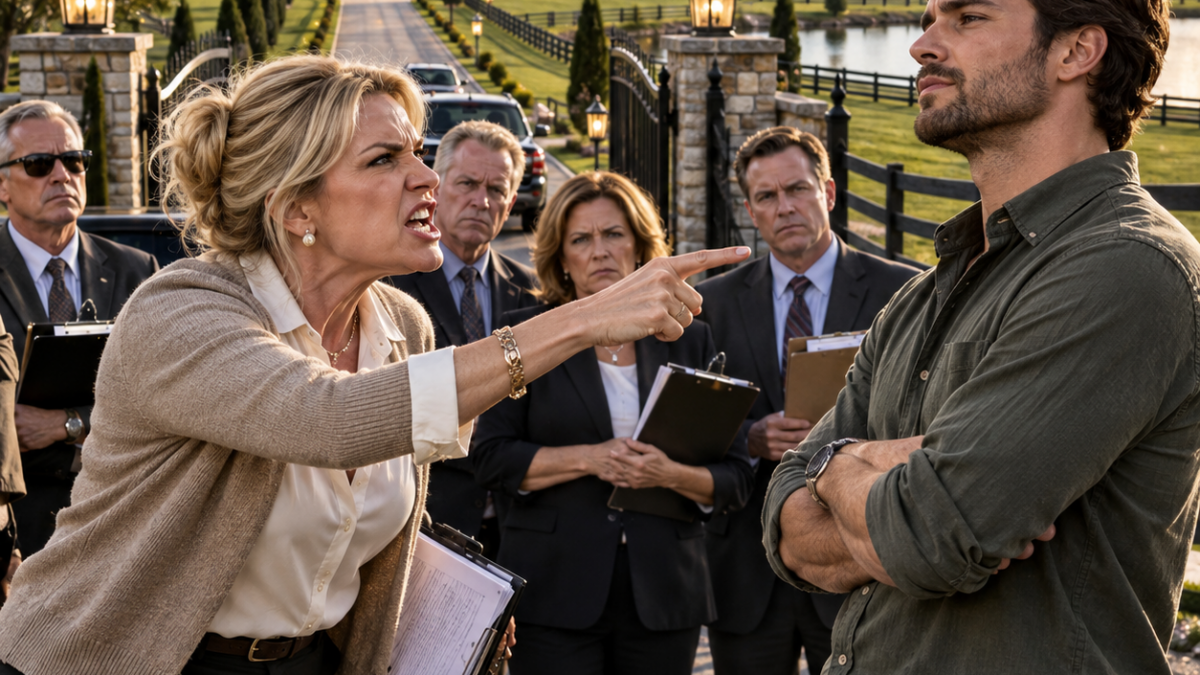
The first time I returned to my dead uncle’s house, I found a stranger drilling through the front door while the homeowners association prepared to take away everything he had spent thirty-seven years building. They claimed he had left behind nearly $47,000 in unpaid fees, and unless I surrendered the property, they intended to make sure I never stepped inside it again. But when I examined the paper authorizing the lock change, I noticed something that made me wonder whether my uncle’s death had been the opportunity someone was waiting for.
“Excuse me! What the hell are you doing?”
The man on my uncle’s porch stopped drilling and looked over his shoulder. He wore a gray work shirt, and a new brass deadbolt sat on the railing beside his toolbox.
“Changing the locks,” he answered.
“I can see that. Who hired you?”
“Willowbrook Estates Homeowners Association.”
For several seconds, I stood at the bottom of the steps, staring at the empty hole where my uncle’s lock used to be.
“My name is Ethan Mercer,” I said. “Harold Garcia was my uncle. He died six weeks ago, and this house was left to me.”
The locksmith glanced toward his van.
“Sir, I just do the work I’m hired to do.”
“Then whoever hired you made a serious mistake.”
He reached into his pocket and handed me a folded notice bearing the Willowbrook Estates logo.
Across the top, in bold capital letters, were the words:
NOTICE OF FORECLOSURE ACTION.
I read it twice.
According to the document, the association had initiated proceedings against the property because of unpaid assessments. Until the dispute was resolved, it claimed, access was restricted.
“You understand this is somebody’s home?” I asked.
“I understand I’m supposed to secure the premises.”
“My uncle lived here for thirty-seven years.”
The man looked uncomfortable but said nothing.
I turned toward the house.
The brick walls were weathered, the oak trees enormous, and the wooden porch swing still hung from the same rusted chains I remembered from childhood.
After my parents died, Uncle Harold had taken me in. That house wasn’t simply an inheritance. It was where someone had taught me I still had a family.
And now a stranger was changing its locks.
“How much are they claiming he owed?” I asked.
“Something like forty-seven thousand dollars.”
I almost laughed.
Three months before he died, Harold had shown me his financial records at the kitchen table. Even while fighting cancer, he insisted on keeping everything organized.
He had been an accountant for most of his working life. Every bill was filed. Every payment had a receipt.
“Never leave a mess for somebody else to clean up, Ethan,” he’d told me.
I remembered him pointing to the HOA statement.
Paid in full.
The locksmith watched me examine the notice.
“Look, man, I don’t know anything about the money.”
“Then tell me who authorized this.”
He pointed at a signature near the bottom.
Diane Hargrove.
President, Willowbrook Estates HOA.
I studied the document more carefully. It offered no court order, no supporting judgment, and no explanation for how an ordinary billing dispute had supposedly become an immediate right to lock out an heir.
“When was this filed?”
“About two weeks ago, I guess.”
“Two weeks?”
He shrugged.
I handed the notice back, photographed it, and called the HOA office.
A woman answered on the third ring.
“Willowbrook Estates. How may I help you?”
“My name is Ethan Mercer. I’m calling about Harold Garcia’s property.”
There was a pause.
“Are you the nephew?”
“Yes.”
“Mrs. Hargrove has been expecting your call.”
That answer caught me off guard.
“Expecting it?”
“She’s aware of your inheritance.”
“Then she’s also aware someone is changing the locks without showing me a court order.”
The receptionist ignored that.
“The account has an outstanding balance related to special assessments.”
“How much?”
“Forty-seven thousand, two hundred sixteen dollars.”
“For what?”
“Road maintenance, security improvements, beautification, and associated administrative charges.”
I looked at the cracked asphalt running past the driveway.
Nothing about that road suggested twelve thousand dollars’ worth of recent repairs.
“When were those assessments approved?”
“Over the past three years.”
“And you’re telling me nobody resolved this with my uncle before he died?”
“Mr. Mercer, you’ll need to discuss those questions with Mrs. Hargrove.”
“Fine. When?”
“Tomorrow morning. Nine o’clock.”
Before I could ask anything else, she ended the call.
I stood beside my car, listening to the locksmith finish installing a lock I had no key to open.
Then I noticed something else.
The notice described an urgent foreclosure action, yet the receptionist had spoken as though Diane had been waiting specifically for me to arrive.
I went back to the porch.
“Did Mrs. Hargrove give you any instructions about what to do if I showed up?”
The locksmith hesitated.
“Sir, I really shouldn’t get involved.”
“I’m not asking you to take sides.”
He lowered his voice.
“She told my dispatcher the nephew might cause trouble. Said not to let you inside, no matter what paperwork you brought.”
I looked at my uncle’s front door.
The woman I’d never met already knew who I was.
And she had given instructions to keep me out.
PART 2
I asked the locksmith one final question.
“Did she say anything about why I might cause trouble?”
He rubbed the back of his neck.
“No. Just that you might claim the property belonged to you.”
“It does belong to me.”
“That’s between you and the association, sir.”
I wanted to argue. I wanted to take the drill out of his hands, remove the new deadbolt myself, and walk through the front door with the key Harold had given me years earlier.
But that would have accomplished nothing except giving Diane Hargrove exactly what she apparently wanted: a reason to portray me as an angry outsider.
So I stepped away.
The locksmith finished his work, packed his tools, and climbed into his van.
Before leaving, he rolled down his window.
“For what it’s worth, I’m sorry about your uncle.”
I nodded without answering.
His van disappeared around the corner, leaving me alone in a driveway I’d known since childhood.
I walked around the house, past the side gate and the vegetable beds Harold had built with his own hands. The tomato plants had withered. Weeds pushed between the stepping stones. His old green wheelbarrow lay upside down beside the garden shed.
Beyond the backyard stretched the real treasure of the property.
Two-point-eight acres of open land, bordered by mature oak trees and a narrow creek that marked the rear boundary.
When I was twelve, Harold had taught me to throw a baseball on that land. When I was seventeen, he’d taught me to drive his old pickup along the gravel maintenance path. When I was twenty-one, he’d taken me to the farthest corner of the property and shown me the survey markers.
“Know where your boundaries are,” he’d said. “People have a funny way of forgetting them when there’s money involved.”
At the time, I thought he was simply being practical.
Standing there thirty-seven years after he’d bought the property, I wondered whether he had meant something more.
I walked back to the porch and sat on the top step.
My phone displayed a photograph of Harold taken the previous spring.
He was smiling beneath the oak tree, holding a cup of coffee in one hand and pointing toward something beyond the camera.
That was how I wanted to remember him.
Not thin and exhausted in a hospital bed.
Not struggling to finish a sentence between breaths.
And certainly not as a man who supposedly owed tens of thousands of dollars to people who had waited until after his funeral to come collecting.
I opened my email and searched for the financial documents Harold had sent me.
There it was.
A scanned statement showing his annual HOA dues paid through December.
I downloaded it, made three copies in cloud storage, and forwarded one to my personal email.
Then I called the attorney handling Harold’s estate.
His name was Martin Ellison, and he’d known my uncle for nearly twenty years.
“Ethan,” he said. “Everything all right?”
“Someone changed the locks on Harold’s house.”
The line went quiet.
“Who?”
“The homeowners association. They say he owed forty-seven thousand dollars.”
Martin didn’t answer immediately.
Then he said, “That’s the first I’ve heard of any substantial HOA debt.”
“Wouldn’t you have known?”
“Any properly presented claim against the estate should be reviewed through the appropriate process. Send me everything they gave you.”
I explained the notice, the locksmith, and the strange claim that I wasn’t allowed inside.
Martin sighed.
“Don’t force entry tonight. Let me look at the title records and probate paperwork.”
“You think they can actually take the house?”
“I think anyone threatening foreclosure against estate property deserves a very close examination.”
It wasn’t the reassuring answer I’d hoped for.
But it was an honest one.
I thanked him and ended the call.
That night, I stayed at a small hotel outside Willowbrook Estates.
I barely slept.
Every time I closed my eyes, I saw Harold standing in the kitchen, carefully sorting bills into labeled folders.
He had trusted me to handle his affairs.
And on the first day I’d tried to do that, I couldn’t even open his front door.
At 8:45 the next morning, I walked into the Willowbrook Estates HOA office.
The place occupied a corner suite in a professional building near the neighborhood entrance.
Framed photographs of manicured lawns covered the walls. A polished glass table stood between two leather chairs. Everything smelled faintly of furniture cleaner and expensive coffee.
A receptionist greeted me.
“Mr. Mercer?”
“Yes.”
“Mrs. Hargrove will be with you shortly.”
I glanced at the clock.
“I thought our appointment was at nine.”
“It is.”
She smiled, but there was something strained about it.
I took a seat and studied the photographs.
One showed the neighborhood’s entrance with its stone monument and wrought-iron gates. Another showed families enjoying a summer barbecue. A third displayed a ribbon-cutting ceremony for the community center.
I noticed Diane Hargrove in several of them.
She stood at the center of every picture.
At exactly nine, an office door opened.
A silver-haired woman in a cream blazer stepped into the waiting room.
“Mr. Mercer.”
She extended her hand.
“I’m Diane Hargrove. Please accept my condolences about Harold.”
Her voice was smooth, measured, practiced.
I shook her hand.
“Thank you.”
“Your uncle was an important member of this community.”
“He certainly thought so.”
Something flickered in her expression, but it vanished almost immediately.
“Why don’t we discuss the situation privately?”
I followed her into a large office overlooking the parking lot.
Behind her desk hung plaques recognizing years of community service. There were photographs of Diane shaking hands with local officials, attending charity events, and receiving awards.
She gestured toward a chair.
“Please.”
I sat down.
Diane opened a manila folder.
“I understand you were upset yesterday.”
“Someone changed the locks on my uncle’s house.”
“I understand that was distressing.”
“Distressing isn’t the word I’d use.”
She folded her hands.
“Unfortunately, the association must sometimes take difficult steps to protect the community’s financial interests.”
“By locking heirs out of their property?”
“By enforcing lawful obligations.”
“Then let’s discuss those obligations.”
Her smile tightened.
She removed a printed statement from the folder and slid it across the desk.
At the bottom, the balance appeared in bold numbers.
$47,216.00
I examined the individual charges.
Road resurfacing: $12,000.
Security upgrades: $15,000.
Landscaping and beautification: $8,000.
Administrative fees: $7,000.
Penalties and accrued charges: $5,216.
I looked up.
“Twelve thousand dollars for road resurfacing?”
“Yes.”
“Which road?”
“Community infrastructure improvements are assessed according to the board’s approved allocation formula.”
“That’s not what I asked.”
She sat back.
“Mr. Mercer, I assure you these assessments were properly authorized.”
“Then show me the authorization.”
She opened another section of the folder and removed four letters.
Each was addressed to Harold Garcia.
I checked the dates.
Four letters over eighteen months.
No certified-mail receipts. No delivery confirmations.
“These are the notices you sent him?”
“These are copies.”
“Do you have proof he received them?”
“The association made every reasonable effort to communicate.”
“Do you have proof?”
Diane looked at me steadily.
“Your uncle was not always cooperative.”
I felt something tighten in my chest.
“Careful.”
“Excuse me?”
“Harold isn’t here to defend himself. I’d appreciate it if you didn’t confuse disagreeing with you and being uncooperative.”
Her expression cooled.
“I see you share his temperament.”
I put the letters down.
“Tell me something. If this debt has existed for three years, why did you wait until after his death to start foreclosure proceedings?”
“We did not wait. The collection process had been ongoing.”
“Then why was there a locksmith at his house six weeks after his funeral?”
“The association needed to secure its interests.”
“Against whom?”
She hesitated.
“Against potential complications involving the estate.”
I leaned forward.
“Are you saying my uncle’s death made the property easier to pursue?”
“I am saying the association has responsibilities.”
“Fine. Let’s see the board minutes.”
Diane closed the folder.
“Some documents are confidential.”
“Which ones?”
“Internal deliberations.”
“I want the minutes of the meeting where the board authorized this assessment and any collection or foreclosure action.”
“I’ll have to speak with counsel.”
“Please do.”
I stood.
She didn’t.
“Mr. Mercer, before you leave, I’d like to offer some advice.”
I waited.
“This is a close-knit community. Harold spent years making himself difficult over certain property matters. I hope you won’t repeat his mistakes.”
For the first time, her carefully controlled voice carried an unmistakable threat.
“What property matters?”
Diane looked down at her folder.
“I’m sure his records will explain.”
“Then you won’t mind if I examine them.”
She looked up.
Her eyes were hard now.
“I wouldn’t recommend turning this into a confrontation.”
I picked up my copy of the statement.
“Neither would I.”
Friday arrived without the documents Diane had promised to consider releasing.
When I called the office, the receptionist said the association’s attorney was still reviewing my request.
“How long will that take?”
“Seven to ten business days.”
“Diane told me she’d have an answer by Friday.”
“Mrs. Hargrove is very busy.”
“So am I.”
I ended the call and drove into Houston.
My first stop was the Harris County Clerk’s Office.
I’d spent years working in commercial real estate, and although HOA litigation wasn’t my specialty, I understood something about property records.
People could say almost anything in a private office.
Recorded documents were harder to explain away.
I requested every recorded instrument associated with Harold’s address.
The clerk helped me locate the documents.
There were only a few.
The original deed from 1987.
A release showing Harold had paid off his mortgage in 2003.
And a lien filed by Willowbrook Estates six months earlier.
I stared at the lien.
The amount was $31,412.
Not $47,216.
I took out the statement Diane had given me.
The difference was $15,804.
“Is there an amended filing?” I asked.
The clerk searched again.
“I’m not finding one.”
“Any recorded foreclosure-related documents?”
“Nothing else under this property in the records I’m checking.”
“Could something have been filed elsewhere?”
“Possibly. Court proceedings would need to be checked through the appropriate court records.”
I thanked her.
Outside, I stood beside my car and compared the dates.
Harold had been diagnosed with terminal cancer roughly ten months before his death.
The lien appeared four months after that diagnosis.
And now, shortly after his death, the association was claiming thousands more than the original filing.
It could have been an accounting error.
It could have been accumulated penalties.
But Diane had refused to explain the difference.
And that refusal bothered me more than the numbers themselves.
I photographed the recorded document and sent it to Martin Ellison.
Then I drove back to Willowbrook Estates.
This time, I didn’t stop at Harold’s house.
I stopped next door.
A man with thinning gray hair was trimming the hedges outside a brick ranch house.
He looked up when my car pulled alongside the curb.
“Can I help you?”
“I’m Ethan Mercer. Harold Garcia was my uncle.”
The hedge clippers stopped moving.
The man studied my face.
Then he set them down.
“You’ve got Harold’s eyes.”
I smiled despite myself.
“People used to say that.”
“I’m Glenn Patterson. I lived beside that stubborn old man for fifteen years.”
He held out his hand.
I shook it.
Glenn glanced toward Harold’s property.
“Heard about the locks.”
“News travels fast.”
“In this neighborhood, bad news travels before breakfast.”
I asked whether he had a few minutes.
He brought me onto his porch.
For a while, we talked about Harold.
Glenn remembered the way my uncle helped neighbors repair fences after storms. He remembered Harold bringing groceries to a widow down the street after her husband died. He remembered seeing him outside almost every morning, even as his illness worsened.
Then his expression changed.
“Ethan, did your uncle ever tell you why he refused to sell the back acreage?”
“He told me he wanted to keep it in the family.”
Glenn nodded.
“That was part of it.”
“What was the other part?”
He leaned forward.
“People have been trying to get their hands on that land for years.”
I looked toward the tree line visible beyond his fence.
“Developers?”
“Several. But one company kept coming back.”
“Which company?”
“Westbrook Development.”
The name sounded familiar.
I’d seen its signs along new residential construction sites outside Houston.
Glenn continued.
“About two years ago, Diane started pushing assessments that hit larger properties especially hard. Harold fought her on them.”
“Why?”
“Because he thought she was trying to force him out.”
I didn’t answer.
Glenn watched me carefully.
“Last year, there was a closed board meeting. Linda, my wife, heard something afterward.”
“What did she hear?”
“Diane talking about a potential buyer. Something about waiting for the right time.”
“Did she mention Harold?”
“Not that Linda heard.”
“Then how do you know it was about his land?”
“I don’t.”
His honesty surprised me.
“But Harold believed it was. And after what happened yesterday, I think you ought to take that possibility seriously.”
I sat back, trying to put the pieces together.
Glenn rested his elbows on his knees.
“There is one more thing.”
“What?”
“Harold told me once that he’d made arrangements to protect the land if anything happened to him.”
“The will?”
“Maybe.”
He looked straight at me.
“He said the important part wasn’t what he owned. It was what nobody else had the right to take.”
That evening, I returned to my hotel room and opened the estate documents on my laptop.
I had read Harold’s will after his funeral.
Or at least I’d thought I had.
Back then, everything had blurred together: signatures, condolences, probate paperwork, memories I couldn’t bear to examine too closely.
Now I read it carefully.
Page by page.
Near the end, I reached a section labeled:
Special Provisions Regarding Real Property.
I recognized Harold’s preference for precise language immediately.
The provision referred specifically to the property on Willowbrook Lane and to assessments imposed by the homeowners association.
I read it once.
Then again.
Then I picked up my phone and called Martin Ellison.
“Martin,” I said when he answered, “I need you to look at page seven.”
“Of what?”
“Harold’s will.”
There was a rustling sound.
Then silence.
“Ethan,” he finally said, “where did you get the HOA’s recorded covenants?”
“I haven’t found them yet.”
“Then that’s the next thing we need.”
I looked at the highlighted clause on my screen.
“Why?”
“Because your uncle may have been anticipating this exact dispute, but the answer is going to depend on documents the association hasn’t shown you.”
I glanced at the foreclosure notice lying beside my laptop.
For the first time, I understood that Diane Hargrove might not simply be trying to collect a debt.
She might be counting on me never discovering why Harold had spent years preparing for a fight over his land.
The next morning, Martin called before I’d finished my coffee.
“I’ve reviewed the provision,” he said. “There’s something important you need to understand.”
“I’m listening.”
“Your uncle couldn’t simply write an exemption into his will and make existing deed restrictions disappear.”
I stared at the document.
“Then what good is it?”
“Think of it as a reference. Harold believed the exemption already existed. We need to find the agreement that actually established it.”
“Wouldn’t that be in the county records?”
“Possibly among the subdivision documents, not necessarily in the individual property documents you requested.”
I leaned back in my chair.
“So we need to keep digging.”
“Yes. And Ethan?”
“Yeah?”
“Don’t tell Diane what you’ve found yet.”
“Why not?”
“Because right now we don’t know whether she overlooked something or deliberately ignored it. I’d rather find out before giving her an opportunity to explain it away.”
I understood his reasoning.
I’d made my living negotiating commercial property transactions. The first person to reveal everything they knew was often the person who lost control of the negotiation.
But this didn’t feel like a negotiation.
It felt like someone had used my uncle’s illness and death to put a price tag on his life.
I called Britney Flores.
Eight years earlier, Britney and I had worked for the same commercial real estate firm in Austin. She had been one of the sharpest lawyers I’d ever encountered, with an irritating habit of finding defects in contracts everyone else had already approved.
She’d left corporate transactions to build a practice focused on property litigation, including disputes involving homeowners associations.
When she answered, she sounded pleased.
“Ethan Mercer. I was beginning to think you’d forgotten I existed.”
“I need help.”
“That sounds ominous.”
“Someone’s trying to take my uncle’s property.”
Her tone changed.
“Start from the beginning.”
For the next twenty minutes, I explained everything.
The locksmith.
The foreclosure notice.
Diane’s $47,216 demand.
The lien recorded for $31,412.
Glenn’s warning about the land.
The provision in Harold’s will.
Britney listened without interrupting.
When I finished, she asked, “Have you received a foreclosure petition or an order from a court?”
“No.”
“Has anyone shown you proper notice of a sale?”
“No.”
“Did the locksmith have an order authorizing him to exclude you from the property?”
“Not that he showed me.”
“Then I have serious concerns about the lockout.”
“Can they foreclose?”
“An HOA can sometimes foreclose on a qualifying assessment lien in Texas, but there are specific legal requirements and limits. They can’t just invent a debt, print a letter, and seize a house.”
“What about the will?”
“Martin’s right. A will alone doesn’t rewrite recorded restrictions. But if Harold had a valid exemption in the governing property documents, that could be enormously important.”
I looked down at my notes.
“What do we do first?”
“We request the association’s records formally. We check the governing declarations and amendments. We investigate the lien and the alleged assessments. And if they’re moving toward a sale, we seek emergency relief.”
“Diane says the board minutes are confidential.”
Britney gave a short laugh.
“That’s convenient.”
“She also called Harold difficult.”
“Ethan, people who genuinely believe they’re owed forty-seven thousand dollars usually want to show you why. People hiding records make me curious.”
I almost smiled.
“That’s why I called you.”
“Good. Now send me every document you have. And don’t confront this woman alone again.”
“Why?”
“Because she’s already changed the locks and accused a dead man of owing money. I want a witness present for whatever she does next.”
Before ending the call, Britney asked one more question.
“How much is the property worth?”
“Approximately $1.2 million, based on comparable properties and the acreage.”
She was silent for a moment.
“So they’re pursuing foreclosure on a million-dollar property over an alleged debt of less than fifty thousand.”
“Yes.”
“Does the association have any other particular interest in the land?”
I told her about Westbrook Development.
This time her silence lasted longer.
“Ethan,” she said, “I want you to treat that information as a lead, not a conclusion. We need evidence.”
“I know.”
“But if there’s a connection, it changes what we’re investigating.”
“How?”
“We may be looking at more than improper assessments.”
After we hung up, I sat alone in my hotel room.
For the first time since returning to Texas, I felt that I had a plan.
It didn’t make me feel safe.
But it made me feel less helpless.
The following week, I learned how quickly a neighborhood could turn against someone.
Glenn called early Tuesday morning.
“Ethan, you need to see this.”
“See what?”
“The newsletter.”
“What newsletter?”
“The HOA just delivered one to every house.”
I heard paper rustling.
Glenn cleared his throat.
Then he read the headline.
“Protecting Our Community From Financial Exploitation.”
I closed my eyes.
“You’ve got to be kidding me.”
“Listen to this.”
The newsletter described an unnamed individual who had recently inherited property in Willowbrook Estates and was attempting to evade legitimate financial obligations.
It claimed that this individual had threatened association staff, challenged community standards, and spread misleading information about the board.
Although it never mentioned my name, there was only one recently inherited property involved in a dispute.
Everyone would know who it meant.
“There’s more,” Glenn said.
The newsletter encouraged residents to report any contact from the individual to the association office.
I gripped the phone.
“She wants people afraid to talk to me.”
“Looks that way.”
“Have you heard anyone discussing it?”
“Three neighbors already called me this morning.”
“What did they say?”
“One asked whether you were planning to sue the entire neighborhood.”
I stared at the wall.
It would have been funny if it weren’t my home at stake.
By noon, Britney had a copy.
Her response was brief.
“Don’t send an angry reply.”
“I wasn’t going to.”
“Yes, you were.”
She knew me too well.
“Let me preserve this. If these statements become relevant to the litigation, we’ll deal with them properly.”
“What am I supposed to do while Diane poisons the whole neighborhood against me?”
“Keep collecting facts.”
I looked at the newsletter.
“Facts don’t seem to matter much to these people.”
“They will if you can get them in front of the right audience.”
That afternoon, I drove into Willowbrook Estates.
A woman walking a golden retriever crossed the street when she saw me.
Outside the community center, a man in a golf shirt approached.
“You the fellow who inherited Harold Garcia’s place?”
“Yes.”
“Then maybe you should pay what you owe instead of making problems for everybody.”
I stopped.
“Have you seen the documents supporting that debt?”
“I’ve seen the newsletter.”
“That’s not what I asked.”
He frowned.
“Mrs. Hargrove has managed this community for years.”
“And that means she’s incapable of making a mistake?”
“It means I trust her more than somebody who showed up six weeks ago.”
I could have argued.
I could have told him about Harold’s thirty-seven years in the community, his meticulously paid bills, the strange discrepancy in the county records.
Instead, I asked him something simpler.
“If the board claimed you owed forty-seven thousand dollars tomorrow, wouldn’t you want to see how they calculated it?”
His expression shifted.
Only slightly.
But enough that I knew the question had landed.
Then he walked away.
I watched him go, realizing something I hadn’t fully appreciated.
Diane didn’t need to convince the entire neighborhood that I was guilty.
She only needed enough residents to stop asking questions.
Glenn and Linda Patterson invited me over that evening.
Linda had prepared coffee, but she barely touched hers.
She was a small woman with sharp eyes, practical clothes, and the kind of manner that suggested she didn’t waste words.
Glenn sat beside her at the kitchen table.
“I found something,” Linda said.
She opened a blue binder.
Inside were plastic sleeves containing HOA agendas, meeting notices, attendance sheets, and notes going back several years.
“You kept all this?” I asked.
“Someone had to.”
She sounded annoyed by the question.
“For years, the board’s recordkeeping was a disaster. Missing minutes. Incomplete sign-in sheets. Nobody could remember who attended which meeting. I started saving copies whenever I volunteered.”
She turned several pages.
Then she removed a sheet from a plastic sleeve.
“This is from the meeting when they discussed the Garcia property.”
I examined it.
Eight signatures.
“Only eight people?”
“That’s everyone who signed in while I was there.”
“Were there others?”
“Not that I saw.”
I checked the date.
It matched the general period when the lien had been recorded.
“Diane says the board voted to authorize the action.”
“She did.”
“Was there a vote?”
Linda pressed her lips together.
“There was discussion of delinquent accounts. Diane said certain properties required immediate collection action.”
“Did she mention Harold by name?”
“Not during the portion I attended.”
“Did anyone vote to foreclose?”
“I heard a motion approving collection measures, but I don’t remember anyone describing a foreclosure.”
Glenn looked at me.
“Tell him about the quorum.”
Linda opened the bylaws.
“The association’s member meetings require a quorum representing twenty-five percent of the lots for ordinary member business. That’s thirty out of the hundred and twenty homes.”
I examined the provision.
“Does that apply to a board meeting?”
“That’s what I wasn’t sure about.”
I looked up.
Linda nodded.
“Exactly. Diane has been treating board meetings and membership meetings as though the same rules apply whenever it suits her.”
I photographed the attendance sheet.
“What we need is the board’s actual authorization and the rules governing it.”
Linda looked relieved.
“That’s what I’ve been saying.”
I smiled.
“Britney’s going to like you.”
Linda didn’t smile back.
Instead, she turned another page.
“There’s something else.”
She showed me a copy of an old community meeting agenda.
One item had been underlined in blue ink.
Future Use of Undeveloped Parcels.
Beside it, someone had written:
Potential development partnership?
“Is that your handwriting?” I asked.
“Yes.”
“When was this?”
“Eighteen months ago.”
I felt my stomach tighten.
“Before Harold’s diagnosis?”
“Long before.”
Glenn leaned forward.
“Now tell him what Diane said afterward.”
Linda folded her hands.
“I was leaving the building when I heard Diane talking to a man in the parking lot. I didn’t recognize him. They were discussing undeveloped property and buyer interest.”
“Did you hear Harold’s name?”
“No.”
“Anything about Westbrook Development?”
“Not directly.”
She hesitated.
“But the man was standing beside a truck with their logo.”
I glanced at Glenn.
He nodded.
“I saw the same company’s truck there another time.”
For several seconds, no one spoke.
Then Linda said, “I don’t know whether those things are connected, Ethan. But Harold was worried about something. And I wish I’d listened more carefully when he tried to tell us.”
Her voice softened on his name.
That was when I realized how much this dispute had affected the Pattersons.
They hadn’t just lost a neighbor.
They’d watched someone they respected struggle through his final illness, and now they were being told he had been a dishonest man who refused to pay his debts.
I slid the photograph of the attendance sheet into my phone’s secure folder.
“Would you be willing to speak with my attorney?”
Linda didn’t hesitate.
“Yes.”
Glenn reached across the table and squeezed her hand.
“And if Diane doesn’t like it,” he said, “she can take that up with me.”
Two days later, Britney called with news.
“I found the subdivision’s recorded declaration.”
I sat up.
“And?”
“There’s an amendment attached to the original development documents. It concerns a parcel retained under a separate agreement when the subdivision was established.”
“Harold’s land?”
“Part of it, yes. I need the full title chain verified, but there’s evidence that certain common assessments cannot be imposed on that retained acreage without additional written consent.”
I stood and walked to the hotel window.
“So Harold was right?”
“He may have been right about the scope of the assessments. Don’t celebrate yet.”
“Why?”
“Because the association may still have authority to collect some charges associated with the residential lot. The exemption isn’t necessarily as broad as the language in the will suggests.”
I exhaled.
“But the forty-seven thousand?”
“We’re going to make them prove every dollar.”
Britney continued.
“I also had a title examiner check the original development agreements. There’s a reference to a private agreement with Harold that predates the current board.”
“Can we get it?”
“We’re working on it.”
“What about the foreclosure?”
“We’re preparing an application for temporary injunctive relief. I want the court to prevent any sale or further interference with possession while we sort out the validity of the claim.”
“Will the judge agree?”
“I can’t promise that. But we have a recorded lien that doesn’t match the association’s demand, disputed assessments, questionable notices, and a lockout that hasn’t been justified by any court order we’ve seen.”
I looked toward Willowbrook Estates in the distance.
“What does Diane think about all this?”
“She knows we’re asking questions. Her attorney contacted my office.”
“What did he say?”
“That the association would vigorously defend its rights.”
I laughed without humor.
“Of course it will.”
“There’s something else,” Britney said.
I waited.
“He offered to discuss a settlement.”
“What kind of settlement?”
“He hasn’t put terms in writing yet.”
I felt an immediate wave of suspicion.
“Then why contact us?”
“Sometimes people want to settle because litigation is expensive. Sometimes because their position is weak. We don’t know which.”
I looked down at the photograph of Harold on my phone.
“What do you recommend?”
“We hear the proposal. We don’t agree to anything without reviewing it.”
The proposal arrived the following afternoon.
Diane’s attorney offered to suspend collection efforts if I agreed to sell the property to a designated purchaser for $850,000.
I read the email three times.
Then I called Britney.
“Eight hundred fifty thousand?”
“Yes.”
“The property is worth approximately a million two.”
“I know.”
“And the designated purchaser?”
“The letter doesn’t identify the buyer.”
I sat down.
“Ask.”
“We have.”
“How much of the alleged debt disappears if I sell?”
“All of it, according to the proposal.”
I stared at the numbers.
A disputed $47,216 debt would vanish if I sold a property potentially worth $1.2 million for $850,000.
The arithmetic was almost insulting.
“What did you tell them?”
“That we’d review the offer.”
“Tell them no.”
“Ethan—”
“No. Absolutely not.”
“I agree the offer is unacceptable. But I want their next response in writing.”
“Why?”
“Because I want to know whether the association is really trying to collect assessments or trying to facilitate a sale.”
I rubbed my forehead.
“Harold refused to sell for years.”
“I know.”
“And now they’re offering to forgive a debt they can’t substantiate if I sell for hundreds of thousands below market value.”
“Yes.”
I looked at the email again.
“Britney, this isn’t about dues.”
“It’s starting to look that way.”
The legal fight escalated quickly after that.
Britney filed the necessary pleadings challenging the disputed collection action and seeking immediate protection against foreclosure and further interference with the property.
The court granted temporary relief while the parties prepared for a fuller hearing.
It wasn’t a final victory.
It didn’t erase the lien.
But it meant the association couldn’t simply proceed with a sale while the dispute was being examined.
More importantly, Diane could no longer rely on unsigned demands and private office conversations.
Her claims would have to withstand scrutiny.
The first hearing was brief.
I sat beside Britney at counsel’s table, listening as the HOA’s lawyer argued that the association had acted to protect the financial interests of its members.
He described me as an heir who was attempting to avoid longstanding obligations.
Britney stood.
“Your Honor, my client isn’t asking to avoid legitimate obligations. He’s asking the association to identify them and demonstrate that it had lawful authority to enforce them.”
She placed the two financial documents before the court.
“One figure was used to record the lien. A substantially different figure was presented to my client as the outstanding balance. The association has not yet provided a complete reconciliation.”
The judge examined the documents.
The HOA’s attorney argued that additional penalties and charges could explain the difference.
Britney nodded.
“Then the accounting should be straightforward to produce.”
The judge looked toward opposing counsel.
“Can your client provide a complete payment history and assessment ledger?”
The attorney hesitated.
“We can arrange for the records to be compiled.”
The judge made a note.
Britney continued.
“We also have unresolved questions about the governing restrictions applicable to this parcel and the authority claimed for excluding the heir from the property.”
The judge asked whether there was a possession order.
The HOA’s attorney didn’t produce one.
I watched Britney glance at me.
It was a tiny movement, but I understood it.
Diane’s refusal to answer simple questions was becoming a problem she couldn’t solve with a polished smile.
The judge directed the parties to preserve relevant records and set further proceedings.
Outside the courtroom, Diane stood beside her lawyer.
She looked at me for a long moment.
Then she approached.
“You’re creating unnecessary expense for an entire neighborhood,” she said.
I stopped.
“Then tell the neighborhood why you wanted me to sell Harold’s house for eight hundred fifty thousand dollars.”
Her expression tightened.
“I had nothing to do with your estate negotiations.”
“Your association’s attorney sent the proposal.”
“That was an attempt to resolve a dispute.”
“With a buyer you wouldn’t identify?”
Her lawyer stepped forward.
“Mrs. Hargrove, we should go.”
She ignored him.
“Your uncle could have avoided all of this if he had been more reasonable.”
I felt the anger rise so quickly that I nearly stepped toward her.
Britney touched my arm.
I stayed where I was.
“Harold paid his bills,” I said. “He took care of his neighbors. He worked for everything he owned.”
Diane’s expression didn’t change.
“People often remember their loved ones differently from the people who actually had to deal with them.”
For a moment, I couldn’t speak.
Then Britney moved between us.
“Any further communication can go through counsel.”
Diane gave a small, dismissive smile.
“As you wish.”
She walked away.
I stood on the courthouse steps, my hands shaking.
Britney waited until Diane disappeared around the corner.
“Don’t let her do that again,” she said.
“Do what?”
“Make you react instead of think.”
I stared down the sidewalk.
“She talks about him like he was some kind of criminal.”
“I know.”
“He raised me.”
Britney’s expression softened.
“I know that too.”
I looked at her.
“I’m not selling.”
She nodded.
“Then we’ll keep fighting.”
That weekend, Glenn called with an idea.
“The bylaws say homeowners can petition for a special membership meeting,” he told me.
“I know.”
“You’ve seen how people are reacting to Diane’s newsletter. Some are angry with you, but others are asking questions.”
“How many?”
“More than you think.”
I drove over that afternoon.
Linda spread the bylaws across the kitchen table.
“A petition signed by twenty percent of the members can require the board to call a meeting,” she explained.
“One hundred twenty homes,” I said.
“Twenty-four signatures.”
Glenn pushed a pen toward me.
“You’ve got two right here.”
I looked from him to Linda.
“You understand what happens if you do this?”
Linda frowned.
“We attend a meeting?”
“Diane could come after you socially. She could try to make life miserable.”
Glenn laughed.
“She already dislikes me because I refused to take down my old workshop.”
Linda gave him a tired look.
“He enjoys being difficult.”
“I learned from Harold.”
For the first time in weeks, I laughed.
Then Linda signed the petition.
Glenn added his name beneath hers.
Over the next three days, I walked through Willowbrook Estates carrying a folder of public property records and a copy of the petition.
Some doors closed before I finished introducing myself.
Others never opened.
One woman told me she didn’t want to get involved.
A retired teacher said she liked Diane and believed the board had done an excellent job maintaining property values.
I didn’t argue with either of them.
Instead, I explained that the petition was about allowing residents to ask questions at a properly called meeting.
I showed the two conflicting debt figures.
I explained that my attorney had asked for a breakdown of the assessments.
Then I let people decide.
At one house, an older man studied the lien and shook his head.
“Thirty-one thousand in the county record, forty-seven thousand on the statement?”
“Yes.”
“That’s a big difference.”
“It is.”
“Could be penalties.”
“That’s what they claim.”
“Have they provided the calculation?”
“Not yet.”
He looked toward the community entrance.
“My wife handles our bills. If somebody sent us a statement like that, she’d demand an explanation before breakfast.”
He signed.
At another house, a woman asked whether my uncle had really threatened HOA employees.
“No,” I said. “At least, I’ve seen no evidence of that, and I certainly haven’t threatened anyone.”
“That’s not what the newsletter says.”
“I know.”
She considered that.
Then she signed too.
By Friday afternoon, I had twenty-seven signatures.
Twenty-seven people willing to ask Diane Hargrove questions.
It wasn’t a majority.
But it was enough.
I delivered the petition to the HOA office.
The receptionist looked at the signatures.
Then at me.
“Mrs. Hargrove will have to review this.”
“The bylaws establish the requirement,” I replied. “Please confirm receipt.”
She reluctantly stamped my copy.
As I turned to leave, something on the bulletin board caught my eye.
A bright yellow notice announced an emergency board meeting.
Members only.
Closed session.
Three days away.
I photographed it.
That evening, Britney called.
“Did you deliver the petition?”
“Yes.”
“Good. We need the association records, but the members also deserve to know what their board has been doing.”
“You think Diane will hold the meeting?”
“She may try to delay it. If she does, we’ll address that through the governing documents.”
I looked at the yellow notice on my phone.
“She has another private meeting scheduled first.”
“Then she’s trying to control the conversation.”
“Probably.”
Britney paused.
“Ethan, remember something. The goal isn’t to win an argument with Diane. It’s to expose what actually happened.”
I looked at Harold’s photograph.
“I know.”
But I was beginning to realize that exposing the truth could be more complicated than finding it.
Especially when the person hiding it had spent years teaching an entire neighborhood to trust her.
The meeting was eventually scheduled for Saturday afternoon at the Willowbrook Estates Community Center.
By the time I arrived, the parking lot was already nearly full.
I counted more than eighty residents entering the building.
Some nodded when they recognized me.
Others looked away.
Inside, the air-conditioning struggled against the crowd.
Extra folding chairs had been brought from a storage closet, and several people stood along the back wall.
Diane sat at a long table on a raised platform.
Beside her were two board members, including Carol Gonzalez, a quiet woman in her fifties whom Glenn had mentioned several times.
Diane wore a cream blazer.
I recognized it from our first meeting.
Her silver hair was perfectly arranged, and her expression suggested she had come to conduct ordinary community business.
When the clock reached two, she tapped a microphone.
“Good afternoon, everyone.”
The room gradually quieted.
“Thank you for attending this special meeting. I know recent events have caused concern, and I believe it’s important that we address those concerns openly and respectfully.”
I watched her carefully.
She sounded sincere.
That was what made her effective.
She didn’t shout.
She didn’t insult people openly.
She spoke as though she were always the reasonable adult in a room full of emotional children.
“As most of you know,” she continued, “the association has been dealing with a difficult estate matter involving unpaid assessments.”
A few people glanced toward me.
Diane lowered her voice.
“It’s unfortunate that a private financial issue has been turned into a public dispute.”
I felt Britney shift beside me.
She had come at my request, not to dominate the meeting but to observe and ensure I didn’t inadvertently say something that would damage the litigation.
Diane continued.
“Before we proceed, I would like to invite Mr. Ethan Mercer to introduce himself.”
There it was.
The invitation was polite.
The intention was not.
She wanted me standing in front of eighty strangers who had already heard her version of events.
I rose.
“My name is Ethan Mercer. Harold Garcia was my uncle.”
Several people murmured.
“He lived here for thirty-seven years. After my parents died, he raised me in the house he later left to me.”
The room quieted.
“I came back after his death expecting to take responsibility for the property. Instead, I found a locksmith changing the locks under instructions from this association.”
Diane leaned toward her microphone.
“Mr. Mercer, let’s keep our comments focused on the financial matter.”
I turned toward her.
“That is the financial matter.”
A few people shifted in their seats.
I continued.
“The association claims my uncle owed $47,216. But the lien recorded against his property states $31,412.”
I held up copies of both documents.
“Those figures are different by $15,804.”
A man in the second row raised his hand.
“Are you saying the association made a mistake?”
“I’m saying I’ve repeatedly requested an explanation, and I haven’t received a complete one.”
Diane spoke.
“The difference reflects accrued administrative charges and penalties.”
“Then please show the calculation.”
“That information is being reviewed by counsel.”
“For how long?”
“Mr. Mercer, these things take time.”
“They didn’t take much time when you changed the locks.”
Several residents murmured again.
Diane’s smile vanished.
“This isn’t a courtroom.”
“No,” I said. “It’s a room full of people whose money you manage.”
The silence that followed felt heavy.
I could hear someone shifting a folding chair against the floor.
I held up another document.
“I also have questions about the assessments themselves. Some of the charges involve work that appears not to have been performed as described. Others may not apply to the retained acreage under the subdivision’s recorded agreements.”
Diane interrupted.
“Those are legal interpretations your attorney is free to pursue through appropriate channels.”
“We are pursuing them. But this board also owes its members an accounting.”
“Are you accusing us of misconduct?”
I looked at her.
“I’m asking you to explain the records.”
A woman near the back raised her hand.
“I’m confused,” she said. “If Harold owed this much money for three years, why didn’t we hear about it before he died?”
Diane leaned toward the microphone.
“The board does not ordinarily discuss individual collection matters in public.”
“Then why did the newsletter discuss this one?” the woman asked.
That question drew louder murmurs.
Diane paused.
“The newsletter did not identify anyone.”
“Everybody knew who it meant,” another resident said.
I looked toward the back.
The man who had confronted me outside the community center was standing beside the wall.
He wasn’t smiling.
Diane raised her hands.
“Please. We are not going to turn this into a personal attack.”
Linda stood.
“Then let’s talk about procedure.”
Diane’s eyes narrowed.
“Mrs. Patterson?”
Linda held up her blue binder.
“I’ve been asking for the minutes and attendance records from the meeting where collection action against Harold’s property was discussed.”
Diane straightened.
“Those records are being reviewed.”
“I have the sign-in sheet from that meeting.”
The room quieted again.
Linda held it above her head.
“Eight signatures.”
Someone asked, “Eight out of how many?”
Linda answered.
“Eight people signed the sheet I retained. I want to know how many directors were actually present, what motion was voted on, and where the approved minutes are.”
Diane responded immediately.
“That is not a complete attendance record.”
“Then produce the complete record,” Linda said.
Diane looked down at the papers before her.
“The records will be made available through the proper process.”
Glenn rose.
“Diane, you’ve been saying that for weeks.”
She pointed toward him.
“Glenn, please sit down.”
He remained standing.
“Harold spent thirty-seven years here. Every time somebody had a problem, he helped. And now we’re supposed to believe he owed forty-seven thousand dollars without anyone showing us a proper accounting?”
Diane’s expression hardened.
“Your friendship with Harold doesn’t change the financial records.”
“No,” Glenn said. “But the financial records might change what we think about this board.”
People began speaking over one another.
Diane tapped the microphone.
“Order, please.”
I raised my hand.
“There’s another question.”
She looked exhausted already.
“Make it brief.”
“Did the association or any of its officers communicate with Westbrook Development about my uncle’s land?”
The reaction was immediate.
Several people turned toward Diane.
Someone asked, “Why would a developer be involved?”
Diane stared at me.
“The association regularly communicates with contractors, vendors, and businesses.”
“That wasn’t my question.”
“Your question is irrelevant.”
“Did you discuss Harold’s property with Westbrook Development?”
Her hand closed around the microphone.
“Mr. Mercer, I will not entertain baseless accusations.”
Glenn stood again.
“I saw their truck outside this office.”
“And?”
“Linda heard you discussing buyer interest.”
Diane turned toward him.
“You’re making a serious allegation based on gossip.”
Glenn nodded.
“Then clear it up.”
For the first time since I’d met Diane, she seemed uncertain of what to say.
She looked toward Carol Gonzalez.
Carol was staring at the table.
“Carol?” Diane said.
Carol didn’t move.
“Carol, perhaps you can explain how the board conducts outside communications.”
Carol slowly lifted her head.
And the expression on her face told me something important was about to happen.
“I can’t do that,” Carol said.
Her voice was soft.
Diane frowned.
“Excuse me?”
“I can’t explain something I wasn’t told about.”
The community center became quiet enough that I could hear the faint hum of the air conditioner.
Carol pushed her chair back.
“I’ve served on this board for three years,” she began. “I believed we were doing good work.”
Diane reached toward the microphone.
“Carol, this is not the time—”
“It is exactly the time.”
Carol’s voice was suddenly stronger.
Several people leaned forward.
“When the Garcia account came before the board, I asked questions. I wanted to know whether the assessments were correct and whether we had followed the notice requirements.”
Diane shook her head.
“We discussed all of this.”
“No. You told me the association’s attorney had approved everything.”
“He had.”
“Then why can’t we produce the records?”
Diane said nothing.
Carol turned toward the audience.
“I voted in favor of collection measures because I believed the information I was given. I never understood that we might be pursuing a property through procedures that hadn’t been properly completed.”
One of the residents raised his hand.
“Are you saying the president lied to you?”
Carol looked at Diane.
“I am saying I asked questions and didn’t receive the truth.”
Diane’s face flushed.
“That is completely unfair.”
Carol continued.
“I requested copies of the supporting invoices. I was told the accounting department was working on them. When I asked again, I was told the matter was confidential.”
She took a breath.
“I should have insisted. I didn’t. That’s my responsibility.”
She stood.
“I am resigning from this board effective immediately.”
The words landed with surprising force.
Diane stared at her.
“Carol, you can’t simply walk away because someone has made accusations.”
Carol gathered her papers.
“I’m not walking away because of his accusations.”
She looked directly at Diane.
“I’m walking away because of your answers.”
Then she stepped down from the platform.
No one applauded.
No one spoke.
Carol moved into an empty chair in the second row and sat down with her hands clasped in her lap.
I watched Diane struggle to recover.
She straightened her blazer.
“Carol’s statement reflects her personal feelings. It does not establish misconduct by this association.”
Then a man near the rear entrance stood.
He wore a rumpled blue button-down shirt and held a manila folder against his chest.
I didn’t recognize him.
But Diane did.
The change in her face was unmistakable.
“Charles,” she said.
He walked slowly toward the front.
“My name is Charles Mendoza,” he announced. “I’ve been the contracted accountant for Willowbrook Estates for the last four years.”
I glanced at Britney.
She was watching him intently.
Charles stopped beside the first row.
“I prepared some of the financial documents relating to the Garcia account.”
Diane reached for her microphone.
“Charles, confidential financial matters should not be discussed without authorization.”
He looked at her.
“That’s what you’ve been telling me for months.”
He opened the folder.
His hands were trembling.
“I need to correct the record.”
The room was completely silent.
Charles removed a sheet of paper.
“The original payment ledger for Harold Garcia doesn’t show forty-seven thousand dollars in unpaid assessments.”
Someone whispered, “What?”
Charles swallowed.
“It shows his regular dues paid. There were disputed special charges added separately, but they weren’t supported by the accounting records I was originally given.”
I felt my pulse quicken.
Diane stood.
“That is a gross misrepresentation.”
Charles didn’t look at her.
“After Mr. Garcia died, I was instructed to prepare a revised statement totaling forty-seven thousand, two hundred sixteen dollars.”
“By whom?” Glenn asked.
Charles looked directly at Diane.
“By Mrs. Hargrove.”
The room erupted.
People began shouting questions.
Diane raised her voice.
“That statement was a legitimate correction!”
Charles lifted another page.
“Then why were the charges entered as prior-period assessments when there were no corresponding approvals in the ledger?”
Diane opened her mouth.
Nothing came out.
Charles continued.
“I questioned the entries. Mrs. Hargrove told me the amounts had been misclassified and that the documentation would be supplied later.”
“Did she supply it?” someone asked.
“No.”
A woman in the third row stood.
“How do we know you’re telling the truth?”
Charles nodded.
“That’s a fair question.”
He held up the folder.
“These are copies of the records I retained, including my correspondence about the adjustments. I’m willing to provide them to the attorneys and investigators.”
Britney leaned toward me.
“Don’t touch those documents yet.”
I looked at her.
“Why?”
“We need proper handling and authentication.”
Charles continued speaking.
“I should have refused to prepare the revised statement without complete support. I didn’t. I was afraid of losing the contract.”
His voice cracked.
“I’ve regretted it ever since.”
Diane slammed her palm against the table.
“This is outrageous!”
Several residents flinched.
She pointed at Charles.
“You were responsible for maintaining accurate books!”
“Yes,” he answered.
“And when I asked why certain amounts were missing, you assured me they could be corrected!”
Charles lowered his eyes.
“I told you the figures didn’t match the records.”
Diane looked around the room.
People were staring at her.
Not with anger alone.
With disbelief.
For years, she had been the one standing behind the microphone, explaining how the neighborhood should operate.
Now she was standing alone while people demanded an explanation she couldn’t provide.
I felt no triumph.
Not yet.
There was too much at stake.
And we still hadn’t answered the question that mattered most.
Why had Diane wanted Harold’s land?
After the meeting, Britney asked me to stay behind.
“Don’t leave yet,” she said.
“Why?”
“Charles wants to speak with us.”
We waited near the side entrance while residents gathered in small groups outside.
I could hear fragments of conversation.
“Forty-seven thousand?”
“Who approved that?”
“What else have we been paying for?”
Diane had already left through the rear door with her attorney.
Carol remained inside, speaking quietly with Linda.
Charles approached us.
He looked exhausted.
“I don’t know whether I did the right thing,” he said.
Britney handed him a business card.
“You did the right thing by preserving records. But you should retain independent counsel before making further statements that could expose you to liability.”
Charles stared at the card.
“I know.”
“Would you be willing to have your attorney contact me?”
“Yes.”
He hesitated.
“There’s something else you should investigate.”
I waited.
“Some of the charges on the Garcia account were assigned to special projects.”
“Roads and security?” I asked.
He nodded.
“But the underlying project accounts were unusual. I saw references to planning costs and outside consulting.”
Britney leaned forward.
“Do you know the names of the outside parties?”
Charles hesitated.
“I saw Westbrook Development mentioned in some correspondence, but I wasn’t responsible for their contracts.”
I glanced at Britney.
She kept her expression neutral.
“Preserve whatever records you have,” she told him. “Don’t alter anything, and don’t make assumptions about what they establish.”
Charles nodded.
“I understand.”
Then he looked at me.
“Mr. Mercer, I’m sorry about your uncle.”
I studied him.
He seemed genuinely ashamed.
But shame didn’t erase what he’d done.
“If you knew the figures were wrong, why didn’t you speak up before they changed the locks?”
He looked at the floor.
“Because I thought it would stop at a demand letter.”
“And when it didn’t?”
“I told myself the lawyers would catch it.”
I felt a sharp flash of anger.
“You let them put his house at risk.”
Charles nodded.
“Yes.”
I wanted to tell him what I thought of that.
Instead, I stepped away.
Because in that moment, I realized how something like this could happen.
It didn’t require everyone involved to be cruel.
It required one person willing to cross a line and several others willing to look away.
Three days later, Britney called with the news I’d been waiting for.
“We have the developer correspondence.”
I was standing outside Harold’s house, watching a maintenance crew remove weeds from the walkway.
After the court’s temporary order, we’d arranged lawful access to the property.
The new deadbolt was still on the door.
But this time I had a key.
“What correspondence?”
“Emails between Diane Hargrove and Raymond Cross, Westbrook Development’s regional land acquisition director. They were produced through the legal process after our requests and the court’s involvement.”
My hand tightened around the phone.
“How far back?”
“Eighteen months.”
Before Harold died.
Before his terminal diagnosis.
Before the lien.
I sat down on the porch steps.
“What do they say?”
“Some are ordinary business communications. Discussions about regional development opportunities, zoning considerations, and neighboring land.”
“And the others?”
Britney paused.
“They specifically identify Harold’s property as a potential acquisition target.”
I looked toward the acreage.
A breeze moved through the oak trees.
“Did Harold know?”
“We haven’t established that.”
“What else?”
“There’s an email suggesting that the property might become available if certain circumstances changed.”
“What circumstances?”
“The message doesn’t specify.”
I felt a familiar anger rising.
“Keep going.”
“Two weeks after your uncle’s funeral, Diane sent another message indicating that progress was being made and proposing a meeting about next steps.”
I stared at the ground.
Harold had barely been buried.
“And?”
Britney took a breath.
“There’s a separate consulting arrangement involving Diane and an anticipated payment of two hundred thousand dollars if the proposed project was successfully completed.”
I stopped moving.
“Two hundred thousand?”
“Yes.”
“To Diane personally?”
“The documents identify a consulting arrangement associated with her. We still need to establish the contractual parties, whether the agreement was enforceable, and whether any payment was made.”
I looked at the house.
For years, Harold had refused to sell.
He’d turned down offers and held onto the land despite pressure from developers.
Now the HOA president who had pursued his property appeared to have a potential financial interest in seeing it transferred.
“Does the agreement mention his land?” I asked.
“The project documentation ties it to the Willowbrook acquisition plan. We need to be precise about what that proves.”
I closed my eyes.
“Britney, she was going to make two hundred thousand dollars.”
“That appears to have been the contemplated compensation if the project proceeded.”
“And my uncle would’ve lost everything.”
“Ethan, listen to me. We’re going to put these documents in front of the appropriate people. But don’t contact Diane. Don’t contact Cross. And don’t publish the emails yourself.”
I swallowed.
“Why?”
“Because the evidence is more powerful when it’s handled properly than when it’s turned into an argument on someone’s front lawn.”
She was right.
I knew she was right.
But it took everything I had to agree.
The following weeks were a blur of depositions, document reviews, and meetings with attorneys.
Westbrook Development denied participating in any scheme to improperly acquire Harold’s property.
Its representatives maintained that the company had explored legitimate purchasing opportunities in the area.
Raymond Cross, through counsel, denied directing anyone to fabricate assessments or pursue an unlawful foreclosure.
Diane’s attorney insisted that the consulting arrangement was unrelated to the disputed accounting.
But the paper trail raised questions that couldn’t be dismissed with a press statement.
The timing was especially troubling.
The developer correspondence began well before Harold’s death.
The disputed lien appeared after his illness had become serious.
The larger invoice was prepared after he died.
And the association had offered to eliminate the alleged debt if I accepted a sale far below the estimated market value.
Britney arranged for a forensic accountant to examine the relevant financial records.
I attended one of the meetings.
The accountant was a woman named Rebecca Shaw, who spoke quietly and rarely looked up from her laptop.
She spread several ledgers across a conference table.
“Here’s what concerns me,” she said.
She pointed to a series of entries.
“These charges appear to have been entered retroactively. Some reference projects that don’t have matching vendor invoices. Others are classified as administrative costs without enough supporting documentation.”
I leaned forward.
“Are they fabricated?”
“Some may be unsupported or improperly recorded. I can’t conclude every entry is fictitious until we’ve reviewed the original source documents.”
Britney nodded.
“What about Harold’s payment history?”
Rebecca turned another page.
“His regular assessment payments appear consistent. I haven’t found evidence of the years-long delinquency described in the original demand.”
I thought of Harold sitting at his kitchen table.
His glasses halfway down his nose.
His pencil marking off each paid bill.
For months, I’d heard Diane describe him as difficult and irresponsible.
Now the numbers were beginning to tell the story I’d always known.
Rebecca looked at me.
“Mr. Mercer, did your uncle keep his own financial records?”
I smiled faintly.
“Every receipt.”
“Do you have access to them?”
“I do now.”
“Then I’d like to see everything.”
That evening, I entered Harold’s study for the first time since the lockout.
The room smelled of old paper and cedar furniture polish.
His desk sat beneath the window.
A pair of reading glasses rested beside a wooden pencil holder.
For a moment, I couldn’t move.
It felt as though he had simply stepped out to make coffee.
I opened the bottom filing cabinet.
Inside were folders labeled by year.
Property Taxes.
Insurance.
Utilities.
HOA.
I found the folder for the final three years of his life.
Each payment had a copy of the check or electronic confirmation.
Each statement had been filed in chronological order.
He’d even written notes beside several special assessment notices.
Disputed—requesting authorization.
No approved allocation provided.
Property agreement applies.
I ran my thumb over his handwriting.
Then I found a letter.
It was addressed to Diane Hargrove.
The date was eight months before his death.
Harold had written that he disputed the board’s attempt to impose special assessments on the retained acreage and requested documentation explaining the charges.
At the bottom, he’d added a sentence that made my chest ache.
I have lived here for thirty-seven years, paid every lawful obligation, and have no intention of abandoning my home because someone else has decided my land would be more valuable in different hands.
I sat down in his chair.
For the first time since the funeral, I cried.
Not quietly.
Not with the controlled grief I’d carried through hospital rooms and attorney meetings.
I cried because Harold had been fighting while he was dying.
Because he’d faced people trying to take what he loved at the very moment he was running out of strength.
And because he’d trusted me to finish what he couldn’t.
When I finally gathered myself, I scanned the letter and called Britney.
“I found something,” I said.
Her tone sharpened.
“What?”
“Harold knew.”
“Knew what?”
“That they were pressuring him over the land. He challenged the assessments in writing months before he died.”
I heard her reach for a pen.
“Send it to me.”
I looked at the signature.
The familiar, careful letters.
Harold Garcia.
“I will.”
The next major development came from Carol Gonzalez.
After resigning from the board, she had spent several days reviewing copies of documents she’d retained from her service.
Then she contacted Britney.
Carol agreed to provide a statement about the board’s handling of the Garcia account.
I was present when she met with us.
She looked nervous.
“I should have spoken earlier,” she said.
Britney placed a recorder on the table after obtaining consent.
“Start with what you personally observed.”
Carol described the meeting where collection action against Harold had been discussed.
She explained that Diane had characterized the account as seriously delinquent and had assured the directors that proper notices and legal reviews had already been completed.
“Did you see those notices?” Britney asked.
“No.”
“Did you ask?”
“Yes.”
“What did Diane say?”
“That counsel had them.”
“Did you see an itemized assessment ledger?”
“Only the summary.”
Carol looked down.
“I remember asking why the amount was so high. Diane told us Harold had been refusing special assessments for years.”
I leaned forward.
“Did she say anything about his health?”
Carol hesitated.
“Yes.”
My stomach tightened.
“What?”
“She said the estate situation might soon simplify collection.”
I stared at her.
“His estate?”
Carol nodded.
“I didn’t understand what she meant at the time. I knew Harold was sick, but I thought she was talking about the administrative process.”
Britney asked another question.
“Did anyone discuss selling the property?”
Carol swallowed.
“Diane mentioned that a negotiated transfer might be preferable to prolonged litigation.”
“Transfer to whom?”
“She didn’t say.”
“Was Westbrook Development mentioned?”
Carol looked at me.
Then back at Britney.
“Not during the formal meeting. But I saw a proposed development concept in Diane’s office once. It showed additional residential units on land that looked like Harold’s rear acreage.”
I felt my jaw tighten.
“Are you sure?”
“I’m sure I saw a drawing. I’m not qualified to identify exact property boundaries from it.”
Britney nodded.
“That’s an important distinction.”
Carol twisted her hands in her lap.
“I thought it was just preliminary planning. Neighborhoods discuss future development all the time.”
“Did you know Diane had a consulting arrangement?”
“No.”
Her answer came immediately.
Then she looked genuinely shaken.
“If I’d known she stood to receive money from a developer interested in that property, I would have demanded an investigation.”
I watched her for a moment.
“Why didn’t you question her more?”
Carol met my eyes.
“Because she’d been president for so long. Because she always sounded certain. Because disagreeing with her meant becoming the problem.”
She swallowed.
“And because I was afraid of being the only person in the room who said no.”
That answer stayed with me.
It was easy to imagine corruption being exposed by one brave speech.
In reality, it had taken months of paperwork, uncomfortable conversations, and people finally admitting that silence was no longer acceptable.
The association’s leadership began unraveling.
After the explosive community meeting, residents demanded access to financial reports and records of major assessments.
Several homeowners questioned charges they had paid without understanding them.
Others wanted to know why the board had engaged in private development discussions.
Diane initially refused to resign.
She insisted that the allegations were politically motivated and that the association’s financial decisions had been made in good faith.
She retained separate legal counsel.
But the remaining directors faced increasing pressure.
One stepped down.
Another publicly requested an independent financial audit.
An emergency membership meeting was called under the procedures specified in the governing documents.
This time, the agenda explicitly included board leadership, disclosure of conflicts of interest, and possible removal of directors.
I attended with Britney.
The community center was crowded again.
But the atmosphere had changed.
People weren’t there to watch me fight Diane.
They were there because they’d begun asking questions about their own homes.
Before the meeting started, the man in the golf shirt approached me.
I recognized him immediately.
He looked uncomfortable.
“Mr. Mercer.”
“Ethan is fine.”
He nodded.
“I owe you an apology.”
I waited.
“I repeated things from that newsletter. I didn’t ask for proof.”
“You weren’t the only one.”
“No. But I was one of the people who said them to your face.”
He stared at the floor.
“My wife found three assessments on our account that she can’t match to anything the association told us about.”
“I’m sorry to hear that.”
He looked toward the platform.
“I guess I trusted the wrong person.”
I thought about Carol.
About Charles.
About everyone who had watched Diane operate without questioning her.
“It’s not wrong to trust someone,” I said. “But trust shouldn’t mean nobody has to explain the numbers.”
He extended his hand.
I shook it.
Then we took our seats.
Diane arrived shortly before the meeting began.
She walked into the community center with her attorney and took a chair in the front row.
She looked smaller somehow.
Not physically.
But the authority that had surrounded her during our first meeting was gone.
No one rushed forward to greet her.
The acting board chair opened the meeting and reviewed the agenda.
The members considered the proposed removal action in accordance with the bylaws.
There were questions about the validity of the assessments, the developer communications, and whether Diane had disclosed her potential financial interest.
Her attorney argued that the accusations had not been adjudicated.
He reminded residents that suspicion was not proof of criminal conduct.
On that point, he was right.
I didn’t need a lawyer to tell me the difference between allegations and convictions.
But the meeting wasn’t a criminal trial.
It was a question of whether the community still trusted its elected leadership.
When Diane was invited to speak, she stood slowly.
“For years,” she began, “I have dedicated myself to maintaining the quality and financial stability of Willowbrook Estates.”
Several people listened quietly.
“I have worked countless unpaid hours. I have made difficult decisions. And yes, I have sometimes upset people who disagreed with those decisions.”
She looked toward me.
“But I have always acted with the community’s best interests in mind.”
A woman in the back raised her hand.
“Then why didn’t you disclose the consulting agreement?”
Diane looked toward her attorney.
He leaned forward and whispered something.
Diane answered.
“That arrangement was preliminary and never resulted in compensation.”
“Was it connected to the Garcia property?” someone asked.
“The terms of private business discussions are being reviewed by counsel.”
Glenn stood.
“Diane, that’s the same answer you’ve given us for months.”
She sighed.
“Glenn, you have never liked the way I run this association.”
“That’s not true,” he said. “I trusted you.”
The room quieted.
Glenn continued.
“Harold trusted this neighborhood. And you let everyone think he was a man who wouldn’t pay his debts.”
Diane’s expression hardened.
“The account was disputed.”
“Then why’d you tell us he owed forty-seven thousand dollars like it was settled fact?”
She didn’t answer.
Linda stood beside him.
“You knew Harold was sick. You knew he was fighting to stay in his home. Did you ever once sit down with him and explain the charges properly?”
Diane looked down.
Her silence seemed to answer more than anything she could have said.
The acting chair called for order.
After the required procedures, the members voted.
Sixty-seven supported removing Diane from the board.
Three opposed.
Twelve abstained.
The result satisfied the governing requirements applicable to the meeting.
Diane was removed.
For several seconds, she remained seated.
Then she gathered her papers.
She didn’t address the residents.
She didn’t look toward me.
As she walked down the center aisle, people moved aside.
At the door, she stopped.
I wondered whether she would turn around.
Whether she’d apologize.
Whether she’d finally say something that sounded remotely like regret.
She didn’t.
She pushed through the door and left.
I watched it close behind her.
For months, I had imagined that moment.
I’d pictured satisfaction, relief, perhaps even triumph.
Instead, I felt exhausted.
Harold was still gone.
The locks had still been changed.
His final months had still been shadowed by a dispute he should never have had to fight alone.
Removing Diane couldn’t give any of that back.
But it meant she would no longer be the person deciding whether another homeowner deserved to be heard.
That mattered.
The criminal investigation developed separately from the civil case.
After reviewing the financial records, witness statements, and communications involving the disputed property, investigators examined whether documents had been knowingly falsified to support collection activity.
The forensic audit expanded beyond Harold’s account.
Other irregularities emerged.
Some involved unsupported administrative charges.
Others concerned payments that had been recorded under vague project descriptions.
The independent auditors reviewed records reaching back several years.
Several former board members were interviewed.
Charles Mendoza cooperated through his attorney and provided original accounting files, emails, and his notes about the revised Garcia invoice.
His cooperation didn’t erase his involvement.
But it helped investigators reconstruct how the figures had been created.
I learned some of this through Britney.
Other details emerged later through official proceedings.
Diane was eventually indicted on charges connected to the alleged fraudulent scheme and false documents.
The accusations involved the attempt to obtain control over valuable property through disputed financial claims.
The value of Harold’s property made the allegations especially serious under the applicable criminal statutes.
But an indictment wasn’t a conviction.
Britney reminded me of that whenever I grew impatient.
“Criminal cases take time,” she said.
“How much time?”
“As much as the process requires.”
“She had no trouble moving quickly when Harold died.”
“I know. But we don’t get to skip due process because she may have abused it.”
I didn’t like that answer.
I respected it.
Raymond Cross and Westbrook Development were also drawn into civil litigation involving the disputed acquisition efforts.
The company continued to deny participating in fraudulent conduct.
The legal proceedings would have to determine the extent of each party’s responsibility.
I wanted every person involved held accountable.
But I also wanted something more immediate.
I wanted Harold’s name cleared.
I wanted the lien gone.
And I wanted to open his front door without wondering whether another notice was waiting on the other side.
The new association leadership acted quickly.
In early December, Willowbrook Estates held a regular election under revised supervision and with greater attention to accurate records.
Glenn Patterson was elected president.
Linda became secretary.
Carol declined to return to the board, but she offered to help with the transition and provide documents needed for the audit.
When I asked why she didn’t run again, she smiled sadly.
“I think I need to earn back some trust before I ask anyone to give me authority.”
I respected that.
Glenn’s first meetings were very different from Diane’s.
There were no elaborate speeches.
No polished threats disguised as friendly advice.
Instead, residents asked questions, and board members looked for the answers.
Sometimes they didn’t have them.
Glenn simply said so.
That alone felt revolutionary.
The new board reviewed assessments and collection actions adopted through questionable procedures.
Where charges lacked proper authorization or documentation, the association pursued the appropriate steps to withdraw or correct them.
The board worked with counsel to resolve the Garcia property dispute and release the contested lien.
The foreclosure action was dismissed.
The settlement also addressed the improper lockout and the association’s handling of the claimed debt.
I received formal written confirmation that the disputed lien had been released and that the association would no longer pursue those charges against Harold’s estate or me.
I read the document twice.
Then I read it a third time.
For months, every official-looking piece of paper had brought bad news.
This one was different.
It meant the house was safe.
It meant the acreage was still ours.
And it meant Harold’s careful records had helped protect the place he loved.
A few days later, a letter arrived from the new board.
It was signed by all five directors.
The letter acknowledged the harm caused by the association’s actions and apologized for the way Harold’s account and my inheritance had been handled.
It couldn’t undo what had happened.
But the apology mattered.
I placed it beside the photograph of Harold at his desk.
For the first time since returning to Texas, I slept through the night.
I moved into the house on a cold Saturday in January.
The morning was bright and clear.
A light frost covered the grass near the creek, and the oak trees cast long shadows across the driveway.
The locksmith arrived just after nine.
I recognized him immediately.
He recognized me too.
For a moment, neither of us spoke.
Then he gave an awkward smile.
“Looks like we’re doing this again.”
I glanced at the front door.
“Different instructions this time.”
He nodded.
“I’m replacing the lock with one you actually have the key to.”
I laughed.
He set down his toolbox.
“Listen,” he said. “I’ve thought about that day.”
“You were doing your job.”
“Maybe. But I didn’t like the way it felt.”
I watched him remove the deadbolt.
“Did Diane ever explain why she wanted it done?”
“No. She just said the property had to be secured.”
He paused.
“I should’ve asked for better documentation before taking the job.”
I looked at him.
“I’m glad you understand that now.”
He nodded and returned to work.
When he finished, he handed me two new keys.
I took one and inserted it into the lock.
The mechanism turned smoothly.
Such a small sound.
Metal sliding against metal.
But for a moment, it felt like the loudest thing I’d heard in months.
I opened the door.
Inside, the house smelled of dust, old wood, and the faint trace of the coffee Harold used to brew every morning.
Sunlight stretched across the entryway.
His coat still hung near the kitchen.
His boots sat beneath the bench.
For a few seconds, I stood completely still.
I had imagined coming back here so many times.
But none of those imaginings had prepared me for the quiet.
The place was exactly where I’d left it.
And Harold wasn’t.
I carried my suitcase upstairs.
The floorboards creaked beneath my feet.
In the bedroom that had once been mine, I found a stack of old baseball cards, a cracked wooden model airplane, and a photograph of Harold and me standing beside his pickup truck.
I was about sixteen.
He had one arm around my shoulders.
I was grinning like I’d just won the lottery.
On the back, in his handwriting, were the words:
Ethan’s first truck repair. He did most of the work.
I laughed.
That was generous.
I’d spent most of the afternoon handing him the wrong tools.
I sat on the edge of the bed with the photograph in my hands.
And for the first time, the house didn’t feel like a battlefield.
It felt like home.
The next few weeks were full of repairs.
The porch needed sanding.
The gutters were clogged.
The kitchen faucet leaked.
The garden had turned wild.
I hired a local carpenter to repair the steps and spent several afternoons clearing weeds from the flower beds.
Glenn wandered over almost every day.
Sometimes he brought tools.
Sometimes he brought advice I hadn’t requested.
Usually he brought coffee.
One afternoon, I found him standing near the back fence, examining a section of loose wire.
“You know,” he said, “Harold never did fix this properly.”
I joined him.
“He always said he would.”
Glenn smiled.
“He had a list of things he was going to get around to. I think it was longer than the Bible.”
I laughed.
We worked together for an hour.
Then we sat on the porch, looking across the acreage.
Glenn took a sip of coffee.
“You ever think about selling?”
I glanced at him.
“Not anymore.”
He nodded.
“Good.”
“Why?”
“Because Harold loved this place.”
I looked toward the tree line.
“I know.”
Glenn was quiet for a while.
Then he said, “He was proud of you.”
I turned.
“What?”
“Your uncle. He talked about you all the time.”
I swallowed.
“He never said much.”
“That was Harold.”
Glenn smiled.
“He’d tell me about some big real estate deal you worked on. Or a job you got. Or how you’d driven across the state just to spend a weekend here.”
I looked away.
“He always made those visits seem like they were nothing.”
“They weren’t nothing to him.”
A breeze moved through the grass.
Glenn continued.
“Near the end, when he wasn’t feeling well, he told me he hoped you’d come back someday.”
I stared at the far edge of the property.
“He knew I would.”
Glenn shook his head.
“He hoped you would. That’s different.”
I didn’t answer.
For years, I’d been so busy building my career that I’d treated visits to Harold’s house as obligations I could squeeze between work commitments.
He’d never complained.
He’d simply asked when I was coming again.
I wished I’d come more often.
I wished I’d sat longer at his kitchen table.
I wished I’d listened when he spoke about the land and the people who wanted it.
But those wishes couldn’t change anything.
All I could do was decide what happened next.
The following spring, I began restoring the back acreage.
I repaired the old gravel path, cleared fallen branches near the creek, and planted several young oak trees along the edge of the field.
One Saturday morning, Linda came over carrying a cardboard box.
“I found these among some old neighborhood records,” she said.
Inside were photographs taken during the early years of Willowbrook Estates.
Harold appeared in several.
In one, he stood beside a group of residents planting trees near the community entrance.
In another, he held a shovel beside a newly installed playground.
There were pictures of him repairing a fence after a storm and helping organize a neighborhood picnic.
Linda watched me examine them.
“He did a lot for this place,” she said.
I nodded.
“More than I knew.”
She touched the edge of the box.
“People are finally talking about that again.”
I looked at her.
“What do you mean?”
“The newsletter did real damage. Some residents believed terrible things about him. Now that the records have been examined, they’re realizing how unfair that was.”
She paused.
“Glenn wants to organize a small memorial gathering.”
I felt something tighten in my throat.
“For Harold?”
“Yes.”
I looked down at the photograph of him holding a shovel.
“Would people come?”
Linda smiled.
“More than you think.”
Two weeks later, neighbors gathered beneath the old oak tree near the community center.
There were no elaborate decorations.
No speeches about property values.
No polished brochures about community excellence.
Just people who had known Harold.
Some brought photographs.
Others shared memories.
A retired nurse recalled how Harold had driven her to appointments after a surgery.
A young father remembered him repairing a broken bicycle for his daughter.
Glenn told a story about Harold insisting on helping rebuild a fence during a thunderstorm.
Everyone laughed when Glenn described how both men slipped in the mud and ended up looking like they’d been dragged through a ditch.
When it was my turn to speak, I stood beneath the oak tree and looked at the faces around me.
For a moment, I couldn’t find the words.
Then I said, “Harold wasn’t a man who talked much about what he’d done for other people.”
A few neighbors smiled.
“He believed that if something needed doing, you did it. You didn’t make a show of it.”
I looked toward Glenn and Linda.
“He taught me to work hard. To keep my word. To make sure the numbers added up.”
A quiet laugh moved through the crowd.
“And he taught me that home isn’t just a place you own. It’s a place where someone decides you belong.”
My voice faltered.
I waited until I could continue.
“When I lost my parents, Harold gave me that.”
I looked at the photographs arranged on the table.
“And when I almost lost this house, people in this neighborhood helped me protect it.”
Glenn lowered his head.
Linda wiped her eyes.
I finished with something simple.
“Thank you for remembering him.”
Afterward, residents came over one by one.
Some apologized for believing the newsletter.
Others shared stories I’d never heard.
One elderly woman handed me a photograph of Harold standing beside her husband.
“He helped us move in thirty years ago,” she said. “Wouldn’t take a penny.”
I took the picture.
“Thank you.”
She squeezed my hand.
“He was a good man.”
For the first time in months, hearing those words didn’t hurt quite as much.
The legal proceedings continued beyond that spring.
Diane’s loss of office had been swift, but the criminal case moved through a slower, more demanding process.
The investigation examined the disputed invoices, communications with Westbrook Development, and the potential financial benefit associated with the proposed property transfer.
Charles’s cooperation became an important part of the inquiry.
He provided records showing how the account had been altered and explained the instructions he’d received.
Investigators also examined the association’s broader financial practices.
The forensic audit uncovered additional questionable entries, prompting the new board to pursue recovery and corrections where supported by the evidence.
The civil litigation involving Westbrook Development and Raymond Cross proceeded separately.
It was not the clean, instant victory I’d once imagined.
There were hearings, motions, legal bills, and frustrating periods when nothing seemed to happen.
Some allegations remained contested.
Some questions took months to resolve.
I learned that justice rarely arrived in the dramatic form people expected.
Sometimes it looked like a corrected ledger.
Sometimes it looked like a recorded lien release.
Sometimes it was an attorney asking the same question for the sixth time until someone finally produced the document that should have been available from the beginning.
And sometimes it was simply the ability to sleep in your own house.
Britney called one afternoon with an update on the criminal proceedings.
“The prosecutors are moving forward,” she said.
I stood at the kitchen counter, watching sunlight fall across Harold’s old coffee mug.
“Does that mean she’s going to prison?”
“It means the allegations are being tested through the legal process. We don’t know the final outcome yet.”
I sighed.
“Part of me wants to see her pay for every day she put him through this.”
“I understand.”
“Does that make me a bad person?”
“No. It makes you angry about something that mattered.”
I looked toward the backyard.
“But anger isn’t going to bring him back.”
“No,” Britney said. “It won’t.”
We were quiet for a moment.
Then she asked, “How’s the house?”
I smiled.
“Better. I finally fixed the kitchen faucet.”
“Harold would approve.”
“He’d probably tell me I used the wrong wrench.”
Britney laughed.
“He probably would.”
After we hung up, I set the phone down.
I realized I hadn’t thought about Diane for most of that morning.
It was a strange feeling.
For months, she’d occupied nearly every hour of my life.
Now I’d spent the day repairing a porch railing, planting flowers, and planning dinner with Glenn and Linda.
The house was becoming mine.
Not because a court document said so.
Because I was finally living in it.
By summer, the property looked almost the way it had when Harold was healthy.
The lawn was cut.
The garden beds were full.
The porch swing had been repaired.
I restored the old wooden sign at the entrance to the rear acreage.
It had once read:
GARCIA FAMILY PROPERTY.
The paint had faded, and one corner was cracked.
I sanded the wood, filled the damaged section, and repainted the letters by hand.
Glenn came over while I was working.
He stood behind me for a moment.
“Looks good.”
“Thanks.”
“You keeping the sign?”
“Of course.”
He looked down the gravel path.
“Developers would pay a fortune for this place.”
“I know.”
“Still not interested?”
I smiled.
“No.”
He nodded.
“Thought so.”
We stood together in the late-afternoon sunlight.
Somewhere beyond the fence, children were playing.
A lawn mower hummed in the distance.
The neighborhood was ordinary again.
That was what I’d wanted from the beginning.
Not a war.
Not a courtroom.
Not a public confrontation with the president of the homeowners association.
Just the chance to return to the place where I’d grown up and honor the man who had loved me enough to leave it to me.
Glenn glanced toward the house.
“You know, Harold told me something once.”
“What?”
“He said you were always chasing the next big thing.”
I laughed softly.
“Sounds like him.”
“He said he understood it. Said you had ambition and he was proud of you.”
Glenn paused.
“But he hoped someday you’d find something worth staying for.”
I looked toward the house.
The windows reflected the setting sun.
The repaired porch swing moved gently in the breeze.
For years, I’d believed success meant moving forward.
Another contract.
Another promotion.
Another city.
Harold had never told me to stop.
He’d simply kept the porch light on.
Now I understood why.
I picked up the restored sign and carried it toward the fence.
Glenn followed.
Together, we secured it between two wooden posts.
When we finished, I stepped back.
The letters were dark and clear against the freshly painted board.
GARCIA FAMILY PROPERTY.
I stood there for a long time.
Then I walked up the gravel path to the house.
At the porch, I paused beside the swing.
Harold’s old coffee mug sat on the small wooden table, exactly where I’d left it that morning.
I picked it up and looked across the 2.8 acres.
The land was still there.
The oak trees were still standing.
The house was quiet, but no longer empty.
And for the first time since I’d inherited it, I didn’t feel as though I were guarding something that might be stolen.
I felt as though I were finally home.
I sat on the porch swing, placed Harold’s mug beside me, and watched the last sunlight settle over the grass.
Then I reached up and turned on the porch light.
Just as he always had.
[END OF STORY]







