PART 2: I Inherited My Estranged Uncle’s Texas Ranch—Then the HOA Told Me the Oil Under It Was Already Theirs
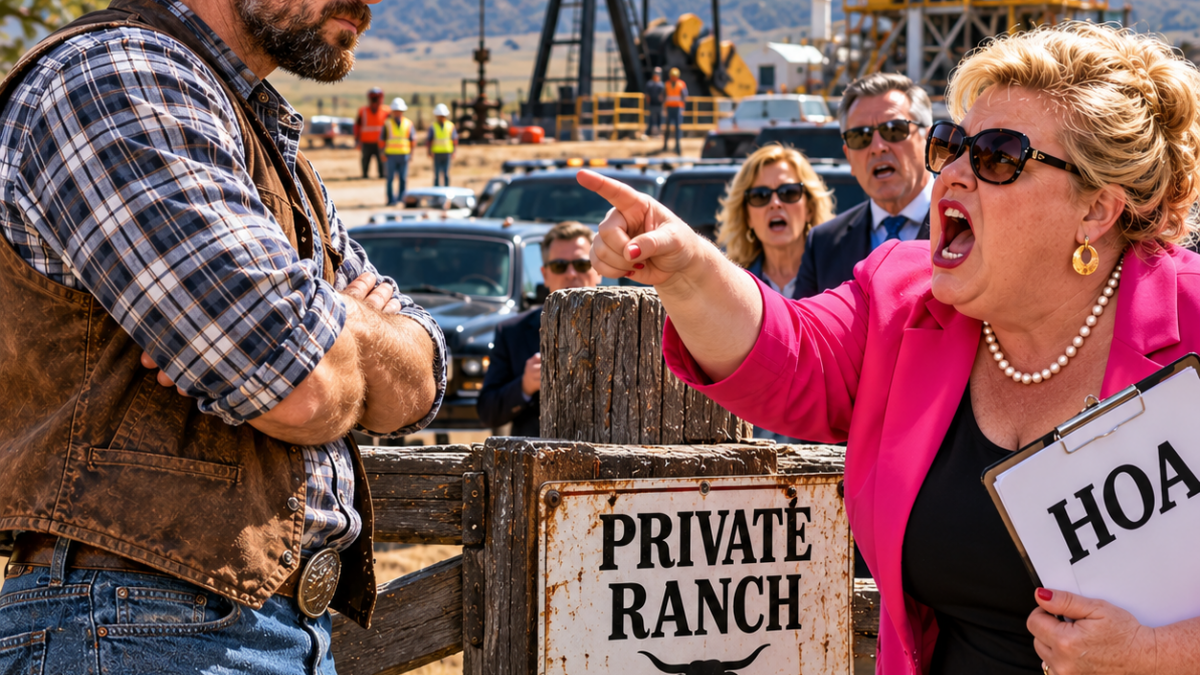
PART 2
March 15, 2019.
I read the date twice.
Then a third time.
My uncle had died on September 3, 2018.
Six months before the document claimed he had signed away his mineral rights.
I looked up at the clerk.
“Is this a certified county record?”
Her eyes shifted toward the doorway.
“It’s in the property file.”
“That wasn’t my question.”
She swallowed.
“Yes.”
I placed Roy’s death certificate beside the assignment.
“Then explain how a dead man signed this.”
“I can’t.”
“Who filed it?”
She glanced toward the back office.
“Mr. Wilson, I only provide records. I don’t interpret them.”
“Who filed it?”
Her shoulders tightened.
“Ridgerest Energy Partners submitted the associated documents.”
“And Warren Caldwell signed the exploration authorization?”
“Yes.”
“What gives an HOA president authority over private mineral rights?”
She didn’t answer.
I leaned closer.
“Was my uncle ever actually a member of Ridgerest Valley HOA?”
“I wouldn’t know.”
“You work in the office holding the records.”
“I said I wouldn’t know.”
Her voice had changed.
Not annoyed.
Afraid.
Then the phone behind the counter rang.
She picked it up immediately.
“County Clerk.”
She listened.
Her eyes moved toward me.
“Yes,” she said quietly. “He’s here now.”
I felt something in my stomach tighten.
I closed the folder.
“Who was that?”
She turned away.
“County business.”
I took certified copies of everything and walked outside.
For several minutes I sat in my rental car without starting it.
Through the clerk’s office window, I could see the woman standing near a desk with the phone still pressed to her ear.
She was watching me.
I looked down at the documents.
Ridgerest Energy Partners had been incorporated only eighteen months earlier.
I searched the company on my phone.
Registered agent: Dennis Hargrove, attorney.
Business address: a P.O. box in the same town.
Then I searched Ridgerest Valley HOA.
Founded twelve years earlier.
President: Warren Caldwell.
Board advisor: Ray Bledsoe.
I recognized that name from the geological permit.
County Councilman Ray Bledsoe had approved the exploration request as a local government liaison.
One organization.
One energy company.
One attorney.
One public official.
All circling the same 160 acres.
I drove back to the ranch before dark.
From the porch, I could hear machinery operating beyond the illegal fence.
Roy’s note was in my pocket.
Don’t let them take it.
For the first time, I wondered whether “them” had names.
The call came the next morning.
A woman introduced herself as an administrator for Ridgerest Valley HOA.
“Mr. Caldwell would like to meet with you regarding a mutually beneficial resolution.”
“He already knows I’m here?”
A pause.
“I believe the county informed him there were questions concerning the property.”
Of course they had.
“When?”
“Two o’clock.”
The HOA office sat between a feed store and an insurance agency in a small commercial strip near town.
A black SUV was parked outside.
I walked in at 1:57.
Warren Caldwell was waiting.
He was in his early sixties, silver-haired, broad-shouldered, wearing a crisp blue shirt with the sleeves buttoned precisely at his wrists.
He looked like someone running for office even when nobody was voting.
“Eugene Wilson.”
He stood and offered his hand.
“Roy talked about you.”
That surprised me.
“Did he?”
“Sometimes.”
“What did he say?”
“That you were the smart one.”
I couldn’t tell whether it was a compliment or bait.
Behind Caldwell’s desk were framed photographs of him with sheriffs, state representatives, business owners, and Ray Bledsoe.
Near the door sat a young woman holding a tablet.
She looked about thirty.
Caldwell noticed me glance at her.
“Claire Dawson. Administrative records.”
Claire gave me a small nod.
Her hands trembled as she typed.
Caldwell gestured toward a chair.
“I understand you’ve become concerned about some arrangements your uncle made.”
“That’s one way to describe a dead man signing documents.”
His smile barely changed.
“I suspected that date would cause confusion.”
“Confusion?”
“A clerical issue.”
“My uncle died six months before he supposedly transferred his mineral rights.”
“The agreement itself predates his death.”
“Then why is it dated afterward?”
“Processing error.”
“And the drilling permit?”
“Same underlying authorization.”
“Signed by you.”
“As HOA president.”
“Roy’s ranch wasn’t part of your HOA.”
Caldwell leaned back.
“That depends on which documents you’re relying on.”
“I’m relying on the deed.”
“Old property arrangements around here can be complicated.”
“Ownership isn’t complicated.”
He smiled again.
“Spoken like someone who hasn’t been involved in rural property law very long.”
I let the insult pass.
He opened a folder.
“Your uncle resisted community integration for years. We tried to work with him. Eventually, he agreed to limited cooperation involving subsurface exploration.”
“He agreed after he died?”
Caldwell’s smile disappeared.
“For someone who just arrived, you’ve become confrontational very quickly.”
“For someone who doesn’t own my land, you’ve been drilling on it pretty confidently.”
Claire stopped typing.
Only for a second.
Then her fingers started again.
Caldwell slid a document across the desk.
“Here is the simplest solution.”
I read it.
Ridgerest Energy Partners would receive all mineral rights beneath the ranch.
The HOA would waive my alleged $47,000 debt.
Ridgerest would pay me $50,000.
I kept reading.
Paragraph seventeen required confidentiality.
Paragraph nineteen released the HOA, its officers, affiliates, contractors, and agents from all prior claims.
Paragraph twenty acknowledged the validity of previous HOA authority over the property.
I looked up.
“You want me to sign away oil rights, validate your claim against the ranch, release everyone involved from liability, and promise never to talk about it.”
He folded his hands.
“You receive fifty thousand dollars and a clean slate.”
“How much is underneath that pasture?”
“That hasn’t been established.”
“You’re drilling.”
“Exploring.”
“Your own geological report calls the reserves significant.”
His eyes narrowed.
“You accessed that?”
“It’s in the county record.”
“Some county materials aren’t meant to be interpreted by laypeople.”
“I’m not interpreting the number. I’m interpreting the fact that you’re offering fifty thousand dollars for something you apparently believe is worth drilling for.”
He aligned a pen with the edge of his desk.
“You have twenty-six days remaining before enforcement procedures advance.”
“Is that a threat?”
“No.”
He straightened the pen another millimeter.
“It’s a calendar.”
Then he stood.
“Your uncle misunderstood this community, Eugene. He thought stubbornness was the same thing as strength.”
I remained seated.
“What happened between you and Roy?”
“We disagreed.”
“About oil?”
“About progress.”
He walked around the desk and extended his hand.
“The people here have long memories.”
I stood.
“So do county records.”
His hand remained in the air.
Neither of us moved.
Then I shook it.
His grip was firm.
Too firm.
As I left, I passed Claire’s desk.
She didn’t look at me.
“The bathroom is down the hall,” she said.
I stopped.
“I’m fine.”
“Left side.”
Her eyes stayed on her monitor.
“Paper towels sometimes jam.”
Caldwell’s office door was still open behind me.
I walked down the hall.
The bathroom was empty.
I locked the door.
Nothing.
Sink.
Mirror.
Trash can.
Paper-towel dispenser.
I opened it.
A folded piece of paper sat behind the roll.
Four words.
CHECK 2017 MEETING MINUTES.
I stood there staring.
Claire had just risked her job to point me toward something.
I folded the note into my wallet.
When I walked out, I didn’t look at her.
I reached my car.
My phone buzzed.
An email from Dennis Hargrove.
FORMAL NOTICE OF ADMINISTRATIVE ENFORCEMENT.
The HOA had begun proceedings seeking a lien against the ranch.
Hearing to be scheduled within fourteen days.
The email timestamp was 2:17 p.m.
I checked my watch.
2:26.
Caldwell had sent the order while I was still sitting across from him pretending I had twenty-six days to consider his offer.
He had never intended to wait.
I called the estate attorney.
“I need the best land-use lawyer you know.”
He gave me a name.
Sandra Vance.
Austin.
I called her from the parking lot.
She listened for twenty minutes.
When I finished, she asked, “Do you have the original inheritance documents?”
“Yes.”
“Death certificate?”
“Yes.”
“Certified copy of the alleged mineral assignment?”
“Yes.”
“Anything proving the ranch ever joined the HOA?”
“No.”
“Anything proving it didn’t?”
“Roy’s deed predates the HOA.”
“That helps. It doesn’t answer everything.”
“What about the signature dated after his death?”
“That helps a lot more.”
I heard pages turning.
“Do not sign anything Caldwell gives you.”
“I wasn’t planning to.”
“Do not threaten him.”
“I wasn’t planning to.”
“Do not post online.”
“I wasn’t—”
“And don’t confront drilling crews.”
I stopped.
“I was thinking about that.”
“Don’t.”
“Why?”
“Because right now they want you angry.”
I looked back at the HOA office.
“Why?”
“An angry outsider trespassing into an active work zone is easier to discredit than an heir holding a death certificate and a forged-looking document.”
“So what do I do?”
“Document everything.”
“Claire told me to check the 2017 HOA minutes.”
“Who’s Claire?”
I explained.
Sandra went quiet.
“Find those minutes without exposing her.”
“How?”
“Public records request, litigation discovery, anything legitimate.”
“And the lien?”
“I’ll challenge it.”
“Can they really foreclose?”
“Not quickly, and not cleanly. But people don’t always file weak claims because they expect to win. Sometimes they file them because defending yourself costs money.”
I leaned back in my seat.
“They’re trying to exhaust me.”
“Yes.”
The online post appeared three days later.
OUTSIDER THREATENS RIDGEREST VALLEY’S FUTURE.
The anonymous author described an unnamed heir who had “abandoned family property for years” and now wanted to profit from natural resources while ignoring environmental concerns and community obligations.
The comments were worse.
Somebody claimed I had financial problems back home.
False.
Another claimed Roy had been investigated for property fraud.
False.
Then I found a comment from a woman named Linda who said she worked at the county clerk’s office.
She claimed she had personally watched me demand sealed documents I had no right to access.
That was the clerk.
I stared at the screen.
Caldwell had used almost identical words in our meeting.
Someone who never cared about the property.
An outsider.
Threatening legal action.
I hadn’t threatened legal action.
I had asked for time to review his offer.
There had been three people in that room.
Caldwell.
Claire.
Me.
I called Sandra.
“Don’t respond,” she said.
“They’re lying.”
“I know.”
“People believe it.”
“I know.”
“So I just sit here?”
“You build a case.”
The next morning, a cashier at the grocery store refused to look at me.
At the gas station, a man in a pickup watched me while talking on his phone.
When I drove past Gene Hollister’s house, his blinds were closed.
That afternoon, an unknown number called.
“You should take Caldwell’s offer.”
“Who is this?”
“The hearing’s been scheduled, hasn’t it?”
My hand tightened around the phone.
“How do you know that?”
“People who fight Warren don’t stay comfortable long.”
The call ended.
I checked the ranch doors twice that night.
Then I went through Roy’s boxes.
Tax receipts.
Cattle records.
Veterinary bills.
Photographs.
Old utility statements.
Near the bottom of one box, I found an envelope marked NOT SENT.
Inside was a three-page handwritten letter dated 2016.
It was addressed to a man named Raymond at the Texas General Land Office.
Roy described years of pressure.
Fake compliance fees.
Boundary complaints.
Repeated requests that he surrender mineral management rights.
He named Warren Caldwell.
Dennis Hargrove.
Ray Bledsoe.
Then I reached a paragraph that made me stop.
They have been planning to take this land since they discovered what is under it. I have kept documents, but I am afraid of what they will do if I make this public. I am an old man living alone. I have watched what happens to people who fight them.
I sat in Roy’s kitchen until after midnight.
He had known.
Years before the forged assignment.
Years before I inherited anything.
He had tried to warn somebody.
Then fear stopped him from mailing the letter.
I looked at the five-word note again.
Don’t let them take it.
I had assumed Roy died worried about developers.
Now I understood he had died worried about specific men.
My phone buzzed the next morning.
The ownership hearing had been scheduled.
Twelve days.
The HOA was challenging the inheritance itself.
Sandra drove out that afternoon.
We spread everything across Roy’s kitchen table.
“They’re attacking from every direction,” I said.
“That’s deliberate.”
She read the 2016 letter.
“This helps establish Roy’s state of mind and a history of dispute.”
“But?”
“But an unsent letter doesn’t prove the accusations inside it.”
I rubbed my face.
“What would?”
“The board records Claire mentioned.”
“I requested them.”
“And?”
“Nothing.”
Sandra nodded.
“That tells us something.”
“It doesn’t give us evidence.”
“No.”
A courier arrived on the ninth day.
Three documents.
The first demanded that I transfer mineral rights within seven days or face a lawsuit challenging the inheritance.
The second offered $75,000 for the entire ranch.
The buyer was Ridgerest Land Holdings LLC.
Same registered agent as Ridgerest Energy Partners.
Dennis Hargrove.
The third was a lien notice.
The claimed balance had grown from $47,000 to $52,300.
I laughed when I saw it.
Sandra didn’t.
“What?”
“Five thousand dollars appeared in nine days.”
“Legal fees.”
“For sending me letters?”
“Doesn’t have to be reasonable if the point is pressure.”
I held up the purchase offer.
“Seventy-five thousand for 160 acres with possible oil underneath.”
“They’re not even pretending now.”
“Can they take it?”
Sandra looked at me.
“Not if the documents hold up and the court is fair.”
“And if the court isn’t?”
She didn’t answer immediately.
“That’s why we need more.”
I looked toward Roy’s old window.
“2017.”
“Yes.”
The text arrived the night before Sandra planned to file another records demand.
Unknown number.
THEY’RE SHREDDING DOCUMENTS TONIGHT. STORAGE UNIT BEHIND COMMUNITY CENTER. I CAN’T BE INVOLVED ANYMORE. I’M SORRY.
I showed Sandra.
“Claire?”
“Probably.”
“You cannot go inside that storage unit.”
“I know.”
“I mean it.”
“If they destroy the records—”
“You still cannot trespass.”
“So I do nothing?”
“No. We file an emergency motion preserving evidence.”
“That could take hours.”
“Then document from public property.”
I made another call.
Daniel Collins answered on the third ring.
Roy’s old address book described him simply as:
REPORTER—LAND RIGHTS.
“I’ve got a story involving an HOA, mineral rights, a dead man’s signature, and evidence that may be destroyed tonight.”
Daniel was silent for one beat.
“Where are you?”
I told him.
“I’ll be there tomorrow morning.”
“What if the records are gone by then?”
“Then show me why you think they existed.”
At dusk, I parked on a public access road where I could see the storage building.
I stayed in my car.
At 9:15, two men arrived.
They opened the unit.
Carried out four boxes.
Loaded them into an unmarked white van.
I photographed everything.
At 10:42, another vehicle pulled in.
Ray Bledsoe stepped out.
Even at a distance, I recognized him from Caldwell’s photographs.
He spoke to the men.
Pointed at the boxes.
Then pointed down the road.
Toward me.
I slid lower in my seat.
At 11:17, they left.
The van headed east.
Bledsoe drove west.
I wrote down license plates, times, vehicle descriptions.
Sandra’s emergency preservation order wasn’t granted until the next morning.
By then, the boxes were gone.
Daniel Collins arrived before noon.
He looked like a man who trusted pickup trucks more than offices.
Late fifties.
Weathered face.
Press badge clipped to a faded jacket.
He sat on Roy’s porch and opened a notebook.
“Start at the beginning.”
I showed him everything.
When he reached the mineral assignment, he stopped.
“You have an authentic signature?”
I brought out an old agricultural tax form.
He laid them side by side.
“They’re close.”
“Close isn’t real.”
“I know a forensic examiner in Austin.”
“You think she can prove it?”
“She can tell us whether she thinks it’s genuine.”
He read Roy’s unsent letter.
Then he studied my photographs of Bledsoe at the storage unit.
“What exactly was inside those boxes?”
“I don’t know.”
“Then don’t say they contained incriminating records.”
“They moved them the night Claire warned me records were being destroyed.”
“That’s what you can say.”
He closed his notebook.
“You want to beat these people?”
“Yes.”
“Then become boring.”
“What?”
“Facts. Dates. Documents. No theories you can’t prove. Caldwell wants you sounding paranoid.”
I thought of Gene’s warning.
People here learn not to ask questions.
Daniel stood.
“I’ll start checking old land disputes.”
Before leaving, he said, “Find those 2017 minutes.”
That afternoon, another text arrived.
CHECK YOUR UNCLE’S MAILBOX.
I drove to the end of the dirt road.
The rusted mailbox looked untouched.
Inside was a manila envelope.
Six photocopied pages.
RIDGEREST VALLEY HOMEOWNERS ASSOCIATION
CLOSED SESSION MINUTES
AUGUST 14, 2017
Present:
Warren Caldwell.
Dennis Hargrove.
Ray Bledsoe.
Other board members.
Agenda:
Strategic Acquisition of Wilson Property Pursuant to Mineral Development Opportunity.
I sat in my car reading.
Owner has declined voluntary transfer.
Recommend escalating compliance pressure to encourage reconsideration.
Motion approved to begin preliminary lien documentation.
Then, near the bottom:
If owner continues to refuse, explore alternative transfer mechanisms.
Bledsoe to advise regarding county procedures.
There it was.
Two years before the forged mineral assignment, they had discussed pressure, liens, and alternative transfer mechanisms.
I photographed every page.
Then I called Sandra.
“These are explosive.”
“So we use them.”
“Where did you get them?”
I paused.
“My mailbox.”
“Who put them there?”
“I think Claire.”
Sandra exhaled.
“Then we have a problem.”
“What problem?”
“Authentication.”
“They’re meeting minutes.”
“They’re photocopies of meeting minutes left anonymously in a mailbox.”
“So subpoena the originals.”
“That’s what we’ll do.”
“What if the originals were in those boxes?”
“Then somebody may have made a serious mistake removing them after a preservation request.”
That evening, Gene Hollister knocked on Roy’s door.
He carried a folder.
“I heard Collins came by.”
“News travels.”
“In this town, faster than ambulances.”
He handed me the folder.
Property records.
Old newspaper clippings.
Death certificates.
“What is this?”
“People who fought Caldwell.”
I looked through them.
Three landowners over twelve years.
All had disputed HOA authority or property acquisitions.
Two died from heart attacks.
One died in a car accident.
Gene’s voice dropped.
“I’m not saying Warren killed anybody.”
“Good.”
“I’m saying bad luck follows people who cause him problems.”
“That’s not evidence.”
“I know.”
“Then why bring it?”
“Because evidence isn’t the only thing a man needs before deciding how much danger he’s willing to accept.”
I closed the folder.
“Did you know Roy was afraid?”
Gene looked away.
“He stopped sleeping much near the end.”
“Why didn’t anyone help him?”
Gene’s face hardened.
“You weren’t here either.”
That hit exactly where he intended.
“No.”
“You left him alone with men who had more money, more lawyers, and friends in county offices.”
“I didn’t know.”
“Neither did most of us.”
He stepped down from the porch.
“Knowing late doesn’t make you innocent. It just gives you a chance to do better.”
Twenty minutes later, Sandra called.
“The ownership hearing has been moved up.”
“How far?”
“Tomorrow.”
I stood.
“What?”
“Nine a.m.”
“They can do that?”
“They did.”
“Why?”
“Because they know we’re building a case.”
I looked at the documents covering the kitchen.
“Then we’re not ready.”
“No.”
“What do we have?”
“Enough to fight.”
“That’s not what I asked.”
Sandra went quiet.
“No. We are not ready.”
She arrived at six the next morning.
We sorted evidence into three piles.
Clean.
Risky.
Poison.
The original deed, probate certification, tax payments, Roy’s death certificate, HOA demands, and certified county documents went into clean.
The anonymous meeting minutes went into risky.
Gene’s folder of deaths went into poison.
Sandra tapped the anonymous minutes.
“These tell us where to look.”
“They tell us what happened.”
“They may. But introducing them directly exposes questions about source and authenticity.”
“Claire could authenticate them.”
“If she testifies.”
My phone buzzed.
Unknown number.
I KNOW YOU HAVE THE MINUTES. PLEASE DON’T USE MY NAME. I HAVE A DAUGHTER IN FOURTH GRADE. I CAN’T LOSE THIS JOB. PLEASE.
I handed Sandra the phone.
She read it.
Then looked at me.
“We don’t expose her.”
“We might lose.”
“Yes.”
“They could take the ranch.”
“Yes.”
I stared at Roy’s note.
For years, Caldwell had apparently treated people as expendable.
Roy.
Gene.
Homeowners.
County workers.
Anybody standing between him and the mineral rights.
If I burned Claire to protect my inheritance, I would be using the same logic.
“What’s the alternative?”
Sandra pushed the meeting minutes toward me.
“You know what they say.”
“So?”
“You ask Caldwell questions based on them.”
“And if he denies everything?”
“We request the judge subpoena the originals.”
“And if they’ve been destroyed?”
“Then we use the preservation issue.”
“And if the judge doesn’t care?”
Sandra met my eyes.
“Then we lose today.”
I hated that answer.
But I understood it.
“Do it clean.”
At 8:30, we reached the courthouse.
Daniel Collins waited outside.
“Heard they moved the hearing.”
“Apparently justice had an opening.”
He almost smiled.
Inside, Caldwell sat beside Hargrove.
Bledsoe was in the gallery.
Three rows behind him sat Claire.
She didn’t look at me.
I didn’t look at her.
Judge Patricia Moreno entered.
The bailiff called the room to order.
She reviewed the file.
“Mr. Wilson, you are contesting the HOA’s claim against property transferred to you through the estate of Roy Wilson.”
“Yes, Your Honor.”
“You may proceed.”
Sandra handled the legal argument.
The ranch deed.
Probate certification.
Fourteen years of tax history.
No recorded document showing Roy voluntarily joined Ridgerest Valley HOA.
No valid assessment agreement.
No recorded covenant giving Caldwell control over Roy’s mineral estate.
Hargrove stood.
“The property has been effectively abandoned for years.”
Sandra didn’t even look surprised.
“Property taxes were current.”
“Taxes do not establish active agricultural use.”
She submitted utility records, maintenance receipts, and Gene Hollister’s affidavit describing regular activity on the property during Roy’s life.
Judge Moreno reviewed them.
Then Sandra handed me the mineral-rights assignment.
The courtroom seemed quieter when I stood.
“Your Honor, this document is central to their claim.”
I placed it before her.
“It is dated March 15, 2019.”
“Yes.”
“My uncle died September 3, 2018.”
Judge Moreno looked at the death certificate.
Then at Hargrove.
“Counsel?”
Hargrove stood slowly.
“We believe the date reflects a recording or processing error. The underlying agreement was reached before Mr. Wilson’s death.”
“Do you have evidence of that?”
“Mr. Caldwell participated in the transaction.”
I looked at Sandra.
She nodded.
“Then I request Mr. Caldwell testify.”
Hargrove objected.
Judge Moreno overruled him.
Caldwell took the witness stand.
He looked calm.
That worried me.
He swore the oath.
Sandra allowed me to conduct the factual questioning with her guidance because I was the petitioner and central witness, though she remained ready to object or clarify.
I approached.
“Mr. Caldwell, did Roy Wilson agree to transfer his mineral rights to Ridgerest Energy Partners?”
“Yes.”
“When?”
“Before his death.”
“Where?”
“At our administrative office.”
“Who was present?”
“I don’t remember everyone.”
“Was Dennis Hargrove present?”
“Possibly.”
“Ray Bledsoe?”
“I don’t recall.”
“Claire Dawson?”
“I don’t recall.”
“Do you remember Roy signing?”
“Yes.”
“Clearly?”
“Yes.”
“So you remember watching him sign.”
“Yes.”
“But not the date.”
“It was several years ago.”
I nodded.
“Was it before or after August 14, 2017?”
For the first time, he hesitated.
A tiny pause.
But I saw it.
“What significance does that date have?”
“I’m asking whether the alleged signing happened before or after August 14, 2017.”
“I don’t recall.”
“Do you recall a closed board meeting on that date?”
Hargrove stood.
“Objection. Relevance.”
Sandra rose.
“The meeting concerns acquisition of the Wilson property and the origin of the disputed claims.”
Judge Moreno looked at Caldwell.
“Answer.”
Caldwell adjusted his sleeve.
“I attended hundreds of meetings.”
“Did Ridgerest Valley HOA discuss acquiring Roy Wilson’s property?”
“We discussed many properties.”
“Did you discuss using compliance pressure against him?”
“I don’t remember that terminology.”
“Did the board authorize preliminary lien paperwork?”
His jaw tightened.
“I don’t recall.”
“Did anyone use the phrase alternative transfer mechanisms?”
Hargrove was on his feet again.
“Your Honor, counsel is referencing material not in evidence.”
Sandra responded immediately.
“We have a good-faith basis to believe records exist and are subject to the preservation order.”
Judge Moreno looked at us.
“Do you possess those records?”
Sandra chose every word.
“We possess information indicating such records exist. We are requesting the court order production of the originals.”
Hargrove shook his head.
“This is a fishing expedition.”
I turned toward the judge.
“Your Honor, three nights ago I watched filing boxes removed from the HOA storage facility after receiving information that records were being destroyed.”
The courtroom stirred.
“I remained on a public road. I photographed the vehicles, license plates, and individuals involved.”
“Who did you identify?”
“County Councilman Ray Bledsoe.”
Every head turned.
Bledsoe’s face reddened.
Judge Moreno looked directly at him.
“Mr. Bledsoe, remain in this courtroom.”
Hargrove stood.
“This proves nothing about the contents of those boxes.”
“No,” I said. “It doesn’t.”
Sandra touched my arm.
I stopped.
Judge Moreno looked back at Caldwell.
“Mr. Caldwell, did a board meeting occur on August 14, 2017 concerning acquisition of Roy Wilson’s land?”
Caldwell inhaled slowly.
“There may have been a discussion.”
“Did that discussion concern mineral rights?”
“We discussed economic opportunities affecting the community.”
“Did Roy Wilson agree to sell?”
“He was difficult.”
“That wasn’t the question.”
The judge’s voice sharpened.
“Did Roy Wilson agree to sell?”
“No.”
Silence.
I looked at Sandra.
She gave the smallest nod.
I stepped closer.
“After he refused, did the HOA begin preparing liens against his property?”
Caldwell’s eyes met mine.
“I don’t remember.”
“Did you discuss alternative ways to transfer ownership?”
“I said I don’t remember.”
“Yet you clearly remember watching him sign away his mineral rights.”
His fingers tightened around the edge of the witness box.
“Yes.”
“You remember that, but you don’t remember when it happened.”
“Yes.”
“You don’t remember who was there.”
“No.”
“You don’t remember the date.”
“No.”
“You don’t remember the board meeting about acquiring the same property.”
“No.”
“But you remember Roy voluntarily signing an agreement that now happens to be dated six months after his death.”
Hargrove stood.
“Argumentative.”
“Sustained,” Judge Moreno said.
I stepped back.
Caldwell leaned toward the microphone.
“You people have no idea what this community was before we organized it.”
Nobody had asked him anything.
Hargrove turned.
“Warren.”
Caldwell ignored him.
“Roy fought every improvement. Every road project. Every drainage plan. Every investment.”
Judge Moreno said, “Mr. Caldwell, answer only the questions asked.”
But the control was slipping.
He looked at me.
“You disappear for fifteen years, and now you walk in here pretending you care about land you abandoned.”
“I never owned it until Roy died.”
“Exactly.”
His voice rose.
“You didn’t care about him. You didn’t care about this town. You didn’t care whether that ranch rotted into the dirt. Now somebody tells you there’s oil underneath it and suddenly you’re defending family heritage?”
The courtroom went silent.
There it was.
Not evidence.
Not yet.
But truth leaking through anger.
I said quietly, “How did you know when I learned about the oil?”
Hargrove closed his eyes.
Caldwell stopped.
I continued.
“The geological report wasn’t sent to me. I found it at the county office after your HOA had already demanded money.”
He stared.
“You just said I came here because somebody told me about the oil.”
“I was speaking generally.”
“You also said Roy fought every investment.”
“He did.”
“So you discussed mineral development with him before his death.”
“Of course.”
“But five minutes ago you couldn’t remember the 2017 meeting.”
“I didn’t say—”
A chair scraped behind me.
Gene Hollister stood.
“Your Honor.”
The bailiff moved immediately.
Judge Moreno raised a hand.
“Sir, sit down.”
“I was there.”
The room froze.
Gene looked terrified.
But he stayed standing.
“I was in the HOA building August 14, 2017. Roy asked me to drive him because his truck was in the shop.”
Hargrove stood.
“This is outrageous—”
Judge Moreno struck the gavel.
“Sit down, counsel.”
Gene continued.
“I waited outside the conference room. The door wasn’t shut all the way.”
He looked at Caldwell.
“I heard Warren tell them if Roy wouldn’t cooperate, they’d make ownership difficult enough that eventually somebody would.”
Caldwell shook his head.
“He’s lying.”
Gene’s voice strengthened.
“I heard Bledsoe say county procedure could solve problems that private negotiations couldn’t.”
Bledsoe rose.
“That is false.”
Judge Moreno struck the gavel again.
“Mr. Bledsoe, sit down.”
He did.
Slowly.
The judge looked at Sandra.
“Do you wish to call Mr. Hollister formally?”
“Yes, Your Honor.”
Gene was sworn in.
His testimony was imperfect.
That made it more believable.
He couldn’t remember every word.
He couldn’t remember exactly how long the meeting lasted.
He admitted he had been afraid to come forward.
Hargrove attacked that.
“You waited years.”
“Yes.”
“You said nothing while Roy was alive.”
“Yes.”
“You said nothing when he died.”
“Yes.”
“So why should anyone believe you now?”
Gene looked toward me.
“Because being a coward for ten years doesn’t mean I have to be one for eleven.”
Nobody spoke.
Judge Moreno called a recess.
Twenty-five minutes later, she returned.
“The immediate question before this court is not criminal liability. It is whether the HOA has shown sufficient lawful authority to encumber, transfer, or enforce claims against the Wilson property.”
She looked toward Caldwell.
“It has not.”
My hands gripped the table.
“The lien enforcement is stayed. No mineral transfer may occur. No foreclosure-related action may proceed. All existing HOA, Ridgerest Energy Partners, Ridgerest Land Holdings, and relevant county records concerning the Wilson property are to be preserved.”
Then she looked toward Bledsoe.
“Given testimony regarding removal of records during a pending dispute, this court will refer the matter for investigation.”
Hargrove stood.
“Your Honor—”
“I’m not finished.”
He sat.
“The claimed mineral assignment bears a date after the alleged signer’s death. The witness supporting that assignment cannot provide a credible execution date. Evidence has been presented indicating prior efforts to pressure the owner into transferring the property. These facts warrant further inquiry.”
Her eyes moved toward me.
“Mr. Wilson, title remains with the estate transfer subject to any properly filed appeal or subsequent adjudication.”
My knees nearly weakened.
I had not won everything.
But I still owned the ranch.
Caldwell stepped down from the witness stand.
He passed me without speaking.
For the first time since I met him, he didn’t look like the most powerful man in the room.
Outside, reporters crowded the courthouse steps.
Daniel Collins was among them.
Sandra put one hand against my back.
“Do not celebrate.”
“I wasn’t planning to.”
“Good.”
“What happens now?”
“Subpoenas.”
She looked over her shoulder toward Caldwell.
“And people under pressure start choosing whether loyalty is worth prison.”
The investigation lasted four months.
Those four months were uglier than the hearing.
Ridgerest’s attorneys appealed.
The HOA sent new letters claiming unrelated maintenance violations.
Someone cut a section of ranch fencing.
My rental truck was followed twice.
Daniel published his first article:
DEAD LANDOWNER’S SIGNATURE AT CENTER OF RIDGEREST MINERAL DISPUTE.
The article did not accuse Caldwell of murder, conspiracy, or anything Daniel couldn’t support.
It simply printed dates.
Roy’s death.
The assignment.
The exploration permit.
The HOA demands.
The ownership hearing.
The records-preservation order.
Facts did what outrage couldn’t.
People started asking questions.
A widow named Margaret Lewis contacted Daniel.
Ridgerest had pressured her husband into transferring a drainage easement years earlier after threatening fines.
Then another family came forward.
Then another.
Eleven eventually provided documents showing similar patterns.
Fees.
Liens.
Settlement offers.
Confidentiality clauses.
Affiliated companies.
Not every case was illegal.
That mattered.
Sandra reminded me constantly.
“Don’t turn every aggressive business tactic into a crime.”
“I’m not.”
“You’re starting to.”
She was right.
Anger made patterns look cleaner than they really were.
Some homeowners had knowingly signed deals they later regretted.
Some disputes were ordinary legal conflicts.
But others weren’t.
And investigators needed to separate them.
The missing storage boxes were found in a commercial facility across the county line.
Bledsoe had rented the unit through a business associate.
He had not burned the records.
Apparently destroying twelve years of documents had become too frightening once the preservation order was entered.
That hesitation buried them.
Inside the boxes were original meeting minutes.
Including August 14, 2017.
Claire’s photocopies matched.
There were financial records connecting HOA funds to Ridgerest Energy Partners.
Invoices from Hargrove’s firm.
Draft lien documents against Roy dated months before the HOA ever claimed he owed assessments.
Emails discussing “pressure escalation.”
And a memorandum from Caldwell to Bledsoe.
Wilson remains unwilling to convey mineral interests. We should evaluate administrative options that may alter his negotiating position.
There was more.
The mineral assignment itself had been created using a digital template last modified after Roy’s death.
A forensic document examiner concluded the signature was not genuine.
The handwriting imitated Roy’s general appearance but not his actual writing movement.
Daniel called me when that report became public.
“You were right.”
“That doesn’t feel as good as I thought it would.”
“It rarely does.”
“What happens now?”
“Depends on prosecutors.”
“Do you think Caldwell goes to prison?”
“I think Caldwell hires more lawyers.”
He was right.
The investigation widened.
Hargrove claimed he believed documents supplied by the HOA were authentic.
Bledsoe claimed he had acted only as a liaison.
Caldwell claimed employees had mishandled records without his knowledge.
Then Claire disappeared from the HOA office.
For two weeks I heard nothing.
I worried I had failed her despite never naming her.
Then an unknown number called.
“Eugene?”
I recognized her voice.
“Claire?”
“I quit.”
“Are you okay?”
“My daughter and I are staying with my sister.”
“Did somebody threaten you?”
She hesitated.
“Nothing I can prove.”
“Then don’t tell me anything you’re not comfortable telling investigators.”
“I already spoke to them.”
I sat down.
“You did?”
“I gave them access logs.”
“What access logs?”
“The HOA document server.”
My pulse quickened.
Claire explained that during 2019, documents connected to Roy had been repeatedly replaced and edited.
Original scans disappeared.
New PDFs appeared.
Metadata was altered.
She had noticed because she managed the archive.
“Why didn’t you say something then?”
“I had just gotten divorced. My daughter was six. I needed the job.”
Her voice trembled.
“Caldwell knew that.”
I didn’t know what to say.
Finally, I asked, “Were you the one who put the minutes in my mailbox?”
Silence.
Then she said, “I can’t answer that.”
I understood.
“You don’t have to.”
“You protected my name in court.”
“Yes.”
“I watched.”
“Why did you trust me?”
“I didn’t.”
That answer surprised me.
She continued.
“I watched what you did after you got the minutes. If you had exposed me immediately, I would have disappeared.”
“Instead you testified.”
“After I had somewhere safe to go.”
I leaned forward.
“Claire, whatever happens, you don’t owe me anything.”
“No.”
Her voice steadied.
“But I owed Roy something.”
“Why?”
“Because he came to the office once.”
“When?”
“2017.”
She inhaled.
“He asked me whether meeting minutes could be changed after approval. I told him no, not legally. He looked exhausted.”
“What did he say?”
“He said, ‘Then I better start keeping copies.’”
I closed my eyes.
Roy had known.
Not everything.
But enough.
Claire said, “I wish I had helped him then.”
“So do I.”
We both understood I wasn’t only talking about her.
The indictments came in stages.
Warren Caldwell faced multiple charges connected to forgery, fraud, conspiracy, and theft-related conduct.
Dennis Hargrove faced separate professional and criminal scrutiny.
His law license was eventually suspended and later revoked following disciplinary proceedings tied to the scheme.
Ray Bledsoe resigned from the county council before prosecutors charged him in connection with obstruction and abuse of his office.
The HOA board was placed under court supervision and later dissolved.
The drilling operation stopped.
One morning I drove to the western pasture and watched workers remove the Ridgerest signs.
The foreman approached me.
“Where do you want the fence?”
“Gone.”
“All of it?”
“All of it.”
He pointed toward the drilling pad.
“What about the temporary road?”
“Restore the ground.”
“That’ll take a while.”
“I’ve got time.”
The fence posts came out one by one.
Each left a dark hole in the soil.
I walked along behind the crew.
For months, that fence had seemed enormous.
Now it looked cheap.
Just steel and concrete.
Things that only appeared permanent while nobody challenged why they were there.
Six weeks after Caldwell’s indictment, a legitimate energy company contacted Sandra.
They wanted to discuss leasing the mineral estate.
This time, the offer did not insult me.
Independent appraisals.
Royalty percentages.
Environmental protections.
Surface-use restrictions.
Real money.
Potentially life-changing money.
Sandra reviewed everything.
“So?”
I looked across Roy’s pasture.
Part of me wanted to reject every drill forever.
Oil had started this.
Or at least greed for it had.
But land isn’t made pure by pretending resources beneath it don’t exist.
“What would Roy have done?”
Sandra shrugged.
“From the documents I’ve read? Argue for six months, insult three lawyers, then negotiate a better royalty.”
I laughed.
That sounded right.
I rejected the first offer.
Not because I opposed development.
Because after everything, I refused to make another major decision under pressure.
Instead, I placed sixty acres into a conservation easement protecting creek habitat and old-growth mesquite corridors.
For the remaining hundred acres, I negotiated with a regional cooperative.
Strict surface limitations.
Water monitoring.
Restoration obligations.
And fifteen percent of the net royalty stream directed into a community fund independent of the old HOA.
Pastor-led committees and political appointees weren’t allowed to control it alone.
Three signatures required for disbursements.
Independent audit every year.
Public reports.
The first project we funded was a legal-aid office.
Sandra agreed to spend one day a month there.
“You realize this is how people trick lawyers into unpaid work,” she told me.
“You’re getting paid.”
“Not enough.”
“You own a nicer car than I do.”
“I own a car that starts.”
Fair point.
Gene became one of the first people to walk into the new legal-aid office.
Not because he needed help.
Because he wanted to donate.
He placed an envelope on Sandra’s desk.
“What’s this?”
“Five hundred dollars.”
“Gene, you don’t need to—”
“I watched Roy fight alone.”
He looked toward me.
“I’m done watching.”
Not everybody changed.
Some Caldwell supporters believed I had destroyed the community.
At the gas station, men occasionally stared.
Anonymous comments accused me of stealing jobs.
Others said I had used Roy’s death to enrich myself.
One flyer appeared on my ranch gate:
OUTSIDERS DON’T OWN RIDGEREST.
I kept it.
Daniel asked why.
“Evidence?”
“No.”
“Then why?”
I folded it into Roy’s old file.
“Reminder.”
“Of what?”
“That winning a case doesn’t change everybody’s mind.”
The criminal trials took nearly two years.
There were motions.
Delays.
Negotiations.
Separate defendants.
Complicated financial evidence.
Some charges changed.
Some counts were dismissed or consolidated.
The television version made everything sound immediate.
The reality was slow enough to exhaust anyone who expected justice to feel dramatic.
I attended whenever my testimony was required.
The hardest moment came during Caldwell’s trial.
His attorneys portrayed him as an ambitious community leader surrounded by people who had made unauthorized decisions.
They blamed Hargrove.
They blamed Bledsoe.
They blamed clerical staff.
At one point, they even blamed Roy.
The defense suggested my uncle had verbally agreed to transfer rights and later changed his mind.
Sandra leaned toward me in the gallery.
“Don’t react.”
I whispered, “He’s dead. They’re still blaming him.”
“I know.”
Claire testified the next day.
She walked into court wearing a dark suit.
Her hands did not shake.
The prosecutor showed internal document logs.
“Who had authority to order record replacements?”
“Senior administration.”
“Who did that include?”
“Warren Caldwell.”
“Did you personally receive directions concerning Wilson-property records?”
“Yes.”
“From whom?”
She looked across the courtroom.
“Mr. Caldwell.”
For the first time, he looked directly at her.
Claire continued.
“He told me revised versions were being supplied by legal counsel and that I should overwrite older files.”
“Did that seem normal?”
“No.”
“Did you object?”
“Not formally.”
“Why?”
She paused.
“Because I was afraid I would lose my job.”
The defense attorney stood for cross-examination.
“You remained employed for years.”
“Yes.”
“You accepted a salary from the HOA.”
“Yes.”
“You never contacted police.”
“No.”
“You never contacted regulators.”
“No.”
“Yet now, after criminal charges were filed, you remember these conversations perfectly.”
“I don’t remember them perfectly.”
He paused.
That answer disrupted his rhythm.
Claire continued.
“I remember being afraid.”
The courtroom became completely still.
She looked toward the jury.
“I remember because every time Mr. Caldwell called me into his office, I wondered whether that was the day he realized I had kept copies.”
The defense attorney stared at her.
“You kept copies?”
“Yes.”
The prosecutor stood.
“Your Honor—”
Claire’s attorney whispered to her.
The judge called a brief sidebar.
When proceedings resumed, the prosecution introduced a previously authenticated archive Claire had turned over during the investigation.
Emails.
Version histories.
Internal directives.
One email from Caldwell read:
Replace Wilson file with updated executed version. Old scans should not remain accessible after migration.
The defense argued “executed version” could refer to legitimate paperwork.
Then prosecutors displayed another message sent minutes later to Hargrove:
Once the Wilson issue is cleaned up, exploration can proceed without title interference.
Caldwell’s attorney stopped taking notes.
The jury stared at the screen.
The balance in the courtroom shifted so visibly I could feel it.
Later, Bledsoe testified under an agreement.
He admitted the 2017 meeting happened.
He admitted Caldwell wanted Roy’s mineral rights.
He admitted county relationships were discussed as leverage.
Then the prosecutor asked the question everyone had been waiting for.
“Did Roy Wilson ever voluntarily sign the 2019 mineral assignment?”
Bledsoe looked toward Caldwell.
Caldwell stared straight ahead.
“No.”
Nobody moved.
The prosecutor let the silence sit.
“Who told you it had been signed?”
“Warren.”
Caldwell finally turned his head.
Bledsoe continued.
“He said Roy was dead, the nephew was gone, and nobody was going to reopen a ranch everyone had forgotten.”
I felt my hands curl into fists.
The prosecutor asked, “Did Mr. Caldwell use those exact words?”
Bledsoe swallowed.
“Close enough that I remember them.”
The defense attacked him.
A cooperating criminal.
A liar saving himself.
A corrupt official.
All true, at least in part.
But the documents surrounding his testimony did not depend on his honesty.
They supported him.
That was what Caldwell had never understood.
He had built his power by making people afraid to speak.
Once they started speaking together, his own records connected their stories.
The verdict did not come immediately.
The jury deliberated into the next day.
I waited outside with Gene and Daniel.
Claire had already left through another entrance.
Gene looked at me.
“You ever think about selling?”
“The ranch?”
“Yeah.”
“Every time something breaks.”
“I’m serious.”
“So am I.”
He smiled.
Then he grew quiet.
“Roy would’ve liked that you kept it.”
“You think?”
“He’d complain about your conservation easement.”
“That sounds right.”
“He’d say sixty acres was too much.”
“Also sounds right.”
The courtroom deputy opened the doors.
We went inside.
The jury found Caldwell guilty on the major fraud and forgery counts tied to the Wilson property and related schemes.
Not every allegation survived.
Not every rumor became evidence.
Nothing tied him to the deaths Gene had shown me.
Investigators found no proof that Roy or any other landowner had been physically harmed.
That mattered to me.
Fear had made us imagine possibilities the evidence never supported.
Caldwell had done enough without turning him into something he wasn’t.
His crimes were ordinary in the ugliest sense.
Greed.
Entitlement.
Influence.
Paperwork.
Pressure applied to people with fewer resources until surrender became cheaper than resistance.
At sentencing, Roy’s unsent 2016 letter became part of my victim-impact statement.
I did not read the entire thing.
I read one line.
I am an old man living alone.
Then I folded the letter.
“I wasn’t there when my uncle needed somebody,” I told the judge. “That part belongs to me. Warren Caldwell didn’t create the distance in my family. He exploited it.”
Caldwell watched me.
I turned toward him.
“You saw a lonely man and calculated how long he could resist.”
His expression barely changed.
“You saw an empty ranch and assumed nobody would come back.”
I placed Roy’s note on the podium.
“You were almost right.”
That was all I wanted to say.
Caldwell received a substantial prison sentence.
Hargrove’s professional life was over.
Bledsoe never returned to public office.
Civil settlements followed.
Some families recovered money.
Others recovered only portions.
Several claims were too old.
Some documentation was missing.
Justice did not restore everybody to the position they would have occupied if none of it had happened.
That was one of the hardest things to accept.
People like neat endings.
Courts don’t manufacture time.
They cannot return ten years to a widow.
They cannot erase fear from a child who watched a parent lose a home.
They cannot give Roy the courage he needed in 2016.
They cannot give me fifteen years with an uncle I barely knew.
The county changed its procedures.
HOA financial filings received additional oversight.
Meeting-record requirements tightened.
Conflict disclosures became harder to ignore.
Audits followed.
The reforms were not perfect.
No reform ever is.
But sunlight entered rooms that had operated comfortably in darkness.
Claire left the county.
Two months after the first hearing, she texted me.
Thank you for keeping your word.
I replied:
You saved the ranch.
Three dots appeared.
Then disappeared.
Her final message came a minute later.
Roy saved it first. I just found the paperwork.
I never heard from her again.
I deleted her number because I understood what she wanted.
A life where Ridgerest Valley was no longer following her.
Gene and I became friends in the way older rural men become friends with people they once distrusted.
Mostly by insulting each other’s equipment.
He hated my new tractor.
“Too many electronics.”
“It starts every morning.”
“So does mine.”
“Yours requires prayer.”
“Prayer builds character.”
Sometimes we talked about Roy.
Usually we didn’t.
One evening, I finally asked the question I had avoided.
“Do you know why Roy and my dad stopped speaking?”
Gene stared across the pasture.
“I know what Roy told me.”
“What?”
“Your father wanted him to sell the ranch when their mother got sick. Roy refused.”
I frowned.
“That was it?”
“No.”
Gene rubbed his chin.
“Your father thought Roy cared more about land than family. Roy thought your father only cared about money.”
“So they both decided never to speak again?”
“Men have ended families over less.”
I laughed without humor.
“Did Roy regret it?”
“Every day.”
I looked at him.
“He kept newspaper clippings about you.”
“What?”
“Your engineering awards. Wedding announcement.”
“I’m not married.”
“Then maybe somebody else’s.”
I punched his shoulder.
He laughed.
Then he said quietly, “He knew where you worked.”
That hurt more than I expected.
Roy had been watching my life from a distance while pretending not to care.
Exactly the kind of stupidity my father would have understood.
The next week, I searched his bedroom.
In the bottom drawer of an old dresser, beneath winter shirts, I found a small box.
Inside were photographs.
Me at twelve, standing beside Roy holding a bass from his pond.
My father younger than I remembered him.
My grandmother.
A newspaper clipping from when my engineering firm won a state infrastructure award.
My name had been circled.
There was no note.
None was needed.
I sat on Roy’s bed holding that clipping for a long time.
The legal fight had made him into evidence.
Landowner.
Victim.
Deceased signatory.
Probate decedent.
But in that room, he became my uncle again.
Stubborn.
Proud.
Lonely.
Watching a nephew from far away because calling would have required admitting he still cared.
A year after Caldwell’s conviction, I stood on Roy’s porch on the anniversary of the first inheritance letter.
The illegal fence was gone.
The old drilling pad had been restored and reseeded.
Farther south, the cooperative operated a smaller approved site behind a tree buffer under the lease we had negotiated.
Revenue from that project had already funded the legal-aid office and emergency grants for three families fighting unrelated land disputes.
I had repaired the porch.
Not perfectly.
Roy probably would have complained about the boards.
Gene definitely did.
The mesquite trees bent in the evening wind.
I unfolded Roy’s original note.
Don’t let them take it.
For months I thought “it” meant the ranch.
Then I thought it meant the oil.
Later, I thought it meant the truth.
Standing there, I realized Roy probably meant all of it.
Land.
Choice.
Dignity.
The right to say no without being slowly crushed until yes became inevitable.
I slipped the note back into my wallet.
Then I locked the ranch house and walked toward my truck.
At the end of the driveway stood the old mailbox where the anonymous 2017 minutes had appeared.
I had considered replacing it.
The door barely closed.
The post leaned.
Rust had eaten through one corner.
I kept it anyway.
Some things deserve restoration.
Others deserve to remain exactly as they were when the truth finally arrived.
I got into my truck and looked once more across the ranch.
For fifteen years, I had thought this place belonged to an uncle who wanted nothing to do with my family.
Then I inherited it and discovered how wrong I had been.
Roy had spent his final years terrified that powerful men would erase his ownership with paperwork.
They nearly did.
But the land was still there.
The house was still there.
His signature—the real one—was still preserved on deeds, tax records, old photographs he had labeled by hand, and letters he had been too afraid to send.
And now there were witnesses.
I started the engine and drove toward town while the last sunlight stretched across the pasture behind me.
This time, when I left the ranch, I knew I was coming back.
[END OF STORY]








