PART 2: HOA Tried to Bully Me Into Their Rules—Then I Walked Into Their Clubhouse With the Lease They Never Read
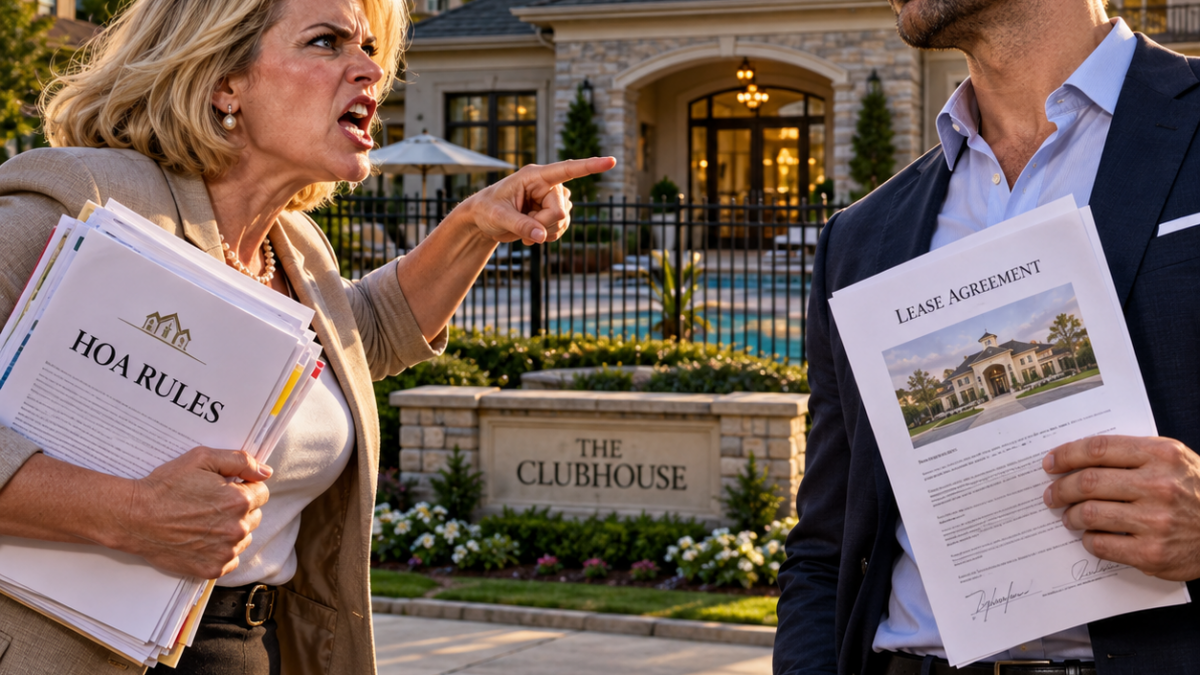
Before I had even finished unloading the last box into my new house, the president of the Oak Crest HOA was already standing in my driveway with a clipboard, telling me my moving trailer violated community rules and promising fines if I didn’t “get compliant” fast. Within three weeks, she had cited my trash cans, mailbox color, wind chime, and patio furniture, and the more I pushed back, the more personal her little campaign became. What Karen Witbridge didn’t know was that the room where she planned to publicly put me in my place was connected to paperwork she had never bothered to read—and I was about to bring that paperwork with me.
The first thing I noticed about Karen was the way she walked onto my property without hesitation.
No knock. No wave. No “welcome to the neighborhood.”
Just stacked bleach-blonde curls, oversized sunglasses, and a clipboard tucked against her side like a badge.
She pointed at the U-Haul trailer beside my driveway.
“You can’t leave that there.”
I was carrying a box marked KITCHEN and had been in the house for maybe forty-five minutes.
I set it on the porch.
“Good afternoon to you too.”
“This is a deed-restricted community,” she said. “Oak Crest rules prohibit temporary trailers from remaining visible from the street outside approved loading windows.”
“Lady, I’m moving in.”
Her mouth fell open.
“It’s Mrs. Karen Witbridge. President of the Oak Crest Homeowners Association.”
“Great. I’m River Hastings. New homeowner. Tired guy holding a box.”
“I expect compliance, not sarcasm.”
“And I expect people to knock before walking onto my property.”
For a second she stared at me.
Then her pen started moving.
“What are you writing?”
“Documenting the interaction.”
I laughed.
She snapped the clipboard shut.
“You’ll be hearing from us.”
“Apparently.”
She marched away muttering about the next board meeting.
I should have treated it as annoying but harmless.
Instead, it became a schedule.
Three days later, I got a warning because my trash cans remained visible thirty minutes after collection.
The next week, I received a citation because my mailbox was “non-standard beige.”
It was gray.
Then Karen sent me a full violation notice because of a wind chime on my porch.
The notice cited “unauthorized exterior acoustic ornamentation.”
I read that phrase twice, walked outside, and listened to the little aluminum tubes tap softly in the breeze.
I left it exactly where it was.
What Karen didn’t know was that I wasn’t new to property paperwork.
I ran a small real-estate company, mostly buying neglected commercial buildings, odd parcels, and distressed properties nobody else wanted to untangle. I had learned that the most dangerous person in a property dispute wasn’t always the loudest one.
It was the person who had read the documents.
Three years before moving into Oak Crest, my company had purchased a foreclosed property near the center of the neighborhood.
It came with a meeting hall, kitchen, storage rooms, and a parking lot.
We renovated it and leased it to a tenant that needed permanent meeting space.
The original agreement had been negotiated under Oak Crest’s previous board president.
The rent arrived every month.
I rarely thought about it.
Then Karen mailed me violation number five.
This one concerned my patio furniture.
According to her letter, the dark metal chairs on my back patio failed to match the neighborhood’s “approved warm-earth exterior palette.”
The fine would begin at seventy-five dollars and increase weekly.
I sat at my kitchen table with the notice in one hand and coffee in the other.
Then I noticed the next HOA meeting date.
Thursday.
Location:
**Oak Crest Clubhouse.**
I opened my filing cabinet.
Pulled out a lease packet I hadn’t needed in months.
Read the renewal clause.
Then the inspection clause.
Then the section governing landlord access and termination.
By the time I reached the signature page, I was smiling.
Thursday evening, I arrived ten minutes early wearing a clean button-down shirt and carrying one plain folder under my arm.
Karen was already inside rearranging chairs.
She saw me and frowned.
“This meeting is for board members and Oak Crest homeowners only.”
I stopped inside the doorway.
“Good.”
“Good?”
“Means I’m in the right place.”
She gripped the clipboard tighter.
“You’re not on the board.”
“I know.”
“Then sit in the back until the homeowner comment period.”
I looked around the room, then down at the folder.
“No,” I said. “I think we need to clear up one thing before this meeting starts.”
Karen’s eyes narrowed as I walked toward the front table.
And for the first time since I moved into Oak Crest, she looked less annoyed than uncertain.
PART 2
I placed the folder on the table.
Karen stared at it.
“What is that?”
“Something you should’ve read before sending me five violation notices.”
“I have reviewed the governing documents.”
“Not those.”
Two board members had already taken their seats.
One was Allan Mercer, the treasurer, a narrow-shouldered guy who always looked like he was apologizing for something before anyone accused him.
The other was Carolyn Ree, the vice president.
She watched me with the guarded expression of somebody trying to decide whether I was dangerous or merely inconvenient.
Karen tapped her clipboard.
“If this is about your citations, there’s a formal appeals process.”
“I’m not appealing anything tonight.”
“Then what are you doing?”
I opened the folder.
Pulled out the first page.
Set it in front of her.
Karen looked down.
Her eyes moved over the header.
Then stopped.
I watched the exact second recognition arrived.
**COMMERCIAL LEASE AGREEMENT**
**LESSOR: HASTINGS PROPERTY GROUP LLC**
**LESSEE: OAK CREST HOMEOWNERS ASSOCIATION**
Her fingers stopped moving.
Allan leaned over.
“What’s that?”
I answered before Karen could.
“The lease for this building.”
Carolyn frowned.
“Our clubhouse?”
“My clubhouse.”
The room changed.
You can feel when several people stop breathing normally at once.
Karen stared at me.
“No.”
I smiled.
“Yes.”
She looked back at the contract.
“That company isn’t you.”
I pulled out my driver’s license.
Then my business card.
Then the county ownership record.
“River Hastings. Managing member. Hastings Property Group.”
Allan took the ownership record.
“You own the building?”
“Three years now.”
“But we’ve been paying—”
“My company.”
Karen finally found her voice.
“You’re manipulating this.”
“How?”
“You deliberately moved into Oak Crest knowing the HOA rented this facility from you.”
“I bought my house because I liked it.”
“That is not what I mean.”
“I know.”
The other residents had begun arriving.
People slowed near the door.
A couple of them clearly sensed something unusual.
Karen lowered her voice.
“You’re trying to use a landlord relationship to intimidate the board.”
I looked around the meeting room.
Same walls my company had repainted.
Same HVAC system I’d replaced.
Same commercial kitchen we’d renovated.
Same roof I’d paid to patch the previous winter.
“No, Karen. I’m informing my tenant who owns the building.”
Her cheeks flushed.
“You cannot interfere with HOA business.”
I turned to the second section of the lease.
“Actually, I can inspect the premises with proper notice.”
Next page.
“I retain scheduling priority for owner events.”
Next.
“And because the original five-year term expired six months ago and the HOA allowed the lease to roll into its month-to-month renewal provision, either party can terminate with thirty days’ written notice.”
Allan looked up sharply.
“Month-to-month?”
Karen turned on him.
“Don’t.”
“Did you know that?”
“That’s irrelevant.”
“It seems extremely relevant,” I said.
Carolyn pulled the contract toward herself.
“Karen, have you seen this?”
“I’ve seen the lease.”
“Then why didn’t you tell us?”
Karen snapped,
“Because our tenancy has nothing to do with HOA enforcement.”
Technically, that part was true.
And I wasn’t going to pretend otherwise.
Owning the clubhouse didn’t magically exempt me from valid covenants attached to my house.
But Karen had spent three weeks treating every interaction like a personal dominance exercise.
So I leaned forward.
“Then let’s separate the issues.”
She said nothing.
“You want to enforce rules? Fine. Enforce them correctly.”
“I am.”
“No. You’re manufacturing nonsense.”
I placed my wind-chime violation on top of the lease.
“Show me where this is prohibited.”
Karen’s eyes flicked downward.
“Architectural harmony standards.”
“That’s not what I asked.”
“The board has interpretive authority.”
“Then show me the board vote adopting this interpretation.”
Silence.
I placed the mailbox citation beside it.
“Show me the approved color list.”
She didn’t touch it.
I added the trash-can warning.
“Show me the inspection log proving it stayed visible beyond the required time.”
She tightened her grip on the clipboard.
“This meeting isn’t about you.”
“It became about me when you made it about me.”
Residents had begun sitting down.
Glenn Porter, an older man who lived three houses over, leaned toward his wife.
I heard him whisper,
“Is he their landlord?”
Karen heard it too.
Her face hardened.
I took a breath.
I didn’t want to threaten eviction over my patio chairs.
That would’ve made me exactly the kind of person I disliked.
So I kept my voice level.
“I’m not asking you to ignore legitimate rules because I own this building.”
Allan visibly relaxed.
“I’m asking you to stop using invented rules and personal retaliation.”
Karen scoffed.
“Retaliation?”
“Five notices in three weeks.”
“You have five violations.”
“Convenient.”
Her jaw tightened.
I continued.
“If this continues, I will exercise every right available under the lease. Inspections. Scheduling control. And if necessary, termination.”
“You wouldn’t dare.”
The room became very quiet.
I looked at her.
“Try me.”
Nobody spoke for several seconds.
Then Glenn coughed into his hand.
Karen straightened.
“We’re starting the meeting.”
I picked up my folder.
“Great.”
I sat in the front row.
She hated that.
For the rest of the evening, Karen avoided looking at me.
The meeting covered landscaping budgets, pool rules, parking, and something painfully detailed about mulch depth around ornamental trees.
Not one word about my wind chime.
Not one word about my furniture.
When homeowner comments opened, Glenn raised his hand.
“Can we get a copy of the clubhouse lease?”
Karen answered immediately.
“No.”
Allan turned toward her.
“Why not?”
“It’s an operational document.”
“It affects association finances.”
“It’s not relevant to homeowners.”
Glenn leaned back.
“That means yes, then.”
People laughed.
Karen didn’t.
Afterward, Allan approached me in the parking lot.
“River.”
“Yeah?”
“Can I see that lease again sometime?”
“You can request it from your own records.”
He looked embarrassed.
“Karen keeps most contract files.”
“That’s a problem.”
“I know.”
“Did you vote on the last renewal?”
“No.”
“There wasn’t one.”
He frowned.
“What?”
“It rolled automatically month-to-month.”
“I thought we signed a three-year extension.”
“Not with me.”
He stared toward the clubhouse.
“That’s what Karen told us.”
There it was.
Small.
Probably meaningless.
But a crack.
I went home.
The violation letters stopped.
For nine days.
No mailbox warning.
No trash-can photograph.
No patio-furniture threat.
Nothing.
My wind chime kept moving in the evening breeze.
For a brief moment, I thought public embarrassment had been enough.
Then I noticed the mailbox.
It leaned slightly left.
I stopped beside it.
Looked closer.
Two bolts were missing from the base plate.
One remaining bolt had been loosened nearly halfway.
The structure wasn’t broken.
But it wobbled if I touched it.
Two days later, Karen’s newest notice appeared taped to my door.
**UNSTABLE MAILBOX — SAFETY HAZARD**
**FINE: $150**
I stood on the porch reading it.
Then looked toward the street.
That was when the situation changed emotionally for me.
Petty enforcement was annoying.
Sabotage was different.
Someone had altered my property, then issued a violation because it had been altered.
Could I prove Karen had done it?
No.
Not yet.
I removed the notice carefully.
Put it in a plastic sleeve.
That weekend, I installed cameras.
One watched the driveway.
One covered the mailbox and sidewalk.
Small units.
Good night vision.
Motion alerts.
I told nobody.
For seven nights, nothing happened.
Then Thursday morning at 3:12, my phone vibrated against the nightstand.
**MOTION DETECTED — FRONT PROPERTY**
I opened the feed.
A hooded figure crouched beside the mailbox.
My pulse sped up.
Flashlight.
Small wrench.
The person worked slowly.
Comfortably.
Not like somebody afraid of being caught.
I zoomed.
The figure stood.
Pulled the hood back to adjust her hair.
Karen.
I sat upright.
She looked toward my house.
Then down the road.
Then returned to work.
I watched her loosen the remaining bolts.
Lift off the entire upper mailbox assembly.
Put it into a large canvas bag.
Then walk away.
No car visible on camera.
Probably parked around the corner.
For ten seconds after she disappeared, I kept staring at the screen.
My first impulse was to march to her house.
Bang on her door.
Demand the mailbox.
I’m glad I didn’t.
Instead, I downloaded the video.
Backed it up.
Emailed a copy to myself.
Then went back to bed.
I didn’t sleep.
At seven-thirty, I stepped outside.
The post remained.
Top gone.
Thirty minutes later, somebody taped another notice to my front door.
**MAILBOX MISSING**
**EMERGENCY SAFETY VIOLATION**
**HOA REPLACEMENT COST: $300**
I laughed once.
Not because it was funny.
Because the stupidity was almost elegant.
Steal the mailbox.
Fine me because it’s gone.
Charge me to replace what you stole.
I photographed the notice exactly where it hung.
Then drove to the police station.
Officer Daniel Reeves watched the footage twice.
The second time, he leaned closer.
“That’s the HOA president?”
“Yes.”
“She removed the mailbox?”
“Yes.”
“And then the association fined you because it was missing?”
I handed him the notice.
He stared at it.
“That’s bold.”
“That’s one word.”
He printed the timestamp.
Asked for the original video file.
I provided a copy.
Then he explained that mailbox tampering could involve federal postal law depending on the circumstances.
“You’ll probably hear from a postal inspector.”
“Fine by me.”
“Don’t contact her.”
“I wasn’t planning to.”
“Good.”
He glanced at the footage again.
“If she did this because of an ongoing dispute, document everything else.”
“I already have a folder.”
He smiled.
“People like you make reports easier.”
That evening happened to be Oak Crest’s quarterly open forum.
I almost stayed home.
Police had the evidence.
Karen would eventually find out.
But then I looked at the new meeting agenda posted online.
Item seven:
**MAILBOX COMPLIANCE INITIATIVE**
I read it twice.
The proposed policy would allow fines up to five hundred dollars for “non-regulation, unstable, missing, damaged, or visually incompatible mail receptacles.”
She stole mine and then tried to build an enforcement campaign around the condition she created.
That wasn’t just retaliation.
That was confidence.
The kind that comes from believing nobody will ever challenge you publicly.
I packed a portable projector.
Drove to the clubhouse.
My clubhouse.
The room was half full.
Karen arrived ten minutes late.
She wore navy slacks, a white blouse, and the same oversized sunglasses pushed onto her head.
She walked straight to the front.
No sign she’d spent part of the previous night taking apart my mailbox.
Meeting opened.
Minutes approved.
Landscaping.
Pool repairs.
Then item seven.
Karen cleared her throat.
“Recent safety issues involving improperly maintained mailbox structures have created liability concerns.”
I stood.
“Before the vote, I’d like to show something.”
Her body froze.
“Homeowner comments are later.”
“This concerns the exact policy.”
“You’re out of order.”
Allan looked at her.
“Let him show it.”
Carolyn said nothing.
I set the projector on a side table.
Connected my laptop.
Karen’s voice sharpened.
“River, don’t.”
That was the first time she sounded afraid.
I looked at her.
“Why not?”
No answer.
The video appeared on the wall.
Black-and-white night footage.
Timestamp visible.
3:12 a.m.
Figure approaching.
Nobody spoke.
Karen’s face appeared clearly when the hood came back.
A woman near the front gasped.
“Oh my God.”
Another voice:
“Is that Karen?”
The video showed the wrench.
Bolts.
The mailbox top coming loose.
Bag.
Karen leaving.
The room erupted.
Karen stood.
“This footage is illegally recorded.”
“It’s my property.”
“You cannot distribute surveillance of board members without consent.”
“You don’t need consent to record somebody trespassing outside your house.”
Allan stared at her.
“Karen, did you take his mailbox?”
She looked at him.
“This is being misrepresented.”
“How?”
“I was addressing a safety violation.”
“At three in the morning?” Glenn shouted.
People murmured.
I shut off the video.
“I’ve already filed a police report.”
The room quieted.
Karen’s face changed.
“And the postal inspector’s office is being notified.”
She reached for her clipboard.
No one cared.
I continued.
“The notice charging me three hundred dollars to replace the missing mailbox was issued after this footage was recorded.”
Allan pushed his chair back.
“Meeting adjourned.”
Karen snapped,
“You don’t have authority to adjourn my meeting.”
Carolyn spoke for the first time.
“It’s not your meeting.”
Karen turned.
“What?”
“The board runs the meeting.”
“I am the president.”
“And we’re done tonight.”
People were already pulling out phones.
Some photographed the projected timestamp.
Others recorded Karen.
She looked at me.
Her voice dropped.
“You think this makes you untouchable?”
“No.”
I packed the projector.
“It makes me prepared.”
I walked out.
My hands were shaking by the time I reached the parking lot.
That’s the part people never mention when they tell stories about standing up to bullies.
You can know you’re right.
You can have the evidence.
You can still shake afterward.
I sat inside my truck with both hands on the steering wheel until my breathing slowed.
I wasn’t enjoying it anymore.
Karen wasn’t entertaining.
She was unstable enough to walk onto private property after midnight and create violations herself.
Owning the clubhouse suddenly felt less like leverage and more like an obligation.
If I terminated the lease immediately, I’d punish two hundred homeowners because one woman had lost control.
I didn’t want that.
So I waited.
The next morning, a sheriff’s cruiser parked outside Karen’s house.
I didn’t stand in the street watching.
I saw it from my kitchen window because her house sat farther down the curve.
The cruiser remained for over an hour.
By lunchtime, word was everywhere.
By Saturday, residents had begun a recall petition.
People I’d barely met knocked on my door.
A guy named Marcus Bell, retired firefighter, handed me a six-pack.
“You cracked the thing wide open.”
“I showed a video.”
“That’s more than the rest of us did.”
I didn’t like the guilt in his voice.
“What happened before me?”
He laughed without humor.
“How much time you got?”
Apparently, a lot.
Over the next week, stories arrived.
Fines over basketball hoops.
Violation notices with no photographs.
Late fees added before appeal windows expired.
Threats over work vehicles.
Warnings about holiday decorations.
One widow had been fined because a dead branch fell into her yard while she was hospitalized.
The underlying problem wasn’t that every rule was unreasonable.
Some rules were ordinary HOA rules residents had agreed to.
The problem was enforcement.
Selective.
Personal.
Unreviewable.
Karen treated the rulebook like a weapon she could point at whoever annoyed her.
And she wasn’t alone.
Monday morning, I drafted a lease adjustment notice.
Not an eviction.
Not yet.
The clubhouse agreement remained month-to-month, but from that point forward, events had to be scheduled through Hastings Property Group seventy-two hours in advance.
No after-hours access without authorization.
No storage changes.
No locks replaced without written approval.
Basic landlord controls I should have enforced earlier.
Allan met me at the clubhouse.
Karen was absent.
He looked exhausted.
I handed him the notice.
He read it.
“Fair.”
“I’m not trying to shut you down.”
“I know.”
“Then why did the board let it get this far?”
He stared at the page.
“We didn’t know what she was doing.”
“Not everything.”
He looked up.
“What does that mean?”
“You didn’t know what you didn’t want to know.”
That hurt him.
I saw it.
But I meant it.
“Karen didn’t steal my mailbox in a vacuum. She acted like someone who had spent years expecting nobody around her to ask questions.”
Allan said nothing.
“Did nobody ask?”
“We did.”
“And?”
“She made meetings miserable.”
“That’s not an answer.”
He rubbed his forehead.
“People stopped fighting.”
“That is an answer.”
He signed acknowledgment of the lease notice.
Before leaving, he said quietly,
“I should’ve pushed harder.”
“Probably.”
Not kind.
True.
Later that afternoon, Glenn stopped by.
He was seventy-one, retired machinist, the kind of man who stored paperwork because “you never know when somebody’s going to lie.”
He arrived carrying a thick folder.
“This goes back six years.”
“What is it?”
“Everything Oak Crest ever sent me.”
We spread documents across my dining table.
Newsletters.
Fines.
Receipts.
Appeal forms.
Certified letters.
Five years earlier, Glenn had been fined for repainting his fence without approval.
Only he’d never repainted it.
He still had photographs showing the same faded stain before and after the supposed violation.
The notice was signed by Carolyn Ree.
Another fine over a “noncompliant satellite installation.”
No photograph.
No inspection.
Another over landscaping.
Another over driveway staining.
Same signature.
Then something stranger.
Payment instructions.
Some fines directed checks to Oak Crest HOA.
Others told residents to make payment to individuals or service entities.
“Did you pay any?”
“Couple.”
“To who?”
He pointed.
**Carolyn Ree.**
Another:
**Patrick Winslow — Compliance Services**
“Patrick’s on the board.”
“Yep.”
“Why would fines go directly to him?”
“That,” Glenn said, “is why I’m here.”
We started asking quietly.
Not publicly.
Residents brought copies.
Receipts.
Canceled checks.
Notices.
By evening, my dining room looked like an accounting crime scene.
Thirty-one suspicious payments over six years.
A little more than twenty thousand dollars.
Maybe not millions.
But the pattern mattered.
Personal accounts.
No documentation.
No matching deposit into association records.
I called someone I trusted.
Asia Moreno and I had been friends since college.
She’d become an assistant district attorney.
We hadn’t spoken much in the previous year beyond birthdays and occasional texts.
I called.
“Please tell me this isn’t free legal advice.”
“Coffee first.”
“That’s still free legal advice with caffeine.”
We met at a diner outside town.
I gave her copies.
Not originals.
She spent forty minutes reading.
She barely touched her food.
Finally, she looked up.
“Where’d you get these?”
“Residents.”
“All voluntarily?”
“Yes.”
“You didn’t access HOA files?”
“No.”
“You didn’t use your landlord status to search their offices?”
“No.”
“Good.”
“Why?”
“Because I don’t want defense attorneys arguing evidence was obtained improperly.”
That was why I liked Asia.
She didn’t care about dramatic revenge.
She cared about clean cases.
She flipped through another canceled check.
“This isn’t enough to prove embezzlement by itself.”
“I know.”
“But it’s enough to ask questions.”
“Will you?”
She leaned back.
“River, are you sure you want to keep pulling this thread?”
“They took money from people.”
“I’m not asking morally.”
“Then what?”
“Once prosecutors get involved, you lose control of where the case goes.”
I thought of Karen at my mailbox.
Glenn’s fake fence fine.
Residents afraid to open letters.
“Good.”
Asia studied me.
“You sound angry.”
“I am.”
“Don’t let that contaminate your evidence.”
“Understood.”
“I’ll send this to fraud.”
A week later, subpoenas went out.
Six current and former board members.
Carolyn was arrested at her insurance office.
Patrick Winslow had hired a criminal attorney before investigators reached him.
Three board members resigned within seventy-two hours.
Oak Crest lost quorum.
No legal board meetings.
No new fines.
No new enforcement.
For the first time since I moved in, silence settled over the neighborhood.
Not real silence.
Lawn mowers.
Kids.
Dogs.
Cars.
The absence was paper.
No warnings taped to doors.
No clipboard visits.
No emails reminding residents that decorative stones needed committee approval.
People began talking to each other.
That sounds trivial.
It wasn’t.
Fear isolates.
One person thinks their fine is unique.
Another thinks maybe they’re the difficult one.
Another pays because they’re embarrassed.
Once neighbors compare notes, the power changes.
I decided the clubhouse needed to serve that purpose.
Not another board meeting.
An open community forum.
I posted notices.
Handed out flyers.
Knocked on doors.
No RSVP.
No board approval.
My building.
My event.
The turnout shocked me.
The clubhouse filled.
People stood along walls.
Hallway.
Back entrance.
I stood at the front.
No podium.
No projector.
“I’m not here to become your HOA president.”
Someone shouted,
“Thank God.”
Laughter broke the tension.
I smiled.
“I’m serious. I don’t want the job.”
A woman near the aisle raised her hand.
“Then what happens?”
“You decide.”
“How?”
“Start over.”
I introduced three residents who’d agreed to serve on a temporary election committee.
Marcus Bell, retired firefighter.
Dana Cho, high-school teacher.
Clara Mendoza, single mother who owned a bakery downtown.
None had served on the old board.
None wanted permanent appointments.
They proposed a sixty-day election.
Every position open.
Independent ballot counting.
Published financial statements.
Recorded meetings.
No closed disciplinary hearings.
No fine without evidence.
Appeals reviewed by people not involved in issuing the violation.
Questions came quickly.
“What about existing fines?”
“Frozen until audited.”
“Dues?”
“Existing account under investigation.”
“Clubhouse?”
I answered that.
“The lease stays temporarily.”
A man in the back called,
“You going to raise the rent?”
“No.”
“Evict us?”
“Not if the community uses the building honestly.”
Someone else:
“Why should one guy control the clubhouse?”
That question mattered.
I nodded.
“You’re right.”
The room quieted.
“I shouldn’t.”
I hadn’t planned to say that.
But once the words came out, I knew they were true.
The clubhouse had given me leverage against Karen.
It shouldn’t become permanent leverage against everyone else.
“We’ll fix that too.”
After the meeting, Clara stayed behind.
She looked around the room.
“I used to panic when HOA letters arrived.”
“How bad?”
“My hands would shake before I opened them.”
“What were they fining you for?”
“Anything.”
She laughed softly.
“Once they fined me because customers picked up bakery orders from my house during a snowstorm.”
“You run the bakery from home?”
“No. The power went out downtown. I stored six cakes in my refrigerator.”
“That was commercial activity?”
“According to Karen.”
She looked toward the empty front table.
“For the first time, I don’t feel like I have to ask permission to breathe.”
That sentence followed me home.
My wind chime moved in the night breeze.
The sound used to annoy Karen.
Now it reminded me how stupid the fight had been at first.
Then a certified letter arrived.
Law firm.
Patrick Winslow’s attorney.
The letter accused me of orchestrating a campaign to undermine Oak Crest governance and demanded I cease “interfering with homeowner affairs.”
I scanned it.
Sent it to Asia.
She called the next morning laughing.
“He’s threatening to sue you for exposing documents residents gave you.”
“Apparently.”
“His bank records arrived yesterday.”
“And?”
“He should focus on those.”
The legal threat disappeared.
But another question remained.
The clubhouse.
I rewrote the lease with my attorney.
No automatic renewal.
Full financial disclosure.
Meetings open except legitimate confidential legal matters.
Democratic elections required.
Annual independent audit.
Then the unusual part.
The Oak Crest community could purchase the clubhouse for one dollar once it met those conditions and created an independent community trust to own the building.
One dollar.
Not a gift yet.
An exit path.
I sent the draft to the interim committee.
Marcus called.
“Is this real?”
“Yes.”
“You’d sell the building for a dollar?”
“If you build a governance structure that keeps it out of another Karen’s hands.”
“Why not just donate it?”
“Because first I want to know the community can protect it.”
Pause.
“Fair.”
They accepted the agreement unanimously.
At that point, I thought the worst was behind us.
I was wrong.
The deeper problem was hiding in the numbers.
It started with Mr. Langford.
Eighty-two.
Widower.
Retired accountant.
Sharp enough to remember every check he’d written for ten years.
He came to the clubhouse carrying a ledger.
“My HOA statement says I paid six hundred and twenty-five dollars in landscaping-compliance penalties.”
“Did you?”
“No.”
“Maybe electronic payment?”
“I don’t use online banking.”
He showed me his check register.
Nothing.
Yet the HOA ledger showed the payment.
Payee:
**Community Services Consultant Group**
That name bothered me.
I searched state business records.
Nothing.
County.
Nothing.
Secretary of State.
No active company under that exact name.
I called Asia.
She was preparing the embezzlement case.
“This wasn’t in the first evidence batch.”
“What is it?”
“Separate homeowner ledger.”
I explained Langford.
Sent the page.
She went quiet.
“River.”
“Yeah?”
“This could be worse.”
“Why?”
“If they’re recording payments homeowners never made, those entries may be hiding money from somewhere else.”
“Or fake billing.”
“Exactly.”
“Company doesn’t exist.”
“That makes it more interesting.”
“How interesting?”
“Potential shell.”
She requested deeper forensic review.
Three days later, she called.
“Come in.”
Her office door was closed when I arrived.
She pushed a folder across the desk.
“Community Services Consultant Group existed.”
“You said it wasn’t registered.”
“Not as an operating company.”
“What does that mean?”
“DBA tied to a mailbox service three towns over.”
“Who owned the bank account?”
She turned a page.
Patrick Winslow.
I stared.
“And vendor authorization?”
Another page.
Carolyn Ree.
I leaned back.
“So they created a fake vendor.”
“Yes.”
“For what?”
“Tree trimming. Sidewalk work. Irrigation upgrades. Fence repairs. Compliance inspections.”
“How much?”
“Sixty-three thousand so far.”
“Performed?”
“Most appear nonexistent.”
I rubbed both hands over my face.
“Karen?”
Asia slid over signatures.
Karen had approved several invoices.
Then another document.
Letters.
Threatening lien action for unpaid maintenance assessments.
I read one.
Then another.
Then saw the names.
Families I didn’t know.
Addresses I recognized.
“How many liens?”
“Some were never properly recorded.”
“Some?”
“Others were supported by documents we’re now questioning.”
“What happened to the homeowners?”
Asia’s expression changed.
“At least four sold their homes after receiving repeated foreclosure threats.”
That landed differently.
Embezzlement is ugly.
Forcing people to believe they might lose their homes is cruelty with paperwork.
One family name stood out.
Duca.
I remembered neighbors mentioning them.
Young couple.
Two kids.
Moved suddenly the year before I arrived.
“Why’d the Ducas leave?”
Asia looked at the file.
“They were told they owed nearly eleven thousand dollars in accumulated assessments and legal costs.”
“Did they?”
“We don’t think so.”
“They sold?”
“Under pressure.”
“To who?”
She turned another page.
The purchaser was an investment entity.
Three months later, the property resold.
Large profit.
“Who owned the investment company?”
“Karen’s cousin had an interest through a title company relationship.”
I stood.
“They pushed them out.”
“We’re investigating.”
“That’s not an answer.”
“It’s the answer I can legally give.”
I started pacing.
Asia watched me.
“They threatened families with foreclosure so insiders could pick up houses?”
“River.”
“They used the HOA to steal equity.”
“Sit down.”
I stopped.
She didn’t raise her voice.
“Sit.”
I did.
“You need to remember something.”
“What?”
“You’re a witness.”
“I know.”
“No. You’re angry enough to become evidence if you do something stupid.”
I stared at her.
“Don’t contact Karen. Don’t contact Patrick. Don’t contact Carolyn. Don’t contact the title company.”
“I wasn’t going to.”
“You were thinking about it.”
Maybe.
Asia knew me too well.
She tapped the folder.
“We can do more with this than you can.”
I looked at the Duca name again.
“Find them.”
“We already did.”
“What’d they say?”
“They kept everything.”
That was the break.
The Ducas had moved three hours away.
Investigators interviewed them.
They had certified letters.
Fake legal notices.
Copies of threatened liens.
Emails.
Closing documents.
One message from Patrick said:
**Failure to resolve outstanding HOA obligations may result in immediate foreclosure action without further notice.**
That wasn’t how lawful foreclosure worked.
But terrified homeowners don’t always know that.
The Ducas had a newborn at the time.
Mr. Duca later told investigators they sold because his wife stopped sleeping.
The title transfer had gone through a company connected to Karen’s cousin.
The pattern repeated elsewhere.
Not identical.
Close enough.
Asia called it what prosecutors call patterns when the same people use the same methods for money.
A scheme.
New charges were prepared.
Mail fraud.
Wire fraud.
Conspiracy to extort.
Fraudulent financial instruments.
Potential racketeering counts depending on final evidence.
A notary was investigated for certifying questionable lien documents.
A title-company employee connected to Karen’s family had expedited transfers.
The scandal left Oak Crest.
Local television arrived.
Headline:
**POWER, PROPERTY, AND CORRUPTION: THE FALL OF OAK CREST HOA**
Karen appeared on television in handcuffs.
Patrick was arrested at the airport trying to board a flight to Arizona.
His lawyer said it was a planned family trip.
Prosecutors called it flight risk.
Carolyn surrendered with counsel.
Three others were indicted later.
Residents watched from living rooms, stunned.
The woman who once fined me over patio furniture was now accused of participating in a scheme that pushed families out of houses.
I didn’t feel triumphant.
That’s worth saying.
When Karen stole my mailbox, I wanted her embarrassed.
When I discovered the financial scheme, embarrassment stopped mattering.
There were families who had packed moving trucks believing they had failed.
Older homeowners who had paid money they couldn’t afford.
People who thought their neighborhood had legal power to take everything.
Suddenly my wind chime seemed microscopic.
At the next community forum, I stood against the side wall.
Marcus chaired.
No podium.
No clipboard.
He told residents,
“We’re rewriting everything.”
Applause.
“No fine without photographs or documented evidence.”
More applause.
“No closed-door disciplinary decisions.”
Applause.
“Every resident gets an appeal.”
Someone shouted,
“About time.”
“All contracts public.”
Louder.
“All financial statements quarterly.”
The windows practically rattled.
I watched.
Didn’t speak.
It wasn’t mine anymore.
Not the moment.
This belonged to them.
Clara caught my eye.
Smiled.
I left before the meeting ended.
The next morning, I called my attorney.
“Prepare the transfer.”
“The one-dollar purchase option?”
“No.”
“What then?”
“Donation.”
Pause.
“You’re giving them the clubhouse?”
“Community trust.”
“You know the building’s worth real money.”
“Yes.”
“You paid to renovate it.”
“Yes.”
“You sure?”
I looked out the window.
Across the street, Glenn was planting flowers.
A few kids rode bicycles past.
No one watched them with a violation form.
“I’m sure.”
The paperwork took weeks.
Oak Crest Community Trust formed as a separate nonprofit.
No enforcement power.
Its only job regarding the clubhouse was ownership and maintenance.
Sale restrictions prevented any individual board member from privately transferring the building.
Major transactions required resident approval.
Annual audit mandatory.
When everything cleared, I met Marcus inside the clubhouse.
The same room where I’d dropped the lease in front of Karen.
I handed him the deed packet.
He stared.
“This is really ours?”
“Not yours.”
He looked confused.
“The community’s.”
He nodded.
“You sure you don’t want anything?”
“I want you to take care of the roof.”
He laughed.
“Deal.”
He shook my hand.
Then his grip tightened.
“We will.”
Walking home, I passed the old HOA warning posts.
Bare.
Somebody had removed the signs.
Glenn was painting a planter.
Clara’s front door was bright red.
The old board would’ve fined her for it.
Now it was just red.
Nothing collapsed.
Property values didn’t vanish.
Children didn’t become criminals because someone’s mailbox was gray instead of beige.
People slowly discovered how much of the fear had been theatrical.
That should have been the end.
It wasn’t.
Trials take time.
Investigations take longer.
Victims keep appearing after headlines fade.
One evening, the Ducas returned to Oak Crest.
I didn’t know they were coming.
Marcus brought them to a community meeting because they wanted to speak.
Daniel and Rebecca Duca looked younger than I expected.
Mid-thirties.
Two children waited with Rebecca’s mother outside the meeting room.
Daniel held a thick accordion folder.
When he reached the front, he didn’t make a speech.
He simply said,
“We thought we were stupid.”
The room became silent.
He continued.
“We thought everyone else understood the rules and we didn’t.”
Rebecca stood beside him.
Her hands shook slightly.
“Every letter said the balance was growing.”
She looked down.
“We had a baby. Daniel’s hours had been cut. They said legal costs would keep increasing.”
Daniel opened the folder.
“We asked for a hearing.”
He held up a letter.
“Denied.”
Another.
“We asked for documentation.”
Another.
“They sent this.”
It said their account had been referred for foreclosure processing.
Rebecca’s voice broke.
“So we sold.”
Nobody moved.
“We sold for less than we wanted because we were scared we’d lose everything.”
Daniel looked around the room.
“Three months later, the house was resold for almost seventy thousand more.”
Glenn cursed softly.
Marcus lowered his head.
I felt anger return.
Not the hot kind.
The cold kind.
Daniel looked toward me.
“You’re River?”
“Yes.”
“We heard you started this.”
“I found one piece.”
“You kept looking.”
“So did everyone else.”
Rebecca smiled sadly.
“I wish someone had looked a year earlier.”
There was no answer to that.
After the meeting, I stood alone in the clubhouse kitchen.
The refrigerator hummed.
Chairs scraped in the main room as people left.
Rebecca came in.
“I’m sorry.”
“For what?”
“That sounded accusatory.”
“It was true.”
“You didn’t know us.”
“No.”
“How could you?”
I looked at the floor.
“Still wish I’d moved in earlier.”
She laughed once.
“So do we.”
Then she surprised me.
“We don’t want the house back.”
“I understand.”
“We want people to know we weren’t irresponsible.”
That was the wound.
Not just money.
Reputation.
They had left believing neighbors saw them as deadbeats.
I told her,
“They’ll know.”
And they did.
The trust created a public record of the fraudulent enforcement findings.
Not names without permission.
Victims could choose whether to be identified.
The Ducas did.
So did several others.
The story shifted again.
Karen was no longer merely the mailbox thief.
Oak Crest was no longer a funny story about an HOA president who discovered her target owned the clubhouse.
The neighborhood had to face something harder.
A community institution had been used to harm people, and plenty of decent residents had looked away because questioning the board was unpleasant.
That realization produced shame.
Shame can destroy a community too.
Marcus understood that.
At one forum, he said,
“We’re not going to spend ten years pretending every person who paid dues was part of the crime.”
People listened.
“We’re also not going to pretend none of us saw warning signs.”
That balance mattered.
Allan Mercer stood.
The former treasurer.
He’d been cleared of criminal involvement after records showed Karen and Patrick had restricted his access to several accounts.
But morally, he carried guilt.
“I saw meetings get uglier.”
His voice was quiet.
“I saw people stop appealing fines because they were afraid.”
He looked toward Glenn.
“I told myself that wasn’t my department.”
Glenn crossed his arms.
Allan continued.
“I should’ve done more.”
Nobody applauded.
Nobody attacked him.
That’s what accountability looks like sometimes.
No dramatic punishment.
A man admitting he failed.
Afterward, Glenn shook his hand.
Not warmly.
But he did.
The trials began in October.
Asia couldn’t discuss strategy with me once testimony started.
I testified about Karen’s retaliation.
The mailbox.
Violation notice.
Clubhouse confrontation.
Later, prosecutors called victims.
The Ducas.
Mr. Langford.
Others.
Bank investigators traced Community Services Consultant Group.
Money moved into Patrick’s account.
Then portions transferred.
Invoices signed.
Approvals backdated.
Fake maintenance entries.
The title-company connection showed transactions after homeowners received aggressive legal threats.
Karen’s defense tried to separate her from the financial side.
Claimed Patrick and Carolyn handled compliance payments.
Then prosecutors introduced emails.
Karen had written:
**KEEP PRESSURE ON DELINQUENT OWNERS. ONCE THEY REALIZE WE’RE SERIOUS, THEY PAY OR THEY LEAVE. BOTH OUTCOMES SOLVE THE PROBLEM.**
Another:
**DUCA FILE IS READY FOR TITLE. DO NOT GIVE THEM ANOTHER EXTENSION.**
Her attorney objected to interpretation.
The words remained.
I sat in the gallery when Daniel Duca heard that second email read aloud.
His eyes closed.
Rebecca held his hand.
That’s the moment that stays with me more than any sentence.
Not Karen’s arrest.
Not my lease reveal.
Not the mailbox video.
Daniel closing his eyes because a sentence written years earlier proved his family had not imagined the pressure.
They had been targeted.
The notary cooperated.
The title-company employee cooperated.
Patrick’s attempt to leave the state hurt him.
Carolyn’s signatures hurt her.
Karen’s emails hurt her.
Their own records became the revenge.
Exactly as they should.
I didn’t need to invent anything.
Didn’t need to destroy anyone.
Didn’t need to threaten them.
They had documented themselves.
All six defendants ultimately faced indictments on varying combinations of fraud, conspiracy, mail-related offenses, financial misconduct, and extortion-linked charges.
Not all received identical outcomes.
Some pleaded.
Some cooperated.
Some went to trial.
Patrick received one of the harsher sentences because prosecutors tied him directly to the shell account and threatened lien scheme.
Carolyn received prison time followed by restitution obligations.
The title-company employee lost his professional license and received criminal penalties.
The notary’s commission was permanently revoked.
Karen was convicted on multiple counts after the jury rejected the argument that she had merely been enforcing community standards.
I attended sentencing because Asia told me victims had a right to be present.
Karen entered without the clipboard.
That shouldn’t have mattered.
It did.
For almost a year, the clipboard had been part of how I pictured her.
Standing in my driveway.
Writing violations.
Pointing.
Controlling.
Now she sat at a defense table with her hands folded.
Smaller somehow.
The judge spoke about abuse of trust.
About homeowners’ reliance on institutions.
About fraudulent threats.
About financial harm.
Karen’s attorney emphasized her years of community service.
Charity drives.
Holiday events.
Neighborhood cleanups.
All true.
People aren’t cartoons.
Karen had done good things.
She’d also done terrible things.
Both could exist in one person.
When given a chance to speak, she stood.
For a moment, I expected denial.
Instead she said,
“I believed Oak Crest needed strong leadership.”
The judge waited.
Karen continued.
“I believed if rules weakened, the neighborhood would decline.”
She glanced toward the gallery.
“I made decisions I thought protected property values.”
Daniel Duca shifted beside me.
Then she added,
“I crossed lines.”
Not enough for some people.
Maybe not enough for me either.
But it was more admission than I’d expected.
The judge imposed sentence.
Restitution orders.
Financial penalties.
Leadership restrictions.
Permanent prohibition from serving in certain fiduciary association roles after release.
Patrick received additional consequences tied to the shell company.
The court created a victim restitution process using seized funds, insurance recoveries, and available assets.
Nobody cheered.
Outside, reporters waited.
I walked past.
One shouted,
“Mr. Hastings, was this worth it?”
I stopped.
Turned.
I almost gave them a clever answer.
Instead:
“No.”
The reporter looked confused.
“What do you mean?”
“It shouldn’t have taken all this.”
Then I left.
That was the truth.
Justice can be satisfying.
The need for justice usually isn’t.
Restitution checks started arriving months later.
Mr. Langford received money for improper assessments.
Glenn recovered fines.
Clara’s old penalties were formally voided.
The Ducas received a larger settlement from combined restitution and civil claims involving the title transaction.
It didn’t give them back the house.
By then, they had built another life.
Daniel told me they used part of the money for their children’s education funds.
Rebecca used another part to finally open a small photography studio.
“Something good,” she said.
“Out of all this.”
Oak Crest changed slowly.
The new charter became shorter.
Much shorter.
No one wanted another document so complicated that only the president understood it.
Fines remained possible for genuine covenant violations, because some residents still wanted basic property standards.
But enforcement required evidence.
Written rule.
Photo.
Date.
Notice.
Opportunity to correct.
Independent appeal.
No late fees while appeal pending.
Any lien action required outside counsel and a recorded resident vote under applicable law.
Financial records were online.
Vendor contracts visible.
No cash collections.
No checks payable to individuals.
Every board member had term limits.
Meetings recorded.
Residents could inspect minutes.
It was almost aggressively boring.
I loved it.
Marcus served one term.
Then stepped aside voluntarily.
Clara won a board seat.
Dana Cho handled records.
Allan declined to run.
“I’ve had enough.”
Fair.
The clubhouse became busier after the transfer.
Birthday parties.
Veterans’ breakfasts.
Tutoring nights.
Yoga.
Community dinners.
A grief-support group.
A winter coat drive.
Nobody called me for permission.
That was the point.
One Saturday, I walked past and saw a handmade sign:
**OAK CREST COMMUNITY HOUSE**
Not clubhouse.
Community house.
I stood outside longer than necessary.
Marcus noticed.
“You hate it?”
“No.”
“You look weird.”
“I used to own that.”
He laughed.
“You still regret giving it away?”
“Ask me when the roof fails.”
He pointed toward the new shingles.
“Trust paid for those.”
“Good.”
“Without stealing from anyone.”
“Even better.”
The mailbox returned too.
Police recovered parts during the investigation.
I didn’t want it back.
Too many associations.
I installed a new one.
Gray.
Same color Karen hated.
Glenn came over while I was setting the post.
“You know beige would’ve matched better.”
“Get off my property.”
He laughed.
I made sure every bolt was absurdly tight.
Then added a small camera.
Not because I expected trouble.
Some habits remain.
For a while, every motion notification made my heart jump.
Raccoon.
Delivery driver.
Dog.
Branches.
That’s what retaliation leaves behind.
Your body remembers after the danger is gone.
Eventually, I stopped checking every alert.
Months passed.
No one touched the mailbox.
The wind chime stayed on the porch.
One spring afternoon, I noticed one tube had cracked.
The sound became dull.
I almost threw it away.
Instead, I replaced the damaged piece.
Clara saw me working on it.
“That the famous illegal wind chime?”
“Formerly illegal.”
“Historic landmark.”
“Don’t give the board ideas.”
She smiled.
“You know the new charter specifically protects ordinary decorative items unless they create actual safety issues.”
“Never thought I’d live to see freedom.”
“Drama queen.”
Maybe.
But when that chime rang, I remembered the first violation.
How small it seemed.
How small it should have remained.
If Karen had simply disliked my sarcasm and moved on, none of the rest might have surfaced when it did.
That’s uncomfortable.
Because the neighborhood’s recovery began with something petty.
A trailer.
A mailbox.
A wind chime.
People often imagine corruption exposes itself through a suitcase of money.
Sometimes it exposes itself because someone can’t resist abusing power over something ridiculous.
Years later, I met one of Karen’s daughters.
Accidentally.
Hardware store.
She recognized my name on the contractor account.
“River Hastings?”
I braced myself.
“Yes.”
She looked nervous.
“I’m Melissa Witbridge.”
I said nothing.
She swallowed.
“My mother is Karen.”
“I figured.”
“I don’t want trouble.”
“Neither do I.”
She looked down at a box of cabinet hinges in her cart.
“I wanted to tell you something.”
“Okay.”
“We begged her to resign before the mailbox thing.”
That surprised me.
“You knew?”
“We knew she’d become obsessed with the HOA.”
“Not the financial scheme?”
“No.”
She shook her head quickly.
“I swear.”
I believed she believed that.
“She talked about you at dinner.”
“That sounds pleasant.”
“She said you were undermining her.”
“I’d lived there three weeks.”
“I know.”
Melissa looked embarrassed.
“She couldn’t handle someone laughing at her.”
That was more insight than I’d ever gotten from Karen.
“I’m sorry your family went through it.”
Melissa blinked.
“I thought you’d hate us.”
“I don’t know you.”
Her eyes filled slightly.
“Thank you.”
Then she walked away.
That encounter changed something.
Not my opinion about Karen’s actions.
Those were documented.
But it reminded me that consequences spread outward.
Children.
Spouses.
Parents.
Coworkers.
Justice needs accountability.
It doesn’t require inherited hatred.
I never spoke to Melissa again.
Didn’t need to.
The old HOA warning signs disappeared from Oak Crest one by one.
Residents replaced some with practical signs.
Speed limit.
Children playing.
Community garden.
One corner once used for violation notices became a little free library.
Glenn built it.
Of course he kept the receipt.
Inside were novels, cookbooks, children’s books, home-repair manuals.
On the side he painted:
**NO APPROVAL REQUIRED TO BORROW A BOOK**
Subtle.
The neighborhood developed a sense of humor.
One Halloween, somebody dressed as a giant clipboard.
Another resident put up a fake sign:
**WARNING: WIND CHIMES MAY PRODUCE MUSIC**
Clara sent me a photo.
I laughed.
Healing sometimes looks like jokes.
Other times it looks like administrative reform.
Both count.
The civil case involving displaced homeowners lasted longer.
Property transactions had to be reviewed.
Title insurance companies negotiated claims.
Some former residents sought damages.
Not every family won everything they wanted.
Law is rarely that clean.
But the false lien records were removed.
Credit reports corrected where possible.
Public retractions issued.
Victims’ names cleared.
The Ducas came back once a year for the neighborhood picnic.
Not because they planned to move back.
Because Oak Crest wanted them there.
At the first picnic they attended, someone asked Daniel,
“Does it feel weird?”
He looked around.
“Yeah.”
“Bad weird?”
He thought.
“No.”
Rebecca stood beside him holding lemonade.
“It feels like visiting a place that finally became what we thought we were buying into.”
That might be the best description of Oak Crest after the scandal.
It became the neighborhood residents had assumed it already was.
I stayed involved less and less.
Deliberately.
At first, people asked my opinion on everything.
Parking policy.
Clubhouse schedule.
Landscaping contract.
Insurance.
Fence rules.
I answered the same way.
“Ask the board.”
“But what do you think?”
“Doesn’t matter.”
“You started this.”
“No.”
“I exposed part of it.”
“Different.”
I didn’t want the community trading Karen’s authority for mine.
That would’ve been a cleaner version of the same problem.
The best evidence that Oak Crest recovered was how unnecessary I became.
Meetings happened without me.
Budgets passed without me.
Elections happened without me.
Disputes got resolved without someone asking whether the guy who donated the building approved.
Perfect.
One summer, I skipped three meetings in a row.
Nobody noticed.
I celebrated.
Asia eventually left the DA’s office for private practice.
We had dinner on her last week.
“You realize this whole thing started because you mouthed off about a U-Haul.”
“She started it.”
“Very mature.”
“She trespassed.”
“You’ve rehearsed that.”
She smiled.
Then became serious.
“You did one thing right.”
“Only one?”
“You kept copies.”
“Property guy.”
“You didn’t confront Karen when you caught her on camera.”
“I wanted to.”
“I know.”
“You kept the evidence clean.”
“That matters more than people think.”
She lifted her glass.
“To not being stupid.”
I raised mine.
“High standard.”
“Barely met.”
Years passed.
The value of Oak Crest homes recovered.
Then increased.
Turns out bright-red front doors and legal wind chimes do not destroy real estate markets.
Who knew.
The community trust occasionally rented the clubhouse for outside events.
Revenue went into maintenance.
Published online.
One year they made more money than expenses.
Residents voted to use the surplus to repair sidewalks and add benches near the park.
Actual vote.
Actual invoices.
Actual benches.
No shell company.
Mr. Langford attended the dedication.
He touched one bench.
“This exists?”
I laughed.
“Yes.”
“Someone actually bought it?”
“Yes.”
“With community money?”
“Yes.”
He shook his head.
“Miracles.”
The humor hid something important.
For years, residents had paid for projects that never appeared.
A real bench became proof.
So did trimmed trees.
So did repaired irrigation.
Ordinary maintenance regained meaning.
Transparency does that.
It reconnects money with visible reality.
I eventually sold my real-estate company.
Not because of Oak Crest.
Age.
Priorities.
I kept a few properties.
My house.
Some investments.
When the sale closed, the attorney reviewing company history asked about the clubhouse.
“You transferred an asset worth this much for no consideration?”
“Technically one dollar was contemplated. Then I donated it.”
“Why?”
“Long story.”
“Tax strategy?”
“No.”
He stared at me.
“That’s disappointing.”
Maybe.
I had made money on other buildings.
The clubhouse gave me something else.
The ability to remove a weapon from the wrong hands.
Then remove it from my own.
That felt worth more.
One fall morning, I found an envelope in my mailbox.
Handwritten.
No return address.
For a second, old anxiety returned.
I opened it carefully.
Inside was a note.
**Mr. Hastings,**
**My mother lived in Oak Crest during the old board years. She died last month. Among her papers we found several violation notices and your community forum flyer. She wrote on the back: “First time I felt somebody was finally listening.” I thought you should know.**
No name.
I sat on the porch.
Read it twice.
Then a third time.
The wind chime moved above me.
That note mattered more than newspaper headlines.
More than the lease reveal.
More than seeing Karen caught.
Because I had always thought of the fight in structural terms.
Rules.
Money.
Documents.
Power.
But underneath all of it were people quietly wondering whether anyone heard them.
I kept that letter.
Not in the evidence box.
In my desk.
Different category.
Years after the trials ended, Oak Crest marked the tenth anniversary of the community trust.
Marcus insisted on inviting me to the celebration.
“I don’t do anniversaries for legal entities.”
“There’s food.”
“I’ll be there.”
The clubhouse looked different.
New paint.
Better lights.
Same main room.
A framed copy of the trust deed hung near the entrance.
Not my idea.
Underneath, a small brass plate:
**OWNED BY THE PEOPLE WHO USE IT.**
I hated how much I liked that.
Clara found me staring.
“Emotional?”
“Dust.”
“Inside?”
“Very aggressive dust.”
She handed me lemonade.
Kids ran between tables.
Glenn, now moving slower, sat near the free-library display lecturing a teenager about proper screw selection.
Mr. Langford played cards.
The Ducas had driven in.
Asia came too.
Nobody talked about Karen.
Not because anyone forgot.
Because she no longer defined Oak Crest.
That’s another form of justice.
The person who once controlled every conversation eventually becomes irrelevant to the life that continues after them.
Marcus tapped a glass.
People quieted.
I immediately said,
“No speech.”
He ignored me.
“I’ll make this short.”
“Liar.”
People laughed.
He thanked volunteers.
Teachers.
Trustees.
Residents.
Then looked at me.
“River doesn’t want credit.”
“Correct.”
“So we won’t give him much.”
“Excellent.”
“He did, however, make one contribution.”
People turned.
I hated him.
“He reminded us that nobody should have more power than the documents actually give them.”
I pointed toward him.
“That’s enough.”
He smiled.
“And that buildings are more useful when they’re not being used as little dictatorships.”
Laughter.
Then he moved on.
Perfect.
After sunset, I walked home.
The neighborhood looked ordinary.
Porch lights.
Cars.
Different mailbox colors.
One bright-purple front door.
A wind spinner in somebody’s yard that would’ve given old Karen a medical emergency.
Nobody cared.
At my driveway, I stopped beside the mailbox.
Gray.
Straight.
Complete.
I tightened one bolt out of habit.
Then laughed at myself.
Inside the house, the old evidence box sat on a shelf.
I hadn’t opened it in years.
That night, I did.
Karen’s first warning.
Wind-chime violation.
Patio furniture notice.
Photograph of the missing mailbox.
Police report.
Lease copy.
Community Services Consultant Group records.
Newspaper clipping.
Court disposition.
All of it.
I considered throwing everything away.
Then I remembered something Asia once said.
“Clean records protect people after memories get convenient.”
So I didn’t destroy it.
I donated the legal copies to the Oak Crest Community Trust archive.
The personal documents I kept.
Not because I was still angry.
Because forgetting is how bad systems get romanticized.
Someone eventually says:
“It wasn’t that bad.”
Then:
“Karen was strict, but she kept things orderly.”
Then:
“Maybe some homeowners exaggerated.”
No.
The archive answers that.
Not with opinions.
Documents.
The wind chime finally broke for good several years later.
Storm.
One cord snapped.
Three tubes landed on the porch.
I stood there holding the pieces.
That little thing had become absurdly symbolic.
I could’ve repaired it.
Instead, I bought a new one.
Not identical.
Larger.
Deeper tone.
I hung it from the same hook.
The first evening breeze moved through.
One low note.
Then another.
I sat in the chair Karen once called noncompliant.
Coffee in hand.
No letters.
No fines.
No fear.
The sound carried across the yard.
Glenn was walking by.
He stopped.
“That approved?”
I smiled.
“Absolutely not.”
He gave me a thumbs-up.
Kept walking.
Sometimes endings aren’t dramatic.
Sometimes the courtroom empties.
The news moves on.
People serve sentences.
Money gets returned.
Paperwork is corrected.
Then years later, you’re sitting on a porch listening to a wind chime nobody can threaten you over.
That’s enough.
Karen had believed Oak Crest needed obedience.
Patrick believed homeowner fear could become revenue.
Carolyn believed paperwork made theft look legitimate.
They were all wrong in different ways.
A community doesn’t become stronger because nobody challenges the people in charge.
It becomes stronger when challenging them is safe.
Oak Crest learned that painfully.
The clubhouse became proof.
The same room where Karen once stood telling homeowners what they could and couldn’t do became a place where residents could question budgets, reject proposals, laugh at board members, and vote them out.
Nobody lost the room for disagreeing.
Nobody lost their home for asking questions.
No president controlled the keys.
That’s what I wanted in the end.
Not revenge.
A place where another Karen couldn’t grow unchecked.
People still tell the funny version.
“HOA president tried to bully a guy who turned out to be her landlord.”
Great story.
Makes people laugh.
The actual story was harder.
I did own their clubhouse.
That gave me the first moment of leverage.
But the lease didn’t expose the corruption.
Residents did.
The mailbox video didn’t rebuild the neighborhood.
Truth did.
I didn’t save Oak Crest.
People stopped being afraid of one another long enough to compare what had happened.
Then documents did the rest.
If there’s one image I remember most clearly, it isn’t Karen’s face when I put the lease on the table.
It isn’t her crouched beside my mailbox at three in the morning.
It isn’t the sheriff’s cruiser.
It’s Clara painting her front door bright red after the old board collapsed.
I passed her that morning.
She had paint on her cheek.
Drop cloth on the porch.
The door looked almost offensively red.
I stopped.
“Going subtle?”
She smiled.
“I thought about beige.”
“Terrifying.”
She rolled another coat.
“Karen would’ve fined me two hundred dollars for this.”
“She would’ve sent three notices.”
“Probably.”
She stepped back.
Looked at the door.
Then said quietly,
“I’ve wanted this color for eight years.”
Eight years.
Not a huge dream.
Not a life-changing purchase.
A red door.
She’d postponed it because a board told her she wasn’t allowed.
That was Oak Crest in one image.
Not corrupt bank accounts.
Not racketeering.
A woman finally painting her own front door the color she wanted.
Months after the last criminal case closed, I walked past the clubhouse one final time before a long business trip.
The parking lot was full.
A sign outside said:
**COMMUNITY POTLUCK — ALL RESIDENTS WELCOME**
No fee.
No violation meeting.
No compliance seminar.
I could hear people laughing through the open windows.
I kept walking.
Didn’t go inside.
Didn’t need to.
At home, I stepped onto my porch.
The new wind chime moved above me.
Low notes.
Clear.
My mailbox stood straight at the curb.
Across Oak Crest, doors were red, blue, green, black, and, yes, even beige.
The clubhouse belonged to the people.
The old board was gone.
The victims had names again instead of account numbers.
And for the first time since I moved into that neighborhood, no one was waiting for permission to live there.
I sat down.
Listened to the chime.
And realized the most satisfying part of the whole fight wasn’t that Karen discovered I owned the building where she ran her little empire.
It was that, in the end, neither of us owned it.
Oak Crest did.
[END OF STORY]








