PART 2: HOA Karen Called 911 When I Came Home Early—Then Deputies Found She’d Been Renting Out My Lake Cabin
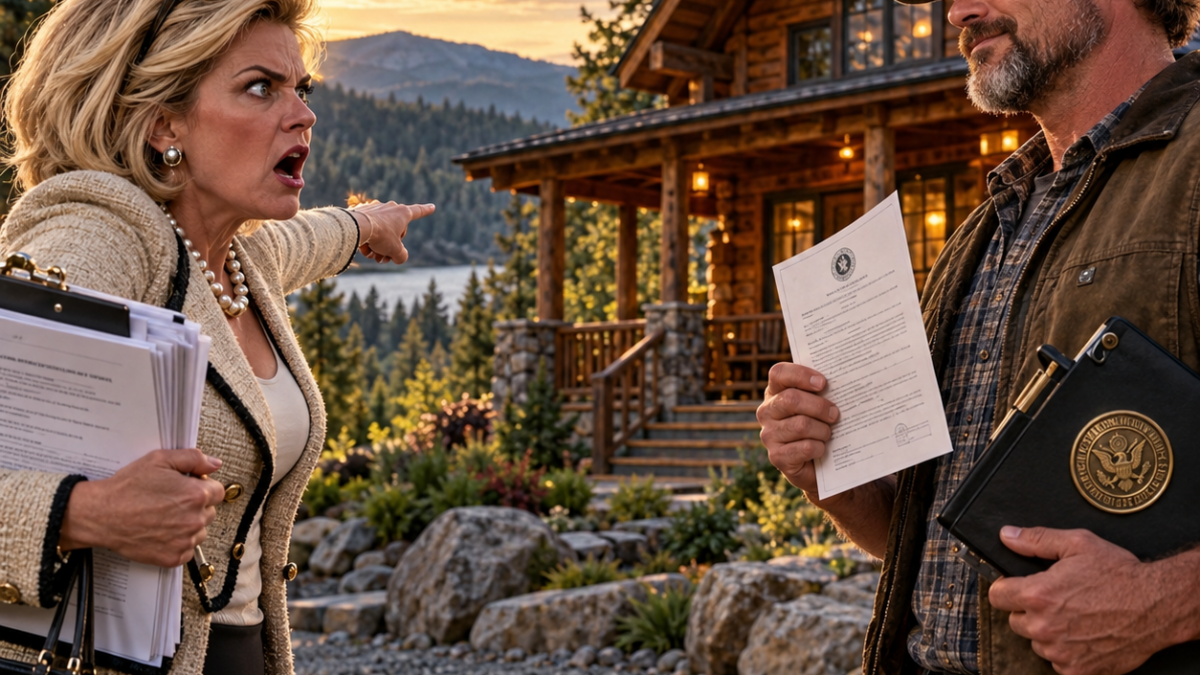
I came home three days earlier than anyone in Stillwater Pines expected, and the strange SUV sitting in my private driveway was the first sign that someone had been counting on me staying away.
A few minutes later, I was standing inside the lake cabin my family had owned for decades, staring at glossy rental brochures advertising my home to strangers while the woman responsible calmly explained its amenities outside as though she had every right to be there.
Then she saw me, reached for her phone, and made a decision so unbelievable that it would eventually tear open everything our HOA had been hiding for years.
My name is Owen Fairley, and until that Friday afternoon, I believed the worst thing an HOA could do was send ridiculous letters about mailbox dimensions or charge somebody seventy-five dollars because their garbage can remained visible too long after pickup.
I was wrong.
I teach American history at a public high school about three hours from Stillwater Pines, a quiet lake community surrounded by pine forest, winding gravel roads, and enough distance from the city that cell service becomes more of a suggestion than a guarantee.
My cabin had belonged to my family since the 1980s.
My grandfather helped build parts of it by hand.
My father replaced the porch when I was twelve.
My mother planted the two hydrangea bushes near the stone walkway before arthritis made gardening painful for her.
It wasn’t a rental property.
It wasn’t an investment.
It wasn’t an Airbnb.
It was where my family went when life got too loud.
That weekend, I wasn’t supposed to arrive until Sunday evening.
I had traveled out of town for a teachers’ conference that was scheduled to run through the weekend, but a plumbing problem shut down half the hotel and canceled the remaining sessions. Instead of staying another night, I threw my bag into the truck and started the three-hour drive toward the lake.
I didn’t tell anyone.
There was no reason to.
About twenty minutes before reaching Stillwater Pines, I considered stopping for groceries.
Something made me keep driving.
Call it instinct.
Call it impatience.
Whatever it was, I’m grateful I listened.
The moment I turned off the main gravel road and saw a silver SUV sitting in my driveway, my hands tightened around the steering wheel.
Nobody should have been there.
The vehicle had a vinyl decal across the rear window.
**SUNSET LAKESIDE RENTALS.**
I slowed down.
My first thought was that someone had gotten the wrong cabin.
There were dozens of vacation properties around the lake, and several owners rented them seasonally.
Mine wasn’t one of them.
Never had been.
I pulled behind the SUV, shut off the engine, and sat silently for several seconds.
Then I noticed the front door.
Open.
I got out.
There were voices behind the cabin.
I could hear a woman laughing.
My key slid into the lock even though the door hadn’t been secured properly.
I stepped inside.
And stopped.
Stacks of glossy brochures were spread across my kitchen counter.
The photograph on the front showed my cabin.
My porch.
My dock.
My fire pit.
Even the old cedar canoe rack beside the shoreline.
Across the photograph, in decorative cursive lettering, were the words:
**AVAILABLE NOW — CHARMING RUSTIC LAKE GETAWAY.**
I picked one up.
My hands actually started shaking.
Below the photographs was a list of amenities.
Private waterfront access.
Three bedrooms.
Fire pit.
Fishing dock.
High-speed internet.
Recently upgraded hot-water system.
Pet restrictions.
Weekend packages.
Weekly discounts.
I almost laughed at the high-speed internet part.
On a good day, my Wi-Fi struggled to load an email attachment.
Then I heard the woman outside.
“Oh, no, absolutely no pets at this property,” she was saying. “The owner is very particular, but the lake view is unbeatable.”
The owner.
I walked through the living room and onto the porch.
There she stood.
Amanda Alcott.
Vice president of the Stillwater Pines HOA.
Mid-fifties.
Blonde bob cut stiff enough to survive hurricane-force winds.
White sun visor.
Clipboard tucked under one arm.
Phone in the other hand.
Two strangers stood beside her, apparently listening to a sales pitch about my cabin.
Amanda was saying something about the hot-water heater when I interrupted.
“Excuse me.”
She turned.
The color drained from her face.
For maybe two seconds, nobody moved.
Then Amanda said the one thing that told me immediately this wasn’t some innocent misunderstanding.
“Owen?”
Her eyes widened.
“You’re not supposed to be back until Sunday.”
I looked at her.
Then at the strangers.
Then at the brochure in my hand.
“Well,” I said quietly, “surprise.”
The couple beside her looked confused.
Amanda clutched her clipboard against her chest.
I stepped off the porch.
“Want to tell me why you’re giving strangers a tour of my property?”
Her expression changed almost instantly.
Shock disappeared.
Defensiveness replaced it.
“You weren’t using it.”
I stared at her.
She continued.
“We’ve had families looking for weekend accommodations, and the board has been discussing ways to make better use of underutilized lake properties.”
“The board?”
“Well…”
Amanda hesitated.
“Sort of.”
I looked at the couple.
“I’m sorry. This cabin isn’t for rent.”
The man frowned.
“But we were told—”
“You were lied to.”
Amanda snapped, “Owen, you’re being dramatic.”
I looked at her.
“You entered my cabin without permission.”
“I didn’t break in.”
“How’d you get inside?”
“The side window wasn’t properly secured.”
I felt my jaw tighten.
“So you climbed through my window?”
“Don’t be ridiculous.”
“That’s called trespassing.”
Amanda folded her arms.
“You haven’t been here in months.”
“I was here six weeks ago.”
“The property appeared vacant.”
“It’s my property.”
“Nobody was living here.”
“That doesn’t make it yours.”
The couple quietly began backing toward the driveway.
Amanda saw them leaving and suddenly turned angry.
“You are disrupting official HOA business.”
“You’re renting my house.”
“We’re trying to generate revenue for community improvements.”
“We?”
She didn’t answer.
I lifted the brochure.
“Your personal phone number is listed under booking contact.”
Amanda’s eyes flickered toward it.
Then she reached into her pocket.
For one second, I assumed she was going to call an attorney.
Instead, she dialed three numbers.
I watched her.
“Are you calling 911?”
She raised her chin.
“You’re behaving aggressively, Owen.”
I actually laughed.
“You broke into my cabin, advertised it online, brought strangers onto my property, and now you’re calling the cops on me?”
“I don’t feel safe.”
I pulled out my phone and started recording.
“Good.”
Amanda frowned.
“What does that mean?”
“It means I’m going to stand right here while you explain to the sheriff why the homeowner you’re trespassing against makes you feel unsafe.”
Her eyes narrowed.
I held up the brochure.
“And while we’re waiting, Amanda, maybe you can explain one other thing.”
“What?”
I turned it around.
Her email address.
Her phone number.
A booking website.
All printed beneath my cabin’s photograph.
“You didn’t just trespass.”
I looked directly at her.
“You built a business around my house.”
In the distance, sirens began climbing the hill.
Amanda tried to smile.
And for the first time since I’d arrived, I realized she genuinely believed those deputies were coming to save her from me.
She had absolutely no idea what they were about to find.
PART 2
The first sheriff’s cruiser came around the bend hard enough to throw gravel against the pine trees.
A second followed ten seconds later.
Amanda transformed the moment she saw them.
Her shoulders dropped.
Her face softened.
Her voice became shaky.
It was impressive.
If I hadn’t watched her spend the last ten minutes defending the unauthorized rental of my property, I might have believed she was frightened too.
The first deputy stepped out.
Tall guy, late forties, close-cropped gray hair.
His hand rested near his belt.
The second deputy was younger and immediately moved toward Amanda because she was already waving him over.
“Thank God,” she said.
The older deputy looked between us.
“Who called?”
“I did,” Amanda answered quickly. “I’m Amanda Alcott, vice president of the Stillwater Pines Homeowners Association. This man arrived unexpectedly and became aggressive.”
“This man?” I asked.
She ignored me.
“He started shouting and making accusations. I didn’t feel safe.”
I looked at my phone.
The recording timer continued running.
Perfect.
The older deputy approached me.
“I’m Deputy Harland.”
“Owen Fairley.”
“You live here?”
“I own the cabin.”
Amanda called from behind him.
“He’s rarely here.”
Harland glanced over his shoulder.
Then back at me.
“Can you prove ownership?”
“Absolutely.”
I took out my wallet.
“Driver’s license matches the tax records. Deed’s inside. I also have security records, utility bills, insurance documents, and twenty years of family photographs if we need to make an afternoon of it.”
The corner of Harland’s mouth twitched.
“Let’s start with the deed.”
I led him inside.
Deputy Lanning remained with Amanda.
The moment Harland entered the kitchen, he stopped.
He looked at the brochures.
Then at me.
“What am I looking at?”
“My question exactly.”
He picked one up.
Read the cover.
Turned it over.
Amanda’s contact information appeared on the back.
“She made these?”
“Apparently.”
“Did you authorize anyone to rent this property?”
“No.”
“Did you authorize the HOA?”
“No.”
“Ever discuss short-term rentals with Ms. Alcott?”
“Never.”
He looked toward the porch.
“She have a key?”
“I’d like to know that too.”
Then something under the coffee table caught my attention.
A piece of paper.
I bent down.
Rental agreement.
Two pages.
Names I didn’t recognize.
Dates from the previous month.
At the bottom was a signature.
My name.
Not my handwriting.
Not even close.
“Deputy.”
Harland took it.
His expression hardened.
“You sign this?”
“No.”
Another page was wedged beneath the couch cushion.
Then another.
We started looking.
Within five minutes, the dining table was covered with documents.
Reservation schedules.
Rental confirmations.
Cleaning receipts.
Printed emails.
Three more agreements carrying fake versions of my signature.
One sheet advertised a hot tub.
I stared at it.
“A hot tub?”
Harland looked around.
“You don’t have one?”
“I barely have reliable Wi-Fi.”
For the first time, he laughed.
Then he found a calendar.
Red circles marked weekends going back four months.
Beside several dates were initials and payment amounts.
Six hundred dollars.
Eight hundred fifty.
Twelve hundred.
The summer holiday weekend had apparently earned somebody nearly two thousand dollars.
Not me.
Harland stopped smiling.
“We’ve had complaints.”
“What kind?”
“Short-term rental disputes.”
“In this neighborhood?”
He nodded.
“People arriving at cabins and finding owners who didn’t know anything about reservations. Usually we couldn’t prove whether it was an online scam, a mistaken address, or some private arrangement gone bad.”
I stared at the papers.
“How many?”
“Enough that this is getting interesting.”
Outside, Amanda’s voice rose.
“I am an elected community officer!”
Lanning replied with something I couldn’t hear.
Harland shook his head.
Then another vehicle arrived.
This one wasn’t a standard patrol cruiser.
A woman stepped out wearing plain clothes with a badge clipped to her belt.
She came directly toward the porch.
“Detective Miriam Connors.”
She looked at me.
“You’re Fairley?”
“That’s me.”
She nodded toward the kitchen.
“Deputy says you found paperwork.”
“A travel agency’s worth.”
Connors entered.
She spent several minutes looking through the documents.
She didn’t react much.
Detectives are probably trained not to.
But when she reached the forged rental agreements, her jaw tightened.
“You definitely didn’t sign these?”
“Definitely.”
“And this property has never been used as an authorized short-term rental?”
“Never.”
She took photographs.
“Interesting.”
“What?”
“We’ve been looking at Stillwater Pines for a while.”
I leaned against the table.
“For what?”
“Financial irregularities.”
I blinked.
“Our HOA?”
“Your HOA.”
“How irregular?”
She flipped one of the rental contracts.
“Kickback allegations. Questionable vendor contracts. Possibly forged permits. Unauthorized property-use complaints.”
Outside, Amanda shouted again.
“This is all being taken completely out of context!”
Connors closed her eyes briefly.
“Is she always like this?”
“You should hear her discuss garbage cans.”
That earned the smallest smile.
Then I remembered something.
“Wait.”
I went into the back bedroom.
My grandfather’s old fishing tackle box sat on a shelf.
Behind it was an envelope that hadn’t been there the last time I visited.
I pulled it out.
Receipts.
Cleaning service.
Printing costs.
Online advertising fees.
Maintenance.
Several had been paid from an account labeled:
**STILLWATER PINES HOA — DISCRETIONARY MAINTENANCE.**
I carried them to Connors.
She read the first.
Then the second.
“This one is for your cabin.”
“I know.”
“This cleaning was paid by the HOA.”
“Apparently.”
“And here’s an advertising charge.”
She looked at me.
“She was using association funds to operate an unauthorized private rental.”
One receipt contained Amanda’s name.
Guest occupancy.
Three nights.
I read it twice.
“She stayed here?”
Connors looked over.
“Looks like it.”
My stomach turned.
Something about that felt more violating than the money.
Strangers walking through my kitchen was bad enough.
The idea of Amanda sleeping in the bedroom my parents had used for twenty years made my skin crawl.
I went outside.
Amanda remained seated beside the fire pit.
The clipboard was gone.
Her arms were folded.
She looked at me.
“This has gotten ridiculous.”
“No.”
I stopped several feet away.
“This got ridiculous before I arrived.”
“You don’t understand the arrangement.”
“What arrangement?”
“The board has broad authority to make reasonable use of community resources.”
“My cabin isn’t a community resource.”
“It sits inside an HOA.”
“So does your house.”
Her face tightened.
I continued.
“How many weekends can I rent yours?”
“That’s different.”
“Why?”
“Because I live there.”
“So ownership only counts when you happen to be standing inside the building?”
“Owen—”
“Did you sleep here?”
Her eyes shifted.
That was enough.
“You did.”
“I inspected the property.”
“Overnight?”
She stood.
Deputy Lanning immediately raised a hand.
“Ma’am, remain where you are.”
Amanda sat again.
Detective Connors stepped onto the porch.
“Amanda Alcott.”
Amanda looked up.
Connors walked down the steps.
“At this point, you are being detained while we continue the investigation.”
Amanda scoffed.
“You cannot detain an HOA officer for enforcing bylaws.”
“Watch me.”
Amanda stared at her.
Connors continued.
“We have evidence indicating criminal trespass, fraudulent rental activity, forged signatures, and misuse of HOA funds.”
Amanda’s face went pale.
“The bylaws permit temporary use of unoccupied—”
“Stop talking.”
“My attorney—”
“Good idea.”
“I know the county commissioner.”
“Call him after booking.”
Amanda stood.
Lanning turned her around.
The handcuffs clicked.
That sound changed something in me.
Not satisfaction exactly.
Relief.
For nearly an hour, Amanda had behaved as if her title created reality.
Vice president.
Board authority.
Community business.
Bylaws.
She said those words the way some people say magic spells.
Then steel closed around her wrists.
Suddenly, none of them mattered.
Before deputies could place her in the cruiser, another vehicle came down the road.
Minivan.
Out-of-state plates.
A family climbed out.
Father.
Mother.
Two kids carrying towels.
A cooler.
The father looked at the police cars.
Then at me.
“Excuse me.”
I already knew.
He held up his phone.
“Is this the secluded lake cabin?”
Amanda shut her eyes.
I walked toward him.
“Did you rent it online?”
“Yeah.”
“Through Sunset Lakeside Rentals?”
His wife’s expression changed.
“Yes.”
“How much did you pay?”
“Nine hundred dollar deposit.”
I exhaled.
“You’ve been scammed.”
The children looked confused.
The mother looked devastated.
“We drove six hours.”
“I’m sorry.”
She turned toward Amanda.
“She sent us the confirmation.”
Amanda stared at the ground.
I gave the family Detective Connors’s card.
“Take every email, receipt, text, and payment record to the sheriff’s office.”
The father looked at the cabin.
“So we can’t stay?”
I hated that question.
Not because I blamed him.
He was a victim too.
But letting them stay would turn everything into an even bigger legal mess.
“I’m sorry. I can’t.”
He nodded.
“I understand.”
The little girl held a pink inflatable ring.
That image stayed with me.
Amanda hadn’t just stolen from me.
She had stolen a weekend from that family.
Probably others too.
Money.
Time.
Trust.
Connors must have been thinking something similar.
She watched them drive away, then turned toward Amanda.
“How many?”
Amanda said nothing.
“How many families?”
Silence.
Connors nodded.
“We’ll find out.”
They drove Amanda away.
Her silver SUV remained in my driveway.
For several minutes, nobody spoke.
Wind moved through the pines.
Water tapped gently against the dock.
Everything looked exactly like the quiet sanctuary I remembered.
But it no longer felt untouched.
I walked inside.
Every object suddenly seemed suspicious.
Had strangers used my dishes?
Slept in my bed?
Opened drawers?
Sat in my father’s chair?
Touched the old photographs?
I went from room to room.
Nothing obvious was missing.
That almost made it worse.
People had occupied my home while leaving just enough behind that I might never have known.
If my conference hadn’t been canceled, another family might have spent that weekend there.
Amanda would probably have cleaned the place before Sunday.
The brochures would disappear.
The SUV would be gone.
I’d arrive and make coffee.
Maybe notice the sheets smelled different.
Maybe blame myself.
That thought made me furious.
That evening, I called Mr. Callahan.
He lived three houses down.
Widower.
Seventy-one.
Retired machinist.
He answered on the fourth ring.
“Owen?”
“You heard about Amanda?”
There was silence.
Then:
“I saw the cruisers.”
“She was renting my cabin.”
“What?”
“Without permission.”
Another silence.
Then a much quieter voice.
“Come over.”
Callahan’s kitchen smelled like coffee even though it was nearly eight at night.
He listened without interrupting.
When I finished, he walked to a drawer and removed a folder.
Inside were HOA notices.
“Shoreline erosion assessment,” he said.
I read the amount.
Nine hundred dollars.
“What study?”
“That’s what I’ve been asking.”
Another notice.
Special lake-access maintenance.
Another.
Security upgrade surcharge.
“I paid these.”
“Why?”
He gave me a tired look.
“Because when you’re seventy-one years old and alone, a letter threatening a lien on the place you and your wife spent forty years paying for gets your attention.”
That hit me.
“You thought they could take your house?”
“They said they could.”
“Did you talk to an attorney?”
“I called one.”
“What happened?”
“Five hundred dollars just to review the paperwork.”
He shrugged.
“I paid the assessment instead.”
I stared at the notices.
Amanda hadn’t needed force.
She had discovered something easier.
Make resistance more expensive than surrender.
My phone began buzzing.
Callahan had mentioned my situation to Mrs. Phelps.
Mrs. Phelps called me.
She had been charged seventy-five dollars for a replacement mailbox because Amanda said the old one violated a size requirement.
Another neighbor had been fined because his porch light stayed on overnight.
Another for parking a truck too close to landscaping.
Another had received a warning that a lien could be filed if he didn’t pay a “community beautification levy.”
By ten o’clock, we had a group text.
By midnight, twenty-three residents were in it.
Stories piled up.
Some ridiculous.
Some frightening.
Callahan offered his garage for a meeting.
Three days later, I stood beside a folding table surrounded by lawn chairs while a dozen residents compared documents.
Callahan brought an old binder.
“Original bylaws,” he said.
Mrs. Phelps adjusted her glasses.
“How old?”
“Before Amanda’s group started changing everything.”
A man near the garage door spoke.
“I’m Richard Mercer.”
I hadn’t met him.
“County code analyst.”
That got everyone’s attention.
Richard opened his laptop.
“I’ve been checking the HOA filings since December.”
“Why?” I asked.
“Because the newest CCR amendments looked wrong.”
He pulled up a scanned document.
“Stillwater Pines requires seventy-five percent approval for amendments affecting property use.”
“Okay.”
“This amendment supposedly passed with seventy-eight percent.”
Callahan snorted.
“Nobody voted.”
“Somebody did.”
Richard clicked another file.
“At least according to the county.”
He displayed a list of parcel numbers.
Several had signatures beside them.
Callahan leaned forward.
His face changed.
“What?”
He pointed.
“That’s Helen.”
Nobody spoke.
“Helen was my wife.”
I remembered.
She had died three years earlier.
Richard looked at him.
“I’m sorry.”
“What’s her name doing there?”
“According to this ballot, she voted eighteen months ago.”
Callahan sat back slowly.
The garage became silent.
Richard changed screens.
“She’s not the only one.”
Several ballots supposedly came from properties whose owners had died, moved, or transferred ownership years earlier.
The forged amendment added a clause permitting something called:
**TEMPORARY COMMUNITY USE OCCUPANCY OF UNINHABITED PROPERTIES.**
I felt cold.
“That’s how she justified renting my cabin.”
Richard nodded.
“Probably.”
Mrs. Phelps asked, “Who profits?”
Richard opened another document.
“Whisper Pines LLC.”
The name appeared on multiple HOA disbursement records.
“Who owns it?” I asked.
“Registered to Leonard Alcott.”
Amanda’s former husband.
I knew Leonard.
Everyone did.
Contractor.
Loud truck.
Expensive sunglasses.
Had spent several years doing maintenance projects for the HOA before he and Amanda publicly separated.
Callahan frowned.
“I thought they hated each other.”
“Maybe they hate each other profitably,” I said.
Richard showed us another invoice.
Ten thousand dollars.
Security gate upgrade.
I remembered the gate.
Two decorative cameras.
Keypad.
Fancy signage.
Richard said, “Parts cost less than twenty-five hundred.”
Mrs. Phelps frowned.
“What about installation?”
“Leonard billed labor separately.”
“How much?”
“Another thirty-eight hundred.”
Someone whistled.
Richard clicked through more invoices.
Storm cleanup.
Beautification.
Drainage maintenance.
Shoreline inspections.
Several projects nobody in the room remembered ever happening.
Callahan picked up one of the forged ballots again.
“My dead wife voted for these people to change the rules.”
His voice cracked slightly.
That was the moment the meeting stopped feeling like neighborhood gossip.
Amanda had turned dead residents into votes.
Absentee homeowners into inventory.
Old people into revenue.
My empty cabin into a hotel.
“We take this to the county,” I said.
Richard shook his head.
“County isn’t enough.”
“What do you suggest?”
“The district attorney.”
Five of us went the next afternoon.
Deputy District Attorney Celeste Navarro met us in a plain conference room.
Sharp eyes.
No wasted words.
She spent nearly fifteen minutes silently reviewing the forged ballot packet.
Then she stood.
“Wait here.”
Twenty minutes later, two investigators joined us.
We spent nearly three hours laying everything out.
Rental listings.
Fake signatures.
Financial records.
HOA amendments.
Invoices.
Screenshots.
Resident statements.
Navarro returned near the end.
Her expression had changed.
“This is no longer being treated as an isolated unauthorized rental.”
“What is it?” Callahan asked.
“Potential systemic fraud.”
She placed one document on the table.
“These amendments were filed with the county as official governing instruments. If signatures were knowingly falsified, that’s serious.”
“What about Whisper Pines?” I asked.
“We’re subpoenaing the banking information.”
Richard leaned forward.
“If HOA dues went into the company?”
“Potential embezzlement.”
“And Amanda?”
Navarro’s expression remained flat.
“If she routed rental income through that entity, potentially money laundering.”
Callahan swallowed.
“What about the board?”
“If members knowingly participated, conspiracy becomes possible.”
Driving home, nobody said much.
We weren’t celebrating.
The scale was becoming frightening.
The next morning, HOA president Carl Weatherbe didn’t answer his door.
His truck remained outside.
Curtains closed.
By afternoon, a sheriff’s cruiser sat in his driveway.
That evening, Detective Connors called.
“You sitting down?”
“No.”
“Sit.”
I did.
“We confirmed Amanda and Leonard were splitting rental proceeds.”
My fingers tightened around the phone.
“How?”
“Bank deposits.”
“Whisper Pines?”
“Yes.”
“How long?”
“Still working on that.”
“What about Carl?”
Connors paused.
“He approved contracts.”
“Did he know?”
“He signed a false emergency plumbing invoice tied to the same company.”
“There was no plumbing emergency.”
“We know.”
“What was the money for?”
“That’s what we’re asking him.”
Two days later, a white notice appeared on the HOA bulletin board.
**EMERGENCY BOARD SUSPENSION PENDING LEGAL REVIEW.**
People gathered around it.
Some looked shocked.
Others looked relieved.
I stood near the dock.
For years, that bulletin board had delivered anxiety.
Violation notices.
Assessment announcements.
Rule changes.
Now it held one sheet of paper stripping the board of power.
Richard visited that evening.
He carried a USB drive.
“I pulled archived disbursements.”
“Legal?”
“I’m a county employee, Owen.”
“That wasn’t an answer.”
He smiled.
“Public filings.”
We opened the files.
Checks.
Dozens.
Whisper Pines LLC.
Storm cleanup.
No storm.
Landscaping.
No landscaping.
Emergency repairs.
No emergencies.
Security consultations.
Nobody consulted.
Amanda’s signature appeared repeatedly.
Carl’s appeared beside hers.
We sent everything to Navarro.
By the end of the week, three warrants had been issued.
Amanda had been released on bail after her initial arrest.
She didn’t stay free long.
Deputies arrested her again outside a real estate office.
Leonard was arrested in a bait-shop parking lot after trying to withdraw money from an account the bank had flagged.
Carl was found inside his boat shed.
He reportedly told officers he was avoiding reporters.
Nobody believed him.
Local news picked it up.
The headline on one station read:
**STILLWATER PINES HOA OFFICIALS ACCUSED IN RENTAL AND FINANCIAL FRAUD SCHEME.**
Another used a photograph of Amanda hiding her face behind a folder.
I stared at that picture for a long time.
I had imagined satisfaction.
Instead, I thought about the little girl holding the pink inflatable ring.
The family that had driven six hours.
Callahan’s dead wife appearing on a ballot.
This wasn’t entertaining anymore.
It was damage.
At the town-hall meeting the following week, every chair was taken.
Navarro stood at the podium beside Detective Connors and two auditors.
“We are beginning a comprehensive forensic review of the Stillwater Pines HOA.”
Applause erupted.
Navarro waited.
“Please understand that this may take time.”
Someone shouted, “Take all the time you need!”
More applause.
She continued.
“We will identify funds collected unlawfully, determine which payments were diverted, and pursue restitution wherever legally possible.”
A man raised his hand.
“What happens to the HOA?”
Navarro glanced toward the county representative seated nearby.
“That decision will involve residents, courts, and local authorities.”
Then she smiled slightly.
“But I suspect you will have an opportunity to rebuild.”
Afterward, people surrounded me.
Thank-yous made me uncomfortable.
I hadn’t solved anything.
I came home early.
That was it.
But people kept telling stories.
One elderly couple waited until nearly everyone else had left.
The wife carried a folder against her chest.
Her husband held her arm.
“We almost lost our house.”
I looked at them.
“What happened?”
They explained.
Unpaid dues.
Except they had never received invoices.
Notices had apparently been sent to an abandoned mailbox.
Late penalties accumulated.
Then a lien appeared.
Whisper Pines LLC had somehow become involved in the collection process.
“They said the property was effectively abandoned,” the husband said.
“We live there,” his wife whispered.
My stomach tightened.
“They tried to take it?”
She nodded.
“We thought it was a paperwork mistake.”
I remembered Amanda’s words at my cabin.
Nobody was living here.
The property appeared vacant.
I felt something dark settle into place.
Vacancy wasn’t an excuse to Amanda.
Vacancy was a category.
A target.
“They won’t get another chance,” I said.
But I wasn’t sure yet how deep it went.
Over the next week, I searched every piece of paper Amanda had ever sent me.
Old envelopes.
Emails.
Notices.
Vendor letters.
I found a folder she had left behind in my cabin during the rental operation.
Most of it was useless.
Then I found one printed email.
It was addressed to a law firm two counties away.
Subject:
**ACCELERATED LIEN ENFORCEMENT OPTIONS.**
The language was careful.
Professional.
Cold.
Amanda asked how quickly properties with unpaid HOA balances could be “acquired, consolidated, and converted to income-producing use.”
I read that phrase several times.
Income-producing use.
She wasn’t talking about collecting dues.
She was talking about acquiring homes.
I drove directly to Connors.
She read the email.
“This is bad.”
“She was building a rental portfolio.”
“Looks like she wanted to.”
“Using HOA liens.”
Connors nodded.
“If she could control the lien process, she could create default pressure. Increase fees. Send notices incorrectly. Make an owner appear delinquent.”
“Then foreclose.”
“Potentially.”
“Then transfer to Whisper Pines.”
“That’s what we’re checking.”
Two days later, she called me.
“Three properties.”
My stomach dropped.
“What?”
“We found three that ended up deeded to Whisper Pines following HOA-related debt actions.”
“Were they abandoned?”
“No.”
I closed my eyes.
“People lived there?”
“At the time the proceedings began, yes.”
“What happened to them?”
“One family moved after receiving foreclosure threats. One elderly owner relocated to his daughter’s house. The third is complicated.”
“Illegal eviction?”
“Potentially coercive displacement.”
I sat silently.
I thought about my cabin.
Amanda hadn’t invented her scheme with me.
I was simply the moment she got caught.
Then Timothy Harlon appeared.
Retired land surveyor.
Seventy-eight years old.
Canvas bag full of maps.
He arrived at my cabin one afternoon because Callahan told him what we were investigating.
Timothy spread maps across my dining table.
Red ink covered them.
“Been tracking boundary changes for years.”
“Why?”
“Because surveys don’t lie unless people do.”
I liked him immediately.
He pointed toward land on the eastern shore.
“MacIntire property.”
Cabin had burned four years earlier.
Owners moved to Oregon.
Still paid taxes.
Never rebuilt.
Timothy placed a county filing beside the map.
Quitclaim deed.
Transfer to the HOA.
Consideration:
One dollar.
My skin prickled.
“You spoke to them?”
“Yesterday.”
“And?”
“They never signed it.”
I stared at the paper.
“Another fake deed.”
“Looks like it.”
“Who notarized it?”
He pointed.
Different name.
Connors eventually determined the notary credentials had been misused.
Timothy shook his head.
“County was drowning in backlog when this was filed.”
“So nobody checked.”
“Not carefully enough.”
I called Navarro.
By evening, the investigation expanded again.
Land theft.
Forgery.
Fraudulent public filings.
Unlawful displacement.
Wire fraud.
Then Navarro told me the part that made the entire operation suddenly make sense.
Amanda had been negotiating a development lease.
“Development?”
“Glamping resort.”
I nearly laughed because the concept sounded absurd beside everything else.
Navarro wasn’t joking.
Twenty-year lease.
More than three hundred thousand dollars.
Luxury tents.
Lake platforms.
Outdoor event space.
On property Amanda didn’t own.
“Did the developer know?”
“Doesn’t appear so.”
“So she was going to lease stolen land.”
“Yes.”
“Using forged documents.”
“Yes.”
“And probably use the new resort to generate more HOA fees.”
Navarro looked at me.
“You’re starting to understand why we’re bringing in federal help.”
The FBI’s real-estate fraud people became involved after investigators traced interstate transfers.
Whisper Pines accounts led to another account.
Then another.
Eventually, money reached the Cayman Islands.
I asked Connors how much.
“Enough to demonstrate intent.”
That answer was all she would give me.
The community, meanwhile, had a problem.
We had spent months learning what we didn’t want.
Now we needed to decide what we did want.
Residents gathered at the firehouse.
No Amanda.
No Carl.
No threats.
No official board.
Just chairs arranged in rows and people trying to figure out how not to repeat history.
Richard stood near me.
“We shouldn’t replace one powerful board with another.”
Agreed.
Callahan said, “Term limits.”
Mrs. Phelps added, “No fines without written evidence.”
A woman named Tara stood.
“Public financial statements.”
Someone else:
“Open meetings.”
Another:
“No contracts with relatives.”
Another:
“No lien actions without independent legal review.”
The list grew.
A retired accountant volunteered to audit finances.
A contractor offered to coordinate maintenance at cost.
A lawyer who owned a cabin near the north shore offered limited pro bono review.
Nobody shouted.
Nobody gave dramatic speeches.
It felt almost boring.
That was exactly what governance should feel like.
The old HOA had made every minor decision feel like a threat.
We wanted the opposite.
Late that evening, Callahan and I sat on the dock.
His feet hung over the water.
He stared toward the opposite shore.
“Think she would’ve gotten away with it?”
“If I hadn’t come home?”
He nodded.
I thought about the timing.
The canceled conference.
The strange instinct not to stop for groceries.
The brochure left on the counter.
The family arriving while police were still there.
“Maybe.”
Callahan shook his head.
“Scary.”
“She got comfortable.”
“Power does that.”
“She thought nobody was looking.”
He smiled slightly.
“She thought wrong.”
Weeks became months.
Stillwater Pines slowly changed.
Fake signs disappeared.
Illegal rules were suspended.
Residents stopped checking their mailboxes with dread.
Cars remained in driveways overnight without fines.
Porch lights stayed on.
Children fished from docks after sunset.
People invited relatives to visit without asking permission.
My cabin got new locks.
Every window.
Every door.
I installed real security cameras.
The kind that actually recorded.
Unlike the HOA’s famous “security upgrade.”
Detective Connors eventually confirmed those gate cameras had been mostly decorative.
Residents had paid thousands for protection that didn’t exist.
One afternoon, I stood beneath one of the fake cameras with Richard.
“Think Amanda knew these were useless?”
“Leonard installed them.”
“So yes.”
“Probably.”
“We paid ten grand.”
“Plus maintenance.”
I looked at him.
“Maintenance for fake cameras?”
Richard shrugged.
“Even imaginary equipment gets expensive when criminals invoice it.”
The more we learned, the uglier the past became.
Amanda had built power incrementally.
First rules.
Then fees.
Then penalties.
Then liens.
Then property.
Once homeowners believed the board could make life miserable, most stopped questioning anything.
That part fascinated me because of my job.
I teach history.
Every year, I tell teenagers that power rarely arrives one morning wearing a sign saying tyranny.
It grows through normalization.
One exception.
One emergency authority.
One rule nobody wants to challenge because challenging it takes time.
One extra fee.
One closed meeting.
One forged signature that nobody checks.
Eventually, people forget things could work differently.
Standing inside my own neighborhood, I realized I had spent years teaching that lesson without recognizing a miniature version unfolding around me.
Amanda wasn’t a dictator.
Stillwater Pines wasn’t a country.
Nobody should exaggerate that.
But the mechanism was familiar.
People surrendered small rights because fighting seemed inconvenient.
The person in charge learned inconvenience was power.
Then she pushed further.
The trial date was set for late fall.
Amanda tried to negotiate.
Navarro called me.
“She offered partial restitution.”
“In exchange for what?”
“Reduced exposure.”
“And?”
“Rejected.”
“Why?”
“Too many victims.”
Leonard continued denying everything.
Carl began cooperating.
His attorney apparently understood the evidence.
He provided emails.
Meeting notes.
Bank approvals.
Access credentials.
In return, prosecutors considered his cooperation at sentencing.
Callahan wasn’t happy.
“He should get twenty years too.”
“He gave them evidence.”
“He signed the checks.”
“Both can be true.”
Callahan grumbled.
“I don’t like nuance.”
“I’ve noticed.”
The old HOA was formally dissolved before the criminal trial began.
Residents approved a new neighborhood cooperative.
Voluntary.
Transparent.
Strict term limits.
No authority to seize property.
No unilateral fines.
Major expenditures required votes.
Financial records available to every resident.
Seventy percent of homeowners signed the charter.
When the county clerk stamped the final document, Richard held up the certified copy.
Nobody cheered immediately.
Then Mrs. Phelps did.
And suddenly the room erupted.
Callahan hugged me.
He’s not a hugger.
That frightened me more than Amanda ever had.
“Don’t tell anyone,” he muttered.
“Already texting the group.”
He shoved me away.
The night before trial, I stayed at the cabin.
Rain fell lightly.
I sat on the porch.
The holes where Amanda’s rental sign had been screwed into the wood were still visible.
I could have filled them.
I didn’t.
Not yet.
I wanted the reminder.
My father used to say homes remember what happens inside them.
Not literally.
He wasn’t sentimental like that.
He meant people attach memory to physical places.
A table becomes the place your mother laughed until she cried.
A dock becomes where your grandfather taught you to fish.
A bedroom becomes where your parents slept every summer for twenty years.
That was why Amanda’s violation felt so personal.
To her, the cabin was square footage.
Lake access.
Occupancy potential.
Revenue.
To me, every room held people who weren’t there anymore.
She couldn’t understand the difference.
Or maybe she understood and didn’t care.
The courthouse was packed on the first morning.
Reporters.
Residents.
Victims from outside Stillwater Pines.
Amanda entered wearing a dark tailored suit.
Hair perfectly straight.
Expression controlled.
She never looked toward us.
The prosecution started with the simplest crime.
My cabin.
Photographs of the brochures appeared on a courtroom screen.
My porch.
My dock.
Amanda’s phone number.
Rental agreements.
Fake signature.
Payment records.
Security footage from a neighboring property showed her bringing guests toward my cabin on previous weekends.
Then came the family who had arrived while deputies were there.
The father testified.
His wife testified.
The prosecutor displayed the payment confirmation.
Nine hundred dollars.
Sent to an account connected to Whisper Pines.
Amanda’s attorney tried to argue she believed she possessed authority under the amended HOA rules.
Then Richard testified.
He explained the required seventy-five-percent threshold.
Displayed the ballots.
Showed dead homeowners voting.
Former owners voting.
Vacant parcel IDs voting.
Callahan’s wife.
The prosecutor asked him:
“When did Mrs. Callahan supposedly cast this ballot?”
Richard gave the date.
Then Callahan testified.
“My wife had been dead more than a year.”
The courtroom became silent.
Amanda looked down.
Next came financial evidence.
Whisper Pines.
Leonard.
Maintenance contracts.
Rental income.
HOA money.
Offshore transfers.
Carl testified for the prosecution.
He looked ten years older.
He admitted signing false invoices.
Admitted approving contracts without proper bids.
Admitted knowing Amanda and Leonard were financially connected.
Then prosecutors asked why.
Carl took a long time before answering.
“Because it became normal.”
That sentence stayed with me.
The prosecutor asked, “Fraud became normal?”
Carl swallowed.
“Doing what Amanda wanted became normal.”
“Why?”
“Because if you challenged her, she found a way to make you regret it.”
Amanda stared at him.
He didn’t look back.
Timothy testified next.
He unrolled survey maps.
The MacIntire property appeared on the courtroom monitor.
Fake quitclaim deed.
One dollar transfer.
Then the MacIntires appeared by video.
An older couple sitting in what looked like a home office in Oregon.
The prosecutor asked whether they had sold their lake property.
“No.”
Transferred it?
“No.”
Donated it?
“No.”
Signed the deed?
“Absolutely not.”
The husband held up a tax statement.
“We’ve paid taxes every year.”
Amanda finally moved.
Small movement.
Almost nothing.
But I saw it.
Her shoulders tightened.
Then prosecutors introduced the draft glamping-resort agreement.
Twenty-year lease.
Three hundred thousand dollars.
Land she didn’t own.
The defense objected repeatedly.
The judge overruled repeatedly.
The financial investigator explained the offshore accounts.
Whisper Pines to holding accounts.
Holding accounts to foreign accounts.
Money divided.
Moved.
Hidden.
By day five, Amanda no longer took notes.
By day six, her attorney focused almost entirely on attacking intent.
Mistakes.
Administrative confusion.
Poor bookkeeping.
Reliance on advisers.
Ambiguous HOA language.
Then prosecutors played one email.
Amanda to Leonard.
The wording was devastating.
Not because it contained a confession.
Because it showed mindset.
She described certain properties as “low resistance acquisition candidates.”
Another:
“Owner rarely present.”
Another:
“Elderly. Family out of state.”
Another:
“Use pressure before outside counsel gets involved.”
My cabin was listed separately.
**FAIRLEY — CITY TEACHER. WEEKEND PROPERTY. LOW OCCUPANCY.**
I stared at the screen.
She had studied me.
Not personally.
Strategically.
The prosecution rested.
The defense lasted less than two days.
Amanda didn’t testify.
The jury left.
Six hours later, we were called back.
I sat beside Callahan.
He kept rubbing his palms against his pants.
The foreperson stood.
Count one.
Guilty.
Count two.
Guilty.
Count three.
Guilty.
Again.
Again.
Again.
By the final count, Amanda’s face had gone completely still.
Guilty.
I expected cheering.
Nobody cheered.
Not inside.
Outside, cameras waited.
Navarro spoke briefly.
Detective Connors avoided them.
Callahan stared at the courthouse steps.
“It’s done.”
“Not yet.”
“Sentencing.”
I nodded.
Leonard was convicted separately.
Twelve years.
Carl’s cooperation dramatically reduced his sentence.
Two years of house arrest.
Lifetime prohibition from serving in fiduciary or governing association roles.
Callahan hated it.
Navarro reminded him Carl’s evidence helped recover property.
“I still hate it,” he said.
“You’re allowed.”
Amanda’s sentencing came last.
The courtroom wasn’t as crowded.
Most reporters already knew the likely range.
Several victims submitted statements.
I wrote mine.
Then rewrote it.
Then tore it up.
I didn’t want to speak about money.
I wanted to speak about home.
When my name was called, I walked forward.
Amanda sat beside her attorney.
For the first time since the case began, she looked directly at me.
I placed my hands on the podium.
“When I came back to Stillwater Pines that Friday, I thought I had caught one woman doing something unbelievably stupid.”
A few quiet laughs.
“I thought she had rented my cabin because she was arrogant.”
I looked toward the judge.
“I didn’t understand that my cabin was part of something much larger.”
My voice remained steady.
“For Amanda, empty homes were opportunities. Elderly homeowners were weak points. Dead residents were votes. Unpaid dues were leverage. Community rules were tools.”
Amanda looked away.
“My cabin has belonged to my family since the 1980s. My grandfather worked on it. My father rebuilt the porch. My mother planted flowers beside the walkway.”
I paused.
“To Amanda, it was inventory.”
The courtroom went silent.
“That difference is what this case means to me.”
I looked toward Callahan.
“When she used the name of a dead woman on a ballot, she saw a signature she could manufacture. Her husband saw his wife.”
Callahan lowered his head.
“When families received threats against their homes, Amanda saw collection opportunities. Those families saw the places where they raised children.”
My throat tightened.
“When strangers slept inside my cabin without my knowledge, Amanda saw weekend revenue. I saw people entering rooms filled with memories of my parents.”
I stopped for a moment.
Then continued.
“People sometimes say property crimes are only about money.”
I shook my head.
“They aren’t.”
“They are about safety.”
“They are about whether you believe your front door means anything.”
“They are about whether leaving home for a week means someone else can decide you don’t deserve it anymore.”
I looked at Amanda.
“She called 911 on me when I came home early.”
The judge’s expression changed slightly.
“She told police I was dangerous because I objected to finding strangers being shown around my own home.”
Amanda’s eyes dropped.
“That moment says everything.”
“I was standing on my property.”
“She was trespassing.”
“And she was so accustomed to controlling the story that she genuinely believed authority would automatically take her side.”
I turned toward the judge.
“That is what unchecked power did to Stillwater Pines.”
I stepped away.
Amanda’s lawyer asked for leniency.
Age.
Community ties.
No prior major criminal record.
Potential for rehabilitation.
Financial restitution.
The judge listened.
Then Amanda stood.
She spoke briefly.
She said she regretted “mistakes.”
Not crimes.
Mistakes.
She said her intention had always been to improve the community.
Somebody behind me whispered angrily.
The judge raised a hand.
Silence returned.
Then he spoke.
He described a sustained pattern of fraud.
Manipulation.
Forgery.
Coercion.
Abuse of fiduciary authority.
Targeting vulnerable and absent owners.
Using legal processes as weapons.
Taking property without lawful consent.
He said something I still remember.
“A homeowners association exists to serve a community. You attempted to turn a community into an inventory sheet.”
Amanda’s face crumpled slightly.
The judge continued.
Twenty-three years in state prison.
No eligibility for parole for at least twelve.
Amanda closed her eyes.
That was it.
No dramatic scream.
No collapse.
No apology.
The bailiff approached.
She turned once while being led away.
Her eyes moved across the gallery.
For one second, they stopped on me.
I expected hatred.
Instead, I saw something stranger.
Disbelief.
After everything, part of her still seemed unable to understand how the people she had controlled had become the people who testified against her.
Outside, cameras crowded the sidewalk.
Callahan touched my shoulder.
“Twenty-three years.”
I nodded.
“You happy?”
I thought about it.
“Ask me tomorrow.”
The real satisfaction came later.
Not from sentencing.
From restitution.
Whisper Pines LLC was dissolved.
Its assets were liquidated.
Properties obtained through fraud went back to rightful owners.
Illegal liens were canceled.
Residents received compensation from recovered money.
The elderly couple who had nearly lost their house kept it.
I visited them after the corrected deed paperwork arrived.
The wife cried.
Her husband shook my hand for so long my fingers hurt.
“Nobody believed us,” he said.
“I do.”
“We thought we’d die before this got fixed.”
“It got fixed.”
He looked toward the kitchen.
“Not everything.”
I understood.
Justice rarely restores time.
But sometimes it restores enough.
Amanda’s house was auctioned.
Proceeds went toward legal obligations and restitution.
A young family bought it.
First thing they did was paint the front door dark green.
Then they installed wind chimes.
Callahan complained about the sound for approximately two days before buying a wind chime for himself.
The new family had a little boy.
Maybe five.
The first time he saw me on the dock, he waved with both arms.
I waved back.
He shouted, “Did you catch a fish?”
“No!”
“My dad caught one!”
“Tell him I don’t like him!”
The boy laughed.
His mother looked horrified.
I laughed too.
Stillwater Pines became quiet again.
Not silent.
Healthy communities aren’t silent.
People argued about road maintenance.
Dock repairs.
Snow removal.
Tree trimming.
Normal things.
Nobody threatened liens when they lost an argument.
Nobody manufactured ballots.
Nobody rented someone else’s home.
The new cooperative met quarterly.
Attendance was voluntary.
Richard served one year and refused another term.
Mrs. Phelps became secretary.
Her meeting notes were terrifyingly detailed.
Callahan never joined the board.
He said people who enjoyed meetings should be medically evaluated.
I agreed.
I returned to teaching full-time.
When students asked why I seemed distracted that semester, I told them I had a property dispute.
That was easier than saying my HOA had accidentally taught me an entire unit on corruption.
Later, when the case became public enough that some students discovered it online, one raised his hand during class.
“Mr. Fairley?”
“Yes?”
“Did your HOA really steal houses?”
The room erupted.
I waited.
“That’s a very simplified description.”
“So yes?”
I sighed.
“Open your textbooks.”
Another student said, “Did you really catch them because you came home early?”
I looked at him.
“History is often shaped by timing.”
That became a joke for the rest of the year.
But privately, the question stayed with me.
What if the conference hadn’t been canceled?
What if I’d stopped for groceries?
What if the family scheduled for Friday evening arrived before I did?
What if Amanda removed the brochures before Sunday?
Maybe I’d never know.
Maybe she would continue.
More fake ballots.
More liens.
More rentals.
More properties.
Maybe the glamping project would be built on stolen land.
Maybe the elderly couple would actually lose their home.
That’s the uncomfortable truth about wrongdoing.
Sometimes it isn’t exposed because systems work perfectly.
Sometimes somebody simply opens the wrong door at the right time.
The physical evidence at my cabin eventually came back after the case ended.
One brochure.
One fake agreement.
Photographs.
I kept the brochure.
Not proudly.
I put it inside a drawer beside the original cabin deed.
Two pieces of paper.
One proved ownership.
The other proved how easily somebody could pretend ownership didn’t matter.
The holes from Amanda’s rental sign remained on the porch railing.
I eventually filled most of the damage.
Not those two.
Callahan noticed.
“You missed a spot.”
“I know.”
“Going to fix it?”
“No.”
He looked at me.
“Sentimental about vandalism?”
“Reminder.”
“Of Amanda?”
I shook my head.
“Of getting comfortable.”
Callahan nodded.
We sat beside the lake.
The afternoon sun stretched across the water.
“You know what I miss?” he asked.
“What?”
“My wife complaining about this place.”
I smiled.
“What did she hate?”
“Mosquitoes.”
“Reasonable.”
“Humidity.”
“Also reasonable.”
“My fishing.”
“Probably reasonable.”
He laughed.
Then went quiet.
“Seeing her name on that ballot…”
I waited.
“It made me angry in a way I didn’t think I could still get angry.”
“I know.”
“They took her voice after she was dead.”
I looked toward him.
“Then you gave it back.”
Callahan shook his head.
“No.”
He pointed toward my cabin.
“You came back early.”
I hated hearing that.
“It wasn’t me.”
“Stop doing that.”
“Doing what?”
“Pretending coincidence means you didn’t do anything.”
I looked at him.
“You came home early by accident. Fine. But everything after that wasn’t an accident.”
He stood.
“You could’ve taken your cabin back and stopped.”
I said nothing.
“You didn’t.”
He walked toward shore.
“That’s why people thank you.”
I stayed on the dock.
Maybe he was right.
But I never wanted the story to become Owen versus Amanda.
Because it wasn’t.
One homeowner couldn’t have dismantled that scheme.
Richard found the ballots.
Timothy found the land fraud.
Callahan preserved documents.
Victims testified.
Connors investigated.
Navarro prosecuted.
Carl eventually cooperated.
Auditors traced money.
The MacIntires proved the deed false.
Dozens of people stopped being quiet at the same time.
That was what ended it.
Years later, when people heard the story, they usually focused on Amanda calling 911.
I understood why.
It was absurd.
She was illegally renting my cabin and called police because I returned to my own property.
It sounds almost funny.
And sometimes it is.
But the reason that moment mattered wasn’t because she embarrassed herself.
It mattered because it revealed how completely she had come to believe authority belonged to her.
She thought she could define who belonged.
Who owed money.
Who could use property.
Who could vote.
Who could be ignored.
Who could be pressured.
Who could be removed.
She believed calling the police would turn her version of reality into the official one.
Instead, police walked inside.
They saw brochures.
They saw forged signatures.
They saw rental contracts.
They saw HOA receipts.
And the story Amanda had controlled for years finally stopped being hers to tell.
The last major restitution check arrived almost two years after my conference was canceled.
I didn’t expect anything.
Most of my losses were indirect.
Cleaning.
Repairs.
Legal expenses.
Lost use.
The check wasn’t huge.
I deposited it.
Then drove to the cabin.
I stopped at a nursery outside town.
Bought two hydrangea bushes.
Same variety my mother planted.
The original bushes still survived near the walkway, but one had suffered during all the traffic around the investigation.
I planted the new ones beside them.
Dirt under my fingernails.
Lake wind moving through the trees.
For a few hours, I didn’t think about Amanda.
Didn’t think about prosecutors.
Didn’t think about liens.
I thought about Mom kneeling beside that same walkway years earlier.
Dad yelling from the porch that she was planting them too close together.
Granddad cleaning fish near the dock.
Memories reclaimed their space.
That evening, Callahan walked over carrying two beers.
He handed me one.
“You know what today is?”
“No.”
“Exactly three years since the arrests.”
“You keep track?”
“I have a calendar.”
“That’s concerning.”
He sat.
Amanda’s old house was visible through trees across the road.
Lights glowed from the windows.
The new family’s son had taped paper stars against the glass.
Wind chimes moved on the porch.
Callahan looked toward it.
“Different, isn’t it?”
“Better.”
“Think she hears about any of this?”
“I don’t care.”
He nodded slowly.
“That’s probably the final victory.”
I thought about that.
Maybe it was.
Revenge had felt important when I first saw those brochures.
I wanted Amanda embarrassed.
Punished.
Exposed.
I wanted her to understand what it felt like to have someone enter your life and decide your rights didn’t matter.
But punishment is limited.
Twenty-three years is a number.
Prison walls are physical.
Neither automatically repairs what happened.
The thing that ultimately satisfied me wasn’t Amanda losing her house.
It was another family filling it with laughter.
It wasn’t Whisper Pines collapsing.
It was old homeowners getting their deeds back.
It wasn’t Carl losing authority.
It was residents discovering they never needed to fear him.
It wasn’t watching investigators remove boxes from the HOA office.
It was seeing the community bulletin board become almost boring.
Potluck Saturday.
Dock repairs Tuesday.
Lost golden retriever.
Firewood available.
That was freedom.
Ordinary life without somebody weaponizing every detail.
The strangest moment came the following summer.
A silver SUV turned into my driveway.
For half a second, my whole body reacted.
Heart rate.
Shoulders.
Hands tightening.
Memory before thought.
Then the driver’s window lowered.
A woman smiled.
“Sorry! Wrong cabin!”
I laughed.
“Which one are you looking for?”
She showed me an address.
Legitimate rental two roads over.
I gave her directions.
Before leaving, she looked at my cabin.
“Beautiful place.”
“Thanks.”
“Do you ever rent it?”
I couldn’t help myself.
“No.”
She drove away.
I stood there laughing alone.
Callahan later said therapy might be cheaper than maintaining that sense of humor.
He’s probably right.
Today, Stillwater Pines looks almost exactly the way it did before everything happened.
Same lake.
Same pine trees.
Same narrow roads.
Same fog floating above the water on autumn mornings.
But beneath the surface, everything changed.
People ask questions now.
They read budgets.
They attend meetings when important decisions are being made.
They challenge vague language.
Not because everyone suddenly became suspicious.
Because they learned trust works only when accountability exists beside it.
My students sometimes ask whether history repeats itself.
I tell them that’s the wrong question.
People repeat behavior.
Institutions repeat mistakes.
Communities repeat patterns.
History simply records what happens when nobody notices soon enough.
Stillwater Pines noticed late.
But not too late.
Amanda thought my absence gave her permission.
She thought an empty cabin had no voice.
She thought old residents were too tired.
Widowers too isolated.
Property owners too far away.
County employees too busy.
Neighbors too divided.
She thought paperwork could turn theft into procedure.
She thought a title could turn intimidation into leadership.
She thought if she said “HOA authority” often enough, people would eventually stop asking whether that authority existed.
For years, she was mostly right.
Then one conference ended early.
I drove home.
Saw a silver SUV.
Opened my own front door.
And found brochures selling access to my memories.
Everything changed after that.
Amanda called 911 because she thought I was the problem.
The deputies arrived expecting a disturbance.
Instead, they found evidence.
That evidence uncovered forged rental agreements.
Those agreements led to financial records.
The records led to Whisper Pines.
Whisper Pines led to Leonard.
Leonard led to fraudulent contracts.
Fraudulent contracts led to Carl.
Fake HOA amendments led to forged ballots.
Forged ballots led to dead homeowners.
Liens led to stolen properties.
Property records led to the MacIntires.
The MacIntires led to the glamping deal.
The glamping deal led to interstate transfers.
The money led offshore.
One thread.
We pulled it.
The whole thing came apart.
Amanda received twenty-three years.
Leonard received twelve.
Carl lost his authority permanently and spent two years under house arrest.
Whisper Pines disappeared.
The stolen properties returned to their owners.
Residents received restitution.
The HOA that enabled all of it was dissolved.
Those are the numbers people remember.
But I remember something else.
The family in the minivan.
The little girl with the pink inflatable ring.
Callahan staring at his dead wife’s forged signature.
The elderly woman crying when her deed was restored.
The first community meeting where nobody was afraid to speak.
The first Saturday I left my porch light on all night just because I could.
The first morning after everything was over when I woke inside the cabin, walked barefoot into the kitchen, made coffee, and realized nobody else had a claim on the room.
No brochure.
No guest schedule.
No fake agreement.
No clipboard.
Just my coffee.
My cabin.
My lake.
My life.
People sometimes call what happened revenge.
Maybe part of it was.
I won’t pretend I felt sorry when Amanda heard the sentence.
I won’t pretend I was sad when her house was sold.
I won’t pretend I lost sleep over Whisper Pines being dismantled.
But revenge wasn’t what lasted.
Peace lasted.
Ownership lasted.
Neighbors speaking freely lasted.
The cooperative lasted.
The new rules lasted.
The restored deeds lasted.
The truth lasted.
Amanda once stood in my driveway and told me I was acting unreasonable because I objected to finding strangers inside my home.
She told police she was afraid of me.
Years later, I finally understood the irony.
Amanda was afraid.
Just not of physical danger.
She was afraid of losing control of the story.
And the moment those deputies stepped inside my cabin, she did.
On the anniversary of the verdict, I sat at the end of the dock near sunset.
No ceremony.
No neighbors.
No reporters.
Just me.
The water turned orange near the horizon.
A bass broke the surface twenty yards away.
Somebody across the lake started a lawn mower.
A dog barked.
From somewhere behind me, wind chimes rang faintly at Amanda’s old house.
I thought about that Friday.
If I closed my eyes, I could still see her expression when she turned around.
“Owen, you’re not supposed to be back until Sunday.”
Such a small sentence.
But it contained her entire mistake.
She had built everything around the assumption that people would be where she expected them to be.
Quiet.
Absent.
Confused.
Afraid.
Too tired to question paperwork.
Too polite to cause trouble.
Too intimidated to call lawyers.
Too isolated to compare stories.
She needed everyone to stay predictable.
I didn’t.
Neither did Callahan.
Neither did Richard.
Neither did Timothy.
Neither did the MacIntires.
Neither did every homeowner who finally walked into a meeting carrying a folder and said, “This happened to me too.”
I looked back toward the cabin.
Light from the living room spilled across the porch.
My mother’s hydrangeas moved in the breeze.
The two little holes where Amanda had attached her rental sign were still there.
I smiled.
I had decided years ago never to repair them.
Not because I wanted to remember her.
Because I wanted to remember the moment somebody else’s certainty collided with the truth.
Amanda believed the cabin belonged to whoever had enough authority to control it.
She was wrong.
She believed the neighborhood belonged to whoever controlled the board.
She was wrong.
She believed residents were customers, votes were paperwork, dues were revenue, liens were weapons, and empty houses were opportunities.
She was wrong about all of it.
My family bought that cabin in the 1980s.
My grandfather helped build it.
My father repaired it.
My mother planted flowers beside it.
And someday, if I have children or nieces or nephews who want it, maybe they’ll sit on that same porch.
Maybe they’ll ask about the two small marks in the wood.
If they do, I’ll tell them the truth.
I’ll tell them that once, a woman decided an empty house belonged to whoever was bold enough to use it.
I’ll tell them she printed brochures.
Took deposits.
Forged signatures.
Invited strangers inside.
And when the owner unexpectedly came home, she called 911 on him.
Then I’ll tell them what happened next.
Not because I want Amanda remembered.
Because I want them to understand something she never did.
A home isn’t abandoned because its owner leaves for a while.
A person’s rights don’t disappear because they’re busy, elderly, grieving, far away, or unaware that someone is testing the locks.
Authority doesn’t become legitimate because it prints a letterhead.
And a lie doesn’t become property law just because enough people are afraid to question it.
That cabin taught our neighborhood a brutal lesson.
But we learned it.
The lake is still peaceful.
The pine trees still bend in winter storms.
Callahan still complains about mosquitoes.
Mrs. Phelps still writes meeting minutes detailed enough to qualify as historical archives.
Richard still checks every county filing like someone might try resurrecting Amanda’s bylaws from the dead.
And I still come up every other weekend.
Sometimes I fish.
Mostly unsuccessfully.
Sometimes I grade essays on the porch.
Sometimes I do absolutely nothing.
That last one is my favorite.
Because for a long time, doing nothing in my own cabin felt like something I might need permission to do.
Now I sit there as long as I want.
No HOA officer walks through the door.
No strangers arrive with confirmations.
No one puts a price on my weekend.
No one gets to tell me an unused home stops belonging to the person who owns it.
That Friday, I came home early expecting a quiet weekend by the lake.
Instead, I discovered my HOA vice president had turned my family’s cabin into her private rental business.
She called the police thinking they would remove me.
They removed her.
And when investigators started following the money she had hidden behind those glossy brochures, they uncovered something far bigger than one stolen weekend.
They found forged votes.
Fake fees.
Fraudulent liens.
Stolen properties.
Shell companies.
Illegal rentals.
Secret bank accounts.
And a plan to turn our neighborhood into a private real-estate empire.
Amanda wanted my cabin because she thought I wasn’t using it.
In the end, she lost her own house, her freedom, her position, her money, and every piece of power she had spent years stealing from everyone around her.
But that still wasn’t the best part.
The best part was watching the elderly couple walk back into the home they had almost lost.
Watching Callahan see his wife’s forged vote erased from the official record.
Watching residents raise their hands at meetings without fear.
Watching a little boy play beneath the wind chimes at Amanda’s former house without knowing anything about the woman who once lived there.
And waking up beside the lake one morning, opening my own front door, and realizing the quiet had finally returned.
No clipboard.
No fake rules.
No rental guests.
No fear.
Just pine trees, water, and a cabin that belonged exactly where it always had.
Home.
And to think the entire thing came crashing down because, for once in her life, Amanda Alcott didn’t plan for the homeowner to come back early.








